
• Skip to main content
  • Skip to footer
the-one-you-feed-podcast-eric-zimmer-logo-dark-smk
  • About
    • The Podcast
    • The Parable
    • Eric Zimmer
    • Ginny Gay
  • The Podcast
    • Episodes Shownotes
    • Episodes List
    • Anxiety & Depression
    • Addiction & Recovery
    • Habits & Behavior Change
    • Meditation & Mindfulness
  • Programs
    • Overwhelm is Optional Email Course
    • Wise Habits
    • Free Masterclass: Habits That Stick
    • Coaching
  • Membership
  • Resources
    • 6 Sabotuers FREE eBook
    • Sign Up for Wise Habits Text Reminders
    • Free Masterclass: Habits that Stick
    • Free ebook: How to Stick to Meditation Practice
    • Free Training: How to Quiet Your Inner Critic
    • Anti-Racism Resources
    • Blog
  • Contact
    • General Inquiries
    • Guest Requests
  • Search
Wise Habits Reminders

Habits & Behavior Change

A collection of The One You Feed Episodes that deal with building habits or changing your behavior.

From Chaos to Calm: Why Your Environment Shapes Your Habits and Happiness with Gretchen Rubin

January 9, 2026 Leave a Comment

from chaos to calm
Watch on YouTube
Listen on Spotify
Listen on Apple Podcast

If you’re feeling overwhelmed and don’t have the luxury of doing less, Overwhelm Is Optional offers simple tools you can use in under ten minutes a day. Learn more at oneyoufeed.net/overwhelm

In this episode, Gretchen Rubin shares how to go from chaos to calm and why your environment shapes your habits and happiness. She explores how organizing and decluttering physical spaces can boost mental clarity and emotional well-being. Gretchen also shares practical strategies for habit change, discusses individual differences in preferences for order, and explains how small environmental tweaks can make positive behaviors easier. The conversation also covers managing possessions, letting go of outdated identities, and making intentional life choices.

Exciting News!!! Coming in March, 2026, my new book, How a Little Becomes a Lot: The Art of Small Changes for a More Meaningful Life is now available for pre-orders!
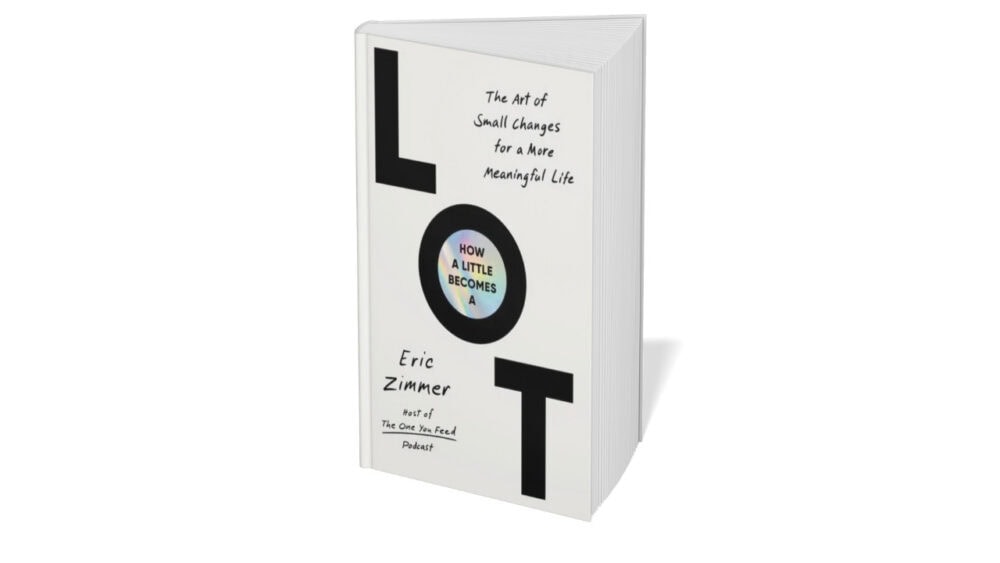

Key Takeaways:

  • The relationship between outer order (organization and decluttering) and inner calm (mental and emotional well-being).
  • The impact of small environmental changes on habits, mood, and productivity.
  • The concept of “feeding the good wolf” from the parable of two wolves, emphasizing intentional living.
  • The significance of setting intentions or themes for the new year, such as choosing a “word of the year.”
  • The role of “ignition costs” in habit formation and how reducing friction can facilitate positive behaviors.
  • The varying responses individuals have to clutter and organization, including “clutter blind” individuals and “abundance lovers.”
  • The importance of monitoring habits and recognizing progress to encourage continued growth.
  • Strategies for managing possessions and making decisions about what to keep or discard.
  • The psychological challenges of letting go of items tied to past identities or aspirations.
  • The concept of “choosing the bigger life” as a decision-making framework to guide intentional choices.

Gretchen Rubin is an author, podcast host, and founder of The Happiness Project, helping create an ecosystem of imaginative products and tools to help people become happier, healthier, more productive, and more creative. Gretchen has been interviewed by Oprah, walked arm in arm with the Dalai Lama, and has even been an answer on Jeopardy. With her new book Outer Order Inner Calm: Declutter and Organize to make room for Happiness, Gretchen seeks to help people create an environment of order that can lead to a greater sense of inner calm and positivity. With her experience in the field, Gretchen encourages us to reflect on our values, goals, and objectives to create a life worth living.

Connect with Gretchen Rubin: Website | Twitter | Instagram | Facebook | YouTube

If you enjoyed this conversation with Gretchen Rubin, check out these other episodes:

Living Skillfully with Gretchen Rubin (2020)

Designing a Life That Supports You: Presence, Beauty, and the Power of Environment with Nate Berkus

By purchasing products and/or services from our sponsors, you are helping to support The One You Feed and we greatly appreciate it. Thank you!

This episode is sponsored by:

Aura Frames: For a limited time, save on the perfect gift by visiting AuraFrames.com /FEED to get $35 off Aura’s best-selling Carver Mat frames – named #1 by Wirecutter –  by using promo code FEED at checkout. This deal is exclusive to listeners, and frames sell out fast,  so order yours now to get it in time for the holidays!

Uncommon Goods has something for everyone – you’ll find thousands of new gift ideas that you won’t find anywhere else, and you’ll be supporting artists and small, independent businesses. To get 15% off your next gift, go to UNCOMMONGOODS.com/FEED

LinkedIn: Post your job for free at linkedin.com/oneyoufeed. Terms and conditions apply.

patreon

If you enjoy our podcast and find value in our content, please consider supporting the show. By joining our Patreon Community, you’ll receive exclusive content only available on Patreon!  Click here to learn more!!

Episode Transcript:

Eric Zimmer 00:01:04  I’m in a studio this week recording my audiobook, and I’ve been carrying this bag back and forth with my food, clothes, lozenges, tea. And as the week has gone on, the bag has gotten messier to the point that this morning it’s stressing me out. This episode is with Gretchen Rubin about what she calls outer order inner calm, and why getting organized isn’t a personality test. There’s no moral scorecard here. It’s about noticing what helps you feel steady and what quietly drains you. We talk about how small changes in your surroundings can lower stress and make good habits easier, not through willpower, but by reducing friction. Gretchen has a term for this. Ignition costs those tiny barriers that stop us before we even start. If you’ve been trying to change something your routines, your focus, your mood. This episode is a practical reminder that sometimes the fastest way forward is to change what’s around you. I’m Eric Zimmer and this is the one you feed. Hi, Gretchen, welcome to the show.

Gretchen Rubin 00:02:14  Hello. I’m so happy to be talking to you today.

Eric Zimmer 00:02:16  Yeah, I am really happy to have you back on. We’re going to be discussing a variety of things related to happiness to the new year.

Eric Zimmer 00:02:24  Primarily, we’re going to focus on one of your more recent books, which is called Outer Order Inner Calm Declutter and Organize to make more room for happiness. But I don’t think that will constrain the whole conversation. But before we get started, we have a traditional way of starting, which is that we talk about the parable. So in the parable, there’s a grandparent who’s talking with their grandchild, and they say, in life there are two wolves inside of us that are always at battle. One is a good wolf, which represents things like kindness and bravery and love, and the other is a bad wolf, which represents things like greed and hatred and fear. The grandchild stops and thinks about it for a second and looks up at their grandparent and says, well, which one wins? And the grandparent says, the one you feed. So I’d like to start off by asking you what that parable means to you and your life right now.

Gretchen Rubin 00:03:12  Well, I love that you start with this parable because I’m a huge fan of paradoxes and koans and teaching stories.

Gretchen Rubin 00:03:20  So I love a teaching story like this one, and I think it’s exactly right. One of the things I really focus on is this idea that by thinking about our aims and the kind of life that we want and how we can be happier, healthier, more productive and more creative, we can feed that wolf and we can think about, well, how would I feed that wolf? Like not just thinking like, I want my wolf to be bigger, but like, what are the kinds of things that would feed that wolf? And then also, if I want one wolf to shrink, what are the things that I would do that could take away from that wolf? What can I do with my conscious thoughts and actions to bring that about? So I love that it makes this a very concrete thing to imagine. And I think that when things are more concrete, it’s easier to keep them in mind.

Eric Zimmer 00:04:04  Yeah. As we move into 2023, I think that’s the year.

Gretchen Rubin 00:04:10  We’ve lost track.

Eric Zimmer 00:04:11  Some people do New Year’s resolutions.

Eric Zimmer 00:04:13  Other people pick a word for the year to orient them. Do you participate in any sort of New Year’s rethinking about things, and if so, have you done that yet? Or that’s yet to come this year?

Gretchen Rubin 00:04:24  Yes, I’m a big fan of using January 1st as sort of a catalyst for reflection. I mean, many people say, well, it’s an arbitrary date. We could do this at any time. But what I find is that things that can be done at any time are often done at no time. So it’s good to have a reminder. And whether that’s New Year’s Day or your birthday, or an important milestone or the solstice or whatever it is for you. And I like that. At January 1st, everybody’s sort of talking about it and kind of reminding each other to think about it. So yeah, I do make resolutions on the Happier With Gretchen Rubin podcast. My sister and I always pick a one word theme for the year. So for 2022, my theme was salt, which has a lot of kind of metaphorical meanings.

Gretchen Rubin 00:05:01  And I haven’t unveiled my word for 2023, but I think I’m like 95% committed to it has a lot. Again, it has layers of meaning. and then we also do something and it changes every year. So we did like a 20 for 20 list, a 21 for 21 list, 22 for 22 list, where we make a list of 23 things that we would like to get done in the year. And some of them are fun things. I always add a few things that I can do in like the next day. You know, I like the morale booster of having something to cross off, and then some are more ambitious and then, you know, some we’ve carried over from each of us on our list have carried over, you know, from year to year. But there’s still something that we want to get done. So we keep it on the list. So we don’t forget that it’s something that we want to do. And then also each year we do a challenge like we had walk 20 and 20 and rest 22 and 22, where you would rest for 22 minutes a day.

Gretchen Rubin 00:05:52  Join that challenge. And then again, we haven’t unveiled for 2023, but it’s a good way to sort of think about, well, what is something that most of us want to bring into our life? A lot of people are turned off by resolutions, like they have bad associations because they’ve like, maybe made and broken them in the past. So having a different way to set a name and think about, well, what would I do to achieve that aim? I think if it makes it feel more fun and more playful, people are more likely to engage with it.

Eric Zimmer 00:06:15  Yeah. That’s great. My editor, Chris, has a rest in 22, but his was 22 hours a day. Maybe he.

Gretchen Rubin 00:06:22  Oh.

Eric Zimmer 00:06:23  He may have got he.

Speaker 4 00:06:24  Got carried away that wrong. There you go. Get carried away.

Eric Zimmer 00:06:27  Yeah. And if you keep going you know, if you’re fortunate enough to be doing a podcast in 30 years, you’re going to be having like 55 things to do in a year.

Gretchen Rubin 00:06:35  No, no, no, we’ve thought about that.

Eric Zimmer 00:06:36  Okay. You’ve got a plan.

Gretchen Rubin 00:06:37  So we might do five plus five is ten. Or maybe it’s, you know, five or.

Speaker 4 00:06:42  Yeah. Got it.

Gretchen Rubin 00:06:42  We’ve already had listeners kind of flagging that for us because I think they’re sort of getting overwhelmed in advance. It’s like, no, no, no, there’s solutions for that. Creative solutions. And then sometimes people use it in a different way, Like they might say, I want to read 23 novels in 2023, or I want to try 23 new hikes in 2023. So again, like, you can use it or I want to do 20 things that are easy and three things that are harder. You know, it’s just the idea of there’s a lot of ways to interpret it, but it’s just to get you in the process of articulating an aim. And then, you know, once we articulate an aim, we’re a lot more likely to follow up on it than if we just sort of leave it banging around in our heads.

Eric Zimmer 00:07:18  Agreed. Yeah, the new year can have the ability to really jumpstart a way of thinking. I’ve experimented with having a word of the year the last couple of years, and I’m starting to wonder if, for me, I need a word for six months.

Gretchen Rubin 00:07:31  Interesting. That’s a great idea.

Eric Zimmer 00:07:34  It sort of seems to run out of energy for me in, you know, June, July, August. Now, maybe that’s a sign I need to recommit and double down at that point, but it might also just be a sign that, like, okay, I’ve really lived with that word and that idea, and I’m ready for something else to give me the energy to carry forward.

Gretchen Rubin 00:07:53  I have an idea for you.

Speaker 4 00:07:54  Okay.

Gretchen Rubin 00:07:55  Halfway day. So I was reading an essay about people on submarines, and apparently, at least on this one submarine, they would celebrate halfway day. And when the people would come onto the submarine, they would bring like a shoebox full that had been packed by, like, their friends and family, which they would keep closed.

Gretchen Rubin 00:08:12  And then on halfway day, they would all open it and get all these sort of mementos and things. And it was a way to celebrate the fact that they were halfway through their tour of duty. And I was just enchanted by this idea of halfway.

Speaker 4 00:08:22  To yes.

Gretchen Rubin 00:08:23  Because, again, it’s a catalyst to recommit. I love a catalyst, so I have like a whole calendar of catalysts. If people want like interesting creative ideas for catalysts like you used April 1st to think about money and savings because it’s 401 day.

Speaker 4 00:08:37  401 anyway. Yeah.

Gretchen Rubin 00:08:39  And so maybe for you, since you’ve noticed this about yourself, instead of trying to fight it and be like, ooh, I should double down, you should say like, hey, I’m ready for kind of like a new A refreshing view. Why don’t I celebrate halfway day with my new word? That could be fun.

Speaker 4 00:08:55  I.

Eric Zimmer 00:08:55  Like it, I’m going to run with it. I’m going to go with my intuition that half a year is enough.

Gretchen Rubin 00:09:00  What was your word last year? I’m curious.

Speaker 4 00:09:02  Love are.

Gretchen Rubin 00:09:03  A classic.

Speaker 4 00:09:05  Classic?

Eric Zimmer 00:09:06  Yeah. It was really for me. It’s about like I’ve done a lot of work over the years, really trying to live into the fact that love is an action. And I feel like I’ve gotten pretty good at that. Right? We all can improve, but I feel like I’ve got loving action. It’s a strength of mine. What I don’t have as much is the experience of feeling love moment to moment, day to day. Now, I know we’re not going to always be in it. For me, I wanted to try and connect more to the feelings of love, to actually have the experience of a feeling of love more. And as I did that, I actually realized, like I experienced it more than I thought I did. You know, I was sort of starting to connect the dots and be like, well, eight times today you’ve been in love with your dog. You know you’ve fallen in love with four new pieces of music this week, right? You feel warm and affectionate towards your partner a lot.

Eric Zimmer 00:10:00  You watch three TV shows that brought you to tears because they were so beautiful. Like I realized like, okay, I’m not bereft of it, maybe in the way I thought I was. So that became the learning more than I have to increase it. Although I did work on that, I became more conscious, like, oh, that’s actually there. It just needs a little nudge to the foreground.

Gretchen Rubin 00:10:20  You know, that’s so interesting because and Better Than Before is a book that I wrote about habit change, and I identified the 21 strategies we can use to make or break our habits. And one of the strategies is the strategy of monitoring. Because what the research shows is that when people monitor something, they tend to be better at doing it, even if they’re not trying to change it kind of moves them more in that direction.

Speaker 4 00:10:39  Yeah.

Gretchen Rubin 00:10:39  What I found also is that, like with monitoring, sometimes it’s very reassuring for something like, I want to spend more quality time with my child. Sometimes what people find is when they look, They’re like, actually, I’m doing a better job with this than I think that sometimes we get discouraged and we don’t give ourselves enough credit.

Gretchen Rubin 00:10:52  And it’s great for you to realize, like, actually, now that I’m shining a spotlight on this and really trying to pay attention to it, I realize that I am actually experiencing this more. And then by realizing that you’re experiencing it, you sort of do experience it more.

Speaker 4 00:11:04  That’s exactly it. Yeah.

Gretchen Rubin 00:11:05  It’s interesting. So it wasn’t even that you weren’t doing it. It’s just you weren’t realizing it sort of running under the level of sort of your conscious awareness.

Eric Zimmer 00:11:14  Yeah. I teach a program called Spiritual Habits, where we try and take spiritual principles and combine them with the habit of behavior change. And one of them is generosity. And, you know, one of the things that I say in that lesson is go be more generous. Another way to interpret this lesson is to look at all the ways you already are. And reconnect to those. Reconnect to the time you are spending with your kids is generous that it’s loving. Because again for whatever reason I always find as humans it’s so odd that we can be sort of doing and experiencing something, and yet completely sort of unaware that we’re doing and experiencing it.

Eric Zimmer 00:11:52  You know, sometimes, like it is, I call it sort of connecting the dots back, like just connect the dots back to what you’re doing or the ways that you already are living according to your values.

Gretchen Rubin 00:12:01  Well, it’s funny, I made these, like, sticky pads to sell and like some of them are. It’s a to do list, but another sticky pad is a to do list because I realized that for a lot of people, they’re constantly like, I’m not doing this, I’m not doing that. I’m procrastinating. Like, you know, the list gets longer and longer and you’re like, but you’re not giving yourself credit for all. It’s sort of like what we were saying about monitoring. We don’t realize about what we’ve done. And so for a lot of people making a to do list, they’ve got to do it and they’ve got to doubt, which is everything they’ve already done. And for many people, that’s very energizing and encouraging because they can sort of get hard on themselves, thinking about the things that are undone and not connecting the dots to think about the things that they have done.

Gretchen Rubin 00:12:36  And strangely, sometimes you can do more when you realize how far you’ve already come. Yeah. And so I think for some people that’s a really important, like you say, spiritual practice, which is, you know, what is my to do and what can I say that I’m already participating in?

Eric Zimmer 00:12:50  There’s a classic example of the gift I was talking about before the show that you have of taking a concept and giving it a very clever name to da list. Very good.

Speaker 4 00:12:58  Bravo. Thank you. Yes, I have to say, I.

Gretchen Rubin 00:13:01  Was proud of.

Speaker 4 00:13:02  That. I love, I love a.

Gretchen Rubin 00:13:04  Like a rhyming.

Speaker 4 00:13:05  Or symmetrical.

Gretchen Rubin 00:13:06  Yeah. The fluency bias. They call that.

Speaker 4 00:13:08  Yeah.

Eric Zimmer 00:13:08  Yep. Let’s talk a little bit about outer order inner calm. Because my first reaction to the declutter movement that showed up was one of sort of a profound non-interest. I don’t remember what the bestselling book by Marie Kondo that just went crazy. Right. And I just was like, well, I mean maybe it’s because I’m fairly tidy anyway.

Eric Zimmer 00:13:32  I don’t know. But when I heard your title Outer Order Inner Calm, I went, oh, okay. That actually connects a dot for me, right? That actually connects a dot that says, yeah, because the minute I heard that, I went, oh yeah, like I get that completely. When my outer environment is chaotic, I feel slightly chaotic. And so you said that in my study of happiness, I’ve realized that for most of us, outer order contributes to inner calm more than it should. So say a little bit about how you found your way into this.

Speaker 4 00:14:02  Well, because for.

Gretchen Rubin 00:14:03  Exactly what you’re saying, it’s like I felt this connection between sort of if there was chaos on the outside, it felt like there was chaos and me, and if I felt in control of my environment, I felt more in control of myself, which is an illusion. But it’s a helpful illusion. And when I talk to people just like you, it’s like there’s a connection there. And I remember a friend of mine said, you know, I finally cleaned out my fridge and now I know I can switch careers.

Speaker 4 00:14:26  And I thought, you know, I get it.

Gretchen Rubin 00:14:28  And people would say, like, I feel like when I clean out my closet, I feel just kind of this sense of energy and focus and, and and a sense of possibility. And I think kind of disproportionately because we can all agree that, like a crowded coat closet is not something that is like a significant. Relevance to whether you’re happy, healthy, productive, creative. And yet over and over. People reported that they did feel this connection, and it is something that it’s very much within our control. Also, it’s interesting where often by getting rid of things, whether that’s by donating them or fixing them or tossing them or recycling them or whatever’s appropriate, people feel more engaged in their environments, like they’re not fighting their way through stuff that doesn’t work or is broken, and so they feel more engaged with their things. If there are things connected to memories, they feel more in connection. Those memories feel kind of alive. The clutter of life gets wiped away.

Gretchen Rubin 00:15:20  And so it seems like one of these things where it really seemed like a minor thing. But then on the other hand, it seems like it’s actually kind of a major thing. And so I was just very interested in exploring that because I thought it was kind of surprising.

Speaker 4 00:15:33  Yeah.

Eric Zimmer 00:15:33  Well, in your work on habits, you and I both share a real interest in this, right? One of the things that becomes clear is that little things can often make a big difference. Yeah, right. Our environment is stupidly important. Yeah. The example I always give is the difference between my guitar sitting on a stand and sitting in a case, and every time I realize that when it’s on the stand, I play it way more. I feel like, what is the matter with you that that could possibly be it. Like, it takes two seconds to flip the case open, like. But it’s undeniably.

Speaker 4 00:16:04  True. Yeah.

Gretchen Rubin 00:16:05  And I’ll give you an example. Somebody just told me yesterday, so he was like, I wanted to ride my bike to work.

Gretchen Rubin 00:16:10  But I kept taking the car and I realized, like, I parked my bike, like around the corner. So it was kind of slightly more out of sight and like, chained it up there. And then I thought, you know what? It’s just like, I can’t be bothered to walk like the extra.

Speaker 4 00:16:21  Few.

Gretchen Rubin 00:16:21  Steps. I’m gonna put it right in front of my door. So I see it every time I walk out. And he’s like huge, huge increase in the number of times he bike to work. And he’s like, look, if my bike gets stolen, my bike gets stolen. But if I’m never riding my bike, it might as well be stolen.

Speaker 4 00:16:34  Because it’s just, you.

Gretchen Rubin 00:16:35  Know, and same thing. I mean, you think the difference between opening a case and not opening a case, how could that possibly make a difference? And yet it does. There’s this hilarious research showing that if you are at a salad bar, if people can use a spoon instead of tongs, they will take more food because like tongs are just too much work and people won’t take as much food because they just can’t be bothered to use tongs.

Gretchen Rubin 00:16:55  So you’re exactly right. Like, these very, very kind of laughably small changes can end up being quite significant. It’s really hilarious.

Eric Zimmer 00:17:05  Yeah. So one of the other things I think you do a really nice job of in your work is sort of recognizing not everybody’s the same, you know, your four tendencies is an example of this. So is outer order inner calm sort of work for everybody, or is there a group of people that it just doesn’t seem to matter. There seem to be people we know who have the crazy desk that we’re like, if that was my desk, I would jump off a bridge. But it seems to be what suits them, right?

Gretchen Rubin 00:17:31  Well, I think there’s a couple of different distinctions. One is that some people are truly clutter blind, and my co-host on happier with Gretchen Rubin is my sister Elizabeth, and my sister is clutter blind. So I’m very in touch with this. And these are people who just don’t see it. Yeah, it doesn’t back up on them because they just don’t see it.

Gretchen Rubin 00:17:47  My sister would never close a kitchen cabinet door for the rest of her life if she lived by herself. It doesn’t weigh on her the way it weighs on me. She’s just totally indifferent to it. And we know people like this. And I think for them, if they’re sort of like, well, why would I bother to do it? I’m like, well, why would you bother to do it? If you’re with other people and have to share an environment, then you have to figure out a way so everybody feels comfortable. But if it’s just your space, like there’s no magic to it, if you feel like you don’t feel any better doing it, don’t spend the time like it’s not important. So those are people who are clutter blind. But then there are people who are abundance lovers and simplicity lovers. And this is something I think, that you see where like one person it says like, well, a cluttered desk means a cluttered mind and like, they want bare counters and lots of room on the shelves and not much on the walls and kind of just, you know, one little bud vase and it’s like lots of simplicity.

Gretchen Rubin 00:18:34  And I count myself in this camp, much of the time. And then there are abundance lovers and abundance lovers, like profusion and choice and collections and buzz and a lot going on. And so they tend to like to be in environments where there is like maybe there are piles or there’s like a bunch of stuff on a coffee table or a lot of stuff on the shelves and simplicity lovers that can look like clutter. But to an abundance lover, what I consider to be kind of beautiful emptiness there like this looks sterile and stripped to me. Like there’s no life here. Like what’s going on. And again, no one’s right, no one’s wrong. It’s just a matter of preferences. And so if we have to share an environment, we need to figure it out. But it’s not like I’m right. You’re wrong or you’re right and I’m wrong. It’s just like, okay, I like it this way. You like it that way. How do we proceed?

Eric Zimmer 00:19:19  Yeah. I’m so grateful that my partner Jenny now and I have an exact same feeling on clutter.

Eric Zimmer 00:19:26  And that’s so great. Oh, it’s so good.

Speaker 5 00:19:29  It’s such a luxury.

Eric Zimmer 00:19:31  We both do it. And so I just notice everyone. So I think of it, it’s like, I don’t think we’ve ever had a conversation about put your stuff away. You know like from either side I don’t think there’s ever been a single conversation and that’s kind of remarkable.

Gretchen Rubin 00:19:45  Okay. And here’s my second question which is do you like to leave for the airport at the same time.

Eric Zimmer 00:19:51  Roughly.

Gretchen Rubin 00:19:51  Because if you match on both of those, you have saved yourself 50% of sweetheart arguments.

Eric Zimmer 00:19:56  I think we’re in the neighborhood.

Speaker 5 00:19:58  Okay, okay.

Eric Zimmer 00:19:59  I would cut it a little closer than okay.

Speaker 5 00:20:01  Okay.

Eric Zimmer 00:20:02  I’m not like, let’s get there 20 minutes. And she’s like, let’s get there three hours, you know?

Speaker 5 00:20:06  Okay. It’s manageable.

Eric Zimmer 00:20:07  An hour. And she’s like, we should have an hour. 15.

Speaker 5 00:20:10  Okay, okay.

Eric Zimmer 00:20:10  I did discover a new area of difference between us, though, which is that she gets near half a tank of gas and she immediately wants to get gas.

Eric Zimmer 00:20:18  And I will drive the thing just to the very brink. It actually comes up more often than you would think, because we have been driving from Columbus to Atlanta every month for the last six years, because we’ve had parents in both places that have needed care. So we encounter this a lot. I’m like, it’s fine, let’s just keep going. She’s like, no, we got to stop. But luckily we kind of joke about it and it’s not not a big deal.

Gretchen Rubin 00:20:40  You know, this would actually be kind of a funny list. Maybe I’ll write a funny list like this where it’s sort of like, not the big issues of being a couple. Like, how do you think about money savings and parenthood and stuff like that? It’s more like, how much time do you need to have at the airport? And yeah, I mean, these funny little things that it’s like they can really, though, in a relationship, end up taking up a lot of space. How do you feel about laundry? Like does laundry need to be in a basket? Can laundry be on the floor? How long can laundry be on the floor before it goes in the basket? You know, this kind of thing.

Eric Zimmer 00:21:11  You’re talking about dirty laundry.

Speaker 5 00:21:13  Yeah.

Eric Zimmer 00:21:14  Socks in the basket. In the basket.

Gretchen Rubin 00:21:16  Well, that’s a clutter related one. Okay, so this is fun. I bet there’s like ten questions that come up disproportionately. They cause more arguments than they should, given their importance to sort of the significant matters of a happy relationship and a happy life. Yeah. It’s funny.

Eric Zimmer 00:21:31  And then the other piece, of course, is that if the significant matters are well tended, it’s easier to laugh about the little ones. Whereas when the big things are a problem, everything becomes a problem.

Gretchen Rubin 00:21:42  Absolutely.

Eric Zimmer 00:21:43  I’ve been in those relationships where it’s just.

Gretchen Rubin 00:21:45  Like, it’s an excellent point.

Eric Zimmer 00:21:46  The airport thing is not about the airport thing. It’s about this fundamental issue in our in our relationship.

Gretchen Rubin 00:21:53  You’re not listening to me or you’re not.

Eric Zimmer 00:21:55  Exactly. Exactly right. Yep. Let’s talk a little bit about there’s a bunch of benefits of outer order that you list. And I’m going to go through a few of them. There’s nine of them.

Eric Zimmer 00:22:07  We’re not going to have time to go through them all, but I’m going to pick a couple. And one of them is that outer order creates a feeling of sanctuary. You say, I experience true leisure because I don’t feel pressured to jump up and deal with a mess.

Gretchen Rubin 00:22:21  Yeah, what a lot of people say is that they would be sort of theoretically kind of in their downtime, and yet they would feel this pressure to like get up and put things away. And, you know, they don’t feel comfortable in their own space, or they feel like they’re either putting off things that they should be doing and that made them feel guilty, or they were doing those things, and then they felt resentful because they weren’t getting the leisure time. And so when things are put away, you have that feeling of like, oh, this is a place that I can go to. I can be in my home and I have that feeling of rest. I have that feeling of kind of security. I have this feeling like this is a place where I can go to, like, recharge and refresh myself.

Gretchen Rubin 00:22:58  And I don’t feel like I’m just changing, you know, one set of obligations to another set of obligations with no place to sort of relax and recharge.

Eric Zimmer 00:23:41  You also say that outer order fosters peace within relationships? We were just kind of hitting this, right?

Gretchen Rubin 00:23:47  Yes, we were.

Eric Zimmer 00:23:48  Where, you know, I spend less time nagging at or arguing with other people. But what do you do if you and your partner or your housemates or your children have very different feelings on outer order? Inner calm.

Gretchen Rubin 00:24:03  As we’ve been talking about, this is just a very common source of conflict. And I think that one thing that’s important to remember is these are preferences, because a lot of times people will say, well, I’m right, and I’m going to tell you all the reasons that I’m right. But the thing is, somebody else can be like, well, I’m right. And I’m going to tell you all the reasons I’m right, because the fact is there really is no right or wrong. It’s a question of like, where do people feel comfortable? And if you’re sharing a space, you have to think about like, okay, well, how do we manage that? So people feel comfortable? and I have to say, somebody who’s pretty tidy.

Gretchen Rubin 00:24:32  Myself, I do have sympathy for the people who are saying like, look, I don’t care if the bed is made. If you want to make the bed, knock yourself out. But I don’t see why I should spend my time and energy to make a bed when it just gets unmade the next night. And it’s sort of like, right, if you don’t care, there’s no magic to it. And sometimes people want to be like, oh, but there is a magic to it. It’s like there’s only a magic to it if you care. I deeply commit to making my bed. I make my bed in a hotel room on the day I check out. I have to have a bed made, but I recognise that that’s my preference. And if somebody really doesn’t want to do that, that’s their preference.

Eric Zimmer 00:25:07  There’s no moral element to this, right?

Gretchen Rubin 00:25:09  And there’s no like, oh, you’re more creative, you’re more productive. There’s an amazing book by Mason Curry. I think it’s called Creative Rituals.

Gretchen Rubin 00:25:15  Anyway, he looks at the daily habits of like more than 100 very, very accomplished people musicians, writers, artists, choreographers, sculptors, scientists. And what you see is that they’re all over the place. Like one person stays up late. One person gets up early and one person drinks vodka. One person drinks coffee and one works in a crowded studio and one works in isolation. And so what you see is that they’re just very good at getting what they need in order to do the work that they want to do. And so there is no moral ground. There’s no magic to it. It feels like this is right, because this is what feels right to me. But of course, somebody else feels the other way. So you can think of things like maybe you say like, okay, these are the five things that really drive me bonkers. Can you agree to do these five things? But not everything but these five things. And then sometimes a person out of love will say, I will choose to do those things, because I know that it’s really important to you to feel comfortable in this space, but I’m not going to do the five through 15 things because that’s on you.

Gretchen Rubin 00:26:11  But I will put my dishes in the dishwasher, I’ll put my clothes in the basket, whatever, whatever it might be. Another thing is to kind of have your own space is like, maybe if you have a big enough place, it’s like, well, you’ve got an office, and if I see something of yours, I’m just going to throw it in your office and close the door. And then if you want it to be messy, it’s like, that’s your mess, that’s your space. And then you keep your stuff there. Or if, like, you’ve got a big project where there’s a lot of pieces that are out, you’re going to do it in your space. So I don’t have to look at that. We were talking earlier about convenience, and a lot of times when people are not good about keeping things orderly, it’s because it’s just a little bit too much trouble and I mean a tiny little bit too much trouble in my family. Like, people were just leaving their coats draped over chairs all the time, and I was just as bad as everybody else.

Gretchen Rubin 00:26:52  So none of us were hanging up our coats. So then I thought, well, what if we had hooks instead of hangers? And I also got rid of a lot of our coats that we weren’t wearing them because it was so crowded in our coat closet. You really had to, like, exert your force to jam them in. So I cleaned them out so it was easier to hang things up. And I put in tons of hooks. And now people will hang up their coats because you just put it on a hook. So it’s just that little bit of thing. Or like maybe the junk mail, you need to put a little recycling thing right near where you bring in your mail so you can just like put it there and anything you need, you, like put in the drawer so that it’s out of sight in safekeeping. And then you’ve gotten that done right away because it’s just that much more convenient. Or, you know, people who have baskets that they put at the top of the stairs, at the bottom of the stairs.

Gretchen Rubin 00:27:35  If you’re living in a house with stairs where it’s like anything that needs to go upstairs, you put it in the basket and then when you go up, you take it up. So there’s little things that you can do if you feel like, well, the people in my house are maybe not opposed to this, they’re just not very cooperative about this. Also, I do find if you go through and you really look at clutter from your stuff, you’re like, I want everybody else to be better about it. And they’re not, because that’s usually the complaint you hear is that, like, people are not orderly enough for me. If you really go through and really clear clutter, get rid of everything you don’t use, that doesn’t work that you don’t. You’re like, I don’t even know what this thing is. I don’t know why this is in our house. Get rid of it. I find that a lot of times people do do a better job, because the more space there is to put things away and where it’s more clear where things belong.

Gretchen Rubin 00:28:19  Okay. If I hand you a hammer, where does that hammer go? You should know where a hammer goes. What about stamps? What about batteries? What about a ruler? What about a passport? Yeah, all these things, they should have a place. And it sort of people are just more inclined to put things away when they’re like, this is where this thing goes.

Eric Zimmer 00:28:34  Absolutely.

Gretchen Rubin 00:28:35  And it’s not hard like that drawer when I open it will not, like, explode in my face because there’s so much stuff jammed in there. If it’s just like, that’s where it goes. So I think sometimes when people want things to be more orderly, they can help that by doing what they can do within their own power. And then sometimes people are more cooperative. But the fact is, this is a place where people have very different levels of comfort and very different levels of commitment to the work that it takes to maintain order. And it can be frustrating when there’s disagreement. So it’s something to work through explicitly.

Eric Zimmer 00:29:08  Yeah. And I want to talk about some of those ways of creating more order, because I think all those that you listed are so helpful. Like I am a hook guy. Give me a hook.

Gretchen Rubin 00:29:17  Give me.

Eric Zimmer 00:29:17  A hug. It’s up. Give me a hanger. it’s going to be 5050. Right right right right right. Like particularly, as you say, a hanger in a crowded closet. I mean, it’s just amazing. It’s like it’s a three second difference. But again, it’s to our point, you know, it’s that fundamental rule of behavior change, which is basically like if you want to do more of something, make it as easy as possible to do it.

Gretchen Rubin 00:29:38  Absolutely.

Eric Zimmer 00:29:38  And if you want to do less of something, make it as hard as possible and little increments that make a big difference.

Gretchen Rubin 00:29:44  Yeah. In my 21 Strategies of Habit Change, I talk about the twin strategies of convenience and inconvenience because you’re exactly right. Like, I’ve talked to people who sleep in their exercise clothes so they don’t have to get up in the morning and change clothes.

Gretchen Rubin 00:29:56  They’re like people who keep their television remote control, like in a separate room. So they have to, like, go get the remote control. But, you know, as we’re talking, I’m just realizing something in my own life that I could do differently. When I was growing up, I grew up in the suburbs, so we had a big kitchen, and we would just leave the dishwasher door open a lot of the time, and that made it very easy to put your dishes in the dishwasher. But now I live in New York City and we have a much smaller kitchen, so our dishwasher door is always closed because, you know, our kitchen is small and I’m like, I wonder if that’s why I’m much worse about putting away dishes now. Because you think, well, now Gretchen’s a grown up. Of course she puts her dishes in the dishwasher, but I actually did a much better job when I was younger, and now I’m realizing why. It’s because the dishwasher door was open. I mean, how little effort is that? And yet I’m thinking back on it.

Gretchen Rubin 00:30:44  I think that probably explains why my habit has changed.

Eric Zimmer 00:30:48  You have a term in better than before that I think really speaks to this I love it, it’s called ignition cost, and it’s that any behavior has a little bit of extra energy needed at the very beginning. And again, we’re talking about very little bits of energy. Right, right. I got to flip open the guitar case. I’ve got to put on my exercise clothes. Right. But those little things make actually a big difference. And for whatever reason, there is something about going from 0 to 1 that is, at least for me, way harder than then. Going on from 1 to 10.

Gretchen Rubin 00:31:24  Well, you know, in what’s related to that, that surprised me. And I think it surprises a lot of people in kind of a bad way, which is like a lot of times when you start a new habit, there’s the ignition cost, but there’s also like, especially if you’re starting kind of like a habit that you’re really fired up about, there’s kind of the energy of starting.

Gretchen Rubin 00:31:39  And so maybe you start and then you stop and you think, well, that’s okay if I stop, because I’ll just start again. And I found it really easy to start. But starting over is harder than starting the first time. I remember a friend who, like, wanted to quit drinking, not because he thought he had a big problem. He’s just like, you know, I’m getting older. It’s like interfering with my workout. He’s like, I just, you know, it’s not good for me anymore. And the first time you did, it was super easy to cut way back on his drinking. And then he was like, man, he went back to his old habits. He said, well, I’ll just go back to it anytime. But then when he did, it was much harder. And I think that’s very, very often the case that starting over is is harder than starting. Oh yeah. So I think once we start, once we pay that cost, we don’t want to have to keep paying it.

Gretchen Rubin 00:32:19  So once you start, you want to kind of try. Really try to keep going as if you possibly can.

Eric Zimmer 00:32:25  Agreed. There’s a lot of directions to go with that. I had your friends experience times I don’t know about a thousand, because at 24, I was a heroin addict and I burnt my life to the ground and I got sober and I stayed sober about eight years. And then after eight years, I’m not going to go into the whole long bit of it, but I ended up going out and drinking again. I never went back to heroin, but I started drinking. But that didn’t work out either. And so I kind of had to come back into recovery. And the second time around, I just was like, how is this so much harder? It was brutally harder. And I know a lot of people that are in my experience, you know, they got a significant amount of time and they went back out or went back to the house, and they never made it back.

Eric Zimmer 00:33:07  There is something about that that is really true. I think the other thing that starts to happen is particularly when we have started and stopped something a bunch of times, is that and I see this in, you know, coaching clients a lot is they get going with something. But the voice in their head is like, you’re never going to stick with this. You haven’t stuck with it before. Why is this time going to be different? Right. And the first little slip, which everybody has a little slip. Right. We’re not perfect. The first little imperfection. And their brain goes, see, I told you so. So it really is that start again cost can really be there. I think there’s ways to mitigate it a little bit in really watching what we say to ourselves around it. But yeah, that’s a real thing.

Gretchen Rubin 00:33:51  Yeah. Well and in the 21 strategies one is the strategy of safeguards, which is like, you know, you want to plan to fail. Yes. You want to think, well, you know what, if I go to this place, it’s going to be too hard.

Gretchen Rubin 00:34:01  And if I stand by the dessert tray, I’m going to, you know, you want to think about what are the safeguards that you can put into place. What if I travel? What if I get sick? What if I’m with my difficult relatives? You want to put in all the cigarettes, but then, like, actually, the strategy that I found the most entertaining to study is the strategy of loophole spotting, which is looking for the loopholes that we use to let ourselves off the hook. These are so many just imaginative, creative examples of this. And there’s ten kinds of loopholes. So there’s like there’s false choice loophole, which is like, well, I’ve been so busy doing that I couldn’t possibly do that. Like, I’m so busy writing, there’s no way I could go in for a doctor’s checkup. It’s like, really like, I think you could probably do both of those things. Or fake self-actualization loophole when it’s like, you know, you only live once. Like, you know, I have to embrace life to the fullest.

Gretchen Rubin 00:34:48  It’s like you can embrace life to the fullest and not have this, you know, this stale brownie in the break room or whatever. But I think all of us have these loopholes running. Yeah. And when most of us have a few that are like our go to favorites, the lack of control loophole I’m traveling, there’s no way I can be expected to do XYZ. And I think just by knowing them, you sometimes can be aware of how you’re sort of looking for an opportunity to invoke a loophole to say, okay, well, of course I would not be able to stick to my habit. And so I think when we’re more aware of these loopholes, we can resist them because we’re more consciously aware of them. But at the same time, I mean, to your point, one of the things that I found very interesting when I was in the study of habits is like, I think a lot of times when people do slip up, as you say, they think, well, if I’m really hard on myself, if I really talk down to myself, that’s going to kind of energize me to do even better.

Gretchen Rubin 00:35:36  But what the research shows is that actually people who are more compassionate with themselves, who say things like, well, you know what? I learned that lesson the hard way, or like, well, that wasn’t my best day. Or, well, you know, are more likely to re-engage. And so you really do want to go easy on ourselves. Like we want to try really hard because the more we stick to something, the easier it’s going to get. On the other hand, so it sort of seems like a tension you want to say, like, I really don’t want to slip up, but if I do slip up, I want to have that compassion for myself and so that I don’t feel too discouraged so that I don’t feel like trying again.

Eric Zimmer 00:36:07  Yeah. I mean, there’s so much great stuff in that book of yours about habits because this is really, actually pretty nuanced stuff. You know, it sounds easy to be like, well, always take small steps, you know which the answer is? Yes.

Eric Zimmer 00:36:21  A lot of the times small steps are absolutely the right answer, but certainly not all the time 100%. Or pick a specific time every day and do it that time every day. Well, sometimes depending on your life, but other times no. And so, you know, knowing your life and the structure of your life and the type of person you are and what works for you is why sort of really thinking about these ideas for yourself is so important.

Gretchen Rubin 00:36:47  I could not agree with you more, and I really think if people say like, what is the biggest mistake people make with habit formation? I think you just put your finger right on it, which is thinking that there’s a magic tool that will work for everyone. There is no magic one size fits all solution. We each have to say like, well, what works for me? Like, when am I at my most energetic and creative and productive? Because for one person, they might work on their novel first thing in the morning, or for what? Another person they might work at it at 10:00 at night.

Gretchen Rubin 00:37:12  There’s no one right way. People often say to me like, well, what’s the best way to change a habit? And I’m like, well, what’s the best way to cook an egg? And people are like, well, I don’t know. It depends how you like your eggs. I’m like, right. What’s the best way to create a habit? It depends on you. Yes. You point it out like pick the same time of day. Earlier you mentioned my four tendencies framework. So that’s the thing that explains a lot of differences that you see in how people effectively change their habits or like kind of do things generally in life. And one of the things you see is some people really thrive on having something on the calendar, and some people absolutely turn away from that. It’s counterproductive. They don’t like feeling trapped and chained by a calendar. That’s how it makes them feel. They will resist that. And the idea like, oh, pay for a class, then you’ll go, it’s like, that is not good advice for those people.

Gretchen Rubin 00:37:59  So you need to know yourself like, oh yeah, if I pay for that class, I’m definitely going to go. Or like if I pay for that class, I’m going to be less likely to work out. Yep. And it’s completely legitimate to feel like that way. A lot of people feel that way. So if you feel that way, it’s not like, well, there’s something wrong with you, or you should try harder or like, oh, maybe I’ll give you a gift of this class and now you’ll have to go. It’s like, well, I just wasted that money. You want to say, well, what kind of person am I? What works for me? Yeah. If people are curious to know about the four tendencies, if they want to know what tendency they are, if they’re an upholder, a questioner, an obliging or a rebel, just kind of quiz Gretchen Rubin and you’ll get a little report that will tell you what you are and what to do with that information.

Gretchen Rubin 00:38:39  It’s a lot of fun.

Eric Zimmer 00:38:40  Check in for a moment. Is your jaw tight, breath shallow? Are your shoulders creeping up? Those little signals are invitations to slow down and listen. Every Wednesday, I send weekly bites of wisdom, a short email that turns the big ideas we explore here in each show things like mental health, anxiety, relationships, purpose into bite size practices you can use the same day. It’s free. It takes about a minute to read, and thousands already swear by it. If you’d like extra fuel for the weekend, you also get a weekend podcast playlist. Join us at one you feed. That’s one you feed. Net newsletter and start receiving your next bite of wisdom. All right. Back to the show. That framework is really a very interesting one, as well as the abstainers versus moderator framework, which is a really interesting thing. It’s interesting for me because in certain areas I have had to be an absolute abstainers like drugs and alcohol like just had to. Yeah. And other areas of my life I really am.

Eric Zimmer 00:39:53  I think I’ve grown into being a moderator and really being able to find my way through that. And so I really think it just for me, it wasn’t as clear. I don’t remember whether you and I talked about this last time. It’s a question that I would love to ask is, do you see people potentially transform through the course of their life from one to the other. Because when I was younger, I had a whole lot more of an extreme streak, right? It was yes or no, black or white, 0 or 100. And as I’ve gotten older, it’s not just age. I actually think a lot of it in my case is growth. I’ve become a lot more nuanced in many, many things. The risk of trying to apply that to drugs and alcohol is too high for me. There’s just no possible reason that that’s a good idea, but I’ve been able to find it in other areas to some degree.

Gretchen Rubin 00:40:45  For people so they know what we’re talking about with the standard moderator.

Gretchen Rubin 00:40:47  Yeah. So standard moderator. This is a strategy, the strategy of abstaining that works for some people in some context, but not for everyone. So the strategy of the standard works for people who find that they’re kind of all or nothing, that they can have none or they can have a lot. But if they start, they want to go all the way. So like for me, it’s sweet. So let’s put aside kind of things like drugs, alcohol, cigarettes. I think where a lot of people find like, what is it? One is too many. And or what? What’s the phrase?

Eric Zimmer 00:41:15  Yeah, one is too many. A thousands, never enough. Yeah. It’s very hard to be a moderate meth user.

Gretchen Rubin 00:41:20  Right, right. Exactly. So let’s put those aside. But let’s talk about things like sweets, chips. You know, wine. Well, I guess wine is alcohol. So let’s talk about things like sweets and chips. Yeah. So for some people they’re abstainers.

Gretchen Rubin 00:41:31  And it’s like so I can have no Oreos very easily or I can have like a sleeve of Oreos, but I can’t have one Oreo and easily stop. I can’t have half a dish of ice cream. I can’t have one brownie. But but on the other hand, like, I can have half a glass of wine because I don’t really care about wine. But then there are people who are moderators and moderators get kind of panicky and rebellious if they’re told that they can never have something. So these are the people who are like, I’m just gonna keep a bar of fine chocolate in my desk drawer. And every other day or so, I’ll have one square of fine chocolate, and that’s all I need. See, for me, if that was like, I would be eat that thing at 8 a.m., because otherwise I would just spend my whole day thinking about when am I gonna eat the rest of that chocolate bar? Yeah, I think that people are unmixed, depending on, like, what they find truly tempting.

Gretchen Rubin 00:42:14  And I just found out that for me, it was much easier just to have none. And I think in culture, we accept it for certain things. You have to abstain, like you were saying, drugs, alcohol, cigarettes. But then for other things, people are sort of like, well, follow the 8020 rule and you don’t want to like say that any food is off the table. And I’m like, you know what? For me, it’s just easier to have none. Like, I have a tremendous, tremendous sweet tooth. I find it really distracting and boring to deal with it. If I just never have sugar, I just never think about it and it just goes away. And I just find that, to me, is a much more pleasant way to live. And I found that to be true of a lot of people. But then moderators feel very different about it. But to your larger point about do these things change over time? I definitely think with time and experience, like what you say with the nuance.

Gretchen Rubin 00:42:56  I think we do understand more of how other people might see the world. I also think that maybe things that were once strongly tempting are less tempting, And so maybe it’s easier to be a moderator because you don’t have that tremendous feeling of just wanting more and more and more and more and more, which is what for abstainers is often very exhausting to, like, deal with that more and more and more. More and more feeling. Yeah. If you feel like that’s okay. I think over time maybe that that also kicks in. But you’re exactly right. We all would hope that time and experience would teach us to have a larger view.

Eric Zimmer 00:44:05  The phrase that’s always resonated with me is that there is a beautiful clarity to zero. Yes. You know, like, it’s just not a lot to figure out there, right? Whereas to your point, when when it’s when it is like, well, you know, okay, I’m only going to do that on special occasions. Well what’s a special occasion. And you know, all of a sudden it’s like, well, you know, Sam got a B-plus on his paper at school.

Eric Zimmer 00:44:29  It’s a special occasion, you know, like. Right.

Gretchen Rubin 00:44:32  I will say this. If you’re a person where you’re like, basically, I want to be an abstainers, but like, I’m one of these super low carb people. Like, I really don’t eat carbs except for, like, vegetables and nuts. And most people don’t want to be abstainers the way I am in abstainers and a way that you can be in abstainers most of the time and like manage it. I think, like the special occasion when you’re talking about, okay, Bobby got a B-plus. That’s kind of an ad hoc loophole. You’re okay. Lack of control or, you know, moral licensing or however you want to do it. Whatever kind of loophole you’re invoking, you’re kind of invoking it on the spot. So if you’re like, I want to abstain, but not all the time. How do I manage that? You can do planned exceptions. How you do a planned exception. You think about it in advance. You decide in advance how you’re going to behave.

Gretchen Rubin 00:45:17  You do it in the moment and you look back on it with pleasure. That’s how a planned exception works. So a planned exception is like, I’m going to Paris with my husband for my anniversary. On our anniversary night, we’re going to go to this amazing restaurant. We’re going to have, like, their most glorious dessert. I can’t wait, I do it in the moment. I look back and I’m like, that was a wonderful moment. But that doesn’t mean like, now I’m like doing that all the time because I planned it. And so that’s when we feel like we’re staying in control of ourselves. Because what happens a lot of times is people are like, oh, I’m walking into my favorite diner. Oh, they have the best tiramisu in the world.

Speaker 6 00:45:48  Oh my gosh, it’s like two for one night.

Gretchen Rubin 00:45:51  How can I not take advantage of this? Like, life’s too short not to eat a piece of tiramisu, and then you feel bad later because you’re like, I really didn’t want that.

Gretchen Rubin 00:45:58  I’ve had that a thousand times. It’s really not that good. Yeah, but just in the moment, I convinced myself I don’t look back on it with pleasure. So the planned exception, the way that you know that it’s a plant inspection, is that you’re like, I feel good about it because I’m basically I’m creating the life I want. You know, what we do most days matters more than what we do once in a while. And in most days, you’re abstaining if that’s what works for you. Again, this doesn’t work for everybody, but it works. You know, for some people then you can feel good about it. And you also want to say like, it’s a holiday. This isn’t like the holiday season is my planned exception, which is like six weeks. It’s like, yep, you know, Thanksgiving dinner and like, what does that look like? It’s like, I’m going to basically do it, but I’m going to have, you know, one piece of pie or whatever.

Gretchen Rubin 00:46:41  To me, it’s not Thanksgiving if I don’t eat pumpkin pie. So I’m going to have a piece of pumpkin pie and I can’t wait. And I’ll do it and I’ll look back on it with pleasure. It doesn’t extend for more than a month.

Eric Zimmer 00:46:50  Yeah. There’s that idea of just clarity. Yes. On what it is. You know, with coaching clients in the past I’ve said like, okay, you’re getting ready to go on vacation, so let’s talk about vacation. Don’t just roll into vacation with the assumption that you’re going to keep the habits that you have at home, because it’s very possible you’re simply not going to. Yeah, it would be much better for your long term adherence to these habits for you to decide ahead of time. Either a I’m going to be I’m not going to or c I’m going to make some amendments. Yeah. And decide that ahead of time. Yeah. Then to roll yourself into a situation that’s beyond your capacity to handle and decide in that moment that you’re going to go against what you said you were going to do.

Eric Zimmer 00:47:38  Right. The proactive approach is way better. And so I think it is thinking ahead and clarity. And I think that phrase planned exception is a good word for it. Yeah. Or good phrase.

Gretchen Rubin 00:47:48  Yeah. No it’s the strategy of safeguards. It’s like thinking like yeah, in the cold moment of today, how am I going to behave in like the excitement of, like whatever I have coming up? Absolutely. Makes a huge difference.

Eric Zimmer 00:48:00  Yeah. I heard somebody say something recently that really resonated with me and it was, don’t plan to do something from your highest moment of energy for when you’re going to be in a lower moment of energy.

Gretchen Rubin 00:48:12  Yeah, that’s great advice.

Eric Zimmer 00:48:14  It’s sort of the. Don’t go to the grocery store when you’re hungry thing, right? So don’t take your like you’ve got ten minutes a day where you’re like peak energy and be like, all right, I’m going to apply that to every moment of my life. You know, or don’t plan that at 3 p.m., you’re going to do something that’s really taxing.

Eric Zimmer 00:48:31  When you know it 3 p.m. you always feel tired. It’s sort of really thinking about almost a future self, like, what is my self going to be like in that moment? I need to take that into account instead of assuming that how I feel as I’m planning is the me that’s going to keep showing up.

Gretchen Rubin 00:48:50  One of the things I do to accomplish that is I think about treating myself like a toddler. I’m like, look, you don’t take risks with a toddler. You don’t let a toddler stay up too late day after day. You don’t let a toddler get too hot or too cold. You don’t let a toddler get too hungry or to thirsty like you. Make sure that that toddler is in peak form because you will pay. And I’m like, Gretchen is that toddler. And I’m like, I have to get enough sleep. I can’t let myself get too hungry. I get so hungry I can’t behave myself. I’m one of these people who get super cold, like I wear a ridiculous amount of clothing because, you know, I’m like, that’s just the realistic thing.

Gretchen Rubin 00:49:26  And if everything’s at its best and you’re thinking like, oh, well, this is going to be the way it is all the time, it’s just very unrealistic. You have to plan for what you’re going to feel like at those low moments, and then also think about, okay, well, how do I create the circumstances to keep me from getting into that state where I know it’s going to be very, very hard to manage myself because I’m exhausted or overwhelmed or hungry or whatever it might be.

Eric Zimmer 00:49:48  So I’m going to jump us back to our order, inner calm, and talk about their six steps that you talk about. Make choices, create order. Maybe it’s five steps. Make choices. Create order. Know yourself and others. Cultivate helpful habits and add beauty. I want to talk about the first one for a moment, which is make choices. And first, I’ll let you say what you mean by make choices. And then I have an actual specific question in that area.

Gretchen Rubin 00:50:14  Well, this is one of the things that’s hard about clearing clutter is you have to make choices.

Gretchen Rubin 00:50:17  You have to think like, well, do I need both these bowls or just one of these bowls? And like, do I wear all three of these sweaters or just one of these sweaters? And are we ever going to use this tennis racket again? You really have to decide what you’re going to do with things. And this can be very hard a lot of times, like paper clutter, the decision making around paper clutter can be very overwhelming, but it’s really an essential part. And I think a lot of reasons, one of the big reasons we accumulate clutter is that it’s like, especially if you live in a place where you can just like throw it in the basement. You’re like, it’s just easier to keep it than to make the decision of like, yeah, do I need to keep this or how long should I keep this? And so you’re just like, I’ll just keep it and then it mounts up and then you’ve got like a whole big bunch of stuff to deal with, and then that feels like, well, what am I going to do with this big bunch of stuff? So you just let it get bigger so it’s making choices.

Eric Zimmer 00:51:03  There is an emotional labor element 100%. I had a coaching client at one point, and, you know, her thing was like, I need to really clean out my space and get organized. And, you know, at first it was just like, all right, well, we’re going to break it down into little steps and we’re going blah, blah, blah, normal run of the mill stuff. Right? But very quickly realized was that for her, getting rid of nearly anything was like existential dread. Yeah. And so there was this emotional element to it. I mean, there’s the old Marie Kondo question of, does this thing spark joy in you? Which I think you’ve had a different phrasing than that. And that’s not a phrasing that really works for me, but what are some ways of thinking about making those choices? And what do people do if they find like, it’s just really hard for them to let go of anything?

Gretchen Rubin 00:51:51  Well, I think that the first thing to do is to recognize that this is a very Natural human inclination.

Gretchen Rubin 00:51:57  I think sometimes people are like, embrace minimalism, get rid of everything. Like you’ll be happier with less stuff. And that’s just not the common experience of mankind in my observation. And so I think it’s to recognize that we do feel an emotional attachment to our possessions. They remind us of the people and activities and places that we love. They allow us to project our identity into our environment, and so they’re very precious to us. So when I’m talking to people who have that very intense emotional reaction, one is to say, like, if it’s to hold on to memories, which often it is your possessions will actually serve you better in that kind of memory provoking purpose. If there are few and they’re curated. So if you have three boxes of all your kids schoolwork from, you know, kindergarten through fifth grade, you’re never going to go through it because it’s too much stuff and it’s all basically the same. But if you pick a few items and maybe you frame one piece of art and put it on the wall where you see it and you create like a thin folder of the best stuff, the most representative stuff, you can really manage that and enjoy that as a memento.

Gretchen Rubin 00:52:54  So you really crystallizing the memory in a few kind of iconic things. And so they’re going to do that work for you better when there’s fewer of them. And they’re highly curated. So for people who are like, I need to hold on to memories, you’re like, yes, you can pick a few very representative things, and then maybe you take a picture of a lot of the other things, so you can still get that memory prompt if you want, but you don’t need this stuff. Yeah. Another thing that many people feel like is all these things are precious to me because they belong to someone who is precious to me. So how can I get rid of any of it? Because it’s like getting rid of the person who I love. You don’t need any of that stuff to remember that person, but you would like to have something to remember that person. Okay, so what are you going to choose? And I went through this when my grandfather died. I was like, okay, I could pick his armchair that he loved to sit in.

Gretchen Rubin 00:53:36  I could pick the grandfather clock that he loved. I could pick his desk that I loved to sit at that he used every day. Or I could pick his pocket watch because he was an engineer on the Union Pacific Railroad. So the pocket watch was a very big deal. Well, I picked the pocket watch because I could put a pocket watch on the shelf where it’s like, what do I do with the armchair and the desk and or the grandfather clock. I don’t want those big things, but the one thing. And that’s enough, because that holds all that memory in it. And so again, it’s like, well, you have all this stuff. Can you pick a few things that are like the most representative, the most rich in emotions and then let go of all the other things and remember, those things can go and live a long and happy life with somebody who will actually use them. Because if you’re not using them, they’re just sitting there wasted. Let them out into the world to do their work because you have the thing that’s going to help you.

Gretchen Rubin 00:54:22  I think a lot of times people, when they have this emotion, the people around them are like, no, no, no, no, no, that doesn’t count. And then they feel like they have to hang on all the tighter. Yeah. Whereas if you say like, oh, this is completely understandable. So much respect for that feeling. How do we work with that and really help you engage in that way? Because a lot of times when you have fewer things, you really do engage with them more because they’re just like, see them and, and like interact with them so much more easily than when you’re overwhelmed by them. So I think sometimes it takes like a couple rounds, but I have found that often that going through this, people are able to go like, well, I can go from 50 to 10, I can go from 10 to 5, I can go to 5 to 3. Yeah. And they’re not going to go below three. Maybe. But that’s okay.

Gretchen Rubin 00:55:07  Threes manageable.

Eric Zimmer 00:55:09  Yeah. Well that point’s a really good one. It’s sort of the possessions version of the old business cliche. If everything’s a priority nothing’s approaching 100%.

Gretchen Rubin 00:55:18  That’s a perfect analogy.

Eric Zimmer 00:55:20  If 50 things are a priority, in essence none of them are. You just get lost in the noise. So same thing as you were saying that I was just thinking about like a lot of memory, things that I have there just I need to probably go through and parse those things. Luckily, I, we have made ourselves sort of stay in a small, relatively small two bedroom apartment for the last number of years, which it’s the time of the year. December necessitates a December purging, you know, and so it has really kept me fairly disciplined because I’m like, I do not want to crack the door on a storage unit, I do not want to crack the door on the storage unit. Right. Like when I had a house before this, it was exactly like you described. I had enough space to be like.

Eric Zimmer 00:56:02  Well, just I don’t know. Yeah, I don’t know if we want it. I don’t know what we’re going to do with it. Put it down there. Yeah. And because it’s hard to decide. And then it’s hard. It grows and grows and it just becomes like, let me just never go down there. If I don’t, if I don’t have to, because it’s so overwhelming. But this two bedroom has enforced a certain discipline that has actually been really good.

Gretchen Rubin 00:56:22  Well, it’s interesting because I had not thought of this. It’s kind of a version of what you’re talking about. A couple people have told me how they will use an artificial space constraint as a way to manage this, because it’s sort of like even if you have like two giant boxes. Okay. Like let’s say like my children have what they call their memorandum boxes, which I don’t know why they call them that, but it’s like you can fill your memorandum box, but everything has to fit in there. So if you want to put more in, something has to come out.

Gretchen Rubin 00:56:46  So it’s a constantly having to use the priorities. Same thing if you’ve got this apartment, it’s like, if it doesn’t fit in the apartment, something’s got to go. You either can’t bring it in or something’s got to, like, make room for it. And so some people do this, like with Christmas decorations. It’s like I have so many boxes for Christmas decorations. And if something comes in, something has to go because I’m not going to start another box or I’m only going to keep what I can store on this top shelf of a closet. And if it doesn’t fit, something’s got to go. So there are ways you can do it through space constraints as well.

Eric Zimmer 00:57:17  There was another idea. The third step is to sort of know yourself and others. So we’re talking about a little of this, right. Knowing what is important to you. But there was an idea that, you know, are you clinging to an outdated identity. So we don’t want to relinquish an identity. So we cling to those possessions.

Eric Zimmer 00:57:34  So a little bit more about that.

Gretchen Rubin 00:57:36  Well, I’ve got a ukulele. so, you know, like, I was like, I’m going to learn to play the ukulele. And it’s everybody says how fun it is and how easy it is. And they’re so cheerful and it’s like, yeah, I’m not gonna learn how to play the ukulele. I started. It’s like, it might be easier than learning to play the guitar, but it’s not like that. Easy. And do I still have that ukulele? Yes, I do, because it’s this fantasy self that I had that like of myself. Like picking up an instrument. No, I’m not going to. That is the fantasy self or I almost bought a set of like linen cocktail napkins on sale because I was like, oh, they’re so fun and they’re so beautiful. But then I’m like, who am I kidding? You know, I narrowly escaped buying this because I’m totally not the kind of person who would use linen. I don’t even know how to use linen cocktail napkins practically.

Gretchen Rubin 00:58:19  So sometimes it’s the fantasy self, so it can be hard to let go of those things because it’s letting go of the fantasy. The fantasy of myself is playing the ukulele. Or it can also be the fantasy of someone you once were, like the friend of mine who had like so many tennis rackets, and they took up so much space and she never really used them. But because she had played tennis in college, it was a really important past identity for her. And so she had to acknowledge that her identity had moved forward, and she was no longer the kind of person who needed so many tennis rackets. And so sometimes it’s the fantasy self in the future. Or maybe we’re sort of mourning the loss of a self that we were in the past, and this can be very painful. And so sometimes I think we hang on to those objects because we still want to hang on to the idea that maybe one day will be the kind of person who will learn to play the ukulele. And it’s like, that doesn’t seem likely.

Gretchen Rubin 00:59:07  And if it did happen, I could get another ukulele, but it doesn’t seem very likely.

Eric Zimmer 00:59:12  It’s funny that you brought up those two examples, because just yesterday I was opening up the trunk of my car and I saw two tennis rackets, and it’s probably been three years now. I would guess my partner, Ginny, and I decided, largely at my prompting, that learning to play tennis together would be a good idea. I have, I have joked on this show before, and she knows that I joke about it, that the fact that our first tennis lesson ended with her in tears was an indication that this was not a hobby that was going to stick. But those tennis rackets are still there, right? And it’s interesting because what I came to yesterday was I am not giving up on wanting to learn to play tennis. However, there is no reason to keep carting these rackets around. It’s not like they are $5,000 rackets, right? Like their crappy rackets. Go buy a new one if you do take it up, because it’s still.

Eric Zimmer 01:00:02  It’s on my list of things that you carry from year to year, but you’re not ready to abandon, right? Tennis is on mine.

Gretchen Rubin 01:00:08  Maybe you play pickleball as a couple because it seems like pickleball is the thing that people do. And then if you’re interested in tennis, you take tennis lessons on your own.

Eric Zimmer 01:00:17  Tennis is definitely if it’s going to happen, it’s going to be me. I’ve accepted that. But I would love to play pickleball either with or without her. So any that you brought up tennis because literally just yesterday I had this this exact conversation. I looked at them and as I was walking up the stairs, I was like, all right, I’m not ready to give up on this yet. I still think it’s a good hobby for me. Right? And I don’t need to keep these tennis rackets in my trunk forever, because they’re just taking up space and I’m not using them now.

Gretchen Rubin 01:00:43  And that’s a perfect example of kind of like the evolving self and how the possessions can kind of like prompt you to new realizations because like looking at them, you sort of went through the thing and being like, you know what? This isn’t going to be something that we’re going to do together.

Gretchen Rubin 01:00:55  It’s something that I’m going to do on my own, and that’s okay. But it would still be fun to do something together. Maybe we’ll try pickleball and the kind of the tennis rackets, sort of the catalyst of that realization. But if you just ignored them and drove them around for three years, you might not be prompted to like, move forward and to realize like, oh, well, maybe 23 is the time when I’m going to take the tennis lessons or you’re sort of alerted to it. So in some ways, our possessions can help us to realize this kind of the evolving self, but we have to pay attention and not just like, let all this stuff blend into the wallpaper so that we’re weighted down by all these things, and we’re not seeing how to take the lessons that they carry forward with us.

Eric Zimmer 01:01:34  Yeah, we’re near the end of time, but I wanted to maybe end on a question that I think is a really great question, whether we’re talking about possessions or really anything else.

Eric Zimmer 01:01:46  And it is, you say, when trying to make a tough choice, challenge yourself, choose the bigger life. Say a little bit more about that, because I think that is such a great, great question. I think I’ve got slightly different versions of it, but talk about that because I think that’s a great place for us to wrap up.

Gretchen Rubin 01:02:01  Well, the way that I came to this was, I don’t know about you, but I will often have a situation where it’s like the pros and cons of making a decision seem perfectly balanced. And I’ve talked to people where it’s like, should we move to the big city with more opportunities? Or should we stay in our town where we have family to support us? It’s like, that’s an apple in an orange, and you could do the pros and cons over and over. And sometimes when you say, well, choose the bigger life, it’s instantly clear which one is the bigger life in a way that is not clear when you’re doing the pros and cons.

Gretchen Rubin 01:02:30  And the fact is, people would have different decisions about what the bigger life is. So for instance, in my family, my daughters really, really wanted to get a dog. My husband was like, yeah, we can get a dog if everyone wants to. He wasn’t like really weighing in and I really did not want to get a dog. I didn’t want the hassle, basically. So it was like the pros and the cons and the this and then that and all these arguments. And then I was like, well, choose the bigger life. And in a second I knew that the bigger life for our family was to get a dog, and we got a dog, and we love our dog, and it’s absolutely the bigger life and it’s absolutely the right choice. But I can imagine that for somebody else, they could be like, well, choose the bigger life, for me, at least at this stage, is like, it’s a lot of money that I don’t have. I really am valuing my freedom.

Gretchen Rubin 01:03:09  And if I have a dog, I’m going to have to like, worry about like what’s going to happen to the dog when I’m not at home? I feel like it’s a lot of responsibility and I’m in a place where, like, I feel like I’m barely hanging on. I don’t want to take responsibility for something else. I mean, so for them, they might be like, choose the bigger life, because the bigger life for me is like not having this responsibility, which, you know, a dog is a big responsibility, but the choose the bigger life kind of instantly, I think sheds a completely different light on something that might feel like a decision that feels impossible, and different people answer it from their own perspectives. I cannot say for everyone. My choice is the bigger life because people would bring their own values, situations, circumstances to that.

Eric Zimmer 01:03:51  Yeah, it’s funny because Jenny and I have two dogs. One of them is probably about to pass. I said, you know, my inclination is to just get another dog.

Eric Zimmer 01:04:02  I love dogs, but we started talking about like, but we’ve been talking about for a number of years now. Her mom just passed from Alzheimer’s, and my mom were going to get relocated to where my sister is, probably because we’ve been like, we want to go spend six months here. Six months. They’re six months. They’re like, I have the freedom to do it. And, you know, have been wanting to do it, but things have stood in the way. And so for us, the bigger life in that particular question was, I don’t think a dog is the right idea right now. Like, we’ve got one. She travels well, right. But the bigger life for us is six months in Lisbon, six months in Santa Fe today. Right? In three years, that may be a radically different formulation on the exact same question.

Gretchen Rubin 01:04:45  Exactly. And I think that’s a really helpful thing to remember is like, this is a particular season of life. And sometimes things are not suited to a particular season of life.

Gretchen Rubin 01:04:53  But that doesn’t mean that you’ve been making this decision for always. And, you know, certain things come to the foreground and certain things go into the background as we go through. But. Right. You’re like, look, I have to quarantine a dog. I mean, I gotta air travel a dog. Like, that’s a lot. And it’s a lot for the dog, too. So that’s a perfect example of how even someone who loves dogs might think, like, not right now.

Eric Zimmer 01:05:17  Before you check out. Pick one insight from today and ask, how will I practice this before bedtime? Need help turning ideas into action? My free weekly Bites of Wisdom email lands every Wednesday with simple practices, reflection and links to former guests who can guide you even on the tough stuff like anxiety, purpose and habit change. Feed your good wolf at one you feed your net. Newsletter again one you feed your net I do one another dog. There’s no doubt about it.

Gretchen Rubin 01:05:49  Okay, you got a dog in your future?

Eric Zimmer 01:05:51  I’ve got a dog in my future.

Eric Zimmer 01:05:53  Yes, I do, absolutely. What kind of dog do you have?

Gretchen Rubin 01:05:55  I have a cockapoo named Barnaby.

Eric Zimmer 01:05:58  Oh, Barnaby. I assume it’s a he. Since it’s a he.

Gretchen Rubin 01:06:00  Yes, it’s a he.

Eric Zimmer 01:06:01  Sounds delightful.

Gretchen Rubin 01:06:02  What kind of dogs do you have?

Eric Zimmer 01:06:03  We have a Boston terrier named beans, and she’s the one who is. I mean, I actually thought, like, first week of December, it’s time for her. And the minute I make that decision, she stages a mini rally. I’m like, oh, for crying out loud. And the other is a sort of a fox terrier slash Chihuahua. Oh, little girl named Lola, who is just such a sweet dog. So she’s the kind of dog you can absolutely travel, all right. She’s small, and she’s just so well-behaved and so chill. And so. Yeah, those are her dogs.

Gretchen Rubin 01:06:38  Yeah, yeah.

Eric Zimmer 01:06:38  All right, well, Gretchen, thank you so much for coming on. It’s always a pleasure to talk to you.

Eric Zimmer 01:06:42  And we’ll have links in the show notes to where people can find your different things. Certainly your podcast, we’ve talked about it a couple times. It’s a wonderful show. So listeners, I would highly encourage you to check that out. And thank you, Gretchen.

Gretchen Rubin 01:06:55  Thank you. Always such a pleasure to talk to you. We’re interested in all the same things. I feel like we could talk all day. We could. Thanks so much.

Eric Zimmer 01:07:02  Thank you so much for listening to the show. If you found this conversation helpful, inspiring, or thought provoking, I’d love for you to share it with a friend. Share it from one person to another is the lifeblood of what we do. We don’t have a big budget, and I’m certainly not a celebrity, but we have something even better. And that’s you just hit the share button on your podcast app, or send a quick text with the episode link to someone who might enjoy it. Your support means the world, and together we can spread wisdom one episode at a time. Thank you for being part of the One You Feed community.


Filed Under: Featured, Habits & Behavior Change, Podcast Episode

Unlocking the Power of Identity: How Small Changes Lead to Big Transformations in Your Life with James Clear (Part 2)

January 2, 2026 Leave a Comment

Watch on YouTube
Listen on Spotify
Listen on Apple Podcast

If you’re feeling overwhelmed and don’t have the luxury of doing less, Overwhelm Is Optional offers simple tools you can use in under ten minutes a day. Learn more at oneyoufeed.net/overwhelm

Take our quick 2-minute survey and help us improve your listening experience: oneyoufeed.net/survey

In this part 2 of a 2-part episode, James Clear explores practical, research-backed strategies for habit formation, including making habits obvious, attractive, easy, and satisfying. Through personal stories and examples, they discuss how environment, social groups, and small behavioral tweaks can help build good habits and break bad ones. The episode emphasizes starting small, celebrating progress, and designing supportive surroundings, offering listeners actionable advice for lasting behavior change.

Exciting News!!! Coming in March, 2026, my new book, How a Little Becomes a Lot: The Art of Small Changes for a More Meaningful Life is now available for pre-orders!


Key Takeaways:

  • Practical strategies for habit formation and behavior change
  • The role of environment in shaping habits
  • Techniques for making habits obvious and accessible
  • The concept of habit stacking (anchoring new habits to existing ones)
  • The importance of social groups and community in habit adoption
  • The impact of technology on finding supportive communities for habit change
  • The significance of reducing friction for positive habits and increasing friction for negative ones
  • The “two-minute rule” for simplifying habit initiation
  • The emotional payoff and satisfaction associated with habits
  • The importance of tracking progress and celebrating small victories in habit formation

James Clear is the author of Atomic Habits: An Easy and Proven Way to Build Good Habits and Break Bad Ones.  His work has appeared in The New York Times, CBS This Morning, Time, Entrepreneur, and he has taught in colleges around the world.  James is also the creator of the Habits Academy, the premier training platform for organizations and individuals that are interested in building better habits in life and work. 

Connect with James Clear: Website | Instagram | Twitter 

If you enjoyed this conversation with James Clear, please check out these other episodes:

How to Form Elastic Habits with Stephen Guise

How to Stay Motivated with Ayelet Fishbach

By purchasing products and/or services from our sponsors, you are helping to support The One You Feed and we greatly appreciate it. Thank you!

This episode is sponsored by:

Aura Frames: For a limited time, save on the perfect gift by visiting AuraFrames.com /FEED to get $35 off Aura’s best-selling Carver Mat frames – named #1 by Wirecutter –  by using promo code FEED at checkout. This deal is exclusive to listeners, and frames sell out fast,  so order yours now to get it in time for the holidays!

Uncommon Goods has something for everyone – you’ll find thousands of new gift ideas that you won’t find anywhere else, and you’ll be supporting artists and small, independent businesses. To get 15% off your next gift, go to UNCOMMONGOODS.com/FEED

LinkedIn: Post your job for free at linkedin.com/oneyoufeed. Terms and conditions apply.

patreon

If you enjoy our podcast and find value in our content, please consider supporting the show. By joining our Patreon Community, you’ll receive exclusive content only available on Patreon!  Click here to learn more!!

Episode Transcript:

Eric Zimmer 00:00:00  Eight years ago, I was completely overwhelmed. Career. Two Teenage Boys A growing podcast a mother who needed care. That’s when I stumbled into something I now call the Still Point method, a way of using small moments throughout my day to change not how much I had to do, but how I felt while doing it. So I built something I wish I’d had back then. Overwhelm is optional tools for when you can’t do less. It’s an email course that fits into moments that you already have less than ten minutes total a day. It’s not about doing less, it’s about relating differently to what you do. Holiday price is $29. Check it out at one you. Welcome.

James Clear 00:00:46  If I leave the phone in another room, then I never go get it in the morning, which is always so funny to me because I never wanted it enough to put in 45 seconds of work.

Chris Forbes 00:01:03  Welcome to the one you feed. Throughout time, great thinkers have recognized the importance of the thoughts. We have quotes like garbage in, garbage out or you are what you think ring true.

Chris Forbes 00:01:15  And yet for many of us, our thoughts don’t strengthen or empower us. We tend toward negativity, self-pity, jealousy, or fear. We see what we don’t have instead of what we do. We think things that hold us back and dampen our spirit. But it’s not just about thinking. Our actions matter. It takes conscious, consistent, and creative effort to make a life worth living. This podcast is about how other people keep themselves moving in the right direction, how they feed their good wolf.

Eric Zimmer 00:01:48  Most of us set up our changes like a finish line problem, and then we’re surprised when we don’t want to run the race. James Clear makes a shift that I keep coming back to optimize for the starting line. Not the finish line. Not how do I transform my life, but how do I become the kind of person who shows up today? This episode is a rerelease, and it’s a perfect conversation to revisit as we look towards 2026. It’s also part two of a two part series, so if you haven’t heard part one, I’d start there.

Eric Zimmer 00:02:19  James and I recorded this one in person, and there’s a real energy to the conversation in part two. We talk about the power of scaling habits down to the first couple of minutes, why consistency starts to reshape identity, and how to make changes satisfying now. So you actually want to come back tomorrow? I’m Eric Zimmer and this is the one you feed. So let’s talk about making it obvious. One of the things that you talk about in the book, and there’s so much research behind it, is you say environment is the invisible hand that shapes human environment. So a lot of the making, obvious or invisible, right? The inversion of that law is really about how we structure our environment.

James Clear 00:03:01  Right? So let me just give you some tangible examples. many of our habits are a response to the physical cues that are in our environment. And so let’s take the habit of watching television. You know, like if you walk into pretty much any living room, where do all the couches and chairs face, they all face the TV.

James Clear 00:03:19  So it’s like, what is this room designed to get you to do, right? It’s the most obvious thing in that environment, the very prevalent cue. So there are a variety of things you could do to to change that. So in this case we’re talking about an inversion of the first law. Make it invisible to watch TV. So you could take the remote control and you could put it in a drawer instead of leaving it out on the coffee table. You could take the television itself and put it inside a wall unit or behind like a cabinet and doors. You could also increase the friction associated with the task. So like if you wanted to, you could take the batteries out of the remote control and then that adds like an extra five or 10s and maybe it’s enough time for you to be like, do I really want to watch this right now? Or am I just turning it on mindlessly? you could unplug the TV after each use and then only plug it back in. If you can say the name of the show you want to watch, so you’re not allowed to just, like, mindlessly turn Netflix on and find something.

James Clear 00:04:10  and if you really wanted to be extreme about it and you wanted to reduce the queues, you could take the TV off the wall, put it in the closet, and then only take it out when you really wanted to watch something bad enough to set it up again. But the point here is that there’s kind of like a range of options, and the more that you can increase the steps between you and the bad behaviors and reduce the steps between you and the good behaviors, and the more that you can make the cues of your good habits obvious, the more likely you are to to fall into those. So to give you another example, when I wanted to build a flossing habit, I realized that I brushed my teeth twice a day, but I just didn’t floss consistently. And one of the reasons was because I had floss hidden away in a drawer in the bathroom. I just, like, wouldn’t think about it. I would. I would forget it because it wasn’t obvious. So I bought one of those, a little bowl and some of the flowers, and I put them in the bowl and put it right next to my toothbrush.

James Clear 00:05:02  And now I brush my teeth, put the toothbrush down, pick a floss up, do it right then. And that was pretty much all I had to do to build the habit of flossing. It kind of surprised me that, like, that was the only change that needed to happen, but it just once it was obvious it fell into place. And many habits are like that. And unfortunately, the cues of many bad habits are also like that. And so if you can cut them out, if you can reduce exposure to those negative cues, you often find that the bad habit fades away naturally.

Eric Zimmer 00:05:30  The other classic example of that is if you want to play guitar more, don’t have it in the case, which is one of those things that is 100% true. But when I think about it, I’m like, man, what, what, what creatures we are as humans. Yeah. It takes eight seconds to take a guitar out of a case. And yet, truly, that difference of eight seconds makes a ton of difference in I mean, a it’s that I see it because it’s out, but B there is just even and this will get this gets more to that make it easy stage.

Eric Zimmer 00:05:59  But but just even that little bit of friction of having to open the case, get it out I mean it’s ridiculous, but it’s, you know, it works.

James Clear 00:06:09  So, a friend of mine plays the violin, and he was not practicing nearly as much as he wanted to or needed to. So he took his violin and he placed it right in the middle of his living room floor on a stand. And he was like, now I pass it like, you know, a dozen times a day. So I end up playing like an hour a day just because it’s there. Yeah. And, this also your example, the guitar, the guitar case, it shows how, like, habits can bleed into each other and how it can be useful to. So, like, let’s say that you, go to guitar lessons, you have an instructor, or you play with a band or whatever. When you come home, you already have a habit of what you do with your guitar when you come home, right? Usually you keep in the case and you put in the closet or put it in the, you know, in the corner or whatever, but instead it can be really useful to build a new habit of when I get home, I take my guitar out of the case and I put it on the stand in the middle of the living room, or on the side of the room or whatever, right in an obvious location, because just that action of what you do with it when you come home makes it easier for you to pick it up again throughout the day and play it.

Eric Zimmer 00:07:07  Yep. What you just described. There’s a borderline of of two things an implementation intention and habit stacking.

James Clear 00:07:13  Right. Yeah. So habit stacking. I think it’s this really useful method for building a new habit. And I first heard about it from BJ Fogg, who’s this professor at Stanford. And the base.

Eric Zimmer 00:07:23  Is at anchoring, right, I think.

James Clear 00:07:25  Yeah. Yeah he does. Yes I think he does. Called anchoring. Yeah. anyway, his idea is like, you want to anchor this new habit to a previous one that you have, right? You want to in my language, you want to stack the new habit on top of the old one. So, for example, you could let’s say you want to build the habit of meditation. You could say, when I make my morning cup of coffee, I will meditate for 60s, or after I make my morning cup of coffee, I will meditate for 60s. And that’s basically the formula for this. As you say after blank, I will blank.

James Clear 00:07:55  So in the case of the guitar one, you could say after I come home from work or after I come home from guitar practice, I will place my guitar, take my guitar out of the case and place it on the stand. And the more that you can come up with good habit stacks like that, the more you can prime your environment for taking the effective action there.

Eric Zimmer 00:08:13  So useful also, because a lot of times what I again, when I’m working with people about putting this stuff into actual practice is the time of the day isn’t always consistent. So ideally you’d say I meditate at 7 a.m. every morning, but the problem is different things happen. But you do walk your dog every morning. Right? Might be 7:00, might be 705. Might be 630. Might be 810. You know. Right. So the advantage of that habit stacking or anchoring is that you can the time doesn’t have to be exact. You don’t get thrown off if you miss your time because you’re, you’re you’re tying it to something that is going to happen.

Eric Zimmer 00:08:48  But it might be a little bit variable. You get home late from work instead of I meditate at six, I meditate when I walk in the door from work is a you know what I mean? It’s a more practical.

James Clear 00:08:57  A great point. It flexes with you a little bit. Right. And, this that’s why it’s important to choose triggers for your habit stack that are things you actually already do every day and are, I guess, more specific would be better. Like if it’s a vague thing like, you know, after I get home from work, I will, organize one item of clothing in my closet or something like that. Well, that’s fine, but, like, it actually would be better if it was more specific. Like, after I take off my shoes from work, I will organize one item of clothing in my closet. And, because of the the specificity of it, it makes it very clear when to act.

Eric Zimmer 00:09:37  Yeah. All right, let’s keep moving. I’ve got about ten more things we could talk about there.

Eric Zimmer 00:09:40  But I do think that idea of specificity is so critical. Knowing when where is much exactness as you can have is such a big is such a big deal. Let’s get on to number two. Make it attractive.

James Clear 00:09:52  So, you know different habits are attractive to us at different times. So timing is is part of it. But the more that you view a habit as attractive, the more likely you are to feel motivated to do it. And I think one important area to focus on here is social environment. So we’ve talked a little bit about physical environment and how that can prompt your habits. But social environment often determines what habits we find attractive. So you know everyone is part of multiple tribes. Some of the tribes that we’re part of are really big, like what it means to be American, or what it means to be French, or what it means to be Buddhist or Christian or whatever. and some of the tribes are small, like what it means to be a member of your local CrossFit gym, or a neighbor on your street, or to volunteer at your local school.

James Clear 00:10:37  But all of these tribes, large and small, have a set of shared expectations. A set of shared behaviours that are part of them. So just imagine some habits that, like most people do. Like when you step onto the elevator, you turn around to face the front, or if you have a job interview, you wear a suit and a tie or a dress or something nice. Now, there’s no reason that you have to do those things right. Like, you could face the back of the elevator. You could wear a bathing suit to a job interview like you don’t. You don’t have to do it, but you don’t.

Eric Zimmer 00:11:08  Idea, actually.

James Clear 00:11:09  Because it violates the shared expectations of the group. Right? You don’t do it because it goes against the grain of what the tribe wants. And so the lesson there is that when habits go with the expectations of the tribes that we are a part of, they’re very attractive because they help you belong. They help you fit in. You get praised and approved of by others for doing them.

James Clear 00:11:30  When habits go against the grain of our tribes, they’re very unattractive. And so whether or not you feel motivated to do something is often contingent upon the people that you’re surrounded by. And the punchline here, the practical takeaway is you want to join groups where your desired behavior is the normal behavior. Because of it’s normal in that group, it’s going to seem attractive to you because it’ll be the type of thing that helps you fit in. This is why you see people, you know, like people join a CrossFit gym and all of a sudden they start eating paleo and they buy certain types of shoes and they, you know, like all they pick up all these other habits that they weren’t even trying to do in the first place. They were just trying to get fit. But they do those because that’s what it means to be part of that tribe. They start to get friends there and then they collect all these other habits. So, the caveat that I like to add to that because in a sense, when you ask people to change their habits, you’re kind of asking them to change their tribe to a certain degree.

James Clear 00:12:25  And that can be hard. That can be intimidating. And if you’re, if your choice is either I get to do the habits that I want to do, but I have to be alone. I have to, like, leave the tribe I’m in to go do this new thing or I have to stick with my old habits, which aren’t really the greatest, but I get to stay as part of the group. I get to keep my friends and family. Then we would often. We often choose to be wrong with the crowd, then right by ourselves, and it takes a very bold and courageous thing to be on your own. And so it’s easier to go from one tribe to another. It may still not be easy overall, but it’s easier if you have a new group of friends to go to. And that’s why I think it’s important to have like shared context with that new group, or to try to find these like mutually beneficial areas of overlap so that you can be friends quickly around one thing while you’re trying to pick up the new habit.

James Clear 00:13:15  So let me just give one more example. Steve, cam is a friend of mine who runs a company called Nerd Fitness, and Nerd Fitness is all about getting in shape, but it’s specifically organized for people who identify as nerds who are into Star Wars or video games, or the Marvel Universe, Spider-Man, Batman or whatever. And my point here is that if you’re joining that group, getting in shape is still an intimidating thing. It doesn’t change the habit of getting fit, but you can maybe bond with people over like your mutual love of Star Wars. And you’re like, oh, now I’m friends with Mark and Lisa, and because we’re friends, you know, they work out three days a week. So maybe, you know, if they can do it, I can do it too. And if you have that mutual area of overlap to develop a sense of belonging and friendship around, it becomes easier to adopt the habits of that new tribe. So it still requires effort. But I think that can help make those new habits more attractive.

Chris Forbes 00:14:07  I.

Eric Zimmer 00:14:32  Think one of the things about technology that is so useful is that the internet in particular, is that you can find people to support you on the changes you’re trying to make, even if those people aren’t really. It’s not. You can’t get them into your life physically easily, whether that be their physical location, whether that be you’ve got a job and a family, and so you don’t have much time to be out. You could still get some of that support and that tribe and that belonging. I don’t think it’s I don’t think it’s as good as.

James Clear 00:15:03  In.

Eric Zimmer 00:15:04  Person in real life, but it is an option. And I think that a lot of people, I think just say, well, I can’t change all other stuff, so I just don’t even look for that group. Whereas a step in the right direction is, can I find that support, encouragement, guidance online?

James Clear 00:15:19  Yeah, and it’s just getting better. I actually just talked to someone who had she had a fascinating idea for this business where it’s work, they’re working with self-improvement ideas.

James Clear 00:15:27  So, you know, weight loss group or things like that, but through virtual reality. And so, you know, now, right now you join like a Facebook group, you know, and you you get support for your weight loss goal or whatever. And that’s fine. That’s better than nothing. It’s it’s great. but we all know instinctively that being part of a Facebook group is not the same thing as, like, being in a room with people who share your goals. But if you can put on a headset and suddenly you, like, step into this room, it’s kind of like you’re watching a screen or in a video game, and now you’re in the same room with ten other people who are. One person is in Montana, somebody else is in Arizona. People are spread out all over, but you all have the same goals. then suddenly it starts to feel very real. That’s great. And, and so I think we’re going to see more of that over the next decade or two, and certainly well into the future, where you can basically replicate what it feels like in real life.

James Clear 00:16:16  And now suddenly you can be the parent who works a 60 hour week and has two kids at home, and you only have time from 8 to 9 p.m. but during that one hour slot, you can connect with people from all over who share the same goals.

Eric Zimmer 00:16:29  Yeah, I think that’s great. I mean, it’s one of the things I spend a lot of time Wrestling with my own in my own head is all right. We’ve got this show and there’s, you know, we’ve got a we’ve got a large number of listeners, right, who have similar values. You know, how how is it that we could use this thing that’s virtual and make it more supportive? We have a Facebook group that works good. It’s nice, but it is different, you know. And, you know, it’s very difficult to organize, you know, meetups in 100 different. You know, we’re not that big. Right. You know so I think often about that how what are ways to create some of that benefit for the community.

Eric Zimmer 00:17:02  So I’m always looking for other options. So I’ll be I’ll ping you afterwards to learn more about that. Sure. Yeah, sure. All right. How about number three? Make it easy.

James Clear 00:17:11  So if you’re trying to think like. Where should I start with a habit. What’s the first thing I should do? This is probably where I would recommend starting, which is essentially making your habits as easy and convenient as possible. The more, the more frictionless I have it is, the more convenient it is, the more likely you are to follow through. So just as an obvious example of this, consider your phone. You know, we all have our smartphones on us all the time. And one of the things about smartphones is that they are so frictionless, so easy to use, that we slide into them all the time, even if we don’t really want to. So I had an interesting thing that I realized recently. So this year I’ve started doing a new habit where I leave my phone in another room until lunch each day.

James Clear 00:17:54  So I have a home office, so it’s not that far away. It’s maybe like 45 seconds up the stairs and into another room. Well, if my phone is next to me, if it’s on the desk, I’m like everybody else. I’ll check it every three minutes. You know, like I’m just looking at it because it’s there. But if I do that, if I leave the phone in another room, then I never go get it in the morning, which is always so funny to me because it’s like, well, I was checking it like a hundred times over those three hours, but I never so in a sense, you would think I wanted to look at it, but I never wanted it enough to put in 45 seconds of work. Right. And so this is the the inversion of the, of the third law, which does make it difficult. But the point here is that if you can add a little bit of friction to the bad habits, they often fade away. And if you can reduce the friction of the good habits, they often rise up and become much easier to perform.

James Clear 00:18:41  Now, the simplest way to do this for building a good habit is to practice what I call the two minute rule. And the two minute rule is basically you take whatever habit that you’re trying to build, and you scale it down to just the first two minutes. So, you know, do 30 minutes of yoga becomes take out your yoga mat or read 25 books a year, becomes read one page or write a book becomes write one sentence, whatever you can do in two minutes or less. And the key here is that you’re really trying to automate or habitual the first two minutes of the behavior, just the beginning of it. And this is way more powerful than maybe it first seems. And the reason is because a habit must be established before it can be improved. If you don’t master the art of showing up, if you don’t master the art of just doing the habit every day. Then there’s nothing to optimize. So I had a reader who actually did this. He ended up losing over £100.

James Clear 00:19:34  And one of the things that he did was that he went to the gym, but he had a rule where he wasn’t allowed to stay for longer than five minutes. And it sounds silly, right? It sounds kind of ridiculous because it’s like, why would you go to the gym for only five minutes? But what you realize is he was mastering the art of showing up. He became the type of person who would go to the gym every day, even if it was just for five minutes. And then after like six weeks, he was like, you know, I’m coming here all the time. I kind of feel like staying longer or figuring out what program I should do, or get a personal trainer or whatever, but it’s really crucial to do that. I think you need to optimize for the starting line rather than the finish line. Most people are always optimizing for the finish line. How much money do I want to earn? How much weight do I want to lose the next six months? Whatever.

James Clear 00:20:16  But if you optimize for the starting line, how can I master the art of going to the gym for just five minutes? Then you’ve got options because you’re actually there every day. Yeah, and same thing is true for, you know, if you write one sentence a day, it’s like, well, it’s going to be hard for me to write a book if I only write one sentence. Well, that’s true, but you literally can’t write a book if you aren’t the type of person who at least does the right one sentence every day. Yeah. So I think it’s important to scale it down to the first two minutes and master that. And once you make it as easy as possible when you master the art of showing up, then you can optimize and improve from there.

Eric Zimmer 00:20:47  Yeah. My meditation habits. A classic example of this, because I would meditate for a while and I’d quit, and then I pick up another book and they’d say, she meditate 30 minutes a day. So I’d sit down and meditate for 30 minutes a day, which was, you know, I’ve joked before, like when I sit down to meditate, it’s like the circus comes to town, you know, that’s a long time to spend with the circus when you’re not used to it.

Eric Zimmer 00:21:06  When I said, you know what? I’m going to meditate for two minutes every day. Then I built that and then I could go to three, then five, then ten. I mean, it totally changed everything because it was something I was able to do. and, and I think and this it leads us a little bit into four, you know, which is to make it satisfying. I was able to have the satisfaction of feeling like I met. I’m meditating every day. Right. Right. Instead of the I did good for two days and I did crappy for five. Then I did okay for one that daily. Day after day began to is, you know, all the way back to the identity two. I started to feel like I’m a meditator. I’m doing it feels good. I’m satisfied. I want to do it again and build. I think that is one of such a fundamental ideas that make it easy.

James Clear 00:21:53  And even if it’s small, it can still reinforce that identity. Like you just mentioned.

James Clear 00:21:57  And if it reinforces the identity, if it helps you believe that, hey, I am a meditator, then even though it’s small, it actually is big. You know, it’s meaningful. That’s right. And so I think for that reason, that’s a really good place to start if you’re looking to build a habit, is scale it down, master the art of showing up and reinforce that identity.

Eric Zimmer 00:22:14  Yep, yep. I will talk with people about that. Like, okay, you know what? How about we start with meditating for three minutes a day? You know I’m not going to get peaceful meditating three minutes a day, right? No, you may not.

James Clear 00:22:25  But you can become a meditator.

Eric Zimmer 00:22:26  But you can become a meditator, right? But you can you you can make progress and you know. Yeah. Just that that starting small is, is so critical. All right. Number four.

James Clear 00:22:56  So the fourth law is to make it satisfying. And the idea here is it’s really about the ending of the habit.

James Clear 00:23:02  You want to you want whenever I have it finishes you want to feel successful in some way. You want to feel satisfied in some way. And the reason is because if you enjoy a habit, it’s kind of like there’s this pleasurable emotional signal in the brain where it’s like, hey, this felt good. You should do this again next time. And so in a sense, we could say positive emotions, cultivate habits and negative emotions destroy them. When you have this satisfying emotion associated with it, you want to do it again next time. And there are a variety of examples of this. Some of them, some of the best ones are from businesses. So toothpaste is a common example that’s given there’s no reason that toothpaste needs to taste minty. It doesn’t. The mint flavor doesn’t actually increase the effectiveness of the toothpaste itself. It doesn’t make it clean your teeth better, but it does lead to a clean mouthfeel and makes it more satisfying to brush your teeth. And because it’s more satisfying and enjoyable, you have a reason to turn around again and do it the next time.

James Clear 00:23:58  one of my favorite examples, recent example is from car manufacturers. So a couple years ago, BMW added this feature to one of their cars where if you really slammed on the accelerator and pressed on the gas, it would pump additional engine growl through the speakers in the car. So it made it more satisfying to press on the gas. Ford had a similar setup where they had like this valve that normally the car would be soundproofed, and if you really slammed on the gas, the valve would open and let the engine noise in. But the the idea here is that there’s some additional immediate satisfaction with drawing, driving the car, and that gets you to enjoy it and want to repeat it and so on. And the same is true for any habit, but it’s really about the speed. It’s really about feeling successful right away. And this is one of the challenges with building good habits or breaking bad ones, is that behaviors often produce multiple outcomes across time, and those outcomes are somewhat misaligned. So for a bad habit, the immediate outcome is often favorable.

James Clear 00:24:58  You know, like if you eat a donut right now, it’s sugary and tasty. It feels good.

Eric Zimmer 00:25:01  It’s sweeter.

James Clear 00:25:02  Yeah, but the ultimate outcome, if you continue that habit for a month or a year or whatever is unfavorable, for good habits, it’s usually the reverse, right? Like the immediate outcome of going to the gym right now is you sweat. It’s effortful, requires energy and sacrifice, but the ultimate outcome that you’re in shape a month or a year from now is favorable. And so a lot of the battle of building good habits and breaking bad ones is about figuring out how to take those long term consequences of your bad habits and pull them into the present moment so you feel like a little bit of the pain right now, and you have a reason to avoid it. And taking the long term rewards of your good habits and pulling those into the present moment so that you feel successful and feel satisfied right now and have a reason to show up again. And the ultimate example of this is a reinforcement of your desired identity if you feel like, for example.

James Clear 00:25:50  So to continue this exercise, one I just said, you know, the immediate outcome for exercise is that it’s effortful and requires sacrifice. It’s not that enjoyable. But that doesn’t have to be true. And this is one reason why it’s important to choose forms of exercise that you really enjoy. You know, like not everybody has to lift like a bodybuilder if you want to go hiking or cycling or kayaking or whatever, do whatever form is most pleasing to you. Because if it makes you feel good in the moment. You’re going to want to repeat it again in the future. Yeah. Similarly, if you can kind of reframe this using that growth mindset kind of thing that we talked about earlier and see it as, hey, every time I show up at the gym, I am being the type of person who doesn’t miss workouts, so I’m reinforcing that identity. Well, now, as soon as you walk in the door and do one rep, you can feel satisfied. You can feel good about the the effort, even if you’re still waiting for those delayed rewards to accumulate in the background, for the scale to change, or for you to get stronger or whatever.

James Clear 00:26:45  and so I think what you see is that people who are often appear to be good at delaying gratification from the outside, it’s like, man, he shows up at the gym multiple days a week. He must be really good at delaying gratification and like working hard for a long term goal, often for the person themselves. It doesn’t feel that way. They instead are focused on an alternative way to feel immediately satisfied in the moment. It’s like exercise makes me feel good. It reinforces my identity of someone who doesn’t miss workouts. I get to hang out with my friends. It feels good to move my body a little bit, whatever, but they’re focused on the immediate outcome that is pleasurable rather than the delayed gratification that they’re waiting for.

Eric Zimmer 00:27:23  Yep. And back to BJ Fogg. He talks a lot about celebrating victories. Right. I think that’s the that’s the reason, right? If you celebrate even the little change that feels good. Yeah.

James Clear 00:27:33  It doesn’t have to be big, but you just need some positive emotional signal in the moment.

Eric Zimmer 00:27:37  Yeah. Yeah. The other, the one that worked for me for exercise was when I went from exercising. Because I would look better in the future, or because I wouldn’t have a heart attack in the future or all that. When I really became very focused on every single time in my life I’ve ever exercised, I felt better when I was done. There has never been a time where I was like, I wish you didn’t do that. Yeah. So that’s what I focus on is like, it’d be great if I could focus on like, boy, it feels good to be on the treadmill. And actually, sometimes I can write as I’ve gotten better. But I do know that, you know, 20 minutes, 30 minutes, 40 minutes from now. I’ll feel good right then. And the same thing with eating like I’ve started to really focus on, like after I eat like crap. How does it feel right then in that moment, you know, like, oh, I feel full or I feel air or, you know, or, you know, like trying to to shrink that, that window of, of gratification, you know, between the result and it’s, it is such a tricky thing.

Eric Zimmer 00:28:37  We’re not well wired for that planning for something that’s way out in the future.

James Clear 00:28:40  We are. Yeah, we’re definitely wired, evolutionarily speaking, for immediate gratification because we had to be to survive, you know, like you had to account for. Is there a lion threatening. Right. Me right now? Or is there a storm that I need to take shelter from? Or have I eaten today? Like, it’s very near-term, immediate, focused. But the downside of that in modern society is that there’s all kinds of unintended consequences that that now come, some of which we just talked about. But as a final example of this, it can be very useful to have immediate satisfaction for habits that what I would call are like habits of avoidance. So things like I don’t want to drink alcohol for 30 days, or I don’t want to go out to eat at restaurants as often, or I don’t want to spend money on Amazon today. In a sense, those people set challenges like that for themselves a lot, but those habits like that are really hard because they’re not inherently satisfying.

James Clear 00:29:34  You know, like, what is the what is the satisfaction of not going out to eat at the restaurant? Right. You’re just like resisting temptation to go out. Yeah. So I had a reader who wanted to do that. He and his wife wanted to eat out less and cook more meals at home. And so what they did was they opened up a savings account and they labeled it Trip to Europe. And then whenever they wouldn’t go out to eat at a restaurant, they would transfer $50 over to the account. And being able to see that $50 go over in the savings account, grow in the moment, was just a little bit of immediate satisfaction that suddenly made it rewarding to stay at home and cook the meal. And so little hacks like that that give you some a little bit of immediate pleasure in the moment, can be really useful for sticking to some of those behaviors that otherwise wouldn’t feel very satisfying.

Eric Zimmer 00:30:22  Yeah, and keeping track of our habits is one of those things that is really useful.

Eric Zimmer 00:30:26  And you make that point, that part, one of the main things that makes it useful is it it makes it more satisfying.

James Clear 00:30:34  Yeah. It feels good to like, you know, I write down all my workouts, right? I log the the exercises and the reps and the sets and all that. And, closing my journal at the end of the workout feels good to have banked another one and, you know, and wrote and written it down. And the simplest version of that is just whenever you do a habit, you put an X on the calendar for that day. But it’s nice to have like a visual measurement of the progress you’ve made. It feels good to see yourself making progress and crossing off those habits.

Eric Zimmer 00:30:59  Yep, yep. Exactly. Well, James, thanks so much for taking the time. I think we’ve we’ve rapidly run out of time, but thanks for coming on again. Congrats on the new book and thanks for sharing all this with our listeners.

James Clear 00:31:12  Oh, thank you so much.

James Clear 00:31:13  Yeah, I appreciate the opportunity. And if people want to check out the book, it’s it’s called Atomic Habits. And you can just go to Atomic habits.com.

Eric Zimmer 00:31:21  Yep. Absolutely. And we will have links in the show notes directly to that and all your other stuff. A lot on tons of great rain on your website too. So we’ll point people there.

James Clear 00:31:30  Great. Thank you.

Eric Zimmer 00:31:31  Thank you so much for listening to the show. If you found this conversation helpful, inspiring, or thought provoking, I’d love for you to share it with a friend. Sharing from one person to another is the lifeblood of what we do. We don’t have a big budget, and I’m certainly not a celebrity, but we have something even better. And that’s you just hit the share button on your podcast app, or send a quick text with the episode link to someone who might enjoy it. Your support means the world, and together we can spread wisdom one episode at a time. Thank you for being part of the One You Feed community.

Filed Under: Featured, Habits & Behavior Change, Podcast Episode

Unlocking the Power of Identity: How Small Changes Lead to Big Transformations in Your Life with James Clear (Part 1)

December 30, 2025 Leave a Comment

Watch on YouTube
Listen on Spotify
Listen on Apple Podcast

If you’re feeling overwhelmed and don’t have the luxury of doing less, Overwhelm Is Optional offers simple tools you can use in under ten minutes a day. Learn more at oneyoufeed.net/overwhelm

Take our quick 2-minute survey and help us improve your listening experience: oneyoufeed.net/survey

In this episode with James Clear, discuss how to unlock the power of identity, and how small changes can lead to big transformation in your life. They explore the compounding power of habits, the importance of focusing on systems over goals, and how identity shapes behavior. James explains practical strategies for building good habits and breaking bad ones, emphasizing patience, persistence, and the role of self-perception in lasting change. The conversation offers actionable insights for anyone seeking to improve their habits and overall well-being.

Exciting News!!! Coming in March, 2026, my new book, How a Little Becomes a Lot: The Art of Small Changes for a More Meaningful Life is now available for pre-orders!


Key Takeaways:

  • The compounding effect of habits over time and their significance in personal growth.
  • The metaphor of the “two wolves” illustrating the choice between positive and negative habits.
  • The importance of patience and persistence due to the hidden lag time in habit formation.
  • The distinction between focusing on systems versus goals for achieving lasting change.
  • The concept of the “goal trap” and how it can hinder happiness and satisfaction.
  • The role of identity in behavior change and how self-perception influences habits.
  • The mechanics of habit formation, including the stages of cue, craving, response, and reward.
  • The impact of environmental cues on habit formation and the challenges of changing habits.
  • The four laws of behavior change as a framework for building good habits and breaking bad ones.
  • The relationship between happiness, desire, and practicing contentment in the pursuit of growth.

James Clear is the author of Atomic Habits: An Easy and Proven Way to Build Good Habits and Break Bad Ones.  His work has appeared in The New York Times, CBS This Morning, Time, Entrepreneur, and he has taught in colleges around the world.  James is also the creator of the Habits Academy, the premier training platform for organizations and individuals that are interested in building better habits in life and work. 

Connect with James Clear: Website | Instagram | Twitter 

If you enjoyed this conversation with James Clear, please check out these other episodes:

How to Form Elastic Habits with Stephen Guise

How to Stay Motivated with Ayelet Fishbach

By purchasing products and/or services from our sponsors, you are helping to support The One You Feed and we greatly appreciate it. Thank you!

This episode is sponsored by:

Aura Frames: For a limited time, save on the perfect gift by visiting AuraFrames.com /FEED to get $35 off Aura’s best-selling Carver Mat frames – named #1 by Wirecutter –  by using promo code FEED at checkout. This deal is exclusive to listeners, and frames sell out fast,  so order yours now to get it in time for the holidays!

Uncommon Goods has something for everyone – you’ll find thousands of new gift ideas that you won’t find anywhere else, and you’ll be supporting artists and small, independent businesses. To get 15% off your next gift, go to UNCOMMONGOODS.com/FEED

LinkedIn: Post your job for free at linkedin.com/oneyoufeed. Terms and conditions apply.

patreon

If you enjoy our podcast and find value in our content, please consider supporting the show. By joining our Patreon Community, you’ll receive exclusive content only available on Patreon!  Click here to learn more!!

Episode Transcript:

Eric Zimmer 00:00:00  Eight years ago, I was completely overwhelmed. Career. Two Teenage Boys A growing podcast a mother who needed care. That’s when I stumbled into something I now call the Still Point method, a way of using small moments throughout my day to change not how much I had to do, but how I felt while doing it. So I built something I wish I’d had back then. Overwhelm is optional tools for when you can’t do less. It’s an email course that fits into moments that you already have less than ten minutes total a day. It’s not about doing less, it’s about relating differently to what you do. Holiday price is $29. Check it out at oneyoufeed.net/overwhelm.

James Clear 00:00:46  The same way that money compounds or multiplies through compound interest, the effects of your habits multiply as you repeat them over time.

Chris Forbes 00:01:01  Welcome to the one you feed. Throughout time, great thinkers have recognized the importance of the thoughts. We have quotes like garbage in, garbage out or you are what you think ring true. And yet for many of us, our thoughts don’t strengthen or empower us.

Chris Forbes 00:01:17  We tend toward negativity, self-pity, jealousy, or fear. We see what we don’t have instead of what we do. We think things that hold us back and dampen our spirit. But it’s not just about thinking. Our actions matter. It takes conscious, consistent, and creative effort to make a life worth living. This podcast is about how other people keep themselves moving in the right direction, how they feed their good wolf.

Eric Zimmer 00:01:46  Have you ever been doing the right thing for weeks and it still feels like nothing is changing? James Clear has a metaphor that I love. It’s like heating an ice cube. You can go from 20 to 20 5 to 31 degrees and nothing looks different. And then you hit 32 and everything changes. This episode is a rerelease, and it’s a perfect one to revisit as we look towards 2026, because it’s a reminder that progress often shows up after you’ve started to doubt it. This is part one of a two-part series. James and I recorded this one in person in the Fireside Room at a local co-working space, and it was a genuinely great experience. There’s just something about being in the room together that makes the conversations feel more alive. In part one, we talk about the hidden lag time of habits, why small changes get dismissed, and how to build systems that make follow-through more likely. I’m Eric Zimmer and this is the one you feed. Hi James, welcome to the show.

James Clear 00:02:45  Hey, great to talk to you.

Eric Zimmer 00:02:46  We have had very few guests who’ve appeared twice. So welcome to a select club.

James Clear  00:02:50  Very nice. Thank you. I’m glad I crossed the threshold. I appreciate the opportunity.

Eric Zimmer 00:02:54  Yeah. Our first interview was really well loved by listeners, so I’m excited to do it again. You have a new book called Atomic Habits that is coming out. I think it’s out today, so congratulations on that.

James Clear 00:03:07  Yeah.

Eric Zimmer 00:03:07  Thank you. And we’ll jump into that in just a minute. But let’s start like we always do with the parable. There’s a grandfather who’s talking with his grandson. He says in life there are two roles inside of us that are always at battle.

Eric Zimmer 00:03:19  One is a good wolf, which represents things like kindness and bravery and love, and the other is a bad wolf, which represents things like greed and hatred and fear. And the grandson stops and thinks about it for a second, and he looks up at his grandfather and he says, well, grandfather, which one wins? And the grandfather says, the one you feed. So I’d like to start off by asking you what that parable means to you and your life, and in the work that you do.

James Clear 00:03:42  Yeah. I mean, it’s a great story.

James Clear 00:03:44  So right now, in the context of where I’m at right now, I think a lot about like, what habits are we feeding? You know, this is one of the things I say earlier in the book that habits can compound for you or against you. And this is essentially what that parable is saying, right? That like whatever one you feed is the one that is magnified, the one that gains strength over time. And habits are a lot like that.

James Clear 00:04:06  You know, like on any given day, it’s really easy to overlook the importance of them. They don’t really seem like a whole lot. I mean, you know, like, what is the difference between eating a burger and fries for lunch or eating a salad? There’s not really a whole lot of difference there. You know, at the end of the night, you look basically the same in the mirror at the scale ways, more or less the same. but if you compound those choices over two or 5 or 10 years, you end up with a very different outcome. It’s only like a decade later that the importance of your daily habits becomes fully apparent, and you see how critical those daily choices are. So in a sense, I think this idea of the one you feed for me right now, I think a lot about like, what habits am I feeding? you know, like what, what daily actions am I taking that are either 1% better or 1% worse? And, over the long run, they add up to very different outcomes.

Eric Zimmer 00:04:55  Yeah. You say in the book that we often dismiss small changes because they don’t seem to matter very much in the moment. That strikes me as so true. You also say small changes equal big results.

James Clear 00:05:08  They can. you know. So this idea that habits are like a double edged sword, I think is something that it recurs multiple times throughout the book because pretty much any of the things that can work for you with habits, like having an environment that is well designed for a particular task, or being in a tribe or in a social group that nudges you in a certain direction. They also can work against you. You know, like peer pressure can be positive or negative in this particular example. but, but if you can manage to orient those forces in the right direction, then you can end up with some really powerful habits in the long run. And, you know, I like to say that habits are the compound interest of self-improvement. And what I mean by that is the same way that money compounds or multiplies through compound interest.

James Clear 00:05:51  The effects of your habits multiply as you repeat them over time. And it’s it’s not really like that linear curve where you just put in a little bit of work and you get a little bit of results and just kind of goes up at a 45 degree angle, it feels more like the compound interest curve, where in the beginning you don’t really see anything. You know, like I just gave that example of eating, salad for lunch versus eating a burger and fries. But similarly you could say, like, what’s the difference between studying Chinese for an hour tonight or not studying at all? Not a whole lot like you haven’t learned the language. Either way, it feels like you put work in or you don’t put work in. You’re at the same point in the curve. But if you continue that the same way that like saving for retirement all of a sudden, like a couple decades later, you’re compounding, all the greatest returns are delayed. It’s the same with habits. Often the the most significant outcomes are on the latter half of the curve.

Eric Zimmer 00:06:39  Yeah. And that idea of habits being double edged swords will cover a couple different times. In the book you have the four laws of behavior change which will cover. But they all have an inverse which covers the bad habits. Right? You know, here’s what you do. If you want to build a good habit, here’s what you want to do. If you want to build or you want to get rid of a bad habit, bad habit seem to build themselves pretty easily. But yeah, it’s that same sort of thing. And I think that I love this line where you say your outcomes are a lagging measure of your habits. Right? And I do think that that is one of the things that’s so hard with building new habits or, you know, starting a new exercise routine or whatever. Like you said, you don’t see the results right away. You you do the work for a while, and then eventually, if you keep it up, you start to see the results. Let’s talk a little bit more about that idea that you said that habits often appear to make no difference until you cross sort of this critical threshold.

Eric Zimmer 00:07:33  You use some examples in the book. You just used them with money. The other one I thought was such a good example is bamboo.

James Clear 00:07:39  Yeah. So bamboo. for like the first five years, it kind of grows these extensive root systems underground and doesn’t look like anything. You know, there’s nothing to show for it. And then all of a sudden it’ll shoot, you know, 60 or 80ft into the air in just a few weeks. It’s crazy and. Right. It’s nuts that that’s how it actually grows. cancer is another example that I give in the book. You know, it’s undetectable for most of its life in the body. And then all of a sudden it takes over the body in months. Yeah. And this, this idea of this, like, compounding aspect, it’s prevalent in many areas of life. But the the idea is that you need to build the foundation for you to hit this transition and to see the results. you know, another example I give in the book, I like to use the metaphor of heating up an ice cube, and it’s kind of like, imagine you’re in a cold room, you can see your breath, you’ve got this ice cube on the table.

James Clear 00:08:28  It’s like 25 degrees. You heat it up 26, 27, 28, 29. And it’s still like nothing has happened. There’s just this ice cube sitting there. 30, 31 and then you go from 31 to 32 degrees, and it’s this one degree shift, no different than all the other little shifts that came before. But suddenly you hit this phase transition and the ice cube melts. And habits aren’t exactly like that. But the process of building a habit is often feels like that. It’s similar, you know, where like your banking work, you’re putting in your reps, and you don’t really feel like you have much to show for it. And a lot of the time that can be very frustrating when you’re in the process of trying to change something because you’re like, man, I’ve been running for three months. Like, why hasn’t my body changed? But it’s important to realize that complaining about working for three months or six months or a little while on a goal or on a habit and not having the results you want, is kind of like complaining about heating an ice cube from 25 to 31 degrees, you know, like the work isn’t wasted, it’s just being stored.

James Clear 00:09:23  And you have to be willing to stick with it long enough to break through that plateau and let it hit that phase, transition and release the results. And that, again, is difficult to feel in the moment. But but in the long run, it can lead you in a really good place.

Eric Zimmer 00:09:36  Right? And this leads to another idea that comes up in the book a lot, which is that we spend too much time focused on goals, and you recommend focusing on systems instead. So first let’s talk about why a focus on goals can be counterproductive.

James Clear 00:09:53  Well, so first of all, I mean this is coming from someone who I set goals for so many areas of my life for many years. I mean, it was very goal oriented, right? I would set goals for like the grades I wanted to get in school or how much weight I wanted to lift in the gym, or what I wanted my business to do over the next quarter. All kinds of stuff. And sometimes I would achieve those goals, but a lot of the time I wouldn’t.

James Clear 00:10:13  And so at one, at some point I got to this like conclusion where I was like, okay, I’m setting all these goals, but only some of them were working out. Clearly, goal setting is not the thing that’s determining whether I’m making progress or not. So I should say before I get super anti goals or talk about the downsides of goals, I’m not saying goals are useless. I think goals still have a purpose, and the purpose is that they provide clarity. They provide a sense of direction. If you have a goal, you know where to focus your attention and energy and that’s good. But after you set a goal, it’s pretty much good to immediately put it on the shelf. And I think that this is hard for us to do because we live in a society that really prioritizes goals or prioritizes results like take the news, for example. it’s pretty much only a news story once it’s out. An outcome, you know, like you’re never going to hear a news story. That’s, man eats chicken and salad for lunch, right? It’s only going to be a story, like six months later when it’s like, man loses £50, right? so we’re very outcome focused, and this is just magnified even more by social media because we see everybody’s results all day long.

James Clear 00:11:19  And I think because of that, because we’re inundated with results, we tend to overvalue them. We tend to think, oh, it’s all about the goal. It’s all about achieving this big result. It’s about the outcome. And so we get very outcome and goal focused. But in fact, every outcome is preceded by some kind of process. And this is this gets into some of the downsides of being overly focused on goals, which is we think that what we need to do is change our results. We think that what we need to do is to achieve a goal. But really the goal is not the thing that needs to change. So, for example, say you have a messy room or your garage is like, you know, completely filled with clutter, and you set a goal to clean it. If you get really motivated, then you might, you know, spend all afternoon cleaning it and whatever, and you end up with a clean room or a clean garage after that. But if you don’t fix the messy, sloppy habits that led to a dirty room in the first place, then you turn around a month later and you’ve got a messy room again.

James Clear 00:12:14  And so the outcome is just a natural consequence of the habits. It’s like we try to treat a symptom without treating the cause. We just want to have this outcome. But in fact, the real thing that needs to change or the habits behind it. And that is what I would call your system. The system is your collection of habits that naturally lead to whatever the results are in your life right now.

Eric Zimmer 00:12:34  Yeah, I think the classic example of that, right, that most people can relate with is the diet. I go on a diet, okay. My goal is to lose £30, £10, £5. I change my life. I do it as soon as I hit my goal, I go, all right, did it right and the next thing I know, I’m £30 heavier, right? It’s that yo yo effect. The other one that I love that you say about goals and and I relate with this one a lot. You say that goals restrict your happiness.

James Clear 00:12:59  They kind of create this like artificial finish line for okay. Once I hit my goal then I’ll be happy. Once I achieve this milestone, then I can be successful. And again, this is something that I slipped into so many times over the years. I, you know, with my business, for example, for a long time I told myself if I could just get featured in the New York Times, then I’d be set. Which, of course, is a complete lie. You know, like now now it’s happened a couple times. I’ve been in there and it’s great. It’s a nice bike for a week and then things go back to normal.

Eric Zimmer 00:13:28  Life carries on.

James Clear 00:13:29  And so there is no single event that is going to make or break you as an entrepreneur. And really, probably no single meal that will make or break you as a Dieter or as someone who’s trying to eat nutritionally. No single workout that will make or break your health. it’s really about the long term process and the habits that you maintain that determine how far you walk along that path.

Eric Zimmer 00:14:12  There’s something you say in the back of the book. You’re writing some sort of, like, common sense observations or whatever that that show how some of these things are to be true. And one of them was. Happiness is simply the absence of desire. We had a guess not too long ago. She came and came out in the last few weeks. But, you know, her basic idea was, you know, you get what you want, and you think that’s what made you happy. What made you happy was that you stopped wanting something else. You know, and goals are that way. I mean, I relate with that so much with, like, you know, when just when this thing gets here, when that thing gets here. I mean, I think I’ve lived I think a lot of us live a huge portion of our life in that way. And my problem was always so I’d get the thing I thought I wanted. I wouldn’t be any happier. And instead of questioning the whole train of thinking, I think, well, that thing just wasn’t good enough, right?

James Clear 00:15:01  Maybe I just need to want something else.

James Clear 00:15:03  That must be the problem.

Eric Zimmer 00:15:04  If I just had a girlfriend, then I get the girlfriend. I’m not happy. And now she’s the problem. You know, I mean, so it’s such a pernicious way of thinking that it’s so deeply embedded in, in everything that that we do.

James Clear 00:15:16  If you don’t have a desire to change your current state, if you’re happy, then you by definition you are happy with your current state. You are content with where you’re at. But anytime a desire arises and you desire to change your state, you now are not content with where you’re at, right? And so happiness is the absence of desire. It’s the absence of the desire to change your current state. Right. And it’s hard to practice. You know, it’s and that actually perhaps that word provides a little insight into it. It is a practice. It’s not a it’s not a finish line. You can’t permanently be in a state of no desire. Right. But you can practice returning to a state of contentment or returning to a state of not wanting.

Eric Zimmer 00:15:57  Yeah. I mean, we’re wired to sit in a state of complete contentment because we’re wired to seek food. I mean, like, it’s what keeps us alive.

James Clear 00:16:05  It wouldn’t make sense. You wouldn’t be a human if you didn’t. That’s right.

Eric Zimmer 00:16:08  Yeah. So it’s there. It’s like a lot of things. I think it’s a question of like, what is the ratio of that in your life compared? You know what what ratio is is helpful or useful. You know.

James Clear 00:16:20  You know, talking about goals in relation to happiness as well. One of the other things is goals. Kind of like box you into this either or outcome where like either you achieve your goal and you’re happy. assuming the goal does make you happy or anything else happens and you’re not right. And that’s another reason why I think focusing on a system is really great, because there are many ways that a system can run. It doesn’t have to just be one finite, narrow outcome. And anytime the system is running, you can feel satisfied with it.

James Clear 00:16:49  So just take the process of like writing a book. If writing a book is your goal. You can only be happy in your head if the book is written done. But if you’re focusing on the system of being the type of person who writes each day or something, there are like a million ways that could happen. You could journal, you could write a poem, you could write one sentence, you could write a chapter, you could just write emails. there are so many things that you could do to reinforce that identity of being a writer. And, and I think that that provides, like, much more leeway in being gracious with yourself and in, also continuing to make progress, even if it doesn’t look exactly like the goal you had in your mind at the beginning.

Eric Zimmer 00:17:24  Yeah. You used a word there, identity. And you talk about that. There are three layers of behavior change, right? One is we change our outcomes. The second is we change our processes. And then the last is we change our identity. So talk about the role of identity in building good habits or changing behavior.

James Clear 00:17:45  Well, in a sense I think true behavior change is actually identity change because, you can imagine. Like, it’s one thing to say, I want this, but it’s something very different to say I am this. You know, like once you adopt an identity, adopt a particular belief, you’re not even really pursuing behavior change anymore. You’re just acting in alignment with the type of person you already believe that you are. So one of the examples that I give in the book is like, imagine that you have two people who are smokers and are trying to quit, and the first person who offered a cigarette and they you offer them a cigarette and they say, no thanks, I’m trying to quit. And the second person, you offer them a cigarette and they say, oh, no thanks, I’m not a smoker. And same action. They’re both turning down the cigarette, but the first person still identifies as someone who is a smoker, and they’re trying to do something they’re not.

James Clear 00:18:32  The second person is like, I’m a non-smoker, and that signals a shift in identity. Yeah. And that is a powerful thing because once you see yourself as that kind of person, you have additional reason to reinforce that behavior. Yeah. And, this comes back to why I think small habits are important because the natural question anybody has at this point, they’re like, okay, if you buy into this idea that identity and behavior are linked, it’s like, well, how can I change my identity then? That seems like a difficult thing to do. And I think the answer is small habits and tiny actions are the best method we have for shaping our identity. Yeah, and the reason I say that is because in a sense, your habits are how you embody a particular identity. You know, every time you make your bed in the morning, you embody the identity of someone who is clean and organized. Every time you go to the gym, you embody the identity of someone who is a fit person.

James Clear 00:19:25  Every time you write one sentence, you embody the identity of someone who is a writer, and it’s kind of like every action you take is a vote for the type of person that you want to become, the type of person that you believe that you are. And as you cast these votes, as you repeat these little habits, you kind of build up evidence of being that type of person. And I really think the evidence there is like a crucial part, because it gives you something to root the identity in. It gives you proof of being that kind of person, because a lot of the time people will say things like fake it til you make it, but fake it til you make it is a little different than what I’m talking about here, because it’s asking you to believe something without having evidence for it. Right? And there’s a worth word for beliefs that don’t have evidence. We call it delusion. You know, at some point, like the brain doesn’t like this dissonance.

Eric Zimmer 00:20:09  That’s right.

James Clear 00:20:10  Yeah, yeah.

James Clear 00:20:11  But if you can turn around and say, hey, I’ve, you know, I’ve written one sentence, 13 out of the last 14 days, all of a sudden you have evidence of being a writer. Yeah. And so your habits and actions give you proof of who you are. And gradually over time, they can reshape your identity a little bit or expand or upgrade it in some aspects.

Eric Zimmer 00:20:32  Yeah. I think that idea about delusion is, is so important because, you know, a lot of I think what leads to a good life is having thoughts that are constructive and productive and, and all that, but we don’t believe stuff that we don’t believe. It’s the whole like, you know, you look in the mirror and say, I’m beautiful. Well, if you don’t feel beautiful, like I mean, right, your brain rejects it. And a lot of times when I’m working with people, what I work on is you use the phrase in here, you know, I’m the kind of person who.

Eric Zimmer 00:21:02  And I hear this all the time from people I work with. I’m the kind of person who can’t finish what they start. I’m the kind of person that works out for a month and then quits. I’m the kind of person, and a lot of times I think that the best place to start is to just. Can we just suspend judgment for a while? Right. Can we just not fix ourselves into that identity? And then you’re right. As we have contrary evidence, that belief changes. It’s interesting for years and years and years, I mean, a lot of years I was an on again, off again meditator. I do it, I get all inspired and I would, do it for a while and then I would quit. And so I just had this sort of belief, like I was the kind of person who just could never stick with it. And then through, you know, a lot of the things that we talk about in, in your book here and that, you know, a lot of things I work with clients on and all that, I got to a point where I became a daily meditator, you know, for a lot of years, you know, several years in a row, like every day.

Eric Zimmer 00:22:04  And then recently there’s been a lot going on. And I fell out of the habit a little bit. But the whole time that I was out of the habit, it just felt like a matter of time till I picked it up again, because I thought of myself as I’m someone who meditates, that’s what I do. So it was just there was this dissonance inside. It wasn’t the dissonance of I’m a failure. I screwed up again. It was just the dissonance of, like, I’m a meditator and I’m not meditating. And so I found my way back to it. It was just very interesting for me to have that experience as somebody who had had the opposite belief about myself for so long.

James Clear 00:22:40  Yeah, that’s interesting how identity can also like pull you back to center, you know, like if you if it’s working for you. And, this comes back to that notion that we talked about earlier, which is that habits are a double edged sword. And so identity can work for you or against you.

James Clear 00:22:55  Right. It can be a very empowering thing, like I’m a meditator or it can be a negative thing, like I’m bad at directions or I’m terrible at math or I can’t, I don’t remember people’s names, or I’m the type of person who, you know, works out for a month and doesn’t do it anymore. Yeah. And that all of those are just examples of your identity reinforcing negative habits rather than positive ones.

Eric Zimmer 00:23:32  I think what starts to happen is what I see people do is if they think they’re the kind of person who starts something and then doesn’t stick with it the minute they don’t stick with it for a day, which happens to everyone all the time. Right. I mean, we’re not perfect. The minute it happens, they start going. I knew it, I knew it, I knew I was the kind of person I screwed up again, you know, and that sort of when that mental chatter takes over, it is not conducive to doing anything positive. We sometimes think, if I’m just hard enough on myself, I’ll do the right thing. But that doesn’t really seem to be the way this works.

James Clear 00:24:06  I think your, your idea of like putting your identity on the back burner for a little while while you accumulate some new evidence is a really good one. You know, it’s like, don’t criticize yourself for your faults. Don’t praise yourself for your successes. Just put your judgment on the side for a little while. Let’s just leave it over there for a month, right? And just be willing to try and to experiment with something new. And you might surprise yourself. and I think that that’s where habits can come into play if you let them surprise you and accumulate evidence of being this new person.

Eric Zimmer 00:24:36  Right. It’s the Carol Dweck growth versus fixed mindset thing, right? I mean, the growth mindset, you know, a lot of people think it’s silly or like, well, of course, the growth mindset. That’s ridiculous. I’m never going to be an NBA player. I’m like, well, no, I’m not like. I mean, you might have been able to be right.

Eric Zimmer 00:24:50  You’re a tall guy. I was not going to. I was not going to in the in the cards for me. But that’s not what a growth mindset says. It just says I can get better. Doesn’t put a limit on how far I’ll get better. Just I can get better. And the fixed mindset says, no, this is the person I am. And so I think often again, just opening that door to like, I can get better.

James Clear 00:25:08  I think that’s actually a crucial distinction, you know, like the deliberate practice or growth mindset or any of these, grit, these strategies that are about like, you know, you can become much more than what you think you can. Those strategies are not saying you can be anything. It’s not saying a five foot four person is going to play in the NBA. but it is saying that anyone can get better if they’re willing to practice and have this kind of growth mindset and so on. And I think that that is true. humans are learning machines and, you know, like, you might not be a concert violinist if you start practicing the violin, but anybody who practices and has an open mindset will get better at playing the violin.

Eric Zimmer 00:25:45  Yeah, I’m not naturally musically talented in the way that I know lots of people who are. I mean, I’ve been around a lot of people. I’m like, God, they’re just gifted. I was never that way. But I’m a pretty decent guitar player, you know, because I just kept doing it. You know, I wanted to do it. I kept doing it. And so I was able to get way better than I ever thought I could have gotten. You know, just by doing it. And so so let’s talk about the four stages of habits, and then we’ll go into the four rules. Sure.

James Clear 00:26:16  So I’ll explain them a little bit from a conceptual level and then give you maybe 1 or 2 examples so you can see what it looks like. So I break habits into four stages. And those four stages are cue craving response and reward. And I do that for a very specific reason. So pretty much every habit and possibly every human behavior, you can say cycles through these four stages.

James Clear 00:26:39  So first there’s some kind of cue, some kind of, let’s say raw data that you take in often external doesn’t have to be, but it’s often visual. So for example, the cue could be you walk into a room and the room is dark. So you see that the room is dark. Then you have some kind of craving, and the craving is about how you interpret the cue. So it’s about your prediction. And different people can have different cravings, even if it’s the same cue. Right? You can imagine two people walk into the kitchen and they see a pack of cigarettes on the counter, and one person is a smoker and they interpret that cue as, oh, I have a craving to smoke this, you know, and the other person has never smoked and was like, yeah, it just looks like a pack of cigarettes. It doesn’t mean anything. Right? So yeah, same cue, totally different interpretation. And the craving is crucial because how you interpret the cues in your life determines how you respond to them.

James Clear 00:27:31  And so if your interpretation is different, the response is different. So that leads you to the third stage the response. So in my example I was giving you walk in cue. The room is dark craving I want to be able to see. Or I want to reduce the uncertainty of being in a dark room. Response I flip on the light switch and then the final step is the reward, which in this case is you’re able to see the room is lit. And of course, in that example of the habit of flipping on a light switch that happens in what, half a second, you know, a fraction of a second. I mean, we’re going through this process endlessly and all the time, and it’s happening very rapidly. Your brain is going through these four stages, and if you do it enough, then you can go through all four stages pretty much on autopilot. You know, like when you walk into a dark room, you don’t think I would like to be able to see, you know, like you don’t have this conscious craving, but it’s just naturally and implicitly there.

James Clear 00:28:20  And, and it really what I’m describing with those four stages is the process of learning. Right? Because say you take another habit, like tying your shoes. Well, the cue might be you have the shoe on your foot that’s untied. Craving is I want to have the shoe secure. I want to have the shoe tied response I try to tie my shoes. Reward. Well, maybe the first couple times you do it. You’re not good at tying your shoes. So then you know it doesn’t work like the knob is all messed up. You can’t figure it out. But then, you know, as a kid, you practice tying your shoes 100 times, 500 times, 1000 times. Pretty soon you can tie your shoes on autopilot. It’s just a habit. You can go through the queue, the craving, the response, and the reward. You’re not even thinking about it. You can have a conversation with somebody else. You can think about what’s on your to do list for the morning and so on.

Eric Zimmer 00:29:04  That’s why I’m still wearing slip ons.

James Clear 00:29:05  Yes, there you go and make it easy on yourself. So this is a this is ultimately the purpose that habits serve, right. They allow us to solve the problems that we face in life, the recurring problems. Some of them are small, like needing to tie your shoe. Some of them are bigger. Like, what do I do when I come home from work each day and I feel exhausted? What are my habits for dealing with that? And but the point is, whenever you face a problem repeatedly, your brain starts to automate the solution. And it does that by going through these four stages and learning how to respond to the cues and problems that you face throughout life.

Eric Zimmer 00:29:37  And so those cues could be internal or external. So the one we talked about as you walk into the room, it’s dark. That’s your cue or using cues as a way to remind us to. To do a habit. But they’re also the internal state which you describe, which is I get home from work, I’m stressed. The stress is the cue.

James Clear 00:29:55  Right? So in that case, it’s probably a combination of internal and external. Like let’s say each, you know, you come home from work and you step in the front door. So you have the context of walking in the door from work. So that’s kind of physical. You know, I come in the door at 530 and then you also have this internal feeling of like, I’m stressed and exhausted from a long day. And when you put all that together, that kind of is the thing that initiates the habit. It’s something that makes habits a little difficult to pin down or difficult to change. Is that over time? It’s often the case that habits are not triggered by a single little cue, but actually by like the overall context of the environment, you know? So like you, you go upstairs after work and you change into comfortable clothes and you make dinner and then you finish dinner. And the context of being in your living room at night leads to the habit of watching Netflix for three hours.

James Clear 00:30:46  Yep. yeah. And it’s not really any one thing in the living room, but it’s the overall situation. And this is one reason why it can often be easier to build new habits in a new environment. Right. Because let’s say that you want to build a habit of reading. In this example I just gave. Well, if you’re trying to do that after dinner each night and you say, okay, I’m going to read on the couch instead. Well, that whole context is you have this association with it that’s nudging you toward watching Netflix for three hours. Yeah. And so it’s often easier to change it up a little bit. Like, you could, you could buy a new chair and put it in the corner of the room, and that’s the reading chair. And the only thing that you do in that chair is you read. Yeah. And so you try to associate this new habit with a new area or context so that you aren’t fighting, like all the old stimuli that are nudging you toward your previous habits.

Eric Zimmer 00:31:34  Well, let’s go into the four rules of behavior change, because this is really where we start to get practical suggestions for how to change things.

James Clear 00:31:43  Right? So we just talked through those four stages cue, craving, response and reward. And for each stage I’ve come up with a law which I’ll call the four laws of behavior change. So if you want to build a good habit for your cues, you want to make the cues. If you’re going to have, it’s obvious. So the first law is make it obvious for craving. You want to make it attractive for the response. You want to make it easy and for the reward, you want to make it satisfying. And so those four laws make it obvious. Make it attractive, make it easy. Make it satisfying. Give you sort of like a toolbox that you can use for building a good habit. And then if you want to break a bad habit, you just invert each of the four laws. So for your bad habits, you do want the cues.

James Clear 00:32:21  Instead of making it obvious you want to make it invisible, make it unattractive, make it difficult, make it unsatisfying. And with those with the inversion of the four laws, you have this set of tools for increasing the likelihood that you’ll be able to break a bad habit. And the way that I like to think about them is they’re kind of like four levers. And when the levers are in the right positions, it’s really easy to build good habits. It kind of is effortless. And when they’re in the wrong positions, you’re kind of fighting this uphill battle. And so they. My hope is that those four laws of behavior change give you a very practical guide for how to actually adjust your habits in daily life, like, what can we really do about this? And they make the insights and the science about how habits work, and they turn that into an actionable framework.

Chris Forbes 00:33:04  Join us next week for part two of the interview with James Clear.

Eric Zimmer 00:33:08  Thank you so much for listening to the show. If you found this conversation helpful, inspiring, or thought-provoking, I’d love for you to share it with a friend. Sharing from one person to another is the lifeblood of what we do. We don’t have a big budget, and I’m certainly not a celebrity. But we have something even better. And that’s you just hit the share button on your podcast app, or send a quick text with the episode link to someone who might enjoy it. Your support means the world, and together we can spread wisdom one episode at a time. Thank you for being part of the One You Feed community.

Filed Under: Featured, Habits & Behavior Change, Podcast Episode

Why You Keep Falling Off Track; Tools That Help You Start Again with Katy Milkman

December 26, 2025 Leave a Comment

Clear All Caches

Watch on YouTube
Listen on Spotify
Listen on Apple Podcast

If you’re feeling overwhelmed and don’t have the luxury of doing less, Overwhelm Is Optional offers simple tools you can use in under ten minutes a day. Learn more at oneyoufeed.net/overwhelm

Take our quick 2-minute survey and help us improve your listening experience: oneyoufeed.net/survey

In this episode, Katy Milkman explains why you keep falling off track and shares tools that will help you start again. She shares why lasting behavior change is so difficult—and what science reveals about how people actually change. Katy also delves into impulsivity, motivation, confidence, habit formation, and why willpower alone so often fails. Katy shares research-backed tools like temptation bundling, commitment devices, and fresh starts. Listeners will walk away with a clearer understanding of why they get stuck, practical strategies to move forward, and permission to stop striving for perfection and start building change that can survive real life. If you’ve ever felt frustrated by starting over—or wondered why good intentions aren’t enough—this conversation offers both clarity and compassion.

Exciting News!!! Coming in March, 2026, my new book, How a Little Becomes a Lot: The Art of Small Changes for a More Meaningful Life is now available for pre-orders!


Key Takeaways:

  • Behavior change through a diagnostic, personalized approach
  • The role of impulsivity (present bias) in undermining long-term goals
  • Understanding internal barriers to change instead of relying on willpower
  • Making goal-aligned behaviors more enjoyable to increase persistence
  • Temptation bundling as a strategy for aligning short-term rewards with long-term outcomes
  • The importance of confidence and self-efficacy in sustaining change
  • Using advice-giving and mentoring to strengthen belief in one’s ability to change
  • Commitment devices as tools for overcoming procrastination and self-control challenges
  • Flexible habit formation versus rigid routines for long-term consistency
  • Embracing fresh starts and setbacks as part of the change process

Katy Milkman’s journey into behavior change strategies began with a desire to understand the internal barriers to change. She delved into research and discovered the importance of recognizing obstacles and the strategic approaches to overcoming them. Her insights highlight the significance of enjoying the pursuit of goals, emphasizing the need for tailored strategies rather than a one-size-fits-all approach. Through her relatable and engaging approach, Katy inspires individuals to embrace flexibility and resilience in their pursuit of personal growth and behavioral transformation.

Connect with Katy Milkman: Website | Twitter

If you enjoyed this conversation with Katy Milkman, check out these other episodes:

How to Stay Motivated with Ayelet Fishbach

Tiny Habits for Behavior Change with BJ Fogg

By purchasing products and/or services from our sponsors, you are helping to support The One You Feed and we greatly appreciate it. Thank you!

This episode is sponsored by:

Aura Frames: For a limited time, save on the perfect gift by visiting AuraFrames.com /FEED to get $35 off Aura’s best-selling Carver Mat frames – named #1 by Wirecutter –  by using promo code FEED at checkout. This deal is exclusive to listeners, and frames sell out fast,  so order yours now to get it in time for the holidays!

Uncommon Goods has something for everyone – you’ll find thousands of new gift ideas that you won’t find anywhere else, and you’ll be supporting artists and small, independent businesses. To get 15% off your next gift, go to UNCOMMONGOODS.com/FEED

LinkedIn: Post your job for free at linkedin.com/oneyoufeed. Terms and conditions apply.

patreon

If you enjoy our podcast and find value in our content, please consider supporting the show. By joining our Patreon Community, you’ll receive exclusive content only available on Patreon!  Click here to learn more!!

Episode Transcript:

Eric Zimmer  01:38

Hi, Katie, welcome to the show.

Katy Milkman  01:39

Thanks for having me. I’m excited to be here.

Eric Zimmer  01:41

These are some of my favorite kinds of conversations with scientists of how we make changes. I’m a behavior coach. So I do a lot of this type of work. I’m a recovering heroin addict. So I’ve had lots of change in my life. And I just love these conversations, I loved your book, which is called how to change the science of getting from where you are to where you want to be. But before we jump into the book, we’ll start like we always do with the parable. There’s a grandmother who’s talking with her grandson, and she says, In life, there are two wolves inside of us that are always at battle. One is a good wolf, which represents things like kindness and bravery and love. And the other is a bad wolf, which represents things like greed and hatred and fear, the grandson stops and thinks about it for a second, and he looks up at his grandmother’s his grandmother, which one wins, and the grandmother says the one you feed. So I’d like to start off by asking you what that parable means to you in your life and in the work that you do.

Katy Milkman  02:41

It’s actually such a perfect parable for the work that I do. Because the research I’ve done, the book I’ve written are about the internal obstacles to change and how we can overcome them and how important it is to understand what you’re up against. And the strategy you take, to try to overcome the challenges you face is the key to success. And that parable highlights the importance of recognizing there’s options, there’s choices that if we make the right choices, if we make choices that are strategically wise, then we’ll end up with outcomes will be pleased with. And if we make choices that are less advisable, then we can end up in a place that won’t make us as happy.

Eric Zimmer  03:27

Yeah, I love that. And I love the book, you really start off by saying, Look, you can apply a one size fits all strategy to behavior change in there are some things that we know some general principles that are very helpful. There’s been some great books written about general principles, we’ve interviewed many of those authors on this show. But that if you really want to get where you want to be, you need to learn to customize your strategy for you and your life sailor more about that.

Katy Milkman  03:57

Yeah, this is I think the most important thing I’ve learned over the course of my career studying behavior change is that too often we look for sort of the one size fits all shiny strategy that it sounds great, you know, set big, audacious goals, how could you go wrong with that, that’s what I need to do. And too rarely do we actually step back to diagnose what is specifically holding me back and make sure that the approach we’re using is going to attack that challenge. I see this with organizations I see it with individuals trying to create change, too little time goes into that diagnosis phase, because there’s an assumption that you know, if this method that sounds good has been proven, it will work for us too. It will work for me too. And the answer is it depends. It depends if the barriers that led it to work in one situation because this was a salve for that problem are also the ones you face. So that’s really what I mean by that and the book is structured around and a lot of my work is structured around trying to identify Okay, here are the most common barriers. And here’s what science has to say, if you’re facing that challenge about what you can best do to achieve greater success.

Eric Zimmer  05:08

Yeah, I love that idea. And I have certainly discovered that in the work that I do with people, again, there are some general principles we can use. But everybody is different, their emotional structure and background is different. The sorts of things that motivate them are different, the structures of their lives are very different. Single mother with three children is a very different behavior change challenge than an 18 year old man. Right? I mean, there, again, commonalities that we can look at. But we’ve got to really look at each of those and their lives individually to know what’s going to work best,

Katy Milkman  05:42

right? Absolutely. And there’s sort of multiple levels of tailoring that I think are critical, including, you know, maybe both the 30 Something woman and the 18 year old man who are facing challenges, maybe what’s holding them back literally is the same thing. It’s possible, right? They could be struggling with, you know, I hate doing the thing that I need to do. It’s literally a chore, it’s a burden in the moment. And so I constantly delay, but what would make it less of a burden in the moment would make it a joy is going to be incredibly different for each of that, right? So it’s the same barrier. But even with the insight, they might need to get through it, they’re going to have to apply it differently.

Eric Zimmer  06:18

Yep, yep. And I’m going to use what you just said there to circle around to kind of the tail end of the book. And the tail end of the book you talk about one of the big barriers to people is confidence. They don’t believe they can change. I mean, this is I think one of the most common things I see is people say, Well, I’ve just started and stopped so many times. The reason I want to go kind of tail around to that is that what we were just talking about, which is that if we can have confidence in that we know our own life. And we know what we like and we know some things about us. And we know some things that might have worked for us in the past maybe in different situations, that we have at least part of the recipe that we need, and only we can provide part of that recipe. So say a little bit more about the role of confidence in our ability to change.

Katy Milkman  07:09

Yeah, I love that you jumped to confidence, because I think, actually, this is one of my favorite chapters in the book where I focus on this research, and some of my favorite insights and some of the most counterintuitive ones about what can be effective. There’s a lot of evidence that if we believe we can achieve something, if we have what legendary psychologist Albert Bandura has called self efficacy, we think you know, I have the tools I have the ability, we get much farther. It’s part of the reason by the way that the placebo effect is so powerful, well known effect where if your doctor prescribes a sugar pill that actually makes you better when it comes to almost just a remarkable range of different disease states and kinds of pain, because you believe it will improve your outcomes. It literally does. It has physiological benefits, as well as simply changing your expectations. So our beliefs are really important. Once we recognize that then we have to figure out how can I get myself to believe that I can change? What are the tools? What are the tactics, one of my favorite insights on this topic comes from work that was led by Lauren s. Chris Winkler, who is a professor at the Kellogg School of Management at Northwestern University. And she had this great insight, and it relates to what you mentioned, which is that a lot of people know more than they appreciate about what will take to help them change. She was interviewing people who were struggling in all different walks of life, you know, from salespeople to students, to try to understand what were commonalities in their experience, what did they know about change, and she was startled to find actually how many had really great insights when they were pushed, and when she probed them for what they thought might be an effective tool for them. And she started to wonder if the way we typically encourage change and approach change when someone comes to us and tells us they’re struggling, might be backwards and actually harmful, given what we know about the importance of confidence. Specifically, she noticed normally when someone comes to you and says, you know, this isn’t going right in my life, we sort of put our arm around them, we start giving them advice, just off the cuff, because we think, Gosh, I must know things that will be useful to them. That kind of unsolicited advice can actually be really demotivating it can just reinforce the message people have already been hearing internally, that they just don’t have what it takes this person who I just met and just told my story immediately thinks they know something I don’t know, and is gonna solve my problem. Gosh, they must think I’m so foolish. She wondered if we should actually flip the script. And she thought what if instead of offering advice when someone is struggling, we put them on a pedestal and ask them what they think would work to help someone else who’s facing a similar challenge. What if we turn them into a mentor, a coach and advisor to others in a similar position, ask them for their own advice. Maybe that would be actually really valid. Because she’d figured out they actually know a lot, if they’re pressed to dredge up those insights, it’s going to boost their confidence to be told, I think you know something and can help others, it’s going to cause them to introspect more than they would usually. And again, she knew that, from her background research, that introspection lead to great insights. And finally, once you have given coaching, advise someone else on how to change, you’re going to feel hypocritical, if you don’t follow that advice yourself. I think it’s a really brilliant formula, she realized would be so potent. Of course, there’s lots of mentoring programs in the world. But normally, we think of them as helping the mentee, not the mentor. And Lauren has done a series of brilliant studies showing the mentor benefits. When I’m put in the position of advice giver, it improves my own outcomes on everything from, you know, different goals I might be working to, in my personal life to student achievement. And I think the the linchpin there is largely that it boosts confidence. So we can think of lots of other ways that we might boost confidence as well. We can talk about others if you’d like. But I thought that was a good one to begin with, because it’s truly one of my favorites. And the most counterintuitive,

Eric Zimmer  11:08

yeah, as I was reading that I was thinking very much about my experience in 12 Step programs, and 12 Step programs, when done, right. They encourage somebody who’s even a week sober, to start helping somebody who’s a day sober. And I think that that’s happening, right? What’s happening, is that person a week sober, say, well, here’s what I did. And here’s some things, here’s what I think, you know, immediately, they are in that role. And one of the things that I think he stumbled on and was was so right about was the reciprocal nature of help in a 12 step program, the person who was a week sober talking to the person a day sober, they both got equal benefit. Absolutely. Right away, they, they saw that they saw right away, like, you know, it doesn’t matter whether you’re the giver or the receiver, you get equal benefit in this. And that was an insight, I think that they had, right, and certainly was, you know, in my case, so true, I can just think too early in recovery, the more that I talked to other people who were new coming in, the more convinced I was that a, I knew what I was doing be that I was going to stay sober. I mean, it really does work. I love

Katy Milkman  12:19

that example. And I do think a is such a powerful example of an organization that takes this principle and applies it. It hadn’t been tested and proven specifically, believe it or not, that this tool was effective, even though lots of organizations were implicitly relying on it. And so that’s one of the things I think is so wonderful about Lauren’s work. But, you know, I think the Insight is more of us and more parts of our lives, not just when it’s a crisis, should be relying on the the power of advice, giving and recognizing that we can do things like forming advice, clubs, just, you know, even for simple life goals, other people who have similar objectives, who both mentor each other and get wisdom from each other. So we got that back and forth going and you benefit from both sides of the equation.

Eric Zimmer  13:08

Yeah, I’m going to take us back around towards the front of the book a little bit, and I want to talk about one thing that most of us do recognize is indeed a common problem. If you asked people, why can’t you stick with the things you want to do? Or why can’t you make the changes you want to make most people they may not use this word, but they would describe this phenomenon, which is impulsivity, or as it’s known more in the literature, you know, present bias, right? So talk to me a little bit about impulsivity. And then let’s talk about what’s a little counterintuitive in some of what you’re saying and how we can work with impulsivity.

Katy Milkman  13:46

Yeah, this is one of my favorite topics, too. So you’re just sort of going from one of my favourite areas to another present bias is, I think one of the most pernicious barriers to change. He can speak for it, economists call it present bias, the tendency to value whatever we’ll get right now, you know, the experience we’ll have right now from biting a chocolate doughnut from screaming it at a friend who’s irritating us, you know, from driving too fast, that instant hit of gratification, we over value that relative to the downstream consequences, which we tend to undervalue. And this obviously has all sorts of important implications and leads to lots of mistakes made in life, if you look more globally, but it’s also a major barrier to behavior change is the fact that we we value so much what we’re getting now and discount so much what we’ll get later.

Eric Zimmer  14:37

Can I ask you a question about that? Yeah, the way you were just describing it, it’s sort of as if I’m thinking about the current reward. I’m thinking about the possible future reward, and I’m making a decision that balances this one, right. And while that’s sometimes the case, where it’s actually a conscious thing, so often it’s not conscious Absolutely. And I think you’re headed in this direction. But I was sort of thinking, you know, how much is even recognizing we’re making a choice important in the overall equation?

Katy Milkman  15:08

Yeah, it’s a great question. Well, we can’t be strategic if we don’t start to understand the choice. And if we don’t start to understand the trade offs, and recognize that we want to tip the balances in order to facilitate choices will be prouder of in the long run. So I do think recognizing you’re making a choice is really key. And that’s important to being able to start using some of these tactics that I’ll talk about to affect positive change. But you’re absolutely right. Often this choice, most of the time, I would say it’s implicit rather than explicit, right? You’re not least I’m not when I’m reaching for dessert. Maybe I feel I might feel a little guilt, right. I mean, oh, well, oh, maybe I shouldn’t eat the whole thing. And then I just eat the whole thing. But I’m not literally thinking most of the time, like, let me calculate the probability that this will increase the difficulty of fitting into my favorite pair of jeans, you know, it’s not, it’s not that kind of calculation. But of course, economic modeling abstracts away from all of that, and just tries to capture a descriptive model of behavior. And it’s descriptively, shown in study after study that roughly 60% of downstream value is sort of captured in the decisions we make now. And 40%, we just sort of throw right away. So we discount pretty dramatically anything in the future. As soon as I have to wait a day for it, it’s worth 60% as much that’s kind of a rough ballpark statistic. Yeah. But again, this is all boiling down a very complex phenomenon to a really simple mathematical equation, which is, is losing a lot of richness, the simple fact remains whether we’re doing it implicitly or explicitly that we’re impulsive. Yeah, then we have, we face a challenge, which is, okay, if we recognize that in ourselves, we want to make choices that are better, but impulsivity, the desire for instant gratification often overrides our tendency to do the things that we know will add long term value, how do we solve for that? What can we do better? And there’s really two approaches that research points to, I think, as most useful one of them and they both involve changing the calculus of the choice. One of them is to try to make the behavior that you know is good for you in the long run more instantly gratifying. So there’s not attention anymore. And this is something that Ayelet Fishbach of the University of Chicago, and Caitlin Woolley of Cornell University, I think I’ve done absolutely brilliant research on showing that most of us don’t get that it’s important to make it fun to do whatever aligns with our long term goals, we think I should just find the most effective way to hit my goal, right, you know, phone workout more and get fit, I’m going to do the toughest, most efficient workout possible. That’s how I’ll get to my goal, but a small fraction of people appreciate, you know, maybe I should do what’s most fun, maybe I should go to Zumba class with my friends, and I’ll really enjoy the workout and I’ll burn fewer calories, say, and I’ll get fit a little slower. But I’ll keep doing it. And what the research has shown is those people have got it right. Yeah, if you encourage people to find a way to pursue their goals that they actually enjoy, they persist much longer. So that’s, I think, a critical insight. And I’ve done some research on a very specific way to do that, which I call temptation bundling. And that’s literally linking something you love something you crave with a behavior that you know is good for you in the long run to create a hook so that you’ll do that chore. So for me, I’m using a lot of exercise examples. And you can get away from that if you want. But at least now there’s continuity, I’ll go back to the gym, you could imagine only letting yourself binge watch your favorite TV show while you’re on the treadmill. And now all of a sudden, you’re looking forward to finding out what happens next, in that show while you’re exercising time flies at the gym. And maybe if you feel a little guilt watching that show out of the gym. Well now that’s gone, because you’re not allowed to anymore. You’re only getting that temptation while doing something else could do with your favorite podcast and household chores, drinking a glass of wine while cooking a meal for your family. And, you know, favorite treat heading to hit the books at school. There’s all these different ways you can combine temptation, but that’s with a chore. And that’s one way we can overcome impulsivity is actually leaning into it recognizing I just actually need to harness impulsivity so that it’s pulling me in the right direction instead of the wrong one.

Eric Zimmer  19:12

I love that for a while I did some of that temptation bundling, like you said, where I would only allow myself to watch a certain show when I was on the treadmill. And I would do my run and then I would be on the treadmill walking for like an additional hour. I don’t want to turn it off. I mean I blogged my problem became getting off the treadmill

Katy Milkman  19:30

problem and getting off the couch at least

Eric Zimmer  19:33

that speaks to its efficacy solution.

Katy Milkman  19:37

Exactly, exactly. That’s great. I’m glad you used it yourself and found it helpful.

Eric Zimmer  19:41

So temptation. Bundling is one. You know, I love this idea that you talked about and I think what you said there that I want to highlight is that we really underestimate how important this is to try and make what we’re doing fun. It’s why I feel like my exercise life has been a history of Have like 40 different types of fitness over the last 20 years. It’s because after I get bored, I’m like, Well, what can I do about boxing? That sounds fun. Currently, it’s rock climbing, you know, but I’m always looking for how can I do this move my body in a way that I enjoy and find stimulating and fun. And I think, you know, asking ourselves those questions around everything we’re trying to do is really helpful. How do we make this better? The other thing that I found, and I wonder if you can speak to this either in the literature, your experience is, if we can’t quite get to making the activity itself enjoyable, can we bring the reward in as close to the event as possible? And so for me, what I’ve done with exercise is, it’s gone from being something that I’m like, well, it will help me when I’m 60, which is true. And it makes me look better if I do it consistently, which is true. To the very concrete, I feel better immediately. When I’m done. I feel better in my body right now. So I’m not waiting on a reward that I have to visualize. a month, three months, three years, 10 years, I’ve at least brought it in closer. Are there studies that talk about ways to do that?

Katy Milkman  21:12

Yes, absolutely, there’s a couple of things that come to mind. One is just actually in the importance, when we have a big goal of breaking it into sub goals so that we can see progress more clearly. So for instance, if you have the big goal of getting fit, then breaking that down into sort of, you know, well, then I want to go to the gym three times a week, or, you know, you can break it down in different ways. That becomes more useful for a number of reasons. It’s more concrete, you have a plan, etc. But one of them is that you start to see progress. And you can give yourself a pat on the back for those sub goals that you’ve you’ve achieved instead of having to wait for the reward you’ll feel when you get to the end of the super goal. Another thing though, that I think is related, which is sort of wrapping paper, just like this goal achievement horizon wrapping paper is gamification. And so there’s research suggesting that some of the bells and whistles of gamification like being able to collect points and move up to another level, if you’re achieving more, or you know, see a streak, get a badge, get a star those things, especially when it’s something we’re intrinsically motivated to do, it’s it’s a little different when an employer is trying to use these and it feels like a coercion tactic to get us to change our behavior. But if we are interested in changing this behavior, I want to exercise more I want to learn a foreign language on my own time, I want to meditate more regularly, and we’re struggling to feel those milestones on a daily basis are meaningful, then these kinds of gamification, bells and whistles do seem to actually motivate us. And there’s this wonderful study I talked about in the book about Wikipedia volunteers who are obviously very intrinsically motivated to be getting on Wikipedia editing, adding their knowledge and improving this encyclopedia, but a lot turn. So meaning they they join the platform, they start editing, and then they decide, well, you know, yes, I am intrinsically motivated to do this. But it’s a little bit of work to encyclopaedia and maybe maybe I’ll do something else that’s even more fun in the moment. Interestingly, in one randomized controlled trial, led by UCLA ziana, Galus, just giving people a small award like a star, an edelweiss flower, in this case, it was a study she did in Switzerland, to acknowledge their contributions. She randomly assigned some people to get that acknowledgement and others who were doing equal work, didn’t they didn’t learn that others had gotten it. That’s a really important component, right? So they were like, oh, no, I lost out. It was just some people were alerted that there was a special thing and they’d gotten it and others never learned there was such a thing in the first place, getting that little reward that little sort of pat on the back, a tiny bit of gamification increased how much time they spent on the platform for up to a year later and pretty substantially. So I think that’s another important thing we can think about some forms of gamification, even small tokens that we give ourselves or others who are trying to encourage can help bring rewards forward and make us stay more engaged with the things that have mostly long term benefits.

Eric Zimmer  24:38

This makes me think of a area of discussion in behavior change about intrinsic and extrinsic motivation. There’s this basic idea that intrinsic motivation is better than extrinsic motivation. And by intrinsic I mean, you do the thing because you simply want to do the thing and that extrinsic motivation, get in the way award being recognized all these other things is less good, and can actually be harmful to people who are intrinsically motivated. And I think that’s a superficial reading of the science. So from your perspective, and this may be too broad of a question, but I’m wondering if you could speak to how we combine intrinsic and extrinsic motivation in wise ways, so that we’re getting the best of both.

Katy Milkman  25:27

I love that you asked that question. And actually, I want to also take a moment to say that I think there’s been some misunderstanding of the literature on what’s called intrinsic motivation crowd out, I think a couple of books have written about this idea. It’s gotten very widely believed that if you add an extrinsic reward like cash payment for something, suddenly it crowds out intrinsic motivation. And if that cash reward is removed, people won’t actually want to keep doing it. Because they relabeled I wasn’t doing it for myself, I was doing it for the money. There is almost no evidence that that’s real. So there’s one really good study with kids who didn’t really know yet whether or not puzzles they were doing were something that was work or fun. And when they get paid, that signals to them, okay, I get it. It’s work. Paid kids weren’t getting paid, you know, they’re getting sticker. Yeah, little rewards. And that was very clear when there’s ambiguity, and you really don’t know, why am I doing this, which is rarely the case, as adults, I think, then there’s some evidence in child development studies that it can be harmful to add bells and whistles and these extrinsic motivators, that’s really the only finding that points to this outside of a laboratory environment. And there’s a really interesting study by you, Chicago’s Oleg or Minsky, that came out recently, that points to a potential reason that we’ve mixed things up. And then when we look at behavior in the field out in the wild, instead of in like survey studies, with undergraduates, we almost never see any evidence of this intrinsic motivation crowd out from incentives. And yet, psychologists are sort of obsessed with the idea because they sometimes think they find it in the lab, what he thinks is going on is, if I pay you a lot to do something, and allow a really controlled laboratory environment, you do it a lot of it, because wow, you’re getting rewarded, and then you get tired. And so then I take away the rewards, and you tend to be more tired than the person who wasn’t rewarded. So for a little while, you actually don’t get quite as much done because you’re so exhausted. But then if you you know, watch for long enough, you kind of pick back up and you catch up, because you get through that exhausted. So he thinks it’s just a burnout effect in the lab, we don’t see it in the field. So anyway, that was a long tangent. But I do think it’s really important, because I think there’s this common misconception, that if I add bells and whistles, if I, if I’m not doing it for the purest of reasons, if there’s money attached to it, it’s going to ruin this sort of beautiful balance. And I’m not going to do it for the right reasons anymore. And happily, we can, it seems actually add the bells and whistles, you know, Link exercise with the TV watching, give ourselves badges and stars, and still be just as motivated on the other end for almost all of these behaviors that we care about, because they’re the ones that were intrinsically motivated to do. And we don’t have to worry about that nasty side effect that has been, I think, overblown.

Eric Zimmer  28:16

Oh, thank you. That’s very good to hear. It’s always seemed common sense to me. And I know, common sense is not always a good indicator in human behavior. Not always, but very often common sense. Maybe when you get to quantum physics is is no good. But it’s always seemed to me that if you can stack incentives, that seems positive, it seems to be the more reasons I have to do something like I work out because a I feel better right away. B, I get a fancy badge. See, I’m going to be healthy when I’m 65. D my girlfriend likes the way I look like all those like seems to me and in my life have always been helpful. To make something more lasting. I feel like the more motivations I have, the better versus trying to, as you’ve said, it seems very strange to pare it down to only the pure one.

Katy Milkman  29:07

I couldn’t agree more. I guess the one like bit of subtlety I would add to that is that unfortunately, it does seem like not always are the benefits additive. When we layer on 27 different things, they aren’t just purely the sum of their parts. Because sometimes you have decreasing marginal returns, say if you’re already if you’re already pretty motivated, and motivation isn’t your biggest barrier, it’s a time you know, you just don’t have time. So you just like keep layering on the extra reasons to be motivated, but you haven’t solved the underlying problem. You’re gonna start hitting a wall on how much value you get out of it. So I do think one of the most useful things to think about when we’re trying to you know, throw the whole kit and caboodle at a problem is, the more diversity we deploy in terms of the the parts of the problem, which is almost always multiple determine that we solve as opposed to trying to just solve One part of it really, really well with a bunch of different tools, that diversity seems to add more value than throwing everything at one element of the problem.

Eric Zimmer  30:07

Yeah, I think that’s a really good point. It’s why I’ve always loved BJ Foggs behavior change model. I don’t know if you’re familiar with it. What I like about it is it talks about prompts, it talks about motivation, it talks about ability, it really just makes it clear, like, you’ve got to work on all these different areas. And I think that’s the other thing that your book does really, really well. Is it points out, you know, again, you’ve got to look for where is your weakness, if your problem is not motivation, to your point that you just made, adding more motivation is not going to get you the result? Because that’s not where your problem is? Well, BJ

Katy Milkman  30:42

Fogg certainly has a lot of common sense. And as you said, I think common sense is a really important part of this equation. It’s not, we need sort of a combination of common sense and science guiding us in this domain. Oh, boy,

Eric Zimmer  30:54

that that makes me want to completely redirect this conversation, but I’m not going to do it. I’m going to resist the temptation. I’m going to resist the the impulsivity to ask a ton of questions about that. Because I want to stay focused on your work, not someone else’s work. Let’s talk about we’ve sort of hit on this a little bit by talking about adding these other devices. But in your chapter on procrastination, you talk a lot about commitment devices. And I’d like to talk about commitment devices because I love the idea. But I particularly want to start there with a discussion you have about people who are either sophisticates or naves, I don’t know if I’m saying that word right.

Katy Milkman  31:32

I would never have known either, except for having taken a class where someone else pronounced it and I assume they were right. They say,

Eric Zimmer  31:38

knifes knives. Okay, thank you for that. But we now may all be wrong. So I’ve often remarked that as somebody who did way more reading than anything else, and still does more than I listen to podcasts more than I see video, every once a while when I’m doing this show, I come across a word that I’ve read, that I feel very confident in. But I’m like, I have never heard it spoken before. How on earth do you say that

Katy Milkman  32:03

I have the same thing all the time. And anyway, we have some famous examples in my family. My favorite is my grandmother said, place bow instead of placebo. And actually, just this week, my dad was talking about a myrtus. Professor and I was like, do you mean emeritus? Just what you call a professor after they retire anyway.

Eric Zimmer  32:22

There you go. There’s some classic example is Yeah, so naive versus napes. As I said it, let’s talk about sophisticates and knifes. I think

Katy Milkman  32:32

this is such a fascinating topic. And I should note that I’m borrowing from Matt Raven and Ted O’Donoghue of Harvard and Cornell respectively, who wrote about this in an economics journal 20 Some years ago. And I think the idea is just so interesting and important. What they noticed is that pretty much everybody, I’m sure there’s some weird example we could find somewhere in the world. But pretty much all of us are present bias, right? We’ve talked about present bias, we all overweight the now and underweight the later. But we have different degrees of awareness of this problem. And by the way, I think we could extend this from talking about present bias to other barriers to change and other limitations of the human mind. But present bias was the topic they were interested in. And so those of us who are aware of our present bias, and interested in fixing it, taking steps to actually resolve the conflicts that arise so that we make good decisions. So we save for retirement, so we don’t smoke so that we, you know, stay fit and healthy and don’t have awful arguments with loved ones that could be avoided. We’re sophisticated. So everybody listening, you’re officially sophisticated, you should feel really good about yourself. But that there is a subset of people who while they still are subject to this bias, this present bias, they’re still impulsive, they don’t recognize it in themselves, they have more of an expectation that the next time will be different. You know, the next time I won’t eat the whole Ben and Jerry’s pint that I put in the refrigerator at one sitting, I’ll be able to resist that temptation the next time I want screaming my kid. So they’re not looking for ways to solve for inevitable present bias. They’re just, you know, hoping for better in the future. Naively what’s really interesting about this is as soon as we recognize that at least some subset of the population and probably a decent subset everyone on this listening to this podcast has some sophistication that sets us up to think about okay, well what will sophisticate do what will a sophisticate value to get around these problems, you know, they’re going to be looking for solutions to present bias and actually want to create constraints on themselves to help provide a higher probability of a good outcome in the future. So we’re very used to society, you know, our manager at work, our parents, our government, creating structures that set us up to succeed in the face of temptation that sort of slap our hand if we do the wrong things. So the incentives are aligned to do the right thing. So think about like speeding tickets for instance, right, we all might be tempted to speed, it’s not really good for us certainly not good for others if we do because there’s this risk it imposes. But we might be tempted to do it. But we know we’ll get slapped on the hand, because there’s a constraint, you’re going to get a speeding ticket if you get caught. So a sophisticate is going to look to set up the same kind of structure on themselves, that government has set up with speeding tickets, look for a way to prevent themselves in the future from giving into temptation, and will be interested in things like a bank account that you can’t take money out of until you’ve reached a predetermined savings goal that would be interesting to a sophisticate to someone else, they’d say, You better give me a higher interest rate, if you’re gonna not let me at my money. But someone who recognizes they might be tempted to take money out early may say, I would love a bank account that I can’t get into, until I’ve reached a goal. That sounds great, it’s going to help me. So you’d start seeing products pop up. That’s the prediction of their model, that cater to people eager for this kind of commitment. Another product famously predicted by this model that of course, it does exist in many states is gambling, self exclusion lists, people can sign themselves up to not be allowed into casinos, if they know they have a challenge with gambling, and you know, to be walked off the premises. And that’s a very funny thing. Why would you want to prevent yourself from going in? Well, because you’re sophisticated, you know, you have a problem. And you want that temptation to be taken away. There’s a drug you can take called anti abuse that alcoholics sometimes choose to take that makes you nauseous at the smell of alcohol vomit, if you have a sip, why would you do that? Well, because you recognize you might be tempted to start drinking, if you haven’t, and you want to prevent your future self from giving into that temptation. So commitment devices are tools that sophisticates find appealing that anyone else would look askance and say why would you do that? Why would you take something it’s gonna make you vomit? Why would you restrict your access to a gambling establishment? That’s just giving yourself less places to have fun, right? Why would you do these things, but a sophisticate has a rationale. So commitment devices are really powerful, I think we under use them. And my favorite kind is just a really simple cash commitment device where you can penalize yourself with money if you don’t achieve your goals. And there are various websites where you can put money on the line that you’ll forfeit and declare a referee who will hold you accountable for achieving those goals. And they work. So there’s a great study actually on smoking, showing that when people who wanted to quit smoking, were randomly assigned to one of two groups, one gets sort of the traditional Here are the tools for quitting, another gets those tools plus is sold, you can put money into this account your own money for the next six months, as much as you want. If you fail a nicotine or Coatney urine test, then in six months, though, that money is going to just disappear, we’re gonna take it away. And having just access to that opportunity to put money on the line that they would forfeit if they didn’t achieve their goal help people quit smoking, they quit at a 30% higher rate in that group than in the group that only had traditional tactics. So that’s where sophisticate and naive lead, I think it’s a really valuable insight. And that, you know, the more sophisticated we can get, the more strategic we can get, the more we can recognize, we can manage ourselves, and help ourselves succeed when we face present bias by building some constraints and incentives that align with our long term goals, the better off we’ll

Eric Zimmer  38:19

be. As you said, if you are a sophisticate, you should intentionally lead yourself to commitment devices. And yet, given how many people actually do leads to the conclusion that we may be more naive than we think we are.

Katy Milkman  39:10

I think that’s right. Well, there’s something in between two, which is I know I have these challenges. I know they’re real. But maybe I don’t think I need this strong of a commitment. Maybe I think if I just tell my friends, I’m going to do it. You know, maybe if I just post on social media, that’s enough that we aren’t willing to put the teeth the incentives behind it maybe at as higher rate as we should give him the huge added benefit of making those kinds of hard commitments, because backing out is tougher. When it’s a hard commitment. I think we over rely on soft commitments, tools, like shame where we, you know, tell other people and then we’re embarrassed that we didn’t follow through, and maybe not often enough, do we plunked down $10,000 That will go to a charitable organization. We hate our life savings. If we don’t achieve a goal and you know, of course that could have really bad consequences. Right?

Eric Zimmer  40:01

You may not be that committed, you might not be committed enough. It’s

Katy Milkman  40:03

a good idea. Actually, it depends how important this goal

Eric Zimmer  40:06

Exactly. I think it points to the two things you talked about there, then one is that I’m not yet certain of how much support I need, you know, and then the other being I’m not that committed yet. I think that first point is a really important one, because I have seen this over and over in recovery from addiction, which is that, to me, sometimes seems like, I don’t know that the nature of behavior change science would support this, which is how do we get better at changing over time as we’ve tried to change something multiple times? I’ve seen this in again, this is anecdotal, watching people in recovery, and also working with people in coaching, is that in recovery, I think for me, I came in and I was like, Alright, this is a problem, clearly, I’ve got a problem, I’m going to do this thing that seems like a seems like a pretty big step. And then I do that thing, and maybe it works for a little while, doesn’t work for very long, whatever, I have some mixed degree of success, which then leads me to go, oh, well, maybe I need to do a little bit more. And then the next time I realize I need to do a little bit more. And so it sometimes seems that the process of trying to change can lead us from a naive to a sophisticate, right, where we realize over time, like, Oh, I thought this was going to be easier to solve than it is I need more support, I need more help, whether it’s commitment devices, whether it’s external people helping us, is there anything in the science that sort of talks about this, we get better at making the change? The more we try it?

Katy Milkman  41:34

Yeah, it’s a wonderful question. There’s certainly evidence of learning around so many settings and change, I think, is no different than many others where experience builds wisdom and better outcomes. I’m trying to think of specific examples that I can point to where we have sort of large longitudinal studies and see people achieving better outcomes over life. There’s certainly evidence that with age, many temptations aren’t as alluring, right. And so, you know, just like thinking of health research on adolescence. Of course, there’s other things going on there too. Besides wisdom, literally, your prefrontal cortex is not fully formed. It’s my friend, Angela Duckworth, who actually has some training in this area likes to remind me until you’re like 25, which is mind boggling, but also helps me understand college better, and all the things that I did. And all, you know, all the things going on for my students. Anyway, so So there’s wisdom, there’s prefrontal cortex development, it’s a little bit confounded. But we do know that with age, we see better outcomes and so many walks of life, and in general, that there are strong learning effects from experience. So, so I resonate very strongly with everything you just said, you said something really important about the nature of change that I just want to double click on, which is, it’s not a linear, if anyone expects, I’m going to decide I will make a change, I will deploy a tactic that is science backed maybe from Katie’s book, and then I will get straight to the finish line, they are going to be sorely disappointed. Because the nature of change, as you said is, you know, maybe like make little progress and you stumble, you need something else you need something more, this wasn’t quite right, you need to adjust. Change is really hard. Even with all the best science available at your fingertips, even when you know everything there is to know, you know, human nature is working against us in a lot of ways. And there’s going to be missteps. And it’s not always just up to you, you’re embedded in a social context, there’s temptations that come up, that truly may be impossible for a human to resist. Sometimes you’re going to make mistakes. And so recognizing that being forgiving to yourself and being ready to step back up to the plate, one of my favorite things that I’ve studied is the concept of fresh start, that there are moments in life when we’re more motivated to make change. And they’re actually new beginnings, moments that signal new beginnings. But one of the coolest things about them that may sound intuitive, and you might say like, Yeah, I know, I make New Year’s resolutions. One of the coolest things we found is they come up really frequently, like every Monday is a fresh start. And it comes with this renewed optimism and a sense that you know, Okay, last week, I didn’t do it. But this week, I’m more likely to be able to every time we can even a small chapter break in life gives us that renewed optimism. And I’m really glad we have that because there are all these stumbles I think it’s probably really adaptive to be built with this resilience that shows us a new opportunity and the ability to give ourselves a clean slate. And we need to do that I think even more often than we do naturally.

Eric Zimmer  44:31

I couldn’t agree more I say to coaching clients all the time, like you’re going to get off track. The question is just when and how are we going to respond? And how long will you be off track? And I think with myself and things that I try and do very regularly, I still get off track. It’s just that my degree of variance is smaller. It’s instead of being off track for a week, a month, six months, it’s like I’m off track for a day or two and then I back on and those things sort of come out that they’re sort of rounding errors in in the long run but I think you speak to something that I kind of want to emphasize here that you emphasize in the book, which is that we need to keep working on behavior change, there’s an idea we have, I think it’s why habits sell so well, because there’s an idea that if I can form a habit, then I will never have to think of this thing again. And it will be solved, and it will be on autopilot. And it seems that while some things may be that way, things that are very small, like brushing my teeth, perhaps bigger things like move my body for 45 minutes, five days a week, those things well, I think habits are very helpful and make it easier. You talk very much in the book. And I think it’s so important that in a life that isn’t predictable and routine, building a set it and forget it habit forever just isn’t going to happen. And if we think it is we actually can hinder our change. Say a little bit more about that.

Katy Milkman  45:58

Yeah, I love that you brought that up. We did this research actually trying to create exercise habits with about 2500 Google employees, they all wanted to kickstart a lasting workout habit. And we tested two tactics for doing that sort of competing hypotheses about the best way to help set someone up for a long term change, we basically had a month to kickstart this habit. And then we were going to look and see what happened after the month was over. So with different reward schemes, we got both groups to exercise at the same frequency. But one group went in a more consistent fashion, meaning their workouts were more likely to be always at the same time. So actually, in this particular group, 85% of their workouts were at the same time. So they may be picked 7am, that’s when I go to the gym and 85% of their workouts over this month. Were at that time. The other group, they go at the same frequency, but they mix up the timing more. So in that case, 50% of their workouts only were at that sort of ideal time for them, say 7am. So the question is, which of those groups rate has a more sustained habit? Will it be the people who built this really consistent routine? Or will it be the people who’ve been more flexible in the way they approached habit formation? And 80% of psychologists that top universities who we surveyed and asked to make a prediction said it’s the routine, you want that consistent cue the consistent time. It’s what we thought too. And when we dug into the data, we were surprised to find we were wrong. It was actually the group that had formed a more flexible habit. And when we looked at why like how could this be that those people who were less consistent in the way that they exercise ended up going more often after this month long period, the sort of kickstart period were out of their hair, they’re on their own, they just had formed this lasting habit around exercise, what we saw was that the people who’d been so routine had really brittle habits. So if it’s a 7am, exerciser, that that was what they’d gotten used to, they’re still going at 7am, and decent frequency. But if they ever missed their 7am workout, that’s it, they don’t go there’s there’s no, the folks who were more flexible, who were, say a 7am normal work out person, they still go at 7am, and a pretty decent clip, actually. But when they miss 7am, they have a fallback plan, because they’ve built flexibility into their routine. So okay, 7am didn’t happen, but I’ll go at noon, or I’ll go at five. And that led to more consistency in their actual exercise habit, because they understood life throws you curveballs and they were prepared for it. Whereas these other folks have these rigid, brittle habits that weren’t robust to life, frankly. And I think it’s just a really important lesson in general about the fact that our environments are not certain they are not stable. And we need to have flexibility built in when we’re trying to create something that will be sustained and have recovery plans when the first best option doesn’t pan out.

Eric Zimmer  48:41

Yeah, I think that’s so true. I always say to clients to build any sort of behavior that lasts over time, you need a particular blend of stubbornness and flexibility. Like there has to be a certain stubbornness, like, I’m going to do this

Katy Milkman  48:54

right? And no matter what habit as opposed to an only effect, yeah,

Eric Zimmer  48:57

yeah, exactly. And you’ve got to be really flexible and how it happens it particularly again, this gets to the nature of different people’s lives, kind of taking us back to the beginning, a 19 year old male may be able to structure his environment in such a way that he can make it to the gym most every day at 7am, a single mother of three children, on the other hand, almost assuredly is going to have interruptions to whatever routine she sets up. And so you know, knowing the nature of your life and your circumstances speaks a little bit. Also, I think, to which type of routine works better for you?

Katy Milkman  49:31

Yes, no, that almost certainly has to be true. I will say we couldn’t identify the single mothers and 18 year old men in our study well enough to prove that we actually did want to see are there sort of different job types that have more or less flexibility and where we would maybe see a reversal of this pattern. And at least among the Google employees in our study, there wasn’t enough variability. We never saw reversal, but it almost has to be true that at some extreme in the life that’s truly really, really rigid that you might expect those consistent routines could have a different impact.

Eric Zimmer  50:05

Yep. Well, I think the other thing, and I know we’ve got to wrap up here in a second, so I’m going to just this kind of be our last piece. I think the other nuance to that in why behavior people were confused by this study is that I think, when we’re trying to start something, and absent other motivation, and this study, you did had motivation that I think rewarded people to make it to the gym. So when you’re trying to start something, and with different motivations, in general, you’re going to have more success if you’re specific about what you’re going to do when, but you have to evolve from that into the flexibility. So specificity at least seems to me a good starting to Absolutely. But then you’ve got to evolve into being flexible.

Katy Milkman  50:49

And to be fair, actually, everyone in both groups in a study how to plan around the ideal time to exercise got reminders at that ideal time. And it was just a question of basically how much sort of pressure was put on, always doing it at that ideal time, versus sometimes doing it at that ideal time, but having other times they tried as well. So absolutely, this is in no way an indictment of the importance of planning. And I am such a fan of planning. And if you read my book, you’ll discover an entire chapter devoted to that. Yes. It’s really important. But yeah, as you said, after the plan, you need a backup plan. Really? Yep.

Eric Zimmer  51:24

And we have jumped around a lot. The book is wonderful. I mean, I just found it really brought a lot of different studies together in a really helpful way. So I’d encourage listeners to check it out. And Katie, thank you so much for taking the time to come on. I’ve really enjoyed this.

Katy Milkman  51:39

Thank you so much for having me. This has been tremendously fun. I really appreciate the invitation.

Chris Forbes  51:59

If what you just heard was helpful to you. Please consider making a monthly donation to support the one you feed podcast. When you join our membership community. With this monthly pledge. You get lots of exclusive members only benefits. It’s our way of saying thank you for your support. Now we are so grateful for the members of our community, we wouldn’t be able to do what we do without their support and we don’t take a single dollar for granted. To learn more, make a donation at any level and become a member of the one you feed community go to one you feed.net/join The one you feed podcast would like to sincerely thank our sponsors for supporting the show

Filed Under: Featured, Habits & Behavior Change, Podcast Episode

Why Willpower Isn’t Enough: The Tiny Habits Method Explained with Dr. BJ Fogg

December 23, 2025 Leave a Comment

Watch on YouTube
Listen on Spotify
Listen on Apple Podcast

If you’re feeling overwhelmed and don’t have the luxury of doing less, Overwhelm Is Optional offers simple tools you can use in under ten minutes a day. Learn more at oneyoufeed.net/overwhelm

Take our quick 2-minute survey and help us improve your listening experience: oneyoufeed.net/survey

In this episode, Dr. BJ Fogg, explains why willpower isn’t enough and the science behind his tiny habits method. He explores the psychology of habit formation, emphasizing that lasting change comes from starting small, celebrating successes, and practicing self-compassion rather than relying on willpower or self-criticism. Dr. Fogg shares practical strategies for designing habits that fit individual contexts, explains his behavior model, and discusses how positive reinforcement and flexibility foster sustainable transformation. Personal stories and vivid analogies illustrate how anyone can create meaningful change by nurturing tiny habits and focusing on progress over perfection.

Exciting News!!! Coming in March, 2026, my new book, How a Little Becomes a Lot: The Art of Small Changes for a More Meaningful Life is now available for pre-orders!


Key Takeaways:

  • Behavior change and habit formation
  • The “Tiny Habits” method and its principles
  • The importance of positivity in personal transformation
  • Breaking down aspirations into small, manageable actions
  • Embracing mistakes as learning opportunities
  • The role of self-compassion in habit formation
  • The Fogg Behavior Model: motivation, ability, and prompts
  • The significance of context in habit design
  • Strategies for troubleshooting and enhancing behavior change
  • The impact of celebrating small successes on habit reinforcement

BJ Fogg is the founder of the Behavior Design Lab at Stanford University. In addition to his research, he teaches industry innovators how human behavior really works. He created the Tiny Habits Academy to help people around the world. His work focuses on creating new ways to understand behavior and new methods for designing change solutions into a powerful system he calls It’s a powerful system he calls “Behavior Design.”

Connect with Dr. BJ Fogg: Website | Instagram | LinkedIn 

If you enjoyed this conversation with Dr. BJ Fogg, check out these other episodes:

How to Create Elastic Habits that Adapt to Your Day with Stephen Guise

How to Make Lasting Changes with John Norcross

By purchasing products and/or services from our sponsors, you are helping to support The One You Feed and we greatly appreciate it. Thank you!

This episode is sponsored by:

Aura Frames: For a limited time, save on the perfect gift by visiting AuraFrames.com /FEED to get $35 off Aura’s best-selling Carver Mat frames – named #1 by Wirecutter –  by using promo code FEED at checkout. This deal is exclusive to listeners, and frames sell out fast,  so order yours now to get it in time for the holidays!

Uncommon Goods has something for everyone – you’ll find thousands of new gift ideas that you won’t find anywhere else, and you’ll be supporting artists and small, independent businesses. To get 15% off your next gift, go to UNCOMMONGOODS.com/FEED

LinkedIn: Post your job for free at linkedin.com/oneyoufeed. Terms and conditions apply.

patreon

If you enjoy our podcast and find value in our content, please consider supporting the show. By joining our Patreon Community, you’ll receive exclusive content only available on Patreon!  Click here to learn more!!

Episode Transcript:

Eric Zimmer 00:00:00  Eight years ago, I was completely overwhelmed. Career. Two Teenage Boys A growing podcast a mother who needed care. That’s when I stumbled into something I now call the Still Point method, a way of using small moments throughout my day to change not how much I had to do, but how I felt while doing it. So I built something I wish I’d had back then. Overwhelm is Optional;  tools for when you can’t do less. It’s an email course that fits into moments that you already have less than ten minutes total a day. It’s not about doing less, it’s about relating differently to what you do. Holiday price is $29. Check it out at oneyoufeed.net/overwhelm.

BJ Fogg 00:00:46  What is the smallest habit I can do that will give me that outcome? Whether that’s less stress at work or eating differently, or sleeping better, or what have you.

Chris Forbes 00:01:03  Welcome to the one you feed. Throughout time, great thinkers have recognized the importance of the thoughts. We have quotes like garbage in, garbage out or you are what you think ring true.

Chris Forbes 00:01:15  And yet for many of us, our thoughts don’t strengthen or empower us. We tend toward negativity, self-pity, jealousy, or fear. We see what we don’t have instead of what we do. We think things that hold us back and dampen our spirit. But it’s not just about thinking our actions matter. It takes conscious, consistent, and creative effort to make a life worth living. This podcast is about how other people keep themselves moving in the right direction, how they feed their good wolf.

Eric Zimmer 00:01:47  Here’s a sentence that causes a lot of damage. I just don’t have enough willpower because once you believe that, every stumble becomes evidence, every midday becomes a verdict. This is a rereleased time perfectly for the way we all start looking at the calendar and thinking, okay, 2026, this time I’m gonna get it right. But BJ Fogg offers a different lens in this conversation. Behavior isn’t a character trait, it’s a design problem. And when something isn’t happening, the question isn’t, what’s wrong with me? It’s what’s missing here.

Eric Zimmer 00:02:25  We missing a prompt? An easier version, a better setup. If you want 2026 to be less about big promises and more about steady traction, this conversation is a great reset. I’m Eric Zimmer and this is the one you feed. Hi BJ, welcome to the show Eric.

BJ Fogg 00:02:41  Thank you for inviting me.

Eric Zimmer 00:02:42  It is a pleasure to have you on again. We’re going to talk about your book, Tiny Habits The Small Changes that Change everything. But before we do, let’s start like we always do with a parable. There is a grandfather who’s talking with his granddaughter. And he says, in life there are two wolves inside of us that are always at battle. One is a good wolf, which represents things like kindness and bravery and love, and the other is a bad wolf, which represents things like greed and hatred and fear. And the granddaughter stops and thinks about it for a second and looks up at her grandfather, and she said, well, grandfather, which one wins? And the grandfather says, the one you feed.

Eric Zimmer 00:03:20  So I’d like to start off by asking you what that parable means to you in your life and in the work that you do.

BJ Fogg 00:03:26  Wow, it’s such a great parable. It has a lot of meanings, I think right now, as with Tiny Habits and what I’m teaching and researching, in some ways, the biggest meaning for that for me is are you going to focus on the positive, or are you going to focus on the negative in your life? And that in some ways is one of the main messages of Tiny Habits is you change best by feeling good and not by feeling bad. Now I wrote down some other interpretations of that parable, but let me just stop there. That’s how I think about it primarily right now.

Eric Zimmer 00:04:00  Yeah, that’s great, because that was kind of one of the places I was going to go very early in the conversation. So let’s just go there now, which is that idea. If people change best by feeling good, not by feeling bad. We tend to talk very negatively to ourselves in an attempt to get ourselves to change.

Eric Zimmer 00:04:17  But the research that you’ve done, and you know, a lot of work that I’ve done and with different people kind of shows it’s not really the way it works. So explain why feeling good is a better way to go about it than feeling bad.

BJ Fogg 00:04:29  You know, it was about eight years ago and it didn’t come out of my Stanford lab research. It came out of coach. I’d coached probably a thousand people in Tiny Habits, and I’d started sharing the Tiny Habits method probably about four months earlier. So this would have been about eight years ago. And every week I was coaching 2 to 300 people through email, tiny habits and teaching them this way to create habits that is really simple and really effective. And one day, about four months in, I got an email from a woman and in my book I call her Rhonda, which isn’t her real name, but from Rhonda and she’s. And it was Wednesday in the five day program. That’s the day where I really emphasized this technique I call celebration, which is a way to feel good.

BJ Fogg 00:05:12  And she said, wow, B.J., I now realize and thank you so much for helping me recognize that I’ve endured a lifetime of self trash talk. Right? And I remember exactly where I was sitting exactly the time of day. And my reaction, it was like, oh my gosh, I read it and I reread it and I was like, Because sure, we all criticize ourselves. We all said really high standards for ourselves and so on, but I didn’t feel like I had a lifetime of self trash talk, and that made me shift pretty dramatically. It was one of the key moments in my career where I thought, now. This thing, Tiny Habits, that’s kind of a this weird hobby I’ve been doing, you know, teaching all these people every week how to create habits. This can’t just be a weird hobby. This needs to be something bigger. And this and then, you know, in the emails that in the hundreds of thousands of people later that I was coaching, I saw the pattern really clearly that in general, people are feeling really discouraged, beat up, they beat themselves up, they trash talk.

BJ Fogg 00:06:16  And there’s this is a negative cloud over things. One of the big things I want from the book is for people to understand that you can have positive valence to things you do, and that actually the change, the lasting changes. You do better by feeling good and not feeling bad.

Eric Zimmer 00:06:34  Right? That’s such a fundamental thing that I’ve realized in doing this show, and over time is just like that. To learn to sort of be a friend to yourself is such a fundamental shift of orientation, but it makes such a big difference in the quality of life. I mean, we’re doing all these things habits, behavior change, all this so that our life is better. But that one change of like, all right, you know what? I’m not going to treat myself like a friend is so fundamental and important.

BJ Fogg 00:07:02  Yeah. And let me give an example. I don’t think this is in the book. There was so much I wanted to include in the book, and my editor would go, that’s the next book.

BJ Fogg 00:07:11  That’s a whole different book. But this may be too cliche a topic, but I’ll pick a thing that many people are trying to change how they eat so they are more fit and feel more fit, and when they slip up or however they look at it, they beat themselves up. And one way to think about that is look at yourself as like a baby or a toddler who’s just learning to walk. And when a baby is just learning to walk and that baby stumbles, you don’t go, oh, that was terrible. That was awful. Why did you mess up? You just hope the baby gets up and keeps going, and you chair the baby on for every tiny step it makes. And that’s exactly how we should be looking at ourselves and the habits we want in our life, and more broadly, the way we want to change our lives. If I really want to emphasize it, I say it this way how many people in this world on planet Earth have learned to walk? Okay. Billions.

BJ Fogg 00:08:06  Almost everybody. Not everybody. Almost everybody. How many of those have learned to eat in a way that keeps them at their optimal weight? A much smaller number. So the challenge of eating in an optimal way is actually harder than walking. And that’s not entirely true, but it’s good to help make the point that you’re like a little baby as you’re trying to change all these ways that you eat. And when you stumble, when you take these little falls. No big deal. Just get up and keep going and you will figure it out, right?

Eric Zimmer 00:08:41  I think that part of what happens with us in inhabits or all these things, is that we turn it into almost a moral failing. And I see this in the coaching work I do with people and you address it right away in the book. People show up and go, I’m the kind of person who, I’m lazy, I’m undisciplined. I’m, you know, it’s all these things that are personality traits which, you know, one of the things I’ve learned and I learned a lot of it from looking at your work, right, is that this is all stuff that we can learn.

Eric Zimmer 00:09:14  We can learn to change. We just have never been taught. Some people stumble their way into it, but most of us don’t.

BJ Fogg 00:09:22  Yeah, and you’re absolutely right. First part of Tiny Habits I start right there. It’s like, you know, you’ve probably tried to change and for some things you haven’t succeeded. And guess what? That’s not your fault. And it was about ten years ago. And speaking at Stanford that I started getting really cranky. You know, I organized conferences and I speak at conferences. And then I just started getting up at health conferences and saying, when you create a product or program to help people change and they fail. That is not a neutral experience. You have set that person back, you have damaged that person. So stop creating products and programs that set people up for failure. And I’m usually a super optimistic, positive guy. People think I’m a lot like Mr. Rogers. But when it comes to this, you know, creating a program that people put faith in and they fail.

BJ Fogg 00:10:12  I get cranky, and that’s one of the big things I want to help people understand is if you haven’t been able to change habits or transform the life in the way you want, like you said, it’s not a personal failing. It’s not a moral failing. You just haven’t been given the right way to succeed yet. And that’s what I hope to give people with tiny habits.

Eric Zimmer 00:10:36  Yeah. Couldn’t agree more. So also, early in the book, you say that in order to design successful habits and change your behaviors. You should do three things, and I’ll just read them and then we can just talk about them real briefly. We’ve kind of covered the first one. Stop judging yourself right. Second is take your aspirations and break them down into tiny behaviors, and then finally embrace mistakes as discoveries and use them to move forward. And so that’s sort of a three step process for what unfolds through the whole rest of the book. But let’s talk about the second two of those. Take your aspirations and break them down into tiny behaviors.

BJ Fogg 00:11:10  So important. What doesn’t work very well is to have something abstract that you want to achieve, and just try to motivate yourself toward the abstraction. So if you think, wow, I’m really stressed at work, I really need to get myself to not be stressed and just like, hey, don’t stress, don’t stress, it’s an abstraction. Or even eat differently, or exercise, or read more or sleep better. All of those things are not specific behaviors. Those are the results of doing specific behaviors, and the right way to do it is to figure out what is the smallest action or the smallest habit I can do that will give me that outcome, whether that’s less stress at work or eating differently, or sleeping better, or what have you. And so, as you saw in Tiny Habits that once you’re clear on your aspiration, the very next step is to figure out what is the right behavior for me, the specific behavior. And often that’s a new habit. And that’s when you can design for that habit and reach the outcome.

BJ Fogg 00:12:15  So you got to go from the abstract idea, which I usually call an aspiration, say, oh, I want to be more mindful and then break that down into a very specific behavior that you want to do, and you can do, and you design for that behavior. And through succeeding in that behavior, you can reach the abstraction. You can be more mindful or sleep better or whatever aspiration you have.

Eric Zimmer 00:12:40  Right. And I want to talk more in a few minutes about that concept of breaking down into tiny behaviors and sort of finding what you call golden behavior. So we’ll head there in a second. But let’s hit embrace mistakes as discoveries and use them to move forward real quick before we before we go there.

BJ Fogg 00:12:56  Yeah. Well, let me give an example to happened about two weeks ago for me. I was speaking at an event and up on the stage, on the table where I was speaking, there was a cup of water. And as I was speaking, and I tend to be kind of a kinetic person, I move around a lot and I like being active and whatever.

BJ Fogg 00:13:14  And I knocked the water over like I knocked it over and it spilled on the papers and the handouts I had, and I just kept going. I was like, oh, but my reaction wasn’t, man, BJ, you’re so clumsy. And what did you do? It was just I kept going and my reaction was, wow, you just kept going without missing a beat. Good for you. So the difference there is. Yeah. Let’s say maybe ten years ago. Had I done that, I would have been like, you hit the water, you knocked it over. Could somebody please bring me a towel? You know, I’d be beating myself up, but because I practice tiny habits and this thing of where you really emphasize the positive and the things that don’t go like you want, you just let them go. You don’t react to them. My natural reaction was not to react and then go, wow, good for me. I just didn’t miss a beat here. Now there are ways you can learn to do that.

BJ Fogg 00:14:09  And you know, like you said earlier, change can be learned. And the way I talk about it is change as a skill. It’s actually a set of skills. And one of those skills is to be able to feel good about, a success, no matter how tiny it is. And the flip side of that is when things don’t go as you don’t just let it go, don’t obsess about it. Don’t be yourself. Let it go. So you you upregulate the positive and you down regulate the negative.

Eric Zimmer 00:14:37  Rate, which is challenging to do but so important. And I think what you’re talking about there, and the thing that I think a lot of people when we when we talk about making habits small, is that a lot of people are caught in all or nothing thinking. Right. They’re, they’re, they’re caught into. Well, either I’m going to go to the gym for an hour or it’s not worth doing. And and what that leads to is a lot of not worth doing right.

Eric Zimmer 00:15:05  You know, a little bit of something is better than a lot of nothing, right? And that’s kind of the Tiny Habits piece. And I think the other important thing about embrace mistakes is discoveries, is that one of the things I’ve realized is that there is no perfection in this game. Right? And expecting perfection is often what derails a perfectly good habit or behavior change. Things are going well. Exactly. And then exactly slips happen. Or call them whatever you want. They’re inevitable. Right? But people don’t know that. And so they go, I’m failing. Which then kicks back into that first mindset of, oh, see, I knew I couldn’t do it. And so I love that idea of mistakes. Discoveries. What can I learn from this?

BJ Fogg 00:15:48  You know, that’s part of our culture, at least part of Western culture, California culture, where I live. And I pushed on that and I thought, where did this come from? And as I looked at it, it seems to have come from there’s a guy in 1890, William James, who wrote a textbook called Principles of Psychology.

BJ Fogg 00:16:07  And chapter four of that textbook is about habits. Now, the overall textbook took ten years to write. And if the people listening to this haven’t read William James Chapter four, go get it. You can buy a little book of it for $9 online, or you can just download the whole text for free. But he talks about habits there and what I’ve found in that chapter in his work, which was so influential just set the foundation for how people thought about habits and behavior and human psychology for decades to come. He talks about as you’re trying to he gives this analogy of like, you’re winding yarn into a ball and he says, don’t ever miss a day. That’s like dropping the yarn and it becomes all unwound. Well, he’s he’s wrong. But that’s where that’s possibly where the thinking came from. Now, to William James’s credit. So many of the things he wrote in 1890 are just right on, just boom, he nailed it. And a lot of the people that are talking about habits are basically just recycling William James.

BJ Fogg 00:17:11  But the area where I think he gets it wrong is in that one case. And unfortunately, I think it’s influenced our thinking that, yeah, you’ve got to be perfect and never miss a day and so on. Well guess what? Nobody’s perfect. And it’s just like practicing anything else, whether it’s piano or basketball or tennis or dancing, you’re not going to be perfect. And if you stop as soon as you make a mistake, you’ll never learn to play the piano or speak French or basketball. It’s just part of the process.

Eric Zimmer 00:17:38  Yeah, I think that analogy of speaking French is the good one. I’ve used it sometimes recently when talking with people about addiction, about like, well, you know, you start learning to speak French and at first you can only do it like, you know, a couple sentences and then you take a class and you can sort of talk with the teacher and you’re getting better. And then you go out in the world and you can order a croissant, you know, in French, and then you run into a real French speaker and they just start talking and you’re like, I’m completely lost, right? And that’s that’s the normal evolution.

Eric Zimmer 00:18:07  And so you get better. And so what I see a lot of people do is I’ve got this behavior down in a lot of contexts. And then I hit a new context that I don’t have it down in. And instead of going, oh, okay, well what can I learn about how to speak French when I’m in this situation? We go, I’m just terrible at French and and and abandon the whole thing. And you’re right. If if we treat building habits like we would treat those other things, we’d accept learning as part of the process.

BJ Fogg 00:18:34  Yeah, exactly. And that’s right on one of the, frameworks. And this isn’t in the book. Some things related to it are in Tiny Habits. But when you look at a habit, it is a person doing an action in a given context. And I mentioned this briefly in the book, but I’ll go a little bit further here. So I have it isn’t just the action. It’s not just the, you know, eating broccoli for breakfast or walking around the block for an hour or, you know, meditating for 21 minutes in the evening.

BJ Fogg 00:19:07  It’s a type of person doing an action in a given context. And if you change the context, then it’s a different habit. So you working out while you’re at home and your normal routine is a different habit than you working out while you’re traveling in a hotel. And to build on your point. People don’t recognize. That’s a different habit. So don’t be hard on yourself. When you travel and you don’t work out, that’s a different habit. You can create the habit, but don’t expect the workout at home habit to transfer just automatically to when you travel.

Eric Zimmer 00:19:41  That’s a really great way to put it and is absolutely true in my experience. It took me a long time. I traveled a lot for work until I started doing this full time, but it took me a while to figure out how to do things that I did at home pretty easily. And I would initially, like you said, be frustrated. But I kind of realized like, oh, I need to have my own version of this for when I’m in a hotel.

Eric Zimmer 00:20:05  It looks very different and I need to not leave it to chance.

BJ Fogg 00:20:09  Yeah, well, let me give you a true example from my life. Very simple. So here at home, I have this rock solid habit of how I take vitamins. It’s wired in. It happens all the time. I don’t have to think about it. And then I’m on a trip and I notice it’s like noon or something at the conference, and it’s like, I haven’t taken my vitamins. Well guess what? Because I don’t have a recipe. A tiny habit recipe for that. I haven’t wired it in. So I realized, like you said, I need to create a habit for this. So the habit I have when I travel is I put my vitamins, I prepackaged them, and then in the morning, as I’m getting dressed in the hotel room, I take the vitamins and I put them in my pocket. I don’t actually swallow the vitamins. I just put them in my pocket and which kind of maps what I do.

BJ Fogg 00:20:58  At home. I take the vitamins and I put them in a little dish. I’m kind of shaking the dish right now and through the day. At home, I take the vitamins because they’re in the dish. But when I travel, what you know, I’ll put my hands in my pocket. They’re the vitamins and I’ll take a couple. So I very specifically figured out what is the habit that will get me to take my vitamins, even when I’m traveling? And realizing that the habit I had at home of putting in a little dish and taking my vitamins out of the drawer wasn’t going to generalize to all contexts, and I just needed to create a different habit for it. And once I have it done, it’s done.

Eric Zimmer 00:21:55  Our first episode together, we covered this, but that’s a long time ago, and I think we should just do it again. And let’s talk about the Fogg behavioral model, because I think understanding this unlocks a lot of how behaviors occur or don’t occur.

BJ Fogg 00:22:09  In explaining the model.

BJ Fogg 00:22:11  You can explain it like two sentences. Behavior happens when three things come together at the same time motivation, ability, and a prompt. And if any one of those three things is missing, the behavior won’t happen. So that’s probably the simplest explanation.

Eric Zimmer 00:22:27  And so let’s define each of those real quickly. I think motivation most people understand it’s it’s a desire to do it right. Right. Ability. What what do you mean when you’re using the word ability in this case.

BJ Fogg 00:22:39  Yeah. It’s essentially your capacity. And I define ability. There’s five factors. How much time it takes. You have the time required to do this. How much money it takes. Do you have the money required to do this. And some things require no money. Some require a lot, and anywhere in between. How much thinking it requires, how much physical effort. And the last of the five. And this is maybe the most subtle, but it’s really important is how well does it fit into my routine versus breaking my routine.

BJ Fogg 00:23:11  And so when you’re looking at is a new habit easy to do. And I have a chain model, I call it the ability chain. You think of five links time, money, physical effort, mental effort, and routine? As you look at a new habit like, oh, I want to go to bed, you know, as soon as my favorite TV show is over. Now, is that easy to do? Do you have the time to do it? Probably. Do you have the money? Probably. do you have physical effort? Mental effort? Probably. But boom. Routine. Well, it conflicts with my other routines of calling my mom or doing these other things. Well, then that’s not going to be easy. So the way I define ability is it’s a function of the weakest link in that chain. So it can be any of those factors if it’s required for that habit or the behavior. If it’s a weak link and it’s needed, then that’s what makes it hard to do.

Eric Zimmer 00:24:01  And motivation and ability have a relationship with each other. Right. The harder something is, the more motivation you need. The easier something is, the less motivation you need, which really sits at the heart of the Tiny Habits model, which is if you do something really small. You don’t need a ton of motivation, which is good because we all know motivation goes up and down.

BJ Fogg 00:24:24  Yeah, and I used to call that a trade off relationship. You could have more or less or one or the other. In about five years ago, some guy called me out and said, it’s not a trade off, it’s a substitute relationship. And I was like, well, sort of. So I went looking like, what is the right word for this relationship? And I finally found it. And it’s a big word. I’ll probably stumble on it. It’s a compensatory relationship, so they compensate for each other. And that’s kind of a huge mouthful. But I’m geeking out now by saying it’s a compensatory relationship.

BJ Fogg 00:24:58  But the easier way to think about it is they work like teammates. If one of them is weak, the other must be strong and vice versa. They both can be strong, but they both can’t be weak. If you have low motivation and it’s really hard to do. Guess what? The habits are not going to form so one can compensate for the other. and thinking of them as teammates, where one picks up the slack for the other, I think is a good way to go.

Eric Zimmer 00:25:21  Yeah, I really like that concept of being teammates. And, you know, if one’s weak, the other needs to be strong. And so you then talk about troubleshooting a behavior. So we want to do a behavior. And we’re not doing it for whatever reason. And you say that in order to do that there are a specific set of steps for troubleshooting this common problem. And it goes through the pieces in your model, not in the order people might think.

BJ Fogg 00:25:48  Exactly. So the behavior model which is behavior, happens when motivation, ability, or prompt all come together.

BJ Fogg 00:25:54  That is a model. It’s a way of thinking and it describes how behavior works. The broader category, the broader name for my work I call behavior design, which is a set of models. One of them is the behavior model, and it’s a set of methods. One of those is the Tiny Habits method. And together it’s a system. Everything works together, the behavior is systematic, and the way you design for behavior is systematic. Going to the behavior model and troubleshooting. The question you asked me is a very specific thing, and it’s super helpful when there’s a behavior you want to happen and it’s not happening. Typically people get upset, so they go into motivation mode. so let’s say I have asked my brother to send me the itinerary to the fishing trip, and he doesn’t send it to me. I could get upset and say, hey, Steve, where’s the itinerary? You know, I need this. I’m a busy person. That’s the wrong move. What you do is you start from the other end of the model and you start with prompt and you say, was there something to remind my brother? Something to prompt or remind him to send me the itinerary for the fishing trip? And if not, make sure there’s a prompt that’s step one if it’s still not happening.

BJ Fogg 00:27:03  So if I know Steve is being prompted and he’s not sending me the fishing itinerary, then I don’t go to motivation yet. I go to ability. Okay, what’s making this hard for Steve to do? Does he have the time? Is it required too much thinking? So if I make it easier to do. Steve, all I need you to do is send me the start date and the end date. I don’t need every little detail, so I’m scaling back the behavior to something tiny and usually Eric, in most cases, if somebody has a prompt and it’s really easy to do, the behavior will happen. There are times it won’t. And then, you know, you have a motivation challenge on your hands. So the troubleshooting order is not what most people think it is intuitively. And I used to think this until I studied it and mapped it out and figured out the system. It’s checked the prompt first. If there’s one there, check ability, make it easier to do. And then if you arrive at motivation, then you go.

BJ Fogg 00:28:02  And there’s different ways to motivate and motivate. And it’s it’s a much trickier issue. So it actually we want to talk about helping friends and family do things we want them to do. It can really save or at least help you not damage a relationship because you don’t go into like getting upset at your brother for not setting the itinerary. Instead of you, help him be successful through setting a prompt or make it easier to do so. It’s really a nice way. Very practical, like everyday kind of thing where you think, okay, I don’t want to get angry or upset or threaten. All of those are motivational strategies. So prompt ability. And then if you have to you go into the motivation.

Eric Zimmer 00:28:42  Yeah I think that’s so important a in troubleshooting a behavior why something’s not happening. And B because most of us jump immediately to motivation and in any context not just changing behavior. I think guessing at someone else’s motivation can get us in a lot of hot water, because we just don’t know well.

BJ Fogg 00:29:01  And the people around me hear about behavior, design, and tiny habits and behavior model all the time.

BJ Fogg 00:29:07  So it’s like just part of the language of how we discuss. So if my partner wants me to do something and I don’t do it, and he reminds me to do something and he gets a little bit upset, I’ll just say, Denny. This is not a motivation issue. It’s an ability issue. It’s you know, it’s I don’t have the time right now. And I think that helps. It’s like, so they understand I’m motivated to do this thing you want me to do, but I just can’t. It’s an ability factor, not a motivation factor. And I think that well, one it’s true. And then two, it helps people understand that you really do want to help them or comply with what they’re saying. It’s not a motivation lack. It is either a prompt that was missing at the right time, or somehow the task seems too hard to do right.

Eric Zimmer 00:29:54  And I want to get into, troubleshooting ability in a minute, although we kind of talked about it, but I want to start with motivation briefly, because there’s something you wrote in the book that really stood out for me, and I’ll just read it because I think it’s really useful.

Eric Zimmer 00:30:08  It says hope and fear are vectors that push against each other, and the sum of those two vectors is your overall motivation level. If you can remove the vector of fear, then hope will predominate. Your overall motivation level will be higher. And I just I never thought of it in quite those terms that those two things combine to be motivation in one way to increase motivation is decrease fear.

BJ Fogg 00:30:32  Yeah. You said it so well. And that’s a more sophisticated use of the behavior model. Behavior model 101 is a way you can describe it in two minutes as you’re drawing it out. Right. And one thing I want people, readers of Tiny Habits, to be able to do is to be able to say, here’s how behavior works, and explain it and draw it out in two minutes or less. And in fact, in Tiny Habits, I’ve written the word for word script for that. I got some pushback from my editor saying no, and I was like, no, this is really important. Let’s put this in.

BJ Fogg 00:31:04  It’s in the appendix. Because being able to teach something helps people learn it better. And so. This insight that motivation or vectors pushed that’s more like behavior model level 300. But it’s pretty easy to understand if I’m motivated to. Let’s say I’ll call out an example from the book. There’s lots of examples, but this is a fun, goofy one, I think. Say you’re at a company party and they hired a band and people are dancing, and part of you says, oh man, I’d really like to be out there dancing. It would be fun. Maybe I’d look cool. So that’s hope. You know, like, if I dance, then I’ll have fun. If I dance, I might look cool. And then you have a motivator, which is probably fear. What if I look like a fool out there? What if the boss sees me and then things poorly of me and doesn’t promote me? So you have hope and fear pushing on each other. And if you can get rid of the fear, you’ll get out on the dance floor.

BJ Fogg 00:31:59  Now some people do that through alcohol, which is not what I’m recommending. But in, you know. So, you know, when people drink, they get less inhibited and they don’t worry so much about what others think. at a dance conference that I designed at Stanford, it’s called design for dance. Everybody danced. It was like I had to drop a hat, everybody to jump up and dance at a different health conference I organized. People didn’t. There was just a lot of fear. But then I handed out sunglasses. And what was funny about that was when people put sunglasses on, that took away a motivator and people started dancing because they felt less watched. You know, sunglasses give you the sense of being more anonymous. And so that was really it wasn’t a true I mean, it wasn’t like a lab experiment. It was just sort of a field test of what if I hand out sunglasses? Will more people dance? And the answer is yes. And it’s for exactly this dynamic where you’re not motivating people to dance.

BJ Fogg 00:32:59  You are taking away a motivator, a fear of looking stupid or feeling stupid.

Eric Zimmer 00:33:03  Yeah. And I just thought that was was so well put. So let’s go back to maybe behavior design 200 from jumping ahead to 300. And let’s talk about, you know, one of the core things you say with troubleshooting a behavior, right, is to ask yourself, how can I make this behavior easier to do. You call it the breakthrough question. So, you know, just to put all this in context of everything else, I’ve come up with an idea. I’ve come up with behaviors I’m going to do, and I’m not doing them. I’ve looked and I’ve gone, okay, I don’t think it’s a prompt issue. let me check in on ability. Right. And and ability is about how easy is it to do so what are some ways we can make a behavior easier to do.

BJ Fogg 00:33:49  Well there’s three general ways. But before you dive into that, you ask yourself the earlier question like what’s making it hard to do? And if you have some insight, is it time Then when you solve for it, you say, how do I get more time? If it’s money, how do I get more money? Or how do we make it cheaper if it’s physical effort and so on.

BJ Fogg 00:34:08  So let’s say it’s time. Let’s say that you want to meditate and you know, it’s just too hard to do. And you figure out it’s a time factor. So really you have three options. one is you can train the person or train yourself so you have more time. Number two, you can put a tool or resource in your context. that would reduce the time required to do that behavior in this case meditate. And the third option you can do any one of these or multiple is you take the action the meditation and you scale it back and make it smaller. So instead of thinking about meditating for 30 minutes, meditate for three. So those are the three levers you have to pull. You can change the person, train them or scale them up. You might get more effective at meditating and short bursts. For example, you can put a tool or resource in your environment. It might be a podcast direction meditation that might be thrown on the TV. It goes right to meditation, or you just scale it back and make it tiny.

BJ Fogg 00:35:08  And that third one is the hack and tiny habits. You take any new habit you want. And yes, you redesign your environment so it’s easy, but you also take the action itself and you scale it back to make it super tiny. Not you don’t floss all your teeth. You floss just one. You don’t do 20 push ups. You do just two. you don’t have to read a whole chapter in the book. Read one paragraph. And that’s a skill, knowing how to scale it back and make that behavior super tiny. And you’re asking such a good question. So I’m going to preempt the next question. When you make it super tiny, the thing that shifts dramatically is you don’t need high levels of motivation to do something that’s really easy. So now you’re not relying on motivation anymore. And so by making a tiny, you kind of I call it the motivation monkey in the book. You kind of outsmart the motivation monkey because you’ve made it so small. You don’t need much motivation to meditate for three minutes or to do two pushups, right?

Eric Zimmer 00:36:06  And then further to elaborate on the tiny habit method, you do the change, the habit, the tiny one, and then you celebrate.

Eric Zimmer 00:36:16  Celebration is a big, big thing for you. Yeah, because what celebration does is effects motivation and ability. So let’s talk about what celebration is and why it’s so important to your method.

BJ Fogg 00:36:28  So celebration is the word that I selected for a technique that you do something that helps you feel successful in that moment. So it could be a fist pump. I think of Tiger Woods doing a fist pump. It can be upraised arms. I think of Michael Phelps, you know, setting a world record. it can be a little dance. It can be smiling yourself, whatever that thing is that helps you feel happy and successful. You can use it as a celebration. And this feeling is what wires in the habit. So it’s not repetition that creates the habit. We’ll probably get there in a minute. It is the emotion. It’s the feeling of success. So celebration is the technique to feel successful. And by doing an effective celebration, you are supercharging the speed of habit formation.

Eric Zimmer 00:37:43  What happens to either motivation or ability as we celebrate?

BJ Fogg 00:37:47  Well, when you celebrate, not only does it rewire your brain and make the behavior more automatic, more of a habit, but it also makes you want to do it more in the future, so it has a direct effect on motivation.

BJ Fogg 00:38:00  The effect on ability is indirect. The more we do a behavior, the easier it becomes. So the more often I wash my dog. You know, the first time I wash my dog is going to take a while, and then the next time I 30% less, the next time 20%, and it gets easier and easier to do. Now there’s a point where it’s about as easy as it can get. But as we’re creating habits, the more we do the behavior, the easier it gets. And if we don’t feel successful the first time we do a behavior, we may not do it again. So there’s a direct connection between celebration and forming the habit. There’s a direct connection between celebration and your motivation to do it again. And there’s an indirect real effect on the behavior becoming easier to do. So all of those things benefit from this technique called celebration. And I know some people listening to me are going to think I’m crazy. And because this is not what you’ve heard before. This is not the traditional way, but it is the right way.

Eric Zimmer 00:38:58  And so let’s take someone who is typically hard on themselves, right? Somebody who feels like I should be able to go to the gym for an hour and a half, and now I’m doing two push ups. How on earth do I feel good about that?

BJ Fogg 00:39:14  There’s a few reasons to feel good about that. So let’s take I mean, push ups are a really good starting point. If somebody wants to have like a full on kind of workout routine, starting with just two push ups and recognizing that as a success is a great way to go. it is a success because as you do two push ups and as you do it consistently, you are actually changing your behavior. It may not be a huge change, but it is a change. It is a change. And so one way to think about it is here’s all the times I’ve tried to change my behavior and it didn’t work. And boom. I did the two pushups. I actually made a change. Good for me. Now, the ability to feel good about a tiny success is a skill, so I can’t tell you exactly.

BJ Fogg 00:40:01  You know, here it is. Just do it. You’ll have to play around with it. Just like I can tell you how to dance or play the piano, but you kind of got to do it yourself to figure out what works for you. But I’ll just call it out that as you allow yourself to feel successful about even the tiniest of successes, that will then open the door to a lot of ripple effects. So what happens is you start making other changes in your life, and then that habit will also grow. So too, push ups will naturally grow to more flossing. One tooth will grow. Flossing all your teeth, reading one paragraph will lead to reading more and so on. One of the keys in Tiny Habits. Well, the phrase I often use is plant a tiny seed in a good spot and it will grow without further coaxing. The tiny seed is like the new habit, and then you find a good spot. Where does this fit naturally in my life. And that’s important.

BJ Fogg 00:40:54  We haven’t quite talked about that yet. Eric. And then if you put it in a good spot and keep it nurture, it will naturally grow. And that’s exactly how habits work. So you can start them tiny. It’s easy to keep tiny ones nurtured and going and be consistent. And then it will naturally grow.

Eric Zimmer 00:41:10  And then how do we know when it’s time to grow a habit? What ways do habits grow? How much do I grow? You know, like so okay, I start. I buy into the method. I’m like, all right, this makes sense. I haven’t had any success with what I’m doing. So I’m going to do this. I’m going to do my two push ups. But after I do my two push ups for a little while and I’m even trying to celebrate it.

BJ Fogg 00:41:33  Three quick answers and you can follow up on any one of them, is the idea that as you start tiny, if you want to do more, you can. You can always do more if you want.

BJ Fogg 00:41:45  And so you might push yourself to 8 or 12, but the habit is always just too, so you keep the bar low. So that’s one way to think about it. And it’s a really helpful way to think about it. If you keep raising the bar on yourself, then it’s no longer tiny and you won’t be as consistent with the habit. Number one. Number two, as you do a new behavior, big or small, even small ones. And then this in part is kind of one of the breakthroughs in the method as you feel successful on even doing a new behavior that’s super tiny, you will naturally start doing other behaviors that are consistent with that new one. So as soon as you start eating, let’s say cauliflower as an afternoon snack and you feel successful, you will then start making other eating habits naturally. Success leads to success within the domain. And then the other thing that happens, and I mentioned this a little bit earlier, is that the tiny habit will grow. You will develop more capacity to cook more healthy vegetables or do more push ups or read more or what have you.

BJ Fogg 00:42:46  That’s just a natural growth. So you have a multiplication of the habit, and then you have the habit growing at the same time. So there are different ways that something tiny can grow big. And I don’t like to tell people, just be patient and trust the process of change because nobody wants to hear. Be patient. But people need to understand that it is a process, like growing a seed or a tiny plant. And if you keep it nurtured and if the roots get established, it will grow. So focus on getting the roots established firmly. That’s the automaticity in your life. And then keep it nurtured and it will grow.

Eric Zimmer 00:43:25  Yeah, I have an example of this in my own life, and listeners have heard this story before, perhaps, but I had been an on again, off again meditator for two decades, probably more than that, where I just would get all inspired and I’d try and meditate and I’d read like, well, you should meditate for 30 minutes a day. So I’d sit down and meditate for 30 minutes a day, and I might gut it out for a day, a week, a month.

Eric Zimmer 00:43:49  But inevitably it was too hard for me, or I didn’t have the time or whatever. Right. And it would. It would die completely. And then three months might go by or six months would go by. Inevitably, I would pick up another book and I’d read about how important meditation is, and we’d we’d repeat the cycle.

BJ Fogg 00:44:06  That’s such a great example.

Eric Zimmer 00:44:07  Yeah, yeah. And so finally, it was shortly before I started the podcast. So we’re we’re at six plus years. I just went, all right, I’m going to do three minutes. I’m going to meditate for three minutes. But I’m going to do it every single day. And sure enough, that worked. And you know, now I meditate much closer to 30 minutes every day. I mean, there were some other changes I made to my mindset, some of the stuff that we’ve talked about here, about being easier on myself and what I expected out of meditation. But that change was fundamental, which is why when I sort of stumbled into your work a little bit later, I was like, yes, that’s exactly right.

Eric Zimmer 00:44:45  Because because I sort of found my way there and it’s made all the difference in the world. And the only other thing I would add to that is if I miss, which occasionally happens and I start to struggle, I will give myself permission to drop back down from like, okay, well normally I do 30 minutes, but you know what? I’m struggling. So I’m going to give myself permission to do 5 or 10 and get the habit kind of going again and then sort of allow it to build.

BJ Fogg 00:45:13  Yeah, I think you did it exactly right. Meditation is a hard habit to form, and one of the reasons is that as we are trying to meditate, we’re not feeling successful. We’re probably noticing how busy our minds are. And the thing that wires in a habit is the feeling of success, like I talked about earlier. So if you’re feeling like a failure, then your brain doesn’t want to do that again. Your brain wants to feel successful, so if you can feel successful, then it’ll become more and more automatic.

BJ Fogg 00:45:45  And if you feel super successful the first time you do something, it can wire in. Like I call it an instant habit. Meditation stuff. It’s not going to become an instant habit because we just become aware of the busyness of our minds. So by scaling it back and lowering the bar, giving yourself, you did it exactly right. And one of the analogies that I talk about a little bit in Tiny Habits. I really wanted to put it throughout the book, but my editors were like, no, we’re not doing you no, no, don’t do too much of this. But I think it’s a powerful analogy is to think of your habits as a garden. So imagine you have an acre of land and you’ve got different plants and trees growing there. You can either design them or not. If you don’t design them, you’ll get weeds, and every different plant or tree is going to be a different size. And there’s going to be different places for the different plants and trees, just like there’s different places in our lives for different habits.

BJ Fogg 00:46:42  And the meditation habit may not fit in a certain part of your garden a certain part of your day, but it may fit beautifully in a different spot. So one of the things that to be really good at creating habits and this is a skill. I explain how in the book is to find where does this new habit fit naturally in my day? Yes, you need to feel successful while you’re doing it so it wires in. But one of the keys is where does this fit? Naturally? If you’re super busy in the morning, the meditation is probably not going to fit there unless you make it really tiny. And I’m going to keep extending the analogy here. And you could you can make it really tiny in the morning and then transplant it once it gets going. And once you have some more skill and motivation, you can actually transplant it to another part of your day. I don’t know if you did that, Eric, but in the people I coach, that is a common thing. I’ll start it in one place and then they’ll transplant it just like a plant and it can go somewhere else, and then it will expand more.

BJ Fogg 00:47:41  So if you don’t have 30 minutes in your morning, you can get started with a tiny meditation habit. And then as you start building skill and motivation and feelings of success around it, move it to another spot of your day where you have 20 or 30 minutes so it can expand and fill that space.

Eric Zimmer 00:47:59  Yeah, that’s a great metaphor. And it has kind of moved around depending on kind of what’s happening in life and where it does fit. And I think what you said about success is so important. That was the other fundamental shift I made as I went. You know what, if I sit down and meditate, I get an A+. No matter what happens during that time, and if I don’t, then I don’t. I got completely out of the am I any good at this game? Because you’re right. Sitting there, you just are like, why would I want to do something that I feel like I’m failing at literally every three seconds?

BJ Fogg 00:48:31  And you did it exactly right. Now, the plant analogy.

BJ Fogg 00:48:35  I said my editors rained me in on that, and that’s fine. I may write a lot more on that later in a different book, but what the people working with me did very well. So I tend to be a person that’s like, do this, do this, do this, very instructional and very practical. And they’re like, no, let’s bring in these true stories. You’ve helped all these people transform their lives. Let’s tell those stories in detail. And so helping me bring those stories in and helping me understand that a story that is two pages long is okay, and that’s what readers want. So there’s a story about a woman who kicked her sugar addiction, a story about a woman who was super depressed, near suicidal, and pulled out of it using tiny habits and celebration story about as you saw a man who had a terrible relationship with his adult son, and he used the troubleshooting part of trying to eat habits to repair it. And a man who a middle aged man who was overweight and couldn’t seem to get on top of it.

BJ Fogg 00:49:35  Transformed his life and became almost like this fitness guru. And so I really appreciate the people who helped me bring in those true stories and see how valuable those are. That’s not my natural way of teaching, because I just want to like, here’s the information. Now apply it. But having these true stories and I made it clear to them, every story in there has to be true. I’m a scientist. My integrity and credibility rests on being absolutely all the stories are true. And then when I took like a month break from the book, you do get a break and I came back and read them as a new naive reader, I was like, oh my gosh, I see why these are so powerful. I get it, I feel it. I’m not going to forget this story. And then there’s an instruction that tells me how to achieve the same thing. So I still tell people the how to do everything. You probably saw in the appendices, the detailed flowcharts which I wanted to put right in the book.

BJ Fogg 00:50:32  Like everything step by step. And I’m like, no, no, no, somebody’s going to open the book, see a flowchart and close it, and they’re not going to buy it. So they can go in the appendix and they’re right. And so it was really great to have people help me understand the kind of book that can reach everyone, you know, telling the true stories of lives. Transform.

Eric Zimmer 00:50:53  Yeah, I agree, I think it is a very good summation of your work and really puts it into context when you see how people have actually used it. I think it really adds an element to it. And I think the book is really wonderful, and I think this is a good place for us to wrap up. You and I will talk a little bit more in the post-show conversation where we’re going to run through, actually, the seven steps in behavior design. We’ve kind of hit a couple of them here, but we’re going to kind of stack it together and we’ll do that in the post-show conversation.

Eric Zimmer 00:51:25  Listeners, if you’d like access to that and all kinds of other good stuff and support the show, you can go to one you feed net support.

BJ Fogg 00:51:32  Eric, let me raise the bar here a little bit. I will also share the name of the emotion that you feel when you’re feeling successful. Oh, I did all this research called experts. There’s no name for it. And so in the book, I name it. And in the post-show we’ll talk about that.

Eric Zimmer 00:51:47  Perfect. All right, listeners, there you go. BJ, thank you so much for coming on. It’s been a pleasure talking with you again.

BJ Fogg 00:51:53  Thank you.

Eric Zimmer 00:51:54  Thank you so much for listening to the show. If you found this conversation helpful, inspiring, or thought provoking, I’d love for you to share it with a friend. Share it from one person to another is the lifeblood of what we do. We don’t have a big budget, and I’m certainly not a celebrity, but we have something even better. And that’s you just hit the share button on your podcast app, or send a quick text with the episode link to someone who might enjoy it.

Eric Zimmer 00:52:20  Your support means the world, and together we can spread wisdom one episode at a time. Thank you for being part of the one You Feed community.

Filed Under: Featured, Habits & Behavior Change, Podcast Episode

Why Anxiety is a Habit – and How Curiosity Helps Break the Loop with Dr. Jud Brewer

December 19, 2025 Leave a Comment

Watch on YouTube
Listen on Spotify
Listen on Apple Podcast

Take our quick 2-minute survey and help us improve your listening experience: oneyoufeed.net/survey

In this episode, Dr. Jud Brewer explains why anxiety is a habit and how curiosity breaks that habit loop. He explores the difference between the feeling of anxiety and the mental habit of worry, and why curiosity and self-compassion are essential for real change. Drawing from his clinical work and research on digital therapeutics and AI-supported therapy, Dr. Brewer shows how learning from setbacks—and building distress tolerance—helps us recognize progress, unwind shame, and create lasting transformation.

Exciting News!!! Coming in March, 2026, my new book, How a Little Becomes a Lot: The Art of Small Changes for a More Meaningful Life is now available for pre-orders!


Key Takeaways:

  • Exploration of mental health and the role of habits in anxiety management.
  • Discussion of the parable of the two wolves and its relation to neuroscience and habit reinforcement.
  • Examination of the science of habit formation and the limitations of traditional habit replacement strategies.
  • Insights into digital therapeutics and the development of app-based mental health treatments.
  • Analysis of the potential and challenges of AI in therapy, including ethical considerations.
  • The importance of human connection in therapy and the unique value of human therapists.
  • The role of curiosity in managing anxiety and the distinction between anxiety as a feeling and worrying as a behavior.
  • The impact of self-criticism and shame on behavior change and the importance of self-compassion.
  • Techniques for cultivating distress tolerance and the gradual process of emotional growth.
  • Mindfulness practices, such as noting, to enhance awareness and reduce reactivity in challenging situations.

Judson Brewer, MD, PhD, is an internationally renowned addiction psychiatrist and neuroscientist. He is a full professor in the School of Public Health and Medical School at Brown University. His 2016 TED talk, “A Simple Way to Break a Bad Habit,” has been viewed more than 20 million times. He has trained Olympic athletes and coaches, government ministers, and business leaders. His book Unwinding Anxiety was a New York Times bestseller.

Connect with Dr. Jud Brewer: Website | Instagram 

If you enjoyed this conversation with Dr. Jud Brewer, check out these other episodes:

How to Manage Your Hunger Habit with Dr. Jud Brewer

Habits for Healing Anxiety with Dr. Jud Brewer

By purchasing products and/or services from our sponsors, you are helping to support The One You Feed and we greatly appreciate it. Thank you!

This episode is sponsored by:

Aura Frames: For a limited time, save on the perfect gift by visiting AuraFrames.com /FEED to get $35 off Aura’s best-selling Carver Mat frames – named #1 by Wirecutter –  by using promo code FEED at checkout. This deal is exclusive to listeners, and frames sell out fast,  so order yours now to get it in time for the holidays!

Uncommon Goods has something for everyone – you’ll find thousands of new gift ideas that you won’t find anywhere else, and you’ll be supporting artists and small, independent businesses. To get 15% off your next gift, go to UNCOMMONGOODS.com/FEED

LinkedIn: Post your job for free at linkedin.com/oneyoufeed. Terms and conditions apply.

patreon

If you enjoy our podcast and find value in our content, please consider supporting the show. By joining our Patreon Community, you’ll receive exclusive content only available on Patreon!  Click here to learn more!!

Episode Transcript:

Eric Zimmer 00:01:10  There’s this painful place a lot of us know well. You’re working hard to change something, but your brain keeps insisting you’re failing. You cut your drinking in half, but all you can see are the nights you slipped. You have more calm days than anxious ones. But your attention goes straight to the bad moments. It’s like your inner scoreboard is rigged against you. My guest today, psychiatrist and neuroscientist Doctor Dr. Jud Brewer, has spent years studying how habits form in the brain and why we get stuck in these loops of anxiety, worry, and shame. His work shows that many of us are actually learning and progressing long before we give ourselves any credit. We talk about why worrying is a mental habit, how to use curiosity as a kind of superpower, and how to start seeing your real progress instead of only your missteps. I’m Eric Zimmer and this is the one you feed. Hi, Jud, welcome to the show.

Dr. Jud Brewer 00:02:07  Thanks for having me.

Eric Zimmer 00:02:07  I’m happy to have you on. We’ve talked several times in the past. We’ve talked about unwinding anxiety. We’ve talked about habits.

Eric Zimmer 00:02:16  You’ve got a new workbook for your previous book, and the workbook is called Unwinding Anxiety Workbook. So we’re going to get to that in a moment. We’re also going to talk about a curious moment right now with AI therapy. There are promises and perils that are right at hand right now. And so I’m looking forward to talking about that because your your lab is actually starting to do research on it. So we’ll get to that in a second. But we’ll start in the way that we always do with the parable. And in the parable there’s a grandparent who’s talking with their grandchild, and they say, in life there are two wolves inside of us that are always at battle. One is a good wolf, which represents things like kindness and bravery and love, and the other is a bad wolf, which represents things like greed and hatred and fear. And the grandchild stops and they think about it for a second, and they look up at their grandparent and they say, well, which one wins? And the grandparent says, the one you feed.

Eric Zimmer 00:03:09  So I’d like to start off by asking you what that parable means to you in your life and in the work that you do.

Dr. Jud Brewer 00:03:15  Well, it means a lot. And I love the parable because it fits perfectly both with my research, my clinical practice, my personal life, but also how our brains work. And really, if you look at it, you know we are feeding habits all the time. We might not even know that we’re doing it. And so every time we do something repetitively, we’re feeding that habit. And that can be a habit of kindness, that can be a habit of, you know, hate. It can be also any type of habit. And if we’re not aware, you know, the parable says the one you feed. If we don’t know what we’re feeding, we don’t know that we’re just automatically perpetuating things that might be helpful, but might not be helpful.

Eric Zimmer 00:03:59  Yeah, I think we both have studied Buddhism to a fair degree, and that’s my best working sort of idea of karma for me, which is that what I do now makes it easier to do the same thing again in the future, in essence.

Eric Zimmer 00:04:15  Right. Like, I’m just sort of wearing that groove a little bit more deeply.

Dr. Jud Brewer 00:04:21  Yeah. And if karma, you know, my limited understanding is, you know, they talk about cause and effect. You know, if you do something, there’s an effect. It lines up perfectly with modern day neuroscience where we talk about reinforcement learning. You do a behavior and the result of that behavior is going to reinforce it.

Eric Zimmer 00:04:41  Yep. And we’re going to get into all of that in a minute because you have a very interesting approach. I talked to a lot of habits people I talked to Charles Duhigg just the other day. As a matter of fact, she wrote The Power of Habit and really popularized this idea of a habit loop and Charles’s big ideas. You sort of. Maybe it’s not his idea. The one that he popularized is that you replace the behavior in the middle, but you really talk about ways of undoing the whole loop entirely. But that’s a little teaser for you and listeners. We’re going to get there in a second.

Eric Zimmer 00:05:14  But I want to talk about AI therapy. What’s got you? Why are you interested in this? Why are you spending so much time on it?

Dr. Jud Brewer 00:05:22  Well, we spent the last now almost 15 years really diving into studying and developing digital therapeutics. And, you know, this is a fancy term for app based treatments. And that started with, you know, me being in the clinic, I was at the VA hospital at the time, seeing my patients out in the parking lot, smoking, you know. And I realized that they don’t learn to smoke in my office. They don’t learn to get anxious in my office. So we started testing out these ways to take my office and package it and deliver it to them at their fingertips. Right. And that’s when smartphones were starting to become popular. This is, you know, like 2012. And so over the last decade, we did a lot of work with those found really good results. You know, like in one randomized controlled trial, we got a 67% reduction in anxiety in people with generalized anxiety disorder, whereas usual clinical care was only 14%, which is on par with what you would expect medications to do.

Dr. Jud Brewer 00:06:19  Yet for me, I also was seeing static. Delivery of content can be helpful, but it’s not meeting people where they’re not at. And so, you know, over the last couple of years, as we started to see the emergence of large language models and conversational agents, we started to see some real promise. Also some peril, but some real promise with personalizing Treatment. And it’s not to say that we could just, you know, extract somebody cognitive. Everything that they know as a therapist and put it in a bot. But what we started to do is. Well, I’ll say what we started to do in a minute, but part of this is we’re starting to see some real problems with kind of out of the box AI therapies. So in 2025, there was a Harvard Business Review article that showed that right for this, these conversational agents, the number one use of these conversational agents is for therapy and companionship. And so it in 2024 it was it was number two. And now it’s number one.

Dr. Jud Brewer 00:07:24  And we’re also seeing that these models are trained through reinforcement learning with human feedback, which isn’t what you can bookmark the reinforcement learning piece because we’ll get into that in a minute. But it turns out that this learning is so powerful for humans. They put it into these basically deep neural network models and used it to train the bots, just the reinforcement learning piece and that was really helpful. Yet it was basically still an auto fill when you looked at ChatGPT three, for example. Then they started using human feedback. So RL reinforcement learning with human feedback where people were giving the bots feedback on their responses. So they’d say response A or B, which one’s better, you know, and they’d do it. And that that really turbocharged it where these things seemed like they could intuit people’s intentions. They could do all these things. They felt very human. It kind of blew through the Turing test. You know, this can you determine whether a computer is human or not? And then the problem started to emerge where they realized that humans well, there’s neuroscience going back a while, showing that humans are inherently subject to flattery, you know, so we’re flatter able probably not surprising.

Dr. Jud Brewer 00:08:36  Yeah. And with these subtle answers that were subtly flattering, the bots would get more of a thumbs up. And this turned them into what are what’s called a sycophant, where you’re basically just kissing somebody’s ass. And so this is in the there was a well-known, I think it was April of 2025, where OpenAI formally rolled back their, update of GPT four zero because it was so sycophantic. People are getting psychotic where it would just feed somebody’s bubble. They’re like, oh, what about this? And it’s like, yeah, you just solved quantum physics, you know? And they’re like, yeah, did I? And it’s like, yeah, you did. No, really. And then it would send people down these spirals of conspiracy and all this crazy stuff, which is what our human minds are subject to, right? But they’re just like drawing it out when you’re just sitting there saying, yeah, you’re great, and this is great. And keep going and keep going. So out of the box, these things, that’s not benign.

Dr. Jud Brewer 00:09:35  But then, you know, there are these well-documented cases where the end in tragic consequences. I won’t go into the details. So we know that out of the box, these things are not helpful. at least the way they are. And the sycophantic nature is problematic because it’s also great at generating revenue. So there’s this tension between, you know, do they dial it back or do they, you know, do they hit the gas? And there are some there was a study that just came out of Harvard. I think it’s a it’s an early one. So we’ll see what the final results are. But there were some, some platforms where actually when people are like, I gotta go. Then it would do this manipulation to keep them on, you know, keep them chatting. And it increased their interactions by like 14 fold. And so you could do all sorts of manipulation to keep people chatting. And, you know, if there’s a if there’s a monetary incentive there that’s usually problematic. Okay.

Dr. Jud Brewer 00:10:29  So lots of problems. And for us, you know, we look at this and say okay, you know, it’s probably at least not in the next couple of years going to replace human therapists. Right. There’s something about a human connection that’s hard. Hard to. Really hard to compete with, though. I think a lot of younger people, you know. Yeah. Yeah, that’s an interesting one.

Eric Zimmer 00:10:52  Can I ask you a question about that? So the studies that I have read and they, they’re it’s all changing so fast that I feel like if I didn’t look it up yesterday, it’s very possible it’s all different, right. Was that many people, if they were chatting with a online therapist, would prefer what the AI gave them until they found out it was an AI, at which point they very quickly were like, no, I don’t want that. A is that true? And B I think your point about young people is also true. Like, we care because we’re old. But what will young people think, right? They might be like, who cares? You know, it just doesn’t matter.

Dr. Jud Brewer 00:11:33  We’ve been doing some pilot work with high school students because I think the adolescent populations Is is really Upper Creek right now in terms of being, you know, basically technology natives, you know, these social media natives and things like that. So I’ve heard some horror stories about, you know, college or high school counselors divulging personal information about students to other students. Like just crazy stuff. Yeah. And of course, would not get when that was discovered. Like, no, every student was terrified to go to the counselor. So right there can be, you know, there can be ways that humans, humans are flawed. But I mean, that’s really egregious, right? So that’s an extreme case. But also just going to a therapist, whether it’s a young person or an older person, people can just inherently feel like they’re going to be judged, right. If they’re feeling guilty about something or feeling ashamed of something, you know, which is, ironically, what they often go to therapy to get help with.

Dr. Jud Brewer 00:12:37  It can be challenging to actually admit like, oh, here’s this thing that I do that I’m really not proud of, but to be able to work through it, they’ve got to admit it. And so it can be easier to admit that to a bot than a human, because they’re not going to feel like there’s a human on the other end judging them. And we certainly see that. And I think others have reported that as well. So that piece, I think, is interesting in terms of providing this non-judgmental place to just really talk honestly. Now, if the thing’s going to constantly validate you, you know, with therapy, we we aim to validate. And sometimes that can simply just being be being with someone. Right. And just sitting there and saying, yeah that’s tough. You know not saying great job. But yeah wow this is tough. But we validate and then we challenge when needed so that we can help somebody find their edge and grow and use that as a growth edge as compared to just, you know, staying far away from that growth edge and staying in their comfort zone.

Dr. Jud Brewer 00:13:36  And that’s not what the you know, the bots have been shown to do a good job with yet and so and another piece we found and I won’t go on too much, but it’s just fascinating. Where people prefer content delivered by a human as compared to a bot. And here’s a, here’s an example. So we have this program. so I think of it as like what does my, what does my newest version of my clinic look like because it’s always involved evolving. And for the newest clinic one, I want to be available to anybody, anywhere as compared to people having to be in my geographic area and come to my office. So it’s all virtual, but we also want to be able to scale it so we can help a lot of people. So it’s not just one on one, but I do. So the way we do that is we can deliver content through video and audio, and people prefer podcast style delivery of content. So short to the point, clear like ten minute modules.

Dr. Jud Brewer 00:14:33  And they also don’t want that to be taught to them through a bot. They want to know that this was a human that actually developed and delivered this content. So I can do this, you know, I can just create that. But then I can have a teaching assistant where we can use digital therapeutics. We can basically use conversational agents that we specifically guardrail on that content and say, okay, check two things. First, check comprehension. So it can in a very inviting way. And it’s patient as all get out. It can ask them, okay, explain back to me what this concept is. And if they don’t get it, it’ll, you know, nudge them and give them you know, give them feedback. We’ve even had people say bot I don’t I don’t think you’re right. And then they would quote me directly and then people would go back and check the thing and then apologize to the bot. So the comprehension piece is interesting where you know, they want stuff delivered by human, but the bot can help check that and guide them through that comprehension check.

Dr. Jud Brewer 00:15:31  And then it can also do an experiential exploration piece as an example. Just this morning we had somebody who was we have these three gears in our program, and so the bot was helping somebody go through the experiential component of second gear. And maybe we can get into that specifically because that’s the workhorse of the program. And the person was kind of stuck in her head for a bit. So it was really saying, okay, let’s get into the experience. And it had her list off, you know, what she was noticing. And she literally spent 40 minutes because we can timestamp this 40 minutes listing off a whole bunch of stuff. And then she realized at the end that she because I’d see the transcript and said, wow, I spent 40 minutes listing it off. And then it could say, yeah, great job. I wish I could sit there for 40 minutes as somebody listed off all their physical sensations. Yeah. So here it can be an infinitely patient listener and then say, great, you just listed all these physical sensations.

Dr. Jud Brewer 00:16:24  That’s exactly what we’re talking about. And so with our Going Beyond Anxiety program, it’s interesting to see, like how do we pair humans with bots to let humans flourish and do the work that they do really well? Where I can interact with people. You know, we have a weekly group and all this stuff, but then the bot can check the comprehension and I have to say, it’s really cutting down all of the work that I don’t want to call it tedious, but the the volume of work that I have to do, helping to check somebody’s comprehension and make sure they understand the concept the bot is doing that I swear as well as I can. Well, it’s trained on what I do, but you know, it’s basically at that level. So we’re really excited about that. And it’s really different than saying, hey, lay down on the couch and turn on your phone and then, you know, tell me about your mother or whatever. Yeah.

Eric Zimmer 00:17:13  Yeah, I did an AI project with a company called rewind, and what they are doing is taking classic books and pairing them with a specific scholar.

Eric Zimmer 00:17:25  And the scholar then records a lot of content about that book.

Dr. Jud Brewer 00:17:31  Yeah.

Eric Zimmer 00:17:31  Yeah, yeah. And so then you have the book, you have, you know, some things from the The Scholar, but you can also then have conversations as if you’re talking to that scholar. And it’s pretty good at showing you like, this is what the scholar actually said. This is where I’m kind of at, you know, the A’s adding, you know, I did the Dao de Ching, but it’s a really fascinating way of like really putting a human into the mix. And so I assume that’s kind of what you’re talking about. Out of curiosity, are you then are you fine tuning a model? Are you using a piece of software that helps you create bots that you get to tune? I’m curious about the mechanism.

Dr. Jud Brewer 00:18:11  So we’re doing a number of things and testing them all. So one, we are think of it as an army of bots. So one is I have a over the last year with permission, saved all my transcripts from all of my one on one patient sessions.

Dr. Jud Brewer 00:18:26  So we’ve got, you know, conversations with myself and my patients, and we can use all of that information to fine tune models. And eventually we may have enough where we can actually use completely open source models where we’re not even layering these on top of some of the larger models. Right now, we’re just using some of the larger ones to to tune them. We’re not ready to to build.

Eric Zimmer 00:18:51  You’re actually training the model itself in the sense of training the model. Yeah. This is not I’ve got a custom GPT that I’m giving instructions to or this is a deeper level.

Dr. Jud Brewer 00:19:03  We’re set up to do both okay. And so as a as a way to test the basic concepts. For example can we create a teaching assistant. Right. You can do prompt engineering to set up a pretty good teaching assistant. And then fine. Well depends on how you define fine tune. But we can train that specifically on the content and have it guardrail by the content that we wanted to check. And, you know, so it’s not like doing Reddit threads or Wikipedia or whatever.

Dr. Jud Brewer 00:19:32  Yeah. On top of that, we can build in, monitoring bots that are monitoring not only for safety but therapeutic fidelity for all of these other things to make sure. One, just to make sure, you know, we’re putting safety guardrails on top of the ones that are already in place because I think it’s important. But also that’s only safety is only one thing. Trust is another thing. How do you measure trust. How do you check to see and train the model to get better so you can develop? Good, good trust. Not. Not the sake of hands, but really solid trust. And there are a number of guidelines that are these frameworks, ones called quest for example, that are out there that people are starting to use.

Eric Zimmer 00:20:10  Yeah I’ve heard of that. Yeah. Yeah.

Dr. Jud Brewer 00:20:12  So I think there’s there’s a lot that can be done. And as you mentioned earlier, it’s going very fast. to do all of that. So those are just two examples of the Army that we’re bringing together and saying, okay, all of you bots work together in this way.

Dr. Jud Brewer 00:20:27  So it’s a really synchronized. It’s like a symphony with a conductor.

Eric Zimmer 00:20:54  That must be really, really fun to be able to do with people who know what they’re doing. You know, I train different AI agents on different aspects of my content to do different things. And I’ve joked recently, I don’t know how to set up the guardrails. I don’t really know how to get an army of bots refining it. I don’t, so I’ve jokingly referred to it as like a cheating spouse. Like it does something wrong and you’re like, I’m, I’m watching. I got my eye on you like I am watching you. And then over time it does pretty well and you sort of start to. All right. It’s like it’s doing pretty good and you get a little bit more relaxed, and then all of a sudden you’re like, God damn it, you did it again. Like.

Dr. Jud Brewer 00:21:36  Yeah. It’s fascinating. And, you know, honestly, the only way to keep up with this stuff is to do it.

Eric Zimmer 00:21:41  Yeah. Yeah. All right. Anything else you think would be really useful for us to talk about in this area?

Dr. Jud Brewer 00:21:49  I think we’ve covered most of it. You know, okay, I see this segue because I think the critical piece that I just touched on lightly was we could not possibly do this without having over a decade of evidence based research that says, okay, this is the exact mechanism and the process to deliver. I would not be getting into this otherwise. That’s just the hard work slogging away at figuring that out. Yep.

Eric Zimmer 00:22:18  Okay. I want to pull one other thing from your Substack just as a headline, and ask you to talk about it just because as a headline, I was like, I like that. So why your brain thinks you’re failing when you’re actually winning?

Dr. Jud Brewer 00:22:35  Yes. So I’m curious, what was your one line takeaway from that Substack article?

Eric Zimmer 00:22:41  Well, I didn’t read that one. Oh, okay. I read the air one, a couple others. That one. I just was like, I like that headline.

Eric Zimmer 00:22:46  And then I said, I’m gonna let him describe it.

Dr. Jud Brewer 00:22:49  Well, I’m happy to describe it. You know, that was I’m trying to think when I actually wrote that one, it was a it was a little while ago. But the idea is that we spend all this time beating ourselves up. You know. Yeah. And we can get in the habit of doing that, you know. And so a number of ways to think about that is, you know, like one is around growth mindset where we where we think, oh, you know, and that’s actually what that article is about where we can think, you know, I think I used the example of a patient who was, she was cutting down from eight hard drinks a night to, like, four and then having days of sobriety and then coming to me and saying, I’m not I’m not actually succeeding. I’m failing. Yeah. And so when we get stuck in this comfort zone or we get stuck in beating ourselves up, we might not realize that we’re actually learning.

Dr. Jud Brewer 00:23:45  We’re learning a whole lot. And so this goes in this this Substack article goes into, you know, what is growth mindset? How can we actually use it to lean into failure, quote unquote, and and learn from it? You know, one thing I often ask my patients is, you know, do you learn more from everything going well or when you trip up a little bit? Of course, we learn more from, you know, tripping because we see, oh, I didn’t I didn’t know this, that thing. And so I tripped over it and now I noticed it. So in fact I would say that we won. We learned more from when things don’t go well. And two if we are learning when things don’t go well. Is there ever such a thing as two steps forward one step backward. Because if that step backward is learning we’re always learning. Right. And that’s growth mindset.

Eric Zimmer 00:24:38  And I think that word learning is so important because when we think about change and my book goes into all of this stuff in great detail, when we think about change, we often just think about the actual action of change.

Eric Zimmer 00:24:53  Right. Okay, I’m going to stop smoking. So I just stop smoking. And your work and countless other behavior change science over the years is like there’s a whole lot of steps that sort of are all around that, right? You know, the trans theoretical model is talking about, you know, you’ve got pre contemplation, you’ve got contemplation, you’ve got plans. Right. Even before you get to action. And I think that we don’t see change as this long arc, like even sobriety. Like, I’ve been completely absent for, I think, 16 or 17 years now. It’s easy to see that day as like, okay, you know, that’s when he changed. But no.

Dr. Jud Brewer 00:25:33  No.

Eric Zimmer 00:25:33  There was so much change and learning happening along the way to even get to the point where that day made any sense and was possible.

Dr. Jud Brewer 00:25:43  Right.

Eric Zimmer 00:25:43  I love your work primarily because you talk about a lot about reward value, but also about learning, because that’s what I think change ultimately is. It’s a learning.

Eric Zimmer 00:25:53  Okay, I’m trying to make this change and I can’t do it at all. But now I can do it in some situations and now. But I can’t do it in that situation. But now I figure out how to do it in that one. But I haven’t figured out how to go on and on and on. And sobriety is a particularly good example. But I think we take that idea and we apply it elsewhere, and the idea is 100 or 0, you’re either abstinent or you’re not. And if you’re not, you’ve failed. Right. And that is a tear. That is a terrible design to learn anything. Right. Well, nobody learns under those conditions. Well, no, it’s hard to learn under those conditions.

Dr. Jud Brewer 00:26:27  This image comes to mind where it’s if you’re let’s say somebody is running A5K, you know, they’re running a road race, right? You have to actually start at the starting line. You have to run the entire race. And then you step over the finish line.

Dr. Jud Brewer 00:26:42  And so using sobriety as an example, if the day that somebody becomes abstinence is the finish line, so to speak, for that person, that’s not the race. That’s just that one step that they took that got them over the finish line. What about all the steps before that? And that’s that’s the actual race that they ran. So that’s what I’m hearing from you and I. And I think that’s critical where people, you know, you just look at, you know, it’s all Instagram. It’s like when somebody crosses the finish line, you know it’s not the pictures of them, you Yeah. Along their course where they’re really duking it out.

Eric Zimmer 00:27:16  Yeah. I mean, the book is called how a Little Becomes a Lot. And it’s about this exact idea. Right. We over prioritize the single moment or the epiphany, and we miss everything that kind of comes before and after.

Dr. Jud Brewer 00:27:30  I love it, I love the title to. It really captures the critical piece there. Right. This is, you know, life is a journey.

Dr. Jud Brewer 00:27:37  It’s not. Yeah. What’s the finish line? Death. Right. Right.

Eric Zimmer 00:27:43  But I think that idea of taking it back to your article, what I loved so much about it, was why your brain thinks you’re failing when you’re actually winning. You know, I had a client. She figured this out herself. I was never smart enough to do it. But we were on the alcohol journey from complete dependence to, ideally, abstinence. And she couldn’t get to complete abstinence, right? Every 30 days, 60 days after six months. So she started putting a marble in a jar each day that she was sober, and we just suddenly, you know, she just suddenly had this, you know, not suddenly, but day by day had this giant testament, a big thing to her progress. Yeah. Yeah. You know, instead of. It’s all bad, it’s all I’m failing, I failed. It’s like, oh, I succeeded 310 out of 365 days, which is 300 days better than I did the year before.

Eric Zimmer 00:28:35  And onward.

Dr. Jud Brewer 00:28:36  Yeah, I love it. Instead of losing our marbles, we’re actually exactly leading them.

Eric Zimmer 00:28:40  Yes, exactly. All right, let’s move into the Unwinding Anxiety workbook. I think we had you on before to talk about your book, Unwinding Anxiety. And listeners can go back and hear that conversation, but I want to hit the main points here again. And you make a crucial distinction right out of the gate that I think is really important. You say the difference between the feeling of anxiety and the mental behavior of worrying. Walk us through. What you mean by that?

Dr. Jud Brewer 00:29:10  Well, you know, for any habit. And glad to hear that you had Charles Dewey going, because I think he did a great job of popularizing how habits form in his, you know, his Power of Habit book. I, I don’t remember if I spoke to him about this directly, but as a, you know, he’s a great writer and, you know, he’s not a scientist or a clinician. So, you know, I think he and others have popularized, you know, just like change this thing and then it’ll work.

Dr. Jud Brewer 00:29:37  And unfortunately, that’s not how our brains work. And so from a psychiatrist, a neuroscience perspective, it’s really important to take that framework like what’s the trigger, what’s the behavior. And then also what’s the result and leverage that. So looking at that, often people get stuck in this feeling like here’s this feeling of anxiety and I need to do something to make it go away. And they often worry and they don’t realize that with any habit. Right. Trigger behavior reward. A behavior can be mental, and so worry can be that mental behavior that people do that makes them feel empowered, because at least they’re doing something when they’re feeling anxious. It doesn’t necessarily fix their anxiety. And in fact, it feeds it because worrying, you know, this is the one you feed their their that worrying feeds back and gets more anxious because it you know that doing something is rewarding enough that the worrying becomes a habit, yet the worrying just feeds the anxiety. And so it’s important to differentiate the two but also work with them.

Dr. Jud Brewer 00:30:43  You work with them differently. So with a behavior you actually have to look at how rewarding the behavior is. And this is where I have folks in, you know, just talking about this earlier. We have folks really explore what the results of the behavior, what the results are. Yeah. And so if somebody’s worrying, I have some have my patients ask this simple question, what am I getting from this? And typically the answer is nothing. It’s actually making my anxiety worse. That’s critical for them to be able to see, oh, this is not very rewarding because they’d set it up as a habit. So their brains just assume that it must be helpful somehow. And I’ve actually gotten pages long emails from people saying, but worrying has got to be helping somehow. You know, if you look at the data, you know, anxiety where you don’t help at all, they just make things worse.

Eric Zimmer 00:31:30  Right, right. Planning helps solve problems, helps. Contemplating different options helps. But worrying doesn’t, you know, it doesn’t mean if you’re if you’re focusing on the problem and thinking about it, that it’s wrong.

Eric Zimmer 00:31:45  I think that’s where people get hung up, you know? But it does work. I’m like, no, let’s be clear about what we’re talking about, right?

Dr. Jud Brewer 00:31:51  I’m so glad you highlight that, because worrying is optional and it’s different than planning. Yeah, right. Planning is kind of important.

Eric Zimmer 00:32:00  Yeah. It’s critical. Yeah. So I want to have you spell out for us, for people who haven’t been familiar with or listen to any of these other episodes, the habit loop. What is it?

Dr. Jud Brewer 00:32:12  Yeah. So in a nutshell, three elements trigger behavior, result. And so you’re just using anxiety as an example. The trigger could be the feeling of anxiety, but it could be any thought. It could be any external stimulus that we see here. You know, it’s basically anything that comes in our sensory sensory apparatus apparatus. And the behavior could be physical or mental. So for example, if we feel anxious, we might stress eat even when we’re not hungry or we might worry. Those are just two examples.

Dr. Jud Brewer 00:32:43  And then the results or.

Eric Zimmer 00:32:45  Two great tastes that taste great together. Worry and stress eating? Why not? Yeah.

Dr. Jud Brewer 00:32:52  I love it, I love it. So the result here, like we pointed out earlier with worrying, it can feel like we’re doing something. So it’s it’s rewarding a little bit and the result is critical. So if we start looking at the results, if it’s rewarding, it’s going to feed back and drive a habit. So that’s any habit is formed that way. And there are two main flavors both positive and negative reinforcement. So if something’s pleasant and we try to prolong that pleasant feeling, that’s positive reinforcement. If it’s unpleasant and we make it go away or avoid it, that’s negative reinforcement.

Eric Zimmer 00:33:27  All right. So the basic idea is something triggers this thing or kicks it off or you know, there’s all sorts of different words for it. And like you said it could be a thought. It could be a feeling. It could be a bill arrives in the mail. Right.

Eric Zimmer 00:33:44  That’s got the name of the you know, the people I know I owe money to on it. And now I have this behavior, I do. And then there’s a reward which is in this case would be a lessening of the feeling of anxiety. Yes. Right. Yeah. In the model that Charles Duhigg really, you know, popularized. And I don’t think he came up with it. The idea is that it’s very hard to change the trigger because triggers arrive. Now, we all know that you can get rid of some of the gross triggers, right? Like if you’re an addict, don’t hang out in bars that are known to sell cocaine after 2 a.m.. Right. Like people.

Dr. Jud Brewer 00:34:23  Places and things.

Eric Zimmer 00:34:24  People, places and things. You can reduce triggers, but you’re not going to get rid of them. Yeah. And we’re going to usually want some sort of reward. And so the thing that you do is you substitute the behavior in the middle. So I now feel anxious instead of worrying I do five minutes of deep breathing.

Eric Zimmer 00:34:42  And the idea is that I get a lessening of the anxiety. So that’s one way to solve that problem. You challenge that in some ways. Tell us why that’s a limited approach when it’s helpful and when it’s not.

Dr. Jud Brewer 00:34:54  Sure. So for some people a substitution can be helpful for the majority of people if you look at the data. Substitution doesn’t. It might work sometimes, but it doesn’t work all the time and often leads to failure. There are a couple of reasons for that. One is that it requires the prefrontal cortex, the youngest and the weakest part of the brain. From an evolutionary perspective, which has been shown to go offline when we get stressed. You know, you probably have heard the halt. Hungry. Angry. Lonely. Tired. You know, all these things that make us vulnerable to relapse and whatever our behavior is. So, you know, you’re kind of picking the weakest. You’re picking the weakest kid to fight your fight for you with the big the big thing. And so that’s problematic.

Dr. Jud Brewer 00:35:38  The other is that when the substitution behavior is not available, then our brains say, well, now what? You know, so if we eat carrot sticks instead of smoking a cigarette or if we, you know, go for a walk instead of, you know, when we’re anxious, instead of worrying if we can’t go for a walk. If those carrot sticks are not available. Our brain just goes back to the old behavior because it says, well, you know, B isn’t here to substitute for A. So I’m going back to a m. So again, some help for some people but not a universal solution. And this is where, you know, when I saw this over and over with my patience, you know, I started asking from a neuroscience perspective, you know, can we do better. And this is where getting, you know, it’s fascinating. You can actually use the reinforcement learning process itself to leverage itself where you don’t need a substitute behavior. And the way that works is really exploring these results of the behavior.

Dr. Jud Brewer 00:36:39  If a behavior is set up through reinforcement learning, it can be unwound through reinforcement learning. And that’s where you know, the formal term for it details aren’t important is called negative prediction error. So basically if you pay attention when you worry and you see that it’s it’s not rewarding. Your brain gets this negative prediction error saying, I predicted that it would be rewarding because it’s a habit. But now I’m paying attention and seeing that it’s not rewarding and we become disenchanted. So we have literally stopped feeding the habit. You know, I know a guy that likes to talk about the one you feed.

Eric Zimmer 00:37:41  Check in for a moment. Is your jaw tight, breath shallow? Are your shoulders creeping up? Those little signals are invitations to slow down and listen. Every Wednesday, I send weekly bytes of wisdom, a short email that turns the big ideas we explore here in each show. Things like mental health, anxiety, relationships, purpose into bite size practices you can use the same day it’s free. It takes about a minute to read and thousands already swear by it.

Eric Zimmer 00:38:14  If you’d like extra fuel for the weekend, you also get a weekend podcast playlist. Join us at One Coffee. Net newsletter. That’s one you feed. Net newsletter and start receiving your next bite of wisdom. All right, back to the show. So we’ve stopped feeding the habit, but let’s go back to anxiety. When anxiety arises as a feeling, there is a almost, it seems, built in desire to not feel anxious, which these behaviors that we’re doing are our attempts to figure that out. Yes, because we want the reward, which is not to feel anxious. So what am I unwinding here in this case? Like, how do I update the reward? And I understand what you’re saying, that by watching what reward I’m getting from a specific behavior, I can learn to see that it is not actually giving me the reward that I want. Yeah. Yeah. Right. And we could talk about when this process gets hijacked, but let’s assume it’s working right. The process is working where I look at this and I go, okay, well, I don’t I don’t want to do that behavior because I can see that it’s not rewarding, but I still am seeking a reward in this moment of anxiety.

Dr. Jud Brewer 00:39:34  Absolutely. So here we can look at what the behavior is that’s not working right. So let’s use worrying as an example. And then we can ask what’s a better or more helpful behavior. and importantly, one that’s not dependent on us getting something outside of ourselves, right? So if going for a walk or getting carrot sticks or whatever, you know, is an externally based behavior that we’re using as a substitution. Can we actually find something that’s internally available all the time? And this is where what we found is there are two flavors that are intrinsically available and more rewarding. So my labs studied a curiosity a lot. And I’ve seen this clinically as well. It’s really a fascinating thing. I almost think of curiosity as a superpower because, well, let me ask you, if you compare worrying to being curious about something, which one feels better?

Eric Zimmer 00:40:35  Well, being curious definitely feels better.

Dr. Jud Brewer 00:40:37  So that’s intrinsically more rewarding. And so when we feel anxious, you know, if it leads to worrying, we can then substitute this internally based behavior of curiosity and get curious about the sensations themselves.

Dr. Jud Brewer 00:40:52  There are so many great phrases that kind of touch on this. One is this Marcus Aurelius one where it’s like what stands in the way it becomes in the way. So if the anxiety is standing in the way, we can use it as a as a teacher. But I also love this phrase. The only way out is through. Yeah. And so instead of running away from the anxiety and I, you highlighted it beautifully, which, you know, if something’s unpleasant, we are biologically designed to make that unpleasant thing go away. And so it’s paradoxical to say, okay, instead of running away to make it go away, I’m going to run toward it. And when we run toward our experience, something really interesting happens. One is we see that the sensations are not nearly as scary as we thought they were as we made them out to be, and that they kind of turn around and start running from us. They change as we start looking at them and getting get really curious about them, and They’re like, oh, what did that feel like? Oh, where’d it go? You know, it’s like, yeah, it becomes elusive.

Dr. Jud Brewer 00:41:50  And that’s how we can learn to be with our experience, no matter how unpleasant it is in the moment, by turning toward it, running toward it. We’ve just gained all this power and control.

Eric Zimmer 00:42:03  So first off, I 100% agree with everything you’re saying doing this. This sort of approach has changed numerous things in my life, and I want to play devil’s advocate for me. Please, because you said that the problem with certain substitution strategies is that the prefrontal cortex goes offline and you can’t actually think. What I have found is that when feeling gets too big, curiosity feels like a the best of my prefrontal cortex type thing. It feels like it’s hard to find or get because all I want is just cessation, right? Like I don’t care. You understand what I’m saying? It’s like curiosity almost doesn’t feel like it’s online. It doesn’t feel like it’s on the menu when the emotion is high enough.

Dr. Jud Brewer 00:42:52  Yeah. Good question. So two pieces here. One is there are two types of curiosity. And I’m not sure that either of them maybe one type.

Dr. Jud Brewer 00:43:03  It kind of involves the prefrontal cortex. And I’m not sure that people have actually isolated where the second type comes from. So it’s a mystery still. Okay. And the second time is the most important type is called interest curiosity when we’re just truly interested in what’s happening. And so your prefrontal cortex it’s unclear. But I hear what you’re saying and I agree with you. And I see this all the time where a lot of my patients say I can’t access my curiosity right now. Okay. And sometimes we can’t. Right. And so it’s not like it’s always accessible. It’s always going to be perfect and available. But what we can learn to do in those moments is start moving ourselves toward that experience. Like. And so just learning to be with something. And this is called distress tolerance, which I think society we’re losing. I wrote a Substack about this, you know, where it’s like, you know, with these with our phones, these weapons of mass destruction, we are collectively running as far in as quickly away from anything distressful as possible.

Dr. Jud Brewer 00:44:04  And yeah, it’s fed by the consumerism, you know, like, oh, I’ll give you something to make you feel better and I’ll sell you something. So there are consumer societies is supporting that as well. So just learning to be with our experience is often feels very foreign to people. And that’s the first step toward curiosity is like, oh, can I just be with this for a second as compared to a millisecond? And then it’s two seconds. It’s like the marbles in the jar, right? It’s like, oh, I can be with this. And what helps us learn to be with our experience is practicing what curiosity tastes like and feels like in other situations. Like before, things get really tough. And here I have people just start exploring the difference between when they have a no thought, you know, which is which could be just a simple word, he thought, or whatever. Oh no, oh no, I can’t believe this happened or oh no, I can’t believe that person did that.

Dr. Jud Brewer 00:45:03  You know, we all have thoughts all the time and we can see what that feels like. And then we can just practice. Oh what does oh no feel like. And so the oh no gives us an opportunity to lean in and learn where we can see, oh this is what oh no feels like. So I’ve now learned something there. And we also learn because when we want to know what something is like, that awakens a genuine curiosity. When that started to be awakened, that’s when we start feeding it and we’re like, oh, I it’s hard for me not to do it. Oh, curiosity actually feels pretty good. Oh, maybe I can apply this here. Maybe I can apply this in a meeting, maybe I can. Wow. This is helpful when, you know, I’m not judging my spouse or myself or whatever. Oh, that feels pretty good. And then it becomes much more available as a tool where when we’re really, you know, on those big waves, we don’t get crushed by them.

Dr. Jud Brewer 00:45:56  We can actually ride them out, but push back more. If you think that seems too far afield.

Eric Zimmer 00:46:02  No, I think there’s a couple important things in there. And you referenced the marbles. I think that we’re often dismissive of anything that doesn’t work completely every time.

Dr. Jud Brewer 00:46:14  Yeah. Distress tolerance again. Right. We want instant gratification.

Eric Zimmer 00:46:18  Like we all hear this instructions that are similar to what you’re saying. They’ve been said different ways by different people. Feel the feeling, drop the storyline. There’s all sorts of different aspects of this. Right? And those are all truly very helpful things. And my experience has been, it’s not like I do that and all of a sudden anxiety is gone and I’m suddenly curious and I’m riding the I’m riding the wave of my, you know, deeply unpleasant feelings. But I love what you said. I can get a little bit more.

Dr. Jud Brewer 00:46:52  So yeah.

Eric Zimmer 00:46:53  I can access a little bit more curiosity this time. I can notice a little bit better this time. The dissatisfaction in doing this, like.

Eric Zimmer 00:47:03  And these things accumulate. Yeah, these things accumulate over time. And I do think that as we do that, two things occur. We get better at doing it, and our emotional distress is coming down a little bit. And eventually, in an ideal world, those things meet at an equilibrium where your curiosity is at a level to handle, to your point, distress tolerance. Right? This window of what we’re actually able to tolerate grows.

Dr. Jud Brewer 00:47:31  Well. You’re highlighting something that I guess I take for granted, but it just reminded me, you know, therapy doesn’t happen in a single session, you know? And even in our clinical studies, you know, we got these big drops in anxiety. But it was after two months of people using our program.

Eric Zimmer 00:47:48  And so that’s really important.

Dr. Jud Brewer 00:47:50  Yeah. So even with our going beyond Anxiety program it doesn’t go beyond anxiety in one day. Yeah. You know, this is a program. But the key is to and with anything, you know, I think with any good program, it’s to really give people the solid the foundational training so they can they can really, truly learn to have something that’s with them the rest of their life.

Dr. Jud Brewer 00:48:15  That’s also why we called our program Going Beyond anxiety, because it doesn’t just get people back to baseline. It’s about like, how can you learn life skills that will help you thrive? And so and this is true for any type of therapy that’s good. You know. Right. You could argue well, I’ve been in therapy for 50. I’ve actually had people come to me and say, I’ve been in therapy for 15 years and it hasn’t helped. Well, that might be a time to check to see if you, you know, go somewhere else because 15 years is a little long for not seeing progress. Yeah.

Eric Zimmer 00:48:43  Well, I think this gets to this fundamental thing that we talked a little bit about before, which is there are certain types of therapy that are pointed at insight, meaning you see something you didn’t see before on some sort of level, like, oh, I see that. I react this way because my father was X, Y, or Z. That scene can be valuable and it sometimes offers a certain degree of freedom.

Eric Zimmer 00:49:14  However, my experience is that to change how you feel and think, you have to be in that moment with it and doing it again and again and again and again and again. So I’ve, I’ve used this example before I realized being in meetings early in my career with men about my father’s age who looked slightly surly, caused me to get really quiet and afraid. I know why. It didn’t change that. I had a little bit more compassion for myself. I was like, okay, I get this. I see what’s happening. Yeah, but I still had to learn in that moment.

Dr. Jud Brewer 00:49:52  How to work with it, how.

Eric Zimmer 00:49:52  To.

Dr. Jud Brewer 00:49:53  Work with.

Eric Zimmer 00:49:53  It and take the behavior that was in line with what I wanted to do. And and still to this day, there’s some of that, right, that it’s far different. But it’s not like these things often just get completely erased. And so I think this idea of doing it again and again, and it reminds me of a question I asked you last time on the show.

Eric Zimmer 00:50:15  It’s amazing. I remember this because.

Dr. Jud Brewer 00:50:16  I was going to say I’m impressed.

Eric Zimmer 00:50:18  Well, it’s because when I read your work, this question comes up in my mind and I know I asked and I don’t know what you said, and but when I read your work, it comes up again, which is this idea that if you watch a behavior and you see it, what it does and you see it’s unrewarding, you will naturally cease to do it. And my question that I’m going to let you answer all, I think what we just said points to it a little bit is I know countless people who have seen through the harmful of their behavior. I mean, on some level, they get it really clearly. Yeah. The 10,000th time that you’ve binge eating or had a drink when you said you weren’t going to have a drink, you know, on some level, don’t do that. That doesn’t end well. And yet so what’s missing? How is the reward not updating in these situations?

Dr. Jud Brewer 00:51:16  Yeah, I would say it’s likely that there’s one little piece of information that’s missing.

Dr. Jud Brewer 00:51:22  And that piece is that first somebody has to know what the framework is in terms of how they learn, because somebody can say. Just like you, beautifully articulated, like, oh yeah, I did it again. I did it again. What’s the default response? Bad me you know. Right. Bad me. And so we think that judging ourselves actually wrote a Substack on this as well. I love Substack because I’d be like, hey, just read that article. You know, there’s all you need. But we get in the habit of judging ourselves because it makes us feel like we’re powerful. We’re in control because we’re beating ourselves up. And in the movies, when somebody is hard on themselves, they tend to succeed. And when you know, that’s the hero’s journey. But that’s a movie. That’s not life. That’s not how our brains work. So the, the, the piece that’s missing is that people don’t know how their brains work. And that’s where I start. Each one of my sessions with a new patient, where I just walked them through this basic idea about how habits form and then walk them through whatever their basic habit is.

Dr. Jud Brewer 00:52:22  So, for example, pick any of these, right? If I binge ate again. I was thinking of a patient who was binge eating for like 20 years. Large pizzas, 20 out of 30 days a month. Right? And she would do that when she was emotionally distraught because she described it as a way to numb herself. And sometimes she would binge on top of a binge because she would feel guilty about binging. Yeah, because that’s that’s the only mechanism her brain knew.

Eric Zimmer 00:52:48  I relate.

Dr. Jud Brewer 00:52:49  To that. Yeah. So if we’re stuck in like, well, this is all I know how to do. Of course we’re going to not be able to step out of it even when we see it clearly. So it just takes a tiny bit of psycho education upstream of that where we can learn one. Okay, this is how habits are formed. Here’s the habit loop two. We can identify the behavior. Three we can see if we’re what our maladaptive response is. You know I’m beating myself up instead.

Dr. Jud Brewer 00:53:16  We can start step. We can go. Oh I’m stuck in this. And then we can ask, what do I get from doing the thing and also beating myself up on top of it? We become disenchanted with those. So we open the space where our brain says, okay, what’s better? And then we can learn. Sometimes just not doing the thing feels better. But it’s important to be able to line up that cause and effect relationship, because if we’re not lining them up, we’re not learning. We’re just beating ourselves up. I think I would guess that’s the key distinction there.

Eric Zimmer 00:53:46  I think you’re probably right, because it’s been posited by certain people that addiction is a learning disorder, and the disorder is in essentially what we’re saying, your reward value is not updating correctly. Right? Because you’ve gone well past the point where it’s pretty clear that this is not a this behavior is not rewarding, but your brain is not getting the message right. And so I think there’s a couple things in what you say.

Eric Zimmer 00:54:15  And I do think it’s why we say often that shame is the engine that drives addiction. Yes. Right. Because that shame shuts down learning. Yes, that’s the key thing, I think, is that when you’re in shame, which you are, if you’ve done a behavior again and again and again and been unable to change it, there’s a lot of shame associated and that shame just shuts down the learning process. So that’s I think a huge core thing, right, is we’ve got to learn how do we work with that. And then the second is that I really like the fact that you have people sort of map this out and write it out and observe it in real time, because I do think to a certain degree, the processes that we often use that should be updating reward value and I use should update reward value for many people, but not for us, is because we’re not clear enough, specific enough, and really, really importantly is we don’t keep doing it. I get confused with what I’ve read where, right? And I think at some point you take on this idea of how long it takes to build a habit, and the numbers are all over the place, right? There’s some 21 day thing which has been debunked, but I feel like perhaps in your work somewhere you talked about how long it takes to update a reward value.

Eric Zimmer 00:55:30  Do you have some data on that or research on that?

Dr. Jud Brewer 00:55:33  Yeah, we did several studies on this. And by the way, the 21 day myth comes from a 1960s book by a plastic surgeon in Maxwell Maltz called Psycho Cybernetics. I kid you not.

Eric Zimmer 00:55:46  And is he still alive? Can he? Can I have him as a guest?

Dr. Jud Brewer 00:55:50  I don’t know how old he is if he’s still alive. But the other piece is that he talked about it taking three weeks for his patients to get used to their new nose jobs. and that became an internet myth. About 21 days to make or break a habit.

Eric Zimmer 00:56:05  I think it was even before an internet myth. I feel like that’s been in books forever for a long time. Yeah. I mean, so he’s got a lot to answer for.

Dr. Jud Brewer 00:56:13  Yeah, there it is. He wasn’t trying to become like a 21 day guy. He was just like, reporting on what his patients were. Talking about their noses. So we did two studies. One with.

Dr. Jud Brewer 00:56:25  We did several, I should say several with people who were overeating, and we did one with people who were smoking. And we had them pay attention, you know, as they did the thing. And it only took 10 to 15 times of somebody paying attention as they overrate, for example, for that reward value to drop below zero. So we could actually measure it using these same, you know, neuroscience based equations that that calculate reward value. It was it was fascinating. You know, the first time you see some stunning result. And then we replicated it in people in like over a thousand people. And it was even faster like the error bars got smaller.

Eric Zimmer 00:57:02  And these are people who’ve struggled with something for a while.

Dr. Jud Brewer 00:57:05  Yeah, yeah, sometimes up to decades.

Eric Zimmer 00:57:07  Let me ask a follow on or tied question because we were just talking about shame. How does shame impact that ability for reward value to get updated because then shame is almost then its own habit loop, I think. Right, you have to unwind that habit loop first before you can get to the other habit loop.

Eric Zimmer 00:57:26  Talk me through how these things sort of tie together.

Dr. Jud Brewer 00:57:29  Yeah, let’s take a minute with this because I think it’s really important. So if we look at so guilt and shame tend to be best friends. Right. And I think of guilt as feeling guilty about something that we’ve done and shame as feeling bad about who we are, you know? So it’s like, I don’t know if that’s how you would agree with that. Okay. The differentiation is helpful just to know, because we can feel guilty about something and we can feel shame. And those are related but different things. And if we look at shame spirals, for example, when we do something or something doesn’t go the way we wanted, you can think of it as the behavior would tend to be that we judge ourselves, you know, bad me. And then the result is we feel ashamed or we do something and we feel, you know, guilty. And we look at and judge ourselves and say, I can’t believe I did that.

Dr. Jud Brewer 00:58:20  And we feel ashamed. Right. So we can see how that shame spiral can start to get going and build momentum because it’s, you know, it feels like it gives us power. It gives us something to do. Right? So whatever we did is in the past or whoever we might have been yesterday is in the past, but we can take today and say, well, I don’t have control over the past, but I can do something right now. I can beat myself up. And so we have this ability to beat ourselves up anytime we want to. And so we have ready access to, you know, self-flagellation and that self-flagellation not only becomes a habit, but on top of that it closes us down. And so we get stuck in this fixed mindset where we think, oh, this is who I am. It’s never going to change. And so it keeps us from actually being in a growth mindset where we can actually learn from what happened. And so, ironically, it keeps us stuck in these spirals of doing the same thing and then feeling bad about it instead of opening to our experience and saying, oh, that didn’t go as planned.

Dr. Jud Brewer 00:59:26  You know, what can I learn from this and bring in self-compassion? And here we can even compare shame to self-compassion. Which one feels better? Right. Because self-compassion feels better. So if we look at it from a reinforcement learning perspective and we see that shame doesn’t feel good, we can become disenchanted with the self-judgment and those shame spirals. And we can see that being kind to ourselves feels better so that we can slowly start to nudge ourselves in the direction of kindness. Our brains are naturally wired to move in that direction. It just can take us a while to realize that it actually feels better.

Eric Zimmer 01:00:01  So in what cases or what situations does this not work for people? Like assuming somebody takes this on board and is kind of doing the things that you suggest. There’s going to be people that unless your data, which is not is like 100% of people always get better, some people don’t. What’s going on there? Do you have any ideas or their common patterns? Are there additional diagnostic steps that you can sort of take with someone?

Dr. Jud Brewer 01:00:29  Great question.

Dr. Jud Brewer 01:00:30  So all people share this learning pathway right. So reinforcement learning is common to all of us. Yet as you’re pointing out, some people do better than others. We did a study where we could actually get psychological phenotypes at baseline before people started their anxiety program, and we could predict who was going to do really well, who was going to do pretty well, and who wasn’t going to do as well as the others. We haven’t been able to identify the specific pieces yet, but my leading hypothesis for the folks that do the worst is that they have some type of emotional avoidance, whereas basically they’ve really low distress tolerance skills. That’s one possibility. They just. They’re just avoiding anything unpleasant. And so you have to have some ability to at least, you know, see that unpleasantness feels unpleasant before you can work with it.

Eric Zimmer 01:01:29  Yeah. If you’re unwilling to feel unpleasantness, then you’re unwilling to examine the habit loop pathway. Yeah, right. You have to be able to look at and go, this feels shitty.

Eric Zimmer 01:01:41  And in order to do that, you actually are feeling shitty. It’s there for a little bit. And I think that that would make sense, that if you’re just not willing to turn towards that at all. It’s like you said, the path out is through, you know, and going through is not, you know, it’s not easy. It’s you’re using guilt and shame. And I think oftentimes once a behavior gets entwined, these things get all mixed up guilts actually in a normal sort of baseline, at least from my perspective. You might have a better word for it. A useful thing, because I do something that doesn’t align with who I am. It doesn’t feel good. I have to be willing to let myself not feel good so that I get the message. Don’t do that.

Dr. Jud Brewer 01:02:27  Yeah, I’m so glad you’re bringing this up, because this can get nuanced, and I think the nuance is actually helpful here. Not splitting hairs. If you go back and look at the Buddhist psychology, they talk about two emotions that are kind of in the territory of guilt, that are actually skillful.

Dr. Jud Brewer 01:02:44  They talk about remorse and regret. I use those specifically because if we look at you could operationalize remorse and regret as something where we’re really looking at, you know, we feel remorseful for something that we did. We regret something that we did. But feeling guilty adds a layer of self that might actually get in the way. So I agree with you. Depending on how you operationally define guilt, if we can really stay at the level of the behavior and say, okay, that’s something that didn’t help, then great. You know, we can use the word guilt. If guilty is like, I feel guilty and we get stuck in the I, it may be not as helpful as things like are finding a term that you use whatever works, finding a term like remorse or regret because we regret something that we did and that focuses on the behavior and not the self.

Eric Zimmer 01:03:42  I actually like both of those words better. Guilt is a very laden word for lots of people, for lots of different reasons.

Dr. Jud Brewer 01:03:49  Yeah, look at look at religions.

Dr. Jud Brewer 01:03:51  There are a number of religions.

Eric Zimmer 01:03:52  Exactly. I use it because I’m able to sort of delineate that. But remorse and regret are even actually better words. I want to end with something that you talk about a lot and that I’ve really been sort of revisiting this ground lately to much enjoyment. And it’s noting practice. and I’ve really just been trying to not so much note while I’m in meditation, but note like as I’m taking a walk, as I’m going about my day to day things, explain what noting practice is and how it’s valuable to everything we’ve talked about.

Dr. Jud Brewer 01:04:29  Yeah. So this has been popularized by, I think, a Burmese meditation teachers. That’s where I first learned it was from some of those traditions. But I love how it lines up with, you know, even the way we think about modern psychology. So for example, in the I think it was in the 1920s, there was a psychology experiment in Hawthorne, Illinois, where they would just observe workers in an office and they were adjusting the lighting.

Dr. Jud Brewer 01:04:55  And so they turned up the lights and people did better, you know, worked harder. And then they turned down the lights and people worked harder, and they were like, what the what’s going on? And then when they left, people went back to working their usual ways. And this turned into what’s called the Hawthorne effect, where by observing you’re changing the effect. So of course, if somebody’s monitoring you, if you know you’re going to work differently. Yeah. So it had nothing to do with the lights, but everything to do with being observed. And we can do the same thing. We can apply that to our own experience. And so the noting practice is basically applying this, this observer effect. So if we have a thought and we’re just immediately identified with a thought, then it’s going to take us for a ride. Yet if we have a thought and we see it, we note it. Oh thinking like oh worry. Thinking oh. Future thinking oh, whatever. Then suddenly, as one of my teachers puts it, we put a frame around it and it’s easier to see it.

Dr. Jud Brewer 01:05:53  And so we’re less likely to get caught up in that thought, and we can just observe it. And if we observe it, we can notice, oh, it comes and goes on its own. We don’t have to actually do anything to make it go away. We don’t. And often we’re kind of trying to kick our thoughts to the curb. Well, kicking them, they’ll kick back. We’re feeding them that way. I don’t know. Is that how your experience is?

Eric Zimmer 01:06:14  100%. What I do is more proactive, noting so that I’m going to be better at what you just described, which is a slightly more reactive noting, which is I just I mean, what I’ve been doing lately, it just sounds weird, but I’m essentially narrating my experience. One version of it is I’m like putting my arm through the left hand sleeve, you know, like, and now I’m taking the pan and turning it over, like, I’m just noting everything. And then the other one is just noting, like, as I’m taking a walk, I’ll be like, you know, hearing because I’ll hear something and I’ll see something.

Eric Zimmer 01:06:49  Then I’ll hear something. Then I’ll feel like, oh, my back hurts. And then I’ll just kind of noting everything as it shows up in consciousness. And I find that by doing that a little bit more regularly. It makes it a whole lot more likely that as I then am not in that mode, that I do note things that occur. Yeah. So it’s a sort of a proactive approach to it.

Dr. Jud Brewer 01:07:12  I love it. So wine the noting helps us stay in the present moment like you’re highlighting. And two, you’re feeding the noting as a habit as compared to letting the reactivity take you for a ride. And so then when it’s needed, it’s easy access.

Eric Zimmer 01:07:29  Before you check out, pick one insight from today and ask, how will I practice this before bedtime? Need help turning ideas into action? My free weekly Bites of Wisdom email lands every Wednesday with simple practices, reflection and links to former guests who can guide you even on the tough stuff like anxiety, purpose and habit change. Feed your good wolf at one you feed.

Eric Zimmer 01:07:54  Net newsletter again one you feed net. newsletter. Judd, thank you so much. I always love these conversations. I should have you on about twice as often as we do, even though this might be time number four, it’s always a great conversation. So you’ve got this new workbook out. Your Substack that I mentioned is great. You’re putting lots of good stuff out there. We’ll have links in the show, notes to all that stuff and appreciate you being here.

Dr. Jud Brewer 01:08:18  My pleasure. I really enjoyed the conversation.

Eric Zimmer 01:08:21  Thank you so much for listening to the show. If you found this conversation helpful, inspiring, or thought provoking, I’d love for you to share it with a friend. Share it from one person to another is the lifeblood of what we do. We don’t have a big budget, and I’m certainly not a celebrity, but we have something even better. And that’s you just hit the share button on your podcast app, or send a quick text with the episode link to someone who might enjoy it.

Eric Zimmer 01:08:47  Your support means the world, and together we can spread wisdom one episode at a time. Thank you for being part of the one You Feed community.

Filed Under: Featured, Habits & Behavior Change, Podcast Episode

Next Page »

Footer

GET YOUR FREE GUIDE

Sign-up now to get your FREE GUIDE: Top 5 Reasons You Can’t Seem To Stick With A Meditation Practice (And How To Actually Build One That Lasts), our monthly newsletter, The Good Wolf Feed, our monthly email teachings about behavior change as well as other periodic valuable content.

"*" indicates required fields

Name*

  • About Eric and Chris
  • Transformation Program
  • All Episodes
  • Shop
  • Reading List
  • TED Talk
  • Membership
  • Spiritual Habits Workshop
  • Buy from Amazon- Support Us
  • Contact Us

The One You Feed PRACTICAL WISDOM FOR A BETTER LIFE

Quicklinks

  • Home
  • About Eric Zimmer
  • About Ginny Gay
  • About the Parable
  • About the Podcast
  • Podcast Episode Shownotes
  • Contact: General Inquiries
  • Contact: Guest Requests

Programs

  • Free Habits That Stick Masterclass
  • Wise Habits
  • Wise Habits Text Reminders
  • Membership
  • Coaching
  • Free ebook: How to Stick to Mediation Practice

Subscribe to Emails

Subscribe for a weekly bite of wisdom from Eric for a wiser, happier you:

"*" indicates required fields

This field is for validation purposes and should be left unchanged.
Name*

By submitting your information, you consent to subscribe to The One You Feed email list so that we may send you relevant content from time to time. Please see our Privacy Policy.

All Materials © 2026 One You Feed | Terms | Privacy Policy |  A Joyful Site