

If you’re feeling overwhelmed and don’t have the luxury of doing less, Overwhelm Is Optional offers simple tools you can use in under ten minutes a day. Learn more at oneyoufeed.net/overwhelm

Take our quick 2-minute survey and help us improve your listening experience: oneyoufeed.net/survey
In this episode, Dr. BJ Fogg, explains why willpower isn’t enough and the science behind his tiny habits method. He explores the psychology of habit formation, emphasizing that lasting change comes from starting small, celebrating successes, and practicing self-compassion rather than relying on willpower or self-criticism. Dr. Fogg shares practical strategies for designing habits that fit individual contexts, explains his behavior model, and discusses how positive reinforcement and flexibility foster sustainable transformation. Personal stories and vivid analogies illustrate how anyone can create meaningful change by nurturing tiny habits and focusing on progress over perfection.
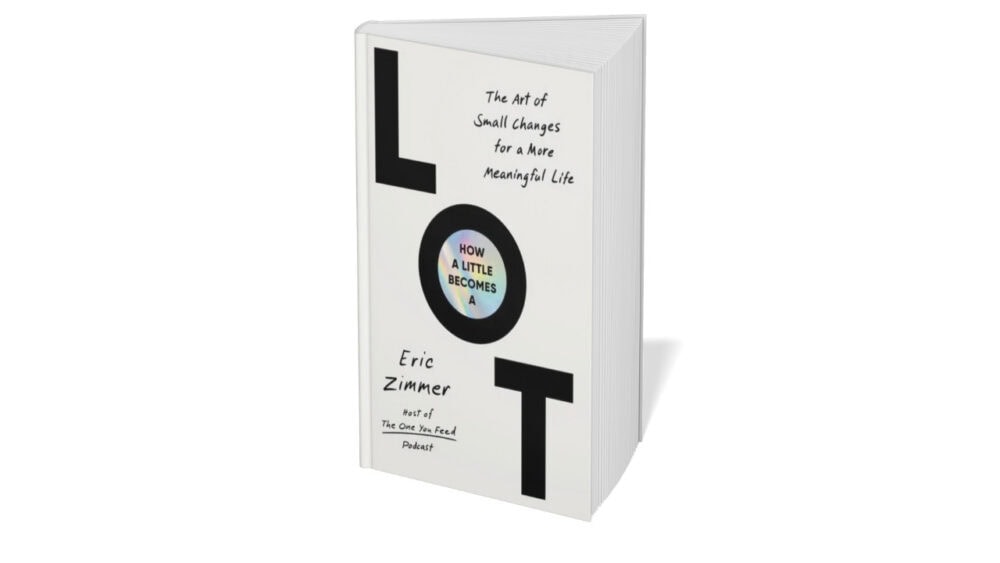
Exciting News!!! Coming in March, 2026, my new book, How a Little Becomes a Lot: The Art of Small Changes for a More Meaningful Life is now available for pre-orders!
Key Takeaways:
- Behavior change and habit formation
- The “Tiny Habits” method and its principles
- The importance of positivity in personal transformation
- Breaking down aspirations into small, manageable actions
- Embracing mistakes as learning opportunities
- The role of self-compassion in habit formation
- The Fogg Behavior Model: motivation, ability, and prompts
- The significance of context in habit design
- Strategies for troubleshooting and enhancing behavior change
- The impact of celebrating small successes on habit reinforcement
BJ Fogg is the founder of the Behavior Design Lab at Stanford University. In addition to his research, he teaches industry innovators how human behavior really works. He created the Tiny Habits Academy to help people around the world. His work focuses on creating new ways to understand behavior and new methods for designing change solutions into a powerful system he calls It’s a powerful system he calls “Behavior Design.”
Connect with Dr. BJ Fogg: Website | Instagram | LinkedIn
If you enjoyed this conversation with Dr. BJ Fogg, check out these other episodes:
How to Create Elastic Habits that Adapt to Your Day with Stephen Guise
How to Make Lasting Changes with John Norcross
By purchasing products and/or services from our sponsors, you are helping to support The One You Feed and we greatly appreciate it. Thank you!
This episode is sponsored by:
Aura Frames: For a limited time, save on the perfect gift by visiting AuraFrames.com /FEED to get $35 off Aura’s best-selling Carver Mat frames – named #1 by Wirecutter – by using promo code FEED at checkout. This deal is exclusive to listeners, and frames sell out fast, so order yours now to get it in time for the holidays!
Uncommon Goods has something for everyone – you’ll find thousands of new gift ideas that you won’t find anywhere else, and you’ll be supporting artists and small, independent businesses. To get 15% off your next gift, go to UNCOMMONGOODS.com/FEED
LinkedIn: Post your job for free at linkedin.com/oneyoufeed. Terms and conditions apply.

If you enjoy our podcast and find value in our content, please consider supporting the show. By joining our Patreon Community, you’ll receive exclusive content only available on Patreon! Click here to learn more!!
Episode Transcript:
Eric Zimmer 00:00:00 Eight years ago, I was completely overwhelmed. Career. Two Teenage Boys A growing podcast a mother who needed care. That’s when I stumbled into something I now call the Still Point method, a way of using small moments throughout my day to change not how much I had to do, but how I felt while doing it. So I built something I wish I’d had back then. Overwhelm is Optional; tools for when you can’t do less. It’s an email course that fits into moments that you already have less than ten minutes total a day. It’s not about doing less, it’s about relating differently to what you do. Holiday price is $29. Check it out at oneyoufeed.net/overwhelm.
BJ Fogg 00:00:46 What is the smallest habit I can do that will give me that outcome? Whether that’s less stress at work or eating differently, or sleeping better, or what have you.
Chris Forbes 00:01:03 Welcome to the one you feed. Throughout time, great thinkers have recognized the importance of the thoughts. We have quotes like garbage in, garbage out or you are what you think ring true.
Chris Forbes 00:01:15 And yet for many of us, our thoughts don’t strengthen or empower us. We tend toward negativity, self-pity, jealousy, or fear. We see what we don’t have instead of what we do. We think things that hold us back and dampen our spirit. But it’s not just about thinking our actions matter. It takes conscious, consistent, and creative effort to make a life worth living. This podcast is about how other people keep themselves moving in the right direction, how they feed their good wolf.
Eric Zimmer 00:01:47 Here’s a sentence that causes a lot of damage. I just don’t have enough willpower because once you believe that, every stumble becomes evidence, every midday becomes a verdict. This is a rereleased time perfectly for the way we all start looking at the calendar and thinking, okay, 2026, this time I’m gonna get it right. But BJ Fogg offers a different lens in this conversation. Behavior isn’t a character trait, it’s a design problem. And when something isn’t happening, the question isn’t, what’s wrong with me? It’s what’s missing here.
Eric Zimmer 00:02:25 We missing a prompt? An easier version, a better setup. If you want 2026 to be less about big promises and more about steady traction, this conversation is a great reset. I’m Eric Zimmer and this is the one you feed. Hi BJ, welcome to the show Eric.
BJ Fogg 00:02:41 Thank you for inviting me.
Eric Zimmer 00:02:42 It is a pleasure to have you on again. We’re going to talk about your book, Tiny Habits The Small Changes that Change everything. But before we do, let’s start like we always do with a parable. There is a grandfather who’s talking with his granddaughter. And he says, in life there are two wolves inside of us that are always at battle. One is a good wolf, which represents things like kindness and bravery and love, and the other is a bad wolf, which represents things like greed and hatred and fear. And the granddaughter stops and thinks about it for a second and looks up at her grandfather, and she said, well, grandfather, which one wins? And the grandfather says, the one you feed.
Eric Zimmer 00:03:20 So I’d like to start off by asking you what that parable means to you in your life and in the work that you do.
BJ Fogg 00:03:26 Wow, it’s such a great parable. It has a lot of meanings, I think right now, as with Tiny Habits and what I’m teaching and researching, in some ways, the biggest meaning for that for me is are you going to focus on the positive, or are you going to focus on the negative in your life? And that in some ways is one of the main messages of Tiny Habits is you change best by feeling good and not by feeling bad. Now I wrote down some other interpretations of that parable, but let me just stop there. That’s how I think about it primarily right now.
Eric Zimmer 00:04:00 Yeah, that’s great, because that was kind of one of the places I was going to go very early in the conversation. So let’s just go there now, which is that idea. If people change best by feeling good, not by feeling bad. We tend to talk very negatively to ourselves in an attempt to get ourselves to change.
Eric Zimmer 00:04:17 But the research that you’ve done, and you know, a lot of work that I’ve done and with different people kind of shows it’s not really the way it works. So explain why feeling good is a better way to go about it than feeling bad.
BJ Fogg 00:04:29 You know, it was about eight years ago and it didn’t come out of my Stanford lab research. It came out of coach. I’d coached probably a thousand people in Tiny Habits, and I’d started sharing the Tiny Habits method probably about four months earlier. So this would have been about eight years ago. And every week I was coaching 2 to 300 people through email, tiny habits and teaching them this way to create habits that is really simple and really effective. And one day, about four months in, I got an email from a woman and in my book I call her Rhonda, which isn’t her real name, but from Rhonda and she’s. And it was Wednesday in the five day program. That’s the day where I really emphasized this technique I call celebration, which is a way to feel good.
BJ Fogg 00:05:12 And she said, wow, B.J., I now realize and thank you so much for helping me recognize that I’ve endured a lifetime of self trash talk. Right? And I remember exactly where I was sitting exactly the time of day. And my reaction, it was like, oh my gosh, I read it and I reread it and I was like, Because sure, we all criticize ourselves. We all said really high standards for ourselves and so on, but I didn’t feel like I had a lifetime of self trash talk, and that made me shift pretty dramatically. It was one of the key moments in my career where I thought, now. This thing, Tiny Habits, that’s kind of a this weird hobby I’ve been doing, you know, teaching all these people every week how to create habits. This can’t just be a weird hobby. This needs to be something bigger. And this and then, you know, in the emails that in the hundreds of thousands of people later that I was coaching, I saw the pattern really clearly that in general, people are feeling really discouraged, beat up, they beat themselves up, they trash talk.
BJ Fogg 00:06:16 And there’s this is a negative cloud over things. One of the big things I want from the book is for people to understand that you can have positive valence to things you do, and that actually the change, the lasting changes. You do better by feeling good and not feeling bad.
Eric Zimmer 00:06:34 Right? That’s such a fundamental thing that I’ve realized in doing this show, and over time is just like that. To learn to sort of be a friend to yourself is such a fundamental shift of orientation, but it makes such a big difference in the quality of life. I mean, we’re doing all these things habits, behavior change, all this so that our life is better. But that one change of like, all right, you know what? I’m not going to treat myself like a friend is so fundamental and important.
BJ Fogg 00:07:02 Yeah. And let me give an example. I don’t think this is in the book. There was so much I wanted to include in the book, and my editor would go, that’s the next book.
BJ Fogg 00:07:11 That’s a whole different book. But this may be too cliche a topic, but I’ll pick a thing that many people are trying to change how they eat so they are more fit and feel more fit, and when they slip up or however they look at it, they beat themselves up. And one way to think about that is look at yourself as like a baby or a toddler who’s just learning to walk. And when a baby is just learning to walk and that baby stumbles, you don’t go, oh, that was terrible. That was awful. Why did you mess up? You just hope the baby gets up and keeps going, and you chair the baby on for every tiny step it makes. And that’s exactly how we should be looking at ourselves and the habits we want in our life, and more broadly, the way we want to change our lives. If I really want to emphasize it, I say it this way how many people in this world on planet Earth have learned to walk? Okay. Billions.
BJ Fogg 00:08:06 Almost everybody. Not everybody. Almost everybody. How many of those have learned to eat in a way that keeps them at their optimal weight? A much smaller number. So the challenge of eating in an optimal way is actually harder than walking. And that’s not entirely true, but it’s good to help make the point that you’re like a little baby as you’re trying to change all these ways that you eat. And when you stumble, when you take these little falls. No big deal. Just get up and keep going and you will figure it out, right?
Eric Zimmer 00:08:41 I think that part of what happens with us in inhabits or all these things, is that we turn it into almost a moral failing. And I see this in the coaching work I do with people and you address it right away in the book. People show up and go, I’m the kind of person who, I’m lazy, I’m undisciplined. I’m, you know, it’s all these things that are personality traits which, you know, one of the things I’ve learned and I learned a lot of it from looking at your work, right, is that this is all stuff that we can learn.
Eric Zimmer 00:09:14 We can learn to change. We just have never been taught. Some people stumble their way into it, but most of us don’t.
BJ Fogg 00:09:22 Yeah, and you’re absolutely right. First part of Tiny Habits I start right there. It’s like, you know, you’ve probably tried to change and for some things you haven’t succeeded. And guess what? That’s not your fault. And it was about ten years ago. And speaking at Stanford that I started getting really cranky. You know, I organized conferences and I speak at conferences. And then I just started getting up at health conferences and saying, when you create a product or program to help people change and they fail. That is not a neutral experience. You have set that person back, you have damaged that person. So stop creating products and programs that set people up for failure. And I’m usually a super optimistic, positive guy. People think I’m a lot like Mr. Rogers. But when it comes to this, you know, creating a program that people put faith in and they fail.
BJ Fogg 00:10:12 I get cranky, and that’s one of the big things I want to help people understand is if you haven’t been able to change habits or transform the life in the way you want, like you said, it’s not a personal failing. It’s not a moral failing. You just haven’t been given the right way to succeed yet. And that’s what I hope to give people with tiny habits.
Eric Zimmer 00:10:36 Yeah. Couldn’t agree more. So also, early in the book, you say that in order to design successful habits and change your behaviors. You should do three things, and I’ll just read them and then we can just talk about them real briefly. We’ve kind of covered the first one. Stop judging yourself right. Second is take your aspirations and break them down into tiny behaviors, and then finally embrace mistakes as discoveries and use them to move forward. And so that’s sort of a three step process for what unfolds through the whole rest of the book. But let’s talk about the second two of those. Take your aspirations and break them down into tiny behaviors.
BJ Fogg 00:11:10 So important. What doesn’t work very well is to have something abstract that you want to achieve, and just try to motivate yourself toward the abstraction. So if you think, wow, I’m really stressed at work, I really need to get myself to not be stressed and just like, hey, don’t stress, don’t stress, it’s an abstraction. Or even eat differently, or exercise, or read more or sleep better. All of those things are not specific behaviors. Those are the results of doing specific behaviors, and the right way to do it is to figure out what is the smallest action or the smallest habit I can do that will give me that outcome, whether that’s less stress at work or eating differently, or sleeping better, or what have you. And so, as you saw in Tiny Habits that once you’re clear on your aspiration, the very next step is to figure out what is the right behavior for me, the specific behavior. And often that’s a new habit. And that’s when you can design for that habit and reach the outcome.
BJ Fogg 00:12:15 So you got to go from the abstract idea, which I usually call an aspiration, say, oh, I want to be more mindful and then break that down into a very specific behavior that you want to do, and you can do, and you design for that behavior. And through succeeding in that behavior, you can reach the abstraction. You can be more mindful or sleep better or whatever aspiration you have.
Eric Zimmer 00:12:40 Right. And I want to talk more in a few minutes about that concept of breaking down into tiny behaviors and sort of finding what you call golden behavior. So we’ll head there in a second. But let’s hit embrace mistakes as discoveries and use them to move forward real quick before we before we go there.
BJ Fogg 00:12:56 Yeah. Well, let me give an example to happened about two weeks ago for me. I was speaking at an event and up on the stage, on the table where I was speaking, there was a cup of water. And as I was speaking, and I tend to be kind of a kinetic person, I move around a lot and I like being active and whatever.
BJ Fogg 00:13:14 And I knocked the water over like I knocked it over and it spilled on the papers and the handouts I had, and I just kept going. I was like, oh, but my reaction wasn’t, man, BJ, you’re so clumsy. And what did you do? It was just I kept going and my reaction was, wow, you just kept going without missing a beat. Good for you. So the difference there is. Yeah. Let’s say maybe ten years ago. Had I done that, I would have been like, you hit the water, you knocked it over. Could somebody please bring me a towel? You know, I’d be beating myself up, but because I practice tiny habits and this thing of where you really emphasize the positive and the things that don’t go like you want, you just let them go. You don’t react to them. My natural reaction was not to react and then go, wow, good for me. I just didn’t miss a beat here. Now there are ways you can learn to do that.
BJ Fogg 00:14:09 And you know, like you said earlier, change can be learned. And the way I talk about it is change as a skill. It’s actually a set of skills. And one of those skills is to be able to feel good about, a success, no matter how tiny it is. And the flip side of that is when things don’t go as you don’t just let it go, don’t obsess about it. Don’t be yourself. Let it go. So you you upregulate the positive and you down regulate the negative.
Eric Zimmer 00:14:37 Rate, which is challenging to do but so important. And I think what you’re talking about there, and the thing that I think a lot of people when we when we talk about making habits small, is that a lot of people are caught in all or nothing thinking. Right. They’re, they’re, they’re caught into. Well, either I’m going to go to the gym for an hour or it’s not worth doing. And and what that leads to is a lot of not worth doing right.
Eric Zimmer 00:15:05 You know, a little bit of something is better than a lot of nothing, right? And that’s kind of the Tiny Habits piece. And I think the other important thing about embrace mistakes is discoveries, is that one of the things I’ve realized is that there is no perfection in this game. Right? And expecting perfection is often what derails a perfectly good habit or behavior change. Things are going well. Exactly. And then exactly slips happen. Or call them whatever you want. They’re inevitable. Right? But people don’t know that. And so they go, I’m failing. Which then kicks back into that first mindset of, oh, see, I knew I couldn’t do it. And so I love that idea of mistakes. Discoveries. What can I learn from this?
BJ Fogg 00:15:48 You know, that’s part of our culture, at least part of Western culture, California culture, where I live. And I pushed on that and I thought, where did this come from? And as I looked at it, it seems to have come from there’s a guy in 1890, William James, who wrote a textbook called Principles of Psychology.
BJ Fogg 00:16:07 And chapter four of that textbook is about habits. Now, the overall textbook took ten years to write. And if the people listening to this haven’t read William James Chapter four, go get it. You can buy a little book of it for $9 online, or you can just download the whole text for free. But he talks about habits there and what I’ve found in that chapter in his work, which was so influential just set the foundation for how people thought about habits and behavior and human psychology for decades to come. He talks about as you’re trying to he gives this analogy of like, you’re winding yarn into a ball and he says, don’t ever miss a day. That’s like dropping the yarn and it becomes all unwound. Well, he’s he’s wrong. But that’s where that’s possibly where the thinking came from. Now, to William James’s credit. So many of the things he wrote in 1890 are just right on, just boom, he nailed it. And a lot of the people that are talking about habits are basically just recycling William James.
BJ Fogg 00:17:11 But the area where I think he gets it wrong is in that one case. And unfortunately, I think it’s influenced our thinking that, yeah, you’ve got to be perfect and never miss a day and so on. Well guess what? Nobody’s perfect. And it’s just like practicing anything else, whether it’s piano or basketball or tennis or dancing, you’re not going to be perfect. And if you stop as soon as you make a mistake, you’ll never learn to play the piano or speak French or basketball. It’s just part of the process.
Eric Zimmer 00:17:38 Yeah, I think that analogy of speaking French is the good one. I’ve used it sometimes recently when talking with people about addiction, about like, well, you know, you start learning to speak French and at first you can only do it like, you know, a couple sentences and then you take a class and you can sort of talk with the teacher and you’re getting better. And then you go out in the world and you can order a croissant, you know, in French, and then you run into a real French speaker and they just start talking and you’re like, I’m completely lost, right? And that’s that’s the normal evolution.
Eric Zimmer 00:18:07 And so you get better. And so what I see a lot of people do is I’ve got this behavior down in a lot of contexts. And then I hit a new context that I don’t have it down in. And instead of going, oh, okay, well what can I learn about how to speak French when I’m in this situation? We go, I’m just terrible at French and and and abandon the whole thing. And you’re right. If if we treat building habits like we would treat those other things, we’d accept learning as part of the process.
BJ Fogg 00:18:34 Yeah, exactly. And that’s right on one of the, frameworks. And this isn’t in the book. Some things related to it are in Tiny Habits. But when you look at a habit, it is a person doing an action in a given context. And I mentioned this briefly in the book, but I’ll go a little bit further here. So I have it isn’t just the action. It’s not just the, you know, eating broccoli for breakfast or walking around the block for an hour or, you know, meditating for 21 minutes in the evening.
BJ Fogg 00:19:07 It’s a type of person doing an action in a given context. And if you change the context, then it’s a different habit. So you working out while you’re at home and your normal routine is a different habit than you working out while you’re traveling in a hotel. And to build on your point. People don’t recognize. That’s a different habit. So don’t be hard on yourself. When you travel and you don’t work out, that’s a different habit. You can create the habit, but don’t expect the workout at home habit to transfer just automatically to when you travel.
Eric Zimmer 00:19:41 That’s a really great way to put it and is absolutely true in my experience. It took me a long time. I traveled a lot for work until I started doing this full time, but it took me a while to figure out how to do things that I did at home pretty easily. And I would initially, like you said, be frustrated. But I kind of realized like, oh, I need to have my own version of this for when I’m in a hotel.
Eric Zimmer 00:20:05 It looks very different and I need to not leave it to chance.
BJ Fogg 00:20:09 Yeah, well, let me give you a true example from my life. Very simple. So here at home, I have this rock solid habit of how I take vitamins. It’s wired in. It happens all the time. I don’t have to think about it. And then I’m on a trip and I notice it’s like noon or something at the conference, and it’s like, I haven’t taken my vitamins. Well guess what? Because I don’t have a recipe. A tiny habit recipe for that. I haven’t wired it in. So I realized, like you said, I need to create a habit for this. So the habit I have when I travel is I put my vitamins, I prepackaged them, and then in the morning, as I’m getting dressed in the hotel room, I take the vitamins and I put them in my pocket. I don’t actually swallow the vitamins. I just put them in my pocket and which kind of maps what I do.
BJ Fogg 00:20:58 At home. I take the vitamins and I put them in a little dish. I’m kind of shaking the dish right now and through the day. At home, I take the vitamins because they’re in the dish. But when I travel, what you know, I’ll put my hands in my pocket. They’re the vitamins and I’ll take a couple. So I very specifically figured out what is the habit that will get me to take my vitamins, even when I’m traveling? And realizing that the habit I had at home of putting in a little dish and taking my vitamins out of the drawer wasn’t going to generalize to all contexts, and I just needed to create a different habit for it. And once I have it done, it’s done.
Eric Zimmer 00:21:55 Our first episode together, we covered this, but that’s a long time ago, and I think we should just do it again. And let’s talk about the Fogg behavioral model, because I think understanding this unlocks a lot of how behaviors occur or don’t occur.
BJ Fogg 00:22:09 In explaining the model.
BJ Fogg 00:22:11 You can explain it like two sentences. Behavior happens when three things come together at the same time motivation, ability, and a prompt. And if any one of those three things is missing, the behavior won’t happen. So that’s probably the simplest explanation.
Eric Zimmer 00:22:27 And so let’s define each of those real quickly. I think motivation most people understand it’s it’s a desire to do it right. Right. Ability. What what do you mean when you’re using the word ability in this case.
BJ Fogg 00:22:39 Yeah. It’s essentially your capacity. And I define ability. There’s five factors. How much time it takes. You have the time required to do this. How much money it takes. Do you have the money required to do this. And some things require no money. Some require a lot, and anywhere in between. How much thinking it requires, how much physical effort. And the last of the five. And this is maybe the most subtle, but it’s really important is how well does it fit into my routine versus breaking my routine.
BJ Fogg 00:23:11 And so when you’re looking at is a new habit easy to do. And I have a chain model, I call it the ability chain. You think of five links time, money, physical effort, mental effort, and routine? As you look at a new habit like, oh, I want to go to bed, you know, as soon as my favorite TV show is over. Now, is that easy to do? Do you have the time to do it? Probably. Do you have the money? Probably. do you have physical effort? Mental effort? Probably. But boom. Routine. Well, it conflicts with my other routines of calling my mom or doing these other things. Well, then that’s not going to be easy. So the way I define ability is it’s a function of the weakest link in that chain. So it can be any of those factors if it’s required for that habit or the behavior. If it’s a weak link and it’s needed, then that’s what makes it hard to do.
Eric Zimmer 00:24:01 And motivation and ability have a relationship with each other. Right. The harder something is, the more motivation you need. The easier something is, the less motivation you need, which really sits at the heart of the Tiny Habits model, which is if you do something really small. You don’t need a ton of motivation, which is good because we all know motivation goes up and down.
BJ Fogg 00:24:24 Yeah, and I used to call that a trade off relationship. You could have more or less or one or the other. In about five years ago, some guy called me out and said, it’s not a trade off, it’s a substitute relationship. And I was like, well, sort of. So I went looking like, what is the right word for this relationship? And I finally found it. And it’s a big word. I’ll probably stumble on it. It’s a compensatory relationship, so they compensate for each other. And that’s kind of a huge mouthful. But I’m geeking out now by saying it’s a compensatory relationship.
BJ Fogg 00:24:58 But the easier way to think about it is they work like teammates. If one of them is weak, the other must be strong and vice versa. They both can be strong, but they both can’t be weak. If you have low motivation and it’s really hard to do. Guess what? The habits are not going to form so one can compensate for the other. and thinking of them as teammates, where one picks up the slack for the other, I think is a good way to go.
Eric Zimmer 00:25:21 Yeah, I really like that concept of being teammates. And, you know, if one’s weak, the other needs to be strong. And so you then talk about troubleshooting a behavior. So we want to do a behavior. And we’re not doing it for whatever reason. And you say that in order to do that there are a specific set of steps for troubleshooting this common problem. And it goes through the pieces in your model, not in the order people might think.
BJ Fogg 00:25:48 Exactly. So the behavior model which is behavior, happens when motivation, ability, or prompt all come together.
BJ Fogg 00:25:54 That is a model. It’s a way of thinking and it describes how behavior works. The broader category, the broader name for my work I call behavior design, which is a set of models. One of them is the behavior model, and it’s a set of methods. One of those is the Tiny Habits method. And together it’s a system. Everything works together, the behavior is systematic, and the way you design for behavior is systematic. Going to the behavior model and troubleshooting. The question you asked me is a very specific thing, and it’s super helpful when there’s a behavior you want to happen and it’s not happening. Typically people get upset, so they go into motivation mode. so let’s say I have asked my brother to send me the itinerary to the fishing trip, and he doesn’t send it to me. I could get upset and say, hey, Steve, where’s the itinerary? You know, I need this. I’m a busy person. That’s the wrong move. What you do is you start from the other end of the model and you start with prompt and you say, was there something to remind my brother? Something to prompt or remind him to send me the itinerary for the fishing trip? And if not, make sure there’s a prompt that’s step one if it’s still not happening.
BJ Fogg 00:27:03 So if I know Steve is being prompted and he’s not sending me the fishing itinerary, then I don’t go to motivation yet. I go to ability. Okay, what’s making this hard for Steve to do? Does he have the time? Is it required too much thinking? So if I make it easier to do. Steve, all I need you to do is send me the start date and the end date. I don’t need every little detail, so I’m scaling back the behavior to something tiny and usually Eric, in most cases, if somebody has a prompt and it’s really easy to do, the behavior will happen. There are times it won’t. And then, you know, you have a motivation challenge on your hands. So the troubleshooting order is not what most people think it is intuitively. And I used to think this until I studied it and mapped it out and figured out the system. It’s checked the prompt first. If there’s one there, check ability, make it easier to do. And then if you arrive at motivation, then you go.
BJ Fogg 00:28:02 And there’s different ways to motivate and motivate. And it’s it’s a much trickier issue. So it actually we want to talk about helping friends and family do things we want them to do. It can really save or at least help you not damage a relationship because you don’t go into like getting upset at your brother for not setting the itinerary. Instead of you, help him be successful through setting a prompt or make it easier to do so. It’s really a nice way. Very practical, like everyday kind of thing where you think, okay, I don’t want to get angry or upset or threaten. All of those are motivational strategies. So prompt ability. And then if you have to you go into the motivation.
Eric Zimmer 00:28:42 Yeah I think that’s so important a in troubleshooting a behavior why something’s not happening. And B because most of us jump immediately to motivation and in any context not just changing behavior. I think guessing at someone else’s motivation can get us in a lot of hot water, because we just don’t know well.
BJ Fogg 00:29:01 And the people around me hear about behavior, design, and tiny habits and behavior model all the time.
BJ Fogg 00:29:07 So it’s like just part of the language of how we discuss. So if my partner wants me to do something and I don’t do it, and he reminds me to do something and he gets a little bit upset, I’ll just say, Denny. This is not a motivation issue. It’s an ability issue. It’s you know, it’s I don’t have the time right now. And I think that helps. It’s like, so they understand I’m motivated to do this thing you want me to do, but I just can’t. It’s an ability factor, not a motivation factor. And I think that well, one it’s true. And then two, it helps people understand that you really do want to help them or comply with what they’re saying. It’s not a motivation lack. It is either a prompt that was missing at the right time, or somehow the task seems too hard to do right.
Eric Zimmer 00:29:54 And I want to get into, troubleshooting ability in a minute, although we kind of talked about it, but I want to start with motivation briefly, because there’s something you wrote in the book that really stood out for me, and I’ll just read it because I think it’s really useful.
Eric Zimmer 00:30:08 It says hope and fear are vectors that push against each other, and the sum of those two vectors is your overall motivation level. If you can remove the vector of fear, then hope will predominate. Your overall motivation level will be higher. And I just I never thought of it in quite those terms that those two things combine to be motivation in one way to increase motivation is decrease fear.
BJ Fogg 00:30:32 Yeah. You said it so well. And that’s a more sophisticated use of the behavior model. Behavior model 101 is a way you can describe it in two minutes as you’re drawing it out. Right. And one thing I want people, readers of Tiny Habits, to be able to do is to be able to say, here’s how behavior works, and explain it and draw it out in two minutes or less. And in fact, in Tiny Habits, I’ve written the word for word script for that. I got some pushback from my editor saying no, and I was like, no, this is really important. Let’s put this in.
BJ Fogg 00:31:04 It’s in the appendix. Because being able to teach something helps people learn it better. And so. This insight that motivation or vectors pushed that’s more like behavior model level 300. But it’s pretty easy to understand if I’m motivated to. Let’s say I’ll call out an example from the book. There’s lots of examples, but this is a fun, goofy one, I think. Say you’re at a company party and they hired a band and people are dancing, and part of you says, oh man, I’d really like to be out there dancing. It would be fun. Maybe I’d look cool. So that’s hope. You know, like, if I dance, then I’ll have fun. If I dance, I might look cool. And then you have a motivator, which is probably fear. What if I look like a fool out there? What if the boss sees me and then things poorly of me and doesn’t promote me? So you have hope and fear pushing on each other. And if you can get rid of the fear, you’ll get out on the dance floor.
BJ Fogg 00:31:59 Now some people do that through alcohol, which is not what I’m recommending. But in, you know. So, you know, when people drink, they get less inhibited and they don’t worry so much about what others think. at a dance conference that I designed at Stanford, it’s called design for dance. Everybody danced. It was like I had to drop a hat, everybody to jump up and dance at a different health conference I organized. People didn’t. There was just a lot of fear. But then I handed out sunglasses. And what was funny about that was when people put sunglasses on, that took away a motivator and people started dancing because they felt less watched. You know, sunglasses give you the sense of being more anonymous. And so that was really it wasn’t a true I mean, it wasn’t like a lab experiment. It was just sort of a field test of what if I hand out sunglasses? Will more people dance? And the answer is yes. And it’s for exactly this dynamic where you’re not motivating people to dance.
BJ Fogg 00:32:59 You are taking away a motivator, a fear of looking stupid or feeling stupid.
Eric Zimmer 00:33:03 Yeah. And I just thought that was was so well put. So let’s go back to maybe behavior design 200 from jumping ahead to 300. And let’s talk about, you know, one of the core things you say with troubleshooting a behavior, right, is to ask yourself, how can I make this behavior easier to do. You call it the breakthrough question. So, you know, just to put all this in context of everything else, I’ve come up with an idea. I’ve come up with behaviors I’m going to do, and I’m not doing them. I’ve looked and I’ve gone, okay, I don’t think it’s a prompt issue. let me check in on ability. Right. And and ability is about how easy is it to do so what are some ways we can make a behavior easier to do.
BJ Fogg 00:33:49 Well there’s three general ways. But before you dive into that, you ask yourself the earlier question like what’s making it hard to do? And if you have some insight, is it time Then when you solve for it, you say, how do I get more time? If it’s money, how do I get more money? Or how do we make it cheaper if it’s physical effort and so on.
BJ Fogg 00:34:08 So let’s say it’s time. Let’s say that you want to meditate and you know, it’s just too hard to do. And you figure out it’s a time factor. So really you have three options. one is you can train the person or train yourself so you have more time. Number two, you can put a tool or resource in your context. that would reduce the time required to do that behavior in this case meditate. And the third option you can do any one of these or multiple is you take the action the meditation and you scale it back and make it smaller. So instead of thinking about meditating for 30 minutes, meditate for three. So those are the three levers you have to pull. You can change the person, train them or scale them up. You might get more effective at meditating and short bursts. For example, you can put a tool or resource in your environment. It might be a podcast direction meditation that might be thrown on the TV. It goes right to meditation, or you just scale it back and make it tiny.
BJ Fogg 00:35:08 And that third one is the hack and tiny habits. You take any new habit you want. And yes, you redesign your environment so it’s easy, but you also take the action itself and you scale it back to make it super tiny. Not you don’t floss all your teeth. You floss just one. You don’t do 20 push ups. You do just two. you don’t have to read a whole chapter in the book. Read one paragraph. And that’s a skill, knowing how to scale it back and make that behavior super tiny. And you’re asking such a good question. So I’m going to preempt the next question. When you make it super tiny, the thing that shifts dramatically is you don’t need high levels of motivation to do something that’s really easy. So now you’re not relying on motivation anymore. And so by making a tiny, you kind of I call it the motivation monkey in the book. You kind of outsmart the motivation monkey because you’ve made it so small. You don’t need much motivation to meditate for three minutes or to do two pushups, right?
Eric Zimmer 00:36:06 And then further to elaborate on the tiny habit method, you do the change, the habit, the tiny one, and then you celebrate.
Eric Zimmer 00:36:16 Celebration is a big, big thing for you. Yeah, because what celebration does is effects motivation and ability. So let’s talk about what celebration is and why it’s so important to your method.
BJ Fogg 00:36:28 So celebration is the word that I selected for a technique that you do something that helps you feel successful in that moment. So it could be a fist pump. I think of Tiger Woods doing a fist pump. It can be upraised arms. I think of Michael Phelps, you know, setting a world record. it can be a little dance. It can be smiling yourself, whatever that thing is that helps you feel happy and successful. You can use it as a celebration. And this feeling is what wires in the habit. So it’s not repetition that creates the habit. We’ll probably get there in a minute. It is the emotion. It’s the feeling of success. So celebration is the technique to feel successful. And by doing an effective celebration, you are supercharging the speed of habit formation.
Eric Zimmer 00:37:43 What happens to either motivation or ability as we celebrate?
BJ Fogg 00:37:47 Well, when you celebrate, not only does it rewire your brain and make the behavior more automatic, more of a habit, but it also makes you want to do it more in the future, so it has a direct effect on motivation.
BJ Fogg 00:38:00 The effect on ability is indirect. The more we do a behavior, the easier it becomes. So the more often I wash my dog. You know, the first time I wash my dog is going to take a while, and then the next time I 30% less, the next time 20%, and it gets easier and easier to do. Now there’s a point where it’s about as easy as it can get. But as we’re creating habits, the more we do the behavior, the easier it gets. And if we don’t feel successful the first time we do a behavior, we may not do it again. So there’s a direct connection between celebration and forming the habit. There’s a direct connection between celebration and your motivation to do it again. And there’s an indirect real effect on the behavior becoming easier to do. So all of those things benefit from this technique called celebration. And I know some people listening to me are going to think I’m crazy. And because this is not what you’ve heard before. This is not the traditional way, but it is the right way.
Eric Zimmer 00:38:58 And so let’s take someone who is typically hard on themselves, right? Somebody who feels like I should be able to go to the gym for an hour and a half, and now I’m doing two push ups. How on earth do I feel good about that?
BJ Fogg 00:39:14 There’s a few reasons to feel good about that. So let’s take I mean, push ups are a really good starting point. If somebody wants to have like a full on kind of workout routine, starting with just two push ups and recognizing that as a success is a great way to go. it is a success because as you do two push ups and as you do it consistently, you are actually changing your behavior. It may not be a huge change, but it is a change. It is a change. And so one way to think about it is here’s all the times I’ve tried to change my behavior and it didn’t work. And boom. I did the two pushups. I actually made a change. Good for me. Now, the ability to feel good about a tiny success is a skill, so I can’t tell you exactly.
BJ Fogg 00:40:01 You know, here it is. Just do it. You’ll have to play around with it. Just like I can tell you how to dance or play the piano, but you kind of got to do it yourself to figure out what works for you. But I’ll just call it out that as you allow yourself to feel successful about even the tiniest of successes, that will then open the door to a lot of ripple effects. So what happens is you start making other changes in your life, and then that habit will also grow. So too, push ups will naturally grow to more flossing. One tooth will grow. Flossing all your teeth, reading one paragraph will lead to reading more and so on. One of the keys in Tiny Habits. Well, the phrase I often use is plant a tiny seed in a good spot and it will grow without further coaxing. The tiny seed is like the new habit, and then you find a good spot. Where does this fit naturally in my life. And that’s important.
BJ Fogg 00:40:54 We haven’t quite talked about that yet. Eric. And then if you put it in a good spot and keep it nurture, it will naturally grow. And that’s exactly how habits work. So you can start them tiny. It’s easy to keep tiny ones nurtured and going and be consistent. And then it will naturally grow.
Eric Zimmer 00:41:10 And then how do we know when it’s time to grow a habit? What ways do habits grow? How much do I grow? You know, like so okay, I start. I buy into the method. I’m like, all right, this makes sense. I haven’t had any success with what I’m doing. So I’m going to do this. I’m going to do my two push ups. But after I do my two push ups for a little while and I’m even trying to celebrate it.
BJ Fogg 00:41:33 Three quick answers and you can follow up on any one of them, is the idea that as you start tiny, if you want to do more, you can. You can always do more if you want.
BJ Fogg 00:41:45 And so you might push yourself to 8 or 12, but the habit is always just too, so you keep the bar low. So that’s one way to think about it. And it’s a really helpful way to think about it. If you keep raising the bar on yourself, then it’s no longer tiny and you won’t be as consistent with the habit. Number one. Number two, as you do a new behavior, big or small, even small ones. And then this in part is kind of one of the breakthroughs in the method as you feel successful on even doing a new behavior that’s super tiny, you will naturally start doing other behaviors that are consistent with that new one. So as soon as you start eating, let’s say cauliflower as an afternoon snack and you feel successful, you will then start making other eating habits naturally. Success leads to success within the domain. And then the other thing that happens, and I mentioned this a little bit earlier, is that the tiny habit will grow. You will develop more capacity to cook more healthy vegetables or do more push ups or read more or what have you.
BJ Fogg 00:42:46 That’s just a natural growth. So you have a multiplication of the habit, and then you have the habit growing at the same time. So there are different ways that something tiny can grow big. And I don’t like to tell people, just be patient and trust the process of change because nobody wants to hear. Be patient. But people need to understand that it is a process, like growing a seed or a tiny plant. And if you keep it nurtured and if the roots get established, it will grow. So focus on getting the roots established firmly. That’s the automaticity in your life. And then keep it nurtured and it will grow.
Eric Zimmer 00:43:25 Yeah, I have an example of this in my own life, and listeners have heard this story before, perhaps, but I had been an on again, off again meditator for two decades, probably more than that, where I just would get all inspired and I’d try and meditate and I’d read like, well, you should meditate for 30 minutes a day. So I’d sit down and meditate for 30 minutes a day, and I might gut it out for a day, a week, a month.
Eric Zimmer 00:43:49 But inevitably it was too hard for me, or I didn’t have the time or whatever. Right. And it would. It would die completely. And then three months might go by or six months would go by. Inevitably, I would pick up another book and I’d read about how important meditation is, and we’d we’d repeat the cycle.
BJ Fogg 00:44:06 That’s such a great example.
Eric Zimmer 00:44:07 Yeah, yeah. And so finally, it was shortly before I started the podcast. So we’re we’re at six plus years. I just went, all right, I’m going to do three minutes. I’m going to meditate for three minutes. But I’m going to do it every single day. And sure enough, that worked. And you know, now I meditate much closer to 30 minutes every day. I mean, there were some other changes I made to my mindset, some of the stuff that we’ve talked about here, about being easier on myself and what I expected out of meditation. But that change was fundamental, which is why when I sort of stumbled into your work a little bit later, I was like, yes, that’s exactly right.
Eric Zimmer 00:44:45 Because because I sort of found my way there and it’s made all the difference in the world. And the only other thing I would add to that is if I miss, which occasionally happens and I start to struggle, I will give myself permission to drop back down from like, okay, well normally I do 30 minutes, but you know what? I’m struggling. So I’m going to give myself permission to do 5 or 10 and get the habit kind of going again and then sort of allow it to build.
BJ Fogg 00:45:13 Yeah, I think you did it exactly right. Meditation is a hard habit to form, and one of the reasons is that as we are trying to meditate, we’re not feeling successful. We’re probably noticing how busy our minds are. And the thing that wires in a habit is the feeling of success, like I talked about earlier. So if you’re feeling like a failure, then your brain doesn’t want to do that again. Your brain wants to feel successful, so if you can feel successful, then it’ll become more and more automatic.
BJ Fogg 00:45:45 And if you feel super successful the first time you do something, it can wire in. Like I call it an instant habit. Meditation stuff. It’s not going to become an instant habit because we just become aware of the busyness of our minds. So by scaling it back and lowering the bar, giving yourself, you did it exactly right. And one of the analogies that I talk about a little bit in Tiny Habits. I really wanted to put it throughout the book, but my editors were like, no, we’re not doing you no, no, don’t do too much of this. But I think it’s a powerful analogy is to think of your habits as a garden. So imagine you have an acre of land and you’ve got different plants and trees growing there. You can either design them or not. If you don’t design them, you’ll get weeds, and every different plant or tree is going to be a different size. And there’s going to be different places for the different plants and trees, just like there’s different places in our lives for different habits.
BJ Fogg 00:46:42 And the meditation habit may not fit in a certain part of your garden a certain part of your day, but it may fit beautifully in a different spot. So one of the things that to be really good at creating habits and this is a skill. I explain how in the book is to find where does this new habit fit naturally in my day? Yes, you need to feel successful while you’re doing it so it wires in. But one of the keys is where does this fit? Naturally? If you’re super busy in the morning, the meditation is probably not going to fit there unless you make it really tiny. And I’m going to keep extending the analogy here. And you could you can make it really tiny in the morning and then transplant it once it gets going. And once you have some more skill and motivation, you can actually transplant it to another part of your day. I don’t know if you did that, Eric, but in the people I coach, that is a common thing. I’ll start it in one place and then they’ll transplant it just like a plant and it can go somewhere else, and then it will expand more.
BJ Fogg 00:47:41 So if you don’t have 30 minutes in your morning, you can get started with a tiny meditation habit. And then as you start building skill and motivation and feelings of success around it, move it to another spot of your day where you have 20 or 30 minutes so it can expand and fill that space.
Eric Zimmer 00:47:59 Yeah, that’s a great metaphor. And it has kind of moved around depending on kind of what’s happening in life and where it does fit. And I think what you said about success is so important. That was the other fundamental shift I made as I went. You know what, if I sit down and meditate, I get an A+. No matter what happens during that time, and if I don’t, then I don’t. I got completely out of the am I any good at this game? Because you’re right. Sitting there, you just are like, why would I want to do something that I feel like I’m failing at literally every three seconds?
BJ Fogg 00:48:31 And you did it exactly right. Now, the plant analogy.
BJ Fogg 00:48:35 I said my editors rained me in on that, and that’s fine. I may write a lot more on that later in a different book, but what the people working with me did very well. So I tend to be a person that’s like, do this, do this, do this, very instructional and very practical. And they’re like, no, let’s bring in these true stories. You’ve helped all these people transform their lives. Let’s tell those stories in detail. And so helping me bring those stories in and helping me understand that a story that is two pages long is okay, and that’s what readers want. So there’s a story about a woman who kicked her sugar addiction, a story about a woman who was super depressed, near suicidal, and pulled out of it using tiny habits and celebration story about as you saw a man who had a terrible relationship with his adult son, and he used the troubleshooting part of trying to eat habits to repair it. And a man who a middle aged man who was overweight and couldn’t seem to get on top of it.
BJ Fogg 00:49:35 Transformed his life and became almost like this fitness guru. And so I really appreciate the people who helped me bring in those true stories and see how valuable those are. That’s not my natural way of teaching, because I just want to like, here’s the information. Now apply it. But having these true stories and I made it clear to them, every story in there has to be true. I’m a scientist. My integrity and credibility rests on being absolutely all the stories are true. And then when I took like a month break from the book, you do get a break and I came back and read them as a new naive reader, I was like, oh my gosh, I see why these are so powerful. I get it, I feel it. I’m not going to forget this story. And then there’s an instruction that tells me how to achieve the same thing. So I still tell people the how to do everything. You probably saw in the appendices, the detailed flowcharts which I wanted to put right in the book.
BJ Fogg 00:50:32 Like everything step by step. And I’m like, no, no, no, somebody’s going to open the book, see a flowchart and close it, and they’re not going to buy it. So they can go in the appendix and they’re right. And so it was really great to have people help me understand the kind of book that can reach everyone, you know, telling the true stories of lives. Transform.
Eric Zimmer 00:50:53 Yeah, I agree, I think it is a very good summation of your work and really puts it into context when you see how people have actually used it. I think it really adds an element to it. And I think the book is really wonderful, and I think this is a good place for us to wrap up. You and I will talk a little bit more in the post-show conversation where we’re going to run through, actually, the seven steps in behavior design. We’ve kind of hit a couple of them here, but we’re going to kind of stack it together and we’ll do that in the post-show conversation.
Eric Zimmer 00:51:25 Listeners, if you’d like access to that and all kinds of other good stuff and support the show, you can go to one you feed net support.
BJ Fogg 00:51:32 Eric, let me raise the bar here a little bit. I will also share the name of the emotion that you feel when you’re feeling successful. Oh, I did all this research called experts. There’s no name for it. And so in the book, I name it. And in the post-show we’ll talk about that.
Eric Zimmer 00:51:47 Perfect. All right, listeners, there you go. BJ, thank you so much for coming on. It’s been a pleasure talking with you again.
BJ Fogg 00:51:53 Thank you.
Eric Zimmer 00:51:54 Thank you so much for listening to the show. If you found this conversation helpful, inspiring, or thought provoking, I’d love for you to share it with a friend. Share it from one person to another is the lifeblood of what we do. We don’t have a big budget, and I’m certainly not a celebrity, but we have something even better. And that’s you just hit the share button on your podcast app, or send a quick text with the episode link to someone who might enjoy it.
Eric Zimmer 00:52:20 Your support means the world, and together we can spread wisdom one episode at a time. Thank you for being part of the one You Feed community.
Leave a Reply