

Take our quick 2-minute survey and help us improve your listening experience: oneyoufeed.net/survey
In this episode, Dr. Jud Brewer explains why anxiety is a habit and how curiosity breaks that habit loop. He explores the difference between the feeling of anxiety and the mental habit of worry, and why curiosity and self-compassion are essential for real change. Drawing from his clinical work and research on digital therapeutics and AI-supported therapy, Dr. Brewer shows how learning from setbacks—and building distress tolerance—helps us recognize progress, unwind shame, and create lasting transformation.
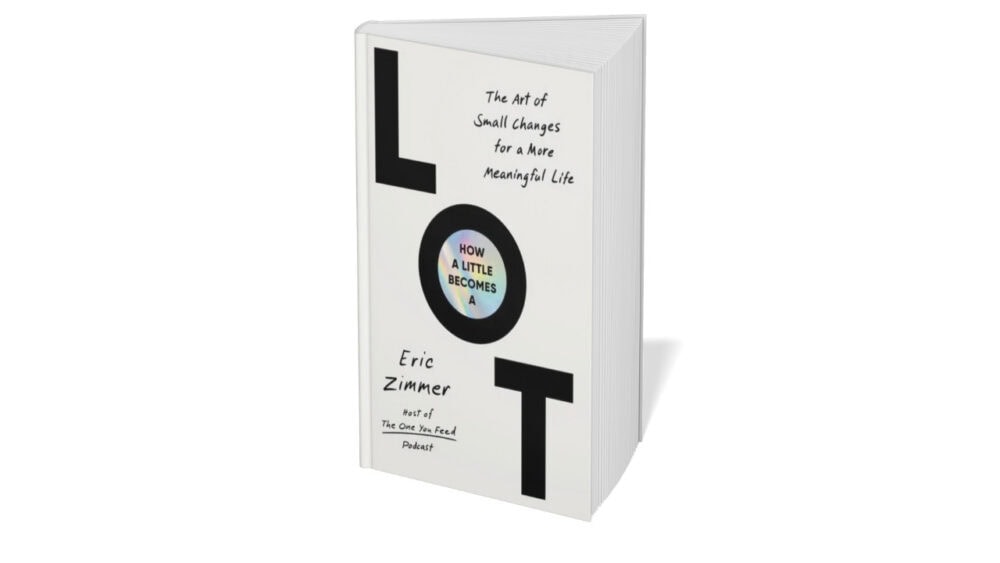
Exciting News!!! Coming in March, 2026, my new book, How a Little Becomes a Lot: The Art of Small Changes for a More Meaningful Life is now available for pre-orders!
Key Takeaways:
- Exploration of mental health and the role of habits in anxiety management.
- Discussion of the parable of the two wolves and its relation to neuroscience and habit reinforcement.
- Examination of the science of habit formation and the limitations of traditional habit replacement strategies.
- Insights into digital therapeutics and the development of app-based mental health treatments.
- Analysis of the potential and challenges of AI in therapy, including ethical considerations.
- The importance of human connection in therapy and the unique value of human therapists.
- The role of curiosity in managing anxiety and the distinction between anxiety as a feeling and worrying as a behavior.
- The impact of self-criticism and shame on behavior change and the importance of self-compassion.
- Techniques for cultivating distress tolerance and the gradual process of emotional growth.
- Mindfulness practices, such as noting, to enhance awareness and reduce reactivity in challenging situations.
Judson Brewer, MD, PhD, is an internationally renowned addiction psychiatrist and neuroscientist. He is a full professor in the School of Public Health and Medical School at Brown University. His 2016 TED talk, “A Simple Way to Break a Bad Habit,” has been viewed more than 20 million times. He has trained Olympic athletes and coaches, government ministers, and business leaders. His book Unwinding Anxiety was a New York Times bestseller.
Connect with Dr. Jud Brewer: Website | Instagram
If you enjoyed this conversation with Dr. Jud Brewer, check out these other episodes:
How to Manage Your Hunger Habit with Dr. Jud Brewer
Habits for Healing Anxiety with Dr. Jud Brewer
By purchasing products and/or services from our sponsors, you are helping to support The One You Feed and we greatly appreciate it. Thank you!
This episode is sponsored by:
Aura Frames: For a limited time, save on the perfect gift by visiting AuraFrames.com /FEED to get $35 off Aura’s best-selling Carver Mat frames – named #1 by Wirecutter – by using promo code FEED at checkout. This deal is exclusive to listeners, and frames sell out fast, so order yours now to get it in time for the holidays!
Uncommon Goods has something for everyone – you’ll find thousands of new gift ideas that you won’t find anywhere else, and you’ll be supporting artists and small, independent businesses. To get 15% off your next gift, go to UNCOMMONGOODS.com/FEED
LinkedIn: Post your job for free at linkedin.com/oneyoufeed. Terms and conditions apply.

If you enjoy our podcast and find value in our content, please consider supporting the show. By joining our Patreon Community, you’ll receive exclusive content only available on Patreon! Click here to learn more!!
Episode Transcript:
Eric Zimmer 00:01:10 There’s this painful place a lot of us know well. You’re working hard to change something, but your brain keeps insisting you’re failing. You cut your drinking in half, but all you can see are the nights you slipped. You have more calm days than anxious ones. But your attention goes straight to the bad moments. It’s like your inner scoreboard is rigged against you. My guest today, psychiatrist and neuroscientist Doctor Dr. Jud Brewer, has spent years studying how habits form in the brain and why we get stuck in these loops of anxiety, worry, and shame. His work shows that many of us are actually learning and progressing long before we give ourselves any credit. We talk about why worrying is a mental habit, how to use curiosity as a kind of superpower, and how to start seeing your real progress instead of only your missteps. I’m Eric Zimmer and this is the one you feed. Hi, Jud, welcome to the show.
Dr. Jud Brewer 00:02:07 Thanks for having me.
Eric Zimmer 00:02:07 I’m happy to have you on. We’ve talked several times in the past. We’ve talked about unwinding anxiety. We’ve talked about habits.
Eric Zimmer 00:02:16 You’ve got a new workbook for your previous book, and the workbook is called Unwinding Anxiety Workbook. So we’re going to get to that in a moment. We’re also going to talk about a curious moment right now with AI therapy. There are promises and perils that are right at hand right now. And so I’m looking forward to talking about that because your your lab is actually starting to do research on it. So we’ll get to that in a second. But we’ll start in the way that we always do with the parable. And in the parable there’s a grandparent who’s talking with their grandchild, and they say, in life there are two wolves inside of us that are always at battle. One is a good wolf, which represents things like kindness and bravery and love, and the other is a bad wolf, which represents things like greed and hatred and fear. And the grandchild stops and they think about it for a second, and they look up at their grandparent and they say, well, which one wins? And the grandparent says, the one you feed.
Eric Zimmer 00:03:09 So I’d like to start off by asking you what that parable means to you in your life and in the work that you do.
Dr. Jud Brewer 00:03:15 Well, it means a lot. And I love the parable because it fits perfectly both with my research, my clinical practice, my personal life, but also how our brains work. And really, if you look at it, you know we are feeding habits all the time. We might not even know that we’re doing it. And so every time we do something repetitively, we’re feeding that habit. And that can be a habit of kindness, that can be a habit of, you know, hate. It can be also any type of habit. And if we’re not aware, you know, the parable says the one you feed. If we don’t know what we’re feeding, we don’t know that we’re just automatically perpetuating things that might be helpful, but might not be helpful.
Eric Zimmer 00:03:59 Yeah, I think we both have studied Buddhism to a fair degree, and that’s my best working sort of idea of karma for me, which is that what I do now makes it easier to do the same thing again in the future, in essence.
Eric Zimmer 00:04:15 Right. Like, I’m just sort of wearing that groove a little bit more deeply.
Dr. Jud Brewer 00:04:21 Yeah. And if karma, you know, my limited understanding is, you know, they talk about cause and effect. You know, if you do something, there’s an effect. It lines up perfectly with modern day neuroscience where we talk about reinforcement learning. You do a behavior and the result of that behavior is going to reinforce it.
Eric Zimmer 00:04:41 Yep. And we’re going to get into all of that in a minute because you have a very interesting approach. I talked to a lot of habits people I talked to Charles Duhigg just the other day. As a matter of fact, she wrote The Power of Habit and really popularized this idea of a habit loop and Charles’s big ideas. You sort of. Maybe it’s not his idea. The one that he popularized is that you replace the behavior in the middle, but you really talk about ways of undoing the whole loop entirely. But that’s a little teaser for you and listeners. We’re going to get there in a second.
Eric Zimmer 00:05:14 But I want to talk about AI therapy. What’s got you? Why are you interested in this? Why are you spending so much time on it?
Dr. Jud Brewer 00:05:22 Well, we spent the last now almost 15 years really diving into studying and developing digital therapeutics. And, you know, this is a fancy term for app based treatments. And that started with, you know, me being in the clinic, I was at the VA hospital at the time, seeing my patients out in the parking lot, smoking, you know. And I realized that they don’t learn to smoke in my office. They don’t learn to get anxious in my office. So we started testing out these ways to take my office and package it and deliver it to them at their fingertips. Right. And that’s when smartphones were starting to become popular. This is, you know, like 2012. And so over the last decade, we did a lot of work with those found really good results. You know, like in one randomized controlled trial, we got a 67% reduction in anxiety in people with generalized anxiety disorder, whereas usual clinical care was only 14%, which is on par with what you would expect medications to do.
Dr. Jud Brewer 00:06:19 Yet for me, I also was seeing static. Delivery of content can be helpful, but it’s not meeting people where they’re not at. And so, you know, over the last couple of years, as we started to see the emergence of large language models and conversational agents, we started to see some real promise. Also some peril, but some real promise with personalizing Treatment. And it’s not to say that we could just, you know, extract somebody cognitive. Everything that they know as a therapist and put it in a bot. But what we started to do is. Well, I’ll say what we started to do in a minute, but part of this is we’re starting to see some real problems with kind of out of the box AI therapies. So in 2025, there was a Harvard Business Review article that showed that right for this, these conversational agents, the number one use of these conversational agents is for therapy and companionship. And so it in 2024 it was it was number two. And now it’s number one.
Dr. Jud Brewer 00:07:24 And we’re also seeing that these models are trained through reinforcement learning with human feedback, which isn’t what you can bookmark the reinforcement learning piece because we’ll get into that in a minute. But it turns out that this learning is so powerful for humans. They put it into these basically deep neural network models and used it to train the bots, just the reinforcement learning piece and that was really helpful. Yet it was basically still an auto fill when you looked at ChatGPT three, for example. Then they started using human feedback. So RL reinforcement learning with human feedback where people were giving the bots feedback on their responses. So they’d say response A or B, which one’s better, you know, and they’d do it. And that that really turbocharged it where these things seemed like they could intuit people’s intentions. They could do all these things. They felt very human. It kind of blew through the Turing test. You know, this can you determine whether a computer is human or not? And then the problem started to emerge where they realized that humans well, there’s neuroscience going back a while, showing that humans are inherently subject to flattery, you know, so we’re flatter able probably not surprising.
Dr. Jud Brewer 00:08:36 Yeah. And with these subtle answers that were subtly flattering, the bots would get more of a thumbs up. And this turned them into what are what’s called a sycophant, where you’re basically just kissing somebody’s ass. And so this is in the there was a well-known, I think it was April of 2025, where OpenAI formally rolled back their, update of GPT four zero because it was so sycophantic. People are getting psychotic where it would just feed somebody’s bubble. They’re like, oh, what about this? And it’s like, yeah, you just solved quantum physics, you know? And they’re like, yeah, did I? And it’s like, yeah, you did. No, really. And then it would send people down these spirals of conspiracy and all this crazy stuff, which is what our human minds are subject to, right? But they’re just like drawing it out when you’re just sitting there saying, yeah, you’re great, and this is great. And keep going and keep going. So out of the box, these things, that’s not benign.
Dr. Jud Brewer 00:09:35 But then, you know, there are these well-documented cases where the end in tragic consequences. I won’t go into the details. So we know that out of the box, these things are not helpful. at least the way they are. And the sycophantic nature is problematic because it’s also great at generating revenue. So there’s this tension between, you know, do they dial it back or do they, you know, do they hit the gas? And there are some there was a study that just came out of Harvard. I think it’s a it’s an early one. So we’ll see what the final results are. But there were some, some platforms where actually when people are like, I gotta go. Then it would do this manipulation to keep them on, you know, keep them chatting. And it increased their interactions by like 14 fold. And so you could do all sorts of manipulation to keep people chatting. And, you know, if there’s a if there’s a monetary incentive there that’s usually problematic. Okay.
Dr. Jud Brewer 00:10:29 So lots of problems. And for us, you know, we look at this and say okay, you know, it’s probably at least not in the next couple of years going to replace human therapists. Right. There’s something about a human connection that’s hard. Hard to. Really hard to compete with, though. I think a lot of younger people, you know. Yeah. Yeah, that’s an interesting one.
Eric Zimmer 00:10:52 Can I ask you a question about that? So the studies that I have read and they, they’re it’s all changing so fast that I feel like if I didn’t look it up yesterday, it’s very possible it’s all different, right. Was that many people, if they were chatting with a online therapist, would prefer what the AI gave them until they found out it was an AI, at which point they very quickly were like, no, I don’t want that. A is that true? And B I think your point about young people is also true. Like, we care because we’re old. But what will young people think, right? They might be like, who cares? You know, it just doesn’t matter.
Dr. Jud Brewer 00:11:33 We’ve been doing some pilot work with high school students because I think the adolescent populations Is is really Upper Creek right now in terms of being, you know, basically technology natives, you know, these social media natives and things like that. So I’ve heard some horror stories about, you know, college or high school counselors divulging personal information about students to other students. Like just crazy stuff. Yeah. And of course, would not get when that was discovered. Like, no, every student was terrified to go to the counselor. So right there can be, you know, there can be ways that humans, humans are flawed. But I mean, that’s really egregious, right? So that’s an extreme case. But also just going to a therapist, whether it’s a young person or an older person, people can just inherently feel like they’re going to be judged, right. If they’re feeling guilty about something or feeling ashamed of something, you know, which is, ironically, what they often go to therapy to get help with.
Dr. Jud Brewer 00:12:37 It can be challenging to actually admit like, oh, here’s this thing that I do that I’m really not proud of, but to be able to work through it, they’ve got to admit it. And so it can be easier to admit that to a bot than a human, because they’re not going to feel like there’s a human on the other end judging them. And we certainly see that. And I think others have reported that as well. So that piece, I think, is interesting in terms of providing this non-judgmental place to just really talk honestly. Now, if the thing’s going to constantly validate you, you know, with therapy, we we aim to validate. And sometimes that can simply just being be being with someone. Right. And just sitting there and saying, yeah that’s tough. You know not saying great job. But yeah wow this is tough. But we validate and then we challenge when needed so that we can help somebody find their edge and grow and use that as a growth edge as compared to just, you know, staying far away from that growth edge and staying in their comfort zone.
Dr. Jud Brewer 00:13:36 And that’s not what the you know, the bots have been shown to do a good job with yet and so and another piece we found and I won’t go on too much, but it’s just fascinating. Where people prefer content delivered by a human as compared to a bot. And here’s a, here’s an example. So we have this program. so I think of it as like what does my, what does my newest version of my clinic look like because it’s always involved evolving. And for the newest clinic one, I want to be available to anybody, anywhere as compared to people having to be in my geographic area and come to my office. So it’s all virtual, but we also want to be able to scale it so we can help a lot of people. So it’s not just one on one, but I do. So the way we do that is we can deliver content through video and audio, and people prefer podcast style delivery of content. So short to the point, clear like ten minute modules.
Dr. Jud Brewer 00:14:33 And they also don’t want that to be taught to them through a bot. They want to know that this was a human that actually developed and delivered this content. So I can do this, you know, I can just create that. But then I can have a teaching assistant where we can use digital therapeutics. We can basically use conversational agents that we specifically guardrail on that content and say, okay, check two things. First, check comprehension. So it can in a very inviting way. And it’s patient as all get out. It can ask them, okay, explain back to me what this concept is. And if they don’t get it, it’ll, you know, nudge them and give them you know, give them feedback. We’ve even had people say bot I don’t I don’t think you’re right. And then they would quote me directly and then people would go back and check the thing and then apologize to the bot. So the comprehension piece is interesting where you know, they want stuff delivered by human, but the bot can help check that and guide them through that comprehension check.
Dr. Jud Brewer 00:15:31 And then it can also do an experiential exploration piece as an example. Just this morning we had somebody who was we have these three gears in our program, and so the bot was helping somebody go through the experiential component of second gear. And maybe we can get into that specifically because that’s the workhorse of the program. And the person was kind of stuck in her head for a bit. So it was really saying, okay, let’s get into the experience. And it had her list off, you know, what she was noticing. And she literally spent 40 minutes because we can timestamp this 40 minutes listing off a whole bunch of stuff. And then she realized at the end that she because I’d see the transcript and said, wow, I spent 40 minutes listing it off. And then it could say, yeah, great job. I wish I could sit there for 40 minutes as somebody listed off all their physical sensations. Yeah. So here it can be an infinitely patient listener and then say, great, you just listed all these physical sensations.
Dr. Jud Brewer 00:16:24 That’s exactly what we’re talking about. And so with our Going Beyond Anxiety program, it’s interesting to see, like how do we pair humans with bots to let humans flourish and do the work that they do really well? Where I can interact with people. You know, we have a weekly group and all this stuff, but then the bot can check the comprehension and I have to say, it’s really cutting down all of the work that I don’t want to call it tedious, but the the volume of work that I have to do, helping to check somebody’s comprehension and make sure they understand the concept the bot is doing that I swear as well as I can. Well, it’s trained on what I do, but you know, it’s basically at that level. So we’re really excited about that. And it’s really different than saying, hey, lay down on the couch and turn on your phone and then, you know, tell me about your mother or whatever. Yeah.
Eric Zimmer 00:17:13 Yeah, I did an AI project with a company called rewind, and what they are doing is taking classic books and pairing them with a specific scholar.
Eric Zimmer 00:17:25 And the scholar then records a lot of content about that book.
Dr. Jud Brewer 00:17:31 Yeah.
Eric Zimmer 00:17:31 Yeah, yeah. And so then you have the book, you have, you know, some things from the The Scholar, but you can also then have conversations as if you’re talking to that scholar. And it’s pretty good at showing you like, this is what the scholar actually said. This is where I’m kind of at, you know, the A’s adding, you know, I did the Dao de Ching, but it’s a really fascinating way of like really putting a human into the mix. And so I assume that’s kind of what you’re talking about. Out of curiosity, are you then are you fine tuning a model? Are you using a piece of software that helps you create bots that you get to tune? I’m curious about the mechanism.
Dr. Jud Brewer 00:18:11 So we’re doing a number of things and testing them all. So one, we are think of it as an army of bots. So one is I have a over the last year with permission, saved all my transcripts from all of my one on one patient sessions.
Dr. Jud Brewer 00:18:26 So we’ve got, you know, conversations with myself and my patients, and we can use all of that information to fine tune models. And eventually we may have enough where we can actually use completely open source models where we’re not even layering these on top of some of the larger models. Right now, we’re just using some of the larger ones to to tune them. We’re not ready to to build.
Eric Zimmer 00:18:51 You’re actually training the model itself in the sense of training the model. Yeah. This is not I’ve got a custom GPT that I’m giving instructions to or this is a deeper level.
Dr. Jud Brewer 00:19:03 We’re set up to do both okay. And so as a as a way to test the basic concepts. For example can we create a teaching assistant. Right. You can do prompt engineering to set up a pretty good teaching assistant. And then fine. Well depends on how you define fine tune. But we can train that specifically on the content and have it guardrail by the content that we wanted to check. And, you know, so it’s not like doing Reddit threads or Wikipedia or whatever.
Dr. Jud Brewer 00:19:32 Yeah. On top of that, we can build in, monitoring bots that are monitoring not only for safety but therapeutic fidelity for all of these other things to make sure. One, just to make sure, you know, we’re putting safety guardrails on top of the ones that are already in place because I think it’s important. But also that’s only safety is only one thing. Trust is another thing. How do you measure trust. How do you check to see and train the model to get better so you can develop? Good, good trust. Not. Not the sake of hands, but really solid trust. And there are a number of guidelines that are these frameworks, ones called quest for example, that are out there that people are starting to use.
Eric Zimmer 00:20:10 Yeah I’ve heard of that. Yeah. Yeah.
Dr. Jud Brewer 00:20:12 So I think there’s there’s a lot that can be done. And as you mentioned earlier, it’s going very fast. to do all of that. So those are just two examples of the Army that we’re bringing together and saying, okay, all of you bots work together in this way.
Dr. Jud Brewer 00:20:27 So it’s a really synchronized. It’s like a symphony with a conductor.
Eric Zimmer 00:20:54 That must be really, really fun to be able to do with people who know what they’re doing. You know, I train different AI agents on different aspects of my content to do different things. And I’ve joked recently, I don’t know how to set up the guardrails. I don’t really know how to get an army of bots refining it. I don’t, so I’ve jokingly referred to it as like a cheating spouse. Like it does something wrong and you’re like, I’m, I’m watching. I got my eye on you like I am watching you. And then over time it does pretty well and you sort of start to. All right. It’s like it’s doing pretty good and you get a little bit more relaxed, and then all of a sudden you’re like, God damn it, you did it again. Like.
Dr. Jud Brewer 00:21:36 Yeah. It’s fascinating. And, you know, honestly, the only way to keep up with this stuff is to do it.
Eric Zimmer 00:21:41 Yeah. Yeah. All right. Anything else you think would be really useful for us to talk about in this area?
Dr. Jud Brewer 00:21:49 I think we’ve covered most of it. You know, okay, I see this segue because I think the critical piece that I just touched on lightly was we could not possibly do this without having over a decade of evidence based research that says, okay, this is the exact mechanism and the process to deliver. I would not be getting into this otherwise. That’s just the hard work slogging away at figuring that out. Yep.
Eric Zimmer 00:22:18 Okay. I want to pull one other thing from your Substack just as a headline, and ask you to talk about it just because as a headline, I was like, I like that. So why your brain thinks you’re failing when you’re actually winning?
Dr. Jud Brewer 00:22:35 Yes. So I’m curious, what was your one line takeaway from that Substack article?
Eric Zimmer 00:22:41 Well, I didn’t read that one. Oh, okay. I read the air one, a couple others. That one. I just was like, I like that headline.
Eric Zimmer 00:22:46 And then I said, I’m gonna let him describe it.
Dr. Jud Brewer 00:22:49 Well, I’m happy to describe it. You know, that was I’m trying to think when I actually wrote that one, it was a it was a little while ago. But the idea is that we spend all this time beating ourselves up. You know. Yeah. And we can get in the habit of doing that, you know. And so a number of ways to think about that is, you know, like one is around growth mindset where we where we think, oh, you know, and that’s actually what that article is about where we can think, you know, I think I used the example of a patient who was, she was cutting down from eight hard drinks a night to, like, four and then having days of sobriety and then coming to me and saying, I’m not I’m not actually succeeding. I’m failing. Yeah. And so when we get stuck in this comfort zone or we get stuck in beating ourselves up, we might not realize that we’re actually learning.
Dr. Jud Brewer 00:23:45 We’re learning a whole lot. And so this goes in this this Substack article goes into, you know, what is growth mindset? How can we actually use it to lean into failure, quote unquote, and and learn from it? You know, one thing I often ask my patients is, you know, do you learn more from everything going well or when you trip up a little bit? Of course, we learn more from, you know, tripping because we see, oh, I didn’t I didn’t know this, that thing. And so I tripped over it and now I noticed it. So in fact I would say that we won. We learned more from when things don’t go well. And two if we are learning when things don’t go well. Is there ever such a thing as two steps forward one step backward. Because if that step backward is learning we’re always learning. Right. And that’s growth mindset.
Eric Zimmer 00:24:38 And I think that word learning is so important because when we think about change and my book goes into all of this stuff in great detail, when we think about change, we often just think about the actual action of change.
Eric Zimmer 00:24:53 Right. Okay, I’m going to stop smoking. So I just stop smoking. And your work and countless other behavior change science over the years is like there’s a whole lot of steps that sort of are all around that, right? You know, the trans theoretical model is talking about, you know, you’ve got pre contemplation, you’ve got contemplation, you’ve got plans. Right. Even before you get to action. And I think that we don’t see change as this long arc, like even sobriety. Like, I’ve been completely absent for, I think, 16 or 17 years now. It’s easy to see that day as like, okay, you know, that’s when he changed. But no.
Dr. Jud Brewer 00:25:33 No.
Eric Zimmer 00:25:33 There was so much change and learning happening along the way to even get to the point where that day made any sense and was possible.
Dr. Jud Brewer 00:25:43 Right.
Eric Zimmer 00:25:43 I love your work primarily because you talk about a lot about reward value, but also about learning, because that’s what I think change ultimately is. It’s a learning.
Eric Zimmer 00:25:53 Okay, I’m trying to make this change and I can’t do it at all. But now I can do it in some situations and now. But I can’t do it in that situation. But now I figure out how to do it in that one. But I haven’t figured out how to go on and on and on. And sobriety is a particularly good example. But I think we take that idea and we apply it elsewhere, and the idea is 100 or 0, you’re either abstinent or you’re not. And if you’re not, you’ve failed. Right. And that is a tear. That is a terrible design to learn anything. Right. Well, nobody learns under those conditions. Well, no, it’s hard to learn under those conditions.
Dr. Jud Brewer 00:26:27 This image comes to mind where it’s if you’re let’s say somebody is running A5K, you know, they’re running a road race, right? You have to actually start at the starting line. You have to run the entire race. And then you step over the finish line.
Dr. Jud Brewer 00:26:42 And so using sobriety as an example, if the day that somebody becomes abstinence is the finish line, so to speak, for that person, that’s not the race. That’s just that one step that they took that got them over the finish line. What about all the steps before that? And that’s that’s the actual race that they ran. So that’s what I’m hearing from you and I. And I think that’s critical where people, you know, you just look at, you know, it’s all Instagram. It’s like when somebody crosses the finish line, you know it’s not the pictures of them, you Yeah. Along their course where they’re really duking it out.
Eric Zimmer 00:27:16 Yeah. I mean, the book is called how a Little Becomes a Lot. And it’s about this exact idea. Right. We over prioritize the single moment or the epiphany, and we miss everything that kind of comes before and after.
Dr. Jud Brewer 00:27:30 I love it, I love the title to. It really captures the critical piece there. Right. This is, you know, life is a journey.
Dr. Jud Brewer 00:27:37 It’s not. Yeah. What’s the finish line? Death. Right. Right.
Eric Zimmer 00:27:43 But I think that idea of taking it back to your article, what I loved so much about it, was why your brain thinks you’re failing when you’re actually winning. You know, I had a client. She figured this out herself. I was never smart enough to do it. But we were on the alcohol journey from complete dependence to, ideally, abstinence. And she couldn’t get to complete abstinence, right? Every 30 days, 60 days after six months. So she started putting a marble in a jar each day that she was sober, and we just suddenly, you know, she just suddenly had this, you know, not suddenly, but day by day had this giant testament, a big thing to her progress. Yeah. Yeah. You know, instead of. It’s all bad, it’s all I’m failing, I failed. It’s like, oh, I succeeded 310 out of 365 days, which is 300 days better than I did the year before.
Eric Zimmer 00:28:35 And onward.
Dr. Jud Brewer 00:28:36 Yeah, I love it. Instead of losing our marbles, we’re actually exactly leading them.
Eric Zimmer 00:28:40 Yes, exactly. All right, let’s move into the Unwinding Anxiety workbook. I think we had you on before to talk about your book, Unwinding Anxiety. And listeners can go back and hear that conversation, but I want to hit the main points here again. And you make a crucial distinction right out of the gate that I think is really important. You say the difference between the feeling of anxiety and the mental behavior of worrying. Walk us through. What you mean by that?
Dr. Jud Brewer 00:29:10 Well, you know, for any habit. And glad to hear that you had Charles Dewey going, because I think he did a great job of popularizing how habits form in his, you know, his Power of Habit book. I, I don’t remember if I spoke to him about this directly, but as a, you know, he’s a great writer and, you know, he’s not a scientist or a clinician. So, you know, I think he and others have popularized, you know, just like change this thing and then it’ll work.
Dr. Jud Brewer 00:29:37 And unfortunately, that’s not how our brains work. And so from a psychiatrist, a neuroscience perspective, it’s really important to take that framework like what’s the trigger, what’s the behavior. And then also what’s the result and leverage that. So looking at that, often people get stuck in this feeling like here’s this feeling of anxiety and I need to do something to make it go away. And they often worry and they don’t realize that with any habit. Right. Trigger behavior reward. A behavior can be mental, and so worry can be that mental behavior that people do that makes them feel empowered, because at least they’re doing something when they’re feeling anxious. It doesn’t necessarily fix their anxiety. And in fact, it feeds it because worrying, you know, this is the one you feed their their that worrying feeds back and gets more anxious because it you know that doing something is rewarding enough that the worrying becomes a habit, yet the worrying just feeds the anxiety. And so it’s important to differentiate the two but also work with them.
Dr. Jud Brewer 00:30:43 You work with them differently. So with a behavior you actually have to look at how rewarding the behavior is. And this is where I have folks in, you know, just talking about this earlier. We have folks really explore what the results of the behavior, what the results are. Yeah. And so if somebody’s worrying, I have some have my patients ask this simple question, what am I getting from this? And typically the answer is nothing. It’s actually making my anxiety worse. That’s critical for them to be able to see, oh, this is not very rewarding because they’d set it up as a habit. So their brains just assume that it must be helpful somehow. And I’ve actually gotten pages long emails from people saying, but worrying has got to be helping somehow. You know, if you look at the data, you know, anxiety where you don’t help at all, they just make things worse.
Eric Zimmer 00:31:30 Right, right. Planning helps solve problems, helps. Contemplating different options helps. But worrying doesn’t, you know, it doesn’t mean if you’re if you’re focusing on the problem and thinking about it, that it’s wrong.
Eric Zimmer 00:31:45 I think that’s where people get hung up, you know? But it does work. I’m like, no, let’s be clear about what we’re talking about, right?
Dr. Jud Brewer 00:31:51 I’m so glad you highlight that, because worrying is optional and it’s different than planning. Yeah, right. Planning is kind of important.
Eric Zimmer 00:32:00 Yeah. It’s critical. Yeah. So I want to have you spell out for us, for people who haven’t been familiar with or listen to any of these other episodes, the habit loop. What is it?
Dr. Jud Brewer 00:32:12 Yeah. So in a nutshell, three elements trigger behavior, result. And so you’re just using anxiety as an example. The trigger could be the feeling of anxiety, but it could be any thought. It could be any external stimulus that we see here. You know, it’s basically anything that comes in our sensory sensory apparatus apparatus. And the behavior could be physical or mental. So for example, if we feel anxious, we might stress eat even when we’re not hungry or we might worry. Those are just two examples.
Dr. Jud Brewer 00:32:43 And then the results or.
Eric Zimmer 00:32:45 Two great tastes that taste great together. Worry and stress eating? Why not? Yeah.
Dr. Jud Brewer 00:32:52 I love it, I love it. So the result here, like we pointed out earlier with worrying, it can feel like we’re doing something. So it’s it’s rewarding a little bit and the result is critical. So if we start looking at the results, if it’s rewarding, it’s going to feed back and drive a habit. So that’s any habit is formed that way. And there are two main flavors both positive and negative reinforcement. So if something’s pleasant and we try to prolong that pleasant feeling, that’s positive reinforcement. If it’s unpleasant and we make it go away or avoid it, that’s negative reinforcement.
Eric Zimmer 00:33:27 All right. So the basic idea is something triggers this thing or kicks it off or you know, there’s all sorts of different words for it. And like you said it could be a thought. It could be a feeling. It could be a bill arrives in the mail. Right.
Eric Zimmer 00:33:44 That’s got the name of the you know, the people I know I owe money to on it. And now I have this behavior, I do. And then there’s a reward which is in this case would be a lessening of the feeling of anxiety. Yes. Right. Yeah. In the model that Charles Duhigg really, you know, popularized. And I don’t think he came up with it. The idea is that it’s very hard to change the trigger because triggers arrive. Now, we all know that you can get rid of some of the gross triggers, right? Like if you’re an addict, don’t hang out in bars that are known to sell cocaine after 2 a.m.. Right. Like people.
Dr. Jud Brewer 00:34:23 Places and things.
Eric Zimmer 00:34:24 People, places and things. You can reduce triggers, but you’re not going to get rid of them. Yeah. And we’re going to usually want some sort of reward. And so the thing that you do is you substitute the behavior in the middle. So I now feel anxious instead of worrying I do five minutes of deep breathing.
Eric Zimmer 00:34:42 And the idea is that I get a lessening of the anxiety. So that’s one way to solve that problem. You challenge that in some ways. Tell us why that’s a limited approach when it’s helpful and when it’s not.
Dr. Jud Brewer 00:34:54 Sure. So for some people a substitution can be helpful for the majority of people if you look at the data. Substitution doesn’t. It might work sometimes, but it doesn’t work all the time and often leads to failure. There are a couple of reasons for that. One is that it requires the prefrontal cortex, the youngest and the weakest part of the brain. From an evolutionary perspective, which has been shown to go offline when we get stressed. You know, you probably have heard the halt. Hungry. Angry. Lonely. Tired. You know, all these things that make us vulnerable to relapse and whatever our behavior is. So, you know, you’re kind of picking the weakest. You’re picking the weakest kid to fight your fight for you with the big the big thing. And so that’s problematic.
Dr. Jud Brewer 00:35:38 The other is that when the substitution behavior is not available, then our brains say, well, now what? You know, so if we eat carrot sticks instead of smoking a cigarette or if we, you know, go for a walk instead of, you know, when we’re anxious, instead of worrying if we can’t go for a walk. If those carrot sticks are not available. Our brain just goes back to the old behavior because it says, well, you know, B isn’t here to substitute for A. So I’m going back to a m. So again, some help for some people but not a universal solution. And this is where, you know, when I saw this over and over with my patience, you know, I started asking from a neuroscience perspective, you know, can we do better. And this is where getting, you know, it’s fascinating. You can actually use the reinforcement learning process itself to leverage itself where you don’t need a substitute behavior. And the way that works is really exploring these results of the behavior.
Dr. Jud Brewer 00:36:39 If a behavior is set up through reinforcement learning, it can be unwound through reinforcement learning. And that’s where you know, the formal term for it details aren’t important is called negative prediction error. So basically if you pay attention when you worry and you see that it’s it’s not rewarding. Your brain gets this negative prediction error saying, I predicted that it would be rewarding because it’s a habit. But now I’m paying attention and seeing that it’s not rewarding and we become disenchanted. So we have literally stopped feeding the habit. You know, I know a guy that likes to talk about the one you feed.
Eric Zimmer 00:37:41 Check in for a moment. Is your jaw tight, breath shallow? Are your shoulders creeping up? Those little signals are invitations to slow down and listen. Every Wednesday, I send weekly bytes of wisdom, a short email that turns the big ideas we explore here in each show. Things like mental health, anxiety, relationships, purpose into bite size practices you can use the same day it’s free. It takes about a minute to read and thousands already swear by it.
Eric Zimmer 00:38:14 If you’d like extra fuel for the weekend, you also get a weekend podcast playlist. Join us at One Coffee. Net newsletter. That’s one you feed. Net newsletter and start receiving your next bite of wisdom. All right, back to the show. So we’ve stopped feeding the habit, but let’s go back to anxiety. When anxiety arises as a feeling, there is a almost, it seems, built in desire to not feel anxious, which these behaviors that we’re doing are our attempts to figure that out. Yes, because we want the reward, which is not to feel anxious. So what am I unwinding here in this case? Like, how do I update the reward? And I understand what you’re saying, that by watching what reward I’m getting from a specific behavior, I can learn to see that it is not actually giving me the reward that I want. Yeah. Yeah. Right. And we could talk about when this process gets hijacked, but let’s assume it’s working right. The process is working where I look at this and I go, okay, well, I don’t I don’t want to do that behavior because I can see that it’s not rewarding, but I still am seeking a reward in this moment of anxiety.
Dr. Jud Brewer 00:39:34 Absolutely. So here we can look at what the behavior is that’s not working right. So let’s use worrying as an example. And then we can ask what’s a better or more helpful behavior. and importantly, one that’s not dependent on us getting something outside of ourselves, right? So if going for a walk or getting carrot sticks or whatever, you know, is an externally based behavior that we’re using as a substitution. Can we actually find something that’s internally available all the time? And this is where what we found is there are two flavors that are intrinsically available and more rewarding. So my labs studied a curiosity a lot. And I’ve seen this clinically as well. It’s really a fascinating thing. I almost think of curiosity as a superpower because, well, let me ask you, if you compare worrying to being curious about something, which one feels better?
Eric Zimmer 00:40:35 Well, being curious definitely feels better.
Dr. Jud Brewer 00:40:37 So that’s intrinsically more rewarding. And so when we feel anxious, you know, if it leads to worrying, we can then substitute this internally based behavior of curiosity and get curious about the sensations themselves.
Dr. Jud Brewer 00:40:52 There are so many great phrases that kind of touch on this. One is this Marcus Aurelius one where it’s like what stands in the way it becomes in the way. So if the anxiety is standing in the way, we can use it as a as a teacher. But I also love this phrase. The only way out is through. Yeah. And so instead of running away from the anxiety and I, you highlighted it beautifully, which, you know, if something’s unpleasant, we are biologically designed to make that unpleasant thing go away. And so it’s paradoxical to say, okay, instead of running away to make it go away, I’m going to run toward it. And when we run toward our experience, something really interesting happens. One is we see that the sensations are not nearly as scary as we thought they were as we made them out to be, and that they kind of turn around and start running from us. They change as we start looking at them and getting get really curious about them, and They’re like, oh, what did that feel like? Oh, where’d it go? You know, it’s like, yeah, it becomes elusive.
Dr. Jud Brewer 00:41:50 And that’s how we can learn to be with our experience, no matter how unpleasant it is in the moment, by turning toward it, running toward it. We’ve just gained all this power and control.
Eric Zimmer 00:42:03 So first off, I 100% agree with everything you’re saying doing this. This sort of approach has changed numerous things in my life, and I want to play devil’s advocate for me. Please, because you said that the problem with certain substitution strategies is that the prefrontal cortex goes offline and you can’t actually think. What I have found is that when feeling gets too big, curiosity feels like a the best of my prefrontal cortex type thing. It feels like it’s hard to find or get because all I want is just cessation, right? Like I don’t care. You understand what I’m saying? It’s like curiosity almost doesn’t feel like it’s online. It doesn’t feel like it’s on the menu when the emotion is high enough.
Dr. Jud Brewer 00:42:52 Yeah. Good question. So two pieces here. One is there are two types of curiosity. And I’m not sure that either of them maybe one type.
Dr. Jud Brewer 00:43:03 It kind of involves the prefrontal cortex. And I’m not sure that people have actually isolated where the second type comes from. So it’s a mystery still. Okay. And the second time is the most important type is called interest curiosity when we’re just truly interested in what’s happening. And so your prefrontal cortex it’s unclear. But I hear what you’re saying and I agree with you. And I see this all the time where a lot of my patients say I can’t access my curiosity right now. Okay. And sometimes we can’t. Right. And so it’s not like it’s always accessible. It’s always going to be perfect and available. But what we can learn to do in those moments is start moving ourselves toward that experience. Like. And so just learning to be with something. And this is called distress tolerance, which I think society we’re losing. I wrote a Substack about this, you know, where it’s like, you know, with these with our phones, these weapons of mass destruction, we are collectively running as far in as quickly away from anything distressful as possible.
Dr. Jud Brewer 00:44:04 And yeah, it’s fed by the consumerism, you know, like, oh, I’ll give you something to make you feel better and I’ll sell you something. So there are consumer societies is supporting that as well. So just learning to be with our experience is often feels very foreign to people. And that’s the first step toward curiosity is like, oh, can I just be with this for a second as compared to a millisecond? And then it’s two seconds. It’s like the marbles in the jar, right? It’s like, oh, I can be with this. And what helps us learn to be with our experience is practicing what curiosity tastes like and feels like in other situations. Like before, things get really tough. And here I have people just start exploring the difference between when they have a no thought, you know, which is which could be just a simple word, he thought, or whatever. Oh no, oh no, I can’t believe this happened or oh no, I can’t believe that person did that.
Dr. Jud Brewer 00:45:03 You know, we all have thoughts all the time and we can see what that feels like. And then we can just practice. Oh what does oh no feel like. And so the oh no gives us an opportunity to lean in and learn where we can see, oh this is what oh no feels like. So I’ve now learned something there. And we also learn because when we want to know what something is like, that awakens a genuine curiosity. When that started to be awakened, that’s when we start feeding it and we’re like, oh, I it’s hard for me not to do it. Oh, curiosity actually feels pretty good. Oh, maybe I can apply this here. Maybe I can apply this in a meeting, maybe I can. Wow. This is helpful when, you know, I’m not judging my spouse or myself or whatever. Oh, that feels pretty good. And then it becomes much more available as a tool where when we’re really, you know, on those big waves, we don’t get crushed by them.
Dr. Jud Brewer 00:45:56 We can actually ride them out, but push back more. If you think that seems too far afield.
Eric Zimmer 00:46:02 No, I think there’s a couple important things in there. And you referenced the marbles. I think that we’re often dismissive of anything that doesn’t work completely every time.
Dr. Jud Brewer 00:46:14 Yeah. Distress tolerance again. Right. We want instant gratification.
Eric Zimmer 00:46:18 Like we all hear this instructions that are similar to what you’re saying. They’ve been said different ways by different people. Feel the feeling, drop the storyline. There’s all sorts of different aspects of this. Right? And those are all truly very helpful things. And my experience has been, it’s not like I do that and all of a sudden anxiety is gone and I’m suddenly curious and I’m riding the I’m riding the wave of my, you know, deeply unpleasant feelings. But I love what you said. I can get a little bit more.
Dr. Jud Brewer 00:46:52 So yeah.
Eric Zimmer 00:46:53 I can access a little bit more curiosity this time. I can notice a little bit better this time. The dissatisfaction in doing this, like.
Eric Zimmer 00:47:03 And these things accumulate. Yeah, these things accumulate over time. And I do think that as we do that, two things occur. We get better at doing it, and our emotional distress is coming down a little bit. And eventually, in an ideal world, those things meet at an equilibrium where your curiosity is at a level to handle, to your point, distress tolerance. Right? This window of what we’re actually able to tolerate grows.
Dr. Jud Brewer 00:47:31 Well. You’re highlighting something that I guess I take for granted, but it just reminded me, you know, therapy doesn’t happen in a single session, you know? And even in our clinical studies, you know, we got these big drops in anxiety. But it was after two months of people using our program.
Eric Zimmer 00:47:48 And so that’s really important.
Dr. Jud Brewer 00:47:50 Yeah. So even with our going beyond Anxiety program it doesn’t go beyond anxiety in one day. Yeah. You know, this is a program. But the key is to and with anything, you know, I think with any good program, it’s to really give people the solid the foundational training so they can they can really, truly learn to have something that’s with them the rest of their life.
Dr. Jud Brewer 00:48:15 That’s also why we called our program Going Beyond anxiety, because it doesn’t just get people back to baseline. It’s about like, how can you learn life skills that will help you thrive? And so and this is true for any type of therapy that’s good. You know. Right. You could argue well, I’ve been in therapy for 50. I’ve actually had people come to me and say, I’ve been in therapy for 15 years and it hasn’t helped. Well, that might be a time to check to see if you, you know, go somewhere else because 15 years is a little long for not seeing progress. Yeah.
Eric Zimmer 00:48:43 Well, I think this gets to this fundamental thing that we talked a little bit about before, which is there are certain types of therapy that are pointed at insight, meaning you see something you didn’t see before on some sort of level, like, oh, I see that. I react this way because my father was X, Y, or Z. That scene can be valuable and it sometimes offers a certain degree of freedom.
Eric Zimmer 00:49:14 However, my experience is that to change how you feel and think, you have to be in that moment with it and doing it again and again and again and again and again. So I’ve, I’ve used this example before I realized being in meetings early in my career with men about my father’s age who looked slightly surly, caused me to get really quiet and afraid. I know why. It didn’t change that. I had a little bit more compassion for myself. I was like, okay, I get this. I see what’s happening. Yeah, but I still had to learn in that moment.
Dr. Jud Brewer 00:49:52 How to work with it, how.
Eric Zimmer 00:49:52 To.
Dr. Jud Brewer 00:49:53 Work with.
Eric Zimmer 00:49:53 It and take the behavior that was in line with what I wanted to do. And and still to this day, there’s some of that, right, that it’s far different. But it’s not like these things often just get completely erased. And so I think this idea of doing it again and again, and it reminds me of a question I asked you last time on the show.
Eric Zimmer 00:50:15 It’s amazing. I remember this because.
Dr. Jud Brewer 00:50:16 I was going to say I’m impressed.
Eric Zimmer 00:50:18 Well, it’s because when I read your work, this question comes up in my mind and I know I asked and I don’t know what you said, and but when I read your work, it comes up again, which is this idea that if you watch a behavior and you see it, what it does and you see it’s unrewarding, you will naturally cease to do it. And my question that I’m going to let you answer all, I think what we just said points to it a little bit is I know countless people who have seen through the harmful of their behavior. I mean, on some level, they get it really clearly. Yeah. The 10,000th time that you’ve binge eating or had a drink when you said you weren’t going to have a drink, you know, on some level, don’t do that. That doesn’t end well. And yet so what’s missing? How is the reward not updating in these situations?
Dr. Jud Brewer 00:51:16 Yeah, I would say it’s likely that there’s one little piece of information that’s missing.
Dr. Jud Brewer 00:51:22 And that piece is that first somebody has to know what the framework is in terms of how they learn, because somebody can say. Just like you, beautifully articulated, like, oh yeah, I did it again. I did it again. What’s the default response? Bad me you know. Right. Bad me. And so we think that judging ourselves actually wrote a Substack on this as well. I love Substack because I’d be like, hey, just read that article. You know, there’s all you need. But we get in the habit of judging ourselves because it makes us feel like we’re powerful. We’re in control because we’re beating ourselves up. And in the movies, when somebody is hard on themselves, they tend to succeed. And when you know, that’s the hero’s journey. But that’s a movie. That’s not life. That’s not how our brains work. So the, the, the piece that’s missing is that people don’t know how their brains work. And that’s where I start. Each one of my sessions with a new patient, where I just walked them through this basic idea about how habits form and then walk them through whatever their basic habit is.
Dr. Jud Brewer 00:52:22 So, for example, pick any of these, right? If I binge ate again. I was thinking of a patient who was binge eating for like 20 years. Large pizzas, 20 out of 30 days a month. Right? And she would do that when she was emotionally distraught because she described it as a way to numb herself. And sometimes she would binge on top of a binge because she would feel guilty about binging. Yeah, because that’s that’s the only mechanism her brain knew.
Eric Zimmer 00:52:48 I relate.
Dr. Jud Brewer 00:52:49 To that. Yeah. So if we’re stuck in like, well, this is all I know how to do. Of course we’re going to not be able to step out of it even when we see it clearly. So it just takes a tiny bit of psycho education upstream of that where we can learn one. Okay, this is how habits are formed. Here’s the habit loop two. We can identify the behavior. Three we can see if we’re what our maladaptive response is. You know I’m beating myself up instead.
Dr. Jud Brewer 00:53:16 We can start step. We can go. Oh I’m stuck in this. And then we can ask, what do I get from doing the thing and also beating myself up on top of it? We become disenchanted with those. So we open the space where our brain says, okay, what’s better? And then we can learn. Sometimes just not doing the thing feels better. But it’s important to be able to line up that cause and effect relationship, because if we’re not lining them up, we’re not learning. We’re just beating ourselves up. I think I would guess that’s the key distinction there.
Eric Zimmer 00:53:46 I think you’re probably right, because it’s been posited by certain people that addiction is a learning disorder, and the disorder is in essentially what we’re saying, your reward value is not updating correctly. Right? Because you’ve gone well past the point where it’s pretty clear that this is not a this behavior is not rewarding, but your brain is not getting the message right. And so I think there’s a couple things in what you say.
Eric Zimmer 00:54:15 And I do think it’s why we say often that shame is the engine that drives addiction. Yes. Right. Because that shame shuts down learning. Yes, that’s the key thing, I think, is that when you’re in shame, which you are, if you’ve done a behavior again and again and again and been unable to change it, there’s a lot of shame associated and that shame just shuts down the learning process. So that’s I think a huge core thing, right, is we’ve got to learn how do we work with that. And then the second is that I really like the fact that you have people sort of map this out and write it out and observe it in real time, because I do think to a certain degree, the processes that we often use that should be updating reward value and I use should update reward value for many people, but not for us, is because we’re not clear enough, specific enough, and really, really importantly is we don’t keep doing it. I get confused with what I’ve read where, right? And I think at some point you take on this idea of how long it takes to build a habit, and the numbers are all over the place, right? There’s some 21 day thing which has been debunked, but I feel like perhaps in your work somewhere you talked about how long it takes to update a reward value.
Eric Zimmer 00:55:30 Do you have some data on that or research on that?
Dr. Jud Brewer 00:55:33 Yeah, we did several studies on this. And by the way, the 21 day myth comes from a 1960s book by a plastic surgeon in Maxwell Maltz called Psycho Cybernetics. I kid you not.
Eric Zimmer 00:55:46 And is he still alive? Can he? Can I have him as a guest?
Dr. Jud Brewer 00:55:50 I don’t know how old he is if he’s still alive. But the other piece is that he talked about it taking three weeks for his patients to get used to their new nose jobs. and that became an internet myth. About 21 days to make or break a habit.
Eric Zimmer 00:56:05 I think it was even before an internet myth. I feel like that’s been in books forever for a long time. Yeah. I mean, so he’s got a lot to answer for.
Dr. Jud Brewer 00:56:13 Yeah, there it is. He wasn’t trying to become like a 21 day guy. He was just like, reporting on what his patients were. Talking about their noses. So we did two studies. One with.
Dr. Jud Brewer 00:56:25 We did several, I should say several with people who were overeating, and we did one with people who were smoking. And we had them pay attention, you know, as they did the thing. And it only took 10 to 15 times of somebody paying attention as they overrate, for example, for that reward value to drop below zero. So we could actually measure it using these same, you know, neuroscience based equations that that calculate reward value. It was it was fascinating. You know, the first time you see some stunning result. And then we replicated it in people in like over a thousand people. And it was even faster like the error bars got smaller.
Eric Zimmer 00:57:02 And these are people who’ve struggled with something for a while.
Dr. Jud Brewer 00:57:05 Yeah, yeah, sometimes up to decades.
Eric Zimmer 00:57:07 Let me ask a follow on or tied question because we were just talking about shame. How does shame impact that ability for reward value to get updated because then shame is almost then its own habit loop, I think. Right, you have to unwind that habit loop first before you can get to the other habit loop.
Eric Zimmer 00:57:26 Talk me through how these things sort of tie together.
Dr. Jud Brewer 00:57:29 Yeah, let’s take a minute with this because I think it’s really important. So if we look at so guilt and shame tend to be best friends. Right. And I think of guilt as feeling guilty about something that we’ve done and shame as feeling bad about who we are, you know? So it’s like, I don’t know if that’s how you would agree with that. Okay. The differentiation is helpful just to know, because we can feel guilty about something and we can feel shame. And those are related but different things. And if we look at shame spirals, for example, when we do something or something doesn’t go the way we wanted, you can think of it as the behavior would tend to be that we judge ourselves, you know, bad me. And then the result is we feel ashamed or we do something and we feel, you know, guilty. And we look at and judge ourselves and say, I can’t believe I did that.
Dr. Jud Brewer 00:58:20 And we feel ashamed. Right. So we can see how that shame spiral can start to get going and build momentum because it’s, you know, it feels like it gives us power. It gives us something to do. Right? So whatever we did is in the past or whoever we might have been yesterday is in the past, but we can take today and say, well, I don’t have control over the past, but I can do something right now. I can beat myself up. And so we have this ability to beat ourselves up anytime we want to. And so we have ready access to, you know, self-flagellation and that self-flagellation not only becomes a habit, but on top of that it closes us down. And so we get stuck in this fixed mindset where we think, oh, this is who I am. It’s never going to change. And so it keeps us from actually being in a growth mindset where we can actually learn from what happened. And so, ironically, it keeps us stuck in these spirals of doing the same thing and then feeling bad about it instead of opening to our experience and saying, oh, that didn’t go as planned.
Dr. Jud Brewer 00:59:26 You know, what can I learn from this and bring in self-compassion? And here we can even compare shame to self-compassion. Which one feels better? Right. Because self-compassion feels better. So if we look at it from a reinforcement learning perspective and we see that shame doesn’t feel good, we can become disenchanted with the self-judgment and those shame spirals. And we can see that being kind to ourselves feels better so that we can slowly start to nudge ourselves in the direction of kindness. Our brains are naturally wired to move in that direction. It just can take us a while to realize that it actually feels better.
Eric Zimmer 01:00:01 So in what cases or what situations does this not work for people? Like assuming somebody takes this on board and is kind of doing the things that you suggest. There’s going to be people that unless your data, which is not is like 100% of people always get better, some people don’t. What’s going on there? Do you have any ideas or their common patterns? Are there additional diagnostic steps that you can sort of take with someone?
Dr. Jud Brewer 01:00:29 Great question.
Dr. Jud Brewer 01:00:30 So all people share this learning pathway right. So reinforcement learning is common to all of us. Yet as you’re pointing out, some people do better than others. We did a study where we could actually get psychological phenotypes at baseline before people started their anxiety program, and we could predict who was going to do really well, who was going to do pretty well, and who wasn’t going to do as well as the others. We haven’t been able to identify the specific pieces yet, but my leading hypothesis for the folks that do the worst is that they have some type of emotional avoidance, whereas basically they’ve really low distress tolerance skills. That’s one possibility. They just. They’re just avoiding anything unpleasant. And so you have to have some ability to at least, you know, see that unpleasantness feels unpleasant before you can work with it.
Eric Zimmer 01:01:29 Yeah. If you’re unwilling to feel unpleasantness, then you’re unwilling to examine the habit loop pathway. Yeah, right. You have to be able to look at and go, this feels shitty.
Eric Zimmer 01:01:41 And in order to do that, you actually are feeling shitty. It’s there for a little bit. And I think that that would make sense, that if you’re just not willing to turn towards that at all. It’s like you said, the path out is through, you know, and going through is not, you know, it’s not easy. It’s you’re using guilt and shame. And I think oftentimes once a behavior gets entwined, these things get all mixed up guilts actually in a normal sort of baseline, at least from my perspective. You might have a better word for it. A useful thing, because I do something that doesn’t align with who I am. It doesn’t feel good. I have to be willing to let myself not feel good so that I get the message. Don’t do that.
Dr. Jud Brewer 01:02:27 Yeah, I’m so glad you’re bringing this up, because this can get nuanced, and I think the nuance is actually helpful here. Not splitting hairs. If you go back and look at the Buddhist psychology, they talk about two emotions that are kind of in the territory of guilt, that are actually skillful.
Dr. Jud Brewer 01:02:44 They talk about remorse and regret. I use those specifically because if we look at you could operationalize remorse and regret as something where we’re really looking at, you know, we feel remorseful for something that we did. We regret something that we did. But feeling guilty adds a layer of self that might actually get in the way. So I agree with you. Depending on how you operationally define guilt, if we can really stay at the level of the behavior and say, okay, that’s something that didn’t help, then great. You know, we can use the word guilt. If guilty is like, I feel guilty and we get stuck in the I, it may be not as helpful as things like are finding a term that you use whatever works, finding a term like remorse or regret because we regret something that we did and that focuses on the behavior and not the self.
Eric Zimmer 01:03:42 I actually like both of those words better. Guilt is a very laden word for lots of people, for lots of different reasons.
Dr. Jud Brewer 01:03:49 Yeah, look at look at religions.
Dr. Jud Brewer 01:03:51 There are a number of religions.
Eric Zimmer 01:03:52 Exactly. I use it because I’m able to sort of delineate that. But remorse and regret are even actually better words. I want to end with something that you talk about a lot and that I’ve really been sort of revisiting this ground lately to much enjoyment. And it’s noting practice. and I’ve really just been trying to not so much note while I’m in meditation, but note like as I’m taking a walk, as I’m going about my day to day things, explain what noting practice is and how it’s valuable to everything we’ve talked about.
Dr. Jud Brewer 01:04:29 Yeah. So this has been popularized by, I think, a Burmese meditation teachers. That’s where I first learned it was from some of those traditions. But I love how it lines up with, you know, even the way we think about modern psychology. So for example, in the I think it was in the 1920s, there was a psychology experiment in Hawthorne, Illinois, where they would just observe workers in an office and they were adjusting the lighting.
Dr. Jud Brewer 01:04:55 And so they turned up the lights and people did better, you know, worked harder. And then they turned down the lights and people worked harder, and they were like, what the what’s going on? And then when they left, people went back to working their usual ways. And this turned into what’s called the Hawthorne effect, where by observing you’re changing the effect. So of course, if somebody’s monitoring you, if you know you’re going to work differently. Yeah. So it had nothing to do with the lights, but everything to do with being observed. And we can do the same thing. We can apply that to our own experience. And so the noting practice is basically applying this, this observer effect. So if we have a thought and we’re just immediately identified with a thought, then it’s going to take us for a ride. Yet if we have a thought and we see it, we note it. Oh thinking like oh worry. Thinking oh. Future thinking oh, whatever. Then suddenly, as one of my teachers puts it, we put a frame around it and it’s easier to see it.
Dr. Jud Brewer 01:05:53 And so we’re less likely to get caught up in that thought, and we can just observe it. And if we observe it, we can notice, oh, it comes and goes on its own. We don’t have to actually do anything to make it go away. We don’t. And often we’re kind of trying to kick our thoughts to the curb. Well, kicking them, they’ll kick back. We’re feeding them that way. I don’t know. Is that how your experience is?
Eric Zimmer 01:06:14 100%. What I do is more proactive, noting so that I’m going to be better at what you just described, which is a slightly more reactive noting, which is I just I mean, what I’ve been doing lately, it just sounds weird, but I’m essentially narrating my experience. One version of it is I’m like putting my arm through the left hand sleeve, you know, like, and now I’m taking the pan and turning it over, like, I’m just noting everything. And then the other one is just noting, like, as I’m taking a walk, I’ll be like, you know, hearing because I’ll hear something and I’ll see something.
Eric Zimmer 01:06:49 Then I’ll hear something. Then I’ll feel like, oh, my back hurts. And then I’ll just kind of noting everything as it shows up in consciousness. And I find that by doing that a little bit more regularly. It makes it a whole lot more likely that as I then am not in that mode, that I do note things that occur. Yeah. So it’s a sort of a proactive approach to it.
Dr. Jud Brewer 01:07:12 I love it. So wine the noting helps us stay in the present moment like you’re highlighting. And two, you’re feeding the noting as a habit as compared to letting the reactivity take you for a ride. And so then when it’s needed, it’s easy access.
Eric Zimmer 01:07:29 Before you check out, pick one insight from today and ask, how will I practice this before bedtime? Need help turning ideas into action? My free weekly Bites of Wisdom email lands every Wednesday with simple practices, reflection and links to former guests who can guide you even on the tough stuff like anxiety, purpose and habit change. Feed your good wolf at one you feed.
Eric Zimmer 01:07:54 Net newsletter again one you feed net. newsletter. Judd, thank you so much. I always love these conversations. I should have you on about twice as often as we do, even though this might be time number four, it’s always a great conversation. So you’ve got this new workbook out. Your Substack that I mentioned is great. You’re putting lots of good stuff out there. We’ll have links in the show, notes to all that stuff and appreciate you being here.
Dr. Jud Brewer 01:08:18 My pleasure. I really enjoyed the conversation.
Eric Zimmer 01:08:21 Thank you so much for listening to the show. If you found this conversation helpful, inspiring, or thought provoking, I’d love for you to share it with a friend. Share it from one person to another is the lifeblood of what we do. We don’t have a big budget, and I’m certainly not a celebrity, but we have something even better. And that’s you just hit the share button on your podcast app, or send a quick text with the episode link to someone who might enjoy it.
Eric Zimmer 01:08:47 Your support means the world, and together we can spread wisdom one episode at a time. Thank you for being part of the one You Feed community.
Leave a Reply