• Skip to main content
  • Skip to footer
the-one-you-feed-podcast-eric-zimmer-logo-dark-smk
  • About
    • The Podcast
    • The Parable
    • Eric Zimmer
    • Ginny Gay
  • Book
    • How a Little Becomes a Lot
    • Book Tour Events
  • The Podcast
    • Episodes Shownotes
    • Episodes List
    • Anxiety & Depression
    • Addiction & Recovery
    • Habits & Behavior Change
    • Meditation & Mindfulness
  • Programs
    • Overwhelm is Optional Email Course
    • Wise Habits
    • Free Masterclass: Habits That Stick
    • Coaching
  • Membership
  • Resources
    • 6 Sabotuers FREE eBook
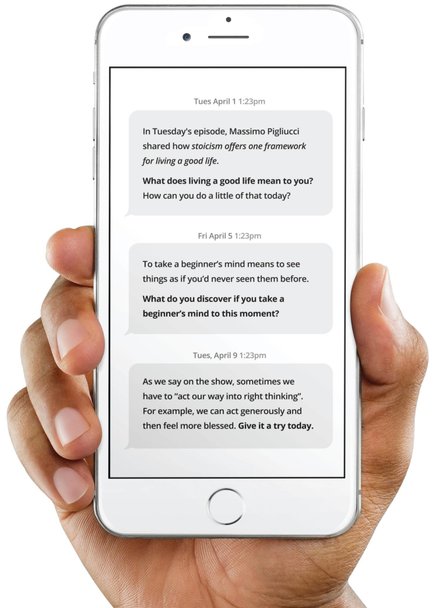
    • Sign Up for Wise Habits Text Reminders
    • Free Masterclass: Habits that Stick
    • Free ebook: How to Stick to Meditation Practice
    • Free Training: How to Quiet Your Inner Critic
    • Anti-Racism Resources
    • Blog
  • Contact
    • General Inquiries
    • Guest Requests
  • Search
Wise Habits Texts
Eric's New Book!

Podcast Episode

Why Choosing Harmony Over Truth Often Leaves You With Neither | Dr. Rick Hanson

June 19, 2026 Leave a Comment

Watch on YouTube
Listen on Spotify
Listen on Apple Podcast

In this episode, Dr. Rick Hanson explores why choosing harmony over truth in our relationships often leaves us with neither. Drawing on decades of experience as a psychologist, relationship expert, and mindfulness teacher, Rick shares practical wisdom for navigating conflict, communicating with greater skill, and building stronger connections with the people who matter most. Rick discusses the delicate balance between keeping the peace and speaking honestly, the power of empathy and healthy remorse, and how small moments of awareness can transform the way we relate to ourselves and others. Whether you’re navigating challenges with a partner, family member, friend, or colleague, this conversation offers simple yet profound practices for creating relationships built on honesty, understanding, and genuine connection.

Feeling overwhelmed in your life?
Check out Overwhelm is Optional — a 4-week email course that helps you feel calmer and more grounded without needing to do less. In under 10 minutes a day, you’ll learn simple mindset shifts (called “Still Points”) you can use right inside the life you already have. Sign up here for only $29!


Key Takeaways:

  • Cultivating positive mental states and emotional resilience
  • Managing relationships effectively and resolving conflicts
  • The importance of consciously choosing which qualities to nurture within ourselves
  • The impact of savoring positive experiences for lasting change
  • Balancing harmony and truth in relationships
  • Practical strategies for admitting fault and fostering healing
  • Understanding the dynamics of impact versus intent in communication
  • The concept of “unilateral virtue” and focusing on personal growth
  • Enhancing empathy and its role in improving relationships
  • Frameworks for effective communication and transforming relational dynamics

Rick Hanson, Ph.D., is a psychologist, Senior Fellow at UC Berkeley’s Greater Good Science Center, and New York Times best-selling author. His seven books have been published in 31 languages and his latest book is Making Great Relationships:  Simple Practices for Resolving Conflicts Building Connection, and Fostering Love He’s the founder of the Global Compassion Coalition and the Wellspring Institute for Neuroscience and Contemplative Wisdom, as well as the co-host of the Being Well podcast – which has been downloaded over 10 million times. He’s lectured at NASA, Google, Oxford, and Harvard and his work has been featured on CBS, NPR, the BBC, and other major media.

Connect with Dr. Rick Hanson: Website | Twitter | Instagram | Facebook

If you enjoyed this conversation with Dr. Rick Hanson, check out these other episodes:

Why Family Relationships Are So Hard and What Actually Helps with Nedra Glover Tawwab

How to Have Healthier Relationships with Yourself and Others with Jillian Turecki

This episode is sponsored by:

Brodo Broth: Shop the best broth on the planet with Brodo.  Head to Brodo.com/TOYF for 20% off your first subscription order and use code TOYF for an additional $10 off.

Shopify – The commerce platform that helps you build, grow, and manage your business all in one place. Start your $1/month trial at shopify.com/feed.

Alma has a directory of 20,000 therapists with different specialities, life experiences, and identities, and 99% of them take insurance. Visit helloalma.com to learn more!

Aura Frames: Named #1 by Wirecutter, you can save on the gifts moms love by visiting AuraFrames.com. For a limited time, listeners can get 25 dollars off their best-selling Carver Mat frame with code FEED. Support the show by mentioning us at checkout!

Rocket Money Let Rocket Money help you reach your financial goals faster. Join at rocketmoney.com/feed.

David Protein bars deliver up to 28g of protein for just 150 calories—without sacrificing taste! For a limited time, our listeners can receive this special deal: buy 4 cartons and get the 5th free when you go to www.davidprotein.com/FEED

Taskrabbit: When life happens, your to-do list grows. Get ahead of it now and get fifteen dollars off your first task at Taskrabbit.com or on the Taskrabbit app using promo code FEED. Taskers book up fast, especially for same-day tasks, so book trusted home help today.

Hello Fresh – Get 10 free meals + a FREE Zwilling Knife (a $144.99 value) on your third box. Offer valid while supplies last.

By purchasing products and/or services from our sponsors, you are helping to support The One You Feed, and we greatly appreciate it. Thank you!

patreon

If you enjoy our podcast and find value in our content, please consider supporting the show. By joining our Patreon Community, you’ll receive exclusive content only available on Patreon!  Click here to learn more!!

Episode Transcript:

Rick Hanson 00:00:00  Where are we repeatedly dwell, for better or worse, becomes what dwells within us, because neurons that fire together wire together, especially negatively because the brain’s negatively biased, as you know, it’s like Velcro for bad experiences, but Teflon for good ones.

Chris Forbes 00:00:24  Welcome to the one you feed. Throughout time, great thinkers have recognized the importance of the thoughts. We have quotes like garbage in, garbage out or you are what you think ring true. And yet for many of us, our thoughts don’t strengthen or empower us. We tend toward negativity, self-pity, jealousy, or fear. We see what we don’t have instead of what we do. We think things that hold us back and dampen our spirit. But it’s not just about thinking our actions matter. It takes conscious, consistent, and creative effort to make a life worth living. This podcast is about how other people keep themselves moving in the right direction, how they feed their good wolf.

Eric Zimmer 00:01:09  There’s a phrase Rick Hansen uses in this episode that I love. If you routinely choose harmony over truth in relationship, you often end up with neither.

Eric Zimmer 00:01:19  And that names exactly the trap that I have fallen into in the past. I’m staying quiet to keep the peace, telling myself I’ll bring it up later and then never doing it. What looks like keeping the peace is actually just driving the conflict inward. Rick’s new book is Making Great Relationships, and it’s full of this kind of precise, unsentimental wisdom about what actually works in relationships and what we only think is working. I’m Eric Zimmer, and this is the one you feed. Hi, Rick, welcome to the show, Eric.

Rick Hanson 00:01:53  Again, I’m really glad to be here. We were yakking it up before we started officially and that was great. I want to keep going.

Eric Zimmer 00:02:01  Yeah, we should have captured some of that. However. Yeah. I don’t know how many times you’ve been on now. You know, we’ve had you on with Forrest and it’s always a pleasure. And we’re going to have a chance today to discuss your new book called Making Great Relationships Simple Practices for Solving Conflicts, Building Connection, and Fostering Love.

Rick Hanson 00:02:19  There you are. Ta da!

Eric Zimmer 00:02:21  But before we do that, let’s start like we always do with the parable and the parable. There’s a grandparent who’s talking with their grandchild, and they say, in life, there’s two wolves inside of us that are always at battle. One is a good wolf, which represents things like kindness and bravery and love, and the other is a bad wolf, which represents things like greed and hatred and fear. And the grandchild stops and they think about it for a second. Look up at their grandparent and they say, well, which one wins? And the grandparent says, the one you feed. So I’d like to start off by asking you, what does that parable mean to you in your life and in the work that you do?

Rick Hanson 00:02:56  Oh, it’s it’s central for me as well. And we have the two wolves. And much of life is about feeding the qualities inside the wolf of love, of mindfulness, of resilience, of determination, commitment to social justice, all of those things.

Rick Hanson 00:03:13  The wolf of positive emotions. Emotionally positive experiences are one of the best medicines of all for both mind and body authentic ones. So we want to cultivate one, and we want to increasingly disengage from the other. If we hate it, we feed it, but we can withdraw food from it and fuel for it. And for me, there’s a resonance of this that relates to my own background in the Buddhist contemplative tradition that has to do with where you dwell becomes increasingly what dwells within you. And also this resonates for me very much in terms of my background in neuropsychology and what’s called positive neuroplasticity, in that it’s really important to rest in what calls your heart to rest. Your mind almost calls your heart for a breath, or longer to help the mental neural pattern of the time that underlies that experience. To help that. Leave residues that last behind in physical changes in your brain in terms of altered neural structure and function. Because without that actual physical change in your nervous system, you may have momentarily fed the wolf, right? But there’s no lasting learning.

Rick Hanson 00:04:28  There’s no development, no cultivation. The wolf has not gotten any bigger. Bigger. The good wolves get bigger when we take in the good, and we turn positive states into positive traits by resting in them for a breath or longer. And I’ve written a ton about that and hardwiring Happiness and other books. As you know, you are right up my alley. You know I am right up your alley with the one you feed.

Eric Zimmer 00:04:51  Yep. So say that about the dwelling piece again. What was that quote that you just said?

Rick Hanson 00:04:56  Basically, if you just think about it, think of it as dwelling. There’s a technical word in the language of early Buddhism a Brahma vihara. A vihara is a dwelling place, a Brahma being a really positive dwelling place. So vihara, where do we dwell? And I find for me that this is a very emotionally rich and embodied sense, like dwell. It’s like a dwelling place. Where do you abide? What’s home for you? We long to come home. It’s sometimes said that all sickness at bottom is homesickness.

Rick Hanson 00:05:28  Do you understand that? In different layers of meaning. So where do we want to dwell? And where we repeatedly dwell, for better or worse, becomes what dwells within us? Because neurons that fire together wire together, especially negatively, because the brain’s negatively biased, as you know, it’s like Velcro for bad experiences, but Teflon for good ones. So it’s really important to rest in beneficial experiences, particularly the ones that you hope to. Grow in stabilize inside yourself so that you rest in them either because they’re already happening. Usually, like right now, it feels really good with you, Eric. It’s good. I’m resting in this. It’s camaraderie. It’s companionable ness. Yeah. You know, we’re spiritual friends as well as worldly friends. It’s good. Like so there, on the other hand, you can create a beneficial experience deliberately by mobilizing compassion for somebody or mobilizing gratitude for something or anything else. Okay, once you’re having that experience, don’t waste it on your brain. Slow it down so that as you dwell in it, stay with it.

Rick Hanson 00:06:35  Not out of attachment to it or clinging to it. More like a gentle openness to it and an establishing of yourself in it, a protecting of it, often for a breath or longer. Right? It doesn’t take a lot of time to change the brain for the better. We just need to give it some time initially, especially with positive experiences, and then do this repetitively. So as you dwell increasingly in what causes your heart, that becomes increasingly what dwells within you in a sense of growing, stable traits that operate in the background. Or you can call upon them quickly as needed. Traits again, like the trait of mindfulness, the trait of compassion, the trait of resilience, the trade of being determined, the trait of emotional intelligence right. Becoming more skillful in relationships. The trait of patience. The trait of fundamentally positive mood. Inner peace. Yeah, the more we dwell on experiences of these things, the more we dwell in experiences of them. As strengths, we grow those durable strengths within ourselves.

Eric Zimmer 00:07:36  Yeah, that idea of just these brief moments underlies a lot of what I’ve really focused on in the Spiritual Habits program, where, you know, the core mantra there is little by little, a little becomes a lot. Right. Which is beautiful. These little moments. Right? Yeah. I think it’s a Tanzanian proverb. I didn’t make it up, but kind of what you’re saying. Most of us don’t have big chunks of time to devote to spiritual practice. Our lives are busy, but we can little by little, make a lot of progress. And that’s what you’ve talked so eloquently about for so many years.

Rick Hanson 00:08:08  Yeah. Well, I love that proverb. I’m going to remember it a little by little. A little becomes a lot. Yeah. The thing I see a lot is a psychologist, therapist and, you know, a long time husband, a long time father, long time business person as well, is that we tend to just race on, we don’t value enough, and we don’t have the humility to stay with he beneficial experiences.

Rick Hanson 00:08:31  We race on to the next one before internalizing the current one, which leaves us endlessly hungry for more. And so it’s really important to value key beneficial experiences. And because you value them, internalize them, rest in them. And we also have a culture that kind of Pooh Pooh this whole idea, you know, culture that basically says, you know, what doesn’t kill you will make you stronger. You know, you learn through pain. Actually, most pain has no gain. Think of it. And most pain actually tears us down. Stress, anxiety, depressed mood, anger. Chronic anger is terrible for cardiovascular health. Shame. Feeling inadequate. Feeling less than others. Feeling endlessly driven to impress others. And you know when their approval again and again. You know, whatever their approval was yesterday, you need to ruin it today to fill that hungry hole in your heart. That’s deeply problematic. And I find so many people, when they first start to slow down to taking the good, they start to realize that it’s hard initially.

Rick Hanson 00:09:34  It’s just not their habit.

Eric Zimmer 00:09:35  It is hard.

Rick Hanson 00:09:36  But it’s wonderful. You know, it’s the good news. Just like, why not stay with the experience for like, well, we want to race on to the next thing.

Eric Zimmer 00:09:44  Yeah. I mean, I’ve been hearing that.

Rick Hanson 00:09:46  Feed the Wolf.

Eric Zimmer 00:09:47  Yeah, I’ve been hearing that teaching from you for. I mean, how many years now? Six. Eight. Right. And it’s still it’s not natural to me to dwell and stay and savor.

Rick Hanson 00:09:59  Yeah. And let it sink in. And sometimes what we rest in, what we dwell in, you know, what we stay with is not technically something you could actually savor. Like, for example, the feeling of healthy remorse or disenchantment, like, hey, it’s fun to get buzzed, but, you know, it’s fun for 20 minutes, and then after that it’s all just contraction and wanting more. And then the next day feeling, you know, foggy and your partner looks at you and goes, oh, your breath smells and there you are.

Rick Hanson 00:10:30  Well, realizing that may not be an experience you savor per se. And yet it’s an important to let it land not out of beating yourself up, but by letting the resolution and the disenchantment sink into you. So the next time you walk a higher road, one that’s kinder to your future self, right? Who’s going to be paying the price for that pleasurable 20 minutes? And also to the other people around you? sometimes ideas are really also useful to internalize. So I’m just kind of building on what you said there about savoring, not against it, just adding what else people can be aware of. You know, like the idea that you’re not responsible for your partner’s alcoholism, right? Or the idea that your contribution to a rocky relationship with an adult child perhaps was real and worth remorse, regret and correction. And that contribution that has your name tag on it, you know, was one of many significant factors in whatever has turned out. Yep. That idea, that understanding is also something to to really let it land so you can form conviction around it.

Rick Hanson 00:11:39  Anyway, we feed many wolves in many ways, and little by little, a little becomes a lot, just like you said.

Eric Zimmer 00:11:44  Yeah. Yeah. I love that idea, though, about staying with things a little bit more purposefully and consciously, both what we would consider positive things and things that we might consider negative in the sense that they don’t feel good. Yeah, necessarily. But to me, that is sort of the point of a lot of the negative emotions. Right? Used correctly. Yeah. Is that there’s something to be learned there. Yeah. If we can, you know. Not all the time, not in every case, but in a lot of them there is. But our desire to not feel them means that we also won’t learn from them.

Rick Hanson 00:12:23  Exactly. Give you a little example. So last night I have a regular Wednesday meditation program online. People can check it out. It’s free, no big deal. And it’s very open and inviting Wednesday night. So last night, the first one of the year, I gave a talk on what matters and what doesn’t, because that’s really central.

Rick Hanson 00:12:42  And in effect, we want to help ourselves disengage from what truly doesn’t matter. Those wolves, metaphorically speaking, we want to disengage from what truly doesn’t matter. And we want to rest increasingly in and feed and cultivate and practice what truly does matter to us. Okay, so I gave that talk, and then my wife and I have a little kind of time together. She goes to bed a little earlier than I do. So we hang out and we also do a little brief meditation on the way to bed. It’s like I’m putting her to bed. It’s kind of it’s sweet. And we were talking and I’ll spare you the exact detail, but she made a little passing comment about a situation that I could just kind of deal with and put up with. In effect, that wasn’t that great for me. And right there I was at a crossroad. What matters most? Which wolf am I going to feed? Am I going to get a little irritated and a little snarky and push back on this thing that she thought I could just put up with that would be uncomfortable for me? Or do I just sort of let it go by and know that actually I’m not going to do that thing, but I don’t need to make a deal out of it right now.

Rick Hanson 00:13:50  What matters more now? Which Wolf, do I want to feed? I want to feed a pleasant way of ending our day together. I don’t feel the need to get into an argument just before bad. You know, I’m trying to manage my tendency to drop in exasperated input. No input is one thing, but adding exasperation. Maybe the input matters. But does the exasperation truly need to matter to you? Do you want to really feed the wolf of exasperation? So that was a little moment, and basically I could just feel myself initially wanting to chase the irritable, kind of exasperated reply and to feed that wolf and to make that wolf matter in the moment. And I just slowed it down to kind of disengage from that reactive cascade and Rest. Marina. Hey. I’m okay. Still, I don’t need to chase this one. I don’t need to go to war over this one. We’re all right. And, you know, slide into making that matter instead. That’s the wolf I fed, and I’m.

Rick Hanson 00:14:51  I’m really happy now, 12 hours later, being able to talk about it.

Eric Zimmer 00:14:55  Yeah, I actually want to come back to that story in a minute, because I think it’s central to a lot of things in the book. But I think we first have to start with the elephant in the room, which is you writing a book about relationships is ironic given you’ve been married five times.

Rick Hanson 00:15:10  What? You’re joking are I’ve been married 40 years to the same person.

Eric Zimmer 00:15:15  Oh, no. I’m confusing you with the professional wrestler Ric Flair. I’m sorry.

Rick Hanson 00:15:20  I don’t worry about it. There’s also Ric Hansen, who’s the police chief of Calgary, Canada. And then there’s another Ric Hansen who, you know, yeah. Disabled athlete went across the country. Well, yeah. Good luck. That was it was a good.

Eric Zimmer 00:15:34  It was a stupid joke. Ric Flair. I couldn’t resist. I do, right here.

Rick Hanson 00:15:39  Right here. What are we going to chase? And which is one of the central themes in the book, Making Great Relationships right here.

Rick Hanson 00:15:45  Am I going to get snarky about that? Am I going to take it personally, or am I going to know that you’re a good guy? Right? and if I actually had been married five times, it would be ironic to write a book about making great relationships right there, right there. We have that choice hundreds of times each day in all kinds of relationships. All sorts. And which one do you tilt? Which choice do you make? And that’s what that book is so much about. What do you do with your thoughts and your basically your your thoughts, words and deeds, what you say and what you do. Yeah. Well, you, you know, with your mind in your mouth, essentially. I don’t mean that sexually. again and again and again. And the consequence is that those little things, as you just said, yeah, build something that’s a lot over time.

Eric Zimmer 00:16:31  Yeah, yeah. No, that was a pre-planned dumb joke. I know you’ve been married a long time.

Eric Zimmer 00:16:38  I’m just thinking of you and Ric Flair in the same breath. It just was too good to resist for me. Let’s go back to that story about your wife there, though, because there’s something interesting in that. And as I was reading your book, I sort of kept seeing both of these things reflected. And what they are is I feel like it’s a real tension that I have certainly faced in relationship. I think everybody does to some degree. Right. And it’s this tension of, on one hand, we want to pause, slow down, rein in our tongue, think about what’s important. Choose what do I want to feed right now when we’re presented with something in a relationship? Yeah. That tendency, though taken too far, becomes a tendency where we don’t talk about the things that we’re unhappy about. We don’t talk about what we need. We don’t talk about what we want. So my rationale is a little bit like the one you just did, which is like, I want to feed this peaceful moment.

Rick Hanson 00:17:34  Yeah.

Eric Zimmer 00:17:34  So I’m not going to bring up this thing. Yeah. And then I say to myself, this isn’t the right time, which may be very wise in a lot of cases it is. I’ll bring it up later, which then I never do. Yeah. I thought we could talk about that essential tension of thinking through. When do I say something about what’s going on? When do I not? How do I determine what the right time is? I just love to kind of explore that because I think that’s a big deal.

Rick Hanson 00:18:03  I think it is a big deal. And I think that’s an example of a really big deal, which is the whole thing of what do I do when, what do I say when? And, you know, besides being married for 40 years, I’ve been doing counseling for roughly the same amount of time. That’s a lot of experience, including a lot of couples and families and other kinds of relationships, including business, relationships, partners or, you know, the manager person they manage or the work team.

Rick Hanson 00:18:30  A lot of experience there, and there are thousands of books on relationships. I wanted to write a book that no one has written, really, which is 50 Simple Practices for Solving Conflicts, Building cooperation, and Fostering Love practices specific to do’s, 50 to do’s that answer the question what do I do when right? So in this particular case, I think you’re right. People can on either side. They can on the side of coming in too hot or too cool. They can on the side of, you know, saying too much or saying too little. Which way do we go? And there’s kind of a saying, I put it in my book, resilient, my saying, which is very often we’re choosing harmony or truth in our relationships. Yeah. And there’s a place for choosing harmony. There’s a sequel to my story about my wife last night, actually, I’ll tell it to you, but at first I chose harmony over truth. Yeah, right. But there’s a problem that if we routinely choose harmony over truth over time, we often end up with neither.

Eric Zimmer 00:19:31  Exactly. That was an insight I had, which was like I was thinking I was keeping the peace. What I realized I was doing was driving all the conflict inside. Yeah, it wasn’t peace. There was external peace, but there was not peace. It’s just that I, for that time, was taking all of it, you know, which turns out to be a losing game for me and the relationship.

Rick Hanson 00:19:53  Yeah. Yeah. So. Exactly. Right. So again, long term therapist. It’s like learning a skill, you know, if you want to learn to ski, which I’m bad at, you know. But when I was trying to learn it, there’s the foundational things you learn along the way. Right. So in the book, it starts with befriending yourself. Yeah. Because if we don’t have that fundamental quality of being on our own side and not against others, but for ourselves and kind to ourselves and recognizing good in ourselves and having compassion for ourselves and supporting ourselves like a good coach or a good guide.

Rick Hanson 00:20:25  Not a critic, but a good coach or guide and a cheerleader as well. That’s foundational. And then certainly their general capabilities around warming the heart toward others. You know, the cultivation of compassion, the the skills of empathy. I’ve seen the good in others, seeing good intentions in others, even though they are expressing them in ways that are problematic. You know, it’s on that foundation, definitely that. Then you get to okay, all right, something happened. We’re going to interact about it. How do we do that? And there’s a lot in the book about the actual how of moving through a conflict effectively or negotiating wants. You want X, they want Y or you felt kind of hurt or you felt let down, you felt really wounded. What do you do? And even ultimately, how do you resize the relationship in key ways? maybe, if only in your mind. Like, I don’t know about you if you want to go public with this, you know, I. But I can go public too.

Rick Hanson 00:21:24  There are certain areas where I’ve just sort of given up on the hassle about something like I like it sort of neat and orderly. Partly because I’m dealing with a million things and that’s how I manage a million things. My wife grew up in a family where it was just chaos everywhere, and it was not a problem. It was a happy family. So we’re different that way. So I’ve given up about vast areas of our home, you know? But my closet is organized, my office clear and neat. That’s a formal resizing. Other people, you just resize and you realize, you know, I’m not going to talk to them after they’ve been drinking or, you know, yeah, we’re going to have lunch maybe once or twice a year. And we’re not going to talk about Donald Trump. We’re just going to let that one go right by. Yeah. And that will be enough with that kind of old friend from college, for example. So yeah, and we could talk more about it.

Rick Hanson 00:22:14  Thanks for letting me kind of give you an overview of the book, and I’m happy to give marital advice if you wanted. And happy to receive it from you as well.

Eric Zimmer 00:22:24  Yes, yes. Well, I’m teasing you about being married multiple times. I have been married and divorced twice. So I may have more war stories than you. But you’ve met Jenny. She’s interviewed you. She’s enormously happy now. Yeah. The thing that was coming up for me is you were kind of talking through this, and we were thinking about it as a little bit of this sense, and I think we do this in many aspects of life. Right. Which is discernment around, like you said earlier, your core talk last night or earlier this week, which was, you know, what matters and what doesn’t.

Rick Hanson 00:22:55  Yep.

Eric Zimmer 00:22:56  Because that’s what we’re really talking about. Figuring out here is what really matters. What things can I let go of that don’t compromise me in any meaningful way. Right. They may cause me to have to do some adjustment.

Eric Zimmer 00:23:10  They may cause me to have to relax a little bit, but they don’t compromise me in a fundamental way. But there are other things that might. And I think we do this in all relationships and even in things like work. Right? Like work is a compromise for most people. In some way it’s like, well, there’s all these really good things, but then there’s these three bad things and which outweighs which. And so there’s this, this sort of discernment process that feels challenging. And I think that’s part of why, as I was reading your book, the early parts are very much as you said, about internal steadiness, focus, work, etc. because I do think that steadiness is needed to make these difficult discernment because we don’t make them well when we are out of whack.

Rick Hanson 00:23:53  Yeah, yeah. You know, it might be helpful since you’ve been so kind, actually, to talk about the book. Yeah, I’ll just kind of name some of the simple practices. Then. The chapters in this book are really short, you know, usually 3 to 5 pages each.

Rick Hanson 00:24:07  So their each one of them is a specific thing. So I’ll just kind of just start naming chapter titles starting in part four. Stand up for yourself. So let go of needless fear. Use anger. Don’t let it use you. Tell the truth and play fair. Don’t be bullied. For example, these are really foundational, you know. Or pass that in terms of the section on speak wisely. That’s the longest part of the book. Yeah, six parts total. Speak from the heart, ask questions, express appreciation, try a softer tone, admit fault and move on. Yes, that’s been one of the best for me. Stay right when you’re wronged. That goes to practicing unilateral virtue, not out of being a doormat, but in part because it puts you in the strongest possible position. Yeah. Say what you want. Come to agreement. Forgive them. Forgive yourself too. Yeah. Anyway, you can just see the kaboom of those things and they really are kaboom. The longer I’ve done therapy with people, I think I’ve become kinder.

Rick Hanson 00:25:16  I’ve also become blunter. Yeah, yeah. And that bluntness, that kind bluntness definitely runs throughout the entire book. Like, this is what we’ll do. This is what’s in your power. There’s so much that’s not in our power, right? Other people going to do what they do. Many people disappoint. That’s reality. Okay. What’s in your power with what you think and what you say and what you do? And that’s what the book is really about. In that way, you can make a great relationship, even if the other person’s problematic for you, even if you want to disengage from them. For you, it’s a great relationship because you’ve practiced with it in various ways.

Eric Zimmer 00:26:13  You pulled out some chapter titles, and maybe we could go deeper into a few of them, because I’ve picked a few out myself that I wanted to kind of touch on, and one of them is this admit fault and move on. You say, remember, it’s in your own best interest to admit fault and move on.

Eric Zimmer 00:26:29  Admitting fault might seem weak, or that you’re giving others a free pass for their faults, but actually it takes a strong person to admit fault and it puts you in a stronger position with others, you know. You also then go on to talk about try not to make the fault bigger than it actually is. Be specific about what it is. Talk a little bit more about this ability to admit fault and do it in a wise way.

Rick Hanson 00:26:54  Well, you know, there’s a saying in medicine, I’m thinking about your two marriages so far. Good judgment comes from experience, and experience comes from bad judgment. So you’ve had a lot of experience. I’ve had a lot of experience to it that has come from my own bad judgment. So in the moment we do stuff, you know, a tone slips in or we drop the ball. You know, we’re supposed to remember to get the milk on the way home or something, right? Or we’ve just kind of more globally been tuning out our partner because we’re preoccupied with work or we’re thinking about TV we want to watch later tonight, whatever it might be.

Rick Hanson 00:27:28  You know, a lot of faults are morally innocent. It just slipped our mind. Yeah, right about something and. Okay. And it’s about acknowledging that and being committed to correction in the future rather than arguing about the past. Yeah. And so it’s in that context just two examples. One is how we say it has much more impact than what we say generally. Much research on that tone and communications about the nature of the relationship, who’s on top, who’s on the bottom, who’s the dominant person in the relationship in the moment. So, you know, maybe we said something that we stand behind. Maybe we just said to our partner, you keep leaving your shoes in the middle of the doorway. All right. That’s a fact statement. But the tone around it could be really problematic way beyond just a reasonable exasperation after the fifth time your roommate does that, or your teenage child does that. Okay. And then the other person winces, or they get on your case about it like, oh, you’re so mean.

Rick Hanson 00:28:29  Or you said that you’re so mad all the time. And okay, so you might say, okay, you’re right, you’re right. I don’t want to use that tone. I never want to use harsh tone. One of the earlier chapters is called Watch Your Words. I use the guidelines in early Buddhism about what constitutes wise speech or right speech, and one of the kind of five key characteristics is not harsh tone. So what is harsh depends on culture and setting and so forth. But you could go, you know, okay. Yeah, I was cranky. My tone wasn’t good. You admit that fault? It clears the decks. Now the person has to deal with the actual content that they can’t believe in their shoes in the doorway, and they can no longer evade dealing with that content, that actual truth, that fact, because they’re, you know, critiquing your tone, right? For example. Yeah. All right. Another one is where, you know, you did something that really warrants some remorse.

Rick Hanson 00:29:24  You know, it’s not just about putting correction in, but it’s about, wow, I’m really sorry. And I just find if there’s going to be a healing in relationships, it’s important to feel that the other person gets it. This book, in a lot of ways, is about being that person that other people really want to be with over time. Because that person you are is someone who’s prepared and is big enough and strong enough to experience and express genuine guilt and remorse. That’s in proportion to what happened. You know, like, for example, let’s suppose you know, you’re routinely late, you know, for something and your partner’s calling you on it like, hey, you’re always ten minutes late, or you’d say you’d be home at a certain time, or you know you’ll be ready for a certain time, and you always keep me waiting. And maybe you realize, you know, the truth is, I just have not made timeliness as important to me as things that my job were. I’m always on time.

Rick Hanson 00:30:27  What’s with that? Why am I making my partner, or my kid, or my dear friend, or my aging parent less important to me than some Gibney down the hall at work? That, of course, show up on your bony jawbone.

Eric Zimmer 00:30:43  I don’t know what that means.

Rick Hanson 00:30:44  I just made that. That’s a California slang term from somewhere in my youth. Junior high. I have no idea. Sorry. I mean, I don’t I it’s just a made up. Anyway, point is what? And then you start to, you start to really feel it like wow. And you start to feel how much you care about your partner. You start to become aware of your impact on your partner. It wasn’t your intent to be cruel and yet the impact caused harm, caused suffering, and you start to feel a little like a wince and you go, no, sorry, sorry, sorry honey or sorry friend or sorry mom, I got it, I got it, and it’s that healthy remorse that will motivate you to not do that again, and to be that person who won’t do that again.

Rick Hanson 00:31:29  And when other people see that about you. Just to finish here, here’s the moving on part, where when you’ve acknowledged it, you can move on. Now, they may not be ready quite yet to move on because they don’t trust you. And what’s useful about admitting fault and moving on is to say, I get it, but I’m not going to try to prove this to you. I’m just going to demonstrate it. Yeah. It landed, I got it. I’m not admitting fault. Just to brush you off and make you go away. I really get it. And it’s it’s the admission of fault, including sometimes with proportionate remorse that enables me to say, hey, I’ve done my part here. You know, I’ve acknowledged it. Confessed? I’ve pled guilty. However you want to say it, I’m not trying to minimize how it landed on you. I’m not trying to get into some big, long, defensive explanation. You know, internally, I’m reserving my right to judge for myself how big a fault it is.

Rick Hanson 00:32:27  Yeah. And if the other person thinks, oh, on a on the 0 to 10 scale of faults, it was at least an eight. And you’re thinking, hey, I just added a little exasperation in my tone about your shoes in the middle of the doorway for the fifth time today, but okay. You know, for you it’s maybe a one or a two, but whatever it is, you acknowledge it and then you move on from it and it’s great. You know, you’re just moving on. They can think what they think. You’re walking the high road. You know, you’re practicing unilateral virtue on your own. And that gives you a real feeling of worth in yourself. Plus, over time, it removes reasons for others to find fault with you, you know, and less and less to find fault with. Even if they go looking and some people will. Unfortunately. And you’re just. You’re impeccable. You can enjoy what’s called the bliss of blameless ness. Yes, deep in your bones.

Eric Zimmer 00:33:19  In 12 step recovery, we talked all the time about keeping our side of the street clean. Right.

Rick Hanson 00:33:24  Like, beautiful.

Eric Zimmer 00:33:25  And what comes from that is a degree of peace.

Rick Hanson 00:33:28  Yeah. That’s right. And the foundation of that is like a phrase that you’ll relate to, of course. Fearless in searching inventory. Yeah, yeah. Of yourself. Which means. Because you’re willing to do that. Fearless in searching inventory, you can stand strong in what you’re not going to take on. Yep. You know, you’re not going to say that you’re responsible for that or be guilt tripped into feeling inferior to others because they’re lambasting you about something that you’re like, no, honestly, I don’t think it was that bad. Yeah. And I have authority to say I don’t think it was that bad inside my own heart, because I’m fully prepared to say what is bad based on a sincere and searching inventory.

Eric Zimmer 00:34:07  Yeah. I want to make sure we hit unilateral virtue because I love that idea. But I want to stay here for a second and talk a little bit about a couple of words that you used in there that, that are part of a cultural conversation to some degree these days, which is around impact versus intent.

Rick Hanson 00:34:24  Yeah, exactly.

Eric Zimmer 00:34:25  There are differing schools of thought. And and I tend to think people land on one extreme or the other on this. Right, versus a middle ground, which is there’s one idea which says if what you did impacted me negatively, it doesn’t matter what your intent was, you are wrong. There’s another school that tends to say, but I didn’t mean it that way. So it didn’t hurt you, right? Or it shouldn’t hurt you. It shouldn’t hurt you because I didn’t mean it that way. That wasn’t my intent. And I think in relationship this becomes very difficult at times because we go, well, my intent was and you took it X way and you know, so there is this searching and fearless moral inventory where we go. Well, you know, to me, that’s a to. But to my partner, it was an eight. Now, how much of that do I need to take on or not take on? Because we know that people respond to things from a variety of factors.

Eric Zimmer 00:35:20  Right. The tone about the shoes in the doorway might be a two on its own. Yeah, but if you’ve talked with that tone for five years, it might be an eight now. Totally. Right. Or if your partner had a dad who was slightly angry when you use a very mildly angry tone, they might reacted in eight. So impact and intent can very often be mismatched. Oh, yeah. Yeah, yeah, just I just love to hear you sort of elaborate on that or kind of, you know, talk through that.

Rick Hanson 00:35:50  Yeah. Or just add another thing. Let’s suppose that you are a white person and a person you’re saying that to is a person of color, let’s say. And so there’s another element in the mix in which someone who belongs to much more. The dominant side and advantaged privileged side in the culture, including historically, is then criticizing and in effect, commanding another person to do something. So you’re right. Multiple layers to that. For me, having worked through this territory a lot, including in terms of kind of classic diversity trainings and considerations about it, let’s see.

Rick Hanson 00:36:28  One of the keys for me that’s been helpful has been to internally cut to the chase about, okay, what’s my correction from now on? That kind of is independent from the emotional charge and sometimes the accusations that are flying or in disagreements about what something means, let alone disagreements about what happened. Yeah, right. And also, how can I put it disengagement from the understandable backlog that a person who’s been shoved down and had the boot on their neck and their parents and their grandparents and their ancestors and all the rest of that to kind of, in effect, acknowledge that while zeroing in on, okay, what am I going to do next time?

Eric Zimmer 00:37:10  Yeah. Well, you’ve got a line that says you don’t have to fight about the past to agree about what you’ll do from now on. And that line just jumped off the page. It means yeah. That’s right. Because how powerful is that idea? Like, okay, your fault. My fault. We’re rehashing what may have happened. My memory, your memory of what happened.

Eric Zimmer 00:37:27  It’s all muddled ground, right? Right. What we can do is say, let’s talk about what we do now. Moving on. And let’s create. You talk about agreements in the book. Let’s create an agreement about what’s going to happen. You can’t reset the emotional clock entirely. I’m not saying that, but you are resetting it in a sense. And you can then from that agreement, then have conversations about, you know, how are we doing with our new agreement about how this will happen.

Rick Hanson 00:37:52  That’s right. A second key distinction for me is to kind of tease apart what the experience of the other person is from. Maybe there are accusations around it, right? I don’t have to necessarily buy into the accusations. You know that I was an egregious asshole or promulgating a bunch of micro-aggressions from my privilege or something. I don’t have to necessarily agree with those accusations, while being really interested in and sincere about understanding the experience of the other person, and in a context of a kind of unconditional grounding in goodwill and kindness and compassion.

Rick Hanson 00:38:35  Not from a pity place, not from a superiority place, but just from a naturally open heart. That distinction between what’s the experience of the other person and being interested in it sincerely and trying to learn from it, distinguishing that from whether or not their accusations are founded or whether they’re over the top, or whether I need to feel guilty about it, you know, separating that out I find super helpful too. Yeah. Yeah. Yeah. I’ll give you an example of that. I grew up in a home in which my parents had a monopoly on the expression of anger. And so I entered adulthood super uptight, really pinched, and I saw myself. Also, I was very young, going through school, this nerdy young kid. And I did not have any sense, really, of my personal power, didn’t get it. And then it was really in my marriage, including the early years of our children, now 35 or so years ago for our oldest. My wife started pointing out to me that actually I had an intensity that I was totally unaware of.

Rick Hanson 00:39:36  And I also grew up in a home where my parents let fly a fair amount of emotional intensity. It was not a big deal to me, and I had to realize that the experience of other people was that they were shaken. I wasn’t abusive, but I was just intense, and I didn’t realize the impact of that intensity. And so I learned over time to stop being so defensive about the fact that I had every right in the world to say that, because it’s really true. You left your shoes in the damn doorway again, right? Yep, yep. I had to separate out the validity, whatever it was, let’s say, which usually there is some validity in what we say, even if it comes out in a sort of messy, turbocharged way and then focus on and learn from. Oh, wow, that’s how it landed on you. That’s how it landed on you. You know, that was really helpful and more broadly helpful to realize that, man, we’re so affected by each other.

Rick Hanson 00:40:34  We’re vulnerable. We’re social primates who are evolved to be, in effect, the most affected by other species on the planet, by design. Of course we’re affected. Of course you are affected. It’s not because you’re weak or a whiner or needy. Of course you are affected by what they do. Yeah, and flip the other way. they are really affected by what you do. The micro expressions across your face of, you know, contempt, divisiveness. You know, disdain. Like a little exasperation, you know, not really being present. Your eyes start wandering away. You’re not showing up for them. They get affected by that, let alone if you start adding significant anger into the mix. Yeah. And anyway, it’s just been helpful for me to have that feeling of almost the tenderness of other people while also finding ways to be strong and be clear. Yeah, and to say what needs to be said.

Eric Zimmer 00:41:35  There’s such an art to that. That ability to say what you need to say.

Eric Zimmer 00:41:40  Yeah. And do it in a way that has the most likelihood of being received. It is a real skill. It is a real skill to learn. But I do think it really can be learned, and I think it’s one of the most valuable things you can learn to do is, you know, how do you have difficult conversations in a effective and productive way? There is a book that’s been out a long time called Crucial Conversations. I don’t know if you’re familiar with that one, but so many great pieces in there too, about, you know, how do you approach this? You know, there’s some parallels to what you’re talking about in your book and in their book, because, you know, they do say you got to start internally.

Rick Hanson 00:42:19  Yeah.

Eric Zimmer 00:42:20  You know, you got to start internally getting clear on getting to a settled place, to a strong place. You’ve got to get clear on what do you actually want, what matters here, what’s important. So there’s a lot of work ideally that is done now.

Eric Zimmer 00:42:36  It can be done very I’m not saying you got to set aside hours to do it necessarily, but I do think it needs to be done. It can be done fairly quickly. Sometimes it needs to be done over a longer period of time where there’s some real thought about like, this is an important thing to me. Yeah. And how I’m about to communicate. This actually matters because I want it to be both kind, but I also want it to be effective.

Rick Hanson 00:42:58  Right? Oh it’s good. So I’ll just tell you from a lot of couples counseling and different kinds of couples, including parents and teenagers and family members, and also in work environments. So first, classic setup A and B walk into the office. Right. A says I want you to change. B says, I want you to change. Yep. And then B says, yeah, I’ll change you first. Boom. Deadlock. That’s where unilateral virtue comes in where you practice. I think of it as the 8020 rule put 20% of your attention on what you want from them.

Rick Hanson 00:43:31  Meanwhile, put 80% of your attention on how you could be a better partner or friend or worker or boss or sibling and so forth, because that is unilateral virtue, and you’ll feel so much better by doing that. Yeah.

Eric Zimmer 00:43:44  Check in for a moment. Is your jaw tight? Breath shallow. Are your shoulders creeping up? Those little signals are invitations to slow down and listen. Every Wednesday, I send weekly bites of wisdom, a short email that turns the big ideas we explore here in each show. Things like mental health, anxiety, relationships, purpose into bite size practices you can use the same day it’s free. It takes about a minute to read and thousands already swear by it. If you’d like extra fuel for the weekend, you also get a weekend podcast playlist. Join us at one You feed. That’s one you feed newsletter and start receiving your next bite of wisdom. All right, back to the show. That’s so good. 8020. Actually, I read that in the book too, and I loved it because you hear people say it’s 5050, or then you’ll hear other people say, no, no, no, no, it’s 100% you, 0% the other person.

Eric Zimmer 00:44:46  And neither of those to me is right. So I think 8020 Feels about right. Like 80% of my effort really should be on me and what I’m doing, and. But you know what? I’m a human being. I’m not like a robot. And I’m not going to respond and pay attention to 20% of it.

Rick Hanson 00:45:00  For me, it reframed everything to realize that the strongest, most badass kind of way to be is to zero out the other person’s complaints to the maximum, reasonable extent you can. Yeah. Going forward. Right. Whatever happened in the past? Focus on the future from now on, rather than arguing about the past. That was the best thing you can do for yourself and think about what is it like to be with someone who sincerely wants to sort out? What is the maximum reasonable correction to put in going forward without necessarily beating themselves up with a lot of guilt? Just okay, how can I prevent that next time? Or what can we do going forward? When you’re with that kind of person, you want to give them everything in the world, you know, because they’re chill and cool and reasonable to work with or live with or sleep with.

Rick Hanson 00:45:50  Okay, so that’s one. Here’s another one that I’ve just seen a lot. People don’t make requests. They tend to make demands. You need to get your shoes out of the door rather than hey, I request that from now on, you make an effort to keep your shoes out of the doorway. Okay? Can we have an agreement about that? And is there anything I could do, maybe even that could help you keep that agreement? Like not rushing you so much in the morning.

Eric Zimmer 00:46:15  Pick up my damn shoes.

Rick Hanson 00:46:16  Yeah, I’d like not buy you any more shoes, kid. No, no, I’m just kidding. But you see what I mean? But focus on requests. Requests? Not demands. Now, the other. If the other person doesn’t meet your requests, there could be consequences. And those consequences are not a threat. They’re just reality, right? If you have a roommate who keeps leaving their shoes in the doorway or the equivalent times ten, after a while you’re going to either get, you know, kick them out of the apartment that you have the lease on or, you know, find somewhere else to live or something like that.

Rick Hanson 00:46:46  There could be consequences that people don’t meet your requests. Here’s the third one. If I slip it in really fast, I’ve just seen it a million times. Yeah. People routinely do not actually speak from their heart. They don’t share their experience. They say things like, you’re wrong or, you know, you made me something. You made me mad. You hurt me, or you’re bad. In some ways, you did something wrong. They find fault rather than what is much more effective. Even though it’s harder and more courageous, is to just slow it down and go with dignity and appropriately say more like what your actual experience is, how you feel. So in those structures, you all know of nonviolent communication. It’s called nonviolent communication. It’s really helpful here. The structure basically when X happened or happens, I feel y because I need z, in other words. And X is described objectively. So when you know, you roll your eyes at me when I’m talking or when you interrupt me, which is factual, I feel frozen, I feel startled, I feel kind of flooded, like I was with my kind of scary stepfather coming at me.

Rick Hanson 00:47:59  I feel like I don’t matter enough for you to slow down and actually give me an extra 10s to finish my sentences. You know, I feel this inside. I feel kind of scared of you. It feels scary a little. I feel mad, honestly, as well. I feel like I just want to back away. I don’t want to be with you. I don’t want to have anything to do with you. I’m not saying that’s what I’m going to do, but I feel that because deep down, like you, like everybody, common humanity, I need to feel like I exist in the minds of others who matter to me, that I matter to people who matter to me. You know, I need to feel that I have standing, that I’m not voiceless and pushed around like I was when I was young. As a young girl in my family, these are things I need. So from now on, I request that you let me finish my sentences before you interrupt me. You know, I’m happy to make as much time for each of us in conversation.

Rick Hanson 00:48:54  I’m not trying to claim more time. I’m just trying to have as much time back and forth as you. Can we do that? Going forward, that’s a very powerful framework with a lot of dignity and gravity in it and self-respect, and it’s very effective.

Eric Zimmer 00:49:32  You’ve got another line in the book that says, if the results in our relationships are not so good, it’s our process that needs improving. And I think all this that we’re talking about to some degree is process, right? It’s about how do we interact with each other, how do we talk to each other, how do we express needs not being met, etc.? And my experience has been also that when a relationship, people can be oriented almost as if there’s this third thing that’s out there, which is our dynamic, and if you and I can unite on we’re on one side are problematic. Dynamic is on the other side. Yeah. Not I’m on one side. You’re on. So by talking about process, it moves it out into this thing.

Eric Zimmer 00:50:16  My fault. Your fault and becomes this other thing that is a different thing that we’ve co-created of course. Yeah. But that we can co resolve. There’s something about that shift that I think is really powerful. And so I just think that line in the book about, you know, it’s a process issue can be really powerful and healing.

Rick Hanson 00:50:34  Oh that’s right. Good process creates good product. So if you have good product, you know, you have good process. You have if you have bad results, bad outcomes, bad product. Take a look at your process with each other, how you interact. Yeah, relationships are built from interactions, and interactions are built from kind of turn taking. All right. You said this then they did that okay. Now what do you do. Right. And there’s kind of like a range. How can you be maximally skillful back and forth like tennis or ping pong or something to volley back and forth given, you know, what they’ve offered to you. And if you look at people who are really effective in the world historically, like Gandhi or today, the Dalai Lama, Michelle Obama, these are people who again and again say what they need to say, but they do it clearly from a place of dignity, gravity and self-respect without adding all the topspin that enables other people to avoid the actual crux of their message.

Rick Hanson 00:51:40  That’s really effective. Yeah. Take a quick story. A long time ago. 25, 30 years ago. I got to meet the Dalai Lama, and I was on a board at a meditation center, Sierra Rock Meditation Center. And we had a meeting where. Dalai Lama came in to a room with maybe 150 teachers of various kinds. And I was a small frog in that big pond, obviously. And the Dalai Lama came in with his translator and a third man. I didn’t pay much attention to. And after a while, though, I started to notice the third man who looked kind of athletic. He was wearing a suit. He looked like a middle linebacker in a small college football team, and he just stood there in the front of the room, radiating loving kindness. And his eyes never stopped moving. And he was the Dalai Lama’s ninja. He was there to take a bullet for him if need be, and you could feel there was no sense of menace. It wasn’t like he was scowling.

Rick Hanson 00:52:35  He was just there with this grounded presence. And you knew he was like a black belt in seven things or something like that. You know, he could do anything, but he just radiated kindness and goodwill while his eyes kept scanning the room. Right. And I think about people who have that quality of strength of character, who are fully prepared. They mean business, and they are fully prepared to do what’s needed to serve the greater good and to, you know, be protective and supportive and, and provide as well. That’s how we can kind of live into. Right. That’s the wolf we feed. What does it feel like? You know, you just feel immediately I’m sitting up a little straighter. I’m channeling the Dalai Lama’s ninja a little bit here, you know, and you’re rested in that way of being. And as we dwell there, increasingly, that becomes the habit of our heart. That becomes more and more where we dwell ourselves.

Eric Zimmer 00:53:33  Yep, yep. That’s beautiful. I want to hit just a couple other lines that came out in the book before we wrap up.

Eric Zimmer 00:53:39  One of them is you say large issues are often resolved through a series of small agreements. Say more about that.

Rick Hanson 00:53:47  Oh that’s great. So let’s say that you’re in a work setting, right? And you know, you’re part of a team and the team’s discombobulated and other people’s not getting the job done. Lands on your desk somehow or makes it harder for you. You know, it’s a big mess, right? Maybe that has to do with the culture of the company. So you just start with small agreements. Like when do you have meetings? Is an agreement to come on time, to end on time? Do the meetings conclude with a statement of who’s going to do what? By when. So you start building in a structure of accountability and personal accountability that’s results oriented. It’s about producing tangible results that are identifiable. And you do it step by step by step. That would be an example there or in your home life, let’s suppose kind of classically after you have children. My first book was about taking good care of mothers over the long haul.

Rick Hanson 00:54:42  If your kids come along, which means taking care of the partner, if there’s a partner involved, and more broadly, the village it should take to raise a child, the village it does take and should be present, and often is more like a ghost town in the developed countries of the world these days. In any case, very often in a couple, let’s say a heterosexual couple, there’s a kind of, you know, movement over time that maybe is a lack of erotic interest on the part of one person and on the part of another person, a kind of disengagement and a lack of interest and emotional connection. And so you start to realize, oh, if we start making little agreements about emotional connection, spending more time at least every day where we’re just hanging out with each other for at least ten minutes in a row, even though the kids are pulling on us and life’s crazy and we both have jobs, but we’re going to set aside that time or we’re going to give each other listening.

Rick Hanson 00:55:34  We’re going to practice a deeper kind of listening where we’re we’re really attentive for five minutes in a row. It’s not forever. And, you know, we’re going to connect more. We’re going to touch each other affectionately, not as a prelude to a request for sex. We’re going to connect physically, like we’re going to make that important to us. We’re going to do things that we’re both interested in. Maybe my wife and I were interested now in Jack Ryan, so we’re like going through the Jack Ryan TV stuff, whatever. Like, blows my mind. My wife’s interested in an action film, but okay, we are shared interest. Maybe it’s you play cards, maybe you go for walks. Maybe you have a cat or dog you care about together. Okay, fine. And then on the basis of those small agreements, then suddenly the erotic dimension of your life has more of a foundation for it, and you can start coming to mutual understandings. They’re not like you’re trying to mandate some sort of forced thing, but you start having understandings like, okay, at a certain frequency, we’re going to connect in that way.

Rick Hanson 00:56:33  Once a week, once a month, twice a week. You know, we’re going to connect in that way. then, you know, bit by bit, you start making those little understandings. It creates more of a sort of a field of mutuality with another person that’s really hopeful. Instead of feeling like, you know, the proverbial elephant has to be swallowed in one bite. you don’t need to eat. Elephants should not eat elephants, obviously. Big pile of tofu. Let’s say, just bit by bit. Spoonful by spoonful. Right. And as you put it, I love that proverb. Wow. Little by little, a little becomes a lot.

Eric Zimmer 00:57:08  Yeah. Certainly ties back to that. You say that in your experience as a therapist. Poor empathy is the core problem in most troubled relationships. Let’s not talk about how the couple got there, but let’s talk about the path forward. If empathy turns out to be the core problem, how do you start building that back?

Rick Hanson 00:57:26  That’s great. And that goes to your topic earlier about impact distinct from intent.

Rick Hanson 00:57:30  You know, for example, just about that when you start to imagine, you know, what’s it like to be you, you over there, the you that you’re living with, sleeping with maybe, or the you that you’re now in the middle of this kind of awkward conversation where maybe you’re a person who has a lot of advantage in the culture and you’re suddenly like, I didn’t mean any harm. Like what? You know? And what’s it like to be that other person? What’s it like to have grown up in the ways that they’ve grown up? What’s it like to know that their parents and grandparents, if not great grandparents, were enslaved, were property, you know, and had their children taken away, sold themselves, their own children, sold into slavery, for example. It’s really staggering to enter into the world of others. And you start to understand, of course, they’ve had it up to here with all that. And it’s not that you personally are doing a bad thing, it’s just that you’re interacting with someone who’s had so many bad things happen to them and to their parents and grandparents and great grandparents, of course.

Rick Hanson 00:58:37  Understandably, they feel that way. And so empathy is really important entering into the world, the mind of another person, technically. So now the how to I’ll do the quick how to hear empathy basically boils down to three circuits in your brain. That’s a real how to write. So we have empathy for actions. We have empathy for emotion. So we have empathy for thoughts. To simplify a lot of stuff. Three major neural substrates are involved in those things. So one thing you can start doing is tracking the body language and the micro expressions of the other person, imagining what would you be feeling if your body was moving or sitting or being contracted in that way? If your shoulders were coming forward, hunching over yourself like theirs are, and their head is kind of ducking a little, how might you be feeling? Like you might be feeling beleaguered and less than are not powerful and kind of like you’re trying to appease. But underneath that is a growing, seething rage and having to freakin appease yet again.

Rick Hanson 00:59:35  How might you feel? Or looking at the expressions right around their eyes or on the corners of their mouth, the main areas of micro expression. A great TV show. Speaking of is lie to me, especially the first season where they really go into Paul Eichmann’s work about micro expressions and really tracking what’s going on in another person in expressions that last half a second or a couple seconds at most. But you can really learn a lot. So right there, empathy for actions. Mirror neurons mirror like networks. Get involved in that. Empathy for feelings like what are their feelings? Especially beneath the surface. They’re coming at you all hot and heavy, angry, angry. What’s underneath that? Are they frustrated? Are they anxious? Do they feel hurt? Have they just had it up to here with you being the next person in a long line of folks who’ve been disrespectful, who haven’t slowed down to really listen. What might they be feeling underneath it all? And with training and practice, you become more comfortable with that kind of empathy and less empathy for thoughts.

Rick Hanson 01:00:38  That is called theory of mind, where basically you kind of imagine what might they be thinking given what they’re saying or how they’re acting or given their personality. And you could think of personality in lots of ways like the Enneagram point or the Myers-Briggs, or that this is or that they’re their horoscope. Who knows? You know what I mean? Their upbringing, given how they were brought up, given their situation in life right now, given the fact that they’ve got chronic pain, let’s say physical pain, given the fact that their previous partner cheated on them massively. You know, given that fact, what are their hot buttons? Understandably, what are the questions running in their mind? You know, the thought balloon over their head like in a cartoon, right? The thought balloon over their head. What could be cooking in that thought balloon? You’re forming hypotheses, you’re speculating a little bit about what could be happening. These are things we can all do. It doesn’t mean you’re trying to do mind reading.

Rick Hanson 01:01:32  You’re not being a therapist. And actually what promotes empathy is boundaries. Because if you feel more rooted like a tree, deeply rooted, you can be more open to the storms blowing at you from other people or happening inside their minds, the hurricane in their head, right? You can be more open empathically to it if you feel deeply rooted. And you’re also clear. That’s their mind. It’s not necessarily my mind. And just because they’re upset doesn’t necessarily mean it was my fault. Just because they want something, because you can tune in to the wants of others, doesn’t necessarily mean I have to give it to them. Just because they think things, things have a certain meaning for them, doesn’t necessarily mean they have to have the same meaning for me. You know, it’s the establishing of that. Differentiation is the technical term that boundary fences make for good neighbors. The old proverb. Right. Yeah. And I find this so exciting. I’m a longtime rock climber. It’s about the courage to venture past your point of protection, to enter into the world of the other person, and to feel the nobility in that a little bit the moxie, you know, the badassery a little bit in being brave enough and strong enough and caring enough, really kind enough to really enter into the world of the other person.

Rick Hanson 01:02:50  These are ways to help yourself enter into that world and train so that increasingly, you’re just much more rapidly empathic. You feed the wolf of empathy, and you can become more empathic over time. And then when people feel Dan Siegel is a great phrase, when we feel felt. Feeling felt right. When you give others the experience of feeling felt by you, they tend to cool their jets because very often that’s what people really want, you know? Yeah, they want you to give them what they want, but really, they want you to understand what they want and recognize why they want what they want through empathy. And then also empathy gives you a lot of useful information. You start realizing that the real issue here is not about the shoes in the doorway. It’s not about that at all. It’s about the fact that you’re physically big and they’re physically smaller. It’s the fact that they’ve been bullied when they were young. It’s the fact that all kinds of haughty white people have been telling them what to do their whole life, one way or another, without even recognizing the fact that they were doing that.

Rick Hanson 01:03:51  And they’ve had it up to here and you suddenly realize, oh, okay, that’s useful information. You know, I can take it into account going forward.

Eric Zimmer 01:03:59  Yeah, yeah. Empathy can be so helpful. Let’s end with one last idea here.

Rick Hanson 01:04:06  Sure.

Eric Zimmer 01:04:07  You start with this very early in the book, and this goes back to being with ourselves and handling ourselves. And you said everything I’ve learned about practicing with the mind fits into three categories. Being with what you’re experiencing, reducing what’s harmful and painful, and increasing what’s helpful and enjoyable. And so I love these three basic things. Can you run us through those three real quick?

Rick Hanson 01:04:28  Oh, sure. That’s really foundational. And by the way, it’s a very astute conversation, Eric. No surprise. And you know, I appreciate it a lot. Yeah, a good metaphor is imagine your mind and the brain mind go together as like a garden. Well, we can witness what’s happening in the garden with mindfulness, kindness. Hopefully, we’re not trying to do anything to the garden.

Rick Hanson 01:04:52  We’re just simply being with it. Second, we can pull weeds, right? We can pull weeds or prevent them from landing in the garden in the first place. Third, we can grow flowers, right? So right there, in terms of the two wolves metaphor, we can be with the two wolves without recoiling doesn’t mean we’re agreeing with them. We can see what’s there. We can be with what’s there. Yeah. We can also withdraw food. We can stop feeding certain wolves. And third, we can start encouraging and even breeding. If I dare say that other wolves, the flowers and fruit that we hope to grow in the rest of our mind. So those three are really helpful to recognize. And in fact, the second and third are about working with your mind. The first is about being with your mind. Being with your mind is primary, but it’s not enough. Many people in the mindfulness new age self-help world overvalue just witnessing. Yes, you know, you can witness your mind forever and it isn’t going to change because the structures in it are baked into your brain.

Rick Hanson 01:05:56  They’re physical, especially the negative ones, which are designed to really sink in deep roots. The brain is very fertile for weeds by design, because that’s what kept our ancestors alive back in the Jurassic Park and the Stone age, essentially. So it’s important to work with your mind actively, not just be with it. Second, very often there’s a natural flow. Something has bothered you. So your partner, let’s say you left the shoes in the doorway. Yep. Okay. So your partner, boom, did you know read you the right act about the shoes yet again. And, what you could do first is slow it down in your own mind. By yourself. 10s by yourself. Five seconds by yourself. Five minutes to kind of go whoa! And be aware of, man, you’re getting so pissed off. So many reactions are arising. You’re having a flashback to your childhood where you’re angry. Parent kept constantly criticizing you and you became rebellious about it. So now it’s like, screw the world.

Rick Hanson 01:06:52  I’m going to leave my freaking shoes wherever I want, let’s say. So you become aware of these things in you. You’re not acting them out. You’re not trying to change them. You’re being with them. That’s where you start. And then at a certain point, often after a few breaths, maybe a few minutes, you start moving into releasing. You start letting go of that angry reactivity. You start disengaging from that turbocharger from your childhood, you know, even traumatic history and childhood. You start disengaging from these thoughts you have about your partner, that they’re a total asshole, and you’ve had it up to here and you’re not going to tell me what to do anymore. You know, you just let it go, let it go, let it go, disengage. And then after you’ve kind of released that for a while, after a few breaths or maybe a few minutes, you start to let in. You start to replace what you’ve released with something beneficial, like, okay, the feeling that you can stand up for yourself reasonably without being a jerk about it, that there’s a middle way between being a jerk or a doormat.

Rick Hanson 01:07:52  Okay, I’m going to let that in. I’m going to know what that feels like to to be there. You can also let in that. Yeah. In the scale of wrongdoing, this is like a one. I left my shoes in the doorway, but the fact that I keep doing it maybe makes it a 2 or 3. I’m going to let that land and I’m going to correct. I’m going to commit to not doing that in the future. You could let that in, right? You could let in more empathy for the other person, like given their history and their background, the fact that they’re juggling a million balls, maybe they’re the primary homemaker and caregiver for the children. The last thing the world they need is your shoes in the doorway, on top of everything else they’re dealing with. Okay, you let that in and then, you know, you come to some kind of resolution. So in effect, three steps. Let be let go let in. It’s a wonderful structure. And it really makes sure you let in.

Rick Hanson 01:08:48  A lot of people focus on letting be and letting go, but they don’t grow the flowers. And as any gardener knows, if you don’t replace your weeds with flowers, the weeds come back. So it’s very important in the space that’s left after you release to focus on what is the wolf your metaphor again that you want to feed, to grow and fill in in that space? Yeah, yeah.

Eric Zimmer 01:09:10  Before you check out, pick one insight from today and ask, how will I practice this before bedtime? Need help turning ideas into action? My free weekly Bites of Wisdom email lands every Wednesday with simple practices, reflection and links to former guests who can guide you even on the tough stuff like anxiety, purpose and habit change. Feed your good wolf at one you feed. Net newsletter. Again one you feed. Net newsletter. I love those three things and I love that garden analogy. I think it’s a really powerful way to think about how to work with the mind. And I agree with you. I think mindfulness taken too far that it’s only about seeing, is incomplete.

Eric Zimmer 01:09:55  I think it gets such an emphasis because what most of us do is we don’t do that first step, and we start either wildly pulling at weeds or throwing seeds all around trying to plant something positive.

Rick Hanson 01:10:07  Fix it, fix it.

Eric Zimmer 01:10:08  Yeah, instead of actually spending enough time to go, okay, this is what is the feelings that come with it. I may not like them, but I can be with them from there. And this is the sort of to recap your book, right, is from that place now of strength, of groundedness, of consideration. I can now think about what is the best strategy in my relationship. Is it to go plant some flowers? Is it to go talk about a difficult issue? You know, but I’m doing that from a place of wisdom and strength.

Rick Hanson 01:10:38  Yeah. That’s great. And I know we’re finishing. I’ll just maybe finish with a with a plug here, please. Not so much for my book, although I invite people to check it out. Actually, it’s the result of 40 years of work, and it’s my first book that’s entirely focused on relationships, and I just kind of packed into it everything I’d want someone to know.

Rick Hanson 01:10:56  And I wished I had known, you know, my own good judgment that’s embedded in the book has come from my own experiences of bad judgment. Anyway, it’s that I think we can get caught up also in fighting with the weeds. And the truth is, the mind is inherently imperfective. It just unfolds. It keeps unfolding. And biologically, you know, we have tendencies of various kinds. We do the best we can with them. But where the great opportunity is really is to deepen in our capacities, to be with our minds not identified with it first and second, to grow more flowers there, to really tend to the garden, and to focus on beneficial experiences in which we can dwell right and then increasingly become what dwell within us as we turn beneficial states to traits. And I would really encourage that for people because it’s so hopeful, you know, we can be pulling weeds forever in the garden of our mind, and certain weeds will never leave, you know, the impact of certain traumatic experiences.

Rick Hanson 01:12:01  It will always hurt to think about what happened, let’s say. But what we can do is grow the good alongside all that is else there, and then we have more of the good inside ourselves to offer to others too.

Eric Zimmer 01:12:13  Beautiful. Well, Rick, thank you so much. It is always such a pleasure to have you on.

Rick Hanson 01:12:18  Oh same here.

Eric Zimmer 01:12:19  We’ll have links in the show notes to your book, to your website, to all your stuff. But again, thank you so much and such a pleasure.

Rick Hanson 01:12:25  Very much myself. And you’re growing and feeding a lot, a lot of good wolves in this world.

Eric Zimmer 01:12:31  Eric, thank you so much for listening to the show. If you found this conversation helpful, inspiring, or thought provoking, I’d love for you to share it with a friend. Share it from one person to another is the lifeblood of what we do. We don’t have a big budget, and I’m certainly not a celebrity, but we have something even better. And that’s you just hit the share button on your podcast app, or send a quick text with the episode link to someone who might enjoy it. Your support means the world, and together we can spread wisdom one episode at a time. Thank you for being part of the one You Feed community.

Filed Under: Featured, Podcast Episode

Why You’re Addicted to Thinking (And What to Do Instead) | Alex Olshonsky

June 16, 2026 Leave a Comment

Watch on YouTube
Listen on Spotify
Listen on Apple Podcast

In this episode, Alex Olshansky explores why you’re addicted to thinking, nd what to do instead. Drawing from his journey through addiction, recovery, meditation, and somatic psychology, Alex argues that overthinking is often a way of avoiding difficult emotions. He explains why compulsive thought can function like an addiction, how attention gets hijacked by rumination and distraction, and what it takes to reconnect with the present moment. Along the way, Eric and Alex discuss recovery, spiritual practice, the role of the body in healing, and practical ways to find more freedom from the endless loop of thoughts.

Feeling overwhelmed in your life?
Check out Overwhelm is Optional — a 4-week email course that helps you feel calmer and more grounded without needing to do less. In under 10 minutes a day, you’ll learn simple mindset shifts (called “Still Points”) you can use right inside the life you already have. Sign up here for only $29!


Key Takeaways:

  • Personal journey through addiction and recovery
  • Concept of addiction beyond substances, including compulsive thinking
  • The metaphor of the “two wolves” and its relevance to personal and professional life
  • The role of attentional agency in cultivating presence and awareness
  • Healing practices including meditation, somatic psychology, and entheogens
  • The impact of modern life on mental health and compulsive thinking
  • Differentiating between useful thinking and compulsive rumination
  • The importance of somatic awareness in managing thoughts and emotions
  • Recommendations for simple somatic practices to reduce overthinking
  • The relationship between action and thought in creating lasting change

Alex Olshansky is a writer, executive coach, somatic practitioner, and founder of Sons of Now, a community for men seeking deeper purpose and connection. After spending more than a decade in the tech industry at companies including Twitter, Salesforce, and Slack while secretly struggling with severe addiction, Alex embarked on a profound journey of recovery, healing, and spiritual exploration. Today, he helps founders, executives, and individuals break free from patterns of overwork, distraction, and compulsive thinking through a blend of somatic psychology, contemplative practice, and leadership coaching. He is the author of the popular Deep Fix newsletter and co-founder of Natura Care, a nonprofit exploring innovative approaches to addiction recovery.

Connect with Olshonsky: Website | Instagram | Deep Fix Substack

If you enjoyed this conversation with Alex Olshonsky, check out these other episodes:

The Age of Magical Overthinking: Why Our Minds Keep Doubling Down with Amanda Montell

Why You Can’t Think Your Way Out of Overthinking with Adam Mastroianni

This episode is sponsored by:

Brodo Broth: Shop the best broth on the planet with Brodo.  Head to Brodo.com/TOYF for 20% off your first subscription order and use code TOYF for an additional $10 off.

Shopify – The commerce platform that helps you build, grow, and manage your business all in one place. Start your $1/month trial at shopify.com/feed.

Alma has a directory of 20,000 therapists with different specialities, life experiences, and identities, and 99% of them take insurance. Visit helloalma.com to learn more!

Aura Frames: Named #1 by Wirecutter, you can save on the gifts moms love by visiting AuraFrames.com. For a limited time, listeners can get 25 dollars off their best-selling Carver Mat frame with code FEED. Support the show by mentioning us at checkout!

Rocket Money Let Rocket Money help you reach your financial goals faster. Join at rocketmoney.com/feed.

David Protein bars deliver up to 28g of protein for just 150 calories—without sacrificing taste! For a limited time, our listeners can receive this special deal: buy 4 cartons and get the 5th free when you go to www.davidprotein.com/FEED

Taskrabbit: When life happens, your to-do list grows. Get ahead of it now and get fifteen dollars off your first task at Taskrabbit.com or on the Taskrabbit app using promo code FEED. Taskers book up fast, especially for same-day tasks, so book trusted home help today.

Hello Fresh – Get 10 free meals + a FREE Zwilling Knife (a $144.99 value) on your third box. Offer valid while supplies last.

By purchasing products and/or services from our sponsors, you are helping to support The One You Feed, and we greatly appreciate it. Thank you!

patreon

If you enjoy our podcast and find value in our content, please consider supporting the show. By joining our Patreon Community, you’ll receive exclusive content only available on Patreon!  Click here to learn more!!

Episode Transcript:

Alex Olshonksy 00:00:00  I think in particular, our world is getting so fast paced. You know, there’s global wars. You know, we’ve now had almost two and a half decades of the smartphone era. There’s now the AI intelligence craze. And I think people are just like, this is a lot. And there’s got to be something else.

Chris Forbes 00:00:23  Welcome to the one you feed. Throughout time, great thinkers have recognized the importance of the thoughts. We have quotes like garbage in, garbage out or you are what you think ring true. And yet for many of us, our thoughts don’t strengthen or empower us. We tend toward negativity, self-pity, jealousy, or fear. We see what we don’t have instead of what we do. We think things that hold us back and dampen our spirit. But it’s not just about thinking. Our actions matter. It takes conscious, consistent, and creative effort to make a life worth living. This podcast is about how other people keep themselves moving in the right direction, how they feed their good wolf.

Eric Zimmer 00:01:07  Alex Olshansky was building Twitter during the day and sneaking a few blocks into the tenderloin to score dope between meetings. That’s the double life he was living, and he describes it as a literal split in the psyche. Two wolves, one with a corporate badge and the other a junkie. He’s now been sober for ten and a half years, and the thing he’s most focused on isn’t substances. It’s something subtler, the addictive pull of compulsive thinking itself. His idea is simple: that overthinking is almost always under feeling. We spin up stories to avoid making contact with whatever is actually there. Alex writes the wonderful Deep Fix newsletter on Substack, and he’s a somatic teacher and coach. I’m Eric Zimmer, and this is the one you feed. Hi, Alex. Welcome to the show.

Alex Olshonksy 00:02:00  Eric. So good to be here.

Eric Zimmer 00:02:01  I’m really excited to have you on. I have been following your Substack for a while now, and I think you’re an amazing writer, and I think our interests cross over a great deal. And so I’m really kind of looking forward to doing this, but we’ll start in the way that we always do, which is with the parable.

Eric Zimmer 00:02:18  And in the parable, there’s a grandparent who’s talking with their grandchild, and they say, in life there are two rules inside of us that are always at battle. One is a good wolf, which represents things like kindness and bravery and love, and the other is a bad wolf, which represents things like greed and hatred and fear. And the grandchild stops and think about it for a second. They look up at their grandparent and they say, well, which one wins? And the grandparent says, the one you feed. So I’d like to start off by asking you what that parable means to you in your life and in the work that you do.

Alex Olshonksy 00:02:54  Well, first, Thanks. It’s great to be with you. I feel like you’re an addiction OG and it’s such a good parable. It really rings true. And I’ll talk about it one how it applies to my life personally, and then how it applies to my work today. And on a personal level, it is just painfully accurate because I spent the first half of my life really feeding that bad wolf.

Alex Olshonksy 00:03:18  And I think one thing that feels really salient about this is just how deceptive that can be. Like, you can really think that you’re feeding the good wolf, when in fact you’re just totally in self-deception. And so in my case, like as a child and teenager, I was always fascinated by fantasy and Jedi’s and magic and Harry Potter and Tolkien and this idea that, like a human, can have these magical abilities that sort of transcends the typical. And when I discovered drugs, it was like, there’s my gateway, there’s my magic. Yeah, there’s the magic. It literally, like, opened this portal to another world and. And so at the time, like, it didn’t seem like I was feeding the bad wolf. It was actually just. This is just enhancing my life. And then as things progressed, it became more about, like, performance enhancement and doing my best work and biohacking, like, I thought I was like a Hunter S Thompson and Silicon Valley and really, really like justifying and feeling like this made me a better person and unlocked like capabilities that I didn’t have without it.

Alex Olshonksy 00:04:24  And then, of course, when I finally hit my bottom and and entered recovery, I started to realize just how deluded I had been and how really it had been that that bad wolf. And I don’t love the term bad, but that one had been driving the show, and it was really just like I was living with just immense shame and insecurity and lack of worth in recovery. Like just sort of outside of my control. Just the good wolf took over and like, I just couldn’t help but become fascinated by healing and meditation and spirituality and awakening and all these different esoteric sort of practices and recovery itself. And that just became the thing that I was absolutely feeding it, but it started really feeding itself. And so the parable was like it could not be more accurate for me. And and then the other part is like how it applies to, to my work today. I think what comes up is now, like I wouldn’t describe it feeling as resonant around things, just being a binary within ourselves, like just a good and bad part, especially just with some of my training and background and the work.

Alex Olshonksy 00:05:32  What I do, I do with folks is helping them understand the many different sort of identities and sub personalities that dwell within, within the psyche. And all that said, I still find that the binary is accurate in a lot of the work that I’m doing today, which is really around helping people break free from overthinking, being lost in rumination, or simply just being distracted from the present moment. And when it comes to to that work. The most simple first step is cultivating what I call attentional agency. And it’s really it is binary. Like your attention, you’re either aware or you’re unaware. And when you’re unaware, it’s unconscious. You don’t know what you’re doing. And modern life has really just rigged the deck for us to be constantly distracted and numbing and avoiding. And in this, you know, a place where we actually don’t know what’s happening with our attention. And so the move towards shifting into presence the moment, whether that’s the senses or something like just love or the field of experience like that, that move itself, I feel like is is a binary move.

Alex Olshonksy 00:06:39  And the more that one does that, the more that one rests and trains their attention to rest on what’s here, and then eventually even sort of Inquiring and resting and like the source of attention itself, like that’s when you start entering kind of what traditions have called spiritual awakening. And it can really reorganize your life. Yeah.

Eric Zimmer 00:07:00  Yeah, there’s a lot in what you said. I want to spend a couple minutes on your addiction and your story there a little bit, and then I want to really go deeper on this attentional agency idea, or the idea of being addicted to our thinking. I will say that you are an enormously functional drug addict. You got through Dartmouth, right? You you you had jobs in the tech field. I mean, you did well in that as a highly dysfunctional drug addict, I’m semi amazed by the length of time you managed to keep things together. But we end up in a very, very similar, similar place. And you know, our stories are similar and we both have opiates in our background is the stone that ultimately broke the camel’s back.

Alex Olshonksy 00:07:51  Yeah, yeah, look at that. Actually, that’s a great segue. Well, Eric, that’s something I actually reflect on quite a bit, was just like how functional I was and the madness that was involved in that, like literally the, the sort of the double life that I was living where on the one hand, I was building these at the time, you know, paradigm shifting companies like Twitter. And then on the other hand, like sneaking out a few blocks away into the tenderloin to score in between meetings and then living, you know, doing the same at night. And this sort of literally like there was a almost like, talk about the two wolves, like a legitimate split in the psyche. Yeah. And you know, the term like high functioning is interesting too, because like, really what that is signaling is like I was able to still fit into the machine and produce great capitalistic output. You know, like I was really able to do that well, when in fact, like the, the reality, I think of the body and the pain that I was living inside was just it was utter like shame and terror and madness and, that’s something that it took me a long time in recovery to really sort of like, grapple with is just what was driving me to still pursue both things simultaneously.

Alex Olshonksy 00:09:13  And I think just given my background and and upbringing and trying to like this, this real striver identity of like wanting to prove myself and in like become a random just boy from the suburbs who wanted to just make his claim and, and the the sort of insanity of propelling that towards immense like harm and ultimately ruin, you know. And so, it was it was dark.

Eric Zimmer 00:09:39  Yeah. I took the route of just, pretending to be, burgeoning rock star where all that just seemed like it was part of the path. The whole thing was a crazy dream, but it was a way of just sort of saying like, well, yeah, I mean, what I’m doing makes sense. You know, it was just all kind of out there in a totally different way. You have so many great lines about writing, but one of the things that cracked me up is I think you called the handicap stall, the drug addicts office. Yeah.

Alex Olshonksy 00:10:10  Yeah, the junkies office. I think it’s.

Eric Zimmer 00:10:11  You know, the junkies.

Alex Olshonksy 00:10:13  We’re not, you know, we’re in the addiction space. You’re not supposed to use that term. But when I’m describing myself, you’re right.

Eric Zimmer 00:10:17  So you can use it for yourself. Yes. Yeah. I mean, that is just so true. I, I by the end, for me, it was it was all intravenous drug use. But it was, it was the same thing as, like as a handicapped stall open. Great. Why is he in the bathroom so often? You know what? What’s the matter? Does he have a digestive issue of some sort that we need to talk about? Yeah.

Alex Olshonksy 00:10:36  Yeah. Why? He’s always rubbing his nose. And why was eyes look funny? It’s like you got. Oh, you’re you’re sinus infection that never goes away, Right. Yes. It’s like bad sinuses. That’s actually true in my case. But also, there was a lot of just. I was doing whatever I could to try to, you know, make it like I was not just a total, poly substance drug addict.

Alex Olshonksy 00:10:58  Right.

Eric Zimmer 00:10:59  Let’s talk a little bit about your your healing journey in brief, just so people can kind of see all the aspects of it. So I don’t want to dwell too much on what the bottom was like. And I mean, these stories are they’re all unique and interesting and all sort of the same at the same time. Right, right. Which is you just some part of you just is completely beaten, defeated, exhausted. And basically I refer to as like, I just had my ass handed to me. That’s where we end. Talk to me about sort of the arc of your healing journey. You wrote the essay I was reading when you were ten years. Where are you now?

Alex Olshonksy 00:11:35  Yeah, just about ten and a half. Oh, that was only six months or so ago. Six months ago.

Eric Zimmer 00:11:39  Okay.

Alex Olshonksy 00:11:40  Yeah, right. Yeah. And I. And I love what you. You said there I was just so thoroughly broken and humbled. And I think humbled is the key word for me that I had just been so embarrassed that I was just like, okay, I give I literally give up and had a quintessential moment.

Alex Olshonksy 00:11:54  And at that point, I was actually already in outpatient treatment because I was on opiates, amphetamines, benzos. So I had to have a medically supervised detox for a year. And so I basically recommitted to that treatment, which I had done in secret, because I was so petrified of the more moral failing of being a drug addict amidst having this career. And so I had failed out of that several times and never actually stuck. And I never actually stopped everything because I was always like, well, it’s really only the opiates and amphetamines. And so, you know, I’m gonna still smoke weed and drink, obviously. Right. Like, and at that point, being so broken, I just, I dove straight into that treatment and that’s when I also dove into AA and in particular the men’s groups. The Stags meetings was was really a tremendous force. And that led me then to I when I sort of felt like and I loved the 12 steps in that community. But like a lot of people felt like I had hit a, a cap at a certain point.

Alex Olshonksy 00:12:55  And that’s when I started diving really deep into Buddhist space recovery. And then when I was a year sober, I was doing really well, and I just made it through my my grueling year long taper off Suboxone. And I was now at the point where I was at a real crossroads, feeling like, what am I going to do next? And that’s when I decided to do ayahuasca for the first time, because I was also at that point considering drinking and smoking again, thinking like, okay, the the hard things are behind me. But yeah, yeah, that weekend was the back to back ceremonies altered the course of my life, and that then propelled me down a path of plant medicine study trips to the Amazon to study with the capybara and then other Colombian lineages more locally in California, and study the healing arts and yoga. And my meditation throughout had just been continued to blossom. And, you know, there’s a lot I could list, a lot of different modalities in there, but I really like the the spiritual path took over my life.

Alex Olshonksy 00:13:58  The dharma became the most important thing. And that was was also the most beautiful things. Even though it comes with its, its, you know, downsides. When you really let something like that, when something like that just takes over. So then I would say, you know, like meditation, dharma yoga and, somatic psychology in particular, really doing a long in-depth study with me. Somatic psychotherapy was tremendously healing for me to, like, really get into the places of my body and relive some of those memories in the tenderloin and other sort of crime ridden, trauma related escapades that I just wasn’t able to access in any other of my talk therapy or even 12 step work. And so it’s been it’s been a lot of work in a, in a long, long journey. Couldn’t have gone any other way. And I’m just so grateful for it. especially leading to me, I think, to where it most recently in the last like four years, led me more into the non-dual traditions of like, Tibetan Buddhism and Vita Vedanta.

Alex Olshonksy 00:15:02  And that’s been just tremendously life changing.

Eric Zimmer 00:15:06  So what has been the role of entheogens in your ongoing recovery?

Alex Olshonksy 00:15:12  In my ongoing recovery lately? It’s non-existent. And that’s something that I didn’t expect to happen because I had such a profound experience with ayahuasca. And at that time, as you know, it was quite controversial. Like, things have changed so much in the recovery scene. But when I, you know, I remember, You know, like people in AA were like, that’s a relapse. And, you know, that’s.

Eric Zimmer 00:15:38  What I would say. Yes.

Alex Olshonksy 00:15:39  Yeah. I had a lot of shame around it and had to keep it really secretive. And it was so impactful. And then I started doing like really dedicated work around intentional work. That part of my mission really became about helping people in recovery. Understand that, yes, you can intentionally, consciously engage with these sacraments from the Earth, particularly the entheogens, which which come from the Earth itself and have a lineage behind them, and even ended up co-founding Natura Cara, which is an addiction and entheogenic nonprofit that weaves contemplative practice, nature immersion and retreats.

Alex Olshonksy 00:16:15  And so it was a really central part of my work. But as time went on, the personal use diminished. and especially then when I had a major shift in meditation where there was sort of a before and after I no longer had the desire to to take psychedelics, because my experience was so psychedelic that I didn’t need anything else. And so it’s like I got sort of the ultimate recovery where it felt like I had. And not to say that there’s still a, you know, I still love that work. And occasionally, you know, I could see myself personally coming back to it, but in recent times I haven’t felt that call or need.

Eric Zimmer 00:17:13  It’s a wild thing that we are using drugs that can be taken recreationally as healings for addiction. I mean, I certainly experimented plenty with psychedelics in my active use phase. You know, I will say there was a flavor of transcendence to it. But we were partying, right? Yeah, yeah. It was a very different animal. And so as this whole thing is sort of really blown up over the last decade, you know, seeing the entheogens really come into, I mean, frankly, just the mainstream at this point, but be behind a lot of healing work I found myself.

Eric Zimmer 00:17:57  I don’t know how long ago it’s been now seven years, maybe six years, thinking, you know what, I want to see if a psychedelic treatment would help with my sort of semi trenchant, depression slash, low mood slash anhedonia. There’s plenty of studies that seem to show it’s helpful for that. So I did do a psychedelic experience. I did, I did psilocybin, and I remember I was so focused on making sure that, like, this is in a healing context, right? I would be lying if I said there wasn’t a little part of the inner. I like being high that woke up with the idea. It was like, Right. You know, like you’re going to get a faster way out of your head for a while. Okay, I’ll take that. You know, I noticed it wake up. And I just ended up doing it with, like, a therapist in a certain setting. I did it flanked by days and meditating. You know, all day Zen sitting like, I just, you know, nestled it as deeply in healing as I could.

Eric Zimmer 00:19:07  For me, it turned out to be sort of a not a big thing. But I have had a couple of. It sounds like you describe some awakening experiences that fundamentally shifted who I was. And, you know, I had done a lot of Zen practice. You know, me working through a hundred miscellaneous koans with teachers, and I just sort of saw kind of what I already knew, but in a darker light. I was getting the slightly scarier version of impermanence on this trip. You know, interesting. I know impermanence to be the nature of things. So I’m just sort of revealing my history with all that in service of, of the conversation as a whole. But I’m always curious about it since I’ve only played on the outside of it. I do see some people that seem to be like, I’m judging without knowing enough to judge, but I see a certain culture of concern, a very, very frequent use of these substances that looks to me more than the sacred healing ceremony. Totally.

Alex Olshonksy 00:20:16  Right. And that’s where I mean, it is the Wild West. And I think for those of us in recovery, we have to be really careful and honest with ourselves. We actually have to practice the principles of recovery as like, am I escaping here? Am I bypassing? Or is this something that actually is serving my evolution? And, you know, I’ll say for me, many people who kind of go through the sort of psychedelics to meditation, awakening pipeline, I don’t think I would have got there with without that, that experience like it really, it really altered the course of my life. And for me also doing like being exposed to in particular ayahuasca and these, these lineages that are really nature and reverence, reverence towards the natural world. Like I became a vegan and a Yogi and like fortunately, I self corrected on the vegan front, no offense to any any vegans out there.

Eric Zimmer 00:21:07  I was a vegan for a while. Yeah, I’ve been there.

Alex Olshonksy 00:21:09  Yeah yeah yeah. And like but it just really like I think it opened up a care for the natural world.

Alex Olshonksy 00:21:15  And for me this, this has been called the eco delic insight in this is particular to like the entheogens that come from the earth where it’s like you can have a sense of real connection to the natural world and Mother Nature. That I think for a guy who had my background, like, I didn’t really have that previously. And so it did a lot on that end for me. And, you know, working with Nature Care and the programs and the retreats that we do, you know, we’re seeing some some veterans who just are really in need of assistance. Sometimes people have been through, you know, every treatment possible and rehab, and they need, you know, another option. And then there’s other people like you who have maybe a decade or a few years of recovery under their belt, and it’s sort of like, what’s next? And so I think for certain people at the right time in recovery, it can really be a rocket, like something that sort of helps in ignite a second stage recovery.

Alex Olshonksy 00:22:10  Yeah. To your point, like, and in the culture we’re living, it requires discernment. And I think mentorship and accountability to ensure that you’re not feeding that bad wolf. Deceiving yourself? Yep.

Eric Zimmer 00:22:23  Which we as addicts are enormously good at. Right. So I want to turn a little bit towards some writing you’ve done more recently on what you call an addiction to thinking. And so I’m just going to read a couple of things that you wrote, and then let us kind of go into it from there. So instead, if there’s been a through line in my work over the last decade, it’s an addiction gets subtler the further you follow it. First, I had to get sober from the obvious bad stuff, the narcotic chemicals. It nearly killed me. Then I had to reckon with the legal drugs like Twitter, Instagram, Pornhub, and yes, the New York Times politics section, which I used to read cover to cover as if it were oxygen. After that came other socially sanctioned drugs I had long mistaken for purely virtuous achievement, ideology, productivity, optimization, and having a sharp take on everything.

Eric Zimmer 00:23:19  So I love that idea that addiction gets subtler the further you. You go. And I think I’d like to circle back around and talk about whether calling these things addictions is useful or not. We’ll get to that in a moment, but I want to follow the thread here, because ultimately, for you, this all boils down to, I think you would say an addiction to thinking. Is that the way you would sort of say, if you follow this thread all the way down, that’s where it ends.

Alex Olshonksy 00:23:47  Yeah. That’s right. And, you know, it surprised me because it really first started with the external. And then it got more subtle and it didn’t really click for me until I had also had some meditative breakthroughs, which really and having studied numerous spiritual traditions from, you know, yoga to Hindu tantra to hatha yoga and then various flavors of Buddhism, like, you really see that this is what they’re pointing at. They’re pointing at that. We compulsively think. We believe our thoughts. We believe the voice inside our heads to be us.

Alex Olshonksy 00:24:22  We fundamentally mistake our identity to be that small self, that narrative self, and instead miss that we’re just something much vaster, more spacious, wild and free. And so once I was able to sort of connect the dots there, it really started to land that. Yeah, if we were to look at this kind of squarely in the face, I think I personally, in the way that I would replay conversations, try to win arguments in my head, obsess about something, you know, plot my career domination like it was functioning in a lot of ways, just like an addiction. And I think especially if we look at like the most simple understanding of, of addiction, which is that addiction has some impulsivity and consequences, negative consequences. And for me, both of those things were happening in when it comes to overthinking. And is that a provocative take? Sure. Absolutely. And let’s let’s have that conversation because I want to. But then, you know, also like some of my, my favorite, you know, spiritual teachers like Addie Ashanti, I also later came across talking about how like, we’re addicted to thinking, we’re addicted to the me and creating this self.

Alex Olshonksy 00:25:33  And that’s ultimately where the where the road led for me, and especially then weaving in sort of the third element of somatic psychology, which is that fundamentally we reach to overthink when we’re feeling discomfort in the body. And so overthinking is always under feeling. And when you look at it like that, and that also really tracks to many flavors of Buddhism and contemplative practice, which is that, you know, we have direct sensation and then there’s either craving or aversion to get away from that sensation, and then the mind spins ups its stories to do so. And so when I saw this, it just seemed pretty clear to me that like, oh, there’s a, there’s a through line throughout all these traditions and all the stuff that I’m interested in.

Eric Zimmer 00:26:15  Yeah. And I think what you just said there, and you say it in your article as you get further on, is at its root, it’s, you say, an addiction to wanting things to be different than they are. Right. And that’s the that’s the Buddhist idea of aversion, the root poisons, greed, hatred or aversion and grasping.

Eric Zimmer 00:26:33  But it is ultimately. All right. I don’t like this, whatever this is. So I’m going to I’m going to change it somehow. And I’ve said for years that it feels to me if I had to look back at addiction and I had to go, what was the fundamental skill I had to learn to get over it? Like to truly get on. And again, I don’t want to say I’m on the other side. As if relapse isn’t possible. That’s not what I’m saying at all. But it was that I could recognize I can have any experience, and I’m capable of handling it without having to immediately fix it. That was when I went, oh, I think I can really do this as long as I there was this like, well, but I can’t handle that or I couldn’t handle that or I couldn’t take that. And look, there is more suffering to come. I never want to be like, I never want to tempt suffering with being like, oh, bring it on.

Eric Zimmer 00:27:34  That is not what I what I’m saying at all. I’m just saying that that was a fundamental thing to go, okay, I don’t have to necessarily immediately fix this moment.

Alex Olshonksy 00:27:46  And there are so many ways that we can fix the moment. Yes. A term that I’ve tried to coin, as is modern addiction, which is that like addiction, it’s not just the people huddled up on the street or in church basement or guys like us, like today, with digital technology in particular, not to mention gambling and everything else and porn, etc. our news cycle like we’re all subject to this. And I think that, you know, what you talk about, like having something in life that we’re feeling that is uncomfortable or hard and wanting just some way to get relief from it. It’s the most natural thing in the world. And, you know, now I think it’s like pretty commonly accepted that, you know, if you scroll TikTok like that’s going to distract you from whatever you’re feeling, right? If you’re going to binge Twitter and go down a Twitter rabbit hole, it’s gonna numb that grief that maybe you’ve been avoiding.

Alex Olshonksy 00:28:42  So it’s like that is pretty well understood. Now, even though we have, in my opinion, we’re still massively under reacting and not actually doing much around it. And so really, I’m just taking sort of the next step, which is that you have that let’s say that like, well, of grief that hasn’t really been contacted. And, you know, instead of actually giving you a chance to feel it, you will go into the rumination or like you send a text to a friend and like you feel you feel something after doing it, and instead of actually just feeling that feeling of vulnerability, it’s like, well, like they don’t. They’re never going to respond. And oh, I should have rewarded it differently. And, you know, like, oh, I don’t even like them anyways. And all these things that we do that actually are one move away from just being with the, the feeling itself, the other side here, Eric, is that like when we actually really deepen that capacity, that fundamental skill that you and I both had to learn in early recovery of, like just being with life on life’s terms, that’s when things get really good, right? Because you’re not fighting so much with the way things are, and it’s more of like a flow and surrender and opening and then like these other great qualities of sort of like ease and carefree and lightness and humor come through.

Alex Olshonksy 00:29:55  And so I know it’s a provocative thesis and angle, but the point and I think part of why it’s been so resonant for people is that there’s something else that’s possible. There’s another way to live. And I think in particular, our world is getting so fast paced. You know, there’s global wars. You know, we’ve now had almost two and a half decades of the smartphone era. There’s now the AI intelligence craze. And I think people are just like, this is a lot. And there’s got to be something else.

Eric Zimmer 00:30:22  Check in for a moment. Is your jaw tight, breath shallow? Are your shoulders creeping up? Those little signals are invitations to slow down and listen. Every Wednesday, I send weekly bytes of wisdom. A short email that turns the big ideas we explore here in each show. Things like mental health, anxiety, relationships, purpose into bite size practices you can use the same day it’s free. It takes about a minute to read and thousands already swear by it. If you’d like extra fuel for the weekend.

Eric Zimmer 00:30:57  You also get a weekend podcast playlist. Join us at one you feed. That’s one you get. newsletter and start receiving your next bite of wisdom. All right, back to the show. With the idea of addiction, I mean, the other way I often think of addiction is just to to make it super simple as I just think of it as lack of control, right? I mean, that was the main problem, right? I could say I am not going to do X, Y, and Z, and then I would promptly do it over and over and over and over again. Right. I couldn’t make and keep any sort of promise to myself. And if, you know, thinking, if we say that we have no control over it, you could on one hand by that call an addiction. What is overthinking? You know, you said a second ago overthinking automatically means under feeling, which I want to maybe explore a little further because I need to think about how I feel about that.

Eric Zimmer 00:31:55  But let’s start by trying to say what is overthinking.

Alex Olshonksy 00:31:57  Yeah. I mean, overthinking is I sort of use these two terms interchangeably, which is that overthinking or compulsive thinking. And so that’s pointing to like the lack of control. And so I mean, the classic scenario of overthinking is like an example I described where you text, let’s say, you know, a friend that you, you really like, but there’s also maybe some charge there. And, you know, the moment you do that and there’s no response for let’s just say ten minutes like this can be a really relatable thing to be like, oh, like, man, Eric so busy. He just launched his book. Like, I shouldn’t be bothering him. Like, let me what did I write? Like, oh, that wasn’t that smart. Like, should I follow up or should I can I send it to you? That is overthinking in my book, right? And the thing is, and this is the thing is why it gets really subtle.

Alex Olshonksy 00:32:46  It happens without most people even realizing that it’s happening. This is just the default state of the thinking mind. But typically like overthinking, you know, I think to to be more clear for folks, it’s like it has that quality of rumination, obsession, second guessing and pain. Really?

Eric Zimmer 00:33:24  You’re good with words. So I want to ask you. I find this lost in thought idea such an odd thing because on one hand, I am completely taken over by it, and on the other hand, I have absolutely no idea it’s happening. It’s weird in that way. You got any word for that?

Alex Olshonksy 00:33:46  So say more. I’m curious to hear a little bit more about your experience when when you say that you’re so you’re so lost in it.

Eric Zimmer 00:33:52  Let’s take your scenario and let’s just turn the emotional stakes up on it to make it a little bit more fun. It’s somebody I’m early in a relationship with, and I text them and they’re not texting back. And I am just like you said, I’m ruminating.

Eric Zimmer 00:34:06  I’m spinning. What did I get? What if she doesn’t like me? What is she going, you know, you know, I got a diet and my old relationships are flashing into my mind. I’m feeling anxious. I get all this is happening and I am deeply immersed in it. But another part of me is not aware that that’s going on at all. And I guess it’s that my meta awareness or my my bigger awareness isn’t aware that it’s happening, but I just find it such a strange thing. It’s like being on a roller coaster and not knowing you’re on a roller coaster. It doesn’t. You’re like, well, hang on a second, I surely I would know I’m on a roller coaster, but not in this case.

Alex Olshonksy 00:34:43  That’s right. And that’s the subtlety. And this goes back to what I was talking about earlier with the two modes of attention, like either being aware or unaware, and unawareness happens like it is legitimately out of our control. We don’t control. That’s the nature of being unaware.

Alex Olshonksy 00:34:58  It’s like we don’t control when it happens. I’m really glad you mentioned the like thinking about courting love like that, and that I don’t even know if that’s a real life scenario, but that is the best. Of course. Overthinking when you’re left on red with someone that you, that you, that you love or you’re into. And so like, that’s the compulsive element that I think where I really see it as having that addictive quality is because we can’t recognize at times that it’s happening. However, there are always moments where, you know, you sort of like wake up and you’re like, oh man, I’m really losing it here. Yeah, can you stop? And then usually there’s more self-referential, negative thoughts about the overthinking itself. Yes. And so part of why I bring the recovery frame in the addiction frame into this is because one of the things that we’ve been gifted with Eric is like the ability to look something square in the eyes and to be really honest about what it’s doing in our lives.

Alex Olshonksy 00:35:51  And for me, knowing what my life is like now, there’s sort of an auto release, as I call it, towards the overthinking that came from a lot of the practices that I describe and try to try to share. It really is painful to be living in that other way. And I just noticed how how much struggle and suffering I was creating for myself. And once you remove all the other kind of substances and you’re not numbing yourself with drugs or screens, like really, you’re just left with relational experience, relationship with yourself, relationship with others. And it feels a lot better to me to not be sort of constantly second guessing myself and running a war in my own mind.

Eric Zimmer 00:36:32  Yeah, there’s a term that I got from acceptance and commitment therapy that I think about an awful lot, and it’s the idea of something being useful. And so when I think about like what constitutes ruminating versus thinking, that’s usually the line I draw. There’s a place where my thoughts, they’re doing something useful, I’m solving a problem.

Eric Zimmer 00:36:55  I’m brainstorming a thing. Something useful is happening, something generative is occurring. And then there’s a point at which it tips over and nothing new is coming. Nothing generative is coming. Nothing useful is happening. All that’s happening is I’m spinning in the same place, deeper and deeper, and it’s getting worse and worse, you know. And so that’s for me kind of how I try and think about that. Now that’s sometimes difficult to suss out, but I can tell there’s a feeling of rumination that I know now, I understand it now I feel it in a different way. I mean, almost all of it. And you’d be in a somatic practitioner, you know, this is a simplification. But for me, most everything that causes some part of my body to loosen and relax, I tend to think I’m on the right track and the parts of it that cause my body in whatever way is to start clenching up is a sign that like, I want to pay closer attention to like, okay, what’s happening here?

Alex Olshonksy 00:37:57  Right? Right.

Alex Olshonksy 00:37:58  And I’m glad you mentioned this because this points to an important distinction, which is what I would say is the difference between thoughts and compulsive thinking, which is what you’re really just sort of gesturing to. And because like the the point of what I’m trying to share here isn’t to make thinking a problem or go to war with the mind. It’s more about actually like helping people get into what, you know, people in psychology calls flow states, where you’re in the flow and thinking is happening on its own, and it’s generative, and you’re sort of out of your own way, such that thoughts can arise as these unbidden manifestations of inspiration or creativity or insight, whereas compulsive thinking is the thoughts about thoughts running in this unaware loop that often has this really negative flavor that go with it. And so the interesting thing is that, yeah, the more you sort of practice and the more that you, you also mentioned sort of like the meta awareness, because it does take some introspective awareness to like catch your thoughts happening and to, to notice, like when you’ve crossed over as in your words from sort of thinking to rumination.

Alex Olshonksy 00:39:10  One of the best gateways in there for me is always like, yeah, checking in with the body and trying to get a sense of like, oh, when it feels like I’m ruminating or overthinking, like, what am I actually feeling here? Can I slow this down and notice that and scan the body and then maybe even stay with some of those sensations? Because giving the body time to kind of complete these cycles of activation will allow the thinking to, to quiet on its own. And then the more that one can do that, the more that actually we get access to, to flow, which is where thoughts just happen. And like it’s actually thinking is way better and it’s way less effortful than the alternative.

Eric Zimmer 00:39:52  In this essay that you talk about, you keep going. But you ultimately say this ability to drop, how would you say out of thought? What’s the state when I disengage?

Alex Olshonksy 00:40:04  It is a relaxing move, right? So instead of the closed fist, it’s the open fist. So it’s this mode of just like letting go and softening such that thoughts.

Alex Olshonksy 00:40:13  The thoughts can still be happening and they can actually be pretty high voltage. But you’re not identified with them. You’re not taking them to mean a code red fire drill. You know, every time they arise. And so it is a releasing identification with the thoughts which like that’s the thing that is trainable. It’s not about stopping thoughts. And this is another, I think common misconception. And it’s like everyone’s like, oh, I want to have a totally zen quiet, you know, still mind and look that that can happen. That does happen. You know. But more I think what you know, more fundamental and more realistic is and actually more liberating is to understand that, like, the thoughts can totally still be happening, but you’re letting them happen and you’re something much, much bigger than the thoughts themselves.

Eric Zimmer 00:41:03  Yeah, you’re talking about that. This can be trained and you say the time and effort may vary, but you sort of make the point. I don’t have it cut into my notes here, but I think you made a point that you spent time practicing in a way that didn’t lead you here.

Eric Zimmer 00:41:18  Had you understood how to do this better, you might have made faster progress. What was the mistake you were making because you were in contemplative practice, I assume. So what was the what was the mistake you were trying to make? And what does it look like to correct it?

Alex Olshonksy 00:41:34  That’s such a great question. I was and I had was a fairly experienced meditator and Yogi. I mean, I think for someone who’s a non monastic, I was about as dedicated as one can be, you know, studying with many different teachers and going on retreats and treating it like a full time job outside of my my day job. And I think early, like I fell into sort of like the mindfulness trap, which is, you know, there’s a lot of schools of like Theravada Buddhism, which really are just about well, and I want to be careful here, but I think at the end of the day, I was there was a lot of just sort of following the breath or noting, noting practice.

Alex Olshonksy 00:42:15  And a noting practice is sort of when you’re just labeling, labeling what arises and different flavors of that. And that’s all great. Those are both phenomenal practices that like I recommend and endorse, but noting in particular when you’re sort of just like thought or sound or sight, it’s useful to a point to, especially at the beginning. But then after a certain point, you’re actually kind of still engaging the machinery of mind. It was something that I think, for me, actually aggravated a sense of just like this hyper analytical, left brain guy like, overly intellectual man who had trouble getting into his heart and his body. And then the other element was, I think when when I more later on my spiritual path discovered this, the non-dual traditions which have a fundamentally different premise than the progressive path. And so.

Eric Zimmer 00:43:07  Describe that for people who don’t understand what that means.

Alex Olshonksy 00:43:10  The non-dual tradition.

Eric Zimmer 00:43:11  Yeah. And how it’s how it’s different.

Alex Olshonksy 00:43:13  Yeah. Right. There’s considered to be like sort of two meditative paths.

Alex Olshonksy 00:43:16  One is the progressive path where you’re you’re slowly building insight and honing the mind and developing concentration. And then there’s the, the direct path or the non-dual path and the non-dual path. The fundamental premise is that you are already awake and enlightened and free, and you simply just need to relax more and open to what’s here. And I had not been given that instruction until much later, like halfway through my my meditative training and for again, someone like me who had, you know, hustled his way into the Ivy League and had this real striver identity for someone to tell me like, oh, to, because I had I had, for better or worse, I had got the enlightenment bug and no one had ever just told me like, oh, you actually can just relax. And so that element of relaxing the body that is so fundamental to this process because again, coming back to the overthinking is is under feeling like compulsive thinking is a result of contraction in the body. And so the more that we can relax the body, the more that actually we can soften the mind and allow the allow it to just do its thing.

Alex Olshonksy 00:44:24  And so what I didn’t know was one that sort of direct path teaching, which I hadn’t been given that earlier, and then two, I hadn’t been given the somatic psychology understanding, which I think is really what I see as missing in this conversation in general, bridging the two, which is that we as humans in the modern world are kind of living in chronic activation, where our bodies are in like mild flight or flight stress response, trauma responses. In my case, like working in a high stress environment, for many years, I was basically living in a sympathetic nervous system or I was like, I just started that just became my normal. And then once I started getting training on that and understanding actually how the body responds to stimulus and what the body needs to unwind. And one of the core premises of Hakimi and somatic psychotherapy is that in the same way, if you got a cut on your hand, the body, like in the right conditions, is just going to heal itself miraculously. It’s the same for the psyche, but we need to allow when we actually give loving attention to what’s happening in your body.

Alex Olshonksy 00:45:33  The body will just allow the psyche to sort of reorganize towards wholeness and healing. Those were the elements that I didn’t get until later in my journey that I felt were were missing and could save people a lot of time.

Eric Zimmer 00:45:46  All right, somebody hears this, they go, yeah, that’s me. I mean, I think almost everybody hears a little bit whether you want to call her an addiction or not. Almost everybody would be like, well, God, my thoughts sometimes drive me up the wall, right? I mean, at the very least, like, can we just. Could they just turn down a little bit or so everybody feels that if somebody was going to say, all right, you know what, I do want to deal with this again, I’m going to give another run at this. Maybe they’ve maybe they’ve tried to meditate a little bit. Right. Maybe they’ve never tried it. Maybe they’ve listened to an app a few times. But for not somebody who’s not a dedicated practitioner.

Alex Olshonksy 00:46:17  It’s a great question.

Alex Olshonksy 00:46:17  And there’s a there’s a few different angles to, to take here. And so it really one requires a holistic approach. But just for someone who’s listening who might want to say like, okay, what can I start practicing immediately? The first thing is actually having just some awareness that the overthinking is the result of a protective strategy from the thinking mind trying to keep a part of you safe, right? And so that there’s a part of you when something that you’re feeling in those moments that is begging some some care and some love. And so I like to first just invite people to, just to, to have some awareness that like, oh, there’s something in you that is working really hard to keep you safe and to keep you well. And then from there, I think a really great entry point is actually to like, really drop down into the body with some meditative awareness. And the reason being that like most people, we most, most for most people, it feels like our thoughts are located up here in the head.

Alex Olshonksy 00:47:22  For some it’s in the heart. But most people, especially in our Western cultures, in the head. And so the more that actually you then can start resting attention on that, which is not a thought. And so one just allowing attention to drop down and into the pelvic bowl. breathing and filling up the three dimensional space there. Maybe even going even lower all the way down to the soles of the feet. And one of my favorite prompts is like imagining that each sole of your foot had nostrils, and you’re literally just like breathing from the earth, from the soles of your feet. And even if, like, someone’s listening along and maybe just practicing that, you might notice, like just even as I narrate this, it just slows things down, right? And the more we slow down, the more that the thinking mind can relax. And so that, in a nutshell, is just one really basic great practice that you can do at any time. And so like I encourage people like if they’re busy and working and like so some people might be like, I don’t have time to meditate.

Alex Olshonksy 00:48:17  It’s like, hey, you can be in your zoom meeting and rooting into your back body, which signals safety to the brain. Psalm feeling the pelvic bowl. Breathe, feeling the feet breathe. And really just allowing attention to to be aware of those areas while you’re engaging with anything else, and that will help to just reduce the noise and the thinking mind. Yeah, maybe I can start there. There’s a lot more I could share about where people can go after that.

Eric Zimmer 00:48:46  That’s a good start. I’m going to ask a couple questions. Let’s say somebody did say, all right, I’m going to give this ten minutes a day. You, in your article, claim that with ten minutes a day, you can make some progress on this. Yeah. Would that be it? Like, just keep my attention in my feet or in my pelvis area. And every time my attention wanders, as it inevitably will of, you know, countless times I just bring it back to that. And that’s what I kind of want to do as a starting point.

Alex Olshonksy 00:49:14  I think that’s a great starting point, but essay that I mentioned that I wrote and I’m working on follow ups, I have some follow ups, have other like a whole set of practices. And so really you’d want to be doing each practice for, let’s say, ten minutes a day for three weeks at a time until you felt good at it. And so I’d start, though with something like that, where you’re actually building the skill. Going back to where we started, the conversation of training attention to rest on something that’s not thought in the body is one of the most reliable ways to get there, because we all have access to it. But then from there, like I’d also invite people to start paying attention to like just your whole field of experience and starting to zoom out and notice, like the entirety of the visual field. And I can give a little practice here. Sure. Yeah. And so one thing that people can do that I really like is to so if you bring your hands to the, the sides of your, of your head like this, like right by your ears and what you do is you move your hands forward and back in space like this.

Alex Olshonksy 00:50:13  And what you’re doing is you’re looking for the point in which in your periphery, as you look straight ahead, the hands disappear. And when you do this in this way, it just allows your, your, your field of vision to get much wider. And you notice that there’s actually this really big, Miraculous like ultra 4K display just happening right before you. And so there’s this huge thing that’s right here that’s not thought. And humans are primarily visual creatures. Creatures. Something like 60% of our processing happens from like the visual cortex. And so using this like this whole the bigness of the visual field is a great thing for people to notice, because that’s all this is not a thought. Right. And so that would be like a progressive practice of continuing to get like really more interested in that, which isn’t a thought. And then eventually, as in I’ve described this in some of the other practice guides, like you want to start looking into the nature of thoughts themselves, like, am I in control of my thoughts in the way that I think I am? I the voice in my head that I often mistake myself to be? And this is where the spiritual kind of insight comes in.

Alex Olshonksy 00:51:28  And you can even make that practice digestible for ten minutes a day, but it is a good progression to follow, I believe, where it’s sort of like one, you start with the basis of sort of like recovery, then the somatic of building into the body, working with the sense gates, and then eventually start looking into the nature of sort of thought itself and like, who? Who are you really? And I could give a quick practice to help with that. Or we could just save it for another time, too.

Eric Zimmer 00:51:57  Before you check out, pick one insight from today and ask, how will I practice this before bedtime? Need help turning ideas into action? My free weekly Bites of Wisdom email lands every Wednesday with simple practices, reflection and links to former guests who can guide you even on the tough stuff like anxiety, purpose and habit change. Feed your good wolf at one you feed.net newsletter again one you feed.net. So I want to end with something that you mention in your writing. And I talk about all the time and is in my book, and I think it comes from the 12 step world idea, though, which is this idea of it’s easier to actuate into, you say, new ways of thinking than it is to think your way into new ways of acting.

Eric Zimmer 00:52:49  Give me your take on that.

Alex Olshonksy 00:52:50  Yeah, yeah, it’s such a such a good one. And I think something that surprises people, like going back to the last question, I was like, if I actually want to practice not overthinking, like, what do I do? And I’ve been teaching workshops on this. And what has surprised people is that you’re actually already doing so much without thinking about it, whether that’s walking or driving or playing certain sports. Like, we actually know how to move through the world and move through this life without thinking about it. And so one, you can start paying attention to the ways in which that’s already happening. But I think just more like fundamental to this quote and recovery itself is that, you know, you can’t think your way out of addiction, you can’t think your way into healing, you can’t think your way into spiritual insight. You have to actually take action and move. That’s what leads to lasting change. And so this one for me, I think is so important, especially in a world in which it’s so easy to distract ourselves or outsource our thinking now to AI, where instead just do the thing, just put one step in front of the other, like perfection is the enemy of good in this case, and in my in my life, I certainly had to just literally move forward in order to start making some things happen.

Eric Zimmer 00:54:22  Beautiful. That is a great place for us to wrap up. You and I are going to go deeper into aspects of contemplative practice in the post-show conversation, where I’m going to actually get to nerd out on a couple things. So if you want to hear that listeners and you want to add free episodes and you want to support this show, you can go to one you feed. Thank you so much, Alex. It’s been a pleasure to have you on.

Alex Olshonksy 00:54:47  Thank you Eric. This has been a real honor.

Eric Zimmer 00:54:49  Thank you so much for listening to the show. If you found this conversation helpful, inspiring, or thought provoking, I’d love for you to share it with a friend. Share it from one person to another is the lifeblood of what we do. We don’t have a big budget, and I’m certainly not a celebrity. But we have something even better. And that’s you just hit the share button on your podcast app, or send a quick text with the episode link to someone who might enjoy it.

Eric Zimmer 00:55:15  Your support means the world, and together we can spread wisdom. One episode at a time. Thank you for being part of the one You Feed community.

Filed Under: Featured, Podcast Episode

How to Trust Life Even When It Breaks Your Heart | Rosemerry Wahtola Trommer

June 12, 2026 Leave a Comment

A Journey of Embracing Grief and Finding Joy
Watch on YouTube
Listen on Spotify
Listen on Apple Podcast

In this episode, Rosemerry Wahtola Trommer explores how to trust life even when it breaks your heart. She talks about grief, healing, and trust following the loss of her son and father. Rosemerry shares how her daily poetry practice and spiritual teachings helped her navigate profound loss, embracing both sorrow and joy. She discusses her book All the Honey, the power of acceptance, and the mantra “adjust.” Rosemerry also discusses how openness, love, and small daily practices can support us through life’s darkest moments.

Have you ever ended the day feeling like your choices didn’t quite match the person you wanted to be? Maybe you slipped into autopilot, or self-doubt made it harder to stick to your goals. If so, The Six Saboteurs of Self-Control can help you recognize the hidden patterns that quietly derail your progress and offers simple, effective strategies to move past them. If you’re ready to take back control and make meaningful, lasting change, download your free copy at oneyoufeed.net/ebook.


Key Takeaways:

  • Exploration of grief and its complexities following profound loss.
  • The healing process and the importance of trust in navigating emotional pain.
  • The role of poetry in expressing and processing human emotions.
  • Discussion of the parable of the two wolves and its relevance to personal struggles.
  • The interplay of joy and sorrow in life and art, as reflected in Rosemarie’s poetry.
  • The significance of acceptance and openness in facing life’s challenges.
  • Personal stories illustrating moments of beauty amid grief.
  • The concept of emotional triggers and their role in fostering mindfulness.
  • The importance of asking reflective questions to guide daily actions and decisions.
  • Strategies for integrating spiritual practices into everyday life to support emotional well-being.

Rosemerry Wahtola Trommer has been writing and sharing a poem a day since 2006—a practice that
especially nourished her after the death of her teenage son in 2021. Her daily poems can be found
on her blog, A Hundred Falling Veils, or a curated version (with optional prompts) on her daily audio
series, The Poetic Path, available with the Ritual app. She is the author of Exploring Poetry of Presence II:
Prompts to Deepen Your Writing Practice, and her poetry album, Dark Praise, explores “endarkenment,”
available anywhere you listen to music. Her latest book is The Unfolding. 

Connect with Rosemerry Wahtola Trommer: Website | Instagram 

If you enjoyed this conversation with Rosemerry Wahtola Trommer, check out these other episodes:

How to Embrace Life’s Paradoxes with Rosemerry Wahtola-Trommer

How to Embrace the Sacredness of Everyday Life with Mirabai Starr

This episode is sponsored by:

Brodo Broth: Shop the best broth on the planet with Brodo.  Head to Brodo.com/TOYF for 20% off your first subscription order and use code TOYF for an additional $10 off.

Shopify – The commerce platform that helps you build, grow, and manage your business all in one place. Start your $1/month trial at shopify.com/feed.

Alma has a directory of 20,000 therapists with different specialities, life experiences, and identities, and 99% of them take insurance. Visit helloalma.com to learn more!

Aura Frames: Named #1 by Wirecutter, you can save on the gifts moms love by visiting AuraFrames.com. For a limited time, listeners can get 25 dollars off their best-selling Carver Mat frame with code FEED. Support the show by mentioning us at checkout!

Rocket Money Let Rocket Money help you reach your financial goals faster. Join at rocketmoney.com/feed.

David Protein bars deliver up to 28g of protein for just 150 calories—without sacrificing taste! For a limited time, our listeners can receive this special deal: buy 4 cartons and get the 5th free when you go to www.davidprotein.com/FEED

Taskrabbit: When life happens, your to-do list grows. Get ahead of it now and get fifteen dollars off your first task at Taskrabbit.com or on the Taskrabbit app using promo code FEED. Taskers book up fast, especially for same-day tasks, so book trusted home help today.

Hello Fresh – Get 10 free meals + a FREE Zwilling Knife (a $144.99 value) on your third box. Offer valid while supplies last.

By purchasing products and/or services from our sponsors, you are helping to support The One You Feed, and we greatly appreciate it. Thank you!

patreon

If you enjoy our podcast and find value in our content, please consider supporting the show. By joining our Patreon Community, you’ll receive exclusive content only available on Patreon!  Click here to learn more!!

Episode Transcript:

Rosemerry Wahtola Trommer 00:00:00  I think that’s a mistake that we’ve been told maybe that we’re not supposed to hurt. What is healing mean? Does healing mean that I’m not going to hurt anymore, that I’m going to be fine with it all? That doesn’t seem right at all to me.

Chris Forbes 00:00:19  Welcome to the one you feed. Throughout time, great thinkers have recognized the importance of the thoughts. We have quotes like garbage in, garbage out or you are what you think ring true. And yet for many of us, our thoughts don’t strengthen or empower us. We tend toward negativity, self-pity, jealousy, or fear. We see what we don’t have instead of what we do. We think things that hold us back and dampen our spirit. But it’s not just about thinking our actions matter. It takes conscious, consistent, and creative effort to make a life worth living. This podcast is about how other people keep themselves moving in the right direction, how they feed their good wolf.

Eric Zimmer 00:01:04  In the days right after her son died, Rosemarie Wachtel, a trauma, found herself saying one word over and over. Not yes, not even acceptance. Just. Okay. She’d get to the car door, okay? She’d open it. Okay. Sit down in the seat. Okay. She says she fell in love with the word because it asks so little. It’s not a verb. It doesn’t require you to do anything. It just isn’t. No. Rosemary is a wonderful poet who’s written a poem every day since 2006, which blows my mind. And her book, All the Honey, was born out of the loss of her son and her father within months of each other. This conversation is about grief, trust, and what it means to keep showing up. I’m Eric Zimmer and this is the one you feed. Hi, Rosemary, welcome to the show.

Rosemerry Wahtola Trommer 00:01:56  Hey, Eric, thanks for having me.

Eric Zimmer 00:01:57  I am really excited to have you on. As I mentioned to you beforehand, I am a fan of your poetry. I do an episode each week that I give to members of our program called Teaching Song, and a poem where I do a little teaching.

Eric Zimmer 00:02:12  I read a poem that I love and I play a song that I love. And your poems have featured multiple times over the last number of years as we’ve done that. So I’m happy to get a chance to talk with you, and we’ll be talking about your latest book of poetry primarily, which is called All the Honey. But before we do that, we’ll start like we always do with the parable. There’s a grandparent who’s talking with a grandchild, and they say, in life there are two wolves inside of us that are always at battle. One is a good wolf, which represents things like kindness and bravery and love, and the other is a bad wolf, which represents things like greed and hatred and fear. And the grandchild stops. Think about it for a second, and they look up at their grandparent and they say, well, which one wins? And the grandparent says, the one you feed. So I’d like to start off by asking you what that parable means to you and your life, and in the work that you do.

Rosemerry Wahtola Trommer 00:03:02  Well, maybe I’ll start by saying it’s probably very different in my life and in the work I do in some essential ways. But I also was wondering if you were going to do a grandparent, a grandfather or a grandmother with me. And I love that I got the grandparent. Here’s the thing I notice, first of all, that they’re wolves. They’re both wolves. And I just think that’s interesting. Why are they so ferocious? You know, it’s just interesting that they’re wolves as opposed to why not snakes or why not? You know, it could have been any number of animals that could have attacked each other. So I think that’s interesting and that maybe I have an inherent fear of wolves in the first place. So but the other thing that I notice is that I haven’t always in my life known which one was the good wolf and which one was the bad wolf. And there have been times where I think I’ve been feeding the bad wolf, believing that I was feeding the good wolf. Which is to say, especially in my story, perhaps the bent toward perfectionism, which maybe was taking good too far.

Rosemerry Wahtola Trommer 00:04:08  And when good got too good, then it became a real problem. So isn’t it interesting that a simple, simple story can create such a complex array of responses? Yeah, I think the other thing my other response is, I would like to think that I feed the good wolf. I wish that were true. I know that even when I do my very best to feed the good wolf, bad things happen still and despite my best efforts. So knowing that the other thing I suppose I’ve learned is that even so, maybe I don’t want to feed the bad wolf. I don’t want to turn my back on it either. And I feel, especially in the last year and a half, I’ve learned how important it is to at least turn and face the bad wolf, to not try to deny the bad wolf, to not try to vilify even the bad wolf. And to notice. What do you have to teach me?

Eric Zimmer 00:05:00  I love what you just said there because it made me think of something. Which is that like even feeding the good wolf, you could give it too much food.

Eric Zimmer 00:05:08  Right? Like, I mean, feeding something is good, but stuffing something, on the other hand, is, you know.

Rosemerry Wahtola Trommer 00:05:15  Well, it’s not.

Eric Zimmer 00:05:16  What did my accountant once say? Like pigs get fat, hogs get slaughtered. Right? Right. To use an unfortunate animal metaphor, I’ve shared this story from time to time, but it just came to me. I was interviewing Peter Singer, who’s like the famous animal rights activist. He’s a well-known ethicist, and I used the unfortunate phrase of killing two birds with one stone, and he which did not slide past him unnoticed. So I hope the pigs get fat hogs to get slaughtered. But that point being that, you know, I think often about the middle way, right? Like that anything we take too far, one direction becomes problematic, whether it be feeding the good wolf, avoiding the bad wolf. I mean, all these things. There’s a time and a place.

Rosemerry Wahtola Trommer 00:05:59  Yes. Yeah. And I think in poetry maybe that is one of the places like with poetry a poem loves tension.

Rosemerry Wahtola Trommer 00:06:08  Right. Which is why this parable is kind of sweet because this parable is based on tension. Right. And all poems thrive on it. Why? Because life is full of tension and a poem wants to speak to. What does it mean to be alive if you only fed the good wolf in a poem? Or if you only fed the bad wolf in a poem, that poem would be boring. It would either turn into a rant or it would turn into hallmark fluff. So in a way, a poem really desperately wants you to feed them both to some degree. To at least honor them both to some degree.

Eric Zimmer 00:06:38  That’s really interesting. I never thought of that in relating to poetry, but I think that you’re right. If I think about the poems I love, there is an element of that. And honestly, if I think about the literature that I love or the TV series that I love or the music that I love. There is that tension. There’s both. You know, it’s always there.

Eric Zimmer 00:06:59  And that is what I’m drawn to.

Rosemerry Wahtola Trommer 00:07:02  Right? Because it’s what’s true. Yes. I used to be so angry about it. Why can’t there just be a pretty poem? And it’s because they’re boring, right?

Eric Zimmer 00:07:13  Yeah. I was just thinking of Wordsworth’s poem about the daffodils and even that poem, which seems to be incredibly hopeful. He still, at the end, you know, in sort of a down mood, recalling the daffodils, you know, and then, you know, so even in a poem that’s largely about daffodils dancing along the water, there’s that element of it.

Rosemerry Wahtola Trommer 00:07:35  And if that element weren’t there, I’d suggest we would forget that poem right away.

Eric Zimmer 00:07:39  We probably would. We probably would. All right. So let’s talk a little bit about the new book. And primarily I was thinking we could talk about What brought this book about? And what’s the heart of all the honey?

Rosemerry Wahtola Trommer 00:07:57  Well, I had a fabulous thing happen almost exactly a year ago. I got a call from a publisher, and they said, we’d love to do your next book.

Rosemerry Wahtola Trommer 00:08:04  And come on, for a poet, that was maybe for anybody, but especially for a poet. What a sweet call to get. And, and so I was talking with the publishers, two of them, Stephen Nightingale and Elizabeth Dilley, and they said, you know, we were thinking you could do a book that contained a broad spectrum of poems, that it would be poems about grief, that it would be poems that were full of joy and maybe put them all into one book. And I said, I really can’t imagine that that feels impossible. And for people who don’t know, about a year and a half ago, my son took his life and there were many poems that have come out of that, and I couldn’t imagine putting those poems next to some of the more lighthearted, you know, Mr. Clean showing up to seduce me in my kitchen and pretending I’m Dolly Parton while I’m making my kids breakfast. They’re like, how could those possibly inhabit the same spine? I told them I’d think about it, and a couple of weeks later, I had a vision, which isn’t a normal thing for me.

Rosemerry Wahtola Trommer 00:09:11  Eric. Although after Finn died, it happened with some regularity. I’m just not going to pretend it didn’t happen. Even so, part of me is like I’m a little more practical than that. But here it was, this vision in which my father, who died just months after my son and my son carved into my bedroom wall these words in all caps, we love you. And then right beneath it, all of the honey. And I knew that they had given me the title for the book. That felt like a transmission of sorts. And I thought, well, what does that mean? And I thought about it all day. I went skiing with my husband and in the woods, and I eventually arrived at this that all of the honey that’s ever been made came from the sweetness of nectar, and from the bitterness of the pollen that feeds the bees, and that that’s really what’s being asked of us at all times in our lives is, is to meet that broad spectrum. So I called the publishers with this kind of elation and said, you were right.

Rosemerry Wahtola Trommer 00:10:13  Yes, of course it has to be. All of it. Of course, all of it. Because that’s what it is. To be alive is to meet it all. So that was the genesis.

Eric Zimmer 00:10:22  Was there going on in you still the positive, the joy I’m curious about, you know, having gone through a grief of that magnitude, which by all reports is the greatest grief that can be imagined. I’m just curious about the process of finding your way back into not even. I’m not even talking necessarily about healing the grief, right. But finding even the sweet parts of things. Were you able to find those and how were you able to find those?

Rosemerry Wahtola Trommer 00:10:53  Oh, Eric, that’s a good question. I’ll start with maybe just a report that even the day that Finn died, even that terrible day, I laughed and fell in love with people, with life itself, even in that most devastated moment. I’m not saying the very moment, but that evening I remember walking in the Georgia night. We were in Georgia at the time, helping my parents move into their new home, and IRA was talking on the phone with my beautiful friend Wendy Whitlock.

Rosemerry Wahtola Trommer 00:11:34  And it was this warm evening and Wendy said to me, he has given you his love light to Carrie. And in that moment she said that this firefly lit up right in front of my face. And it was magic, right? It was this zing of illogical beauty. There was no way to say how that could have happened. It felt important and it felt so whimsical. It was lightning bug, for heaven’s sakes. Right? And it felt like he was there. It felt fantastical. It filled me with wonder. And even in devastation, I felt very open to a larger spectrum of possibility. And why is that? I think it’s because, well, I think it’s a few things, but at the very least, it has a lot to do with showing up every day. I’ve had a daily poetry practice since 2006, where every day I show up and I say, well, what’s here? What’s here? Whether it’s something that’s devastating, nothing ever as devastating, of course, as losing Finn.

Rosemerry Wahtola Trommer 00:12:38  But I think that daily practice of showing up and saying what’s here and exploring what’s happening inside me, what’s happening in the world outside me when the stakes were much lower, allowed me when the stakes were the highest they’ve ever been for me to stay very present.

Eric Zimmer 00:12:55  Yeah, that’s a beautiful story. And I think it speaks to this idea that even our emotions in the worst of times are not these monolithic entities, right? They wax and they wane and other things filter in. If we’re open to looking for them, if we’re not paying attention, it can seem very much that it’s monolithic. There’s only this, you know, I know, like even on a day where I might be feeling like, okay, depression is worse than it might normally be for me. Even if I look at that day closely, there’s going to be moments in there where I was amused, where I heard something that made me smile, where I heard a piece of music that lifted me up. I mean, there’s nuance in there, and I do think that what you’re talking about with your daily practice of showing up is looking for that nuance.

Eric Zimmer 00:13:46  Oh, you know, looking more closely at things that probably did serve you well when the time came.

Rosemerry Wahtola Trommer 00:13:53  Oh, you’re so right. And I love this word. You’ve chosen nuance because that feels very right to me in terms of the monolithic, as you say, that great stone of sorrow. It reminded me, actually, when you said that, that I had a profound physical feeling of what that was like, that enormous monolith of grief. Right. Yeah. And then it was, I think, a day after Finn died, it was the next day when I felt it, this kind of ridiculous tsunami of love that kind of rushed at me and I had this sense of that is way, way, way, way, way too much. Like I was resisting, like I pushed, I was like that don’t even. And it just kind of crashed over me and obliterated all that know and just kind of infiltrated all of me. That’s what it felt like. It felt like I just got infused.

Rosemerry Wahtola Trommer 00:14:47  Carried. Boyd met with love. But what the sensation was was that the love somehow broke down the monolith of grief into the smallest possible atoms, and surrounded every single one of them with tenderness and, yeah, compassion and, oh, beauty connection. I could meet each of those motes of grief in the smallest way, not as a monolith, but as a bite sized, a bite sized piece. Something. Something that was mutable, especially because it was surrounded with so much goodness.

Eric Zimmer 00:15:36  Yeah. I mean, that is the flip side of grief to me, has always been great love, you know. You know, I don’t pretend to know what it’s like to lose a child. And I’m wary of comparing things. So that’s not exactly what I’m doing. But, you know, I mean, I feel like the greatest griefs I’ve suffered have been having to put my dogs to sleep, like, more than losing grandparents. I mean, I don’t know what that says about me as a person, but but I remember one of my dogs, Ralph, when we were putting him to sleep.

Eric Zimmer 00:16:08  The grief was overwhelming. I mean, I was just heartbroken and right in there. There was also just an incredible love. Like it was just so evident to me that to be as heartbroken as I was was also that I must have loved something that much. And there was a beauty in that.

Rosemerry Wahtola Trommer 00:16:28  Yes.

Eric Zimmer 00:16:29  Yeah, there was a beauty in that. I wonder if you’d be willing to read a poem from the new book that is early in the book, and that, I think, speaks a little bit to working with grief. And it’s called The invitation.

Rosemerry Wahtola Trommer 00:16:43  Yeah I will. I love that poem too because it was the night after he died and it was such an important changing moment for me. Do you know what page it’s on, friend.

Eric Zimmer 00:16:57  I believe it’s on page ten.

Rosemerry Wahtola Trommer 00:17:00  Got it. The invitation. Two nights after he died. All night. I heard the same one line story on repeat. I am the woman whose son took his life. The words felt full of self-pity. Filled me with hopelessness.

Rosemerry Wahtola Trommer 00:17:23  Doom. And then a voice came. A woman’s voice just before dawn. And it gave me a new shade of truth. I am the woman who learns how to love him now that he’s gone. It did not change the facts, but it changed everything about how I met the facts. Over a hundred days later, I am still learning what it means to love him. How love is an ocean, a wildfire, a crumb. How commitment to love changes me, changes everyone, invites us to bring our best. Love is Wine is Trampoline is an infinite song with a chorus in which I am sung. I am the woman who learns how to love him. Now that he’s gone. May I always be learning how to love like a cave. Like a rough legged hawk. Like a son.

Eric Zimmer 00:18:36  It’s so beautiful.

Rosemerry Wahtola Trommer 00:18:38  Thank you. You know there’s a line in there. Especially in light of our earlier conversation about perfectionism invites us to bring our best. And, I think that my relationship to that line is this I did really feel like I’ve been asked to bring my best to this whole time, and part of that, for me has been it doesn’t mean I have to show it perfect.

Rosemerry Wahtola Trommer 00:19:03  It means I have to show up. That’s what bringing my best means to me is this willingness to really show up and to meet what’s here.

Eric Zimmer 00:19:14  I want to be careful here that we don’t paint too rosy a picture here of what this experience was like for you, I assume in. You know. Right. Like, right. Like, I, I don’t I don’t want people being like, well, okay, I guess I’m supposed to turn towards love and just, you know, like, I just feel like it’s important to also have you say something about the enormity of the grief?

Rosemerry Wahtola Trommer 00:19:42  Yeah I think. Well, let’s not have a rosy picture of this. I’m glad. I’m glad you said that. One thing I’m so clear about Eric is that everyone’s process with grief is so very different. Right? And that there is no one right way to do it. In fact, that there is many right ways to do it, as there are minutes, as there are seconds as there are humans.

Rosemerry Wahtola Trommer 00:20:05  Right. And what’s right in this very minute is very different in the next. I am exceptionally lucky that I have had a experience that has been ridiculously flooded with love. I don’t know how I would have done it otherwise, and maybe the world knew that that was exactly what I needed and rose up to meet me in that way. There was a moment I remember thinking maybe a week or two after Finn had died, and I knew there were so many people who were writing me letters and sending calls and, you know, and I remember thinking, you know, it’s too much. It just needs to be not that much. And then I’d imagine one person, just one person not thinking loving thoughts toward me. And I was like, nope, nope. Actually, it’s just enough. Like, none of you stop. Nobody can stop, I need it, I need all of that, I guess, to say, what is it, then? To have that kind of grief and a to are I don’t even know how.

Rosemerry Wahtola Trommer 00:20:58  I don’t even know what to say about it. Eric, I, I I’ll say this, that, that there hasn’t been a single day since he’s died, that I haven’t wept. But I don’t mind it either. There is no part of me that wants to push the grief away. And maybe for that reason, because I’m not resisting it. It’s the hardest. Worst thing? Worst. But see, here it is. There’s the wolf. Right? Is this the worst thing that’s ever happened to me? Of course. It’s the worst thing that’s ever happened to me, Gregory. Or has this most gorgeous poem that begins like this. Not to make loss beautiful, but to make loss the place where beauty starts. Where the heart understands for the first time the nature of its journey. Right. So losing Finn is the worst thing that’s ever happened to me. Which then makes me think of what about the women I know who’ve lost multiple children? What about the people who lost their child and their home and their car? And like, what about, you know, like, so many people have so much worse, right? But for me to not ever try to make it anything but what it is, which was the worst, right.

Rosemerry Wahtola Trommer 00:22:05  And that he was suffering so much that that felt like the best choice to him. Yeah. I meet that every single minute. I meet that every minute. And there has been a thousand blessings that have come from it to every day. Just the willingness, Eric, to say yes, even to the hardest thing I’ve ever had to say yes to, to develop a trust in life now beyond what I’ve ever had before because of it, right? Because of this worst thing, to have this deepened sense of trust in life itself.

Eric Zimmer 00:23:11  What you’re describing is remarkable because you’re talking about not resisting what happened to some degree. Right. Which feels almost impossible in that sort of situation. And I’m sure it’s not as clean as that. Like, I’m sure there were moments of like, no, no, no, but there was some openness in you to This is what is. You know, it makes me think of that famous. I don’t know if it’s famous, but it’s famous to me. Idea that suffering equals pain.

Eric Zimmer 00:23:44  Times resistance. Right. And the pain of losing your child is at the very top of any pain scale that could ever be invented. Right? It’s there. Right? Let’s say it’s 100 out of 100, and then resistance is the it shouldn’t be this way, you know, it’s the fighting it. It’s all the why me? It’s all that that comes along and nobody gets to zero resistance. I don’t think. Right. But the thing I love about the way that equation is formulated is it says if I’ve got a pain of a hundred and I’m resisting at a level of a eight, I’ve got 800 units of suffering. This is obviously not a actual scientific description of what happens. But but, you know, you get the point. If I was able just to resist two points Less. You know. Instead of a resistance. Eight. I’m a resistance of a six. My total suffering goes from 800 to 600. Right? Like there’s something in this. But God, is it hard? How do you find your way towards that?

Rosemerry Wahtola Trommer 00:24:48  So before often died for over ten years, probably.

Rosemerry Wahtola Trommer 00:24:54  By then I’ve been working with a spiritual teacher, Joy sharp. She leads satsang, and the very first teaching that she gave me was a question. Can you say yes to the world as it is, which is such a profound teaching?

Eric Zimmer 00:25:15  Yes.

Rosemerry Wahtola Trommer 00:25:15  What an invitation, right?

Eric Zimmer 00:25:17  Yes.

Rosemerry Wahtola Trommer 00:25:18  And so that was something certainly that I’d understood. You know, like any teaching. Right. First. Do you understand it in your head? Okay, sure. I can see this, the world as it is. But then the messier things get and the harder things get, and the harder it is to say yes to that. So I had for, you know, a decade before this, had some practice with that as something that was valuable to me. Yes. Right. I had had, as a prayer for myself, opened me. I wanted desperately to be open. That was something that has been fueling me for a long time. So I think that that kind of daily, more than daily, many times daily question.

Rosemerry Wahtola Trommer 00:26:04  Can you say yes to the world as it is? And let’s be honest, my son was not an easy human. He was an incredible human. He was so funny and smart and anything he put his hand to, he excelled. You know, we started fencing and he won the fencing championship, and he built a computer and won the science fair. And he, you know, he built computers for all his friends. And he, like, he was just so crazy alive. You know, my friend Katherine used to say he was 150% alive, right? So here he is, this incredible, generous, amazing being who loved to push every single button I had. That was his great thrill in life. Was pushing every button right. And poke, poke poke poke. Just, you know, he came into the world and screamed for a year. That was there was nothing perfect about that. That was the beginning of the crumbling of the perfectionism right there. But his life had forced me to say yes to the world as it is, because day after day after day, of being Finn’s mother was an exceptionally difficult thing to do.

Rosemerry Wahtola Trommer 00:27:00  It was the best thing I did. I loved being Finn’s mother. Still. I love being Finn’s mother, but it was so hard, harder than anything I’d ever done before. And so I think that I had so much practice in saying yes to the world as it is by the time we got to his death. You’re right. I mean, the very first response was, no, but I’ll tell you, Eric, that that didn’t last long, that there was only a moment, really, of No. And it was so final. And so I knew immediately how true it was. Right and very real. And the death itself was graphic enough that I knew very well it was real. Right? So it was through a lot of practice, I suppose, to get to a place where I wanted to. I desperately wanted to meet the world as it was and not say no to his death and say yes to it, and find a way to continue to meet the world.

Eric Zimmer 00:27:57  That reminds me of an idea.

Eric Zimmer 00:27:59  I don’t know who said it, but it was like practice while you can for the times that you can’t. And they were speaking about spiritual practice. They meant practice. Now, while things are mildly difficult, like every life is mildly difficult. You know, when I teach my Spiritual Habits program, you know, we talk about this principle and I’m like, don’t start on the hardest stuff. Like, don’t start with like the things that you know, you most can’t let go of, like start on the easier stuff, you know, but it is a muscle. I do think that we develop over time, where we get more and more comfortable being able to just to say, okay, this is what is what is my skillful response to this to be. And what I find is that for me, when I’m able to do that, I’m actually better able to do what it sounds like you have been better able to do, which is actually process the emotions that are happening because the resistance, the no, it shouldn’t be the that’s all mental.

Rosemerry Wahtola Trommer 00:29:03  yeah.

Eric Zimmer 00:29:03  For me, when I can drop that, then there’s just the emotional experience and that can be processed, you know, sort of as you were talking about, I can take these atom sized bits of grief. They’re everywhere but one atom at a time. I’m working through it.

Rosemerry Wahtola Trommer 00:29:20  You reminded me of something else about that time to friend. Is that the word okay. That was really what got me through. Like, I feel like okay was my mantra for the first month. Especially in the day of the day after I heard myself saying it over and over and over. Okay, okay. It was like I affirmed every smallest thing. Like I got to the car door, okay? And I opened the car door, okay. And I sat down in the car. Okay. Like I literally said, okay. Each time the smallest thing happened, like, I met that, I met that, I met that. It was only later, as I started to evaluate it at once, I noticed I was doing it, that I kind of fell in love with this word, okay, because it asks so little of us.

Rosemerry Wahtola Trommer 00:30:08  And the truth was that saying yes to the world as it is, is way too exuberant for what I was capable of in that moment, right? Like I didn’t know. Part of me was yes, but okay isn’t no either, right? Yeah. It was enough for it to not be. No. Yeah, yeah. And also that it’s not a verb. Right. That it asked nothing of me. I didn’t have to do anything. I couldn’t do anything. I remember calling it at the time, autonomic life, the same way that the lungs are, you know, breathed and the heartbeats. I felt like I was just being lived because I couldn’t do anything, I couldn’t anything. Yeah, yeah.

Eric Zimmer 00:30:46  You used a phrase a little while ago. I don’t know if this is exactly what you said, but it had something to do with being supported by the world. And I’m wondering if you could read a poem called On a Clear Day, which is page 17. That, to me speaks to that.

Rosemerry Wahtola Trommer 00:31:03  On a clear day, the way the field holds the shadow of the cottonwood. This is how life holds me, holds me no matter my shape. Holds me with no effort, holds my darkness and knows it as weightless as. Transient as something that will shift. Disappear. Return and shift again. It never says no to me. I am still learning to trust life. To trust. No matter how I show up. I will be held. Trust that my life is not a problem. Trust that as much as I am the shadow. I am also the field.

Eric Zimmer 00:31:53  There are several things in there that are remarkable. One is the turn right at the end. Right? The turn right at the end where it’s like, okay, I’m being held by this field. Oh, wait a second. I am also the field as well as the shadow. I mean, as a Zen practitioner, you know, we talk about form and emptiness. Emptiness and form. Right? You’re both those things.

Eric Zimmer 00:32:15  But the other thing that I’m curious about in that poem is when you say, I’m learning to trust life. I’m always interested in the word trust and what we mean by it. Right? Because I’m going to put words in your mouth and you can refute them if you would like, but certainly you’re not trusting that terrible things aren’t going to happen, because one of the most terrible things that could possibly happen happened. So on one hand, you could very much be like, no, I do not trust life, right? Because here’s great fear. Number one, it happened. So what does trust in life mean to you?

Rosemerry Wahtola Trommer 00:32:55  You’re so right. I wanted so desperately to protect him, right? And to keep him alive, and was very aware that that was a possibility that I couldn’t. Yeah. And then my greatest fear came true. So trusting life doesn’t mean that my greatest fears don’t come true. Trusting life means to me that even when my greatest fears come true, I will be supported enough to be able to show up right that the world Is there to hold me.

Rosemerry Wahtola Trommer 00:33:24  As I stay alive. As I’m alive, right? If I had to say what is the word that comes to me again and again and again and again, what is the most interesting word to me right now? To continue to explore it is trust. Yeah. Which comes, of course, out of the same word is true. Like and this is what I ask myself every time I sit down to write, I ask myself, what is the next true thing? That’s how every poem gets written is what is the next true thing? What is the next true thing? And so then trust this willingness to be with what is true and this willingness to know that it doesn’t mean it’s what I want. It has nothing to do with what I want. And even then, and especially then, life will show up to meet me and hold me and lift me, carry me, boy me. All these are words I’ve been feeling the embodiment of in this time.

Eric Zimmer 00:34:16  Before we dive back into the conversation, let me ask you something.

Eric Zimmer 00:34:19  What’s one thing that has been holding you back lately. You know that it’s there. You’ve tried to push past it, but somehow it keeps getting in the way. You’re not alone in this. And I’ve identified six major saboteurs of self-control. Things like autopilot behavior, self-doubt, emotional escapism that quietly derail our best intentions. But here’s the good news you can outsmart them. And I’ve put together a free guide to help you spot these hidden obstacles and give you simple, actionable strategies that you can use to regain control. Download the free guide now at one you net and take the first step towards getting back on track. I have a lot to say on this. What I’ll say is that me too, with trust was working with a spiritual director for a number of years, and I swear every single conversation we ended up at trust. Now, after a while, I started to question, does that say more about him than me? I don’t know the answer to that question. You know, I kept asking like, are you a one trick pony? Like, is this the only thing you got in your bag and everybody gets this? Or is this specific to me? But I think trust is so interesting.

Eric Zimmer 00:35:35  And I love what you said about true it coming from that word. That for me was just an insight that I’m going to really spend some time with. Because what gets mixed in with trust to me, is also how much of that trust is coming from me, right? Like, I have a tendency to trust myself. I didn’t always right. I’m a homeless heroin addict, right. So I have I have a history of, you know, there being a lot of time where I simply could not trust myself, but I kind of do now, some of that ends up asking, well, if I have to do it, is that trust right? If I have to be the one that has to put this effort in, if I have to be the one that has to rise to this challenge. This is a quick little piece, but I got sober at the age of 24 from heroin and in Columbus, Ohio in 1994. And 12 step programs were the only thing on tap. And I was desperate and they said, believe in God.

Eric Zimmer 00:36:34  And this is 1994, right? It was not very different now, 1994 believe in God. And that meant, you know, the God, the, you know, capital J God. And I developed this really immature spirituality that was like, if I do good things, then God will protect me. And then some bad things happen to me. You know, after I’d been sober a number of years and that all fell apart. And, you know, I drank again. And when I came back, I was like, okay, I’m back to AA. It’s the only game in town. It still seems there is an element here of turning your will in your life over to a higher power God, as you understand. What does that mean to me? Like, what do I actually believe to be true? You know, instead of trying to make myself believe something which is kind of what you’re talking about. And where I landed was this idea that there were these spiritual principles that if I lived my life by them to the best of my ability, and I asked for the support of other people, I would be able to meet what life brought me.

Eric Zimmer 00:37:34  I mean, it was that sort of basic. I’d be able to stay sober and meet what life brought me, whatever it was. And so that’s worked out to be a remarkably good foundation. The thing in there, though, is there is an element of me living by those principles. Which is back to that question I was saying earlier about my ability. Well, what happens if that ability gets wiped out and that’s that deeper trust that you’re talking about? And that’s where I find myself inquiring, okay. What is that? You know what does hold me when I can’t hold myself at all?

Rosemerry Wahtola Trommer 00:38:11  Yeah. Do we get to know? I don’t know.

Eric Zimmer 00:38:15  It’s actually just as I said that, it just occurred to me that at least for me, it’s been all kinds of different things. It’s actually not a thing. I’ve been looking for the thing, and it’s actually things. Sometimes it’s this friends phone call, sometimes it’s this song, sometimes it’s this poem, sometimes it’s this book I read.

Eric Zimmer 00:38:37  To me, it seems like support has come in and all these different places and all these different ways. Sorry to be processing my own trust self I love there, but I’ve had two insights thanks to you here.

Rosemerry Wahtola Trommer 00:38:50  I love that you did. I love that you’re thinking about it too. And of course it’s coming from all over, right? Of course it does. That seems so right to me. I don’t think, friend, that I have a clue what it is, even exactly that I’m saying I trust. Right? That’s why I say I think I trust the world, I trust the universe. I say things like that, I trust life. Maybe that’s the cleanest I can say it. I trust life. And thinking on what you just said, you know, here you are saying it comes from this friend or it comes from this song, or it comes from this, which to me says that it’s coming from a sense of openness right back to what we were talking about earlier, that you’re here, you are, you’re paying attention.

Rosemerry Wahtola Trommer 00:39:27  And when we are in that receptive open space, I think that’s when life rushes in to support us, right? Because. Because it can. Because it can.

Eric Zimmer 00:39:39  Yes, yes. That’s a beautiful way to put it. I’d like to get a couple more poems before we’re done, if that’s okay.

Rosemerry Wahtola Trommer 00:39:46  I have an idea based on something you said.

Eric Zimmer 00:39:49  Of a poem.

Rosemerry Wahtola Trommer 00:39:49  Yeah. You were talking about what is true and how hard it can be sometimes to know what is true. And to me, this is one place where poetry really shines is because poetry loves paradox, which is that when two equal and opposite things are both held up, is true at the same time. And I have quite a few poems that that talk about that.

Eric Zimmer 00:40:15  I would love for you to pick. I have my list, but I’d love to see what you pull out of the hat here.

Rosemerry Wahtola Trommer 00:40:21  Well, I think maybe there’s so many that could have spoken to this kind of paradox, but this was one specifically about meeting death.

Rosemerry Wahtola Trommer 00:40:27  And we were talking earlier about there’s so many ways to do it. Right. Meeting your death because there are no clear instructions, I follow what rises up in me to do. I fall deeper into love with you. I look at old pictures. I don’t look at old pictures. I talk about you. I say nothing. I walk. I sit. I lie in the grass and let the earth hold me. I lie on the sidewalk. Dissolve in the sky. I cry. I don’t cry. I ask the world to help me stay open. I ask again, please let me feel it all. I fall deeper in love with the people still living I. Fall deeper in love with the world that is left. This world with its spring and its war and its mornings. This world with its fruits that ripen and rot and recede. This world that insists we keep our eyes wide. This world that opens when our eyes are closed. Because there are no clear instructions. I learn to turn toward the love that is here.

Rosemerry Wahtola Trommer 00:41:45  Though sometimes what is here is what is not. There are infinite ways to do this right. That is the only way.

Eric Zimmer 00:42:23  There’s a lot in there, and I love that very last line in particular about their infinite ways to do that. That is the way and I think conversations when we talk about dealing with something as profound as dealing with the type of grief you did, I love that you said there’s no right way to do this, because I think we get so focused on, am I doing this the right way? I mean, some of that is just conditioning, but some of it is we just want to be out of pain. You know, what can I do to make this pain better? But recognizing that my way is the way right now, you know, I can look to others. I can look for support. I can look for guidance. But I have to trust myself to some degree. And if we take that and scale it down from the really biggest things, I mean, I think that question is always there.

Eric Zimmer 00:43:12  Am I doing this right.

Rosemerry Wahtola Trommer 00:43:14  Yeah.

Eric Zimmer 00:43:14  You know and unfortunately there is no answer to that question, at least to me. There’s no answer to that question because I am not you and you are not me. And we are radically different. And what I need is going to be it’s just all so slippery. And for me, there’s been a great comfort in being able to go, well, that concept doesn’t exist. No. Am I doing it right? Like, if we really understood it, we’d be like, that is a nonsensical question, but it is a question that arises in all of us, I think, so often.

Rosemerry Wahtola Trommer 00:43:49  Well, I have a lot of thoughts about that friend. One of them is, as a recovering perfectionist, you know, am I doing it right? Has been a leader in my life, right? I’ve certainly wrestled with that in every arena, but somehow not with this, I don’t know. It’s not that I don’t wrestle with it in lots of other places still, but not with this.

Eric Zimmer 00:44:10  Yeah.

Rosemerry Wahtola Trommer 00:44:11  And I have to say that it was interesting for you to say this. How do I make the pain go away? I haven’t wanted that. I haven’t wanted the pain to go away. It’s not like I’m holding on to it either. I wouldn’t say that I’m holding on to the pain, but I think that’s a mistake that we’ve been told maybe that we’re not supposed to hurt. What does healing mean? Does healing mean that I’m not going to hurt anymore? That I’m going to be fine with it all? Like, that doesn’t seem right at all to me. To me, I think maybe it means something more like that. I’m able to be with the pain and not wish it away. Maybe that’s what healing is, is to be able to meet it without wishing it away.

Eric Zimmer 00:44:53  Have you always had that capacity?

Rosemerry Wahtola Trommer 00:44:55  Oh, God. No.

Eric Zimmer 00:44:56  Okay, okay. No, I just didn’t. I didn’t know if you were genetically engineered differently than the rest of us. Because I understand exactly what you’re saying.

Eric Zimmer 00:45:07  For me, there has been a fundamental shift in life. It was the fundamental shift that I had to make to get and stay sober, which was I have to stop constantly trying to change how I feel. Yeah. I mean, because I took that to the ends of the earth, right? I can’t do that to the same degree. And so that’s kind of what you’re saying. But it is a very difficult thing to say. I’m going to let these feelings be. I’m going to feel at all when what it feels like is so awful and dreadful. So it sounds to me like that’s something you have cultivated again over the years.

Rosemerry Wahtola Trommer 00:45:45  Oh yeah. For sure. And let’s be honest, I’m not able to do it in every arena, right? Like wherever I feel, you know, upset with my husband or my, you know, like, I let the little shit get to me, you know? Why does he have to choose so loud? you know, like, why is that such a big deal for me? No, I mean, there’s so many places where I have ridiculous amounts of resistance, right? I couldn’t tell you why.

Rosemerry Wahtola Trommer 00:46:09  Although I’m really seeing it right now. How different? Maybe because this is the wolf I’ve been feeding, right? I can completely go there with this. And I want to. And I want to. And who could say why I’m so available to it? I don’t know, because I love him so much. Because it matters so much. Because so much is at stake. Whereas with the chewing thing, I mean, it’s just annoying, right?

Eric Zimmer 00:46:34  If you get that one figured out, I will have you back immediately as a guest on the show.

Rosemerry Wahtola Trommer 00:46:40  Okay.

Eric Zimmer 00:46:40  If you can figure out the small annoyances like that, I’m all ears because believe me, I have looked. Nobody’s writing many books on not being irritated.

Rosemerry Wahtola Trommer 00:46:50  No, like.

Eric Zimmer 00:46:52  And it’s such a trivial thing, but it’s also such a miserable condition to be in.

Rosemerry Wahtola Trommer 00:46:56  No, it is. It is for sure. I make myself really miserable with it. Yeah, yeah, but not with this other piece. Maybe, like I say, maybe because I’m willing to give it everything.

Eric Zimmer 00:47:07  Yeah, Yeah, that makes sense. I want to bring up something that I saw on your website, and you have a one word mantra and a three word mantra on your website. And I’m curious if these are still current or, you know, sometimes we put up a homepage in about us and it’s like eight years old. One word mantra is a just the three word mantra is I’m still learning. Do those still feel like, you know, if you had to have a one and a three word mantra, those the two you’re sticking with right now?

Rosemerry Wahtola Trommer 00:47:32  Oh yeah. For sure. Okay. Yeah. And they both have, I think, nice little stories too. And I think about them all the time that a just came from my friend Jud Jordan Kalush. She lived in southwest Colorado with me for a while, and she went out in a time of drought. And she said to the trees, what do we do? And the tree said back to her, adjust. And I remember in that moment it just went right through me, that kind of resonance of, oh, and there it is.

Rosemerry Wahtola Trommer 00:48:01  Right? And the word adjust. Then I got pretty obsessed with it and looked it all up and its Etymologies and all. It’s related to the word yoga and yoke, like you would put on a oxen. And it’s literally to yoke ourselves to the moment, to adjust as to allow ourselves to be in tandem yoke with what is, I suppose. So I do love that word a lot and find myself needing to adjust, as we’d all do constantly. And I’m still learning that came from Michelangelo. Those were the last words he said on his deathbed. And I do feel like that willingness to continue to be open and learn and be kind of like, find what’s new and be excited, and to even bring that kind of excitement and enthusiasm to things we think we know. Right? Yeah, I think I know so much about not knowing. So, you know, I think that every time we have that opportunity to be new and still learning is a good way to feed our soul.

Eric Zimmer 00:48:58  Those are great, good mantras and great stories.

Eric Zimmer 00:49:02  Let’s do another poem. We’ll do the question because it references the friend you just talked about.

Rosemerry Wahtola Trommer 00:49:09  Yes, it does the same, Jude. I have to say, Eric, that I have been deeply, deeply, deeply blessed with some of the most incredible humans in my life. Jude. Jordan. Colossians. One of them. I feel so lucky. You know who? Who do we meet when we’re at our most impressionable moments? And I’m really lucky that I’ve met Jude for sure. The question and I’ll say this to that in this poem, the question that she asks. We had been at a dance concert the night before, and we were in this huge auditorium and all around us, all this talking, talking, talking. And there’s Jude being her kind of Jude self. She says. The question I’ve been asking myself is what is the path of love? And I knew my life changed in that second the question all day I replay these words. Is this the path of love? I think of them as I rise.

Rosemerry Wahtola Trommer 00:50:08  As I wake my children. As I wash dishes. As I drive too close. Behind the slow blue Subaru. Is this the path of love? Think of these words as I stand in line at the grocery store. Think of them as I sit on the couch with my daughter. Amazing how quickly six words become compass. The new lens through which to see myself in the world. I notice what the question is. Not. Not. Is this right or not? Is this wrong? It just longs to know how the action of existence links us to the path of love. And is it this? Is it. This. All day I let myself be led by the question. All day I let myself not be too certain of the answer. Is it this? Is this the path of love? I ask as I wait for the next word to come.

Eric Zimmer 00:51:08  I love that just as like an orienting intention.

Rosemerry Wahtola Trommer 00:51:12  Yes, yes. And how quickly? How quickly it changes too. You know, I just feel like the second I think I know this is the path of love, that I really better get curious about it again.

Rosemerry Wahtola Trommer 00:51:23  I feel like I can’t let myself get too certain about it.

Eric Zimmer 00:51:27  Yep, yep. Well, and also in there, the question isn’t is it right? Is it wrong? Right. Which is we were sort of alluding to a few minutes ago, you know, am I doing it right? You know, is this the Path of Love is a very great clarifying question.

Rosemerry Wahtola Trommer 00:51:43  Oh, yeah. Yeah. Thank you, Jude Jordan Kluge, for that great question.

Eric Zimmer 00:51:47  Well, I think the other piece, though, that that poem speaks to is that a great question is great, but not if we don’t ask it often.

Rosemerry Wahtola Trommer 00:51:56  Right. Right.

Eric Zimmer 00:51:58  Like, I mean, like if we just go, okay, well, is this the path of love? And I think about that one time. Big deal. Right. But what you’re doing, if you’re actually able to ask yourself multiple times as you go about your life. At least to me, that’s where questions like that become transformative.

Rosemerry Wahtola Trommer 00:52:16  Exactly.

Eric Zimmer 00:52:17  They become transformative when they filter into the moments of our life.

Eric Zimmer 00:52:21  You know, I’m at my mother’s right now. I’m visiting, you know, is what I’m saying and thinking and doing. Is this the path of love right here, right now? You know, if I don’t bring that question to mind, it can’t do me much good. And that’s, I think, one of the hardest things in our current culture is we’re so busy. We go from one thing to the next to the next without being able to. Let me say that again. I won’t say no. We’re not able to because actually we are able to without reflecting it all about like what is important about this thing I’m about to do. That doesn’t have to be your question. If that question doesn’t resonate. Like there’s countless other good ones. For me, it’s been about how do I bring these ways I want to be into the world to mind. Frequently.

Rosemerry Wahtola Trommer 00:53:09  Yeah. How do we do that? How do we do that? Well, Lucas says live into the questions, right? That’s his dictum for us, you know, and I think that that is part at least of why some kind of I think a daily reflective practice is so important.

Rosemerry Wahtola Trommer 00:53:24  Yep. Whether it’s sitting or walking or writing a poem, meeting a blank page, there’s so many ways to do it, right. Yeah, but some kind of a reflective practice where we aren’t running from one thing to another and open up to that willingness to be with a new question or the same question.

Eric Zimmer 00:53:44  Yeah, I’ve done a lot of thinking about this very question, and it’s part of what the Spiritual Habits program is designed to answer. And, you know, I think we can look at behavior science to talk about this idea of triggers. We all have triggers for good and bad, you know. And if we can start to build triggers into our day. Like, for example, every time I go to the bathroom, right, there’s a trigger. Okay? You know, I’m just gonna, in that moment, go. Have I been on the path of love?

Rosemerry Wahtola Trommer 00:54:15  What a sweet way to write. Just tie it into something like that. Beautiful.

Eric Zimmer 00:54:19  Yeah, or at a red light, or when I go into the kitchen.

Eric Zimmer 00:54:22  But the Holy Grail becomes when we take our emotions as triggers, which they are, they’re just unconscious triggers, primarily. But when we take our emotions, I’m irritated. Okay, good. I recognize that. Now I can ask, is this the path? Like when that emotion becomes the trigger for a reflection? Like to me, that’s where things for me have really transformed?

Rosemerry Wahtola Trommer 00:54:50  Well, that makes so much sense. I love the way you said that. It makes me think, by the way, that that whole parable, which wolf are you going to feed? Is that right in that moment of trigger to realize we have a choice. Yeah, that’s the moment to remember. Okay, I’m. You know, you’re chewing so loud. I’m about to, like, fly off the handle. Or is this the path of love? Is this.

Eric Zimmer 00:55:15  Yeah, yeah, yeah, at least for me in those moments. I mean, I don’t have the ability to turn the irritation off.

Rosemerry Wahtola Trommer 00:55:21  Know.

Eric Zimmer 00:55:22  Right? But I can reflect on. Okay. Just relax. Like, I mean, I can work with myself so that at the very least, I don’t make things worse, right? You know, at the very least, I don’t make things worse. Which irritation often can lead to, you know. Right. My father passed recently, and I think I came by my irritation from him. You know, pretty inherited. I reflect on with him just how painful it must have been to be that way as often. And then also, I don’t think he really learned the skill of dealing with it well. And so then I think then you add the regret of like, well, you know, I’m also letting my irritation seep out too much and like, it’s my least favorite emotion. Maybe because I know what it’s like to be on the other end of someone being irritated. And like I said, it’s an emotion that it is there. I’m just like, well, all right.

Rosemerry Wahtola Trommer 00:56:20  Yeah, exactly.

Eric Zimmer 00:56:22  So if anybody out there knows how to solve irritation, you can be a guest on the One You Feed podcast. You know of a book. If you know of a, you know, is there a method?

Rosemerry Wahtola Trommer 00:56:32  Well, I tell you what I do with it. I have my word of the year. This year is hello. And I’ve just been using hello as a way to recognize the things that show up, especially things that are not positive I perceive as not positive, you know? Hello frustration. Hello irritation. Hello fear. Hello. Stuck. As soon as I noticed that that’s what’s going on in me. Then I greet it. Oh, hello. And I’ve noticed it doesn’t change it, right? It doesn’t change it, but I relax.

Eric Zimmer 00:57:05  Yes, yes, I have told this story before, but it was on a silent meditation retreat, and there was somebody just all kinds of terrible chewing, you know, and sniffing and snorting and just all kinds, you know. And I am getting so irritated, you know, I mean, just and but then, of course, at the same time, I’m like, but you’re on a silent retreat, like, you know, so, so there’s all the judgment and the whole, you know.

Eric Zimmer 00:57:35  So I was asking the spiritual teacher, Audie Ashanti, about this once, and, you know, I was like, well, okay, I know I’m supposed to let it be. So what am I supposed to let be? The fact that that noise is happening? Is that what I’m supposed to allow, or am I supposed to allow the fact that I’m so irritated? And of course, the answer is obvious in retrospect, which is both right. It’s to allow both. But what you said is when that hello comes along and I go, oh, I’m irritated. And I just go, okay, it’s all right, Eric. You’re doing the best you can. Just. It’s okay. Everybody gets irritated, like it gets better. It doesn’t go away. But that whole, like, I shouldn’t be feeling this, you know, I’m bad for feeling this way. Just, you know, makes everything worse.

Rosemerry Wahtola Trommer 00:58:21  Absolutely. I kind of love that. You also have misophonia. That’s the, you know, the annoyance that people doing.

Rosemerry Wahtola Trommer 00:58:27  So I’m high fiving you through the screen.

Eric Zimmer 00:58:31  I have whatever misophonia is equivalent is with all kinds of sounds. I am just a sound, sensitive creature.

Rosemerry Wahtola Trommer 00:58:38  Oh that’s it. Misophonia is all sounds. It’s a sound thing. Oh, okay.

Eric Zimmer 00:58:42  Well, then I am a misophonia.

Rosemerry Wahtola Trommer 00:58:44  Yes, yes. And by the way, Aja is, my teachers, one of my teachers. Teachers is my teacher. Joy sharp is one of her teachers.

Eric Zimmer 00:58:52  So wonderful I have to look her up. Yeah, he has been incredibly influential, and I’ve had the great gift of being able to sit down with him a number of times with this show and just kind of hang out and spend time together. And so he’s meant a lot to me. Before we wrap up, I want you to think about this. Have you ever ended the day feeling like your choices didn’t quite match the person you wanted to be? Maybe it was autopilot mode or self-doubt that made it harder to stick to your goals. And that’s exactly why I created The Six Saboteurs of Self-control.

Eric Zimmer 00:59:28  It’s a free guide to help you recognize the hidden patterns that hold you back and give you simple, effective strategies to break through them. If you’re ready to take back control and start making lasting changes. Download your copy now at once. Let’s make those shifts happen starting today when you feed net book. Well, I think that is a great place for us to wrap up. We’re going to have a brief post-show conversation where I’m going to ask you to read another poem or two. Listeners, if you’d like access to that, you can get access to that to add free episodes to the teaching song and a poem that I referenced earlier by going to one you feed net. Rosemary, thank you so much. This has been really beautiful.

Rosemerry Wahtola Trommer 01:00:15  So fun. Thank you. Eric. Thank you.

Eric Zimmer 01:00:18  Thank you so much for listening to the show. If you found this conversation helpful, inspiring, or thought provoking, I’d love for you to share it with a friend. Share it from one person to another is the lifeblood of what we do.

Eric Zimmer 01:00:31  We don’t have a big budget, and I’m certainly not a celebrity, but we have something even better. And that’s you just hit the share button on your podcast app, or send a quick text with the episode link to someone who might enjoy it. Your support means the world, and together we can spread wisdom one episode at a time. Thank you for being part of the One You Feed community.

Filed Under: Featured, Podcast Episode

Wise Effort: What Your Regrets Reveal About What Matters Most | Diana Hill

June 9, 2026 Leave a Comment

wise effort
Watch on YouTube
Listen on Spotify
Listen on Apple Podcast

In this episode, Diana Hill explores the concept of Wise Effort and how our regrets can become powerful guides to what matters most. Drawing from psychology, Acceptance and Commitment Therapy, and Buddhist wisdom, she explains why the things that hurt most often point directly toward our deepest values. Diana also discusses how to work with regret without getting stuck in it, why discomfort can be a doorway to meaningful action, and how to focus your precious energy on what is truly worth your time and attention. Along the way, she explores psychological flexibility, the wisdom found in paradox, and practical ways to align your daily actions with the life you most want to live.

Have you ever ended the day feeling like your choices didn’t quite match the person you wanted to be? Maybe you slipped into autopilot, or self-doubt made it harder to stick to your goals. If so, The Six Saboteurs of Self-Control can help you recognize the hidden patterns that quietly derail your progress and offers simple, effective strategies to move past them. If you’re ready to take back control and make meaningful, lasting change, download your free copy at oneyoufeed.net/ebook.


Key Takeaways:

  • What “Wise Effort” means and how to focus your precious energy on what matters most
  • How regret can reveal your deepest values and point you toward meaningful action
  • Why the things that hurt most are often clues to what you care about most
  • The difference between toxic regret that keeps you stuck and healthy regret that helps you grow
  • How to turn toward difficult emotions instead of avoiding them—and why it changes everything
  • The connection between psychological flexibility, resilience, and living a values-driven life
  • Practical ways to work with worry, grief, loneliness, and other uncomfortable emotions
  • The role of wisdom, mindfulness, and self-awareness in making better decisions
  • Why paradox is an essential part of growth, meaning, and a well-lived life
  • Simple practices for accessing your own wisdom and taking the next wise step forward

Diana Hill, PhD, is a clinical psychologist and speaker helping people direct their energy toward what matters most. Through her Wise Effort programs and podcast, she helps people play big in their careers, health, and relationships. Her books include I Know I Should Exercise, But…, The Self-Compassion Daily Journal, and ACT Daily Journal. NPR, The Wall Street Journal, and Mindful magazine have featured her work.

Connect with Dr. Diana Hill: Website | Instagram | Facebook | LinkedIn | Wise Effort Podcast

If you enjoyed this conversation with Dr. Diana Hill, check out these other episodes:

How to Lose Regret and Choose Fulfillment with Marshall Goldsmith

How To Build Mental Strength, Cope with Stress, and Thrive Under Pressure with Amy Morin

This episode is sponsored by:

Brodo Broth: Shop the best broth on the planet with Brodo.  Head to Brodo.com/TOYF for 20% off your first subscription order and use code TOYF for an additional $10 off.

Shopify – The commerce platform that helps you build, grow, and manage your business all in one place. Start your $1/month trial at shopify.com/feed.

Alma has a directory of 20,000 therapists with different specialities, life experiences, and identities, and 99% of them take insurance. Visit helloalma.com to learn more!

Aura Frames: Named #1 by Wirecutter, you can save on the gifts moms love by visiting AuraFrames.com. For a limited time, listeners can get 25 dollars off their best-selling Carver Mat frame with code FEED. Support the show by mentioning us at checkout!

Rocket Money Let Rocket Money help you reach your financial goals faster. Join at rocketmoney.com/feed.

David Protein bars deliver up to 28g of protein for just 150 calories—without sacrificing taste! For a limited time, our listeners can receive this special deal: buy 4 cartons and get the 5th free when you go to www.davidprotein.com/FEED

Taskrabbit: When life happens, your to-do list grows. Get ahead of it now and get fifteen dollars off your first task at Taskrabbit.com or on the Taskrabbit app using promo code FEED. Taskers book up fast, especially for same-day tasks, so book trusted home help today.

Hello Fresh – Get 10 free meals + a FREE Zwilling Knife (a $144.99 value) on your third box. Offer valid while supplies last.

By purchasing products and/or services from our sponsors, you are helping to support The One You Feed, and we greatly appreciate it. Thank you!

patreon

If you enjoy our podcast and find value in our content, please consider supporting the show. By joining our Patreon Community, you’ll receive exclusive content only available on Patreon!  Click here to learn more!!

Episode Transcript:

Diana Hill 00:00:00  There’s not just one truth that we’re all trying to figure out, right? There are many. And what I really believe is we are both individuals and we are collective. It’s a both and paradox. And we both have our our genius. But we also aren’t all that special.

Chris Forbes 00:00:23  Welcome to the one you feed. Throughout time, great thinkers have recognized the importance of the thoughts. We have quotes like garbage in, garbage out or you are what you think ring true. And yet for many of us, our thoughts don’t strengthen or empower us. We tend toward negativity, self-pity, jealousy, or fear. We see what we don’t have instead of what we do. We think things that hold us back and dampen our spirit. But it’s not just about thinking our actions matter. It takes conscious, consistent, and creative effort to make a life worth living. This podcast is about how other people keep themselves moving in the right direction, how they feed their good wolf.

Eric Zimmer 00:01:07  My mom passed a few weeks ago, and when Diana Hill asked me in this conversation to name a regret, one came up immediately. I didn’t take my mom back to Sarah Downs, the harness racing track near Columbus, where she grew up. When Chris and I started going. A few years ago, she told me she’d love to go. It would have cost me an afternoon. I never did it. Diana calls this a kindness regret, and she has a sharp way of using it. The ache of a regret tells you what you value. If we stay with that a moment longer, instead of running away from it. It points us towards what matters to us the most. Diana is a psychologist and the author of the wonderful book wise effort. I’m Eric Zimmer and this is the one you feed. Hi, Diana, welcome to the show.

Diana Hill 00:01:55  Glad to be here.

Eric Zimmer 00:01:56  I’m excited to have you on. We’re going to discuss your book, that from the moment I heard the title, I knew I wanted to talk to you. Wise effort, how to focus your genius energy on what matters most. And I will share with you some of the reasons I love that title so much in a moment.

Eric Zimmer 00:02:12  But we’re going to start like we always do, with the parable. And in the parable there’s a grandparent who’s talking with a grandchild, and they say, in life there are two roles inside of us that are always at battle. One is a good wolf, which represents things like kindness and bravery and love, and the other is a bad wolf, which represents things like greed and hatred and fear. And the grandchild stops. They think about it for a second. They look up at their grandparent and they say, well, which one wins? And the grandparent says, the one you feed. So I’d like to start off by asking you what that parable means to you in your life and in the work that you do.

Diana Hill 00:02:50  Well, in my life, in the work that I do, a lot of my focus right now is on energy and where we are putting our our energy, our precious energy, our genius energy, the thing that lights us up, that interests us, but also that we care a lot about.

Diana Hill 00:03:05  And when I think about where am I putting my energy moment to moment in my day, and am I putting it into places that feed back to me, or regenerative, or am I putting it into places that drain me? Am I putting it into places that feed into the world in a way that is regenerative, or into the world in a way that’s draining? You know, I just mentioned to you earlier, I’m 47 years old. I’m living with my parents for how many times you have to move back in with your parents. It’s like the walk of shame. You turn into a 14 year old instantly. And just these little interactions that I have with my parents or I have with my husband, who’s also living with my parents or my teenagers, are those moments of which 1 a.m. I going to feed? Like, where am I going to put? If we think about food as a source of energy, right, our our life force, our actions as a source of energy, where are we going to put it? We’re going to put it in a way that feeds back to us and also spreads good in the world.

Eric Zimmer 00:03:58  I love that example because it’s very easy to take the position of. This is awful. I’m living with my parents, you know, to fall back into being the 14 year old again, all of that. And there’s also the ability to take a different perspective, right. Which is that like, oh, my parents care about me enough to have me live here. I get a chance to interact with them in a different way. I mean, I see sometimes these things where it’s clear from the outside which where my energy should go, but often from the inside it’s just not as clear.

Diana Hill 00:04:31  Right. Well, if you ever want to get a practice in working on your posture, go live with your 70 plus year old parents and you will start sitting up tall, drawing your chin in and your your top of your head to the ceiling quickly.

Eric Zimmer 00:04:42  100%. Yeah. Every time I see an old person, I suddenly am like, hang on, I gotta get get enough.

Diana Hill 00:04:48  Shoulders down. Yeah.

Diana Hill 00:04:50  So there’s that, that physical alignment. But then there’s also, you know, in Buddhism, it is often talked about in terms of like bring everything to the path. Everything comes to the path of teaching. And so especially the things that are uncomfortable, especially the things that you wish weren’t on your path, those are the ones to turn towards and welcome them in, because they can tell you a lot about why is effort the unwise move or the unwise effort move is to turn away from that what is uncomfortable for you. And when you do that, you also are turning away from your values. Because what I believe in acceptance and commitment therapy, the practice that I specialize in, is that that which is most uncomfortable is the biggest arrow pointing to what you care about. So if you know you’re struggling in a relationship, it’s because there’s something underneath that struggle that you care deeply about you don’t have that doesn’t keep you up at night when you have a bad bowling game, you know? But it keeps me up at night.

Diana Hill 00:05:50  If I have a bad session with a client like I will. I’ll rehearse it over and over. Where did I go wrong? What if I had done this or done that? Well, that’s an indicator underneath it. Just scratch the surface. There’s a care there.

Eric Zimmer 00:06:01  Yeah. I love your work because I have studied in the Buddhist path a great deal, as have you. And when I was introduced to acceptance and commitment therapy, I don’t know how many years ago I had Stephen Hayes on the show and Russ Harris and I just remember I was like, this seems like my entire life philosophy that they’ve just bundled into an actual clinical practice. So I love your work so much, and I love that idea that I think Kelly Wilson was a mentor to you. Correct. Yeah, I think he said, and I got to talk with him once. I think he said that our vulnerabilities show us our values, something along those lines. And I really love that. I just thought that was a great way of thinking about it.

Eric Zimmer 00:06:45  As you’re saying, it does tell us what matters.

Diana Hill 00:06:48  Absolutely. I mean, think about just on your list of things that irritate you today or the things that are keeping you up at night last night and the worries that you have. Those are the things. I mean, if you’re worried about climate change, if you’re worried about your kid not getting enough sleep because they’re on the screen too much. if you’re worried about your parents because they’re hunched over whatever it is, then, then, okay, those worries can take us off into a samsara of just, like, rumination. Worrying we know is not helpful. There’s, And actually, there’s some research that looked at worrying over ten days. What percentage of the time did your worries come true? Like if if you listed all your worries today and then we tracked you ten days from now, what percentage of the time would those actually come true? And I think the median answer to that question was zero. And I think the mean was something around 10%.

Diana Hill 00:07:46  And then there’s a part of us that goes, oh, no, 10% came true. Well, then that’s where psychological flexibility comes in. But it’s less about getting caught in the worry. And where why is effort comes in is it’s okay. Now I’m going to get really curious about that worry. What does that tell me about what I care about? And then now I actually have an action step, which is, oh, if I could open up to that feeling, then I could probably open up to action today in the here and now. That would help me live out that value. I can align my spine, or I could, if I’m worried about my kids technology, this I can look at my own technology use or if I’m worried about climate change. Here’s one I work with college students. I’m a part of this ten UC campus research study on resilience for climate change, and for students that are worried about it and need to take action, because that’s the only choice they have, right? We hold our class outside.

Diana Hill 00:08:42  If you’re worried about climate change, go sit in the current nature that we have. That is an action step because it shows that worry, shows what you care about. You care about nature, or you care about plants, or you care about breathing a fresh breath of air. And you can do that in the here and now. That’s why Zephyr.

Eric Zimmer 00:08:59  I think this is so fundamental a point that I want to stay with it for a little while. When that uncomfortable feeling comes up, there are a couple different ways we can relate to it. You actually talk about some of these in the book in a framework, but I want to stay with this basic one, which is that oftentimes what happens with that uncomfortable feeling is we turn towards something else that relieves the feeling but doesn’t honor the value, whereas this turning towards is that connection first with like, okay, there’s something at stake here, there’s something that matters to me. And then, you know, what’s one thing I can do? And I always think, like for me, I learned years ago.

Eric Zimmer 00:09:45  Like, if I’m bothered by something. Is there anything I can do right now about it to make it better? It can be so small. If I’m worried about finances, I can sit there on the couch and fret about it. Or I could go gather up the bills that I’ve been avoiding. It’s one small little step, and as soon as I take one step towards that, I start feeling better.

Diana Hill 00:10:11  Well I think there’s a half step. Little by little becomes a lot. There’s a half step before that. One step please. And so, so the half step before we take the step towards what can I do to make it better. The half step is what can I do to stay a little longer, to be to make contact with that which is most painful? This past weekend I have a really good friend of mine who was actually. We were in this women’s group together, and we’ve been in this women’s group for like five years, and about one year into the women’s group, she got diagnosed with cancer.

Diana Hill 00:10:47  And so for the past four years of knowing this woman, we’ve been on her cancer journey. And on Sunday she said, I want you all to come over for a ritual. This group, this group of women. And so we’re all like, okay, great ritual. I’ll bring the sage, I’ll bring the flowers, I’ll bring the poem. And she’s like, no, no, no, no, I’m going to do a ritual for all of you. And we’re like, okay. So we come over and we sit in this circle in this little glass greenhouse that we actually built for her, thinking that at some point she may want to pass in this little greenhouse. So we sat in this little greenhouse in a circle, and she did this whole grounding exercise. And then she said, what we’re going to do today is we’re going to touch my head. My hair is falling out. It’s in my cereal. I can’t stand it anymore. You’re all going to place your hands on my head, and you’re going to rub your hands down my head, and we’re going to take my hair, and we’re going to go give it to the birds.

Diana Hill 00:11:39  And then what I want you to do is you’re going to shave my head. And she said, this is my gift to you because all of you believe that you are this or you are that, or you’re defined by this. But I want you to have the experience of recognizing that you are not defined by your hair or your degree, or your fancy pants, or your whatever it is your face that has wrinkles or no wrinkles. And this is my gift to you. Now, what she was doing in that to get back to this original question, was she was going to the most painful thing. If you can imagine losing your hair like she’s she’s a beautiful, gorgeous woman who’s losing her hair and she’s saying, come touch it. Not only come touch it, come get close to it and find the lesson in it. And it’s my gift to all of you to make contact with this very uncomfortable thing. And it was the best thing of my whole week. I mean, it’s like, okay, well, that was amazing.

Diana Hill 00:12:32  You know, so what we do is we turn away. We don’t want we don’t want to lose our hair. I mean, this is like a topic for many men. I don’t.

Diana Hill 00:12:40  Want to lose my hair.

Diana Hill 00:12:41  You know, because we are identified with that small sense of self. We don’t want to age. We don’t want to not have our book accepted or, you know, have the rejections that we have in life. But if we can make contact with that thing and we can stay there a little bit longer, then yes, then we can make go from that half step. We can make the full step into how can we make it better?

Eric Zimmer 00:13:03  Yeah. I love that description of a half step I’ve often thought about. Perspective is a big thing with me. How you view the world is so much of your reality, and I’ve recognized that sometimes I skip the half step that you’re talking about. I jump right over whatever it is that’s uncomfortable to perspective because I’m pretty good at it.

Eric Zimmer 00:13:23  Yeah, it’s actually one of my skill sets. I’m pretty good at just going, oh, let me place this thing right size to what it really is. And if I do that, I miss what you’re describing, which is that ability to tolerate some degree of emotional discomfort. And so that’s why for me, I realized kind of with you, it’s like step zero, as you call it, is being with that. And you know, I know you have a you have an eating disorder history. I have an addiction history. And I’ve said before, sometimes I think the fundamental skill that unlocks, like sobriety long term, is the ability to recognize that you can be with any emotion and not have to immediately fix it. When I finally got that, I was like, oh, okay, I can do this. Not that it’s easy, not that it’s pleasurable, not that it’s fun, just that it’s doable.

Diana Hill 00:14:16  Yeah.

Diana Hill 00:14:17  A very common thing people say in therapy is like, oh my gosh, I’m just going to die of embarrassment or oh my gosh, I’m just gonna die of like, the creepy crawlies.

Diana Hill 00:14:26  If I have to be around my coworker any longer. Like, they’re so irritating to me. I learned this from I do these act boot camps where I train hundreds of therapists all over the country with Steve Hayes and Robin Walser and Miranda Morris. We’re sort of like this little groupie, and we go and train people and act therapists and act and coaches. And one of the things I learned from her is this line of like, have you ever met anyone that has died of embarrassment? Have you ever met anyone that has died of an urge? Have you ever met anyone that’s died of a panic attack? Have you ever met anyone that’s died of grief? Now, have you ever heard about someone that’s died because they were unwilling to experience embarrassment or an urge, you know, or a panic attack or grief? All the things that we do to escape that experience, and if you actually become a follower of that experience, become, as Frances Wheeler calls an apprentice to it, an apprentice degree. If you become a follower of an apprentice to the feelings and all the sensations that show up under our skin, then we can ride it in that that urge surfing way.

Diana Hill 00:15:37  And you become a better surfer over time and you realize it gets bigger, it gets bigger, it gets bigger. You want to jump off, you think you can’t handle it? Oh my gosh, I’m going to die of it. And it always comes down. That’s the first mark of existence. It’s impermanent. Guaranteed it will shift. But you have to stay. You have to abide long enough to learn that lesson. And we start small. We start small. So we start with that half step. I mean, in the wise effort method, I take people through these three big brushstroke movements. The first one is getting curious, and I see that as I get curious, move. And then the next one is open up. How do you open up to the feeling? How do you open up your mind? How do you open up to your wiser self in those moments? It’s not until the third step that we actually get into focusing our energy. Now what do you want to do? And there’s so much of our psychological interventions that are out there are about the third step, you know, the habits and the blah, blah blah, but not about those first two.

Eric Zimmer 00:16:50  So I want to circle back to kind of the beginning for a moment, back to just the title itself. Why is effort? Talk to me about what wise effort means to you.

Diana Hill 00:17:01  Well, I’ve been circling around this concept for a long time. And the first time I actually heard the word wise effort, it was right effort. And it was from Taiwan when I was 19, out of college. My dad was a long term follower of China, and he used to go every summer to Plum Village and my mom as well. And my mom took me and my at that time boyfriend to Plum Village, France. And I remember very well. Some of his Dharma talks. I mean, he’s he’s very memorable. You can’t forget him, right? So. Right. One of his dharma talks. A soldier raised his hand and said, you know, I it was like the time of the Iraq War. And he said something like, you know, I’ve been here for three weeks, I’ve been doing this retreat, and I don’t really want to go back.

Diana Hill 00:17:51  Like, what do I do? And what Tai said was, you are the one that should be behind that gun because you’ve had this experience and his teaching that that day was on wise effort or right effort. How were you using your life force, your energy, your presence? And actually, there’s no better hands to be behind a gun than mindful hands. Right. So it really shifted my understanding and perspective because I was struggling so much in my 20s. I mean so much with anorexia and bulimia. And it shifted my perspective on what I wanted to do with my career, how maybe this very thing that I have. That I had struggled with, allows me to then be able to serve in a different way, because I’ve experienced what I’ve experienced, and it was about energy. But it wasn’t until just a few years ago when I was I was really interested in writing this book, and I was on a retreat, actually with Jack Kornfield, and I was sitting down with him and telling him about, this is what I’m writing about.

Diana Hill 00:18:49  And he’s like, that just sounds like wise effort. I was like, should it be skillful striving? Should it be, you know, he’s like this just it’s just wise effort. And so wise effort is one of the steps on the eightfold path of Buddhism. We know the Four Noble Truths and the fourth noble Truth is the path. Like, how do you actually awaken and move out of suffering? And it’s quite behavioral. I like to think of the Buddha was very behavioral in many ways, and it’s like these are some of the things you do, you do. Why speech and why is livelihood and why is action and why is effort and why is concentration and why is mindfulness. And if you if you practice these on a regular basis, then you you now have a path. You are charting a path not only for yourself, but you’re also a charting path for others to follow with you. And that’s what wise it is. It’s about energy use, putting it in the right amounts, in the right spots in a way that not only benefits you, but that has benefit to those beyond you and those that which you are interconnected with.

Eric Zimmer 00:19:41  Obviously, I love that reframing from right effort to wise effort, because right is a word that can be struggling word because you think there is one answer. You know, there’s that phrase that comes out of recovery, do the next right thing. And that’s a great phrase, but I prefer do the next good thing, because if I’m looking for the right thing, I can get really stuck on exactly what that is. But good is broader. It lets me say like there’s a very there’s a few different things I could do out here. And I think wise is similar, right? It doesn’t expect perfection out of it. It recognizes complexity in many ways. That’s what wisdom is. Is the ability to take a lot of complexity and turn it into something useful.

Diana Hill 00:20:31  It’s so interesting. We also have to look at how a how a word lands in our own bodies, and then choose the word that lands in your body in a way that doesn’t contract you or restrict you, but that that opens you.

Diana Hill 00:20:43  For me, good constricts me because I’m like, be a good girl. Be, you know, like, yeah, be good. And I have all that perfectionism behind me for somebody else, right? Might sound, you know. Yeah, I feel this sense of like that feels right to me. It feels on the mark, you know? So it’s so much for me. Words are just felt experiences and choose a word that works for you. But with wisdom. I mean, there’s a lot of psychological research into wisdom. There’s things like the Berlin Wisdom Project, or there’s aspects where psychologists are looking at wisdom as this intersection between virtue and cleverness. Right. We’ve all met very clever people that are not wise. We wouldn’t ask them when to put our dog down, you know, even though they have lots of information. And then we’ve also met very wise people. Right. That may not have sort of the cleverness, the problem solving skills, the acute, you know, sort of on the spot in the moment procedural abilities.

Diana Hill 00:21:36  And what I think of in terms of wisdom is this is this space where we have our personal life experience. We have all the stuff that we’ve learned in books. Look, I have my PhD, like seven years of training to get to this spot. And then we also have our wise advisors, our ancestors. We have the wisdom of nature. We have our bodies wisdom, that inner whole body, yes, our whole body know. And then we have our collective wisdom. We have our second bodies, the genius advisors that we lean on, whether that’s your dog or that’s a good friend that you know, like I have, like my little curated friendless, I know which friend to call when I’m in a fight with my husband versus which friend to call when I’m feeling anxious about getting on a stage and they are different friends and I borrow their wisdom. And so wisdom is not something that we own. It’s something that we collectively share, that we co-create. And when we are in wise effort, we’re tapping into that and using that as our guide of where we’re going to channel this life force energy.

Diana Hill 00:22:42  Because your life force energy is different than my life force energy. But we do share collective wisdom. We’re co-creating it right now.

Eric Zimmer 00:22:49  I’ve never heard that the convergence between cleverness and virtue that is really striking and somewhat close to the mark for me, but I love the way you describe all the different wisdoms that are available to us, because I think oftentimes we hear people talk about one of those wisdoms and that that’s the thing you just follow. You follow what your body says. Yeah. And I’m like, that’s a source of input. But sometimes that’s not the right thing, right? I want to borrow all these different wisdom, and that’s for me. How discernment happens is by I’ve never heard it said as well as you just did, but by tapping into these different wisdoms that are available to me so that I ultimately my own wisdom then can make it better rounded choice.

Diana Hill 00:23:39  Yeah, I teach meditation. I’ve been teaching meditation for a long time, and one of my, you know how you have like these one hit wonders and like everyone loves this one, this meditation and one of the meditations that I that I lead, that really helps if you’re stepping into like, I want to make a wise effort decision here.

Diana Hill 00:23:53  Like I need to tap into my wisdom is and people can do this as we’re talking is you basically eyes open. You can do it stepping into a boardroom or to tell your kids you’re about to get a divorce or putting your dog out, whatever it is, you can take on the posture and spine of somebody who you believe and feel their strength. Like if you think about someone that you you think of as strong and solid. Solid as a mountain. Take on that physical posture and spine, and then you can take on the eyes, imagining you’re looking through the eyes of somebody. It could be a spiritual figure. It could be a child. It could be your best friend who sees the world really clearly. And then you can take on the heart, feel in your heart the warmth and the opening of your chest and in your heart, the heart of somebody who is compassionate and caring and can hold a lot. Okay. And then with that spine, with those eyes, with that heart, you take on the voice of your greatest wisdom and you step in with that.

Diana Hill 00:25:02  And that’s where, you know, sort of these practices of like, embodying wisdom, like, and that it’s not just mine, it doesn’t belong to me. When I was choosing my logo for your everything, I was just going through rebrand and I was like, okay, I’m choosing. I want to choose the California poppy because I live in California, Santa Barbara. They’re all over there. Wildflowers. They’re beautiful. They’re orange. All you want to do is go grab it. But at any state, it is illegal to pick the wildflower of that state. So you cannot pick a California poppy in California. And I love that. I’m like, that is me because it’s free to share, you know, like that. You like you offer what you got, you spread your seeds. But don’t try and pick it for yourself, you know, and so we can tap into wisdom physically like that. In embodied wisdom, we can tap into wisdom in a way of just thinking about times in your life when you had to make a hard decision, how did you find wisdom? And then you can also tap into wisdom by looking, I really think, nature and biomimicry.

Diana Hill 00:26:04  I interviewed a woman named Dana Baumeister as part of the biomimicry 2.0 series that I just loved her work, where you look to nature’s wisdom as clues into how to solve your problem. Like how does the oak tree adapt to really difficult adversity? You know, it has really thick bark, but then it also does this thing called crown shyness, where it it leaves enough room for other oak trees to come in, and it doesn’t spread its leaves on other people. And then it has leaf litter where it creates compost. How could I do that in my own life around something that I’m struggling with? So there’s lots of ways to access wisdom, nature, your body or other people.

Eric Zimmer 00:26:46  I can see why that meditation is a hit. It is a banger, as the kids would say, because when I at one point was working on how to lead people through values work, that that is a big part of act. And in general, I obviously reached out to Stephen Hayes and Russ Harris and asked them like, what’s your favorite? Like, what’s your top values exercise? And they both said, pick a guide.

Eric Zimmer 00:27:12  It’s you pick someone and you try and you try and understand what it is about that person that you admire. And that tells you something about what you value, what you just did. I loved because it allowed me to pick different people based on their skills, in the same way that you know what friend is right for this thing, and this other friend is good for the marriage conversation. I love the spine, the eyes, the heart of potentially three very different people. And I know for me, when I stopped looking for one person to have all the answers for me, things got a lot easier or I was able to tap into other people’s wisdom a lot more. In in 12 step recovery, you’re encouraged to pick a sponsor. And I always struggled with that because I was like, well, I like a lot about that person, yet that other person has that and that other person has that. and same with spiritual teachers. I’ve had the same sort of thing. Right. Right. And I love this idea, particularly in an in a way of action that you’ve just given of being able to select the best of different.

Eric Zimmer 00:28:25  I don’t want to say people different wisdoms.

Diana Hill 00:28:28  Yeah. And sort of back to this metaphor of a path again. You know, we’re sort of all walking in the woods and there’s going to be many paths as you’re walking through the woods. And if you come across one, it’s really good news, especially if you’re lost because it means that someone else has walked there. Yep. Right.

Diana Hill 00:28:47  It’s going to be easier.

Diana Hill 00:28:48  Than, like.

Diana Hill 00:28:49  Bushwhacking.

Diana Hill 00:28:50  It, you know? So someone else is walk there. But the other thing about choosing a path in the woods is that as you walk it, you’re creating a path, and you walk it slightly differently in a slightly different unit. Like like the trail tenders. How do people how do people keep trails going? They walk them, right. But they kind of change over time. Like the the trail today is not the trail ten years ago because every person that’s walked it has shaped it. So as you walk it with your wise steps, you’re shaping it for the person behind you.

Diana Hill 00:29:20  And that’s the the flexibility, the iterations, the there’s not just one way, there’s not just one truth that we’re all trying to figure out, right? There are many. And what I really believe is we are both individuals and we are collective. It’s a both and paradox. And we both have our our genius, but we also aren’t all that special.

Eric Zimmer 00:30:05  When I was in New York Last time I was wandering down the street, I saw a sign and it was called the Aesthetic Realism Foundation. I was like, whoa, what is that? I got to go in and investigate this. Well, it’s a school of thought by a philosopher whose name was Eli Siegel. But they had this pamphlet in there and it says, is beauty the making one of opposites? It goes through all these things. It basically says, like, does a work of art show the kinship to be found in all objects and all realities, and at the same time, the subtle and tremendous difference, the drama of otherness that one can find among the things of the world.

Eric Zimmer 00:30:48  Does every work of art have a certain precision about something, a certain concentrated exactness, a quality of particular existence, and does every work of art nevertheless present in some fashion the meaning of the whole universe, something suggestive of wide existence, something that has an unbounded significance beyond the particular. I’m not going to read all these, but I loved it when I thought about like, what makes for me both the best art and the best teachings. It’s that it’s making a beauty out of opposites. I’ve often said my favorite fiction writers are the ones that can make me laugh and cry, and the distance between the two is very short, you know, almost on the same page. That’s what I’m like, okay, this person is a master, and I feel like the same thing is true. And you, you talk about this in your book, in one of the frameworks, you have a step called Enter the Paradox. And that’s kind of what we’re talking about here. But I just thought, knowing what your love of poetry and all that, that you would find these interesting.

Diana Hill 00:31:51  Yeah. Yeah. So paradoxes are interesting. Paradoxes have three components to them. And this comes from Wendy Smith’s work. She’s in a professor of management and studies, large organizations and sort of paradoxes within them, the successful organizations. One component of the paradox is that it keeps on showing up over and over and over again. You know the paradox of needing both margins in your life space, silence, the strong desire to keep moving forward, get stuff done. Yeah.

Diana Hill 00:32:23  You know, be.

Diana Hill 00:32:24  Successful, not successful, but like.

Diana Hill 00:32:26  The urgency.

Diana Hill 00:32:26  Of just creation, right? Yes. The paradox of tradition versus progress. So there they show up over and over again. Another component of paradox is that.

Diana Hill 00:32:38  They need.

Diana Hill 00:32:38  Each other. One benefits the other. So to try and resolve the paradox, to just go yin without yawn or yang or without, you know, ghost, just go yang without yin you, you end up losing something. And and that is like such an important thing to remember.

Diana Hill 00:32:54  And I want to tell you what my favorite values exercise is, because it’s the complete paradox of what Steve Tae’s favorite values exercise. His values exercise exercises. Find an advisor. But mine is the paradox of that. The third component of a paradox is that they are contradictory. You feel the tension of being pulled in two different directions at once, right? So my my favorite values exercise is the paradox of Steve Hayes, which is what do you regret? And when I have people do is I have them and I’m going to actually have you do this, but I won’t make you say your regrets.

Eric Zimmer 00:33:30  Okay, okay.

Diana Hill 00:33:31  So imagine a piece of paper and imagine we were like in a therapy room and you would feel comfortable doing this with me because we have this confidentiality and we’ve developed a relationship over time, and we’re very close at this point. You share everything with me or most everything on one side of the paper. I’m going to ask you to write down four regrets. One regret is a what’s called a foundational regret, something that you wish you have been doing all this time, but that you’re not.

Diana Hill 00:33:56  You haven’t been doing like wearing sunscreen or saving money or getting your quarterly taxes in. Right. Okay. Another regret is a boldness. Regret? A moment in your life when you wished you were more bold, you went for it. Even an interview in the past six months where you wish you said something that was more bold that you didn’t step into as you’re launching this book. Do you have one?

Eric Zimmer 00:34:22  That one might take a little bit longer, but.

Diana Hill 00:34:25  You’re pretty bold, okay.

Eric Zimmer 00:34:26  I mean, at least at this phase in my life.

Diana Hill 00:34:29  Okay. Okay.

Eric Zimmer 00:34:31  But one will come to me. I’m not perfectly bold and by any stretch of the imagination.

Diana Hill 00:34:36  Okay. So if you have the first one, that’s good. We’ll try a third one. If you have a regret. That’s a connection. Regret. A moment when you didn’t connect with somebody or a rift that you have with somebody that you haven’t repaired. Do you have any of those. Okay. And the last one is a moral regret, something that you regret that you’ve done that’s harmed someone or harmed yourself.

Diana Hill 00:35:00  As an addict, we all have moral regrets that we come on.

Speaker 5 00:35:03  This is the ninth step right here.

Eric Zimmer 00:35:05  I’ve got a reasonable list. Yes.

Diana Hill 00:35:07  Okay, so once you have that list, imagine if people can do this at home. These regrets come from the American Regret Survey, which is Daniel Pink’s survey that he surveyed over 4000 people and was able to distill. Most of our regrets fall into these categories foundational moral boldness and connection. So you’ve got those regrets on one side of the paper. Then I would have you do. If you were my client, is I would say, okay, flip over that paper and tell me, why is it that you care about these things? Why do they matter to you? Why do they hurt so much? What are the values that drive those regrets? So maybe pick one regret. Why do you care? Why does that matter to you?

Eric Zimmer 00:35:46  Well, I’m going to share the regret with you.

Diana Hill 00:35:48  Even better. Even better.

Eric Zimmer 00:35:50  My mom passed two weeks ago.

Eric Zimmer 00:35:52  And when someone passes, there’s all kinds of regrets that come up. But I have a very specific one, and I’m going to go in a couple of days with my friend Chris, and we’re going to go to this place in town called Scioto Downs, where they do harness racing. My mom grew up there to a certain degree. Her parents were really good friends with the people who owned it. She was around the horses all the time. It was something she loved. And my mom lived in Denver for a couple of years before she passed. But before that, she was here. And when I told her I had gone to Sedona down, she said, God, I would love to do that. And I never took her.

Diana Hill 00:36:26  It’s a connection. Regret. Why does that hurt?

Eric Zimmer 00:36:28  That’s what I’m having a I may have to talk it out loud to get to it.

Diana Hill 00:36:33  Yeah.

Eric Zimmer 00:36:34  It’s that it would have made her so happy. And it would have been so easy for me comparatively. And and so I don’t know if that’s.

Eric Zimmer 00:36:45  It’s a the kind of regrets I have the most these days that come up are regrets of kindness. There was a moment I could have done a kindness and I passed it. That, for me, is the sort of regret that shows up time to time where I walk past something or I drive past something, and then a minute, two minutes down the road, I’m like, oh God, I should have done, I could have done X, I could have done Y, or the the kindness in public that I was too scared to do. On one hand, it shows kindness. You know, maybe that’s the the regret, but it’s also, I guess, it’s connection.

Diana Hill 00:37:23  Yeah. So what I’m hearing in there and correct me if I’m wrong, I’m just kind of feeling it out. Is that something that you value is using your energy when you have it? When it’s when it’s an easy move, when it’s nothing to you, when it’s when it’s, you know, but to to take that flow and put it somewhere that could help somebody out in a kind way, and especially if like a little, little bit for you is a lot for somebody else, that that little by little becomes a lot and that’s what you value.

Diana Hill 00:37:56  You value obviously a little by little. Little by little becoming a lot in your own life, but also that transmitted to others. And when you when you bring it into the arena of someone like your mom. Yeah. I don’t I don’t know what relationship you have with mom, no matter what relationship you have with your mother. Yeah.

Eric Zimmer 00:38:13  Complicated.

Diana Hill 00:38:15  It’s usually complicated, but I will say she probably did. Little by little becomes a lot for you at different points in your life. Because that’s just the role of most if you lived with her at some point. But if we can actually contact that, if we can take the regret because something like a regret, especially around somebody that’s past that can become entrenched in us, it can be it can eat away at us. We can start to feel this like, wake up in the night and think about it. Oh my gosh, I wish I had done X, Y and Z and that is toxic regret. Yeah, we don’t want that kind of regret.

Diana Hill 00:38:48  What we want is oh thank you. Mindfulness bell That feeling that I have that ringing in my body. The sound of a regret is the sound of something that here and now, today. How can I do a little bit when it’s easy for me and I know it will be a lot for somebody else here today, for Diana, for, the next person that you’re encountering. And then you start to feel the regret because regrets are only healed in the present moment. Technology used to talk about how the past and the future are healed in the present. We heal the past by what we do today. We create the future by what we do today. So that is the power of regret. As Daniel Pink’s book is would say, the power of regret is to take action in the here and now. And I think that’s the very because people don’t come into therapy with me talking about, oh, all the people I admire, they come in and say, I wish I hadn’t done this or I’m doing this right now, and I feel so yucky about it, but I can’t stop doing it.

Diana Hill 00:39:53  Yeah. So let’s go there. Let’s make contact with that and I’ll tell you about what you care about.

Eric Zimmer 00:39:57  That’s such a great exercise. I really love it. And I love what I saw Daniel Pink’s work. I liked it because it was staking a middle ground that I hadn’t fully seen or articulated, because I don’t remember. I think it’s an artist named Paul Westerberg who was part of a band called The Replacements that I loved, and he has some song that basically says, you know, you have no regrets. What’s as cool as that? And and I was like, yeah, I mean, that’s it, right? But what I meant was toxic regret. Whereas people call it different things regrets, regrets. A better word maybe, than guilt, which can be kind of heavily laden. I don’t know if you make a distinction between the two, but I never want to turn off that faculty. I never want to turn off the faculty that can recognize when I’ve behaved in a way that’s not my best self, but I want to be able to use that faculty for good, not for making things harder for myself and ultimately others.

Diana Hill 00:41:02  Right? So it’s exactly what you were referring to before. It’s that that process of the paying or paying of regret. Can I make can I stay there a little bit longer to get curious about it, not just run away from it because I hate that feeling. I don’t like it. I’m going to die if I if I feel that feeling right. But can I stay there a little bit longer to get underneath it so that it can tell me how I want to take action? That is. Wow. I mean, if we could do that in a stay in the conversation a little bit longer, when we feel our cheeks getting red and we’re so angry at the other person and like, why am I so angry right now? Because there’s something that’s getting hurt in here. I take my kids to Plum Village now, my my two boys. I have two teenage sons and we go to Plum Village every year.

Eric Zimmer 00:41:44  I wish I’d been raised by you or your parents?

Diana Hill 00:41:47  Well, I don’t know.

Diana Hill 00:41:50  You may change your mind. Living with me or my parents for a couple of weeks. Okay. Yeah. So we take our kids to Plum Village over and over the past few years, and they, It’s actually pretty cool. They have this teen program. They’re in the teen program now where they, like, camp with the monks. And the abbot of Plum Village is brother who? He has a great podcast, by the way, called The Way Out is In. And I love brother for so many different ways. And I’ve interviewed him a couple of times, sometimes at Plum Village. Actually, I interviewed him in Hahn’s little hut. Oh. And I have all these pictures of how Ty left it from the hut. It’s on YouTube. You can go and see his shoes and his little bed, and then you see the window that he used to look out on that, he said, was his TV of the French countryside. And so I was getting ready for this interview with, with brother Apu.

Diana Hill 00:42:33  And I was asking my son was nine at the time and I was asking him, I said, what do you want to ask Brother Pooh? And he was nine, and he, his big brother, had just moved out of his room. So they had bunk beds and the 13 year old needed to go. Let’s just say you’re a 13 year old boy. You don’t need your nine year old brother anymore. So he left. But my little nine year old’s in the same room in this bed all by himself. And he said, well, can you ask, brother, what do I do when I’m lonely at night? What do I do when I’m lonely at night? And this is a question that all of us could have felt. What do I do when I’m anxious at night? Right? And so I had him record his little voice. And I played it for a brother. Who and what? What brother Pooh said was. Oh, when you’re lonely at night. But I want you to do.

Diana Hill 00:43:21  And this is a step in the open up to feelings part of my book, which is I want you to go to that feeling of loneliness and say hello, loneliness. I’m here for you. And then your loneliness won’t feel so lonely anymore. You know, a few days later, I played it for my son. A few days later I go and I’m, like, moving the dirty socks from his bed and straightening things up in there. And I look up in the little slots that are at the top of the bed, you know, and where they put like their posters and, you know, sometimes their gum. And out there there’s a little, there’s a little piece of paper that said, hello, loneliness.

Speaker 6 00:43:56  I’m not kidding you sweetest. I know, he said. So he wakes up in the night and he looks at it and he remembers he’s not alone.

Diana Hill 00:44:03  Right. And that’s the bit we want to run away. The wise part of ourself, it’s like, can I stay? Can I stay and can I actually take care of this feeling or can I be with it in a different way? Your idea around perspective, can I look at it differently? And then something shifts and then something shifts.

Diana Hill 00:44:22  So there’s so many intersections between psychology and Buddhism. And as you said, like all this stuff is just really Buddhism, but it’s also really gestalt. And it’s all the gestalt stuff is really. And where I see the field of psychology going and where I am invested in is getting out of this the ridiculousness of acronyms. Is it IFS or Act or DBT and that we all have to stake our claim as if we’re putting out countries on a globe and starting to look at the constituents, the ways in which all these different wisdom, traditions, science, spiritual traditions, indigenous wisdom, the continuance of where they overlap and where are the the collective truths that we are co-creating that we can share and that we give in our own individual ways are part of it, like our little piece of the path to this larger path that we’re all walking together, which hopefully is a path of kindness and a path of making this place a little bit better for all plants, animals, beings that are going to inherit it.

Eric Zimmer 00:45:24  That is a beautiful goal, and in some ways, I’ve been trying to do that with this podcast for 12 years is to sort of bring out these themes that emerge again and again from all these different places and make that that wisdom Available in a in a broader sense.

Diana Hill 00:45:42  Yeah, I’m starting this series. I’ve been because I’ve been podcasting for a lot of years doing wise effort and and have spent a lot of time in these like big spaces, go and do it in front of 400 people or online. And there’s like everyone’s in their little squares. And, and this year I just started, I did this like, wise effort move where I asked myself, there’s sort of something I do, which is an energy audit. And I asked myself, like what? Like in my body, what is a whole body? Yes. You know, what am I leaning towards? What what do I what does my body want? And then what is my genius? What am I really good at? So people could ask themselves, what am I really good? What comes easy to me that’s hard for other people? And then what are my values? What’s important to me? Where do I want to contribute in the world? And then this, this fourth piece of how can I be of service to something bigger than me, more than just me and my ego and my brand, you know? Yeah, Yeah.

Diana Hill 00:46:38  So we can ask this an energy audit. It’s a it’s a it’s a process to do an energy audit. But I so I did that for myself because I just was coming out of this book and I was feeling burned down. I was like, I can’t I cannot do this large, you know, talking to 400 people on zoom anymore. And what I, what I came up with was, I what I want more than anything is to be an intimate conversation with people. Unscripted, unedited, no notes. Don’t give me the questions ahead of time. I’m so turned off by how over edited everything is. we don’t know what’s real and what’s fake, and it’s going to increasingly be that way. And I want to talk about what is true. And so I came up with this idea of this series. It’s called Tell the Truth, Tell.

Speaker 6 00:47:23  The Truth of Doctrine.

Diana Hill 00:47:24  And Hell. And we’re going to meet in this like little.

Speaker 6 00:47:26  Downtown.

Diana Hill 00:47:27  Like in the Funk Zone of Santa Barbara Salon series.

Diana Hill 00:47:31  But we’re going to like interview. I’m going to interview rad people, and they’re not allowed to tell me their schtick, Like I’d be like. Tell me the truth. Like Rosemary trauma. Like she’s like my favorite poet of all time. She’s sick. Yeah. She’s coming. I’m like. Tell me the truth about grief. Trudi Goodman, who is Jack cornfields wife? Tell me the truth about what it’s like to be married to Jack Kornfield. I want to know. Yeah. And what it’s like. What it’s like to be a spiritual teacher and on this planet. You know, so I’m going to be doing this series. I’m going to stream it live. But, like, I’m super excited about it because if you think about for you, why is effort coming into this place where you get to combine your genius with what you really care about? And it’s a whole body. Yes. And it’s serving more people than you. Then whether you are a UPS person and you’re dropping off the packages and you love the dogs that you greet and the families that you serve, or you’re doing it in a salon series, you’re contributing to this world, and everybody has a unique way of doing that.

Eric Zimmer 00:48:32  That sounds like an amazingly good series and the conversations that are best. And this I would consider this a really great one, are the ones that I don’t look at my notes barely at all. I have not I have not looked at your notes except to reference where I knew something you had said was, and I wanted to. I wanted to be able to pull it. But in general, we’ve just talked and those are always, I think, the best conversations. You know, those are always the ones that I look back on. I go, that one was really special. There was none of the normal, like, okay, I’m going to lead somebody through their book in order or which is valuable. I mean, there’s not that there’s not value in that sort of thing, right? But for me, what I really enjoy and you sort of talking about finding what, what you most want to do is when we just sort of talk and, you know, I’ve got somebody coming up this afternoon, another conversation that I think is going to be more that way.

Eric Zimmer 00:49:25  Also, we’re just I just not overprepared.

Diana Hill 00:49:27  Right. So we could apply that to podcasting. Let’s start applying that to other things. Let’s apply that to work conversations where we come in with our whole preparation and our plan and all the things that we’re going to say and do to run this thing. If you’re a leader, if you manage people, and what if you came in with a beginner’s mind, you know that this person is going to co-create something with you. It’s not up to you. It’s up to us. And what if you did that at a meeting with your teacher, you know, like a teacher to your kids? Or what if you did that with a stranger on the on the street? And when we bring that curiosity to people, we have a different experience, because if you listen to any interview of me, it will never be the same. It will never, you know, it just it’ll be unique. The one thing the AI is doing in our world is it’s making everything the same.

Eric Zimmer 00:50:16  Yes it is.

Speaker 6 00:50:17  It’s you can read it. You’re like, oh my gosh, this caption, it’s so AI has a short little sentence with the.

Diana Hill 00:50:22  You know, and it starts to have that sound to it. Yes. In the same way that fast food made all the food taste the same in that, you know, category. right? And so what we actually crave as humans is we crave this like closeness that comes from being the truth of who we are. Of being unscripted, being real. And I’ve had I mean, I had I actually just a few months ago, I had a researcher, we were all set up for an interview and she said, give me the questions ahead of time. And I said, I.

Eric Zimmer 00:50:53  Don’t do.

Diana Hill 00:50:53  That. I’ve read all these studies. We’re going to explore these topics. I don’t know what questions I’m going to ask you. I’m sorry. It depends on what you said at the last, last thing I said to you. It’s just an organic, evolving experience.

Diana Hill 00:51:06  And she didn’t want to do it. She said, no, I can’t because I can’t prepare. And I said, well, then, thank goodness, because you wouldn’t have been a good interviewer.

Eric Zimmer 00:51:14  I get asked often for questions ahead of time and I’m like, I don’t have them. You know, I can give you the general thing we’re going to tell you I’ve prepared by learning about your book, like, yeah, I don’t quite know what we’re going to do. I’ve had a couple people decline, like you said, on those grounds. I’m like, wow, that’s that’s unusual.

Diana Hill 00:51:33  Yeah. It’s rigidity. It’s fear. It’s fear of entering into unknown spaces. And what we need more and more is the confidence to enter into the unknown to instead of uncertainty, like without certainty, because that’s what all of it is. We do not know what’s coming next. I mean, I said, the first mark of existence is impermanence, right? The second mark of existence is it’s going to be uncomfortable.

Diana Hill 00:51:56  And then the third mark of an existence is we are not solo selves in at all. So to assume that I have the questions and you have the answers is not the place that I want to be in with people or the reverse.

Eric Zimmer 00:52:11  Yeah, that’s beautifully said. So I’m going to ask you a question. I sent you one of my favorite poems of all time, Relaxed by Ellen Bass, because in your book you had the the story about the woman being chased by a tiger. Do you have a poem that you would love to share with us at the end here.

Diana Hill 00:52:30  Oh, can I give you both a poem and a way to write poetry?

Eric Zimmer 00:52:34  That would be best.

Diana Hill 00:52:34  Yes, I do with clients now actually do this when I train therapist too. So I learned from Rosemarie Trauma, who is my current favorite poet of all poets. Rosemarie wrote her book of poetry, The Landing, after her 16 year old, took his own life. And it’s it’s how she processed that grief. And she gave me this technique, which I started to try out, which is pick anything that you see in the space that you’re in.

Diana Hill 00:53:01  And so it could be like, I have a Pellegrino water bottle here and take a feeling or experience that you’re having like, excitement or grief or anxiety and write a poem about that item and that feeling. And you would start it with today my anxiety is a water bottle half full. So I wrote this poem. I was writing this poem every morning as part of my journal practice. I started writing poems and I wrote a poem about recovery. And it’s very embarrassing. I’m not a poet, but, But this one, is good for you. Okay, so I wrote this in my in my notes section September 20th, 2025. So today my recovery is an old pair of tennis. They were sitting on the couch and laced, battered, worn too much at the toe. I probably need a fresh pair. They’ve lost their bounce. Running the same route? A hundred, maybe a thousand times. Worn out. The pavement is hard. The road silent. Recovery has no fans, no bystanders cheering you on.

Diana Hill 00:54:12  The dog walkers don’t know about the fall you had last week. The ache in your hip. The effort it takes to get up again. Some days recovery is stopping right there, taking off your shoes and lying knees up on the side of the road. But just for today, my recovery is leasing up. Having faith I’ll get a second wind knowing that there will be a downhill today. Recovery is choosing to double, not heading out, trusting in the open road.

Eric Zimmer 00:54:38  That’s really good.

Speaker 7 00:54:40  Very good.

Eric Zimmer 00:54:40  Oh yes.

Diana Hill 00:54:42  But I love that process. That we can create poetry anywhere. And the use of metaphor to understand ourselves and the use of words to get around words. And anyone can do it at any point in time. So art, music, all these things are ways of expressing ourselves in that maybe we can’t quite always get to express with just usual language.

Eric Zimmer 00:55:06  I just came across a foundational regret.

Speaker 7 00:55:09  Oh yes.

Diana Hill 00:55:12  They come to you, don’t they? Good.

Speaker 7 00:55:13  They do. Good they.

Eric Zimmer 00:55:14  Do. And I’d forgotten all about it. So it’s it’s it’s just popped up the minute I thought about it though, I had a regret. So I was like, okay. And it was for a period of time My best friend Chris was also the editor of this podcast. Every morning we co-composed a haiku together. One of us had to take the first five syllables, then the some. The next guy took the seven, and then the same person did the five. And then we reversed those rules the next day, and we had a good long streak of doing those. And now I have a foundational regret that we haven’t kept doing it.

Diana Hill 00:55:44  Fabulous.

Speaker 7 00:55:45  What’s the value underlying back?

Diana Hill 00:55:47  Yeah. What’s the value that underlies that regret.

Eric Zimmer 00:55:49  There’s two.

Eric Zimmer 00:55:50  It’s connection. It’s my love with Chris. You know I mean who’s you know one of the great loves of my life and it’s creation I value creation. And the more I do it, I generally the better I feel. And so that’s an underselling of it.

Eric Zimmer 00:56:05  The more I do it, the more deeply me I feel.

Diana Hill 00:56:09  I bet it opens you up to like, if you could start with a little creative exercise like that, how the next piece of work that you do together would be shifted or different in some, in some shape or form. And so that creativity that you’re putting those two values together and it’s fun. And you can.

Diana Hill 00:56:27  Feel that the vitality of doing things like that. And it’s often those things that we think, oh, I’ll just put that aside because it doesn’t I don’t have enough time. We need to get to our agenda. And what we don’t realize is that spending our time on those actually makes our investment of time so much more meaningful. And when we invest our time in meaningful ways, we actually end up feeling like we have more time in our life. So yeah, that bring back the haiku. Maybe post one for us.

Eric Zimmer 00:56:55  I think, well, Chris is hearing this, so you got to get it on board Chris it’s coming.

Eric Zimmer 00:57:00  And I think that’s a beautiful way to wrap up, talking about how investing our time in the things that matter most is indeed what wise effort is. You and I will continue in the post-show conversation where we talk a little bit more about a couple ideas in your book that I wanted to hit. One of them is one of my favorite words of all time is sometimes. And you talk about that in your book. And so I’d like to explore that. Listeners, if you’d like access to post-show conversations and free episodes and want to support this show that always needs your support, you can go to one you feed. Thank you so much, Diana. I knew this would be a pleasure and it absolutely has been.

Diana Hill 00:57:41  Honor and delight. Thank you for spending the time with me.

Eric Zimmer 00:57:44  Thank you so much for listening to the show. If you found this conversation helpful, inspiring, or thought provoking, I’d love for you to share it with a friend. Share it from one person to another is the lifeblood of what we do.

Eric Zimmer 00:57:57  We don’t have a big budget, and I’m certainly not a celebrity. But we have something even better. And that’s you just hit the share button on your podcast app, or send a quick text with the episode link to someone who might enjoy it. Your support means the world, and together we can spread wisdom one episode at a time. Thank you for being part of the One You Feed community.
Filed Under: Featured, Podcast Episode

How to Tame Your Advice Monster and Become a Better Listener | Michael Bungay Stanier

June 5, 2026 Leave a Comment

Watch on YouTube
Listen on Spotify
Listen on Apple Podcast

In this episode, Michael Bungay Stanier, author of the bestselling The Coaching Habit, discusses how to tame your advice monster and become a better listener. Michael shares the surprising story of self-publishing after multiple rejections, and discusses core coaching principles like staying curious longer and asking better questions. He explores paradoxes in coaching, including balancing humility with confidence and being both fierce and loving. Michael also reflects on personal growth, integrating one’s shadow side, and maintaining perspective after achieving extraordinary success.

A Weekly Bite of Wisdom: Want to go deeper with the ideas we explore on The One You Feed? Every Wednesday, Eric shares a short, practical email that turns insights about mental health, relationships, purpose, habits, and personal growth into simple practices you can use right away. You’ll also receive our Weekend Podcast Playlist featuring a recap of the week’s episodes. It’s free, takes about a minute to read, and is enjoyed by thousands of readers each week. Sign up at oneyoufeed.net/newsletter.


Key Takeaways:

  • The 10th anniversary of “The Coaching Habit” and its journey from rejection to self-publishing.
  • The philosophy of coaching and the importance of asking good questions.
  • The concept of taming the “advice monster” and the value of staying curious.
  • The paradoxes in coaching, such as balancing confidence with humility.
  • The significance of recognizing and integrating one’s shadow side.
  • The role of presence and deep listening in effective coaching.
  • The importance of being fierce and loving in relationships.
  • The challenges of personal growth and the internal conflicts we face.
  • The unpredictability of success in writing and the nature of creative work.
  • The idea of holding outcomes lightly while caring deeply about one’s work.

Michael Bungay Stanier is the author of many books and is best known for his book The Coaching Habit which is the best-selling coaching book of the century with close to a million copies sold.  In 2019, he was named the #1 thought leader in coaching. Michael was the first Canadian Coach of the Year, has been named a Global Coaching Guru since 2014 and was a Rhodes Scholar. Michael founded Box of Crayons, a learning and development company that helps organizations transform from advice-driven to curiosity-led. His latest book is How to Work with (Almost) Anyone:  Five Questions for Building the Best Possible Relationships

Connect with Michael Bungay Stanier: Website | Instagram | Facebook | Twitter

If you enjoyed this conversation with Michael Bungay Stanier, check out these other episodes:

Starting Well to Finish Well with Michael Bungay Stanier

The Coaching Habit with Michael Bungay Stanier

This episode is sponsored by:

Brodo Broth: Shop the best broth on the planet with Brodo.  Head to Brodo.com/TOYF for 20% off your first subscription order and use code TOYF for an additional $10 off.

Shopify – The commerce platform that helps you build, grow, and manage your business all in one place. Start your $1/month trial at shopify.com/feed.

Alma has a directory of 20,000 therapists with different specialities, life experiences, and identities, and 99% of them take insurance. Visit helloalma.com to learn more!

Aura Frames: Named #1 by Wirecutter, you can save on the gifts moms love by visiting AuraFrames.com. For a limited time, listeners can get 25 dollars off their best-selling Carver Mat frame with code FEED. Support the show by mentioning us at checkout!

Rocket Money Let Rocket Money help you reach your financial goals faster. Join at rocketmoney.com/feed.

David Protein bars deliver up to 28g of protein for just 150 calories—without sacrificing taste! For a limited time, our listeners can receive this special deal: buy 4 cartons and get the 5th free when you go to www.davidprotein.com/FEED

Taskrabbit: When life happens, your to-do list grows. Get ahead of it now and get fifteen dollars off your first task at Taskrabbit.com or on the Taskrabbit app using promo code FEED. Taskers book up fast, especially for same-day tasks, so book trusted home help today.

Hello Fresh – Get 10 free meals + a FREE Zwilling Knife (a $144.99 value) on your third box. Offer valid while supplies last.

By purchasing products and/or services from our sponsors, you are helping to support The One You Feed, and we greatly appreciate it. Thank you!

patreon

If you enjoy our podcast and find value in our content, please consider supporting the show. By joining our Patreon Community, you’ll receive exclusive content only available on Patreon!  Click here to learn more!!

Episode Transcript:

Michael Bungay Stanier 00:00:00  The more you can realize how little you actually know about the person, about what’s really going on, about what’s really hard for them, about what the context really is. The more you can realize how unlikely it is that the advice you’ve got is the advice that they’re actually looking for.

Chris Forbes 00:00:25  Welcome to the one you feed. Throughout time, great thinkers have recognized the importance of the thoughts. We have quotes like garbage in, garbage out or you are what you think ring true. And yet for many of us, our thoughts don’t strengthen or empower us. We tend toward negativity, self-pity, jealousy, or fear. We see what we don’t have instead of what we do. We think things that hold us back and dampen our spirit. But it’s not just about thinking. Our actions matter. It takes conscious, consistent, and creative effort to make a life worth living. This podcast is about how other people keep themselves moving in the right direction, how they feed their good wolf.

Eric Zimmer 00:01:09  Most of us have what Michael Bungay Stanier calls an advice monster. The part of us that can’t wait to weigh in, fix things, and offer the solution before the other person has finished talking. Taming it, he says, comes down to one big change. Stay curious a little longer. Rush to advice a little more slowly. That idea sits at the center of the coaching habit. The best selling coaching book of the last 25 years, now in its 10th anniversary edition. His conclusion after a decade of teaching it, I need to know almost none of the content to be helpful. I’m Eric Zimmer and this is the one you feed Michael. Welcome back.

Michael Bungay Stanier 00:01:52  Eric, how nice of you to invite me back. Clearly your memory is going because you can’t remember how bad I was the last time, and you were persuaded to bring me.

Eric Zimmer 00:02:00  Back the last three times? Because as I was saying to you before, you are a four time guest, which is pretty rare company. I don’t know if it’s company you want to be part of or not, but it is rare company.

Eric Zimmer 00:02:12  So yes, we had you on in 2016, 2223. I’ve had you more recently than that. You might be a five time guest.

Michael Bungay Stanier 00:02:21  Well, maybe what’s happened in the last 2 or 3 years is we’ve gone from knowing each other through podcasts to actually becoming friends and companions. So, I mean, yeah, we’ve we’ve had lots of great conversations about your book, which I’m super excited about and what it means to write a book and what it means to try and sell a book and all of those things. And we’re also connected through J. Klaus’s community, the lab. So I think we’ve just kind of deepened, deepened our friendship a little bit over the last number of years, which has been lovely.

Eric Zimmer 00:02:50  Yeah, that was a way of saying I’ve seen way too much of you like that, wasn’t it? All right.

Michael Bungay Stanier 00:02:55  I hear you. I hear the subtext.

Eric Zimmer 00:02:57  So we are going to be talking about your book called The Coaching Habit. Say less, ask more. Change the Way You Lead Forever, which is in its 10th anniversary.

Eric Zimmer 00:03:08  You came on in 2016 and we discussed it. And is it the best selling coaching book of all time? Is that a true statement?

Michael Bungay Stanier 00:03:14  Well, it’s the best selling coaching book of this millennia. This is the most dramatic way I can put it, which is like over the last 25 years, it’s sold, you know, a million and a half copies or thereabouts, which, considering it got turned down by a regular publisher and I ended up self-publishing, is pretty fantastic. You self-published.

Eric Zimmer 00:03:34  That?

Michael Bungay Stanier 00:03:35  Yeah. Yeah, I.

Eric Zimmer 00:03:37  I did not know that. Wow.

Michael Bungay Stanier 00:03:39  I had another book published through a New York publisher called Do More Great Work. And then I bought them this idea for this book, and I literally wrote 6 or 7 versions of the coaching habit, which they kept going. And we like you, but not yet. Go away and have another go at it. And eventually I was like, okay, so you know, you beaten my confidence up a bit, but I’m really sure that there’s something here.

Michael Bungay Stanier 00:04:03  So here it is. Take it or leave it, because I can’t take this back and forth anymore. Pretty confident that they were going to take it because, you know, the previous book had sold 70 or 80,000 copies, which is yeah, pretty good.

Eric Zimmer 00:04:15  Very.

Michael Bungay Stanier 00:04:15  Good. And they said no. And so I was disappointed because it was the polite way of putting it, and I licked my wounds for a bit, but then went, you know, I’m really going to I really think there’s something here. So I’m going to self-publish it. So I found a designer and I found an editor, and then I connected in the end with a hybrid publishing company called Page Two that had done my book since then. But yeah, I self-published it, which has meant not only has it become a best seller, not only does that make me feel very smug, but it’s also financially more lucrative for me as well. Like, I earn 3 or 4 times the amount of money as a result of that which has has been life changing.

Eric Zimmer 00:04:55  That is a classic example of, you know, there’s that old Taoist story, right? The farmer and the horse. Right? Many people know it, right? It’s basically like something good happens and everybody says to the farmer, oh, congratulations. He’s like, well, you know, maybe, sure, maybe. And something bad happens and they’re like, oh, this is terrible. And he’s like, maybe. And the point is it just keeps going. Yeah. And that’s a classic example of like, okay, the book got turned down by the publisher. I’ve just been beaten about the head for like a year. Yeah, it’s pretty low point. It’s pretty easy to conclude. I just don’t have it. This isn’t any good I don’t. And then bam! I mean, that is that is such a great story. Yeah.

Michael Bungay Stanier 00:05:38  It’s one of those great ways of trying to navigate life, which is when do you keep going and when do you give it up? Yeah. And it’s really helpful to understand, there are times where it’s been great to keep going.

Michael Bungay Stanier 00:05:52  Like the coaching habit book seems to say, keep going. Keep betting on yourself. Right. But, it’s also. There are times in life where you’re like, you should take a hint and you should actually know when to quit. And one of the things that I’ve been sitting with is trying not to figure out what’s the right answer. Do I keep going or do I not keep going? It’s actually going. What’s my bias? Like, what am I inclined to do in a situation rather than what’s the right answer in this situation? So my inclination in general is to keep going too long. Like I’m I’m a stick with it rather than a quit early sort of person. And you know that that bet pays off, regularly. And also that cost me time and effort and money and relationships as well, because I’ve stuck around too long and it hasn’t worked out. So the wisdom for me in this story is know your bias. And as you come to a crossroads, consider what you’re called to do and then consider your bias and go, what’s this telling me? What’s my bias telling me? And do you need to shift your decision at all when you become more conscious of what your bias is?

Eric Zimmer 00:07:06  Yes, 100%.

Eric Zimmer 00:07:07  I refer to it as tendency. What’s your tendency to do in this situation? And knowing that can be really helpful. For me, I have a tendency to go along to get along. So if I think I should say something, I will talk myself out of it very, very easily. So I have to over correct a little bit. I have to give a little bit more weight to the say something side, because that’s my bias. I know what I, I know what I will naturally gravitate to. And learning that about ourselves is so helpful. We talked on your podcast recently about this idea of like, how do we hold ourselves accountable while being kind? And when I work with coaching clients often, that’s what one of the early things I’m trying to figure out. Does this person have a tendency to just run themselves into the ground with negative self-talk? Okay, I need to correct the other direction. Is this somebody who just doesn’t take enough responsibility for what they do?

Michael Bungay Stanier 00:08:03  They’re like, oh, I’m doing self-care.

Michael Bungay Stanier 00:08:05  So it’s fine that I didn’t do the thing. And you’re like, okay. So yeah, we’re trying to move you more into that kind of conscious middle.

Eric Zimmer 00:08:13  Yeah, I think that’s what a good coach or teacher does. Right. They know. And so doing it for ourselves is really valuable. That’s a great insight.

Michael Bungay Stanier 00:08:21  It’s a paradox really, Eric, which is like it’s like trust your inner voice and don’t trust your inner voice, which is like, get better at tuning in to to what’s going on and what your intuition is saying and what your body is saying. There’s so much wisdom in doing that, but also be skeptical about what’s going on, which is like, you know, it’s like it’s like when your brain tells you that your brain is your most important organ and you’re like, but wait. What? What? Organs telling me that. Yeah, it’s more deeply trust yourself and become more skeptical about the stories you tell yourself and hold both of those things.

Eric Zimmer 00:08:58  Yeah, I could not agree more.

Eric Zimmer 00:09:00  I could not agree more. I every time I have somebody on who’s like, trust your intuition, I’m like, well okay. But like yeah. Yes. And there’s a little more to it here than that. Okay. We have, failed to do the basic premise of the show, which is probably fine. Most listeners are like, do I really need Michael to talk about the parable for the fourth time? They’re going to get it whether they want it or not. And those of you that are new, here you go. This is what you come for. The parable. In the parable, there’s a grandparent who’s talking with their grandchild, and they say, in life there are two wolves inside of us that are always at battle. one is a good wolf, which represents things like kindness and bravery and love, and the other is a bad wolf, which represents things like greed and hatred and fear. And the grandchild stops. They think about it for a second. They look up at their grandparent and they say, well, which one wins, right? And the grandparent says, the one you feed.

Eric Zimmer 00:10:01  So talk to me about that parable through the lens of the coaching habit. Ten year anniversary.

Michael Bungay Stanier 00:10:10  Well, what comes up for me, Eric, is an inquiry about how do you keep showing up as the best version of yourself. You know, how which is at the deepest level, what coaching is about? I mean, coaching presents as a let’s get together and figure some stuff out because you feel stuck and you want to make progress. But at a deeper level, it’s like, how do I bring out the very best in someone? And there’s an obvious answer which I suspect you’ve heard more than once on this pod, which is like I try and feed the good wolf and I try not to feed the bad wolf. But there’s something about the power of just recognizing the two wolves, because they’re just both there and me. Nobody wins. My wolves will be fighting forever. Yeah, like I have. I have both of these wolves. And I have a part of me that is kind and generous and thoughtful and all the things that I, you know, I would overtly aspire to be.

Michael Bungay Stanier 00:11:11  And I just recognize the parts of me that are malicious and avaricious and self-centered and insensitive and power hungry and status worried and all of that sort of stuff that more kind of, let’s call it the more venal side of me. And it’s just it’s just like they both, they both coexist. And I’m less about these days, probably less about trying to to find a victor. I’m more about just seeing the two wolves and going. They are both true about who I am and I’m never going to have one win over the other, which is great because I don’t want the bad wolf to win over the good wolf. And I’m probably a little one dimensional if the good wolf wins over the bad wolf. My goal, and this is kind of getting into, you know, Jungian shadow work. And I think of people like Dan Siegel’s book Mine Site or Debbie Ford’s book The Dark Side of the Light Chasers is to see what’s true about my shadow self and claim it for myself, not so that I become bad, but so that I recognize that those are parts of who I am, and I’m actually less likely to be triggered by that, or have that behavior leak out because I’m in denial about it.

Michael Bungay Stanier 00:12:37  I’m trying to I’m trying to integrate. Yeah. In all the kind of messy catastrophe that I am.

Eric Zimmer 00:12:43  And there is an energy in some of those less ideal parts of ourselves I find, right? There’s energy there that can be that can be used. But I love the fact that you said that, because that’s the thing to me about the parable ultimately, is I just think it normalizes the fact that, like, this is going on inside all of us. And. Right, of course it is. Of course, sometimes you want to be good and other times you want to, you know, walk out a Whole Foods with an entire shopping cart of groceries without paying for that. Like, that’s just completely normal, right? Well, maybe that was a that was a that’s a very specific example.

Michael Bungay Stanier 00:13:19  Yeah, exactly.

Eric Zimmer 00:13:21  If you’re listening, if you’re an Amazon employee, please disregard that.

Michael Bungay Stanier 00:13:28  I mean, one of the most powerful exercises I’ve ever done for myself comes from this dark side of the Light Chasers book that I mentioned.

Michael Bungay Stanier 00:13:34  And I had noticed that I was, in a mental battle with a former boss of mine. Now, I’d quit this job. I’ve moved to a different country, and almost the whole time I didn’t think about that job. But occasionally this guy would enter into my my mind and I’d just get hit up. You know, I just kind of imagine the back and forth where I would finally crush him and and belittle him and prove my birth and his belittling. And I did this exercise. And point one is you think of your your nemesis, your villain, and you write down all the things that just you just hate about them, just drive you crazy, you know? So I’m writing, this guy is status obsessed. He’s money driven. He controls the power. He doesn’t like people. he’s small minded, all of these things. And it was. It felt pretty good writing all these down because I’m like, these are all true. I’m pretty sure about it. But then the second step and the powerful step is you then kind of cross out that person’s name and you go, I am I am power obsessed.

Michael Bungay Stanier 00:14:45  I am status driven, I am money hungry, I am, I don’t care about people, I only care about my own self-aggrandizing. And that just was this truth to writing this down as I named and claimed and owned all these aspects about me, which I just couldn’t but deny. But I just had spent my whole life kind of pushing them into my shadows, just pretending that they weren’t part of who I am. And you know, I can’t promise us that it works like this for everybody all the time. But in that moment, kind of in abound, I was free.

Eric Zimmer 00:15:22  Yeah.

Michael Bungay Stanier 00:15:22  I have just never thought about this guy again in the same way. I mean, he’s shown up once or twice in conversations or whatever, but I just, I just don’t get hit up about it. I’m like, look, wherever he is, I hope he’s doing fine. I’m totally happy never to bump into him ever again in my life. I don’t want I don’t want to meet him or talk to him.

Michael Bungay Stanier 00:15:40  But I’m no longer I’m no longer distracted by him.

Eric Zimmer 00:15:43  I have two things to say that. First is head up an Australian expression.

Michael Bungay Stanier 00:15:48  Oh, I don’t know. It feels British to me. You know, my dad was British and I lived in England for a while, so I think it might be,

Eric Zimmer 00:15:55  It might be British.

Michael Bungay Stanier 00:15:56  Yeah, but it’s sort of Anglo in some way.

Eric Zimmer 00:15:58  Yeah, yeah, it’s a great phrase. It’s not one I would normally use. The second one is you were saying that I was thinking about one of my most common arguments in my head that runs very often, and it has to do with the guy who’s editing this podcast right now. Of course.

Michael Bungay Stanier 00:16:13  Yeah.

Eric Zimmer 00:16:14  Who for most of the time is a perfectly reasonable and enjoyable human being. But when it comes to certain music that he should like, he doesn’t. And I spend an inordinate amount of time in my mind. I don’t know why I even bother. I argue in my head with him to convince him And I’m realizing now maybe this is a problem I needed.

Michael Bungay Stanier 00:16:38  Yeah. Maybe you’ve got some shadow work to do around your crystals. Let me know about your taste of music. And actually, it’s not it’s not that great. So I’m kind of on Chris’s side on this one.

Eric Zimmer 00:16:48  No, trust me, you would not be. You would not be. All right, moving on. All right. The coaching habit. I’m going to make a couple statements about it. You can feel free to disagree with them if you want. But in general, I think it was a book that normalized that having conversations with people in which we’re trying to bring out the best version of themselves is a thing that can happen in a whole lot of situations without the fancy name life coach in front of it. I think that’s one of the things you wanted to do. And then the second is that you primarily made it around asking the right questions. That coaching is, in its most basic, is a form of asking questions so that others can help find their way to the answer Is that generally correct? Yeah.

Michael Bungay Stanier 00:17:35  I mean, I agree, and I’ll give you my exact language around how I think about it. The goal was to un weird coaching for normal people. Okay. I had trained as a coach. I could see the power of this as a technology, but coaching still has this. But back ten years ago certainly had just too much woo woo and mystery and black box. And I was like, look, there’s a whole bunch of people managers, parents, teachers, sports coaches who could benefit from knowing how to do this. And I just want to make it easy and accessible for people. So unwitting coaching was kind of the big goal. And then in terms of naming a single behavior change I was hoping to create, it was helping people to stay curious a little bit longer. So I would that’s that’s obviously really closely related to the ask good questions. But there’s a way that staying curious longer. It is not necessarily only about asking questions. It’s about staying present. It’s about taming your advice, monster.

Michael Bungay Stanier 00:18:40  It’s about creating more space. It’s about staying a bit more silent and listening a bit more deeply. There’s more to it than just a good question, but in the end, the book says, look, let me give you seven good questions. Let me give you some tips on how to ask a question. Well, and that’s going to carry you a long way down the path.

Speaker 4 00:19:03  How? Do.

Eric Zimmer 00:19:25  You confess in the ten year edition that you originally had 108 questions in the book. Yeah, I, I assume that was one of the ones that got rejected by that publisher. Yeah, right.

Michael Bungay Stanier 00:19:40  That was like the third draft where they’re like, oh, go away and write another version of this book. And I’m like, okay, well, okay, what if there’s 100? I like the number 108. And yeah, it was a it was a shocker. That was a terrible book. That was one of the rejected versions of it as well. So, you know, I spent years really playing with the questions and trying to figure out the order and figure out which of the seven, you know, should be five.

Michael Bungay Stanier 00:20:02  Should it be nine? Should it be some other number? Yeah. Which of which of them? In what order do I teach them? Yeah, there was a lot of playing around with a lot of scraps of paper where I kept writing things down and moving them around.

Eric Zimmer 00:20:13  Well, I think questions are so fundamental. In questions we ask ourselves, the questions we ask others. I think you are a person who, more than anyone I know, may have really taken that on board. I mean, I believe I was part of a book where you captured collections from. I mean, you might have called them smart people. I’m not throwing myself in that category, but so questions of clearly something you really believe in. And in this 10th anniversary, there’s a new chapter. And one of the things in that chapter is you call it coaching question architecture. Yeah. And so I want to get to that in a second. But before we get into sort of that semi technical discussion, how might we think about coming up with our own good questions.

Michael Bungay Stanier 00:21:03  Yeah. Starting with a what if I asked a question rather than offered up an opinion, an advice, a suggestion, a solution you’ve already won? That’s already a fantastic start, particularly if it’s a it’s a genuine question, not a fake question, because sometimes people have gone all questions are good. But let me offer up this piece of advice disguised as a question. So they go, hey, have you thought about. Which isn’t a question at all. It’s just advice for the question mark attached to the end. Yeah, but the first thing to know is, look, if you can, if you can just ask any good question or it’s any question that’s probably helpful a lot of the time. So celebrate that. Then there are just some basics around questions that are good to know, which is it’s good to know just the difference between an open question and a closed question. And lots of people listening already know this, but a closed question typically will get an answer yes or no, or maybe or I don’t know or I don’t care.

Michael Bungay Stanier 00:22:02  But it’s kind of a question that often leads to a focusing of the conversation. And they have a place. There’s a way that a closed question can create understanding or create commitment. So it’s not that you should never use closed questions, but if you’re trying to get a conversation rolling, close question will typically have you doing a lot of the work and an open question. You know, it requires a person to give you more than a one or a two word answer, so that’s helpful. The second kind of basic, really essential to understand is shorter questions tend to be better than longer questions. I’m in trouble, though on exactly you and your polysyllabic approach to life. The more cognitive lifting somebody has to do to understand your question, the harder it is for them to come up with a good answer. So one of the things that I see people do is sometimes they feel the need to set context, create a big build up, you know, explain where they went on their family vacation two years ago as part of the lead into it, and eventually get to a question.

Michael Bungay Stanier 00:23:08  And quite often, I mean, I sort of say, look, pretend you’re James Bond. You know, in a James Bond movie, the action starts the first second the movie starts. I mean, James Bond is jumping off a dam or beating somebody up or in a car or something. It’s on, so you should get to it fast. The other thing that people sometimes do is they kind of do it like a drive by questioning approach, which is like, here’s 19 questions I’ve thought of. I’m just going to ask you, all of them and hope one of them sticks. And that can be kind of overwhelming. So one of the things that can be really powerful is just shortening a question. So if you want if you want a lead up phrase to it, the phrase hey, just out of curiosity is a really good one. It actually softens the impact of a question that might be difficult. And then just make it a short question. Hey, just out of curiosity, what’s hard about this for you? Hey, just out of curiosity, what do you really want in this moment? Hey, just out of curiosity, if we’re going to say yes to this, is there anything we need to say no to? To make that choice a bolder one and a clearer one? Hey, just out of curiosity, what was useful for you in this conversation right now? One of the questions in the book is I call it the most powerful coaching question in the world.

Michael Bungay Stanier 00:24:25  It’s just three words. It’s. And what else? Because their first answer is not necessarily their only answer. It may not even be their best answer. So you know, and what else is an incredibly powerful coaching question? But yeah, make a choice whether you want it to be closed or open. Keep it short. That’s a really good start. And then ask any question that comes to mind.

Eric Zimmer 00:24:48  Well, you did something impressive there. You actually illustrated your point by working in five or so of the seven coaching questions in the book. That was that was very good. If we were to say, hey, AI, take Michael’s advice on asking questions and apply it to Eric’s approach to podcasting, interviewing, and give him a grade, I’m pretty sure I’d be in the D range.

Michael Bungay Stanier 00:25:13  So I mean, the upside would be your your interviews would be like 17 minutes rather than an hour long thing. It’s like everybody’s like desperate. We’re like, we should stop talking, Eric, and just get to it.

Eric Zimmer 00:25:24  For crying out loud. I’m sure there’s people who think that. I’m sure there are. At 12 years in, I’m not saying I can’t grow and change, but I. You know, I got a little old dog.

Michael Bungay Stanier 00:25:34  Yeah, I.

Eric Zimmer 00:25:35  Just got a little bit of style at this point. Those are all really good rules. And I was thinking a little bit earlier about something that you say at a later point in this new chapter, which is that what people want beyond an answer are three interrelated things to be seen, to be heard, to be encouraged. And I love that you say beyond an answer, because you’re not precluding that. People actually do want answers. Right. I think that we often get into this either or with this. Either I need to see here and encourage and validate or I’m over here giving advice, you know, stepping into solution. And there’s some research out there that seems to show that the most useful conversations are where both occurs. Not advice. Not advice, but something beyond simple validation.

Eric Zimmer 00:26:29  And that’s what I love about what you’re bringing here is it’s a way to see, hear, encourage, validate. And I don’t love this word, but I’m going to use it. Challenge.

Michael Bungay Stanier 00:26:42  Yeah. Well it’s I mean it’s interesting you say there’s research out there saying, look the best conversations have have a mix of this. I’ve got a slightly different point of view.

Eric Zimmer 00:26:51  Okay.

Michael Bungay Stanier 00:26:52  The best conversations are the ones that are actually helpful to the person who you’re having the conversation with. So ask them how you can be most helpful because it will depend like there’s some times where people come to you and they’re like, they do not want a coaching question. They just want you to tell them where you put the tea bags because they can’t find the tea bags. So they’re like, where are the tea bags?

Eric Zimmer 00:27:19  That’s a real challenge here.

Michael Bungay Stanier 00:27:21  Yeah, exactly. How do you feel about tea? And I stop with the coaching question. Give me. Just tell me where the tea bags are. And there are other times where they’re like, they just want you to.

Michael Bungay Stanier 00:27:30  They don’t even want you to ask a question. They just want you to say, man, that sounds like it’s hard. Man, I can see why you’re struggling with that. Wow. I’m so impressed that you’re you’re able to sit with this and try and figure this out. There’s no there’s not even any questioning involved. There’s just a kind of a presence to the struggle or a presence to whatever’s going on with you. So, you know, the definition I have for coaching is can you stay curious a little bit longer? Can you rush to action and advice, giving a little bit more slowly? Yeah. So it doesn’t preclude giving advice. That’s one of the things that drives me nuts around coaching, which is like you can never give advice. And I’m like, that feels like it’s a selfish decision. What you’re trying to do is to be as helpful as possible to the person who you’re serving, who you’re in conversation with, and partly you can understand that from what they want. You can ask them, hey, how can I how can I help? It’s actually another one of the questions in the Coaching habit book.

Michael Bungay Stanier 00:28:28  How can I help? What do you want from me? And sometimes the more subtle insight here is when they tell you what they want. You don’t have to say yes. You can say yes or no. Or maybe like I could say, hey Eric, how can I help you here? Because like, tell me the answer to this thing. And I’m like, okay, he wants the answer. I’ve got an answer. I will make sure he gets an answer, but I don’t have to give it to him right away. So I might say, and this is a script people can steal. I go, hey, Eric, I hear your challenge, and I hear you want an answer. I’ve got an answer I want to share with you for sure. I’ve got a couple of great answers. but before I give you what I’m thinking, let me ask you. What have you figured out already? Like, what do you know to be true? What do you think the real challenge is here for you and I will get that other person to do the work.

Michael Bungay Stanier 00:29:17  I will stay curious longer. And then I’ll bring in my advice and my solution, because I’ve made a promise that they’ll walk out of here with a solution. I just don’t need to give that as the first thing.

Eric Zimmer 00:29:51  Check in for a moment. Is your jaw tight, breath shallow. Are your shoulders creeping up? Those little signals are invitations to slow down and listen. Every Wednesday, I send weekly bites of wisdom, a short email that turns the big ideas we explore here in each show things like mental health, anxiety. Relationships, purpose into bite size practices you can use the same day it’s free. It takes about a minute to read and thousands already swear by it if you’d like extra fuel for the weekend. You also get a weekend podcast playlist. Join us at one UFI newsletter. That’s one you get and start receiving your next bite of wisdom. All right, back to the show. What I found in coaching people was at a certain point, people are like, I hired you because I don’t know what to do, for crying out loud.

Eric Zimmer 00:30:51  What should I do? And if I just keep being like, well, you know what? I’m going to ask you this. I could sense of frustration, which is like, I don’t know. Help me. And I love what you said, which is you’re going to get it. I have some opinions. Yeah, but hang on a little bit longer.

Michael Bungay Stanier 00:31:07  So when somebody comes to you, go, man, that sounds like a real problem. What have you already figured out? And what else have you figured out? Great. What other ideas have you got? And how else are you thinking about this? This is brilliant stuff, I love it. So having seen all of that, what do you think the real challenge is here? I mean, really for you? Great. What else is the challenge? So what do you think the real challenge is? If that’s the real challenge, what are your first ideas about this? Oh, I love that. What else could you do? Oh that’s interesting.

Michael Bungay Stanier 00:31:32  What else could you do? Oh, man. Is there anything else you could do here? Okay, you’ve got some great options here. I’ve got 1 or 2 I can add here. Maybe this and this. now you see all of that. What is it that you want to do? Oh, you want to do that? Oh, okay. So what’s the real challenge here for you in getting that done? and, you know, if you’re listening to this, you can imagine all the other things that are saying on the other side. What I’ve learned is I need to know almost none of the content to be helpful. And I’ll give you an example of what I mean by that. You know, over the years, because I’ve been the book has been out for ten years, but I’ve been teaching this for 15 years. I’ve taught this in a lot of different countries around the world. I have coached people in more than 30 languages, none of which I speak. So I will say to somebody like, I used to work with Nokia, so I’m up in Lapland, northern Finland.

Michael Bungay Stanier 00:32:28  It’s like, you know, there’s a Finnish joke which is like, how can you tell the difference between an extroverted Finn and an introverted Finn? Well, extroverted Finns look at your shoes when they’re talking to you, and introverted Finns look at their shoes. But I was sitting in Lapland and I said to them, what’s on your mind? And this engineer from Nokia told me in Finnish what was on his mind. And I go, that sounds like a thing. What’s the real challenge here for you? And he explained it to me in Finnish. I go, great, what else? What else is a challenge here? And he would say a bit more and I go, great, anything else here is a challenge. And he would explain the other aspect of it. In Finnish I go great. So knowing that, what’s the real challenge here for you? And he would go, oh, well. And honestly, that. That already was revelatory to him. I had no idea what was the details of being said.

Michael Bungay Stanier 00:33:18  I could tell that it was a real thing. I could tell he wasn’t playacting. I could tell we were having a real conversation. But I don’t need to know the details to be of service. And in some ways, that is one of these kind of counterintuitive insights around almost had a tame your advice monster, which is, the more you can realize how little you actually know about the person, about what’s really going on, about what’s really hard for them, about what the context really is. The more you can realize how unlikely it is that the advice you’ve got is the advice that they’re actually looking for. Before we hit the record button, we were talking about change, and we’re talking about your new book and this idea that when you realize how hard it is to change yourself, you should realize how minuscule, impossible it is to try and change somebody else, even if they want to be changed. You know, you have to allow that agency to stay with them.

Eric Zimmer 00:34:15  Yeah, that is all very good advice.

Eric Zimmer 00:34:19  Yeah.

Michael Bungay Stanier 00:34:20  I spent ten years going. I get the irony of me giving advice on how not to give advice. Yeah.

Eric Zimmer 00:34:26  I’m sure you’ve gotten that before. But, you know, I want to go into a couple of paradoxes that you bring up that are about the coaching mindset or about being a coach. Yeah. The first one you say is be confident and be humble.

Michael Bungay Stanier 00:34:43  Right. I think if there was a single lesson I’ve learned over the ten years of talking about the coaching habit and teaching the coaching habit, it’s this is the power of the being of a coach or the being of somebody being coach, like, versus the doing of it. Because the book, the first, you know, the first book is all about the doing of coaching. Here are seven questions. His ways of asking questions. This chapter is about the being of of coaching and how being a role model can be incredibly powerful. When people are working with you. Partly they’re there for the wisdom that you bring and the questions that you ask.

Michael Bungay Stanier 00:35:21  Partly, they’re there for you. They see who you are as a as a man, as a human, as a person who’s had this life and had this journey. And you’re role modeling something for them in the way that you just you are in the world. When I think of the people who who are powerful role models, and I think you’re one of these people, Eric, they have this way of embodying a presence that they bring. And when I think about the self that they bring to the world, there’s this idea of this humble curiosity, I’m sorry, this humble confidence. What I mean by that is by humble I the metaphor I use is they’ve got their feet on the ground. You know, there’s actually a connection between humans, which is a word for ground. And this idea of humility, which is like when you’re humble, you’ve just got a kind of clear eye on the strengths and the weaknesses and the complexities and the messiness and the glory of you. I know the things that I’m really good at, and I know the things I’m not really good at, and I’m pretty grounded in that, and I’m pretty relaxed about that.

Michael Bungay Stanier 00:36:32  I hold it lightly. And this humility allows people to be less brittle, less less vulnerable to what’s going on. In particular, I kind of imagine they’ve got not just their feet on the ground, but their toes in in the mud. They’re kind of they’re grounded like that literally and metaphorically. And the confidence is I kind of coming back to a sense of self-belief about the value of who you are and the value of what you do. You know, I sign my emails with the short phrase, which is you’re awesome and you’re doing great. And I kind of stumbled across it by accident. I was facilitating something, and in a moment of inspiration, I got people to look at each other and go, hey, now say to your partner, you’re awesome and you’re doing great. Super awkward. The first time the group had to do that, I think we’re in England, which only made it worse because that’s like not what they say in England. But I got them to do another 3 or 4 times over the hour and a half, and by the end they were like, you are awesome and you are doing great.

Michael Bungay Stanier 00:37:33  And they were high fiving and some people were hugging and it was great. And there’s something in that phrase which is fundamentally, you know, you’re a person of value. Fundamentally you have. I’m trying not to be cheesy North American here. I’m trying to tap into a real sense of awe, which is like, fundamentally, it is amazing who you are, that you are alive in this moment, the miracle and the glory of it all. And you’re doing great. This as a recognition about whether it’s going well for you at the moment, or whether it’s going bad for you, you’re probably doing your best. You’re probably showing up with as much courage and as much fortitude and as much grit and all of those things as you’ve got. So keep going. You’re awesome and you’re doing great. And this idea of humble confidence is this kind of holding both of these things, which is like, man, I am a I’m a messy and flawed human being. I’m also awesome and I am doing great.

Michael Bungay Stanier 00:38:30  And they are both true.

Eric Zimmer 00:38:32  100% humility is a big thing in AA because it’s in one of the steps. Yeah, humility is often thought of as thinking less of yourself, but the understanding I always got is the one that you use. It’s like kind of knowing my strengths and my weaknesses. And I actually find that that humility allows a certain kind of confidence also.

Michael Bungay Stanier 00:38:55  I think so each other.

Eric Zimmer 00:38:56  Yeah, exactly. Yeah, exactly. And so I really like that one. Be light and be grounded.

Michael Bungay Stanier 00:39:03  Let me tell you, if I made one just final thing around the humility piece. Just picking up on what you said, which is it can show up in kind of two ways that are slightly corrupted to to this meaning that you and I are talking about. One is the sense of effacement. You’ve got to belittle yourself. You’re like, you’re lesser than. And then there’s the whole humblebrag thing, which is like, oh, look how amazing I am. And I’ve just casually mentioned that.

Michael Bungay Stanier 00:39:28  And those feel like slightly corrupted versions of, of this sense of humility, which is this kind of, understanding and comfort with the, the complexities that we, we have.

Eric Zimmer 00:39:40  Yeah. And I think you also said it in that just recognition. Everybody’s a mixed bag. We are a mixed bag. Exactly.

Michael Bungay Stanier 00:39:48  It’s like we’ve got two wolves fighting, I imagine.

Eric Zimmer 00:39:51  Imagine. All right. Be light and be grounded.

Michael Bungay Stanier 00:39:55  Yeah. If the humble confidence is about how you show up. Be light and be grounded. Feels to me like a way you manage process. You manage the way you show up and you do things in the world and particularly in coaching conversations. I remember going to a coaching conference many years ago and being really struck by the lack of humor in the room. There was just this kind of slight self-importance and dour ness and unwillingness to see the absurdity of it all, and also in kind of coaching and in these kind of interactions. There’s a way that things can feel and get a little abstract and highfalutin, and there’s something about the very best of process which feels like it is grounded in the moment.

Michael Bungay Stanier 00:40:53  It is grounded in reality. It’s grounded in a practicality around. We’re trying to figure some stuff out so you can get some stuff done, and there’s a lightness to it, which is there is a playfulness and there is a humor and there is a kindness, and there’s a kind of crinkling of the eyes, which is like, even in the toughest time, the ability to have this kind of gift of lifting towards the light feels like it can be extremely powerful. And, you know, an ability to go or it doesn’t have to be all serious, and it doesn’t have to be all grinding it out and grit and getting things done. And it can’t be trivial and it can’t be just like, let’s crack another joke. But there’s this way of trying to navigating the way you interact with somebody, with both lightness and a sense of groundedness, can be really powerful.

Eric Zimmer 00:41:44  Speaking of lightness, this may be the least flamboyantly dressed I have ever seen you. That is true. Is there a wardrobe change for 26? Did I catch you on an off day? What’s going on?

Michael Bungay Stanier 00:41:58  I think you kind of caught me on an off day.

Michael Bungay Stanier 00:42:00  I think I feel like I’ve let myself down and I’ve let you down.

Eric Zimmer 00:42:03  Go change, go change.

Michael Bungay Stanier 00:42:05  Actually, it’s like I’m not wearing any trousers. Does that help?

Eric Zimmer 00:42:08  That does help. It does help. Yeah, particularly for Joe in the engineering booth. He’s. He’s paying much closer attention. All right. Be fierce and be loving.

Michael Bungay Stanier 00:42:19  Yeah. So I think of this as the paradox you bring to relationships with others. You know, I’m saying in a coaching conversation. But I’m really thinking of this in any relationship that you care deeply about. So this may be you as a parent or as a child of of parents or for your your closest to friends or for the people you have a coaching relationship with. You know, like how do you show up for this person? What’s the fullest expression of holding the relationships that they feel seen and heard and encouraged. And I think it starts with this kind of love, which is my job, is to want the very best for you. You need to know that I am on your side.

Michael Bungay Stanier 00:43:07  I see you, who you are in all your complex messiness. And like my heart is full for that. You know, I heard a Tibetan nun once teaching from a stage saying, you know, when she moves, when she comes into a large room, when she’s on a stage, when she’s presenting, she tries to imagine her sense of love enveloping the entire room. So she’s holding everybody in that space, and I’m like, oh, I love that. I’m not that good at doing it, but I love that, that idea. So it’s like I am full in on this person, you know, even with all the things that I can see are complicated about them. You know, I’m unreservedly on their side. And then the fierceness comes from, If that is true, what needs to be said and done? So you show up with a degree of ferocity for the sake of love, to support them in a way. And it comes from my own. My own shit, really, which is around how often I have kind of whipped out or not stepped up to say the thing, to hold the thing up, to say the truth, to challenge because it felt too hard.

Michael Bungay Stanier 00:44:25  And then I kind of convinced myself that actually the the being nice was actually the thing that they wanted from me. And having this sense of a ferocity for the sake of kindness and love allows you to be an extraordinary person in somebody’s life.

Eric Zimmer 00:44:43  Boy, this does seem like one of those paradox that is pretty, pretty challenging. Yeah, right. Because back to our thing before you know. Somebody may not want you to be fierce on their behalf.

Michael Bungay Stanier 00:44:57  Right.

Eric Zimmer 00:44:59  In different relationships in my life, I have found that it’s a really tricky balance, because I do sort of I just have sort of a an improvement bent to my mind in general. I can always see like that could be better, that could be better, that could be better, which can translate into you could be better, you could be better, you could be better. And that can be helpful. Right. But it also, I know has made certain people in my life like, leave me the f alone. I mean, and I’m not even necessarily voicing all of that that much.

Eric Zimmer 00:45:35  Right? There’s a way I am that it’s some subtle disapproval, but it’s just this is a really interesting one for me, that I sort of am right in the middle of that paradox in general, in a lot of different ways.

Michael Bungay Stanier 00:45:49  I agree. None of these paradoxes are easy to master. I think, and this idea of the fierce love and the fierceness in particular. Eric, one of the questions that I think can be helpful is for whose sake am I genuinely being fierce in this moment? It’s a great question in general with coaching or asking questions, because sometimes you can find yourself as a coach, formally or informally, asking questions that are more helpful for you than they are to the other person.

Eric Zimmer 00:46:23  I often mentioned such a thing often why?

Michael Bungay Stanier 00:46:26  Questions are those who say, so why did you do that? And you’re like, what were you actually doing? Often at that moment is you’re trying to find out more data so that you can come up with a better solution to offer them an opinion.

Michael Bungay Stanier 00:46:41  And actually, why questions are actually not often that helpful for people because, you know, A they’re ambiguous. They’re like, are you judging me? I you know, it’s like, why the hell did you do that? Are you just trying to find out data for you? Are you looking for justification? Why? You know, the why questions can be can be complicated. So this sense of fierceness, you know, I don’t think it translates into. So I’m just going to tell you every idea I’ve ever got for you to get better. That that explains your first seven failed marriages, Eric.

Eric Zimmer 00:47:16  It’s two, but okay.

Michael Bungay Stanier 00:47:20  It is both in a sense of like, I’m saying this because of my love for you rather than my frustration with you. And, it’s really worth sitting with going, it’s like, am I saying it or not saying it? What’s what’s really going on here behind why I’m hesitating to say it or I am, I am saying it.

Eric Zimmer 00:47:40  That is a great question.

Eric Zimmer 00:47:42  Yeah. For whose sake?

Michael Bungay Stanier 00:47:43  For whose sake? Yeah. And then. And then there’s also something in this kind of in some ways connects us to the final paradox, which is you’ve also got to not care what they do with this. If they’re like, let me give you this piece of fierce love. And now I’m expecting a change. That is part of the complication. But, you know that famous quote, around. Look, the secret to my happiness is I don’t I don’t mind what happens. It’s like, I’m going to give you this and I don’t mind what happens. You know, this is your life. You’re an adult. You get to to hear it or not hear it. You get to act on it or not act on it. But, you know, even as I say, all of these things, just to keep coming back to the point you’re really making, which is this is a tricky thing to navigate. It is absolutely a tricky thing to navigate.

Eric Zimmer 00:48:31  Yeah.

Eric Zimmer 00:48:31  And so is Karen. Don’t care. There’s that quote from Krishnamurti that you just mentioned. There’s one from the Third Great Patriarch of Zen, which is a fancy title. He probably had a name also, which is the way is simple for those who don’t have preferences. Something like that. And I’m like, okay, yes, 100%. I agree with you. Directionally, you’re spot on. And you know what? I’ve got a whole lot of them. No matter what I try to do, I’ve got preferences, I’ve got cares. And so this idea of caring and not caring is another one of these. I think these paradoxes here also could be called lifelong questions or lifelong pursuits, because I’m in the middle of it with the book. You and I have talked many times about this book and the marketing of it and what I expect out of it, and I care deeply. I mean, there are a few things outside of the people in my life that I’ve cared about more in some ways.

Eric Zimmer 00:49:32  Right. And I’ve got to disconnect from caring about what happens at a certain point with it. And that’s a really tricky that’s a really tricky thing. And and I think for me, one of the core challenges is that I recognize the deep wisdom in the Buddhist advice like that about clinging, craving. That’s what causes suffering. I get it, I see it clearly. Yeah. And it also seems that that actually you may have just you may have just unlocked the whole the whole game there. What I mean is that I always also feel like it’s very natural to have desire.

Michael Bungay Stanier 00:50:13  It is.

Eric Zimmer 00:50:13  But this idea of care and not care is a subtler lens by which to look at desire versus good or bad.

Michael Bungay Stanier 00:50:23  Yeah. I mean, like you perhaps like I’m ambitious for a bunch of things that I do. Like, I’ve got things that I would be thrilled if a new book or a new course or whatever happens to it happens to scale a height that I’ve set for it. And I keep trying to remember.

Michael Bungay Stanier 00:50:45  So what I care about, therefore, is taking my best guess at what I can do to try and influence this, because I can’t control much of it. But I can, you know, do things and ask, be, be brave and try and pull some stuff off that increase the odds. And I can care deeply, you know, about the quality of the book I produce and the quality of the podcast I go on and all of that stuff, and I can notice myself caring about where my book is on Amazon, which is like, oh yeah, I do actually care about where it is on on Amazon, but I am just trying to hold that thing lightly because I’m like, you know, I’m doing all I can in the process and the outcome. It works or it doesn’t work or it kind of works and, you know, notice the the delight or the frustration or the sadness and try not to get overly entangled in it. But you know, all of this is like a lifetime of spiritual growth as much as it is about.

Michael Bungay Stanier 00:51:53  Top tips on book marketing.

Eric Zimmer 00:51:55  So what is it like if you’re open to talking about it? Like you had the coaching habit a decade ago, sell a million and a half copies. Nothing you’ve done since has hit that level of commercial success. What’s it.

Michael Bungay Stanier 00:52:09  Like? I think I’ve done since has hit 10% of that level of commercial success.

Eric Zimmer 00:52:14  So how do you work with that? Because obviously you know what’s possible on one level because it happened. Right? And so I’m kind of already like, well, God, who knows what’s going to happen. I mean, but you’ve had a success that’s really big. And then you’ve had since then, by any measure, you’re successful because you get to do what you do as a living, as a way of life. And how do you work with that?

Michael Bungay Stanier 00:52:39  Well, a few ways. One is, and this is a phrase you and I have talked about, is the phrase I’ve already won. And I’m like, man, I have already won.

Michael Bungay Stanier 00:52:51  I’ve had this book that has given me financial freedom. I’ve been happily married for 30 some years. I have my physical health.

Eric Zimmer 00:53:00  For time guest on the one you feed.

Michael Bungay Stanier 00:53:03  I should have led with that. I have two brothers that I really like and their families I really like. I got to be present with my dad when he was dying. I like my mom. I mean, I’ve just like I have crushed it. So when it’s like I have already won, the second is, or the, you know, the 4 or 5 books that I’ve written since then I am proud of as part of my body of work. So I’m like, look, I’ve created things that are that are that I think are great and helpful and useful. And, you know, partly my job is not to to try and replicate selling a million and a half. My job is to produce the best stuff I can to market it for a while as best I can, and then to let it go. And then part of it is just processing a bit of like, sadness and frustration.

Michael Bungay Stanier 00:53:53  But I can’t figure out what the how the hell you sell book. Even though I accidentally did it once. You know, we’re doing this, for the The coaching habit launch. We’ve got this campaign. It’s inspired by a guy called Brandon Sanderson who did this thing called the Year of Sanderson in Covid. Not only did he write the four books that he was obliged contractually to write, but he wrote another four books, and then he launched it and did a Kickstarter. His Kickstarter raised $45 million, which is, like, ludicrous. It’s the most successful Kickstarter of all time. but he kind of did this Kickstarter campaign, so we’re doing a Kickstarter campaign around it, and I am quietly confident that I won’t be raising $45 million as part of this, but I am so delighted by the experience I have in creating these different levels. One of the levels we get to send people a box every quarter with a new little booklet I’m writing and some treats in it, and it’s trying to be present to the the joy and the fun of it.

Michael Bungay Stanier 00:54:59  And I was talking to Jill, who is the person on my team leading this, and I was like, maybe I should be reaching out to this type of person and trying to get them interested in the book. And she’s like, you know, this whole campaign is for people who are already really for fans, who are already fans of the book to help them go deeper and, make new kind of connections around this. Our job is to be useful and have fun. That’s our job for this year. And so it’s really helpful for her to pull me back to remembering actually what this is about, which is to. To have fun and be useful. And that allows me to care deeply and care less about the fact that, you know, I got my my I got my book royalties statement the other day and the coaching habit in a quarter had sold, you know, a bunch made made a ton of money. Was excited. Really exciting to see that number. The most recent thing I published called To Do Something That Matters Journal had literally sold zero copies and had lost money.

Michael Bungay Stanier 00:56:04  So I had the I had the whole spectrum and I was like, that’s fascinating. All both of these are true.

Eric Zimmer 00:56:10  I’ve remained disappointed that maybe it was your book before that one. How to Work with Almost Anyone? That is still a brilliant title that book should have sold. I don’t understand that because a it’s a great book, it’s a great title. And who doesn’t immediately read that title and be like, oh, I get that.

Michael Bungay Stanier 00:56:32  Exactly. Of all the titles I’ve ever come up with, I thought that was the best title and I feel the same, which is like, oh, I really thought that was going to take off.

Eric Zimmer 00:56:40  I mean, the coaching habit, let’s be honest, that’s not a great title. I mean, it’s okay.

Michael Bungay Stanier 00:56:44  It’s okay.

Eric Zimmer 00:56:45  It’s okay, it’s okay. How to work with almost anyone.

Michael Bungay Stanier 00:56:48  I feel the same. But it just goes to show, which is like, you know, the coaching habit was the best title I came up with at the time, and it’s worked.

Michael Bungay Stanier 00:56:58  Yeah, there’s other stuff. I look at titles on it. That was a good title. That’s not a that’s a less good title. Yeah, but I thought how to work with almost anyone was. It was a stonking really good title. I really thought it was going to take off and it’s sold pretty well, but it hasn’t, it hasn’t come close to the coaching habit.

Eric Zimmer 00:57:13  Well, that’s pretty high. Yeah. Pretty rare error. Yeah. I mean what is it like? You know, probably like one tenth of 1% of all books ever sell that much or less.

Michael Bungay Stanier 00:57:23  It’s smaller than that. Yeah, yeah. Something I realized the other day, which is like I’m currently basically a one hit wonder. And you know what’s great about that? I’ve had a hit.

Eric Zimmer 00:57:35  Yeah. Yeah, but.

Michael Bungay Stanier 00:57:36  That’s some like, the alternative is being a no hit wonder. And that’s the more likely outcome. So being a one hit wonder is a mark of pride for me.

Eric Zimmer 00:57:45  Before you check out.

Eric Zimmer 00:57:46  Pick one insight from today and ask, how will I practice this before bedtime? Need help turning ideas into action? My free weekly Bites of Wisdom email lands every Wednesday with simple practices, reflection and links to former guests who can guide you even on the tough stuff like anxiety, purpose and habit change. Feed your good wolf at one you feed your net newsletter again one you feed net letter people who’ve had a big hit. It’s a big deal. Yeah, right. Yeah. And some of those one hit wonders and which I will throw you into the category of, have produced a lot of great work around it. Dexys Midnight Runners are a great example. Come on Eileen. Classic. Huge. I mean, that guy could probably retire 30 generations of his family off of that song.

Michael Bungay Stanier 00:58:37  Exactly.

Eric Zimmer 00:58:38  Never had anything else that even got close.

Michael Bungay Stanier 00:58:41  Exactly.

Eric Zimmer 00:58:41  And yet the rest of that record and the record before it are genius, right? They are so good. Oh, as an example, as an example.

Michael Bungay Stanier 00:58:52  Fun fact my friend Kate lives on the street where they filmed the video for for Come On Eileen.

Eric Zimmer 00:58:59  Here’s another fun fact about a hit. Take on me a massive signal. Who doesn’t love the sweet? Yeah. That song. It’s sort of like the coaching habit. Like they rewrote that thing, like, eight times. Yeah. I mean, they just kept working on that. Yeah, yeah. It was in Song Exploder. I think you hear the first version. Exactly. And you hear the the one at the end. You’re like, I.

Michael Bungay Stanier 00:59:20  Heard that podcast as well. I thought it was so good, which is like, oh no, we launched it and it crickets. And then we launched it again in crickets. And then we launched it a fourth time and it took off and became nuts.

Eric Zimmer 00:59:30  Yeah. I found that really inspiring. It just sort of the like, you just don’t know, keep working on what you work on. They loved the song. They cared about the song.

Eric Zimmer 00:59:40  They thought it was good. They kept trying. Yeah. Now, again, for every one of those, there’s a hundred stories of, like, I kept working on the same song and it sucked to begin with, and it sucked at the end, or even.

Michael Bungay Stanier 00:59:51  Even it didn’t suck. But there’s just no way you didn’t find your audience for it. Because, you know, coaching habits, success. It’s a really good book. The fact that I had to rewrite it six times for this publisher made it an even better book. It landed at the right time. Just that weird coaching. It’s very readable. It’s a really short book, and it has a lot of word of mouth that can explain some of its success. But the magic fairy dust. Yeah. They’ve got Supreme Court on it is really what’s amazing. And you can’t replicate that. You just got to get lucky.

Eric Zimmer 01:00:23  To more magic fairy dust for all of us.

Michael Bungay Stanier 01:00:25  I agree with that.

Eric Zimmer 01:00:26  Thank you. Michael. It’s always a pleasure, Eric.

Michael Bungay Stanier 01:00:29  This has been great.

Eric Zimmer 01:00:30  I expect a slightly upscale sartorial approach next time we talk.

Michael Bungay Stanier 01:00:35  Exactly. well, I’ll see you in ten years for the 20 20th edition of The Coaching Habit.

Eric Zimmer 01:00:40  Yeah, exactly.

Michael Bungay Stanier 01:00:41  And celebrating the 10th year edition of yours.

Eric Zimmer 01:00:44  Oh, yeah. That will be ten years or exactly ten years apart. Interesting. All right. That’s good. I like that. I like that symmetry.

Michael Bungay Stanier 01:00:51  Thanks, Eric.

Eric Zimmer 01:00:52  Thank you so much for listening to the show. If you found this conversation helpful, inspiring, or thought provoking, I’d love for you to share it with a friend. Share it from one person to another is the lifeblood of what we do. We don’t have a big budget, and I’m certainly not a celebrity, but we have something even better. And that’s you just hit the share button on your podcast app, or send a quick text with the episode link to someone who might enjoy it. Your support means the world, and together we can spread wisdom one episode at a time. Thank you for being part of the One You Feed community.
Filed Under: Featured, Podcast Episode

What It Takes to Believe You’re Good Enough | Lodro Rinzler

June 2, 2026 Leave a Comment

Watch on YouTube
Listen on Spotify
Listen on Apple Podcast

In this episode, Lodro Rinzler discusses what it takes to believe you’re good enough. He explains how guilt, shame, and negative emotions can become mistaken identity markers, and how meditation helps us recognize our inherent goodness. Lodro also shares personal stories about releasing shame, taking responsibility for past mistakes, and the Buddhist concept that we are fundamentally good but obscured by life’s challenges.

A Weekly Bite of Wisdom: Want to go deeper with the ideas we explore on The One You Feed? Every Wednesday, Eric shares a short, practical email that turns insights about mental health, relationships, purpose, habits, and personal growth into simple practices you can use right away. You’ll also receive our Weekend Podcast Playlist featuring a recap of the week’s episodes. It’s free, takes about a minute to read, and is enjoyed by thousands of readers each week. Sign up at oneyoufeed.net/newsletter.


Key Takeaways:

  • Discussion of Lodo Rinzler’s new book, You Are Good Enough. You Are Enough.
  • Exploration of themes related to guilt and shame.
  • The impact of modern distractions on mindfulness and presence.
  • Identification with negative emotional states and their effects on identity.
  • The role of meditation in recognizing and addressing negative mental patterns.
  • Personal anecdotes illustrating the struggle with guilt and the journey of personal growth.
  • The importance of expanding one’s identity beyond limiting labels.
  • Philosophical perspectives on human nature and basic goodness.
  • Practical steps for cultivating mindfulness and compassion in daily life.
  • The significance of holding a nuanced view of oneself and others in fostering healing and connection.

Lodro Rinzler is the co-founder of MNDFL meditation studios, has taught meditation for 20 years in the Tibetan Buddhist tradition, and is the award-winning author of 7 books. He has spoken across the world at conferences, universities, and businesses as diverse as Google, Harvard University, and the White House.

Connect with Lodro Rinzler: Website | Instagram | Facebook 

If you enjoyed this conversation with Lodro Rinzler, you might also enjoy these other episodes:

⁠Meditation for Anxious People with Lodro Rinzler⁠

⁠Lodro Rinzler (Episode from 2014)⁠

⁠Hardcore Zen with Brad Warner

This episode is sponsored by:

Brodo Broth: Shop the best broth on the planet with Brodo.  Head to Brodo.com/TOYF for 20% off your first subscription order and use code TOYF for an additional $10 off.

Alma has a directory of 20,000 therapists with different specialities, life experiences, and identities, and 99% of them take insurance. Visit helloalma.com to learn more!

Aura Frames: Named #1 by Wirecutter, you can save on the gifts moms love by visiting AuraFrames.com. For a limited time, listeners can get 25 dollars off their best-selling Carver Mat frame with code FEED. Support the show by mentioning us at checkout!

Rocket Money Let Rocket Money help you reach your financial goals faster. Join at rocketmoney.com/feed.

Taskrabbit: When life happens, your to-do list grows. Get ahead of it now and get fifteen dollars off your first task at Taskrabbit.com or on the Taskrabbit app using promo code FEED. Taskers book up fast, especially for same-day tasks, so book trusted home help today.

Hello Fresh – Get 10 free meals + a FREE Zwilling Knife (a $144.99 value) on your third box. Offer valid while supplies last.

By purchasing products and/or services from our sponsors, you are helping to support The One You Feed, and we greatly appreciate it. Thank you!

patreon

If you enjoy our podcast and find value in our content, please consider supporting the show. By joining our Patreon Community, you’ll receive exclusive content only available on Patreon!  Click here to learn more!!

Episode Transcript:

Lodro Rinzler 00:00:00  We are really not comfortable having space in our life anymore. If there is a gap, we reach for that phone and we fill it one way or another. A dating app? A television show. Whatever it is, it’s like it’s all right there. It’s crazy. And we don’t have a preference to put that behind you and say, I can just be here.

Chris Forbes 00:00:26  Welcome to the one you feed. Throughout time, great thinkers have recognized the importance of the thoughts we have. Quotes like garbage in, garbage out or you are what you think ring true. And yet for many of us, our thoughts don’t strengthen or empower us. We tend toward negativity, self-pity, jealousy, or fear. We see what we don’t have instead of what we do. We think things that hold us back and dampen our spirit. But it’s not just about thinking. Our actions matter. It takes conscious, consistent, and creative effort to make a life worth living. This podcast is about how other people keep themselves moving in the right direction, how they feed their good wolf.

Eric Zimmer 00:01:11  Lodro Rinzler carried guilt about a high school breakup for years. He’d ended things badly, he was sure of it. And when he finally tracked her down on Facebook and apologized, she said, I don’t remember it that way at all. It’s a small story, but Lodra uses it to make a point that runs through his whole new book. Most of what we hold against ourselves is either not true or not as big as we’ve made it. The book is called You Are Good Enough. You are Enough. This conversation is about what it actually takes to believe that I’m Eric Zimmer, and this is the one you feed Lodro. Welcome back.

Lodro Rinzler 00:01:48  Thanks so much for having me back. I was recently reading your book. As I’m sure everyone in the world is currently doing and, I thought it was so sweet that you remembered our early time together on the show. A million years ago, you mentioned it in there. It was very sweet. So thank you for including me.

Eric Zimmer 00:02:06  Yeah, I do not have a good memory, but I remember in those early days, if you had a book, you were like a legend to me, right? You know, in this space. And I remember I emailed you because I’d seen your book. I can’t remember which one it was, but it was one of your early books, I think. And you said. Yes. And I remember telling my friend Chris, we got this guy Load Row Rinzler on this show. I was so I was so excited. So I appreciate.

Lodro Rinzler 00:02:29  Any of you. He said, I have no idea who that is.

Eric Zimmer 00:02:31  Which, of course he did. Of course he did. He still does. And you’ve been on, like four times. No, I don’t know how long you’ve been on. I’m kidding. But, yeah, those early guests were really meaningful to me, and you were one of them, so. Thank you.

Lodro Rinzler 00:02:43  Oh, I was so happy to do it. Yeah. And I am also happy to be here now and to celebrate you and and this incredible run that you’ve had on this show, but also this new book. And as we were talking about before we started recording, it’s just, you know, really cool to see how much is shifted and changed for you and how much you’re helping people.

Eric Zimmer 00:03:01  Well thank you. It has shifted and changed a lot, and I am so grateful for this podcast and all that’s meant in my life and all the people who support it. You and I are going to continue to talk here in a moment about your book, which is called You Are Good. You are enough. Free yourself from the trap of doubt and return to basic goodness. But before we do that, we will start in the way that we always have. And I will read you a parable that you’ve heard before and ask you what you think about it. In the parable, there’s a grandparent who’s talking with her grandchild, and they say, in life there are two worlds inside of us that are always at battle. One is a good wolf, which represents things like kindness and bravery and love, and the other is a bad wolf, which represents things like greed and hatred and fear. And the grandchild stops. They think about it for a second. They look up at their grandparent. They say, well, which one wins? And the grandparent says the one you feed. So I’d like to start off by asking you what that parable means to you and your life, and in the work that you do.

Lodro Rinzler 00:04:02  Yeah, I was so tempted to go back and hear what my earlier answer was, and maybe I’ll do it after we spent some time together today, because I think it’s also like an interesting marker for how has my mind in life changed that I would come on. So the answer that’s coming up for me today is, you know, I feel like one of the things I am personally struggling with as a meditation teacher is talking to people about their mind and the fact that we can make choices with our mind that like, no one gets to decide which wolf we feed but us. Because I think a lot of people maybe since the pandemic, I think I’ve seen more of an uptick since then. They really identify with their anxiety or their fear or their anger or whatever it is, and they’re like, that’s just who I am. I am an anxious person. I’m a, you know, angry person.

Lodro Rinzler 00:04:55  I’ve just always been prone to anger. And they they don’t realize that that’s a wolf that they have been feeding. Yeah. As opposed to just who they are. Right. So I think that this is the big uphill battle that I find myself facing when I sit down and I teach people meditation online, in person, wherever I am. That the fact that we can actually choose which wolf to feed, you know. And obviously those are two choices there. But I always think about, like, every time we feed into the anxious story that comes up over the course of the day, we are feeding an anxious wolf, right? Like we are just refining those patterns. And every time we acknowledge, oh, I don’t have to do that, I can just be present in this moment. I don’t have to chase that story. We come back, we are feeding that wolf. And that’s all meditation is, frankly. And it doesn’t have to be anxiety specifically, but it’s everything. Yeah. It’s always it’s just us constantly making choices.

Lodro Rinzler 00:05:45  And meditation helps us learn to drop some of the stories that keep us locked in pain long enough to make the better choice.

Eric Zimmer 00:05:51  Do you think that’s changed? You’ve been teaching meditation a long time now. Do you see people more identified with emotional states as identity than they used to?

Lodro Rinzler 00:06:02  Yeah, I do. I was listening to a recent interview. Pema Chodron sat down at the New York Times and was interviewed by Ezra Klein. I shared it online the other day. And in the world that we live in. Of course, you know, I posted to Facebook. Two comments immediately popped up. One said, I love Pema Chodron. They said, f Ezra Klein. It’s like it’s like just two polar opposite ends of the spectrum. I was like, well, in conversation, maybe there’s some middle ground here. So I was listening to this and I never heard someone say it so bluntly, but he he brought up the fact. He said, do you see people being more distracted than they see? And she said, yes.

Lodro Rinzler 00:06:40  And he says, why? And she says, I just think that there is more detraction. There’s more that we can do. And he gave the example of when we used to be on the subway. If we forgot our magazine, we would just sit on the subway and we would see who’s on the subway. Right? Like we were just present. And that was actually a practice that he was engaging in, that he would just be present on the subway when he was on his way to pick up his kids from school. And now we have everything in the world at our fingertips. We can read, we can listen to things. We can, you know, scroll on social media, we can do any number of of things to distract ourselves. So we are so prone to distraction in a way that we weren’t. I would go so far as to say, 12 years ago, you know, when I first started putting out books 14 years ago, definitely like social media wasn’t even a big thing back then, which is crazy.

Lodro Rinzler 00:07:29  It’s been such a meteoric rise. But alongside is this meteoric rise in distraction that we are really not comfortable having space in our life anymore. If there is a gap, we reach for that phone and we fill it one way or another a dating app, a television show, whatever it is, it’s like it’s all right there. It’s crazy. And we don’t have a preference to put that behind you and say, I can just be here. So yes, I do find that, you know, because we are more willing to be distracted, we are more willing to just let our thoughts take over, and we’re less likely to just be present to what’s currently occurring. So again, as I said earlier, it’s like an uphill battle for me as a meditation teacher. I’d be like, hey, let’s all slow down and just I don’t want to say detox from our technology, but, you know, that could be a practice. But I think a lot of the practice is just learning to be present with whatever we’re doing, you know? And we’re with the dog.

Lodro Rinzler 00:08:20  We’re with the dog. When we are taking a walk, we do put that phone away and we just sort of enjoy whatever is on our walk. When we go grocery shopping. We’re not just mentally lost in what needs to happen after. We’re just looking and seeing and being there in this weird little community called a grocery store. You know, if we transform our view around these things and obviously this is sort of a good lead in that book, you are good. You are enough. Because I have a whole chapter, whole section really on society and like the way that we’re constantly co-creating society and influencing society with our choices of how we show up and whether we show up.

Eric Zimmer 00:08:57  Yeah. One of the things that I have seen happen over the time that I’ve been doing this, which is 12 years, is a big shift in the the mental health debate out there. And I’ve seen it go from being still relatively stigmatized as a thing to very largely de-stigmatized today. And almost in certain circles, I see people identifying with a diagnosis as part as part of who they are almost willingly.

Eric Zimmer 00:09:29  And I think it’s interesting now, I have a parallel in my life. When I first got sober, I was very highly identified as a recovering person, and that was really, really valuable for a period of time until it wasn’t. But I do think the more we identify with a way of being mentally. The more we lock ourselves into being that way, and I think it’s always really tricky. I think a lot about this. Like, well, when is the label or identity valuable and when is it limited? And I think it’s different for every person. I don’t think anybody can make that. But I do think it’s always worth in our own lives, asking like, is there a aspect of myself I’m over identifying with? Or I’m saying that’s just the way I am, when indeed it’s more just a pattern of of conditioning and habits.

Lodro Rinzler 00:10:17  Beautifully put. And I’m I’m with you 100%. And I remember early on in my career I was touring for my first book, The Buddha Walks Into a Bar, which, you know, wildly provocative title. And I sat down with a Buddhist group that had a lot of people in recovery in it. It’s a community that really emphasizes that aspect of bringing the two together, and they were actually incredibly, kind of incredibly open. But there was one person who was just like. I don’t think you understand that. This is just who I am. I’m an addict now. Like, that’s just it. And it’s like, I don’t know if that’s it. That is absolutely something that is happening. And that’s absolutely. If it’s helpful for you to hold that label, then that is good. But at a certain point you may find that if that is the only label you hold and the only identity you hold, it can be very limiting for you. And I would like to think that that person took that to heart because, you know, it’s been similar to what you just said about, you know, 12, 14 years since then. And it’s just one of many versions that I have seen. I just had dinner the other night with a dear friend who, because of the pandemic, isolated and fell into pretty abusive drug patterns and has now gotten sober, is in recovery housing and is doing quite well.

Lodro Rinzler 00:11:35  And we had dinner for the first time like I’d been in touch with him throughout all of this, but I hadn’t been. he was in LA. I’m in New York. So he finally came to New York and we had dinner and he was sharing that exact story, which is that there was a time where it was really helpful for him to identify in a certain way and really hold certain disciplines very close. And at this point, he realized he needed to just not necessarily get rid of that. Right. Like, it’s like he’s throwing the disciplines out the window. But he said I needed more than just that. I love that idea of like, we can expand our identity, we can expand our understanding of who we are. And, you know, obviously, as the Buddhist teacher, I have to point out, like, all of these identities are completely ephemeral and impermanent and always changing, and we don’t have to cling to any of them too tightly. If I never wrote a book again, I wouldn’t go around telling my, you know, new people at a party that I’m an author.

Lodro Rinzler 00:12:28  I would I would just, you know, come up with something else. Like, that’s it’s things are always changing with us, and that’s okay. You know, there was a time that I wasn’t an author. There might be a time that I’m not an author. That’s fine too. But, you know, in the meantime, if it’s helpful for me to identify as that and talk to people about books, and ideally they get benefit from those books, then I’ll go ahead and do it.

Eric Zimmer 00:13:29  Ultimately, I think what happened with me and addiction was that there was a lot of I had a lot of ideas about what it meant to be an addict Under that heading, there were a lot of things, right? And in my case, the number of things under that list has come down to about one, which is I should not use mind altering substances. Sure. Right. Like that doesn’t go well for me. Yes. All the other things are just human things that are transient. They come, they go.  I’m impulsive. No, maybe I’m not. I’m. I’m this way, I’m that way. All of that I’ve seen is a lot more, as you say, transient.

Lodro Rinzler 00:14:07  Yeah. And obviously, you know, I read your book and I know your relationship to another thing that comes up for many people who struggle in these regards is guilt and shame. And though I have not gone through a recovery program, you know, I have guilt and shame about things as well. And I write pretty explicitly in this new book about it, you know, like what the process of making mistakes could be, how we hold guilt and shame against us, how that’s not necessarily helpful once we’ve learned the lessons from our mistakes and how we can move forward. And I think it’s just a really potent time right now where I don’t think it’s like I did something wrong and now I’m horrible. I’m like a non-being, right? Like, we sort of say, okay, I have to learn, and I, I grow as a result of this.

Lodro Rinzler 00:14:47  I always think of this moment serving on the board of a organization that helps unhoused youth. And I was teaching a meditation class there, and there was this kid who came up to me after something must have sparked this quote for him. I don’t remember what I said, but I remember what he said. He said, you know what you said reminded me of an old saying my grandmother always told me, which is 100 of the same mistakes is regressive, 100 different mistakes is progressive. I was like, oh, that’s cool. And obviously it stayed with me for a million years. Now that we just keep doing the same thing over and over again, that’s very regressive. But if we learn and grow as human beings, it’s just who we are. That’s just a human being thing.

Eric Zimmer 00:15:29  I love that quote. I love that whole section. So I guess we’re going to go into the book and then maybe come back around to the top of the book, because you tell a story in there about guilt and shame that I really love, and it’s about how you were feeling guilt towards a previous partner of yours. Can you tell that story?

Lodro Rinzler 00:15:46  Oh, sure. The one in high school.

Eric Zimmer 00:15:48  The one where you thought you’d wronged her. You carried that guilt for all those years?

Lodro Rinzler 00:15:53  Yeah. So I was in high school, and I dated someone for, you know, it felt like forever, but maybe it was 4 or 5 months. Right. I was it was high school, and I broke it off, and I went on this meditation retreat. It’s my first, like, a very long meditation retreat. I was 17 years old. It was monastic. I shaved my head. I took the robes, the whole nine yards. And I had the meditation, which is like, you don’t like even when you’re doing other things than meditating, you still are basically just left alone with your own mind. There are no distractions. I got in trouble for reading a book for school, like a fiction book, which, you know, was considered a no no.

Eric Zimmer 00:16:33  That’s a no.

Lodro Rinzler 00:16:33  No, no, no.

Lodro Rinzler 00:16:34  So you could see, like there’s not a lot else to do. So somewhere around 2 or 3 weeks into this meditation retreat, I get in my head. I go, I was such a jerk to that poor woman who I broke up with, and I really went in on that, and I just wallowed in the guilt and the shame and the mistake and beat myself up. And honestly, I, I say this in the book as well. There’s no one who can say anything that I have not said worse to myself. Like I can beat myself up if I really want to. And I went to dark places. And finally, about three days into the self-flagellation thing, I said to myself, listen, when you get out of here, you’re going to go back home and you are going to formally apologize, and you’re going to make this right to the best of your ability. And I, with that understanding, started to let it go. I emerged from the meditation retreat, I went home, she had moved.

Lodro Rinzler 00:17:25  Her father had gotten a new job. They moved elsewhere. This is pre, you know, social media and all that. Like this is not I couldn’t find her and that was it. Years later I’m in college and I get a ping on Facebook, which is like early days of Facebook, and it’s her and I immediately accept. And I still carried this like I still care. I never said I’m sorry, so I just held it to some form for a very long time, and we chatted for a little bit on that platform until I finally said, hey, by the way, I need to share that I feel really bad about what happened and I was an absolute jerk. And I’m sorry, and you don’t have to forgive me, but you know, I just wanted to say it. And after at that point, years and years and years of me holding this, she goes, oh, I don’t remember it like that at all. Yeah, it wasn’t a big deal. So, you know, like that’s that’s pretty common.

Lodro Rinzler 00:18:18  I think, you know, we can go to any number of versions of the thing I said last night at that party. Everyone’s talking, they don’t remember. They’re thinking about the thing they said. But like, yeah, there’s always some version that we can hold over our head about ourselves. And as that story illustrates, nine times out of ten. It’s pretty useless. It’s not actually helping us grow as a person.

Eric Zimmer 00:18:37  Yeah, I’m going to stay with guilt and shame a little bit and mistakes in the past, because you tell a story in the book about somebody who, during one you’re not best periods in life you caused some harm to, and that you’ve tried to make it right, and that that person still feels very aggrieved. That person has gone out and told the world that they are aggrieved. I think you and I had a conversation about this. I don’t know when this was five years ago, four years ago, three years ago.

Lodro Rinzler 00:19:05  Eight years ago. But yeah. Who’s counting?

Eric Zimmer 00:19:07  Was it really?

Lodro Rinzler 00:19:08  Yeah.

Lodro Rinzler 00:19:09  Yeah, yeah. Go ahead.

Eric Zimmer 00:19:09  Anyway, you gotta be kidding. No, no. Anyway. All right. Eight years ago. That’s amazing to me. You talk about your friend and remembering things differently. Yeah, I’m counting down 3 to 6 months ago. You’re like, no, 35 years ago. I’m. Oh, okay. that’s kind of how time feels anymore. I don’t know if it does for you anyway. Share about as much about that as you’re comfortable sharing.

Lodro Rinzler 00:19:30  Yeah, sure. So as you noted, I had this period of time. I sparked this book on heartbreak called Love Hurts Buddhist Advice for the heartbroken. But there’s this period of time where everything was sort of pulled out from under me. My fiancé broke up with me and moved overseas. I suffered a job loss, sort of a big egoic identity, death as well. With that. And then my best friend passed away. And then shortly thereafter, my father passed away. And this was sort of bip bam boom just left me in a devastated spot, and I was drinking more than I should.

Lodro Rinzler 00:20:03  Period. You know, I had a lot of suicidal ideation. I was at the lowest in this lifetime so far, and I don’t think that there’s anyone who should have come down from on high and saved me. But I do wish that someone had said, hey, maybe don’t like, keep touring and traveling for your book like that came out during this. Like it’s just I should have just like laid low and taken care of myself, but I did. Yeah. And as you said, I inadvertently caused harm. And I carry that shame and guilt to some extent today, right? I still hold, as I said earlier, like anything that anyone says against me. You know, I can do ten times worse. So I, you know, and I work with that. I work with that as a practice. And I went through a whole process where it’s sort of like when you make a mistake, what do you do? For me, I immediately said, hey, I am 100% sorry.

Lodro Rinzler 00:20:53  And I spent a day with this person sort of unpacking it. There’s just a lot of trauma from this person who I didn’t know that up front, and I sort of inadvertently stepped on some big issues that I had not been aware of. So, you know, I apologize. I spent a lot of time trying to unpack this with this person, sought mediation with this person, did whatever I could within the confines of working with this person to try and heal. And then it becomes, you know, at a certain point you have to say, like, then I have to heal on my own to if this person doesn’t want to talk to me or be with me, like, you have to sort of do your own healing work around it through therapy, working with mentors, meditation, all of these things, and then you sort of turn over every rock. You can learn every lesson you can. And you say, well, I’m not that person. I’m not in that devastated, traumatized state.

Lodro Rinzler 00:21:38  I am. You know, I have learned a lot from it. And then you sort of come out the other end and you don’t have to say like, that’s a neat, happy ending, right? As you said, there can still be people in your past. You say like, oh, that was that was a shitty time for you. And like, you were not the best person. And you can acknowledge that. I acknowledge that and be like, that’s also not who I am. So it’s that sense of like identity that we’re talking about earlier. Like that’s we continue to grow, you know, I think like, you know, there might be a cartoon villain version of a Lodro in at least one person’s mind. you know, like the worst exaggerated features in deeds, but that’s actually not who I am. And it took me a while to realize, like, that’s a caricature. That’s not who I am. Yeah. You know, it’s I, I, I had an interview, not so long ago where I literally came to tears because I was like, at the end of the day, it’s like I’m the one of the identities I hold is someone who’s just really trying to help people, and I do make mistakes along the way.

Lodro Rinzler 00:22:31  And I’m very open about being a very human human, a very messy human. And I also believe that we are all inherently basically good. And that’s obviously the topic of this new book. Like, we are all inherently, fundamentally, innately good, whole, complete as is now. Can we hold both of those things in mind? Can we say Eric is basically good and he went through his struggles and made mistakes? Lodro was basically good. He, you know, went through struggles, made mistakes that they’ve learned and that they can also be embodied with that basic goodness. Today, that’s a big question. And I think that’s something that we don’t often give people a lot of grace and ability to do is sort of like, oh, I hear something bad about a person, and that’s just who they are. And I cling to that as their identity as opposed to that is one small piece of who they are.

Eric Zimmer 00:23:19  Yeah. It is so tricky. You know, as our society has begun to have more conversations About harm and things that traditionally have been hidden away.

Eric Zimmer 00:23:29  Come out into the open. And I think there’s a more nuanced version of every public conversation that we have. I don’t think there’s a single one that we couldn’t use a more nuanced version of. I think about this with, you know, with prison and I mean, any sort of thing like that, when, you know, at what point are you not, like you said, not that person or even that one thing being a very small aspect of the whole person. And I just don’t think we’re very good at holding those things. We like good, bad. Yes. Like that. We just like it’s just simpler, right? And that’s what a lot of us want, particularly when we’re thinking about it. Just people in sort of passing, you know, are they good or are they bad? Make it easy for me. And totally I think if you pay any more attention than that, you have to conclude at least I do like. Both. right?

Lodro Rinzler 00:24:24  I talk about this in the book a little bit because my wife had a great question. She just turned to me when she said, at what point do we allow people to change? And it was not about this. It was just a great question. Yeah. And it just stayed with me. At what point do we allow people to change? Like, I’m not the same version of a Lodro that existed a dozen years ago, or, you know, back when all of this happened that was, you know, 2013. So 13 years ago or whatever is I’m not the same person I was 24 years ago. I’m not going to be the same person I am, you know, five years from now. So we just do what we can to make up for any negative actions. None of them means that we’re not basically good. We can be basically good. We could be grieving and having a hard time and acting out of confusion. And can we hold both truths in our mind? That’s the question. And I think that’s, you know, there’s chapters in here just about how we villains people, because it’s not like we’re making it very personal, you and me.

Lodro Rinzler 00:25:13  More often we look at other people and we say that person’s bad because of something, and we start to build a case around it. And yeah, again, my wife is incredibly wise. she is she is she brought up this point that she had I think she didn’t come up with. I think she heard it somewhere, but she shared it with me that there’s sort of two lenses through which we engage with the world. One could be as a lawyer or one as a scientist. A lawyer says, I see something, and I now make a case for why that person is, for example, bad and why they’re always going to be bad. And anything that comes in contradiction with it, they’re giving all their time to charity or whatever it is. We say that’s that’s because they want people to think nicely of them. They’re actually bad and we disregard it. Right. And then a scientist says, I’m going to look at all of the points of data here, and I’m going to make an informed decision. I think that’s such a better way for us to live, because if we just keep making cases against everyone in our mind, good, bad or ugly, we’re going to end up in a pretty divided world. And we already are, which is sort of how we got here, actually.

Eric Zimmer 00:26:42  I talk a lot about the fundamental attribution error, which is this idea that when you do something, it’s a character flaw. But when I do it, or my favorite politician does it, or someone close to me, it’s there’s there were mitigating circumstances, you know, they did it because X, Y and Z. But for you it’s a character issue. And that that that attribution error is a really big problem. yeah. So okay, let’s come back now all the way around because you kind of let us there to the idea of the book that everyone is born with basic goodness. So there are three versions of this story that I think are out there, and there’s probably permutations on them, but version one is a more Christian version, which is that you are fundamentally flawed and born into sin.

Eric Zimmer 00:27:35  You are. You’re bad to start with. You need redeemed. There’s the Buddhist version, which is you are fundamentally good, right? You’re born good. And everything that happens is sort of covering over that beautiful diamond. And then there’s the view that I think I land on, probably, but I don’t know for sure, which is we have the seeds of all of it inside of us. So talk to me about your belief in the second of those that we are fundamentally good.

Lodro Rinzler 00:28:07  Oh, I’m happy to talk about all three. So I, I’m looking over our fence here. My neighbor is a Christian pastor. Sometimes he’ll come over for dinner and we’ll break bread and he’ll look at me and say, so, you Buddhists, you really believe that everyone’s born basically good? That they have the potential for for awakening, for enlightenment. All these things I see. Yeah. Those are usually just teachers have it so easy because, you know, it’s like a different come from than what? Where he starts.

Lodro Rinzler 00:28:36  Totally. Yeah. You know, like. Yeah. So there’s Original sin and we’ve got a tone and all of that. And I understand that a large swath of this nation gets behind that idea and grapples with it is just fundamentally different from how I was raised. It’s so interesting because I was raised Buddhist. You know, it’s not something I just sort of stumbled upon. I had a household where my parents taught me this concept very early, this experience that underneath the stories and things, we are basically good. And I started meditating when I was young, and I don’t know if I necessarily am changed. I’m sure the meditation, it’s just like I’ve been doing it so long, I don’t know how it’s changed me. It’s sort of like, what’s that versus growing up and being an adult. But I do know that this view of basic goodness changed me, that when I was a kid and something went wrong. And it does. I have a three year old daughter now, you know, and I caught myself.

Lodro Rinzler 00:29:27  She was screaming, my poor mother, you know, 85, severe dementia. We took her out for her birthday. My wife was on a meditation retreat. I brought my three year old. I was like, this will be fine. And it was not fine. I know you’re laughing. What an idiot. So, you know, take her out for her birthday dinner. And the kids screaming, oh, it’s the perfect storm is not to throw my again very wise wife under the bus. But she called while we were over on the way there. And so my daughter got like a hint of mom and like was missing mom. And then like, we’d go into the dinner and she’s like, I don’t want grandma, I want mom. And I’m like, we can’t say I don’t want grandma. And I’m just I’m in this point where I’m like, I’m not going to burst into tears, but I’m, I’m I’m so like at wit’s end. And I am like, I’m going to take my daughter outside.

Lodro Rinzler 00:30:13  I’m going to take her for a walk. And I noticed that there’s this tendency, and I’ve seen so many people, friends who are like, you’re being bad. And I was like, nope. It almost came out of my mouth. And I was like, hey, you’re not being very nice to grandma. Yeah. It’s such a slight reframe, but it’s not. You’re bad and wrong. It’s you’re basically good and you’re not being nice to the person. We’re having dinner. Like, it’s such a slight distinction, but it’s. It’s what was imparted to me as a kid. You’re basically good. You’re good. And this isn’t how we behave, right? Like we don’t Skype with grandma and say, I don’t want you, right? Like it’s just. Anyway, this was fundamental to my being. The third thing that you offered, I think, is, is very much in line with Buddhism, though. It’s not. Okay. You’re basically good now. Everything’s fine. It’s we need to continue to develop a relationship to that thing that we have lost along the way, through stories of shame and guilt, through stories of why we’re not enough and we’re not good enough, and all the things we get in society.

Lodro Rinzler 00:31:08  I don’t think I put this one in the book, but there’s these subway ads and they’re often very tasteless. I look at them like, oh, whatever. I forget sometimes how easily influenced we are as children. My wife was riding the subway with and there’s this kiddo, probably six years old woman, a girl, and she was with her dad. And there was this, breast augmentation ad where there was one woman looking sad holding lemons in that area. Same woman smiling, looking happy, holding cantaloupes. Not necessarily subtle, but, you know, and subtle enough for that six year old, says daddy. Why is she sad there and why is she happy there? And this poor dad thrown under the bus just goes, pivoting goes. I don’t know, maybe she just really likes cantaloupe. What sort of fruit do you like? Let’s talk about fruit. Right? Like, just clearly, I hope to be that good. And that’s so.

Eric Zimmer 00:31:58  Smooth.

Lodro Rinzler 00:31:58  Yes. Yeah. But it’s like, oh, yeah, we are taught look like this, act like this, etc. from such a young age that when we don’t meet whatever societal standards are being sold to us, we think the floor is us.

Lodro Rinzler 00:32:12  We think we’re wrong or bad, and we internalize those stories of I don’t have enough. I am, you know, my family’s poor and I’ll never have enough, whatever it is, all the way into adulthood. And we don’t deal with that. We just hold those stories as if we talked about before. Like those identities are true. So, so much of what we’re talking about and you are good, you are enough is letting go of the stories that aren’t serving us so that we can return to that relationship of goodness that we were born with. I think that’s just a really important thing that, frankly, not enough of us are willing to do right now. We’re not willing to let go of the stories that are holding us in pain.

Eric Zimmer 00:32:48  Check in for a moment. Is your jaw tight, breath shallow? Are your shoulders creeping up? Those little signals are invitations to slow down and listen. Every Wednesday I send weekly bites of wisdom, a short email that turns the big ideas we explore here in each show things like mental health, anxiety, relationships, purpose into bite size practices you can use the same day it’s free. It takes about a minute to read and thousands already swear by it if you’d like extra fuel for the weekend. You also get a weekend podcast playlist. Join us at one UFI newsletter. That’s one you get a newsletter and start receiving your next bite of wisdom. All right, back to the show. 

I certainly think it is a more useful perspective to start from. We are good. And then that gets occluded by the travails of life, then concluding the opposite. When I think about usefulness, because that’s so much of what I’m interested, I mean, certainly truth is important, but truth is a that’s a slippery creature, right? And ultimate truth is you don’t know. So I’m very much into like, well, which of these ways of viewing this is most useful in me being the person that I want to be, you know, to myself, to the people around me, all of that. And I certainly think starting from a place of goodness is a is a much more useful starting frame of reference, I think.

Lodro Rinzler 00:34:27  I don’t know if I’m understanding the third perspective that you offered, that you feel like you connect with more, though.

Eric Zimmer 00:34:32  It’s that we’re neither good nor bad. We have the seeds of both within us.

Lodro Rinzler 00:34:36  We have the seeds of both with us. Yeah, I would say the Buddhist view is just. Yeah, we just that we, we have basic goodness in that. Yeah. We as I mentioned before, we all get confused. We all get confused at times. We all make mistakes from that, acting out of that sense of confusion. But it’s because we’re confused about our goodness, not because we’re bad. Yeah.

Eric Zimmer 00:34:55  So you have a chapter in the book called The Entire Buddhist Path in two pages. Can you be that succinct in a podcast interview?

Lodro Rinzler 00:35:05  Yeah, that’s a great question. I like that you’re like, by the way. I’ve done this a few times with you right now. Succinct is not in your vocabulary. Let’s see what you can do.

Eric Zimmer 00:35:13  I’m teasing.

Lodro Rinzler 00:35:14  Yes.

Lodro Rinzler 00:35:15  It’s really three steps. Step one is that we make that discovery of basic goodness. And I want to be clear that basic goodness isn’t a concept that we grapple with from a philosophical point of view, it is experience. We meditate, for example, as one way to access it. And we notice there’s this moment, oh, I’m okay as I am sitting here on this cushion. That could be a revelation. Oh, I am basically good in this moment. I am basically good. Once we get a glimpse of basic goodness, we start to see it can be this real source of peace and stability. And that’s where things get juicy. We go to step two, where we deepen that relationship with basic goodness. There’s so many different tools, books, retreats, teachings, things like that, but they’re meant to keep you connected, reconnecting to your innate nature more fully, more frequently. And there are different skillful means that help us train our heart and mind to recognize that goodness within us so that that relationship gets strengthened in the same way that if we made a friend at a barbecue, right, we would just continue to strengthen that relationship over time.

Lodro Rinzler 00:36:15  There’s times where it feels awkward, times where it feels fun. But like over time, we’re just getting to know this person better. Same thing we’re returning, getting to familiar with our basic goodness more and more so that step three we live our life through the lens of basic goodness. So as that relationship grows, it transforms how we approach life. We start to notice our interactions, our decisions, even some of that, like the self-talk that we were just talking about, it starts to shift that we trust in our goodness so much that we start seeking validation from the outside world, and we bring more compassion, kindness to our own relationship with ourselves, with people at work and our family, with friends. We start to see everyone, really everyone as fundamentally good as well. It’s not just I’m basically good. You’re basically just like all beings are basically good, and that’s where it gets really interesting. And then I basically just take that into the three sections of the book. The first section of the book is just discovering your own basic goodness.

Lodro Rinzler 00:37:07  The second one is. Can I start to see it in that person? I don’t like the person I’m villain izing. Whatever it is, the person I do like, the person I love, my child, the people I don’t know that I see all the time. The grocery store example I gave earlier. And then we come to that third section, which is, well, what society, if not the people I like, the people I don’t like, the people I don’t know. And me, that’s everyone. Yeah. Could we realize the basic goodness of society? Not in a Pollyanna way, but in the way that, like, we’re all humans and we can all sort of come at each other from that perspective of there’s basic goodness. And as we talked about, there’s confusion. Sure is. But that’s not fundamentally who we are.

Eric Zimmer 00:37:43  Yeah. And I want to get to each of those. I want to start though, because I love the way you illuminate this through a couple of core Buddhist teachings.

Eric Zimmer 00:37:56  The first is around that all of us, when we encounter any experience, any stimulus. You can say this better than I do. We have either a positive reaction towards we have a negative reaction towards, or we just simply really have a neutral reaction to and that those three things then tie to what are called poisons, which are I’m not sure exactly the words you use in the book, but I would call them greed, aversion and ignorance. And I love the way you then sort of tie that to the way we really relate to others, right? In that some people we relate to, we like, some people we really don’t like and, and most of them we have no opinion about or the background furniture that sometimes gets in the way.

Lodro Rinzler 00:38:45  Yeah, you’re right.

Eric Zimmer 00:38:46  And I say that all fairly well.

Lodro Rinzler 00:38:48  Did you spot on? And it is I it’s funny because I’m actually teaching a course on this exact thing right now, which is that sense of wherever we are, like, right now, I’m here with you and I’m enjoying being with you.

Lodro Rinzler 00:38:59  But then a car went by and I was actively ignoring that car. right? Like it is. I’m just doing it all the time. But I knew it was a car. I didn’t look, I just heard the sound. I know I’m on the road. There’s some sense of always projecting out and trying to fill in these gaps because we can’t deal with uncertainty. So I said, okay, that’s a car, and it’s going by, and I hope it’s not so loud that it shows up in the record like it’s just. And then I don’t like that. I don’t like that there’s this car now that I’m turning my attention to it, because I don’t want that noise to be on the recording. And, you know, there’s always something. My dog, June, is being very sweet and just sort of laying out on the floor with me. she’s gotten in the habit of coming to work with me, and, you know, like that I see her. I like that, right.

Lodro Rinzler 00:39:37  So there’s I’m. But I’m vacillating wildly between wherever my eyes are. Her ears are all of my sense perceptions are making contact with the phenomenal world around me. I’m constantly saying I like, I dislike, I ignore, and then the question is, how far do I go with that? Do I just let that be? Car comes and goes and that’s it because it’s over? Or do I get really mad? I just I can’t work here. I need to get a formal office, and I need to do that. And I need it to be somewhere where there’s never any cars. And, you know, every time a car goes by it, just realize how horrible the situation is, right? Like, it could just be that I could make this my day if I wanted it to. And people do. We do. We get so hooked by something that we just spiral and let that be the day. And that’s the choice thing that we’re talking about with the tools at the top of our time together.

Lodro Rinzler 00:40:23  Do I want to make that choice and continue to feed in that case, the angry, frustrated version. You know, you said, what? Greed, hatred and delusion? Is that what you used?

Eric Zimmer 00:40:34  I think I said greed, aversion and ignorance, but greed, hatred and delusion.

Lodro Rinzler 00:40:38  Yeah. These are good, you know.

Eric Zimmer 00:40:39  Wanting, not wanting. And, yeah.

Lodro Rinzler 00:40:43  These are all good words for it. So but we’re constantly vacillating. And again, meditation is us saying, okay, I’m going to have reactions if a car goes by I’m fine. But it’s up to me whether I acknowledge it and come back to this present moment or whether I just continue to go and go and go. So how far does that rubber band go before it snaps back? That’s up to us. And the more we train the mind, the more we’re able to let rise and fall. We’d say, oh, you know, for example. Oh, I hope I didn’t say something stupid on that podcast, right.

Lodro Rinzler 00:41:12  Like, I could dwell on that for the rest. After this, I’m going to go take my kid to her music class. I could be totally checked out. Not with my kid trying to do this little teacher that she says she’s going to know it, too. She’s gonna immediately call me out like she will see it in a second if I’m not fully there. Or I can be like, yeah, you know, if I did, it’s okay. And if I hopefully I didn’t and that’s that’s it. And like, I just let it arise, dissolve. And then I’m playing with these silly shakers and pretending to be on a choo choo train, like it’s just that’s that’s fine. Right? Like, now I’m here for that. So I think it just allows us to enjoy our life more. It seems simplistic, but going back to the Ezra Klein Pema Chodron thing, he was like, what’s the grand thing that you’ve actually achieved out of any of this? And she said, contentment. And I was like, oh, blessed, because that’s what I always say, too. It’s just the sense of just that we can be present to what’s currently occurring and find a sense of joy. Happiness. Contentment within that. That’s actually a great way to live a life. In my experience.

Eric Zimmer 00:42:08  It’s the whole thing that drew me to the Buddhist and spiritual path and still does. Is that ability to be okay in the midst of whatever’s occurring. And I find those two teachings that you sort of use and then tie into how we relate to others so valuable that that no matter what I do, there’s an immediate I like it, I don’t like it, it doesn’t mean anything to me, like it just arises. I’ve never been able to circumvent that process. It is so instant in me. The process I can circumvent is what’s next, which is the I want more of that. I want less of that. You know, that that pushing and pulling or that leaning really strongly in the direction of those things. But I think those those two teachings are very central to the way I often think about the world, you know.

Eric Zimmer 00:42:56  What am I wanting? What am I not wanting? And to what degree of ignorance am I in about how that shapes the the contents of my life?

Lodro Rinzler 00:43:06  Yeah. It’s beautiful. And you know, sometimes the term ignorance is even translated as prejudice because there’s almost like a really like I don’t want to look at it. I like, I’m actively. Yeah.

Eric Zimmer 00:43:18  Delusion.

Lodro Rinzler 00:43:19  Yeah. Yeah. which, you know, I think we all almost have our own proclivities for these things, right? You know, and these things can get their hooks in us. There’s this Tibetan term cliché where we basically just get yanked around once. It’s like a fish on a line, you know, it’s just once anger has its hooks in your aggression or hatred or how you want to translate like it once it’s there, once we’re hooked, we can get pulled around going back a gazillion books. You know, I use the example of The Incredible Hulk in The Buddha Walks Into a Bar, because that’s such a like when mild mannered Bruce Banner gets hooked by anger.

Lodro Rinzler 00:43:55  He transforms physically into this giant monster that causes destruction wherever he goes. I was like, that’s anger right there. What a beautiful metaphor, actually. It’s like, if he can acknowledge and come back, he would be fine, but he can’t. He has to keep going. And then it’s just the more he angry he gets, the more destructive he is.

Eric Zimmer 00:44:11  And I think what you just said, there’s a very subtle and important point though, which is we are not saying that having an experience of anger is a problem or having an experience of wanting or not wanting or aversion or greed. That’s not the problem. The problem is what occurs after.

Lodro Rinzler 00:44:30  Yeah. That’s it. It’s that rubber band thing. It’s like, how quickly do we acknowledge it come back? Or how far does that band go before it snaps and we’re going to have reactions? I’m going to go with the previous example. The ice cream truck came by as if it knew we were talking just now. The noises coming on the recordings.

Lodro Rinzler 00:44:47  Yeah, just a moment ago, you know, doing the jingle. And he always goes by it 50 miles an hour down this road. You know, like, you know, he does it twice. He’ll be back in probably five more minutes. He does a loop. And, it’s every day. And I could really, you know, continue to spiral if I wanted to, but it’s like, no, there’s no point in that because it’s not helping me. The Buddha once said that holding on to anger is like holding on to a hot coal. It’s only burning ourselves. We’re only causing our self harm. And the same can be said with a lot of the other things when we get so fixated. I remember, you know, a million years ago when I was actively dating that, you know, I would be like, why isn’t this person texting me back? And I was just like, oh my God, what’s going on? What’s going on? And like, you know, do they reach out to me? Do they want to be with me? Do they? And then they’d be like, oh, sorry, I was at a movie or something.

Lodro Rinzler 00:45:35  Right. Like and it would be, it would pop. But I was like, man, that was a lot of wasted energy of wanting, right? And so we do this to ourselves all the time. We’re just constantly doing it. And in terms of these choices, it’s the old thing of like when you have a hammer, everything looks like a nail. When you invite the meditation teacher on, he’s just going to talk about meditation, that this is the thing. Meditation literally rewires the brains that we notice. Oh, I’m sitting here. I’m with the body breathing. A story comes up of why haven’t they texted me back? Or why is this ice cream truck doing this loop and never stop? I acknowledge it, I come back to the breath. Same thought can come up again. Again, as you said, it’s not that we’re not having reactions or that these thoughts aren’t coming. I acknowledge it though, and I come back to what’s happening right now. The breath. The more I do that in meditation, the stronger I get at being able to do that in my post Meditation Life.

Lodro Rinzler 00:46:26  So sometimes people say I can’t meditate because I have so many thoughts. Honestly, I started to reframe this for meditation students I work with, which is when we drift off and we come back a hundred times in a ten minute meditation. That’s like lifting a hundred reps of a weight, you know, it’s like it’s that’s giving us the workout. If we only went to the gym and lifted that dumbbell once, that’s not much of a workout. We don’t grow from that. Our muscles stay the same. But if we did it 100 times. My God, yeah. You’re gonna. It might feel uncomfortable to do that. It definitely would. Whatever you’re lifting. But that’s when the muscle tears grows back stronger. That’s how we get stronger. So same thing. We are literally rewiring the brain every time we say, I’m acknowledging the thought, I’m coming back. You do that a hundred times in a meditation. You’re really rewiring the brain in a positive way for the rest of your life.

Eric Zimmer 00:47:17  Yeah, I was having a conversation with somebody today about my book, and we were talking about meditation, and I was saying there were a couple of big switches for me that allowed meditation to become sort of a thing I did regularly.

Eric Zimmer 00:47:30  And and one of them was that exactly that I just flipped it from like, oh, it’s a problem that my mind keeps wandering to, oh, it’s great news that I keep finding it and treating that it as a, as a victory. And I’ve often said, I think what, what meditation gives me more than anything else is what Viktor Frankl talked about, that space between stimulus and response. I feel like meditation increases that space for me. It just gives me more room in there for me to then do what the best version of me thinks is worth doing.

Lodro Rinzler 00:48:06  Yeah. Beautifully put. You should write a book.

Eric Zimmer 00:48:08  Maybe so. Yeah. Maybe so.

Lodro Rinzler 00:48:11  I loved your book. I’m sorry. I’m gonna take us off topic. I really did. I think you have such a knack for synthesizing so many different things from different traditions, different modalities. You brought it all under one roof, and you could be like, hey, here’s, like ten different ways of looking at something like shame and guilt, right? Like, you know, it’s just I thought it was very cool.

Lodro Rinzler 00:48:29  I was impressed by your ability to do that. So yes, I love that Viktor Frankl quote. I love the idea that you’re talking about because that’s that’s the thing we can expand upon. And it is a life changing thing to not to have that gap before we send that aggressive text message or whatever we do as a reaction, right? Like, I don’t have to do it. I was funny because I actually caught myself similar. I was going back to the story of this perfect storm I built for myself, of taking my mother out to dinner with the toddler who had just seen, you know, FaceTime with my wife for two minutes. And I had this tendency to be I wanted to, like, be like Adriana. Like you threw me under the bus by calling right then. Like I wish you would. Just stayed, like, called us after, like we had agreed to. And I just I saw myself texting. I just was like, she misses you, that’s all. That’s actually what’s being communicated right now.

Lodro Rinzler 00:49:18  She misses you. Don’t feel any guilt about that. But, like, you know, I just want you to know it was one of those. But it was it was like, oh, watch me, watch me in this, like moment that I’m at, like my breaking point of like this screaming. Everyone’s looking at us in the restaurant. She wants to run outside. She’s banging on the door. She’s never done this, by the way. She’s not that like not nothing against anyone who’s going to do this regularly. But like, I was shocked, I was unprepared and and Yeah, I just was at that breaking point and I noticed. Look at me wanting to say you’re bad. Look at me. Wanting to blame someone to text them something. And I was like, man, if I hadn’t, if I didn’t have a practice, I’d probably give in to both of those tendencies. And I’m so glad I did that. I could just say, actually, it’s more about like, being nice to grandma.

Lodro Rinzler 00:50:03  Actually, it’s more about, you know, your daughter misses you and, you know, she’s having a bit of a hard time. But don’t feel bad. She’s going to be fine, you know, like that sort of thing.

Eric Zimmer 00:50:11  Yeah. I love that example for, a whole bunch of reasons. A it sounds like a setup to a joke. I’m half tempted to go try and craft the punchline. yeah, exactly. But what I love about it, and I’ve always admired about you as a teacher, is you don’t pretend that that doesn’t rattle you or that that isn’t hard. What you do, and I think, you know, listeners hear me say this often is that I think so much of the practice is not making things worse. What you didn’t do is you did not make it worse. You could have made it worse by shaming your daughter. You could have made it worse by guilting your wife. You could have taken what was a difficult situation and made it worse. But you didn’t.

Eric Zimmer 00:50:52  You just had the situation, which didn’t make it fun or easy. Right? But that’s a big deal because I am always amazed by our infinite capacity to make things worse. Yes. You know, not that we don’t have basic goodness. That’s not what I’m saying. I’m just saying that. No, I.

Lodro Rinzler 00:51:14  Know exactly what you’re saying, that we just. We are all so good at that. Yeah. Of pushing that button when we know it’s not going to feel good for us or the other person. We for saying that thing that cuts someone down at work, whatever. Like we’re just why did we get so good at that? Yeah. And we know outside of whatever temporary satisfaction like I told them. Like, it just makes us feel shitty long term. And it absolutely hurt the other person. Like, why? Why do we do that? I think that if there’s something that I’ve learned over my years of practice, it is to cause less harm.

Eric Zimmer 00:51:48  Yeah.

Lodro Rinzler 00:51:49  And yes, that’s that’s really it. Like it’s, you know, as I said earlier, ultimately the goal is, oh, I want to help people. And I think the skillful means is through doing as little harm as possible. When I lead meditation teacher trainings and I always tell them, like, listen, you’re going to say the wrong thing. Like, everyone wants to be the perfect meditation teacher coming out of the gate. And I’m like, I get that. And I was there. I remember at one point just, you know, giving a talk and making reference, like making a joke about SoulCycle, you know. And then I looked down and the person in the front row had these massive SoulCycle socks on, and I was like, well, I just offended that person. You know, like, it’s just that you’re always going to say or do something. It’s going to be a thing. You just can’t know, , we can’t know, we’re human beings. We’re like the Korean Zen master. Seung San equated community to dumping a bunch of potatoes into a barrel of water and banging them against each other until the dirt fell off.

Lodro Rinzler 00:52:45  And I was like, that’s it. That’s what we do as humans. You know, the idea is that we just, you know, try to be as skillful and as a hopeful and ideally caused the least harm as possible. But you’re right. It’s like we’re not. I think the idea at some point we transcend and become someone else, or that we transcend and we no longer have difficulties is a fallacy. It’s more about how do we work with our modern world, with all of its myriad distractions, all of its ways of causing us heartbreak and seeing, you know, we’re so exposed to the suffering of the world around us that it’s so heartbreaking right now, and we’re expected to go around and operate like do nine to fives and and get groceries and like, live like normal people in the midst of this crazy time. It’s rough. It is rough. We have to acknowledge that it’s rough. And that doesn’t mean that we aren’t basically good, and it doesn’t mean that we can’t strive to be as helpful and to cause as much as least harm as we can.

Eric Zimmer 00:53:38  Before you check out, pick one insight from today and ask, how will I practice this before bedtime? Need help turning ideas into action? My free weekly Bites of Wisdom email lands every Wednesday with simple practices, reflection and links to former guests who can guide you even on the tough stuff like anxiety, purpose and habit change. Feed  your good wolf at oneyoufeed.net/newsletter.  Again oneyoufeed.net/newsletter. 

I think that is a beautiful place for us to wrap up. Thank you so much. You and I are going to continue in the post-show conversation, and I want to talk about the role children play in our lives. Similar to the potato banging thing that you just gave. So listeners, if you’d like access to post-show conversations, ad free episodes, and supporting this show, you can go to one you feed net loader. Thank you so much. It’s been, as always, a pleasure.

Lodro Rinzler 00:54:38  Thank you for having me, I will continue. This was the eighth book. You are good.

Lodro Rinzler 00:54:43  You are enough. And I. Every time I have a book, I will say, hey, let’s get together. Because it’s just a fun thing to do. When I, when I was asked, I said, hey, you should go promote this book. I said, I’m happy to do it. I just want to sit down with the people I really admire and really enjoy their company. And you were top of that list as I wrote you. So I’m so glad that we can continue to do this. And thanks for having me.

Eric Zimmer 00:55:02  Thank you so much for listening to the show. If you found this conversation helpful, inspiring, or thought provoking, I’d love for you to share it with a friend. Share it from one person to another is the lifeblood of what we do. We don’t have a big budget, and I’m certainly not a celebrity. But we have something even better. And that’s you just hit the share button on your podcast app, or send a quick text with the episode link to someone who might enjoy it. Your support means the world, and together we can spread wisdom one episode at a time. Thank you for being part of the One You Feed community.

Filed Under: Featured, Podcast Episode

« Previous Page
Next Page »

Footer

GET YOUR FREE GUIDE

Sign-up now to get your FREE GUIDE: Top 5 Reasons You Can’t Seem To Stick With A Meditation Practice (And How To Actually Build One That Lasts), our monthly newsletter, The Good Wolf Feed, our monthly email teachings about behavior change as well as other periodic valuable content.

"*" indicates required fields

Name*

  • About Eric and Chris
  • Transformation Program
  • All Episodes
  • Shop
  • Reading List
  • TED Talk
  • Membership
  • Spiritual Habits Workshop
  • Buy from Amazon- Support Us
  • Contact Us

The One You Feed PRACTICAL WISDOM FOR A BETTER LIFE

Quicklinks

  • Home
  • About Eric Zimmer
  • About Ginny Gay
  • About the Parable
  • About the Podcast
  • Podcast Episode Shownotes
  • Contact: General Inquiries
  • Contact: Guest Requests

Programs

  • Free Habits That Stick Masterclass
  • Wise Habits
  • Wise Habits Text Reminders
  • Membership
  • Coaching
  • Free ebook: How to Stick to Mediation Practice

Subscribe to Emails

Subscribe for a weekly bite of wisdom from Eric for a wiser, happier you:

"*" indicates required fields

This field is for validation purposes and should be left unchanged.
Name*

By submitting your information, you consent to subscribe to The One You Feed email list so that we may send you relevant content from time to time. Please see our Privacy Policy.

All Materials © 2026 One You Feed | Terms | Privacy Policy |  A Joyful Site