

In this episode, Matthew Quick returns to discuss his powerful new memoir, Dad, Love, Me. He explores what it means to choose love after a lifetime of hurt, reflecting on caring for a father who never fully knew how to love him. Along the way, Matthew unpacks how childhood wounds shape us, why healing doesn’t depend on getting the apology we deserve, and how reclaiming our own story can lead to greater compassion, freedom, and meaning, even in relationships marked by deep hurt.
🎉 Patreon Book Giveaway! Matthew’s publisher has generously provided five copies of his new memoir, Dad, Love, Me, for One You Feed listeners! As a thank-you for supporting The One You Feed, all paid Patreon members are automatically entered to win. If you’re not a member yet, it’s a perfect time to join! This is just one of the ways we hope to thank our Patreon community with occasional book giveaways, ad-free episodes, post-show conversations, and more. Join us at oneyoufeed.net/join.
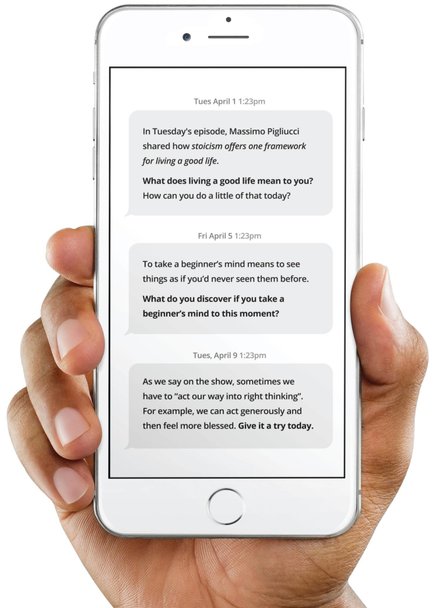
Good Wolf Reminders
A little wisdom, right when you need it. Start receiving free text reminders designed to help you pause, reflect, and take meaningful action. Sign up at oneyoufeed.net/sms.
Key Takeaways:
- Why “good” and “bad” aren’t enough to understand ourselves
- How childhood trauma quietly shapes adult relationships
- The deeper pain addiction is often trying to numb
- Why we repeat unhealthy relationship patterns
- The surprising difference between blame and responsibility
- Healing without the apology you’ve been waiting for
- What caring for an aging parent can teach us about ourselves
- Why choosing compassion can be more healing than resentment
- How telling your own story helps you reclaim your life
Matthew Quick is the New York Times bestselling author of The Silver Linings Playbook—which was made into an Oscar-winning film—and eight other novels, including We Are the Light, a main selection of the Book of the Month Club. His work has been translated into more than thirty languages, received a PEN/Hemingway Award Honorable Mention, was an Los Angeles Times Book Prize finalist, a New York Times Book Review Editors’ Choice, a #1 bestseller in Brazil, a Deutscher Jugendliteratur Preis 2016 (German Youth Literature Prize) nominee, and selected by Nancy Pearl as one of Summer’s Best Books for NPR. The Hollywood Reporter has named him one of Hollywood’s 25 Most Powerful Authors.
Connect with Matthew Quick: Website | Letters from Matthew (Substack)
If you enjoyed this conversation with Matthew Quick, check out these other episodes:
A Journey to Self-Discovery and Sobriety with Matthew Quick
What We Can Learn From Our Bad Wolf with Matthew Quick
This episode is sponsored by:
Shopify – The commerce platform that helps you build, grow, and manage your business all in one place. Start your $1/month trial at shopify.com/feed.
Tiny Health‘s at-home gut health test provides science-backed insights into your microbiome, along with personalized recommendations to help you improve your digestion, energy, and overall well-being. Get $50 off your first test kit at tinyhealth.com/FEED
Monarch: Take control of your finances with Monarch, the all-in-one personal finance app that helps you budget, track spending, monitor investments, and work toward your financial goals. Get 50% off your first year of Monarch Core, go to https://www.monarch.com/ and enter Promo Code: FEED
ButcherBox: Make dinnertime easier with ButcherBox, delivering high-quality 100% grass-fed beef, organic chicken, wild-caught seafood, and more, right to your door. Get $20 off your first box, plus your choice of free ground beef for life or free chicken thighs or top sirloins for a year, with free shipping always. Visit ButcherBox.com/FEED to claim your offer.
David Protein bars deliver up to 28g of protein for just 150 calories—without sacrificing taste! For a limited time, our listeners can receive this special deal: buy 4 cartons and get the 5th free when you go to www.davidprotein.com/FEED
Talkiatry connects you with licensed psychiatrists for personalized, evidence-based mental health care, all online and covered by most major insurance plans. To get matched with an in-network psychiatrist in just a few minutes, visit Talkiatry.com/FEED.
Pebl – an AI-powered platform that helps companies hire and manage global teams in 185+ countries. Get a free estimate at hipebl.ai
Quince: Refresh your wardrobe with Quince by going to Quince.com/feed for free shipping and 365-day returns. Now available in Canada, too.
Alma has a directory of 20,000 therapists with different specialities, life experiences, and identities, and 99% of them take insurance. Visit helloalma.com to learn more!
Episode Transcript:
Matthew Quick 00:00:00 The alcohol I don’t even think was the problem. It was just the thing that made me forget about the problem for a while. It was going back into these deep childhood wounds and trying to repair it myself, reprogram myself and get out of these habits, and to really internalize this belief that I am an autonomous person and I’m allowed to be who I am.
Chris Forbes 00:00:30 Welcome to the one you feed. Throughout time, great thinkers have recognized the importance of the thoughts we have quotes like garbage in, garbage out or you are what you think ring true. And yet for many of us, our thoughts don’t strengthen or empower us. We tend toward negativity, self-pity, jealousy, or fear. We see what we don’t have instead of what we do. We think things that hold us back and dampen our spirit. But it’s not just about thinking our actions matter. It takes conscious, consistent, and creative effort to make a life worth living. This podcast is about how other people keep themselves moving in the right direction, how they feed their good wolf.
Eric Zimmer 00:01:14 I can make this intro really simple. Matthew Quick is back as the only person who’s ever been on the show six times, he’s one of my favorite people and writers. Just listen to it. But if you want to know more about the conversation, Matthew and I talk about what it means to forgive and take care of a parent who never really knew how to love you. It’s about wounds that never fully heal and the power of showing up anyway. And before we get started, I wanted to let you know about something exciting. Matthew’s publisher has given us five copies of his new memoir, Dad, Love Me, to share with listeners. It’s really amazing. And as a thank you for supporting the One You feed, were giving those copies away to our paid Patreon members. If you’re already a supporter, you’re automatically entered. But if you’re not, it’s not too late. We’ll be doing more of these book giveaways like this in the future. So it’s another small way we can thank the people who help keep the show going.
Eric Zimmer 00:02:13 Join me on Patreon for ad-free episodes, post-show conversations, book giveaways, and more! Go to oneyoufeed.net/join. Hi Matthew, welcome to the show.
Matthew Quick 00:02:25 Hey, Eric. It’s great to be back.
Eric Zimmer 00:02:27 Yes, I’ve lost track, but I think you may be the guest who’s been on the show the most. You. And there’s a couple people that might be in there, but I think you may take the lead with this one. So congratulations.
Matthew Quick 00:02:39 Congratulations have been 75 times, I think maybe.
Eric Zimmer 00:02:44 I don’t think quite that many. Well, I think we’ve been doing it 12 years. This might be your sixth time. So about every other year.
Matthew Quick 00:02:50 Nice. Yeah. It’s good. It’s been an honor. Thank you.
Eric Zimmer 00:02:53 You keep writing books. We keep having you on.
Matthew Quick 00:02:55 So cool. I appreciate it, thank you.
Eric Zimmer 00:02:59 We’re going to be discussing your latest book called Dad, Love Me and it’s dad comma, love comma me. It is a brilliant title, and it’s a book about you and your father.
Eric Zimmer 00:03:11 And we’ll get into that like we always do in just a moment. But we’ll start with the parable and the parable. There’s a grandparent who’s talking with their grandchild, and they say, in life there are two wolves inside of us that are always at battle. One is a good wolf, which represents things like kindness and bravery and love, and the other is a bad wolf, which represents things like greed and hatred and fear. And the grandchild stops. They think about it for a second. They look up at their grandparent and they say, well, which one wins? And the grandparent says, the one you feed. So I’d like to start off by asking you what that parable means to you in your life and in the work that you do.
Matthew Quick 00:03:53 Well, I’ve been thinking about this parable for more than a decade now, and I’ve answered this question a lot, and I think it’s a great parable, and it’s really helped me along the way. You know, this morning, as I sit with it, after doing years and years of Jungian analysis, I want to give a very Jungian answer here.
Matthew Quick 00:04:15 And so one of the things that I have a tendency to do in my life is to split. You know, things are either bad or good. And that was a problem for me for a long time. So as I sit here this morning, you think about, you know, what are the parts of me that are bad or good? I have a tendency to want to integrate those things and say, you know, the quote unquote bad wolf that might represent greed or envy or those things are typically thought of as bad characteristics. But sometimes you need to be greedy, or sometimes, you know, anger can be useful and you might need to to access those things. But the parable, I think, you know, feeding the things that we assume are kind is a good thing. But I think we also have to court the bad wolf as well, just to get to know the bad wolf, and so that we can integrate these different aspects of our humanity. Because the thing that I’ve learned through the analysis is that the full spectrum of humanity is inside all of us, and we can’t push these aspects of us down like we have to explore these aspects so that they won’t pop out at times when we don’t want them to. You know, we need to have mastery over them. And sometimes we need to utilize these things that others might consider, quote unquote, bad. So I think that’s where I’m sitting this morning.
Eric Zimmer 00:05:36 Yeah. I have recently been reflecting on for a person who is this thoroughly non-binary in their thinking, as I am like through and through, it’s ironic that I have a parable that I’ve used this same parable for 12 years. That is that binary, right? That has just good and bad life, never falls into neat categories in that way. And I think you’re right. I mean, all these energies inside of us. The question is just how do we use them? To me, in the most helpful and skillful way, whatever it is that arises.
Matthew Quick 00:06:10 Yeah. And just getting to know those aspects of ourselves, you know, and the Jungian work I do, it’s called shadow work. You know, like you need to go in and see these aspects of your humanity that you’ve banished or that you’ve projected onto other people because you don’t want to see that.
Matthew Quick 00:06:27 You know, me and Matthew Quick, that I can be greedy sometimes, that I can experience hatred, that I can experience envy. All of these negative emotions. The view that I’ve been taught is that there are aspects of those the shadow that there’s gold in the shadow. You know that when you reclaim them, you can really find a way to use them in a way that could be beneficial not only to yourself but to others. So it’s really important that we really accept the totality of our humanity. Now, that doesn’t mean that we act out on all of these things or inflict them on other people, but just to know that these aspects are in us and that we don’t need to reject them or label them or be ashamed of them. Because I think that when we’re ashamed of these aspects and we try to repress them, that’s when we unconsciously do things that we probably would not want to do. That’s the important part for me, is to really to see all of the aspects of what’s going on inside of me, clearly, without labeling, my analyst often says, let’s take the morality out of this, you know, so let’s see it clearly without, you know, moralizing and using language like good and bad. So that’s been really important to me.
Eric Zimmer 00:07:41 That’s a really useful lens to put on from time to time, you know, take the moralizing out of it. I think there are plenty of times a moral lens or an ethical lens is a good lens to look through, but I’m a big believer that it’s just great to have a lot of different lenses and be able to pick them up and try them on and go, It’s interesting if I look at it that way, but what about that? And what about the more of that that I have, the more of a complete picture of myself and reality I’m actually able to build? Because it’s not that a given lens is necessarily wrong, but it’s always incomplete.
Matthew Quick 00:08:18 Yeah. And I think a moral lens brings a certain subjectivity. You know, you’re automatically giving up objectivity. You’re ranking things in terms of good and bad. You know, you’re bringing a limited view of something. And so it might be that we need to label some things as bad, but to understand them, we can’t have that knee jerk reaction of like, that’s bad.
Matthew Quick 00:08:41 Get that away. You know? I think that’s.
Eric Zimmer 00:08:42 Exactly.
Eric Zimmer 00:08:44 Because that moral or ethical compass is ultimately, I think, how we make the best decisions in life and how we steer our life in a way that feels meaningful to us, whatever that moral and ethical ends up being for us, because it’s just it’s different for everybody. But like you said, it’s the wrong tool for the job a lot of the time. Like, if what you’re trying to do is accept who you are inside and get in better touch with that, it is not a useful tool for that job because like you said, you’re banishing things that way versus going, oh, let me do that. So I just love questions that allow us to look at something different. And that’s a really great one. Like, okay, let’s take the morality out of it for this one. That’s a very useful tool.
Matthew Quick 00:09:27 Yeah. And this might be a helpful example. You know, I grew up in a fundamental Christian family, you know, so I was in church all the time, and my church was always saying that you need to put yourself second to others.
Matthew Quick 00:09:38 You know, that’s kind. You can never put yourself first. And so I grew up believing that was the ultimate moral thing to do, right? But then when I started to have codependency issues and I started reading about codependency, and it was saying, it’s important to put yourself first because in certain situations you need to do that. That moral lens of you always have to put yourself second and be Christlike in that way. Became a real impediment to dealing with my codependency issues. So I think by taking the morality out of it, like taking off the religious lens and just saying, well, does putting yourself second all the time, is that a healthy thing for you and everyone else? Yeah. With the lens that I grew up with and the moral lens. I said, I can’t have that conversation. But once I take that lens off, I could say, well, let’s see, is that proven to be a helpful thing in my life to me and others? And then objectively, I could see that.
Matthew Quick 00:10:37 No, it didn’t always. There were plenty of examples of when that was not good for me and others.
Eric Zimmer 00:10:42 So yeah, I mean, I think there’s two things I’ll, I’ll add and then I want to get into the book itself. First is the word you used in there, which is always like, if I think I always have to do anything that’s problematic. Life isn’t that way. I don’t think I’m always suspicious of always and never as. As concepts that we apply to ourselves or others. And then the second, when I say morality or ethics, I always mean are well considered version of what that means for us, not the one that’s necessarily given to us or that we grow up in. All right, let’s move on to the book. And it’s really about you and your father. But I have a question based on what you just said that will take us into that. You’ve been media training.
Matthew Quick 00:11:26 I’ve been training, yeah. They’re like, hold up the book.
Eric Zimmer 00:11:28 Hold up the book.
Eric Zimmer 00:11:29 Yeah, yeah. You just keep it in front of your face the whole time.
Matthew Quick 00:11:31 Picture back.
Eric Zimmer 00:11:32 Here. Exactly, exactly. So the question is, you mentioned growing up in a fundamentalist Christian background. There’s references to that in your book, but there’s really nothing that I recall about your father and his relationship to Christianity or religion. Did he have a strong feeling there?
Matthew Quick 00:11:52 Yeah. My dad grew up in the same church that I grew up in on their parents, who were devoutly Christian. So his parents came out of the Great Depression. My grandfather fought in World War two. So there are people who read the Bible every day, were very involved in church and church politics. I would go so far as to say they were evangelical about their faith, but there was a lot of interesting discrepancies between, you know, what was going on with what they were preaching and what they were practicing. You know, and I think that’s pretty common for everything. So I think my grandfather used religion as maybe what’s known as a spiritual bypass to deal with his PTSD coming back from World War two.
Matthew Quick 00:12:41 The horror of the things that he did, I think he felt if he read the Bible every day, if he got involved in church, that somehow would take care of, you know, I don’t want to say the sins that he did in the war, but I think what it ended up doing was it gave him a sense of stability in a worldview that he could use to go through his life, but he never, ever did the inner healing work that he needed to do. And because of that, because he had this moral lens to continue the theme, he never was had this morality that he believed in, but it was always looking at the world out there and never looking at himself. And so I think because of his PTSD and the trauma he experienced growing up in Philly, at Philadelphia and poverty during his depression, he had a lot of anger issues. He had a lot of unresolved trauma, and that unfortunately affected my father’s upbringing and generationally that was passed on to my father. Also had all this childhood trauma was taught.
Matthew Quick 00:13:51 Just go to church. Just pray. Just read the Bible. Don’t look inward. Don’t do the inner work. And so my father became, you know, a repetition of who his father was. And my childhood was very difficult because of that. So we were devoutly religious in one sense, you know, going to church seven times a week and reading the Bible and doing all the things you do. But there wasn’t a lot of spirituality. There wasn’t a lot of inner work. It was, I don’t want to say it was performative, because I think that people, my family, really believed the things that they were saying, but they were missing a piece that I think was kind of tragic.
Eric Zimmer 00:14:35 So I’d love to have you tell us about a scene that happens early in the book about your grandfather asking your father to tell him what he did wrong. Can you kind of lead us into that?
Matthew Quick 00:14:52 Yeah. So I think this is a prologue at the end of my grandfather’s life. I think he was 91 at the time. He was in his early 90s, and he just decided that he wanted to die. He was really sad. This is my hero. And I was very close to my grandfather. And he called me and he said that he wanted to die. And he had been living in a retirement community. And he was convinced that once you decided to die, you would die. That was just his view. Like once you just stopped fighting to stay alive, you would just go downhill. And that’s exactly what happened with him. And during his downward slide, he made this bid to make amends with my father. They had not been talking, and he asked my father what he had done wrong to deserve being ostracized from my father’s life. And my dad refused to tell him, and my grandfather would call me and kind of triangulate, try to get me to go in between. And my dad just refused. And I think the line in the book that I used was my dad was saying, well, you know, what’s the point? You know, he’s a dying old man.
Matthew Quick 00:16:01 I don’t want to be sadistic. I’m not a sadist. Like I don’t want to, like, hurt him at the end of his life. But what that really meant was that my father missed out on this chance to be authentically him, to connect with his father in an authentic way. And I believe my grandfather’s bid was genuine, and my dad just didn’t take that bid. And then after his father died, he would say to me, I wish I had told my father why I was so upset. You said to me over and over. It would always come up. I should have told my father how I really felt. And it created this, this really sad situation because he just he had missed this golden opportunity to connect with this man, his father, that he never was able to do. And so it was strange because my father was telling me that he was not offering me an opportunity to connect with him in that way. He never had the humility to say, now, Matthew, what? How have I failed you like my father failed you? And then he got dementia and he was diagnosed with dementia.
Matthew Quick 00:17:12 And I realized that time was running out. And it created this in some ways, this crucible that made the men more possible. But it was tragic because those words were, you know, echoing in my head, my father is a dying old man. Like, what would be the point of telling him? Would it be sadistic to just unload on him while he has dementia? And so when my editor asked me to write the memoir, I decided to frame it with that conversation between my father and his father that I needed to unpack all of this, that I needed to, quote unquote, tell my father what had happened and which I chose to do in the form of the memoir.
Eric Zimmer 00:18:13 I found that question in my own life a fascinating one, because my mother, who passed recently, she had enough self-awareness at points To more, to apologize to me, to say, listen to a podcast. And I’d be talking about difficult emotions that I had or a difficult period. And she would then think to herself, oh, well, all the pain I caused you, you know.
Eric Zimmer 00:18:38 And after a conversation or two were I gently waded in and she was able to show some insight on her part, like, you know, I should have protected you from your father more. I should have x, Y, and Z. After that. When she would mention it, I felt like again, not wanting to be a sadist, I generally chose the mom. I know. You did the best you can. I love you right? Like because I had then done the inner work because I wasn’t still carrying a resentment against her in the way I might resent her for what she’s doing now. Yeah, but the old resentment, I think, you know, was left off. And I think that’s a really difficult question that I think every parent child duo contends with. Like, there’s a part of me that wants to go to my son who is generally doing well, I think, and is thriving and healthy and be like, well, what ways did I screw up? Because there’s certainly, you know, he’s been to therapy. I’m sure they’ve covered it.
Matthew Quick 00:19:35 Right.
Eric Zimmer 00:19:35 Like I’m sure they’ve covered it. And I bet he has the same feeling like, well, what would be the point to tell my dad? But I love the way that you found a way through the memoir and also being an active participant in your father’s dementia to heal that relationship. And you tell me if I say anything wrong here, to heal that relationship without having to directly go into that conversation with him because he’s not really capable of having it.
Matthew Quick 00:20:05 Yeah. There are two thoughts. A friend of mine read the memoir and was compelled to go to his adult son and say, I’ve been thinking about how I treated you over the years, and there were these very specific moments when I feel that I’ve failed you. And he had this big confessional thing for his son, and then his son said, dad, I don’t even remember those things. It’s kind of funny to me. It’s like, yeah, you know, it’s like he’s like, yeah.
Matthew Quick 00:20:30 Yeah, I have no memory of this. He was carrying around all this guilt.
Eric Zimmer 00:20:33 It’s funny how we do that sometimes. You know, we’re carrying something that the other person is simply does not care about.
Matthew Quick 00:20:40 You know, I think with my dad, from a very young age, because I think he had some unaddressed mental health issues. He had a limited capacity for understanding the needs of other people, that I was forced to enter into my dad’s narrative and co participate in the narrative of his world from birth. There was no narrative for me in the memoir. There’s a scene when I asked my dad, I tell him, hey, I’m writing a memoir. You know, this was recently, so he does have dementia. And I said, you know what? Would you like me to tell the audience about us? like our story. That father and son and me and you. And he proceeds to tell this big long story about how he was a named executive at a bank, like basically giving his career resume.
Matthew Quick 00:21:33 And then at the end they said, well, that’s all great, and we’ll put that in. But what about the story of you and me? And then he proceeds to have a breakdown and say, I can’t do this. I don’t want to talk about this anymore. And it was almost like it was breaking his brain to consider that someone else’s story might matter other than his. Yeah, yeah, part of that was the dementia. I think part of that was just who my father was for most of my life. And so one of the things that I realized after getting sober and doing analysis was that I don’t know that I had so much of an alcohol problem, although I was an alcoholic for probably 25 years, but I think it was. I’ve come up with this analogy of, you know, people with migraines don’t have an ibuprofen problem. I was drinking to numb the pain of the fact that I didn’t feel like who I was mattered, or that I wasn’t allowed to exist.
Matthew Quick 00:22:31 Then I was in this codependent relationship with my father that leaked into all aspects of the rest of my life. And so it was really important for me, particularly after I did the work of getting sober and to clean up some of the inner work, to realize that my story and my reality matters, and that I’m actually a person who’s allowed to have feelings and is allowed to tell the story of my memory of things. Because for most of my life, it was about hiding my father’s problems, you know, and colluding with that and being in service of making myself really small and saying who I am doesn’t really matter who everyone else thinks they need to be matters more. So the memoir was about reclaiming my story and hopefully telling others that their stories matter, too. I tried to be very careful to not do this binary thing of saying, my story matters, and my father’s story does not matter. My father’s story does matter, but mine matters equally. And so throughout the memoir, I tried to be very honest about who my father is, how he sees himself, how I see him.
Matthew Quick 00:23:48 And I think I, I do that in a generous and loving way without lying. But for the first time, I was starting to say, and there are all these things about me that I’ve never told anyone, and there are all these things about me that I’ve never come to terms with that I’ve hidden. And there are stories, you know, from back in the 90s that I tell in this memoir. And some of my best friends have read the memoir, and they’ll say, I didn’t know this about you, and I really have trouble believing that they didn’t know it because I thought of course I would have told them. But through these conversations, I realized that I was unconsciously withholding myself, or shrinking myself, or making myself small. These are people that I love, and I would tell anything to now, but I think that there was just this code of silence and this code of making my needs and who I was so small. In order for other people to feel bigger that I needed to break that trend.
Eric Zimmer 00:24:47 Yeah. I texted this to you after I finished reading it, that I thought the way you handled your father was kind and generous and honest and. And the thing I said, you know, diagnosing as a knowing therapist. I was like, it seems pretty clear to me your father had some serious issues, you know, and I’m the sort of person, maybe the nature of the work I do or doing this podcast or whatever, that when I see someone who’s really having a hard time, I immediately know, like they don’t have the skills to do better usually than they are, right? They were hurt. They are thusly tending to hurt others. So you and I have talked about fathers over the years. You introduced me to a term that I had not heard before called Father Hunger, which I immediately recognized. I was like, oh, that’s why I glom onto men of a certain age. And right, like, yeah, yeah, of course. Why I’ve done that over the years.
Eric Zimmer 00:25:38 Oh, I get it. And as I was reading this, I was thinking about, like, your father and my father, and they were different. My father’s, if he had mental illness, it was depression. And he was just much more irritable and angry and then just very stilted. You know, your father seemed to be very vociferous with what he was feeling and how he felt about everybody. And my father, once I got through my childhood, was kind of the opposite. Right. You just couldn’t get anything out of him. But there were a couple of moments where I definitely was like, okay, I connect here. One was, you have a story in there about playing baseball with your father, throwing the baseball. Share a little bit about that.
Matthew Quick 00:26:19 I think this story you’re starting to about throwing on the lawn. Yeah, that that part. Yeah. So my dad is need to have a catcher. I asked him to have a catch. I don’t know, I probably was maybe 10 or 11.
Matthew Quick 00:26:30 And whenever I was doing anything with my father, I was so anxious because I knew if I made a mistake, he would just go nuts. He just he was the kind of person that was just volatile and he could keep it together, usually at work and out of the house, but alone. If you did something wrong, it was he was hitting 11. You know, he would just go insane. So I was in the front yard and that little postage stamp of grass. And, you know, I was trying to have a catch with my dad, but my stomach started to get in a rumble and I was shaking and anytime I did anything with my dad, it was incredibly anxious because I knew if I made even the tiniest mistake, it meant just insanity. So I threw the ball to him and it went over his head just because I just. I could throw a baseball. But my dad made me so anxious and so he screamed at me, go get the baseball. And I run and get it.
Matthew Quick 00:27:31 And I hand it to him and, you know, he throws it to me and it hits my glove and falls down. And I could catch a baseball again. It was just the anxiety. And so I threw the ball. The next time I went 50ft over his head and he just exploded. You know, I’d say I’m not having a catch with you. Or every boy in America can throw a baseball. What’s wrong with you? And you know, I didn’t know it at the time. You know, I saw what is wrong with me. Yeah, yeah, but my dad was invoking these panic attacks where that things that I was capable of doing, I couldn’t do around my father because it was just too much for me to hold, like his adult rage and anxiety just crippled me. And looking back now, I have a lot of sympathy and sadness for that young kid because immediately I concluded, I must be a terrible son, you know? I must just be completely incompetent. I can throw a baseball.
Matthew Quick 00:28:29 Like, what’s wrong with me? And I’ve learned through analysis that, you know, when we’re young, we want to make it about us because the alternative is so awful. You know, if it’s us, you know. Well, I can do better next time, and I’ll learn to throw the baseball and then I’ll be safe. But if it’s that my dad is unstable and mentally ill, that’s a reality that I can’t fix at ten, so that’s terrifying. So I just threw that on me. But the problem was that my dad was kind of the default for older men. So it became whenever I was around any older men, I started to feel, oh, like, I better take care of this person’s emotional needs. I better make sure, like I don’t do anything wrong, because if I don’t, they’re going to explode and hit me and, you know, throw me across the room and curse at me, humiliate me. So it became this thing where anywhere I went, I was anxious all the time until I found alcohol. And then I was very cool for a while, drinking. But it was tough.
Eric Zimmer 00:29:54 I tell a story in my book about playing golf with my father, and I say in it something to the extent of like those times with my dad when he would take me to do some stuff with him, were both like, I desperately wanted it. And like you, it was just anxiety producing. It was this mix of like, hope and terror. I don’t know, my dad in the baseball is the same thing now. He wouldn’t get like apeshit crazy. He would definitely be angry with me. Yeah, and he would definitely express that anger. I mean, my dad was one of the handiest people in the world. He could make fix whatever I have up until a few years ago been appalling at any of that. Sure. Put a screwdriver in my hand and I start getting nervous. Yeah, because my dad would ask me to help him and I wasn’t good at it as a child. And so I was just don’t let me near that.
Eric Zimmer 00:30:46 Now I kind of now I’m like, all right, get a screwdriver, relax. It’s okay. But the same thing about men of a certain age like this still happens to me. I catch it and I recognize it. But if you put me in a room with a man, you know, an older man who is just looking in any way, shape or form unhappy. I will start getting nervous. You know, I even teaching workshops occasionally. I’ve been in one where there’s like an older man who just looks like he’s mildly scowling. And I have to really work hard not to shrink. You know, maybe he doesn’t like when I say it that way. Or maybe he doesn’t like that, or, you know, just this sort of shrinking. And so, you know, I related with all of that. The other thing that you talk about that I related a lot with was when you and a friend were drinking and your father caught you and he was hard on you, but he said to you basically, like, I’m not going to tell your dad because your dad’s nuts.
Eric Zimmer 00:31:45 And yeah, you know how validating that was. And it was really validating for me when I was older to hear people say, like, we would not go to your house. Like there’s there’s no way we’re going to your house with your dad around. Like, yeah, you know, to hear that and go, okay, this is not all my Imagination was certainly valid.
Matthew Quick 00:32:05 Yeah, that was the first time. I think we were. Maybe it was like 12 when my buddy’s dad caught his drinking, and it was just this huge lightbulb moment when he said he needed to really discipline me hard because he couldn’t tell my father, because my father would act inappropriately. It would give me too much of a punishment. And I could tell that that this man was a little bit afraid of how unstable my father was and was afraid for my health. And that was the first time that I realized that other people could see it, and that other people felt, and that what I was experiencing wasn’t normal, because to me, it was just the water that I was swimming in from birth.
Matthew Quick 00:32:45 The other thing I’ll say too, is, you know, the double edged sword was that I learned how to take care of emotionally abusive men. And so when you go to a place like Hollywood, there are a lot of emotionally abusive men. And so when they meet you, they can recognize immediately if you’ve been groomed to take care of them. And so in some ways, that benefited me when I went to Hollywood, because there are certain emotionally abusive people that were very interested in me. But then I had to replay these awful experiences with my father over and over. So it was like I was attracted. It was almost like I was going to set off the radar of emotionally abusive people, because they knew that my response would be to fawn, to become small, to validate them, to narcissistic affirm them. Whatever I could do to get the temperature down within their psyche. I was very good at doing that. And so while that helped my career, that also trapped me into relationships, there I was replaying out some of the worst of my childhood.
Matthew Quick 00:33:56 And so it got to the point where I realized that I was co-participating in these things. You know, when I was eight. It’s not my fault I’m a child. But in adulthood, when I’m co-participating with emotionally abusive people, even if I’m being paid or whatever, I’m benefiting from that. I’m still choosing to be in emotionally dysfunctional relationships. And so there came a time when I started to think, no matter how much it benefits me, I don’t want to be emotionally and psychologically abused. And so to put up those boundaries and learn how to navigate that and learn how to accept that there might be some powerful people out there that can do things for you. But what is the price of evacuating who you are at the drop of a dime? I don’t want to do that anymore. Yeah. So that is something that I’m still working on, because my default around as someone who’s emotionally abusive is to become a non-person and take care of them.
Eric Zimmer 00:34:57 Yeah, it’s what feeds a lot of my active dislike for any kind of confrontation. Yes, right is just this fear that is like, not necessarily that, oh, I heal it and it disappears so much as I work on healing it. And I can respond a lot more wisely now. You know it. Confrontation looming. I feel afraid. It’s just it’s I don’t want to say necessarily it’s hard wired, but it’s pretty well hooked up.
Matthew Quick 00:35:27 Yeah.
Eric Zimmer 00:35:28 Like you, I have to kind of say like, okay, stop. Settle down. You don’t have to respond that way.
Matthew Quick 00:35:34 I think in recognizing patterns, too, because I think for much of my life, particularly before I got sober, I didn’t realize that so much of what I was doing was thoughtless. It was just trauma responses. And I thought, that’s just who I was. And into some degree, I actually, you know, getting back to my religious upbringing. I thought, well, this person’s difficult. I need to be Christlike and put myself second and just take care of their needs, you know? And I didn’t realize that was a pathway towards, you know, these abusive relationships that would just go on and on and on while I’m feeling more and more unconsciously violated.
Matthew Quick 00:36:15 And so for me, that created a system of like, I will take care of the needs of other people, I will put my needs second. And in order to deal with the rage and the anger, the appropriate rage and anger that was rising up in me, trying to defend me from these things, I would say, well, I’ll just drink. I just smoke some weed. I’ll just take the pills, because that will calm the anger and the rage, and then I will be able to continue in these relationships with people who are taking advantage of me or abusing me or making me feel small and and so, you know, it wasn’t just getting sober, you know, again, like the, the, the alcohol I don’t even think was the problem. It was just the thing that made me forget about the problems for a while. It was going back into these deep childhood wounds and trying to reparent myself, reprogram myself and get out of these habits, and to really internalize this belief that I am an autonomous person and I’m allowed to be who I am, and that it’s actually beautiful to be who I am. And you know, that might not please the people who want me to be a non-person. But why am I gravitating towards people who want me to be a non-person in the first place?
Eric Zimmer 00:37:28 So yeah, I think this is worth stating explicitly. Which is that the point of all this reflection is not a blame game. It’s a way of understanding the ways that we were shaped right. And that, for me, became really important because I was told early in my recovery, you can’t blame your parents for any of this. And that wasn’t helpful, because it caused me not to look at the ways that I was influenced and shaped, and continuing to blame my parents is not a useful tool either. And you said like earlier, it’s not. You know, it wasn’t my fault when I was a child. And I just always love this distinction between like, it may not be my fault, but it is my responsibility now, right? Like, if any of this gets better, I’m the one who has to do it. I can’t wait for someone else to ride in and do that. We are responsible for who we are as adults.
Matthew Quick 00:38:27 I’ll even go further than that and say, even with some of my professional relationships that have fallen into this trap, people that are much more powerful than I am by my co participating in that relationship that might be, you know, not healthy. Not only am I hurting myself when I’m actually hurting them because I am part, I’m choosing to participate in a relationship that is not healthy for me. It’s not healthy for them. And so you can look at it through the lens of power and say, well, this person has more power. So therefore, you know, it’s all their responsibility. But I think that we have more power than we think we do. Yes, obviously, if you’re a seven year old child, this does not apply. But I think if someone’s kidnapped you or something extreme like that, this is not applied. But I think the thing that I have learned through analysis is that I have a lot more power and control over this, and I believe ten years ago, and that by participating in this unconsciously, that doesn’t absolve me over the responsibility of the outcome of the situation.
Eric Zimmer 00:39:36 Yeah, I think those questions are really nuanced questions around how much power do we have? I went yesterday to the I was a behavioral and mental health and Addiction conference for like all the county mental health boards here in Columbus. And a woman got up and gave a talk and I found myself both agreeing and heartily disagreeing with her on the same on the same points. Right. Because so much of what she was saying and it’s true, the data shows this, that if there are systemic forces that are against you, those do impact your mental health. That is true. Sure.
Matthew Quick 00:40:17 Yeah.
Eric Zimmer 00:40:18 And what do you do with that? Like there’s nothing to be done with that except to say, okay, this is the way the cards are dealt. I have to play them. It’s my responsibility to play them. And I think people get stuck on. I think if we get stuck on one side of that debate or the other, it’s problematic. Like if we just go, you know what I have, everybody has all the agency in the world and it just doesn’t matter.
Eric Zimmer 00:40:43 You know, like what happened to me doesn’t matter. I’m my person. I got all the agency that fundamentally looks over a whole lot of things, both societally and also in our upbringing. Yeah, but to go to the other side fully and say, well, it’s all systematic and I’m helpless, that is a different recipe for disaster. And so how we sort of walk that middle line for us is so important.
Matthew Quick 00:41:10 Yeah. One of the things, you know, because my father was so tyrannical and maniacal, sometimes he just seemed like a god to me. That’s okay. When I was young, it kind of vengeful, angry God. But somehow he seemed that way to me when I was 40 too, you know? And the interesting thing happened was that when I got sober, my relationship with my father changed for the better. And so he didn’t change at all, I don’t think. But when I got sober, I was not able to carry this old story of resentment. And he’s doing this to me.
Matthew Quick 00:41:51 And I have no agency. And I’m the victim. And so was my father this great father, when I got sober? No. But I was able to see him more fully as a human being. I could see with more clarity. I was acting differently to him. So, you know, I do think that there are these systemic things that of course, but I also think improve yourself, improve the world, you know. I think that’s a message that I really internalized. We’re talking about, you know, Hollywood or the literary world. I’m not going to change those worlds. Like, I don’t have enough power to change those worlds, but I can decide how I want to participate in them. I can decide, you know, that I might value working with somebody who I enjoy working with in a healthy way over making more money next year, you know, or whatever. You can make decisions and you can make sacrifices in the name of health that might benefit you in ways that you hadn’t imagine before. But it is very nuanced, as you said. You know, it’s very specific to every person.
Eric Zimmer 00:42:55 I love what you were just saying about your father. I keep saying, we’re going to get to drinking and maybe we will. I will just say very quickly what you’re describing. You know, drinking wasn’t the problem. I mean, it’s a line that, you know, I learned early in my recovery in 12 step programs, which was drinking is but a symptom, right? It’s just a symptom of an underlying problem right now. Eventually it becomes a problem for all of us. And. Yeah, but back to what you were just saying about you and your father. I think this is you make this point. You touched it there. You make the point very clearly in the book that when you were a child, the relationship with you and your father was largely driven by your father. And if we were going to be, you know, doling out responsibility, a lot of it is there.
Eric Zimmer 00:43:40 Yeah, but as adults in those relationships, we often can be at fault. I realize that my relationship with my father as an adult, I was a co-participant in the way that relationship was now. There were intractable ways that he was that I hoped to try and change, and even that is problematic. But I know, like, we weren’t as close as we could be, not because of who he was when I was a child, because of choices I made, about how much I wanted to interact and how comfortable I felt interacting and all of that. And I think that’s another like, again, it’s back to this point of nuance. I can’t just keep relating to my father as if I’m a six year old boy and he’s an angry man when I’m a I’m not going to say how old I am 35. I’m a 35 year old.
Matthew Quick 00:44:34 I’m actually 85.
Eric Zimmer 00:44:36 Yeah. but that recognition that I play a role in this, and I think you do a really nice job in the book of making that point. And then you also take it a step further, which I think is really the heart of so much of the book and is so beautiful, which is that there’s a line where you’re talking with your therapist, you say, why is it my job to take away my father’s suffering? Why shouldn’t it be his job to take away mine? And your therapist, who you refer to as Zeus, says, because you’re not a little boy anymore. And then he goes on to say, like, you know, what is your father done for you? Look at the good things. And then the payoff line is, if you hate your father, you will always hate yourself.
Matthew Quick 00:45:20 Yeah. That was a moment in analysis for me. And, you know, Zeus went in to say after DNA is your father, you know, he sees in you. and I think that was hard because, you know, just like the beginning of the conversation, I wanted to say. Dad. Bad. Matthew, quick! Good.
Matthew Quick 00:45:39 Let’s feed the good. It’s all about Matthew Quick. You know the bad, dad. Let’s just cast him out. But so much of my father, genetically and behaviorally and psychologically. Like I can’t get him out of me. You know, he’s an archetype now. He’s a North star for good, bad or indifferent. And so my analyst really had me focus on looking at the good things in my father, the things that I should appreciate, which was deeply distasteful to me in the beginning. And there’s this conversation I have in my notes in the book where I say he didn’t do anything for me. He was horrible. And he says things like, oh, he didn’t go out to work and, you know, pay for food and clothing. And, you know, I initially say everyone’s father does that and, you know, they don’t get credit. And Zeus says, you know, not everyone’s father does that. Your father did that. And what would you have done if he didn’t do that? You know, so just these little things of appreciation.
Matthew Quick 00:46:39 Then later in the memoir, my analysis had shifted to this idea, and particularly with my father, when he was diagnosed with dementia, he became very childlike. And so my time with him on Lady’s Island here in South Carolina. I really am his father now. You know, when I take him out into the world, he doesn’t even know how to get into my truck. You know, if I say, hey, dad, go get in this truck. He can’t do it unless I walk him over and say, open the door. Okay, now you’re going to put on your seatbelt. And he’s constantly asking me, where are we going now? Like, am I or are we safe? You know? Or is this okay? So I find myself really in this position in the last three years of of being the father to him that I always wished he was to me. You know, if I had said to my father when I was seven, dad, where are we going? He would say, shut up.
Matthew Quick 00:47:32 You’ll know when you get there, you know? But that’s not what I do to my father now. I try to make him less afraid. And the difference that I think between me in my 20s, where my dad was freak out and I would just evacuate who I was and take care of, the response is that I’ve really made a conscious decision after doing years of analysis, after years of sobriety, to re-engage with my father and consciously try to love him through his dementia. Yeah, not because I have to, but because I want to do that and I get to do that. And so I think that’s a radically different thing than being forced or compelled. This wasn’t this was not something where I thought to myself, oh, I have to do this unconsciously. It was something that I thought, well, I really don’t want to do this, and I’m going to choose this anyway and be thoughtful about the way that I’m going to do it. And I think the most healing Aspect of that.
Matthew Quick 00:48:32 For the last three years in writing, the memoir is really reflecting on the beauty of that. To see my father as this little boy. And sometimes we’ll be walking. He’ll go nuts over Azalea Bush. You know, it’s so beautiful. He’s just wonderful moments with my dad. I never thought that he had the capacity to appreciate a bush or a turtle or a cloud in the sky. To see his humanity is just so beautiful. But also to realize that I had the capacity to be a good father to him. Now that genetically, we’ve kind of come full circle. There’s been deeply, deeply healing for me. And if you had asked me when I was 35, 40, 45, do you think it would be a good idea to spend three years with your father taking care of him? I would have been like, can you curse on this show? Because I’m about to curse, you know, like, yeah, oh, you can get the fuck that. Like there’s no way I’m going to do that.
Matthew Quick 00:49:31 Like, that would be the worst thing ever for me. So the great surprise of my life is that being humble as a child in abusive ways was terrible. Choosing to be humble as a grown adult in service of someone else has been deeply healing. And I think it’s in the autonomy and the choice of it. And again, it’s a nuanced thing. I’m sure there are certain people that would say, your father abuse you, like, why are you taking care of him? Like, I don’t understand that decision, but it was my decision to make, and it’s been deeply healing and meaningful because I made it. So I think that that’s the difference. Yeah.
Eric Zimmer 00:50:12 Yeah, those parts of the book are just beautiful. You and I are friends. We talk. I’ve kind of followed along on this journey with you, but the way you talk about it in the book is just. It’s really healing and beautiful. My father passed from dementia. He was in Florida. His wife was very healthy.
Eric Zimmer 00:50:27 She was kind of as caregiver. We didn’t see each other but once a year. But Ginny’s mother, you know, there was nobody to take care of her but Ginny. And so we kind of embarked on that Alzheimer’s journey, and our experience was different. Her mother did not become childlike and playful. She became mean. You know, and again, I’m disparaging the woman. She had a brain disease. But. So Ginny’s experience was different, right? Ginny’s experience was like, oh, I am getting abused in the ways I have been abused by this person before. And yet she still chose. Yeah, that she wanted to be there and take care of her mother. And, you know, like living according to our values. And the thing about that, I talk about this in the book, and she and I used to joke about us like that sound. That’s a great little bumper sticker, you know, live according to your values. Sometimes it really sucks.
Matthew Quick 00:51:21 Yeah.
Eric Zimmer 00:51:22 And I think she and I are both very grateful that we did it. You know that we chose. We didn’t have to. We chose. That was the role we wanted to play. And you know, my mother, before I moved her to Denver, needed a lot of help over, you know, the last period of time. I mean, I think I may have shared with you in the text when we were cleaning out her apartment after she passed, I found a suicide note of hers from, like, 13 years ago. I mean, my mom struggled, my mom suffered, and I chose to be the one in Columbus taking care of her to the best of my ability.
Matthew Quick 00:51:56 Yeah.
Eric Zimmer 00:51:58 but as soon as I started saying to myself, I have to do this. And it was an obligation. Oh, it was not good. The more I could say I’m choosing this. Didn’t make it easy, didn’t necessarily make it fun, but it put a thread of meaning into it. Yeah, I think it’s a big, important part of life. Like being happy is sure that’s part of it, but so is having meaning, you know, doing things that you feel like matter.
Matthew Quick 00:52:26 Yeah. And I think, to be clear, my father has not been all childlike wonder. He threatens to kill himself a lot around me, which is a theme in the book that he’s been doing since I was a child, which is really traumatic for me. Yeah, yeah. And he has been volatile. And finally it’s been hard. It’s been really, really hard. I recently was rereading some Flannery O’Connor, you know, the great writer, and I read this quote and I paraphrase it, but someone was writing about her and they said, you know, she once said that everybody thinks of, you know, choosing religion and God or Christianity is this wonderful thing. But of course, it means to cross. It means like you on the cross being crucified, right? That’s what it really means that like, like God is hard, like transcendence is hard. And so whether you’re somebody who thinks of that in a literal way, meaning like you are a Christian who believes in that story or a symbolic way, I think that that’s really true.
Matthew Quick 00:53:33 The transcendence doesn’t come from those those walks. When I was with my father, when he pointed a cloud and said, how beautiful. Right. That was just kind of amusing. The transcendence came from sitting with my father as he cried for seven hours about something or, you know, listening to the same stories that my father told about all the regrets in his life over and over, the same ones every day for years until, like, I felt like I just couldn’t take it anymore. And in that one moment when he would lean over and put his arm around me and say, thank you. You know, amongst all this immense suffering, there are these moments of humanity. And I think that’s where the transcendence comes. If you don’t embrace the worst, you can’t experience the best. You can’t split it into. I’m only going to have these nice moments with my dad. They won’t mean anything. It’s embracing the full humanity of my father, the worst of him. That we find those moments of transcendence when we’re able to kind of get above that.
Matthew Quick 00:54:38 And even though I’ve seen my father for 50, almost 53 years now, the absolute worst of him, and it’s really bad to accept that and still be able to love him and see some of the best in a healthy way. Again, not evacuating who I am, like not being codependent, but showing up fully present after having done the work, showing up fully sober, you know, and choosing not to evacuate him in my life, embracing that full package and loving him. That’s been deeply healing for me. It’s been incredibly hard, but there was a time when I was shrinking a lot. When I would have said, this person is not acceptable to me out of my life, and I would have lost out on so much if I had done. I mean, I did that with my father for a while, but if I had not come back and chosen to see the full spectrum of humanity, I would still be a deeply sick person. And I think that’s the thing that I didn’t realize when I was drinking so much.
Matthew Quick 00:55:45 And before I had done the work that I think somehow I thought I was getting even with my dad by having this kind of f u attitude like, you’re done. You don’t deserve time with me, but I don’t think that ever really hurt him, you know? I don’t think he even really thought about it when I wasn’t around, but it hurt me in a way that I didn’t understand back then that I understand now. Yeah, yeah.
Eric Zimmer 00:56:08 Well, I think that is a beautiful place to wrap up, Matthew. It is always such a pleasure. Holding up the book, dad love Me. It’s a it’s a great story. It’s a great memoir. Thank you.
Matthew Quick 00:56:19 Thank you so much.
Eric Zimmer 00:56:20 You and I are going to keep talking in the post-show conversation because I just love talking with you. Listeners, if you’d like to get access to that, as well as add free episodes and support an independent show that always needs support, you can go to one ufi.net. Thank you Matthew.
Matthew Quick 00:56:39 Thanks for having me Eric.
Matthew Quick 00:56:40 It’s been a pleasure.
Eric Zimmer 00:56:41 Thank you so much for listening to the show. If you found this conversation helpful, inspiring, or thought-provoking, I’d love for you to share it with a friend. Share it from one person to another is the lifeblood of what we do. We don’t have a big budget, and I’m certainly not a celebrity, but we have something even better. And that’s you just hit the share button on your podcast app, or send a quick text with the episode link to someone who might enjoy it. Your support means the world, and together we can spread wisdom one episode at a time. Thank you for being part of the One You Feed community.
Leave a Reply