

In this episode, James Patterson discusses navigating life’s disruptions and shares insights on adapting and thriving in life.. He also discusses managing negative thoughts and balancing ambition with contentment. James shares insights from his writing career, co-authoring experiences, and personal life, including parenting and the importance of prioritizing family, health, friends, and spirit. The conversation blends practical advice, engaging stories, and reflections on adapting to change, offering listeners inspiration and tools for navigating both personal and professional challenges.
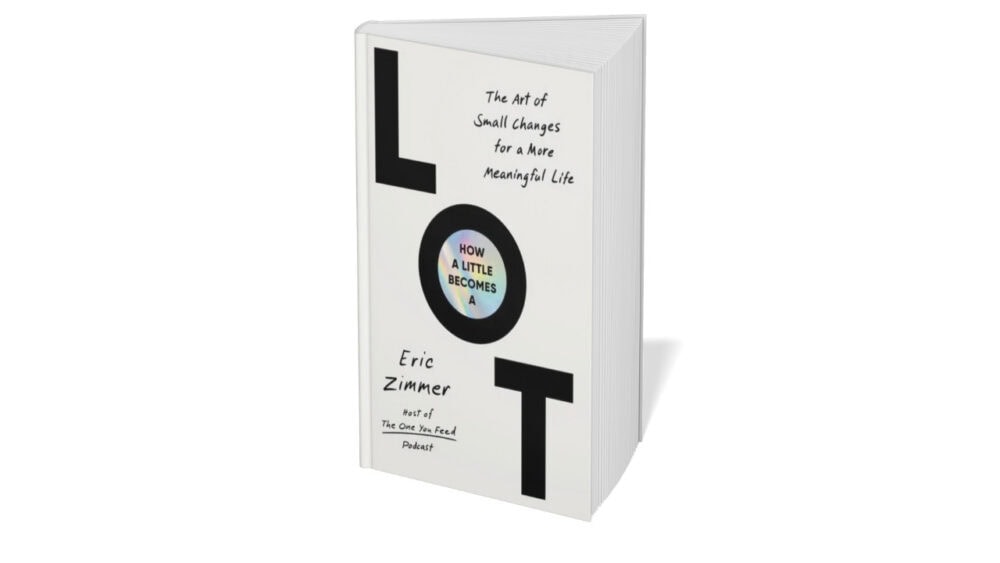
Exciting News!!! Coming in March, 2026, my new book, How a Little Becomes a Lot: The Art of Small Changes for a More Meaningful Life is now available for pre-orders!
Key Takeaways:
- Discussion of James Patterson’s new book, Disrupt Everything and Win: Take Control of Your Future.
- Exploration of how individuals and organizations can adapt to change and leverage disruption.
- The metaphor of the “two wolves” representing positive and negative qualities within individuals.
- Insights into Patterson’s writing process and creative journey.
- Reflections on co-writing experiences with various collaborators.
- The balance between ambition and contentment in personal and professional life.
- The importance of storytelling and practical tools in business and self-help contexts.
- Patterson’s early career in advertising and its influence on his writing and approach to disruption.
- The significance of maintaining balance in life, using the metaphor of juggling five balls.
- Personal anecdotes and reflections on travel, parenting, and life philosophy.
James Patterson is the most popular storyteller of our time and the creator of such unforgettable characters and series as Alex Cross, the Women’s Murder Club, Jane Smith, and Maximum Ride. He has coauthored #1 bestselling novels with Bill Clinton, Dolly Parton, and Michael Crichton, as well as collaborated on #1 bestselling nonfiction, including The Idaho Four, Walk in My Combat Boots, and Filthy Rich. Patterson has told the story of his own life in the #1 bestselling autobiography James Patterson by James Patterson. He is the recipient of an Edgar Award, ten Emmy Awards, the Literarian Award from the National Book Foundation, and the National Humanities Medal.
Connect with James Patterson: Website | Instagram | YouTube
If you enjoyed this conversation with James Patterson, check out these other episodes:
How to Find Real Life in Stories with George Saunders
Life Transitions with Bruce Feiler
This episode is sponsored by:
Pebl – an AI-powered platform that helps companies hire and manage global teams in 185+ countries. Get a free estimate at hipebl.ai
Brodo Broth: Shop the best broth on the planet with Brodo. Head to Brodo.com/TOYF for 20% off your first subscription order and use code TOYF for an additional $10 off.
Alma is on a mission to simplify access to high-quality, affordable mental health care. Visit helloalma.com to learn more!
By purchasing products and/or services from our sponsors, you are helping to support The One You Feed, and we greatly appreciate it. Thank you!

If you enjoy our podcast and find value in our content, please consider supporting the show. By joining our Patreon Community, you’ll receive exclusive content only available on Patreon! Click here to learn more!!
Episode Transcript:
Erich Zimmer 00:00:00 You may have heard me mention my new book a few times, and I can assure you, you will certainly hear it a few more. But now we are offering some pre-order bonuses. One of them is the still Point method, which I believe is the only systematic way to interrupt negative thought patterns often enough for them to change. There’s a lot out there about what you should think and not think, but there’s very little that gives you a small and portable system to actually do it. You get the guide to the method, and three free months of a new app designed to help you implement it. There are other bonuses too. You can learn more and claim them at one you feel. Net book.
James Patterson 00:00:42 Imagine life is a game in which you’re juggling five balls in the air. You name them work, family, health, friends, and spirit and you’re keeping them all in the air somehow. And hopefully you soon understand that work is a rubber ball. If you drop it, believe it or not, it will bounce back.
James Patterson 00:01:00 But the other four bowls family, health, friends, spirit are made of glass. If you drop one of those, they will be irrevocably scuffed, marked, knick damaged, or even shattered. They’ll never be the same.
Chris Forbes 00:01:22 Welcome to the one you feed. Throughout time, great thinkers have recognized the importance of the thoughts we have. Quotes like garbage in, garbage out or you are what you think ring true. And yet, for many of us, our thoughts don’t strengthen or empower us. We tend toward negativity, self-pity, jealousy, or fear. We see what we don’t have instead of what we do. We think things that hold us back and dampen our spirit. But it’s not just about thinking. Our actions matter. It takes conscious, consistent, and creative effort to make a life worth living. This podcast is about how other people keep themselves moving in the right direction, how they feed their good wolf.
Erich Zimmer 00:02:07 One thing that feels true about the moment we’re living in is that disruption isn’t optional anymore.
Erich Zimmer 00:02:13 Technological shifts, economic changes, artificial intelligence. So many forces are reshaping the world around us, and it can feel like the ground is constantly moving beneath our feet. My guest today is James Patterson, one of the most widely read authors in the world. In this conversation, we explore how he thinks about disruption, not just in writing and business, but in life. How do we respond when the world changes around us? Do we resist it or learn how to work with it? His latest book is Disrupt Everything and When, where he looks at how individuals and organizations can adapt to change and even use it to their advantage. I’m Erich Zimmer and this is the one you feed. Hi, James, welcome to the show.
James Patterson 00:03:02 Thank you very much. I’m delighted to be here.
Erich Zimmer 00:03:05 We’re going to be discussing all kinds of things, but we’ll be spending a fair amount of time with your latest book, which is called Disrupt Everything in Win Take Control of Your Future. But before we get into that, we’ll start like we always do with the parable.
Erich Zimmer 00:03:19 And in the parable, there’s a grandparent who’s talking with their grandchild. They say in life there are two wolves inside of us that are always at battle. One is a good wolf, which represents things like kindness and bravery and love, and the other is a bad wolf, which represents things like greed and hatred and fear. And grandchild stops and they think about it for a second. They look up at their grandparent and they say, well, which one wins? And the grandparent says, the one you feed. So I’d like to start off by asking you what that parable means to you in your life and in the work that you do.
James Patterson 00:03:51 Well, I think it just means that everyone is complicated, and I wish we could kind of look at the world that way. It’s very logical to me. It’s exactly what you see in life that people have, you know, in the writing. I always want highest common denominator. I mean, that’s just me, I want it, I want a common denominator, but I want the highest and in life.
James Patterson 00:04:11 You know, you do your best or I do my best. And most people, I think, do to, to sort of, feed your better side. It’s always worked out better for me to be a straight shooter as much as you can. to try and avoid spending too much time with people who aren’t that way. You know, if you have business to try to not deal with people, that the wrong side is coming out all the time. One of the things to me about negotiation is I always felt this way, and people have different ideas about it, but my thing is I want to walk away from a negotiation with the other person, feeling, okay, maybe I could have done better, but I feel okay about this and I want to walk away the same way. I want to leave money on the table if it involves money.
Erich Zimmer 00:04:55 Speaking of negotiation, we, I think, may share a literary agency. I’ve got my first book coming out, and Richard Pyne at Inkwell is my agent.
James Patterson 00:05:05 Yeah. No, Richard was early on. He and his father, Arthur and Richard and. Yeah, they were terrific. Very. I’m sure they’ll do a nice job for you. Yeah, or he will. I’m sorry. Yeah.
Erich Zimmer 00:05:17 Yeah. His father has passed. Before we get into the book I saw on your Substack, you have a Substack right now called Hungry Dogs, where you’re doing lots of interesting things. One of them is that you showed books on your bookshelf, the books that have helped shape you, that you’ve read. And I was struck by two things. One is you seem like a very positive person, very upbeat person. And yet when I looked at that bookshelf, there’s some pretty heavy stuff on there, Write a fan’s notes on naive.
James Patterson 00:05:51 Yeah, a lot of people think it positive. To me. It’s just a logical thing if you can do it to be positive.
Erich Zimmer 00:05:57 So some of the books that were on your list when you Flew Over the Cuckoo’s Nest, The Bell Jar.
James Patterson 00:06:04 And Ken Kesey, even for Ken Kesey, who wrote that sometimes a Great Notion is another book that he wrote, which a lot of people think is better than One Flew Over the Cuckoo’s Nest. I love that title. Sometimes, yeah, a great notion. That’s a really it’s a really cool title if you think of it. A great notion, yeah. Notion. An interesting word to use. I’m sorry, but go ahead. Ken Kesey yeah, yeah.
Erich Zimmer 00:06:27 Well, one of the things I thought was interesting is you’re going through the books and some of these books, like we said, The Bell Jar, those books, they’re pretty heavy books. And then you get to The Day of the Jackal and you say, you know, you had been very serious about your reading before you read that book. And it occurred to you that while you may not be able to write something like 100 Years of Solitude. You could write in that direction. Was that a real landmark? Was that a big change moment for you?
James Patterson 00:06:55 Yeah, I think it was.
James Patterson 00:06:56 I wanted to write for a living. It seemed to me that if you want to write for a living, to some extent, it probably has to be commercial. A and B, I thought I probably was capable of writing a literary novel, but I didn’t particularly want to write for those people, and I didn’t think I had anything, you know, incredibly profound. I thought I could write something that, you know, probably could get published and do okay, and I didn’t want to tell stories for it. For the people that read those books in particular, I was in graduate school at Vanderbilt just before that. And, and I started writing mysteries, which I didn’t read much. I had only read a few mysteries, but I thought de the Jackal and the other one was The Exorcist, and I didn’t read a lot of Pi. I was a little, you know, literary snob, right? You know, grad graduate English student on a, you know, and and I read those and I went, oh, these are pretty cool.
James Patterson 00:07:48 And maybe I can do something like that and keep writing and tell stories, which I love to do. And, you know, and part of it for me anyway, is when I do a project, when I do a book, it’s something that I’m that I’m passionate about when I, when I get into it, and I hope it will turn out really well. And that’s all that matters to me, that it does turn out that I can do the best I can. And at the end of the project I go, I’m really glad I did. That doesn’t always happen.
Erich Zimmer 00:08:14 I heard you on a previous podcast sometime in the past, talking about what you wanted to to do a book where there’s a detective, his wife dies, she comes back as a hummingbird. And you were you were doubting yourself on that one. Has that gotten any? I was going to say legs. But wings.
James Patterson 00:08:29 Yeah, I still like that story. I think it’s a cool story. reincarnation. Play around with that a little bit fantasy.
James Patterson 00:08:36 There’s certain things, certain kinds of books I can write a love story that I have. I couldn’t write a romance novel, you know, the old. Nothing against him, but I couldn’t write one. I don’t know how to do it. I don’t get that. I could not write a book about a general. I don’t kind of get them. I don’t get the way they talk. I don’t get the way they think. I just couldn’t do it. I’m actually writing now, which I’m loving a romantic. And I had written a few, you know, Yaris and a few of those, and I kind of liked them, I mean, and they were and, and I liked the idea of fantasy and world building, and I hadn’t done it. And I thought, well, that would be a cool challenge, and I think I can do it, and I’m loving doing it a lot. It’s it’s really exciting and fun and, and a challenge.
Erich Zimmer 00:09:17 What is it that keeps you moving forward? You’ve written, I mean, God only knows how many books.
James Patterson 00:09:24 It’s that that next book is going to be the best I’ve done, or at least that it’s going to be as good as I hoped it would be. I just finished a book with Viola Davis, a novel which is coming out in March, I believe, and I think it’s the best sort of legit novel that I’ve ever done. I think it’s very dramatic. You know, it’s interesting with viola because she said she said, James, you know, you would think I’m Viola Davis and I’m watching. The minute you would think that I’m getting all these great parts to play with great characters. He said, I don’t. And she said, what I love about this novel that we’re doing is I love this character. I want to play this character. But she says it’s rare. It just doesn’t. And, you know, people always go, well, oh. James’s style is in short chapters. It really isn’t. Every book that I do, whether it’s non-fiction, even even with Disrupt Everything or I just did a book about the Idaho murders out there.
James Patterson 00:10:19 You’re looking for a voice. I am, and they’re all different. Alice Cross’s voice is very different from the Viola Davis novel that I just finished. David Ellison sort of suggests that he’s Skydance or whatever. Very terrific reader, and he’s very interested in entertaining people, and he wanted to do something on it I wasn’t sure that I wanted to do the book initially. And then I talked to Vicky Ward, who I did that with. She’s a wonderful reporter, really, you know, digs up all sorts of information and, you know, very just fabulous to work with. But we didn’t want to write about, you know, this, this killer as much. But but we wanted to write about is to capture those two college towns, Moscow, Idaho and the Pullman, Washington, and what it would be like to have this incredibly sad, tragic, scary thing happen in your town. What would be the effect on the town? What would be the effect on the students? What would be the effect on the police who may never handle anything even close to that? Yeah.
James Patterson 00:11:22 What would be the effect? As you see the the all these terrible. Not not at all. But some terrible people on the internet who will expose people and go, well, that’s the killer and it’s not the killer, and you just put it out to, you know, half a million people that that person is a killer. What a horrifying thing to do. Yeah. You know, and that became the voice of it. The voice of if you lived in one of those towns, this would it be like, this is this is how you might feel.
Erich Zimmer 00:11:50 What is the co-writing process like? You’ve co-written with lots of.
James Patterson 00:11:54 Depends on who it’s with. Yeah. Do you want to try the. No. You’re too slow. We alternate words. Just kidding.
Erich Zimmer 00:12:01 Hang on. I was hoping we’d end this interview with us co-writing a book. Now, you didn’t warn me that was coming.
James Patterson 00:12:06 Never know. You never know the one you feed. You know, it really depends. With President Clinton, it’s very different.
James Patterson 00:12:13 And he likes mysteries and thrillers, and so he likes the genre anyway, and he brings authenticity to it. And he’s a good writer on top of everything else. The only trick with President Clinton is he wants every book to be like a thousand pages. And that’s that’s a little hard in that mystery world. But I mean, if the stories are a little far fetched and they are a little, the president would say, well, if it happened, here’s what the Secret Service would do or if something happened. Here’s what here. Here’s what it’s like in the white House. Here’s what it’s like to be the president or the most recent one, the first gentleman he didn’t get to be. He wanted to be the first gentleman. That didn’t happen with Hillary as president. so he would bring authenticity. Dolly Parton also brought incredible authors. So it really depends on who you’re working with. some of them, you know, want to do a fair amount of the writing by Olha did a lot of, of rewriting dialogue, which was great because she’s thinking of, of of what it would be like in the movie and how the dialogue might work better.
James Patterson 00:13:15 And there was one young character in there who she was particularly attached to, and she wanted to make sure that we got it right with that 13 year old. But it’s all over the life.
Erich Zimmer 00:13:47 Keeping up with your catalog is is a full time job. So I don’t know if the fact that you wrote an autobiography, then a book about being an advice for dads and now this book about disrupt everything. Is this your first real foray into, for lack of a better word, the advice world?
James Patterson 00:14:06 Yeah, I you know, I don’t give advice as much as sort of lay out some thoughts that I’ve had. And I did a thing online and it had to do with the way I write. And I say, I don’t give advice. I’m going to tell you what I do. You might find some of it useful. Yeah. The only thing I said about it is that the stuff that you’re nodding at don’t pay attention to because you’re already doing it. The stuff that you shake your hand at, that’s the stuff you ought to think about because you’re not doing that.
James Patterson 00:14:33 And maybe you should. Maybe you shouldn’t. But that’s that’s the interesting stuff. But but yeah, in terms of, you know, what’s disrupt everything. Maybe there have been others, but it is both a little bit of self-help and a business advisor. And I think I’m in a position to talk to people about that because I had two careers. I was in advertising, and I was the youngest CEO ever at the J. Walter Thompson, which at that point was the biggest ad agency in the world. But everything I did there was about disrupting. I went there, I was in grad school at Vanderbilt and what it was there in Vietnam, and it was during the lottery, and I had a high lottery number, but you had to leave school. So I left after one year there, but I needed to get a job and I didn’t. I had no marketing courses, no advertising. So I went to J. Walter Thompson and said, you got you need a portfolio of it. So I quickly I did a portfolio of ads and that was supposed to be the deal.
James Patterson 00:15:23 But the second week I brought him another portfolio, and the third week I brought him another portfolio, and they said, okay, well, these portfolios are pretty good. And this guy seems hungry and whatever. And we like him up to a point. And so they hired me. But everything there was a disruption when I took over the New York office. A lot of their offices were quite good. But Newark, New York was terrible and nobody wanted to go work there. And I did this thing right. If you want work, did an ad on the back page of the New York Times, it was eight questions like, here are the ingredients on a can of beans, oil, vinegar, whatever make it sound delicious. And what you could do when you read these eight answers that people wrote in was you could tell A whether they could write and be whether they could solve problems. That actually was the most important thing. In ten minutes, you could tell. And over the course of a couple of years, I hired over 40 writers on that.
James Patterson 00:16:17 One of them went on to be the showrunner on cheers. Another one has written a couple of movie scripts that got produced and, you know, whatever. But once again, another disruption in the book business. You know, as I went over and I had been involved in because I wrote a book when I was 26, a novel, I got turned down by 31 publishers, and they went on to win an Edgar, which is bizarre, so turned down by everybody. And then it’s the best first novel of the I don’t know, whatever that’s all about. In those days, it was sort of like you do the one book a year, and that’s the rule. I’m going, well, I mean, why is that the rule? I don’t understand. It’s fine to do one a year or one every five years or whatever, but why is that a rule? I don’t quite get it. And I remember going to the publisher and I and the Alex Cross series that was going on and that was successful, and they said, okay, well, this year I really like to do three books and I want to do Alex Cross.
James Patterson 00:17:11 I said, yeah, that’s great. And then and then I had another idea for a mystery novel. I said, oh, okay, that sounds okay. And then I had a love story, Suzanne story for Nicholas. And when I told them the story, the the CEO actually cried while I was telling the story. And then when I was done he said, oh, well, we want to do the Alice Cross and we’ll do the other mystery, but we don’t want to do the love story because that’s not your brand. And I go like, okay, I don’t know. I was in advertising, I kind of, I don’t think of myself as a brand, but if I did, I think what it would be that James will keep you turning the pages. So if you want to read a love story that kind of moves along, you might like this. Yeah. And so reluctantly, they published it and it’s now, I think, the section of the third most popular book I have ever published.
James Patterson 00:17:53 But once again, it’s just this thing of disrupting positive disruptions, which is basically been the secret of my whole life, just, you know. Well, why is that? And and I think I can help other people to deal with it. And what that can do immediately is remove a lot of stress from their lives immediately. And anybody you talk to your doctor, they will all agree stress kills. Stress is not good. So if we can remove some stress or if, you know problem comes in the late. Whatever the hell happened this week or today, whatever it is. And it’s like, oh my God, you know, artificial intelligence. They’re bringing it into our company. It will help you to make the first step in terms of, okay, how do you deal with that? Let’s suppose that your job is threatened. What are some of the skills that you have? What are some things that you could do. So it’s a useful thing if for no other reason just to calm you down, you know, or if you have a product that you think you believe in in terms of, okay, here’s a lot of steps to figure out how to maybe deal with that product and ultimately bring it to market.
James Patterson 00:18:56 So depending on whether you want a little or a lot, that’s what the book is, is about. And we also we have a series with Franklin Covey. They, they do a lot of courses around the country, businesses, and they’re doing one based on the book. And I think that’s very exciting too, because if you’re in a business, one, you need a mission. Obviously the one you feed you need is a mission for that. What are we going to do? What’s the sort of style of it? How is it going to work? So disrupt everything helps you to make sure that that mission is as tight as it can be. But then you need buy in for the mission. So for our publisher, for for Hachette, they had some new people in there and they had a new mission. And for that to work, it meant that all the editors need to disrupt the way they’ve been editing and the way they’ve been buying books. The sales department would need to disrupt the way they’ve been selling books in the receptionists maybe has to disrupt the way they greet people and talk to people.
James Patterson 00:19:53 So and insofar as you get in a company or in your at your team, in a company, insofar as you get buy in, the mission can work. If you don’t get buy in, the mission doesn’t work right. You know so so the book does that. And that’s what the Franklin Covey, that’s a lot of it, helping companies to make sure that their missions are, are going to operate at optimum or closer to optimum.
Erich Zimmer 00:20:15 So what caused you to decide writing a book about disruption. And that was just a writer.
James Patterson 00:20:22 Yeah, it was a fluke. I got invited, I said, I went to undergraduate, I got invited to do a little lecture for their business school, you know, one one hour lecture. And they said, you can write anything you want. And I did about the power of disruption and doctor laden. It was his course. And afterward he said, I’d love to do a book with you. Would you consider it? And I said, well, I don’t know, but maybe.
James Patterson 00:20:46 And he started doing disruption. And over the course of three years, actually, Patrick did a lot of research on it in terms of disruption and how it might work. The book has a lot of tools and things that you can you can work on in there, and that’s very useful for a lot of people. I’m not as tool oriented as some people. And so the research was really, really, really valuable. And then I sort of insisted that it not be a boring business book and that we went out and we just did a lot of talking to people. And then the book is full of stories. it’ll tell a story. And then which kind of illustrates whatever the point is to be made. You know, one of them was about a young guy, and he had just he was about to go off in business, and he had a brother who was on the spectrum, and he wanted to take care of his brother. And he decided on this car wash company where, where people with autism could work.
James Patterson 00:21:40 And now they have four and they have I think they have 100 employees, but 80 of them have, you know, autism. And that’s driven his life. And Patrick said to him, you know, if you hadn’t done this, where do you think you’d like to be? And he said, I like to be right where I am now with these companies and my brother and, you know, so the stories kind of illustrate the different points, but they make the book more interesting. I don’t know, a lot of business books to me are unreadable.
Erich Zimmer 00:22:05 Yeah. There’s certainly a lot of frameworks in this book as well as a lot of stories. If I name a story or two. Let’s see if you remember the story.
James Patterson 00:22:14 You know we talked about.
Erich Zimmer 00:22:15 How about.
James Patterson 00:22:15 That.
Erich Zimmer 00:22:16 You’re here. All right. How about.
James Patterson 00:22:17 I mean, one thing that I particularly love is, is the posse. And I know the people who were involved in it. And this is a great thing in terms of having an idea, but then executing it.
James Patterson 00:22:27 There are two pieces here. The idea was especially when the posse started, that a lot of colleges wanted to bring in kids from inner cities and whatever, but the problem was that they would arrive at a Brandeis or whatever, and there wouldn’t be many other kids from the inner cities, and some of the kids would be lost. And so they came up with the notion of the posse, where at a Brandeis or Vanderbilt actually is one of the schools that the school would bring in 5 to 10 every year, kids who had been trained to deal with and to get ready for it because you’re going to go to a college, it’s going to be like this here are going to be some of the things you’re going to have to deal with, and you will have your posse to help you get through it, which is brilliant. And then they sold it into, I don’t know what, they’re 40 or 50 schools at this point, and it was a great way to solve that problem for a lot of colleges, which is how do we bring these kids in and then keep them right and also make it a good environment for them.
James Patterson 00:23:25 So that’s one that I particularly love.
Erich Zimmer 00:23:27 Yeah, I loved that story. Also, how you were helping people to make connections with people, and then the whole of them was much stronger than any of its parts.
James Patterson 00:23:38 Yeah, yeah. And solving problems. It’s you have an idea and it’s kind of a cool idea, but okay, I don’t know what to do with it. Well, we can help you. Not always, but but we can. We can help you with that. Or even if you have an idea at work, there’s something that you know would make your group or the company. And to help you to be able to frame that and make it more concise so that when you bring it in, people are going to listen more rather than, oh, I get this idea and it’s all over the place and blah blah, we help you to focus it, which which is important in terms of getting people to listen and take what you’re saying seriously.
Erich Zimmer 00:24:12 Right? So this is a question I talk with a lot of guests about, and I love your perspective on it, because I think there’s two sort of things that we could get caught in.
Erich Zimmer 00:24:23 We’re not caught in. I guess I’m going to ask the question more simply, how do you balance ambition and striving with being content with what you have right the way it is?
James Patterson 00:24:34 I don’t know if they balance. Yeah. You know, I mean, one of the things that’s really big that I write about, actually, most of the novels, the Alice Cross novels, even, it’s about balancing your work life and your home life. And I think that’s huge. Alice. Crossing people, whatever. What it’s really all about is Alex has this, you know, over the top work life as this detective and then a home life. There’s a series now with Alex Cross on Amazon, and Aldis Hodge is a perfect person because in terms of an actor to play that part, because he’s very intense and as a detective, he’s very believable and very intense, and that works in terms of this terrible day job that he has, and then he’s great with the kids. And we all have not not all of us, but on some level, most of us have that thing of like, how do I balance that? You know, difficult work, life, very demanding at times.
James Patterson 00:25:26 And then I got to go home and deal with my family and somehow keep it in balance. And that’s a big thing. I have another series, Michael Bennet, and it’s complicated how it happened, but Michael winds up with, you know, 8 to 10 kids. They’ve all been adopted. He’s a New York homicide detective. How do you balance that crazy bit of, you know, but. And people identify with it. Which which is which is really important. The dad. The dad book you mentioned. Yeah. How to be a better dad in an hour. And that’s not meant to be a joke. It’s a very serious thing that a lot of what a lot of dads, young dads especially, are being overwhelmed, totally overwhelmed. And there’s a lot being written about that now. And most of them will not read a 400 page book about being a dad. So this thing is like one hour. And my promise about that book is if you spend an hour with it, what I’m going to make it engaging and it would be some comedic at times or whatever, you know, you’ll be able to read it in a good way.
James Patterson 00:26:22 And I guarantee that if you invest one hour in it, you will be a better dad. Period. Absolutely. You know, and it’s not an advice book. It’s just I, I interviewed a lot of dads and whatever and read everything I could read about it. And here’s a whole lot of shit to think about. And if that doesn’t work for you, go to the next page. And if that’s, you know, but I guarantee you you will walk away from that book. If you’re at any age that a young dad or even an older, then go and people love it. I mean, it’s amazing kind of thing when you write a book and people go, that’s really great to read. And it’s and it’s useful.
Erich Zimmer 00:26:57 Check in for a moment. Is your jaw tight, breath shallow? Are your shoulders creeping up? Those little signals are invitations to slow down and listen. Every Wednesday, I send weekly bites of wisdom, a short email that turns the big ideas we explore here in each show.
Erich Zimmer 00:27:16 Things like mental health, anxiety, relationships, purpose into bite size practices you can use the same day it’s free. It takes about a minute to read and thousands already swear by it. If you’d like extra fuel for the weekend. You also get a weekend podcast playlist. Join us at one you feed. That’s one you get and start receiving your next bite of wisdom. All right, back to the show. How old was your child when you wrote that book?
James Patterson 00:27:50 The dad book? Jack was probably 25.
Erich Zimmer 00:27:53 Okay, so he’s around that age.
James Patterson 00:27:55 Jack’s 27. Yeah.
Erich Zimmer 00:27:56 Okay. Oh, my son is 27, actually. we have sons the same age. How did you balance in Jack’s childhood.
James Patterson 00:28:05 Was easier for me with Jack because we had Jack, I was 50. Yeah. First. First marriage, whatever. And Sue was 40. Second marriage for her. But she didn’t have kids in her first. But we didn’t have financial issues. Yeah, we had time. If we needed help, we could get help.
James Patterson 00:28:23 We didn’t. I mean, we were very. I think we were good parents. And really, you know, we were there. Yeah. And I was there because I was I was home every every day. I’m home. I work at home. So there it is. Here’s Jack. You know, so we had a lot of advantages. And then there are tricky things with when we’re in a town that’s wealthy. You’ve got a dad who’s been successful, a mom who’s been successful in other ways. And how do you make sure that Jack or your son or whatever, they’re going to be okay with that? And I was always like, you know, I write a lot of books. Who cares? So it’s not a big thing. And trying to keep Jack where he’s comfortable with that and trying not to. Where he feels he has to compete. Yeah. Insofar as you can help.
Erich Zimmer 00:29:34 How do you work with that idea of kind of going with the river as best you can? Swimming upstream is often a bad idea, and yet disruption is a sort of swimming upstream.
Erich Zimmer 00:29:45 Or do you think of it differently?
James Patterson 00:29:46 Well, for starters, the disruptions are coming at us. We have no control of that. It’s never been, to me more overwhelming than it is right now. Yeah, it’s just really very disconcerting and overwhelming and I think difficult for people. So I don’t think you can get out of the way of that. But once again, part of it is having some perspective on things. That’s sort of the sky, the river, it’s the river. It just go with the flow a little bit, try not to go crazy on things that aren’t going to necessarily help the problem, but maybe we’ll drive you a little crazy. Just try to get sync with this stuff a little bit if you can do it. Tiger woods would always say he’s never concerned about a bad shot, so he just moves on to the next shot. Yeah, with the confidence that you’re very good at what you do, you’re very smart, you’re very logical and just have that confidence and go on to the next the next day.
Erich Zimmer 00:30:42 Yeah. In the book, you talk about a baseball player, Dansby Swanson, who talks about compartmentalizing failure, which is critical in baseball because even great hitters fail 70% of the time.
James Patterson 00:30:55 Yeah. Yes. Yeah. Or strike out three times in the same game? Yeah. Danby. He was. He was a Vanderbilt. They had very good baseball teams. Yeah. This really actually of a good football team, which is unprecedented.
Erich Zimmer 00:31:07 A lot of this stuff, I think is the discernment. It’s one of the sections in the book is around learning to discern. It’s the discernment. Like, do I compartmentalize that failure? Move on. It’s just a bad shot going in the next one. Or do I learn or do I spend a little bit more time with this thing? Right? In order to learn the lessons it has to teach?
James Patterson 00:31:27 Yes. And both. I’m still learning about the novel business. You know, as I look back in the beginning. I mean, one of the things I did early on is I want to do a block book.
James Patterson 00:31:37 So I had a half assed idea about destroying Wall Street, which seemed like an attractive idea at the time. blowing up Wall Street. Cool. I didn’t do the research, and I didn’t think about the characters. The book I published. But I mean, it’s not a good book if you do the research and please don’t fill the book with it. At least not my kind of book. But if you’ve done the research, you’ll be much more confident in terms of writing about that particular scene or that character. And then and then the character. And now, you know, when I’m doing an outline for a book, I’ll also have a side thing where I’m just everything I can think of about this character. What does a character do? What is a character like? What happened to why does the character think this way? Why does the character act this way? What was the effect of this on the character? What’s going to differentiate this character? You know, because the last thing that I want is here’s the typical, you know, detective who goes home and drinks himself to sleep and blah, blah, blah, blah.
James Patterson 00:32:35 Unless you’ve got some new twist on that. Right.
Erich Zimmer 00:32:37 Right. It’s a.
James Patterson 00:32:38 Little.
Erich Zimmer 00:32:38 Bit of a played out theme.
James Patterson 00:32:40 Yeah, it’s a cliché, 100%. Yeah.
Erich Zimmer 00:32:42 So you mentioned that in addition to outline. So you’re known to do a lot of outlining of your book.
James Patterson 00:32:49 And a lot of writers don’t. David Baldacci, who I interviewed, David doesn’t doesn’t align, and he’s very good and very successful at it, but he doesn’t outline at all. I have a suspicion that James Joyce did not outline Finnegans Wake. I don’t know, it’s just a guess.
Erich Zimmer 00:33:07 How about Ulysses?
James Patterson 00:33:08 You know what I think he did kind of outline Ulysses. Or at least in his head he did. Yeah. It’s very I mean, it’s very, very, very complex, but the pieces kind of fit together. You know, they they follow certain things about story, you know. So who knows? Yeah. I’d like to ask him, but. Yeah.
Erich Zimmer 00:33:27 Yeah, yeah. So when you create an outline for a book and you’ve written so many books, there’s not going to be any like, I always do it this way.
Erich Zimmer 00:33:34 Right. Because it’s so many different books. You evolve, you change. How do you outline what you want to have happen and yet allow yourself to have room to surprise yourself? How does how does that process unfold?
James Patterson 00:33:47 Oh, because one of the nice things about the outline is you sit down. You never sit down to a blank page. This is the the notion for that chapter. That’s a useful thing. But I never labeled the outline. And what happens? You’re writing the book and all of a sudden the character gets much more interesting than you thought. Yeah. And suddenly you’re writing a lot more about that character than you thought you would in the Michael Bennet novels. It was a sort of a sidekick, and he just kept getting more and more and more interesting. So you write more about that and or this was going to happen and you go, hey, this is here’s a much cooler ending for that. Yeah. And that sort changes what goes after that. And I never, not, never almost never know how it’s going to end.
James Patterson 00:34:28 I think I do in the outline, but it’s almost never that’s what happened.
Erich Zimmer 00:34:31 Really? Really.
James Patterson 00:34:33 Yeah. Yeah yeah. So so so the key is for me the outline helps me to keep moving forward also. I mean, for me, and I think this is useful for a lot of people writing a lot of kinds of books is if I’m stumped, I just move on to the next chapter. I’m not going to sit there and torture myself and it’d be TBD. I’m not going to drive myself crazy and create all sorts of psychological problems, because I can’t solve this thing. And eventually, in fiction, at least you can. Okay, you know what? I can’t solve this problem. And it becomes two paragraphs in the next chapter. Yeah. It’s just like I couldn’t really solve it. Solve it. I need it to happen. But I don’t need that. I don’t need that scene. I can move forward without it. Yeah, but the main thing is don’t sit there and drive yourself crazy because that’s not going to be useful.
James Patterson 00:35:22 And when you come back to it and you should always be rewriting anyway, when you come back to it, you got a new mind. You refresh and sometimes you go, oh, I know what to do with that now. You also will have written a lot more about the character of the story.
Erich Zimmer 00:35:35 I would imagine you’re a fast writer. You would almost have to be. Do you kind of go all the way through and then go back and start editing? Or how is the process? Yeah, you just kind of plow through.
James Patterson 00:35:46 And once again, the co-writers and some of the co-writers are not famous. They’re just, you know, good at what they do. And with the co-writers, I will write a long outline, and sometimes they’ll have to do a lot of rewriting, sometimes not.
Erich Zimmer 00:35:58 So I’d like to turn a little bit to the number one dad book. And what I’m interested a little bit in is how you were parented, how that drove part of the desire to do this book.
James Patterson 00:36:13 I’d just give you a jolt about my family. The only time as an adult that I ever hugged my dad was on his deathbed. He was a bright guy, and he was very lucky in the sense that the people who ran the poorhouse liked him a lot. And they took him under their wing, and they lived near the high school. So. So once he got into high school, he would stay in their house during the week and then go back to his mom on the weekends. And he wound up getting a scholarship to Hamilton’s very good school and coming out of Newburgh, that that was a jump for anybody.
Erich Zimmer 00:36:48 Yeah.
James Patterson 00:36:48 In a lot of ways it helped that he was, you know, homeless because that was part of his story. But he didn’t have a dad, so he he didn’t know how to be a dad. And, he was about to go off into World War two, and he got this call from this guy, and the guy said, my name is George Hazleton.
James Patterson 00:37:04 I live in a nearby town. Just bear with me a little bit. And George Hazleton said to my dad, he said, I’m about to go off and into the Pacific Theater. And after dinner, my parents took me downstairs to the living room and they said, George, you know, we love you so much, but because you’re going off to the war, we have to tell you we’re not your natural parents. And then George Hazleton said over the phone to my father, he said, I’m your brother. And, you know, George had been adopted when George was a little boy baby. And my dad stayed with with the mother. And that’s the first time my father knew that they had a brother. And they both survived the war and came back. And a few years after they got back, my uncle called again and they became great, great, great friends, my father and my and my uncle. But he said, I found our father and he said, he’s tending bar in Poughkeepsie.
James Patterson 00:37:54 Let’s go see him. My father said, I don’t want to go see the bastard. And so my uncle went up by himself. My uncle was kind of a shy guy, very smart, but shy. So he goes to this crummy little bar under the Poughkeepsie Bridge. And, here’s his father, bartender, and he orders a Coke. He doesn’t drink, and he’s watching this guy. He watches him for about 20 minutes, and he leaves. He’s so turned off by this guy, he doesn’t introduce himself. He just leaves. So, yeah, all of that, I think, has something to do with the dad book. Yeah, it can be tough. It can be tough. And I think, you know, as I say, and you know this, there are so many guys out there that are struggling, you know, how do we fit in? We’re not, you know, the breadwinner, all these these things that sort of people assume they don’t kind of work that way anymore.
James Patterson 00:38:43 Ergo, who am I? How do I forget? Who’s making the rules up? Are there rules? And I thought that between talking to a lot of dads, reading a lot of stuff in my own experiences, I could throw out some ideas that that guys would find useful. And as I said, I do. And anybody that’s listening, you can’t read this book and not become a better dad. It’d be a struggle. You’re going to pick up some stuff that’s useful.
Erich Zimmer 00:39:13 We have insight. We might read something in a book and have insight. And then there’s the challenge of sort of application. how is your book deal with that sometimes gap between like, okay, now I know better, but I don’t know how to do better.
James Patterson 00:39:28 Well, it tries to help a little bit in terms of how this might work, how it might.
Erich Zimmer 00:39:32 Work.
James Patterson 00:39:33 Yeah. And it’s just a whole lot of things for people to think about here. And as I’ve said, if 1 or 2 of these are paid for for people, that’s that’s great.
James Patterson 00:39:42 Yeah. You kind of encourage people to do things that aren’t necessarily natural. Do the hard thing a little bit. Yeah. Put in the work a little bit. It’s worth it when we talk about that a lot in terms of how important this job is, that you’ve undertaken this job of being a parent for mom and dad.
Erich Zimmer 00:39:59 Yeah.
James Patterson 00:39:59 It’s crucial. And instead of the monster effect on these kids, and insofar as you can, to help them to take it as seriously as they can, try to make it as enjoyable for them as you can empathize with the fact that a lot of days there are things you’d rather do. There’s some tough love in there for sure.
Erich Zimmer 00:40:20 Yeah. I thought maybe we could pull out a couple of the items in here and just see what you might have to say about them. And this sort of ties to what you just said, which is tell your children your story and help them discover who they are. Yeah. And it sounds like your dad telling the story of him growing up Actually, was him helping you do that? That’s a way in which he was a good father.
James Patterson 00:40:44 Yeah, he you know, look, he he did the best he could. Yeah. I have a friend, teacher all his life, and, he had a religion doing the best I can. Religion? Yeah. And if people are doing that, I give him credit. Yeah. You know, I think my dad did the best he could. I think my mom did the best she could. They were both functioning alcoholics, for whatever the reasons. But I think they did the best they could. So, you know, I’m not going to blame them for it just. Okay, that’s the deal. And, you know, once again, here it is. You know, the river is life. And we just kind of move on hopefully.
Erich Zimmer 00:41:20 Yeah. There’s a real theme also in this book, progress versus perfection. Right. There’s no way to be a perfect father.
James Patterson 00:41:27 I don’t know what the perfection thing is. Yeah, it’s a thing we need to get out of our systems or be able to handle a little better.
James Patterson 00:41:35 I mean, you see it in these people that write about and complain about athletics and whatever. Oh, it’s not perfect. Oh, Buffalo, the football team. Give me a break. This team, for years they were the second best team in the NFL. And people are like beating them up. No, they’re the second best team. This is really cool. It’s Buffalo. You know what do you expect. You’re the second best team. And nothing against Buffalo. But I mean come on celebrate it. Yeah yeah. You you want it. You try. You try. I mean, maybe maybe we can, but but you can’t really control okay. Here’s Tom Brady and Tom Brady is this incredible quarterback. You had an unfortunate thing that you know you had to go up against Tom Brady and stuff. He’s going to win very often.
Erich Zimmer 00:42:18 That seems to be the case. Before you check out. Pick one insight from today and ask how will I practice this before bedtime? Need help turning ideas into action? My free weekly Bites of Wisdom email lands every Wednesday with simple practices, reflection and links to former guests who can guide you, even on the tough stuff like anxiety, purpose and habit change.
Erich Zimmer 00:42:42 Feed your good wolf at one you feed. Net newsletter again one you feed net letter you talk about being willing to admit when you’re wrong. Can you think of any times in your parenting where you had to admit you were wrong? None. Never. Never. Okay.
James Patterson 00:43:00 Yeah yeah yeah. One of my weaknesses is not wanting to go to the Galapagos, do some of these things. So a lot of times Sue and Jack would go and I wouldn’t. I don’t even know why this is, but, you go to Italy or you go to Vilnius, Lithuania, where we went. And after about two days, I don’t want to be there anymore. I feel like I’m in, like a two day documentary movie and I’m in it. You were talking about 48 hour documentary movie. I don’t want to see any more churches. I don’t want to see any more things with the with the arrow in Jesus’s heart or whatever. Yeah, I’ve you know, I kind of like I’m, you know, so.
James Patterson 00:43:42 And that’s a weakness. I didn’t do as much of that as I could of and I should have I should have done more of that.
Erich Zimmer 00:43:48 What do you like to do for vacation?
James Patterson 00:43:50 Right.
Erich Zimmer 00:43:52 Well, that would make sense. You know.
James Patterson 00:43:53 I love I love beautiful locations. Sue and I, my wife and I did a book, mother Daughter Book Club, which is coming out next year. Novel. And it’s set in Lake Como. So we went to Lake Como and it’s beautiful. It’s gorgeous, unbelievably pretty. They’re unbelievable, you know. And that was great. And we wandered around the streets and you know all that and and that’s fine. And it’s Italy. So of course the food is excellent. And that was good. And you know we took some boat rides and you know walked. Yeah. Whatever. So so you know that that was okay. I’d like to go to South Africa. Still I’ve been a lot of places the best vacation for me. And it was before I was with Sue was the Kenya.
James Patterson 00:44:34 I spent two weeks there. You know Safari. Not a camera. Safari. Spectacular. Yeah. It’s just so much better than I thought it was going to be.
Erich Zimmer 00:44:42 What would be the one thing from the book about fathers that you would want to leave somebody with?
James Patterson 00:44:48 I read one thing from it, and we mentioned this thing about balancing and keeping things in balance. And I don’t know where this came from, but I’ve lived by to some extent. And this is the five balls. Imagine life is a game in which you’re juggling five balls in the air. You name them work, family, health, friends, and spirit, and you’re keeping them all in the air somehow. And hopefully you soon understand that work is a rubber ball if you drop it. Believe it or not, it will bounce back. But the other four balls family, health, friends, spirit are made of glass. If you drop one of those, they will be irrevocably scuffed, marked, nick damaged, or even shattered.
James Patterson 00:45:33 They’ll never be the same. And if you remember that, it does help you to balance your life.
Erich Zimmer 00:45:39 Well, that is a beautiful piece of advice to end on. Thank you, James, for coming on. It’s been a pleasure to meet you. I’ll be in touch soon about our co-writing project, but until then. Okay, well. All right.
James Patterson 00:45:51 Okay, thanks. Bye bye.
Erich Zimmer 00:45:53 Thank you so much for listening to the show. If you found this conversation helpful, inspiring, or thought provoking, I’d love for you to share it with a friend. Share it from one person to another is the lifeblood of what we do. We don’t have a big budget, and I’m certainly not a celebrity. But we have something even better. And that’s you just hit the share button on your podcast app, or send a quick text with the episode link to someone who might enjoy it. Your support means the world, and together we can spread wisdom one episode at a time. Thank you for being part of the One You Feed community.
Leave a Reply