
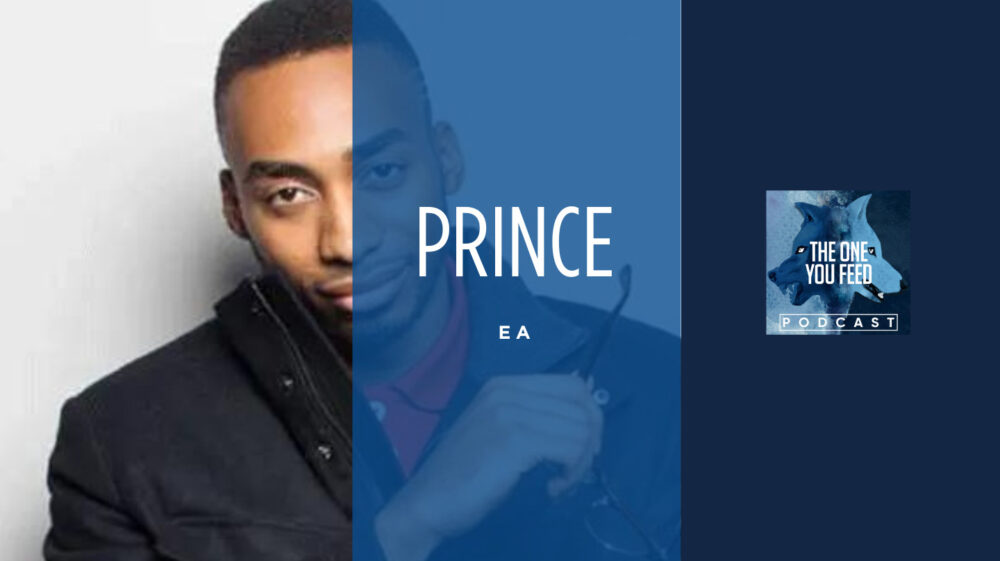
In this episode, Prince EA discusses the importance of embracing uncertainty as he delves into the key to true intimacy and connection in a chaotic world. He explores what it means to be truly present, mindful, living consciously, and how daily choices shape our lives. Prince EA shares his personal experiences with depression and healing through spirituality, science, and creative expression. The conversation explores meditation, the value of not knowing, and the power of community and self-inquiry in overcoming challenges, ultimately offering hope and practical tools for living a more conscious, fulfilling life.
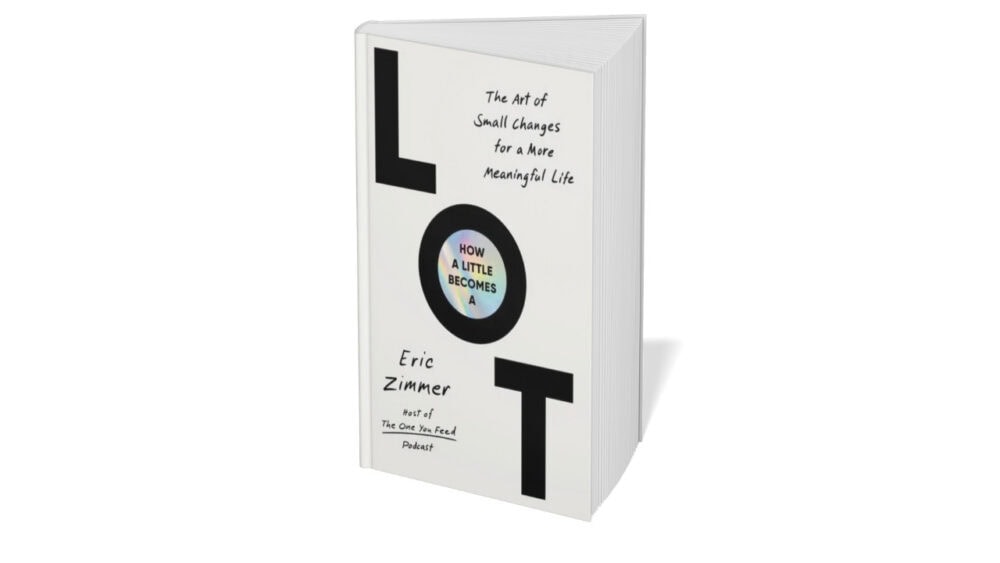
Exciting News!!! Coming in March, 2026, my new book, How a Little Becomes a Lot: The Art of Small Changes for a More Meaningful Life is now available for pre-orders!
Key Takeaways:
- Mindfulness and its significance in daily life
- The concept of conscious living versus being on autopilot
- The parable of the two wolves representing fear and love
- The impact of habits on personal development and mental health
- Personal experiences with depression and the importance of self-awareness
- The role of spirituality and science in understanding mental health
- The importance of social support and community in recovery from depression
- Different meditation practices and their benefits
- The distinction between “insane” and “unsane” mindsets
- The value of curiosity and openness in relationships and personal growth
Richard Williams, better known by the stage name Prince Ea, is an American spoken word artist, poet, rapper, filmmaker, and speaker. After graduating Magna Cum Laude from the University of Missouri-St. Louis with a full scholarship and a degree in Anthropology, he initially pursued a career as a hip hop artist. Inspired by artists like Immortal Technique and Canibus. In 2014, Prince Ea shifted his focus from music to creating motivational and inspirational spoken word films and content. His YouTube videos have received over three billion views, and he covers a wide range of topics such as environmentalism, race, work-life balance, and spirituality. Today, when he’s not creating, Prince Ea speaks at conferences and gives lectures to high school and university students nationwide on the topics of self-development, living your passion, and the importance of being motivated and engaged in the classroom. Prince EA’s work is widely recognized including Oprah’s Super Soul 100 and Forbes 30 Under 30.
Connect with Prince EA: Website | Instagram | Sauna Sessions Podcast
If you enjoyed this conversation with Prince EA, check out these other episodes:
Gradual Awakening with Dr. Miles Neale
Deconstructing Yourself with Michael Taft
By purchasing products and/or services from our sponsors, you are helping to support The One You Feed and we greatly appreciate it. Thank you!
This episode is sponsored by:
Uncommon Goods has something for everyone – you’ll find thousands of new gift ideas that you won’t find anywhere else, and you’ll be supporting artists and small, independent businesses. To get 15% off your next gift, go to UNCOMMONGOODS.com/FEED
Persona Nutrition delivers science-backed, personalized vitamin packs that make daily wellness simple and convenient. In just minutes, you get a plan tailored to your health goals. No clutter, no guesswork. Just grab-and-go packs designed by experts. Go to PersonaNutrition.com/FEED today to take the free assessment and get your personalized daily vitamin packs for an exclusive offer — get 40% off your first order.
Grow Therapy – Whatever challenges you’re facing, Grow Therapy is here to help. Sessions average about $21 with insurance, and some pay as little as $0, depending on their plan. (Availability and coverage vary by state and insurance plans. Visit growtherapy.com/feed today!
AGZ – Start taking your sleep seriously with AGZ. Head to drinkag1.com/feed to get a FREE Welcome Kit with the flavor of your choice that includes a 30 day supply of AGZ and a FREE frother.
LinkedIn: Post your job for free at linkedin.com/1youfeed. Terms and conditions apply.

If you enjoy our podcast and find value in our content, please consider supporting the show. By joining our Patreon Community, you’ll receive exclusive content only available on Patreon! Click here to learn more!!
Episode Transcript:
Prince E.A. 00:00:00 So many of us don’t live life. Life lives us. And I think it’s up to us to really live consciously. This is why mindfulness is so important.
Chris Forbest 00:00:15 Welcome to the one you feed. Throughout time, great thinkers have recognized the importance of the thoughts. We have quotes like garbage in, garbage out or you are what you think ring true. And yet for many of us, our thoughts don’t strengthen or empower us. We tend toward negativity, self-pity, jealousy, or fear. We see what we don’t have instead of what we do. We think things that hold us back and dampen our spirit. But it’s not just about thinking our actions matter. It takes conscious, consistent, and creative effort to make a life worth living. This podcast is about how other people keep themselves moving in the right direction, how they feed their good wolf.
Eric Zimmer 00:00:59 I’ve heard before that every moment asks us a simple question Will I choose fear or will I choose love? And I’m often skeptical of that. And then I realize I have a real tendency to overcomplicate things.
Eric Zimmer 00:01:12 And choosing love over fear is how Prince E.A., the poet, filmmaker and creator whose spoken word videos have reached billions, sees the world not as something happening to us, but something were invited to live consciously. We talk about what it means to stay awake inside the 35,000 or so decisions we make each day, and how mindfulness isn’t meditation on a cushion. It’s remembering to be here for a single breath, a single cup of coffee, a single kindness. Because the little things aren’t little. They happen to be exactly where our lives actually happen. I’m Eric Zimmer, and this is the one you feed. Hi, Prince. Welcome to the show, Eric.
Prince E.A. 00:01:54 I’m so happy to be here. Thank you for having me on.
Eric Zimmer 00:01:56 Yeah, I am really excited to talk with you. You talk about a lot of the same things that we talk about on this show, in your videos and your courses. And so I think we’re going to have a lot in common here. But before we get to all that, we’ll start like we always do with the parable.
Eric Zimmer 00:02:11 In the parable, there’s a grandparent who’s talking with their grandchild, and they say, in life there are two wolves inside of us that are always at battle. One is a good wolf, which represents things like kindness and bravery and love, and the other is a bad wolf, which represents things like greed and hatred and fear. And the grandchild stops. They think about it for a second, and they look up at their grandparent and they say, well, which one wins? And the grandparent says, the one you feed. So I’d like to start off by asking you what that parable means to you in your life and in the work that you do.
Prince E.A. 00:02:42 Wow. Thank you for sharing that. funny, I wanted to film a video on that a long time ago, and I still might, because it’s such a powerful, potent story. It’s a parable, right? It’s, you know, hundreds of years old. So it’s time tested. And what does it mean to me? It means that we have a choice.
Prince E.A. 00:03:01 I have a choice. And I think it comes down to the two wolves, which for me, it’s either fear or it’s love. I think these are the two forces that play in our dimension, in which we inhabit on this planet. And I think at every moment we have that choice to choose either fear, limitation, anger, this very negative vibration, I would call it. Or we could choose love, which is more open, which is more compassionate. And I think the more that you feed one of them, the more that will grow. Right. And it was not Hahn who said, he says nothing can grow without food. Not the anger, not the hatred, and also not the joy and not the happiness. So that’s what it means to me. And it’s a it’s a very powerful, powerful metaphor for life. And it really comes down to each moment. Which are we feeding in each moment, each decision. Because that’s what our lives are, right? It’s an accumulation of the small moments.
Prince E.A. 00:03:57 There’s a movie I love. It’s, vanilla Sky. I don’t know if you remember that film with Tom Cruise and Cameron Diaz. I don’t, it’s a beautiful film. One of my favorites haven’t seen in years. But I always remember this quote in the movie. He says, oh, the little things. There’s nothing bigger. So it’s the little choices. Are we going to choose fear or are we going to choose love?
Eric Zimmer 00:04:20 Yeah. And I think what’s interesting about what you just said about little choices is that it’s the little choices. And it seems like the choices are inconsequential. They’re so little. Right. And there’s so many little moments of them and they feel like well there’s not really a good or bad here. There’s not a love or fear here. This is just I’m making my coffee, I mean, and I’m going to do the next thing. But but it really is, as you’re saying, the more intentionality we can bring to our choices. I was reading something I always forget where I get what I get from my guests, but it was something you had said about some scientists believe we make 35,000 choices a day.
Eric Zimmer 00:04:59 And you said, I don’t believe that to be true, because so many of those choices are happening automatically, right? We’re not conscious of the choice. We’re not conscious of which Wolf might be getting fed. You know, it’s just the default autopilot. And again, some of that’s a human advantage, right? I can’t make every choice. I can’t be deliberately moving my hand right now. Right. It’s just kind of it’s doing its thing. But the more of them that are deliberative, you know.
Prince E.A. 00:05:27 100% it’s habits. You know, I think we all know James. Clear atomic habits, right? One of the most powerful books written in the last freaking decade. It’s all about cultivating those habits because, you know, they say the first part of our lives, we make our habits. In the last part, our habits make us. I think that’s so true. And it’s so important for us to get in front of these habits. Yeah, we still got a chance Because we really don’t want to be a victim of life.
Prince E.A. 00:05:56 So many of us don’t live life. Life lives us. And I think it’s up to us to really live consciously. This is why mindfulness is so important, to be mindful as you’re pouring the coffee and you’re not just thinking about, okay, what do I have to do at work? I’ll tell you a parable which you may have already heard, but there was a story of the Buddha. He met a very, very impatient disciple, and the disciple he said, Buddha, Buddha, can you enlighten me right now? And the Buddha says, I can enlighten you right now. It takes time. You have to cultivate these practices. It says, please, please, this is just enlighten me. Just, just, you know, I got I got a plane to catch. I gotta, I gotta get out of here. Please, please. And the Buddha, he said, okay, here’s what you do when you eat. Eat and when you walk, walk. And it really is just that simple to do what you’re doing right.
Prince E.A. 00:06:50 To really be in it. Right? You’re not thinking about what’s going to happen two years from now or two minutes. You’re really in the moment. And this is what all the sages, all the gurus talk about the power of the now.
Eric Zimmer 00:07:01 Yeah. It’s funny, you and I were talking beforehand about my newly discovered love of surfing, and that’s really it, right? Is that when I am surfing, there is nothing else. You know, that’s it. It is that moment entirely. All my attention, all my focus. It’s just all right there. Yeah. And that’s probably the key to it. Is it does that better for me? Easier. Right. That that state is easier for me to achieve on a surfboard for some reason than it is other times. But it’s always worth striving for.
Prince E.A. 00:07:37 Yeah I mean we’re talking about flow. We’re talking about being in the zone. We’re talking about being in the now I think it’s the Japanese. They call it mushin the Daoist. They call it the Dao.
Prince E.A. 00:07:48 Right. That eternal noun. This is what we’re all looking for. And the funny thing is, you’re never not in it. It’s just the mind that tries to go to the future or go back to the past and rehash that mess. The breath is a good doorway to the moment, to the now. You know the breath is always there. And if we can just come back to the breath that will bring us to that place of beauty. You know what we’re all searching for. They say the true tragedy in life is not in how much we suffer. The true tragedy is how much we miss, how much of the beauty that we just walk past or run past. Not even aware of what’s happening. So to cultivate mindfulness, I think it’s the number one most important thing to really live a happy, fulfilled life.
Eric Zimmer 00:08:35 I’ve heard you say that you don’t love that phrase.
Prince E.A. 00:08:38 Because.
Eric Zimmer 00:08:39 Who wants a full mind? Yeah, and it is a phrase that has gotten way overused, but it doesn’t change the simple fact that being aware of what’s going on in our mind and around us is kind of the whole game.
Prince E.A. 00:08:52 Yeah, that’s the cheat code.
Speaker 4 00:08:55 Yeah, yeah, that’s the cheat code to beat the game. Yeah. That’s that’s it. Yeah. I don’t like that. It’s funny, I like you. You did. You did your homework. Yeah. Mindfulness is an interesting, you know, language.
Prince E.A. 00:09:05 Language is power. It depends on how I’m feeling, I guess. You know, but mindfulness. Sometimes I use, awareness or mindful awareness. Presence awareness. All of these are words that really point to the same thing, which is just coming back to the witness. Just witness. Don’t get involved in the thoughts. Don’t get it. Just just witness. Just watch. There’s a guy, Anthony de Mello. He said, don’t try to change your life. Just. Just watch it and then it’ll change. Then it’ll change.
Eric Zimmer 00:09:33 He is a great seer and his writing is very confrontational too. It is. No no BS like he’s not soft footing around any of it. You know it caught me off guard first reading it I was a little bit like whoa hang on buddy, take it down a notch.
Eric Zimmer 00:09:47 But but he’s speaking the truth. You know, speaking the truth.
Prince E.A. 00:09:50 I think the truth sometimes has to be told in a way that shakes you up.
Eric Zimmer 00:09:54 Yeah. For sure.
Prince E.A. 00:09:55 You know, because we don’t change when we’re comfortable. That’s a message for me. I think that’s definitely part and parcel of my success, and it’s something that I have to also remember that it really is about the package. It’s about the package. It’s not just about the message, but it’s about the packaging. Right. It’s like if you go to a restaurant, it’s a five star Michelin restaurant, and the waiter brings out the food and they bring it out on a paper plate and give you some plastic utensils. The packaging isn’t right. Yeah. Yeah. So it’s it’s really it’s the same thing. The one you feed, how you serve the food has to be packaged in a way that I think really does justice to it. And I think what you’re saying is Anthony de Mello, he was very, very forthcoming, very to the point, very poignant.
Prince E.A. 00:10:47 Yeah. In in the way that he communicated. And I love it. And I think the most powerful people. Martin Luther King I mean, he man, he that guy he was cutting. He was cutting. He cut through. Yeah. Yeah.
Eric Zimmer 00:10:58 Behind me there’s a statue of a bodhisattva called Manjusri. And one of the reasons I love Manjusri is he’s, you know, got one hand on like a lotus. Right. But the other one is holding a flaming sword. And that flaming swords job is to cut through ignorance. And that’s kind of what we’re saying here, is sometimes that’s the cutting that needs to occur.
Prince E.A. 00:11:21 That’s beautiful. You got to send me a picture of that after we finished. I love that. I’ve never heard of him.
Eric Zimmer 00:11:27 Yeah, he’s a bodhisattva in the Mahayana Buddhist tradition. So, changing gears, I’m wondering if we could talk a little bit about you and your challenges of depression. You made a video with a I don’t know what the group was. It’s a group that supports mental illness recovery.
Eric Zimmer 00:11:45 Is it called impact? Maybe. Yeah, it’s quite a video of you’ve got depression as a person sitting in a in a crime room, right? I was really moved by it. But talk to me about, you know, when you had depression and what was it like?
Prince E.A. 00:11:58 Yeah. Well, you know, I grew up on the north side of Saint Louis, and, you know, my family were very like, I don’t know, traditional in the sense of most people where I’m from, we don’t really go to therapists. So I say that to say I was never clinically diagnosed. I never got on medication or anything like that. I didn’t go to church or I know a lot of people are like, you know, just pray it away or you know, Jesus will take the will and make it go away. I think there’s an element of spirituality that can indeed help depressive states. Yeah, but I also think there’s a science. And I think we need to kind of look to the science.
Prince E.A. 00:12:38 I love the Dalai Lama. He’s I know he’s in some in some hot water these days. He always says, hey, if science disagrees with Buddhism, we might have to rethink. Buddhist teachings, and I love that. I say that to say I was never clinically depressed, but I looked at all the symptoms and I definitely experienced depression throughout my adolescence. And also, I do feel as though just my own awareness that my brain that I have could be. Biochemically, I believe that it may lean naturally towards that state because I know that if I don’t ingest certain minerals, supplements do certain things, it just kind of goes that way. It can still be here, but I’ve also trained it through different therapies. CBT reboot Buddhist tradition is also a good, fortification of the mind and to not believe in the thinking mind stoicism, I can kind of rally off all the names of the things that I’ve studied to help me. But it all started, I think, like I said, my adolescence definitely experienced, you know, some suicidal thoughts.
Prince E.A. 00:13:48 They weren’t like every day. But there were some points where I woke up and I just didn’t want to be here. I didn’t care about my parents, didn’t care about friends, just didn’t want to go outside. Right. These are kind of classic depressive symptoms. And then I just started looking into it. I just started trying to understand it and came across a book from David Burns called Feeling Good. The new Mood Therapy came across. Books like the Tao Te Ching, came across traditions like Advaita Vedanta. Say that you were not these thoughts, you were not the thinking mind. Thoughts come and go like clouds in the sky. Watch your thoughts like you’re crossing the street and you watch traffic. So these different things, what they did was they gave me distance. They gave me distance from the thoughts. I wasn’t the thought itself. I wasn’t tied up in it. I could actually observe it. I could watch it, I could be mindful of it. And just that awareness was a huge relief, a huge relief.
Prince E.A. 00:14:47 But I think the depression was also a bit of a gift because it allowed me to look within and, you know, find out what was going on under the hood. You know, what kind of nutrient therapies amino acids could I play with to change the hormonal balance in my brain? So I always tell people to think that they are depressed. I say, you are not depressed. You are experiencing depression. Who you are is not depressed. Who you are can observe that depression, and it’s difficult to understand that when you’re in it. Yeah, learn. Helplessness is a huge thing. But I love the work of, He was a scientist and he created something called Learned Optimism. And I think we can retrain our brains, as we were talking about earlier, to see the good, to see the positive, to just shift our perceptions. There are so many tools that I always tell people it’s not hopeless. It’s not a hopeless situation that you’re in. In fact, you should be very hopeful because there are so many tools out there in our modern world today that you just have to find it.
Prince E.A. 00:15:51 You have to find the right one that works for you. So, you know, going back to my story, I think depression played a role. It forced me to try to understand it. And I think at one level, it also allowed me to bring out the creativity inside of me, to bring out the vulnerability inside of me. You know, I started out as a musician and, you know, musician is like a poet. It’s a very vulnerable art form. And so I was very vulnerable and very vocal about what I was going through. And, you know, when I would create music, I would find my audience. They would say, oh, I feel the exact same way. Thank you for putting that out there. And then that’s how you build community. That’s how you build friendships. That’s how you build connection. Connection came from the expression which some say is the opposite of depression. Depression. While, you know, I think it is a virus. I think that it can also be an opportunity, an opportunity, a signal, an alarm that something’s off.
Prince E.A. 00:16:47 You may not be living the life that you’re meant to live.
Eric Zimmer 00:16:50 Yeah, I’m very similar to you. I think I have a brain that orients towards that direction when I let it off its leash, you know, and I, like you, have found that there’s a lot of different things that contribute to managing it. There’s a lot of different tools. And I’ve had to, over the years, kind of put together my little depression recovery kit. You know, mine’s going to look different than other people’s. But but knowing what’s in that kit becomes very important. And as you were talking about the thoughts, I was thinking a little bit about, you know, part of the problem with depression is that when I’m in it, when I’m experiencing it, I like your phrase. When I’m experiencing it. Right, I can know that my thoughts are not correct. I can be like, look, you know, your brain’s not working real well today. And, you know, ignore those thoughts. And underneath it, there’s still this like air feeling, you know, and I’ve talked on this show many times about sometimes I treat it a little bit like the I call it the emotional flu, you know, which is that when it comes, I treat it a little bit like I would the flu, meaning I don’t make a big fuss out of it.
Eric Zimmer 00:17:56 I don’t take myself to the emergency room. I make sure am I doing everything I can to support myself. I know that while I’m sick, the world’s going to look kind of crappy. You know? I let it kind of roll now. That’s again after having dealt with it head on. So I’m not saying that’s always the case, but for me, becoming aware of the fact that, like, there’s some degree of this low mood that feels like it’s a companion of mine, that doesn’t seem like it’s gonna completely go away. So how do I work with it as skillfully as I can? And to your point, you know, what opportunities does it present? You know, I wouldn’t be doing the work I do like you if I hadn’t had it, you know, I wouldn’t be doing the work I do if I hadn’t been a heroin addict. I mean, all these things contribute to our lives being meaningful. They’re part of our story.
Prince E.A. 00:18:44 That’s it. I love the analogy of the puzzle pieces put in, and everybody has their own puzzle that they have to put together.
Prince E.A. 00:18:51 Right. Like, I think social support for just the human species is it works. Right. So that’s a big one. Yeah. The thing about depression is like when you’re in it, that’s the last thing you want is to be around people. Yeah. The very thing that can allow you to come out of it is the thing that you’re, like, pushing away, which is another trick.
Eric Zimmer 00:19:12 Totally. Even things like movement. Right. Like, we know movement helps, but the last thing you want to do is move when you’re feeling depressed. Exactly. It is challenging in that way. How do you work through that?
Prince E.A. 00:19:24 Well, you know, I haven’t had the need to work through it lately. Yeah. But in the past, well, just that book. Right. So that book by David Birds is so powerful, right? You know the book, right?
Eric Zimmer 00:19:36 I do, yeah.
Prince E.A. 00:19:37 Yeah. So this book actually created a practice of its own called Biblio therapy. People got better just by reading the book.
Prince E.A. 00:19:44 It’s got so many tools in it. I think if you read the book or if you study CBT, which is cognitive behavioral therapy, or as I like to call it, crushing bad thoughts, you will find a list of ten cognitive distortions. Print this list out, put it on your refrigerator. Put it anywhere that you can see it. Because I feel like whenever we suffer 99% of the times, it is because of one of these ten cognitive distortions, period. But when you see it, you can see, oh, there it is. My brain’s just trying to trick me again. Right. So you observe it. Yes. Depression is something you really can’t think your way out of it. You can’t intellectualize your way out of it. This is why I think behavioral activation is one of the more successful treatments for depression. Yeah. Moving. But like you said, you don’t want to move. So this is why having that good social support, that network is so, so important. That’s the biggest thing.
Prince E.A. 00:20:40 I mean, this is the reason why I like to study cultures. You know, I got my degree in anthropology and I love Dan Buettner. His work on the blue zones where you have people rights, people who are, you know, centenarians, they live well past 100 years old, and they’re healthy. They’re happy, they’re vibrant, they’re still having sex. They’re still, you know, watering their gardens. They’re still playing with their great, great grandkids. They’re still riding the bike. And you know, this is baffled a lot of scientists for years. And they really finally figured out why they live so long. And it’s because of their friendships, because of the love that they have around. Right? They a lot of them have the same friends that they had when they were kids when they were ten now, and they’re 110, they have the same people around them. So the human animal, I think we do need each other. And when we get in these low mood states, We have to trust the people around us.
Eric Zimmer 00:21:36 Yeah, yeah, I think that’s really true and really important. And those other people can be the things that do help us do some of the things that we need to do, you know, that are good for us. But one of my favorite quotes is depression hates a moving target, right? So for me, that’s kind of it. It’s like, just get off the couch. It doesn’t even matter what. Just be moving, you know? And how much I’m able to do may vary. I may be like, well, you know, today I’m not going to get on the peloton bike and do a crushing hour, a ride. But I might walk, you know, around the block.
Prince E.A. 00:22:09 Yeah. Here’s something else you don’t even have to move, but it simulates moving. But a sauna, a sauna or an ice bath, both of those things. I mean, you can just sit there, right? And you are making physiological changes in your body. You are helping your nervous system.
Prince E.A. 00:22:27 You are fighting depression when you just sit there so you can sweat it out and you can shiver it out, too.
Eric Zimmer 00:22:33 Yeah, or you can do both. That’s my favorite. Back and forth.
Prince E.A. 00:22:36 Back and forth. Okay.
Eric Zimmer 00:22:38 Yeah, but you brought up sauna, so you’ve got a fairly new podcast that you do in a sauna. You basically have people come join you in the sauna. Why do you choose to do a podcast in the sauna?
Prince E.A. 00:22:50 You know, I just like doing stuff that’s never been done. Yeah, I’m one who takes the road less traveled or not even paved, I should say. So. I wanted to do something different. And also, I’ve had a lot of good conversations inside of saunas, you know, at the gym, at the club, you know, so it’s like, what about having conversations with celebrities, scientists, cool people just inside of a sauna as we as we sweat out the toxins and the BS, what’s what can happen? Yeah. So we landed on a sauna.
Prince E.A. 00:23:22 We tried to figure out how to get the equipment inside the sauna without melting. We figured it out.
Eric Zimmer 00:23:27 Yeah, it sounds really good. I was like, I can’t believe how good this sounds for being in a sauna.
Prince E.A. 00:23:33 Yeah. Yeah. Thank you, thank you. Yeah. That’s that’s my producer Dustin. He works magic but we got it. It’s an infrared sauna. It’s not a dry sauna so it doesn’t get that hot. But so we do 20 minutes in the sauna and then we do another 20 minutes outside the sauna for like what we call a hydration session, where we sit, we get like a foot bath with Epsom salt. We drink, coconut water and we continue the conversation in our bathrobes.
Eric Zimmer 00:23:59 This sounds like a good podcast gig.
Prince E.A. 00:24:01 I haven’t had any complaints. Oh, yes, they love it. Come by. We can. We can get in.
Eric Zimmer 00:24:06 All right. I will take you up on that.
Prince E.A. 00:24:08 Awesome.
Speaker 5 00:24:31 Eight years ago, I was completely overwhelmed. My life was full with good things.
Speaker 5 00:24:37 A challenging career, two teenage boys, a growing podcast, and a mother who needed care. But I had a persistent feeling of I can’t keep doing this, but I valued everything I was doing and I wasn’t willing to let any of them go. And the advice to do less only made me more overwhelmed. That’s when I stumbled into something I now call this still point method, a way of using small moments throughout my day to change not how much I had to do, but how I felt while I was doing it. And so I wanted to build something I wish I’d had eight years ago. So you don’t have to stumble towards an answer that something is now here and it’s called overwhelm is optional tools for when you can’t do less. It’s an email course that fits into moments you already have. Taking less than ten minutes total a day. It isn’t about doing less, It’s about relating differently to what you do. I think it’s the most useful tool we’ve ever built. The launch price is $29.
Speaker 5 00:25:38 If life is too full, but you still need relief from overwhelm, check out overwhelm is optional. Go to one you feel. That’s one you feed.
Speaker 6 00:25:52 So I want to talk a little bit about meditation.
Eric Zimmer 00:25:55 It’s a big thing in your life, a practice you’re really into. And I wanted to just sort of start and ask you a little bit about what is the type of meditation you’re doing these days. How has that changed over time? How does it vary week to week, month to month? I’m just kind of curious how you approach that big topic.
Prince E.A. 00:26:14 First of all, I want to say I love your questions. I love your vibe. I’m so excited to talk about these questions because they’re super important. I don’t think there’s anything more important than the topic of meditation. I do believe that meditation is the anti-virus software that can cure a world of all of its ills. Meditation is not something you do. It’s actually a state of being. I think there are portals into that state, but I think the portals have gotten a bit confused.
Prince E.A. 00:26:45 But the portals of meditation, they vary. Right. I’m a big tantra guy and I know people listening to this. They might say, oh Tantra, you must have crazy, wild sex, I’m like, no.
Speaker 7 00:26:59 No no no no no no.
Prince E.A. 00:27:00 See, this is what the commercialization of spirituality has done. So, so Tantra is a science and one of my favorite books, the Vinyasa Bhairava Tantra. It speaks of 112 tantric practices to reach the point of what they call Bhairava oneness, Krishna consciousness, Christ consciousness, whatever name, Nirvana. Only two of them have to do with sex. One that has to do with sex really doesn’t even have to do with sex. What it is, is, they say at the point of orgasm, you put your mind fully on God. So I love the practices of tantra because they take meditation. I’m using air quotes. They take meditation off the mat. They take it out of lotus and bring it in the world. Right? Yeah. One of my favorite is space spatial awareness.
Prince E.A. 00:28:00 Right. So I don’t know if people are driving. If you’re driving, don’t do this. But if you’re sitting in a room or maybe when you pull over or you sit in your office, I want you to just look around and ask yourself, what do you see? And when I ask people this question, they say, oh, well, I see chairs, I see a desk, I see a window, I see people and I say, okay, yeah, but you miss that which was most abundant The space which allows all that to inhabit the space is what we are space. I feel like if there’s any religion or any god that should be worshipped, it should be space, because space is the most abundant thing in the universe. Matter is very, very, very tiny. Any physicist will tell you this, but this is just one to really focus on. The space you can focus on. The space in between my words. So when you’re speaking to somebody, you put your mind attention on the space.
Prince E.A. 00:29:03 And what happens is your mind starts to take the form of the space. So this is something that people can do anywhere, anywhere. It really brings you to this non-dual awareness, this piece, this feeling of home. One of my favorite gurus in this saga, Dada maharaj, he’s got a quote that I have on my wall and he says. He says, having never left the house. You have been searching for the way home, having never left the house, you have been searching for the way home. We search. Search and search in life for joy and happiness and fulfillment. And what he’s saying is it’s already here. It’s you. It’s not something you even have to do. It’s your very nature. It’s here and now. I love this practice, this tantric practice, one other meditation that people can do in their daily life that I like to do from time to time, is a walking meditation that I got from Tik, not Hanh, the Zen Monk bestselling author. We mentioned Martin Luther King earlier.
Prince E.A. 00:30:06 Martin Luther King nominated Not hard for a Nobel Peace Prize. And what you do is when you’re walking, you can be in nature. You can be in your office. When you’re walking, you want to focus on your breath. And with each step You want to breathe in. And as you breathe in. You say to yourself, I’m here. And you breathe out on the exhale. You say, I am home. So I am here on the inhale. I am home on the exhale. And you do this as you walk. And as you walk, you imagine your feet are kissing the earth with every step. So you say I am here, I am home. And as you walk you kiss the earth with every step. And what you’re going to notice is your pace is going to slow down, and you are going to be filled with so much joy and presence and aliveness with this meditation. So this is another one of my favorites. Let me give you three just to finish the Trinity off.
Prince E.A. 00:31:10 Let’s see what else I got. So this is one that I got from a guy named Steven Wilensky. I don’t know if you’re familiar with this guy, Steven Wilensky.
Eric Zimmer 00:31:18 I’m not. I’ve followed you on all the references so far, but you’ve got one here, I don’t know.
Prince E.A. 00:31:23 Okay, so Stephen Walensky is like, there’s a few people that I want to meet in the world. I’d probably count them with one hand. And he’s probably at the top of my list. Okay. He’s an author. He’s written so many beautiful books. He’s done documentaries. I have no idea where he is now. He kind of just disappeared. He’s probably in deep meditation somewhere. He was a disciple of the guy that I mentioned. The saga of Maharaj and Stephen Walensky had a meditation where what you do is you well, first, you obviously you, you know, you bring yourself to this moment. You relax your face, your jaw, your eyes, your shoulders. Take a breath. And then you ask yourself, without using your thoughts, associations, perceptions, emotions or memories.
Prince E.A. 00:32:12 Am I an American? Am I Russian? Am I Ukrainian and my Canadian or neither. And then you do that again, you say, without using your thoughts, associations, perceptions, emotions or memories. Am I black and my white and my Asian or neither? And then you go deeper, you say, without using your thoughts, associations, perceptions, emotions or memories. Am I a man? Am I a woman? Or neither. And then you go deeper without using your thoughts, associations, perceptions, emotions or memories. Am I a human being? Am I even a spiritual being? Or neither. And what you do is you stay in this gentle, non-judgmental awareness. This is our true nature. This is home. This is who we always were. Without a name. Without a label. This is why the, the Hindus, if you look at the Sanskrit word nirvana. People think nirvana is this state of, just ecstasy.
Speaker 7 00:33:53 And.
Prince E.A. 00:33:54 Amazing bliss. Actually, the word nirvana means extinction.
Prince E.A. 00:33:58 There’s no more you there?
Speaker 7 00:34:01 Yep.
Prince E.A. 00:34:02 So that meditation alone, I think, is a shortcut to pretty much what every spiritual tradition points to, which is the oneness.
Eric Zimmer 00:34:14 Right. What’s really interesting about that type of meditation, as you said, is getting to that place when you’ve suddenly said, I’m not any of those things. To go, well what am I. And to really look at that and if you’re able to stay with it, you know my experience is what you will find is like I don’t know. Yeah. But as you were talking, I can never pronounce that spiritual teacher’s name.
Prince E.A. 00:34:38 Miss Sagar Dada maharaj.
Eric Zimmer 00:34:40 Yeah. You know, he’s got that idea of, you know, you abide with that sense of I am.
Prince E.A. 00:34:46 Yeah, right.
Eric Zimmer 00:34:46 That’s it. Nothing after it. I am. Because when you do that, you’re like, well, I’m clearly there’s something here. Like something is. But but what is it? Where is it? What is it? You just suddenly start going like.
Eric Zimmer 00:34:59 Well, I don’t know. There’s nothing here that to find. And it’s a mystifying, sometimes mildly disconcerting state, if you can get to it, but also deeply freeing.
Prince E.A. 00:35:09 Only for the mind. Only for the mind.
Eric Zimmer 00:35:12 That’s fair. Yeah.
Prince E.A. 00:35:12 Because the mind wants to figure it out. It wants to objectify that which cannot be objectified. The eye cannot see itself. The knife cannot cut itself. The mind cannot truly know itself. What’s what’s behind it. You can’t get there with the mind. It’s not the right tool. I think the last step of the inquiry is when the questions themselves disappear.
Eric Zimmer 00:35:37 Yeah, I was out today. I’ve been meditating in nature recently. I’m teaching a retreat this summer at Kripalu about nature and connecting with nature as a way. And so I’ve been really engaging in that practice. And I started reflecting on something I heard recently. It was some book about human development or evolutionary past, and that there was a time that we were human, but we didn’t have language to imagine.
Eric Zimmer 00:36:06 What that might be like is a fascinating thought experiment, because most of our thoughts are words that we’re saying to ourselves. But if you didn’t have those words, what is the experience of being? And I found that as a really interesting thing to reflect on. You know, and I do that sometimes as like to your point, if not using memories, you know, not using language even. Yeah. What is this is a really powerful way for me to get closer to that state of being.
Prince E.A. 00:36:38 Wow. Yeah. Because the word is not the thing, right?
Eric Zimmer 00:36:42 It’s it’s the dial that can be named. Is not the doubt, right? Yeah.
Prince E.A. 00:36:47 Yep yep yep. So that’s how we get caught up. We get caught up in the words. So that’s a fascinating thought experiment.
Eric Zimmer 00:36:54 Yeah exactly. Well but we must have been thinking. We must have been thinking. Right. Yeah. You know, but we didn’t have the words. And it’s just it’s similar to me when I try and imagine what it might be like to be an octopus, for example.
Eric Zimmer 00:37:07 It’s just a fun way of trying to say, like, there are states of consciousness that are very different than the ones we inhabit, and what are the different ways of kind of getting closer to those and being able to see with those eyes? I’m a Zen practitioner primarily, and one of my teachers said to me once, and I thought this was so wise. We do a lot of koan practice in Zen, right? And they’re nonsense, right? At first glance, they’re nonsense. But the advice I was given is sometimes imagine what the state of mind would have to be for the person who said that and believes it to be true. Instead of going, that doesn’t make any sense. That’s nonsense to say. What state of mind would I have to be in that? That would be true. It’s it’s sort of a reverse engineering way of entering into the mind, and you can’t do it. Exactly. These are all just tools, portals to use your word. Right? You know, that’s another one is when a spiritual teacher says something that you’re like that.
Eric Zimmer 00:38:07 That sounds nuts. One way of approaching is go. Well, what would their mind state have to be for that to be true? You know, we’re just kind of playing with ways of getting deeper, powerful.
Prince E.A. 00:38:17 I mean, I gotta you can’t see I got chill bumps here. I mean, that’s it. That’s empathy. Right? Empathy. The Greek word to see through the eye of the other. I mean, that’s that’s it. I mean, there’s another meditation that I love. It’s called to install the guru. So what you do is, is you visualize your guru or your teacher, your enlightened master, and from the feet to the head, you imagine that their body merges with yours. You have installed the guru into this self which is very similar. Like what state of mind would that have to be in? Right to believe that powerful love that air. So good, so good.
Eric Zimmer 00:39:20 Do you have a spiritual teacher that you actually work with, or do you feel like your spiritual teachers are primarily the people that you read? I mean, I know you’re a voracious reader, just as I am.
Eric Zimmer 00:39:32 Do you have teachers that you actually work with, or is it been more your sort of quote unquote gurus or the people we’ve talked about that you’re reading?
Prince E.A. 00:39:40 Yeah, yeah, the latter. I’ve definitely attended seminars and like Byron Katie and I love her. Gangi and Eli Jackson Baer, who were disciples of a man named Papa ji. And, you know, being around some of these people, but never on like a 1 to 1 student disciple. I’ve never had that, but I’ve just been so touched by so many masters. You know, I think Ram Dass was one of my first on ramps into spirituality and, you know, Timothy Leary. Robert Anton Wilson. I’m a big science guy, too. So people say, oh, science and spirituality, they don’t go together. Why not? Well, science is the empirical pursuit of the truth, and spirituality is the experiential pursuit for the nature of what’s real.
Eric Zimmer 00:40:27 Yeah. They should go together. They should. I mean, because you’re seeking the truth.
Eric Zimmer 00:40:31 In both cases, sadly.
Prince E.A. 00:40:32 Yeah. So I never had a direct teacher. I think that that’s not to say I never will. I do believe that everything that we need is within us. Sometimes we are grace to be able to see that. And sometimes people need a master or a guru to point to it and tell them that actually you’re already that you don’t even need me. Yeah, yeah, yeah.
Eric Zimmer 00:40:53 All these stories of people like Ram Dass, when they saw their guru and they instantly were, like, transformed, has made it difficult for me to work with Zen teachers, which I found to be beneficial working one on one with a teacher because my mind is always like, well, is this a truly enlightened being? And it’s kind of silly, right? In a way, because it’s almost there, more like a spiritual friend than they are. Like a guru, right? But in the Zen tradition, there are I don’t like this word, but I don’t have a better one.
Eric Zimmer 00:41:24 There are correct responses to koans that have been passed down for thousands of years. And your teacher is the one who’s like, yep, good, let’s go on to the next one. Or, you know, very politely, some are more polite than others. You know, you need to sit with that some more is what my teacher would always say, which was the polite way of saying, nope, you do not have it.
Prince E.A. 00:41:44 Yeah, yeah, I love koans, by the way, and I’m so happy that you study that. I’ve got books this stick on all the koan. Yeah, yeah. You know, it’s what I’ve gotten from it is actually you become the answer.
Eric Zimmer 00:41:59 That’s exactly it. The answer is always that, you know. Yeah, it’s a little of that game we talked about a minute ago. Like what would it be like to be in the mind, you know. What would it be like to be the distant temple bell ringing? You know, that’s one. How do you stop the sound of a distant temple bell ringing? Right.
Eric Zimmer 00:42:22 You can’t get to it. Right? You know. And so it’s about you become that thing. Some of it, to me, has been an imaginative exercise, which turns out to be a powerful approach.
Prince E.A. 00:42:33 Love that. Yeah. That’s it. That’s it. Yeah. Koans. Oh, my. What’s my favorite koan? Yeah, the sound of one hand clapping. Classic. Probably the most famous one. Yeah. Yeah. Does the dog have Buddha nature? Moo. Moo? Yeah, exactly. Classic mood. Yeah. So there’s so many beautiful ones. So many. They’re. They’re great. I love them so much. Yeah.
Eric Zimmer 00:42:56 There’s a book that you might like. If you haven’t read it, it’s called Bring Me the Rhinoceros.
Prince E.A. 00:43:01 Maybe that sounds very Cohen like.
Eric Zimmer 00:43:04 Yeah, yeah. Bring me the rhinoceros by a Zen teacher named John Tarrant. T a r r t. It’s another one of those. Where. Yeah. I mean, basically, that’s the end of the koan.
Eric Zimmer 00:43:14 Bring me the rhinoceros. Which of course, is just nonsensical, but, you know.
Prince E.A. 00:43:18 Yeah. So good.
Eric Zimmer 00:43:19 But that’s a really great book about koans and about sort of a modern approach. And he’s a beautiful writer and teacher. He’s really gifted. If you’re into koans, that’s definitely one to read. Okay. Me the rhinoceros.
Prince E.A. 00:43:34 Write it down. Now bring me the right. Bring me the rhino. Cool. I’m on it, I’m on it.
Eric Zimmer 00:43:39 I loved what you said about meditation, about bringing them into more of the moments of our lives, taking them out of, you know, just a formal sitting practice. I’ve got a program called Spiritual Habits where we try and take the science and behavior change and apply it to spiritual principles. And that’s really the key piece, is like, it’s great to believe in these things. It’s great to think about these things, but you need them in the moments of your life. And so you’re talking about doing that. Do you have a formal practice that you do regularly, or is it kind of just depend at different phases of your life, different things?
Prince E.A. 00:44:12 I don’t have a formal practice.
Prince E.A. 00:44:14 It is very spontaneous. I think throughout the day what I find happening is just a reflex to come back to the here and now. But I don’t do the, you know, the 30 minutes in the morning or the Osho, I think, you know, he said, man, actually, I think it can be useful. But I think when meditation becomes regimented, very militarized, we can miss the, the beauty, the life of it. Yeah, the spontaneity of it.
Eric Zimmer 00:44:43 So of more interest than that actually is what you just said, which is you reflexively come back more to the present moment. How did you train yourself to do that? Because what I think is one of the biggest problems to what we’re talking about, which is having these moments throughout our day where we connect back to the moment, our deeper nature. Whatever you want to connect back to? Is that we forget? Yeah. We get busy and we forget. And so to me, the Holy Grail is when you begin to sort of, as you’re saying, you’ve trained this into yourself a little bit.
Eric Zimmer 00:45:16 So it is a little bit more habitual to turn back towards the present moment or turn back towards your deeper nature. And so it sounds like you have done that to some degree. Are you able to think back to how you got there?
Prince E.A. 00:45:30 Well, I think there’s different paths for different people. I feel that it is good to have, like in the beginning, to have structured pockets within your day that maybe you do nothing. Maybe you’re just in a state of wonder or just give yourself that space, that openness, that awareness. But for me, it was really the practice of self-inquiry, asking myself repeatedly, who am I? To whom do these thoughts come to? To whom do these thoughts come to? To whom do these thoughts come to? And recognizing that, number one, there’s no verbal or intellectual answer to that. The question just dissolves. And it was at that deep recognition that I realized that a lot of the spirituality, just like a lot of the psychology is, is kind of just a game of the mind.
Prince E.A. 00:46:20 And I think once you recognize your true nature, you’re kind of out of the game that glimpse, you just can’t unsee it. Yeah. You just can’t go back to, I think, how it was. If you really saw the illusion for what it is, you can’t really get. In my experience and this one’s experience, you can’t really get caught up. So I think really recognizing it first and not just from an intellectual level, but really from a deep seeing because, you know, so many teachers, even like Addie Ashanti and so many teachers.
Eric Zimmer 00:46:52 One of my favorites.
Prince E.A. 00:46:53 Yeah, yeah. Well, they they speak about like it’s just being an accident. They say meditation makes you more accident prone, right? Yeah, but it’s like it’s it just kind of graced. So for me, it was that practice of self-inquiry that Ramana maharshi, the sage of Arunachala, his words of to whom do the thoughts come to? Where do they arise and what do they subside to? Yeah, just that recognition.
Prince E.A. 00:47:23 The more that you see it, the more that the pockets of awareness and the space is going to arise.
Eric Zimmer 00:47:28 Yeah, yeah. When you were talking about the meditation on space and all that, it made me think of, there used to be this meditation app on the phone. This was a long time ago, and it has since, I don’t know what it’s called. It never got updated. You can’t use it anymore, but it was this kind of amazing app where it would play a sound. I don’t remember what it was, whether it was a little bit of music or what it was, but your job was to tap the button when the sound went away. And so what you were watching for was that disappearance. You are watching for things that have come into existence to disappear from existence, and it was just a totally different way of doing it than what most of us are doing. And I love that app. I wish it still existed because it was just a fun. And when I say fun, I mean like I enjoyed doing it, it was effortless to kind of sit and do it.
Eric Zimmer 00:48:21 You know, you can do that with anything, right? We can go outside and do it right. Yeah, we can notice the sound when it comes. But we can also notice when it’s gone. Yeah. Be like well where’d it go.
Prince E.A. 00:48:32 That’s it I love that I love them. We might have to work on that and get that app back up and running or create our own.
Eric Zimmer 00:48:38 That’s I’m down if you you want to partner on that for sure.
Prince E.A. 00:48:41 Great. Awesome.
Eric Zimmer 00:48:42 I want to ask you a question. I’ve heard you use this phrase before and you’ve talked about the world being not insane, but unsane. I’m just curious. That’s an interesting slight change of words there. Talk to me about what those two things mean to you.
Prince E.A. 00:48:58 Well, like all words. They’re all useless. but for me, insanity is one thing. I actually, I believe I got this phrase from Alfred Kozinski, author of Science Insanity. Beautiful book. Of course, he created a language called English Prime.
Prince E.A. 00:49:19 And in this language, this is a very scientific language. You don’t use the verb to be. You don’t say, this is a microphone. This is a mason jar. You say this appears to be a mason jar. This appears to be a microphone. And his whole premise on doing that is because absolutism and certainty has created so much harm and violence in our world. And when we can get more skeptical about our language, like we said earlier, the word is not the thing. The map is not the territory. It humbles us. You don’t say, oh, Bob is angry. You can say, oh, Bob appears to be angry right now. It softens us. Yeah, it’s more aligned with reality. So the Unsane mindset is, I think, the mindset of certainty of this is the way it is. But for me, I always prefer to, as the Daoist say, the I don’t know mind or the Buddhist say the beginner’s mind, right? The expert. What’s the old saying? You probably know this one.
Eric Zimmer 00:50:31 This in the beginner’s mind, there are many, many possible experts. There’s few or. Yeah, something like that.
Prince E.A. 00:50:38 Yeah. So I think the world, we’re very definite. We don’t have that level of, of doubt or uncertainty to say maybe I’m wrong or it’s just a beautiful state of being to be able to say, I don’t know, because it’s like in our world, you turn on the news, everybody knows. OS. Everybody is so 100% certain about everything.
Eric Zimmer 00:51:01 Oh so certain. I know there’s that great Bertrand Russell quote, which is I won’t get it right, but it’s something like the problem with the world is that the intelligent are uncertain about things, and the idiots are so sure of themselves. Right. Like I butchered that someone I’m sure can create it. But it was this idea that so many people are so certain of themselves, and usually their certainty is problematic.
Prince E.A. 00:51:22 Yeah, yeah. And this is what I call not insanity, but insanity.
Eric Zimmer 00:51:26 That’s a good word for it, because insanity has a more specific framework versus insanity.
Eric Zimmer 00:51:31 I like that you’ve given me two different authors that I’ve never heard of, which happens so rarely on this show. I’m so excited.
Prince E.A. 00:51:38 Yeah, I feel like we’re gonna do that for each other. The boat is behind you. I don’t have no idea. Yeah. I hope we have a great, friendship, and I. I’d love to compare notes on all of these amazing things, but I think what we’re doing here is really bringing people to a more same way of living and viewing To know something means that that something is dead. You never know your partner. You can never know them because they’re always changing their living organism. They’re taking in new information. They have so many dimensions, but.
Eric Zimmer 00:52:09 We think we do. It’s that looking again, looking more closely. And in Zen, we would say not knowing is most intimate. And I love that idea, because when you don’t know something, you give it your attention. And that’s where intimacy arises. When you know something, you stop looking.
Eric Zimmer 00:52:26 Your intimacy fades.
Prince E.A. 00:52:28 That’s it. Love it. Wow.
Eric Zimmer 00:52:31 Well, we are near the end of our time. Any sort of last thing you’d like to leave listeners with based on where your heart and mind is right now?
Prince E.A. 00:52:39 I think from what we spoke about, if somebody’s listening, maybe just one person is kind of aligned or feels something about what we said to really go into deep with your full heart. And we talked a lot about space. We talked a lot about silence and meditation, and one of my favorite quotes is from Rumi. He says, silence is the language of God. All else is poor. Translation.
Eric Zimmer 00:53:07 That’s a beautiful place to leave it. Thank you so much. This has been deeply enjoyable. I’m so glad to have gotten to have you on.
Prince E.A. 00:53:13 So much fun. Thank you so much for having me. Let’s do it again. Yeah, in the sauna maybe.
Eric Zimmer 00:53:18 Okay. Thank you so much for listening to the show. If you found this conversation helpful, inspiring, or thought provoking, I’d love for you to share it with a friend.
Eric Zimmer 00:53:28 Share it from one person to another is the lifeblood of what we do. We don’t have a big budget, and I’m certainly not a celebrity, but we have something even better. And that’s you just hit the share button on your podcast app, or send a quick text with the episode link to someone who might enjoy it. Your support means the world, and together we can spread wisdom one episode at a time. Thank you for being part of the one You Feed community.
Leave a Reply