

In this episode, Dr. Marisa G. Franco explores why feeling insecure doesn’t mean you’re back at the beginning, and how real self-worth may come from learning to make room for every part of yourself. She and Eric discuss why old insecurities can return even after years of growth, how past experiences continue to shape our reactions in the present, and why intellectual insight isn’t always enough to change how we feel. Marisa explains what it means to become “secure-ish,” how acknowledging difficult emotions can help us regulate them, and why true security isn’t about never feeling anxious, rejected, or uncertain. It’s about trusting that we can meet those feelings when they arise. Her new book is Worth: The New Science of Self-Esteem and Secure Attachment
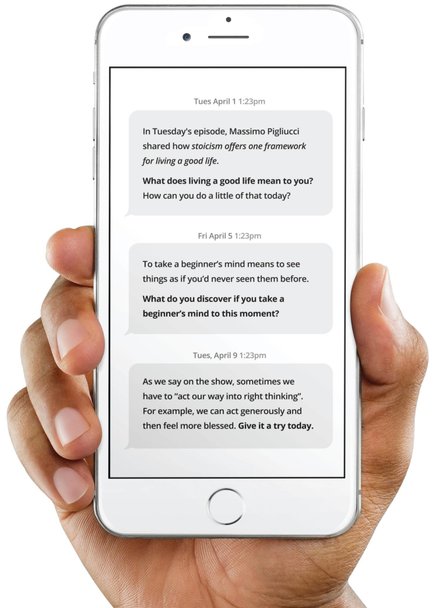
Good Wolf Reminders
A little wisdom, right when you need it. Start receiving free text reminders designed to help you pause, reflect, and take meaningful action. Sign up at oneyoufeed.net/sms.
Key Takeaways:
- Why feeling insecure doesn’t erase the progress you’ve already made
- How acknowledging difficult emotions helps us regulate them instead of being controlled by them
- Why old memories can shape present-day reactions, even when we know intellectually that we’re safe
- How memory reconsolidation may help change the emotional impact of painful experiences
- Why some past experiences remain in the body even when we can’t consciously remember them
- What it means to become “secure-ish” rather than trying to eliminate insecurity altogether
- How accepting the anxious, needy, or vulnerable parts of ourselves can strengthen self-worth
An enlightening psychologist, international speaker, and New York Times bestselling author, Dr. Marisa G Franco is known for digesting and communicating science in ways that resonate deeply enough with people to change their lives. She works as a professor at The University of Maryland and authored the New York Times bestseller Platonic: How The Science of Attachment
Can Help You Make—and Keep—Friends and Worth: The New Science of Self-Esteem and Secure Attachment. She writes about friendship for Psychology Today and has been a featured connection expert for major publications like The New York Times, The Telegraph, and Vice. She speaks on belonging at corporations, government agencies, non-profits, and universities.
Connect with Dr. Marisa G. Franco: Website | Instagram | LinkedIn
If you enjoyed this conversation with Dr. Marisa G. Franco, check out these other episodes:
How to Overcome Loneliness through Platonic Friendships with Marisa Franco
How to Become Unlonely with Jillian Richardson
How to Find Joy and Community with Radha Agrawal
This episode is sponsored by:
Monarch: Take control of your finances with Monarch, the all-in-one personal finance app that helps you budget, track spending, monitor investments, and work toward your financial goals. Get 50% off your first year of Monarch Core, go to https://www.monarch.com/ and enter Promo Code: FEED
Talkiatry connects you with licensed psychiatrists for personalized, evidence-based mental health care, all online and covered by most major insurance plans. To get matched with an in-network psychiatrist in just a few minutes, visit Talkiatry.com/FEED.
David Protein bars deliver up to 28g of protein for just 150 calories—without sacrificing taste! For a limited time, our listeners can receive this special deal: buy 4 cartons and get the 5th free when you go to www.davidprotein.com/FEED
Quince: Refresh your wardrobe with Quince by going to Quince.com/feed for free shipping and 365-day returns. Now available in Canada, too.
ZocDoc – Taking care of your health just got easier – start here with Zocdoc
Shopify – The commerce platform that helps you build, grow, and manage your business all in one place. Start your $1/month trial at shopify.com/feed.
Pebl – an AI-powered platform that helps companies hire and manage global teams in 185+ countries. Get a free estimate at hipebl.ai
Tiny Health‘s at-home gut health test provides science-backed insights into your microbiome, along with personalized recommendations to help you improve your digestion, energy, and overall well-being. Get $50 off your first test kit at tinyhealth.com/FEED
ButcherBox: Make dinnertime easier with ButcherBox, delivering high-quality 100% grass-fed beef, organic chicken, wild-caught seafood, and more, right to your door. Get $20 off your first box, plus your choice of free ground beef for life or free chicken thighs or top sirloins for a year, with free shipping always. Visit ButcherBox.com/FEED to claim your offer.
Episode Transcript:
Marisa Franco 00:00:00 Feelings. They just exist, and it’s what we do with them that determines whether our negative feelings manifest in ways that cause other people harm. It’s not the existence of those feelings that’s the problem in itself.
Chris Forbes 00:00:19 Welcome to the one you feed. Throughout time, great thinkers have recognized the importance of the thoughts. We have quotes like garbage in, garbage out or you are what you think ring true. And yet for many of us, our thoughts don’t strengthen or empower us. We tend toward negativity, self-pity, jealousy, or fear. We see what we don’t have instead of what we do. We think things that hold us back and dampen our spirit. But it’s not just about thinking. Our actions matter. It takes conscious, consistent, and creative effort to make a life worth living. This podcast is about how other people keep themselves moving in the right direction. How they feed their good wolf.
Eric Zimmer 00:01:06 Most of the time I’m a reasonably secure person, and I know that because I remember what I used to be like . But if something hits hard enough, it all goes away. I’m not talking about getting a little rattled. I feel like I’m back at the beginning, feeling things I haven’t felt in years, and that used to discourage me. I mean, did I do all this work for nothing? And a therapist finally explained it to me. He said that my window of tolerance is much wider than it used to be, but it is not infinite. Doctor Marisa DiFranco has a word for this secure ish. The people who feel the most secure, she says, are the ones who can admit when they don’t. Her new book is called Werth. I’m Eric Zimmer, and this is the one you feed. Hi, Marissa. Welcome back.
Marisa Franco 00:01:56 Hi, Eric, thank you so much for having me back.
Eric Zimmer 00:01:59 I’m terrible with time, so I don’t know when we last talked, but it’s been several years. And in the interim you’ve written a new book which is called Worth the New Science of Self-esteem and Secure Attachment, which we’re going to get into in a minute.
Eric Zimmer 00:02:12 But we’ll start in the way that we always do, which is with the parable. And in the parable, there’s a grandparent who’s talking with their grandchild, and they say, in life there are two wolves inside of us that are always at battle. One is a good wolf, which represents things like kindness and bravery and love, and the other is a bad wolf, which represents things like greed and hatred and fear. And the grandchild stops. They think about it for a second. They look up at their grandparent and they say, well, which one wins? And the grandparent says, the one you feed. So I’d like to start off by asking you what that parable means to you in your life and in the work that you do.
Marisa Franco 00:02:51 Yeah, it’s such a deep, profound parable. And what I like about it is it really normalized is the wolf’s within all of us, and it allows us to acknowledge that all of us are greedy sometimes or antagonistic sometimes, or maybe aggressive sometimes. And that doesn’t mean that you’re less of a person or something is wrong with you.
Marisa Franco 00:03:15 And I think a lot of work is about acknowledging the feelings we’d rather not feel, and normalizing that there within us, and learning what to do with that, and not just trying to to shame ourselves or suppress them. And yeah, just embracing everything that’s happening in our inner world.
Eric Zimmer 00:03:34 Yeah. You use a term in your book Psychic Multiplicity. And I use a similar term in my book, I call it motivational complexity. But the essence is yes, there are all these competing things going on inside of us which is just natural normal. Which is why I’ve always been drawn to the parable, because it oversimplifies it. But it does point to, you know, there’s just this essential being pulled in multiple directions. And I was just saying to somebody yesterday, I mean, it would be so much easier if we just wanted one thing.
Marisa Franco 00:04:10 It would be.
Eric Zimmer 00:04:10 Right. This would be so much easier if all of the inside of me could just all agree. Like, this is it. This is this is what we’re doing.
Eric Zimmer 00:04:17 But working with all those different, I mean, to use ifs, language pieces, I don’t know what to call it. I don’t think it really matters so much is that we recognize this, this pull inside of us in different directions, or we feel multiple things. We could say lots of different ways.
Marisa Franco 00:04:34 Yeah. Yeah, absolutely. I think sometimes in our society, it feels like being a good person means only feeling good, right? Only feeling the desire to be kind, to be generous, and even at the level of like your own internal world. If you don’t feel that desire all the time, then it can feel like, particularly for people, socializes women like something’s wrong with you or you’re bad. And we use our feelings as an indictment of who we are. But feelings, they just exist, and it’s what we do with them that determines whether our negative feelings manifest in ways that cause other people harm. It’s not the existence of those feelings that’s the problem in itself.
Eric Zimmer 00:05:13 Right? Right.
Eric Zimmer 00:05:14 It is all what happens with the feeling. And how do you learn to work with the feelings that you have in a skillful way, so that your life goes in the direction that you want it to go?
Marisa Franco 00:05:27 Yeah, absolutely.
Eric Zimmer 00:05:29 So tell me about worth. What led you to start looking into this idea of worth, and what does that word mean to you?
Marisa Franco 00:05:38 Two big questions. Okay, so when I wrote my book platonic, which is on being a securely attached friend, I had someone who said, it’s really nice to know all these secure strategies, but it doesn’t mean that I actually feel secure deep down. And I was sort of like, yeah, like, what does that work mean to, like, actually feel secure at the level of your nervous system, rather than just saying, using the I feel statements and saying all the right things? And could I write something that allowed us to internalize a deeper sense of security rather than have these tools to spout off that make it really sound like we’re secure and and are valuable and helpful and help our relationships.
Marisa Franco 00:06:20 But but I don’t want us to alienate ourselves to sound secure in the world. So that’s why I was motivated to write the book. I mean, simultaneously, I came across a psychology theory that was the one that got away, self verification theory, which is this idea that we affiliate with people that reflect our sense of self back to us. And practically, that means that people with low self-esteem report preferring to interact with people that see them more negatively because if someone sees them too positively, they’re like, it’s only a matter of time until you figure out who I really am. And there’s all of this anxiety. And so after writing a book on friendship, I realized, wow, there’s internal work we need to do so that healthy relationships aren’t threatening for us so that we can learn to tolerate them. And so I wanted to write worth to figure out the answer to these two questions. What’s the internal work that we need to do to feel secure and to feel like we can be in secure relationship with other people?
Eric Zimmer 00:07:19 And so do you have a definition of worth?
Marisa Franco 00:07:22 Yeah.
Marisa Franco 00:07:22 So this was a big dilemma for me. So I’m reading all the research on self-esteem and self-esteem, typically defined as someone who feels good about themselves. But I realized while reading this research that there’s two different types of high self-esteem. There’s people who say they feel good about themselves and they treat everyone else horribly. Their profile is they tend to be defensive. They tend to be antagonistic towards others. They attempt to shame other people. They tend to try to act superior versus this other type of high self-esteem, where they’re kind and they’re compassionate, and they don’t have to be better than everyone, and they see the humanity in everybody. And so I’m like, I can’t just define worth as feeling good about yourself, because I can lead people to the type of high self-esteem that comes at everyone else’s expense. And I’m trying to figure out what is the difference between these two types of high self esteem. So I, talking to my colleague Beth, and she seems to have the sort of more positive type of high self-esteem.
Marisa Franco 00:08:22 And she says, I’m trying to think about when I feel defensive, and it’s usually because I feel ashamed of myself. And in that process, I realize that, like the two wolves, right? It’s not that these people, these compassionate people with high self-esteem, they never feel defensive or antagonistic or angry or they need to put people down, but it’s that they notice that that’s happening, so that urge doesn’t hijack them. And so I. Defined self-worth as really treating your internal world like it matters. Embracing feeling, acknowledging all of the feelings that are within you. Because when you do so, when you treat each feeling like it matters, it culminates in you feeling like you matter as a person.
Eric Zimmer 00:09:12 That’s a really interesting way to think of it. Not that my worth comes from treating myself as if I’m worthwhile. Mainly the feelings that are inside me. Is that a short summary of what you just said?
Marisa Franco 00:09:27 Yes, yes, it’s quite revelatory. I think in practice I interviewed people that were psychiatrists and one doctor, Schuyler Jackson.
Marisa Franco 00:09:35 He said he would wave his hand over his day to see where his emotional energy lies. And that was beautiful to me because I was like, Eric, I’m used to feeling a feeling when it’s hitting me over the head. I am not used to trying to find my own triggers, because that’s a part of myself that’s too precious for me to let go and let pass. And and so it’s been the worth practice for me, has been noticing when I have a feeling I don’t want to feel and I don’t think I should feel, and how quickly I try to push that away and instead shining a light on it. So just an example. I have this friend. I really like them trying to hang out with them a bunch, continue to like not work out. They weren’t, I don’t know, available for the plans. I started to feel like, man, this is one sided. There’s not reciprocity here. This sucks. I really like this person. Finally we get something on the calendar.
Marisa Franco 00:10:27 They have an injury, they have to cancel. What I want to feel, Eric, is compassion and care, right? This person has to take care of themselves. What I do feel is kind of rejected, and I know I notice how quickly I’m trying to send us. Oh my gosh. Of course, of course. Like be okay. And in that moment of urgency, I realize urgency is a sign. There’s a feeling that I’m trying not to feel. So I slow down and I notice that I feel kind of rejected. And I’m curious about that. And I’m acknowledging that, and I’m feeling that, and I feel the sort of pressure in my chest. And I put my hand in my chest and I say, it’s okay to feel rejected. I’m here, I’m here, I’m here. And that rejection moves through me so that now I can send this text to my friend and say, please take care of yourself like I want you to be okay. And it comes from an actual, genuine place that doesn’t require me to abandon myself.
Marisa Franco 00:11:22 And you can see how if I continue to push away my feelings over time, even if there are feelings I’d rather not feel, eventually there would be this amorphous feeling of resentment or antagonism towards this friend, because I’ve tried to abandon all of these feelings and then they only get stronger. How? When we engage in this practice like these people with high self-esteem that are compassionate towards others. Of attending to our feelings over and over and over again, we are able to regulate them because we can only regulate what we are willing to acknowledge. And that gives us more space to have compassion and love for other people.
Eric Zimmer 00:12:33 Last night I was watching a video on playing classical guitar. A friend of mine loaned me his classical guitar, and I’ve been kind of playing around with it. I was watching this video and he was teaching how to learn a piece, and the tiny steps he was going through, I was like, I never thought of like breaking it down like that far, like that basic. And then I was reading a Zen book this morning, and the author was saying the exact same thing, like back to basics, like the smallest little things.
Eric Zimmer 00:13:03 And it got me thinking. It was like, well, what is the basic? Like, what are the basics of living a life that feels better to you and is better in the world? And I was like, I think one of the basics, one of the fundamental building blocks, is awareness, like awareness of what we are actually feeling. I moved through that stuff really fast. I had a moment just now, as I was about five minutes before the interview, where I, I did something on my computer, I got up and as I was starting to get up and go around the corner, my brain said to me, I’m sad. And I was like, well, what? What is this? Like, normally I just kind of just go on. But I was like, what actually is going on here? Like, how do I even know that I’m sad? Right. That’s a question I love to ask. How do I know that? And what I realized was I wasn’t sad.
Eric Zimmer 00:13:58 I had just on the computer, realized that I was going to need to change where the company is registered and our insurance when I moved to Georgia. What I was feeling was mildly overwhelmed.
Marisa Franco 00:14:11 That’s it.
Eric Zimmer 00:14:12 And again, it’s not like I stopped and sat down. I just did this as I kind of walked up the stairs, but I just gave it a little bit more attention. Like what’s really happening here and that that basic building block of awareness or attention. And, you know, I think sometimes when we talk about doing the stuff we’re talking about, it sounds like I need to sit down and process my feelings for an hour and as. As they said years ago, ain’t nobody got time for that, right? In a lot of cases. But we can do this just in the course of our day.
Marisa Franco 00:14:44 Yeah, yeah, I love that example. I love what you’re saying about like, the building blocks. Right. Because getting really like tiny about it into the minutia of it. Because I really think, Eric, that like for me, the fact that I had to push away that feeling of rejection so quickly means that it is a feeling for me that has been shamed in the past.
Marisa Franco 00:15:09 Right. An attachment figure has told me that this wasn’t okay, to the extent that I’m not even letting it materialize because of how negative I associated with. And so how profound is it to let myself finally digest a feeling I haven’t digested my entire life that continues to show itself and crop up until I’m willing to finally Digest it. And for so many of us, because it can happen in such a flash and move quickly. And we’re so used to pushing on to the next thing. And there’s stuff there and there’s shame there. And we can never show this feeling to people that we loved. Right. It’s just so easy to go on autopilot and not do that. But it is a revelatory practice that takes a moment and that what you did in that moment like that is the practice of worth. That is it to just even if it’s a passing feeling, to still act like it matters and it’s worthy of some attention, it’s worthy of some exploration and some care.
Eric Zimmer 00:16:06 There’s a curiosity because I was like, what just happened? Like what happened for me sitting there to all of a sudden me saying, I feel sad.
Eric Zimmer 00:16:14 And it’s a common enough thing, right? There are certain phrases that just kind of pop in my head, something like that that I always find are worth examining because I’m like, well, what? What actually am I saying? Because I feel like my brain always takes a shorthand, like it just it throws up some word. But that word is often not the correct word. It’s just an old pattern. So I want to ask a question about this. Like with your friend. Yeah. There’s two things going on there. At least if I were diagnosing myself in that situation, there would be one. Which part of me would go, I know this isn’t about me. I intellectually would be able to find my way through to go. Okay, this isn’t about me. Which then ideally would allow the feeling to resolve. Yeah. And I think there is value sometimes in when we see the reality, the truth, but also then that is a way of short cutting emotion. And I feel like there’s a place for both.
Eric Zimmer 00:17:22 But I’m always trying to figure out like, what’s the order of operations here?
Marisa Franco 00:17:26 Yeah. Well, I think related to your point, Eric. What I don’t want people to take away from this, right, is me being like, I feel rejected. Let me text my friend and say, hey, you’re a bad friend. You keep rejecting me, right? Because that’s not attuning to my feelings of rejection, right? That’s a very shallow attunement that is just being at like acknowledgement, but not actually going through the actual end of the feeling. And I think in the United States, I see so much of this. Right. People’s anger, they don’t sit with that anger. They don’t tolerate it until it tells you what’s actually at the end of that. And so their anger might manifest as a sense of superiority towards others, putting other people down, wanting to humiliate other people, having less compassion for them. Right. And so it’s important to recognize that this process of attunement is going to the end.
Marisa Franco 00:18:16 It’s not just like, oh, that’s there. Let me do something about it. It’s not a state of reactivity. It’s actually a I can tolerate this feeling until it begins to to recede and to show itself more deeply. And so at the end of that feeling of rejection, at the end of me tolerating that feeling of rejection, is that I feel less rejected, right? And so I no longer have the need to be reactive towards my friend, or to try to put my own well-being above theirs, even when they’re in a vulnerable moment. And for me, obviously, I know intellectually that I don’t want to prioritize my own discomfort over my friend in a vulnerable moment. And I think for the longest time, I thought the way to get there was to just suppress my own discomfort. But now I’m realizing the revelation that actually, if I acknowledge my own discomfort, I get there in a more wholehearted way. It doesn’t feel like coercive. It doesn’t feel like abandoning myself. It doesn’t feel like people pleasing.
Marisa Franco 00:19:12 It feels like I can have more genuine care and concern for the people that I love, because I loved myself first. And so that is really the purpose. And sometimes, Eric, maybe people can bridge the intellectual and the emotional, right? Maybe that they do get there, and it’s really about you being able to pay attention to, is this actually working for me in a way that feels aligned, or does it feel like I’m like alienating myself by trying to get myself there? And so I can’t say that for any of us, but we can only say it for ourselves based off of our internal experience of how that tends to resonate for us.
Eric Zimmer 00:19:49 Yeah. In my experience, is absolutely there is a time for both. I was I was fighting with my washer and dryer this morning because I couldn’t get the thing to move back into place, that it sort of rocked itself off the axis. And I’m in a little closet trying to do it, and things are falling down and I’m starting to get kind of, you know, I’m getting pretty frustrated.
Eric Zimmer 00:20:10 And in those moments, I just kind of asked myself, like, is this going to matter in like five hours or five days? And I go, no, it’s not going to matter. And I just relax, right? I don’t need to internalize and feel the anger and let it run through me. I just need to see, like, okay, this is a reaction that isn’t necessary, right? But that’s a pretty small example. When we start to get to things like feelings of rejection or abandonment stuff, the deeper stuff, right? That at least for me, that’s where it tends to make more sense for me to go. I know how I talk myself through this so I don’t feel it. But I keep feeling it. So maybe that’s not working.
Marisa Franco 00:20:52 Yeah.
Eric Zimmer 00:20:54 Like it just keeps coming back around.
Marisa Franco 00:20:57 Yeah I like that differentiator. Like it matters like how deeply rooted this is. Right. Is this a moment of hassle or is it something that has an entire history to it? An entire thread, a lifelong thread to it? Right.
Marisa Franco 00:21:11 As like determining whether the kind of in the moment reframe will be helpful. Or maybe there needs to be some deeper exploration. Exploration that would help.
Eric Zimmer 00:21:19 Yeah. And I think sometimes even that minor irritation is worth seeing. It’s like, am I getting way bent out of shape about things that normally don’t bother me? Like, am I ready to murder someone?
Marisa Franco 00:21:30 Or because of this dryer?
Eric Zimmer 00:21:32 Because of this dryer? Like, am I still angry, like three hours later? Well, maybe it’s a reflection of something else.
Marisa Franco 00:21:39 It’s almost like I feel like we’re talking about, like a CBT, right? Like, when does the CBT get helpful, or when does it feel like gaslighting and invalidation?
Eric Zimmer 00:21:47 That is 100% what we’re talking about. It is essentially that it’s like CBT is an incredibly useful tool. Seeing things clearly is an incredibly useful tool, but it’s not the only tool because we all know that you can intellectually know something and your feeling doesn’t change at all.
Marisa Franco 00:22:05 Exactly. Yeah. And I think there’s this concept in psychology called finality, which is like different paths to the same outcome.
Marisa Franco 00:22:11 Right.
Eric Zimmer 00:22:12 Like you heard that say say it again, equal finality.
Marisa Franco 00:22:15 Different paths to the same outcome. And so perhaps you get to the state of internal clarity or alignment with the present moment by reframing. Or perhaps you get to it by exploration and both can lead you to that place.
Eric Zimmer 00:22:28 I’m a EQ finaly artist I think.
Marisa Franco 00:22:32 Oh are.
Eric Zimmer 00:22:33 You? I think so, yeah. I mean, because I am that, you know, deep believer in multiple ways, multiple methods that what works for me may not work for you or what works for me today may not work for me a year from now. And having a variety of tools that you can try out is important. It’s why I’m always so suspicious of simple advice because I’m like, well, it doesn’t work that way.
Marisa Franco 00:22:57 So yeah, I’m right there with you. I mean, I think I want people to take this book and all the exercise in it and like be conscious while they go through it. And does this work for me? How is this affecting me? Am I feeling better? Am I feeling worse? Is this too overwhelming? Is this a challenge that I can get through? Right? To stay conscious while you’re getting advice from any of us because, you know, research, In a way it’s very helpful.
Marisa Franco 00:23:19 But it also can be a bit of a stereotype because it’s not like I’m like, this works for every single last person. So still validate that your own uniqueness as you receive what we’re saying today.
Eric Zimmer 00:23:30 So there’s more to your book than just feel your feelings, right? We’ve said sort of what worth is worth is the ability to allow all those feelings to be there, attend to them in a way as if they are worthwhile. But one of the problems with I think with worth, though, and self-esteem, is there’s often a comparison to other things. It’s relative. Right? It’s like, what’s a dollar worth? Well, a dollar is worth, I don’t know, one stick of candy, right? We’re always trying to make equivalence out of things. We’re trying to compare things. What have you learned about being able to do less of that. And allow that worth to emerge from within.
Marisa Franco 00:24:14 Yeah. What you’re saying reminds me of this conversation I had with my friend Stephen Roberts, who’s also a psychology professor, and he was like, from what you’re saying, worth worthiness.
Marisa Franco 00:24:25 That sounds like you’re still evaluating yourself. It seems like you’re recommending people get beyond self-evaluation. And I was like, yeah, like the point is not to say I am worthy. The point is to just say I am. The point is to get to a place where you’re expressing yourself and who you are, and that voice that’s always evaluating and comparing yourself to something is not the primary voice. And so I think that the ultimate end of worthiness is actually to simply be present and to be living in the present. And that is why the book is about going back to the past. Because if we have it processed the past, then that past continues to impose itself on how we’re experiencing the present moment. And that’s really what low self-worth, low self-esteem is, right? Like, it’s a theory of self that people are going to reject you or harm you because you have memories or the database of self-esteem, as researchers put it. You have memories where you’ve been bullied, neglected, rejected, harmed, and memories don’t just record the past, they predict the future.
Marisa Franco 00:25:42 And so part of you thinks that’s going to happen again. And that’s why it’s so beneficial to have these insecurities because you don’t elevate your sense of self so high. So when that happens, as your brain is inevitably convinced that it will, you’re going to fall and decline more precipitously in your sense of self when it does. And that’s why it’s really protective. That’s why it’s so hard to change low self-esteem, because it feels like this is what is keeping us safe.
Eric Zimmer 00:26:09 The thing about that stuff is it seems so undoubtably True and real. I’m always astounded by our stories of limitation about ourselves. How convinced we are so convincing. Yeah. You know, it’s cognitive bias at work, right? It is the I believe it’s this way. So I find the examples of this thing, right? I mean, it is it is the way we are. But those stories are so pernicious and sticky. So how do we work with memory? I guess one question would be, how do you know that your previous events are still driving who you are? I mean, I guess they always are to some degree because it’s impossible not to.
Eric Zimmer 00:26:53 Right. I mean, we aren’t anything except a bunch of causes and conditions, but one of the things about this sort of going back kind of work that I’m always curious about, how do we know when our memories are doing that, and how do we know when we’ve spent enough time back there doing this stuff? Yeah. And that we don’t get stuck in continually.
Speaker 4 00:27:15 It’s a good question.
Eric Zimmer 00:27:16 Going backwards. You know.
Marisa Franco 00:27:18 If I have the answer to that. But I really like what you said. There’s this psychoanalyst, Philip Romberg. He says we don’t go to therapy to deal with what happened then, but what’s still happening now? And the truth is, I mean, there’s a part of our brain, ventromedial prefrontal cortex for the nerds out there. And what it does is like it literally, when we have a current experience, it rummages through our past to make light of it, interpret it, and even trigger the same body state we felt in the past. Even if the past isn’t reoccurring, it feels in our body like it is.
Marisa Franco 00:27:50 Don’t you love being human? So, for example, if you, let’s say, had a parent who always exploded on you, you militated on you, made you feel humiliated, and you have a boss that offers you some constructive criticism and your brain finds a thread between those two things. You will literally relive the humiliation that you felt as a kid. and that’s real. That’s really what is happening in your body, that your memories are being relived within you. So it’s not even that we’re convinced that the past is happening, yet we’re actually experiencing the past happening again at a somatic level, which is why these things are so hard to change, and the ways that we know that there’s a sort of a memory infringing on our current experience is when we’re reacting more strongly than the people around us, we are maybe preoccupied with the feeling or emotion. We can’t get rid of it. We’re triggered, right? Our emotion is elevating. We don’t feel like we can take in new information, like people are telling us, well, maybe it’s like this, or maybe your boss didn’t mean it that way.
Marisa Franco 00:28:53 And we’re so convinced in our sense of reality, those are all just signs that it is the past infusing itself into our experience of the present.
Eric Zimmer 00:29:30 Hey, friend, before we dive back in, I want you to take a second and think about what you’ve been listening to. What’s one thing that really landed, and what’s one tiny action you could take today to live it out? Those little moments of reflection. That’s exactly why I started good wolf reminders. Short, free text messages that land in your phone once or twice a week. Nearly 5000 people already get them and say the quick bursts of insight help them shift out of autopilot and stay intentional in their lives. If that sounds like your kind of thing, head to one. You feed, Slash SMS and sign up. It’s free. No spam and easy to opt out of any time. Again, that’s one you feed. Tiny nudges, real change. All right, back to the show. And so what do we do with that? So let’s say we we recognize that and we have actual memories which some of us don’t really have.
Eric Zimmer 00:30:30 And we’ll get to that in a minute. But we have actual memories. We’re actually able to connect the dots. My boss is giving me criticism and I can connect the dots. So there’s all these memories I have of being, you know, humiliated. Those are all triggered within me. So scenario one is we can connect the dots. How do we work with this?
Marisa Franco 00:30:52 Yeah. So it may seem tragic that I’m like, well, your self-worth is about your memories, right? Because I can’t change my memory. Like, there. The past has already happened. But you can’t kind of change the emotions in your memories. And this is because, like I said. Memories are not made to record the past. They’re made to predict the future. So our brain allows us to kind of update them with new information each time we revisit them. And so there’s fascinating research studies where people go back to a negative experience. So let’s say in this example, I see the connection between my boss and my father and his rage.
Marisa Franco 00:31:27 And I go back to the dinner table where my father is telling me, you should be ashamed of yourself. How could you do that? You drop the fork. You’re such a screw up, you know? And don’t imagine why anyone can ever love you or whatever it is. And we picture our adult self intervening in the memory, maybe stepping between father and our younger self, and telling our child’s self that this person’s rage towards you has nothing to do with you. It’s their own stuff. You’ve never done anything wrong. You’ve always been special. You’ve always been enough as you are. You don’t have to receive this shame, I am here, I will protect you, I am here, I am here, I am here. We tell ourselves exactly what we need to hear, and we try to visualize that as viscerally and vividly as we possibly can with this new intention, this new outcome. And I go into more detail with the exercise in the book. But once people do this kind of similar to repainting activity, inner child work, we’ve kind of heard about it in the psychology zeitgeist.
Marisa Franco 00:32:30 They not only report fewer symptoms of trauma, they also report higher self-esteem. And they also show changes in their hippocampus, which is the part of their brain that records the memory.
Eric Zimmer 00:32:43 So the basic idea here then, is that when we quote unquote retrieve a memory, we can alter it and have it be put back in a different way, right? Which is happening anyway, right? Our memories. I think the science seems fairly clear that when we retrieve a memory. It’s like a book at the library that you check out, and it goes right back in. I mean, or maybe it is like a book in the library because if you paid close attention, you’d be like, oh, now the spines a little bit more broken. And Eric folded down 33 of the pages. Yeah, they spilled coffee on page 40. And it goes back. And that’s more what memory is like. It’s not this pristine. I pull it out, I put it back. It’s when I pull it out, it gets messed with.
Eric Zimmer 00:33:34 And what you’re saying is I can mess with it intentionally.
Marisa Franco 00:33:36 With it positively a positive mess. Let’s make a positive mess of our memories. And that’s what therapy is, right? Eric, like you’re going back to that memory with. Now you have this anchored person telling you a new interpretation of this negative experience you went through, right? Like, therapy is kind of like memory reconsolidation.
Eric Zimmer 00:33:55 And is that what this is called? Memory reconsolidation.
Marisa Franco 00:33:59 Theory? yes. This is the theory that I’m pulling from for the entire book practices to re consolidate or change memories that are shaping your sense of self now.
Eric Zimmer 00:34:08 Does often I do this a time or two and that memory is changed. Is this like I’m going to be doing this for three years. I mean.
Marisa Franco 00:34:17 It’s complicated. So there’s this researcher who talks about something called a codex, which is basically it’s a series of memories that have the same emotional valence, and they got stored in the same place. That’s kind of his theory. This is based on the research on psychedelics.
Marisa Franco 00:34:32 And so the idea is that often when we’re adults, let’s say I have an unworthiness codex, the way that this moment where I feel unworthy or maybe a friend rejects me is based on not this just this moment, but the culmination of all of the moments that have that same emotional valence. It’s like all of my unworthiness memories hit me at once, and so I have to go back multiple times, each time releasing a little bit of this unworthiness. Right. Because it’s usually a repeated memory, particularly if it’s childhood. Right. We often get treated the same ways over and over again by our parents. But the other thing is that sometimes we might have memories that are harmful, but we also have memories that when we tried to speak about the harm, things got worse. And so there’s a part of us that’s blocking us from being able to fully access and consolidate this memory. Right. It’s not the emotion of it isn’t on the surface. We can’t even access the emotion of it. And interestingly, in the research on PTSD and who develops the most severe symptoms, it’s the people that dissociate at the time of the trauma.
Marisa Franco 00:35:44 All of that memory, the emotion, is really stuck and caught within them because they couldn’t express any of it at the time. And so it’s complicated. And that’s why I wrote a whole book on it. Right? I go into all of these different strategies of, you might have to first work with the part of yourself that’s resisting. You might have to first work on reconnecting to your body so you can even access some of these emotions that are there. For some of us, maybe it’s on the surface, but it is a sort of deep, nuanced, unique practice for each of us.
Eric Zimmer 00:36:13 There are some of us who have almost no memory. Yeah. And part of me is tempted to say, well, the fact that I have zero memory of childhood means that something really bad happened and I repressed it all. But I don’t remember episodic things in general. I just don’t have a brain that works like that generally.
Speaker 4 00:36:32 Like, I really, you know.
Eric Zimmer 00:36:33 I feel like 80% of my life is missing, but particularly as a child, there is very little there.
Eric Zimmer 00:36:39 So all the work that I’ve done on this stuff has been, I would say, inferred.
Speaker 4 00:36:45 Yep.
Eric Zimmer 00:36:46 It’s been an inferred. I suppose that I’m looking at what happened now. I’m looking at what my siblings say. I’m looking at what other people say I’m inferring. But what’s the process for? I just don’t have these memories. Yeah, I know, I’m overreacting. Like, okay, why am I overreacting to this?
Marisa Franco 00:37:07 Yeah. So there’s something called implicit memory, which are experiences we’ve had that continue to affect our sense of self and our emotions, but that we don’t actually remember. And so a fascinating study that really showcases implicit memory. People were shown a blue slide and then a loud noise plays and a blue slide, and then a loud noise played and a blue slide and a loud noise played. And people that damaged their hippocampus, which is the part of the brain that records the memory. You might ask them, hey, what color was that slide associated with the noise? And they would say, green, yellow, I don’t know, but if you showed them the blue slide, they would start sweating.
Marisa Franco 00:37:45 And so a part of them still remembered something in their body, still remembered, even though they don’t actually remember the event. And that’s because the amygdala is the part of our brain that encodes the emotion of the memory, and the amygdala is the part of our brain that’s making us overreact in the current moment, and drawing connections between the past and the present in a way that aren’t completely conscious to us at all. And we know we are experiencing an implicit memory because of how we feel, because we’re feeling that strong reaction, and at the level of our body, we can feel our heart beat really quickly, or our throat close up, or our jaw gets really tight or whatever it is. That’s a sign that there’s something that happened that you don’t remember that is still shaping your reaction to reality. Now, how you feel about yourself and how you feel about the world around you.
Eric Zimmer 00:38:44 Okay, so what do you do with that then?
Speaker 4 00:38:46 Right? Yeah.
Eric Zimmer 00:38:47 How do you how do you work with with implicit memories that you suspect are there.
Eric Zimmer 00:38:52 I think what you’re saying is that the link to the amygdala still works, but the link to consciousness doesn’t. I’m vastly oversimplifying, but that’s the essence of.
Speaker 4 00:39:00 It, right? Yeah. Eric.
Marisa Franco 00:39:02 Yeah. So there’s two different strategies I talk about in the book. The first I draw from trauma expert Peter Levine, and he notices that when a tiger catches an Impala, the Impala gets away and the Impala is now trotting away merrily. And it doesn’t have any symptoms of trauma. It doesn’t freeze randomly, it doesn’t get aggressive towards the other Impala. And he’s like, why do these wild animals not get traumatized like we see in humans? And he notices that after the impala got captured, it shook and shook and shook as if it had been electrocuted. Right. And he theorizes that this trauma is really just excess energy in our bodies. And when we can release that energy, then it no longer continues to shape our sense of self, our safe sense of safety in the world. And so fascinating research.
Marisa Franco 00:39:53 This is mostly with rats at this point finds that when you shock these rats or rat rat trauma, right, and they’re able to fight or flee, then even if they got the same amount of shock, they don’t exhibit as many health issues as those rats that were not able to fight or flee because they release the energy of the trauma in a particular way. And so his form of therapy is called somatic experiencing. And it involves going back to the sensations in your body, feeling them, acknowledging them, and literally tracking them that you’ll actually feel those sensations move through your body. You’ll feel that energy begin to move through your body. And so it’s getting into to where these implicit memories actually manifest, and giving them space to move through you. Like what happens with the Impala, but what our frustrating prefrontal cortex stopped us from being able to complete. So that’s one of the strategies.
Eric Zimmer 00:40:49 So let’s spend another minute here on implicit memory, because there’s another approach that you have in the book.
Speaker 4 00:40:55 Yeah.
Marisa Franco 00:40:56 So there’s this thing called working memory theory.
Marisa Franco 00:40:59 And the idea is that we can only hold so much information in our brain at the same time. And if we try to focus on a trigger, a sensation, right, that’s a representation of implicit memory and something else. And we try to multitask and simultaneously focus on that trigger and something else. We actually degrade the trigger because we can’t fully access it when we’re accessing this something else. And so that is the crux of forms of therapy like eMDR, right? Where you’re feeling that lump in your throat and you’re focusing on your therapist in a ball moving back and forth, or their finger moving back and forth, that sort of multitasking actually degrades the trigger. Now, you don’t feel that, you know, that lump in your throat begins to soften. Or forms of therapy like tapping different parts of your body while focusing on the trigger. Even like counting off by fours is a way that people do this work of multitasking with memory, so they then degrade the memory. And even research finds you play Tetris and you focus on that sensation, that trigger sensation.
Marisa Franco 00:42:00 And afterward people report decreased symptoms of trauma. And so there’s all these interesting ways we can use our glitchy brains to try to heal some of our memories.
Eric Zimmer 00:42:09 Okay, so let’s take this with Tetris. I want to go back to Tappin in a second also, but with Tetris. So I have an implicit memory, meaning I don’t know the memory, but I’ve identified a sensation, right? That’s how I know that there’s something here. So I am both trying to pay attention to the sensation and play Tetris at the same time.
Marisa Franco 00:42:32 You are trying your best to multitask and you are going to fail at it. And that is going to what’s going to lead to your own healing.
Eric Zimmer 00:42:38 Interesting. And so what will happen then is that feeling, the thing that’s triggering that feeling will diminish because it doesn’t have enough attention.
Marisa Franco 00:42:48 It doesn’t have enough juice to fully rev up the memory. And so you get sort of a half hashed version. And that’s what then stays with you.
Speaker 4 00:42:56 Interesting I know right.
Marisa Franco 00:42:58 It’s like, wow, we can use our flaws for our own benefit.
Eric Zimmer 00:43:02 There you go. Next time you’re zoning out, just try and also bring up a difficult memory at the same time.
Speaker 4 00:43:07 There you go.
Marisa Franco 00:43:08 I do it in the morning. I’ll just like, like, count off by sixes or something while focusing on a trigger.
Eric Zimmer 00:43:14 Let’s go back to tapping, because you write about being kind of skeptical of tapping in the book, and yet then you also write about benefit of it. So what is tapping?
Speaker 4 00:43:26 Yeah.
Marisa Franco 00:43:27 So tapping is a therapeutic practice where you tap different parts of your body while focusing on a trigger. And you might also have a statement like, I am safe, I am safe, I am safe while you’re doing it. And the research does find that it is effective at reducing depression, decreasing cortisol, reducing symptoms of trauma. But I tried to figure out the mechanism. Why does tapping work? And the mechanism was sort of like, oh, there’s these meridians along the points that you’re tapping. And they’re able they’re kind of like these I guess, channels to like deactivate like your amygdala.
Marisa Franco 00:44:02 And like these were sort of the some of the things that were thrown around, but it didn’t seem to sort of hash out in the research. And I’m like, all of these things are the same, right? All of these different methods that have been effective. And so I used kind of my extrapolation was that working memory theory can undergird all of these practices that have been found to be effective, because they all involve focusing on the trigger while simultaneously focusing on something else at the same time.
Eric Zimmer 00:44:28 Interesting. I have been paying a little bit more attention to acupuncture recently, which again, if you look at some of the evidence, there’s evidence for it. But then you’re like, but are there actually these meridians of energy flowing through your. I mean, I don’t know. I just I find it sort of odd that we wouldn’t have found them. But I mean, at the same time, when you look at science, it’s just one long story of we were wrong.
Speaker 4 00:44:56 I mean.
Eric Zimmer 00:44:58 I mean, to a certain degree, right? I mean, we were more right than we used to be, but now we’re more.
Eric Zimmer 00:45:03 You know what I mean?
Speaker 4 00:45:04 It’s just it’s very iterative.
Eric Zimmer 00:45:05 And there’s so much that I often try and think about, like, what is it that we all collectively believe today, even those of us in the psychology space, all that. What is it that we believe that is just we’re going to look back and be like, how how did you think that the earth was flat? I mean, I wish I knew. It’s just I find it an interesting mind exercise.
Marisa Franco 00:45:26 Yeah, that’s an interesting question. I think that speaks to my own, like evolution with attachment theory, because my first book was on how to be a securely attached friend. But since then I really been really reflecting on how in the zeitgeist. Attachment theory has been used to shame people. Right. I’ve been in relationships where it’s like that wasn’t avoided behavior or. Yeah, you’re just like, you don’t want to admit that part of you is avoid and or anxious because you know it’s bad and it’s high status. And there’s this hierarchy of attachment styles that to me is recreating the problem.
Marisa Franco 00:45:56 Because if we are now neglecting the parts of ourselves that are anxious, shaming the parts of ourselves that are avoidant, we are re-enacting on ourselves the same harm that made us insecure in the first place. So in this book, I say maybe we don’t try to be secure, but secure ish so that there’s always room for us to acknowledge and care for the parts of ourselves that don’t feel that way.
Eric Zimmer 00:46:18 Yeah, I like that word secure ish. And I also can see, luckily I’m not in the dating world, so I’m not having to put that. I have the attachment style of being disorganized, which is like all of it depending on the time. But I think secure ish is a good word because I’ve had experiences where I generally feel like. Certainly compared to what I used to be, that I’m generally secure in life kind of person. Yeah, but I’ve had experiences when they are intense enough. That it’s like nope right. Nope. And originally I got really discouraged by those. Right. I’d be like, have I done all this work for nothing.
Speaker 4 00:47:01 Yeah.
Eric Zimmer 00:47:02 And I had a therapist who helped me understand it really well, which is that it’s the term that often uses like window of tolerance. My window of tolerance is so much bigger than it used to be. There’s so much more that I can handle in a effective and wise way. But that window of tolerance is not infinite.
Marisa Franco 00:47:22 Yes, exactly.
Eric Zimmer 00:47:23 It has its limits. Yeah. And when those limits are broached, my experience has been. It’s almost as if I was back to the beginning.
Speaker 4 00:47:33 Yes.
Eric Zimmer 00:47:33 It’s really wild when it happens because I’m like, it is so different than how I normally feel. And I’m like, what on earth is happening? Yeah, that it’s this extreme.
Marisa Franco 00:47:44 Yeah, I really relate to that.
Marisa Franco 00:47:46 And relate to feeling unsettled when I am met with my own insecurities for a long time. But now understanding that like the people that feel the most secure are actually the ones that can admit when they don’t feel secure. Right. Because again, we can only regulate what we’re willing to acknowledge.
Marisa Franco 00:48:05 And the people that are like, I’m perfect. I never feel insecure, right? They’re not actually connecting to their internal experience or or they have this internal sense of shame that if I’m insecure, that’s bad, that’s negative versus my goal is simply to express where I am. It’s not to feel like I have to be a particular place to be worthy. And so really realizing that the paradox of security is that you can fluidly move through insecurity rather than seeing it as a failure of self, because I’ve also been through it. You know, I talked about this friend is one of the sort of linchpin of our conversation that I was feeling more anxiously attached in that friendship and what I could do, or maybe would have passed me, would do before I wrote this book was to be like, no, I’m secure. So I’m going to ignore the fact that I am feeling anxious and I’m just going to say the secure thing. Right. And I am just going to become a black box to myself in the service at the sort of sacrificial god of security.
Marisa Franco 00:49:00 But now it being like, I just want to be what’s real and what’s real is in this moment, in this relationship, I’m feeling anxious. And what that how that liberates me is now. I can care for that part of me, and I can only care about it when it materializes. I can’t heal my anxious part when I’m not in a condition that’s making me anxious. And so maybe in a way, this is actually an opportunity for me to heal a part of myself that was struggling that I typically don’t have access to.
Eric Zimmer 00:49:29 As we wrap up, take one thing from today and ask yourself, how will I practice this before the end of the day? For another gentle nudge, join good Wolf Reminders text list. It’s a short message or two each week, packed with guest wisdom and a soft push towards action. Nearly 5000 listeners are already loving it. Sign up free at once. Net. No noise, no spam, just steady encouragement to feed your good wolf. To me, the ultimate source of security comes from all this can happen inside of me.
Eric Zimmer 00:50:07 All of it. And I have the resources ultimately to meet it. Right. It’s not security that like bad things aren’t going to happen or security that I’m not going to feel awful. Right? It’s just a sense of like, okay, at some deeper level, I will find the resources to meet this. I mean, I may not meet it. Well, I’m not even saying that. I’m not saying, like, I’m going to handle every situation in life with grace. It’s not that. It’s just maybe I’ve said this before. I think like the thing about like the sobriety for people that I think ultimately like sobriety becomes more stable when you go, whatever I feel, I can feel.
Speaker 4 00:50:51 Yes.
Eric Zimmer 00:50:51 Without doing that.
Marisa Franco 00:50:53 We are having conversation on sobriety right now.
Speaker 4 00:50:56 Yes.
Eric Zimmer 00:50:56 For me, it’s the okay. I can feel whatever I have to feel.
Speaker 4 00:51:01 Yes, yes.
Eric Zimmer 00:51:02 And that’s the security.
Marisa Franco 00:51:04 That’s the security. It is like I am a container for everything I am. I’m not trying to short circuit.
Marisa Franco 00:51:10 I’m not trying to run away from I’m not trying to suppress. Like whatever comes up is okay. And how this manifested in my own therapy because I actually dedicated this book to my therapist. Thanks. Alyssa was there was a part of me that was feeling insecure, dependent on other people’s validation and shame that came with that. For me, this part that felt so untethered. And in my own therapy. And I really consider this book. It’s so scientific, but it also is a bit spiritual. My therapist, we work with the divine and she said, give this part of you up to the divine. What does the divine say? And when I gave this part of me up to the divine, what I heard was that part of you is perfect too. That part of you is perfect too. And what I realized was the problem wasn’t that there was this part of me that was dependent and needy. The problem was that I shamed that part of me.
Marisa Franco 00:52:04 That I didn’t allow it, that I didn’t embrace it, that I didn’t accept it as part of the human experience, to have weakness and to have frailty.
Marisa Franco 00:52:10 And there’s this great disability activist and she says, like when we perceive of wellness as the default, we perceive as care as an act that’s temporary and finite, right? And when we’re allowed to fully embrace that as human beings, we’re vulnerable and we’re frail. and that means our care is lifelong and something we always need to access it and give ourselves. Then we can move towards worthiness.
Eric Zimmer 00:52:35 Well, that is a beautiful note to wrap up on. I really love everything you just said there. It’s a wonderful book. We’ll have links in the show notes to where people can get it. And thank you so much for coming on. It’s been a pleasure to talk again.
Marisa Franco 00:52:48 My pleasure. So good to see you.
Eric Zimmer 00:52:49 Eric, thank you so much for listening to the show. If you found this conversation helpful, inspiring, or thought provoking, I’d love for you to share it with a friend. Share it from one person to another is the lifeblood of what we do. We don’t have a big budget, and I’m certainly not a celebrity. But we have something even better. And that’s you just hit the share button on your podcast app, or send a quick text with the episode link to someone who might enjoy it. Your support means the world, and together we can spread wisdom. One episode at a time. Thank you for being part of the One You Feed community.
Leave a Reply