

In this episode, Alex Hutchinson discusses moving from comfort zones to adventure zones and the journey of personal exploration. He delves into the human nature of exploration and fulfillment. Alex also explains how to find the balance between contentment and the drive to seek new experiences, the psychological benefits of embracing challenge, and the explore-exploit dilemma. He shares insights from his book “The Explorer’s Gene,” offering practical rules for meaningful exploration and emphasizing the importance of risk, effort, and play in leading a fulfilling life. The conversation encourages listeners to actively pursue novelty and growth, regardless of age or circumstance.
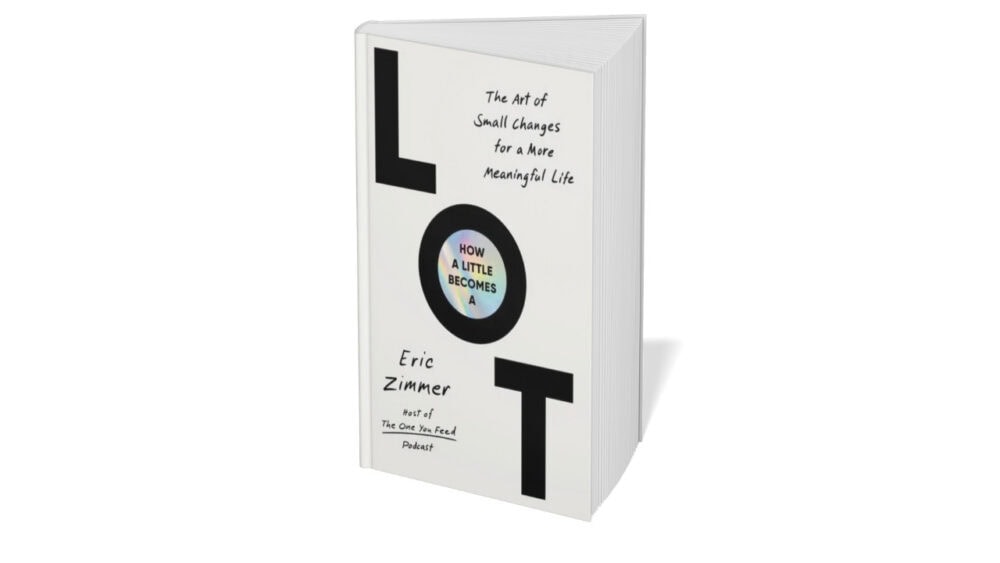
Exciting News!!! Coming in March, 2026, my new book, How a Little Becomes a Lot: The Art of Small Changes for a More Meaningful Life is now available for pre-orders!
Key Takeaways:
- Exploration as a theme in both physical and metaphorical contexts.
- The balance between contentment and the desire for new experiences.
- The concept of the “explore-exploit dilemma” in decision-making.
- The impact of age on the tendency to explore and seek novelty.
- The importance of meaningful exploration and active engagement.
- The psychological benefits of effortful and challenging activities.
- The role of environmental factors in shaping attitudes toward risk and exploration.
- The significance of play in fostering creativity and exploration.
- Strategies for minimizing regret in decision-making.
- The influence of personal experiences and choices on the capacity for exploration.
Alex Hutchinson is the New York Times bestselling author of Endure, a longtime columnist for Outside covering the science of endurance, and a National Magazine Award–winning journalist who has contributed to the New York Times, The New Yorker, and other publications. A former long-distance runner for the Canadian national team, he holds a master’s in journalism from Columbia and a Ph.D. in physics from Cambridge, and he did his post-doctoral research with the National Security Agency. His new book is
Alex Hutchinson: Website | Instagram | LinkedIn
If you enjoyed this conversation with Alex Hutchinson, check out these other episodes:
Navigating Life’s Disruptions: Insights on Adapting and Thriving with James Patterson
How To Cultivate Excellence in a Chaotic World with Brad Stulberg
This episode is sponsored by:
Shopify – The commerce platform that helps you build, grow, and manage your business all in one place. Start your $1/month trial at shopify.com/feed.
Pebl – an AI-powered platform that helps companies hire and manage global teams in 185+ countries. Get a free estimate at hipebl.ai
Brodo Broth: Shop the best broth on the planet with Brodo. Head to Brodo.com/TOYF for 20% off your first subscription order and use code TOYF for an additional $10 off.
Alma is on a mission to simplify access to high-quality, affordable mental health care. Visit helloalma.com to learn more!
By purchasing products and/or services from our sponsors, you are helping to support The One You Feed, and we greatly appreciate it. Thank you!

If you enjoy our podcast and find value in our content, please consider supporting the show. By joining our Patreon Community, you’ll receive exclusive content only available on Patreon! Click here to learn more!!
Episode Transcript:
Alex Hutchinson 00:00:00 It’s a cliché for a reason that being on a journey is fulfilling in its own way, independent of the destination and and arriving at the destination like you ought to have a destination that you’re aiming for. But I don’t want to just stop and say, hey, I’m here.
Chris Forbes 00:00:19 Welcome to the one you feed. Throughout time, great thinkers have recognized the importance of the thoughts we have. Quotes like garbage in, garbage out or you are what you think ring true. And yet, for many of us, our thoughts don’t strengthen or empower us. We tend toward negativity, self-pity, jealousy, or fear. We see what we don’t have instead of what we do. We think things that hold us back and dampen our spirit. But it’s not just about thinking. Our actions matter. It takes conscious, consistent, and creative effort to make a life worth living. This podcast is about how other people keep themselves moving in the right direction, how they feed their good wolf.
Eric Zimmer 00:01:04 There’s a real tension in my life between wanting to be content with what’s here, and wanting to keep reaching for what’s next. It’s a tension I feel deeply. Part of me wants peace and stillness enough, and part of me comes alive when I’m somewhere new, trying something unfamiliar. Stepping into the unknown. In this conversation, Alex Hutchinson and I talk about that tension through the lens of exploration, what it means, why some of us resist it, and why exploring doesn’t have to mean climbing mountains or crossing deserts. It might mean new music, a different way home, a choice that carries some uncertainty. We also talk about the risk of living too narrowly, and why a meaningful life may require us to keep stretching even a little. Alex’s new book is The Explorers Gene. I’m Eric Zimmer, and this is the one you feed. Hi, Alex. Welcome to the show.
Alex Hutchinson 00:02:20 Hi, Eric. Thanks for having me. I’m glad to be here.
Eric Zimmer 00:02:22 I’m really excited to talk with you about your book, The Explorers. Gene, why we seek big challenges, new flavors, and the blank spots on the map. I find this topic really fascinating for a lot of reasons that we will get into.
Eric Zimmer 00:02:36 But before we do that, we’ll start like we always do with the parable. And in the parable, there’s a grandparent who’s talking with their grandchild and they say, in life there are two wolves inside of us that are always at battle. One is a good wolf, which represents things like kindness and bravery and love, and the other is a bad wolf, which represents things like greed and hatred and fear. And the grandchild stops. Think about it for a second. They look up at their grandparent and they say, well, which one wins? And the grandparent says, the one you feed. So I’d like to start off by asking you what that parable means to you in your life and in the work that you do.
Alex Hutchinson 00:03:13 I love the parable. The first thing it says to me is, is the reminder of our autonomy. For better or worse, that none of us are born good or bad or strong or weak, or, you know, all these things that we’re making choices every day, small choices that reinforce our journey to the place we want to be.
Alex Hutchinson 00:03:29 And so we’ll be talking about exploring today. And when I was writing the book and telling people, hey, I’m writing a book about exploring, one of the common answers I would get is, oh, that sounds interesting. Personally, I’m not an explorer, and there’s a lot of things behind a sentence like that, which is, you know, they’re saying, I don’t want to, you know, parasail to the North Pole or something like that. But but also when I think about this parable, I think about those conversations. And I think you’re feeding the, path of not wanting to explore. It’s not that you’re not an explorer that you’re essentially choosing not to be. And I love exploring, but there’s lots of times when I don’t want to explore, but I’m trying to continue to to feed that path because I think it makes me a better version of me.
Eric Zimmer 00:04:11 Yeah. I mean, the book says the explorers gene, which leads us to believe there’s some gene in there. Also, if we look at like one of the most well, standardized ways of looking at personality, which is called the Big Five personality test, there is something on there which is openness to new experience.
Eric Zimmer 00:04:31 And so it does seem that there is some degree, perhaps of a little genetic predisposition towards adventuring. Perhaps there’s a personality trait, it’s a little bit more adventurous. But I agree with you in the main, which is that sentences that all ever really start with. I’m not the kind of person who I think are worth examining because we can be very different types of people, right? 30 years ago, I was a homeless heroin addict. Right. We can we can cover vast areas of difference. And so I think this idea of exploration, I love that you’re setting out right away. Like, we don’t have to say we are or are not in explorer. It’s just what degree do we want to pursue that? And and why is it valuable?
Alex Hutchinson 00:05:22 Absolutely. And I should start with a my apology about the book title. so I published.
Eric Zimmer 00:05:28 Sure.
Alex Hutchinson 00:05:29 Well, no, no. So here’s the here’s the truth is I pitched this book to to my publisher under the title of The Explorers Gene.
Alex Hutchinson 00:05:36 And, based on some research which, you know, we can get into on that, there is some genetic element and the, you know, the publisher accepted it and we signed a contract. We started working on it. And then I said to my editor, like, we’re not really going to call it exploration, right? Like, because it’s not that’s exactly the opposite of the of the message that I want to send, which is that we can all explore and it’s like, no, no, no, no, we love the we love that title and no, no. So the title is, I would like to say, a little bit tongue in cheek, in the sense that it’s a straw man that that I try to knock down in the book. But you’re right that there is a genetic element and there are differences. You know, you can you can go to any kindergarten and you can see some kids who just are just dying, bouncing off the walls, wanting to go and explore the world and others who are more cautious.
Alex Hutchinson 00:06:21 but to me, the big message from actually the genetic part of the story is that without getting too sidetracked by it, but there’s a dopamine receptor in the brain called CD4, which whose activity correlates pretty well with exploratory behavior. The message isn’t that some people have that gene and some people don’t. We all have D4 receptors. We all have this response. In some people it’s turned up a little louder than others. But but the message is really actually universal, that if there’s an explorer’s gene, we all have it.
Eric Zimmer 00:06:48 So I want to hit on something that you say, I believe very late in the book. I may have even pulled this from the afterword, but you say the trajectory of adulthood is towards ever greater efficiency, narrower focus, and well-worn routines that make each day more and more similar to the last. Exploration is the anti habit, the antidote to a diminished palette of life’s choices. Say more about that. That that really jumped off the page at me.
Alex Hutchinson 00:07:20 Well, thanks. And I think it really gets at the heart of what got me launched on this book.
Alex Hutchinson 00:07:26 And I would say in terms of the the behind the scenes conversations, the other conversation I had with my editors is it’s not a it’s not a midlife crisis book. I’m not I’m not just going to write about my midlife crisis, but here I just turned 50 a month or two ago. So I was as I was writing this, I was in my mid-forties. And that is a time when you start thinking it’s like, is there anything new left for me in life? Have I have I done all the cool, fun adventures that I’m going to do? And now I’m just kind of, is there this sense that the paths are narrowing. I’m not going to learn new stuff now. I’m just going to keep doing this stuff that I’ve done in the past. And when you dig into the exploring literature, there is actually a logic behind the idea that kids are explorers and adults. We explore less and less, and the logic makes sense. Like, I would talk to all these researchers and say, but should we tell adults that they need to explore more? And the response was generally like, well, you don’t necessarily, when you’re 45, want to explore like when you’re a kid because you know, a lot of stuff.
Alex Hutchinson 00:08:24 You already know you’ve tried things, you know that it doesn’t work to tie your shoes that way. You know that it doesn’t work eating that particular plant or whatever. So you don’t want to necessarily pretend you don’t know anything. So we do become less exploratory as we age, but it’s about the trajectory. It’s about still finding opportunities to explore no matter where you are on that trajectory.
Eric Zimmer 00:08:44 Yeah, it’s one of the things that I have found. I’m about five years older than you. You look great, by the way. I would never have. I would never have guessed you were that age. Something about aging that is a narrowing. And I feel it in myself. I feel this just. I don’t know how else to call it a narrowing both of what I want to do. And I’m not one of those people that it’s like fight against aging at all costs. Right. There’s a there’s a wisdom to age gracefully, but for me, it has felt more and more important to try and not let that narrowing, not let that collapse towards what’s most comfortable happen.
Eric Zimmer 00:09:27 And and it takes some effort. But I really love this idea that exploration is a way to work against that.
Alex Hutchinson 00:09:34 I think an example that a lot of people will identify with is the music we listen to. Right. You know, when you’re young, you’re obviously influenced by what your friends and peers are listening to, but also you’re exploring. You’re finding out what you like and you’re trying different genres. And people do studies on this, and it’s like the peak period of like emotional resonance for the music you discover is in your late teens and early 20s. Yeah. And that’s an intense time of life, too. But, you know, by the time you’re my age, most people aren’t going out and discovering new music. And I will say, in all, you know, humility and honesty, I’m not either. When I, when I flip on my music, I’m like, oh, yeah, I want to listen to that album that I just loved when I was 25. And that conjures up all these memories.
Alex Hutchinson 00:10:15 And there’s a there was a great editor by by one of the editors at Pitchfork on making the case for continuing to listen to new music. And one of the one of the arguments we all, you know, there’s lots of arguments supporting the arts and yada yada, yada. But also it’s like, think of the albums, think of the music that has emotional resonance to you, that you that you discovered when you were a certain age and you associated with that time by listening to new music. Now you’re creating the soundtrack for you to look back on in ten years. You want to continue to make memories, not just you don’t just want to coast on your existing memories. And it’s hard. So I wrote a book on exploring, but I still just like listening to the music I loved when I was 18. But I fight against it.
Eric Zimmer 00:10:51 Yeah. It’s interesting. This is one area that I still tend to explore because music is so hugely important to me. I mean, so much of the music, some of my favorite music I found in the last, you know, 15 years.
Eric Zimmer 00:11:06 But I mean, what I’m listening to right now, semi obsessively, are two records that came out last year. However, my genres are sort of like, okay, I kind of know what I like in these areas. I mean, I like to push the envelope a little bit, but I always sort of gravitate back to. For me, it’s the song. I mean, I think it’s just the art form of a song that is is the heart of it to me. So this is an area that’s important to me to keep exploring, but I notice that my exploration is within certain bounds.
Alex Hutchinson 00:11:42 Sure. And that’s maybe a good balance between the wisdom of of discovering that, you know, maybe you don’t like. I won’t call out any genres. Just know you don’t like opera.
Eric Zimmer 00:11:50 Maybe I do not like country rap. Let me be clear. Let me be very clear on this topic now. Maybe there’s good country rap and I just haven’t heard it. But I’m going to I’m going to make a bold statement right there.
Alex Hutchinson 00:12:05 I will I will say no comment, but I think, I don’t think you’re gonna get a ton of pushback. But but the point I’ll make is that I think this is a great example of how we can be more exploratory or less exploratory in different parts of our lives. So it’s like, as I confessed, I’m not being particularly exploratory in my music habits these days. I’m finding my exploration in other parts of my life, and the people who don’t want to parasail down the North Pole, which is all good.
Eric Zimmer 00:12:29 Can you do.
Alex Hutchinson 00:12:30 That?
Eric Zimmer 00:12:30 Is that actually technically possible?
Alex Hutchinson 00:12:32 South pole? Who set the fastest? the fastest solo record to the North Pole, a South pole. Bjorg, Iceland. I think I’ve probably got the name. And it was basically like. Yeah, like he had a sail and he was a ski. Ski sailing or something. I don’t even know. Probably. Anyway, people do. Because. Because there’s no new places on the globe to go. You have to find new ways of going to old places.
Alex Hutchinson 00:12:56 And so people people are doing that. And so when I have, when I would have these conversations with people who are like, oh, I’m not an explorer, the way I would push back is to say, I bet there’s areas in your life where you are continuing to explore. I hope there are areas in your life where you, whether it’s music or the books you read or the ideas you think or the places you go. There’s lots of dimensions. One of the bodies of research I looked at is you can bring people into a lab and have them do various tasks that kind of test your baseline willingness or desire to explore. And there is a trajectory where, as I was saying before, whereas the older you get, you get better at exploring. You actually pick the right choice more often. But you you stick with the familiar more often and that’s fine. That’s, you know, that that does reflect the accumulation of knowledge. But there’s a subset in that data. And in one study it was about 20% of of older adults who were just like, no, I don’t explore at all.
Alex Hutchinson 00:13:49 It’s like you give them a set of choices where exploring is obviously the best, the right answer, and there’s like, no, no, no, I’m just going to stick with the known. And so I think the message for people, for people like me and and you as we, as we, you know, we’re not riding off into the sunset, but as we see the sunset in the on the horizon is it’s not that you have to pretend you’re 18, but if you get to that point where you’re no longer pushing yourself in any dimension of your life, you’re no longer experiencing the the feeling of discovering something new, of being bad at something, of of trying something where you don’t know whether you like it or not. That’s I mean, I don’t want to be judgmental, but that that’s maybe I don’t know if it’s a problem, but it’s unfortunate because I think what’s one of the great joys that we can find in different aspects of our lives?
Eric Zimmer 00:14:30 It’s ironic we’re having this conversation right now because my son, who is 27, just last night texted me and got off of a route in Morocco.
Eric Zimmer 00:14:44 I don’t know how to say it, but it could currently be described as exploratory as it has not been previously documented and no one has yet completed an uninterrupted traverse. Wow. And I don’t know if he did the whole thing or not, but it’s ironic to me that we’re having this conversation literally after last night, he was like, okay, we did it and headed back to Marrakesh. Amazing.
Alex Hutchinson 00:15:04 So I hope he was parasailing because that would really make it into it at the end.
Eric Zimmer 00:15:09 But you can parasail in the desert and mountains.
Alex Hutchinson 00:15:13 I’m not even sure what parasailing is, to be totally honest now.
Eric Zimmer 00:15:15 Me neither. I always mix up parasailing with, like, kitesurfing and windsurfing. I, you know.
Alex Hutchinson 00:15:22 I need to say, it sounds like it’s an awesome trip. And and it is a reminder that. Yeah, like the the world’s a big place. And even if somebody has been there before, you can still take trips where you’re like, man, I don’t know what’s going to happen around the next corner.
Eric Zimmer 00:15:35 Yeah. So you describe in the book, you kind of start off by sharing a journey that you made hiking with your wife and your kids that you really didn’t quite know where you were going. It was very exploratory. It was not like the Appalachian Trail where you go, okay, here’s the trail. I go straight up here, through here. It was a lot more all over the place, for lack of a better word. You end the book by talking about being in the Pyrenees, which was a much more known trip. Are you finding that the adventures that you are going on and taking your family on are more in this slightly less exploratory than the really exploratory ones, or is it still a mix?
Alex Hutchinson 00:16:20 So I’m still I’m searching for the perfect mix. And I would say, you know, big picture. When I started off writing a book about exploring, my assumption was that, you know, the subtitle would be something like why exploring is always amazing and you should always Do more exploring.
Alex Hutchinson 00:16:34 And I came away with with a more nuanced take that, because there is this sort of the arrival fallacy, the idea that if you can just do, you know, there’s this point off in the distance. And if you can get there, if you can achieve this thing, you’re going to be happy and you get there and it’s never the case. And so I come from a background as a runner and it’s like, man, if I could just run this fast or make that team, you know, I would be the human I always want it to be. And then you do that and you’re like, I think I can go a little faster. I wonder if I could do so. I started to see the analogy there when I thought about exploration, is that there was a danger in in the pursuits in my own sort of adventure, travel pursuits. And then what I was starting to impose, my wife and I were starting to impose on a family that were every trip, were trying to one up the previous trip.
Alex Hutchinson 00:17:17 It’s like, okay, we took our kids on a three day backpacking trip. Now we’re going on a four day backtracking trip. We took our kids on a alpine hot trip, hot to hot trip. So now we’re going to take a trip that’s a week long where we’re carrying all our food. And you know, the trip we did last summer was the hardest trip we’ve ever done. And my kids are. They were then nine and 11 for the for that trip. So it’s not like I had learned my lesson and said, I’m only going to, you know, I’m trying to turn inward and explore, you know, my interior landscape instead of putting us through these ordeals. I’m still trying to find the right balance because there is a thrill. There’s a there’s a feeling that you get when you’re taken to your limits, where you don’t know if you can do it and then you do it. It’s addictive. But there’s also the sense that the danger that you end up never enjoying anything you do because you’re always chasing.
Alex Hutchinson 00:18:04 The bigger, the harder, the more obscure. So the ending of the book was my acknowledgement and my almost reminder to myself that, Alex, there can be amazing feelings of exploration without forcing your kids to do, you know, death marches through the jungle.
Eric Zimmer 00:18:39 You may have heard me mention my new book a few times, and I can assure you, you will certainly hear it a few more. But now we are offering some pre-order bonuses. One of them is the still Point method, which I believe is the only systematic way to interrupt negative thought patterns often enough for them to change. There’s a lot out there about what you should think and not think, but there’s very little that gives you a small and portable system to actually do it. You get the guide to the method, and three free months of a new app designed to help you implement it. There are other bonuses too. You can learn more and claim them at one you feet. Net book I love that part at the end of the book, because you are wrestling with this exploratory urge, with the urge to be content where you are, and I.
Eric Zimmer 00:19:34 I feel like this is a fundamental tension that sits at the heart of my life. There is some part of me that comes alive when I am somewhere new. When I’m doing something different, I can feel it. It feels deeply right in a way, and it can become a constant search for something different. So my my spiritual practice, my Zen practice is the exact opposite. I mean, the basic message is like you could be fully content and happy with just sitting here staring at a wall, which I haven’t quite figured out. I’m still working on all that, right? But that that tension that you described near the end of the book is one that I feel a lot.
Alex Hutchinson 00:20:20 Yeah, I would say too. For me, it’s it’s almost the fundamental tension that I’m trying to figure out at this point in my life that my career has gone better than I could have expected. You know, I have a wonderful wife and two children. If you time machine back to 20 years ago and ask Alex what would be just an absolute, you know, plot out.
Alex Hutchinson 00:20:37 You’re absolutely fulfilling career in life for you, what would allow you to sort of sit back and say, man, I, I did really good at life. I’d say, you know, and then you describe where I am now. And I was like, Alex, you should be content. You should. Why are you still striving like you’re comfortable? You can feed yourself like you’ve you’re you’re professionally fulfilled. But it’s like, as you said, there’s a feeling of being alive when you’re when you’re there’s something to. And it’s like the ultimate cliche is like it’s the journey, not the destination. But it’s a cliche for a reason that being on a journey is fulfilling in its own way, independent of the destination and and arriving at the destination. Like you got to have a destination that you’re aiming for. But I don’t want to just stop and say, hey, I’m here, you know, let’s right, let’s kick back on the sofa. but yeah, but but as I say, it’s the danger is that you never actually enjoy the things that you’ve been pushing for.
Eric Zimmer 00:21:28 It is definitely a balance. And I used to wonder about a resolution of it or which is the right one. And for me, I’ve just realized it’s both. It’s just. It just has to be both for me. They’re both skills and parts of myself that I want to cultivate. And you bring up Paul Bloom at the end of the book, has been a guest on the show. And his term motivational pluralism. I call it motivational complexity in my book, but it’s yeah, it’s this idea. We just want lots of different things. And that’s what it means, I think, to be human to a certain degree. And we all have to figure out how to work with that in the wisest way possible.
Alex Hutchinson 00:22:06 Yeah, absolutely. I mean, I think in terms of this idea of being able to hold desires in our heads at the same time, Oliver Berkman, who wrote the book, I think it was 4000 weeks. So really one of my favorite sort of personal development or self-help books or productivity books ever, because he was, you know, he’s talking about getting your inbox to zero, which has been the bane of my adult existence.
Alex Hutchinson 00:22:26 Frankly, it’s like the major source of unhappiness in my life, or I’ve lost sleep is like, oh my God, I have 2538 emails that I haven’t applied to. His productivity hack isn’t like. Here’s a way you can get to inbox zero and it’s not. Also give up on your emails. Just forget about it. Don’t reply to all these people. These these people aren’t important. It’s neither. It’s just accept that you are going to live in this tension and don’t don’t let it dominate. Don’t let it make you unhappy because you’re never going to get to inbox zero, but you’re always going to keep working on it. And you just have to learn to accept the messy reality. And so that’s a hard that’s a hard truth to accept. But I think it’s also a metaphor for for what we’re talking about, which is that we’re always going to have both poles. Poles.
Eric Zimmer 00:23:05 Yeah. Oliver was one of the very first guests on this show 12 years ago.
Alex Hutchinson 00:23:10 Amazing.
Eric Zimmer 00:23:11 Yeah, a great guy.
Eric Zimmer 00:23:12 And also, I would be remiss in not plugging my book at every possible opportunity. Listeners are like, please shut up about it. he blurred the book, which was a big special moment for me because I just think he’s so good.
Alex Hutchinson 00:23:26 That’s fantastic. Yeah. You know, I’ve recently, this isn’t intended as self promo either, but I’ve recently started using Substack, and one of the great joys is seeing his little notes, you know, not full articles, but he’ll, you know, he’ll he’ll share a thought. And I’m like, man, that guy, he’s nailed it again. I love.
Eric Zimmer 00:23:42 Him. And I was about to say, and what he’s working on sounds really exciting, but I don’t know if he wants anybody to know that. So I’m going to quiet down on that. Let’s get further into your book, though. We’ve been talking around this a little bit, but a lot of the book is around a very well-studied, you call it a meta choice between exploring and exploiting.
Eric Zimmer 00:24:07 Talk through what that means and give us some examples in our own lives today.
Alex Hutchinson 00:24:12 Sure. And so the first thing to say is exploiting is not like taking advantage of people. This is just a term of art in the in the exploring literatures.
Eric Zimmer 00:24:20 Yes. Thank you.
Alex Hutchinson 00:24:21 You face a choice between exploring which is trying something new, feeding off into the unknown, or exploiting, which is exploiting the knowledge you already have, sticking on the path. You already know where it leads and what what it’s going to give you. And so the classic example that that researchers use is you go to a restaurant, you’ve been there before. You know that the burger is pretty good. Are you going to order the burger because, you know, it was good last time you had it? Or are you going to try the special, which sounds interesting. Intriguing. Good. Might be better than the burger. It might be worse if you order the special. Someone else at the table is probably going to order the burger and you’re going to be like, oh man, the burger looks good.
Alex Hutchinson 00:24:53 Why didn’t I order the burger? So this is a dilemma we’re all familiar with. It’s like, do I stick with what I know or do I try the unknown which might be better or might be worse? And once you start thinking about decisions this way, you start recognizing this dilemma in all aspects of life, you know? And it can be like, do I get engaged to my, you know, long time partner, or do I keep swiping left or right or whatever it is to try and find someone better? In other words, have I found the best or do I venture back into the unknown? You can zoom out to a corporate strategy level and say, should we be spending our resources advertising the product we’ve already got? Or should we be devoting more resources to R&D to try and develop a new product which might be better than our current product, but which might actually be a flop. And so from the trivial ordering the burger all the way up to like how societies allocate their resources, we’re choosing between exploring and exploiting.
Alex Hutchinson 00:25:46 And there’s been this like 80 year journey from decision scientists and mathematicians and so on to try and figure out what’s the optimal answer to the explore exploit dilemma. And the answer is it’s impossible to to say like, first of all, the math is intractable, but also it depends on the context. It depends on time horizon and volatility and all these other factors. So there’s never a right answer, but we have to be thinking about the real goal is to be conscious of the choices and understand when and why you’re making a decision in one favor, in one way or the other.
Eric Zimmer 00:26:16 Yeah. And I think you said this earlier, but I want to come back to it that we can be very different in different aspects of our life. Like I’ve mentioned, I have a certain degree to do new things and do novelty, but when it comes to eating, I’m going to order the one that I like. You sort of talked about like context and all that. I think there’s a risk context for me in that I have a narrower palette that I find acceptable.
Eric Zimmer 00:26:40 So it’s a lot easier for me to end up outside of it in like a situation where I’m like, that’s disgusting, right? Probably not that, but but I’m fairly narrow there. I get the same kind of pizza every time, you know, I’m like, no, don’t go messing that thing up with, you know, what, you like that on it or that on it, but I’m sure I am missing out on some different flavors that might be rewarding in a different way.
Alex Hutchinson 00:27:07 Yeah. So a couple of things. One is that our decisions about exploring and exploiting are never just about like, am I an exploring person or am I exploiting person? There’s a lot of contextual factors, you know, and risk is distinct from desire, desire to explore. So the example I would give is every summer I go on a canoe trip with a bunch of friends. We could paddle a whitewater river somewhere in northern Canada. And I love, you know, you’re just totally off the grid for, let’s say, a week.
Alex Hutchinson 00:27:36 There’s an exploring element to it, and you don’t know what’s around the next bend of the river. There are also rapids. The rapids are kind of fun and exhilarating to paddle through, but they’re at the edge of our skill level, so and among, you know, not to pat myself on the back here, but among the people I go canoeing with, I’m probably the most experienced at handling whitewater in the canoe. I’m also the least likely to want to paddle. Any given set of rapids will come, will come to a set of rapids, will scout it. And you know, there’s a few people in the trip who will be 100%. They’ll be like, let’s do it. Load up the canoes, let’s go. And I’ll be like, whoa, whoa, whoa, whoa. I think we should portage this. And so I don’t want to die. So I have I have very high and I don’t want to be extracted by helicopter because we wrapped our canoe around a rock or whatever.
Alex Hutchinson 00:28:21 So I have very low risk tolerance, even though I love exploring these wilderness where some of my friends, they’re like, yeah, I don’t really care where we go as long as there’s big, big rapids that we can crash down. So one example of the fact that the decision to explore isn’t just about are you willing to explore? It’s like like you’re saying, are you going to have a miserable time because you’re getting some pallet experience that’s just not fun for you? And so it may be that that’s why you’re pursuing your exploring in music rather than food.
Eric Zimmer 00:28:51 Right? And you say this, which I think is really interesting, which is that a single instance of exploring will likely yield a worse than usual outcome. Right. I might get the food that I really don’t like, but the collective effect of repeatedly breaking free of your usual routines will be better outcomes. Say more about that and put it in an example that we would all understand.
Alex Hutchinson 00:29:18 You zeroed in on a, I think, a really crucial point, a really key one.
Alex Hutchinson 00:29:23 And so the best example I can give of that is, you know, as I said, explore, exploit, dilemma. Restaurant ordering is a great example. So in this brave modern world, we have huge data sets of how people order in restaurants. And so some Harvard scientists did an analysis of like remember, it was like 2 million orders on a food delivery company from a food delivery company called Deliveroo, trying to understand how people decide where to order from. And there were a bunch of interesting insights from it. One, one of which is that, all else being equal, people are more likely to order from a restaurant that’s been rated fewer times than restaurants made it more and really, totally, totally the opposite of what I would have expected. But the data is pretty clear. So, you know, assuming that the genre is the same and the number, the star rating is the same, and the delivery time and the price is the same, then if one’s been rated five times and one’s been rated 500 times, more, people will order from the one that’s been rated five times.
Alex Hutchinson 00:30:14 Because there’s still the unknown there. There’s the chance that this is the greatest restaurant ever. We have a chance to learn about something, whereas if it’s been rated 500 times, you know that it’s it’s a 4.2 star restaurant.
Eric Zimmer 00:30:23 Well, I always assume that those five ratings are from their parents, and I shouldn’t trust them at all.
Alex Hutchinson 00:30:28 And that’s maybe why when people do, when people do. Because there’s the truth to that. When people do order from a restaurant that they’ve never ordered from before, on average, and then you look at their ratings, it’s like, oh yeah, they got a subjectively worse meal. You’re less likely to get a meal that you consider five star or four star. When you order from an unfamiliar restaurant than when you order from one of your old favorites. So that’s an instance of what you’re saying. Like a single shot. If you make a choice to explore, the odds are you will be disappointed. And so that seems like a really powerful reason to say, well, let’s not explore that.
Alex Hutchinson 00:30:59 Do it. But if you then zoom out over time and say, how do people’s ratings change over time? You see that if people continue to explore over time, their average ratings creep upwards? Because every time you try a new restaurant, sometimes you get a dud and you say, I’m never going back to that restaurant. Sometimes you get a surprisingly good restaurant and you’re like, I’m going to add this to my roster of usual restaurants. And so your roster gets better and better. Only if you’re willing to tolerate those occasional bad meals. And I think this is like a general truth about exploring, which is that if you just look at it as a single shot, you’re like, this is not the smart move. It’s probably going to turn. There’s a greater than 5050 chance that I’m going to regret it. But if you average that over the course of a career or a life or whatever, then you’re like, oh, I’m glad I took the chances and explored, because even though I had four bad meals, I discovered that one restaurant, which has changed my life.
Eric Zimmer 00:32:14 I’m going to ask a question about that study to see if, you know, is there anything in there about frequency of orders, like people who order more often are more likely to explore. Because this ties a little bit to this idea that as we get older, exploration has slightly less benefit, and I often think about it in the sense of like, if I’m ordering out five days a week, then I, you know, I’m going to take a flyer every once in a while. But if I’m doing it once a week, that’s my once a week thing. I don’t know. And I think the same thing about like, vacation. Like if I had unlimited vacation, I would try all sorts of wild things. But I’ve got, say you’ve got a one week window. You’re like, well, I don’t want this one week. This my shot, this six months to be terrible. Yes. Is there a frequency bias in all of this?
Alex Hutchinson 00:33:07 The answer to the question on the on the food studies, I actually don’t think that’s they analyze that in the study.
Alex Hutchinson 00:33:11 But it’s a big long study. So I don’t I don’t remember, but I think your point is, is super important. And I was writing an article about exploring for I think it was men’s Health. And they were like, can you put this in a career context? Give an example of like some of the advice you’re taking. And the advice I was given was like, be optimistic in the face of uncertainty. Take a chance on on things. And so I was saying like, okay, let’s say you’re considering two jobs and one of them is relatively stable. It’s a kind of sure thing, but probably not exactly what you want to do and not great opportunities for advancement. The other is maybe it’s a company that’s less stable or it’s less clear whether this is going to pan out and it pays less. But there’s a clear path that if we’re not going out of the park, you’re going to be able to progress to your dream position. And so being optimistic in the face of uncertainty would be take the choice with the best case scenario.
Alex Hutchinson 00:34:02 My editor looked at this and said, yeah, but what if you need to pay the rent? Like how can you advise someone to, to, you know, take this swing for the fences if like their financial security depends on. And I was like, okay. Yeah that’s a good point. And so I need to contextualize this and says, say, if the context permits you to take that chance, then you should take that chance. And I think that’s a really good thing to keep in mind that this is, again, it’s never about always do this or always do that. And so if it’s like, this is your one chance to order out this month and it’s a special occasion and it’s Valentine’s Day and you’re, you know, you’re trying to impress your, your girlfriend. And it’s like, don’t, don’t just close your eyes and pick because you’re an exploratory kind of guy. There’s situations that override the superficial attraction of exploring where you really want to make sure you’re exploiting all the knowledge you’ve got to, to maximize that.
Alex Hutchinson 00:34:54 Sometimes the single shot is more important than the long term average.
Eric Zimmer 00:34:58 Right. And that’s essentially what you’re saying. Is that a single instance, if you’ve got a single instance, you might get a less than optimal outcome. All right. Let’s move on. For now I want to talk about you describe meaningful exploration. So what does meaningful exploration mean to you. You said meaningful exploration I will argue, involves making an active choice to pursue a course that requires effort and carries the risk of failure. What the mythologist Joseph Campbell called a bold beginning of uncertain outcome.
Alex Hutchinson 00:35:33 So I think the easiest way to answer what meaningful exploration is, is to give an example of expression that I consider not meaningful, because what I realized when I was, you know, writing about what’s great about new things is this could describe scrolling social media. You’re scrolling down TikTok and it’s like, oh my God, I’ve never seen that video before. Who knew a cat could do that? You know, like and I’m like. And I was like, that’s not what I’m writing about here.
Alex Hutchinson 00:35:57 This is not what I’m what I’m trying to glorify. So, so what does it mean to to explore meaningfully? And there’s a couple of things that I think become important. You’re not really exploring if you’re not making a choice, if you’re not following your own decision, if a choice is being fed to you by an algorithm you’re not exploring, you’re being exposed to new things. And there’s some really interesting and quite subtle neuroscience research that showed and actually education research too, about the difference between being fed something and going out and discovering it for yourself. And so, you know, great, great teachers really try to create that environment where students can make a discovery for themselves. And it’s, you know, it’s not easy, right? Like there’s a lot of information to learn. But but this is that aspiration that it’s not just a question of you open your skull up and let people shovel stuff into it. There’s a distinction I would make between actively exploring and passively exploring.
Eric Zimmer 00:36:51 Yeah. Say more about that.
Alex Hutchinson 00:36:52 There’s a couple of ways you can think about that. One is imagine you’re in the passenger seat of a car driving through a city and in an unfamiliar city, and you drive through or, you know, a part of the city you don’t know, and you get to your destination. And then someone says, okay. Can you trace your route back through this city? Now, if you were the driver in that car, there’s a decent chance you’d be able to trace your route back because you had to look around and pay attention, at least if you weren’t totally glued to your GPS. If you were the passenger in the car. You saw everything like you were looking through the same windshield. Your eyes weren’t closed, but you just didn’t have to pay attention. You were passively going through that city instead of actively. And I think that is a pretty good metaphor for being fed titillating tidbits by social media algorithms or even these days, like not to open a big can of worms, but like having AI do things for you, or teach things that if you’re not seeking out the answers and finding them, it’s being processed by your brain in a different way, a different, less lasting, less effective way.
Alex Hutchinson 00:37:54 That’s one aspect of meaningful exploration, I think. There are others. If it’s a sure thing, you’re not really exploring, if it’s like it’s just the mere fact that you’re trying something new. Like if you’re changing the channel on your TV. Sure, you’re exploring the airwaves, but that’s not. That’s not really what we’re talking about here. We’re talking about taking a chance where the outcome could be better or could be worse, and accepting that as part of the bargain. And so these are the kinds of things that then they raise the stakes, but they then make the outcome more meaningful. Whether it ends up being a good choice or a bad or a bad choice.
Eric Zimmer 00:38:26 So we didn’t really hit on this, and I just love to go back. If you were making the case for exploring more, and again, I get that your book is a is a nuanced take on it depends. Right.
Alex Hutchinson 00:38:39 All good complex arguments end up with it depends, so I apologize.
Eric Zimmer 00:38:42 Yeah, of course they do.
Eric Zimmer 00:38:43 I joke that my book I could have just written, it’s complicated and turned it into my editor. Yeah, but if you were going to make the case for exploration, what are the benefits? Like, if I tend to not really explore much, why might I want to more like, what’s in it for me?
Alex Hutchinson 00:39:03 Yeah. So there’s there’s two ways of answering that question. The sort of instrumental way that it leads to better outcomes and a kind of value or psychological way of saying it feels good and it feels meaningful. And so we’ve been talking about ordering in restaurants, and I’ve been focused on like, well, if you order, if you explore enough, you’re going to get better meals and you might say, well, you know, like that’s not a focus of my life. And that’s fine. And so the, the instrumental argument that it leads you to, you know, develop better products for your company or whatever, whatever. Yeah, it’s a powerful one in some ways, but it’s not the most powerful one to me.
Alex Hutchinson 00:39:38 The most powerful one to me is that putting yourself in a position of taking some chances, trying new things, getting uncomfortable, risking getting lost ends up correlating pretty well with the extent to which people feel they’re doing meaningful things in their lives. There’s a there’s a body of research called the effort paradox, which this is not exactly it’s a little bit neighboring to exploring, but I think related and the effort paradox is basically asks, why do we do things that are nakedly unpleasant? So why do we climb mountains? Is the classic example. And it’s like, well, there’s a pretty good view on the top for sure, but okay, we’ve put a gondola to this top of the mountain. You want to take the gondola? No, I want to climb to the top of the mountain. Like the fact that it’s hard is part of the attraction. In the same way that people, you know, millions of people run marathons. It’s like the goal isn’t to get to the finish, because the finish is literally, like two blocks from the start.
Alex Hutchinson 00:40:31 Usually you could walk there. The goal is to have traveled that journey. Ordering furniture from Ikea. There’s there’s research into the Ikea effect, which is that people tend to value the furniture they’ve had to struggle with to put together more than if you just gave them that same piece of furniture already assembled. So there’s this whole sort of suite of activities where we do them kind of because they’re hard. And so the question is, why do we do that? And the answers are very like, there’s a lot of different theories, a lot of different answers. But the one that I find most compelling, based on research from a guy named Michael Intellect at the University of Toronto, is that people tend to find effortful things meaningful. Now, meaning is a somewhat complicated topic. I’m not claiming to know the meaning of life, but if you ask people what were the activities that felt meaningful to you, they can answer that question. And there’s a pretty good correlation between things that were challenging, that push them out of their comfort zone, that where they had to rely on their resources and make decisions and deal with, you know, the potential of failure.
Alex Hutchinson 00:41:31 Those things turn out to be meaningful. And the extent to which people are willing to undertake effortful things and find meaning in it correlates also pretty well with how well they do in their jobs and how much meaning they perceive in their lives and how happy they are. And so that, to me, is a much more powerful argument than you might get a better meal at a restaurant.
Eric Zimmer 00:41:52 And so given that that effortful things tend to feel better and feel more meaningful, it’s also sometimes hard to get ourselves to do hard things or to even want to do hard things right. It’s one of those like, we kind of know what’s good for us, but yet we don’t do it. A whole bunch of my book is on that whole question, but I’m curious from your perspective why some people seem to get it right. Like they just keep pursuing things that are challenging and other people never really pursue anything challenging. Any ideas on why? And that’s a you can just say like it’s complicated and we can move on, but.
Alex Hutchinson 00:42:34 It is complicated. I’ll say two things. There is no like trick that makes challenging things easy, because if there was, they wouldn’t be challenging anymore. If I had a trick that made it easy to do something to exploring, then that thing is no longer exploring for me. In the same way that let’s say you take up running and you’re like, man, it’s really hard for me to go out and run one mile. Well, five years from now, it may be easy for you to run one mile. You’re no longer getting the same thing. So that means that’s why you need to be running two miles by that point or whatever the case. So. So the challenge never goes away. And if it does, you need to find another way of bringing back the challenge. Now why do some people embrace that challenge? Look, I’m not an expert in this, but but I think that that’s primarily environmental. It’s the result of a thousand experiences and chance encounters and, you know, meeting a mentor at the right time or having a positive experience or a negative experience where someone yells at you because you didn’t do the right thing, and you’re like, I don’t want to take that risk again.
Alex Hutchinson 00:43:30 And so I think people tend to get pushed down paths and again, it can be different. People might be willing to take on hard things in one domain of their life because they’ve been encouraged to do so, and they might be totally unwilling to take a chance or to push hard in other domains of their life because they’ve received negative feedback. So look, you know, you know, there’s a whole nature nurture thing, but I really think it’s something that is malleable and it’s changeable. And that isn’t just like, well, I’m not a person who does that kind of thing.
Eric Zimmer 00:43:56 I’d love to talk about five rules for exploration that you came up with, and I’ll just read the rule, and then I’ll let you elaborate on it, and we’ll kind of see where it goes. And maybe we get through all five, maybe we don’t. The first is explore then exploit. So we’ve sort of talked about what those two are. But why is that order useful.
Alex Hutchinson 00:44:20 Yeah. So there’s some logic and there’s some evidence.
Alex Hutchinson 00:44:23 So the the logic way of thinking about it is it’s not that you should always explore or always exploit. They’re both important. So how do you put them together. Well, it makes sense that you should figure out what all your options are. You should really know what the terrain is, but you know, you should check out every path and have a kind of an idea where they lead. And then you plunge down it and you go for it and you stop. So it’s not useful to exploit if you don’t know what your best option is. But conversely, exploring all the time isn’t useful if you don’t eventually decide this is the best option. And this is the way I’m going to go. And so what’s really cool is there’s an amazing analysis by a guy named David Wang at Northwestern, who analyzed thousands and thousands of career trajectories of film directors, scientists and artists and Classified every moment of their career into whether they were exploiting or or exploring and analyzed where their most successful parts of their career were.
Alex Hutchinson 00:45:18 And there’s this really clear signal that when people had a period of exploration of, let’s say, a few years, followed by exploration, exploitation, that’s when they went on a hot streak. So I think it’s a it’s logical, but it’s also evidence based.
Eric Zimmer 00:45:30 Yeah. I loved that idea of a hot streak where, yeah, you you explore widely and then you kind of I thought of it in the context of, as I do many things, musicians and you’ll see like certain musicians just like hit like a three record hot streak where you’re like, they just had it. And I think there’s probably something to be said for them knowing how to both explore and exploit. I think of the Beatles, right? You know, Paul McCartney is often thought of as like, the safe Beatle, but he was the one who was out getting into all the weird stuff, like particularly. Right. So he was very exploratory, and you sort of see that a little bit in what he creates. There’s a lot of variation in it.
Alex Hutchinson 00:46:16 So he was able to bring those explorations back into the sort of more conventional forms and then exploit what he learned or gained or been exposed to. Yeah.
Eric Zimmer 00:46:25 All right. Number two, seek the uncertainty. Sweet spot.
Alex Hutchinson 00:46:29 Yeah. So this is we all have different comfort level. We talked about this earlier with like I say, we’re wired to explore. But the truth is we are also we’re filled with trepidation by the idea of venturing into the unknown as we should be, because it can be dangerous. And so there’s psychological literature that goes back to the 1800s that that finds this sort of upside down U-shaped curve where if things are too obvious and too easy, it’s not engaging or interesting to us. And if things are super complicated and impossible, you know, unpredictable, that’s unpleasant for us. But in the middle, there’s a sweet spot. And without belaboring the point, too much that you know. So there’s logic. Of course, you want an intermediate level of uncertainty, but there’s good evidence that our brains are wired to kind of even from the point where we’re eight months old, you can do experiments that babies can kind of figure out, oh, that’s to you.
Alex Hutchinson 00:47:16 Show them a sequence of shapes. And if it’s too simple, if it’s just repeating, they’re they’re bored. If it’s too complicated, they’re bored. But if there’s a repeating pattern that that’ll keep their attention. And so there’s this idea that we’re wired to feel engaged by the level of complexity or uncertainty that teaches us the most about the world. And so that it’s a question of eight month old babies can do it. But as adults, we’re bombarded by other, you know, bosses telling us what to do or feelings of guilt or whatever it’s like. But if you can tune in to like, what do I find interesting? All else being equal, what would I really be interested in pursuing? That’s a good sign that it’s it’s your brain is recognizing that this is an opportunity to learn about the world.
Eric Zimmer 00:47:56 Yeah, there’s a lot we didn’t have time to go into about the brain as a prediction machine. We’ve talked about this on the show in several other episodes and that. Really what we’re trying to do is reduce uncertainty and that that good feeling is in many cases, the uncertainty being reduced.
Eric Zimmer 00:48:15 And again, we’re not we’re not going to have time to get into it. But it’s it’s a great section in the book. And then three play more.
Alex Hutchinson 00:48:23 Yeah. And again this is, this is me going around to all these researchers and saying like so as adults do we need to tell people to play more. And and the answer being like, by definition, play is something that you do because it feels good. It’s self-motivated. You don’t have to be told to do it. You have to give yourself permission to do it, but it goes back.
Eric Zimmer 00:48:42 Is there a difference between playing and exploring?
Alex Hutchinson 00:48:45 Yeah, yeah. So and it goes back to what your, what you were just saying about this idea of, of the pleasure of reducing uncertainty and exploring. We’re heading out into the world, finding areas of uncertainty and experiencing the pleasure of reducing them. We find out where that trail leads or what’s over the horizon. Play is essentially the art of creating our own rules so that there is uncertainty.
Alex Hutchinson 00:49:06 The key point in a good game is that we don’t know how it’s going to turn out, and we get the pleasure of finding out. Or if you think about kids, one of the examples of what a researcher gave me is like, you take your kid to the playground. They’re like, I wonder what it’s like to go down that slide. They go down the slide a few times now. They know it’s not fun anymore. Now they want to know what it’s like. I wonder what it’s like to go up the slide and then you’re like, no, this kid’s coming down like, you can’t do that. But but they don’t want to hear your your crap, right? They just know that there’s an opportunity to learn about the world. They already know what it feels like to go down. So play is constructing the rules. Exploring is going, finding the uncertainty in the wild.
Eric Zimmer 00:49:41 And so play more. You said something interesting before I cut you off which was giving ourselves permission, right?
Alex Hutchinson 00:49:48 Yeah.
Alex Hutchinson 00:49:49 So this comes back to the, you know, me asking these researchers, should I issue this, you know, command that all people should play more and they’re like, you can’t say start having fun. But the reason adults maybe don’t play as much as they could or should is that they’re basically paying the rent and doing the things that adults are expected to do. So to the extent that you can give yourself space to ask, what would be fun? For me, that goes back to this idea that’s going to help you find your sweet spot. And it’s hard. It’s hard. We have, you know, as adults, we have a lot of responsibilities. And so it feels almost, sinful to be saying, oh, I just want to do what’s fun. But but that’s if you can find space in your work life, in your personal life to follow that to, to play, then that can be really powerful in terms of finding new paths.
Eric Zimmer 00:50:37 You might be the right person to ask about this, which is a tendency I’ve noticed in myself that I try and balance, which is I will do something that ideally should be playful, is enjoyable, and then I will promptly turn it into a job by thinking I have to get good at it.
Eric Zimmer 00:50:55 Rock climbing is an example for me. I know you do some rock climbing. It’s not like I go out and do it a lot. I mostly boulder and I’m not that great at it, but I noticed I did it at a time or two and I was like, oh, this is interesting. This is fun. And then all of a sudden my brain was like, I need to get a coach and I need to start training. And all of a sudden what should just be fun is now sort of a job. And I recognize on one level that there is enjoyment in the challenge of getting better, and there’s something else in there that doesn’t feel as helpful. And I’m just kind of curious your thoughts on that?
Alex Hutchinson 00:51:32 I have the exact same experience with rock climbing is that I took it. I took it up as an adult, and it was amazing to be like, hey, I’m learning something new. I’m doing something that’s totally non instrumental, that is just about tackling this challenge. But then you start feeling like, okay, how do I get better? Why does that seven year old look so easy doing this? And how can I, you know, emulate that seven year old.
Alex Hutchinson 00:51:52 And it’s actually again in my sort of main athletic world of running or the endurance sports. It’s I think one of the great kind of existential challenges of the sport is that people have all this wearable technology now, which, you know, in some critiques, turns, turns exercise into like unpaid labor for these companies that are harvesting the data. But on a more sort of prosaic level, it’s just like now you’re worried about exactly what your pace was every time you ran and how many, how many kilometres you ran, what your cadence was right and weather like. And so instead of just being like, hey, it’s fun to be out in the woods running and I, it feels really good. It’s like, oh no, this this route is too hilly. It’s going to hurt my average pace this week. And so I’m not going to get kudos. I think it’s a tough balance because I do think like you said, there is value and and meaning and fun in striving to be better. But I guess, put it this way, my solution to the running conundrum for me personally, in my particular situation and level of experience is I run with a Timex watch, the same model I had in 1990 that has no GPS, no monitoring, no heart rate, no nothing.
Alex Hutchinson 00:53:01 because I know that I am susceptible to this desire to quantify and optimize and strive and I will. I will love it, and I will love it so much that I may end up strangling the thing that I loved most about running.
Eric Zimmer 00:53:15 Yeah, that’s that’s well said. I think for me, the thing I try and key on is when do I start getting frustrated that I’m not getting better? And that’s the point to me that I go, okay, hang on. We need to we need to readjust here because this is supposed to be enjoyable, right? This is not supposed to be another job. It’s it’s supposed to be enjoyable. And as soon as it starts not being hard, that’s not what I mean. I mean, like, I’m getting mad at myself. That’s when I go, all right, you know what? I there’s plenty of places where that operates. We don’t need it over here.
Alex Hutchinson 00:53:53 Yeah, I could be mad at myself without the help of any other activities.
Eric Zimmer 00:53:56 Exactly.
Eric Zimmer 00:53:57 One more that I want to hit is minimize regret.
Alex Hutchinson 00:54:02 It seems like the simplest device possible. Don’t do things you’re going to regret, but it’s actually. This comes from the mathematical study of the explore exploit dilemma. Because like I said before, there’s no single answer that guarantees you will make the right choice in a in an explore exploit choice. But what decision scientists find is that there’s a heuristic. There’s a sort of rule of thumb that works well to minimize regret and regret in this, in this mathematical formulation, is the difference between how you hope things would turn out and how they did turn out. And that is to be optimistic in the face of uncertainty. That is, you know, we mentioned this before that that is to choose the option with the best realistic upside. And in doing so, you won’t always succeed. That failure is definitely a possibility. But that is what will reduce, I think, in the mathematical sense, but also in the sort of colloquial sense, it will minimize the extent to which you’re looking back and saying, oh man, I can’t believe that.
Alex Hutchinson 00:54:58 I wish I’d made another choice, Because even when it doesn’t work out, you’ll you’ll be able to look back and say, oh, but I understand why I made that choice. I was going for it. I went for it. It didn’t work out. And that’s okay. A simpler way to put that is do you look back at the high school dance and say, man, I really regret asking that person out, asking that person to dance? And they said no. Or do you regret all the times when you stood by the wall and didn’t ask? And you know, from the the fullness of my mature adult life, I could say, man, I definitely regret that all the times I didn’t ask. And in fact, I had way more of those I can’t even remember. Ask people to dance, but you want to be doing the equivalent of just saying, what the heck, do you want to dance?
Eric Zimmer 00:55:34 Yeah, well, that is a great place to wrap up. You and I are going to go into the post-show conversation, and we’re going to discuss 37%, which I think is the right answer to the explore exploit dilemma.
Eric Zimmer 00:55:46 So we have an answer, folks. You’re just not going to get it without coming to the post-show conversation. And we’re also going to talk about should we use our GPS less. You know, I think about this a lot. Should I not rely on it so much. So, listeners, if you’d like access to the post-show conversation to the thrilling answer of 37%. And if you want to support the show, which we really need, you can go to on your feed. Alex, thank you so much for coming on. I really enjoyed the book. I’ve been looking forward to this conversation at his lived up to my expectations.
Alex Hutchinson 00:56:21 Thanks so much Eric. I really enjoyed the conversation myself.
Eric Zimmer 00:56:23 Thank you so much for listening to the show. If you found this conversation helpful, inspiring, or thought provoking, I’d love for you to share it with a friend. Share info from one person to another is the lifeblood of what we do. We don’t have a big budget and I’m certainly not a celebrity.
Eric Zimmer 00:56:40 But we have something even better. And that’s you just hit the share button on your podcast app, or send a quick text with the episode link to someone who might enjoy it. Your support means the world, and together we can spread wisdom one episode at a time. Thank you for being part of the one You Feed community.
Leave a Reply