

Falling off a goal is normal. Knowing how to get back on track—without shame or drama—is the real skill. I’m hosting a free 60-minute live workshop on Tuesday, January 27 at 7pm ET to teach a simple framework for getting unstuck. Register now for Falling Off is Part of It: The Framework for Getting Back on Track (Without the Drama)!

In this episode, Brad Stulberg explores how to cultivate excellence in a chaotic world. He explains how excellence is a lifelong practice rooted in daily effort, presence, and values, not a final achievement. Brad also discusses the importance of process over outcome, balancing ambition with self-kindness, and finding meaning through consistent, value-driven actions. The conversation also covers overcoming burnout, the illusion of perfect balance, and how to live intentionally in a chaotic world, offering practical advice for cultivating fulfillment and true greatness in everyday life.
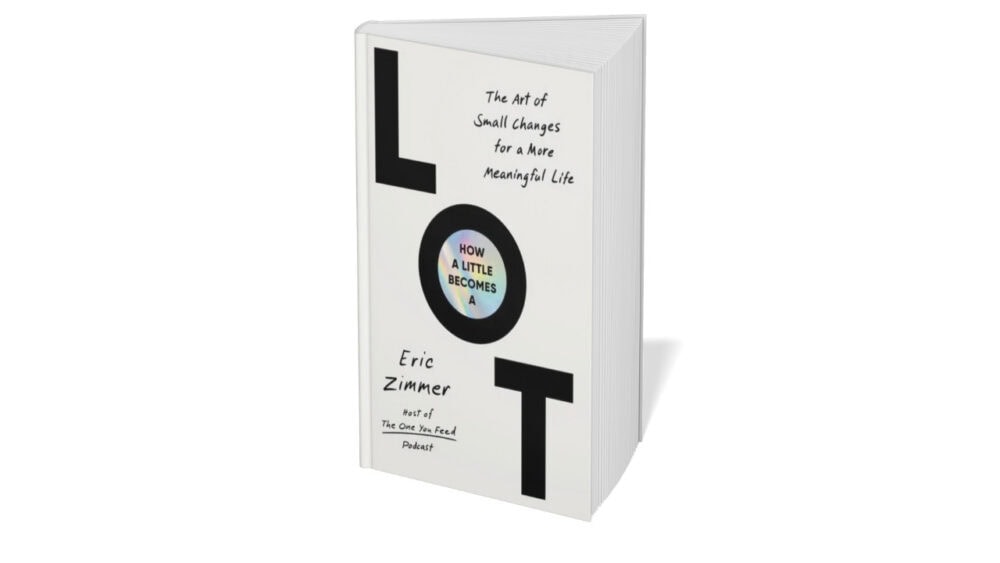
Exciting News!!! Coming in March, 2026, my new book, How a Little Becomes a Lot: The Art of Small Changes for a More Meaningful Life is now available for pre-orders!
Key Takeaways:
- The concept of excellence as a continuous practice rather than a fixed destination.
- The transformative nature of pursuing goals and its impact on character and personal growth.
- The importance of a process mindset, focusing on daily efforts and consistency.
- The metaphor of “feeding the good wolf” to emphasize nurturing positive qualities.
- The balance between striving for outcomes and being present in the process.
- The significance of measuring effort over outcomes for sustained progress.
- The idea of “raising the floor” to improve performance on average days.
- The role of care and commitment in achieving excellence.
- The distinction between meaningful engagement and the pitfalls of comfort and convenience.
- The necessity of intentional living and effort in a chaotic, technology-driven world.
Brad Stulberg researches, writes, and coaches on performance, well-being, and sustainable excellence. He is the bestselling author of The Practice of Groundedness and Master of Change, and coauthor of Peak Performance. Stulberg regularly contributes to the New York Times and his work has been featured in The Wall Street Journal and The Atlantic, among many other outlets. He serves as the co-host of the podcast “excellence, actually” and is on faculty at the University of Michigan. He lives in Asheville, North Carolina.
Connect with Brad Stulberg: Website | Instagram | Twitter
If you enjoyed this conversation with Brad Stulberg, check out these other episodes:
The Practice of Groundedness with Brad Stulberg
Mindfulness and Understanding Identity with Cory Allen
By purchasing products and/or services from our sponsors, you are helping to support The One You Feed and we greatly appreciate it. Thank you!
This episode is sponsored by:
Hungry Root: For a limited time get 40% off your first box PLUS get a free item in every box for life. Go to www.hungryroot.com/feed and use promo code: FEED.
IQ Bar: Text FEED to 64000 to get 20% off all IQBAR products, including the ultimate sampler pack, plus FREE shipping. (Message and data rates may apply).
Check out Mountains to Cross by Dr. Abraham George. It’s the story of how a life built on success was redirected toward compassion, and how that choice led to the founding of Shanti Bhavan, a school helping children break free from generational poverty. Find it wherever books are sold.

If you enjoy our podcast and find value in our content, please consider supporting the show. By joining our Patreon Community, you’ll receive exclusive content only available on Patreon! Click here to learn more!!
Episode Transcript:
Brad Stulberg 00:00:00 We’re often focused on the goal that we are trying to achieve and all the things that we’re going to have to do to achieve that goal. So maybe it is to finish a marathon, or if you’re a woodworker, to build a table, or if you’re an artist to compose a piece of music. But what we don’t realize is that in the process of pursuing those goals, we’re not only shaping the outcome, but we’re shaping ourselves. We’re shaping our character.
Chris Forbes 00:00:30 Welcome to the one you feed. Throughout time, great thinkers have recognized the importance of the thoughts. We have quotes like garbage in, garbage out or you are what you think ring true. And yet for many of us, our thoughts don’t strengthen or empower us. We tend toward negativity, self-pity, jealousy, or fear. We see what we don’t have instead of what we do. We think things that hold us back and dampen our spirit. But it’s not just about thinking. Our actions matter. It takes conscious, consistent and creative effort to make a life worth living.
Chris Forbes 00:01:06 This podcast is about how other people keep themselves moving in the right direction, how they feed their good wolf.
Eric Zimmer 00:01:15 If you’ve been chasing a goal, any goal, this is a useful question. What is this pursuit turning me into? Because, as Brad Stolberg says, the things we work on and the way we work on them, work on us. This has been on my mind a lot as I pour myself into marketing my upcoming book. I don’t want to turn this into an anxiety ridden, joyless slog, and this conversation was really helpful in keeping me in the right lane. In his latest book, The Way of Excellence, Brad reframes excellence as a practice, not a finish line. We talk about why the arrival moment is rarely the point, and why the calm you want at the top of the mountain is something you have to carry with you, and how a process mindset can turn the grind into something that actually feeds you. I’m Eric Zimmer and this is the one you feed. Hi Brad, welcome to the show.
Brad Stulberg 00:02:11 It’s great to be here. Thanks for having me.
Eric Zimmer 00:02:12 I should say welcome back because this is your third, possibly fourth. I’m not sure it’s been a while since we’ve had you on. And you put a book out every couple years, which makes me happy because I love reading them. And the new book is no different. It’s called The Way of Excellence A Guide to True Greatness and Deep Satisfaction in a Chaotic World. And we’ll get into it in a second. But we’ll start like we always do with the parable. And you’ve heard it before. But here we go again. In the parable, there’s a grandparent who’s talking with their grandchild, and they say, in life there are two wolves inside of us that are always at battle. One is a good wolf, which represents things like kindness and bravery and love, and the other is a bad wolf, which represents things like greed and hatred and fear. And the grandchild stops. They think about it for a second. They look up at their grandparent and they say, well, which one wins? And the grandparent says, the one you feed.
Eric Zimmer 00:03:07 So I’d like to start off by asking you what that parable means to you in your life and in the work that you do.
Brad Stulberg 00:03:14 I don’t remember exactly how I answered last time around, so hopefully there’s a little bit of variation, because I’d like to think that as I get older, I see the world differently and mature. I’m going to answer this time by saying that the things that you work on in the way in which you work on them also work on you.
Eric Zimmer 00:03:34 That’s good, that’s good. And that’s kind of a good summary of a lot of what you talk about in the book. Say that again. The things you work on and the way you work on them. Work on you.
Brad Stulberg 00:03:45 That’s right.
Eric Zimmer 00:03:46 Say more.
Brad Stulberg 00:03:46 So what I mean by that is when we select projects in our lives, this can be professional. These can be personal. A combination of the two. We’re often focused on the goal that we are trying to achieve, and all the things that we’re going to have to do to achieve that goal.
Brad Stulberg 00:04:04 So maybe it is to finish a marathon, or if you’re a woodworker, to build a table, or if you’re an artist to compose a piece of music. But what we don’t realize is that in the process of pursuing those goals, we’re not only shaping the outcome, but we’re shaping ourselves. We’re shaping our character. The way in which we train for that marathon is going to teach us about facing failure in fear and resilience in what we’re capable of. The way in which we compose a song is going to teach us about creativity, and going deep to the well and trying to draw out these beautiful insights and what that means for our own lives, the way in which we build the table, in the attention, in the focus and the intimacy that we bring to the craft is going to have a big effect on us, too. And I think we spend a lot of time, and rightfully so, focusing on how our being impacts the things that we do, but the things that we do in the way that we approach those things, they also impact our being.
Brad Stulberg 00:05:02 And I think that if we can choose the right things to do and do them in a way that aligns with our values, that feeds the good wealth.
Eric Zimmer 00:05:09 And is there a process then of connecting those dots sort of consciously? Is there a process of saying like, okay, as I’m training for this marathon, I’m paying attention to the ways in which it’s changing me. I’m paying attention to what I’m learning. I’m paying attention to how I’m doing it, versus what’s really often is the case is we’re just eye on the goal 100%.
Brad Stulberg 00:05:35 And I think this really is the crux of a process mindset, which is just so integral to excellence in any domain, in any field, in a process, mindset essentially says that you want to select a big goal. It’s really important to have a peak to aim for without a peak. You don’t really know where you’re going. But once you select that big goal, once you know which metaphorical peak you want to climb, you actually want to forget about the big goal and instead focus on all the small day to day steps that it’s going to take to achieve that big goal and to really focus less on the peak that’s way out ahead of you, and more on climbing where your feet are.
Brad Stulberg 00:06:14 There is this incredible story that comes from the winningest or one of the winningest, I should say, Winter Olympians. Her name is Kelly Humphries. She’s a bobsledder. She’s got three gold medals, won bronze medal and five world championships. So she’ll be competing in the upcoming Olympics. So she has been at the top of the sport for 20 years. And I talked to her for the book, and I asked her about how she prepares for an Olympic cycle, and she told me that she wants to win that gold medal like it’s the most important thing there is. I said, well, of course you do. You’re a badass competitor. I’m not surprised. She said, here’s what I do. An Olympic cyclist for years. Those four years are breaking down into two by two years, and then each of those two year blocks has an emphasis. And then each of those two year blocks are broken down into one year blocks. And each of those one year blocks are broken down into four quarters. And each of those quarters are broken down into months.
Brad Stulberg 00:07:02 And each month is broken down to weeks, and each week is broken down into days. And I wake up in the morning and I’m focused on the workout that I’m doing today. And I think that’s the essence of a process mindset. And when you have that kind of mindset, you really open yourself up to learning so much from the path and the pursuit. Well, not sacrificing the results. If anything, giving yourself just as good or better chance achieving the result.
Eric Zimmer 00:07:26 So for you, weightlifting is a been a big part of the thing that you focus on for excellence. So are you consistently setting goals like, okay, I want to be able to lift X amount. Are you setting goals out there and then you’re deconstructing them? And I guess the way I’m asking that is it’s an ongoing lifestyle for you, but do you still find goals to be part of what drives the energy?
Brad Stulberg 00:07:54 So to answer your question, yes, I do still set goals and I think that sometimes we can self handicap by not setting a goal.
Brad Stulberg 00:08:00 And this is something that I go back and forth on. And there’s a real tension in the book. So we use weightlifting as an example because it’s so concrete. I could say that my goal is to deadlift as much weight as possible, and that would be a really good goal, because of course that’s what it is. And I don’t know what that number is going to be. I could also say that my goal is to deadlift £550, and you could argue, well, that’s too narrow. What if you get injured? Or what if you’re actually limiting yourself? What if you could deadly £570? But by not naming a number, I think you kind of open yourself up to being a little bit wishy washy. So I do think it’s really helpful to have that concrete goal. But then, as I said, once you have it, to largely forget about it and to do what you can to just be where you are on any given day as you work towards that goal. I mean, my actual craft, right, is being a writer.
Brad Stulberg 00:08:49 And that’s exactly how a book works. Like you have a word count that your publisher asks you for. Right. The book’s got to be 65,000 words, whatever it is. Once you have that word count, like if you sit there every day and you say, oh my God, how am I going to get to 65,000 words? You’re never going to make any progress. What you do is you say the book’s going to have 18 chapters, each chapter is going to be about 4000 words. Each chapter is going to have somewhere between 4 and 8 sections. And then when you sit down to write, you’re working on writing one section of a book, which is so much more manageable than 65,000 words.
Eric Zimmer 00:09:19 Yeah, I found the book writing process given it’s my first time. Is this your fourth, fifth book? How many books have you written?
Brad Stulberg 00:09:26 My fifth book.
Eric Zimmer 00:09:27 Okay, so you’ve done this a bunch of times. So for me, I really looked at like, how do I measure what I’m doing? And I didn’t feel like I could measure word count because I don’t know how many words I can write in a day.
Eric Zimmer 00:09:41 I don’t know whether the words I write or any good. I felt like it was hard to measure, but I had a I mean, I knew when I had to have a manuscript in and I knew how many words it had to be. For me, it was more a process of measuring effort. Right? So I was like, okay, here’s what I can dedicate to writing. Right now, all I’m going to measure is whether I sat there and did my best for those time windows, you know, and those time windows were broken up, in my case, literally into 30 minute sections. Now, almost always, if I could get going, I wrote longer than 30 minutes. But that was my like, rip the parachute and get out of the extremely uncomfortable moment. So that’s kind of how I did that. Now, as I got better, I could start to say, all right, my goal is to get a section done today or, you know, get this chapter wrapped up by the end of the week.
Eric Zimmer 00:10:34 Talk to me about measuring effort and where that’s valuable and where measuring progress in a particular specific way is useful.
Brad Stulberg 00:10:42 Measuring effort is always valuable. We can’t often control what the outcome is going to be. We can only control the effort that we put in. So it would make sense to make the the lotus of our focus, the effort. Because that’s the thing that is within our control. That also gets at these two mindsets that I think are so important to making progress in anything. The first is what I call consistency over intensity. So people think that in order to be great at something, you’ve got to really be intense all the time and you’ve got to pull the all nighter. You’ve got to write 2000 words a day, you’ve got to do the heroic effort at the gym, and then you’ve got to post about it on social media. That’s kind of how the culture operates. But what I found in talking to people who are actually excellent at what they do not who perform greatness for the internet, but who actually do.
Brad Stulberg 00:11:28 The thing is that they’re much less focused on intense efforts on heroic days. They’re focused on just consistently showing up and giving what they have to give on the day. That is the definition of measuring effort. And the goal isn’t to have a heroic day, week, month, or even year. The goal is to have a heroic decade, a heroic body of work, and that really requires a shift in mindset away from intensity, in a way, from needing to be the hero and towards consistency and just showing up, getting started, giving yourself a chance. The second mindset that is a close cousin of consistency over intensity is the importance of raising the floor. What this means is that every performance and every performer in any field, they’re going to have a distribution of, of performance using that word a lot. But this will make sense in a sense. So it’s a bell curve and some days are going to be great. Some days are going to be in between and some days are going to be not so good.
Brad Stulberg 00:12:22 And everybody loves to focus on what can you do to raise the ceiling, what can you do to make the best days even better? But based on any normal distribution, most days by definition aren’t going to be your best days. So what actually becomes more important to lasting progress is what you do on your bad days, instead of just phoning it in or giving up or saying, oh, it’s not there today, or catastrophizing, you say, all right, today is not going to be a great day. What can I get out of my not so great days? A path of progress A path of performance requires raising the floor and getting more out of yourself on those not so great days. That’s arguably more important than what you do on your best days, because it’s very easy to perform well when everything is clicking and you’re having a great day. It’s much harder to get something out of yourself on the days when things aren’t going well.
Eric Zimmer 00:13:07 I had another experience over the last year though. That was really goal focused and it was interesting for me.
Eric Zimmer 00:13:15 Exercise is a lifestyle thing. I don’t generally have specific goals. I’m just I mean, I have goals about how often I do it, but it’s a lifestyle thing. It’s intended to go on. But I did this thing this year where I was going to hike 75 miles in four days in like mountainous terrain carrying a backpack. We were going to be sleeping out, so it was something I had to train for. You know, sometimes I find that so invigorating because I, I, I have something I’m aiming at now. I was given by the people who were hosting this event, a training plan that broke down literally, you know, this week you do five miles, eight miles, 12 miles. This week you do. And so then I you know, I obviously was then able to deconstruct it to every day. And and that’s where the effort was to show up and do that thing on that day. And yet the goal was invigorating. And I honestly didn’t know if I was going to be able to do it, not because energy or endurance, but I was like, what? What weird 55 year old injury is going to pop up here, you know, is it going to be the ankle, the foot, the knee? You know, what thing might pop up here? And so I was really trying to hold this tension that you’re talking about of like I really want to do it like this is my goal.
Eric Zimmer 00:14:32 I’m set at it and I’m gonna have to accept if I can’t. That I did my best, you know. And I did it. I got to the thing. It was fine. I was paying close attention to that process of trying to sort of hold these couple of conflicting things, or maybe not conflicting, but, you know, different approaches under one umbrella. And that’s so much of what you talk about in this book.
Brad Stulberg 00:14:53 Yeah, there’s so much nuance here. And I’m glad that you’re you’re speaking to this and that you got to experience it yourself personally. People often say, myself included, process over outcomes. So don’t worry about the outcomes. Just focus on the process. I actually think it’s process and outcomes. Outcomes are important, especially professionally. If you’re starting a business, you need it to bring in revenue. If you’re an athlete, you want to win, you want to finish the hike. There’s a reason that there’s a scoreboard. In sports, if you’re a musician, you want to complete the song and have people listen to it.
Brad Stulberg 00:15:26 That’s totally normal to deny yourself that natural human drive of wanting to perform well, it’s a fool’s errand. However, you can acknowledge that outcomes matter, that you really want them, that you find them motivating, exhilarating, and fulfilling, while at the same time acknowledging that all your fulfillment and satisfaction is going to come from being present in the process, and that by being present in the process, you’re actually going to give yourself the best chance at the outcome. There’s this quote from the late Robert Essig that I just love, that says that the only Zen you find on the tops of mountains is the Zen that you bring up there. He doesn’t say, don’t worry about the tops of mountains. He doesn’t say, don’t try to go up there. He says, no, go up there. Just realize that the only zen that you’re going to find up there is the Zen that you create and the Zen that you bring up there. And it’s not just woo woo. I’ve talked to hundreds of truly elite performers in the culinary arts, in the performing arts, in the creative arts, in sport and entrepreneurship.
Brad Stulberg 00:16:21 And they all say some version of the same thing, which is, heck yeah, they were thrilled when they got the outcome. But what they actually remember is the process of working towards it and the people along the way that they did it with.
Chris Forbes 00:16:57 You.
Eric Zimmer 00:17:05 I think that’s kind of what I was saying earlier about consciously connecting the dots. Being able to derive enjoyment along the way. And one of the things about breaking things down into really small things in the habit literature, they talk about celebrating, right? You know, which is maybe a little bit of a strong word for what I’m going to do after a day of of getting my writing time in, but I’m going to feel good about it. I’m going to consciously feel good, like take the time to savor that. It was the same thing with training. For this thing, I tried to really be like, I’m out in the woods hiking a lot more. This is great. I’m with people that I like. I’m, you know, finding those things along the way because, you know, this, you I think everybody knows this to some degree that you aim it something and you get it.
Eric Zimmer 00:17:56 The satisfaction of that moment is relatively fleeting. It’s not that it’s not there. We wouldn’t be compelled by it if there wasn’t anything there. But we way over assume how good that will feel, and we can miss all the days in between because we’re only looking out there.
Brad Stulberg 00:18:15 It’s such an astute observation. researchers call it the arrival fallacy. Because I listen to your podcast, I know that you’ve had guests on it that have spoken about it, so I don’t need to retread that ground. What I do want to bring to bear that I haven’t heard as much before is I think that people confuse, or they mistake the ephemeral, fleeting high of achievement with satisfaction and meaning. And I think so often we think that what’s going to make us, quote unquote happy is the high of achievement, when what actually makes us happy is something that looks a lot more like satisfaction or meaning in. The difference to me is that feeling that you get after a hard day’s work on a meaningful project, where your head hits the pillow and you just fall asleep easy.
Brad Stulberg 00:18:57 Not because you’re physically or mentally tired, but because you know that you had a good day. You put an effort on something that matters. That is such a satiating feeling. That’s very different than that buzzing feeling of achievement. And it’s a lot harder to fall asleep after that buzzing feeling of achievement. And that buzzing feeling of achievement starts to look a lot like anxiety. And I don’t think that’s an accident. I think that’s how you get hooked on needing the next achievement versus rooting yourself in the process where you have more satisfaction. And again. The great paradox of all of this is by being in the process, you give yourself the best chance at the achievement anyways.
Eric Zimmer 00:19:34 Yep, the book is about excellence, which we’ve been talking about here, but I want to talk very specifically about what you mean by excellence.
Brad Stulberg 00:19:44 So I’m going to start by telling you what excellence is not okay. Because I think it helps to define a negative first and then we’ll get into what it is. So excellence is not hustle culture.
Brad Stulberg 00:19:55 Greatness, which is waking up at 4 a.m., having a 48 step routine, flexing your six pack abs from a cold plunge at two in the morning for everyone on Instagram to see, that is the performance of greatness. It’s not the real thing. Excellence is also not what I call pseudo excellence or optimization, just doing as much of everything as possible. Go go go go go. Turn yourself into a machine. Turn yourself into a robot. Excellence is not something that you need to have great genetics for. It’s not reserved just for professional athletes or Grammy winning musicians. What excellence is, is involved engagement in something worthwhile that aligns with your values and goals in both parts of that definition are so important, so involved. Engagement means a level of caring and commitment and attention, and then something worthwhile that aligns with your values and goals is what we’ve been talking about. You want to point that commitment, that caring, that attention at a project that supports the person that you want to become and the qualities that you want to develop.
Brad Stulberg 00:21:00 And when you put those two things together, you can enter into this groove, into this pocket, into this slipstream of a really harmonious way of doing and being where you feel like you’re making progress towards something that matters to you. And it’s not only a destination you want to achieve, but a path that you want to walk that is shaping you as a person along the way. And that’s excellence. And that’s available to all of us.
Eric Zimmer 00:21:22 Yeah. You also say that excellence combines mastery and mattering, and I like that also. Right? It’s about getting better at something that you feel like it matters. That’s right. You also say that we’re made to move towards excellence as a tree is made to move towards the sun. Why?
Brad Stulberg 00:21:38 So there’s some really fascinating science behind excellence and in particular biology. Since the beginning of life, the earliest single cell bacteria species, there is this imperative that evolutionary biologists call homeostatic upregulation in essentially means that all living species have this innate hardwired capacity or drive to survive and to flourish in.
Brad Stulberg 00:22:08 From bacteria evolved multicellular organisms evolved nervous systems evolved mammals evolved primates, and all the way down the chain. Some billions of years later, here we are in that early imprinting hasn’t gone away. We are hardwired to survive and to flourish, and for the longest time, for species. That meant two things. And men don’t die and procreate, right? Like, that’s what evolution has designed us to do. But humans, we have a cognitive capacity, this big prefrontal cortex in our brain. And we have lifespans that allow us to do more than just survive and procreate. So we have to figure out ways to channel that drive to flourish into other activities. And this is the genesis of art, of innovation, of sports, of music. These are all ways that we can harness that drive to flourish beyond just surviving and procreating. But that drive, the reason that it feels so good is that it goes back to the beginning of time. Like all living species have this, and it goes back long before we even had the ability to think.
Brad Stulberg 00:23:10 So this is precognitive, and I think that everyone knows this because if you watch Steph Curry take over a basketball game or you listen to, I don’t know, a Bruno Mars concert or Taylor Swift or name your favorite musician, or you taste the creation of a master chef. You don’t think it’s excellent in your brain? You don’t say, oh, Steph Curry’s arm angle is perfect and he’s shooting at the apex of the shots. You don’t tell yourself the way that that singer is able to find the rhythm you know is mathematically correct. No you feel it deep in your bones. It’s like a visceral felt sensation and experience when we observe excellence. And the same thing is true when we create it in our own lives. And it’s that feeling that is what we are driven toward, and it’s why we find it so satisfying and fulfilling.
Eric Zimmer 00:23:58 All right. So you’ve given us a lot of what excellence is, and you just gave some real clear examples, Steph Curry or a great chef or a great musician.
Eric Zimmer 00:24:09 I have a question. So playing the guitar matters to me I like it I love doing it. Making music is important to me. I am also not that great at it. Even given putting a lot of time into it, I think that’s a lot of people, right? That’s most people. That’s the vast majority of us, right? The vast majority of musicians are not Bruno Mars or like even my best friend Chris. He’s outstanding. Most people aren’t that good. So those of us who are sort of, we’ve got this thing that matters to us that we like doing. How do we adapt excellence so it works for us.
Brad Stulberg 00:24:52 Another misnomer that I probably should have spoken to earlier, but I’ll address now, is that excellence is not a standard. It’s not saying that you’ve got to be in the top half a percentile of your craft. It’s a way of being and doing right. It’s the process toward improving, toward caring deeply about something. So I’ll use myself as an example. I’ll go back to power lifting, the thing that is my excellent passion project outside of work is deadlifting as much weight as possible.
Brad Stulberg 00:25:19 I am never going to be a national class deadlift. I’m not even going to be a regional class dead lifter. Okay, I’m hardly the strongest person at my gym if that. So I am a I’m good because I spend a lot of time on it. I’m probably like, you are a guitar now. The pursuit of getting better at deadlifting has taught me so much. It’s taught me how to stay patient. It’s taught me how to deal with frustration. It’s taught me how to navigate injury. When I walk up to a bar that has more weight on it than I’ve ever lifted before, and I face fear, it’s taught me how to face that fear. It’s taught me how to be vulnerable. When I do go to a powerlifting meet and I’m in front of other people, it’s taught me the value of consistency and showing up when I don’t want to. On those days when I just don’t feel like practicing, I just don’t feel like going to the gym. I still go to the gym.
Brad Stulberg 00:26:06 All of those qualities are really important, regardless of if I ever win a trophy for deadlifting and all of those qualities. They’re going to make me a better father, a better husband, a better writer, a better friend. So pursuing a craft that you care about, with integrity and with deep care, like that’s that’s the reward, and then you don’t know how good you’re going to be until you try. You don’t know what your genetics are. You don’t know what your limitations are until you try. But regardless of where you end up, it’s the pursuit. It’s the process that fills our life with meaning and satisfaction. Because I think my approach to powerlifting is excellent, but I’m never going to be an Olympic powerlifter, that’s for sure.
Eric Zimmer 00:26:47 Yeah, I agree with with everything you’ve said, and I think the fact that I still continue to do guitar as long as I have is because I’ve internalized an idea of excellence that works for me. You know, I’ve internalized like, okay, this is what about this that I can put attention and focus on.
Eric Zimmer 00:27:06 And, you know, I learn about myself through doing it, and I like it. You know, I like. I like it, and it’s interesting because the time where I don’t like it is because I’m judging it.
Brad Stulberg 00:27:20 Yeah. That makes a lot of sense. I mean when you’re judging it then you’re not in the moment doing it. You’re thinking about it. Yeah. so one it degrades presence and then two, you’re comparing yourself to some kind of standard that may or may not be reasonable. I think that your experience with guitar goes back to the definition of excellence. It’s involved engagement. So you’re focused, you care about it. You probably feel some kind of intimacy with with the process of making music, and then know you well enough to know that you value creativity in generative thinking. And these are all things that you have to do as a musician. That right there is defining excellence for yourself and pursuing it. And the reason that this is so important is a lot of people are struggling with burnout.
Brad Stulberg 00:28:05 And there’s there’s these two kinds of burnout, and there’s one that gets talked about all the time, which is I just am way overworked. I’m working 100 hour weeks and I’m just done. And that that affects some people. No doubt about it. But there’s this other kind of burnout that I think is really important to name that I call zombie burnout. And zombie burnout happens from not doing enough of what lights you up. So you’re not working a 70, 80, 60 hour week. You might be working a 40 hour a week, or not even a 40 hour week, but you’re still feeling kind of empty and apathetic and exhausted and burnt out. And I think for a lot of people, it’s because life has become this, like one numbing ourselves to death experience of passive consumption. And I think the pursuit of excellence, whether it’s in the gym, whether it’s gardening, whether it’s playing the guitar, whether it’s baking, whether it’s cooking, it gives you a feeling of aliveness and satisfaction. That is the complete antidote to this sort of zombie burnout.
Brad Stulberg 00:29:01 And I think so many people right now are longing for aliveness and to feel alive and reclaiming this kind of genuine, heartfelt excellence is just such a wonderful avenue to that feeling of aliveness.
Eric Zimmer 00:29:12 So you and I are fortunate. Right. You write, which is something you love to do for a living. I get to do this for a living and I got to write. A lot of people don’t. Most people don’t. So a lot of people are in a zombie burnout place because they don’t feel like what they do offers satisfaction or a path towards excellence. How can people at least make an attempt to reframe that and focus on, like, making the best out of whatever the thing is?
Brad Stulberg 00:29:45 There is this misconception that your job is who you are and like your value is through your job. Some people are really fortunate to have work that they enjoy, and that pushes them and that aligns with your values. That’s great. But for a lot of people, a job is just a way to make an income and to pay for food and to pay for rent and to support yourself.
Brad Stulberg 00:30:05 Support a family. And there’s no need to pursue this kind of excellence at work. That doesn’t mean that you should give up on it altogether. That might mean that you pursue it outside of work, in a hobby. I don’t love the word hobby. I prefer a practice. So take up a practice, as you mentioned, like play an instrument, work on a physical fitness goal, learn how to garden. I know someone that recently got into bonsai care and bonsai trees like it doesn’t so much matter what the thing is. As much as that we have something and you’ve got to start really small. No one gets to a £500 deadlift overnight, right? You start with the bar. No one runs a marathon overnight. You start with just running for five minutes. It really comes down to not just connecting your worth to your job. Not assuming with the only place that you can strive for excellence is in one’s job in creating these pockets of your life where you can pursue it in something that is invigorating.
Brad Stulberg 00:31:01 And if you’re somebody that then says, well, I don’t even know what’s invigorating to me anymore. A really helpful exercise is to think about the things that lit you up when you were a kid, before you had all these pressures. Yes. We change, we evolve, we transform a lot over time. But we also have innate parts of our temperament that are fairly stable, and a great inroads into figuring out what kind of things might let you up now is to look back to grade school or to middle school. Another avenue into this is to look at people that you admire in your respect and ask yourself, what? What do you admire and respect about them? Like, what are the things that they do? What do they push their self in? And then to start sampling with some of those activities, I think the trap that is so easy to fall into in the modern world is a job that you’re just kind of going through the motions, scrolling TikTok where you’re just kind of going through the motions.
Brad Stulberg 00:31:50 2 or 3 beers to put yourself to sleep because you’re sick and tired of going through the motions. And that’s what I think is just so important to disrupt.
Eric Zimmer 00:32:24 That is the trap a little bit that a lot of people find themselves in. And, I mean, I can find myself in it if I’m not. Oh, we all can’t. I’m not.
Brad Stulberg 00:32:33 Being judgmental. You have to pay attention.
Eric Zimmer 00:32:34 Yeah, exactly. I work hard all day, and I care about what I do, and I get tired from it. Right. You know, I get to the end of the day. I’m tired. I’ve been focusing and. And so then I’ve got to try and do this thing that gives me pleasure when all I really feel is tired and I want to check out.
Brad Stulberg 00:32:57 Yeah. There’s a there’s a time delay notion to this, right? It’s like the difference between eating Skittles and eating brown rice. So Skittles tastes great in the moment, and they’re really easy to eat, and they make you feel pretty good when you’re eating them.
Brad Stulberg 00:33:08 And Skittles is pulling up your TikTok feed and doom scrolling for two hours. But after you’ve eaten Skittles for two hours, you don’t feel so good. Whereas brown rice, it’s not as exciting, doesn’t taste as good right away. But if you make brown rice a staple of your diet, you’re going to feel a lot better. And I think we’re constantly faced with a choice between Skittles in brown rice. And it’s about having the the self-discipline and the self-compassion, because it’s the kind thing to do to yourself, to choose the brown rice. So to to choose to invest time and energy in an activity that might be a little bit harder at first. You might face some resistance at first, but once you get going, it’s going to be so much more nourishing for you.
Eric Zimmer 00:33:49 Yeah, there is an adaptation, period, really, if you’re trying to sort of break out of that. It is hard at first, I think changing any behavior is challenging at first. And, you know, you’ve talked about it and obviously I’ve written a book about it.
Eric Zimmer 00:34:07 You know, it’s small steps, right? So maybe you don’t suddenly devote from 5 p.m. to 9 p.m. every night to a new hobby. Right. Like, that’s too much like, disrupt a little bit. Have a couple less Skittles, a little more brown rice. You know, a little less Skittles, a little, you know. And and because it takes time for that satisfaction to catch up, as you’re saying, it’s a slower coming thing. And that takes a certain amount of focus to get there.
Brad Stulberg 00:34:36 It does. And you build that focus like any other muscle. So to your point, you don’t go into the gym and bench press £400. You work up to it. I think that here the laws of physics, they apply not just to physical objects, but to our minds too. So the only equation I remember from physics is f equals ma force equals mass times acceleration And what we’re really talking about is forward progress is getting acceleration, getting inertia. And if what you’re trying to push is too heavy, the mass is too big.
Brad Stulberg 00:35:05 You’re never going to get it moving. You’re going to have zero acceleration and zero force. But if you start with just a little pebble or a little stone, you can get it going. And then once you get it going, it’s easier to keep going. And then you can add on and add on and add on. And that’s how we make progress in anything. That’s how we develop force to make progress 100%.
Eric Zimmer 00:35:24 And we all know it, we all know it, but it sometimes is hard to do. And I think part of the reason it’s hard to do is that we often think something is going to be more quickly transformative than it is. We think, oh, I hear these guys talking. And it sounds like maybe if I start playing guitar for 30 minutes a night, like, I’ll be a better, happier person. And I believe long term you will be. But playing guitar one time for 30 minutes isn’t going to change your life. You’re probably not going to feel all that different one time.
Eric Zimmer 00:36:00 And that’s where I think buying into the whole approach is so important, right? Buying into like, okay, you know. Yeah, a little by little a little does become a lot. And that’s how the rewards accrue. Also they’re very tiny to start. I mean not all the time but but sometimes. Right. It’s you know, staying the path. And that’s why I think you talked about this. I think they’re paying attention to this very subtle satisfaction when I say, I’m going to do something and I do it, I feel good inside. It’s it’s not a big thing. But I also when I say I’m going to do something, I’m going to change this and I don’t change it. There’s a there’s an internal feeling that doesn’t feel good. And learning to pay attention to those subtle ones for me is important in the process.
Brad Stulberg 00:36:48 Those little jolts of intrinsic satisfaction are the ultimate reward that keep us coming back. If we can’t tune in to those. Or if we’re too rushed to tune in to those, then we miss out on a lot of the joy and fulfillment in the satisfaction, which is why we do it in the first place.
Brad Stulberg 00:37:04 I do want to go back and keen on something that you said, because I think it’s such an astute observation. When you commit to this, you’re not committing to a result or to a standard. Like you said, you’re not going to sit down and play 30 minutes a day and suddenly become the best guitar player in the country. What you’re committing to is a process in a journey and a path, and it’s that process and journey and path that is so fulfilling and so rewarding, and that gives you that sense of aliveness that you might be looking for, where that process and journey and path ends, how high you climb, you don’t know. You have to find out. That’s also a part of the thrill. And the exhilaration is is finding out. And I think, again, that’s like misconception. The sacred cow that I’m really trying to slay with this book is that excellence is a standard. It’s not a standard. It’s a way of going about doing something.
Eric Zimmer 00:37:55 Let’s talk about care. So the first part of the book sort of defines what excellence is.
Eric Zimmer 00:38:01 And I’m having a hard time not jumping down the philosophy rabbit hole. But I think we’ve got the general idea, and you and I can maybe do that in the post-show conversation or something. Let’s move on to what you call part two mindsets, habits and practice. And the first one there is care. Talk to me about care.
Brad Stulberg 00:38:19 Care is the engine of the whole thing. You can have all the talent in the world, but if you don’t care deeply about what it is that you do, then you’re never going to express your potential, and you’re never going to find it as satisfying or fulfilling as possible. I think that what happens all too often is that we prevent ourselves from really caring because we’re scared that if we care deeply, we might fail or we might experience heartbreak. By not caring deeply, we protect ourselves from those things. But we also miss out on all the fulfillment and satisfaction and texture. So the example that I like to use is everybody can think back to middle school or high school, and there was always a popular kid who was too cool to try.
Brad Stulberg 00:39:02 You know, he sat in the back of class. He kind of phoned it in during gym and during music, and he wasn’t actually cool. What he was was scared. He was scared of trying and failing. So he just didn’t try. And so many adults have yet to outgrow this tendency. I think so often we prevent ourselves from trying hard because we’re scared to face our own vulnerability, that if we try hard, things might not work out exactly how we want. And so much of getting on this path requires overcoming that fear and embracing our vulnerability in stepping into the arena and trying hard. Anyways, I really have come to believe that the things that we care deeply about, they’re the things that break our hearts, but they’re also the things that fill our lives with meaning and joy. And you can’t have one without the other.
Eric Zimmer 00:39:52 I think you’re right. I don’t think you can. In this chapter, you also talk about identity, right? Like if your identity was I’m a power lifter.
Eric Zimmer 00:40:03 Talk to me about why a single identity is problematic and what’s a better approach.
Brad Stulberg 00:40:10 Right. So when you care deeply about something, you do start to identify with it. And that’s a beautiful thing. You say, I’m a parent, I’m a writer, I’m a husband, I’m a wife, I’m a podcast host, whatever it might be, I’m a power lifter. That’s very natural. However, if that’s the only thing that you are, it makes you pretty fragile. Because what happens when Brad the power lifter, gets injured or has a terrible performance? Or what happens when Eric the podcaster experiences a month where downloads are down? If your only identity, if your only self-worth comes from one thing, then when something bad happens in that one thing, it’s really disorienting in, and it really can set you back. The metaphor that I like to use here is if you imagine a house that only has one room, and that one room catches fire or floods, you’re going to have to move out of the house altogether.
Brad Stulberg 00:40:58 You don’t know where you’re going to live, but if you’ve got a house with multiple rooms in one room, catches fire or floods, then you can go seek refuge in another room while you work on the fire and flood. And our identities are the same way. If we build an identity house that only has one room. Well, when something bad happens in that one room, it’s going to be it’s going to be bad. But if we can build an identity house with multiple rooms, then we can go seek refuge in those other rooms. So in my identity house, a huge room is Brad the writer. Because I’m a crafts person, that’s what I do. But I’m also Brad the parent, Brad the husband, Brad the athlete, Brad the neighbor. And I can spend time in each of those rooms to help give me strength and fortitude and resilience. So we think that in order to be great at something, in order to be excellent, you have to go all in. You have to be obsessed.
Brad Stulberg 00:41:47 But that’s just not true. And there’s research that shows this. What happens is you become fragile. So yes, you have to try really hard. And yes, I have to spend a lot of time in the writer room of my identity house. But that doesn’t mean that I let the other rooms get moldy. I’ve got to keep them in good enough shape because I don’t know when I’m going to need them. It also means that in different seasons of life, I’m going to spend time in different rooms. So during a book launch, yeah, I’m spending a lot of time in the writers room. But you better believe it that when I’m not in the middle of a book launch, the most important room in my house is the husband room in the father room. So it’s just this really nice metaphor for thinking about what are the components of our identity and how are we emphasizing or de-emphasizing them at different times of our life.
Eric Zimmer 00:42:30 We have a chapter called Trade Offs, where you talk a little bit about some of this.
Eric Zimmer 00:42:34 You say, drop the weight of balance. It’s an illusion. What do you mean by that? Because what you just said sort of sounds like balance a little bit, but talk to me more about that line.
Brad Stulberg 00:42:45 Balance is conceived by the Self-Help industrial complex says that you need to be the perfect husband or wife, the perfect parent. Stay up on all the latest streaming TV shows, have a fantasy football team. Be a great chef. Keep the house clean, be a great friend, go to church or synagogue and on and on and on. And what happens is by trying to be balance, which we’re told is going to relieve us of stress, we actually end up stressing ourselves out. So no one that has lived an excellent life that I’ve ever come across has prioritized balance. However, that doesn’t mean that you should say, I’m only going to do one thing and just completely obsess over that one thing. What it means is that you’ve got to bring self-awareness to the trade offs that you’re making, and constantly check in and adjust.
Brad Stulberg 00:43:32 So back to my identity house example. I did not say that you need to have a certain number of rooms, and you need to spend the same amount of time in each room at all seasons of life. What I said, actually, is that you’ve just got to make sure the important rooms never get moldy. So during a certain season of life, you might spend 90% of your time in the athlete room when you’re training for that first marathon. But that doesn’t mean that you don’t have family dinners. It doesn’t mean that you completely phone it in on your job. You’ve got to spend enough time in those rooms so they don’t get multi. It’s fascinating that in the reporting for this book, really over the last decade, I’ve talked to so many people who have been incredible performers and who have also lived really good lives. And when you zoom in on any one moment of their life, they don’t look very balanced at all. They’re really focusing on 1 or 2 things. But when you zoom out and you look across the totality of their life, they actually appear to be quite balanced.
Brad Stulberg 00:44:24 And I think that’s such a healthier, better, more accurate way to think about being a full, whole person while still giving yourself permission to give your all to the things that you care about.
Eric Zimmer 00:44:34 I always think of balance as the concept. It makes some sense. measuring it in bigger time increments. Yeah, because there are seasons in our year. There are seasons in our life. Some of those seasons are somewhat quick seasons, like a book launch. Okay. It’s a 3 or 4 month thing. It’s got a lot of intensity. Some are seasons in general, like when you’ve got younger children is a very different season than I’m in. Right? Yeah. Like I’m in a season of life where I’m, like, hoping my son will come home. You know. Right. So you get to these different, you get to these different points. And recognizing that is really important because what I’ll see is people who have young children comparing themselves to what I do. And I’m like I couldn’t do this then.
Eric Zimmer 00:45:21 Right. If I had done this then it just wasn’t the right time in my life to do this thing. Your life is in a season. Mine was in a season. Those seasons are going to change. And seeing that balance in a in a much bigger way is really, really helpful. At least it is for me.
Brad Stulberg 00:45:38 I think it’s the only way to pursue excellence and not not again, not winning the gold medal, but excellence. Meaning you give your all to things that you care about because you can’t care about everything with the same intensity at all times. And that’s where the trade offs come in. A very practical tool that is worth talking about here is this notion of minimum effective doses. So when you are in a season of life or when you’ve made a decision that, hey, I’m going to spend a lot of time in this one room of my identity house, what’s the minimum effective dose for other rooms? So during a book launch, instead of exercising five days a week for 60 minutes, my athlete room, it’s going to look different.
Brad Stulberg 00:46:18 I’m just going to train for 20 minutes a day, four days a week. That’s the minimum effective dose to not let that room get moldy. The family room normally family dinners every night of the week. Non-negotiable. During a book launch. I’m going to be traveling a lot, but what I’m not going to do is say I’m spending three weeks on the road consecutively. No, no, no. At least two family dinners a week for that month. And then at the end of that month, I need to recheck in and come back for the French room in the identity house again. During a book launch, I’m not going to be answering text messages all day and having deep conversations with my friends, but I am going to make sure that I check in at least once a week. I’m going to take some time on a Sunday to call my two best friends. That’s the minimum effective dose and those minimum effective doses. They help us stay in touch with the whole person that we are, even as we pursue excellence in one domain.
Eric Zimmer 00:47:05 I want to talk about discipline because in order to be excellent at something, you have to have some degree of discipline, right? You have to continue to do something, and nobody wants to do anything all the time. It’s not the way we’re wired. You talk about somebody named Leo Norton in the book, so talk to me about Leo Norton’s approach to discipline.
Brad Stulberg 00:47:27 Yeah. So it’s it’s Lane Norton. Oh, Lane. And yeah. So it’s Lane, but it’s Leo is close enough, so Lane is incredible. Lane is a powerlifter like myself. He is the current world champion for his weight and age class. And the way that Lane talks about discipline is just so elegant, and it’s essentially showing up and getting started, even on days that you don’t want to. That’s all that discipline is to him. It’s not hemming and hawing. It’s not thumping his chest. It’s not putting on a parade and telling everyone how tough he is. It’s not necessarily always finishing the workout because sometimes it doesn’t make sense if you’re sick or you’re injured, the last thing you want to do is push through that.
Brad Stulberg 00:48:11 What discipline means to lane is showing up, getting started, giving yourself a chance. And I think that that is one of the most powerful definitions of discipline that there is, because that’s really what it comes down to. You show up, you get started, you give yourself a chance. And if you do that over and over and over again, you can’t help but make improvement. And it also gives you the respect and the grace that you need to shut things down when it’s not going to happen. That’s a part of discipline, too. Any athlete knows that if all you do is put your head down and push through, it’s going to blow up your career because you’re going to injure yourself. So yes, we need the discipline to push through, no doubt about it. But we also need the discipline to show restraint at times. Both are important.
Eric Zimmer 00:48:53 Yeah. He talks about disconnecting how you feel from what you need to do. He says we’ve gotten a lot more in touch with feelings in general, which is a good in some ways, but in certain cases we’ve given too much space to our feelings.
Eric Zimmer 00:49:07 People end up being completely governed by feelings, and for them, life can be pretty hard. I think all of that is true, and there seem to be people who are able to shove their feelings to the side and just do the thing, and that doesn’t seem to work for everybody, because everybody’s heard this advice. Just do it. I mean, you know, just do it.
Brad Stulberg 00:49:30 Nike.
Eric Zimmer 00:49:31 Yeah. So there’s more at work than just that. That’s obviously the best and most streamlined approach. It’s the one I try and take. I’m supposed to do X. Just go do X. Like let’s not in or debate. And that works. A lot of the time. And there are times where the debate has already started and it is going on, and it seems like the feelings are big enough that it’s not just like I get out of there kind of thing. What works for you? Do you have situations like that, and if so, how do you work with them?
Brad Stulberg 00:50:00 Oh my gosh.
Brad Stulberg 00:50:01 Yeah. I think that this is such a fascinating paradox that the second most important thing to just do it is self kindness. And not beating yourself up when you don’t just do it. Because what often happens is you miss a day and then you berate yourself and you beat yourself up and you judge yourself. And we know based on decades of really good Psychology research that self-judgment and guilt and beating yourself up not only makes you feel like crap, but is associated with disrupted habits, so it decreases the chance that you’re going to get back on the bandwagon. Self kindness says what I’m trying to do is really hard. It’s hard to be a human. It’s hard to be a human right now. And I’m not always going to succeed. I’m not always going to just do it. And when I don’t, I don’t have to beat myself up. I can say, all right, you messed up. I can try to evaluate and say, here’s why. I can tell myself what I’m doing is hard. It’s going to be hard to get back on the bandwagon.
Brad Stulberg 00:51:03 But you can. And then you begin again the next day. And that’s a paradox that lies at the heart of this chapter of the book, which is fierce. Self-discipline requires fierce self kindness. It’s not one or the other because you can’t do really hard things sustainably if you’re not kind to yourself. Because if every time you beat yourself up when you fail, or when you don’t give your full effort like why would you step into the arena if you know that you’re going to beat yourself up for not succeeding. So the biggest badasses that I came across in doing this research. They were so disciplined and they were also so kind to themselves.
Eric Zimmer 00:51:36 Yeah, I love the way you say self-talk. That sounds like and this is what you wrote. You’re saying this to yourself. What you’re trying to do is hard, but you’re capable of doing hard things. This matters to you and nobody’s going to do it for you. Let’s muster some gentle yet firm persistence. Get started and see what happens. And I’m glad you wrote that out, because that’s, I think, the trick to figure out what the internal conversation and feeling is that stops you, and then figure out how to change that conversation.
Eric Zimmer 00:52:09 So a big part of this is all structural, right? There’s we can we can set up our environment. We can know when we’re doing what we there’s a lot of structural things that we can do. And those are all really important and, and often solve a huge part of the thing. But then there’s also the moment that you’re standing there at a choice, you know, and I think that’s the moment where learning to do what you just described is so important. Not BS myself, but what can I say to myself that sounds real, that gets me over this hump.
Brad Stulberg 00:52:42 That’s right. And generally speaking, it’s true. Like, most people don’t need to beat themselves up, and they don’t need David Goggins to tell them that they’re soft and they have to be harder when they’re in the middle of failing. What they need is they need a good friend and learning to be your own good friend and to essentially, say, trying to start an exercise habit when you’re obese and you’ve never exercised before is really hard.
Brad Stulberg 00:53:04 When people have judged you for your weight and looked at you funny in the gym, that is so freaking hard to still want to show up in. You’re capable of doing this, and you’re capable of having your own back, and you’re not always going to succeed. And that’s okay. But you just keep showing up because you’re the kind of person who can show up, like that’s what you need to hear. And I talked to gold medalist Eric, who will say, this gold frickin medalist who will say that they struggle not to hit the snooze button. And what they say is what you’re trying to do. Trying to win a gold medal. Of course, that’s hard. Like you don’t need to be harder on yourself. You need to have your own back. And that’s every bit is true for the person that has never run a step in their life that wants to run their first five K. So yes, you need personal responsibility and accountability, and you do have to do the hard things, but the only way it’s going to be sustainable is unless you also have your own back.
Eric Zimmer 00:53:51 Right. And I think just recognizing things that are hard to do, you’re not going to be successful at them all the time and look for progress and minimize the emotional drama around when you don’t do it. For me, it’s just like you didn’t do it yesterday. We don’t need to go into it simply. Why? Why do you think you didn’t yesterday? How do we get back on track? Yeah. Keep the drama to a minimum. Because everything you said is so true that that being hard on ourselves stops us from what I think is one of the single most important elements in making change in life, which is learning. You have to learn what works and what doesn’t work. And if you are so hard on yourself, you don’t learn. You just shame. And that doesn’t work.
Brad Stulberg 00:54:37 It doesn’t work. And here’s here’s a dirty little secret about performance and excellence. And I don’t think people realize this is it’s not being a ten out of ten all the time. It’s far from it. It’s being a six or a seven out of ten almost all the time.
Brad Stulberg 00:54:52 And it’s when you have a 0 or 1 out of ten day not letting it turn into a 0 or 1 out of ten week or month or year, it’s nipping it in the bud. And the way you nip it in the bud is through that self-talk of self kindness. What I’m trying to do is hard. Here’s what I learned. Let me get back on the bandwagon.
Eric Zimmer 00:55:07 Right. And and for me, a lot of things 80% like my minimum rule, like, okay, if I’m, let’s say trying to exercise six days a week and I do that 80% of the time, but I can do that. Month after month, year after year, I’m winning that game. That’s good enough. Trying to aim at 95% might for me throw me off, because then I’m like, I didn’t do it. And if I didn’t do it, I’m going to quit. And you know, so having a standard that is still high enough to matter but forgiving enough to allow life to happen.
Brad Stulberg 00:55:41 Yeah, it’s like the it’s the importance of consistency over intensity.
Brad Stulberg 00:55:44 Yeah. You know, progress over perfection. There’s all these little pithy sayings, but they all point at the same thing, which is to make progress and not in an overnight way that immediately fades out, but in a way that is sustainable and lasting, is you’ve got to settle into a groove where you can be consistent and where you do give yourself a chance.
Eric Zimmer 00:56:02 Yeah, I don’t know if you’ve noticed this. Do you have an iPhone or are you an Android guy?
Brad Stulberg 00:56:06 I have an.
Eric Zimmer 00:56:07 iPhone. You’re an iPhone guy. Okay, you just mentioned the snooze button and I use alarms on my phone all the time. I use them to wake up. I use them to remind me to do this. The new setting on the new iOS is when an alarm goes off, you tap to snooze it. You have to slide to turn it off. The default behavior is just put it off, put it off. It’s easy to put it off. It’s you have to work harder to turn it off.
Eric Zimmer 00:56:33 And I just notice that shift because I pay attention to that sort of stuff. And I was like, that’s really odd, you know? But I think it’s culturally sort of apropos. Or maybe my phone is smart enough that it’s learned that I hit the snooze button. I don’t know, I don’t know, I don’t know which it is there. Either way, it’s an ominous sign, I think.
Brad Stulberg 00:56:52 Yeah, I think that’s right. It’s funny. I use, an analog alarm because I find that if my phone’s in the bedroom, like, I just if I wake up in the middle of the night, that, like, habitual urge to check it is too strong. So I literally have, like, a button that I got to press and, I’m pretty productive. I mean, I’ve written a lot of books, I’m a pretty good athlete, and I want to hit that snooze button every morning. Maybe it’s because I have young kids. Maybe it’s because I am somewhat depressive at baseline.
Brad Stulberg 00:57:19 But like, very rarely do I wake up and say, you know, seize the day. Like jump out of bed. Let’s go. And I think people look at someone like me and they think that must be how I feel. But that’s just not true. I’ve just gotten good at realizing that, hey, even though I don’t really feel like getting going, like, I know it’s good for me, and I know if I just get started, I’ll probably start to feel better after. I think in the book I write that like, we think that we need to feel good to get going, but oftentimes we need to get going to give ourselves a chance at feeling good. And my God, is that a central facet of my being?
Eric Zimmer 00:57:52 Me too. Me too. I mean, I have I have so many different phrases that I use around that depression hates a moving target. You know, sometimes you can’t think your way into right action. You have to act your way into right thinking.
Eric Zimmer 00:58:02 But I’m I’m similar. I have a traditionally lower mood setting. If I do what I feel like doing, that is often problematic for me. It doesn’t mean I’m always making myself do stuff I don’t want to do. But there is that deep knowing for me that movement and progress is what causes me to feel better. That’s the order of operations and not the other way around.
Brad Stulberg 00:58:25 And people experience this with everything. It’s it’s not really a part of the book, but I think it’s adjacent enough to mention there’s a lot of loneliness and isolation right now. And I think a big part of it is people feel like, oh, the effort to go hang out with friends, it’s just not worth it. I’ll just sit on my phone like I don’t really feel like going there, but nobody ever regrets going to hang out with their friends when they get home. They feel energized, they feel alive. And I think more and more our technology is letting us just tap that little button that says, nope, go to sleep.
Brad Stulberg 00:58:54 Nope. Don’t go hang out with your friends. Nope. Don’t go to the gym. Nope, don’t play guitar. Just sit here and watch TikTok. And that’s how we get this kind of zombie burnout state when we’re super tired. But we’re not really tired from doing anything that made us feel alive.
Eric Zimmer 00:59:06 Yeah, you talk at some point in the book about something called Shitty Flow. Talk about that, because I think this is a really important idea.
Brad Stulberg 00:59:13 I love this term. So flow is something that’s often confused with excellence in flow is coined by Mihalache Mihaly. And it is this peak state where you lose a sense of self-consciousness. Often your perception of time and space gets altered and you’re just like completely in the zone. And there are some incredible ways to experience flow. You can experience flow when you’re making love to a partner, you can experience flow is an athlete, is a musician, is a writer, is a creative, is a leader. When you’re public speaking, those are all great.
Brad Stulberg 00:59:43 However, in the modern world, the most common experience of flow is actually something that psychologist David Pizarro calls shitty flow. And that is, you lose the sense of self-consciousness. Your perception of time and space gets altered, but it gets altered. Scrolling on X or getting enraged in the comments of a Reddit post, or watching nonstop episodes of a shitty TV show on Netflix, and it has all the qualities of that flow state. But when you’re done with it, you feel like crap. Yeah, and that is the definition of shitty flow. And all of us, I think, fall for shitty flow. And it feels really good. That’s why we do it. Another prime example of shitty flow right now is sports gambling, or going to a casino and playing slot machines. Those are flow states. You can get into a flow state, but that doesn’t mean that it’s good for you. And that’s one of the ways in which excellence is totally different than flow. Excellence. If we go back to that definition, it’s got to be connected to your values and goals.
Brad Stulberg 01:00:40 It’s values laden. So the goal is to get into a groove, to get into a rhythm, to get into a flow state that is also aligned with your values.
Eric Zimmer 01:00:48 Yeah. What’s so important about that? Because I’ve thought about this. I didn’t have the language. Shitty flow is just a great, simple term, but I did notice the similarity between doing something that puts me in a flow state and just disappearing down the internet or in a TV show, right? And you’re right, they share commonalities. And I do think there’s a natural desire as a human to sometimes just get out of your head. You know, it’s wired into us to a certain degree to want to do that. Some people do it via drugs and alcohol. I certainly took that to its furthest extremes, and that’s okay. But it’s similar to another idea of refuge in the Buddhist concept. You take refuge. What’s refuge is somewhere you go when you like. You just need some shelter, you know, this is somewhere you go and you just need to turn your brain off for a little while.
Eric Zimmer 01:01:41 But then some people make this distinction between sort of true and false refuge, a true refuge. You actually emerge from it sustained and and replenished. False refuge. You don’t. You feel worse and and it’s shitty. Flow is the exact same thing. And it’s so easy and it’s so prevalent. It’s just it’s a hard time to prioritize what matters and things that have meaning and things that take effort. When as a culture, we are more and more and more opting for comfort as our value.
Brad Stulberg 01:02:16 Oh, I could not have said that better myself. There’s a reason that the subtitle has Chaotic World in it. Like we live in a really chaotic world. However, I think that the most important thing to fight for is our sense of aliveness and our humanity and our ability to create and connect and contribute, because that is so much of what makes life worth living. At the end of the day. Yeah, we could go through life in the Philosophers Tube, where we’re just constantly in a tube giving drugs that make us feel happy all the time.
Brad Stulberg 01:02:46 But that’s generally not a good life. However, the way that technology is going, I think more and more we’re going to have the chance to choose that tube for ourselves, to just numb ourselves to death. With synthetic, you know, the equivalent of meth and digital methamphetamine, whatever you want to call it. it might feel really good in the moment, but that doesn’t lead to satisfaction or meaning. And I think increasingly we’re going to have to orient ourselves around choosing satisfaction and meaning, even when it’s the harder choice.
Eric Zimmer 01:03:15 Yeah, I really don’t know how it all plays out. I can’t tell to what extent that is the choice that that a lot of people will make. I know it’s a choice I’m trying to make, you know, and it’s a conscious choice and it’s a difficult choice, I agree. I mean, when it comes to going out, like I have this rule, like I have to do something outside my home a couple nights a week.
Brad Stulberg 01:03:35 Yeah. Me too. Otherwise I get depressed.
Eric Zimmer 01:03:37 I never want to do it.
Brad Stulberg 01:03:38 Yeah. Me neither. My wife knows me well. My wife’s always like, go hang out. Go to that thing. You’ll feel better after.
Eric Zimmer 01:03:43 Yeah. My partner and I have this thing where we’ll pick a series that we really like. I think it’s good art, good TV, and we’ll watch it, and I like it. And it’s the easiest thing in the world to do. So I always have to force myself to go out. I’m like, this is ridiculous. Like, you know, this is good for you. And I’m always glad that I did. You know? I’m always glad that I did. But it is a real choice. And I just look at. I mean, Michael Eisner wrote a great book on this called The Comfort Crisis. So these are not new ideas, but I look at how I think more and more that becomes a value. Like I have a value that on one hand would say, don’t ever use Amazon.
Eric Zimmer 01:04:21 Like if I were truly following on my values, I don’t think I would use Amazon, and yet I do. Which causes me to have to really reflect and go. I’m making convenience and comfort of value. I’m orienting around that and that doesn’t feel good.
Brad Stulberg 01:04:38 I think that you just want to be careful with absolutism.
Eric Zimmer 01:04:43 Yes, of course, of course.
Brad Stulberg 01:04:45 And I know that you are. And I think that’s where it’s like there’s nothing wrong with certain conveniences and comfort. Modern medicine. Antibiotics are a great example. Like, it’s very convenient when you have strep throat to just take antibiotics and then your bacterial infection goes away. Well, that’s a good use of convenience. Yes. if you orient your entire life around trying to reduce friction and trying to reduce exerting effort, you’re not going to have what I would consider a satisfying life. So I think that the value probably that we’re both holding, whether consciously or subconsciously, is the exertion of effort. Like it is good to exert effort. Yes.
Brad Stulberg 01:05:22 That doesn’t mean that you should make everything hard. It doesn’t mean you should torture yourself. It means that you should find worthwhile things and give them effort. And what that is going to mean is different for everybody. But we’ve all got to have that last we, you know, float along an algorithmic conveyor belt to God knows where. That’s not a good life.
Eric Zimmer 01:05:39 Yeah. Well, we are, as always, happens with you over time already. And, need to wrap up. It’s so funny. Some conversations. I’m watching the clock in, like, okay, I got to get this thing to about an hour and other conversations. I look up and I’m like, oh, we’re way over an hour. So years are always the the latter. You and I are going to talk a little bit more in the post-show conversation, because I want to talk about the idea of rest and renewal and what actually counts as rest and renewal. Listeners, if you’d like access to that, you can go to one.
Eric Zimmer 01:06:11 You can you support the show. You get all sorts of great extras like ad free episodes in this conversation with Brad. Brad, thank you so much. It’s always a pleasure.
Brad Stulberg 01:06:21 The feelings are mutual. Thank you.
Eric Zimmer 01:06:23 Thank you so much for listening to the show. If you found this conversation helpful, inspiring, or thought provoking, I’d love for you to share it with a friend. Share it from one person to another is the lifeblood of what we do. We don’t have a big budget, and I’m certainly not a celebrity, but we have something even better. And that’s you just hit the share button on your podcast app, or send a quick text with the episode link to someone who might enjoy it. Your support means the world, and together we can spread wisdom one episode at a time. Thank you for being part of the One You Feed community.
Leave a Reply