
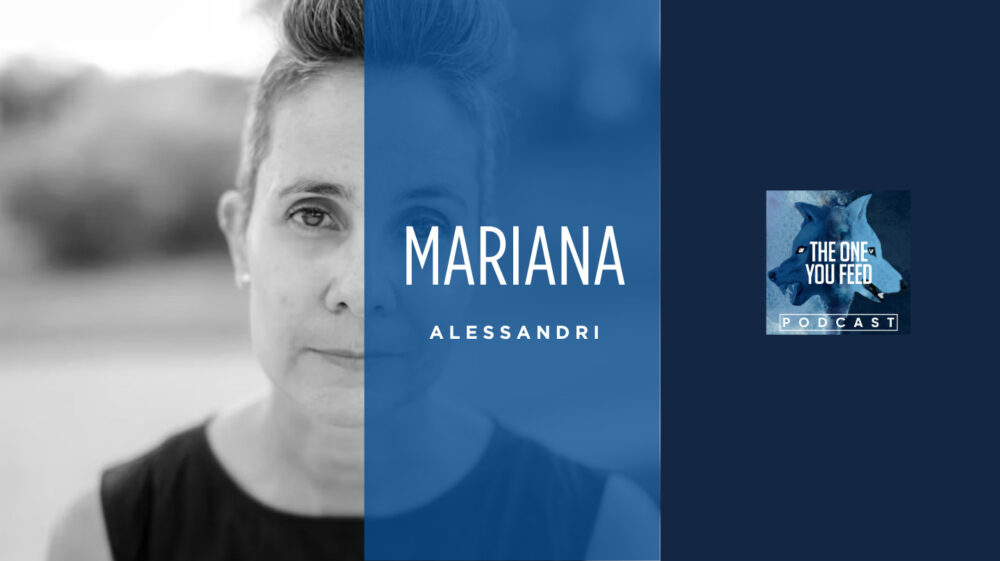
In this episode, philosopher Mariana Alessandri explores how to stop feeling bad about feeling bad, and why difficult emotions don’t mean there is something wrong with you. Drawing from her book, Night Vision: Seeing Ourselves Through Dark Moods, she discusses how the pressure to stay positive adds shame to pain, what it means to be on your own side, and how to support someone who’s struggling without trying to cheer them up. This conversation offers a more compassionate way to understand your emotions and feel less alone in them.
Feeling overwhelmed in your life? Check out Overwhelm is Optional — a 4-week email course that helps you feel calmer and more grounded without needing to do less. In under 10 minutes a day, you’ll learn simple mindset shifts (called “Still Points”) you can use right inside the life you already have. Sign up here for only $29!
Key Takeaways:
- How judging yourself for difficult emotions adds another layer of suffering
- Why the pressure to “choose happiness” can leave you feeling ashamed when you’re struggling
- What changes when you ask “What’s wrong?” instead of “What’s wrong with me?”
- How listening to anger and other uncomfortable emotions can help you understand what you need
- Why accepting emotional pain can coexist with wanting relief from it
- How to support someone through grief or sadness without demanding that they feel better
Mariana Alessandri is associate professor of philosophy at the University of Texas Rio Grande Valley, the nation’s first bilingual university. In addition, she and her partner are the founders of RGV PUEDE, a nonprofit whose mission is to promote dual language education in South Texas public schools. Her book is Night Vision: Seeing Ourselves Through Dark Moods.
Connect with Mariana Alessandri: Website | Instagram
If you enjoyed this conversation with Mariana Alessandri, check out these other episodes:
How Identity Can Affect How You Deal with Depression with Kimi Culp
This episode is sponsored by:
Ka’Chava is your daily all-in-one shake, with protein, fiber, greens, superfoods, vitamins, minerals, omega-3s, probiotics, and more. Go to KaChava.com and use code FEED for 15% off your first order.
David Protein bars deliver up to 28g of protein for just 150 calories—without sacrificing taste! For a limited time, our listeners can receive this special deal: buy 4 cartons and get the 5th free when you go to www.davidprotein.com/FEED
Episode Transcript:
Mariana Alessandri 00:00:00 I literally don’t think it’s possible for a human being to be broken, because then you’d have to ask, well, what are you a broken version of? Then, if you’re broken, what’s the ideal like? What does it mean to be unbroken is to not have any dark moods or anything like that. Seems to me creepier.
Chris Forbes 00:00:21 Welcome to the one you feed. Throughout time, great thinkers have recognized the importance of the thoughts. We have quotes like garbage in, garbage out or you are what you think ring true. And yet for many of us, our thoughts don’t strengthen or empower us. We tend toward negativity, self-pity, jealousy, or fear. We see what we don’t have instead of what we do. We think things that hold us back and dampen our spirit. But it’s not just about thinking our actions matter. It takes conscious, consistent, and creative effort to make a life worth living. This podcast is about how other people keep themselves moving in the right direction, how they feed their good wolf.
Eric Zimmer 00:01:06 There’s a phrase Mariana Alessandri kept using in this conversation, and every time she said it, I wanted to stop and say yes, that it’s to be on our own side. She spent years not being on hers. When she got angry at her kids, she called herself a monster. Being on her own side meant asking a different question what’s wrong instead of what’s wrong with me? And it turned out something was she was overwhelmed. And overwhelmed is something we can do something about. Mariana is a philosopher, and her book, Night Vision, is about dark moods and how to stop treating our own as evidence against us. You can’t learn anything from a mood that you are ashamed of. I’m Eric Zimmer and this is the one you feed. I’m Ariana. Welcome to the show.
Mariana Alessandri 00:01:59 Thank you for having me.
Eric Zimmer 00:02:01 I’m excited to discuss your latest book, which is called Night Vision Seeing Ourselves Through Dark Moods. And I’m pretty sure that plenty of listeners go through dark moods. I know I certainly have had more than my fair share of them in my life.
Eric Zimmer 00:02:16 And so I’m excited to talk with you about the value of of dark moods in our lives. But before we do that, we’ll start like we always do with the parable. In the parable, there’s a grandparent who’s talking with their grandchild. They say, in life there are two wolves inside of us that are always at battle. One is a good wolf, which represents things like kindness and bravery and love, and the other is a bad wolf, which represents things like greed and hatred and fear. And the grandchild stops and they think about it for a second, and they look up at their grandparent and they say, well, which one wins? And the grandparent says, the one you feed. So I’d like to start off by asking you what that parable means to you in your life and in the work that you do.
Mariana Alessandri 00:02:59 Thank you. I love that you asked this question to everybody, because you must have heard a thousand answers by now, a thousand different takes on it. Right. So I used to really like this sort of idea that there’s two different things inside of us, and they’re sort of vying for our attention, whether it’s like the angel and the devil or in the Jewish tradition, like jets or Heron jets or Heatwave.
Mariana Alessandri 00:03:21 And I don’t know if anyone has kind of talked about that, but I used to really like it. And it wasn’t until I had kids that I had to really think about, well, how am I going to teach my kids about the feelings that we have inside of us and like, remain one whole person rather than someone who feels constantly divided? And so I’ve moved away from enjoying that parable in terms of thinking of us both in terms of good and bad. So I don’t like those words for us, or just that they’re fighting like. Like there’s something so violent about it. Like there’s two things fighting inside of me. And so when I was writing this book, I was actually thinking about that parable and thinking about, well, what does it mean to feed it like the one you feed? So that means that there’s something inside of us. There’s these two things inside of us, one of which we feed and the other of which we starve, and hoping that the one we feed is going to completely demolish the other one.
Mariana Alessandri 00:04:17 And then I just think, oh, like, if that’s inside of me, then, then that means that I’m going to be demolishing part of myself. I’m going to be hurting part of myself. I’m going to be rejecting part of myself and a really nasty death, a nasty death of starvation. And so I have kind of just taken that parable and thought of it more as like, wow, that sounds like a recipe for disaster to feed a side of yourself instead of kind of talking to it, thinking about it, asking it what it’s there for. Why are we having these feelings? There’s a few philosophers who are kind of working on rehabilitating these emotions like envy and anger and things like this. And so I’m more like, I want to be nice to myself. Now I feel like I grew up with a lot of sense of being like, bad. And I feel like I don’t want that for my kids. I want to give them this portrait of us. Like we feed both sides and like we love both sides.
Mariana Alessandri 00:05:09 We love ourselves. The other thing that this made me think of is when you have kids, right? So when you have a kid and they start crying, like inevitably at some point in your life, someone says, well, they’re just crying for attention. And that’s supposed to mean, yeah, don’t give it to them. Like all they want is your attention. And I have completely flipped on that. I’m like, yeah, they I guess they want to that’s that’s a pretty straightforward ask, right? Like, oh, you need my attention. Let me give you my attention. And so that’s how I feel now about the so-called like bad wolf, which, you know, if we’re looking at Plato, he actually does call it a dark wolf. I know that you try not to kind of put color on him, but it’s just like historically, the bad wolf is the dark wolf is the black wolf is the passions, you know. So I think more like the problem is that we’re starving part of ourselves.
Mariana Alessandri 00:05:58 The problem isn’t that there’s these two wolves fighting inside of us. And I think if we can get right with, like, trying to give attention to the parts of us that need more attention, I think will be, I don’t know, I guess happier people or more well-rounded or more accepting or at least less divided people.
Eric Zimmer 00:06:13 Yeah. In the book, you actually talk about, you know, that if we were to feed the bad wolf, it might even seek out the light wolf and lay down and they’ll curl up together at our feet, which is just a beautiful metaphor. There are certainly, as you mentioned, I have not done a thousand interviews, but I’ve done probably 650. So I’ve heard this a lot, and I have read it a lot. And if I were to start a show today, I doubt I would start it with that parable as the orienting point. But it’s worked this far, and I think it allows us to look at things from different angles. But like you, it used to be more straightforward to me than it is now.
Eric Zimmer 00:06:57 Although I still see the core message being one of some degree of choice about attention, and we’re going to get into to what degree do we control our moods? I think that’s a really important question, but we do have some degree of ability to choose where to place attention. And the thing I like about the poem or the poem, the parable also, is that I feel like it humanizes us, that we all feel these things inside of us that often feel like they’re going different directions. Maybe, you know, but the idea of starving one part of ourselves to me now feels like air, which it actually doesn’t say to do. You know, I always in my mind, I sort of justify it like, well, maybe they’re just giving the good wolf a little bit more food than the pet. But anyway, so that’s a lot about me and the parable, which is not what we are here to talk about. I want to start by talking about how we as society view what you are calling darker moods.
Eric Zimmer 00:08:07 And there’s a question that you raise that I really think is important. And it says, does it help or hurt that most of our dark moods are classified as mental illnesses? So I’m going to let you jump into that fairly wide pool wherever you like.
Mariana Alessandri 00:08:23 Okay. Thank you. I agree with you about the relatability of the metaphor of the wolves, because I was asking my kids about it last night. Like, what would what would they think? What? And they got it right away. They’re 12 and ten. They get it. And so it’s a very compelling metaphor that allows you to sort of see it and then say, okay, well, what do we do with the fact that we sometimes have these competing feelings? So about the dark moods. How does society see them? I think I always like to start by talking about the light, because that helps me orient. So I think of it as like a two edged system or something, where the overriding pressure from our society, at least that I feel, and that some readers have felt with me, is the pressure to be positive, right? The pressure to be light, the pressure to be bright, the pressure to glow, the pressure to be radiant, the pressure to be brilliant.
Mariana Alessandri 00:09:11 We have so many tiny metaphors that privilege the light over the dark. And so you’re supposed to bring your own sunshine in these days, right? No one’s supposed to get you down. If you’re in a dark mood, you’re supposed to kind of not subject anyone to that. Right. Like clothes. Like, like, isolate yourself or something like that. We’re supposed to shed light on difficult problems. We’re supposed to have a light bulb moment and, you know, all the way back to just looking on the bright side, right? Like we’re talking 1950s stuff. And so what I see around me, in my world, at least in the US, and I’ve heard that other people from other places are feeling similar things, is just the pressure to associate light with intelligence, with positivity, with health, with just anything that you think of as good is like, we’ll attach some kind of metaphor that makes it sound really bright and even lightning up like so that’s all like one way of thinking about it.
Mariana Alessandri 00:10:08 And it’s attached to slogans that don’t invoke the light. But I feel like they’re of a piece which is like, no bad days, right? Hashtag no bad days. I just when I see it like my my kid was playing soccer when I was writing this book, and his coach actually wore that shirt that said hashtag no bad days. And I was like, oh, like, I can’t even I can’t even come on the field if that’s the playing field. Like, I can’t even show up. And I think it was a hashtag.
Eric Zimmer 00:10:40 No, no bad years.
Mariana Alessandri 00:10:43 Yes. Nothing bad. Zero bad. It’s kind of like all light and no dark. And I think it was Nora McInerney who said that when she sees a mat like a welcome mat that says good vibes, only she just turns around and, like, leaves, right? Because it’s just impossible. And it’s a very stark, like, all or nothing good vibes only. And then the epitome of it for me is the choose happy, choose happy and that I’m sure we’ll get into more because it’s got to do with the Stoics.
Mariana Alessandri 00:11:08 But but it’s just this kind of overriding sense that this is all within my control and I can choose happy, and it’s about my attitude and I can make myself well. And so when I am happy, sometimes I tend to think that I’ve done it right, like it was because of my choices. It was because I changed my perspective. It was because I adopted a positive attitude. It was because I made lemonade out of lemons. So there is no conflict there. And if I am writing a self-help book, then I can say, oh, I was in a dark place too. And then I did X, Y, and Z, and now I’m in the bright place. And you can get there too. And here’s what you have to do. So there’s no conflict until the day that you wake up. Days, years that you wake up and you’re like, oh, not okay. And I’m not feeling well and I don’t know how to call it. And so what I noticed was that the words, just like all the words for the light stuff, are really good and positive and strong.
Mariana Alessandri 00:12:09 The words for the dark moods are pretty hideous. And these are the words supplied to us by society. I don’t think we’re making these words up as individuals. It’s mental illness. It’s disease, it’s dangerous. I mean, the darkness and the danger has always been associated with ugliness, with non intelligence poison. We can get back to Seneca on that. Brokenness is a huge one. This was a big deal. I went to Mexico I think, two years ago, and there was this beautiful drawing and it was like one of those Greek busts, you know, the head, and it was chopped in half. So it was only half of the the busts face and in English across it, it said broken. And I was like, oh that’s interesting right. Like one it’s in English but it’s in Mexico. I bought it because I want to remember always that it feels like a this thing that we have attached to it because it’s in English like has like seeped down all the way into Mexico City.
Mariana Alessandri 00:13:08 The idea that if I have a mental illness, then I am broken. I’m a broken human being and otherwise I’d be functioning. We also say I’m breaking down. We say I’m a hot mess, like there’s no nice ways to talk about it when we’re in pain or when we’re grieving or when we’re anxious. Like we have so much pressure to kind of just feel bad about feeling bad. And I think it’s bad enough just to feel bad. I think it’s bad enough to be grieving. But then there’s some standard upon which we are measured against, and then we end up feeling what, in this book I’m calling shame, which is just this feeling bad about feeling bad. And that’s the layer that I would like to take off. I’d like to sort of expose it as a societal problem, like society is not giving us enough language, but then what we get from certain sectors of society is like, well, you just have to change your narrative. And I’m like, well, me like I what? Like we’re getting words from society, right? These are the words that I’ve been taught to use.
Mariana Alessandri 00:14:03 And so I want to rethink about, like how to talk nicer about our dark moods as a society, not just as an individual, because I can like, do the work, quote unquote, by myself. But I think it’s like a bigger problem than just me. I’m not the only one who thought that I was a monster every time I got angry. Right? That’s a societal convention attached to women who, you know, get angry and it’s quote unquote unladylike. Right? So there’s like, lots of societal, like trimmings. It’s it’s steeped in ancient philosophy, but it has these like legs in all in a lot of different sectors in society. So the light metaphor is the bright one, and then the underbelly is what I’m calling the brokenness story, which is just like, once you’re not in that club anymore, then you feel like garbage about yourself. You feel like you have no dignity. You feel like you’re the only one going through it, and you feel like if everyone else is going, okay, well, at least you’re in a club with all these other losers, right? There’s nothing like positive about it.
Mariana Alessandri 00:15:00 So I wanted to try to I don’t, I guess, infiltrate that narrative and just add different ways of thinking about it through using different philosophers.
Eric Zimmer 00:15:10 There’s so many things in what you said there at so many different directions that we could go. I agree with you that anything that we can do that gets rid of feeling bad about feeling bad is a good thing, right? Anything that we can do that Normalizes emotion. And when I say emotion, I mean that just means there’s going to be good and bad emotions, right? There’s just both. That normalizes that I think is a really good thing. I also think what gets challenging, and this is as someone who is, you know, a former heroin addict who’s dealt with actual clinical depression at one point and then I’m not sure what to call it in its later years. That’s an interesting topic. As somebody who has felt all that, there’s also in me a desire to not feel that, and not just because society tells me that it’s bad, but because it hurts.
Eric Zimmer 00:16:10 Right? Like it? I don’t, I don’t, I don’t like it. Even when I accept it, it still hurts. And I, and I seek a way of relating to it differently. And so I think some of it is we’ve got a societal thing to it. And then I think there’s also but underneath that is the natural desire that I think humans have to try to alleviate their very real emotional pain.
Mariana Alessandri 00:16:40 Yes. No. I’m so happy that you brought it up with such nuance. Like, I think what’s important in talking about any of this, there’s so many ways to fall into a rut or a pitfall or like ways of thinking that have been done before and that don’t serve us. And one of them is this kind of idea, like your depression is your gift or something like this, right? Like this is the romanticization of like, oh, I needed my anxiety to push me. And I 100% I’m on the side of the individual. Like, if you want to hate your anxiety, go for it.
Mariana Alessandri 00:17:10 That’s okay. Like from the place of pain, you could want to trash it like anything. And Gloria Anzaldua is actually the philosopher I talk about when talking about depression, and I think she would have trashed it if given the choice at all. Yeah, right. So so I think hating it is perfectly 100% within your rights and its individual right. There are some people who end up saying, oh well, this actually turned out to be okay for me. Whatever. Like no one. I don’t think anyone has the right to say that for somebody else. Like, oh, you needed this. This was your gift. This is how you learned x, y. You can only say that I think in first person. So for you, it’s just like the pain. You feel like you can be 100% against that pain and want to get rid of it. But for me, the fact is that we always already are still going to have it. How do we then create the narrative of the self given that you have a thing? It’s just like the wolves.
Mariana Alessandri 00:17:59 It reminds me of the wolves. It’s like, is it inside of us? Is it alongside of us? And I’ve done some reading on like children’s books about mental illness. It’s really interesting to look at how people are trying to teach kids to think about this stuff because, you know, in one book, anxiety is like this bubble that’s outside of you. And sometimes it comes and you put it in your pocket and then you want to get rid of it. And so some metaphors I think are more apt and probably depends on who you are and how you think of your anxiety, depression, etc. which is also fine. But I guess my point is, like the metaphors we use and the narrative we tell about our own lives. I think a lot of stuff is better than, well, I’m just garbage then, right? I am broken, I am breaking down. And I’ve gotten this from my students who basically say, well, I’m a great human being, except for, you know, I’m broken because I have to take medicine or I’m great, except for that I have depression.
Mariana Alessandri 00:18:49 Other than that, I’m perfect. And so what they would like to do is trash the depression. And I get that right. Like, if we could trash it, let’s just do that. I don’t think anyone needs it, so let’s trash it. But we can’t. Is the problem like no medicine is actually good enough for that? So now like Anzaldua, it’s like, okay, I have it. I can either hide it in a corner of my existence and not tell anyone about it and only show them my beautiful writerly side or my creative side and just kind of be embarrassed and ashamed of this. Or I can, like, fold it into the way that I talk about my life and myself and like it’s sad and it’s painful and also it’s part of me. So what do I do with the wolf? Like, if the wolf is, you know, depression, like it’s it, it’s either going to be part of your narrative or it isn’t. My concern mostly is how does the self feel about itself? Is the language that we use used to turn against ourselves, or is the language that we used used to kind of create a whole self out of us? The good, the bad and the ugly, the parts that feel good, the parts that feel bad.
Mariana Alessandri 00:19:49 But in no way do I think we have to say that they’re good for us and they only feel bad. You know, I think we can we can just safely hate them and also realize that we’re kind of stuck with them. And so what do we do? How do we build them into the way that we think about ourselves? Ever.
Eric Zimmer 00:20:29 Again, there’s about a hundred different places to take that really profound answer. And I think that talking about mental illness, I often think about this a little bit like the concept of addiction as a disease. I feel like that was a step forward because before it was a moral failing. Right. So to step to a disease feels like a progressive step, and yet it’s still a label that you can. That can either be empowering or it can be disempowering as a label. And that very same label alcoholic for me, has played both those roles at points. There’s points where that label was really helpful and useful to me. Same as being a person who has depression was to call it something and to be able to talk about it with other people who had the same thing was helpful.
Eric Zimmer 00:21:24 And then there was a point where that label becomes limiting or or self-reinforcing. And so I, like you think it’s really tricky how we talk about these things. I don’t think there are easy answers. I mean, I think that you’re ultimately right, that every individual should get to choose for themselves the metaphor that makes sense. My experience is it’s only later that we have enough insight about what’s even happening to start making those sort of choices, and maybe that’s just the way it is. And at the same time, as you say, societal labels can be really difficult. And I’m truly of two minds around how much we discuss mental health these days and the ways that we do it, because I see it as a really sort of double edged sword.
Mariana Alessandri 00:22:18 Yeah. I like that you brought up disease as progress, because I think that’s true. I think it’s like a step or, you know, especially if we’re talking about the label as diagnosis. Right. It’s it’s much better. So I still have some students whose parents think that depression is laziness.
Eric Zimmer 00:22:37 Right.
Mariana Alessandri 00:22:38 Right. Or sin? Lack of faith. This. Like, what do you have to be depressed about? What do you mean? So that’s like, I see, like the before I’m like, oh, whoa. We’re much.
Eric Zimmer 00:22:46 Better. Really bad. Yeah. Exactly.
Mariana Alessandri 00:22:48 Yeah. Because if we just thought that alcoholics are just assholes, like, we’re not going to get very far. Right. But we have to realize, like, okay, these are human beings. Nobody is choosing this. There’s got to be something more at play. There’s got to be something that feels sort of out of one’s hands. You know, and so I think that the diagnosis or the label or the disease takes it from being something that I’m doing to everyone around me to something that is wrong, right? Like what’s wrong? But I want to keep it from being what’s wrong with me, right? Like, I’m always wary of that language. I want to stay in the zone of, like, what’s wrong? What’s wrong with my circumstances? What’s going on versus, like, I’m failing myself or I’ve been diseased or something.
Mariana Alessandri 00:23:30 So I’ve thought a lot about this, kind of like, I don’t know, just the difference between depression and a broken foot. Or is depression just a broken brain or all that kind of like talk and where it leads us? Like back to the metaphor language, right? If you go down this road, where are you going to end up? Are you going to be on your side, on your own side, or are you going to be against yourself if you go down this road, are you going to be on your own side or against yourself? And I also favor everyone having like multiple if they want multiple labels. This is what I liked about Anzaldua, specifically talking about her depression, because she was like she could call it depression, and she had a couple of times, but most of the time she didn’t call it depression. So I think we don’t have to get rid of labels. We don’t have to get rid of diagnoses. Obviously, there’s a lot of importance in diagnoses for access to health care.
Mariana Alessandri 00:24:14 So I think diagnoses are great. People seem to love them like you were suggesting, right? Like for a time like this is great because. Because I feel seen otherwise. I just thought I was crazy. Otherwise I just thought this. But now that I have this label, it’s legitimate. So I think that we don’t have to get rid of the word mental illness or any of the labels. Like I think they’re fine. I don’t like how they are just all encompassing. Like it’s almost like they’re exclusive. And I want to say, okay, you can call it anxiety, but you can also call it this. You can. I like the people who are trying to be creative. I think Glennon Doyle is one who’s like trying to be creative about like, this is my fire or this is my energy or something like, just let’s add more labels. If anything, if we want labels like add more different ways to think about it rather than only I’m broken, I’m mentally ill. You know, this is my disease.
Mariana Alessandri 00:25:01 Because that’s just this is not going to inspire a person to feel really good about themselves. It’s going to make them feel like flawed human beings. And I just think we’re not. We’re. That is human. We’re all human. I don’t think any of us is broken. I literally don’t think it’s possible for a human being to be broken, because then you’d have to ask, well, what are you, a broken version of them? If you’re broken, what’s the ideal like? What does it mean to be unbroken is to not have any dark moods or anything like that seems to be creepier. So I just want to introduce like, more things or allow people to have the creativity to to have more kind of labels, more ways of describing themselves than just the ones supplied by society.
Eric Zimmer 00:25:40 Yeah, I think you say it really well. You say, can we imagine recognizing a person’s suffering and giving them access to help without asking them to see themselves as broken? And I think that says it so beautifully.
Eric Zimmer 00:25:54 There’s another phrase that you’ve used a number of times that I picked up, and it’s like literally the the top thing kind of on my list to talk about. And I’m glad you keep saying it, which is to be on our own side. We interviewed a guy, his name’s Aziz, Ghazipur, and he wrote a book. It’s called On My Own Side. And the minute I heard that phrase, I went, yes, that’s exactly it. What does that mean to you? To be on our own side?
Mariana Alessandri 00:26:22 I mean, I can tell you I have years of experience not being on my own side, right? So my example in the book is my anger. Like, I’m super angry person. And a lot of things set me off. And I used to just think, this is my flaw. This is my sin. This is my weakness. This is what makes me a bad person. This is what makes me a monster. Especially as a woman and especially as a mother. Right? Like this.
Mariana Alessandri 00:26:43 This is like, just the worst thing you can be as a mother is someone who’s like, mean to your kids or angry or just shows their anger or something. So I just would look in the mirror and be like, what kind of a monster are you? That was my word. And I it’s not a stretch to say that that’s not being on your own side, right? It’s to look at yourself with disdain or embarrassment or shame or just it’s to say that you’re wrong the way you are, right, that your way is not okay. That you are fundamentally not worthy. The way that maybe other people are like. You know, I’ve heard of people refer to themselves as trash people. And just like all these things that I could definitely relate to, I think this is something that still sort of comes into my mind because it’s from childhood, not from anyone even telling me that, but just from the way that I was raised. And like, people are just kind of, I don’t know, jerks or selfish or greedy or all these things.
Mariana Alessandri 00:27:45 And so I would have a relationship with myself that was super critical, right? Just whatever you’re doing, it must be wrong. And sometimes with my husband, we joke because I’ll be upset about something and then he’ll be like, oh, you probably just did something really stupid and wrong. And then I just have to laugh because it’s exactly where my mind is going. Yeah, but then I think part of why I wrote this book is like, I don’t want that. I want to befriend myself. So to be on my own side is to say, hey, what’s going on? Like, if I find myself so angry, maybe something’s actually going on. And my husband’s cousin works in Denali, in Alaska, in the Lake Forest, I don’t know, Alaskan tundra or something. And she has people go out there with her in some kind of team, and if one of them is constantly complaining, like constantly have something wrong, constantly needy, constantly something, she’s like, oh, it’s deeper, right? Something is really wrong, right? So she’s using that as a sign that you have to investigate something.
Mariana Alessandri 00:28:43 I think it’s a myth that people just want to be negative. I’ve been told that a lot. Oh, you just like being negative. No. Is there something about it that you’re trying to reach out? You’re trying to get help. You’re trying to announce something about yourself, about your situation, and you maybe don’t know what it is. Right. So it comes out in these forms that may be irritating to other people, But I think to take my own side is to listen to those, like with my anger. And this is what I had to do during Covid and say, why am I yelling at my kids? What’s going on? Like what? Really? Instead of just because then if you don’t take your own side, it stops there. It stops that I’m a monster. I guess I’m just an asshole. That’s it. And I don’t think about it anymore. I don’t listen to it. I don’t try to understand my situation. It’s just me that’s broken. Yeah, but if I can get past that, and Audre Lorde and Maria Louganis really helped me get past it to be like, wait a second time out, let’s think of this as neutral.
Mariana Alessandri 00:29:36 Let’s think of this as just information. What is going on? What’s wrong? Not what’s wrong with me, but what’s wrong with my situation. And then you can find out things that you wouldn’t have found out if you’re not taking your own side. So I love that phrase just because it makes me feel like I can breathe like of all things. Like, I just want people to take their own side and not let society make them feel like they’re less than human, or less than people, or less than fully formed. Like we’re all. We’re. None of us is broken. We’re fully formed. We’re just. We struggle and we’re in pain and we’re grieving. And these are all the things of life.
Eric Zimmer 00:30:34 Eight years ago, I was completely overwhelmed. My life was full with good things, a challenging career, two teenage boys, a growing podcast, and a mother who needed care. But I had a persistent feeling of, I can’t keep doing this, but I valued everything I was doing and I wasn’t willing to let any of them go.
Eric Zimmer 00:30:54 And the advice to do less only made me more overwhelmed. That’s when I stumbled into something I now call this still point method. A way of using small moments throughout my day to change not how much I had to do, but how I felt while I was doing it. And so I wanted to build something I wish I’d had eight years ago. So you don’t have to stumble towards an answer that something is now here and it’s called overwhelm is optional tools for when you can’t do less. It’s an email course that fits into moments you already have. Taking less than ten minutes total a day. It isn’t about doing less, it’s about relating differently to what you do. I think it’s the most useful tool we’ve ever built. The launch price is $29 if life is too full, but you still need relief from overwhelm, check out overwhelm is optional. Go to one. You feed your net. Overwhelm. That’s one you feed net. I think what you said about your anger there is, is a really important idea, because to be on our own side is one way of rephrasing a term that was popularized by someone in your state, Kristin Neff, about self-compassion.
Eric Zimmer 00:32:09 It’s a slightly different way of saying the same thing. And one of the things that I think is so valuable about that idea is exactly what you said. If you stop at I’m a monster or I’m broken or I’m bad, there’s not a lot of opportunity for you to actually become different. There’s not a lot of opportunity for you to learn how, maybe not to, you know, be angry at your children. Right. In your book, it goes without saying. You get to a point where you really sort of get to the place where it’s like being angry is fine. I’m actually okay with that, right? It’s just there are certain ways that in which I express it that I wish I was doing differently. And we can’t do that when we’re critical of ourselves. I don’t think, because I think that we shut down the learning centers in our brain by doing that, and all of a sudden we we can’t make changes, even if that’s what we decide we want to do. It’s a really stuck point.
Mariana Alessandri 00:33:14 Yeah, no, I agree. It made me think of a lot of people like Brené Brown talking about vulnerability and the way she describes shame, which is that feeling. It just stops you in your tracks. Right? So if if shame is the feeling bad about feeling bad, I’m angry. I already feel angry. Right? That’s bad enough. I’m angry and now I feel bad about it. Then I shut down. Just like what you said is, I can’t then be like, oh how? Let’s get curious about this emotion. How might I do like the curiosity will only come in if I can get rid of the top layer of shame and I can just be like, oh yes, it’s a perfectly human emotion to get angry, and it probably means something. And something’s probably telling me something. I don’t let myself off the hook in terms of like, oh, that just means all my anger’s fine. Like, I think that especially Audre Lorde is very nuanced in in her description about anger.
Mariana Alessandri 00:34:02 And it’s not to say that all anger is now virtuous, but I don’t want it to be all vicious. Like, I don’t want our knee jerk reaction to be if I’m angry, that means it’s bad. And I think that is the legacy that we get from the Stoics. And reading Seneca with my students is one of the funnest things I can do, because he says it so baldly and so many times over again that anger is a poison and like, you shouldn’t even let yourself feel it. Like Aristotle’s nicer to us. Aristotle’s like, oh, whatever, it’s a feeling. Just don’t act on it. Don’t be a jerk to people, right? Don’t hit people. Like be careful of your behaviors. So I think of it as like Aristotle says, well, I’ll start with Seneca or the Stoics. They say, like, I’m sorry that I got angry. And if you say things like that, I’m sorry that I felt this way. I’m sorry that I’m sad. I’m sorry that I’m angry.
Mariana Alessandri 00:34:51 That actually means that you believe you can stop it from happening. That you’re of a of an older school? I think that is like I can, by force of will and practice and habit and and the good stoic, lifelong practice. Like I can stop the emotion from bubbling up in me. And then the Aristotle who I found nicer says, no, you know what? It’s a feeling. Feelings happen. Feelings come and go. You are neither judged nor praised for your feelings, right? It’s not about your feelings. It’s about your action. It’s about what you do with it. And I feel like our world is actually full of both people and sometimes people who think both things, which as a philosopher, I don’t think you can. I think you actually have to choose. Like either you believe that you are in 100% in control of your emotion or that you’re not. And I think that the not is a newer way of thinking. Like the people who say all the feels and like you just feel your feelings.
Mariana Alessandri 00:35:45 But his line is strong, like Aristotle, that is. Well, just don’t act on it, right? Like, don’t don’t throw it all away because your behavior is on which you get judged. Right? So if you act badly and you, you know, curse out a waiter because you’re mad, like, that’s not okay. But it was okay that you were mad that they spilled water on you or something like that. So I kind of think it’s a really important distinction to think through, whether we’re more leaning as Stoics individually. Like, do you think that is something that you should have been able to control, that you shouldn’t have even ever gotten angry because then you’re going to be real tight on yourself. You’re going to be super critical of yourself. And you’re like, oh my God, I can’t believe I let myself get angry again. Or if you’re more Aristotelian, you’d be like, okay, that’s okay, but I really shouldn’t have done what I did. And in the book, I ended up throwing almonds at my kids because they couldn’t decide.
Mariana Alessandri 00:36:36 They couldn’t split them in half evenly, you know, and they were little. And so I just ended up being like, fine, these are yours. And those are yours, you know? And it’s like, no, that was not the right behavior. Right? Like, yes, the anger is okay. But then upon reflection, it’s like, okay, I have to go and apologize, right? Like so that’s kind of more Aristotle’s way of like you can control your behavior, but don’t get stuck trying to control your feelings. And my students, I give them an exercise one week. They have to be Aristotelian, and they get to have whatever feelings without being mad at themselves about those feelings. But they have to act virtuously. And then another week we try stoicism. You have to try not to feel bad feelings because those are going to bring you down. They’re going to make you feel worse if you like. Allow them in and see how much control you think you have over your emotions, and then write it.
Mariana Alessandri 00:37:27 Write a paper about it, you know? So that’s like really fun to sort of practice. What feels more natural to which individual.
Eric Zimmer 00:37:34 Yeah, I think it’s interesting because unlike you, I would I would split the difference. Right. I would, I would say, well, no, we were not ultimately in charge of our emotions. I don’t think our emotions have a lever on them that we grab and pull, but I think there are levers around our emotions that influence the way we think about a situation. And again, I just feel like the Stoics takes it way too far, right? It’s sort of like everything that happens is a result of what’s going on inside of you, that it’s all there. And I think that’s preposterous, right? We exist in a world with other people and situations that are fair and not fair and just and unjust, and we have different genetic makeups and we have all these different things. So I think to to believe that it’s all inside me, but to also believe that it’s all the situation is, I think, misguided also because there is a role for how we frame that situation.
Eric Zimmer 00:38:35 And so I would sort of be a, you know, how do I but this is me in general. I’m not saying it’s always right, which is that I am a I’m a middle way kind of person. Right. So I would be like, well, no, we can’t completely control our emotions and we can have influences. We can do things that make it more likely that we feel a certain way. I think my depression is a great one. Or my melancholy, I don’t even know what to call it anymore is one that on some level I’ve tried. I can’t make it go away. It just seems to be I’m more lenient on the like. Well, it’s just part of who I am. It’s part of my temperament. And yet I know that there are very clear things that I can do in my life that make it more likely that I won’t spiral into the really darkest forms of it.
Mariana Alessandri 00:39:25 Yeah, that sounds more like Aristotle, because Aristotle’s pool is like bigger. If the Stoics are here kind of as more extreme.
Mariana Alessandri 00:39:31 Aristotle gives a lot of leeway, like who we surround ourselves with, right? Who are we friends with? We can control the circumstances of our lives that will make it more or less apt or like common that we will feel those things. So I think you’re right. Or I think that you’re you’re describing a position which is pretty. Not in between them necessarily, but like Aristotle has room for all of that stuff, all of that. It all has to do with behavior choices, right? The choices I make about who I’m around, about what I watch, about what I allow myself, you know, to do on my phone or things like that. Like certain choices will probably exacerbate this bad feeling, and other choices might not. And so while I think ultimately when push comes to shove, he’s going to say, you know, investigate more or like put more of your effort into that, into those circumstances, into how are you building your life, like physically through your actions and interactions, rather than living up here censuring yourself for like, why? Why am I still like this? Right? Especially when something comes back and back, we get super angry at ourselves.
Mariana Alessandri 00:40:35 God, like I’m 45 years old. Like I shouldn’t be still like this, you know? And that can just, like, eat us up inside. So I think he would rather be like, it’s not just external circumstances that are beyond my control, but certainly external circumstances that are within my control.
Eric Zimmer 00:40:50 Yeah, I think that I can take that back to you and your anger, right, that you describe in the book, because what you ultimately had to do was go. I was, you know, I don’t like the way I acted at my children, and yet I don’t seem to not be able to do that. So what’s going on here? You listened to your anger more deeply, you allowed it more deeply, and it showed you some more structural elements of your life. These environments that we’re talking about that needed to change for you to be the person that you wanted to be. Is that an accurate way of saying it?
Mariana Alessandri 00:41:27 Yes, yes, yes, yes. I love that you use the word design.
Mariana Alessandri 00:41:30 And I think that word used to be so confusing to me. Like, what does that even mean? But it really is. How do you structure your life such that you won’t get as irritated? Like if I’m irritated every single day, am I overwhelmed? Like like it was so much nicer for me to feel like I was overwhelmed than feel like I was a monster. That was like a nicer narrative for me. And then I was like, okay, okay. If I’m overwhelmed, right with curiosity, like, why am I overwhelmed? What’s going on? What could I reduce? Is there anything that I could do, like design your life so that you kind of don’t have to rely on willpower? I think that’s like beautifully stated. There’s so many times when we think or would like willpower to be there, but it’s only there for like the first ten minutes, right? And then after that, whether it’s like, you know, resolutions or whatever, like it’s like when they go by the wayside, if I can say this part of my life is designed such that every three months I’m going to check in with this or every two weeks I’m going to do this like some part of it is like set so that you don’t have to have the motivation or the willpower.
Mariana Alessandri 00:42:31 But you also said something else that I really liked, which is this kind of part of me wants to do this, or the better part of me said. And that reminded me I am pretty taken with the internal family systems. And I know that you interviewed Richard Schwartz because what he does is, is just break it up like we’re so we’re all multiple. Like, part of me wants to do that. Right? And then another part of me doesn’t want to do that. And so if the part of me wins out that didn’t want to do that, then instead of being like, I’m so mad at you, like, why did why do you run the show? Why did you win again? Why couldn’t I control my X, Y, or Z? Then it’s like to be like friendly with it. Like, oh, that’s interesting. Like, what’s up with you? Like, I often talk to this part of me that I just call worry, and it wakes me up in the middle of the night, and it talks to me incessantly about how I’m doing everything wrong and how I’m never going to finish anything and all this.
Mariana Alessandri 00:43:26 And I just sort of ask it like, why? What are you getting out of this? Why do you have to wake me up at this hour and keep me up for an hour and making me feel bad, you know? And then what it said was. Oh, it’s because I can’t get you during the day. It’s. You never let me talk during the day. And I was like, okay. Would you be happier if I let you talk during the day? And it’s worried for me. And I like his whole system that all the parts are good, all the parts are just trying to help you, even if they look like bad parts. It reminds me of that kid trying to get attention like they need attention. Okay, so let me give them attention. And I’m also currently in therapy, and my therapist is telling me when you have nightmares and you run away from the thing, sometimes the thing gets bigger and scarier and he’s like, try if you can, just to turn toward it and see what happens if you turn the other way, or try to touch it or try to go toward it because it’s getting bigger and scarier because you don’t know what it is.
Mariana Alessandri 00:44:16 But if you turn toward it, maybe it was nothing. It’s trying to get your attention. And so it will get more and more kind of, I don’t know, scary. But so I’m trying more and more in my life to turn toward the things. So like in your example of like part of me wants to do this and part of me is definitely rebelling. It’s like, okay, rebellious part, what are you trying to protect of me? Like, how are you trying to help me? Even though it looks like you’re sabotaging my life? What are you trying to do for me that, like, you’re just sort of misunderstood? I like thinking of our parts as kind of like. I guess it’s like the bad wolf, right? It’s just the misunderstood or, like, has its reasons, wants to be listened to, wants to be heard. Then for me, that achieves the same aim of being like a unified individual or an individual who’s on its own side, like all the parts of me are good.
Mariana Alessandri 00:45:00 No one here is really bad. Sometimes we do things that we can’t explain because we have different sides of us that have different goals. But, you know, I don’t. I like the idea of like listening. I think that’s a big takeaway for me from my study of these moods is like, what happens when we turn toward them? We stop being so afraid of them, stop being so ashamed of them, and actually, like, listen to them. What are they trying to tell us to do for us, to get us to do, etc.?
Eric Zimmer 00:45:25 Yeah, I think that’s the other benefit of being on our own side, right, is to assume that, not that we’re broken, that we’re bad, but the things that we’re doing, there’s reasons for. And so why what’s happening? You know, Gabor Mate said it so clearly years and years ago. He said, you know, don’t ask why the addiction asked why the pain. Right. And I think that it’s a similar idea.
Eric Zimmer 00:45:50 And it’s not to say that like, you excuse things that you do while you’re an addict because of things that happen to you that caused you pain. That’s not it. But it’s the right direction to look right. It’s the right direction. And look, if I’m wanting to behave a certain way and I’m consistently behaving a different way, it’s meeting some needs somewhere, somehow, you know, it makes sense to some part of us, as you said. And what is that? But you have to be on your own side to figure that out, because if you’re not on your own side, then you are in the I’m awful, I’m bad, I’m broken, I can’t get back. I mean, all the permutations of of this that as we said, sort of in the beginning, make whatever the situation is worse. I mean, addiction is a condition that is chain driven. I mean, it’s part of the engine if it didn’t exist. I’m not saying that nobody would be an addict, but I think the way out of it might be easier and faster to find.
Eric Zimmer 00:46:54 But the shame is the is the sort of maybe it’s not the engine, it’s a, it’s a fuel that the engine is, is using.
Mariana Alessandri 00:47:01 It opens like a fascinating can of worms. Because I thought of writing this, I thought of writing my book as like a love letter to those people who are the way Gloria Anzaldua put it, excruciatingly alive to the world. And I think a lot of times addicts fall into that. I don’t know if all the time or something, but like, who out there finds themselves excruciatingly alive to the world such that a lot of things hurt us, right? People that you know are called sensitive and like, forget mental illness. Just just the very idea that calling someone sensitive is an insult. Shapes the way we’re going to feel about ourselves. Right? Oh, you wear your heart on your sleeve. What’s wrong with you? Why do you cry at everything? Like. And then those voices get inside of us, and we do it to ourselves. But the can of worms that I’ve never really thought about is like what would come of addiction and the sort of need to turn to harmful substances if our society had more night vision.
Mariana Alessandri 00:47:58 Right? If if our society could give us a break, could have half bad days, could like, not expect so much production and positivity out of us, but could just lower the bar on like what a person could be expected to do or to be or to feel or whatever. And that way, those of us who are excruciatingly alive to the world maybe wouldn’t have to numb it in one thing or another. Like if it were more acceptable, I like to imagine other worlds because that’s the only way I can do this. Because that’s why I’m not a social scientist is because I can’t do studies on this. There’s so many things that it’s like, well, what about before the time? Or what if we lived in a totally different world and it’s like, you can’t study what already is because we’re already influenced by the way society talks about us. But I wonder, you know, like, what would it look like if we didn’t feel like we had to run to something else? Because the world is so like it’s so bright? I always think of the metaphor because I live in South Texas like it’s so bright.
Mariana Alessandri 00:48:53 People in South Texas know you need shade. You need a tree, you need a cave. It’s maybe only people who don’t, who just want eternal sunshine all the time, and you’re just going to get burned all the time. Like there’s no way to live in that space of all light. And so what do we do when we need shade? Like, there’s something so beautiful about being able to be in the shade together, being able to express or experience a dark mood with somebody else. But because so many people that love us are not very good emotionally with us. Like they don’t know how to handle us and they want us to get over it. And they’re very loving. And they say, you know, no, you’re beautiful, don’t feel that way. You shouldn’t feel that way. You have everything to live for, right? Like just kind of like rejection, rejection, rejection because it’s making them so uncomfortable. What we’re saying, what would happen if we could learn to sit with each other in the dark and not try to just shed light on someone else’s situation, you know, just like, allow us to all be a little bit more for me, like more human.
Mariana Alessandri 00:49:51 And that’s what the existentialist does for me, is like, makes me feel like my level of humanity is just right. Like I’m not too dark, I’m not too much. I’m not too sensitive. I’m not like, this is actually just what it means. You said you were taking care of parents earlier in my parents book, died last year, and I just it influenced me so much. Like I’m not broken because my mother’s dying. I’m not falling apart. I’m in extreme pain. Right? But it’s also poignant and like it has so many dimensions to it. And if we just write it off like breaking down, we’re not going to get to the heart of it that it’s like multi-layered and complex and so beautiful and also just like absolutely agonizing too. But that’s what the human life is. And I think if we could, like, connect on that level of like, hold each other’s hand while we’re suffering rather than run away or try to make it better or don’t cry or anything like that.
Mariana Alessandri 00:50:44 Like, if we could stop being so allergic to it or anemic or there’s lots of metaphors about people and emotional intelligence, but I think if we could just, like, get more real with each other sooner and not present such a, oh, I’m fine, I’m good, I’m doing great or whatever, like, why would be more comfortable? I was much more comfortable in the world of Covid and lockdown when everyone got on zoom and were like, oh yeah, it’s terrible. Oh, not doing so good. Like, everyone was allowed to have that time in the shade and just to be upset. And I actually felt happier because I felt like I wasn’t the oddball. Like I didn’t have to hide everything. I was truly feeling like everyone was just able to, like, be emotionally honest with each other. And I was like. And then when it ended and people started going back to like the small talk and the the stuff that for me felt fake. I was like, oh, that’s over that window will never come back again.
Mariana Alessandri 00:51:30 And like, it’s a weird thing for those of us who sort of felt more seen during that time.
Eric Zimmer 00:51:37 We’ll never say never.
Mariana Alessandri 00:51:39 Yeah.
Eric Zimmer 00:51:40 We’ve sort of talked about this, but but this sentence just leapt out at me. And it was when platitudes do not pull us out of pain, they can plunge us deeper into loneliness. And I’ve been thinking a lot about. What happens to the people? I was thinking about it in recovery circles. Right. Because a big part of what happens at a lot of recovery meetings doesn’t even have to be 12 step, right. But there’s a testimonial element to it, which is you addressed it a little bit earlier with certain self-help authors, which is that I had this problem. I did x, Y, and z. Now I don’t have that problem. And I can show you how to do that. And that thinking saved my life. Right. Like in a 12 step program. Right. Like I needed that. But I’ve been thinking more. About what? About the people where that doesn’t solve the problem.
Eric Zimmer 00:52:39 And you know what? What is this idea of. And I’m not saying that all that stuff is platitudes. I mean, obviously a platitude is is different than a recovery fellowship, but it’s the same general idea, which is when someone gives us a piece of advice or a platitude or a way forward, and that doesn’t solve the problem. I think, like you said, I think that can plunge us deeper into loneliness.
Mariana Alessandri 00:53:09 Yeah. So there’s a humbling aspect to this book in that some people like the platitudes. So I was reading Cicero and he said, because he lost his daughter and it absolutely crushed him. And he said that he really loved it when other people talked about losing their daughters and their family. And I thought, oh, wow, some people like that like the way that I feel about the world isn’t the way that everyone feels about the world. And so some people kind of want, like you said, like it saved your life to believe this thing, right? Like, for me, it’s got this underbelly of what about the others? What about the others? What about the others? What about the people it doesn’t work for if you just keep saying, this thing works, this thing works.
Mariana Alessandri 00:53:49 You know, it can be super tricky. So one is that everyone’s individual. But I have found that a lot of people don’t want to be told that they’re strong, right? Like, I think that especially women, especially women of color, if you say something you know is going on, it’s really common for people to tell us, well, you’re so strong, you’re going to get through this. And it’s like, well, that’s not what I was asking for, right? Like what that does is it actually shuts the door or you’re so beautiful. How can you say that? Right? These are no’s. And they shut the door. And what that does is then make me aware. Oh, I can’t talk to you about that. I can’t tell you the real feeling because you’re you’re not comfortable with it and you’re gonna, like, shove it back to me in some platitude or in some way that you’re trying to make me feel better because. But you’re super clumsy at it. Like, you don’t really know how to do it.
Mariana Alessandri 00:54:37 So you are trying to give me some words of encouragement or something, affirmations or whatever. And it for me, it definitely doesn’t work. So then what happens is then I either go into myself and I have two choices. After that, I can either just stop talking to you because I know you don’t get it, or I can fake it, and I and I can pretend that I’m happy. I can pretend it’s all better. The next day I wake up and I can just pretend that I don’t feel that way anymore. And I think that I guess people call this masking, right? Like going about the world. Sort of like distrustful. Like not letting your actual raw self out because it’s not going to be received well. And so I don’t want any of those options. Right. Like, I want to change the world rather than change myself to be like, well, how am I going to get less hurt? Well, I guess I won’t trust this person. I won’t tell that person.
Mariana Alessandri 00:55:26 I’d rather fill in the other people. I’m kind of like, well, what is going wrong? Like, I love my friends so much and I’m always trying to tell her how beautiful she is, and I’m always trying to raise her up, and I’m always trying to give her all these positive things, but it doesn’t work. And I don’t understand, like for the person who is really trying to do that in this very loving way. My recommendation is like, okay, try to flip it. Maybe that’s not what they want or need. Maybe you’re making them feel lonely, or that if they don’t rise to that occasion, like if you haven’t made them feel better, then they’re gonna then you feel like a failure, but they also feel like responsible now for your feelings. And so what if you dim the lights? What if you go in there with them, go in the cave, like, don’t. You don’t have to. You’re not responsible for making you’re cheering anyone up. Like probably.
Mariana Alessandri 00:56:11 Or if it’s not going well, try a new tactic. Like use all that energy you’ve been using and just like switch it, switch the mode to like just sit there with them, maybe bring them a movie. Maybe, like, maybe it’s not about words a lot of people are obsessed with, like, what are the right words? Especially in grief? What should I say? And it’s like, well, maybe it’s not about words. Maybe it’s just really about your presence and about your non demanding presence. You don’t demand that they be okay around you. You don’t demand that that they even want your presence or anything like this. But just kind of I want to help people feel less lonely, like the suffering among us. I want to help feel less lonely by trying to draw attention to the way in which the so-called like counsellors sometimes get it wrong. Even if they have the best of intentions, they get it wrong because they are feeling so uncomfortable and they want it to go away. But in fact, we feel like then they’re trashing us instead of just, you know, trying to like it’s not working and it also makes us feel worse.
Mariana Alessandri 00:57:08 So I feel like just like, I don’t know, pointing these things out I think can be quite helpful.
Eric Zimmer 00:57:13 Yeah, I think there’s actually a third option that people do when they share their emotion with someone and that it isn’t met. And you talk about this in the book when you talk about first order anger and second order anger, I actually think there’s a variation of this in that which is I escalate my unkindness to get your attention right. You didn’t hear me when I said it like that. So I’m going to double down on it because you’re not hearing it. And while that may get your attention, it’s also doing something inside me, right? It’s escalating it inside myself. And so it is problematic in that way also because, I mean, I just have noticed this enough in different relationships in my life that if I meet somebody where they are emotionally. Everybody just sort of settles down. But if I am like, well, you know, maybe you should or you could or you, you know.
Eric Zimmer 00:58:13 I’m a fixer by nature. It’s almost like, no, you’re really not getting this, man. I’m not just a little bit bad. I’m terrible. Right? And then after that, it’s. I’m horrible. And I mean it just so I think. Yeah, I think that’s that that also happens.
Mariana Alessandri 00:58:28 Yeah. That reminds me of this term help rejecting complainer, which is not exactly what you’re talking about, but I think it was like in the 80s or even before that. I can’t remember who came up with this term, but it was like when the person, you know just refuses your help, you try everything you suggest X, Y, and Z, and that person is just a real, you know, it’s like pathology. The person who is rejecting all these platitudes. And I feel like today in 2024, I’m like laughing at this notion because it is so clearly biased toward the helper. like that. Helping is the correct thing. And like those people just want to be negative.
Mariana Alessandri 00:59:04 And so in 2024, like I’d like to rewrite that, I’d like to like save all those people who got that. It’s not a diagnosis, but got that label on them of like, you’re just to help. It’s like, well, no, you’re doing it wrong, right? Like, like when are we actually going to realize, like if people are responding badly to us or escalating or doing something like, yes, it might be them. It always might. There’s no, like, hard and fast rules about, you know, who is doing what, when or which anger is okay and which one isn’t. But it deserves like attention, right? It’s like if that person seems to be needing more attention or getting more whatever with me escalating, maybe it’s something that I’m doing that is not working for them and my energy would be better put into, just like sitting there. I actually think that all the people who think that they need to cheer people up will be relieved to know that our job is never to cheer anybody up.
Mariana Alessandri 00:59:52 Like, I just don’t think that we have the responsibility to cheer anyone up because we can’t. And so many times it backfires and it makes them in a worse spot. So I just think we’re just here to accompany each other like the people we love. We’re just here to be together. We’re just here to, like, maybe cry together. Like we don’t have to fix other people’s problems. Like, so I think the job of being a friend or a loved one is actually easier than we think it is, because we don’t have the responsibility to like at the end of this conversation, they’re going to feel better, like, oh, that’s way out of our control. Especially when it comes to grief, which is just not something that is within our power. Like, yeah, just we just let each other be human and say, it’s perfectly normal to be human. Like, that’s good. Yeah. I’m here, I’m here. Mr. Rogers said it really nicely. He said, A lot of times when we say to people, don’t cry.
Mariana Alessandri 01:00:40 What it means is I’m too uncomfortable with you, so please stop. And the world that I want to live in, I’m paraphrasing him, is where the person would say, go ahead and cry and I’ll still be here. I’ll just. I’ll just be here with you while you’re crying. Right? Like, it doesn’t take much. It just takes not a rejection. So if the immediate feeling is like, no, no, don’t think that. Don’t say that. Don’t believe that. It’s like, oh, how about yes? Oh yeah. You feel too old for that job. Tell me about it. Like. Like you’re not gonna make them. You’re not going to change a person’s feeling about themselves just by telling them they’re beautiful. Like you’re battling something that they can’t even get out of, right? So you’re not going to convince them that they’re beautiful. Like, it’s like, oh, tell me about that. Like, let them let it be heard. You know, I think that’s the only thing is, like, we we want to, like, see each other in, accompany each other.
Mariana Alessandri 01:01:29 We don’t need to worry about cheering each other up.
Eric Zimmer 01:01:31 Well, I think that is a beautiful place for us to wrap up. You and I are going to continue in the post-show conversation. We’re going to keep on this thread a little bit, and I’m going to ask some questions about, well, is it ever our job to offer help and in what circumstances? There’s a conversation in the book that you referenced just for a second there, which is about a middle aged woman going back into the workforce and the way her husband and son responded. And I had all kinds of emotions through that whole story. So you and I are going to talk about that in the post-show conversation. Listeners, you can get access to that ad free episodes and become part of our community at one you feed. Thank you so much, Mariana, for coming on. I really, really enjoyed the book. I’ve really enjoyed this conversation.
Mariana Alessandri 01:02:14 I think it was so nice to talk to you and you’re a wonderful host, so thank you for being kind.
Eric Zimmer 01:02:18 Yeah, thank you so much for listening to the show. If you found this conversation helpful, inspiring, or thought provoking, I’d love for you to share it with a friend. Share it from one person to another is the lifeblood of what we do. We don’t have a big budget, and I’m certainly not a celebrity. But we have something even better. And that’s you just hit the share button on your podcast app, or send a quick text with the episode link to someone who might enjoy it. Your support means the world, and together we can spread wisdom one episode at a time. Thank you for being part of the One You Feed community.
Leave a Reply