

In this episode, Carmen Rita Wong shares her journey from learning family secrets to self-discovery and how understanding our past heals us. She delves into forgiveness, personal responsibility, and the impact of upbringing, as well as practical strategies for self-examination and habit change. Carmen shares how therapy, compassion, and embracing her complex heritage helped her build resilience and authenticity, offering listeners insights on navigating identity, breaking cycles, and finding peace with the past.
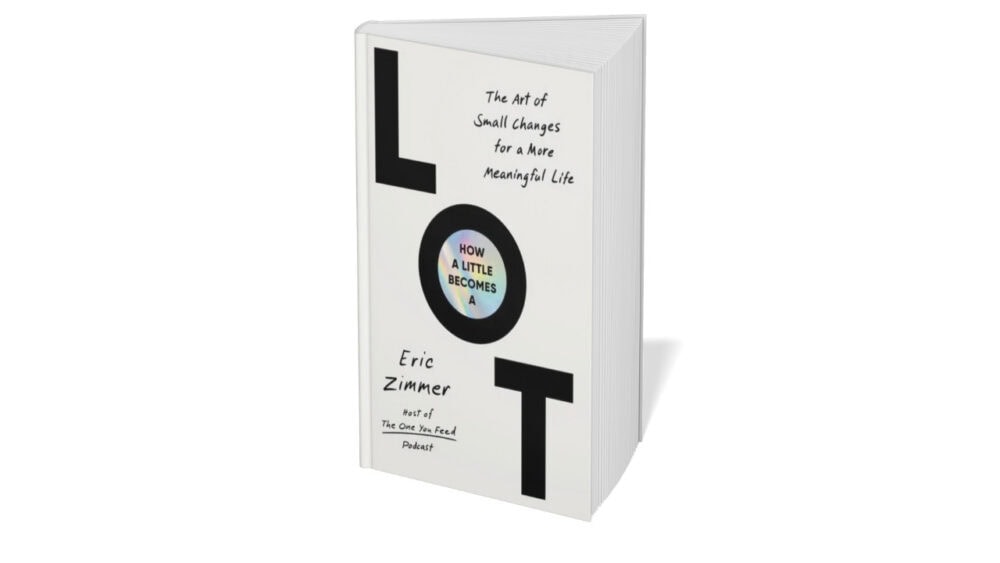
Exciting News!!! Coming in March, 2026, my new book, How a Little Becomes a Lot: The Art of Small Changes for a More Meaningful Life is now available for pre-orders!
Key Takeaways:
- Exploration of complex family history and identity
- Discussion of the memoir “Why Didn’t You Tell Me”
- The parable of the two wolves and its relevance to personal growth
- Themes of forgiveness and personal responsibility
- The impact of childhood experiences on adult life
- The role of therapy in healing and self-examination
- Navigating multicultural identity and heritage
- The process of uncovering family secrets and understanding one’s origins
- The importance of empathy and compassion in human relationships
- Strategies for habit change and personal transformation through small, intentional actions
Carmen Rita Wong is the author of “Why Didn’t You Tell Me?: A Memoir”. She’s a writer, speaker, and an investor and advisor to women-owned businesses. Carmen is a former national television host, magazine advice columnist, and faculty professor. She was Vice Chair of the Planned Parenthood Federation of America and board director at The Moth. She also hosts a podcast, has published novels, and is currently working on her sixth book.
Connect with Carmen Rita Wong: Website | Instagram | Twitter | Facebook
If you enjoyed this conversation with Carmen Rita Wong, check out these other episodes:
Faith, Identity, and Finding Your Voice with Dante Stewart
Racialized Trauma with Resmaa Menakem
By purchasing products and/or services from our sponsors, you are helping to support The One You Feed and we greatly appreciate it. Thank you!
This episode is sponsored by:
Aura Frames: For a limited time, save on the perfect gift by visiting AuraFrames.com /FEED to get $35 off Aura’s best-selling Carver Mat frames – named #1 by Wirecutter – by using promo code FEED at checkout. This deal is exclusive to listeners, and frames sell out fast, so order yours now to get it in time for the holidays!
Uncommon Goods has something for everyone – you’ll find thousands of new gift ideas that you won’t find anywhere else, and you’ll be supporting artists and small, independent businesses. To get 15% off your next gift, go to UNCOMMONGOODS.com/FEED
Persona Nutrition delivers science-backed, personalized vitamin packs that make daily wellness simple and convenient. In just minutes, you get a plan tailored to your health goals. No clutter, no guesswork. Just grab-and-go packs designed by experts. Go to PersonaNutrition.com/FEED today to take the free assessment and get your personalized daily vitamin packs for an exclusive offer — get 40% off your first order.
Grow Therapy – Whatever challenges you’re facing, Grow Therapy is here to help. Sessions average about $21 with insurance, and some pay as little as $0, depending on their plan. (Availability and coverage vary by state and insurance plans. Visit growtherapy.com/feed today!
AGZ – Start taking your sleep seriously with AGZ. Head to drinkag1.com/feed to get a FREE Welcome Kit with the flavor of your choice that includes a 30 day supply of AGZ and a FREE frother.
LinkedIn: Post your job for free at linkedin.com/oneyoufeed. Terms and conditions apply.

If you enjoy our podcast and find value in our content, please consider supporting the show. By joining our Patreon Community, you’ll receive exclusive content only available on Patreon! Click here to learn more!!
Episode Transcript:
Eric Zimmer 00:01:03 Most of us spend our lives trying to simplify our story, make it neater or cleaner or easier to live with, but the truth is rarely neat. Carmen Rita Wong, writer, former television host and author of the wonderful memoir Why Didn’t You Tell Me Has lived That Truth. Her story holds love and anger, loyalty and betrayal, and the long work of forgiveness that doesn’t rewrite what happened but changes how she carries it. Her honesty reminds us that wholeness isn’t found by choosing one side of the story over another. It’s found in the courage to hold the whole truth and still keep going. Because who we are isn’t what happened to us. It’s what we do with what happened. I’m Eric Zimmer and this is the one you feed. Hi, Carmen. Welcome to the show.
Carmen Rita Wong 00:01:51 Hi, Eric. Thank you so much for having me.
Eric Zimmer 00:01:53 I am really excited to have you on. We’re going to be discussing your book called Why Didn’t You Tell Me a memoir? But before we do that, we’ll start, like we always do, with a parable. In the parable, there’s a grandparent who’s talking with her grandchild, and they say, in life there are two wolves inside of us that are always at battle.
Eric Zimmer 00:02:10 One is a good wolf, which represents things like kindness and bravery and love, and the other is a bad wolf, which represents things like greed and hatred and fear. And the grandchild stops. Think about it for a second. And they look up at their grandparent and they say, well, which one wins? And the grandparent says, the one you feed. So I’d like to start off by asking you what that parable means to you in your life and in the work that you do.
Carmen Rita Wong 00:02:34 I actually love this parable because I’ve told it to my daughter a few times with a little twist on it, because I’ve spent many years of self-examination and all sorts of things, including therapy, to figure out those wolves. And what I have found most helpful for me is not giving them kind of this bad, good, or any kind of judgment on the one that’s not creative meaning like the one that’s destructive that we’ll call it. And I’ve learned that that, Wolf, for me, is a child. It’s me as a child.
Carmen Rita Wong 00:03:09 And our childish emotions fear, ego, resentment, just all of those feelings that are actually of protection. We want to protect ourselves. So it’s not that I need to starve it. Instead, I just kind of do like I love dogs and I’m I have to myself. And I just know, like, even some of the most unfriendly dogs, there’s a way to approach them, right? Not all of them. Please don’t take that advice, but just I pat it on its head, you know, and I say, I hear you, I hear you, I got you. Settle down. So that’s how I treat the wolves and the other wolf. I try to, like, get it to hang out a little bit more, get a little louder, play a little bit more. But yeah, that’s really worked for me.
Eric Zimmer 00:03:52 That’s great. What kind of dogs do you have?
Carmen Rita Wong 00:03:54 I have a rescue, and she’s 14. Gloria. We got her in Brooklyn, and she came with a name.
Carmen Rita Wong 00:03:59 So. Gloria. Sticks. And the other one’s a little, pandemic puppy. He’s two. And he’s named Hubert.
Eric Zimmer 00:04:08 And what type of dog is Gloria?
Carmen Rita Wong 00:04:09 Funny enough, you know me and the DNA tests did a little doggy DNA. I mean, it was. It was the best, like, 38 bucks I’ve spent. We thought she was a puzzle, but she is, like, four things. And I’ve actually kind of forgot, because when it comes to dogs, it’s more just like. Who is she as a dog? Let me tell you. Yeah, she’s £17 of diva.
Eric Zimmer 00:04:30 Is she doing okay at her age?
Carmen Rita Wong 00:04:32 Oh my gosh, it’s amazing. She’s been in great health. She has some arthritis. You know, just like granny. She’s on gabapentin. You know what I mean? But she’s but she’s still walking around. And the funny thing is, is that getting that puppy in the pandemic, who’s like this tiny little wiry poodle thing they said that he gave her, like two years of life because she was already kind of on a downward.
Carmen Rita Wong 00:04:55 And then ever since he’s been around now she’s jumping and running around and he loves her like crazy. It’s adorable.
Eric Zimmer 00:05:01 Yeah, I’ve got an old lady. She’s not doing as well. Oh, my back legs are kind of failing her.
Carmen Rita Wong 00:05:06 And yeah.
Eric Zimmer 00:05:07 She’s I think almost 14. She’s a little Boston terrier.
Carmen Rita Wong 00:05:10 Oh, beautiful. Yeah, I’m very concerned. and it’s. We were taking it really day by day and just. Yeah. Yeah. I’ve unfortunately lost many dogs.
Eric Zimmer 00:05:19 Yeah. Podcast listeners are gonna be like, she’s still around. Because, I mean, I’ve been talking about her demise for six months, you know, because I thought for sure, like, it’s imminent. And she just keeps outlasting, you know, which is good. I’m glad to have her. Yes, but it’s on my mind a lot. Like, I wish she could just tell me, like, is it time, sweetheart? Yes. You know. Yes. How is your quality of life? You know.
Eric Zimmer 00:05:41 But anyway. All right, we’re off topic. But I could talk about dogs all day.
Carmen Rita Wong 00:05:45 I know, me too.
Eric Zimmer 00:05:46 What you said about the wolves is interesting, because one of the things that I’m struck by in your book, and I’ve heard you refer to this elsewhere, is I mean, there’s a lot of people in the book who do things that we might conventionally say are not good. They’re lying. They’re selling drugs, they’re abusive. They’re all kinds of things. Right? And a lot of that is pointed at you, but not exclusively. But you do a really nice job of saying like, no one’s a villain. And I’ve heard you sort of say, you know, everyone is a product of their times, their place. I just wonder if you could share a little bit more about how you’ve arrived at that place with people, and how does that inform your view, looking out at the world as a whole, not just your own family?
Carmen Rita Wong 00:06:36 That’s a big one. Eric, I’ll say this, though it doesn’t absolve anyone of responsibility.
Carmen Rita Wong 00:06:40 I want to make that very clear upfront. Understanding people as human beings does not absolve them. Responsibility. It does not mean you forgive them. It does not mean they can get away with it. But it does help you look at your own life and other people’s lives in a way that’s almost a little impersonal. I want to say this personal, but just you see them as people separate from you. Our ego is a big thing, you know, and it attaches us to things, and it takes things very personally. And it’s this, that the other. But maybe that person’s having a bad day. Maybe that person got bad news. All of those things with me, in order to process and understand and answer that question that I’m asking my mother’s ghost. Right? Why didn’t you tell me this tremendous secret of my life? I, as you read the book, can see that I had a very difficult mother and relationship and family and and all of that. So in order to find peace myself, I had to see her.
Carmen Rita Wong 00:07:40 Something else besides my mother. I had to see her as a person. Just a person. Just a person who? She was a child. She was a helpless child with her own abuse in her vicious, vicious abuse. She was born of a time when she had very few choices. She was brought to this country again, no choices. Married off by her father, horrible situations she found herself in. And you know what she did, what she did with what she had. Now I could label it and we can. And yes, it was abusive. But I’ll tell you this, understanding her as a human being brought me so much peace, understanding the people that hurt you as their own people and not everything in reaction to you. Like for me, I stopped feeling like it was my fault. Why would she do that to me? And is this person mad at me and why is it it’s this is what’s happening. This is why she’s this way. I’m going to be okay. And the funny thing is, Eric, is that when you start doing that to people, especially people that have really affected your lives, you do it to yourself.
Carmen Rita Wong 00:08:44 Meaning I’m kinder to myself for it because it is that kind of idea of like we’re human beings. There’s a lot that puts us together and we can’t take everything personally. We really can’t. And of course, that’s a little easier for me to say now with 15 years of weekly therapy under my belt and unfortunately, my mother being gone for almost 20 years, it took that long.
Eric Zimmer 00:09:07 Yeah. You write somewhere, it’s a lot easier to forgive people after they’re gone. Right.
Carmen Rita Wong 00:09:11 Yeah. And I haven’t forgiven her, though, by the way. Okay. I don’t know. No, because I believe that, first of all, forgiveness. Who does it serve? If I’m looking for peace, I’m looking for peace. How do you get there? Well, forgiveness definitely serves the person who hurts you, right. And you’ve already been hurt. So why are you doing something for them? I think they have to do something for you first to be forgiven. You know, you have to get an apology and a change in behavior.
Carmen Rita Wong 00:09:41 And I’ve gotten either from any of my parents. So, you know, to me, it’s I have found peace. I see you as a human being, but forgiveness. Yeah. You got to do something for it.
Eric Zimmer 00:09:54 Right? The studies that have been published that, you know, people who study forgiveness will say something very similar. It’s exceptionally difficult to forgive. And unacknowledged crime, for lack of a better word. Right. Unless someone has come and said they’re sorry, it’s very difficult to forgive. It’s a key piece of it. And I think that distinction is helpful about making peace. It is. You’re sort of treading another line in there that I think is a really important line, particularly as we become a culture that is a much more aware of the impacts that our childhoods have had on us. Right. And I think the window of being a good parent has shrunk and shrunk and shrunk. It’s pretty narrow these days for you to be like, well, you did everything right, because of course you didn’t.
Eric Zimmer 00:10:38 You know, it just feels like it’s a shrinking window, which I think in many ways there’s a lot of good that has come from that. But I think that the thing that is difficult to get the balance right on is to say, because I see people on one end or the other and I’ve been on both these ends, which one end is like, everything was fine. My parents did the best they could. Right. People are a product of their places. I’m fine. Which does not acknowledge at all the impact that that had, or the other extreme is one of sort of almost giving all our power over to the parent who did this in that, like, well, I’m this way because of all these things and all the focus is on them, right? And I think what you’re describing is this middle way where we say, yes, that had impact, and I need to work on healing that impact. Like that’s a very real thing. And carrying hate and blame doesn’t really help me.
Carmen Rita Wong 00:11:34 Oh no, not at all. And the thing is that we have to understand that we’re responsible for our own behavior, regardless of our childhoods and what happened to us, because that is the issue. When somebody hurts you and refuses to apologize or refuses to see how they’ve hurt you, or that they’ve hurt you or acknowledge it, or any of those things, you know, and they’re saying, yes, but I suffered. You know, it’s very dishonest, right? We have to acknowledge other people’s feelings, but we also have to acknowledge our own and take that responsibility. And I have been in therapy mostly not just because I knew I needed it, because I had a really messed up childhood, but because I wanted a better life for myself. And I knew that that meant taking control of a lot of emotional things. And I, you know, make better choices, of course, but also because I was a parent myself. Yeah. And I always swore to myself, if I ever became a parent, I did not want to be my mother.
Carmen Rita Wong 00:12:29 And we all say this, right? But guess what? We do have some ability to change that. Of course, there’s epigenetics and of course, like things are handed down and temperaments. I’m Latin, I yell a little bit, just a little bit, you know, but you’re not going to catch me screaming. I’ll never insult, to belittle or all those other things. So it’s really about me figuring my mother out, which helped me figure myself out, which then helped me figure my parenting better, and stopping a long, long chain of abuse and violence and lies.
Eric Zimmer 00:13:04 Yeah. And lies. Yeah, yeah. You have a line about this that I really, really loved. And you say sometimes I have to remind myself that my mother may have blended the concrete, but I am the architect. And that is a really great way of sort of saying it. You know, as you said, we’re still responsible. We’ve got to take the raw materials at hand and like an architect, make the best thing we can out of them.
Carmen Rita Wong 00:13:28 Yeah, absolutely. I love this story. I don’t know if you heard recently this year that they found, you know, why is the concrete construction in Rome? How has it lasted so long? And it’s all about what the concrete’s made out of. And that that brought me back to that line that I had in there. And I said, well, oh, damn, they got good concrete. That’s like good parenting. What an advantage. But then I thought to myself, I’m like, okay, will we know that? And so if the concrete’s not great, what it means is, is that I need to actively and possibly always be repairing. Yeah, but to repair, I have to always be noticing the cracks, knowing where the weaknesses are, paying attention to them, and then doing the best I can to really fill it in. And the Japanese also do that with the, you know, the gold. Yep. They put back together wabi sabi. I love that so much because I’ve hung on to that since I first learned about it years ago and just said, that is going to be my life.
Carmen Rita Wong 00:14:28 Because I think for many of us who have difficult childhoods, we can really feel the weight of the ugliness and the brokenness, and instead, you can make all those cracks just so beautiful. You can make beautiful things out. All that stuff.
Eric Zimmer 00:14:42 Totally. As you were saying that I was thinking about, I was in France last summer, and some of the best Roman ruins are in southern France, and there’s an aqueduct there which is still standing, and it is spectacular. And there’s nothing holding the pieces of concrete together. The concrete is so good and it’s so perfectly placed. Yeah. And as you were talking, I was like, yeah, so you could build an aqueduct that would last with other materials. But to your point, you would want to put more support into it than exists in that one. Right. And I think those of us who have had challenges and over I don’t even like the word overcome them, have made them beautiful, have learned to live with them, have been able to grow from them, I think that the thing we learn is what support we need, what that actually looks like, and it looks different for everybody.
Eric Zimmer 00:15:36 It could be therapy, it could just be exercise and it could be 50 different things. But we figure that out and then we sort of remain committed to doing our best to watch for the cracks, like you said.
Carmen Rita Wong 00:15:47 Yeah, yeah. And then you know what? You get older and you are the architect. So you always could, you know, add a new bedroom or I don’t know, you know, you can always be building. That’s why I like that analogy. When it came to me, I’m like, I could just always be building and adjusting the blueprint.
Eric Zimmer 00:16:01 Yeah, yeah, yeah. It’s such a good analogy. You know, so much of your book is about identity. Why don’t you give us the short version of the book without revealing too much that you don’t want to, but that at least gives the context for the ways in which your identity has sort of shifted over time, because I’d like to explore then identity a little bit more deeply, but I think listeners need a little more context before we do that.
Carmen Rita Wong 00:16:26 Sure. Well, the one sentence I’m going to give you is going to just start you off with a lot of identity. So I was born a Dominican mother and Chinese father in Harlem in New York City, and my mother divorced my Chinese father and moved us to New Hampshire with an Anglo father. My Chinese father, my Anglo father were from completely two different worlds. And so that was very different. But my childhood started in the very, very rich cultural atmosphere of, you know, if you’ve seen the Heights that was, you know, my early childhood and Chinatown, which is pretty incredible. And then we went to New Hampshire and New Hampshire in the late 70s, early 80s was not very welcoming to my older brother and I. He was six years older than me. And we were, you know, we’re brown folk. My mother was black, Dominican, so we’re Afro Latinos. And it was very, very difficult. And it’s one of those things where sometimes, you know, if you get to go through life not having to think about identity, God bless you because we don’t have the choice.
Carmen Rita Wong 00:17:23 And so it came down on us pretty hard. And, you know, I went through life, Carmen Rita Wong, and that has followed me through many things that had shaped so much of my life, whether it was the racism, the expectation, the low expectations of people to being questioned all the time about what am I, who am I? My mother, very much wanting to assimilate, so not necessarily giving me the right answers or not necessarily telling me whole stories. And then of course, in the end, what the book’s really about is I find out if she’s dying. I was 31 years old, and she was only 59, that I was not. Poppy Wong’s daughter and my stepfather at the time was the one who tells me this. And then I find out a confront her. She has a whole bunch of stories, more news, stories about who it is. And then I had gotten this book, sold the book. It was in edits, and I was doing all this DNA testing, and I hired genealogists and no one could figure out who my father was.
Carmen Rita Wong 00:18:26 You know all those about that money later and all that research later and a lot of dead ends, which are really interesting, actually, that I write about in the book. And I’m in edits and I had to write the epilogue because in the end, I found my paternal family, which is wild. But that origin story of going between Harlem and New Hampshire and Dominican and Chinese to New Hampshire. It was a lot. It was challenging. And I think for many people who have discovered that they have different parents than they thought they did. You know, there is always that added element. Of course, if they happen to be a different race, there’s that two or different culture. The book is really about me asking my mother that question, why didn’t you tell me? And trying to answer it myself when I wrote it. You know, page turner, thriller type of mystery solving book because that’s the way it felt. You know, I wanted you to feel it along with me. Like as I’m going through my life in this kind of like mystery of like, who is this woman and why would she do such a thing? And all these characters that come into my life is just it’s wild stuff.
Carmen Rita Wong 00:19:30 As my daughter would say, mom, your life is crazy.
Eric Zimmer 00:19:34 Yeah, well, you know what? We tend to throw that word around pretty easy. Like, that’s crazy. But yeah, your life is heading in that direction for sure. Like, there’s a lot of chaos and a lot of different cultural characters. I mean, your father is a essentially a gangster in Chinatown, which you guys have no idea. You’ve got a pretty rich soup there.
Carmen Rita Wong 00:19:55 Yes. Between the father, who’s a, you know, a Chinese gangster. Right. And then the stepfather, who’s like, graduate school of economics at Columbia. Like, this is this was absolutely the juxtaposition of my life. But here’s what I’ll tell you, which is how and really why I really wanted to write the book wasn’t just, you know, for myself to answer the story, of course, I absolutely love memoir, but I do believe the storytelling. And I know people say this a lot, but it is the truth.
Carmen Rita Wong 00:20:20 It is the most powerful thing. It’s very much our humanity. This is a very American story. We just don’t hear it. But there are millions out there like me, and we need to hear more American stories about, you know, immigrant families and black, Latino, Asian, all kinds of families that really make up this country because I was made to feel completely as a child, that I was lesser than I was worthless, I was invisible because I wasn’t in school. Well, this was in New Hampshire. Of course, I wasn’t in the library. I wasn’t talked about in history like nothing or television. Yeah, and kids carry that with them a lot, even adults. So it’s helped some people, which I’m happy to have heard from.
Eric Zimmer 00:21:04 Yeah. You describing moving to New Hampshire and being like the only. I know you don’t like this word, but I’ll use it for ease of use. The only minority family, because you were in that case, you were brown.
Carmen Rita Wong 00:21:16 non-White.
Eric Zimmer 00:21:17 White. Yeah. non-White. White. Yeah. Brought back a memory for me, and one that I am not particularly proud of, which is that I grew up in. Sounds like very much like the neighborhood you grew up. And you talked about your mom ringing a dinner bell to bring everybody in, right? Same, same sort of thing. Dad went off to the office with a briefcase and a very generic suburban thing. But there were two Chinese families that lived in our neighborhood, and they really were just on the outside. And I, as a child, I think I just internalized the sort of otherness towards them that was there. I don’t know that I was ever, you know, outright. I mean, I don’t I don’t have any recollections of that. But the me today would respond very, very differently than the Me did then. You know, I think the kids just seemed strange to me and, and I didn’t know what to do with that. And I hadn’t thought of that in I mean, it’s been a number of years, but I was reading your book and I was like, oh, I wish I knew where they were to be like, sorry I didn’t do better.
Carmen Rita Wong 00:22:18 That’s the thing, is that it really starts with the kids, right? And as parents, we gotta understand that your kids absorb a lot from you.
Eric Zimmer 00:22:27 Yeah.
Carmen Rita Wong 00:22:27 And so, you know, you, instead of seeing, you know, neighborhood kids and being like, they’re just kids. They’re just kids, like, hi. What’s up? You know, they’re just kids, you know, and and hanging out with them and being friends with them. It seemed odd or strange or weird. This happened with one of my nieces. She was very young, but we had all had gone out to dinner back in New Hampshire a year ago, and we went to Chinese food restaurant, which we loved. The kids, they love the Chinese food because they don’t get to go there very often. And we were using chopsticks and she said, this is weird. This is weird. I say, honey, it’s not weird. It’s just different from the way you eat. There’s billions of people who use chopsticks.
Carmen Rita Wong 00:23:10 Billions. And they would think you’re weird for using a fork. So let’s just not call it that and say this is different. Let me learn. Let me try. Tell me more about it.
Eric Zimmer 00:23:21 Yep. And that was the word that was used by the adults about these families there. Weird othering, you know. And. Yeah. And again, I had absolutely, you know, no context for which to do what you did, which is like, well, maybe compared against this very white background, but.
Carmen Rita Wong 00:23:38 Yeah, just acknowledging the differences, because once you realize that those differences and that’s another reason why I wrote the book is like, look, it’s what I’m saying. It’s an American story because we all have parents that we don’t get along with. We all have siblings we have trouble with. We all have secrets in our family. We all sometimes feel like an outsider when we realize that people from other races and cultures, though they we all have our different kind of history and weight of living in this society, that we are people, that we can be curious and that we can learn.
Carmen Rita Wong 00:24:09 You know, seeing people’s full human beings. Like going backwards to what I was talking about, about my mother really makes a huge difference in how you see the world. Yeah, for sure. And I think being cross, racial cross, cultural cross, everything that is a gift, even though it was painful in many ways, that was a gift to me. My ability to empathize with almost anybody and to see things very big picture.
Eric Zimmer 00:24:35 I think it’s a definite limitation to me growing up the way I did. You know, in the place I did there is a still you know, we talk about implicit bias. There is still in me. I have to really watch it and work on it, which is where I just want people to be like me, you know, like, this is the way to be like this, you know? And again, it just comes up sort of automatically like the way we respond to certain things inside of us. And I now see it and I’m like, oh, step back.
Eric Zimmer 00:25:03 Like, hold on. That’s ridiculous. But it is an orientation that I grew up with. And as we know, anything we grow up with, and it’s unquestioned for a long time. Takes a lot of questioning to unwind.
Carmen Rita Wong 00:25:13 Well, I’m glad you are, because it actually can be very dangerous. Extraordinarily, yeah. To people you know who aren’t of your group. Right. So, for example, I say to my daughter, it’s like, look. Because when you’re teenagers especially, you tend to be very ego focused, like everything’s about you. You’re very much a narcissist, which is very normal as a teenager. Right. And to say to them, like, look, you’re worried, you’re anxious, everyone’s talking about you. You feel like this, everyone’s this, this, everyone’s me. Do you realize that everyone that you’re in class with goes to bed at night with the same thoughts going through their heads? Yep. Everyone’s thoughts are just thoughts, just like yours. And I’m trying to help her, which I did for myself and I wish many people would do.
Carmen Rita Wong 00:25:54 Especially if, you know, you had a limited upbringing or childhood, is to look and see that when you have a bias to look, let’s say it’s like you just you encounter a person and instantly your head goes, I pull away or I’m this or I don’t talk to them or Bill, which I see all the time. I mean, people, whether it’s they didn’t want to sit next to me in the cafeteria or they don’t want to sit next to me in a bus or whatever. It’s just stop and go. That’s a person.
Eric Zimmer 00:26:20 Yes.
Carmen Rita Wong 00:26:20 Just literally saying that in your head that’s a person. That could be my cousin. Whatever. If they were a different color or that could be my, you know, that if they were a different gender. So it helps not only you interact with the world, but I’ll tell you, it makes your world so much richer, so much richer to approach the world as that’s a person.
Eric Zimmer 00:26:59 There’s a Buddhist practice called commonalities practice, and it’s been revolutionary to me in practicing it over probably 25 years now, which is that you can find whatever wording you want.
Eric Zimmer 00:27:11 But in essence, it’s realizing, like every single human wants to be happy just like I do. And they want to avoid pain just like I do, without exception. I hate to say without exception, because there’s always an exception to something, but 99% of the time people are just like this. You know, I was wondering whether sociopaths are that way anyway.
Carmen Rita Wong 00:27:33 Well, let’s put it this way we don’t need to spend any time on sociopaths, you know what I mean?
Eric Zimmer 00:27:37 Let’s skip.
Carmen Rita Wong 00:27:38 Those. They do that for themselves.
Eric Zimmer 00:27:40 But for everybody else, that phrase and I mean, I’ll just sit on public transportation in like a city and just looking around and just doing that person to person to person and just realizing, like, just like me, just like me, just like me on that fundamental level. And from there, everything to me is sort of strategy. You know, we may disagree about the strategies that emerge for getting those things, but we’re after the same thing.
Carmen Rita Wong 00:28:05 And we don’t all have the same tools.
Carmen Rita Wong 00:28:07 You know, we come up with, like, for example, the idea of the architect in concrete. Like, I would have probably been a very different person had I stayed with my people. You know, the Chinese and Dominican community and stayed in the city. I can’t say if I’d be worse or better off. I just think I would have been a different person. What I encountered in New Hampshire during like, very important years of growth and growing and establishing myself as a human being. I could have done without some of that. Like, you know, how they say it was like people say, oh, it builds character. I’ve had enough character, I got, I got, I got loads, you know what I’m saying? But I think too, I like to just take myself out of myself and meaning, like not centering myself as in relation to and instead. And I do this in my family, and I do this with a lot of folks, and I’m not perfect at it.
Carmen Rita Wong 00:28:53 But just really saying, like, that person is hurting. Yeah, that person is happy. That person is, you know, I wish and I would hope that, you know, the more listening and understanding that is done, the better, the less generalization. So I have a master’s in psychology. So one of my favorite tenants with statistics and theory was always differences within groups are equal to or greater than differences between groups. Right. So you can say men are better runners than women. And I can tell you I could get you the slowest man and I could get you a woman who beat him, or I could get you the fast man. I could get you a woman who would equal him. Do what I’m saying. So there’s so much variation within groups that we form in our heads, whether it’s by race or culture or gender, whatever it is, there’s so much variation that it’s equal to the variation between the groups. We can always find examples. So if you look at the world that way, you start to see that to your point commonality is it? We are human beings.
Carmen Rita Wong 00:30:01 Period. Yeah. We just come through different stuff.
Eric Zimmer 00:30:07 Totally. So I want to circle back to the idea of identity, because as a I’m not going to say I’m not a Buddhist. I’ve practiced Buddhism a great deal. I don’t I don’t know what it doesn’t matter. But as a practitioner, a student, you know, anyway, one of the things that sits at the heart of that tradition is this idea that the self we think we are isn’t as solid as it is. And if you start taking the pieces apart, you go, well, what’s really there? Right? And so I wanted to talk to you about that because I think you’re coming from a slightly different angle on it, which, you know, you say in the book, how do you become un Chinese after, you know, that’s not your wording exactly, but you thought you were Chinese all these years, and all of a sudden you find out, at least by genetics, you are not. So there’s that identity.
Eric Zimmer 00:30:56 And then this father shifts, and there’s so many identity shifts that are happening to you. I’m curious how the external identity shifts that have occurred. In what ways do they contribute to a strengthening inner identity? I know the ways that they’re destabilizing. Right. And you talk about those very well, how destabilizing that is. But I’m curious, is there something about that process that has allowed you to get a stronger inner identity that isn’t based on the things outside so much?
Carmen Rita Wong 00:31:28 Oh, yeah. Oh yes yes yes yes yes. And that’s been like a beautiful thing through all of this. Which, by the way, I’m still Chinese, but but I’m not biologically. But let me tell you, you don’t stop just because, you know, it’s like my Asian friends who are Latin American three generations back. Like, they don’t say they’re Asian. They look at you like, look at them, and you’re like, you’re Asian. You’re like, listen. And they’re like, mirror, you know, like that.
Carmen Rita Wong 00:31:50 The Spanish is there. So we all have to come about it our own way. And I’ll tell you this. My big revelations have been happening since the book came out, and since other things, of course, happened. For example, Papa Wong passed away in June and having to reveal also to my stepfather who my biological father is, that was a whole nother thing too, because I spent my childhood trying to please my parents, and my mother wanted to assimilate more, right? And I wanted to be this new father’s kid. And they went on to have my four sisters after me, and I felt too other. I felt completely unmoored. We left all of our family, everything we knew, everything the community, everything. So I really spent a lot of time trying to be him. And at one point I was in therapy. Maybe, gosh, I want to say eight years ago or so when I was doing TV and I had an moment where I realized if I really loved finance, I was covered financial journalism for 20 years.
Carmen Rita Wong 00:32:55 If I really love finance, you know, I would be just making Bank on Wall Street, right? That’s not what I loved. What I loved was writing. What I loved was being on stage, giving advice, all that stuff. So I said, you know, I think this stepfather, Marty, he used to always be in front of the TV when he was home. Right? Kind of like your dad comes home with a briefcase, opens up the newspaper, Wall Street Journal, and then is watching Wall Street Week and all those shows. I had a byline in those magazines that he subscribed to. I was an editor at the magazines he subscribed to. I went on the shows and hosted a show on the networks he watches. I wanted him to see me and find me valuable as a daughter, as a child, and look at me like I’ve spent decades of my life trying to win somebody. And in the end, you know, he wasn’t my father either, right? But also to no recognition of what that did to me.
Carmen Rita Wong 00:33:55 And then I started realizing, as we do. Many of us, when we’ve been neglected by parents emotionally. We people please. And we act. We perform for approval. And I realize that a lot of my life was about that. So now where I’m at 51 years old, there’s something about the 50 mark, man. Like, it really does it to you.
Eric Zimmer 00:34:18 I’m there, I know.
Carmen Rita Wong 00:34:20 Yeah, I just realized.
Eric Zimmer 00:34:21 I would never have guessed that about you, but.
Carmen Rita Wong 00:34:23 Thank you, darling. That’s the Dominican side. but I realized, especially when Papi Wong passed away, how much I’m really his daughter. Like, really? I am really his daughter. I am so much a Wong, and it’s just so clear here is this Chinese drug dealing gangster who I never even knew, by the way he did all these things until, of course, very late in life. But his character, in the way he was and how he was just, you know, could go up to anybody, no matter what their background and all of us.
Carmen Rita Wong 00:34:59 You just just love this guy. You know, it’s like very social kind of person, very community focused, very much let’s get things done type of guy and very entrepreneurial. And that’s something I very much am. But I’m just his daughter for sure. And so I think in terms of identity culturally, yes, too. But I think him as a human being, as a person and as my brother’s sister, like the two of us very much his kids and my mom’s, of course. But I was just kind of surprised to figure it out this late in life just how much. And it took him leaving because trust me, he was a very disruptive presence even in his old age. I can tell you to be able to sit still with it, you know, and to realize that as I’m getting older and I’m discovering how much of me is really me. How much of me was built to please to win love? That, by the way, children should just get no matter what. To win acceptance and approval and defy expectations of the larger community that thought less of me because of my race and gender.
Carmen Rita Wong 00:36:06 There is so much of that. So I’m excavating, and it’s pretty amazing that, you know, you can find yourself once you kind of dig out from all of that and to not feel bad about it either. I think there’s this idea of like, you know, no, where was I fake or whatever, whatever the kids say, you know? No, it’s just like we’re all like that. We all want mommy and daddy to love us. We all want to be accepted, you know?
Eric Zimmer 00:36:30 Yeah. We’re all responding to and reacting to and being shaped by so many different things. I’ve heard you talk about, you know, there’s culture, there’s color, there’s your family. There’s I mean, all these things are always shaping us to the point that I think the question of like, who’s the real me in here is almost a red herring in that it can be very hard to find any real me that wasn’t shaped in some way, shape or form. Now, that’s not to say that we don’t have personalities and that we don’t have versions of ourselves that feel more true than others.
Carmen Rita Wong 00:37:05 Yeah, and that’s the whole midlife crisis thing, right? If people say that, it’s because all of a sudden you, like, stop doing what the world tells you you’re supposed to be doing, and your parents tell you what you’re supposed to be doing, and then you go out and you’re like, I’m doing what I want. We become kids again. And it’s that whole idea of like, what were you like when you were like eight? What did you like to do? What made you happy? What was exciting to you? I recommend going back and doing that. That’s an exercise I’ve been doing with myself.
Eric Zimmer 00:37:32 Yeah, it’s an interesting one because I do that from time to time and I’m like, somewhere I crossed over and it happened relatively early, sort of a weird little different creative little kid who was kind of into his own world and suddenly became really into sports in the sports world. And that didn’t feel fake at all. Yeah. And yet I can see there was some degree of cultural shaping.
Eric Zimmer 00:37:58 So, I mean, I think even, you know, really little I’m like trying to make my, my home work for me. Yeah. As Gabor Mate writer says, I think he summed this up the best, which is we’re always in a battle between attachment and authenticity. Yeah, right. You know, on one hand, we’re trying to be the person that gets loved and is securely attached, and yet we have a desire to be authentic. And those two things are in a push and pull. I think to some degree, it’s a tension that I don’t think it’s completely resolved ever. Right. It probably shouldn’t. Right. Because those are two important needs. They’re both needs.
Carmen Rita Wong 00:38:38 One thing that was helpful that my therapist, who’s very informed, He’s very Buddhist and Jungian, so which I love him to pieces, I love, I love him. I got him my Obi-Wan. He helped me a lot by making me think of these parts of me as separate people at a table. And there was the one in the naming them, giving them little names, little characters, because he knows I love to write and create worlds, and that makes total sense.
Carmen Rita Wong 00:39:02 And it’s like, okay, so this one’s been in charge for a while because she was constructed to protect you and and strive and this and that. The other thing and then this one over here, it’s been a little quiet, you know, and now this one wants to come and sit at the table. And it’s not that any of them are inauthentic mes, it’s that they’re all me. Yeah, but there is one that should be at the head of the table, the one that when you’re kind of get to know them all, when you know that they’re there, then you can kind of slide over to the one that’s going to to your point about the one you feed. This one is going to sit at the head of the table because she knows how to do it the best way. You know what I mean? Like, one of them has to get up and be like, scooch, scooch. I need to come in here. I need to come in here for a second, and then you can call on them, too.
Carmen Rita Wong 00:39:53 That was very helpful to me, because for me, it was pretty traumatizing to realize how much I’d been living my life for other people. Really, it was it was kind of devastating. And it’s not that I’m horrified. I mean, shoot, I’ve done so much. I look back and I go, oh my God, who was that person? Well, she was doing a lot, and she’s not who I want to always be. But you know what? She did what she had to do because that’s what she thought she had to do.
Eric Zimmer 00:40:38 Check in for a moment. Is your jaw tight? Breath shallow. Are your shoulders creeping up? Those little signals are invitations to slow down and listen. Every Wednesday, I send weekly bites of wisdom. A short email that turns the big ideas we explore here in each show. Things like mental health, anxiety, relationships, purpose into bite size practices you can use the same day it’s free. It takes about a minute to read and thousands already swear by it.
Eric Zimmer 00:41:11 If you’d like extra fuel for the weekend, you also get a weekend podcast playlist. Join us at one UFI newsletter. That’s one you get a newsletter and start receiving your next bite of wisdom. All right, back to the show. It’s interesting even going what I thought was like my own path, right? I’m not going to go to college, and I’m going to pursue being a musician and screw everybody else. And that that descended into heroin addiction and drug addiction. It didn’t end well. And even that was a reaction to. Right. I’m not saying that no part of that was authentic because some of it, of course, was to your point. It’s not all one thing or the other, but there was a definite reaction to being brought up in a white, middle class society that I said, I don’t want anything to do with this. So I pushed it away so hard. And that’s just the opposite of playing to win in that system. Right. It’s still a reaction to the system.
Eric Zimmer 00:42:10 Yeah. Versus a way of embodying who we are. And in the same way that your career that you’re saying, you know, you were playing to win. There are also parts of you that were being fulfilled as you went through that. So it wasn’t all. Sure. You know, so it’s yeah, we’re always kind of this blend of things.
Carmen Rita Wong 00:42:26 I remember I got very insulted when someone, you know, older white banker guy looked at my background and my degrees and all that stuff and was like, oh, hello? You overcompensated, didn’t you?
Eric Zimmer 00:42:36 Oh.
Carmen Rita Wong 00:42:37 And I was like. See, you just told on yourself.
Eric Zimmer 00:42:43 Yeah.
Carmen Rita Wong 00:42:44 Because would you say that to your fellow white male banker over here. Would you say that. No. So what did you just say to me about yourself that you’re racist? Basically, you’re a bigot. And, you know, my answer was like, I don’t compensate for anything. This is just my existence. This is just who I am. Like, there’s plenty of us out there.
Carmen Rita Wong 00:43:04 Get used to it. Yeah, but there was an element of I’ll show you. Yeah. And it was a lot actually about though my mother in my house, I couldn’t exist without getting straight A’s. I mean like really she would have put me on the street but it was very much like I’ll show you I can do it and then leave like it was my way out and it was communicated to me then in school with these nuns that it was just they just thought I was going to be barefoot and pregnant by 16. And so there was and I think I wrote about this one where I was just like, I got to taste what spike tasted like. And at the time I liked it, but it was really like overly sweet candy that would give you some cavities. So you got to be careful. But when I was young, I was I was like, oh, look at her. She’s mad that I aced this. Oh, that tastes good. But then I learned that that’s quite poisonous, you know, so you can’t do things out of spite.
Carmen Rita Wong 00:43:56 But I did them anyway because I wanted to do them anyway. You know, if I broke someone ideas of who I should be as a young Latina, then I did. Hopefully I served somebody else.
Eric Zimmer 00:44:06 Yeah. Someone asked you about the overarching message from the book that you’d like to give towards your daughter, and you said there was two, one practical, one personal. But I’m not going to tell you what those were because I want to see if there are any different now. So if there was one overarching method.
Carmen Rita Wong 00:44:22 That’s a trick question.
Eric Zimmer 00:44:25 I’ll tell him if you want. I actually was going to read them and I thought, I wonder if they.
Carmen Rita Wong 00:44:29 Tell me then I’ll tell you if I still agree or not.
Eric Zimmer 00:44:31 Because I’m like, all right.
Carmen Rita Wong 00:44:32 All right. Yeah. Oh, man.
Eric Zimmer 00:44:34 So the practical one was that your daughter got to watch how hard it was for you to get this book published. Right. The rejection again and again, and about learning to just take that and sort of get back up and keep trying.
Eric Zimmer 00:44:47 That was the practical. And then the personal is. I’ll just read it because it’s beautifully said. I hope she sees how I learned with empathy to see my mother as a full human being, faults and all, to not treat her as a villain though she caused so much trauma.
Carmen Rita Wong 00:45:02 Yes, I would have definitely said that. Second one compassion. Compassion. And I’ve heard from quite a few people. And thank you to everyone who’s ever written a review or written to me or anything, because authors love it who’ve been surprised by how much compassion I’ve had. And that compassion is very hard earned. I worked really hard to do that, and it’s probably one of the biggest gifts I feel I’ve given myself is the ability to be that way. And in terms of practical to I would add on, that’s about book writing. That’s about like being in the business. Right? any artistic, creative business, it’s like you just got to keep going. The rejections will keep coming. It’s very subjective. But I’ll say this, I think and I hope she also learned how to manage family and history and to be honest about it and to tell your story and that your story has value.
Eric Zimmer 00:45:54 Yeah, the compassion being a hard one thing. I’m curious what led you to compassion being something that you wanted to cultivate? I’m curious if you can remember what brought you there.
Carmen Rita Wong 00:46:09 Well, a couple things. I, thankfully was built with a lot of compassion for other people. So because I ended up advocating for my little sisters a lot, you know, it was always going to bat for the little guy, right? Or always then going to bat for my people. There’s young people, nonprofits like all this stuff always, you know, raising money, always doing those things. I’m an activist. You know, all those things. Always going to bat for people. And I realized that I was killing myself with the voice in my head that was so loud, saying that I was doing the wrong things, making the wrong choices, being bad. I was not good enough, not good enough, not good enough. That. Which, of course, is my mother’s voice. That, you know, we can turn down the volume on that record.
Carmen Rita Wong 00:46:58 That record will not maybe leave us ever. And that’s okay. But I can turn down the volume. But in order to do that, it does take some self-compassion, because I had found that I had more compassion for other people than for myself, and it was very damaging. Right. And then being a mom, I had to feel more for my child than react to her. That is something that unfortunately gets handed down. Of course, in families of generational trauma and abuse, this idea of, you know, don’t you talk to me and you respect me and you fear me, and I refuse to do that. So that took me being compassionate to her as a child, as a human being, a separate human being for me, with her own sets of feelings and own personality and own self. And not everything’s in reaction to me, not everything’s about me. And then turn that on, you know, to myself what I was told was be curious about why I’m feeling that way. Be curious about where that voice comes from.
Carmen Rita Wong 00:47:59 Be curious about when it shows up and how and why. Yeah. And what’s it saying? You know, so it’s not so that you just hear almost like a clattering sound. Instant clattering sandwich can bring about a physical response where I’d be like, I need a drink, you know, whereas now I’m just kind of like, I don’t need that. Fine. You know, like, I don’t have these automatic physical reactions to like, make these things go away. Instead, I’m just kind of like, who is that voice? What’s she saying? And sometimes you just talk back to it. Can I swear I’ll be like, you’re full of shit. Sure. Yeah. Feel like you’re full of shit. You’re scared, you’re afraid. And then it’s. I keep digging and going backwards. You’re afraid of what? What are you afraid of? It’s almost like a little conversation. That’s compassion. Yeah. And when you have that compassion for yourself, that helped me understand everybody around me. But again, I understand them.
Carmen Rita Wong 00:48:53 It doesn’t mean, you know, I’m like peace. I’m all about my peace. Like, it’s about time I had some peace. but I’m not responsible for others peace in that way.
Eric Zimmer 00:49:05 I love the way you deconstructed that process, because that really is a lot of when we talk about self-compassion. I mean, some of it we talk about being kind to ourselves, which is important, but it’s so nebulous, right? But you really described a very clear process. And it’s funny that you said, I need a drink because as I was getting sober, I had to do it a couple times, but the second time that thought would just emerge and I would notice it was just running in my brain and I would go, what is happening here? Right? Some of it is habit pattern, right? Sure. But some of it. And so then I began to notice what situations most caused it. And then it morphed. And not in a way that initially sounds better because it went to I want to die.
Eric Zimmer 00:49:53 yeah. But even that’s been there. But I didn’t want to. Right. It was just this habitual voice. And I was able to then go, well, what’s causing that? And notice it. And I was able to have a little humor around it, a little bit like, okay, let’s step down the drama here a little bit like, you know, without minimizing the hurt that was driving that, right? For me, it was really about going, what is it that causes that to come on most strongly. Yeah. And I’ve identified those things. I mean, for me, they tend to be coming to a situation where I’m going to make someone unhappy. Like with whatever choice I make, someone is going to be unhappy. I’ll acquiesce on my own behalf far easier. But when I’m trapped. Yeah, that’s certainly one of them. But another I’ve realized over the years is when I don’t know the answer to something that could be a variety of things. I don’t think humans, we like uncertainty.
Eric Zimmer 00:50:41 It makes us uncomfortable. But as a kid, the one thing that I was praised for was being smart. That was it. That was the thing. And so to not be smart is like to not exist.
Carmen Rita Wong 00:50:52 Yeah. But to say I don’t know is, you know, the smartest thing of all.
Eric Zimmer 00:50:56 Yeah. I mean, the Zen tradition is, is very clear about this is an old phrase from a Zen master not knowing his most intimate. And I love that phrase. So I get it. Absolutely. And I just know that it’s something I still work to unwind, but I can just catch that voice going now a whole lot easier. I like that way of saying clattering, you know? Yeah, because now it is a noise almost. I’m like, wait, hang on a second. Like, wait, hold on. Yeah. That’s not what’s actually going on here. What is you know. Yeah. But thank you for deconstructing that because I think it’s really helpful.
Carmen Rita Wong 00:51:31 I needed that too.
Carmen Rita Wong 00:51:32 Like I needed that then. Yes, this was therapy provided my my Obi-Wan I needed that. And especially since I tend to write and think in very kind of visual, textural ways and processed ways, you know, don’t just say, be kind. What does that mean? I don’t even know. I don’t even know how to be kind of myself. I don’t even know what that means. But it’s like, okay, well, you’re a curious person. Be curious about. Yeah. Why did you just have that thought? What were you feeling when you had that thought? Why are you reacting to that person in that way? What are they bringing out to you? What are they remind you of? What just happened there. And I started doing that. Like when I interact with people and I just walk away and just think and be like, oh, this is interesting. And if you start doing that and you make it very much a habit, it’s quite fascinating what you see of yourself.
Carmen Rita Wong 00:52:21 Yeah, I found it to be an incredible way to kind of excavate and do the work, as they say on yourself is really just asking these questions. And to your point about when you say, you know, oh, I need a drink or I need this, or I need just stop. Well, what the hell am I feeling right now? Yeah. And sometimes it’s just a matter of just feeling those feelings and just being like and naming it and just being like, all right, maybe I’m also just tired. You know, let me take a bath or let me just, like, watch a good show or something else. It’s been incredibly helpful, and I’m hoping to pass that down to the kid because, boy, man, if I had had that, how tremendous for people to have that. It opens up your world too, right? Because then you’re not so ego forward.
Eric Zimmer 00:53:04 Yep. Absolutely. So let’s close with I just got to throw this line in here. It’s not what I want to close with, but it’s so good.
Eric Zimmer 00:53:13 Which is? Catholicism lends itself well to obsessive compulsive disorder. Say the full rosary before bed and then another three Hail Marys just to make sure. Cross yourself three times every night before you go to sleep and kiss your right thumb after the last. I would say the Zen tradition is similar. I came to it as an adult, but you know, there can be so much like focus on exactly like, which foot do you step into the zendo with then? Well, anyway, that’s not really where I wanted to go.
Carmen Rita Wong 00:53:40 But well, I was going to say, why do you like that line?
Eric Zimmer 00:53:42 Yeah, it made me laugh. I think it is true. And I and I think it points to how I’m very interested in ritual in the role of things like that, which is what those are there rituals and how they can be either constricting.
Carmen Rita Wong 00:53:58 Oh yes.
Eric Zimmer 00:53:58 Or they can be freeing and how they can be meaningless or packed with meaning, you know, the very same exact thing.
Carmen Rita Wong 00:54:09 I tell you, I am completely, like absolutely non-practicing for many, many years not raising my daughter in any religion.
Carmen Rita Wong 00:54:16 It’s not about that for me. It’s really about many other things. But I still, when I get in the car behind the wheel, I still do my little blessings, the cross and I still and my daughter even does it. And she’s the most agnostic person on the planet and we do it. But the thing is, what I realized, I was like, why am I keep doing this? Like, I don’t like superstition. I don’t want it to be about superstition. I wanted to have some kind of meeting. And it’s every time I do it, I think about my mother and not in a bad way. It’s almost like I am saying to her for just a moment, because we spent many hours behind the wheel, or she did of just like, hi.
Eric Zimmer 00:54:53 Yeah. And I think that speaks to something you said a couple minutes ago when you were talking about sort of how to work with these inner voices. At one point you said doing it. I don’t know if you said consistently or over and over, and then you also use the word habit in there.
Eric Zimmer 00:55:09 Yeah. And I think the point is the little cross in yourself in the car, what that’s giving you is it’s an anchor point. Yes. That you then have an opportunity to reflect in a certain way that if we don’t have anything like that, we just get caught up in whatever is happening. But now you’ve got a little way of reflecting on your mother that’s sort of built in and habitual at this point.
Carmen Rita Wong 00:55:32 And it’s just for a split second.
Eric Zimmer 00:55:33 Exactly.
Carmen Rita Wong 00:55:34 I respect all dangerous things that we involve ourselves in, like crossing the street in New York City, which is always dangerous. But getting behind the wheel is a dangerous thing. And it’s I respect it. So I do the cross, and it’s not a superstition. It gives me like literally split second to just like a breath. Yeah, yeah, a memory and a breath. And then we go. So I’m very cognizant and aware of what I am doing. And to your point, like it’s just a very grounding thing.
Eric Zimmer 00:56:00 Yeah.
Eric Zimmer 00:56:01 Well, I teach this program Spiritual habits. And the goal of the program is to take sort of common spiritual principles that everybody would pretty much agree on, and then use what we know about behavior science to live them more fully. And one of the keys there is to use triggers to remember because we just don’t remember. We’re so busy. We aren’t. And so what you’ve got there is sort of we could call it a location based trigger. Right. When you get into the car, I do this thing. And it’s those small moments, though, that add up over and over and over and over and over again. That tends to be the way we change most. Some people have sudden awakenings, but. But so much of change is just this gradual. Yes. Accumulation, both good and bad.
Carmen Rita Wong 00:56:43 Yeah, yeah. And it can be very much in your head. It doesn’t have to be like an outward thing. I do that very much. I do the anchoring thing and I do like, you know, where’s my drink and that sort of thing, but I’m not, you know, and OCD is a very real diagnosis, which is unfortunate in my family quite a bit.
Carmen Rita Wong 00:56:58 So it can be very painful. But when you are able to kind of put where it disrupts your life aside and instead understand what it’s about. About that emotion that you’re not processing. But instead, now I use my quest for order. I use it more so as as a way to ground myself. So for me, it’s like instead of when I was a kid, it was, if I don’t turn this page, someone will die. Like, those are the thoughts that go through your head when you have severe OCD, right?
Eric Zimmer 00:57:30 Yeah.
Carmen Rita Wong 00:57:31 So instead of that, it’s I like to turn, you know, my things in my bathroom cabinet. Like to be facing forward. Is it someone going to die if it doesn’t know? So instead now it’s I’ll take a moment and straighten it up. And sometimes when you know things are crazy on the outside world, creating order like cleaning your house just really grounds you. So, yeah, but no more rosaries.
Eric Zimmer 00:57:59 Yeah. Well, I’m glad we went down this little street that I wasn’t planning on because I think it yielded a lot of really useful things.
Eric Zimmer 00:58:06 And I really love what you just said there, because it’s back to that idea of a ritual can be freeing or constraining. Yes. And you’ve taken something that has become sort of habitual in your life, and you’ve changed the meaning around it.
Speaker 4 00:58:21 Yes, yes.
Carmen Rita Wong 00:58:23 And that has been so incredibly helpful. Whether it’s sometimes I need to, you know, recharge my iPad, I flip it over so that I know when I wake up in the morning and I’m half brain dead to recharge my iPad, like, so I have all these little things that I do, whether it’s reminders or things that ground me or that things that just change other rituals. So for example, like a lot of people in the pandemic and there’s no judgment here, I was a margarita day person, you know, trapped at home loving my tequila. And I realized that, you know, it made me unhealthy, I gained weight, I felt terrible going through menopause. It was just awful. I was like, I can’t do this alcohol stuff anymore.
Carmen Rita Wong 00:59:02 So now I get this, you know, mocktails. But I do the same ritual. So I do the same cup, the same tahini and salt on the edge, the same way I do the same thing, and I just trick myself into it. And it’s just I don’t miss anything about it. I realized that what I had thought was helpful in the substance was actually partially about the process.
Eric Zimmer 00:59:29 Yeah, in behavior science, it’s called the habit loop, right? That there’s a stimulus and there’s a reward, and then there’s an action in the middle. And it’s very difficult to change the stimulus, which is like, I want to feel like I’m unwinding after work as an example. Right. Or I’m stressed after work. The reward you want is to feel like you’ve unwound a little bit, but we can change the thing that’s in the middle, and that’s often the most effective way to do it. Just yanking something out and being like, I’m not doing that anymore.
Carmen Rita Wong 00:59:55 Oh gosh, no, it’s too hard.
Eric Zimmer 00:59:57 It doesn’t work for me.
Carmen Rita Wong 00:59:58 Once I found this, it was so satisfying. And then I realized that what really was helpful to me was actually the ritual, not necessarily the substance. Substance made me feel like crap, but the ritual of it. The sound of ice shaking the sand, the salt, the taste of. And it’s understanding those things. And you know, when am I likely to, you know, buy something on Instagram I don’t need, you know, that’s, you know, just always being aware of those things that you want to stop. You can reformulate a lot of habits that way for sure.
Eric Zimmer 01:00:30 Before you check out, pick one insight from today and ask, how will I practice this before bedtime? Need help turning ideas into action? My free weekly Bites of Wisdom email lands every Wednesday with simple practices, reflection and links to former guests who can guide you even on the tough stuff like anxiety, purpose and habit change. Feed your good wolf at one you feed your net.
Eric Zimmer 01:00:55 slash newsletter again one you feed net letter. Well I think that is a great place for us to leave off. Carmen, thank you so much. This has been really enjoyable. The book is wonderful. Again, it’s called Why Didn’t You Tell Me a memoir? And we’ll have links in the show notes to where people can find you, where they can find the book. And thanks so much for spending some time with us.
Carmen Rita Wong 01:01:17 Thank you so much for having me, Eric. It’s been great.
Eric Zimmer 01:01:19 Thank you so much for listening to the show. If you found this conversation helpful, inspiring, or thought provoking, I’d love for you to share it with a friend. Share it from one person to another is the lifeblood of what we do. We don’t have a big budget, and I’m certainly not a celebrity, but we have something even better. And that’s you just hit the share button on your podcast app, or send a quick text with the episode link to someone who might enjoy it. Your support means the world, and together we can spread wisdom one episode at a time.
Eric Zimmer 01:01:51 Thank you for being part of the One You Feed community.
Chioma Ogbonna says
Looks like a great upgrade if you’re coming from a 3-year-old phone.