

In this episode, Julie Holland explains why connection may be the medicine we’ve been missing. She explores how genuine human connection helps regulate the nervous system, why disconnection can keep us stuck in fight-or-flight, and how our phones often give us a synthetic version of connection that never fully satisfies. Julie also discuss oxytocin, stress, loneliness, addiction, psychedelics, and the simple ways we can return to the real relationships and embodied experiences that help us heal.
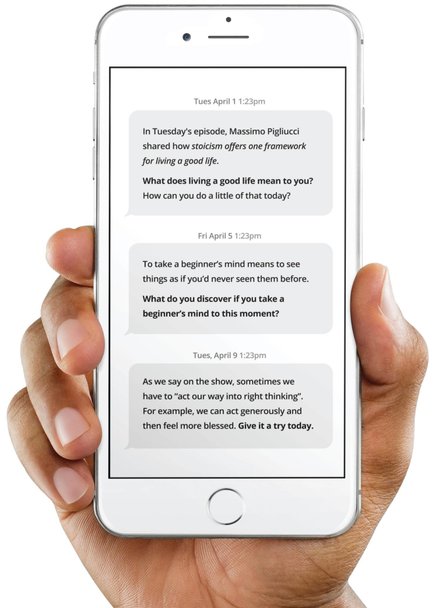
Good Wolf Reminders… A little wisdom, right when you need it. Start receiving free text reminders designed to help you pause, reflect, and take meaningful action. Sign up at oneyoufeed.net/sms.
Key Takeaways:
- Discussion of the sympathetic and parasympathetic nervous systems and their impact on mental health.
- Exploration of the science of human connection and the biological need for social interaction.
- Personal anecdotes from working in a psychiatric emergency room and the challenges faced in that environment.
- The effects of social disconnection on physical and mental health, including stress responses.
- The importance of physical, face-to-face interactions for emotional well-being.
- Examination of the role of digital communication versus in-person connection.
- Insights into addiction, including the distinction between classical psychedelics and other substances.
- Discussion of process addictions and their underlying causes related to existential distress.
- The therapeutic potential and risks of psychedelics in treating addiction and mental health issues.
- Emphasis on local action and personal agency in addressing mental health and community well-being.
Julie Holland, MD, is a psychiatrist specializing in psychopharmacology, with a private practice in New York City. Her book Weekends at Bellevue chronicled her nine years running the psychiatric emergency room as an attending physician on the faculty of the New York University School of Medicine. Frequently featured on Today and in CNN’s documentary series Weed, Holland is the editor of The Pot Book: A Complete Guide to Cannabis and Ecstasy: The Complete Guide. She is the medical monitor for several clinical research studies on treating post-traumatic stress disorder, one using MDMA-assisted psychotherapy and another examining the effects of various strains of cannabis. Her New York Times bestselling book Moody Bitches has been translated into eleven languages.
Connect with Dr. Julie Holland: Website | X
If you enjoyed this conversation with Dr. Julie Holland, check out these other episodes:
Neuroscience Behind Our Reality with James Kingsland
This episode is sponsored by:
Shopify – The commerce platform that helps you build, grow, and manage your business all in one place. Start your $1/month trial at shopify.com/feed.
David Protein bars deliver up to 28g of protein for just 150 calories—without sacrificing taste! For a limited time, our listeners can receive this special deal: buy 4 cartons and get the 5th free when you go to www.davidprotein.com/FEED
Alma has a directory of 20,000 therapists with different specialities, life experiences, and identities, and 99% of them take insurance. Visit helloalma.com to learn more!
Talkiatry connects you with licensed psychiatrists for personalized, evidence-based mental health care, all online and covered by most major insurance plans. To get matched with an in-network psychiatrist in just a few minutes, visit Talkiatry.com/FEED.
Tiny Health‘s at-home gut health test provides science-backed insights into your microbiome, along with personalized recommendations to help you improve your digestion, energy, and overall well-being. Get $50 off your first test kit at tinyhealth.com/FEED
Aura Frames: Named #1 by Wirecutter, you can save on the gifts moms love by visiting AuraFrames.com. For a limited time, listeners can get 25 dollars off their best-selling Carver Mat frame with code FEED. Support the show by mentioning us at checkout!
Brodo Broth: Shop the best broth on the planet with Brodo. Head to Brodo.com/TOYF for 20% off your first subscription order and use code TOYF for an additional $10 off.
Rocket Money Let Rocket Money help you reach your financial goals faster. Join at rocketmoney.com/feed.
By purchasing products and/or services from our sponsors, you are helping to support The One You Feed, and we greatly appreciate it. Thank you!
If you enjoy our podcast and find value in our content, please consider supporting the show. By joining our Patreon Community, you’ll receive exclusive content only available on Patreon! Click here to learn more!!
Episode Transcript:
Julie Holland 00:00:00 How can we get into parasympathetic? What can you do to get out of fight or flight and get into parasympathetic? And you know, for some people it’s put your phone down, your phone is making you sick.
Chris Forbes 00:00:18 Welcome to the one you feed. Throughout time, great thinkers have recognized the importance of the thoughts. We have quotes like garbage in, garbage out or you are what you think ring true. And yet for many of us, our thoughts don’t strengthen or empower us. We tend toward negativity, self-pity, jealousy, or fear. We see what we don’t have instead of what we do. We think things that hold us back and dampen our spirit. But it’s not just about thinking our actions matter. It takes conscious, consistent, and creative effort to make a life worth living. This podcast is about how other people keep themselves moving in the right direction, how they feed their good wolf.
Eric Zimmer 00:01:02 There’s a saying in addiction medicine that Julie Holland and I both love. You can never get enough of something that almost works. We moved on and started talking about phones, and she put it in a way that stuck with me. A text is like a vitamin A conversation. Face to face is the food. You can live on supplements for a while, but it’s never the nutrition of the real meal, which is why it never quite fills you and you keep reaching for more. Julie wrote good chemistry about the science of connection. Her case is simple. Stop trying to live on vitamins. I’m Eric Zimmer and this is the one you feed. Hi, Julie, welcome to the show.
Julie Holland 00:01:43 Thanks for having me.
Eric Zimmer 00:01:44 I’m excited to have you on. We’re going to be primarily discussing your book called Good Chemistry The Science of Connection From Soul to Psychedelics. But before we get into that, we’ll start like we always do with the parable. In the parable, there’s a grandparent who’s talking with their grandchild, and they say, in life, there are two roles inside of us that are always at battle. One is a good wolf, which represents things like kindness and bravery and love, and the other is a bad wolf, which represents things like greed and hatred and fear.
Eric Zimmer 00:02:15 And the grandchild stops. Think about it for a second. They look up at their grandparent and they say, well, which one wins? And the grandparent says, the one you feed. So I’d like to start off by asking you what that parable means to you in your life and in the work that you do.
Julie Holland 00:02:29 Well, I guess the first thing it means to me is just where you place your attention, where you place your energy and what you’re trying to accomplish. You know, one of the metaphors I use is like, first you have to decide what a garden is to cordon it off and get rid of the rocks and change the dirt around and add the plants. Like the first thing you have to do is say, this is going to be a garden. So some of the energy that I think I put toward things is figuring out what to build, where to build it, what it’s going to look like so that you can kind of defend your space with other people. But from a personal perspective, my two wolves are sort of like the yin and yang energies that I am constantly trying to balance.
Julie Holland 00:03:08 I am very naturally sort of yang testosterone heavy. I have things to do. I’ve got a vector. I have places to go. Get out of my way. Whereas the yin energy is more receptive and and hanging back and seeing what people say and taking it all in before you make a decision. So it’s very easy for me to be sort of all in and aggressive and barreling forward, and where I really need to put my energy is to having more of a balance of yin receptivity, openness. That’s my own sort of personal battle. I think I have issues with like impulse control, for instance, which I feel like is a very yang thing to just kind of shoot first, ask questions later, you know? Yeah, shoot from the hip. So luckily, I’m married to someone who’s very introspective and receptive and takes a lot of time before making a decision and is like sort of what I call a slow metabolism. I’m a very fast metabolism. I’m like, if this has changed, then we have to accommodate the new thing and pivot, you know? Whereas the person that I am emotionally yoked with is like, well, let’s let’s think about this and see where it’s all going.
Julie Holland 00:04:09 So that’s my real battle is to put the brakes on, not be all gas, to have some impulse control, to stop and listen and take things in. Which is why I should stop talking now. Right. Eric.
Eric Zimmer 00:04:20 Well, I’m not going to touch that. It’s interesting, though, as you were talking about your partner that you’re yoked to. It made me think about a section in the book where you are talking about when we fall in love, there’s there’s this Limerick’s period. There’s sort of a high or not sort of there actually is a high that comes from that. And then we settle into the harder work of building a relationship, and you have a line there where you say the optimal outcome, the way out of the dead end, the dead end being the tendency to just kind of like, keep looking for something else. You accept and embrace all the disowned traits in your partner, and that helps you accept them in yourself. And I was thinking about how it sounds like you found the way to do that.
Eric Zimmer 00:05:05 You found the way to appreciate the way in which your partner is different than you, and how that is helpful. I’m not saying all the time you feel that way, but that in general you do. And how did you get to a place where you were able to see that as different, but a positive compliment to you versus this person is wrong about the way they see things or do things.
Julie Holland 00:05:28 Yeah, I would say it’s constantly in flux. Those things, like Jeremy, through basically sheer will and brute strength, has, you know, consistently reminded me that my way is not always the best way and that he is not the enemy, you know. So and the truth is, you know, it’s funny because, like, if we play opposite each other like a game of Scrabble, it would be a very close game. And he would drive me crazy because he took forever. But if we’re on the same Scrabble team and we’re playing against our friends, we are unstoppable, you know? And so I just I kind of remember that, like, we work better as a team and it’s sort of like buckshot, you know, if I’m all white and he’s all black and you put us together, we’re covering a lot more ground.
Julie Holland 00:06:08 But because of the way I was raised to be self-reliant and trust no one and take care of myself and also, you know, those sort of very young and I would say even maybe kind of misogynist sort of traits, like, I think I had internalized misogyny growing up. I was the youngest of three girls. My parents both wanted boys. They told us they wanted boys. I heard so many times growing up. Julie, you were our last chance for a boy. So there was some way where I was operating of, like, how tomboyish can I be? Can I be a bully? Can I be a brute and a bruiser? And those traits honestly served me really like being a premed, being a med student, being a psych resident. You know, I kicked ass because I did it all myself and I didn’t trust anybody to do it. But when you’re a wife and a mother and you know, like a parent and a spouse, like you can’t act like a surgeon, you know.
Julie Holland 00:07:01 Right. Like, it just it doesn’t work. So when I was at Bellevue, you know, I spent nine years running the psychiatric emergency room at Bellevue Hospital, and I was a cowboy. You know, I was a tough guy. And that’s how I survived in, like, a very challenging environment. I lasted longer than any psychiatrist at that psychiatry had. I had the same job for nine years, and I didn’t get burnt out, mostly because I worked weekends and I had all week off to recover. But over those nine years, I got pregnant twice. I nursed babies twice. By the end of it, there was so much oxytocin like drowning out the testosterone. I couldn’t really work there anymore. I, you know, I got too soft, I became a softie. And maybe you can be a soft either, but I couldn’t, you know, I had to really be a tough guy to make it through. And I got punched in the face, you know, because I was kind of being a bitch.
Julie Holland 00:07:49 Pardon me? To a patient. And when I look back at my notes from Bellevue, I wrote a memoir about my nine years in the psyche. But when I looked back at my notes, all my notes stopped after I got punched in the face. Like it really did something to me and how I went about my job there. But I ended up writing about this sort of transformation from, you know, a butch, tomboy, manly woman to somebody who had gone through having two kids and I couldn’t be a cowboy in there anymore.
Eric Zimmer 00:08:16 What does being a tough guy mean in that sort of circumstance or that sort of situation, you know, at Bellevue? Yeah. Yeah.
Julie Holland 00:08:26 Now, looking back, I would say tough guy at Bellevue means that I was like kind of an asshole. Like nothing got to me. I didn’t care how sad the story was. I’d heard it all before. It didn’t matter. You know, I would say things like, all of it is sad, so none of it is sad.
Julie Holland 00:08:39 Like, I had a threshold that I got very hardened. And I wrote about this in my book, Weekends at Bellevue. I really wrote a lot about how hard I was when I came in and how softened up I was by the end, and that because I was soft, I couldn’t really do the job because there’s a lot of sad stories and, you know, there’s terrible things that happen to people and the people who end up with significant psychiatric issues and addiction issues. Almost inevitably, they have had horrible childhoods. They’ve been sexually abused. They’ve been physically and emotionally abused. They’ve had childhoods where they’ve had to be in fight or flight the whole time, and they end up as psychiatric patients and addicted to all sorts of drugs. So, you know, in a perfect world, you would have people coming in and you would do intense psychotherapy. God, what happened to you in your childhood? Let’s process it. But like the reality is you don’t have time for intensive psychotherapy in a psychiatric. And every single patient would require that or a childhood transplant.
Julie Holland 00:09:35 So we end up using humor a lot as a defense and as a shield, you know, in the E.R. to sort of deal with the atrocities that we’re seeing and sort of laughing it off. Maybe it’s not what the patients want, but it was a way for the staff to stay connected, to enjoy being at work and to get the job done. So, you know, a little bit of a callousness and a humor and a sort of gallows humor, maybe where it’s not appropriate. But that’s what it took to, you know, show up every week and work, you know, these 16 hour shifts.
Eric Zimmer 00:10:05 Yeah. Do you find that you’re able, as you’ve become softer to use your words, or less hardened? I might say more compassionate, maybe won’t agree with that phrase, but I’ll use it.
Julie Holland 00:10:18 You know, I feel like even when I was a hard ass, I was compassionate with the people who really deserved it. The thing about Bellevue is there’s a certain percentage of people who are gaming the system, who are pretending to be mentally ill, to get off the streets.
Julie Holland 00:10:31 They’re hiding out from somebody, or they just don’t have any money. They’ve run out of money. They come in, they say they’re hearing voices to kill themselves and others, and they think that that will be enough to get them admitted to the hospital so that they can have, you know, three warm beds and a place to sleep for a week or two. And, you know, I appreciate that they’re looking for respite. But one of my main jobs was to basically keep the sharks out. You know, people who are chronically, persistently, mentally ill are really vulnerable. And if you’ve got any social people who aren’t really sick but they’re pretending to be sick, the real patients are at risk and are vulnerable. So it’s my job to keep the sharks out. On the other hand, as I grew more compassionate and I was always giving lectures at the psyche, about psychosis or about malingering people faking what to look out for. But the way I would start my malingering lecture after a while was like, look, even if they’re faking symptoms, they are coming to the hospital for help and we’re here to help them.
Julie Holland 00:11:25 And we got to figure out. Look, you don’t really look like you’re hallucinating to me, but you do look like you’re having a hard time, and you run out of money and you’re homeless. And let’s figure out why that’s happening. And, you know, might it be because of this, that and the other thing, and not that you’re actually psychotic, but at least you’re still saying, I know you’re coming to us for help. Let’s figure out how we can really help you, instead of just give you this bandaid of a week off the streets, right?
Eric Zimmer 00:11:49 And it speaks to the fact that somebody is in some degree of dire straits, that they think a psych ward is an improvement over.
Julie Holland 00:11:57 Right. So let’s, you know, start with the reality and sort of present them with the reality. Like, why is your life so chaotic that a week at Bellevue Hospital is a vacation, right? Like, what’s going on to get you to this point? But, you know, it was a bit of a revolving door of Bellevue people coming in and out.
Julie Holland 00:12:12 And sometimes the staff gets very frustrated that, you know, the same people aren’t getting better and the same things that we’re trying aren’t working. It’s because, you know, they need a new childhood. They need a childhood transplant. We need to be focusing on early education and headstart programs and things like that to prevent addiction and violence and things like that from taking root in childhood.
Eric Zimmer 00:12:33 You’re very interested in involved in psychedelics as mental health treatments. True. Was that driven by a frustration with the fact that the system that you were embedded into. You didn’t seem to be working?
Julie Holland 00:12:48 No, because it came before Bellevue. I got frustrated with the system by the time I get to Bellevue. But my interest in MDMA as an adjunct to psychotherapy, for instance. I mean, some people may know MDMA better as Molly or ecstasy, but this idea that there was a substance that could help psychotherapy go deeper and act as a catalyst to therapy, where you’re really getting to the stuff that matters quicker. I mean, I guess that’s a very yang way of talking about it, right? But like, more efficacious, you know, more effective, faster, deeper, better.
Julie Holland 00:13:21 So that appealed to me. Even before I went to medical school, I got very interested in MDMA in the context of psychotherapy when I was an undergrad. You know, this is like the mid 80s. I’m a pre-med at Penn. The summer of 85, I was actually living in a castle. There’s a castle on campus that was like a for fraternity house. So I was living in a castle. All of a sudden I started hearing about this drug that they were calling Adam, that they were using in therapy, that, you know, therapists were giving to their patients. And I got very interested. First of all, it was a new drug, and I was an undergrad studying psycho pharm. So the fact that there was a new drug, I was all, I didn’t even care if it was in therapy or not. Just the fact there was a new drug, like I knew all about all the other ones so far, and I tried most of them and this was a new one.
Julie Holland 00:14:03 So that was exciting. But the fact that it was actually being used as a catalyst during therapy, it’s one of the reasons that I ended up really committing to psychiatry and not neurosurgery. When I went to medical school, I knew I was going to do something with the brain. I was always very interested in the brain and drugs, but the reality of what neurosurgery is and what neurology is, versus the reality of what life as a psychiatrist was, it was really no contest for me. I got very interested in psychosis, you know, schizophrenia and bipolar. And, I mean, it’s all so fascinating, you know, the things that go wrong and right with the brain. So I got interested in psychedelics as a treatment modality before I even went to med school. And honestly, it was one of the things that kind of fed me and kept me going when med school was impossible and ridiculous was, you know, the sort of carrot. But I wrote a little haiku or something once, and it was like, it takes a mighty lure to nurse the hardships we endure.
Julie Holland 00:14:54 Like, med school is hard and you’re not treated very nicely. And residency is sometimes more the same, and it’s a real slog, you know? And you, you got to have a reason to go through all of this. And for some people, it’s like my dad’s a doctor, I’m going to be a doctor is very familial. I didn’t have that, but I did have this idea of MDMA assisted therapy sort of pushing me to go to med school, get my residency, be a psychiatrist. You know, it’s an exciting time to be a psychiatrist because we’ve got a few more tools at our disposal, and we need every tool you can imagine.
Eric Zimmer 00:15:28 I would assume then that the recent and I don’t know the exact time frame, but I believe in the last six months ruling by advisers to the FDA that MDMA treatment posed more risks than benefits was a bitter pill.
Julie Holland 00:15:43 So I would love to break this down. And I was really tempted to do the wolf thing and talk about this, but I decided it wasn’t appropriate.
Julie Holland 00:15:50 So the way to get FDA approved is that you do phase one, phase two, phase three clinical trials. And there were multiple centers that did this kind of work. It wasn’t just one place. There were a lot of different groups that were running people through an MDMA assisted therapy protocol during phase two, which is not the data that FDA needs to approve. They really look at phase three data. But during the phase two multicenter trials, there was one cell, one center that ran four subjects. One of those subjects, there were egregious boundary violations and grossly inappropriate things that happened between a researcher and a research subject at this one cell that ran four subjects during phase two. There were no other improprieties. Phase three there’s no problem with the data. Phase three, but people got very fixated on this terrible, egregious boundary violation. But I would argue that one terrible thing that happened from one cell of a site that ran four people should not discount the hundreds of other people who were run through the studies, who had a benefit and who did well and who didn’t have egregious boundary violations.
Julie Holland 00:16:57 And this is really a situation of like one bad apple should not spoil the whole bunch, and particularly the data should not be impugned by one boundary violation. The data is powerful and strong, and the bottom line is that a lot of people who had PTSD once they made it through the MDMA assisted therapy protocol. They did not meet criteria for PTSD anymore. They did not have their symptoms. So, you know, we don’t say cured in psychiatry, but you could at least say that the end of the study, those people wouldn’t have made it into the beginning of the study because they weren’t appropriate, because they didn’t have the symptoms needed for the study. As many as two thirds of people responded robustly. And you don’t see those numbers in any other treatment. So we’ve got more and more people with PTSD. We have more and more veterans committing suicide, and we have a medicine that, if used appropriately in the context of ongoing therapy, will markedly decrease PTSD symptoms and the desire to be dead. So I’m still very committed to FDA approval.
Julie Holland 00:17:57 You know, I listened to the talks that whole day, June 4th, from 830 to 6 p.m. and FDA spoke first. And I was very heartened by everything that FDA had to say. They seemed to really understand the situation, and the fact that it is nearly impossible or purely impossible to have a blinded study, because everybody knows pretty much who took MDMA and who didn’t. You know. Right. So that’s called functional, unblinded. But still the study was blinded and the data is powerful. And, you know, we’re going to have to see what FDA decides, because the advisory committee does not know as much as FDA about this. And there’s a handful of about 5 or 6 people who are really committed to supporting the victim from the phase three trial and, well, they should be supporting this victim. But to stop MDMA from getting approved means that you’re enabling the PTSD to continue in millions and millions of people because you are protecting one person who had a terrible experience. And I don’t agree with that calculus at all.
Eric Zimmer 00:18:57 Right, right. It seems that the committee was extrapolating from there to the fact that MDMA itself was the reason that people acted inappropriately, which I think is an extrapolation.
Julie Holland 00:19:10 Yeah, it’s really easy to sort of name names and call names. And I’m tempted to, you know, out the boundary violator and say how terrible he is. I don’t fully understand the situation. I mean, this was a married couple who was doing this work as far as they know, they stayed married after this boundary violation and everything that happened with this third person. I don’t pretend to understand, you know, what happens with couples and taking in somebody to live with them or another lover or you know how that works. I understand it’s very fraught. I will also say that, you know, in the underground scene, we had situations where married couples, one or both members of the party ended up, you know, being involved in boundary violations also. So, you know, we all sort of had this idea that like a male female therapist couple would keep everybody safe and it turns out not always right.
Julie Holland 00:20:00 And whether in research or underground or in regular psychotherapy or with a dentist, there are often boundary violations and weird shit happens, you know, in regular therapy without the meds. But yes, MDMA is going to make you more vulnerable, more trusting, more open. And that’s why what’s been proposed to FDA is that it’s in the context of ongoing therapy, that it is not just a one off with somebody that you don’t know and don’t have any therapeutic alliance with.
Eric Zimmer 00:20:29 Right, right. Let’s move on from psychedelics, at least for now. We may find our way back there, but I’d like to focus on the heart of your book, Good Chemistry, which is about the science of connection. You say our species is categorized and I love this is obligatory. Gregarious. What does that mean?
Julie Holland 00:20:50 Yeah, I like saying obligatory. Gregarious, too. It feels good in my mouth.
Eric Zimmer 00:20:53 I was afraid I was going to stumble over it, but it came out okay. So you.
Julie Holland 00:20:57 Did greater. Yeah.
Julie Holland 00:20:58 So the idea is that we are obligated. It is part of our biological imperative that we are gregarious, which means friendly. So Homo sapiens sapiens, if we are not social, we do not survive, right? And if you think back to our time on the savanna, we lived in multigenerational homes. We were a part of a clan. There would be several families that would be part of a clan together. And within the clan there was cooperation in building a shelter, hunting, sharing food, sharing resources, making sure everybody got a mate and was mating. And so within that clan, if you were ostracized, if the clan decided that, you know, you’re not on our team and you’re not with us and they ostracized you, you would die. Ostracism back on the savannah meant very likely death because no one would help you build a shelter. No one would feed. You wouldn’t share the kill with you. You would not, mate, if you didn’t die. At least your your genetics aren’t getting spread.
Julie Holland 00:21:54 Which is part of our imperative is to clone ourselves, basically reproduce. So we still process ostracism and not being in the group and being in the in-crowd as an existential threat that puts us into fight or flight. So when we are disconnected from our community, from our friends, from our family, and then I would also argue, disconnected from ourselves and our own bodies, which happens every time we open up our phone or disconnected from the planet and the Earth, which happens every time we open up our phone. All of this severance and disconnection puts us in fight or flight. It puts us in the sympathetic nervous system, which is not where your body wants to be. Your body wants to be on the other side, which is called parasympathetic. That’s where we can rest, digest and repair, and not just repair our bodily functions, you know? The only time the body does any major repairs is when you are not in fight or flight, when you are in parasympathetic rest. I just repair, not just bodily repair, social repair.
Julie Holland 00:22:52 Right. You get into a fight with somebody, you say something stupid because you’re in fight or flight. Then you feel calm and you’re in parasympathetic, and then you can repair the social disconnect that happened. Your social skills suck when you’re in fight or flight, right? You know you’re more likely to break and, you know, disconnect than you are to connect. So when you are in fight or flight, the main sort of juice that runs your sympathetic nervous system are things like cortisol and adrenaline. And adrenaline in the brain is known as epinephrine. But cortisol and adrenaline are sort of the main chemicals that enable you to be in fight or flight. And the longer you’re in fight or flight and the more you’re exposed to cortisol, the worse your body is. You get fat, you can’t sleep. Your immune system is a mess. Your blood sugar is a mess, and your body can’t repair itself. When you are in parasympathetic, which is rest, digest, repair. That is primarily not adrenaline in cortisol, but rather oxytocin and something called acetylcholine, which is involved in memory.
Julie Holland 00:23:52 But the oxytocin is the hormone and neurotransmitter that allows you to open up trust connect. Oxytocin is very much involved in parent infant bonding with a nursing baby, or just any baby who’s dependent on you. It’s also involved in like a post orgasmic bonding state, which is why I said in Moody Bitches that you should be careful you think you’re having casual sex with somebody, but if you have an orgasm, you’re going to be in this post orgasmic state, which is a high oxytocin state, and you may find yourself emotionally bonding even though you didn’t mean to. So oxytocin is involved in wound healing, body repair, social repair, and it’s involved in all the sort of trusting and bonding that happens between parents, between lovers, between teammates, even. You know, that little like pat on the butt, the football or the pat on the shoulder or the hug, all those things. Eye contact, hand-holding, spooning, they all enable the release of oxytocin, and oxytocin feels good.
Eric Zimmer 00:25:21 Let me ask a question.
Eric Zimmer 00:25:22 I’ve never thought of this question before. Even though we’ve had plenty of guests who talk about the parasympathetic and sympathetic nervous systems. That makes it sound like you just switch into one or the other. Is there a clean line between them? Is there a way that, like you could say, Eric, you are in parasympathetic or Eric, you are in sympathetic or is it more like many things? There’s a gradation in there.
Julie Holland 00:25:48 I think it’s okay to say it’s a spectrum. And the truth is, there’s one specific situation where there’s actually a couple situations where they both come into play, where you’re in both okay, but if you think of it on a spectrum, I’ll get on my phone and I’ll scroll and I’ll scroll and I’ll start to notice that my heart rate’s going up a little bit and my hands are getting a little sweaty and they’re getting a little clenching and oh, maybe I’m punching my jaw and like, sure enough, you know, whatever I’m reading and responding to or not responding to is putting me in fight or flight.
Julie Holland 00:26:16 I can feel it in my body. So I would argue that even if it is a spectrum, you reach a point where you say, I’m over the line. You know, I’ve gone from ash grey to charcoal gray. And it’s not good for your body, you know. And the longer you’re in fight or flight, the worse it is for your body. So one of the things that I talk about in good chemistry is how can we get into parasympathetic? What can you do to get out of fight or flight and get into parasympathetic? And you know, for some people it’s put your phone down. Your phone is making you sick. Your phone is making you miserable. I mean, I have a private practice in psychiatry. I talk to my patients and it comes up quite a bit that they feel like their phones are making them depressed. Their phone is making them anxious, they feel like they’re addicted to their phones. And we talk about sort of having a media diet or a social media diet or a media fast.
Julie Holland 00:27:05 You know, sometimes you have to stop, you know, you’re soaking in all this terrible news and it’s terrible news about things that are happening all over the world that you can’t do anything about. You know, the way we make a laboratory animal depressed or anxious so we can study it is we put them in a situation where they feel bad and they can’t do anything to stop it. You know, you shock them and you shock them, and they don’t know where the shock is coming from. And they can’t stop it. And they get depressed and they get anxious. And it’s like, I feel like this is what’s happening with people on their phones, is that they’re getting into this learned helplessness situation where, oh my God, it’s so terrible what’s happening in Ukraine. It’s so terrible what’s happening? Gaza, you know, the world is a mess. America is a mess. Even the psychedelic community now we’re fighting in, it’s a mess. And like, you know, where do you turn for peace? And so soaking in all that unrest and unease is going to put you in a sympathetic place.
Julie Holland 00:27:55 It’s not good for your body. So sometimes, just like you have to watch what you eat, and maybe flour and sugar is not that great for you. And so you learn to limit or cut out flour and sugar. And I would argue that TikTok and Instagram and all these things and Twitter, Facebook, whatever you’re doing, pay attention to how your body feels. You know, they don’t call it doom scrolling for nothing. And it’s not just that you start thinking bad thoughts, but your body, on some very basic level, does not know the difference between reading about a woman whose kid has just died in an earthquake and being the woman whose kid has just died in earthquake. You see that picture of a woman holding a dead baby in front of a pile of rubble? I don’t know about you, Eric, but like, I feel it in my chest. In my torso. I see something like that, and I’m like, as if this terrible, sad thing is also happening to me.
Julie Holland 00:28:45 And that’s like, I have a lot of empathy. I have a lot of compassion, and that’s good. Unless I’m scrolling past image and image and, you know, there’s famine, there’s genocide, there’s war. And what can you do about any of it? So it’s really not good for your physical and mental health. Sorry to be a downer.
Eric Zimmer 00:29:01 Well, I agree with you, and I think that any thinking person in today’s world is wrestling with these questions of to what extent do I remain informed? As if informed is a virtue on its own, which I’m not entirely sure it is. But to what extent do I remain informed versus do I go too far into it? Yeah. I think everybody wrestles with these things.
Julie Holland 00:29:26 I have a few ideas. Malcolm McLuhan, I think, is the one who said that when you act as if your nervous system is on the outside of your body, you’re going to be in a very unnatural situation. And the media is making us have eyes and ears all over the world, right? So we’re experiencing trauma, like, okay, a thousand years ago, you might experience trauma once or twice.
Julie Holland 00:29:45 Maybe there’s an earthquake in your town, maybe there’s a fire in your town. But not every single day, whenever you want. Can you see that there are earthquakes and fires happening and you’re experiencing them to to some degree, obviously not as if you’re burning, but your brain is still having that panic response. What I would argue is that what’s better for you and your community is that you focus on what is actually around you, that you can’t fix the Middle East, right? But you could volunteer at your community resource center in your town and drive somebody to their doctor’s appointment, you’re going to feel good giving back to your community and you are actually doing something that makes a difference. Instead of scrolling and not being able to make a difference with all these terrible things that are happening somewhere. So. The other thing I want to say is, you know, the hunter gatherer brain that we’ve inherited, we don’t need to hunt for food anymore because God knows the food is everywhere and there’s calories available everywhere.
Julie Holland 00:30:43 As soon as you open your hand and there’s cheap, plentiful calories everywhere. So now that we don’t forage for food, we forage for information. We think that the more information we have, the safer we’re going to be. And that may be true, but mostly what’s happening is that we’re getting terribly depressed and feeling hopeless and demoralized and helpless. We can’t do anything to change it. So good chemistry was all about like, close your laptops and go outside. Go be in nature, you know, sit next to a tree. The tree will help to calm you. You know, you can go on earth time instead of social media time and, you know, have a very different experience of what’s really going on around you? What’s really going on in the environment that actually will have an impact on you and get involved locally?
Eric Zimmer 00:31:26 Greek philosophers were talking about this doctrine of control, what you can control versus what you can’t. And I think Stephen Covey, in his book Seven Habits of Highly Effective People, gave to me the best example of this.
Eric Zimmer 00:31:39 And he talked about imagine two circles, right? There’s a big circle. And within it there’s a small circle. And the big circle is your circle of concern. Everything that you possibly are concerned about or care about, the small circle is your circle of influence. And the idea is you would want to spend more time in your circle of influence. Obvious, right? But the thing that he said that really opened this for me was he said, the more time you spend in your circle of concern, but not your circle of influence, your circle of influence shrinks. Right? And the more time that you spend in your circle of influence, the more it grows. And that to me, really put all this into really clear state that like this concerning myself with all the problems of the world wears me out and I don’t do anything right. Whereas if I’m taking clear, targeted, positive actions.
Julie Holland 00:32:27 It feeds you.
Eric Zimmer 00:32:28 And I’m going to be more effective. If my true concern is less suffering in the world.
Julie Holland 00:32:33 You will have an impact locally, and it will give you the energy to continue to have an impact. And maybe it scales up. Who knows? But you can’t you can’t start with fixing the world. So I think what happens is people get kind of paralyzed by how terrible everything is and they do nothing. And the other thing, I’ll tell you, my patients do this all the time. You know, they’ll talk like I know I should exercise and I know I should do this, but I’m not motivated. And as soon as I figure out how to get motivated, I’ll do it. And I’m always like, it just doesn’t work that way. If you start a thing, anything, just start it. Then you’ll get motivated to continue it, and that’s about the best you’re going to get. But waiting around to feel motivated to go exercise that may never happen. Put your sneakers on, go out the door and start walking. You’ll be motivated to continue.
Eric Zimmer 00:33:13 Yeah, it’s such common sense, but not common practice.
Eric Zimmer 00:33:16 You know, when I was in recovery, we used a phrase and listeners of the show were probably tired of it by this point, but it illustrates exactly what you said, which is sometimes you can’t think your way into right action. You have to act your way into right thinking.
Julie Holland 00:33:28 Yeah. And also that sort of act as if and your body will follow. You know, if your body starts, your mind will follow. But yeah, I agree that right action can proceed. Right thinking. Absolutely. You know, it’s funny because chemistry was written before Covid, right? So a lot of the suggestions in there are a little timed out, unfortunately. Like, you know, there was this whole idea of like, not only do you like, put your phone down, put your laptops down, but go be with people face to face, skin to skin, hug, kiss, have sex. You know, like just just connect, go connect. And then like Covid came and it was really pardon me for saying, but it was just like a huge kind of cock blocker, you know, that people couldn’t do these things that would really help them feel better.
Julie Holland 00:34:08 Right. I mean, I literally had a patient who was trying to get pregnant during Covid and she’s like, what am I going to have, like sperm mailed to me? Like, you know, Covid really was a cock blocker for her. A lot of the advice in good chemistry temporarily could not be acted upon. And now it can be.
Eric Zimmer 00:34:22 Yeah. Yeah. You talk about this idea of staying glued to our phones and it feeling good and us maybe getting a little bit of connection from it.
Julie Holland 00:34:32 Synthetic.
Eric Zimmer 00:34:32 Right. And you say there’s a great saying in addiction medicine, which is you can never get enough of something that almost works. And I mean, I think that’s so true.
Julie Holland 00:34:43 I love that quote. Maybe that it was Gabor mate that said it, but I’m not sure. But that is one of my favorite quotes that I use a lot. And it is really true. You know, if you’re scratching around the itch, you’re never really going to get any relief. Yeah. You know, we see this sometimes with like, even like a food situation, right? We’re like, I really have a craving for pasta, but I shouldn’t have pasta.
Julie Holland 00:35:00 So I will go eat this instead. And that didn’t really work. So then I’ll also eat this other thing. And like, by the time I’m done eating around the craving, if I had just had a couple fork fulls of the pasta I wanted, I would have been done with it. I’ve actually ingested, you know, 600 more calories than if I had just eaten the thing. So I think that that’s true with our sort of hunger for connection also, is that we do other things to sort of plug the hole. And, you know, social media friendships are not going to give you what a real friend is going to give you. You know, and texting is great, but it’s not going to give you the same thing that like eye contact and hugging or hand-holding is going to give you. Like, you know, we we are designed for physical connection and we are trying to fill that hole with technological, synthetic virtual connection. And it’s not ever going to really scratch the edge.
Eric Zimmer 00:35:51 Yeah, I was thinking about texting recently because my general sense was like, well, you know, texting is not as good as a phone call, which is not as good as seeing a person in person.
Julie Holland 00:36:01 It’s better than nothing.
Eric Zimmer 00:36:02 And I believe that to be true. What I realized, though, is with certain people, I’m actually, like, in far more regular contact with them than I would be if it was a phone call or having to see them. Right. And so I don’t think it’s that it doesn’t have a place, but it’s not it shouldn’t be a replacement for. It’s I think it can be a nice addition to.
Julie Holland 00:36:22 Yeah. To me it’s almost like vitamins versus food. You’re always going to have better nutrition if you eat colorful foods than if you take a supplement. Yeah. Look, I get a lot of pleasure. We all do it. Yeah, I get a lot of pleasure from texting my kids. My kids don’t want to talk on the phone. They want to text. So we text and it’s great. You know, I end up because I’m like Gen X, I’m, like, dictating long texts, you know? And then I get back like, okay.
Julie Holland 00:36:43 But I still enjoy feeling in touch with them. There’s no question. I mean, my daughter’s in London, you know, I’m actually I’m going to go see her next week. And it’s this is the longest we’ve been separated. I feel it in my body that I’ve been, like, physically separated from this person who came out of my body, like, the longest ever. And like, yeah, we texted and it’s great, but I can’t wait to, like, have a real hug, you know? Yeah, it’s long overdue. So, yeah, it’s better than nothing, but it’s definitely not as good as a real thing. And but I would also argue again, the brain doesn’t Completely fully differentiate you like synthetic texting from talking or whatever. Like, I don’t know. I just know it’s like good, better, best and the best is rolling around naked with somebody that you really love. That’s a high oxytocin state and that’s what’s best for your body.
Eric Zimmer 00:37:29 Hey, friend, before we dive back in, I want you to take a second and think about what you’ve been listening to.
Eric Zimmer 00:37:35 What’s one thing that really landed and what’s one tiny action you could take today to live it out? Those little moments of reflection. That’s exactly why I started good wolf reminders. Short, free text messages that land in your phone once or twice a week. Nearly 5000 people already get them and say the quick bursts of insight help them shift out of autopilot and stay intentional in their lives. If that sounds like your kind of thing, head to one. You feed, SMS and sign up. It’s free. No spam, and easy to opt out of any time. Again, that’s one you feel. Net tiny nudges, real change. All right. Back to the show. As a member of Gen X, you not only are dictating a long text message to your daughter, you’re making sure it’s grammatically correct. And it has all the right punctuation. Me? To me, too. And then.
Julie Holland 00:38:31 You’re right. The comma.
Eric Zimmer 00:38:33 Yeah, yeah, I totally.
Julie Holland 00:38:34 Maybe not an Oxford comma, but plenty of comma.
Julie Holland 00:38:36 Yeah, I do, I’m guilty.
Eric Zimmer 00:38:38 I keep asking myself. I’m like, I know this doesn’t matter and yet I can’t stop doing it.
Julie Holland 00:38:43 Yeah, because it’s for me. It’s such a sign of intelligence that I know how to spell your and your apropos of nothing, Gen X, but I just saw a picture of Vice President Kamala Harris from back in the late 80s, early 90s, when all of us were wearing our hair a particular way and wearing makeup a certain way, and I was just like, oh my God. She is like, absolutely my demographic, 100%. Like, that’s how my hair looked that year. Yeah. You know, it was just kind of really funny to see, like, you know, we all had this kind of, like, short on the sides and curly on the top thing for a while, and so did she.
Eric Zimmer 00:39:17 We’ve talked about oxytocin, and I think many people have probably heard of oxytocin as sort of the bonding chemical. You brought up a chemical that I haven’t heard about in years.
Eric Zimmer 00:39:28 I remember hearing about it and being fascinated by it. It’s a brain chemical vasopressin.
Julie Holland 00:39:33 Yeah. So the first thing I will say about vasopressin is it’s really complicated. And my publishers didn’t want it included because it muddies up everything. As straightforward as oxytocin is, I feel like vasopressin is much less straightforward. It’s more complicated. One thing for sure is that it’s more active in men than in women and women. Oxytocin is more active than men. Like oxytocin works very well in an estrogen rich environment. Oxytocin is a little bit embattled in a testosterone rich environment. Vasopressin does not have those same sort of constraints on it, but it does a lot of the same things. But there was one thing we didn’t mention, which is like if you’re in or out of the in-group. You know, everybody thinks like oxytocin and vasopressin is all this kind of touchy feely granola. Kumbaya. You’re, you know, bonding and trusting and openness. And it sounds lovely and like, you know, flowery. But the truth is that oxytocin and vasopressin are also involved in discerning who is on your team and who’s not on your team, who is friend or foe, basically.
Julie Holland 00:40:33 Are they in your clan or are they in the opposing clan? And so both oxytocin and vasopressin are involved in that sort of discernment. You know, nothing makes a group more cohesive, I think, than if they have an enemy. You know, I don’t want to talk too much about politics, but it’s one of the things that really drives politics is that you come together in your distaste for the other group, and that is a heavily, I would argue, vasopressin and oxytocin fueled state to be in. But it feels good, right? Because you’re all on one team and you feel the cohesion of being on a team and, you know, everybody wants to be on the winning team, and the more cohesion the team has, the better they are at winning. So xenophobia, for example, right, is sort of about are you on my team or are you on the other team? You know, looking at looking at immigrants as other and as them. There’s a great Ted talk called them as a four letter word.
Julie Holland 00:41:25 You know, this idea that you don’t have compassion, that you’ve othered them into something different from yourself. And this actually gets back to what you were talking about with partners and being yoked and them having sort of disowned things about you that you project onto them. And people do this in groups too, in a dyad or a partnership of marriage or something. Let’s say, for example, that I mean, these are real examples, but I feel like in my childhood, if I was sad or if I was scared, I was sort of rejected. You know, I had to be tough and happy. And so don’t be sad and scared of bad things. I go out in the world and I fall in love with and marry somebody who, on some level, at least to me, presented as a sad, scared person. And because I embraced him and sort of, you know, engulfed him and we became one entity. I was able to get those things that were rejected out of me and I had put away, and I was able to sort of accept them and accept the sad and scared parts of myself, blah, blah, blah.
Julie Holland 00:42:23 Same thing in groups. You know, there’s a group cohesion and we’re good and they’re bad. And, you know, you project all the things that you don’t want to own. For instance, as an example, let’s say that a Republican actually really likes having sex with men, but they feel like that’s not part of the Republican image. And so they’re going to say that they’re all about family values and that being gay is wrong. And they’re going to kind of double down. And so they’re rejecting this part of themselves. They put it on the other, and they say those people that have those feelings about wanting to have sex with men, they’re bad. And I’m against them when really it’s self-hatred, it’s projected self-hatred to taking that part of themselves they can’t accept. They’re putting it on the other people, and they’re saying they have that thing, and now I’m allowed to hate them because I was told that those things were bad and I shouldn’t be those things. So, you know, the basic things that vasopressin does has nothing to do with what we’re talking about.
Julie Holland 00:43:16 I mean, primarily it is an antidiuretic hormone that helps to control the balance of water and electrolytes so that you don’t get to over hydrated. That’s primarily what it does. It’s also like a vasoconstrictor, which means it increases blood pressure. If you lose blood volume, it comes around so that it keeps your blood pressure up. Those are sort of the the main things it does. But then also in males it reinforces pair bonding, keeping you mated but also reinforces a aggression of like sort of territorial aggression, like what I sometimes refer to as territorial piercings. This is my territory. You can’t cross over into this line. If you do, I’m going to attack you. That’s very much a vasopressin thing.
Eric Zimmer 00:44:24 So let’s talk a little bit about psychedelics and addiction. And I think it is a nuanced and complicated area. I am a recovering alcoholic heroin addict. I usually don’t state this, but in addition to those two, I was a prodigious marijuana user. So I have watched this psychedelic unfurling over the last decade where it’s really started to get traction in both mental health and spiritual circles, very interestingly and also very Cautiously given my history and given I’ve had some really tremendously bad trips in my past.
Eric Zimmer 00:45:09 And so let’s talk about first, just that link between psychedelics and addiction. Whether psychedelics are actually addictive. And then furthermore, what do we see that are some of the possibilities that psychedelics might give for healing addiction?
Julie Holland 00:45:29 Yeah. So I mean, you could tell by the length of your question how complicated is, right? Like, psychedelics can potentially help people who are addicted, and psychedelics could potentially make things worse if you’re addicted. And some of it depends on which medicine we’re talking about. So there is one way of talking about psychedelics, which is a very broad umbrella. You know, anything that helps you see the way your mind works could be considered a psychedelic. And if you use that broad term, then things like ketamine and cannabis fall under the psychedelic umbrella and MDMA, if you’re using a more narrow term where you’re like, okay, let’s just say the classical psychedelics are like LSD and mushrooms and mescaline. Those three, the classical psychedelics. There really isn’t any addiction in terms of tolerance, dependence, withdrawal, sort of the classic things physiologically that you would see in addiction.
Julie Holland 00:46:17 So I’m going to start with sort of the broad statement that in general, what has not been reported is tolerance, dependence, withdrawal with the classical psychedelics LSD, mushrooms, mescaline. So put those aside because I do think they may be helpful in treating addiction. So we’ll come back to them where we get into trouble with psychedelics and addiction. Ketamine, which is really not officially a psychedelic. It’s definitely not a classical psychedelic. Ketamine is actually a dissociative anesthetic, and ketamine is the most addictive of the psychedelics. Full stop. If you are the kind of person who has addictive tendencies, you tend to get addicted to things. I do not recommend that you do any sort of self-administration of ketamine, you very well may end up in trouble. MDMA rarely causes problems with addiction. It’s not something that you can really take chronically. It feels worse and worse every time you take it. Basically, if it turns out that really you’ve got sort of something you think is MDMA, but it’s not and it’s methamphetamine, obviously you’re going to get into trouble.
Julie Holland 00:47:19 Methamphetamine is much more addictive than MDMA, which is methylene dioxide methamphetamine. I’ve never seen a case of MDMA addiction, but I have heard about people who, you know, go clubbing and take ecstasy and or Molly, as the kids call it today. And, you know, maybe they’re taking it multiple nights in a row or multiple weekends in a row. Like, we know that’s not good for you. Yeah. No one is saying that’s good for you. Cannabis has an addictive potential. 100%. We all know people who’ve gotten addicted to cannabis. The percentage is, you know, they put it at roughly 9%. It might be higher now with a higher THC percentages. It’s still not nearly as addictive as I mean, I don’t know that it matters to like put things in order. But I would argue that cigarettes, heroin, cocaine, alcohol, cannabis kind of in that order from top down of how addictive things are, how hard it is to quit. It’s harder to quit smoking cigarettes than it is to quit heroin.
Julie Holland 00:48:13 It may be harder to quit heroin than it is to quit cocaine. It’s harder to quit cocaine than it is to quit cannabis. Then the other thing I’ll just have to say, it’s sort of a cop out sounding, but you can get addicted to anything. Obviously we know people who get addicted to masturbation, to shopping, to gambling, blah blah blah blah blah. So we have to cop to the fact that there’s also something called a process addiction, where you can get addicted to any behavior. Right?
Eric Zimmer 00:48:37 Right. And some of these things that we might think of as less addictive, like cannabis is going to, I think.
Julie Holland 00:48:43 A process addiction.
Eric Zimmer 00:48:44 I think it ends up co-opting a little from both. Right.
Julie Holland 00:48:47 Yeah, I agree, and the same with food. Right. Like you, you can have a process addiction around eating. You know, what’s a drag about food addictions is that you have to eat or you’ll die, right? You don’t have to drink or have to smoke pot.
Julie Holland 00:48:58 So it’s, you know, it’s really, really tough when food is your drug of choice. As a psychiatrist who works with addiction quite a bit, as a friend and colleague of Gabor Mate and also Elias Dacher just wrote an amazing book about addiction, you may want to talk to him. I will say that a lot of people who work in this field feel like part of addiction is sort of like a spiritual illness, where there is a lack of meaning and a demoralization and a sort of just trying to numb and existential angst. And so in those situations, cannabis or other psychedelics, classical psychedelics, that may give you sort of a meaning making experience or fill you with some sort of hope or plans for the future that can be helpful in treating an addiction more directly. I really want to let people know that there’s a plant called ibogaine that is from a shrub of the iboga Tabanus plant. I’m probably saying tavern name wrong anyway. Ibogaine, which you will be hearing more about seems to specifically really help with opiate addiction, seems to sort of reset the receptors so that you get rid of the whole tolerance withdrawal issue and also gives people a very intense psychedelic experience where they do a bit of a life review and sort of come to the conclusion that the opioids have not been helpful and it becomes easier to quit physiologically and psychologically after ibogaine experiences.
Julie Holland 00:50:24 So I think you’re going to be hearing more about ibogaine for drug addiction. And I really I think there’s a lot there. The problem is that ibogaine is potentially toxic to the heart, cardio toxic. And there are a few ways to get around this. You can do an EKG and an echo to make sure your heart’s okay before ibogaine, or you can potentially take magnesium during the ibogaine to lessen the cardiac effects. But that is one clear example of a psychedelic treating addiction with really impressive results. I would also argue I have patients who have quit being addicted to pain meds by using mushrooms. I have had patients quit being addicted to pain meds by using ayahuasca. I do think that there is value in a guided psychedelic experience in tackling childhood trauma and just maybe kind of unraveling where things went wrong, where things went south. You know, you weren’t an addict when you were eight. You weren’t an addict when you were ten. What happened when you were 12? Because from 13 onward there was an issue.
Julie Holland 00:51:22 You know, it’s like you can kind of look back and see the narrative, figure out where things went wrong. I think in the context of like, supportive psychotherapy, the classical psychedelics, ayahuasca, ibogaine could be very helpful in treating addiction. And then there’s cannabis, which is complicated because, you know, it’s sort of like the people’s psychedelic. Cannabis is a psychedelic. If you use that big umbrella term where it’s mind manifesting and it shows you how you think, and there are people who are using cannabis in high doses as a psychedelic, the same way that you would use psychedelic assisted therapy, whether they’re treating addiction or not. I could not say.
Eric Zimmer 00:51:57 Yeah, and obviously I feel like I always hear other podcasters do this, so I suppose I should do it. None of this is medical advice.
Julie Holland 00:52:03 No, I’m not your psychiatrist. I’m not your doctor. I’m speaking in generalities.
Eric Zimmer 00:52:09 Yeah. We’re not encouraging or condoning. We’re just discussing.
Julie Holland 00:52:12 Yeah. And there are a lot of risks.
Julie Holland 00:52:14 And it’s important to talk about the risks. You know, unfortunately, with our nation’s drug policy, the number one risk is that you don’t get the drug you thought you were buying. And it’s more dangerous than what you were hoping to get. And, you know, I often tell the story. When I was a teenager, I’d heard a lot about mescaline. I was very interested. Mescaline. I wanted to try it. I inadvertently ended up trying PCP. it wasn’t what I wanted. And I got a very intense, psychotic experience, which was not, you know, the the unifying, you know, peak mystical experience I was hoping for. But it got me very interested in psychosis and psychiatry, and it got me really interested in, in harm reduction and counterfeit drugs. And drug substitution is one of the things that makes drug taking so dangerous. And as long as we have the drug policy in America, we do. That’s the number one risk. The number two risk is just not getting good information.
Julie Holland 00:53:02 You know, it’s hard to get reliable drug information. Our government isn’t great at giving us all the information. And then it’s hard to figure out, you know, whether you should trust whoever’s giving you this information. So that’s also a real casualty of the drug war is, you know, the truth.
Eric Zimmer 00:53:17 Right. I think that’s a really good point, is it is really difficult to get good information on what are considered illegal substances. Right? Because you’re right, the governing bodies are just interested in demonizing them, by and large. And then you get the people who are unabashed advocates of it. Right. And that’s not what you want either. No. And I’m not saying it’s perfect, but you want something a little bit closer to what we get with FDA approved drugs, where you have some sense of the truth being disseminated to some degree about the pros and the cons, the side effects, the benefits.
Julie Holland 00:53:58 The other risk, besides drug substitution or misinformation is that when you are altered on a psychedelic, you are in an exquisitely vulnerable, plastic, impressionable state.
Julie Holland 00:54:11 It is a nonspecific amplifier. Everything comes in more. And so it’s really important that you are in a safe space, that you are around people who make you feel safe, that you’re in a good headspace when you start the experience. I mean, that’s all set and setting and that you are not around bad actors and it’s, you know, it’s hard to tell. You know, I jokingly refer to something as like, shamans behaving badly. You know, there there are there are people out there who say there are shamans.
Eric Zimmer 00:54:37 Shamans gone.
Julie Holland 00:54:38 Shamans. Yeah. But like, you know, it’s not funny. I mean, it’s, you know, sadly, you know, the the phrase is funny, but the reality is really sad and terrifying that there’s always going to be people who are going to take advantage of other people. You know, there’s there are bad actors in the world. There are people who are going to take advantage of somebody who’s trusting in in an open state. And so you really have to do sort of the homework ahead of time that you are at a good retreat, that you’re with a good guide, that you are actually taking the medicine you think you want.
Julie Holland 00:55:07 And, you know, like there are so many variables that need to be accounted for. And there’s no question that in a medical model, it’s safer because there’s no counterfeit drug substitution. You’re not over hydrating or overheating or doing any of the crazy things that could get you into trouble with MDMA or, you know, you’re like dancing for hours on end. You’re not taking breaks if you’re sitting in the in your therapist’s office talking about childhood trauma, you’re not over hydrating or overheating, and you haven’t taken a counterfeit drugs. So already, like three major risks are mitigated in the medical model. The reality is that most people don’t take psychedelics under a medical model. They use a recreational model. And sadly, the recreational model in our country is going to be less safe. Unfortunately, you know, you have to do more work to make sure you’re going to be safe. The government, unfortunately, in this situation, is not going to. At least for now, is not going to be guaranteeing your safety.
Eric Zimmer 00:56:00 Yeah. As we wrap up, take one thing from today and ask yourself, how will I practice this before the end of the day? For another gentle nudge, join good Wolf Reminders text list. It’s a short message or two each week, packed with guest wisdom and a soft push towards action. Nearly 5000 listeners are already loving it. Sign up free at one. You feed us. No noise, no spam, just steady encouragement to feed your good wolf. Well, that is a wonderful place for. Well, it’s actually not a great place to wrap up because there’s about a hundred other things we could discuss about it. However, what it is is time to wrap up. I segue into my usual habitual. That’s a great place for us to stop. It’s not a great place, but. But that’s where we are. You and I are going to continue to discuss these issues and a little bit more in the post-show conversation, which listeners, we would love to have you join our community, where you get post-show conversations, ad free episodes, and all sorts of other wonderful things by going to one ufi.net join.
Eric Zimmer 00:57:07 Thank you so much, Julie, for coming on.
Julie Holland 00:57:10 Absolutely. My pleasure.
Eric Zimmer 00:57:12 Thank you so much for listening to the show. If you found this conversation helpful, inspiring, or thought provoking, I’d love for you to share it with a friend. Share it from one person to another is the lifeblood of what we do. We don’t have a big budget, and I’m certainly not a celebrity, but we have something even better. And that’s you just hit the share button on your podcast app, or send a quick text with the episode link to someone who might enjoy it. Your support means the world, and together we can spread wisdom one episode at a time. Thank you for being part of the One You Feed community.
Leave a Reply