

In this episode, Michelle Segar explores why all-or-nothing thinking keeps you from exercising, and why the problem may not be a lack of motivation or willpower. Drawing on groundbreaking new research, she reveals how rigid exercise standards, perfectionism, and the belief that workouts only “count” if they’re done a certain way often lead people to do nothing at all. Michelle also discusses the hidden psychology behind sustainable change, the power of flexibility at life’s inevitable choice points, and why “a little bit of something is better than a lot of nothing” may be the most important mindset shift for long-term success. You’ll gain a new understanding of the limitations of habit formation, the role of behavioral resilience, and how learning to adapt rather than start over can help us build a healthier and more meaningful life.
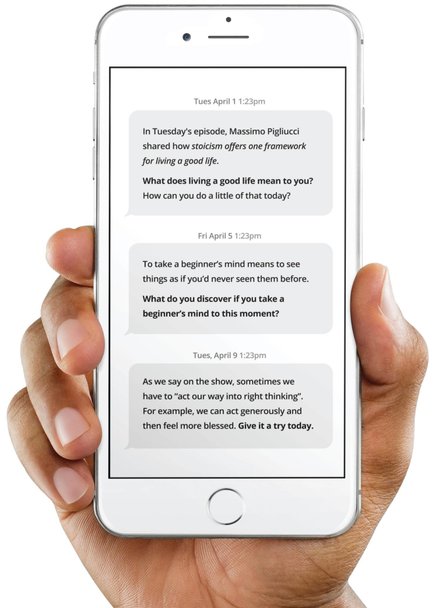
Good Wolf Reminders… A little wisdom, right when you need it. Start receiving free text reminders designed to help you pause, reflect, and take meaningful action. Sign up at oneyoufeed.net/sms.
Key Takeaways:
- Research on sustainable behavior change in physical activity and exercise.
- The impact of all-or-nothing thinking on exercise habits.
- The concept of “choice points” in decision-making regarding exercise.
- The influence of rigid standards and idealized criteria for exercise.
- The role of motivation and enjoyment in maintaining exercise routines.
- The prioritization of exercise compared to other daily responsibilities.
- The unconscious nature of rigid standards and avoidance behaviors.
- Societal messaging around exercise guidelines and its effects on motivation.
- Strategies for flexibility and resilience in exercise routines.
- The idea of a “movement menu” to encourage varied physical activity choices.
Michelle Segar is an award-winning researcher at the University of Michigan. She has been a sustainable behavior change scientist and health coach for almost 30 years. Her work investigates how to help people adopt self-care behaviors, like exercise and healthy eating, in ways that bring joy and meaning, and can survive the complexity and unpredictability of the real world. She has authored two popular books (No Sweat, The Joy Choice), advises the World Health Organization on their physical activity initiatives, and was selected as the inaugural chair of the United States National Physical Activity Plan’s Communication Committee. Her pragmatic work is being scaled to boost patient health, employee well-being, and gym membership retention.
Connect with Michelle Segar: Website | X | LinkedIn
If you enjoyed this conversation with Michelle Segar, check out these other episodes:
Understanding Choice Points for Lasting Changes in Eating and Exercise with Michelle Segar
Why Willpower Isn’t Enough: The Tiny Habits Method Explained with Dr. BJ Fogg
This episode is sponsored by:
Shopify – The commerce platform that helps you build, grow, and manage your business all in one place. Start your $1/month trial at shopify.com/feed.
David Protein bars deliver up to 28g of protein for just 150 calories—without sacrificing taste! For a limited time, our listeners can receive this special deal: buy 4 cartons and get the 5th free when you go to www.davidprotein.com/FEED
Alma has a directory of 20,000 therapists with different specialities, life experiences, and identities, and 99% of them take insurance. Visit helloalma.com to learn more!
Talkiatry connects you with licensed psychiatrists for personalized, evidence-based mental health care, all online and covered by most major insurance plans. To get matched with an in-network psychiatrist in just a few minutes, visit Talkiatry.com/FEED.
Tiny Health‘s at-home gut health test provides science-backed insights into your microbiome, along with personalized recommendations to help you improve your digestion, energy, and overall well-being. Get $50 off your first test kit at tinyhealth.com/FEED
Aura Frames: Named #1 by Wirecutter, you can save on the gifts moms love by visiting AuraFrames.com. For a limited time, listeners can get 25 dollars off their best-selling Carver Mat frame with code FEED. Support the show by mentioning us at checkout!
Brodo Broth: Shop the best broth on the planet with Brodo. Head to Brodo.com/TOYF for 20% off your first subscription order and use code TOYF for an additional $10 off.
Rocket Money Let Rocket Money help you reach your financial goals faster. Join at rocketmoney.com/feed.
By purchasing products and/or services from our sponsors, you are helping to support The One You Feed, and we greatly appreciate it. Thank you!
If you enjoy our podcast and find value in our content, please consider supporting the show. By joining our Patreon Community, you’ll receive exclusive content only available on Patreon! Click here to learn more!!
Episode Transcript:
Michelle Segar 00:00:00 I really think we’re misguiding people when we ask them to form automatic habits. Instead, I think we should be teaching them on what you and I have been talking about this whole time. Because you know what? This is another word for everything we’ve been talking about is resilience.
Chris Forbes 00:00:22 Welcome to the one you feed. Throughout time, great thinkers have recognized the importance of the thoughts. We have quotes like garbage in, garbage out or you are what you think ring true. And yet for many of us, our thoughts don’t strengthen or empower us. We tend toward negativity, self-pity, jealousy, or fear. We see what we don’t have instead of what we do. We think things that hold us back and dampen our spirit. But it’s not just about thinking our actions matter. It takes conscious, consistent, and creative effort to make a life worth living. This podcast is about how other people keep themselves moving in the right direction, how they feed their good wolf.
Eric Zimmer 00:01:07 Michelle Seeger just ran one of the first studies on all or nothing thinking and exercise, and the results surprised her. A lot of people, it turned out, didn’t actually want to do the exercise they planned in the first place. So when life got in the way, choosing nothing wasn’t a defeat. It was a quiet escape from something they dreaded. The fix isn’t more willpower; it’s to find movement that feels better to you and to follow a phrase I’ve used for years. A little bit of something is better than a lot of nothing. Michelle also wrote the Joy Choice about sustainable change. I’m Eric Zimmer and this is the one you feed. Hi, Michelle. Welcome back.
Michelle Segar 00:01:50 Thanks for having me.
Eric Zimmer 00:01:52 I believe this is time number three, if I am correct. And I’ve loved your research and your books over the years. I was saying to you before we started, you’re actually in my book very directly. I quote you on something called the Self-care hierarchy from a previous conversation, and your ideas are also sprinkled throughout. So I’m really excited to have this conversation with you. We’ll get into all that in a moment, but before we do, we’ll start like we always do, which is with the parable.
Eric Zimmer 00:02:21 And in the parable, there’s a grandparent who’s talking with their grandchild, and they say, in life there are two wolves inside of us that are always at battle. One is a good wolf, which represents things like kindness and bravery and love, and the other is a bad wolf, which represents things like greed and hatred and fear. And the grandchild, it stops. They think about it for a second. They look up at their grandparent and they say, well, which one wins? And the grandparent says, the one you feed. So I’d like to start off by asking you what that parable means to you and your life. And in the work that you do.
Michelle Segar 00:02:56 It’s every time you ask me that question, I’m overwhelmed with feeling because it’s so meaningful to me. It means that what we put our attention on, what we think about, influences the parts of ourselves that we experience and manifest and the energy we put into the world.
Eric Zimmer 00:03:19 Yeah. That’s beautiful. I like that energy idea, the energy and where we focus. And a lot of your focus is you can correct me if I say this wrong, but you are very focused. Your I would call you a behavior change researcher, but I would say that you’re focused primarily on the behavior change of exercising.
Michelle Segar 00:03:42 So the only tweak I would make to that is really since the beginning of my career, I instead of behavior change, I’ve been focusing on sustainable change. And I think you you need different inputs to achieve the latter. Then you do the former because one is about forever and one is about change and what we need to do at the beginning. In many regards, for many people, is going to be very different than what you need to sustain. In most of my work, in both academic research and coaching has been focused on physical activity. More recently, I’ve started doing research into eating.
Eric Zimmer 00:04:25 Yes, I think that’s a good way to say it. You’re focused on the sort of changes that you don’t do for a season that you ideally do for a life, you know, lasting and sustainable change.
Eric Zimmer 00:04:36 And you’re right, there there are slightly different skill sets that are needed to begin something and also to keep it going. And oftentimes, the energy that we bring to the beginning actually can sabotage us in the keeping it going. So the reason that you and I are talking beyond the fact that we like to talk is that you’ve published some new research, and I’d like to go into it, because in my book there’s a whole section called The Middle Way, and it explores the middle way from a lot of different angles. But one of the angles that it explores it through is this idea of all or nothing thinking. And you recently have done research, I believe maybe some of the first research to examine what all or nothing thinking does to our abilities to sustain and exercise habit.
Michelle Segar 00:05:27 Yes, yes. You know, I went into this new research that actually was inspired by writing the Joy choice and seeing how little research on exercise there was about this, quite a bit on eating, but nothing on exercise for the most part. Who are the most important people to help learn how to sustain physically active lives? It’s those who have not succeeded at doing it, who start and stop and start and stop but don’t sustain. So we targeted people in the community and also two different groups, student groups and, you know, people who work, living their lives having families. And we advertised to get people who identified with the idea that they had tried to exercise but just couldn’t stick with it because those were the people. Those are the people, the majority of the population that we want to help. So we wanted to talk to them and find out, gosh, do these people talk about physical activity and exercise using language and concepts that might reflect all or nothing thinking? And if they do, in what ways do they manifest all or nothing thinking at exercise choice points right? When when a challenge bumps up against a plan or an intention, what do they say to themselves? What do they choose to do? And that those are the people that we wanted to do this research with.
Eric Zimmer 00:06:54 Excellent. Let’s talk about choice point for a second, because I think it’s a really important idea. How do you describe choice point?
Michelle Segar 00:07:01 Yes. So when I first started using this concept, I called it Decision Point with my clients. It just kind of came to me one day when I was coaching and it was like, well, at this decision point, when your plan bumps up against something, but then choice point is a nicer term. And then I found out that actually choice point is used largely in other places, which shows what a great concept it is. So to me a choice point represents when someone has and it doesn’t matter what behavior, someone has a plan or intention to do something, but whether it’s a competing goal, whether it’s low motivation, whether it’s an unexpected call from the school to pick up your kids, any kind of conflict that occurs to an intention or plan becomes a choice point that you have to navigate.
Eric Zimmer 00:07:58 Yeah, I often think of it as the moment when it’s you and the choice that you kind of have to make. There’s so much stuff we can do structurally. I call it upstream, right? Knowing what I’m doing when I’m doing it, how I’m doing it, planning for what happens if I don’t do it well, having support for doing it. But there comes a moment where it’s like me and the choice and those moments are so critical because we can examine what happens within them specifically. Right? That’s been my experience, is I don’t have to solve all the questions in my life to look at what’s happening in that moment. If I go the direction that my best self didn’t want to go.
Michelle Segar 00:08:42 Absolutely. And and if you think about it in a certain way, it’s an opportunity for creativity and innovation because, you know, all or nothing essentially is I’m at a choice point by definition. If you’re at a choice point, unless it’s motivational, you’re not going to do the all. So the only the only alternative in that binary is nothing. But if we take a big step back and instead of looking at it in a black and white way, we look at it with gray and nuance. There’s so many options in a choice point, if we give ourselves permission to play with the possibilities.
Eric Zimmer 00:09:26 Yeah, I think that this idea of I will either do it perfectly or I won’t do it at all is kind of what your research is, is getting to. And I got a text from somebody who read the book, and this is a personal trainer. So someone who does personal training has worked on their own training and other people’s training for a long, long time and is really good at what they do, but they recognized that they were doing all or nothing thinking when it came to their own working out. Either they were in a position to just go for it and do a great workout, or they would just do nothing. And so I think that this runs deep through so many of us.
Michelle Segar 00:10:07 It absolutely does. The fact that my field has not researched this topic suggests that my field in general has all or nothing thinking that if people don’t exercise in the way they are planning to exercise, that meet the guidelines, that the the alternatives are are not valuable. And that’s a shame because something is always better than nothing.
Eric Zimmer 00:10:33 Yeah, my little phrase that I used with coaching clients for years was a little bit of something is better than a lot of nothing. Yes. Right. Yeah. So let’s talk about what did your research find. So we talked about who you studied. What did you find?
Michelle Segar 00:10:47 So what we found, we did qualitative analysis. And what that means is, is that we let the data speak to us. We didn’t come in with a bunch of codes and say, oh, do they have that? Do they have that? No. Now with all research, whether it’s quantitative or qualitative, the caveat, and I think this is really important for scientists to say all of our research is biased. So what we see in qualitative research is, is informed by what those of us coding it know. And in quantitative research, what we measure and study is also coming out of our biases. So I just like to say that so what did we find.
Michelle Segar 00:11:29 Well, we found that indeed people did speak about exercising and choice points with all or nothing thinking, but it manifested differently than we thought. We kind of came in that myself and Jennifer Tabor. So Jennifer Tabor and I were the leads on the study. A John Up de Graaf was also a primary player, and Alexis, who was a postdoc of Jennifer’s, was also part of the study. I should have said that up front, but they are my really important co-investigator on this. And so Doctor Tabor and I coded the data, and what we found was that people didn’t have the same criteria. We thought people were going to come in with like the same criteria, like, I have to go to the gym for 60 minutes and kill myself on the StairMaster. People did not say the same things. They all had their unique take on what their all was, what their criterion, what their idealized criterion was. And so that was interesting because it went against what we assumed was going to happen regardless.
Michelle Segar 00:12:42 Most people did have some type of standard that if they couldn’t achieve it, they wouldn’t do anything. So, you know, lo and behold, there’s all or nothing thinking. But part of the task of qualitative coders, through the quotes and the conversations is to try to see if we can figure out how do the different themes fit together. And so what we, you know, identified was that people had idealized, rigid criteria for exercising. So I’m just going to make this up for you, Eric. It could be, running outside for 45 minutes Monday, Wednesday, Friday. And for me, it could be doing my NordicTrack for ten minutes, seven days a week. Yeah. And so whatever that criteria was, if I couldn’t meet it on any given day, I didn’t do anything. But what we you know, this is tentative because this is the very first focused study on this topic. But what we identified was that these rigid, idealized criteria functioned through two other pathways. So it wasn’t just, oh, I can’t do it all, so I’m not going to do nothing.
Michelle Segar 00:13:54 It wasn’t this direct. Nothing. What actually we found was that people didn’t want to do the idealized criteria. They were seeking excuses from doing what they thought they should do. So we called this like a motivational pathway. And, you know, as someone who’s research has dominated, has been dominated by motivation. I was at first very disappointed because I thought, I thought I was ready to leave this topic and here it is in the data. So it turns out that people, many people, if their idealized criteria in a way are, well, they’re idealized, not necessarily realistic, not necessarily things people want to do, and a lot of people don’t actually want to do it. So part of the force of all or nothing. Thinking is that if you’ve got these criteria and you don’t want to do them, so you’re motivated to not do them. The other pathway, which is a little it’s got kind of two pieces, is that people talked about exercise is basically being the sacrificial lamb. You know, they would say things like, you know, if I don’t exercise.
Michelle Segar 00:15:07 Nothing concrete really happens. I don’t really have any kind of negative immediate consequence from not exercising. But if I don’t do my homework, if I don’t cook a meal, if I don’t pick up my kids from school. Stuff happens. And so on the one hand, they had other theme related to people who had these idealized criteria. They actually didn’t find exercise to be as high of a priority as there are other things. But the other thing that we saw a little bit of which I think is really, really important, is that if your standards and criteria for what is worthy exercise are rigid and can’t change, and life throws a curve ball and you have 15 minutes less than the 45 you have planned for, but your criteria are rigid. They have 45 is the bullseye, and if you can’t hit the bullseye, don’t even bother. So this rigidity prevents bringing a natural flexibility to what we do. And you know, and this is true in eating too. If you can’t follow your eating plan to a tee, you throw everything out instead of trying to do a part of it.
Michelle Segar 00:16:17 And that happens with eating too. So, you know, when we have rigid criteria, which I think people have learned to have in society, we don’t want to do it. And when we need to flex what we’re planning to do, it can’t flex because it’s rigid. And so that leads to all or nothing thinking. And kind of the final theme, which was fascinating, is that People. When they were reflecting, they would say things like, gosh, you know, I used to feel good when I did that, or I had fun with my colleagues when I worked out at lunch. You know, I’m an educated person. I’m baffled why I’m not exercising. So the other piece of it that I absolutely think is true, and links to all of my other work, is that this is an unconscious process. People don’t know, oh, I have rigid criteria that I’m not motivated to do and can’t flex in the realities of daily life. They don’t know that.
Eric Zimmer 00:17:34 There is a lot in there that I think might be worth separating out. The first is that people don’t really want to do whatever the thing is. Now, it may not be that they don’t want to exercise. It may be that they don’t want to be on the StairMaster for 45 minutes. And so when they come up with a situation where it’s either all or nothing, they happily choose nothing as an escape route from something they didn’t want to do.
Michelle Segar 00:18:02 Yes.
Eric Zimmer 00:18:03 So in that case, then motivation or going back to even before that and evaluating like, well, what am I doing and why and how am I doing it? And does that make sense? Is the answer for that. The second one is more what I would think of as standard all or nothing thinking. I’ll just use it for now. We’ll go. Yeah, which is that I do want to do this thing. It’s just that I am confronted with a situation that doesn’t allow me to do that thing in the way I had imagined, and since I can’t do it in the way I had imagined. I just jettison it.
Eric Zimmer 00:18:41 And I assume there’s crossover and bleeding between all of these different things. So we’ve established these two sort of things that are happening in here. There’s the motivation and then there’s the rigidity. Let’s talk about each of those in turn. So if motivation is the issue, it’s that I really don’t want to do this thing. How do we start on working on and fixing that?
Michelle Segar 00:19:05 Well people’s motivation originates from their reason or why for trying to adapt a behavior. And so the first place to start when you’re trying to enhance your motivation for something is, you know, am I trying to do this because I feel bad about myself because my doctor is admonishing me, because society tells me this is a good thing to do, which feels like a should or a chore and leads to non-optimal, low-quality motivation. But the other piece of the motivation, which more directly ties into the rigid standards we’re talking about, is what physical activities feel good to do. Am I choosing physical activities that feel good or bad to do in ways that feel good or bad? So if I think I’m supposed to be running for 50 minutes, that’s the right way to exercise then.
Michelle Segar 00:20:10 But I don’t like it. But it feels punishing or I’m not. You know, my physiology is not yet in shape where I can handle that type of activity and get positivity from it. That’s, you know, that’s the motivation component. And that ties directly into the standards people have. I mean, this is something that is so underappreciated in society and in, in my field is that socialization, education, something that is underappreciated by society and by my field, is that the ways people have been socialized or educated to approach being physically active. It’s about rules. You do it this way. This level of intensity makes sure your heart rate’s this. Make sure you’re sweating. Make sure you’re breathing hard. And the problem with that is it has turned physical activity into. It’s been prescribed to people as if there’s a one size fits all, or there’s a right size that we should be aiming for. But movement is an embodied process. I mean, I don’t want to go too far down this path, but people have learned to have rigid criteria.
Michelle Segar 00:21:23 And because movement is embodied, just like sex is an embodied activity. People don’t want to do things that don’t feel good with movement, people don’t want to do things that don’t feel good, but we’ve been taught that there is a right way to do it, and that kind of leads people to have rigid standards, and when they can’t achieve them, they don’t feel that it’s worth doing.
Eric Zimmer 00:21:47 Hey friend, before we dive back in, I want you to take a second and think about what you’ve been listening to. What’s one thing that really landed, and what’s one tiny action you could take today to live it out? Those little moments of reflection. That’s exactly why I started good wolf reminders. Short, free text messages that land in your phone once or twice a week. Nearly 5000 people already get them and say the quick bursts of insight help them shift out of autopilot and stay intentional in their lives. If that sounds like your kind of thing, head to oneyoufeed.net/sms and sign up. It’s free. No spam, and easy to opt out of any time. Again, that’s oneyoufeed.net/SMS, tiny nudges, real change. All right, back to the show.
Okay, so I think there’s two things within that that I kind of want to pull apart. The first is the should. So I go to my doctor and my doctor says, look, your blood sugar is so high. You’re, you know, you’re likely on your way to diabetes. And oh, by the way, your cholesterol is really high. I recommend that you exercise. So there’s a should there. How do I convert that should into a want to I don’t want I want to leave out what the exercise is right now. But how do I get to a want to around the thing as a whole.
Michelle Segar 00:23:15 Right. Well the first thing you have to do is acknowledge like, oh my gosh, this is a should. You know, I have a scale in No Sweat where I ask people from a wanted your to a five a gift.
Michelle Segar 00:23:27 When you think about exercising at a gut level, where do you sit on that continuum and you know the people who I work with anyway. Most people would say a 1 or 2. It’s a chore. And so awareness, as you know and write about, is everything. And so the first thing people have to do to convert a should to a want is you just have to acknowledge it’s like, which one are you going to feed. Do you want to keep feeding the should or do you want to start feeding the want? If you can basically give yourself permission to leave the should, which are often determined by other people in society. Then the question is, well, what can I tell people? How can I help people go from, yeah, I want to leave the should to, I want to go over to the want. And there’s a couple of relevant concepts here. First of all, most people haven’t been taught or socialized or educated to think about movement as an incredible wellbeing enhancing activity because it’s a health promoting weight loss.
Michelle Segar 00:24:32 Supporting it. You know, that’s what people think. So we have to help people understand often through experimentation. If I tell you, Eric, if you hate exercising, so shouldn’t I say to you, it can actually promote your well-being? You are not going to believe me because you haven’t necessarily experienced that positivity. We want people to understand there’s this potential for it to feel good, but there might be a bit of a learning process where you say, well, I really love to be outside, but I’ve never really thought about walking outside as a way to reduce my stress in my job in the middle of the day, or as a way to transition from work to family life. And once we can plant these new seeds of meaning, if you will, and give people an opportunity not to get it right, but to experiment and say, hey, how did that make you feel? Were you glad you do it? Did it feel good? Would you do it again through that process? We can help people go from a should to a what does that make sense?
Eric Zimmer 00:25:40 It does. I mean, I think there’s two things in there for me. And these are the things that have made exercise easier to do. I’m not going to say easy because we can talk about habits later. And how complex behaviors are rarely habitual is exactly those two things. First, I recognize like I’m going to feel better quickly from this. It’s not that it’s for my health 50 years from now. It’s because I’m going to feel better quickly. I mean, that’s one big thing that I did. And then the other was to actually really after I was exercising and I felt good was to spend time really trying to notice that and bring it on board, like, okay, I did that. It felt good. Now the thing that remains semi mysterious to me. And you could probably talk to this a little bit. Is that you would think after having done this 5000 times or whatever it is, where every single time I’m like, I’m glad I did that, I would expect that I would just want to do it like I would run to do it.
Eric Zimmer 00:26:47 But of course, that is not the case, right? I still face resistance, but changing those two things has made a really big difference.
Michelle Segar 00:26:57 From the way you’re talking. I’m going to guess that you exercise pretty intensely.
Eric Zimmer 00:27:05 It depends, yes. Some of my some of my exercise is intense. It’s more than walking. Although I do really embody a little bit of something is better than a lot of nothing. Because ultimately I will just default to if I’m really struggling, just move in some way, right? The plan yes does have some degree of what would be considered strenuous. Okay, not miserable. I’m not like every single time I’m like, I’m going to do the hardest hit work out there is. That is, I’m not there. But it does involve, yes, some degree of strain.
Michelle Segar 00:27:37 Well, you know, this really taps into, you know, what we know about if people were prediction like, we predict how are we going to feel now? How are we going to feel now? How are we going to feel when we do that? And if we feel that this is going to be effortful or, you know, something can feel good and effortful, but maybe we’re low energy at that time, right? And so our brains basically give us messages that we approach things we want and we avoid things we don’t want.
Michelle Segar 00:28:09 So I do think putting out effort like that, it’s challenging and that doesn’t mean you can’t enjoy it. You know, I’ve been playing with this too, with my NordicTrack, which now that I can’t run, I’m a walker and I used to love to run outside. Now I love to walk outside, but I can only get positive experiences on the NordicTrack. If I listen to dance music, I can transfer that dancing experience. But that doesn’t mean even though while I’m doing it, I can actually enjoy it, even for only 5 or 10 minutes. I’m not talking about 30 or 40 minutes, but I still don’t look forward to it.
Eric Zimmer 00:29:04 I think that energy thing is a really big one for me. I write this in the book and I’m kind of joking, but I’m like, I think my brain is doing a calculation kind of like this. And it’s like, okay, it is time to get up and go do a 60 minute ride on the peloton. And my brain sort of checks in and goes like, well, that takes like 30 units of energy.
Eric Zimmer 00:29:23 And then it’s like, well, what do I actually have? And I’m like, well, I’ve got two. I’m laying on the couch and it goes, well, in that case, this isn’t going to work. Whereas for me, and this is the little by little. Right? I just when I shrink it and I’m like, you know what? Just go get up, put on your bike shorts, put on your bike shoes. My brain is like, okay, well, that takes two units of energy. Oh, and you know what? We’ve got almost two. Maybe we can do this, right. I feel like that is such a big one for me, is that there’s some calculation going on or some prediction, to use your point, it knows what it’s going to take to do that, and it measures it against what I currently have. Now, for me, once I get on and I start pedaling a little bit, my actual energy starts to go up and then, you know, but again, I still it’s why like one day at a time or one step at a time, I’m like, you know, if all I’m looking at is like, I’ve got 45 minutes to go, that’s usually problematic. I would just be like, well, the next minute, the next two minutes, the next five minutes. But I do think that energy is really, really a big one in my case.
Michelle Segar 00:30:28 Absolutely. And I think I have fallen prey to this too. But here’s my, you know, but but then I’ve talked myself out of it. I live. I used to belong to the Y, and it was on my daily route, and I was at a point where I was doing some weightlifting and I was exhausted, and I didn’t want to go in and do my weights. And I said to myself, you know what, Michelle? Instead of doing three sets of of everything with £5, why don’t you go in and do one set with £2 and be done? And it was such a win. Like, you know, you shrink it down and most people don’t give themselves permission to do. And I’m in a point in my career with this topic that I honestly believe, because people don’t give themselves permission to shrink and do less or different, that, that if it’s not the biggest reason people drop out of of of their regular exercise.
Michelle Segar 00:31:26 It’s going to be the second biggest reason I’ve just seen it. And as we’re talking about it, can’t you see the psychology of how powerful I can’t do the all? I don’t want to do the all, so I’m just not. The easy thing is to do nothing. But people don’t think there’s an option. That’s the problem.
Eric Zimmer 00:31:43 Well, you just said that might be the second thing. Now I have to ask, what’s the first thing? And if you don’t have that answer immediately.
Michelle Segar 00:31:49 So all or nothing thinking there’s a permission piece that if I can or don’t want to do the all, it’s not there’s nothing valuable. So if that is the that’s a value calculation about the worthiness of doing less. And I, I interviewed a lot of other scientists for the all or nothing discussion because I wanted to understand all these different perspectives. And I spoke to some people in cognitive psychology who really helped me see just plain and clear, this is a value calculation that people it’s not valuable to do less.
Michelle Segar 00:32:25 And so that’s that’s the that part of the all or nothing. But the other piece is the should I mean, and the should ties directly to the criteria. But it’s as you’ve already said, it’s bigger than that. It’s my you know, my my doctor is telling me this, I have to do this. You know, the influencers are saying that. Yeah. And they’re very much related, but they’re two very different things. And there’s a couple of other issues too. But I don’t want to take us too far off track.
Eric Zimmer 00:32:55 Yeah, I do think the messaging that we get is really, really important around this because the messaging that we do tend to get is 150 minutes of semi-hard cardio a week. That is a lot. And then you can go to any number of different influencers who who will take it up. Even beyond that, it’s it’s this really it’s a high level of intensity. It’s a high level of consistency. We’re told to aim for streaks. You do it 90 days in a row and if you mess up, you go back and you start over.
Eric Zimmer 00:33:27 And I’m not saying that those things are not valuable for some people, because in some ways I think those things can be valuable. For some people, we are all different, but most people, my experience is they do need permission to do less. I think it was BJ Fogg that I got this from, and I think it’s a very good analogy because he’s talking about this idea and he’s like, well, you know, let’s say your thing is to do strength training, you know, three days a week and you go on vacation and you’re not really going to be able to do it. But what you decide to do instead is that you’ll just do two sets of push ups and crunches on those days instead. And the analogy he makes is he’s like, it’s kind of like a houseplant. He’s like, when you’re home, you can really give the plant all the attention at once. But in these other moments, what you’re doing is you’re keeping the plant alive. And I think that’s really valuable because oftentimes people will be like, well, what? Who cares? Two sets of push ups and crunches.
Eric Zimmer 00:34:26 That’s not going to shape my future outcome very much. And you’re right, it won’t. But what it will potentially do is enable you to continue with the behavior over time. And that’s the value sometimes for me of a little bit of something being better than a lot of nothing. It’s not that the thing I do, the smaller thing that I do is beneficial in and of itself. Although it is.
Michelle Segar 00:34:54 It is.
Eric Zimmer 00:34:54 Right. It’s also part of a bigger picture. And that bigger picture is that I’m flexible enough that I keep doing something to the best of my ability versus what feels like start stop, start stop, start stop. Yes, it’s much more gradual, but it keeps the momentum going.
Michelle Segar 00:35:14 So yes, you know, I had this statement in no sweat where I said consistency over quantity. That’s that’s the momentum. But I want to say two additional things about this topic because in addition to keeping the momentum, and I think, you know, I don’t have data to say this, but in my mind and work, I think this might even be more potent is when we do those other things which we know don’t elevate to near the same level as what we might be doing at home.
Michelle Segar 00:35:48 What we’re doing is we’re just showing ourselves how important it is. Yes, that we it’s part of our identity. It’s something we truly value. And again, there’s that value calculation again, that it it doesn’t matter what it is. I’m showing myself that it is meaningful to me to just dip my toe in the water. I mean, it could be dipping my toe in the water, right. And that’s it. The and the other. But there is another side to this that I think is really important to acknowledge that. Again, I don’t think my field has been ready to hear. And and this is hard because, you know, when we get out of the swing of things, we truly get out of the swing of things. But on the flip side of, you know, consistency over quantity and doing something is always better than nothing. Sometimes we’re on vacation and we just want to let go.
Eric Zimmer 00:36:39 I agree.
Michelle Segar 00:36:39 So yeah, where does that sit in our mindset such that we go, I’m giving myself permission over this next week.
Michelle Segar 00:36:48 If I feel like taking a walk, I’ll take a walk if I don’t feel like it because it’s vacation. But taking a walk is so valuable to my quality of life that I know as soon as I get home, I’m going to go back to it. Guilt free should free. And this gets that kind of this bigger picture flexing where it’s got to be, right, even on vacation or even something on vacation, when you know there’s different phases of life, right?
Eric Zimmer 00:37:16 I would always tell clients of mine who were going on vacation, I was like, well, what are you going to do on vacation? And they’ll be like, well, I’m just going to keep doing the thing exactly right. And I’m like, okay, well, you can choose that. You can also choose to simply say, I’m not going to do it during this window. What I think is that the more important piece is that we are making a conscious decision. And I’m like, I would much rather have you say, you know what, I’m just going to let it go this week than try and do something that you’re not going to be successful at doing, and you end up feeling bad about the whole time.
Eric Zimmer 00:37:50 Like, there’s no point in that. Just say, I’m not going to do it. And if you do any. Wonderful. Yeah. And then here’s the other like lived experience thing I see is that transition back in is so important. Right. That is where I see a lot of like consistency become inconsistent. Is that when anything changes vacation, whatever the thing is. Right. And this maybe we can talk about move into habits a little bit here, right? Because the idea is that we will do these things and they will become so automatic, we will always do them. Talk about what habit means in a more strict sense.
Michelle Segar 00:38:26 In the behavior change literature, a lot of people are interested in forming habits, forming automatic. So that’s thew big difference. One is, is it a routine? Do you tend to do it on these days at this time or is it an automatic habit? And you know what’s going on in the literature. And it makes sense that people want to help the population form automatic habits.
Michelle Segar 00:38:51 We live a lot of our lives unconsciously, so why not harness that resource, if you will, that we’re already doing. The problem is, is that automatic habits sit on top of assumptions, assumptions of in variability. So in order for that cue response to form and become an automatic habit that literally there’s no consciousness around. When you do the cue, the response has to happen. And typically there’s some type of reward. And if we take a huge step back and think about complex behaviors like physical activity, I mean, you were talking about putting on your shoes and putting on your shorts, setting your alarm, leaving your email. I mean, there are so many steps involved, and that’s just physical activity. Think about eating, grocery shopping, menu planning, trying new recipes. I mean, the list goes on and on of the number of steps. Well, that doesn’t meet the assumptions that are required. And so, you know, that has been my biggest concern about the notion that we should be helping people develop automatic habits for complex lifestyle behaviors like eating and exercise.
Michelle Segar 00:40:00 In addition, there is not research support that you can form automatic habits long term, and even research looking at flossing did not produce long term effects. So and in the exercise literature per se, the most recent reports on whether, you know habits can help people follow through with their intentions to behavior is very mixed. So I really think we’re misguiding people when we ask them to form automatic habits. Instead, I think we should be teaching them on what you and I have been talking about this whole time. Because you know what? This is another word for everything we’ve been talking about is resilience. We need to teach people behavioral resilience. And that’s not doing the same activity on the same days. That’s about bending when the wind blows and standing back up and bending again when the next wind blows. Right.
Eric Zimmer 00:40:55 Yep. I see why we are seduced by the idea of habits. I even used that word in programs that I taught for a while, because what we want is something to become automatic so that it’s not difficult to do ever again.
Eric Zimmer 00:41:11 And we just do it. I mean, of course, who doesn’t want that? Right. And to your point, as I’ve learned, and some of your research is part of that and in other ways, is that another way of saying what you just said is that a habit has to rely on what we would call a stable context, meaning it’s the same all the time. It’s why, like putting on your seatbelt can become fairly automatic because you get in the car in the same way the car is exactly there, the seat belts in exactly the same place. There’s not much to it now. I suspect if I was forced to crawl in through the trunk of the car, I might not have a habit anymore because. And so when we’re trying to build a habit, our context is constantly shifting. And I love what you said about resilience, because that’s part of what I talk about in the book and in a method I have. And what I would do is when I would form a plan with a client, the very first thing I would say once we were done, we go.
Eric Zimmer 00:42:05 Planning is really important. What are we doing? When are we doing it? Let’s try and at least to start with, drive ambiguity out. And then we say what’s going to go wrong? Because of course it is like, if your plan is like, I’ll work on writing my Substack, I’ll do it after the kids get on the bus to go to school. The question we have to ask is what happens when the kids don’t get on the bus? Because that is surely coming. You can’t plan for everything, but you can plan for some of it. And then the resilience also, like you said, is recognizing like, oh yeah, of course I got off track for a couple days. So that’s what happens. How do I get back on track? Like it’s inevitable. So don’t make a big deal out of it.
Michelle Segar 00:42:48 That’s why the value is the foundation and the goals create the context of the value. If it’s valuable to you, you’ll do it. Unless you’re so rigid that you feel like a failure and then you, you know, then you don’t do it.
Michelle Segar 00:43:01 So here’s the thing. I’ve been thinking a lot about planning and intentions as part of the new work that my colleagues and I are doing. We’re actually developing a measure of rigid versus flexible regulation. So we can actually we’ll look at quantitative data to look at to see our people who are more flexible. Do they do more physical activity. You know, we’re going to actually be able to answer that question quantitatively.
Eric Zimmer 00:43:25 But how will you measure flexibility. Like how will you determine who’s flexible?
Michelle Segar 00:43:29 Let me tell you, we’ve spent the past year and a half. I’m not kidding.
Eric Zimmer 00:43:35 On that question.
Michelle Segar 00:43:36 We looked at like 20 other measures from other fields. I believe it, you know, we had comments in the focus groups for the all or nothing study. I have comments, you know, clients have said things that I remember. I asked personal trainers examples. So and so we haven’t done the first like hugest stat biggest step which is actually doing factor analysis where we where the stats tell us are these are these two factors.
Michelle Segar 00:44:05 Are they in a continuum. Are they different? And I will let you know. It’s. This is it’s been so intensive. But we want to do it right. So a question could be, you know, when my plan bumps, how true is the following for you? Or how often do you do this? I mean for that question we have both a belief subscale and a decision scale. But I’ll do the decision scale, which would be how often do you do this? When my planned physical activity becomes unworkable, I’ll find another way to be active that day. So that would be an item that’s probably very similar to one of our items that, if people affirmed, would reflect flexibility. And if people said not often that okay, so but that’s an example. I mean, ideally we could do stuff in the moment, but we’re just not there yet.
Eric Zimmer 00:44:56 As we wrap up, take one thing from today and ask yourself, how will I practice this before the end of the day? For another gentle nudge, join good Wolf Reminders text list. It’s a short message or two each week, packed with guest wisdom and a soft push towards action. Nearly 5000 listeners are already loving it. Sign up free at oneyoufeed.net/sms. No noise, no spam, just steady encouragement to feed your good wolf.
Flexibility is such an interesting idea. One of the schools of thought that is informed the way I see the world a lot, or I should say, I discovered it and realized that it saw the world similarly to me is acceptance and commitment therapy. And they have an idea there that what ultimately the thing that they’re trying to develop is psychological flexibility, right? It’s the ability to bend and move and shape and shift and, you know, hold on to certain things and let go of other things. And I think that idea of flexibility is so, so important. It’s a strange thing. I’ve often said that like if you want to do a behavior long term, you need like this weird mix of like stubbornness and also extreme flexibility. The stubbornness is like, I’m going to keep doing this. This is important. I’m going to figure it out. And then the extreme flexibility speaks for itself, right? I have to adapt what I’m doing on a regular basis.
Michelle Segar 00:46:32 Absolutely. And that reminded me of what we were talking about before, which is I think planning is hugely important. And I think earlier in my career I was really into coping planning, which is a or if then planning implementation intentions as kind of the holy grail. What to do you like? You help people create a plan, but in a way that secondary plan is still a plan. And so what I feel like we’re not doing.
Eric Zimmer 00:47:02 It is.
Michelle Segar 00:47:03 What I feel like we need to do that we haven’t been doing yet is I think we need to help people learn how to be more dynamic in the moment, but I think they need to have an understanding of what I would call a movement menu. For example, you know, if you only have five minutes and very little energy versus five minutes and a lot of energy, like if you have 25 minutes.
Michelle Segar 00:47:28 So I think if people if we can help people build this knowledge and this this would be called metacognition or meta knowledge, you know, then when they come to the choice points, which I didn’t know until someone told me in an interview for the Joy choice that Acceptance and Commitment therapy uses that same term, which is really cool.
Eric Zimmer 00:47:49 It does.
Michelle Segar 00:47:50 Then it’s not as threatening because we have this resource at hand, and we know that just like an A menu in a restaurant, we don’t feel like we have to choose the, you know, get it right every time. It’s like, well, what do I feel like today? Right. And so I think if we helped people come at it with a wider variety of options, from almost nothing to a lot more than I actually want to do, they will be more prepared. You know, I agree.
Eric Zimmer 00:48:22 I think that is a really good and important point about developing menus and choices, and I think some of what happens over time, at least with me and movement, that being the primary thing, is that I’ve improvised so many times now, and I have a life that resists any kind of context.
Eric Zimmer 00:48:41 I feel like I’m always somewhere else, somewhere different, like there’s just a lot of that. And and, I mean, I’m choosing that the way I choose to live my life is one in which there’s not a lot of time to be really steady in the same place, doing the same thing. I mean, some of that was for years, Ginny and I going back and forth from Atlanta to take care of her mom to Columbus, to take care of my mom every two weeks. We were somewhere different. What that has caused me to do is to be flexible enough times that I kind of have my own little menu, now that I know. And another thing I was thinking about as we were talking, I was thinking a little bit about like planning, and I was thinking about planning work. And and what I’ve realized over time is that when I’m in a good place, I don’t need to spend a lot. And by good, I mean sort of emotionally regulated, steady place. I don’t need to spend a ton of time planning out exactly what I’m going to do.
Eric Zimmer 00:49:37 I mean, I’m not saying I don’t have any planning, but I’m not like time boxing to the hour. I’m in a good enough spot that I can look and go, okay, that’s important, and that needs to be done. I can kind of manage it, but when things start to get really wobbly for me, I sometimes need to go back to more rigidity and structure. I need to go back to like, okay, I actually do need to sit down and go, okay, what meetings do you have today and what are the spaces in between, and what are you going to do in those spaces in between? Because I’m not in as good a place. And so I think about that sometimes too. Also with exercise, I was thinking about this recently, like with my strength training, it’s gotten a little bit wobbly. And so I’m like, you know what? I think what I’m going to do is rejoin this gym that I go to, and they have strength training classes three days a week, and I’m going to go to those for a little while because I’m off right now and I need the rigidity.
Eric Zimmer 00:50:30 And over time I will probably migrate away from that again and kind of be more on my own. And this just goes back and forth, this waxing and waning of structure.
Michelle Segar 00:50:40 Absolutely. And you know, what you just kind of demonstrated is it’s a journey, right? And it ebbs and flows and people with exercise especially, they just they have the wrong impression. I don’t want to say wrong because that’s judgmental. and some people do. My husband’s exercise is the same. Day in, day out when we travel day. You know, I mean, he is just one of these people who’s going to do it the same way. But I don’t think most of us have either the disciplined or the or the wherewithal or the desire or the value to do that. And and so I mean, everything in life changes. Yet because of the way people have been socialized to think about exercising, they haven’t been taught to change it. Like you said earlier, 30 minutes, five days a week at moderate intensity forever.
Michelle Segar 00:51:39 But that is not a recipe for resilience for most people. And so that’s what I think we need to do, is I think we need to give people permission to be flexible and to be resilient with physical activity, just like they are as parents, as professionals, as daughters and sons and siblings, right? I mean, we don’t expect these other life areas not to change.
Eric Zimmer 00:52:03 Exactly. Well, I think that is a beautiful place for us to wrap up. Resilience and flexibility. Michelle, thank you so much. I always enjoy talking to you. And like I said, so much of the way I see things you have been a big influence on. So I love talking with you.
Michelle Segar 00:52:19 Thank you. I love talking with you too. Eric, thank you so much.
Eric Zimmer 00:52:22 Thank you so much for listening to the show. If you found this conversation helpful, inspiring, or thought provoking, I’d love for you to share it with a friend. Share it from one person to another is the lifeblood of what we do.
Eric Zimmer 00:52:35 We don’t have a big budget, and I’m certainly not a celebrity, but we have something even better. And that’s you just hit the share button on your podcast app, or send a quick text with the episode link to someone who might enjoy it. Your support means the world, and together we can spread wisdom one episode at a time. Thank you for being part of the One You Feed community.
Leave a Reply