

In this episode, Jonathan Goodman discusses defines unhinged habits and how to transform your life by doing less. He shares how selling his software company led him to focus on writing and living intentionally. Jonathan also explores the importance of prioritizing money, health, and relationships, embracing life’s natural seasons, and making conscious trade-offs. He explains how intense focus can transform habits, the value of childhood passions, and the difference between meaningful and vacant activities. The episode encourages listeners to nurture what matters, let go of what doesn’t, and periodically reset for a more fulfilling life.
Please take our quick 2-minute survey and help us improve your listening experience: oneyoufeed.net/survey
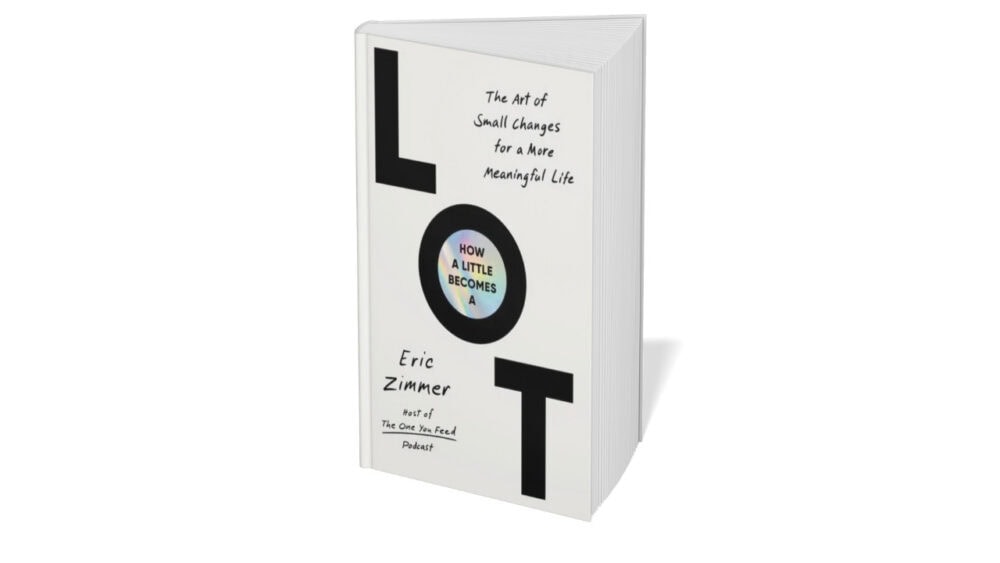
Exciting News!!! Coming in March, 2026, my new book, How a Little Becomes a Lot: The Art of Small Changes for a More Meaningful Life is now available for pre-orders!
Key Takeaways:
- Discussion of the importance of prioritizing life’s triad: money, health, and relationships.
- Exploration of the concept of life seasons and the need to focus on different priorities at different times.
- Insights on habit formation and the necessity of making trade-offs to avoid burnout.
- The metaphor of the “good wolf” and the importance of nurturing positive qualities within oneself.
- The significance of recognizing when a season ends to allow for rest and reflection.
- The idea of maintaining balance in life and the dangers of comparing oneself to others.
- The role of intentional living and making deliberate decisions about time and energy investment.
- The benefits of an exploratory mindset and trying new activities to discover what fits best.
- Discussion on the social and physical benefits of engaging in inclusive activities like games.
- The impact of modern life on natural rhythms and the importance of consciously ending seasons for personal growth.
Jonathan Goodman has spent 13 winters exploring the world—first solo, then with his wife, and now with their three children—challenging educational conventions while building multi-million-dollar businesses. Featured in Men’s Health, Forbes, Robb Report, Entrepreneur, and Inc., Jon proves that you don’t have to choose between professional success, meaningful relationships, and fulfilling adventure. His new book is Unhinged Habits: A Counterintuitive Guide for Humans to Have More by Doing Less
Connect with Jonathan Goodman: Website | Facebook | Instagram | LinkedIn | YouTube
If you enjoyed this conversation with Jonathan Goodman, check out these other episodes:
How to Create Elastic Habits that Adapt to Your Day with Stephen Guise
Behavior Change with John Norcross
Tiny Habits for Behavior Change with BJ Fogg
By purchasing products and/or services from our sponsors, you are helping to support The One You Feed and we greatly appreciate it. Thank you!
This episode is sponsored by:
David Protein Try David is offering our listeners a special deal: buy 4 cartons and get the 5th free when you go to davidprotein.com/FEED.
Hungry Root: For a limited time get 40% off your first box PLUS get a free item in every box for life. Go to www.hungryroot.com/feed and use promo code: FEED.
IQ Bar: Text FEED to 64000 to get 20% off all IQBAR products, including the ultimate sampler pack, plus FREE shipping. (Message and data rates may apply).

If you enjoy our podcast and find value in our content, please consider supporting the show. By joining our Patreon Community, you’ll receive exclusive content only available on Patreon! Click here to learn more!!
Episode Transcript:
Jonathan Goodman 00:00:00 When you consider that we all have this triangle that operates our life of three main priorities money, health, relationships. That’s your life’s triad. The process of betterment is simply the process of thickening that triangle, of reinforcing that structure over time. The problem is, you can’t overload one side of it and ignore the other one, because what happens to a triangle? The damn thing collapses.
Chris Forbes 00:00:29 Welcome to the one you feed. Throughout time, great thinkers have recognized the importance of the thoughts. We have quotes like garbage in, garbage out or you are what you think ring true. And yet for many of us, our thoughts don’t strengthen or empower us. We tend toward negativity, self-pity, jealousy, or fear. We see what we don’t have instead of what we do. We think things that hold us back and dampen our spirit. But it’s not just about thinking. Our actions matter. It takes conscious, consistent and creative effort to make a life worth living. This podcast is about how other people keep themselves moving in the right direction, how they feed their good wolf.
Erich Zimmer 00:01:13 We spend a lot of time trying to add the right habits, the right routines, the right goals. But what if a bigger change comes from removing what no longer fits? In this episode, I talk with Jonathan Goodman, author of Unhinged Habits A Counterintuitive Guide for Humans to Have More by doing less about the idea that you’re not the author of your life, but you can be the editor. We explore why subtraction is so hard. Why say no is often the most honest move, and how clarity comes from choosing fewer things more deliberately. Honestly, Jonathan and I don’t agree on everything, but I find all of his ideas worth considering if you’ve ever felt stretched thin, pulled in too many directions, or quietly frustrated with your own ambition, this conversation offers a grounded and realistic way forward. I’m Erich Zimmer and this is the one you feed. Hi, Jonathan, welcome to the show.
Jonathan Goodman 00:02:14 Yeah, man, it’s so good to be here.
Erich Zimmer 00:02:15 I’m excited to talk with you. We’re going to be discussing your book, which is called Unhinged Habits A Counterintuitive Guide for Humans to Have More by Doing Less.
Erich Zimmer 00:02:25 There’s a number of things in that book that I think are going to be really interesting, because they are a little different than the way I see certain things, so I’m really looking forward to talking through some of that. But we’ll start like we always do with the parable. And in the parable there’s a grandparent who’s talking with their grandchild and they say, in life there are two wolves inside of us that are always at battle. What is a good wolf which represents things like kindness and bravery and love? And the other is a bad wolf, which represents things like greed and hatred and fear. And the grandchild stops. They think about it for a second. They look up at their grandparent and they say, well, which one wins? And the grandparent says, the one you feed. So I’d like to start off by asking you what that parable means to you in your life and in the work that you do.
Jonathan Goodman 00:03:08 There’s a virtually unlimited amount of opportunities we all have these days. What do you decide to do for your work? What trade offs do you decide to accept in order to commit more, maybe to your family or your fitness? Show me your habits.
Jonathan Goodman 00:03:25 I’ll show you who you are. Right? And so what that parable means to me is, hey, what are you focused on? How much are you willing to commit to what you’re focused on? Just last week, I finished the sale of a software company that I owned. It’s called Quick Coach. Impressive, right? I exited. Now a software company. I have that word behind my name. Yep. Put it. The story that you don’t often hear is I lost $1.4 million. And so I sold the company. Sure, I got a little bit of money back, but the reason that I sold the company was because I made a very concerted effort for this season of my life, that writing and authorship was going to be my primary focus for two reasons. Number one is it fills me up energetically in a way that nothing else does, makes me that a human. All these things. And the second is, if you work backwards from the lifestyle properties that I desire, the ability to never miss a meal with my family, a breakfast or a dinner or lunch with my wife, the ability to walk my kid to school and pick him up every single day.
Jonathan Goodman 00:04:30 There’s not a lot of professions that really lend themselves to that. Running a SaaS business is certainly not one of them. No. And so what are you willing to accept in order to go after what you truly want? That’s what that parable means to me.
Erich Zimmer 00:04:45 It’s one of the things I really love about your book is that it hits this idea head on. You’re going to want multiple things. Almost all the time. Like that’s just a that’s part of being a person that’s interested in life. Yeah. And that we are going to have to be making trade offs. I mean, in my book I talk about it as motivation or complexity. Right. We are just we are complex creatures. We are motivated by a lot of different things. But I love how your book takes that on kind of head on. And then secondly also recognizes that there’s a real seasonality to things. There’s a period of time to push hard on work. There’s a period of time to double down on the family. And these things can be seasonal within a year.
Erich Zimmer 00:05:32 They’re also seasonal within a lifetime. Right. The season of life I’m in is a very different season of life than you are in. My son’s 27, so we have very different seasons of life. And if we are comparing ourselves to each other without recognizing that that can be a source of a lot of suffering. So I just loved that degree of sort of frankness and honesty, kind of right out of the gate with the book.
Jonathan Goodman 00:05:56 It’s hard.
Erich Zimmer 00:05:58 Yeah.
Jonathan Goodman 00:05:58 It’s hard. The problem is never in the gaining. The problem is always in the perception of loss somewhere else. When you consider that we all have this triangle that operates our life of our three main priorities, just about every person has these three priorities, right? Money, health. Relationships. That’s your life’s triad. The process of betterment is simply the process of thickening that triangle, of reinforcing that structure over time. The problem is, you can’t overload one side of it and ignore the other one, because what happens to a triangle? The damn thing collapses.
Jonathan Goodman 00:06:31 Yeah, you have to maintain the other sides. And so tell me if this resonates, Eric, you’re crushing it in your business and it’s going really well. But maybe your health has taken a step back. Or you’re crushing it with your health, with your fitness, with your workouts. You look like a fit guy. But maybe you aren’t spending quite as much time calling your parents and you feel guilty about that. No matter what we’re doing, whatever we’re winning at, the benefits of that are downplayed by our brains. Woolley, constant Woolley of what we’re not doing and why is few is not rational. Fear is an irrational response to the unknown. We only feel things if we’ve never taken the time to define them. Once you can define what the unknown is, all of a sudden it’s not scary. It’s either okay. Is this actually a problem? If so, what do I do? Yeah, or most of the time it’s fine. I was scared about nothing.
Erich Zimmer 00:07:28 Write. I love your triangle.
Erich Zimmer 00:07:30 Because it seems to me that most of the time in life, this is the true state of affairs. Lots of things might be going well, but there’s something that’s just not. And of course, we give our attention to the thing that is not going well, right? We focus all our attention there, and I love this idea of reinforcing the walls of the triangle. I also love that you’re pretty clear about the fact that there are times that you’ve got to really focus on one side of the triangle. You know, I’m in that phase right now. Your book is coming out sooner than mine, but I’ve got a book coming out in March, and for me, I’m working harder in a certain way than I normally do.
Jonathan Goodman 00:08:10 Tell me about that. In what way? What are you doing?
Erich Zimmer 00:08:12 Well, I’m just spending more time trying to promote the book. I’m trying to build relationships. I’m trying to connect with people. I’m just putting in more time than I normally do. And so that means that my my fitness is not as on point, maybe as it is at different points, I’m spending less time in certain relationships.
Erich Zimmer 00:08:32 And so now of course maintaining those other two is important. But I’m okay right now is saying like, okay, this is a three month window, right? This is a three month window that I’m going to really be sort of doubling down in this area. Talk to me about that in your own life.
Jonathan Goodman 00:08:51 Well, I’m just coming out of what I call a planting season. You’ve got planting seasons. You’ve got over seasons professionally. What it sounds like. Eric, is that you’re in a planting season right now. You’re going out of your way to reach out to people, myself included, that you might not have otherwise sent a message to saying, yo, I caught you. You are catching people in the act of doing something good. What a wonderful way to live. Right. I caught you. You did something good, I saw it, and then you make a connection. You’re networking, you’re producing more content, etc., etc.. You’re planting. It is much more externally driven, which is great.
Jonathan Goodman 00:09:30 That’s the season that I’ve been in this past year as well. I’ve been very much in a planting season, same, same type of idea. I’ve hosted 40 different meals with over 150 authors in seven different cities. I’ve flown to New York City nine times. I decided that I’m going to have a $50,000 marketing budget this year that is solely dedicated to bulk buys of other authors books as a way to support them, because I believe that when you exist in an industry, you exist. You are a citizen of that industry. But also, of course, what’s a great way to get to know somebody really well that you admire, that has the type of audience that you desire for your product. You buy those shares and you distribute it to your community and you become their biggest fan. And so I would much rather commit $50,000 for me as that budget. Then give that to meta to send more advertisements, or to another ghostwriter to be able to create more content. It’s just two examples, kind of from our work.
Jonathan Goodman 00:10:36 Well, today, as we record, this is the final day of meals because on December 29th I leave for Abu Dhabi and I’ve got an eight year old and a three year old and seven month baby, and then I’m gone for seven months. I’m going to be in Indonesia for three months, in Japan for three months. Next year is a harvesting season in totally focused, right? Very much taking advantage of all of the seeds that I’ve been planting in the last year. Not calling in favors, but I’m not going out of my way to make more connections, going in deeper and working on collaborative projects with existing connections than I need. So that’s how I view when it comes down to these professional types of things. It’s okay to work really hard in a really singular focus for a period of time. But what we got to do is we got to end that season and no one seems like, why are we doing this season? When are we going to end that season and what’s coming next, building off of that season? Yeah, that’s the important.
Erich Zimmer 00:11:37 Part I agree. I mean, I remember I was in the software business for years and years, and what I realized was I had this mindset that like, well, just once this release is done, once this release is done, everybody to all settle down. And I finally realized like, no, it’s not. The minute we get this one done, the pressure is going to be on to do the next one. So if I’m motivating my people with like just push a little bit more, but I’m never delivering on the back end of that for them or me, that’s problematic, you know, because then a season isn’t a season, it just becomes the way everything happens. And so I really relate. I’m going to be very conscious that, like, this is going to end and I’m going to now in this next season, focus more on family or I’m going to focus more on health.
Jonathan Goodman 00:12:25 What I love about software design is that the majority of companies who do it do it in sprints.
Jonathan Goodman 00:12:30 Did your company work that way? Well, you had a two or 3 or 4 week sprint and it was just splint after splint after splint. But it was a very yeah, solo dedicated process.
Erich Zimmer 00:12:40 Yeah. I mean, later in my career, I was doing it long enough that I was in the old way of developing, you know, sort of the waterfall software method. Right. When you work on a release for nine months kind of thing. You know, later in my career, everything became more agile and became more, you know, to your point, these short sprints, which is obviously a better way to do it.
Jonathan Goodman 00:12:58 The other part that I think is really important about your story is how much better you’ve been able to do with what you’re doing now because of your experience in software, because of your other experiences in other worlds. I think we need to talk about that more, about how important it is to explore other people’s worlds, to be able to best exist in your own.
Jonathan Goodman 00:13:19 How many different hats have you tried on in order to figure out which hat fits right?
Erich Zimmer 00:13:23 I mean, I tried on a whole bunch of hats for 40 years, probably before I found the current hat, which seems to be the best fitting hat so far.
Jonathan Goodman 00:13:31 But you able to take some skills from the other house and bring them with you. I mean, I talked about the software platform that I built. Clearly, it wasn’t for me for the beginning. I mean, this was one of the many companies that I had built over the years. And and it was one of four companies at one point that I owned that I didn’t operate. I didn’t operate this one. But I was still, you know, the guy who owned the company. Well, look, I can consume an unlimited amount of content about writing, about authorship. That’s one of the reasons that I knew that it was for me. How do you know that a thing is your thing? You have boundless energy for it. You can consume an unlimited amount of content for it.
Jonathan Goodman 00:14:07 No matter how much you struggle with it, it never burns you out. For me, that’s writing. That’s authorship. I couldn’t watch one five minute YouTube video on SaaS. It bored out of my mind. So, flicking through my social media. Yeah, well, that in and of itself is assigned to me that this is not my thing. Throw this in the bucket of a good idea for somebody else. Yeah, but in doing it and in deciding that I was going to do it because I, I refused to commit to a professional project if I’m not going to commit to a minimum of 3 to 5 years of focus on. So I take a long time deciding what I’m doing, and then when I decide to do it, I’m, you know, this is this is through you is minimum, right? So I did that. Well, the amount of second and third order thinking that I was able to deeply embed, to make me better at making decisions in every other aspect of my life, from, family to how I work with my kids to the way that my wife and I manage our household, to my investments, to, of course, my business and everything in between doing that software thing that is 100% a black eye on my career made me so much better at everything else.
Jonathan Goodman 00:15:19 So how many other hats have you tried? Even if it’s just like this weird thing that you do on the weekends, you might like it like pickleball. What a weird little silly fun game that is. Or you might not like golf. What a what a waste of time that is. You know, it’s just like. What is it?
Erich Zimmer 00:16:00 You talk about this a lot in the book. This idea of exploration. I think having an explorer’s mindset and having the mindset that you’re describing means that success or failure isn’t that you find one thing and you stay with it. It’s more about let me try different things. And if I do it for six months and I like it and I learn something from it, and then I’m like, well, this isn’t for me anymore. Great. You know, I mean, I have a lot of short run little like excursions where I’m really interested in something. And then I have some long ones, like I’ve been a guitar player for 30 years. Right? Okay.
Erich Zimmer 00:16:37 So I’ve got some that just continue. But then pickleball, I mean, I’m age appropriate, right? Sure. I played pickleball pretty intensively for a couple months, you know, and then it just sort of fell off for a couple of different reasons. I may go back to it, but but I kind of I like that. And I think I’m like you in this way that I have some things that are steady, but I also have some things that I just like to try, like do something new, something different. Like I get renewed inside by that process.
Jonathan Goodman 00:17:07 Yeah. You ever see that meme where there’s this guy who’s just shirtless, like sitting on a picnic bench, sipping an espresso with a lion beside him, and he’s just like, you know, chest hair, like, whipped. And it’s like, this is what man was like before pickleball was invented.
Erich Zimmer 00:17:25 What I really want to play is tennis, but I have found that a very hard thing to organize. Whereas pickleball, I just sign up and show up and there’s people to play with.
Jonathan Goodman 00:17:33 But it is tennis. You need to be commensurate in your skill as the other person, right? Who else? The game sucks. Yeah. And like, I played tennis with a neighbor for years and we just we just go 1 or 2 nights a week and go down to the court. We’d walk down the court from a place, but I haven’t been able to find anybody else because, I mean, I’m not very good at tennis. I’m like the guy who can run back and forth and hit the ball back.
Erich Zimmer 00:17:54 But if we lived near each other, we’d be perfect for each other.
Jonathan Goodman 00:17:56 We’d be.
Erich Zimmer 00:17:57 Perfect. That’s about exactly my skill level then.
Jonathan Goodman 00:17:59 You know, pickleball, when I lived in Mexico most winters. And there’s a game. And I kid you not, the age ranges of people who play are 23 to 68 in a single game. Men and women. And don’t get me wrong, those absolutely people who are better and people who are worse. But the fact of the matter is, we can have eight of us and we can just rotate a two on two game for an hour and a half and have a blast.
Jonathan Goodman 00:18:23 There’s not Many games like that. So I think it’s maybe it’s a sport. Maybe it’s not. I don’t really care about that definition, but it’s just a fun thing to do.
Erich Zimmer 00:18:30 It’s definitely a game and I like games, you know? It’s definitely a game. And if you can get a game that causes you to move at the same time, I feel like that’s a that’s that’s quite a victory.
Jonathan Goodman 00:18:39 Hell yeah. But look, I mean, going back to like, question and not about pickleball and how manly or not manly it is. the, the reality of it is humans were made our brains and our bodies were designed to stout and to stop things, to have seasons, to end our seasons. I have a minor in anthropology. I never talk about it, but like, think of it from a pure anthropological point of view. Spring, stumble and fall. Hunter gatherers, foragers, whatever. We worked really, really hard, right? The days were long. The nights were short.
Jonathan Goodman 00:19:12 We didn’t sleep as much. We worked really, really hard. And then the winter would come and we’d stay in with our communities. The days were shorter. The nights were longer. We slept more upon and done it. Done it again and again and again and again. And then you had the clock, and you had the light bulb that was invented. And now all of a sudden, natural time takes a backseat to artificial time. And seasonality is removed. Right now it’s 24 over seven. 365. Humans are terrible at subtracting. We naturally add over the course of any season, no matter who you are, no matter how good of a minimalist you are, doesn’t matter. You’re going to add commitments. You’re going to add stuff, you’re going to add relationships. You’re just going to take it in. If you never end your season, you’re going to be in this constant additive space, pouring water in your cup over and over and over again. Of course, it’s going to spill over.
Jonathan Goodman 00:20:10 What you have to do is you have to stop your season in order to recover, but also in order to iterate and say, is what I’m doing now is what I bought. There is who I’m hanging out with there. That was right for me at that time. Is that right for me now? Based off of who I am today, not who I was when I agreed to that. That’s that’s the process of iterative development. And that flies in the face of this idea of we have to be consistent. We have to get a little bit better every single day. I don’t think that that’s very natural mathematically. I think that that’s correct. I don’t think that’s very human, though.
Erich Zimmer 00:20:47 I have a book titled How a Little Becomes a Lot. So it’s that idea, and I think that there are types of change where consistency, particularly if you if you’re the sort of person who starts things and never can stick with them or can never really get focused. There’s something to be said for for an incremental approach, I think so.
Erich Zimmer 00:21:07 And there’s also, I think, something to be said for intense approaches. You know, I go through seasons like I, I think meditation is important, and so I generally have a meditation practice, but every couple of years I’ll get a, I get a little burr up my behind and I’ll hire a teacher and I’ll go, I’ll go, really, you know, I’ll go really in for, for six months. You know, I’ll kind of really deepen into that. I’ve been a Zen student mainly. And Zen has something happens every year. It’s called on go and go. I don’t know how to pronounce it exactly, but it’s a it’s a period of you, you at this time every year, you ramp your practice up, okay. There’s a there’s a three month period where you, you kind of say, like for this three months, I’m going to really give this more attention than I normally do. And then that ends and you kind of go back to what you’re doing.
Jonathan Goodman 00:22:03 So here’s the cool thing about writing books is that when you send them to people every once in a while, somebody will come back with to you with a really neat key new insight onto the ideas that you’re trying to put out into the world.
Jonathan Goodman 00:22:18 Somebody named Matt reached out to me when I started talking about the concepts. Right. And and he said, I’m, I’m a I’m a writer for Psychology Today. This is really interesting. I’d love to see a copy of your book. Maybe I’ll do an article about it. I’m sure you’ve gotten these messages before you send a copy of the book. And you never expect to hear back. Right.
Erich Zimmer 00:22:35 Yeah.
Jonathan Goodman 00:22:36 So I sent a copy of the book, and and, I mean, it would have been about two months passed and randomly last week he sent me an email and he said, hey, here’s the first draft of the article. I hope you love it. There’s a couple places, though for quotes. You know, I’d love to have your quotes now, you know, totally fine. If not, I can make work but like, better with yours. And I was like, Holy crap. First of all, this guy is phenomenal writer. He’s like, they would do the game, but but also, he actually found a couple of really fascinating pieces of research that backed up a lot of the core themes of the book, which is this idea of intensity transforms, consistency maintains.
Jonathan Goodman 00:23:14 And one of them is that in periods of intense focus, similar to this meditative practice, the architecture of the brain literally reforms around the area that needs to be focused on for that intense period, like your brain. That doesn’t happen with consistency, right? That only happens if you’re really keenly focused. The other one is this aspect of self-identity, and I think this is actually the key is when we self-identify as somebody who meditates, we’re going to meditate more when we self-identify as somebody who exercises, when we self-identify as somebody who is successful in business or a great husband, we tend to follow those patterns probably forever. Or if we fall off, it’s easier to get back. Like, like once we reset our old ceilings to a new floors and we reset a baseline to a higher level of functioning in an area that’s kind of where we exist at. Yeah. And the research that he found was very, very clear, which is that self-identity we formation is best done through short, intense sports around a very specific thing.
Jonathan Goodman 00:24:27 So I think what you’re talking about with this unga unga unga.
Erich Zimmer 00:24:31 Go.
Jonathan Goodman 00:24:32 On, go with this, with this meditative practice. And I think what they figured out, which is often the case with these things, they figure out stuff way before science does because they’re just so much more inwardly focused.
Erich Zimmer 00:24:43 And they’ve had thousands of years to work on it.
Jonathan Goodman 00:24:45 Is that that is what you need to identify as somebody who meditates. And then you can take that with you every single year. And it’s almost like a stepwise gaining function. It’s not the slow. I’m getting better at meditating and more, more purposeful and focused. Right. It’s this like, okay, this three month period, boom. Now I’m at this level. Okay, I’ll keep that More or less consistent. Maybe go up a little bit until that next leap up with that becomes your new baseline with that becomes your new normal.
Erich Zimmer 00:25:17 Before we dive back into the conversation, let me ask you something. What’s one thing that has been holding you back lately? You know that it’s there.
Erich Zimmer 00:25:27 You’ve tried to push past it, but somehow it keeps getting in the way. You’re not alone in this, and I’ve identified six major saboteurs of self-control. Things like autopilot behavior, self-doubt, emotional escapism that quietly derail our best intentions. But here’s the good news you can outsmart them. And I’ve put together a free guide to help you spot these hidden obstacles and give you simple, actionable strategies that you can use to regain control. Download the free guide now at one Eufy Net and take the first step towards getting back on track. I think different people need different things at different times in their life. I think that’s a statement that you and I both would agree with. Based on reading your book and knowing what I know about you. We do see one yearly phenomenon of where people attempt to go all in right as the New Year’s resolution. Yeah. And we know that most of those don’t work. So what’s missing from that case where we agree? Hey, you know, if you really focused hard on something for three months, you would you would hit a new level, right? I less think about habits as a word because I think it’s kind of a I mean, I use it, you use it.
Erich Zimmer 00:26:39 But if you take the scientific definition of a habit, most of what we’re talking about is not actually a habit.
Jonathan Goodman 00:26:43 It’s a great way to put on the cover of a book.
Erich Zimmer 00:26:46 Yeah. What we’re after is momentum, right? I think momentum is about and once you get to a certain point, you have momentum going. Everything else is easier. Talk to me about the people who are trying this every year and it’s not working. What are they missing? What are they not getting?
Jonathan Goodman 00:27:01 So I was a personal trainer for eight years. I’ve worked in the fitness industry for 19 years. The interesting thing about New Year’s resolutions is, yes, you’re right. A lot of people fail with them. But also, that is the single time of year where more people build a long term fitness habit than any other time. So what’s happened effectively is you’ve just increased the size of the pot. The percentage of success of people who started gym routine in January is higher than the percentage of success. When people who started gym routine any other time.
Jonathan Goodman 00:27:43 The number of people who fail when they started gym routine in January is also higher than any other time of the year, but the number who succeed is also higher because there’s just so many more. Right. So I think that gets lost in the conversation up there a bit. Your question of what happens, though, of the people you know, like what’s the difference between the people who succeed and the people who fail? I think is a very good question. And the answer is just commitment. The answer is just commitment. Are you doing this because you feel like it’s something that you should do? Are you doing this because it’s something you’ve wanted to do for a long time, and you really investing into, you know, how you’re trying to get meal delivery, make sure that you’re sleeping 7 or 8 hours a night consistently. I mean, I’m not right now because I know in this season of my life with young children, that ain’t going to happen. Yeah. So now is not a time where I could commit to a very intense fitness protocol.
Jonathan Goodman 00:28:39 It’s as simple as that. None of those three things are very likely sustainable long term, temporally or financially. But instead of just saying I’m going to go to the gym and you stack the habits and whatever, right. You do all those things right. You really commit to it. You accept trade offs. You say this is the most important thing for me from January to March, and then I’m going to enter in a season of call it a chill season where I’m not going to be focused on anything, and then come June, I’m going to enter in a season where I’m focused on my family. And in doing that, I’m going to create an off season checklist for my fitness, which means I’m going to go to the gym twice a week and you know, X, y, z. If you do that and you define it and you make certain trade offs, painful trade offs, you will stick to it. But it’s really hard to do. But that’s the difference between people who stick with it and people who don’t.
Jonathan Goodman 00:29:37 Now is the best time to commit to something. It was a there was somebody who sent me a message a short while ago. I won’t mention his name, young man. He had just started a career, I think he was in law. And he said, I really don’t have time to work out. What can you recommend that I do in order to improve my fitness? And I learnt a little bit more about him. And he had a fiancee and he was starting a career in law, and he didn’t have kids, anything like that. And I said, you have more time and less responsibilities right now than you ever will have for the rest of your life. You have two choices. You can decide to figure out how to make this work now, or accept the fact that you will not be in great shape, probably ever. Now, there might be exceptions, of course, but it’s not going to get easier. You’re on the line. That line is either moving down or that line is moving up.
Jonathan Goodman 00:30:34 And you can always hop the line to the other line, but the lines are accelerating away from one another. You are the closest to a positive outcome today that you ever will be. That’s not to say it will be impossible tomorrow, or the next day, or the next day to have a positive outcome, but you have to accept and understand that you are the closest today than you ever will be. What are you willing to accept in order to make it happen? And if you’re not willing to accept those things, then maybe you don’t want to make it happen, which is also fine. Yeah, it’s just like, do you want this thing or do you not want this thing? Both are fine. The middle is the dangerous part. Middle is the dangerous part.
Erich Zimmer 00:31:34 The middle is the dangerous part. Because you walk around, then not really making progress on anything and feeling bad about it all at the same time. Right. Like, you just get the worst of both worlds, right? I mean, I’ve done coaching work in the past, and sometimes the coaching work I do with people.
Erich Zimmer 00:31:50 We just find out a whole bunch of things they’re not going to do like that. They’ve been saying they were going to do all this time. And we’re like, let’s try that. Nope. Okay, you don’t like it? Let’s try that. Oh, that didn’t work. It may seem like that’s not success, but I know you’ll know it is, because the subtraction of all these things.
Jonathan Goodman 00:32:08 I’d love to hear an example of that. You can obviously change the name in any defining detail.
Erich Zimmer 00:32:12 Yeah. I mean, well, a lot of it is like, I’ll get people who say, I really want to write. I’ve always wanted to write, so we’ll work on starting to write and we’ll realize they really don’t like writing. They like the idea of being a writer.
Speaker 4 00:32:24 Sure.
Erich Zimmer 00:32:25 And writing is hard, right? I mean, I think you do need to give yourself enough time. Try and get yourself in the saddle, enough to sort of learn a little bit about it. But at a certain point it’s worth going.
Erich Zimmer 00:32:38 I was a dream I always had, but it’s not the thing for me.
Jonathan Goodman 00:32:42 I wanted to be the noun, but I don’t like doing the verb.
Erich Zimmer 00:32:44 I don’t like doing the thing. And so now we can drop that, and you can then start to think about, well, what is it I want to do? That’s an example of the sort of thing or, you know, people have all these sort of half dreamt ideas and some of those are worth pursuing and some of them are worth letting go of, because to your point, there’s not the commitment, the desire or the enjoyment of it to make it sustainable. Like, I just don’t think you can win a game that you don’t like playing.
Jonathan Goodman 00:33:15 And so would you say then the solution is, would be to try to play it, and if so, for how long and in what capacity? In order to figure out that it’s not the right game for you to play, or is there some other solution?
Erich Zimmer 00:33:28 I think it’s a try and play.
Erich Zimmer 00:33:29 I mean, if you’re really convinced that’s the game, to try and play it for a while and do it and see, like, is this something I like doing? Am I starting to enjoy it more? Do I have periods in it where it feels good? Does this feel like me, or do I feel like I’m constantly dragging myself to do something that I really, really don’t like doing and writing is, I think for a lot of people, is hard. It’s not that it’s easy, but there’s a feeling of satisfaction with it. I mean I just wrote my first book. It was really difficult. I mean particularly in the beginning, I’m not a writer traditionally. And so I kind of had to, you know, keep getting myself to show up. But eventually it started to get its own momentum because I started to go, oh, I kind of know what I’m doing here. And I could go like, all right, well, that was, you know, satisfying. Or I could see the accumulation of things adding up.
Erich Zimmer 00:34:20 So I don’t think there’s a simple answer to that. But the analogy I often give is it’s like a lot of people are were standing at the edge of a forest, and there’s a path that goes in and about five feet up, it makes a hard turn to the right, and you really want to know what’s around that turn before you start walking. And you will never know from standing where you are. The only way to know is to take a few steps. Then you see a little further, and at any point you can go, all right, that’s the wrong path. Turn around, go back out. But standing at that trying to figure it out is, I think, where a lot of people get stuck. And so it’s like, what experiments can we start doing so that we learn more?
Jonathan Goodman 00:34:58 What do you enjoy being bad at?
Erich Zimmer 00:35:01 Yeah, I mean, I’ve been bad at guitar for 30, 30 years, but.
Jonathan Goodman 00:35:04 It’s but it’s your thing I love it sounds like writing.
Jonathan Goodman 00:35:07 Is that for you too? Yeah. Admittedly, you know, you were not a writer going into your book. No, but you kept doing it because the process was for some weird reason that probably is impossible to explain. There was some level of momentum that you were able to build with it. It was it was rewarding to you in a way that was irrelevant of the outcomes. That’s one of the reasons, you know, I, I think it’s really important to discover what I call your worthy struggle. What’s your work worth doing? I also think it’s very important to understand that there’s a difference between your job and your work. Your job is what you do for money. Your work is what you do for you. Now, they say to follow your passion. And I believe that that’s good advice. But your passion should be your work, not your job. Because once you have to depend on your passion in order to feed your family, it tends to ruin the love that you have for your passion.
Jonathan Goodman 00:36:02 So there’s a lot of talk these days of enough. How do you get the goal line to stop moving? Right? And when it comes to your job, when it comes to money, I believe that that’s very important. You’ve got to figure out where that line is of enough. When it comes to your work though. Your worthy struggle. This thing that you can’t explain. Well, I don’t think you should ever get that goal line to stop moving. I think part of one of the things that gives life its color is pursuing that work and never meeting that goal. Now, again, this is not your job. This is your look, the more that we do that. And so how do you figure out what that work is for you? Well, there’s three pieces and we’ve hit on it all in different parts of this conversation. Number one is you can consume unlimited amounts of content for it no matter what. Number two is you you understand it in such a weird, natural way that you almost can’t even have a conversation with anybody in your everyday life about it, because you understand it so deeply embedded within you, and they don’t.
Jonathan Goodman 00:37:16 And number three is you enjoy the process of betterment within that thing, which means you enjoy struggling within that, which means you enjoy being bad at that thing. You’re probably never going to think you’re good at it. My guess is you’re pretty good at guitar, but the only reason that you think that you’re not is because you compare yourself to other guitarists, because you maximize and guitar playing, and so you surround yourself with other phenomenal guitars I could probably listen to, and I’m like, yo, that guy can strum.
Erich Zimmer 00:37:45 Probably. Yeah.
Speaker 4 00:37:46 Right.
Erich Zimmer 00:37:47 Yeah. I mean, I think that’s absolutely true. And my editor, Chris, who’s editing this and listening right now, is any you know, he’s a phenomenal guitar player. Like, I could work. I could work at something for a month that he would put three hours in and nail it. And I’m like, God, that just drives me up the wall. But actually, it doesn’t really drive me up the wall because I’ve just accepted it.
Erich Zimmer 00:38:09 I’ve just accepted like, this is who I am as a musician. And the point of it is to play. That’s the whole point. It’s not actually even to make anything anymore, although that sometimes happens.
Speaker 4 00:38:24 How do you feel when you’re done playing?
Jonathan Goodman 00:38:26 Describe to me the feeling you.
Speaker 4 00:38:27 Have when you finish.
Erich Zimmer 00:38:29 I just guess satisfied. I feel like I have put time in on something that mattered. There are moments of creativity. I’m fascinated by the process of picking up the guitar and suddenly there is a melody or a chord progression, or a piece of music that simply did not exist 30s ago. And I couldn’t begin to tell you where it came from or how I got it. That process just feels to me like it feels to me very spiritual. And what I mean by that is it feels like I’m aligned with like the way the universe works in some weird way. It just feels like to me, nature seems very creative. And in that moment I’m embodying that thing doesn’t always happen. And there’s times where I’m sort of methodically working on something so that those moments do occur.
Jonathan Goodman 00:39:26 Sure.
Erich Zimmer 00:39:27 And I just love the way I like having a guitar in my hands. I like the way it sounds. I like the way that feels.
Jonathan Goodman 00:39:33 It sounds like days that you play guitar a better days than days that you don’t play guitar.
Erich Zimmer 00:39:39 They are. Yeah. It’s interesting with things like this, because I actually think in this conversation with you and reading your book and thinking about Qatar, that like, I’m very good at sort of consistently playing guitar, like I set myself up so that I, I do it and I try and do it, and sometimes I have to sort of nudge myself a little bit towards it. And it just occurred to me like, what would it be like to go away to like, guitar camp for a week? Right. Like, what would happen if I just for a period of time was like, okay, let’s do the intense version of this. I’ve done the little by little version and I’ve gotten better and better and better and better and better and better.
Erich Zimmer 00:40:20 And I’m fascinated now by this idea of what if I did a very intense version of it for a little while?
Jonathan Goodman 00:40:27 I’d be curious what your what your reaction was if you were to do that. For me. That thing is writing. And what’s interesting is that books can get written, do lots of little riding every single day, and I do write every single day. But my books don’t get written because I write every single day. My books get finished because of intense spurts. The four days where I escaped to a cottage by myself with no internet because I’m working on a chapter and I know the pieces are there, and there’s just these puzzle pieces that I’m trying to fit together that I just can’t wrap my head around. Correct. Technically, again, the math checks out. If you wrote 500 words a day, which takes about 30 minutes on average, you can get a 55,000 word book done in three and a half months. The math checks out, but what you don’t get with that? Oh, a few things.
Jonathan Goodman 00:41:22 Number one, 30 minutes a day doesn’t account for sitting down, opening up your computer, or getting your notes, your notebook, whatever it is, remembering what you wrote about, remembering what you’re trying to achieve. And by that point you have to pee anyway. So then you got to go pee, and then your coffee’s cold. So it doesn’t account for rebooting the book back into your Ram, which probably is going to take 10 to 15 minutes out of that 30 minute period every single time. It also doesn’t account for these really sticky problems that take a lot more higher cognitive functioning, where you’ve got to really sit with a thing for a long time. Nobody writes a book. Nobody writes a good book 500 words at a time. It doesn’t work that way. And so you need both. It’s a heartbeat. It’s a lub dub. The intensity to really push the sticking part to again reset your baseline to a higher level functioning to figure out the sticky problem. And then you need the consistency kind of the day to day.
Jonathan Goodman 00:42:18 Like I’m just getting this like I’m putting in the work. Can I ask you a leading question about your guitar?
Erich Zimmer 00:42:24 Sure. This turned into an interview of me, but sure, have at it.
Jonathan Goodman 00:42:28 I mean, the reason why anybody logs into a podcast is always because they’re interested by the host.
Erich Zimmer 00:42:33 It’s a conversation.
Jonathan Goodman 00:42:34 Host. Yeah. That’s the hidden secret of podcasting, is that the host isn’t interesting in and of him or herself. The podcast fails irrelevant of how interesting the guests are. Yeah, and I’m fascinated by you.
Erich Zimmer 00:42:44 Oh.
Jonathan Goodman 00:42:44 Thank you. So thanks for indulging me. Yeah. Do you find this is very much a leading question? So feel free to shut it down to shoot it down. Do you find the days that you play guitar, you find that you are able to be a kinder, more patient human towards the people that you love?
Erich Zimmer 00:43:00 Well, I mostly play guitar before bed, so.
Jonathan Goodman 00:43:04 Okay.
Erich Zimmer 00:43:04 But I will say that.
Jonathan Goodman 00:43:07 Is the sex better? No. I’m kidding.
Erich Zimmer 00:43:08 No, I do think that there is something about playing guitar in general that makes me a happier, kinder, better person because I’m a more satisfied person. Yeah, but I can’t attribute it to each day in that way.
Jonathan Goodman 00:43:27 Got it. Okay. Thank you for that.
Erich Zimmer 00:43:30 I’m going to hit a few things in the book here. We’ve talked about, you say nine times out of ten. It’s better to remove than add. there’s a line you have in your chapter called, Birds Never Sing in Caves, which is a great chapter title, and it’s about exploring. But there’s a line that I love and you say it’s okay to be boring, but it’s not okay to be vacant. Yeah, that is a great line. Explain it.
Jonathan Goodman 00:43:56 I collect baseball cards. Specifically, I collect Ken Griffey Jr, junk walks, wax baseball codes from the 1990s. They are worthless. It’s the weirdest white, nerdy guy habit you could ever imagine. To everybody, including my wife, it’s boring. I got an email before I came here that a box of cards arrived at my house, and I want to finish this damn call and go home to open up those I can.
Erich Zimmer 00:44:26 You can go get them. We can look at them together if you want.
Jonathan Goodman 00:44:29 Well, I’m not going.
Erich Zimmer 00:44:30 You’re not at home.
Jonathan Goodman 00:44:31 Until later tonight. my point with this is that a lot of the things that we do that bring color to our life as humans, many other people consider to be boring. You might even say this is boring, but I somehow weirdly enjoy it. Collecting board games because you like the out of the board games. You don’t even play the game. You don’t even open them. You just like the out of it. you go to antique auctions and you never bid because you love talking to the co enthusiasts, whatever it is. Having a nerdy hobby that is boring is wonderful. Having no interest, sitting and scrolling, being reactive to everything that comes at you. Because lots of people will try to come at you with information and stuff that’s vacant. It’s okay to be boring. Boring is proactively designing your life about the 1% that makes you weirdly you, which is great because if you do that and you talk about it on the internet, you will attract other people like you.
Jonathan Goodman 00:45:36 And that’s a really cool thing. I trade baseball codes with other grown men through the mail.
Erich Zimmer 00:45:45 But also very specific baseball cards. Very specific fact.
Jonathan Goodman 00:45:49 I am in two different baseball groups for people who collect Ken Griffey Junior baseball cards.
Erich Zimmer 00:45:54 I never had any idea that it got that specific.
Jonathan Goodman 00:45:58 It does. I speak on stage at events, and people will come up to me afterwards in the lineup to ask questions, and they’ll be like, I was going through my old collection, I know you love these. I wanted to give these to you, and they will give me Ken Griffey Junior baseball Cards. The back page of Entrepreneur Magazine in January and February is a column that I wrote about one of my baseball quotes, and about what it means to me that happened because I shared about my weird boiling love and obsession on the internet because I believe it’s not the 99% that makes us the same as everybody else. It’s the 1% that makes us different, that uncommon commonality that brings people together. And the editor in chief of entrepreneur magazine came across it and saw it and reached out to me and said, this would be perfect for this column.
Jonathan Goodman 00:46:49 Would you like to do it.
Erich Zimmer 00:46:51 So you.
Jonathan Goodman 00:46:52 It’s okay to be boring? Boring is proactive. Boring is designing your life. Vacant? Is reactive just getting attacked constantly? It’s not okay to be thinking.
Erich Zimmer 00:47:03 So you asked me questions about what it is about guitar playing that I like. Now I’m going to turn the tables. What is it about a Ken Griffey Junior baseball card like? And again, I know you mentioned one of the things that shows that this thing is for you is because you can’t explain it to anybody else. So I get that. And I’m just curious if you tried to explain it. Yes. How would you do it?
Jonathan Goodman 00:47:28 Well, I can’t explain it, which is, I think, probably the most special part about it. When I was young, from about 8 to 14, for whatever reason, I have no idea why. I always loved baseball. I’m from Canada. Nobody plays baseball here. But like, I played ice hockey too, because what the hell are you going to do in the winter? But I love baseball.
Jonathan Goodman 00:47:50 I love watching baseball, talking about baseball, collecting baseball cards, everything for whatever reason. And then about 14 years old, I lost it. And then at some point 5 or 6 years ago, I guess the social media algorithm knows me better than I know myself. Started showing me videos of of of people opening up packs of baseball cards and whatever. Right? And I watched some of them, so it showed me more of them. And I ended up being the seed investor in a company in the space, which has gone on to do really, really well. It brought up this feeling of me that I really enjoyed. I sit at home when I saw it, my baseball coats. My son and I do it together. I buy Pokemon or Minecraft cards with him, and we’ll sit and we’ll sort our coats together, and we’ll talk about them and open packs. And he’d get to really excited when he opens a pack and gets a Ken Griffey Junior. He doesn’t know who he is. My son’s eight.
Jonathan Goodman 00:48:41 My three year old son opens up packs. He doesn’t know who he is. And so I think the point, though, Eric, is that what is it that you did because it was natural to you before you had external forces acting upon you, trying to tell you who to become? Yeah. And so there’s a process that I like to follow, which I call the childhood passion revival, which is for a two week period. Choose one of your passions that you had as a kid when you were young that you lost. Take it back up. See how it feels. You might find that you really love it. If you don’t, that’s fine.
Erich Zimmer 00:49:20 I was a baseball card collector for sure. Really into it. My version of that is Chris and I have started throwing the baseball together. Just we’ve got we got gloves. We try and go out. We try and throw the baseball.
Jonathan Goodman 00:49:34 Because this is your son.
Erich Zimmer 00:49:35 no. Chris is the editor of this show.
Jonathan Goodman 00:49:38 Oh, cool.
Erich Zimmer 00:49:38 Cool.
Erich Zimmer 00:49:39 My son is a grown man. He’s like.
Jonathan Goodman 00:49:40 Yeah, no, I know you said he’s.
Erich Zimmer 00:49:41 27. I’m not throwing the baseball with you, dad. No, he would if he was here, of course. but no, Chris and I started doing it over the last year or so, you know, because it was something we both enjoyed as kids.
Jonathan Goodman 00:49:53 It’s also a great way to have a conversation with another adult.
Erich Zimmer 00:49:56 It really is.
Jonathan Goodman 00:49:58 I’ve been in a number of, like, like groups of other men who own businesses and things like that, and they’ve been incredibly impactful for me. And to any man, I recommend it because there are so many things that come up that are problems to avoid. For example, I was in a circle with a bunch of men, and one of them came out and said that he was caught in the Ashley Madison scandal. Basically, he was he was caught in adultery and two other men stood up and said, me too. And they spoke very openly about why it happened, what they were looking for and how it happened.
Jonathan Goodman 00:50:28 And I now, as a business owner, know how to avoid that loss of intimacy. It wasn’t about sex for them. It was about intimacy, that loss of intimacy that they had with their wife and able to recognize the signs of that starting to happen. If it starts to happen with my wife, nip it in the bud right away. But my point is, in this group, what we did is we all would sit around in a circle and there was a football, and we throw the football and whoever had the football spoke. But there was something that connected the folks. Even if like a buddy is over at my place, I keep a tennis ball wherever, like our couches are, and whenever a buddy is over, I just pick up the tennis ball and I just, I just lob it at him. And as we’re talking, we just lob it back and forth. There’s something about that that gets the conversation flowing. It’s almost that like little bit of distraction a little bit of if there was a quiet moment, it’s not quite as awkward because then you’re just throwing the ball back and forth and then you can just get back into it.
Erich Zimmer 00:51:24 I think it’s similar why a lot of conversations work well with walking. It’s a similar thing. There’s another activity going on that just makes silence work. But I do love throwing the baseball and talking. It is a great, great thing. I want to talk about something you call the paradox of friendship. You say that our deepest need is for people we don’t need at all.
Jonathan Goodman 00:51:48 Sure. I mean, look, the research seems to indicate very clearly that all of the benefits of friendship, the reduction of stress, anxiety, any joy indicator, quality of life indicators that arise from from relationships tend to maximize themselves with one spouse and one true friend. So additional true friends are not a negative, but they don’t seem to really actually add that much more if you already have one spouse and one true friend. And so the question then is what is a true friend, right? What is a true friend? And so there’s three proxies of true friendship. Number one is what you just hit on, which is uselessness.
Jonathan Goodman 00:52:29 True friendship transcends utility. They do nothing for your social or professional ambitions. It’s deeper than that. Number two is effort. They go out of their way for you just because they’ll pick you up at the airport at two in the morning. Even though you could obviously take a cab because that effort means something. And number three is celebration. It’s very easy to find somebody who will commiserate with you when something doesn’t go well. It’s much harder to find somebody who will be genuinely happy for you and celebrate with you when something goes well. And so if there is somebody in your life that passes these three tests of true friendship, Uselessness, effort and celebration. Cherish them. Go out of your way for them. Cancel on others and your work for them. They’re one of the most important people in your life.
Erich Zimmer 00:53:25 I love that, and I was reading that section. It made me think of a phrase that makes its way around. You know, I don’t know, personal development circles, which is you’re the average of the five people you spend the most time around.
Erich Zimmer 00:53:37 And that phrase bothers me because on one level, I recognize it to be kind of true. And on the other level, it makes it sound like the purpose of relationship is it’s instrumental, which everything you just said is exactly the opposite of instrumental.
Jonathan Goodman 00:53:54 Most often when we hear that phrase, we hear that phrase in a professional context. How are we going to surround ourselves with people who are going to be better to, to help us become better? If you’re the smartest person in the room, find a new room. All of these sayings that are good sayings, they’re true. And the reality of it is you probably have more what I call glass friends. Other books calls them dear friends. Colleagues, write useful friends to you and anyone given time than anybody else. You will probably spend most of your time with some combination of acquaintances and collegial friends at any one given time. But you have to also appreciate that as the seasons change, those people can come and go, and that’s perfectly fine. So it is true.
Jonathan Goodman 00:54:43 Probably professionally, you are the average of the five people that you surround yourself with. That is not the comment on the depth of the quality of your friendship or your life. Neither one is better or the other. There are just different things. There are different things. And so how you decide to spend your time again is an acceptance of trade offs. I give this metaphor of friendship right? The Godin of friendship. And and so you’ve got your grass, your flowers, your birds, your trees. Right? Your glass are your life. Dear friends, utilitarian friends, your colleagues, etc., your flowers or your acquaintances. They add color to your life when they’re in season. These are your neighbors, your church buddies, your pickleball bowls, whatever. Then you’ve got your buds. Those are your parasocial friends. You know they exist. They don’t know you exist. Those are your influencers, thought leaders, podcasters, whatever. And then you’ve got your tree or trees, which are your true friends.
Jonathan Goodman 00:55:37 Here’s the thing. A great big tree shields the sun and sucks up the moisture from the ground, meaning that not as many flowers and not as much grass can grow. Yeah, sure, birds can nest on it. You can look at the boats, but not as much grass, not as much flowers can grow. So you have to make a decision as you are designing the Godin of friendship that you have your golden. Are you going to emphasize a great big tree and allow that to suck up the moisture and block the sun from the other types of relationships that you have in your life. It’s a decision. What do you choose?
Erich Zimmer 00:56:19 That’s a really good and useful analogy. And to think of it that way, because again, it is, as we’ve said, all trade offs.
Jonathan Goodman 00:56:30 It’s not better or worse, but the numbers don’t lie. The amount of hours a day that you’re going to spend with colleagues sharply decline at 60, the amount of time that you’re going to spend with your spouse.
Jonathan Goodman 00:56:44 Accelerate at 60. The same with a true friend, right? If you have a true friend later in life. That person will become very important to you. And so are you going to try to claim the returns on investments that you neglected to make? It’s a hard question.
Erich Zimmer 00:57:01 Before we wrap up, I want you to think about this. Have you ever ended the day feeling like your choices didn’t quite match the person you wanted to be? Maybe it was autopilot mode or self-doubt that made it harder to stick to your goals. And that’s exactly why I created The Six Saboteurs of Self-control. It’s a free guide to help you recognize the hidden patterns that hold you back and give you simple, effective strategies to break through them. If you’re ready to take back control and start making lasting changes. Download your copy now at once. Let’s make those shifts happen starting today. When you feed Net Book, I’d like to end by another line that you gave that I really love, which is you’re not the author of your life, but you can be the editor.
Jonathan Goodman 00:57:55 Well dealt a different hand, write well, dealt a different hand. Some people are born into very fortunate situations. Some people are not. A lot of a life is handed to us. You’re not the author of it, but you can be the editor of it. No matter where you are, no matter who you are, you can make decisions that help improve your odds of betterment for the future without missing the magic in the present, which is the core promise of the book. And that’s done through editing. Great editing is done through subtraction. Editors don’t add stuff. Editors cut out extraneous shit. My guess is that you, listening have a lot of extraneous stuff in your life that you’ve agreed to over the years, either because it was a good idea of the time, or pure acquiescence to where and how you were at the time, and now it’s just become part of your natural routines and rhythms. What are those things? Can you subtract them? Can you edit them out? Can you break free of the routines that you have accepted as normal but no longer serve you.
Jonathan Goodman 00:59:07 It’s a hard thing to do, but I think you’ll find that it’s worth the trouble.
Erich Zimmer 00:59:11 Well, that is a beautiful place for us to wrap up. Jonathan, thank you so much for coming on the show. I really enjoyed the book. There’ll be links in the show notes to where people can buy the book, how they can find your work, and thank you. I appreciate.
Jonathan Goodman 00:59:24 You. Thank you Eric.
Erich Zimmer 00:59:25 Thank you so much for listening to the show. If you found this conversation helpful, inspiring, or thought provoking, I’d love for you to share it with a friend. Share it from one person to another is the lifeblood of what we do. We don’t have a big budget, and I’m certainly not a celebrity. But we have something even better. And that’s you just hit the share button on your podcast app, or send a quick text with the episode link to someone who might enjoy it. Your support means the world, and together we can spread wisdom one episode at a time.
Erich Zimmer 00:59:57 Thank you for being part of the One You Feed community.
Leave a Reply