

In this episode, Light Watkins explores the best path to authentic happiness and embracing spiritual minimalism. Light defines spiritual minimalism and delves into the importance of leaving every place better than you found it. The conversation explores authenticity, happiness, stress, embracing discomfort, and the value of consistent, small actions. Light also shares personal stories and practical wisdom on finding freedom in limitations, giving what you want to receive, and focusing on process over outcomes to create a more meaningful, present, and fulfilled life.
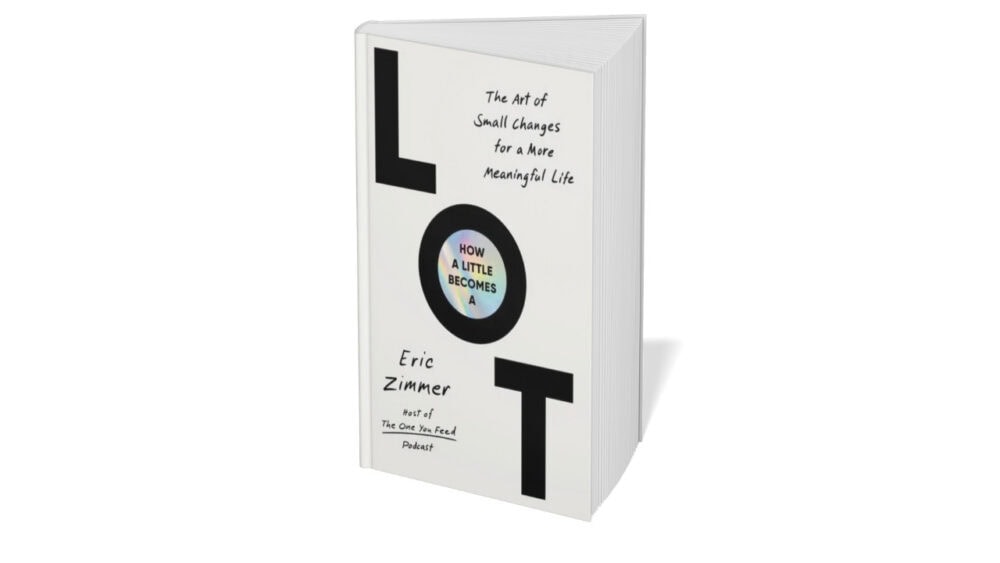
Exciting News!!! Coming in March, 2026, my new book, How a Little Becomes a Lot: The Art of Small Changes for a More Meaningful Life is now available for pre-orders!
Key Takeaways:
- The parable of the two wolves and the importance of choosing the “good wolf” or authentic self.
- The concept of spiritual minimalism and its principles, including leaving places better than found.
- The significance of final impressions in interactions and their lasting impact.
- The relationship between happiness, income, and stress, emphasizing internal versus external sources of fulfillment.
- The paradox of motivation and the importance of consistent effort for personal growth.
- The idea of finding freedom within limitations and the power of acceptance in challenging situations.
- The principle of “give what you want to receive” and its role in fostering community and connection.
- The importance of embracing discomfort for personal growth and stepping outside comfort zones.
- The value of being process-oriented and focusing on the journey rather than just outcomes.
- The significance of consistent effort and incremental change in achieving lasting transformation.
Light Watkins has been a meditation and spiritual teacher for more than 20 years. He facilitates workshops and retreats around the world, and gives talks on happiness, mindfulness, inspiration, and leadership. He is the author of manty bestsellers including The Inner Gym, Bliss More, and Knowing Where to Look, and also hosts a weekly podcast called The Light Watkins Show. His latest book is Travel Light: Spiritual Minimalism to Live a More Fulfilled Life
Connect with Light Watkins: Website | Instagram | Twitter
If you enjoyed this conversation with Light Watkins, check out these other episodes:
How to Embrace Mindfulness on the Path to Personal Growth with Dan Harris
How to Let Go of Expectations and Transform Disappointment into Growth with Christine Hassler
This episode is sponsored by:
Hello Fresh – Get 10 free meals + a FREE Zwilling Knife (a $144.99 value) on your third box. Offer valid while supplies last.
David Protein bars deliver up to 28g of protein for just 150 calories—without sacrificing taste! For a limited time, our listeners can receive this special deal: buy 4 cartons and get the 5th free when you go to www.davidprotein.com/FEED
Shopify – The commerce platform that helps you build, grow, and manage your business all in one place. Start your $1/month trial at shopify.com/feed.
Pebl – an AI-powered platform that helps companies hire and manage global teams in 185+ countries. Get a free estimate at hipebl.ai
By purchasing products and/or services from our sponsors, you are helping to support The One You Feed, and we greatly appreciate it. Thank you!

If you enjoy our podcast and find value in our content, please consider supporting the show. By joining our Patreon Community, you’ll receive exclusive content only available on Patreon! Click here to learn more!!
Episode Transcript:
Light Watkins 00:00:00 Giving people the benefit of the doubt is a really good way to leave a positive final impression. And if you want to have influence over how that person is seeing a situation, guess what? You’re going to have way more influence if you help them feel seen and heard versus the person who cuts them off, dismisses their point of view as nonsense, and makes them feel stupid.
Chris Forbes 00:00:29 Welcome to the one you feed. Throughout time, great thinkers have recognized the importance of the thoughts. We have quotes like garbage in, garbage out or you are what you think ring true. And yet for many of us, our thoughts don’t strengthen or empower us. We tend toward negativity, self-pity, jealousy, or fear. We see what we don’t have instead of what we do. We think things that hold us back and dampen our spirit. But it’s not just about thinking. Our actions matter. It takes conscious, consistent and creative effort to make a life worth living. This podcast is about how other people keep themselves moving in the right direction, how they feed their good wolf.
Eric Zimmer 00:01:13 We spend a lot of time thinking about first impressions, but we rarely think about final impressions. How did I leave that conversation? Did I make that person feel heard? Did I close that loop? Well, in this conversation light. What can shares this idea that has been really helpful for me? And it’s that one of the simplest ways to live well is to leave every place better than you found it. This spiritual minimalism, as he would call it, is a very simple rule to try and apply. I can ask it any time. It’s very simple to ask and very simple to know the answer. We also talk about giving what you want to receive and about finding freedom in fewer choices. I’m Eric Zimmer and this is the one you feed highlight. Welcome to the show.
Light Watkins 00:02:04 Thanks, man. Good to be here. Yeah.
Eric Zimmer 00:02:06 We’re going to be discussing your book, Travel Light Spiritual Minimalism to live a more fulfilled life and whatever other topics come up. But we’ll start like we always do with the parable.
Eric Zimmer 00:02:16 And in the parable, there’s a grandparent who’s talking with their grandchild, and they say, in life there are two wolves inside of us that are always at battle. One is a good wolf, which represents things like kindness and bravery and love, and the other is a bad wolf, which represents things like greed and hatred and fear. And the grandchild stops and they think about it for a second. They look up at their grandparents. They said, well, well, which one wins? And the grandparent says, the one you feed. So I’d like to start off by asking you what that parable means to you in your life and in the work that you do.
Light Watkins 00:02:48 Well, you know, I’ve been writing a lot about this idea of following your heart voice, which is how I identified the voice of your spirit. And obviously there are a lot of other voices in our awareness. There’s the voice of fear. There’s the voice of our past traumas. There’s the voice of our parents, teachers, coaches, preachers, neighbors, news, cultural indoctrination, all of these voices.
Light Watkins 00:03:18 And what I encourage my followers and my readers to do is to split tests which one is the voice of their spirit, because that’s the one that’s going to encourage you to do the right thing when you don’t feel like it. That’s the one that’s going to cheer you on when you want to give up. That’s the one that’s going to want to make you more compassionate, more generous, more empathetic, etc. and if you follow that voice enough times, then that’s how you turn the volume up. So it’s not just a still small voice, but it can actually become a loud, annoying voice. So it’s kind of like that good wolf, you know, it’s right in your ear and it’s louder than the bad wolf. And if you can hear it and experience it in that way, it’s easier to follow the good voice. The problem is, we follow the voice of fear so much that that’s the default one that we oftentimes hear. And that’s why it’s easier to to follow the fear voice than it is to follow the still small voice of your intuition.
Eric Zimmer 00:04:21 Well, it’s the guy who spent the early part of his career in software testing, right? I’m very familiar with the idea of split testing things. Right. But not everybody might be. And so basically what you’re suggesting is, well, say more about what you are suggesting. How do you split test that? And I love this idea of like see which voice brings about which results, but say a little bit more about that.
Light Watkins 00:04:44 Well, that’s essentially it. You know, like we may have two voices, a good and a bad. There may be a neutral voice, there may be another instigating voice, you know, and there may be another shame voice. And so there’s all these voices. And if we want to turn up the volume on the one that we feel supports us the most, and that leads to the result that we want the most, which I’m assuming is we want to feel like the most authentic version of ourselves. We want to feel the most expansive. We want to feel the most creative.
Light Watkins 00:05:15 We want to be able to tell the best stories. Right. I think about it not in terms of what’s happening right now, because I get that what is happening right now could be very chaotic, and there are lots of things that need to happen. Right. But let’s fast forward and project to our final moments and maybe even beyond that, let’s go to our funeral and let’s say we’re now in spirit form. We’ve left the body. We’re at the funeral, and we’re watching people come up to the podium to talk about us and to report on their experiences with us and what sorts of testimonials. What sorts of reports would we be proud of at the end of our days, when people go up there and talk about us, do we want to hear people talk about how we always paid our bills on time and how, you know, we got that promotion that one time? Probably not. Probably. We want to hear about how we were a good person. We gave people a second chance. We were the one that listened when nobody else would.
Light Watkins 00:06:22 You know, these kinds of more altruistic exchanges and dynamics. And so if we play that little game with ourselves, then we can just reverse engineer back to this moment where all this chaos is happening and there’s not enough time to do anything, and then we have a clear idea of how we want to move through this moment. So split testing is just another way of saying, don’t put so much pressure on yourself to try to figure out which one is the good wolf or the bad wolf. Just follow the one you think is the good wolf. And if you do that enough times, you’re not going to get it right all the time. You know, the ego is really good at disguising itself as that good wolf. But if you do it, say, 100 times or 500 times, you’ll have a pretty decent idea of which one is the voice that you ultimately want to follow, because there’s a feeling tone that’s associated with it. There’s a little sense of anticipation. There’s a little bit of fear, perhaps, around what’s going to happen next, because there’s no certainty related to following that good wolf.
Light Watkins 00:07:24 But if you follow it enough times, you’ll see that on the other side of it, there’s this feeling of expansion that is very consistent, and it’s something that helps you sleep better at night. It’s something that helps to make you wiser, and it’s something that you ultimately will be proud of at the end of your days.
Eric Zimmer 00:07:42 Yeah, I love that idea. And, you know, I often in certain groups that I’ve led, we’ve done that sort of funeral exercise. Right. It’s a very clarifying exercise. Like what is really important. What do I want people saying? You know, and the other thing is, depending on where you are in your journey and path, right, you may get very good feedback relatively quickly after you follow a certain voice. Right. At a certain point, there is a sense of being in integrity with ourselves. You know, of our actions matching up with who we want to be and to be out of that. Oftentimes we really know it. You know, sometimes we don’t.
Eric Zimmer 00:08:19 Your point is well taken. Sometimes it’s confusing. And on big, you know, confusing decisions. But there’s a lot of feedback that I’m able to find pretty quickly. You know, after I do something like, okay, what do I feel inside? What I’d like to ask you is I find this idea of an authentic self inside of us, a little bit of a confusing idea. And what I mean by that is you listed a lot of ways we’ve been conditioned. You gave a long list and we could add to it. We could spend the next hour right, Laying out all the factors that have conditioned us to be the person we are today. So that makes this idea of like an authentic self a little bit harder to tweeze apart, right? Because we do have all this conditioning. Talk to me a little bit. You know in your mind about what that authentic self is. Is it different in me than it is in you? When you get down to that true. As deep as level?
Light Watkins 00:09:16 I’m so glad you made that distinction, because I’m a big fan of defining concepts that people just take for granted that everybody understands, and we’re all on the same page.
Light Watkins 00:09:25 And the reality is that actually, that’s not the case at all. And so I’m happy to unpack this idea of authentic self. And just to keep it really simple. The way I define authentic self is in a range of behaviors that we do. It’s different for different people, but we act upon what we feel like, as you said, is most in alignment with our own personal integrity. But let’s just talk about it, generally speaking. Let’s just say, generally speaking, as a heterosexual man, right? We’ve all had the experience where you see a pretty girl out somewhere, and it may be clear that she is not in a relationship, she doesn’t have a ring on or anything like that. And everything in you says, go up and talk to her. Go up and say hi. Go and strike up a conversation. Just take a leap of faith. Just see what happens. You know, say f it or whatever. We’re saying it in our minds, and we’ve all had the experience of not doing it.
Light Watkins 00:10:26 And when you don’t do it, what ends up happening? You think about it, it bothers you, right? And you keep playing the scenario out in your head over and over and over. Maybe for hours, maybe for days. You’re hoping you’re going to see the person in the same place again. Now you’re sort of stalking the place, hoping that she’s going to walk in in those moments, which are probably more rare. Those moments where you did go up, you did say something. Even if it doesn’t materialize into anything, you always feel like, you know. This sense of expansion. Yeah. And you feel so good that you at least did something, and it’s easier for you to move on to whatever the next thing is. And without thinking about whatever could have happened or should have happened had you behaved differently, I would classify your authentic self as you making choices more in alignment with that expansive feeling where you knew that you did what was a little bit nerve wracking, a little bit scary, a little bit, you know, anticipatory.
Light Watkins 00:11:29 But it was something that made you feel like the best version of you, the story that you ultimately want to tell. If you’re the superhero of your life and you’re just breaking your life down into these moments. And the question is, what would the superhero do in this moment? Well, the superhero was certainly go up and talk to the person. The superhero would certainly stand up for people who can’t stand up for themselves. The superhero wouldn’t be in the room gossiping about anybody. They’d be the person, you know, shutting down the gossip conversation and saying, hey, this person’s done all that bad. You know, they have these and that great qualities. So when we think about our own personal hero, what the qualities are of that personal hero. Those are qualities that we deep down want to embody for ourselves. Yeah, right. And so when we can operate in alignment with those qualities, that is our most authentic self. And that’s different for everybody. Yeah.
Eric Zimmer 00:12:25 And it’s interesting that the example you gave is a good one.
Eric Zimmer 00:12:28 The the example that came to my mind is extending kindness to strangers. You know, there are moments where it’s like I see an opportunity to extend a kindness. It could be any number of different things, but I’m anxious to do it. Like, does the person want me to extend the kindness? Do they just want to be left in their little bubble. And I know that the best version of me does the kind thing, and if it isn’t received well, then it isn’t received well. But I know that I was acting from the part of me that knows that that’s something I really value, right? Is to try and be kind to everyone. And so I think, yeah, we all have this sense of expansiveness and I love that idea. I’ve often thought about just that very idea expansion versus contraction, you know, as a really good guide for how to make decisions and how to orient, you know, does this feel like it makes me a bigger, more open, better version of myself? Or do I feel like this closes me down and it causes me to contract? And for me, that’s almost been the best way of thinking of certain things is in that sense of expansion versus contraction.
Light Watkins 00:13:40 And I think when you look at it that way with feeling tone, as opposed to even semantics and trying to come up with language for it. Just see how you feel. How does it make you feel? Does it make you feel a little bit more expansive, or does it make you feel like a smaller version of yourself? And if you just follow those expansive feelings, you know, just like with eating French fries or doughnuts? Look, I love French fries. There’s a time and place for a donut.
Eric Zimmer 00:14:03 But absolutely.
Light Watkins 00:14:04 If you eat these things all the time, because the idea of it makes you feel expansive in the moment, but then 20 minutes later, you feel shitty. Yeah, that’s an indication that this is not taking you in the direction of your most authentic self. Yeah. Eating these kinds of foods, you know, going to work out may make you contract initially, but then afterward, what happens? No one ever walks out of the gym or an exercise class having killed it, and feel like a smaller version of yourself.
Light Watkins 00:14:32 You feel like the superhero version of yourself. And so, you know, you got to look at it in a broad spectrum of activity as opposed to how you’re feeling in the moment. And then again, once you have enough of these types of experiences and you have a point of reference, then you can make those decisions easier and easier.
Eric Zimmer 00:14:50 Yeah, it’s funny, I’ve interviewed a bunch of behavioral scientists on this show and I always ask them, I’m like, explain something to me every single time I have ever worked out. And it’s thousands and thousands and thousands of times, right? I’m not a young person, right? Every single time I have left going, I’m so glad I did that. You would think I would run to workout every single time. And yet it’s still difficult. No one has ever really satisfactorily been able to answer why that is. I think it just has something to do with an inbuilt wiring to conserve energy. As a living being. I think we just have some degree of that, but it’s funny, I could have that kind of track record 100% success and still I still have to talk myself into it.
Light Watkins 00:15:37 I mean, but look, let’s expound on that further. Let’s say you’re looking at doing Navy Seal training, but then you’re like, there’s no way I don’t want. I just don’t want that sort of stress in my life. Right. But you know that after you get through Hell week and all that crazy stuff, you’re going to feel like a freaking super machine. Yeah. Right. Even though, you know it’s going to take you to the brink of your potential. And so we all kind of have that. It’s just a matter of to what degree do we feel it, you know, and challenging ourselves. But we know that getting to the other side of that challenge is going to feel amazing. But, you know, it’s just a matter of, okay. What sort of challenge do I want today? And, you know, maybe working out presents, what seems to be a very steep obstacle for us. But we know that once we get to the other side of that obstacle, it’s going to feel great.
Light Watkins 00:16:24 But do we want to take on that level of obstacle that day? Or maybe there’s a smaller obstacle that we’re satisfied with because we know that it’s not going to stop. It’s going to just be the same thing the next day and the next day and the day after that, etc..
Eric Zimmer 00:16:38 There’s an absolute art to get in that, right. You know, not too much, not too little. Sort of threading the needle on that before we get into the book. More specifically, I wanted to ask you about a recent Instagram post that you did, and you said in it, look at happiness, income, and stress as debt. Say more about that.
Light Watkins 00:16:56 So that post was referring to this idea that I think a lot of people find themselves stuck in, which is the acquisitive approach to happiness, which is happiness that comes from the outside to the inside, which means as soon as I get the promotion, as soon as I get the better job, as soon as I get the better spouse, as soon as I move to the better house, better car, better city, better this another zero my bank balance that I’m going to be happy and let me do whatever it takes in order to make that happen.
Light Watkins 00:17:29 And the opposite of that is what the Buddha and all of the sages and gurus over millennia have said, which is happiness. There’s no way to happiness. Happiness is the way. So in other words, happiness is an inside out proposition, and therefore it requires some sort of inner inner practice that will help to cultivate the happiness that you ultimately want. And now, you know, science is backed this up. And research has said that in American society at least beyond, you know, having your basic needs met and you making a salary of like 70, 75,000 bucks, making more money is not going to increase your baseline level of happiness. Right. This doesn’t mean that you can’t be any happier than you were at $75,000. It just means that making more money is not the thing that’s going to increase it. What will increase it, though, is having strong friendships. What will increase it is being of service, having a greater purpose in your life, and what’s also been shown to increase the happiness is cultivating more of the chemicals that are responsible for happiness serotonin, dopamine, oxytocin, etc. and the practices that can do that very effectively are gratitude and meditation.
Light Watkins 00:18:48 So the thing that stops us from feeling happier than we would be at that threshold, that $75,000 threshold primarily is lack of those chemicals. And so what does the body do that prohibits us from feeling those chemicals? It reacts to demands pressures and changes of expectation. So that’s another way of saying stress. It’s experiencing stress. Stress depletes the body of serotonin dopamine and oxytocin. So it makes us want to run away from whatever the experience is or fight that experience. Meditation. Gratitude helps to create those chemicals which makes us feel more present, more fulfilled and happier inside, more content with whatever it is that we’re experiencing. Just to put a definition to happiness, because a lot of people think. Happiness is me walking around with a big smile plastered on my face all the time. And that’s not the reality of what happiness is. Happiness is being in a state where you don’t need other things to be happening, to make you feel more fulfilled as a person. That’s what true happiness actually is. So when we can get the body addicted to those happy chemicals, then our body will respond by making us crave those experiences that are responsible for those happiness chemicals which makes us wake up in the morning.
Light Watkins 00:20:10 You know how some people will wake up. They can’t wait to have their coffee, or, you know, they can’t wait to turn the television on, or they can’t wait to start scrolling on social media. Well, those are not arbitrary experiences. You’ve programmed and conditioned your body to be dependent upon the chemicals that are associated with those experiences. And the good news is that the same thing can happen with more positive experiences like meditation, like gratitude, like being of service, like operating from a purpose. And so as you go throughout your day, your body is actually prompting you, hey, hey, Eric, it’s time to sit down and meditate or hey, Eric, you haven’t really thought about anything you’re grateful for in a moment. What are you grateful for right now? You know, and you start having these kinds of experiences from the inside out, and you feel yourself being more present and more fulfilled. And as a result, you’re not sitting there thinking to yourself, oh, I’m very present right now.
Light Watkins 00:21:03 I’m very happy. I’m very fulfilled. No, you’re just completely engaged in whatever the activity is. And as you’re walking around, you’re noticing things. You’re noticing the birds, you’re noticing the sounds, you’re noticing the colors, you’re noticing the breeze on your face. And when a demand is placed on you, you don’t jump right into scarcity. Oh, my God, I don’t have time for this. No, you’re able to be present with that and to be the person that stops and helps the person across the street, because you have the time. In fact, your time billionaire, because that’s what presence does. So it’s not that you need to even be aware of that any of this is happening. It becomes who you are and that’s what that means. The more of those happiness chemicals you get. It’s kind of like that’s the true wealth that you’re actually looking for. And the more stress you have, it takes away your ability to feel that. And that’s why we want to start to see stress as a debt, as a liability, and not this thing that we need in order to find our edge or whatever it is that we’re telling ourselves.
Eric Zimmer 00:22:03 As we drop into the book and this idea of spiritual minimalism, I want to talk about what you describe as one of the principles of that. And it’s that the fewer options you have, the more freedom you have to make decisions and the more present you become. Say something about that because we tend to want to maximize our optionality, right? We tend to want to give ourselves the widest range of options. Right. Because then we can make the best choice. And we know there’s a paradox of choice out there that if you have way too many options, you get overwhelmed. But even well, short of that, I think you’re talking about, you know, short of that. So why is less options often more beneficial for us in a spiritual minimalism sense?
Light Watkins 00:22:46 You’re referring to principle seven of spiritual minimalism, which is celebrate the freedom of choice looseness. So there are a few different seemingly contradictory truths in that statement, right? One truth is that having options is actually a good thing. Like if we have the option to be well versus the option to be sick, we’re going to choose the option to be well.
Light Watkins 00:23:08 We want that option 100 times out of 100. And at the same time, let’s say for whatever reason, we’re not in a situation where we can be, well, we don’t have what it takes. We don’t have the money, we don’t have the resources. We’re in a weird physical location where we can’t get access to care. Right. So then there is a freedom that is associated with that. And what that means is that we can either focus on what’s not happening, which again yanks us out of the present moment, and it actually makes the body sicker. It doesn’t heal the body to be in that mindset. Or we can accept where we are and what’s happening. Provide it. We’ve done everything we could, right? And this is where we are. So we accept that now, just through sheer acceptance, we’re able to anchor ourselves more in the present moment. And then it’s through that present moment awareness that we’re going to be able to see and detect and feel things that we would not have had access to otherwise.
Light Watkins 00:24:14 My, one of my spiritual teachers used to say, if you want to know what’s going to happen tomorrow, then you better get present today, because the richest information about what’s happening tomorrow is only found in the present moment right now. So otherwise, you have to use speculation and guesswork to try to figure out what’s going to be happening tomorrow. So both of those things can be true. You know, I like options, and I’m recognizing that I don’t have a lot of options for whatever reason. And so I’m just going to do the best that I can right now. If you have time, I’ll tell you a little story about that. Sure. I used to teach yoga back in the day, and I remember I had a yoga class. It was like at 10:00 in the mornings on, I think, Wednesdays and Fridays in Los Angeles. And I lived about ten minutes drive from the yoga studio, and I had my commute time down to the minute I left 15 minutes early, it would take me, you know, seven minutes, eight minutes to drive there, park, go upstairs, go to the studio, set up my room, and I had to have an extra five or maybe seven minutes to greet people as they were coming in.
Light Watkins 00:25:20 And I’ve done this, you know, hundreds of times. There was never any traffic in one morning. I get in my car and I’m well, you know, right within the time frame that I always gave myself and there was all this traffic on the main road going in the direction of the studio. So like any good LA driver, I zig zag my way down to the next street and I hit another pocket of traffic. And this is highly unusual. There’s never traffic on one of those streets, much less both of those streets. So now I’m recognizing that I’m going to be late. And I hate it being late, but there was nothing I can do about it. So I tried to, like, breathe and calm myself down as I’m inching through this traffic. And then I finally get to the the main intersection that crossed both of those streets. And if there was going to be anything causing this traffic, it would have been at this intersection. But I didn’t see anything. I didn’t see any construction.
Light Watkins 00:26:13 I didn’t see any obstruction, no accident. There was no reason why there would have been traffic on those streets. And then eventually this traffic just kind of spontaneously cleared up. I arrive at the class ten minutes late. I’m embarrassed. Right? Because now I’m sending the message that it’s okay to show up late to my class. And as I walk into the room, the actual room, I have flip flops on and I feel all this crunching underneath my flip flops, and I look down and there’s like, there’s a million shards of broken glass all over the floor. And I look up to the front wall, which is a wall of mirrors probably about ten feet tall. Each pane of mirror was about three feet, four feet wide. And in the very middle of the room there was a missing panel ten feet tall by four feet wide. There was no mirror there. And so what had happened was apparently about ten minutes before I came in the room, right at the top of the hour, when the class was supposed to start, that panel of mirror somehow dislodged and came crashing down right where I would have been sitting had I arrived at the class on time.
Light Watkins 00:27:21 So evidently, that phantom traffic jam that I was secretly cursing on my way there was actually saving me from having a very unlucky start to my day. And the reason I like that story is because it tells the flip side of the freedom of choice looseness, right? Which is when you’re being rejected from something, when you’re losing something and you think to yourself, oh my God, if only I had done X, Y, or Z. If only I left earlier. If only I hadn’t made friends with this person. If only I had put more money into it, then it would have worked out better. That’s how we play it out in our minds without realising that although the situation was bad, it could have been a lot worse and I would have had a very unlucky start to my day had I gotten there when I wanted to get there. So the universe or nature, whatever you want to call it, was gifting me with a freedom of choice looseness. And after that happened, whenever I’m inconvenienced, it doesn’t bother me anymore.
Light Watkins 00:28:21 When I miss a flight, when there’s traffic, when someone’s not texting me back as quickly as I think they should be, I think back to myself. Phantom traffic jam, broken mirror. Okay, you know this is not what’s meant to be happening now. Again, it doesn’t mean I’m sitting on my hands waiting for things to happen. I’m still doing everything I can do, but when the thing is not happening beyond that, then I have an easier time saying, you know what? This is fine. Let me keep focusing on what I can control and let go of what I can.
Eric Zimmer 00:29:11 It always seemed to me there are situations in which there’s something I can do about this, and I absolutely do it, or there’s nothing I can do about it. So I let it go. And then there’s all that middle ground where we’re like, wow, you know, I don’t, you know, I don’t quite know, you know, I’ve got a job that I don’t love, you know? Do I accept that? Because by accepting it, I might start to like the job more.
Eric Zimmer 00:29:35 And I’m not resisting it. You know, it’s that middle ground that’s always so, so confusing. And like we talked about, you know, there’s there’s an art to finding, you know, what’s the right response and what situation.
Light Watkins 00:29:48 Yeah. And I think one way to kind of navigate that is to again, remind yourself of what are the most important things that you want people to say about you at the end of your life. And just narrow that down to like three things. I’m the person that gives people second chances. I’m the person that leaves the world more inspired. And let’s say I leave places better than I found them. So that gives you a different point of focus in these moments where the outcome isn’t what you think it should be, and therefore you can now become more process oriented. And guess what? The value that you ultimately want from the experience is going to be found from the process of it versus from the outcome of it. So going back to our earlier example of, you know, going through hell week as a Navy Seal.
Light Watkins 00:30:35 Sure. It’s wonderful to say that you’re a Navy Seal, but let’s say you had a hookup, Eric. Let’s say, you know somebody in the Navy who could just make you a Navy Seal without you having to bother with hell week, right? Would anybody want that? No self-respecting person would want to have Navy Seal status without going through all of the things that you have to go through, which is advertised as hellish. This is going to be hell to go through these things. But that’s what makes you into the person. That’s what gives the experience its inherent value. And so as a Navy Seal, you’re the kind of person that does things beyond the point where most people give up. You’ll go through whatever you have to go through and make sure you protect your fellow seals. You’re the kind of person that doesn’t come up with excuses about why you can’t make things happen. Instead, you find solutions. So when you put yourself through that experience, you actually become that person. And then 20, 30, 50 years later, when you look back, that’s what you remember fondly.
Light Watkins 00:31:41 Yeah. I didn’t give up. Right? And yes, I went beyond where most people would quit. And yes, I do protect people, you know, just because I expect them to protect me, etc. and that becomes a part of who you are and that shows up in everything you do. And you realize, yeah, it was the journey. It wasn’t the destination. That was the most valuable part of the whole experience.
Eric Zimmer 00:32:02 Yeah. You touched on there one of the key elements of spiritual minimalism that you talk about. I find it just to be a good, all purpose intention in life, which is just to leave every place better than I found it like that, just to me, almost encompasses. Right. So much of what what I value. Because that could look a thousand different ways based on what you mean by that and where you are and all that. It is a way of orienting towards all of your situations that I just have found to be, like I said, a good all purpose intention.
Eric Zimmer 00:32:38 It’s one of my fallbacks.
Light Watkins 00:32:40 Yeah, there’s a story in that principle in that chapter called Final Impressions, and I talk about how we’re really good at making first impressions, putting our best foot forward. But we’re really bad when it comes to final impressions. And what I mean by that is, you know, if anybody could say these things about you, they didn’t show up to the meeting that I set up for them, and they never notified me, or they broke up with me over text message, or they ghosted me, or they didn’t do what they said they were going to do. So I just stopped screwing around with them. You know, these kinds of little things, you know, to us, they’re like little things. They can become these really big moments that we get known for if we do it enough times And you know, when people are gossiping. Usually they’re not gossiping about the first impression. They’re gossiping about your final impression, how you left the situation, you know, and then you start to hear the grapevine version of how you left this.
Light Watkins 00:33:39 It’s never it’s never like what actually happened. It’s the exaggerated version of what happened that you have to then give context for, for the rest of your life and have to explain for the rest of your life. And it could be distracting, and people don’t want to have anything to do with you, because now it’s blown up into this whole thing. And these would be, you know, ridiculously simple situations to correct. Maybe just by giving a little bit of clarification, maybe giving an apology, maybe just giving someone a chance to feel seen and heard, you know? And so I try to remember that in my day to day life, everyone that I’m encountering, that’s an opportunity for me to leave a positive final impression. And that could just be listening, that could just be acknowledging what someone just said or what they’re going through. I’ve experienced this recently. I don’t want to make this, you know, time sensitive, but, you know, there’s some international conflicts that are happening right now as they’re there almost always are.
Light Watkins 00:34:42 There’s something happening somewhere in the world. But, you know, having these conversations, especially if you feel strongly about one side or the other side, is really easy to dismiss someone who doesn’t agree with you. And I think that that’s an opportunity from a spiritual minimalism point of view, to help people feel as seen and as heard as you would like to feel, even if you think they’re wrong, even if you feel like they’re misguided, they’re not seeing the full thing, well guess what? They probably feel the same about you. Yeah. So at the end of the day, who’s right? Who’s wrong? We don’t know because we’re all being propagandized. We’re all being indoctrinated by whatever our echo chamber has been conditioning us to believe, and that’s been repeated throughout the history where we thought things were one way, but actually, turns out they were a different way. And so just exercising the benefit of the doubt, giving people the benefit of the doubt is a really good way to leave a positive final oppression.
Light Watkins 00:35:40 And if you want to have influence over how that person is seeing a situation, guess what? You’re going to have way more influence if you help them feel seen and heard versus the person who cuts them off, dismisses their point of view as nonsense, and makes them feel stupid. And because nobody wants to feel those ways. So some very powerful work that we can be doing on a daily basis. And that’s what that principle of spiritual minimalism give what you want to receive actually means.
Eric Zimmer 00:36:09 Check in for a moment. Is your jaw tight, breath shallow? Are your shoulders creeping up? Those little signals are invitations to slow down and listen. Every Wednesday I send weekly bytes of wisdom, a short email that turns the big ideas we explore here in each show. Things like mental health, anxiety, relationships, purpose into bite size practices you can use the same day it’s free. It takes about a minute to read and thousands already swear by it. If you’d like extra fuel for the weekend, you also get a weekend podcast playlist.
Eric Zimmer 00:36:47 Join us at one you feed. That’s one you feed newsletter and start receiving your next bite of wisdom. All right, back to the show. So you kind of segue us into another of the principles. We were sort of talking about leaving every place better. And but you’ve kind of named it here, which is, you know, give what you want. You say give what you want to receive. It doesn’t matter how much or how little you have. If you want a friend, you must be friendly. If you want love, you must be loving. You know, you’ve talked in the book about if the community that you want isn’t there? Start creating it. So talk a little bit more about this. You know, give what you want to receive.
Light Watkins 00:37:27 When I turned 40, I had an epiphany. I was like, man, I’m not really going out very much. And I reflected on that and I realized the reason I wasn’t socializing was I had stopped drinking when I was about 25, 26, started drinking alcohol, and I never had a problem.
Light Watkins 00:37:46 I just kind of did the math in my mid 20s and just realized it didn’t really add up. It didn’t make me feel like a better version of myself when I was drinking. It was expensive, you know, all the things. So I decided to experiment with not drinking. I’m just not going to order any drinks and see what happens. If I miss it, I’ll go back to it. If I don’t miss it, then great. I’ve liberated myself from feeling like I need to drink in order to be social. And so I never missed it and I just stopped. I just stopped drinking over the course of like six months, and then I just didn’t really think about it much. But yeah, when I turned 40, I thought, okay, well, I want to be more social. But then I was thinking, you know, well, where would I go? And all the places that I was thinking of were places that were, you know, centered around drinking either directly or indirectly.
Light Watkins 00:38:30 So I thought, well, maybe I’ll create an experience. There’s got to be other people out here who also want to socialize without having to feel pressure to drink. So I started hosting these gatherings once a week at this little dance studio in West LA. It was costing me $50 each week to rent this place out for like an hour, an hour and a half, and I’ll be in my kitchen making honey lemon ginger tea, which I really loved from when I visit India. I would have a question of the night, because one of the things I hate is going to a social event as an adult and you don’t know anybody and you feel like everyone’s in their little clique, and then you have to kind of get out of your shell. So I was like, how can I create an experience where people feel naturally inclined to approach other people? Right. And I said, oh, let’s do this. Let’s have a question of the night. Something like, who’s your personal hero? Or where would you like to go on vacation next? Or what’s a book that changed your life? And instead of writing their name down on a name tag, write the answer to the question of the night on your name tag and wear it on you.
Light Watkins 00:39:32 And that way when people come in and they write their answer, you’re going around and you’re seeing everybody’s answer and it’s a natural conversation starter. So we said we did. We did that. And then I led a meditation because I thought, why not have meditation at a social event? And we had someone else come in and give like a quote, Ted talk. So I would have like my salsa teacher come in and talk about like what the principles of teaching salsa. And I had like someone else come in as a coach, a life coach, come in and talk about that. And it was a really cool little experience. You know, we only got like 12 or 13 people coming out and it was a free event for them. But it just it really lit me up inside and I didn’t know what was going to happen with it. I was just happy to have something to do every Wednesday. It was like a purpose driven thing. For me, it wasn’t even about making money. But then I had this volunteer in one day, she said as we were straightening up.
Light Watkins 00:40:24 Afterwards, she goes, why don’t you start taking up a collection since you’re paying for it out of pocket? Just take up a collection and just, you know, at least you can pay yourself back or use that to pay for the the rent of the space. So the next event, we took up a collection and there were probably 13 to 14 people there and we collected $55. So now I was a little disappointed, honestly, Eric, because I was thinking, man, $55. That’s it. After all this work I’m putting into this, it’s like I got to see how the market value this experience, and it wasn’t as high as I was hoping. And, and so I got home that night and I had my $55 in cash, and I thought to myself, you know, I could spend this 55 bucks paying for the next rent, I said, or I could give it to somebody at the next event, and I think it tasks them with the mission of using it to help somebody in some positive way, and then have them come back and share what they did with the $55.
Light Watkins 00:41:27 Obviously, it’s not enough money to make a huge difference in someone’s life, but that’s the point. Like, you don’t need a lot of money to make a positive impact in the world. So let’s see what someone creative can do with $55. So we randomly awarded someone that the next event, the $55, they come back to the following event and they said, yeah, I put this kid through a summer art camp. I added 50 bucks of my own money, and this is the kid’s name, and this is how the summer camp worked. And everybody was so inspired. And I was like, oh my God, this is the missing component of the event. And so that night we probably still had 14 people, but we collected like 120 something dollars. So the donations went up. And that became a sort of pivotal moment where we saw hockey stick growth in the amount of people who were coming, because when people would share the story of what they did with the money. Everyone was inspired and I would tell people, you don’t have to win the money.
Light Watkins 00:42:21 You have 55 bucks in your checking account, probably pretend like you want it and go and do something about it and come back and tell us what you did and we’ll share the story together. And so it got to the point where we were getting hundreds of people, man. We had like we had events with like 300, 400 people coming six months later. And we had to charge because we started serving food. It became this whole thing. We were doing it in New York. We were doing them in London, we were doing them in Germany. They were all over the world. And we started getting written up in The New York Times and NBC and all the different outlets, and I ended up getting a girlfriend from that experience, you know, because she was volunteering. So basically everything that I was lacking in my life came into my life. As a result of that event, I got my first publishing deal, which was like a six figure publishing deal. And even though I didn’t make a dime on the event directly.
Light Watkins 00:43:14 But that’s the message behind giving what you want to receive. Instead of sitting around thinking about how no one is doing what I think they should be doing, and you know, this world is screwed up. You give that give that to people in whatever small way you can. And if it’s authentic and if it’s in integrity with, you know, whatever your heart is having you do, people will respond to it and they’ll come to it. And so on my own podcast today, I just launched the episode of me with one of my childhood friends who’s become the mayor of Montgomery, Alabama, where I grew up. And he has a wonderful story of being an outsider. And you know how that all worked with him getting into politics. But I think that’s another area that people complain about a lot and criticize a lot. It’s like, well, these are just people just like you and me. So if you want to see something different, throw your hat in the ring and, you know, give it a run and see if you can make a difference, if you feel like no one else can.
Eric Zimmer 00:44:26 It’s a great story on so many levels. And, you know, I think the lesson I would take from that is I think sometimes we think if we do something, it has to turn into what that turned into for you. And it doesn’t have to. Right. If what you want is a couple more friends, if you start hosting gatherings and you get a couple more friends, you’ve succeeded. It doesn’t always have to turn grandiose to be valuable. And that’s one of the things I see in a lot of people that I work with is this idea that things have to be grandiose to be meaningful, and that’s a trap.
Light Watkins 00:44:58 Yeah. And I tell people in the book, I said, you know, don’t be distracted by all these things that happen. You know, even if you just cook the home, cook dinner for people, everyone loves a home cooked dinner. Or if you want to walk and you want company to start a walking group with your friends from church, and it could be 3 or 4 of you or movie night, or just keep it really small.
Light Watkins 00:45:16 I mean, you never know where it’s going to go, but. Right. Yeah. My intention wasn’t like built as big event. My intention was just to create an experience that I actually wanted to have, that I wanted to see, and it grew from that. And in the process, you know, it forced me to have to be a leader because leading people who are getting paid is one thing. Leading a bunch of volunteers is a whole other skill set. Indeed, you have to keep them motivated and inspired all the time.
Eric Zimmer 00:45:40 Yeah, indeed it is. Principle number six is find comfort in discomfort. And I want to read something that I believe one of your teachers said to you, which is the most dangerous place you can be, is in the ever repeating moment. And the safest place is to be moving towards the unknown. So talk a little bit more about finding comfort and discomfort or that particular line. Yeah.
Light Watkins 00:46:05 So we have our comfort zone which we all heard about right. That’s the zone where you kind of know how things are going to go.
Light Watkins 00:46:13 There’s not a lot of surprises. There’s a lot more certainty. But yet you’re not really stretching yourself. You’re not really growing into your potential. And just to use an analogy that we’re all familiar with is the gym. Right. Imagine if you go to the gym. A lot of people do this. You go to the gym and you do the same exercises that you know you’re good at. You stay away from the ones that you know. You’re you’re weak in those areas. You know you’re weak because you don’t like feeling weak. Nobody likes feeling weak. Nobody likes feeling like they can’t do something. So left up to our own devices, probably we’re going to do more exercises that we feel stronger in. Skip the look what happens when you hire a trainer? Yeah. When you hire a trainer, the reason you’re hiring a trainer is to push you beyond whatever your comfort zone was. And so that trainer may immediately see, oh, you’re weak in this area of that area. You know, after.
Light Watkins 00:47:10 After doing their little diagnostic assessment with you. And yet they’re listening to your goals. You know, I want to have a stronger back. I want to have a bigger. But whatever the goal is. And the trainer is like, okay, well, this is what you have to do if you want to achieve those goals. And probably the reason you haven’t achieved those goals is because you haven’t been doing the kinds of exercises that you need to do in order to achieve those goals, and that’s going to make you very uncomfortable. So the moment you start getting uncomfortable now, you’re moving towards your growth zone. And the growth zone is almost always uncomfortable. So if we want to grow in whatever area of our life, then that means we have to start making friends with discomfort. And that’s what finding comfort means in discomfort is, is that is an essential part of the process of getting stronger, accessing more of our potential, becoming the person that we ultimately want to be, etc..
Eric Zimmer 00:48:10 It really is interesting.
Eric Zimmer 00:48:11 I think we hear that and we know that. You know, get outside of your comfort zone. And yet we very often don’t. I know as I’ve gotten older, I do think this is one of the things that happens as you age, if you’re not careful, is that we begin to prioritize comfort more and more. And this goes back a little bit to this idea of choice closeness, right? Like, I’m a Zen student. It’s very rigid. It’s very formal. You know, like you do these exact things a certain way, which is against my very nature. But the fact that I just give myself to the form, I just hear it is stop your endless debate about how you want things to be. This is how you’re going to do them for this period of time. I find that helpful. But this idea of discomfort is it’s hard to keep pushing yourself outside your comfort zone. And like we’ve talked a bit about in this conversation, right. There’s an art to finding, like how far outside your comfort zone you can go and still maintain it and continue to do it.
Eric Zimmer 00:49:10 You go too far and you’re like, you run back in. So I know you don’t go far enough. You don’t grow. And that’s what a good trainer does, right? A trainer, a good one knows I can push him to here any more than that. And he’s going to, you know, he’s not going to come back, right? I can push him to here. And so I think that’s the other piece of this is finding, like, what way outside of our comfort zone and how do we maintain being there.
Light Watkins 00:49:34 Yeah, I would say that that is associated with spiritual maturity. Right. So when you’re young and you want to change, you tend to go a little too far, too fast and you end up getting the pendulum effect. Yeah. But as you become more spiritually mature, you understand the value of discomfort, but you also understand the value of taking the tortoise approach as opposed to the hare approach. And so that becomes the new gauge through which you approach Change because you realize that everything is just different forms of change.
Light Watkins 00:50:12 You’re changing, they’re changing, circumstances are always changing, and there’s less of the whole binary. This is good, this is bad. There’s goodness and everything and there’s, you know, negative aspects to everything depending on what perspective we’re looking at it from. And so if we can kind of condition ourselves to stay engaged in the process, and that’s where the discomfort really is, I think the greatest is being just in the process and maybe not understanding how it’s all going to turn out, but just knowing that being in the process is the goal. It’s not about reaching the outcome, it’s not about the destination. The destination will be whatever it is. But again, the more process oriented we were, the more we will extract the value from the experience. And I have this thing that I’ve written as well which says, you know, when you’re seeking advice, should you seek advice from people who’ve done what you want to do? Or should you seek advice from people who haven’t done and they’ve lived with the with the regret, with the pain of regret from not having done it? Who should you seek advice from? And I say seek advice from the person who has been the most consistent.
Light Watkins 00:51:26 They’ve consistently put themselves out there with whatever they were trying to do, and sometimes they’ve succeeded and sometimes they haven’t. But they keep going back again and again and again. And if we can just adopt that approach of being consistent, even if it looks like it’s not going to happen, or if it looks like it’s a sure thing, we’re still showing up as if it’s not going to happen. Right. That’s the ultimate habit that we’re cultivating is consistency, which means I’m not attached. I’m not rigidly attached to the outcome. Sure, I have Preferences. Sure, I would like for it to go in this direction or that direction, but I understand that the real value is just me showing up every day, and I’m giving my best and I’m letting the chips fall where they may, right? So the outcome will be whatever it is. But if we have the consistent ability to show up, then we can apply that to anything.
Eric Zimmer 00:52:28 Before you check out, pick one insight from today and ask, how will I practice this before bedtime? Need help turning ideas into action? My free weekly Bites of Wisdom email lands every Wednesday with simple practices, reflection and links to former guests who can guide you even on the tough stuff like anxiety, purpose and habit change.
Eric Zimmer 00:52:50 Feed your good wolf at one you feed. Net newsletter again one you feed net letter. My Spiritual Habits program is based on one key idea and that is little by little. A little becomes a lot, right? That that’s how real change tends to happen and stick is. It’s just little by little, you know, a little becomes a lot. And it’s that consistency and that really does add up. And that does really lead to change. It’s just not as fast as what we might wish.
Light Watkins 00:53:24 Yeah. Another spiritual guru I can’t remember who it is. He says what are you rushing towards death. Like what’s the big hurry if you keep extrapolating it? What’s the hurry? Yeah, ultimately you’re gonna die. So, you know, there’s no real point to all the rushing around if that moment is going to be fleeting anyway, I think the better approach is to just enjoy whatever little moments you have right now and extract whatever presence you can right now from those moments.
Eric Zimmer 00:53:50 Yeah, well, we are at the end of our time.
Eric Zimmer 00:53:51 You and I are going to, in the post-show conversation, talk about meditation. You’ve got a way of meditating that you believe leads to making it the most enjoyable and sustainable. So we’ll talk about that. Have you lead us in a guided meditation? Listeners, if you’d like access to that other post-show conversations, add free episodes. Episode I do called Teaching Song and a poem and the deep internal satisfaction of supporting something that you love. You can go to one. You feed and become a member of our community. Light. Thank you so much. Such a pleasure to have you on and I’ve really enjoyed our conversation.
Light Watkins 00:54:27 Absolutely.
Eric Zimmer 00:54:28 Thank you so much for listening to the show. If you found this conversation helpful, inspiring, or thought provoking, I’d love for you to share it with a friend. Share it from one person to another is the lifeblood of what we do. We don’t have a big budget, and I’m certainly not a celebrity. But we have something even better. And that’s you just hit the share button on your podcast app, or send a quick text with the episode link to someone who might enjoy it. Your support means the world, and together we can spread wisdom one episode at a time. Thank you for being part of the One You Feed community.
Leave a Reply