
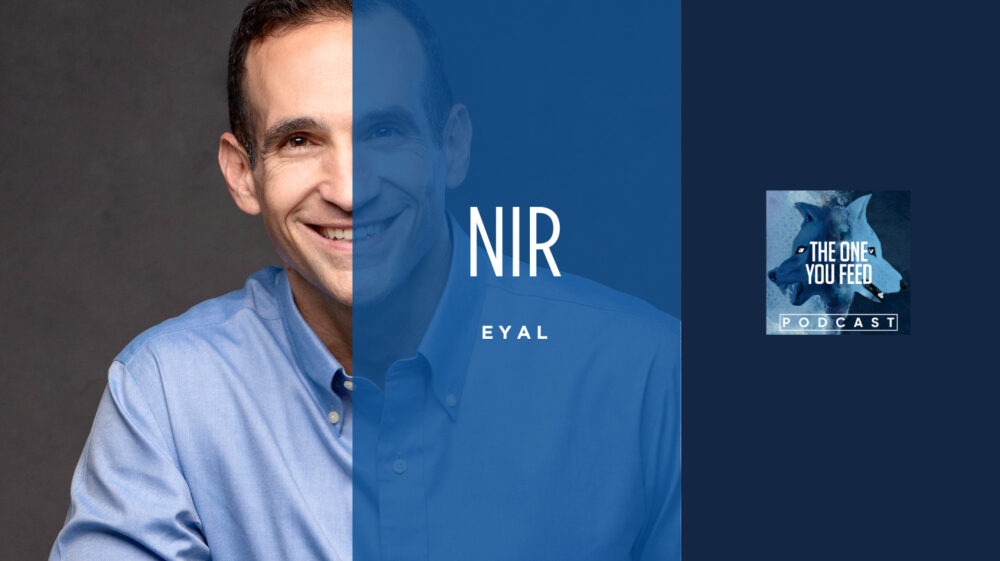
In this episode, Nir Eyal, author of Beyond Belief explores procrastination and the hidden pain behind your limiting beliefs. He explains how beliefs shape our perception of reality, motivation, and behavior. He also shares how beliefs are flexible tools, not absolute truths, and that changing limiting beliefs can reduce suffering and unlock personal growth. The conversation covers the brain’s filtering of reality, the motivational triangle (behavior, desire, belief), and practical strategies for reframing beliefs to overcome procrastination, manage discomfort, and foster well-being. Nir emphasizes using science-backed methods to intentionally choose beliefs that empower and support lasting change.
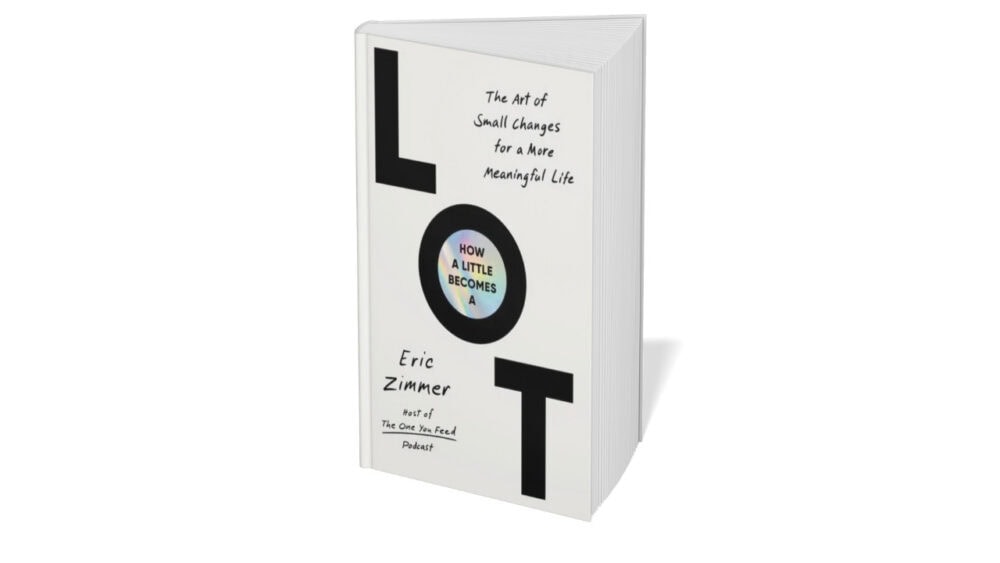
Exciting News!!! Coming in March, 2026, my new book, How a Little Becomes a Lot: The Art of Small Changes for a More Meaningful Life is now available for pre-orders!
Key Takeaways:
- The nature of beliefs and their impact on perception and reality.
- The distinction between beliefs as flexible tools versus absolute truths.
- The role of beliefs in motivation and behavior change.
- The motivational triangle: behavior, desire, and belief.
- The influence of beliefs on health, longevity, and personal growth.
- The concept of pain versus suffering and how beliefs affect this distinction.
- The importance of exposure therapy in overcoming limiting beliefs.
- The relationship between beliefs and procrastination as a pain management issue.
- Strategies for identifying and changing limiting beliefs.
- The significance of adopting empowering beliefs to enhance well-being and life satisfaction.
Nir Eyal is a globally recognized authority on behavior change and human potential. His frameworks have empowered millions to build better habits, enhance focus, and unlock greater agency in their lives and work. A former lecturer at the Stanford Graduate School of Business and the Hasso Plattner Institute of Design at Stanford, Nir has collaborated with leaders and organizations worldwide to boost performance through behavior design. He is the author of the international bestsellers Hooked: How to Build Habit-Forming Products and Indistractable: How to Control Your Attention and Choose Your Life, which have sold over one million copies in more than 30 languages. Hooked was a finalist for the 2014 Goodreads Choice Awards. Indistractable won the 2019 Outstanding Works of Literature (OWL) Award and was named one of the Best Business & Leadership Books of the Year by Amazon, Audible, and The Globe and Mail. His third book, Beyond Belief: The Science-Backed Way to Stop Limiting Yourself and Achieve Breakthrough, reveals how to identify and replace the hidden beliefs that define our limits.
Connect with Nir Eyal: Website | Instagram | LinkedIn
If you enjoyed this conversation with Nir Eyal, check out these other episodes:
How to Master Internal Triggers and Regain Control of Your Attention with Nir Eyal
How to Overcome Procrastination with Tim Pychyl
This episode is sponsored by:
Hello Fresh – Get 10 free meals + a FREE Zwilling Knife (a $144.99 value) on your third box. Offer valid while supplies last.
David Protein bars deliver up to 28g of protein for just 150 calories—without sacrificing taste! For a limited time, our listeners can receive this special deal: buy 4 cartons and get the 5th free when you go to www.davidprotein.com/FEED
Shopify – The commerce platform that helps you build, grow, and manage your business all in one place. Start your $1/month trial at shopify.com/feed.
Pebl – an AI-powered platform that helps companies hire and manage global teams in 185+ countries. Get a free estimate at hipebl.ai
By purchasing products and/or services from our sponsors, you are helping to support The One You Feed, and we greatly appreciate it. Thank you!

If you enjoy our podcast and find value in our content, please consider supporting the show. By joining our Patreon Community, you’ll receive exclusive content only available on Patreon! Click here to learn more!!
Episode Transcript:
Nir Eyal 00:00:00 The brain does not see reality as it is. We all live in our own simulation. It’s not like the matrix where there’s one simulation is that we all create our own simulation, because the brain is simply incapable of processing all the information that it’s taking in. We know that the brain takes in about 11 million bits of information every single second. That’s the equivalent of reading War and Peace every second. Twice.
Chris Forbes 00:00:31 Welcome to the one you feed. Throughout time, great thinkers have recognized the importance of the thoughts. We have quotes like garbage in, garbage out or you are what you think ring true. And yet for many of us, our thoughts don’t strengthen or empower us. We tend toward negativity, self-pity, jealousy, or fear. We see what we don’t have instead of what we do. We think things that hold us back and dampen our spirit. But it’s not just about thinking. Our actions matter. It takes conscious, consistent and creative effort to make a life worth living. This podcast is about how other people keep themselves moving in the right direction, how they feed their good wolf.
Eric Zimmer 00:01:16 One of the most liberating things that’s ever happened to me is realizing that my thoughts aren’t necessarily true. We see everything through conditioned lenses, and one of those lenses is our beliefs. Nir I all and his great new book, Beyond Belief The science backed way to Stop limiting yourself and achieve breakthrough Results, makes this point very clear. He describes beliefs as tools, not truths. He says the real question isn’t is this belief true? But does this belief serve me? Near as always, a pleasure to talk to? And there are a lot of gems in this conversation. I’m Eric Zimmer, and this is the one you feed Hi, Nir. Welcome to the show.
Nir Eyal 00:02:00 Thanks, Eric. Great to be back.
Eric Zimmer 00:02:02 I am excited to have you on. I loved our first conversation and I’m really excited about this one because we’re going to be talking about your new book, which is called Beyond Belief The science backed way to Stop limiting Yourself and Achieve Breakthrough Results. But we’ll start, like we always do, with a parable.
Eric Zimmer 00:02:21 And in the parable, there’s a grandparent who’s talking with their grandchild, and they say, in life there are two wolves inside of us that are always at battle. One is a good wolf, which represents things like kindness and bravery and love, and the other is a bad wolf, which represents things like greed and hatred and fear. And the grandchild stops and they think about it for a second. They look up at their grandparent and they say, well, which one wins? And the grandparent says, the one you feed. So I’d like to start off by asking you what that parable means to you in your life and in the work that you do.
Nir Eyal 00:02:55 So last time I was on the show, I had a different interpretation. I kind of took that story with with the grandpa’s words and took that to heart. And I think now, having spent the past six years going so deep on the powers of belief, I think what really resonates is that those two wolves aren’t just good and evil. That was kind of my original interpretation of your good instincts.
Nir Eyal 00:03:17 Your bad instincts. I think it’s it’s deeper than that. They both live within us in that one represents, to me at least now over the past six years. One is about our limiting beliefs primarily around fear and how debilitating fear can be, and how how many problems fear causes in our life through these limiting beliefs. That to me is the bad wolf and the good wolf are these liberating beliefs, these these beliefs that help motivate us, that elevate us, and that reduce suffering in our lives?
Eric Zimmer 00:03:46 I think that’s a great way to think about it. And I wanted to just start with a core thing that you say early on in the book, which is that beliefs are tools, not truths. Say more about that.
Nir Eyal 00:04:01 Sure. So this was really the the mind blowing revelation that I had as I looked through the research. And this is an, you know, I feel bad taking credit for any of this because what I do, I take a really long time to write my books because I really start from first principles.
Nir Eyal 00:04:13 Looking at the studies, there’s over 30 pages of citations to peer reviewed studies. And so I, I like to go as deep as I possibly can into the research literature. And what I kind of put together from everything I read was that I had misattributed what is a belief and kind of used that as a synonym for a fact. Right. We hear people saying a lot of times, I believe this, I believe that, and I kind of took that to mean the same thing. And it’s not the same thing that facts are objective truths. They are things that are true whether or not you believe in them. The world is more like a sphere than it is flat. Sorry flat earthers, the world doesn’t care what you think. That’s a fact. On the other end of the spectrum is faith. Faith is a conviction that does not require evidence. So what happens in the afterlife? God rewards the righteous. This is not something that requires evidence in between. Fact and faith is what we call a belief.
Nir Eyal 00:05:05 A belief is defined as a conviction that is open to revision based on new evidence. And what’s so remarkable about a belief, and what differentiates beliefs from faith and fact is that they can change. We can adopt new beliefs. And so the thing that I really took away from this research is that these beliefs are tools, not truths. They are tools, not truths. So we can change them, we can examine them. We can adopt new beliefs to find the ones that serve us rather than hurt us. And when I say hurt us, I mean quite literally that we know that our beliefs are at the core of chronic pain. They in fact shorten our lifespans. If you have limiting beliefs like literally, people with certain beliefs live, on average seven and a half years longer than. People who have these limiting beliefs around aging. They affect so many different aspects of our life from from our relationships to our financial success to how we see reality are all defined by our beliefs.
Eric Zimmer 00:06:09 Yeah, I think about this a lot.
Eric Zimmer 00:06:10 I’ve got a chapter in my book, and it’s similar to a chapter you have in your book where it’s like how we see the world as a result of very much how we are. Then we talk about like, well, you can ask yourself questions like, what am I making this mean? And what else could it mean? But the last question that I often have is, is this useful? And that’s exactly what you’re saying with belief as a tool. If I am sort of interpreting reality, you know, there’s the facts, then there’s the interpretation. Why not interpret it in the way that is most useful to me?
Nir Eyal 00:06:44 Bingo, bingo. And I think if there’s one criticism that I hear sometimes is that people ask, are you just telling me to lie to myself? Like if if I could just make up beliefs and I can just choose them for myself. Aren’t you just telling me to gaslight myself? Like, come on now, you can’t do that. To which I say, newsflash, you are already lying to yourself.
Nir Eyal 00:07:05 These limiting beliefs are already delusional. Right. You think you see reality. You don’t. In fact, what we know, we used to think that the brain. You know, we every generation has its metaphor of how the brain works. During the Industrial Revolution, Freud talked about how the brain has these desires that need to be blown off like steam because they accrue pressure in the psyche, and then because that was the best metaphor that he had. And then, you know, during the chemical age when we were trying to, you know, Dow Chemical was was helping us live better by creating plastics and all kinds of objects in the industrial age. Then we thought the brain was like a scientific test tube lab where, you know, the the right amount of chemicals and the wrong proportions. And so you had all these chemical imbalance theories, which turned out to be woefully inadequate. And then we had the computer processing age. And that’s what we thought. The brain, how the brain worked, that it created mathematical computations.
Nir Eyal 00:07:55 That’s not true either. The best model we have today for how the brain works, it’s called predictive processing, that the brain does not see reality as it is. We all live in our own simulation. It’s not like the matrix where there’s one simulation is that we all create our own simulation, because the brain is simply incapable of processing all the information that it’s taking in. We know that the brain takes in about 11 million bits of information every single second. That’s the equivalent of reading War and Peace every second, twice. So the light entering your eyes, the sound entering your ears, the ambient temperature of the room, 11 million bits of information. But conscious attention can only process about 50 bits of information. So 50 bits versus 11 million bits. And so the only way that the brain can make sense of reality is to filter our reality through this tiny, itsy bitsy keyhole of attention. And that’s how we see reality. And what is that keyhole of attention? It’s belief. It’s all based on our prior understandings.
Nir Eyal 00:08:56 What happened to us? Our history, our our background, everything we’ve done in our life that is literally how we see things. And so what to think that we are seeing things clearly is, is a delusion. I think that’s one of the most important things I learned, is that we need to hold our sense of reality. What we are sure is true. We need to hold it very lightly, because it turns out that none of us actually sees reality accurately.
Eric Zimmer 00:09:20 Right. It’s one of the big cognitive biases called naive realism, which means we believe we see things the way they are, and everyone else is the one who’s right, which is the. Once you’ve got that bias in place, you’re pretty hosed.
Nir Eyal 00:09:34 That’s right, that’s right. Because it’s so true. There’s this immunity to change that the brain has this immune system just like your body. You get a splinter in your finger will create an infection to defend against this invader. The same happens with our mind. We hate changing our beliefs because we have these understandings of the way the world works, and if something interrupts what we expect, it can be very jarring, especially if it’s something that reflects poorly upon us.
Nir Eyal 00:10:00 Oh, it’s really, really hard to change. But in many ways it limits us. And that’s why we call them limiting beliefs. Because the more we believe about our limitations, we will actually only see our limitations. And then the more we see those limitations, the more they become true, because we act in accordance with them. So it’s this vicious cycle that keeps us trapped in a cage of our own making.
Eric Zimmer 00:10:22 So one of the things you and I are both very interested in is how people actually change. And you talk about belief as being part of a motivational triangle. Walk us through what the motivational triangle is and the role that belief plays in it.
Nir Eyal 00:10:38 Absolutely. So I used to believe, you know, I was an economics minor in college, and so I kind of bought into the classic paradigm of motivation. What is motivation? Motivation is when you have an incentive, right? People are ruled by incentives. And so if I want this benefit I will do this behavior. And that generally works.
Nir Eyal 00:10:55 But there’s something hidden that we don’t often think about, which is that it’s not good enough to just know what to do the behavior and want the benefit. There’s something missing. If it was that simple, if we if it was all just about knowing what to do and wanting what the behavior will get you, well then we would all have six pack abs and be multi-millionaires. Because in this day and age, who doesn’t know, right? If you have a question, you ask ChatGPT. You Google it. The answers are all out there. There’s no more secret knowledge to getting your goals. And basically all of us, if we’re really honest, we know we have the books on our bookshelves, we have access to the experts, we can figure out what to do, and we can want the benefit, but we still don’t do it. And that is maddening. And this is so annoying for me because, you know, as an author, I always thought, well, if I just tell people the answer to their problems, well, then they’ll just go do it.
Nir Eyal 00:11:44 And not only do they not do it, I don’t even do it. I have books on the shelf of things that I haven’t put into practice. I paid for consultants and gurus to tell me what to do, and I haven’t done what they’ve told me. Why? Well, because motivation is not a straight line. It’s not good enough to know what to do and why I need to do it. There’s something missing that if I don’t have a belief underlying those two things, then the behavior doesn’t occur. So motivation is not a straight line, it’s a triangle. So if I want the benefit, but let’s say I don’t believe that I will get the benefit. For example, let’s say you have a boss who doesn’t have your best interest at heart, somebody who you don’t believe will give you that raise or that promotion. Well, how motivated are you going to be to work for them? Not very much. More common is actually what happens when I know the the behavior I need to do, but I don’t believe in my own ability to sustain motivation.
Nir Eyal 00:12:37 Right? If I don’t believe I’m going to do it, if I believe that somehow I have a limiting belief that that I don’t have time, this is too difficult. This is too painful. This sucks. I’m not gonna. You know, I’m not cut out for this. Guess what? I’m also going to lose motivation and I’m not going to do it. So underlying sustain motivation, which we know from from several studies. Now that sustain motivation is the differentiating factor between who wins and loses is who can just continue. Right. The number one reason people fail, the number one reason people fail. Not a lack of knowledge, not of lack of resources. When we fail on our goals, the number one reason, obviously is we quit. It’s as simple as that. The number one reason we fail is we quit. So to sustain motivation to achieve pretty much any of our dreams, we have to understand that knowing what to do, the behavior and wanting the benefit is not enough. We also have to have that belief that undergirds both of those aspects.
Eric Zimmer 00:14:00 I’ve thought about this a lot because I did one on one coaching with people over the years, and I sort of build myself with a term I don’t. I don’t even know if it’s a real term, but behavior coach, right? It was people who were having trouble changing something. Right. You don’t hire a behavior coach unless you generally have failed at changing something a bunch of times. So that was one of the underlying biggest problems is that people came thinking, I can’t do this. I’m the kind of person who X, Y, and Z. I’m not motivated, I’m not disciplined. I don’t have what it takes. And how you unwind that is really, really critical. Because if you don’t believe, like you said, that you can do it, you simply won’t do. It is one of the biggest oppressors of. If we think of motivation that there is right. We. I think we’re more motivated when we believe in ourselves, and we’re less motivated when we don’t believe in ourselves.
Eric Zimmer 00:14:57 And that shows up in a lot of different manifestations. But the question then becomes, how do we change that belief when we’ve got a lot of evidence to support it? Right? Like, I’m a recovering heroin addict, and there was a time where every single time I had tried to change that, I had failed. Again and again and again and again. So how do we work with this underlying belief. How do we change it when the evidence points a different direction.
Nir Eyal 00:15:28 This is something that was really frustrating to me because we, I think we all kind of intuitively know that beliefs are super important. Right. We’ve heard Henry Ford telling us that whether you believe you can or you can’t, you’re right. We know this kind of stuff and then you’ve got the positive thinking movement and the manifesting movement that just tells us that we’re not thinking positively enough and we’re not manifesting hard enough, and that that’s so unsatisfying. It turns out to be scientifically not true, that there’s so many problems with that. Because if you have problems in your life, well, that means you didn’t do it well enough.
Nir Eyal 00:15:57 You didn’t think positive enough you. And so you brought these bad things into your life. And I think that’s that’s bullshit. That’s not true. I think the problem is we haven’t been told exactly the science of how do we effectively change our beliefs and what beliefs are worth challenging. And so I think the beliefs worth challenging where I found the most leverage are the beliefs around suffering. And this is particularly pertinent to people who have struggled with substance use disorder or some kind of compulsive disorder that I think one of the biggest beliefs that we don’t, we don’t look at and we kind of accept to be true, is that pain and suffering are the same thing that we think that if if someone causes us pain, including ourselves, that that must make us suffer and pain, as we talked about earlier, is just another signal. It’s just one of many, many data points that 11 million bits of information that our brains are constantly taking in suffering is the psychological interpretation of that data. So one of the things that totally blew my mind and then helps me makes this point is when I stumbled on the research around hypno sedation, and in the book I share what happened to a guy by the name of Daniel Geisler.
Nir Eyal 00:17:05 Daniel Geisler was in his 50s and he had a freak accident, and he had to have these screws put into his, his his ankle. He shattered part of his ankle a few years later, after the operation, he was healed up, but he still had to get the screws removed. Now, this operation was a 55 minute pretty serious operation, and what Daniel found along the way over those years is a technique called hypno sedation, where he trained himself to separate pain and suffering, and through the power of attention, by training himself. It took him several years, but it’s not rare, in fact. Tens of thousands of people are just like Daniel who have done this before. He underwent a 55 minute procedure where scalpel was cutting into flesh, where metal screws were being wrenched from bone completely without any sort of anesthesia, no general anesthesia, no topical anesthesia, nothing. And I wouldn’t believe it if I didn’t see the tapes myself. His heart rate was stable. His blood pressure was stable. He didn’t show the physiological signs of suffering.
Nir Eyal 00:18:08 He didn’t show any of those symptoms because he had learned through the amazing power of belief to channel his attention, that little keyhole of attention, to focus on what he wanted to focus on and leave the rest behind. And why do I tell this story, Eric? I’m not asking for people to to do hypno sedation. I’m not going to do it. But I tell this story because it proves to us that if we can change our perception of reality to the point where people, Humans. Just like. Just like you and I are as well. All of us. If people if human beings are capable of going under surgery for 55 minutes without anesthesia, what does that tell us about our capabilities? What does that tell us about our untapped potential to weather pain? Because, you know, the hardest part about an impulse control disorder, like an addiction is the wanting. It’s the craving, right? That is so psychologically painful. And so when we learn to manage discomfort throughout our life, right, we know that when people repair relationships, when they come to grips with their past, when they ask for forgiveness and forgive others, their cravings subside.
Nir Eyal 00:19:13 They learn these impulse control skills by learning to deal with their suffering in a new way. How do they do that? It’s fundamentally about changing our beliefs.
Eric Zimmer 00:19:24 Yeah, it’s interesting you say that about craving and how psychologically painful it is, because that is the one thing that I reflect on the most is that worst feeling I knew was this sort of being torn apart. Feeling of addiction. Yeah, right. Of just this craving that was relentless with the deep knowledge. Like you should not. Don’t do it, you know. And that that wrenching, you know, is is brutal. And thank God that goes away.
Nir Eyal 00:19:55 Yeah, yeah. And how does it go away? I mean, your question that I didn’t really answer well before. Of how do we change those beliefs? It’s the same exposure therapy technique. So what happens? And you tell me if I’m wrong here about. About what your journey looked like, but through exposure of. You know what? One day at a time, I can I can make it through a little bit longer.
Nir Eyal 00:20:13 A little bit longer. You’re exposing yourself to get comfortable with discomfort. You realize, hey, nothing’s going to happen, right? If I wait a little bit longer? Yes. It’s uncomfortable. And so the fuck. What? It hurts. Okay? It hurts. But everything worth having in life. Tell me one thing in life that’s worth having. That’s not on the other side of discomfort. You want to have a beautiful family. Let me tell you, it takes work. You want to build a business?
Eric Zimmer 00:20:35 Ice cream. What’s that? Ice cream.
Nir Eyal 00:20:38 Ice cream. Well. Ice cream. You got to pay for it. You got to find the money for that, right? Everything. All the good things in life. Take work. You want to start a business? Takes work. It’s going to be uncomfortable. It’s going to be painful. Now, it doesn’t necessarily have to lead to suffering. And that’s. That’s the big change. So the basic process. How do we do this? We take out our limiting belief.
Nir Eyal 00:20:57 Okay. Which is very very difficult. Again we have this psychological immune system that tries to protect us the way I think things are the way things are. We misinterpret our beliefs as facts. This is the case absolutely all the time. That’s who I am. That’s my past. This is what happened to me. This is the trauma. This is going to suck. This is going to hurt, right? We have these stories in our mind and we can’t see them for what they are. They are just beliefs. Very few of them are actually facts. And so what we do first is we hold a mirror to ourselves. You know, it’s like if I asked you to look at your face, how do you look at your face? You can’t look at your face the way you can look at your hands or your feet. You have to have a mirror. You have to. Now we’re on a zoom call so we can see your face, but without some kind of external way to do it, you can’t see your own face.
Nir Eyal 00:21:41 Same goes with our limiting beliefs. We can’t see them because we believe they’re true. We don’t think of them as beliefs. We think of them as facts. Right? And so it’s only by exposing ourselves to those limiting beliefs and then offering a different perspective, either through small steps of agency, of making it one more day at a time and showing, hey, I can get through this. I’m not going to die. I’m okay, I’m safe. And you bring down that fear. You know, fear is this, this great creator of pain, even chronic pain. I document in the book how effective it is, how changing your beliefs can cure chronic pain. People have been suffering from terrible back pain, terrible fibromyalgia, terrible diagnoses where they are full of suffering and by changing their beliefs, by trying something different, by looking at a perspective that makes no sense, the total opposite of that perspective. They can Repair this pain, the suffering that has plagued them for very, very long time.
Eric Zimmer 00:22:36 So let’s dig into this just a little bit more. You sort of hit these a little bit and I want to get them very clearly, which is the three powers of belief framework. Right. So we’ve talked about attention. Our beliefs shape what we see and what we notice. You also talk about anticipation and agency. Sort of walk us through all of those in one sort of framework.
Nir Eyal 00:23:01 Sure. So the first power of belief, the power of attention, it’s the power to shape what you actually see, your present reality. Because we look at the world through this tiny keyhole of attention, our beliefs shape what we can actually see. So when you think about a relationship, how two people can experience the same exact thing, right? So I remember one time my wife commented that there were dishes in the sink, okay, dirty dishes in the sink when she saw me looking for a cup. She was just making a statement of fact. I heard that as a criticism that I hadn’t washed the dishes.
Nir Eyal 00:23:28 Same exact words, but I saw things differently based on my beliefs. Based on that, I thought I was being judged. And as you said, you don’t see things as they are. You see things as you are. And that comes all the way from the Talmud. This is ancient wisdom. Yeah. Then there’s the power of anticipation. The power to change what you feel. Your physical internal state. That’s how the power of belief will shape things like chronic pain. The power of the placebo pill, how we experience various products and services based on what we anticipate will be our reaction when we experience them. And this and this science goes on and on and on. There’s fascinating science about how powerful the placebo effect can be. And then finally, the power of agency. The power of agency determines what we are able to do, how our beliefs shape what we can actually do in our lives. And so this this comes down to how do we use our beliefs to help us do the things that we previously thought were impossible? And also make sure that we don’t adopt these limiting beliefs that can act as a nocebo effect.
Nir Eyal 00:24:24 One of my favorite studies was this case of Mr. a mr. A as he’s called in the in the literature was this guy who, one day had a very bad breakup with his girlfriend and decided that he wanted to end his life. And so he took an entire bottle of pills of antidepressants. And after he takes these pills, he reflects for a minute and he decides he doesn’t want to die. And so he he stumbles over to the neighbor’s house. He asks his neighbor to rush him to the hospital. He gets to the hospital. He crashes onto the floor with his bottle of pills slipping out of his hand, and he tells the nurse, I took all my pills. I took all my pills. Now he’s clearly showing signs of an overdose. They wheel him in on a gurney. They take his blood pressure and his heart rate. They notice that that his heartbeat is is dangerously low. His blood pressure is falling, and they’re trying to figure out what he took so that they can give him some kind of antidote to this overdose.
Nir Eyal 00:25:16 And they look on the pill jar and they see that it doesn’t say what medicine is in the pill jar. It says to call a number. And so they call this phone number. And it turns out that Mr. A was in a clinical trial. And the clinical trial was of antidepressants. And so they said okay, quick, hurry. Hurry. What is this substance? We need to know what he took so that we can we can try and save his life. And they look up on the computer and they look at Mr. A’s file. And very quickly, they determined that Mr. A had taken the placebo, that he was in the group in the study that was given an inert substance that had no way of causing these physiological symptoms. And yet here he was, you know, near death almost. So within 15 minutes of them telling Mr. A that he had just taken a placebo pill, 15 minutes later, his blood pressure was at normal, his heart rate returned to normal, and he walked out of the hospital.
Nir Eyal 00:26:06 And so that is an amazing example of how the stories we tell ourselves can have physiological effects. This was a completely inert substance. And because he had this expectation, he had this label that he was going to die, his body cooperated, his body did so. And so this is one of the reasons I think we, you know, we need to be very careful that our labels can become our limits, that we tell ourselves these stories constantly. That can do nothing but act as nocebo and reduce our ability to act.
Eric Zimmer 00:26:36 Check in for a moment. Is your jaw tight, breath shallow? Are your shoulders creeping up? Those little signals are invitations to slow down and listen. Every Wednesday, I send weekly bites of wisdom, a short email that turns the big ideas we explore here in each show. Things like mental health, anxiety, relationships, purpose into bite size practices you can use the same day. It’s free. It takes about a minute to read and thousands already swear by it. If you’d like extra fuel for the weekend, you also get a weekend podcast playlist.
Eric Zimmer 00:27:14 Join us at One Coffee newsletter. That’s one you feed. Net newsletter and start receiving your next bite of wisdom. All right, back to the show. So you’re giving us some examples of sort of the the extremes of how far this can go and, and how strong the mind body connection really is. I’m always curious about placebo and nocebo. It’s a very prominent part of the scientific literature. It’s not made up. It’s real. Right. And yet, lots of people don’t respond to a placebo. Right. There’s lots of people who think I won’t overdose from drugs, who end up overdosing from drugs, even though they have a belief they’re not going to. Right. I mean, no sane person would keep doing heroin in today’s world if you didn’t have some strange belief that, like, not me. So what do we do with these situations where either placebo doesn’t work, there is a physical reality underlying some of this stuff. So. So talk to me about how you, you think about applying sort of edge cases to day to day life.
Eric Zimmer 00:28:32 Yeah.
Nir Eyal 00:28:32 I show the extreme cases to show what the the mind is capable of doing. Right? Right, right. What? What is it possible to. Now, I’m not saying we should do any of of of those extreme cases, right. I’m not saying we should do hypno sedation. I’m trying to illustrate how much more powerful we are than we can ever imagine. That we are limiting ourselves. Why? Because our default state is passivity. We used to believe in this concept called learned helplessness. And what everybody knew learned helplessness. It was this idea that you are taught to be helpless. And so this explains why certain socioeconomic groups stay stuck in poverty and why, you know, all kinds of phenomenon. There was there was a there was kind of an accepted truth. And then the people who who ran these studies, Seligman and Meyer looked back at the data. And then a few years ago, they came up with the complete opposite conclusion. They determined that we actually don’t learn helplessness. Helplessness is our default state that we always fall back to our defaults.
Nir Eyal 00:29:30 We always fall back to our limiting beliefs because our default state is safe, right? What I know before the reason why does someone keep taking heroin? It’s not thinking that. They just think, hey, this is this is never going to happen to me. It’s that they have shown themselves that nothing has happened in the past. So the brain predicts nothing will happen in the future. Right? Right. So? So to me, that would be crazy. That’d be incredibly risky. But to them, they’ve proven it. And to to somebody else doing something like going on stage that’s been it’s crazy. Well I’ve done it many, many times. And so I’m not scared of it anymore. It’s essentially exposure therapy. Exposure to what? Exposure to the fear that is causing the limitation. It’s all about that fear. It’s this fear pain, fear cycle that the more I fear something, the more I pay attention to it, right? The more I see the potential for pain, the more I anticipate pain.
Nir Eyal 00:30:18 The second power of belief and the more I reduce my agency. And so whether it’s a vicious cycle or a virtuous cycle, it’s the same exact three steps. This is the same loop that causes chronic pain, and it’s the same loop that heals our pain and suffering in life.
Eric Zimmer 00:30:53 So let’s walk through that loop. In the case of causing chronic pain and then of helping to alleviate it. Like like give me an example. Kind of each step along the way.
Nir Eyal 00:31:02 Yeah. I mean, I’ll tell you personally, I used to suffer from back pain. And I took the conventional advice. The conventional advice used to be. Now the medical community has, has really changed over the past few years. I mean, we used to be obsessed with pain. Back a few years ago. You know, this actually led in large part to the heroin epidemic that we’ve been struggling with in the United States. We were constantly asked about our pain. Right. We thought this was the new vital sign. Remember, they used to have the they don’t do this anymore.
Nir Eyal 00:31:29 But every hospital, every doctor, constantly. As soon as you step in, they took your heart rate. They took your blood pressure, they took your temperature. And they asked you to rate your pain on a pain scale. Remember this?
Eric Zimmer 00:31:39 Oh, we don’t do this. Remember it because my mom, who I believe has had chronic pain for a long time, and I think some of it is kind of what we’re going to talk about. I used to always answer that question with like 34, what’s your pain on a scale of 1 to 10, 34 or 18 or. Right. Always way off the top of it, right? Yeah. Always way off the top of it, which I think is interesting.
Nir Eyal 00:32:01 Yeah, yeah. So what does that do? Step number one okay, so I was told to constantly pay attention to your pain. How are you feeling. How are you. How. Tell me rate your pain. How is it. What’s going on. Right. And when? When a doctor tells you that this is as important as your blood pressure and your heart rate and your temperature, what does that say? Doesn’t say that pain is just a signal, which is the truth.
Nir Eyal 00:32:23 It tells you that something’s broken, something’s wrong, and there is pain associated with damage, obviously. And that’s why we have pain, right? When there is physical damage, then that is a signal sent to the brain to say, hey, there’s something wrong here, but there’s a difference between sickness and illness. We use them as synonyms to two separate things sicknesses in the body. Illnesses in the mind. And all pain is real. All pain is real. I’m the last person to tell you that. Chronic pain, that people are making it up. That is not true. Pain is real. All pain is real. I want people to hear me loud and clear. But all pain is also in the brain. Pain doesn’t happen here. Pain doesn’t happen here. Pain happens here. Even physical damage is processed in the mind. Right? And so we can have sickness without illness and illness without sickness. How can that be? Well, you can have cancer and not know it yet. And so you can have sickness without any kind of illness, without any kind of symptoms that you’re conscious of.
Nir Eyal 00:33:19 You can also have illness in the mind. Without sickness, as in the case of chronic pain. And so what happens with chronic pain? First we pay. We become hypervigilant. We pay attention to it all the time. So when I had this back pain, every little tweak. Oh, no. Oh, it’s coming again. Okay. I was looking for every tiny little signal. Then came the anticipation. The second power of belief. So every time I would get a little back pain. Okay, what did I have to do? I became terrified because I anticipated that it would. It might get worse. And then once I would get a flare up. Oh my God, what if it never goes away? Is my entire life going to be like this? Am I not going to be able to sleep tonight? And how am I going to play with my kids and what am I going to do? All this anticipation was causing more fear. And what happened? When you’re in fear, you regress into that state of passivity.
Nir Eyal 00:34:08 And so what happens? Because that’s safety. Safety is don’t move. Safety is don’t act. Safety is is retreat. And so what does that do to your sense of agency? The third power of belief. Now you can do less. And that’s how chronic pain becomes symptomatic. That’s how what we call neuro plastic pain versus physiological pain. It’s pain that has no physical symptoms that we can detect and lasts for more than six months. Because it turns out that actually I mean, if you think about it, you know, modern medicine, I think it’s because we have so much modern medicine that we expect instant solutions. But if you think about it, for 200,000 years of human history, people had pain all the time. They had abscesses and cysts and parasites and all kinds of diseases. How could they possibly function with 15 different parasites and infections in their body all the time? Guess what? Because your brain has the amazing power to tune down the pain. Did you know that there’s no connection when when they gave doctors scans of people’s backs? Do you know there’s no connection between slip discs that a doctor can detect on an X-ray and whether that patient is suffering from pain? No connection.
Nir Eyal 00:35:15 Yeah, because not all damage causes pain and not all pain is caused by damage. So how do you reverse this cycle? So this is called a pain reprocessing therapy. And by the way this is just a small part of the book. But I think it’s fascinating. And it applies to other areas of our life. Pain reprocessing therapy which has been shown to be even more effective than leading medications. What we do, the first step is to realize we’re safe. Okay, just because I feel pain, it’s a signal. That’s all it is, just a signal. Second step is to reduce the urgency. It’s all right, I feel it. It’s okay. It’s going to go away. When it goes away doesn’t mean it’s damage. I’m safe. There’s nothing wrong here. And by the way, this is again, as a disclaimer. This is when we don’t know when we can’t detect any physical symptom. And it’s lasted for more than six months. Okay. So if there is a physical problem okay.
Nir Eyal 00:36:02 If you have a broken arm this isn’t going to work. Right? Then there’s a reason why the pain is happening. But we’re talking about neuro plastic pain. So the second step is to reduce the urgency okay. We don’t have control about whether that pain can turn off like a light switch. Not going to happen that way. And it’s only a ridiculous expectation through modern medicine that we even expect to be able to turn off. So we change our anticipation. We change our expectation. It doesn’t have to urgently go away. Then we bring levity, humor and agency to it. What we’re doing is that we’re teaching the brain to not be afraid. You can’t laugh at something you’re afraid of, right? It’s very difficult if you’re afraid to laugh at the same time. So what did I start telling myself when I felt that pain? I would say, I see you there. I see what you’re trying to do to me. It’s okay, I see, I acknowledge you, but I’m not going to pay attention to you.
Nir Eyal 00:36:45 In fact, I’m going to do the exact opposite of what I used to do. So now I still, every once in a while, I’ll get a little tweak in the back. So you know what I do, I don’t immobilize, I don’t ice it, I don’t heat pack it. I don’t worry about it. I do the same thing ten times. I will literally go up and down, like if I’m about to sit my chair. And that’s, you know, when I get a little tweak on my back, I’ll do that movement ten times to teach my brain just a signal, just a signal, just a signal. And over the years, my pain has reduced dramatically. And I’m not alone. This this pain reprocessing therapy has worked for for thousands and hundreds of thousands of people at this point.
Eric Zimmer 00:37:17 It’s really fascinating. It’s been a number of years now, but I interviewed Yoni Ashar, who is one of the early people really involved in pain reprocessing therapy. And the thing that struck me was, and again, this has been years ago, I may not get it exactly right and the science may have evolved, but the thing that they were able to sort of show is that in people with chronic pain, not all people, but in the people who are a good candidate for this thing, what they were able to show via brain scan was that the signal was all in the brain, meaning you think it’s coming back to brain, but in these cases, it was all in the brain.
Eric Zimmer 00:38:03 It was coming from memory, parts of the brain. And that was really illuminating. And again, it’s not to say that pain isn’t real because it is real. It’s just not coming from where you think it’s coming from in all cases. And I think that it’s a really powerful modality. My mother is older and less of cognitively capable than she used to be, and so I feel like praying pain reprocessing therapy seems to be just beyond where she’s quite capable of focusing in on it, which is really sad. And all the things you say are true. Attention goes to that, you know, anticipation, constantly thinking it’s going to be there and then reduced agency doing less and less and less. It’s a it is a sad cycle and a beautiful cycle when we can get it to go the other direction.
Nir Eyal 00:38:52 I would love to give an example of of the virtuous example of this, so people can take away, even if you’re not suffering from, from from chronic pain, how can you use this in reverse? So this is where this amazing study at Yale blew my mind that people who have certain beliefs about aging live seven and a half years longer.
Nir Eyal 00:39:10 I mean, talk about like all the, you know, how many articles have you seen about longevity and, and you know, rich which reredos who are spending millions of dollars on matcha enemas to expand their lifespan and doing all kinds of crazy, ridiculous stuff to to live longer. And it turns out that one of the simplest things we can do doesn’t cost a dime, is change our beliefs about aging. So in this study, they found that people who had positive views about aging versus negative views about aging lived, on average, seven and a half years longer. That is longer than the effect of smoking, quitting smoking that is longer than the effect of a good diet. That is longer than the effect of exercise, right? So for all the talk about you have to exercise. Eat right. Stop smoking. Turns out your beliefs can make a bigger difference than any of that stuff. Now how is that done? I hate to tell you, it’s not magic, okay? Your beliefs don’t magically become your biology.
Nir Eyal 00:40:03 It’s behavior. Let me back up. What do these beliefs sound like? And I suggest that every single person listening to the sound of my voice. I voice. I want to save your life right now and I’m being dead serious. I want you to stop telling yourself this limiting belief that you’re having a senior moment, okay? That aging involves inevitable decline. Stop saying that stuff right. Is it true? Who cares? It might be true, I don’t care. It doesn’t serve you. What’s a better belief? What is? And this is exactly what the study found. People who thought something as simple as growth is possible at any age. Just something as simple as that. Versus aging involves inevitable decline. Growth is possible at any age. Eric, which one of those is true? Which one’s a fact?
Eric Zimmer 00:40:48 Well, I don’t know. Both of them. They’re. Yeah, both of them. Either of them depending. Yeah. Yeah.
Nir Eyal 00:40:53 Exactly. Does it matter? So I choose to believe every single day growth is possible at any age.
Nir Eyal 00:41:00 I don’t tell myself I’m having a senior moment. I’m 48. My birthday’s tomorrow. I don’t say that stuff. It doesn’t serve me. I tell myself growth is possible at any age. And so what’s the magic here? It’s not that that makes my cells and mitochondria sparkle with unicorn flutters. No, what change is, is that when I believe that when I choose the belief that a growth is possible at any age, what does that do to my attention? I start to notice examples of other people who are proving that point. I start looking at myself and saying, hey, look, I got a little stronger, I got a little faster, I could do this and that, and I don’t pay attention to the stuff that doesn’t show me that evidence. I anticipate that I’m able to do things, and I’m proud of the fact that I can do things that other 48 year olds can’t do. Right. And then finally, agency that what this study found is that people who have positive views of aging, the big of the study is that when you have a positive view of aging, you’re more likely to go out and see your friends to take that walk, to go play another round of golf, to to garden, to volunteer, to do things that do actually expand your lengthen your lifespan.
Nir Eyal 00:42:09 So it’s not that it’s magic. Beliefs change your biology on its own. It’s that when you hold these beliefs, your motivation to do the right behavior changes. And that’s why we live longer.
Eric Zimmer 00:42:21 So let’s go into some of the nuance here. You multiple times in the book say this is not the power of positive thinking. This is not about, I’m going to say like just simply believing things that are not true. Even in this chapter on aging, you point out some studies that, I mean, I’ve had Ellen Langer on the show. She’s given me the, you know, the study of people who go into a house that’s rolled back 30 years, how they’re younger. I’ve heard the studies about how if you tell anyone who cleans a hotel that their activity is exercise, they lose more weight. I mean, I’ve heard all of that and you debunk some of it. So. So what is the reality here? How do we sort this out? Because you’re not just saying believe anything and magic happens.
Nir Eyal 00:43:06 That’s right. And I appreciate that. Wow. You’ve really, done a very careful reading of the book. I think you’re the first person who’s who’s asked me about that. And I think it’s super important, and I. I hate to critique, other researchers work, but I think it’s I think it’s very important. I mean, this is what science does, right? Yeah. Science is all about beliefs, actually. We’re looking for evidence that can help us better understand the world. And I think it does us a disservice when we start spreading studies that really don’t hold up. So, for example, the the two studies you mentioned, the made study, turns out it didn’t replicate that. When they tried to do the exact same study, they didn’t find the same results at all. The effects were very, very weak. The study where they turned back the clocks. And then men started aging in reverse and acted younger and all that. Turns out that wasn’t even published. It was an anecdote, and we’ve never replicated it again.
Nir Eyal 00:43:58 And so I think what I discovered when I look at the studies that were well done that are replicated, I’ll give you one that was replicated, that I think is also very illuminating is the steroid study. When they took two groups of men and they told them, hey, we want you to exercise and want a group of men. They monitored and said, just do your normal routine. The other group of men, they said, we’re going to give you this amazing new steroid, okay, you’re going to take the steroid pill. here you go. And we’re going to monitor how much muscle mass you gain. Well, lo and behold, it really is true that even though those men were given a placebo, they didn’t know they were given a placebo. But even when those men were given a placebo, they tacked on more pounds. So placebos really do work when it comes to muscle mass gain. That’s amazing right? We can give people sugar pills and they’ll put on more muscle mass. Now, the previous studies that I kind of debunk not really, but I show don’t build your foundations on them.
Nir Eyal 00:44:52 A previous study would say you see your beliefs become your biology, but that’s not what the placebo steroid study found. When you look into the study, what actually found, what they found was that these men who were given the placebo steroid, they did one extra rep. They put on a little bit more weight on the barbell and they worked harder. So beliefs become biology, not through magic, not just because you think it, but because you did something differently. You worked a tiny bit harder. So that just means we need to use placebos and this effect appropriately, which means we can all do it right. So for example, you know, I think it’s a good investment to pay a little bit more money for those expensive running shoes if you can afford it. Or maybe, you know, take a little vitamin C as long as if you think it’s going to help, it probably will. It’ll make you feel better. It’s not going to cure you. It’s not going to change your biology.
Nir Eyal 00:45:41 It’s not going to cure the sickness, but it will change your perception of that sickness. It will make you feel better. And it turns out that about 80%, 80% of our healthcare spending today is not spent on sickness. It’s spent on illness. It’s spent on treating the symptoms of sickness, the illnesses. And so I think it’s a great investment to know what placebos can and can’t do. Placebos Can’t fix a broken arm. Placebos cannot cure cancer, but they can change the perception of pain of those maladies. And so that’s how we should use them appropriately.
Eric Zimmer 00:46:12 So I’d like to talk a little bit about motivation and procrastination. We earlier talked about how motivation is a triangle between belief, behavior and benefit. But you also talk about procrastination being a belief issue or a pain management issue. What do you mean by that?
Nir Eyal 00:46:31 So I think it’s a very fascinating topic to actually dive deeper into. Not only why did we procrastinate, which I think is such an interesting question, right? You know, we know that it’s not a new question.
Nir Eyal 00:46:40 We think that, oh, procrastination was caused because of our cell phones or social media or whatever. No no, no. Plato was talking about the tendency to do things against our better interest 2500 years ago. So procrastination is just part of the human condition. But why isn’t that so interesting that I know what to do? It’s going to benefit me. It’s right there, and yet I’m not going to do it. It’s so interesting. Yeah. And so I think what I want to do was dive a layer deeper into not only why do we procrastinate, but why do we do anything and everything. And it turns out that this paradigm between carrots and sticks, we’ve all heard that that’s how you motivate people. Right. You have carrots, the benefits and you have sticks. The punishment turns out neurologically that is not true, that neurologically we can actually see it in the brain, that the reward centers of the brain don’t make us do things because we want to feel good. Everything we do, everything we do is about the desire to escape discomfort, everything.
Nir Eyal 00:47:34 And this hits people the wrong way. Many times we’re like, what are you talking about? I love to be with my family. I love to be. I love to do fun things. I like to eat delicious food. Yes, but think about it. There’s a reason we say love hurts. You know that old song from the 80s? Love hurts. It’s exactly right.
Eric Zimmer 00:47:47 Oh, it goes back to Roy Orbison. It’s even older than that. Right. Yeah. That’s right. Yeah. Very classic.
Nir Eyal 00:47:52 He. He was a neuroscientist. He got it right. Well, before most of us understand. Because what happens is even when we desire to feel good. Lusting. Hunger. Desire. Wanting. The brain makes us feel bad. To kick us in the butt. So that we could go get the things that make us feel good. Because the brain doesn’t motivate us by things that feel good. Right now, we already got it. It makes us feel good by things that felt good in the past, right? That’s what we go get.
Nir Eyal 00:48:20 We are chasing that pleasant feeling and the chasing itself is spurred by discomfort. Yeah. So that therefore means if all human behavior is spurred by a desire to escape discomfort, it means that time management, procrastination is pain management. Money management is pain management. Weight management is pain management. It’s all pain management. And so once we understand that, once we understand this is the crucial point here, is that we have a problem with dealing with our discomfort. It’s not a character flaw. It’s certainly not a moral failing. It’s just that we haven’t learned the skills to deal with that discomfort in a healthier manner.
Eric Zimmer 00:49:00 And so let’s take procrastination. What is the discomfort that I am relieving when I procrastinate?
Nir Eyal 00:49:09 Sure. Is there something you’ve been procrastinating on? Is this a anything come to mind?
Eric Zimmer 00:49:12 I am actually in a very good non procrastination state in life right now. Awesome. Not always, not always. But. But right now I’m kind of dialed in. So no, it’s not a personal interest.
Eric Zimmer 00:49:24 But I think about this question a lot. Having wrestled with procrastination in the past and knowing so many people who do and knowing, I mean, it’ll be back. It’s right. I just, you know, something about the way I’ve got everything, you know, set up right now is working. But it’s always a question. And I do think about, you know, like you said, I might not say it right. Oh, yeah. That is the big question. Why do we do things that we just know are the wrong thing to do, and we watch ourselves do it?
Nir Eyal 00:49:55 That’s right, that’s right. It’s all about pain management, that the brain is limiting. It is trying as hard as possible to take the path of least resistance. So anything that hurts, we try and avoid. That’s how we learn. And so we’ll continue to do that. So for me, you know, I used to be clinically obese. I don’t know if I would say it’s an actual addiction to food, but I would say it was pretty close.
Nir Eyal 00:50:14 There was a time when food definitely controlled me in ways I didn’t like. And, as any formerly obese person will tell you, I wasn’t eating because I was hungry. I would love to blame the fast food companies and say they did it to me. But I’ll tell you, I know exactly why I was obese. It was because I was eating my feelings when I was lonely. I would eat. When I was, bored. I would eat when I was ashamed about how much I had just eaten. I would eat. And this is the classic sign of addiction, right? What starts out as a solution to a problem becomes the problem. And I that that hunger got worse and worse and worse and worse until I did something about it. And so when you realize that procrastination is just another impulse control issue. So for me, you know, exercising is painful. I’m not going to say it’s not painful now. I don’t suffer from it anymore because I’ve changed the dialogue. I’ve learned to see it differently.
Nir Eyal 00:51:02 I’ve changed my belief about about exercise. But yes, it’s still painful. So when I used to procrastinate about exercise and I still catch myself from time to time doing this, especially if I’ve got other stressors in my life, we know that that’s a contributing factor to neuro plastic pain. If your pain gets worse when you’re stressed, that’s neuro plastic pain. Classic hallmark. And so when challenges are more difficult, when they’re stressed in your life, when you haven’t gotten good sleep, whatever, this is a great sign that the problem is your inability to deal with discomfort. So exercise is a classic example. Why do I procrastinate going to the gym? Sometimes it’s because exercise hurts, and whatever I’m doing right now checking email, being with my family, watching TV, reading the news, even if it’s things I think are productive. Right? I’m working. I’m writing. So therefore I can’t go to the gym. It’s because going to the gym is painful, right? So fundamentally, if you can change your beliefs about that, how do I do this? How did I actually do this? I took out these limiting beliefs.
Nir Eyal 00:51:57 I took out the limiting belief that told me that exercise was suffering. And I used to tell this to myself all the time. Exercise suck. I hate it, right? And when I took out that limiting belief and actually assessed wait a minute, is there another point of view? So step one, you take out the limiting belief. Step two you ask yourself, is it true? In step three, you find what Byron Katie calls the turnaround. You look for the exact opposite of that belief. Could something else be true? And when I discovered that that mechanism, I found it. And so now I have these mantras that I repeat hundreds of times a day, sometimes to remind myself of these liberating beliefs. For example, when I face the pain of a difficult task, like going to the gym. And today at 48, I’m happy to say I’m in the best shape of my life. I have these mantras that I take out, for example. This is what it feels like to get better.
Nir Eyal 00:52:47 This is a prayer of mine or a mantra I tell myself dozens of times per day when something is painful, this is what it feels like to get better. So now what I do, it seems like a very simple mantra. It’s actually quite complex because I’ve taken something that I’ve attached pain to suffering and now I’ve detached them. Feeling the pain becomes pleasure. Why? Because I believe I’m getting better. Is it true? I don’t know. Does it affect my performance? Am I more motivated? Do I suffer less? Hell yeah. So that’s what I’m going to believe. This is what it feels like to get better.
Eric Zimmer 00:53:20 Before you check out, pick one insight from today and ask, how will I practice this before bedtime? Need help turning ideas into action? My free weekly Bites of Wisdom email lands every Wednesday with simple practices, reflection and links to former guests who can guide you even on the tough stuff like anxiety, purpose and habit change. Feed your good wolf at one you feed. Net newsletter again one you feed net letter.
Eric Zimmer 00:53:52 What are some other mantras that you use regularly that you found helpful?
Nir Eyal 00:53:56 Yeah, I’ll tell you another one. So writing is also really hard. Very painful. I’ve written three books now. I’ve published dozens of articles. I’ve been in the New York Times, The Atlantic. Let me tell you, it never gets easier. It’s always fricking hard when I sit down to write. You know this. You just finished a book. Write. All I want to do is check sports scores and read the news and look at stock prices and check email. Do anything but the fricking writing. The thing that I actually want to do. I would keep procrastinating. Or here’s the best one. Eric, let me do some research on that. Right? Like, look, let me just Google that for a minute. And of course that turns into hours of waste of time. So the mantra I repeat when I have a similar incidence is is this I close my eyes and take a deep breath, and I repeat to myself, it doesn’t get easier.
Nir Eyal 00:54:44 You get stronger, it doesn’t get easier, you get stronger. Just a bit of a prayer, a tiny reminder to again Disconnect pain from suffering that I don’t have the anticipation of it getting easier. The problem, the reason I kept suffering, Eric, is that I somehow expected, or if I was a professional author, this would be easy, right? Malcolm Gladwell doesn’t feel writer’s block. Know everybody has these things. Everybody feels pain. It’s just that they process it differently. So that is another mantra that helps me. And I’ll give you a third one that this happened with my family. So I read this amazing research around around luck, around how there is no such thing as lucky people. There are only people who think that they are lucky, right? Statistically. Think about it right. Luck is kind of evenly, evenly spread statistically. But it turns out that people who think they are lucky create their own luck. That luck is not chance. You can manufacture your own luck. Turns out that lucky people notice when they get lucky.
Nir Eyal 00:55:41 And so a mantra we’ve had in my family is that every time there’s something good that happens to us, we go to a restaurant and there’s no line. We go to the airport or something and we can. We can check in quickly and our flight’s on time or whatever. Like small incidents, meaningless stuff. Whenever something nice happens, we will just say out loud. Somebody will say out loud, you see, everything good happens to us. Everything good happens to us now. Is that actually true? No, no, we just don’t talk about what most people talk about. What I used to see. You know what I used to say? This always happens to me, right? goddamn. There’s that person in front of me who just cut me off in traffic. there’s always a traffic again. Or, you know, this person annoys me. Or my mom said that thing. She’s so annoying. She’s so, you know, she’s so judgmental. She’s this. She’s that. You know, we do this about everybody.
Nir Eyal 00:56:26 We judge them, we put them into little boxes, and then we reinforce again and again and again the way we want to believe they are. We don’t see people as they are. We see our beliefs about people. Right. And so we stopped. I stopped doing that. And God do I feel it. More peace. I’m so much happier again. Is it true? I don’t care, it serves me. I’m more at peace. I’m happier. I’m more productive. I sleep at night better. Everything gets better when you choose the beliefs that serve you. Because beliefs are tools, not truths.
Eric Zimmer 00:56:56 Well, I think that is a beautiful place for us to wrap up. Thank you so much for coming on the show. Thank you for the book. It’s wonderful. I enjoyed reading it. We’ll have links in the show notes to where people can find the book. Find all of your stuff, and thanks again for coming on.
Nir Eyal 00:57:12 My pleasure, Eric, thanks for having me.
Eric Zimmer 00:57:13 Thank you so much for listening to the show. If you found this conversation helpful, inspiring, or thought provoking, I’d love for you to share it with a friend. Share it from one person to another is the lifeblood of what we do. We don’t have a big budget, and I’m certainly not a celebrity, but we have something even better. And that’s you just hit the share button on your podcast app, or send a quick text with the episode link to someone who might enjoy it. Your support means the world, and together we can spread wisdom one episode at a time. Thank you for being part of the one You Feed community.
Leave a Reply