
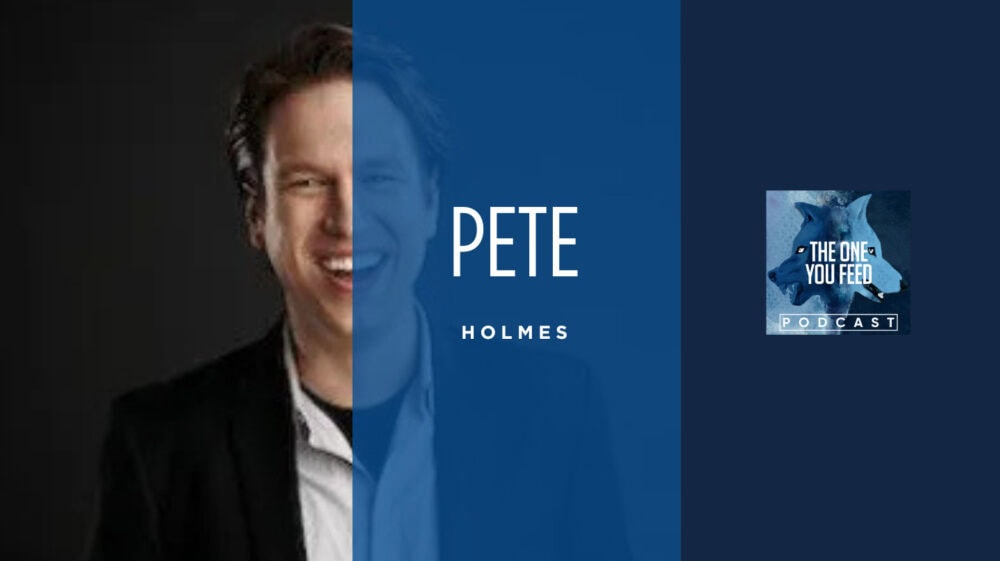
In this episode, Pete Holmes explains his practice of saying “Yes, Thank You” and how he practices non-resistance, a way of letting life be what it is instead of fighting it. Pete is well known from his long running podcast, You Made It Weird, and his book Comedy, Sex, God. Both mix humor with deep spiritual reflection, and this conversation explores that very same space. He discusses letting go of willpower-driven faith, embracing mystery, and finding joy in the very moments we usually resist.
Exciting News!!!
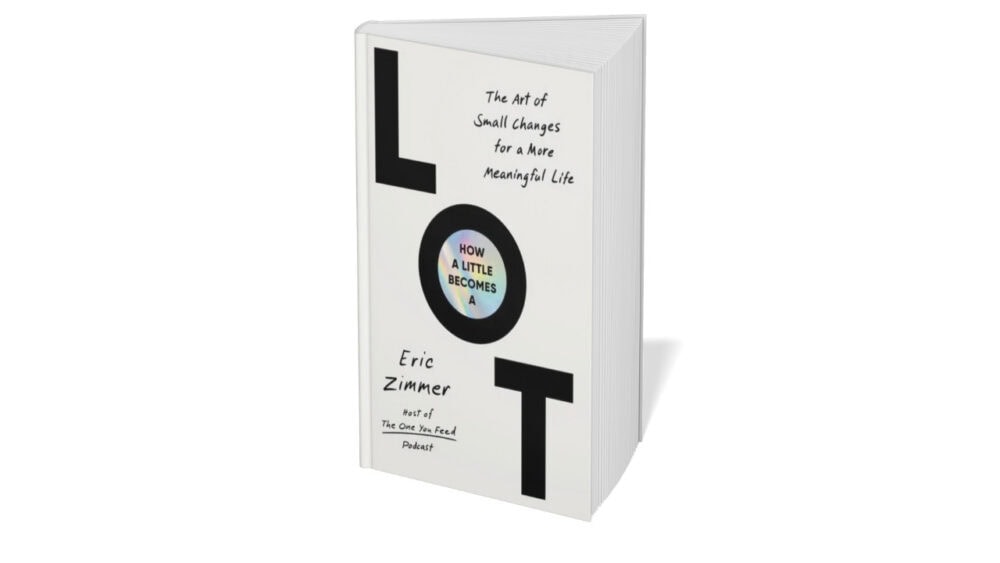
Coming in March, 2026, my new book, How a Little Becomes a Lot: The Art of Small Changes for a More Meaningful Life is now available for pre-orders!
Key Takeaways:
- Spiritual journey and personal growth
- The nature of sin as unconsciousness
- The balance between being and doing
- Practicing non-resistance and acceptance
- The impact of modern culture on pleasure and satisfaction
- The evolution of beliefs from evangelical Christianity to a broader spirituality
- Understanding the importance of presence and mindfulness in everyday life
- The concept of the “false self” versus the “real self”
- Embracing curiosity and mystery in spiritual exploration
Pete Holmes is an American comedian, actor, writer, producer, and podcaster. He is both a hilarious comedian and a deeply contemplative, spiritual person. In this episode, Eric and Pete discuss his book, Comedy Sex God where they go into detail about how Pete views and experiences the world. From how he has learned to deal with frustrations to the way he returns to the present moment and experiences God in his daily life, this interview explores his direct experience with so much spiritual wisdom. You will laugh and also be deeply touched and inspired by this engaging, thoughtful conversation about discovering spiritual truths.
Connect with Pete Holmes: Website | Instagram
If you enjoyed this conversation with Pete Holmes, check out these other episodes:
A Soul Boom Discussion on Mental Health, Spirituality, and Connection with Rainn Wilson
Spiritual Journeys with Rainn Wilson & Reza Aslan
By purchasing products and/or services from our sponsors, you are helping to support The One You Feed and we greatly appreciate it. Thank you!
This episode is sponsored by:
Delivering the WOW; Check out Richard Fain’s new book, a behind-the-scenes look at how he transformed Royal Caribbean into a world-class company through culture, innovation, and intentional leadership. Available now on Amazon and wherever you get your books.
AGZ – Start taking your sleep seriously with AGZ. Head to drinkag1.com/feed to get a FREE Welcome Kit with the flavor of your choice that includes a 30 day supply of AGZ and a FREE frother.
Smalls – Smalls cat food is protein-packed recipes made with preservative-free ingredients you’d find in your fridge… and it’s delivered right to your door. For a limited time, get 60% off your first order, plus free shipping, when you head to Smalls.com/FEED! No more picking between random brands at the store. Smalls has the right food to satisfy any cat’s cravings.
Grow Therapy – Whatever challenges you’re facing, Grow Therapy is here to help. Sessions average about $21 with insurance, and some pay as little as $0, depending on their plan. (Availability and coverage vary by state and insurance plans. Visit growtherapy.com/feed today!
Persona Nutrition delivers science-backed, personalized vitamin packs that make daily wellness simple and convenient. In just minutes, you get a plan tailored to your health goals. No clutter, no guesswork. Just grab-and-go packs designed by experts. Go to PersonaNutrition.com/FEED today to take the free assessment and get your personalized daily vitamin packs for an exclusive offer — get 40% off your first order.
LinkedIn: Post your job for free at linkedin.com/1youfeed. Terms and conditions apply.

If you enjoy our podcast and find value in our content, please consider supporting the show. By joining our Patreon Community, you’ll receive exclusive content only available on Patreon! Click here to learn more!!
Episode Transcript:
Pete Holmes 00:00:00 Shouldn’t I have learned this in Sunday school? Why am I learning this from the road manager for AC, DC?
Chris Forbes 00:00:14 Welcome to the one you feed. Throughout time, great thinkers have recognized the importance of the thoughts we have. Quotes like garbage in, garbage out or you are what you think ring true. And yet for many of us, our thoughts don’t strengthen or empower us. We tend toward negativity, self-pity, jealousy, or fear. We see what we don’t have instead of what we do. We think things that hold us back and dampen our spirit. But it’s not just about thinking. Our actions matter. It takes conscious, consistent, and creative effort to make a life worth living. This podcast is about how other people keep themselves moving in the right direction, how they feed their good wolf.
Eric Zimmer 00:00:59 There’s a phrase Pete Holmes leans on when life feels hard. Yes. Thank you. Even in traffic or on a delayed flight or in the middle of self-doubt, it’s. Yes. Thank you. It’s his way of practicing non-resistance, of letting life be what it is.
Eric Zimmer 00:01:18 Instead of fighting it, you probably know Pete from his long running podcast, You Made It Weird, or from his book comedy Sex God. Both mix humor with deep spiritual reflection, and in our conversation we explore that very same space. We talk about letting go of willpower driven faith, embracing mystery, and finding joy in the very moments we usually resist. I’m Eric Zimmer and this is the one you feed. Hi, Pete, welcome to the show.
Pete Holmes 00:01:49 Hi. Thanks for having.
Eric Zimmer 00:01:50 Me. I’m excited to have you on. We’re going to discuss your book, comedy, sex, God, as well as some of the things I’ve heard you say on your podcast. But before we do that, let’s start like we always do with the parable. There is a grandfather who’s talking with his granddaughter, and he says, in life there are two souls inside of us that are always at battle. One is a good wolf, which represents things like kindness and bravery and love, and the other is a bad wolf, which represents things like greed and hatred and fear.
Eric Zimmer 00:02:21 And the granddaughter stops and she thinks about it for a second, and she looks up at her grandfather. She says, well, grandfather, which one wins? And the grandfather says, the one you feed. So I’d like to start off by asking you what that parable means to you and your life and in the work that you do.
Pete Holmes 00:02:36 Well, it’s funny, I knew that you were going to ask me that, but I hadn’t thought about it until just now. But I was just driving in my car. I was thinking about how I would never get a bumper sticker, because there’s no way that I feel all of the time, if that makes sense. It’s it’s the same reason I wouldn’t want to get a tattoo.
Eric Zimmer 00:02:54 Yeah.
Pete Holmes 00:02:55 Me too. There’s so many pizzas. I’m sure there’s so many. Eric’s. There’s just so many of us in there to sort of add on to the parable. A lot of the art that I enjoy, and certainly the art that I try to make, is trying to honor the idea that there are so many of us in there.
Pete Holmes 00:03:12 And I think it’s preposterous when people speak with such authority on who they are, or even how they feel, without acknowledging that it’s just who they are in the moment or how they feel in the moment. But I was literally just thinking that like I was once tempted to get the bumper sticker, don’t believe everything you think, right? And I was like, that’s fine, but I don’t always feel that way, and I don’t want to be the car that represents that idiom, you know what I mean? What if I cut somebody off or something like, then they’re embittered towards that perspective because I was driving poorly that day. Because as much as I’d like to be a person who drives courteously, sometimes I’m not like, I like to delete those files from my memory so I can feel good about myself. But the truth is, is sometimes I make bad choices on the road, and I don’t want a beautiful thought like that stapled to my bad behavior. So I was just kind of thinking about that.
Pete Holmes 00:03:57 And I was also just talking to somebody just this morning about the way that the brain works. And there’s the oldest part of our brain, which is the lizard brain, which is what’s responsible for eating, killing and mating. And then there’s the newest part of our brain, which is unique to humans. A smarter person would know what these parts are called, or somebody with a better memory, maybe. But that’s the part that’s responsible for, like, communal thinking and spirituality. And not just like, should I eat it, have sex with it, or kill it, but it goes, is it good for the community to take this, or to save it, or to nurture it, or to grow it or to harvest it, all these things. So this parable is very wise, and it’s certainly worthy of having a podcast as you do, because there clearly are literally different impulses coming from the same brain. So that’s what that means to me is even when it comes to something like alcohol or pornography or binge eating, just eating a whole bag of Doritos or something, it’s very helpful for me to consider that those things are coming from my brain stem.
Pete Holmes 00:05:07 That’s very scared, sort of fearful horde mentality. Part of me that was installed to keep us alive. It’s one of the reasons why we evolved and stuff, but it just sort of wants to light up the pleasure centers as much as it can. But, it’s not a thoughtful part. It’s not a wise part. It’s not the best part of humanity. It’s just sort of like the base part of humanity. And that is the Bad Wolf or whatever. Although I’m sure I can’t be the first person that takes issue with bad and good in that parable.
Eric Zimmer 00:05:40 No you’re.
Pete Holmes 00:05:41 Not. You know, sometimes we need simple language like that. So another part of me is okay with it. So that is the bad part. And the good part definitely needs conscious attention. That’s why I think it’s so interesting that something like Compassion meditation works. Just taking a moment to consider the people that you love, or the people that you forgive, or the people that have loved or forgiven you, and how that can broaden your scope and the way that you behave in the world and the world that you live in, literally the way that you perceive the world.
Pete Holmes 00:06:15 That’s how I take that. I mean, we can, especially these days, have pretty much any food delivered. We can have any sexual fantasy acted out in front of us on a computer we can drink, and weed is legal. So many places we can we can stimulate our pleasure centers. But that is not the point of life. In fact, it’s it’s really a passion of mine to try and point out that that’s a fool’s errand is to try and just be on a beach eating ice cream is is an example I’ve used before because I was on a beach eating ice cream and you think like, that’s it, right? I mean, you’ve done it. You’re in Hawaii. You’re eating an ice cream sundae. But that is not what life is. This is me paraphrasing Ramdas basically is you finish the ice cream and now you want water, and then you have the water, and then you have to go to the bathroom, and then you go to the bathroom, and then you’re bored and you watch TV, and then you’re tired, and then you sleep and you wake up and you’re groggy and you have coffee and you’re perky, but now you need food.
Pete Holmes 00:07:15 It’s this endless hedonic, mind numbing treadmill. That is not what life is. Life is the fundamental, unchanging, unborn energy that’s observing those changes in you. But so many of us have lost sight of the joy and the bliss and the equanimity of being that we get really obsessed with just lighting up our pleasure centers and doing stuff which is stupid. You just do it, and then you die one day and you go, well, well, that was fun, I guess, right?
Eric Zimmer 00:07:45 And the problem is, the more we light up those pleasure centers, in a lot of cases, the less we’re able to appreciate even those smaller things. I was having to talk with a Zen teacher earlier today, and we were talking about how being able to find some pleasure, enjoyment, value and oneness in every day is really important, but that comes by looking at really ordinary things. But pleasure centers don’t focus on ordinary things. Typically.
Pete Holmes 00:08:11 That’s exactly right. They turn the volume down on ordinary things I recently.
Pete Holmes 00:08:16 Well, not that recently. It’s been a couple of years, but stopped looking at pornography and I noticed that the scintillating and I don’t just mean sexually, just the vibrancy of everyday life got turned up, extremely high. And that is the best. Like stopping pornography because it’s bad is not appealing. Stopping any sort of disruption because it’s bad doesn’t work. It’s willpower. It’s what Richard Roark calls willpower. Christianity. It’s stupid. It’s like a ego trip and it’s beating yourself up. But stopping something like pornography, because it brings the juice back to your life that is compelling. And the more we get addicted to whatever it might be that, lights up those centers, the more we’re dulled to what I think Christ was referring to as the kingdom of heaven being here, the fullness of life, the eternal moment, being here and now that gets turned down, the more you just sort of rub the fun parts. I’m not even being crude. I just mean in your brain to rubbing those parts. Just like, here’s the sugar one, here’s the booze one, here’s the weed one, here’s the movie one.
Pete Holmes 00:09:24 Just constantly doing that. And that’s what so many of us are doing, because that’s what’s being offered to us. When really, as maybe this Zen person was saying, finding the immediacy and the joy in traffic or in a delayed flight or in a bad meal, a date that isn’t clicking if you can still get in touch with the light inside of you with your base consciousness. That’s where the only joy worth pursuing rests. That’s not to say that I don’t try and achieve things and make things and have relationships, but all of the things that I make and achieve and the relationships that I have, hopefully are in the service of me becoming more in tune with what it is that I really am and what it is we really are.
Eric Zimmer 00:10:09 Yeah. Let’s pivot for a second, although not very far, because you come from a sort of I don’t know if you’d use the word born again Christian, but certainly evangelical Christian background. And you’ve really grown a long way out of that. In your new book, you say something that I really like and you are talking about sin, and you spent a lot of your life being obsessed, as you were saying earlier, with things being bad.
Eric Zimmer 00:10:34 Don’t do that because it’s bad. Don’t do that because God will be mad. God will pull his love away. But ultimately, that’s transformed you to a point where you look at it as sin isn’t a bad thing. It’s about being unconscious.
Pete Holmes 00:10:47 That’s right. Yeah, and that’s Eckhart Tolle says that sin is unconsciousness. I can’t remember if I say it in the book, but the way that I look at it now is that it’s just static on the radio. It’s something that’s disrupting your connection and your connection to consciousness, which is God, which is life itself. So sins, whether they be stealing from your neighbor or being jealous or petty or lying, these are things that have been reduced to like, you’re upsetting a God who’s going to torch you for those things later. I actually think it can happen a lot more immediately that you’re you’re sort of you’re only hurting yourself, basically. And when you start to, as Ramdas says, when you start to clean up your game, you notice that you can lean into that connection that’s available to you here and now, as opposed to waiting until you die, which was what I was taught.
Pete Holmes 00:11:41 So sin used to make my skin crawl. And now when I think about sin, I just think of it as static on the radio. You just want the signal to be coming in clean, because that’s where the juice and the life and the vitality and the excitement and the joy and the equanimity and the peace are. It’s not so much, for it’s not at all for an afterlife reward or even to be perceived as a good person. It’s just it’s something that pays out immediately.
Eric Zimmer 00:12:12 Right. Yeah. No, I love that idea. Static on the radio is a is a really good way to think of it. Makes me think of a song by a guy named Jim White who’s really an amazing musician. He’s written another hilarious song I think you would appreciate called God Was Drunk When He Made Me, but he deeply spiritual artist. Beautiful but static on the radio. Yeah, I’ve always heard of it, as you know, sin missing the mark?
Pete Holmes 00:12:34 Yep. I think that’s a literal definition. Yeah, missing the mark, I like that.
Eric Zimmer 00:12:37 So let me ask you a question. you you referenced a minute ago, you use these words, but I want to kind of bring them up. And it’s the the tension between being and doing. You’re somebody who does a lot. Right. You’ve got a podcast, you’ve got HBO specials, you go on tour, you create and produce a lot. And yet being is also really important for you. And I’m curious how in your own life you look at how to sort of balance those two things or how to integrate those two things maybe is a different way to look at it, but I’m interested in that tension for you.
Pete Holmes 00:13:13 Yeah, it’s a great question. It’s a lifelong question, I suppose. Ramdas wrote a book about meditation. I forget what it’s called. It has the word meditation in the title, but there are all these quotes in it. It’s more of a handbook than it is necessarily like an original work. There’s a lot of quotes in there, and one of them that I like, and I’m badly paraphrasing it is they’re like when there’s a task to do, doing the task is one tenth of the task, and maintaining your center is 9/10 of the task.
Pete Holmes 00:13:41 And I was like, I think that’s right on. So that’s why I was trying to be careful when I was like, I’m not against doing things. I’m an achiever. I come alive when I achieve. I’ve tried to clean up psychologically why it feels so good for me to achieve. It used to be a little bit more egocentric and a little bit more selfish, but I still enjoy it. I still like making things. I believe that, the creative energy behind everything that we call God is creative and therefore creating a sort of mirroring, creation and mirroring the creator. I think it can be really beautiful. But that being said, you know, I’m sorry to keep quoting Randolph so much. He’s on my mind today, you know, knowledge, but you are wise. So I think that’s such a key thing is you can know a lot of facts, you can know a lot of theology. It’s sort of like comedy. You can understand why something is funny and how to write a joke or how to write a script.
Pete Holmes 00:14:38 But like, you have to be funny. That’s that’s actually the advice that Ramdas gave me about comedy was like, just be funny, don’t do funny, be funny. And I actually think that’s why people enjoy the live shows when they when they do is because I’m trying to be something with them. We’re trying to create something together. It’s also similar to lovemaking, I suppose, like people can know what the mechanics of sex are, but like the nuance of being present in that act is what makes it truly can make it truly wonderful and divine. So I think we’re a very obsessed with doing and achieving and letting people see what we’re doing. You know, you can’t go to the beach without Instagramming it so people can validate that you were at the beach and that you look so happy. But, I mean, everybody knows that actually being happy at the beach or they should know is so much more important than if a thousand people like a photo of you looking like you were happy at the beach.
Eric Zimmer 00:15:41 I’m not sure.
Eric Zimmer 00:15:41 Most people do know that a lot of time anymore.
Pete Holmes 00:15:44 No, I don’t think they do. And I know maybe we sound like old men, but we were just on the beach a couple days ago, and my wife and I were doing our best without judgment. I mean, to watch this young woman who, for maybe no exaggeration, 30 minutes, kept getting up and then going back to a blanket, getting up, going back to her blanket for 30 minutes because she was taking a photo with the timer of herself. And we just watched her with a mix of, you know, fascination. There was some judgment there from being honest and also humor. Just like, look at what we’ve become is, you know, she was trying, oh, maybe I’ll turn my butt out, maybe I’ll kneel, maybe I’ll mess my hair up. And then watching her go back and then clearly not like the photo and then do it again like she’d make a displeasure face. And I was like, it doesn’t even matter.
Pete Holmes 00:16:36 Like, you know, in the 80s, that would have been the most embarrassing thing you could have done that would have drawn a crowd of someone was doing that. But now so much of reality is just doing life. It’s non-resistance basically is trying to see the value and the juice and the life in everything. That’s what I was saying. Traffic or a delayed flight? Most people are waiting. They’re postponing their happiness. They’re postponing their equanimity until things are going their way. But you know this. The spiritual practice is trying to have that non-resistance. The way that I phrase it in the book is no matter what’s happening, you say, yes, thank you to it, I think. Yes. Thank you is it’s for me personally, one of my favorite mantras. It’s obviously it’s in English. It’s not esoteric, it’s not strange. But when, when you are suffering your brain, your lizard brain has absolutely no idea what to do when you don’t participate with the misery. When you just say yes, thank you.
Pete Holmes 00:17:37 This too. This too will be the sacrifice that I make to hopefully being on a higher state. Even this discomfort, even this pain, even this frustration, even this depression, whatever it might be, you sort of sacrifice it through. You don’t hold on to it. I literally picture myself as a as like a cosmic tube, and I’m feeling this angst and I pass it through and I go, this too. I’ll put this on the on the serving tray for the universe as well. And I go, there am a human being really feeling torment right now, and I say thank you to this as well. Not just ice cream on the beach because it’s melting and it and you’re lactose intolerant. You know, it’s not it’s not working. Just just being here and saying yes to this right now, no matter what you’re doing, is the kingdom of heaven, as far as I can tell.
Eric Zimmer 00:18:31 Yeah, I think that is in some ways the deepest teaching. Right? Is to say, you know, I love that.
Eric Zimmer 00:18:37 Yes, thanks. How to allow everything to be exactly the way it is. And the moments in my life that have blown my head off are when I somehow managed to truly wander into that neighborhood where I just kept saying, yes, yes, yes, yes for the life of me, I still, you know, I can only find my way back there occasionally, but it is by somehow just truly letting go.
Pete Holmes 00:18:59 And it’s also this is Sharon Salzberg says it’s the return. We all lose it. That’s important to point out. We all lose it. And sometimes you even have to fake it. You know, sometimes I’ll be touring around and I’ll be doing press or something, and sometimes you have to get up really early for some morning show or something. And so it’s like 430 and you went to bed at 12 the night before and you’re so exhausted. This sounds a little Tony Robbins. I don’t mean it to be like, kind of sounding like just just get psyched. You know, I don’t mean that.
Pete Holmes 00:19:30 I just mean even in that time when I’m not feeling it, it can be even more powerful. And that’s my point, is you’re saying yes, thank you. Even to your not believing in the power of yes, thank you. You’re like I am a person not even believing that this will help me and I’m grateful for even that J Krishnamurti, who was a great Indian saint. He never really gave teachings until the end of his life. I heard this from Eckhart Tolle, but he he said, do you want to know my secret? And all of these followers were like, yeah, we want to know your secret. We’ve been following you for 40 years waiting for you to give us a teaching. And he said, my secret is I don’t mind what happens. And I was like, that’s kind of the whole thing. That’s what I think Jesus is saying when he says, look at the birds of the air. They’re not worried about what they’re going to eat or what they’re going to do.
Pete Holmes 00:20:23 I know human beings obviously have to do some planning, but there’s a way to plan and be present while you’re planning. Just plan while you’re planning and stop planning when you’re not planning. Easier said than done. But I mean, there’s something to non-resistance, but your ego, for whatever reason, loves to exist. And when I say your ego, I mean the story of you. I mean your likes, your dislikes, where you’re from, your sports teams, your favorite foods, all of these thoughts that build this mosaic that you think is you and that mosaic wants you for some reason, wants you to think that that is you. So it sort of possesses you, and it’s always trying to trick you. One of the techniques that it does is it tries to keep you upset, because when you’re upset, you exist. Like, that’s what I see when people are fighting about some asinine garbage. You know, I was just at a baggage claim and and the bags were coming around, and then they started coming out on the other side, and this guy was like, now I gotta go to the other side.
Pete Holmes 00:21:24 I was like, it’s a carousel. They go around like you can just stand where you are, but what’s going on there? That’s the ego going like get mad. Now they’re coming out on the other side because when you when you’re mad, you’re Gary, and when you’re Gary, you exist. And that’s what the ego wants. It wants to be real and wants to convince you that you’re real, and it wants to convince you that you do need that next thing, or you need the new iPhone, or you need the new, maybe that new movie or that new book that’s going to get you where you need to be. it was Muji, I think. That said, given the choice between the journey and the destination, the ego will always choose the journey. And that’s why we’re constantly postponing. Maybe not full enlightenment, but just a taste. How about just a taste? Can we just have a taste? Can we just have a moment? Literally just a moment. Let’s not even time it.
Pete Holmes 00:22:16 Can you just see what it feels like? Try to stop thinking and stop believing your thoughts. And stop believing the story just for a moment. And be nothing, and be free and be spacious. But we’ll always go. Maybe if I read that book, then I’ll be free. Even though. And I do this too, even though I know the book is just going to say what I already know, and it’s going to say what the last one said. And at a certain point, I think this is Trungpa Rinpoche is like at a certain point, you have to stop reading the menu and just eat the meal. It’s like my friend Michael Munger said, it’s not the feather that makes Dumbo fly, you know? At a certain point, he loses the feather and he can still fly at a certain point. We need to put these things down and go, I am it, I am it. What’s looking at your eyes is ultimate reality is ultimate truth is the indwelling of God is the Spirit of God.
Pete Holmes 00:23:04 You are it. Being can only recognize being. God is being and you are being, noticing, being. That’s a little. I’m not saying you’re God. I’m saying you have the indwelling of God. And when you rest there, all of those things I just mentioned new iPhone, new movie, new book. They’re all fine. You can do it. You just don’t get lost in it as much. It’s not static on the radio. It’s just a dance you’re doing. It’s just play. It’s just passing show. I think it was Kebir that that said, I walked through the marketplace. But I’m not a purchaser. You can do it. That’s what Christ means when he’s in the world, not of the world. You can still do it. I love movies, I love books, I have the new iPhone, but like, I’m not as lost as I used to be in thinking, boy, when people see that I have the new iPhone, they’ll know that I’m a fancy showbiz guy.
Pete Holmes 00:23:52 They’ll probably think that I’m doing well, and then I’m going to use the new iPhone to take a picture of me at the beach, and then they’ll really know that I’m a special guy that goes to the beach. I don’t know, that stuff becomes less important, right?
Eric Zimmer 00:24:04 I’d rather read a spiritual book than sit down and do a spiritual practice because it’s hard. The brain just sort of takes over and I know how to do that. I can read and I get a taste of what that piece is like versus when I’m just sort of running wild, but actually stopping and spending some of the time in trying to be is hard. It’s these minds and these egos. They have a momentum at this point. So yes, thank you is a great phrase for sort of bringing yourself back. Do you have any others for when you’re kind of lost in ego and in self to help bring you back to a deeper place?
Pete Holmes 00:25:03 Yeah. I mean, first of all, I wanted to say that because I’m like you and I love reading and I even love writing about this stuff.
Pete Holmes 00:25:11 I’ve sort of come to identify that as part of the practice, meaning I’m not a great for whatever that means. I’m not a great meditator. I do like meditating. It just so happens I meditated this morning. Sure. Great. See, that’s sometimes that’s the full benefit is getting to tell someone you did it. Hey, I meditated this morning. So that’s my point is, it’s like sometimes it’s what Ramdas taught me about karma yoga. Meaning using your life. Karma. Just meaning the happenings of your life as your yoga, not stretching, but as your practice. So my friend again, Michael Junger, who wrote an incredible book called this which Really Changed My Life, which talks about a lot of this stuff. He was like, I don’t really meditate, but I’m practicing all the time. And I was like, I, I relate more to that. Is that like, what is this moment have to tell me about the fundamental nature of the universe? And Ramdas also says, you know, the next teaching is always exactly right where you are.
Pete Holmes 00:26:09 So whereas I can hear maybe I’m wrong, but I can hear you doing something that I do too, which is like, boy, instead of just reading this stuff, maybe I should just go on a contemplative walk or meditate or whatever. But that’s sort of the yes, thank you of it. It’s like, well, this is what’s happening, and I’m going to do this consciously and for better or worse, the mind. I think it’s called Yana yoga. Using the mind to beat the mind. That’s that’s sort of my jam, I like it. I don’t, enjoy as much disavowing the mind directly. I like sort of using the mind to diffuse itself. So the more that I study, the more that I talk about it to and the more that I write about it, that sort of has become a bigger part of my practice than just stillness. My my life can. Your life can have plenty of stillness. Just being on a plane and hearing the symphony of the present moment can be a very profound practice.
Pete Holmes 00:27:10 It’s just not as direct or as noticeable as sitting on a cushion with your eyes closed, which obviously is wonderful as well, but I just wanted to offer that just in case it made you feel better because it makes me feel better.
Eric Zimmer 00:27:23 It is an interesting thing that I am challenged with is that I mean Zen, which is where I primarily study, is very much about, hey, like intellectual ideas just won’t get you there. That said, what I’ve always really appreciated about the Hindu faith is how they do talk about. There are different ways to this ultimate reality. And, you know, for some people it’s it’s like you said, it’s love. Some people, it’s service, some people, it’s the mind. I really like that idea of there being different ways to the same place depending on your temperament.
Pete Holmes 00:27:52 Right? Yeah. You know, depending how you’re wired and for better or worse, I enjoy reading about it. I really enjoy listening to talks about it, and that’ll bring me there.
Pete Holmes 00:28:04 I’m happy to say over the years, it really does sort of infuse into your life and become a program that’s just running in the background all the time. And then when I do meditate, it is deeper. But that’s just because my life is more still. And that stillness came from a lot of study, and that changed the way that I look at the world and made it a more contemplative mindset, which which is just saying yes to everything, by the way. I mean, that’s that’s a pretty quick, maybe not full explanation of what contemplation is, but Richard Rohr says, if you can allow anything, it will convert you. If you look at a rock and completely allow the rock, it will convert you, because why should anything exist? But you’re saying a deep, profound yes to a rock. He also says something really beautiful where he’s like people all run around claiming that they love Jesus, but it’s like, try loving a tree first before you, before you jump.
Eric Zimmer 00:28:58 Right.
Pete Holmes 00:28:59 To the King of Kings.
Pete Holmes 00:29:00 Can you love, as I just said, a delayed flight? Can you love that? We’re so fast to just be like, I’ve done it, I love Christ, really? How? Like I get that you. Maybe you do in your way. But there’s a ways to deepen our love, and there’s ways to give it more fullness. And the ways that I’ve found that are trying to love everything. Love literally everything.
Eric Zimmer 00:29:24 I couldn’t agree more. I’ve been doing this, this other approach. There’s a Zen saying that I won’t get it right, but you know that something like Zen in Motion is a million times more valuable than Zen. You know, sitting on a cushion, right? It’s that idea of like, how do you bring it into the world? And there’s this idea in Zen, it’s called Samu. It’s called work practice. So if you go on a Zen retreat or you live in a monastery, you’re going to meditate part of the time, but then part of your day is you’re going to do basic manual labor.
Eric Zimmer 00:29:52 And the goal is you do it with your whole heart, your whole presence, everything. Yeah. And that Samu is seen as a bridge. It’s a way to go from all right, I when I sit down and close my eyes, I can keep these ideas in mind. And when I’m going 100 miles an hour, I lose them. But this Samu this work practice, these simpler things like Newton would talk about washing the dishes. When you’re washing the dishes, wash dishes. Those are a bridge. They’re a way to sort of bridge the sitting down, and then we get so busy we forget kind of thing. And I’ve really been exploring different parts of my life, as Samu is a way to to try and bring that consciousness more into all the parts of my life, because I do think that’s ultimately where life gets transformed. Meditating for 30 minutes a day is a great practice, and it’s important, but there’s still 23.5 other hours. And so how do we bring it into more and more of the day? So it actually has a chance to transform as at a deeper level.
Pete Holmes 00:30:52 Yeah, I think that’s right on. And that’s what I would call karma yoga. That’s the idea. And you know Eckhart Tolle is on that tip too, where it’s like when you do things not as a means to an end. And this will change your life today if you’d like it to. I hate brushing my teeth. I just I don’t like that I’m in a meat suit that requires me to to. As my friend Chris Thayer says, polish the bones people can see. He has this great joke about that. But I was like, so I don’t like brushing my teeth. I’m a grown man. I don’t feel like I should have to do it if I don’t want to do it. But if I can get into that space, which sometimes I can, where you’re really being present and watching just this bulbous, you know, dab of toothpaste coming out of this tube with your pressure onto these bristles, and you smell the spearmint and you feel the warm water and and you feel them just on the tooth that you’re brushing, not thinking, well, I have to do this part.
Pete Holmes 00:31:50 Then I have to do that part. Then I’ll rinse, then I can go to bed. Then I’ll be happy if you can. Just as tick not on would say just brush your teeth when you’re brushing your teeth. And this is the key to love, by the way to. I’m happy to share this, even though it might sound like a brag. Eric, as I called you, I was running late to this, so I was running late and I came in and I caught myself just kissing Val and sort of rushing to the back, and then I was like, fuck that shit. I stopped and we do this all the time. That and that’s why I’m sharing it. I think people would get value out of it, just kind of. We just stared at each other. We just gazed at each other, just lovingly gazed at each other for, what, seven seconds? You know what I mean? When you’re really looking at somebody, those seconds count. It doesn’t have to be very long.
Pete Holmes 00:32:36 And you’re just taking a moment to look. When you’re looking at Val, look at Val. You know what I mean? And you’re giving someone witness and you’re giving them respect. Literally. That’s what Richard Roy taught me. Respect your re looking. You’re looking again. So the first time I was looking at her, I was respecting her. Then I respected her, you know what I’m saying? And. And you just have that moment of love. Because I knew she was going to leave after this. When I’m done with this, she’s going to be out running errands or whatever. And that was my moment. And I do that with my daughter and I do that with the friends of mine that are comfortable with that sort of thing. You’re just taking a moment to be mindful. And in that moment, that’s my meditation, which is another practice I encourage. If you are not just you, Eric, but the people that are listening, if you have somebody that you feel comfortable with, just setting a timer for chimes, something gentle, for like 3 or 4 minutes and just gazing at their eyes.
Pete Holmes 00:33:36 There’s no way your ego can survive that. The first 30s it’ll be so uncomfortable to your ego it’ll take off. And then you’re just being looking at being. You’re just consciousness looking at itself. And it’s trippy. Even if you’ve never done a psychedelic, if you stare at somebody and just kind of breathe mindfully while you do it, you’re not thinking about how you love them. You’re not thinking about how special they are. You don’t have to think anything. You can just compassionately Gaze at someone. You’ll have a mild and sometimes not so mild, hallucinogenic experience in my. In my experience. because the the the part of your brain that constructs reality doesn’t really know what to do.
Eric Zimmer 00:34:24 Yeah, right.
Pete Holmes 00:34:25 And their face is going to change. I write about that in my book. Ramdas. His face turned into my father’s face, turned into him as a kid. But when I do it with Val, obviously the juice with Ramdas is a little bit special. I would say the intensity is, is, you know, a lot higher.
Pete Holmes 00:34:43 But with Val or my friends, it gets trippy, man. So I sometimes catch myself always telling people to try, you know, if they’re open to it or if they want to, if they feel the desire to try psychedelics. But then I’m like, you don’t have to at all. You can just stare at someone for four minutes. Unfortunately, in our society, people are more likely to take a pill or something because staring at someone is so weird. But it’s there. It’s there for the taking.
Eric Zimmer 00:35:15 Before we dive back into the conversation, let me ask you something. What’s one thing that has been holding you back lately? You know that it’s there. You’ve tried to push past it, but somehow it keeps getting in the way. You’re not alone in this. And I’ve identified six major saboteurs of self-control. Things like autopilot behavior, self-doubt, emotional escapism that quietly derail our best intentions. But here’s the good news you can outsmart them. And I’ve put together a free guide to help you spot these hidden obstacles and give you simple, actionable strategies that you can use to regain control.
Eric Zimmer 00:35:55 Download the free guide Now at once. And take the first step towards getting back on track. There was a crazy scientific study about that, where they put people together who didn’t know each other and had them stare at each other like that, and some crazy proportion of them fell in love with each other. Wow. It brought this intimacy that was just so, so strong.
Pete Holmes 00:36:18 Yeah, I’ve seen it where they have Derren Brown. He did that thing on Netflix. It was a he had a guy who was very, very anti-immigrant, staring with a, illegal Mexican American immigrant. And they just, they didn’t tell them anything. They just had them look at each other for five minutes or so, and at the end, they were both crying and hugging each other. It’s a profound thing, but that’s my point. And, you know, Jack Kornfield had us do that. I was just at the Ram Dass retreat. He had us do that and everybody’s blown away. And he said something that was very profound.
Pete Holmes 00:36:53 He was like, you know, you don’t have to go to India because that’s what I’m saying. The ego would rather say when I go to India, you know, right. when I go to the ashram, when I go to the monastery, then I’ll be spiritual. And the heart keeps saying, the part of you that’s saying then I’ll be spiritual is spirit. You know, the part of you that’s noticing you saying, Then I’ll be spiritual is spirit. It couldn’t be any closer. It’s what you are. I like to say I believe it’s a paraphrase of Richard Rohr. I’m not sure so much of what I say is a paraphrase of Richard Rohr. But he said, God doesn’t love you. You are God’s love. It’s a very different perspective.
Eric Zimmer 00:37:35 Yes.
Pete Holmes 00:37:36 It goes back to what we were saying of like, I’ve earned it. You know, God was my father figure, just like my real dad, who’s a great dad. I’m not saying he did this more than normal. If I do well, he likes me.
Pete Holmes 00:37:49 If I do bad, he might be frustrated or whatever. it’s so much more liberal. I actually think God’s love is so liberal. It would offend any ego. It’s too much for anybody’s ego to even consider when you consider the the loving. Yes, that’s what love is. It’s a yes. It’s this undulating. Yes animates everything. The good, the bad and the ugly. It’s not. It’s not as pleasing as we’d like it to be. We want it to be, you know, Captain America beating the bad guy. But the truth is, the whole thing is one thing. It’s lawful. It’s unfolding. It’s figuring itself out. It’s playing. There’s no flaw in the system. I don’t want to get out of my pay grade here. But I’m saying suffering itself is in the plan. It’s in the plan.
Eric Zimmer 00:38:54 As I was preparing for this interview, I was also learning about something. I don’t know if you’re familiar with something called process theology by Alfred North Whitehead. It’s basically what you’re saying.
Eric Zimmer 00:39:03 First, it says there aren’t things in the universe. There’s just verbs. There’s being there’s becoming, you know, and and it sort of says that, like, God is sort of a novelty junkie, like, that’s what God is doing, always trying to sort of hold the balance between chaos and stability to produce the most novelty. But when you said earlier, this idea of creation, when we’re creating it can feel like we are in touch with the energy of the universe, because that feels very fundamental to the energy of the universe for me. Like, the universe just seems to want to be and create and make and grow.
Pete Holmes 00:39:38 Yeah, well, that’s in Michael Gunter’s book. He’s like, which is called this. Again, he sort of likens the universe to a child being thrown up in the sky by its father going again, again, again. And what’s weird is you see this quality in human beings, even the horrible bits. We’re sort of Fascinated with all of it. We’re sort of endlessly intrigued with figuring out the limits of ourselves.
Pete Holmes 00:40:05 And obviously, there’s mourning and we and compassion and love and kindness and service is the point of life. That’s the one you feed, right? But every bit of it. Look, look at our fascination with, you know, murder documentaries, all these things. Like my point is, is like, as a thought experiment, I’ve been thinking what my heaven would be. And, you know, one of the heavens would be just kind of God mode in this universe. Meaning I can swipe to any time, any place, past, present, future, and I can experience what it feels like to be anything. Meaning I could feel what it feels like to be a field of wheat or the ocean. I mean, imagine how much time you would spend just being the ocean. I think that would be pretty incredible. Or the cosmos or Saturn, right? Or what it would feel like to be Trump, or what it would feel like to be a neglected housewife. I want it all. When I’m in that place, I want it all.
Pete Holmes 00:41:03 Given enough time, if it’s eternal, there’s not a situation that I wouldn’t want to slip into and just go, whoa, that’s what that was. That’s what that was. That’s what that was. And again, I don’t want I don’t want to sound like a nihilist or somebody that’s just like, we need to work to bring peace. We need to work to bring compassion. And I can have a part of me, not Pete, necessarily, but my base still, consciousness can understand, given eternal time and eternal possibilities, infinite possibilities. There isn’t a game that I wouldn’t play. Think about that. That’s in Michael Gunther’s book. If you were infinite, what game wouldn’t you play? Right? And that’s actually pretty trippy, because it actually includes even the the things that I’ve dismissed as ridiculous. Because I said that to Michael, I was like, well, that means that there is a heaven where we are all just in robes with wings. You know, even that’s so silly. I’m like, if I have infinite time and infinite everything and infinite possibilities, then that’ll be one too.
Pete Holmes 00:42:08 We’ll play that game too. Which one wouldn’t we play? Would play them all. Would play them all.
Eric Zimmer 00:42:12 I love that idea. I agree with you too. If I could have, like, one superpower, I think that’s the one. I would have to be able to inhabit anything and see what it’s like. And I think it points to a really useful tool. And we talk about like, how do I say yes to this moment or how do I inhabit it? I think curiosity is like one of the the most potent tools we have. Like, what’s this like if we can become curious about what a state is like now again, there only are states that we usually can experience. But curiosity for me is a great way to move from my small, contracted, emotionally suffering self to a broader perspective. What’s this actually like?
Pete Holmes 00:42:52 That’s right. Well, if God is creative, then God is certainly curious, which is interesting because, you know, growing up, I used to like to play those games.
Pete Holmes 00:42:59 Like, if God’s all knowing, right? I guess if you had to put it in those terms, I think God is outside of time. The concept of God, which we can’t possibly house in our brains, is obviously outside of time, so there’s not necessarily a deficit in this energy. but if we were to make it linear, I would be like, God is finding out. God is figuring. Yeah, God is relationship. God is adventure. God is pain. God is pleasure. God is loneliness. God is ecstasy. And that is the best superpower. That is the one that we seem to have chosen. We’ve we’ve decided, as Alan Watts would say, to play hide and seek with ourselves. I’m going to pretend to be this comedian in Hollywood, and you’ll pretend to be a podcast host. And you right now, Eric, you know what it’s like to be you. And I know what it’s like to be me. So we can only do it one at a time right now.
Pete Holmes 00:43:53 But the the whole thing is, is dipping in and out of everything so it knows what a field of wheat feels like. It knows what a mother whale feels like. It knows what a star feels like. It knows what a black hole feels like. That is what I think is going on here.
Eric Zimmer 00:44:10 Yeah, yeah. That makes me think of another phrase that you’ve used that I wanted to ask about, which is, when in doubt, zoom out. Because I think this is such a really powerful little phrase to use spiritually. And, and, you know, even on a more rote emotional basis.
Pete Holmes 00:44:29 Yeah. You asked earlier what the little mantras I have are, and that’s certainly one of them. Let me think of something I was frustrated at recently. It was probably something travel related, like, we’re at the airport. They didn’t print a boarding pass for our baby, so we didn’t have one. So they were stopping us at the gate. Right. And that that can be frustrating because you’re already back.
Pete Holmes 00:44:51 All these bags and a baby and stuff, right? And now they’re stopping you. And it’s easy to get caught in that moment and be frustrated. But when you zoom out. So when in doubt, zoom out. You’re zooming out and looking at the planet, and you’re like, there’s two smaller than ants on this rock, and they’re mad about getting on a tube to go to another part. Like nothing makes sense. Nothing. Nothing is valid when you look at the whole, yeah, like your little story. That’s the Indian idea. That’s it’s the passing show. It’s it’s my daughter’s name is Lila, which means the play of the universe. It’s all play. And it actually goes back to what I was saying. The task is one tenths and maintaining your center is 9/10. So in that element of karma yoga, getting my daughter, which we did, it was no problem. On the plane is one tenth. Me not getting lost in the illusion is 9/10. It’s so much more important for me to go like we are on a planet and some of us forget, like the concept of infinity is not just in holy books.
Pete Holmes 00:45:54 It’s it’s around us. It’s where we’re swimming. It’s where we’re floating. It’s what’s happening around us. It’s expanding infinity, which is a paradox. And that is a paradox confirmed by science. We are in a paradox, expanding infinity, and that when you consider it makes your delayed flight or your traffic or even your heart break or whatever it might be, I’m not saying it doesn’t matter. I’m saying give yourself the gift of looking at it from a cosmic perspective and not in a sad way. Not in like, who cares? I’m going to die. I’m just an ant on a rock in the freeway. Let it liberate you and go. Even though my story is small and doesn’t deserve my full attention, what I am is what I’m looking at when I zoom out. You are home. You are born into this world. That’s an Alan Watts quote. You don’t come into this world. You actually come out of this world just like an apple comes off a tree. You were born home.
Pete Holmes 00:46:58 You’re not a visitor here. So you are being. And your story is not the point. The ice cream on the beach isn’t the point. Your frustration isn’t the point. Look at everything that’s happening and know that you are a dignified, inherent part of it. And that’s a peaceful thought.
Eric Zimmer 00:47:16 That is. I love that perspective. Elsewhere in the book, you quote this. This made me laugh. Lots of parts of the book made me laugh. It is a it’s a great book. Okay, listeners, I mean, it’s it’s funny, it’s deep, it’s profound. But you’re talking about Joseph Campbell and you’re talking about this idea that God is a metaphor for a mystery that transcends all categories of human thought, which is one of my favorite quotes. But then you go on to quote something that the road manager for AC, DC told you. Yeah. Which it makes me laugh that this is where you heard it. God is the name of the blanket. We throw over the mystery to give it shape.
Pete Holmes 00:47:52 Yeah, and when I read that or said this on stage, it gets a big laugh as I go. Shouldn’t I have learned this in Sunday school? Why am I learning this from the road manager for AC, DC? The idea that God is without a concept, God is beyond language. As Joseph Campbell said, God is a mystery that’s beyond the categories of even being and non-being. It’s beyond language. It’s not something you can know. It’s it’s that by which you know anything. That which does the knowing is the peace of God that’s inside of you right now. Right. That that does the hearing. This is the Upanishad. It’s not that which the eye can see, but that whereby the eye can see. No, this to be Brahman, the eternal right know that to be God. So it’s the mechanism by which you can hear me, not what you can hear. The mechanism that is hearing that is eternal, that is God. But as Richard Rohr says, we can’t fall in love with an energy.
Pete Holmes 00:48:53 You can try and maybe you can, but most of us need a symbol. So God created man. Man returns the favor. Man closes the circle and makes God. I’m not saying God doesn’t exist. I’m saying the symbols that we have pointing to God aren’t God. They’re their road signs pointing to a destination. And as Richard Rohr says, we’re also busy worshipping the road signs instead of going to where the signs are pointing and experiencing, where the signs are pointing and becoming one, and feeling and intuiting where the signs are pointing, you can’t necessarily know it or write it down, but you can quiet down to a point where you where your boundary sort of disappears and you become one with it. Right. That’s that’s the only game in town. Nailing it down. It’s it’s not going to happen. That was a line, a joke I cut from the book. I was like, you can try and nail your God down, but it has a tendency to die and resurrect on you like it’s going to go away, like you can’t do it.
Pete Holmes 00:49:49 Your ego wants to know and know that it knows, right? You can’t know that you know, but you can experience it. That’s the good news. You can experience it and you can be it. But when it comes to explaining it, it’s always going to be, it’s going to come up short. But the idea that God is a blanket, we put over a mystery to give it shape. Now we have something to talk about. Now you and I can meet and we can talk about God. And unfortunately, people can abuse God. People can, rape and kill and and control and suppress and shame and embarrass and humiliate and restrict people in the name of this thing. But what we’re trying to do, it sounds like, is we’re trying to say what we’re talking about is a metaphor for a mystery, and we all can agree on a mystery. We don’t have to debate the existence of a mystery because we are steeped in a mystery. And if God is not a being, but God is being itself, we don’t have to debate the existence of God, because here we are.
Pete Holmes 00:50:48 We are being. So we we can. We can skip the part where we go. Do you believe in this symbol or do you believe in this symbol? Do you believe in this blanket or do you believe in this blanket? As Eckhart Tolle says, no one can own the concept of being. It’s a freer way to discuss God. And, you know, doing my podcast for 400 some episodes, no one wants to talk about God for the most part, but everybody wants to talk about being if you if you can change the vocabulary slightly and just be like, what are we doing here? How are you experiencing being in that one? Because I’m in this one and and we’re all a little bit confused. We’re all a little bit lonely. We can all get a little bit scared. We need to we need to come together and figure it out. And we don’t ever need to agree on a blanket. But it’s nice to agree that there is something to put the blanket on.
Eric Zimmer 00:51:40 Yeah, I agree 100%.
Eric Zimmer 00:51:42 I think those are ways of talking about these things that are so much more inclusive and just easy to, you know, it’s a bigger tent. I feel like I’ve been quoting Zen things all episode, which I don’t normally do, but there’s a Zen saying, like, if you’re trying to control a cow, like, give it a bigger pasture, you know, is it a similar idea? Like, you know, this is a big tent that everybody can find their way into and hopefully have a discussion. Another metaphor for God that I know you you love, Richard Rohr. We’ve had him on the show a couple times from his latest book. He said, anything that draws you out of yourself in a positive way, for all practical purposes, is operating as God for you at that moment. And that has been so powerful for me as an idea and this idea that expansion versus contraction feeling like for me as a very simple feeling metaphor for where am I? If everything feels like it’s contracting and closing down, I’m usually moving away from God if we want to use that word.
Eric Zimmer 00:52:39 And as I open and expand, I feel like I’m moving towards God. It’s a I feel it very viscerally.
Pete Holmes 00:52:45 Yeah. That’s right. Well, Richard is a big Thomas Merton fan, and they’re both very good at pointing people away from what Merton called the false self or the small self. And to your real self. I make this point in the book that everybody always says that the most important question you can ask is who am I? And I always took that to mean like, no, your preferences. no. Your favorite films? No. Your favorite car? No. Your favorite clothes. So when you die and this is the joke I make in the book, you can be satisfied. Like everyone knew how I took my coffee. Like that’s who you were. Like that is. That is such a lie. That is. That’s such a disappointing interpretation of what is the most important question, which is who am I? But it’s not. Who are your thoughts? That’s why I was tempted with that bumper sticker.
Pete Holmes 00:53:35 Don’t believe everything you think, right? That’s a that is a good bumper sticker, but I’d rather just say it on podcasts than have it on my car. But like, who is observing you ask the question, and that’s the real you. And anything that draws you away from the construct and from the story. And if we want to use kind of salacious language or crazy language or bold language, you can say the lie, the lie that you feel it like a burden, like bags you have to carry, who you’re supposed to be, who you’re expected to be, who you want to be. Even evolutionarily, I want to be nice. So people give me resources and give me love and food, and I keep my job. It’s the story that we have to perpetuate and we all perpetuate. And some stories are helpful, you know, being kind or whatever. But behind them there’s always the unborn, never born, never dies, impartial witness, which is what I’m trying to draw people to in the book, not just because it’s a fun thought experiment, or it’s not because it’s a fun belief.
Pete Holmes 00:54:38 That’s sort of the point of the book, is I don’t really give a crap what you believe. Like my whole life it was. What do you believe? What do you believe? Now I’m like, who is it that does the believing? Who is watching you believe this? When I was a kid, when I was a teenager, I was a Republican. I was this, I was that whatever. And now I’m a more liberal. Okay, so who watched the change? You know what I’m saying? Like, that’s the only game in town, right? What didn’t change? What didn’t change.
Eric Zimmer 00:55:07 That question is such a powerful question. What stays the same? That’s it. You know what stays the same?
Pete Holmes 00:55:12 And that’s the indwelling of God. Yeah. That’s why we say Jesus Christ is the same yesterday, today and forever. I would change it to say Christ is the same yesterday, today and forever. I don’t just me personally. We’ll never know if this is true or not.
Pete Holmes 00:55:25 I like to think that Christ Jesus was fully human and that he did change, that he did grow, that he did learn, that, you know, No, that’s just how that story has. The most juice for me was that he evolved, that he changed and grew and learned because that’s what it is to be human. And then he made the swap to Christ. He became realized. He realized that the whole time he wasn’t sweet baby Jesus of Nazareth, learning carpentry or learning how to speak Aramaic, you know, he was the witness. And the witness is the witness is the witness. My witness is your witness. Mine is just in this one. And yours isn’t that one? And that one’s in a bird and that one’s in a stone. Like different levels of consciousness, I’ve come to realize that people are either interested in talking about molecules or they’re not. But when you realize that science is sort of backing the idea that everything is just made of these tiny little bits, you see that everything really is one thing, that it is really just television static.
Pete Holmes 00:56:27 And this pattern of television static thinks it’s peat, but really, the television static that’s making me is the television static making the desk and the computer and the microphone, and it’s making you and it’s making my dog, and it’s making my baby. And it is one thing, and that’s what Christ consciousness is, and that’s why he says what you do for the least of these, you do for me. He’s saying there’s no one in the other boat, as Ramdas would say, it’s just us. It’s just us.
Eric Zimmer 00:56:55 Before we wrap up, I want you to think about this. Have you ever ended the day feeling like your choices didn’t quite match the person you wanted to be? Maybe it was autopilot mode or self-doubt that made it harder to stick to your goals. And that’s exactly why I created The Six Saboteurs of Self-control. It’s a free guide to help you recognize the hidden patterns that hold you back and give you simple, effective strategies to break through them. If you’re ready to take back control and start making lasting changes.
Eric Zimmer 00:57:27 Download your copy now at one. Net book. Let’s make those shifts happen starting today. When you feed net book, here I go with another Zen phrase. But I love the Zen phrase that says not one, but not two. It’s like, well, yeah, we are separate. Yes, I am not you. And yet we’re also not two. You know, we’re not one, but we’re not too. I love that idea. And I guess it kind of comes back to, and this maybe is a place for us to kind of wrap up with something else that you quote Joseph Campbell saying, which I think is a is a nice analogy or a metaphor, which is when the light bulb stops identifying with the bulb and starts identifying with the light.
Pete Holmes 00:58:09 Yeah, I love that because we should. I’m a believer in my own path that we should honor our incarnation. That’s what Ramdas would say. Honor your incarnation. It’s like we can get a little bit lost in pushing away my Pete ness, right? And now I enjoy my Pete ness.
Pete Holmes 00:58:28 I’m just less attached to it. Yeah. Which is what freedom is. That’s being so, Richard. Richard Rohr is so good at showing us that mystical Christianity has been saying what a lot of people think is so new agey the whole time. The whole idea of being fully human and fully God isn’t just a pledge for Christ, for us to just go like, wow, there was one guy who did it. And and our job is to make sure other people believe that he did it. And the point that I’m trying to make in the book is go and do likewise. When I grew up, that would have sounded like blasphemy. I do have humility. Richard Rohr says the most important things you can have in spirituality are humility and patience. And another mantra that I use every day is I am willing. Meaning when I have a bad thought, like a small minded thought. If I’m judging, if I’m being nasty, I just say I am willing because sometimes I just need, I need intercession, I need something bigger than me to help me with that.
Pete Holmes 00:59:32 But my willingness and my patience and my humility, I think, are the ingredients that hopefully can lead to change other alongside my me trying my damnedest. But let’s be honest, me trying my damnedest doesn’t really work. I sometimes just need, patience and humility. but that being said, I don’t think that’s, blasphemy at all. I think Jesus was saying, let’s go. Let’s let’s do this. You know, he’s he’s trying to wake you up to the idea of not one, not two. Yep. You can play the story of Jesus, but you should know that you’re the Christ and you can play the story of Eric. And I can play the story. Pete, it’s all fine. We don’t have to be Renaissance. We can. We can play the game. But as Alan Watts says, when it’s all done, we’re going to take off our masks and we’re going to go backstage and we’re going to love the hero for being a good hero. We’re going to love the villain for being a good villain.
Pete Holmes 01:00:33 And we’re going to say, what a relief. Like it was just a show.
Eric Zimmer 01:00:38 Right. Right. Well, I think that is a great place for us to wrap up. Thank you so much for taking the time to come on. It’s been a real pleasure talking with you.
Pete Holmes 01:00:47 My pleasure. I love this talk. Thank you. Yes.
Eric Zimmer 01:00:50 Thank you so much for listening to the show. If you found this conversation helpful, inspiring, or thought provoking, I’d love for you to share it with a friend. Share it from one person to another is the lifeblood of what we do. We don’t have a big budget, and I’m certainly not a celebrity, but we have something even better. And that’s you just hit the share button on your podcast app, or send a quick text with the episode link to someone who might enjoy it. Your support means the world, and together we can spread wisdom one episode at a time. Thank you for being part of the One You Feed community.
Leave a Reply