

In this episode, Nikki Eisenhauer, creator of the Emotional Badass podcast, explores emotional strength training and how to process trauma without getting stuck. She discusses how conscious choices shape our emotional wellbeing and emphasizes the importance of nervous system regulation as a foundation for healing, distinguishing constructive trauma processing from unproductive rumination. Nikki offers practical advice, including practicing presence, cultivating curiosity over judgment, and starting small. The conversation highlights that emotional healing is a gradual, lifelong journey requiring patience, self-compassion, and daily commitment.
Have you ever ended the day feeling like your choices didn’t quite match the person you wanted to be? Maybe you slipped into autopilot, or self-doubt made it harder to stick to your goals. If so, The Six Saboteurs of Self-Control can help you recognize the hidden patterns that quietly derail your progress and offers simple, effective strategies to move past them. If you’re ready to take back control and make meaningful, lasting change, download your free copy at oneyoufeed.net/ebook.
Key Takeaways:
- Emotional strength training and its importance in personal development.
- The parable of the two wolves and the concept of choice in emotional responses.
- Differentiating between constructive processing of trauma and unproductive rumination.
- The significance of nervous system regulation for emotional healing.
- The role of patience in developing emotional strength.
- Practical exercises for building emotional resilience and presence.
- The balance between self-care and helping others in a challenging world.
- The impact of societal pressures on mental health and emotional well-being.
- The importance of curiosity over judgment in emotional processing.
- The lifelong journey of healing and personal growth.
Nikki Eisenhauer is a Licensed Professional Counselor (LPC) and Licensed Chemical Dependency Counselor (LCDC) and has been in private practice since 2009. She is a passionate mentor, teacher, and healer who transforms head knowledge into heart knowledge to help Seekers move from surviving to thriving. Nikki is also the host of the podcast Emotional Badass: Where Moxie Meets Mindful, which has over 3+ million downloads in 100+ countries. She shares her recovery story as a mentoring healing tool to empower highly sensitive people (HSP’s) to embrace who they really are in this one precious life.
Connect with Nikki Eisenhauer Website | Instagram | Emotional Badass Podcast
If you enjoyed this episode with Nikki Eisenhauer, check out these other episodes:
Emotional First Aid with Guy Winch
Overthinking and Internal Soundtracks with Jon Acuff
This episode is sponsored by:
Aura Frames: Named #1 by Wirecutter, you can save on the gifts moms love by visiting AuraFrames.com. For a limited time, listeners can get 25 dollars off their best-selling Carver Mat frame with code FEED. Support the show by mentioning us at checkout!
Rocket Money Let Rocket Money help you reach your financial goals faster. Join at rocketmoney.com/feed.
Taskrabbit: When life happens, your to-do list grows. Get ahead of it now and get fifteen dollars off your first task at Taskrabbit.com or on the Taskrabbit app using promo code FEED. Taskers book up fast, especially for same-day tasks, so book trusted home help today.
Hello Fresh – Get 10 free meals + a FREE Zwilling Knife (a $144.99 value) on your third box. Offer valid while supplies last.
Alma has a directory of 20,000 therapists with different specialities, life experiences, and identities, and 99% of them take insurance. Visit helloalma.com to learn more!
By purchasing products and/or services from our sponsors, you are helping to support The One You Feed, and we greatly appreciate it. Thank you!

If you enjoy our podcast and find value in our content, please consider supporting the show. By joining our Patreon Community, you’ll receive exclusive content only available on Patreon! Click here to learn more!!
Episode Transcript:
Emotional Strength Training 101: How to Process Trauma Without Getting Stuck in the Past with Nikki Eisenhauer
Nikki Eisenhauer 00:00:00 If we can all start from. I need to take care of myself. How do we save the world? One person at a time, starting with myself. And that means you prioritize your nervous system, knowing that the second you start to leave three, four, and five on a scale of 0 to 10, whatever problem is at hand, it’s not worth running your body through all of those surges of emotions and chemicals.
Chris Forbes 00:00:32 Welcome to the one you feed. Throughout time, great thinkers have recognized the importance of the thoughts. We have quotes like garbage in, garbage out or you are what you think ring true. And yet for many of us, our thoughts don’t strengthen or empower us. We tend toward negativity, self-pity, jealousy, or fear. We see what we don’t have instead of what we do. We think things that hold us back and dampen our spirit. But it’s not just about thinking. Our actions matter. It takes conscious, consistent, and creative effort to make a life worth living. This podcast is about how other people keep themselves moving in the right direction, how they feed their good wolf.
Eric Zimmer 00:01:16 There’s something a meditation teacher once said that comes back to me again and again. Practice now for the times. You can’t. And I don’t think I fully understood that at first, but the longer I’ve been at it, the more I see it. Because when life really hits us hard, we don’t suddenly rise to the occasion. We often tend to fall back on what we’ve practiced. And in this conversation, Nikki Eisenhauer and I talk about emotional strength training, the small ways that we build capacity day by day so that when the difficult moments come, we’re just a little more able to meet them. I’m Eric Zimmer, and this is the one you feed. Hi, Nikki, welcome to the show.
Nikki Eisenhauer 00:01:56 Thank you for having me. It’s great to be back.
Eric Zimmer 00:01:58 Yeah, I guess I should say. Welcome back to the show. It’s lovely to have you on a second time. You and I will just be discussing your work in general with the Emotional Badass podcast and everything that you do around it.
Eric Zimmer 00:02:11 But before we get into that, we’ll start like we always do with the parable. And in the parable, there’s a grandparent who’s talking with their grandchild, and they say, in life there are two roles inside of us that are always at battle. One is a good wolf, which represents things like kindness and bravery and love, and the other is a bad wolf, which represents things like greed and hatred and fear. And the grandchild stops. Think about it for a second. They look up at their grandparent and they say, well, which one wins? And the grandparent says, the one you feed. So I’d like to start off by asking you what that parable means to you in your life and in the work that you do.
Nikki Eisenhauer 00:02:50 I love that parable. I remember finding it many, many years ago, probably close to 20 years ago, in the way that I can’t believe I’m saying that. That I’m not old. But yes, 20 years ago. And I remember it teaching me that there really were different parts to myself and that choosing, like the power of choice is what the parable says to me, that I better make damn sure that I am choosing to feed my good wolf, and I want to starve out that bad wolf.
Nikki Eisenhauer 00:03:20 I don’t want to accidentally feed him. And I think that’s where my emotional badass work comes in, as I think often we’re accidentally feeding the bad wolf and we don’t even know it. And so if we don’t even know it, how can we change it? So being able to understand that since reading that many years ago, it’s really guided me to stop and go, wait, what am I doing in this moment? What do I want to feed? What do I want to starve out? Because that that is always what’s going to boil down to my personal power. No matter what I’m going through, no matter what struggle I’m having, what part of me do I want to feed right now? And I think it’s the most powerful choice we can make.
Eric Zimmer 00:03:59 Yeah, obviously, two wolves is a vast understatement of what all swirls around inside of us. Let me ask you a question about that, because a lot of your work is about recognizing past trauma, past difficulty, unpleasant emotions, and being with and learning from those things.
Eric Zimmer 00:04:21 So in your mind, like, what’s the difference between when we’re doing that in a constructive way and when we’re feeding those things in a less than constructive way?
Nikki Eisenhauer 00:04:32 Ooh, that’s a great question because also I’m pretty critical of mental health as a field. Okay. And I do believe that most therapists don’t understand the difference and will just walk somebody through history, history, history history to know end. So when I’m looking at history or old patterns or old emotions or hard memories from way back when. I don’t want to just look like not for me, not for my clients. I want to be able to look and really understand how is that moment impacting me right now, and what do I need to do about that? If I’m being impacted right now, in this moment, by something from my past, what is my actual task right now in the present moment and with that old unfinished business? So I think we have to know the difference between processing in a way. If you could see me right now, I don’t know if this this is going to go out as audio or video, but if you can see me, it’s like I’m doing a swirl on top of my head, and we can go round and round and round and round, especially as sensitive people, especially as deep people.
Nikki Eisenhauer 00:05:40 We don’t want to just circle just for the sake of circling. That’s part of what wears us out psychically, energetically, emotionally. We want to really be able to look back and go, okay, what is happening to me in this moment and connect it to that past. Then we’re looking back towards freeing ourselves, whatever is getting us stuck. Is that answering your question?
Eric Zimmer 00:06:03 It does. It does. I mean, I think a lot of what I think about is this question of how do we allow ourselves to be human and have emotions and let that be without getting lost and stuck in them? And a question that I use in a lot of different contexts, and I think it’s something that you’ll relate to a lot, is basically is this useful?
Nikki Eisenhauer 00:06:31 If we’re connecting it to our current behavior or our current state, I think it is if we’re just rehashing to rehash and we’re using our past to go pour me woe is me, I can say objectively that’s the wrong way to go. That’s not going to get you to any peace, any integration, if we’ve had a lot of struggle in our history.
Nikki Eisenhauer 00:06:53 It’s like I grew up in an incredibly toxic household. My father abandoned me before I was ten. I thought he was going to kidnap me and leave me for dead in the country. He spoke the language of in Italy. I had to watch out for being kidnapped as a kid. I mean, I was basically taught to have post-traumatic stress, to be hyper vigilant. That energy doesn’t leave your body. That patterning of watching and watching and checking and checking doesn’t just leave because it’s like, oh, I’m a grown up now. I’m not a powerless little kid, so I don’t need that anymore. We really are psychological beings. So when something keeps coming up, when there’s a tension, let’s say a tension and anxiety, a frustration, a mistake you keep making, like somebody who really pushes your buttons and you keep falling for it, taking the bait. Every time we want to really look back and go, okay, why am I here again? Because if I am here again in this, if this is a pattern for me, it’s probably historical.
Nikki Eisenhauer 00:07:55 So let me look back at my history and understand what did I learn about this present moment in my life? I’ve had to face things like I didn’t see anyone do apology the right way or repair the right way ever, ever. So I’d catch myself as a younger woman in moments of conflict, feeling so ashamed and knowing there was something I needed to do if I had an argument with someone, but not knowing how to do it, and then shaming myself. I’m a smart person. I should know how to apologize. Until I sat with myself and looked back and said, why is this happening to me? Why don’t I know what to do in one of these tense moments or after an argument? Why is it so tender and raw and vulnerable for me to approach somebody after an argument and asking that question and looking back, it gave me my answer. And when we get an answer, I think we have a feeling in us like click ding. It like clicks together. Something dings. And I felt that sort of ding ding.
Nikki Eisenhauer 00:09:04 I felt a voice, some different part of me that just said to me one day, well, you’ve never seen a proper apology. And at first my conscious adult self, I was in my 20s thought, well, that can’t be true. And then I sat back and thought, no, no. My family swept things under the rug. It was just over because the intensity was now over and we decided it was over. That is a total lack of skills and what to do, what to do with myself, how to talk to myself in that moment, how to talk to anyone else. So once I process that and that came together, it clicked. It made sense to me. I connected the dot of the present moment of I don’t know how to do repair. I feel incredibly awkward and insecure and incapable of knowing what to do in this moment. And it’s not because all the judgments, right? It’s not because I’m a moron. It’s not because I’m a dumbass. It’s not because I don’t care.
Nikki Eisenhauer 00:10:04 If anything, I cared way too much. But caring didn’t magically make how to do it fall out of the sky. Yep. And I think that’s where a lot of people get stuck. Like, I know you’ve got sobriety under your belt. Like addiction. In your history, I think a lot of us, addiction or not addiction, just didn’t know what to do and would reach for some kind of substance, some kind of distraction in those moments because we’re just so desperately not knowing what we don’t know. Yeah. So to me, processing and looking back and it not just being frankly, a circle jerk of looking back is is looking back through that question of usefulness to go. All right. Why is why is this coming up for me? Why do I keep seeing this moment and then connecting the dots? And I find that especially for deep people, I’m certainly deep that once we connect the dots, then we can figure out more of ourselves. And the truth is, I couldn’t have figured that part out.
Nikki Eisenhauer 00:11:00 I just pulled apology and repair out of the sky today, but I could not have figured that out any earlier than I figured it out. You know, we really are psychological creatures, and I think we kind of know that as a collective, but we also don’t understand what that means. Yeah, as a collective, it means we have this very strong part of our psychology that learns completely disconnected from our conscious self. So we’re processing our history not just to get lost in history and pay therapists thousands of dollars. We’re looking at our history to really ask what is useful for right now. Something about this informed this moment. I’m not just doing this present moment, frankly pulling it out of my ass. It’s coming from somewhere and it’s coming from a culmination of every moment of my life, because that subconscious, it’s a program. It’s every experience we’ve ever had, every look another adult has given us, whether they looked at us and lit up and went, hello, you precious little boy. It’s so amazing to spend time with you.
Nikki Eisenhauer 00:12:05 And then we had some worth instilled in us. Or if someone looked at us like my mother would often look at me and kind of roll her eyes. She didn’t want to deal with me. She didn’t want to be a mother. And that programmed me. So today, if someone rolls their eyes at me, I very much connected by looking at my history. Instead of just feeling triggered and wanting to defend myself and fight to the death and to have somebody understand. No. Why are you rolling your eyes at me? Don’t do that and fighting it. I want to look back and understand about myself as an act of self-love and go know that random person rolling their eyes at you today. It kicks off that old program of your mother doing that, and it makes you feel desperate to count as a human being. If we don’t understand that and we get very upset in a moment, it’s very easy to have friends, even well-meaning friends, look at us and go, why are you upset that some random guy at the gas station roll their eyes at you? And because it’s from my subconscious.
Nikki Eisenhauer 00:13:06 In that moment, we get deer in the headlights and we go, yeah, I don’t know, because the wise woman part of me, the mature part of me, the grounded, centered part of me. Intellectually, I don’t care at all who rolls their eyes at me. So why does that hit my nervous system that way? So I think we need to connect those dots to then be able to release ourselves from the power of that old programming. So today, if someone rolls their eyes at me, okay, I might feel a slight hitch in the giddy up of my nervous system, if you will. But I’ve cultivated this relationship with myself where my wise woman automatically goes, oh, that’s okay, that person must be having a bad day. Let’s give them grace and release it. And in that moment, I’m giving my inner child the part of me that in the the moment of my mother, the person I’m supposed to get nurture and safety from, who couldn’t provide that for me, wouldn’t provide that for me in that moment.
Nikki Eisenhauer 00:14:08 That’s repair, that’s therapy, that’s therapeutic. I’m becoming my own mother to basically take my hand and go, oh, sweet girl. Oh, honey, all you have to do is give this person grace and release them, because that’s just a human in their humanity. And we just we just hit into that like bumper cars. And it doesn’t mean anything about your personhood. You’re worth your value. I’m sorry mom did that to you, but we don’t have to feel this way anymore about random grown ups rolling their eyes at us. And then that becomes safe until that becomes almost neutral. And because it was my primary caregiver, I might not be able to get it to 100% neutral in this lifetime. But boy, has it been an improvement to get myself 90% there. And boy, if I can spend these next years getting close to 97 98% there, what a clearing for my life. What an act of actually, we say self-love a lot, but it’s self-respect. We get self-respect, right? The love will come. But that’s a way to respect what has been difficult in my history. The programming my subconscious picked up.
Eric Zimmer 00:15:47 So let’s walk through that example. I think it’s a great example. And you’ve shown us what it looks like to be 90% when we start. Let’s say we’re at 10%. So let’s talk about at that point, is it still essentially what you just said, which is I have a vague, oh, boy, this ties back to this thing or I’m being triggered. It has something to do with this. I say something to myself to try and make myself feel safe and supported. And 10% of me is understanding and 90% of me is all roiled up. How do we go from that to 8020 to 7030 over time?
Nikki Eisenhauer 00:16:26 Okay. Two things. One is, and I like to say that I have had more therapy than anyone in the world. So I’ve been on both sides of the chair. We would have to like some wrestle over this. Eric.
Eric Zimmer 00:16:37 Oh no, you win because I’ve only. I’ve only been on one side of the chair.
Nikki Eisenhauer 00:16:41 Oh, well, there we go. I’ve been on both sides. You’ve been right. So what? I think a lot of therapists miss and the field misses. And what I would say to anybody who’s having a real hard time in any way, just life is just. It kicks our ass sometimes, right? But if you can accept and I don’t care about being right, there are lots of ways to to get to anywhere. But this is just my way. That has worked for myself and for people I’ve worked with. If you can accept that the a number one thing all the time, and I can say that about very few things is for you to respect your own nervous system. It clarifies so much. And I think what happens is we go back into our histories looking at old memories, things that absolutely activate us when we haven’t started strength training. Nobody does a marathon without exercising and training for the marathon, right? Yet we go into therapy, going into the marathon of our histories.
Nikki Eisenhauer 00:17:41 It’s like, what is the pre-training for that? It’s not just let me tell you about my memories and the worst things that ever happened to me and fix me. Therapist. It’s not that. It’s we need to do better as a field teaching people. Hey, nervous system first. I can see you starting to get activated. It really doesn’t matter what is activating you. That can be dealt with later, but the fact that you are getting activated no matter what your history is, no matter what you’ve lived through, I can say with great confidence, out of self respect, I think your body has felt that activation enough and whatever is happening right now, unless you are bleeding or on fire, there are a few things that need panic mode that need full fight or flight. Unless you are ready to fight somebody for your life, or run and haul ass to save yourself. We’re not built to sit still and have a conversation with ourselves or anybody else when our system is getting triggered to fight or flight.
Nikki Eisenhauer 00:18:41 So I believe that if we can just instill in ourselves and as a field in people who feel 10%, you know, who feel very raw, very messy, very lost, very unwise in how they’re moving through the world. Let’s start with ground your nervous system, because I want you to know, and my God, with what? The way politics pulls on emotional strings these days. I want you to know that whatever is happening in your world, whatever it is, your nervous system gets to be the priority. And if you’re not going to make your nervous system the priority, and I suspect you’re really in some codependency, you’re really in some people pleasing. It’s selfish. Right? It’s like, if I can’t be ish about myself and prioritize me and fill my own cup, how am I supposed to give from an empty, well, an empty place if we can all start from. I need to take care of myself. How do we save the world? One person at a time, starting with myself.
Nikki Eisenhauer 00:19:42 And that means you prioritize your nervous system, knowing that the second you start to leave three, four, and five on a scale of 0 to 10, whatever problem is at hand, it’s not worth running your body through all of those surges of emotions and chemicals. It’s not right.
Eric Zimmer 00:20:00 So how do we stop that from happening? Because when we’re when we’re pretty raw, right. It doesn’t seem like I’m at zero, then I’m at three, then I’m at four, I’m at five. It feels like I’m at zero and then I’m at nine.
Nikki Eisenhauer 00:20:12 So we have to cultivate a strong relationship with the practice of patience. And I know it can be practicing cultivated because when I started I had absolutely none at all. So patience is such a huge factor and it doesn’t get named. Nobody really walks into a healer’s office. It’s like, help me with patients. Right. But patients is underlies everything. So we have to slow down internally because you might sit in one spot and nobody really knows you’re moving at 100,000 miles an hour.
Nikki Eisenhauer 00:20:46 But when you start to get activated, you know everything in your body, everything in your mind, 100,000 miles an hour, right? So I want you to notice in an incremental level, and maybe the first ten times you try this, it does seem like it goes from 0 to 10 and you’re like, Nikki, all of a sudden I blink and I’m at ten and I’m like, yep. And we’re gonna keep implanting this idea in your subconscious that that can be slowed down because you are not in danger. Your life does not depend on it. You might not like something you might hate, something you might be really pissed off. But your life doesn’t depend on it. It’s uncomfortable, it’s unfair, it’s frustrating, and that we need to teach our bodies and our minds, our hearts, our guts. But that’s not dangerous. It’s Uncomfortable. And so we have to slow down these ideas and we have to be willing to grab our bodies. It’s like a grab. So way back when, when I would go 0 to 10 or 0 to 100, even on a skeleton, what I had to do was I had to fully get away from the stimuli.
Nikki Eisenhauer 00:21:53 And there’s a lot of therapists, there’s a lot of people out there talking about trauma that don’t understand this. My body, whatever perceived threat, even if it was wrong coming from my childhood, my body’s ready to fight or run. That’s not a time when we’re meant to think, if you’re running at me with a hammer, and I stop and think, why is Eric running at me with a hammer? By the time I process that thought, you’ve conked me in the head.
Eric Zimmer 00:22:17 I would never do such a thing.
Nikki Eisenhauer 00:22:18 I know you would never.
Eric Zimmer 00:22:20 I prefer axe.
Nikki Eisenhauer 00:22:22 So. Right. So if I stop and think of you running at me with the axe, I’m knocked out. Or you’ve chopped my head off with the axe. Right? So by design our nervous systems in a subconscious process, they take over quickly like that so that I fight you or I run. Because if I stop and think that’s it. So that’s not a problem. That’s a feature of a human being. That’s a feature.
Nikki Eisenhauer 00:22:50 We’re supposed to be wired that way. So there’s some acceptance. And so many of us when we’re very depleted we’re so down on ourselves. We’re we’re so like thinking we’re the problem and we suck and we’re awful and we’re terrible and we’re just down on ourselves in every way. So it’s very easy to get stuck in this trap of seeing yourself explode. So I had to get very real with myself about how raw my nervous system really was, because it didn’t make sense to me. You know, especially 20 years ago, most of the PTSD stuff was about soldiers, and I would just use that to shame myself. I feel like really, I grew up in a house where my hair was brushed all the time. I always had clothing, I always had food, and I have PTSD like a soldier. Come on, that is bullshit. Like, I just would not accept that. It took me years to soften with myself and start understanding that I did have those very severe, triggering symptoms, because I grew up in a house where I didn’t get safety and security.
Nikki Eisenhauer 00:23:52 So that made me raw and it just made me raw. Then when I had abuses happen, it was like I was doubly raw, a triple raw. It’s kind of like the idea of, you know, if you get knocked down by a wave when you’re standing at the beach, you know, you get knocked down that first time, you know, you kind of get up, you know, you get your bearings, you get your feet under you. But my life had really been. Wave after wave after wave. Like getting hit in the face. And then here comes another wave. And the truth of that for all of us is we don’t keep trying to stand up. We hit a point where we say, F it. I don’t want you to have to bleep things where we say F fit and we just give up and we lay there like, I can’t withstand this. I’m really big into stoicism because I think we have to resist, like laying down and giving up. But it’s easy to be down on ourselves and confused and lost.
Nikki Eisenhauer 00:24:44 This is going to take patience, and it’s going to take a real act of faith with oneself. I don’t mean that in any kind of religious way, but it’s a faith where I said choose. When you said the parable of the wolves, our power is in choosing that I can get into my psyche. I can get in between me and that 0 to 10 or 0 to 100, and I have to slow it down. So I had to get it very long before I got it very right. This is not the kind of thing you hear me say one time and you’re like, cool, I’m going to be able to catch myself next time. Nikki. You may have to try to catch yourself and know that that is working on your subconscious, the back of your mind. It’s working on that, even though it doesn’t feel like it. And that’s part of why I started Emotional Badass. I wanted to be able to show myself to people in real time and be able to say, hey, you can learn my history, I’ll be an open book, and if you just read my history on paper, frankly, I should be a dead hooker in the street.
Nikki Eisenhauer 00:25:45 That’s the story we have about people who have my background. I was a runaway teen. The fact that I got out of high school and got into college is an absolute miracle. So we have to understand. I put myself out there to show you you can do it. But the truth is, you will feel like you can’t. You will feel that that is an automatic process, that you are just screwed. And it’s going to be 0 to 10 like that forever. So I think we’re social creatures. I don’t believe in gurus I teach you or your own authority figure. I am not the authority figure, but I also think we are wired to be social creatures. We’re not supposed to learn how to heal because we read a book. We’re not supposed to learn how to heal. Because you listen to me and you talk. This is about incorporating wisdom from people you see. We’re all supposed to be able to look to our parents and learn coping strategies and how to be with ourselves. If you didn’t get that, like, I didn’t get it.
Nikki Eisenhauer 00:26:41 Then where the hell else are we going to get that? We can’t speak a language we haven’t heard, so we have to surround ourselves with people who will believe in us when we can’t even believe in us. So in that 0 to 10, when you feel like, oh my gosh, I’m just I’m such a screw up and I keep losing my cool. I keep blowing up, I can’t catch myself. I am here to say I will believe it for you, even if I never meet you until you can believe it yourself. Because someone did that for me. And you don’t have to buy into what I’m saying. You can still be skeptical, but what if you have the ability to just start to go? What if I can catch it next time, just a little bit sooner? What if, as I’m amping up, I can still cultivate this dual awareness, this other part of me that can see me starting to get worked up and just say, whoa. Take a deep breath. And in that moment, what a win.
Nikki Eisenhauer 00:27:31 And that can be the building block until you can get from that 0%. Like I started to 10% to 20%. And it will build for you. And when you cannot believe that for yourself, look at other people who have gone further in healing than you have and trust that if they did it, if I did it, you can do it too.
Eric Zimmer 00:27:49 Before we dive back into the conversation, let me ask you something. What’s one thing that has been holding you back lately? You know that it’s there. You’ve tried to push past it, but somehow it keeps getting in the way. You’re not alone in this, and I’ve identified six major saboteurs of self-control. Things like autopilot behavior, self-doubt, emotional escapism that quietly derail our best intentions. But here’s the good news you can outsmart them. And I’ve put together a free guide to help you spot these hidden obstacles and give you simple, actionable strategies that you can use to regain control. Download the free guide. Now. At oneyoufeed.net/ebook, and take the first step towards getting back on track.
Eric Zimmer 00:28:37 I think that’s such a really key piece because earlier you said you’ve got to kind of have a kind of faith in yourself, and I think that’s really hard to do. Early on, I think back to myself in early recovery, and I didn’t have any faith that I could get sober because every time I had tried. Up until then, I had failed at it. And that’s what I got out of 12 step meetings, is I could look at those people and go, I believe they’ve been where I am. The way they talk about it, they understand it, and now they’re saying they’re somewhere different. And so maybe I can believe that, you know, I’m going to borrow their belief for a little while and borrow their hope.
Nikki Eisenhauer 00:29:14 That’s the word. You really can borrow belief and borrow hope. And that’s not like selling your thinking or farming your thinking out to someone else. I believe that’s how we’re supposed to be socially wired with each other, so I can kind of prove it in this little silly way.
Nikki Eisenhauer 00:29:32 Anytime anyone has ever thought since the beginning of time that they saw an alien, the very first impulse is to turn around and go. Did anyone else see that? Okay, if someone else saw it, we immediately exhale and we don’t feel crazy, right? That’s the kind of social fabric, you know. If we’re alone and we think we see an alien, yikes. That’s going to be really hard to trust, to believe in, to have anybody else believe. And we look to someone else and when they go, yeah, I saw it too. That’s when we believe it more. That’s not us not being independent enough. That’s not us being codependent. That’s us being social creatures. We need each other. So I have that belief in me today because other people said, I believe in Nikki, even though you can’t find it right now and you can’t feel it. So all you really need is to be open to the possibility that this can change for you, and then just keep walking the path.
Nikki Eisenhauer 00:30:33 I very much believe in different parts. Like your parable is about the wolves, right? And I do parts work. You know, I have this inner child part. Sometimes she needs hugs. She needs nurturing, she needs to know, hey, it’s going to be okay. Or sometimes she needs to know it’s okay. When someone doesn’t like you. It’s okay when someone acts out or makes you the scapegoat. We don’t have to let that trigger us anymore. You know? Sometimes she needs me to mother her. I also have a wise woman part that I can tap in from years of cultivating her, I’ve also learned to feel what I call the inner adolescent part. You know, I think we all have that. We have that part. It’s like, no, I don’t want to hear it from you. Or like, I already know better, right? Like, we all have that little attitude part that just wants to roll eyes and kind of like, and just dismiss. And so we want to catch that part.
Nikki Eisenhauer 00:31:23 And like I said, I got I rolled out by my mother a lot. So what does that do to my subconscious programming? I had a lot of eye rolling teenage energy. I want to recognize that in my conscious mind and not bring that forward as a practice. So we get to emotionally strength training for so much. And I promise anyone listening, if you just intend and give a generous willingness dose to yourself to start to slow down your own reactivity and infuse patience into that moment, maybe the first moment is just I’m going to take a breath before I say anything. You will find a spaciousness in you and in relating to other people that you cannot imagine in this moment, and it’s waiting for you. It’s available. Same with sobriety, right? Yeah. It’s like anybody who’s ever struggled with any process addiction or chemical addiction feels like you just cannot live without that thing. Like, how are you ever even going to do it? And yet it’s the simplest thing in the world to go. Yeah, you can’t have that one substance.
Nikki Eisenhauer 00:32:25 You can’t do that one thing. You can do everything else. You can’t do that one thing. And there’s there’s a process in letting your mind, your conscious mind, your subconscious mind, your heart, your gut, you growing up around these ideas and letting you become these ideas that once were foreign.
Eric Zimmer 00:33:05 I think that patience, peace is really, really important because we have a tendency to A, we want and B, we get promised that something or intervention is going to like, dramatically change us. And when it doesn’t, we assume that that thing or that intervention isn’t valid. Right. I mean, the equivalent would be if I walked into a 12-step meeting and left and went, I still want to use heroin. So this doesn’t work. Well of course I still wanted to. Right. It was going to be a while before I didn’t want to. Now, today it’s a non-issue. I mean, a true non-issue. I mean, they have it has no emotional hook to me. But that happened over time.
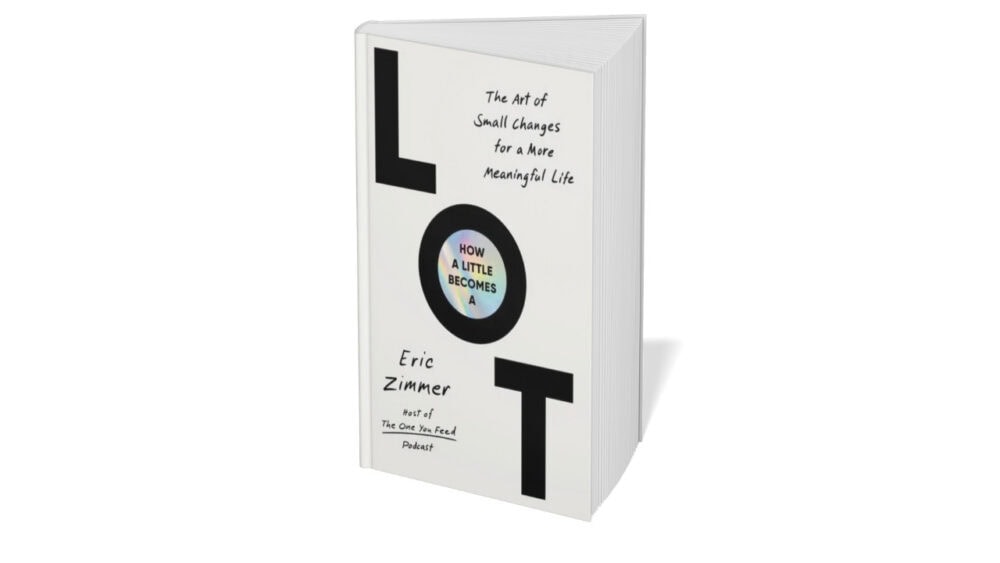
Eric Zimmer 00:33:58 And I think that’s the patience piece. It’s like, oh, someone told me that if I ground myself in my senses, it will help me regulate my nervous system. So I ground myself in my senses once, and it doesn’t really do anything because it’s one time. I mean, obviously my book is sort of pointing in that direction, little by little. It’s, it’s but it’s the, the belief and the patience to say, okay, I’m going to trust this process long enough to actually work.
Nikki Eisenhauer 00:34:27 I think that’s the act of faith in yourself that it’s possible and that if it’s possible for someone else to be able to see that as it’s possible for me to, because I’m just a human and they’re just a human, too. There’s good news. Like to the book that you’re putting on. I can’t wait to read it. There’s good news, too. We can cultivate such things. It’s why, in my work, I talk about emotional strength training. It makes perfect sense to people that you would physically train.
Nikki Eisenhauer 00:34:54 You know, you lift weights, you get stronger, you get bigger muscles. But emotionally, I see so many people intellectualizing. They’re like, I read this book, Nicky, why am I not better? I listen to your show. I process it through my ears. Why am I not better? Imagine if I was trying to get bigger muscles and I told you. Yeah, I read this book about getting bigger muscles. And look at my muscles. Can you believe they’re the same size? Yeah, so we understand it about the physical. We don’t understand it so much about the emotional. I also think we are all brainwashed at least 20, 25 years into this internet, into instantaneous quick fixes. We wait for almost nothing. Now that’s bad. That means we’re not getting natural practice with waiting. Not you don’t even wait when you’re in line anymore, because you pick your phone up and you scroll in your phone, which is distraction. Distraction. We’re practicing distraction constantly. That’s why everyone can walk into a psychiatrist office today, get evaluated for A.D.D. positively.
Nikki Eisenhauer 00:36:00 You want A.D.D. meds, you can go get them. Easy peasy, easy peasy. We have a device in our pockets that creates constant distraction, and then we practice it. Oh, I’m in a line. So if you want to practice being able to catch yourself when you start to get triggered. Don’t wait till the moment you’re triggered. I want people to practice easy. You don’t go to the gym and lift 100 pounds. First day you lift 1 pound weights, 5 pound weights. So what are those weights in this experience? Next time you’re at the DMV, next time you’re at the grocery during a holiday and the lines are crazy. Give yourself a challenge. Stand there. Breathe. Leave that phone in your pocket. Cultivate an openness about waiting in line. And that’s going to stretch you. It actually stretches who you are. You create that spaciousness of it’s okay for me to not distract myself. That’s presence people. We’re losing presence. And if you can’t be present in a calm on triggering moment, the chance that you’re going to be present during a triggering moment. Not much of a shot.
Eric Zimmer 00:37:10 I had a meditation teacher that used to say practice now for the times that you can’t. And I just always thought that was really wise. Like, you know, I’m practicing now for I mean, not to be overdramatic, but you and I both have friends that have cancer. I’m practicing now for the cancer diagnosis. Right. Because that’s going to be a little bit late to suddenly hope that I’ve got the skills right. I’m I’m trying to do that now. So let’s talk about what that 1pound, 5 pound emotional training looks like. So you mentioned I could stand in line. I could practice being presence. What are some other emotional strength training exercises that I could start or listeners could start doing.
Nikki Eisenhauer 00:37:51 Oh yeah, I can list some out. So in general, you want to understand putting your phone down and just being wherever you are, stop looking down and leaving the world to go into that phone. Okay? That’s going to make you more present. It’s going to make you more grounded.
Nikki Eisenhauer 00:38:08 It’s when I do that, what I’m actually doing psychologically is I’m showing my inner child, this is okay. We can wait and breathe, and that creates some spaciousness. So use your life. When I work with somebody one on one, I don’t give a lot of specific homework assignments in terms of extra things to do. We’re all busy enough. I want you to use your actual life. So let yourself look at life through. Where can I practice patience? Where can I practice letting go? Okay, where can I practice giving myself and other people tolerance and grace, especially for the things I really don’t like? What is that process? So you have to get curious. That’s an emotional strength training I did to get curious because if you stop, go. Wait. Why is my heart starting to beat faster? You just practice patience. Curiosity over judgment every single time. What’s wrong with me that I’m feeling? This is. There’s nothing useful about that. You’re actually adding shame that you have to then sort out as you live through life.
Nikki Eisenhauer 00:39:21 Get curious. Curiosity is very neutral as opposed to shameful. So we want to practice neutrality. Those of you who are big into political activism, here’s my challenge and you’re not going to like hearing it for me. Is that really good for you right now? Is there any other way for you to help in a way that doesn’t activate your nervous system? Another way you can do very practical exercise is go outside and sit and blow some bubbles for a few minutes and just notice where your thoughts want to go. And if they go to problem, doom, awfulness, fear, historical ways you’ve been wronged, that person that’s getting you realize what you’re practicing, realize what you’re practicing, and then make the conscious choice to stop feeding that wolf and feed presents. I’m allowed to sit without entertaining the doom scroll and blow bubbles, because there’s no real reason to blow bubbles except I’m alive and they’re delightful. It’s a way to practice an emotional strength train that you’re allowed to have moments of joy. You know, we live in a problem focused society that wants you to believe that the world is constantly on fire.
Nikki Eisenhauer 00:40:45 We have old hardware in our brains and our bodies. Think about how weird video is for our old, ancient brains and bodies that we can see. Everything that’s horrible flashed before our eyes. We’re not meant for that. We’re not built for that. So practice letting your world be more. The little world around you. We’re really meant for you and I. To walk next to each other. And if you trip and fall and drop what you’re holding. But I can give you a hand, an actual hand, and help you up and then help you pick everything up. That’s what feels right and good to your soul. To my soul. We’re not built to watch someone shot on video, to watch a starving kid on video and not do something about it that is creating an angst and anxiety, a stress, a focus on a problem that you can’t do much about. If you want to go give ten bucks to feeding kids, you can go do that, and then you’re exercising what you can actually do as opposed to just witnessing powerlessness everywhere.
Nikki Eisenhauer 00:41:57 So I think there’s a lot pushing against us right now. I think for you and I being the age that we are more of our history in terms of what we need to work on as individuals was more our personal lives. And I think today we have a lot of stressors that are put on the population. I think we have a lot of messages that we are supposed to be in perpetual upset. Patience is not valued even in our progress. The truth is, as a people, we are more progressive than we’ve ever been. People have more rights and more freedoms than ever before in human history, and we’re not allowed to say that. We’re not allowed to feel that, or we’re accused of all kinds of nasty, negative things. So we’re we’re having the world really try to make us hypervigilant constantly. So not only do we have to heal at the level and strength, train whatever our personal childhoods put us through and then what we put ourselves through in our youth, we’re also pushing against, I think, everything that I’ve ever used for the last 20 years to help people find peace, I think, is being used against them in terms of algorithms, news feeds, politics, and I think we have to get into some radical acceptance of these forces not being healthy for us, not individually, not collectively.
Nikki Eisenhauer 00:43:16 And we have to really reject as a radical act of rebellion this invitation to be constantly spun up. And if you were healing from a difficult childhood, my God, I double and triple down on everything I just said.
Eric Zimmer 00:43:30 Yeah, I struggle a lot with everything you just said because on one hand, I absolutely agree with it and I see it like we are not equipped to handle all of the awfulness that is amplified to us, right? We just simply aren’t. I love that idea of like, if someone’s walking next to me and they fall down, I have a natural inclination to pick them up, and so being able to then pick them up is a good is a good thing, and then not being able to do it. And so I’m always thinking about how do I make sure that the work I’m doing on myself doesn’t just keep perpetually being inward looking when I feel like part of the answer to, at least for me, part of the answer to my emotional mental challenges has been to turn energy out, to help others. And so I’m in this moment of wrestling with like, I think the world has always and will always have, for all intents and purposes, an infinite amount of suffering compared to what we can do.
Nikki Eisenhauer 00:44:40 I agree, I think it’s awesome.
Eric Zimmer 00:44:41 I don’t think that ever goes as light.
Nikki Eisenhauer 00:44:43 Yes, absolutely.
Eric Zimmer 00:44:44 And so if it’s essentially infinite meaning, I can’t process it all, I can’t I can’t do it all. What is my moral. And I use that word not in an external way, but I mean my conscience, my heart. What is it calling me to do? And you know, for me, I’m always I’m just really trying to balance that, like selfishness versus versus outside. And it’s not a binary. Right. It’s not binary. Because to your point, I have to have some degree of self-care and self-love and healing for me to be at all effective in doing anything. So I just I just feel like I think a lot of people feel like pulled by the moment and, and what do we do? And for me, I generally this is just what I do right now.
Eric Zimmer 00:45:31 And I don’t know, again, I wrestle with it. I don’t I don’t feel set or certain. I feel like I have a lane. My lane is that like I help people who are suffering emotionally and mentally to suffer less. Like I feel like that’s my lane and I feel like I do good work in that lane and I can do good work in that lane. And that’s where I sort of choose to focus, versus a lot of other lanes where the equal amount of help is needed that don’t play to my strengths or my my abilities. But I sometimes wonder, am I just justifying a, looking away from something that needs looked at.
Nikki Eisenhauer 00:46:12 So if you were asking me those privately, I’d tell you let yourself have some peace. I think that’s the message of the day is that whatever your lane is, it’s not enough. So I’ve helped people all these years heal from narcissistic abuse and what I see in the culture. And again, some of you are not going to like this, and I’m not saying it to piss you off, I promise you.
Nikki Eisenhauer 00:46:36 I’m saying it from a place of trying to help. Okay, so give me some grace if I hit your buttons. There’s something about this activism push that it feels very narcissistic to me, because it seems to come with the message of nothing’s ever good enough. And that is a very classic narcissistic message. If you’ve ever been in relationship with someone with those traits, kind of no matter what you do, I should have done other and better and more. And so when you’re in recovery and you’re trying to be enough and then we have this culture, like I had somebody come at me very aggressively about why I wasn’t doing more, and I was like, I don’t have any more bandwidth. I help people through this microphone. I have helped traumatized people for decades. I don’t have more to give. Right now, I’m at my limit of what I can give. And why is that not enough? So I think we have to very much understand that it is enough. We are all beholden to umpteen billion different details in our personal life.
Nikki Eisenhauer 00:47:39 You know, we have to find enough. And I think you’re talking about what I call the dance, that is going to be the dance all the days of our lives. And I think we have to radically accept that dance and that I call perfectionism the sneaky bastard. There is a sneaky bastard of perfectionism that doesn’t show up and tell you directly that it’s perfectionism in disguise. But we are being tasked to basically perfectly advocate. We can’t. We have to find good enough. We have to evaluate day to day, season to season, sometimes hour to hour. How much can I give outwardly? How much do I need to pull back? And I think that’s the dance I agree. And it’s always going to be. And there are always going to be people who look at us and go, well, I think you have more dancing in you and I think you should dance over here. That’s why we have to get so strong in our resolve to not be people pleasers. We’re always going to like pleasing people.
Nikki Eisenhauer 00:48:38 I love pleasing people. It’s not about making pleasing people wrong or bad. It’s about I can’t do that to my detriment. I cannot do that to my detriment. And this world doesn’t seem to have a limit to what it will ask of you. So we have to be aware that I am a human. I’m not a robot. I’m not a machine. I cannot give a part of my 24 hours to everything that my eyeballs or my ears catch. That if you ask me, do you care about this? Yeah, I care about everyone having goodness in their lives and safety and security and being well-fed. But I cannot take those things on. And so I think those of us who are doing this work, we have to see each other. We have to encourage each other. We have to look at each other and give more messages of, hey, you’re in your lane and that’s enough. Someone else will come visit, your lane will grow from what you’re doing, and then they’re going to hop lanes and help that lane.
Nikki Eisenhauer 00:49:38 In that way you are helping all those lanes, Eric, and there has to be a semblance of an enoughness, or we are operating from a constant sense of lack and then it starts to affect our worth. Then it starts to make us spin, then it starts to exhaust us and it’s just a crappy slippery slope. What do you think?
Eric Zimmer 00:49:57 I do think it is a crappy, slippery slope, but I feel like the dance that you’re describing is an important dance, and it is the dance of continuing to say, am I the person I want to be? Right. In all aspects, in all areas of my life. Not from a place of perfectionism, but from a place of like, I want my life to matter. I want it to reflect what’s deeply true and valuable to me. And I agree with you that that is a dance that I think happens. I think good people are the ones who are consistently sort of saying like, all right, let me just check in. You know, am I doing what’s important? Am I spending my time in the places that matter? Because like you said, it changes day to day, season to season, month to month.
Eric Zimmer 00:50:39 What I do believe really strongly though, and I agree with you 100% on and I see this happening a lot, which is people who are hooked into a cycle of outrage.
Nikki Eisenhauer 00:50:51 Yeah. Drama addiction. I mean, you’re a recovering addict. Its drama addiction on steroids out there.
Eric Zimmer 00:50:57 Yeah. And that is not translating into any sort of positive action. It’s translating into exhaustion, burnout, hopelessness. And and in that way is when to me that’s like, okay, that’s not helpful to you or anyone else. And so I think finding that balance, right, finding that balance of like, okay, how do I calibrate this so that I’m still effective? I mean, one of my favorite ideas is the Serenity prayer. Right. You accept what you can’t, change what you can. Now knowing the wisdom, the difference between those two is where the you know, that’s the million dollar question. But Stephen Covey said so eloquently in The Seven Habits of Highly Effective People, he drew two circles. You might know this, but you know the big circle is your circle of concern.
Eric Zimmer 00:51:47 It’s everything you care about. And there’s a little circle inside of it. And I’ve told this on the podcast 50 times because I think it’s so critical that smaller one is your circle of influence. We all know that. We get that. But what he said that was so important was the more time you spend outside your circle of influence, in your circle of concern, that circle of influence shrinks. And the more time you spend in the circle of influence, the more it grows. And I think for wherever you fall on how much of your life you want to dedicate to what thing, your influence is what matters. And we all need to be doing what we can to grow that influence, because that’s how the world gets better. And I just see that’s not what a lot of people are doing there in their circle of concern. And of course, I mean, it’s there’s so much heartbreak, but it’s not increasing. It’s shrinking their circle of influence.
Nikki Eisenhauer 00:52:42 Yeah, I think we really are like, I know this is a buzzword, but I think we really are in echo chambers.
Nikki Eisenhauer 00:52:48 And I think people are they do get into little circles of comfort. You asked the question earlier, like is processing useful? Like, is this useful? One of the questions I’ve been asking, and I think if people are really willing to grow, they’ll be curious about this. I think if you get offended when I ask this, it’s probably more true than not. Are you performing for anyone? Are you performing for anyone? I had someone I was working with on Codependence many years ago. It finally clicked together for her and she drew me a picture and sent it. She was an artist and she. She drew her superhero cape because I used to say, up you get in your superhero cape on, you’re about to fly around and save everybody. Like, you want to evaluate this, so you want to just go fly. And she finally drew me a picture of hanging up her superhero cape on a hook and saying, I get it, Nikki. I don’t have to put on my superhero cape anymore.
Nikki Eisenhauer 00:53:50 So I think modern politics, modern opera has really encouraged people to do this, like performative, like fly around and you’re the most righteous, righteous and the best advocacy person and anyone else who’s not doing as much as you. Shame on them. That doesn’t inspire anybody to listen and to really be with each other to expand. You know, change is a slow process. It doesn’t happen because we we scream at people or because we’re we’re saying the most right thing, the loudest. It’s really nuanced. And it’s like it’s like nuances being lost. I think from advocacy. Here’s a thought. I have a lot and I never hear any modern person say this, but I hear my old German grandmother say this to me. And as a kid, I didn’t get it because I was the eldest. She put a lot of pressure on me to always be doing the right thing, and so I’d have a younger sibling or a cousin. Like hit me the way kids used to do. And if I had him back, she’d say, no, Nikki, two wrongs don’t make a right.
Nikki Eisenhauer 00:54:57 And I remember as a kid trying to make that make sense. And it couldn’t she wouldn’t explain it to me. More than that, you know, of you’re the eldest. Like she wouldn’t tell me. You’re the eldest, and they’re hitting you to try to get you upset, to try to bring you down at their level and hit back. That’s not who you want to be like. I wish she could have explained it that way to me, because for years I just didn’t understand it. I thought, no, she hits me and I hit her back and that’s right. Like, that’s right. And I couldn’t get it until I was much older. And when I look around today, that’s what I see. And I think, oh, they weren’t raised with a grandmother that taught them two wrongs don’t make a right. And I want to react to something in that work that I’ve done to slow that down so I can actually think. When I feel my system start to get hijacked, I sit back and I go, All right. I could definitely handle this the wrong way. I mean, that’s easy and cheap, right? We can all handle things the wrong way. That’s weirdly available, isn’t it?
Eric Zimmer 00:55:56 And our ways of making things worse. So we are super good at it.
Nikki Eisenhauer 00:56:00 Oh, my God, are we good at that? As human beings, like, animals aren’t good at making things worse the way we are, right? Yeah. Our consciousness and our ability to think. And yet we can also make things so much worse. So I often sit back and I think this is what maturity and getting older helps us cultivate. If we use our time on this planet to cultivate it, that I can sit back and really sit with myself and go, I don’t want to respond in this wrong, low vibe, negative way, I could and I could justify it right. But I know better. And it’s the Maya Angelou quote when we know better, we do better. And so I handle things with more breathing, More saying, I don’t know.
Nikki Eisenhauer 00:56:48 I’m gonna have to get back to you. Or I can see you’re very upset, and I just don’t want to give this conversation that much energy. Maybe we can put a pin in it and come back to it, you know? And maybe the other person gives me the finger and never comes back around to have that conversation with me. I can’t control that. So I release myself, you know, but I have a strong moral compass in I want to keep evolving. And once I realize just meeting that energy with a tit for tat energy, I can be just as nasty as you and think we’re going to someplace positive. That’s child’s play. And I want to hold myself to a more mature standard. And I do believe, as corny as it sounds like, really imagine if all of us did that, if all of us held ourselves to a higher standard. I think a lot like, you know, 12 steps. You know, my beef with 12 steps is everybody needs 12 steps, not just when you hit rock bottom.
Nikki Eisenhauer 00:57:46 And then you need 12 steps. 12 steps are how to live as a person. Because I didn’t have like a classical addiction. Even in my my early counseling years, I didn’t think like I was allowed to pull from the wisdom of the 12 steps. The 12 steps are just how to live, y’all. And one of those rules and principles is about not taking other people’s agenda. And look out there at the world today, the culture. In some ways, I would make the argument that the the culture is what is right is I will take everybody else’s agenda, and then we wonder why that backfires, because all that is, is ego screaming at another ego. We have to be able to rise above that. And if we look out at the world, this internet, these algorithms, a lot of people are not going to rise above that in this life. So talk about a choice. Are you going to rise above that base response where you just want to mouth off and pop off because you think you have righteousness in your pocket, and you think that’s going to inspire somebody to vote your way? Come on.
Nikki Eisenhauer 00:58:47 Come on. We have to be wise, or we have to integrate the wisdom we’re picking up. If we’re not integrating the little wisdom nuggets that we pick up, what are we doing? What we’re just reading books to tell people. I read that book. Yeah, I know that wisdom point. If you’re not living from it, what is the point? I think it’s a performance. If you’re not living from it, you’re performing. That’s not honest. It’s not authentic. It’s not true. So let’s rise above. Let’s rise above. And the truth is, I probably piss more people off. The older I get less because I’m trying to. My younger self would maybe try to, but just by being calm and speaking my simple truth for me, and when people are dysregulated, they often can’t handle that. Now, some who are ready to heal understand what I’m offering and we’ll come back and go, wow, I couldn’t do that. I couldn’t stay calm like you could. How did you do that? And then we learn and grow together.
Nikki Eisenhauer 00:59:43 So there, there is so much when you dig into your deeper self and who you are, how you’ve been programmed. And then when you grab that power, you have so much power to reprogram yourself. So surround yourself with people that you can really learn from and evolve from. And that’s going to be people that frankly challenge you. I think that’s part of what’s happening with culture now, too. You know, ten years ago, 20 years ago, when I challenged somebody and it was just a hard moment. They wouldn’t quit. They wouldn’t run. We have had such a gentle parenting culture of everything is supposed to be soft and that’s not real. It’s not real. And I think it’s really encouraged people to run, to absolutely run in the face of conflict, as opposed to learn how to do mature conflict. And we can’t do that alone. We have to do that with each other. So when you find somebody that will do that, don’t just let your ego get all bent out of shape and run from the opportunity to learn and to grow and to really rise above.
Nikki Eisenhauer 01:00:45 I think that’s what this moment in time is asking for. Those of us that have sobered up, that try to live our morals and our principles for real, like for real, and that’s hard to do. That’s not easy. It’s hard. It takes diligence. It takes self-forgiveness. When you screw up, it takes coming back to center again and again takes dealing with things in the light of day. I will be working on all the stuff, all the days of my life. It’s like the gym, you know, you don’t just learn it and then go, all right, enough therapy for me. Got it. It’s like life is going to challenge us. And it is about suffering. Like you mentioned earlier, to be alive is a certain amount of suffering, and we can work with that. And we can get stronger moment to moment to moment to moment to moment.
Eric Zimmer 01:01:30 Before we wrap up, I want you to think about this. Have you ever ended the day feeling like your choices didn’t quite match the person you wanted to be? Maybe it was autopilot mode or self-doubt that made it harder to stick to your goals. And that’s exactly why I created The Six Saboteurs of Self-control. It’s a free guide to help you recognize the hidden patterns that hold you back and give you simple, effective strategies to break through them. If you’re ready to take back control and start making lasting changes. Download your copy now at oneyoufeed.net/ebook. Let’s make those shifts happen starting today.oneyoufeed.net/ebook,
I think that’s a beautiful place to wrap up. We can get stronger and stronger moment by moment. Nikki, thank you so much for coming on. You and I are going to continue because one of the things I really wanted to talk about that we did not get to is a really emotional episode you did recently about a friend of yours who has cancer and all the emotions of powerlessness and grief that you were wrestling with and really, you know, displaying and I want to talk about that. listeners, we’re going to do that in the post-show conversation. And you can get access to that other post-show conversations, ad free episodes, and you can support the show, which is very, very important by going to oneyoufeed.net/join.
Eric Zimmer 01:02:57 Nikki, thank you so much. It’s such a pleasure again.
Nikki Eisenhauer 01:03:00 You’re welcome. Thanks for having me on to chat more.
Eric Zimmer 01:03:03 Thank you so much for listening to the show. If you found this conversation helpful, inspiring, or thought provoking, I’d love for you to share it with a friend. Share it from one person to another is the lifeblood of what we do. We don’t have a big budget, and I’m certainly not a celebrity, but we have something even better. And that’s you just hit the share button on your podcast app, or send a quick text with the episode link to someone who might enjoy it. Your support means the world, and together we can spread wisdom one episode at a time. Thank you for being part of the One You Feed community.
Leave a Reply