

In this episode, Rohan Gunatillake discusses how to unlock the power of mindfulness and transform your life one story at a time. He explores how stories can shift perspectives, the challenges and opportunities in mindfulness apps, and shares ways to integrate meditation into daily life. He also shares insights on making mindfulness accessible, playful, and adaptable, emphasizing community, creativity, and the importance of small, consistent practices for personal growth. The conversation highlights the evolving landscape of modern mindfulness and the value of finding meaning through both story and meditation.
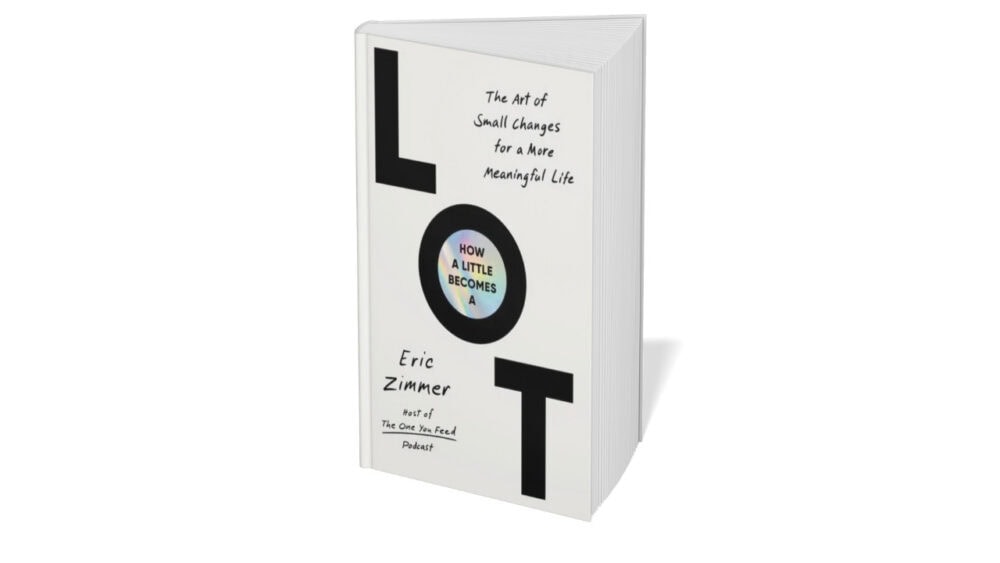
Exciting News!!! Coming in March, 2026, my new book, How a Little Becomes a Lot: The Art of Small Changes for a More Meaningful Life is now available for pre-orders!
Key Takeaways:
- Mindfulness and its role in personal growth.
- The transformative power of storytelling in meditation.
- The mechanics of storytelling as a tool for insight and perspective shifts.
- The challenges and opportunities within the mindfulness app industry.
- The concept of mobile mindfulness and integrating meditation into daily life.
- The importance of community in sustaining mindfulness practice.
- The “time problem” and accessibility of mindfulness for busy individuals.
- The relationship between mindfulness and technology in modern life.
- The significance of playful and creative approaches to mindfulness practice.
- Understanding the core techniques of mindfulness to foster flexibility and creativity in practice.
Rohan Gunatillake is the host of Meditative Story – an original, award-winning podcast that combines immersive storytelling, breathtaking music, and mindfulness prompts to help listeners strengthen their inner life. Meditative Story has achieved critical acclaim, earning numerous Webby, Ambie, and Signal award recognitions – and with over 25 million downloads, the show is deeply beloved by a loyal community of listeners. Rohan is also the founder of the best-selling app, Buddhify, and author of Modern Mindfulness: How to Be More Relaxed, Focused, and Kind While Living in a Fast, Digital, Always-On World.
Connect with Rohan Gunatillake Website | Twitter | Buddhify App
If you enjoyed this conversation with Rohan Gunatillake, check out these other episodes:
Inner Freedom Through Mindfulness with Jack Kornfield
Effortless Mindfulness with Loch Kelly
By purchasing products and/or services from our sponsors, you are helping to support The One You Feed, and we greatly appreciate it. Thank you!
This episode is sponsored by:
Shopify – The commerce platform that helps you build, grow, and manage your business all in one place. Start your $1/month trial at shopify.com/feed.
Pebl – an AI-powered platform that helps companies hire and manage global teams in 185+ countries. Get a free estimate at hipebl.ai

If you enjoy our podcast and find value in our content, please consider supporting the show. By joining our Patreon Community, you’ll receive exclusive content only available on Patreon! Click here to learn more!!
Episode Transcript:
Eric Zimmer 00:00:00 You may have heard me mention my new book a few times, and I can assure you, you will certainly hear it a few more. But now we are offering some pre-order bonuses. One of them is the still Point method, which I believe is the only systematic way to interrupt negative thought patterns often enough for them to change. There’s a lot out there about what you should think and not think, but there’s very little that gives you a small and portable system to actually do it. You get the guide to the method, and three free months of a new app designed to help you implement it. There are other bonuses too. You can learn more and claim them at once. You feel net book.
Rohan Gunatillake 00:00:42 There’s lots of people who are interested in mindfulness, and the main reason they don’t act upon that interest is the perception. They don’t have time.
Chris Forbes 00:00:57 Welcome to the one you feed. Throughout time, great thinkers have recognized the importance of the thoughts. We have quotes like garbage in, garbage out or you are what you think ring true.
Chris Forbes 00:01:09 And yet for many of us, our thoughts don’t strengthen or empower us. We tend toward negativity, self-pity, jealousy, or fear. We see what we don’t have instead of what we do. We think things that hold us back and dampen our spirit. But it’s not just about thinking. Our actions matter. It takes conscious, consistent, and creative effort to make a life worth living. This podcast is about how other people keep themselves moving in the right direction, how they feed their good wolf.
Eric Zimmer 00:01:42 Rohan Gunathilaka makes a show called Meditative Story, and it’s built around something that I’ve always felt. Stories don’t just entertain us. They are the way we change what we see in our conversation. We talk about what actually makes that possible. Why a story can slip past our defenses. Why it can open up perspective in a way advice usually can’t, and how the isn’t always in the big dramatic moment. It’s often in a subtle shift. It’s the moment you see something differently than you did before. I shared with him a small example from my own life of watching the show Mad Men, and then choosing to read a couple of books that analyze it, and just that simple change of just passively watching to reading a little bit about what it means changes the whole experience.
Eric Zimmer 00:02:34 It takes me from consuming to reflecting, from just absorbing to actually engaging with. And that’s what this episode is really about. How we find those perspective shifts more often through mindfulness, through story, through pausing long enough to notice what’s actually happening inside us. I’m Eric Zimmer, and this is the one you feed. Hi, Rowan. Welcome to the show.
Rohan Gunatillake 00:02:59 Hey, Eric. Great to be here. Thanks for having.
Eric Zimmer 00:03:01 Me. Yeah, I’m really excited to have a conversation with you about modern mindfulness, about your podcast, meditative Story and all things that are related to that. But before we start, let’s do what we always do, which is the parable. In the parable, there’s a grandparent who’s talking with their grandchild, and they say, in life there are two roles inside of us that are always at battle. One is a good wolf, which represents things like kindness and bravery and love, and the other is a bad wolf, which represents things like greed and hatred and fear. And the grandchild stops.
Eric Zimmer 00:03:34 Think about it for a second. They look up at their grandparent and they say, well, which one wins? And the grandparent says, the one you feed. So I’d like to start off by asking you what that parable means to you in your life and in the work that you do.
Rohan Gunatillake 00:03:47 So many things. I think my first reaction is how the parable is a parable. What I mean by that is that it’s a story, and I’m really interested in the way that different traditions, in particular sort of contemplative or personal development traditions, use story as part of their method of teaching people and then therefore, how we as individuals use stories for personal growth, I guess. And and the other thing, I’m really interested in the mechanics of that and how when I’m listening to that parable. I guess in my first reaction, I’m imagining being the kid I’m inhabiting, the kid’s character and his position. And I love how, by imagining ourselves as someone else, we’re able to explore themes of our own life through another person’s story.
Rohan Gunatillake 00:04:35 That’s really, really important to me. And so a big part of what I do through my podcast work is dissect stories and look for interesting angles. And so when I hear the parables I’ve heard now many times on your show, I’m really interested in all the characters and all their different points of view. So you’ve got the kid who sort of represents maybe naivety. I’m really interested in what’s happened just before, like, what’s the thing that’s led to that conversation happening? I’m really interested in the grandparent because when I first heard the parable, I was like, oh, you know, the grandparent, you know, represents wisdom. But actually, how did they learn their wisdom? Was it the hard way, you know? Did they make mistakes? When mistakes did they make or did they learn it the easy way? Were they born just as a sort of beatific font of insight? And do they know? Does the grandparent know which wolf is which? I’m interested in that. And then, you know, me being me, I was interested in there’s more.
Rohan Gunatillake 00:05:26 There’s two other characters. There’s the bad wolf and the good wolf, and we can sort of almost anthropomorphize them. In the Bad Wolf is the classic fairy tale villain, right in our culture. And then the Good Wolf is the sort of the opposite of that. And do they know who they are? Do they know how they’re being perceived? Are they siblings or are they? I’m just doing that. So that’s as soon as I hear the Powerball. I go through all these different threads and start exploring. There’s so much creative potential in that Powerball and it’s what’s why? Of course you start the show with it. So those are my first reactions to that.
Eric Zimmer 00:05:59 It’s a fascinating way to look at it and think about it, and it really does reflect the work that you do, which as you’ve said, is this idea of how can other people’s stories be transformative for us. And it seems that you elaborated some of the mechanisms for doing that in what you were just saying. Right. Like, think about it from this character’s perspective.
Eric Zimmer 00:06:23 Think about it from what might have just happened or what’s going to happen next. But what have you learned in dissecting stories, as you’ve said, about how we can hear other people’s stories and have that then lead to change in us? What are some of the mechanisms that make that possible or would allow us to do that better?
Rohan Gunatillake 00:06:44 Maybe it’s just how I explain the mechanic of the show, the podcast, to explain that. Yeah. The context. So in Meditative Story, we have a storyteller for each episode. And my wider team work with that storyteller to midwife a story out of them, because the person themselves, even though they’ve lived a invariably fascinating and rich life. We as individuals don’t necessarily see those moments or recognize the transformations in our own story to date. And so the first part of it is working with someone to typically it’s probably like two, three, four cause exploring like, you know, tell us about the moments that really made a difference to you in your life. And where did that come from? Tell us about your how you grew up and so eking out the story and then our team then think about, okay, sort of reflect back on between the conversations with the storyteller.
Rohan Gunatillake 00:07:32 We reflect back on what the storyline is and what the insights are. And the particular thing we look for is what are the moments when a perspective changed for you within your life. And so we saw something differently. Or you recognize something you thought was true was no longer true or the other way around. And those have been the richest minds to mine, I guess. So we’ve spoken to some, we’ve sort of worked out a story. So for example, a recent just the one that came to mind as a nature filmography. Tom Musto, who was kayaking in just in the Monterey Bay in North California and was basically breached on by a massive humpback whale and survived it. And it was a near-death experience, but also it was a truly transformed experience for Tom because he found out speaking to whale experts after that, you know, looking at the footage was that the whale moved during the incident to basically save him and his friend, and it got him into this whole thing of like, was that, well, how do whales communicate with humans? And then that’s an obvious sort of transformation moment, but it’s the more subtle stuff around.
Rohan Gunatillake 00:08:38 Obviously, it sort of was a near-death experience, but also, how did it make him change the way he saw the world and then pulling on those threads, and then the challenges for us as a team as to how do we present that in such a way that it elevates other people? And there’s a few ways we do that. One is a big focus on present tense, so telling the story as if it’s happening in that moment. And so sort of encourages a sense of immersion that’s important to you right there. The whole idea, you’re sort of right there. And the other aspect is around, I guess, sensory descriptions, like really asking the storyteller, what did it smell like? What was the temperature in that time, and sort of adding all that multi-sensory experience so it becomes as many dimensional as possible. And through that we tell our story. And then I come in in particular after that, once the story has been told to augment it and enhance it. So I do two things.
Rohan Gunatillake 00:09:34 Mainly I introduced the show, but also at the end I write a meditation designed on the theme of the story. And then also during the show. I pop up 2 or 3 times to really land some of the stuff that’s happening in the Tibetan Buddhist tradition. There’s a style of teaching called pointing out instructions, which is where the meditator is having an experience, but they’re not necessarily seeing all aspects of it. And so the job of the teacher is to point out different parts of it where the richer insights lie. And that’s sort of how I see my role is to help enhance that. And then also, I have a lot of fun writing, sort of bespoke closing meditations, either taking a visual image from the episode or the story or a theme, and then just playing with it. That’s how it works. And I think the importance of sort of storytelling, I think this show starts with the story and this goes on from there. So I think we’re sort of in the frame family of show.
Rohan Gunatillake 00:10:27 And I think and also, I think a key thing also is recognizing that we have a composer of our own holiday who just creates this incredible sort of demeans it to call it a sound bed. For me, it’s the star of the show, really. I think there’s some credible sound design in music That is the same thing as that what I’m doing, which is to enhance and blend the learning for people, but using sound in an abstract way to do that, and the way that Ryan thinks about the pacing and the motifs and the energy of the sound is another sort of non-verbal way of landing. So what we’re trying to do, you know, our mission is to create as much potential for moments in, in 20 minutes. Basically. That’s our sort of moments per minute. That’s our key metric. If we had if we had one where we know every listener is different. You don’t know what they’re doing. You don’t know where they are, you don’t know what their life experiences is. So we try to put out a broad net of different types of ways people can resonate.
Rohan Gunatillake 00:11:24 And all it takes is that one thing, and then suddenly it opens something up for them. So that’s the way we do it.
Eric Zimmer 00:11:30 It’s fascinating the way you guys put it all together. I’m curious, are there insights that you’ve taken from how you do that, that our listeners might be able to look in their own lives and find those moments more frequently. Is there any tips of the craft that you think might then turn around and apply to individuals?
Rohan Gunatillake 00:11:53 Well, if you sort of zoom out a bit from what I described, our particular show I showed us is what a lot of narrative stuff does. So if you’re watching your favorite soap opera or watching an engrossing film, if there’s a moment that moves you, you know you might just move on from it and go, oh, that was a really striking thing or or that reminded me of that. And then you just forget about it and like, go on to the next thing. But the trick is almost to reflect on that. Oh, I’ve just had this reaction to the what just happened.
Rohan Gunatillake 00:12:22 And if you’ve got the time when you’re binge watching something, whatever the hot show is at the moment, I don’t know if you’re binge watching The Sopranos or whatever, Schitt’s Creek, you might have that sort of mental bandwidth to do that. But I think for me, that is the key thing because I think the ability to review and reflect on how we’re reacting to story, and particularly coming back to this thing of story where we’re inhabiting another person’s life or other people’s life, but we’re having genuine emotional reactions to it. And so which are very much grounded in our own experience. And your fingerprint of emotional reactions to a particular movie will be radically different to another person’s. And being interested in that and say, oh, that reminded me. Say you see a character. So I’ve watched an amazing film, Chinese-American film called The Farewell, which is about a Chinese-American family. The matriarch of the family is dying, but she doesn’t know. She doesn’t know. And all her family go to visit her in China and effectively fake a wedding to spend time with her as her family occasion.
Rohan Gunatillake 00:13:24 It’s a real wedding. Basically a cousin in the family of getting married just so they can all spend time with this matriarch and this wonderful grandmother and incredibly moving and hilarious film. And then as I was watching, I was like. Remind me of the matriarchs in my family, the my maternal grandmother, who was very sort of strong and certainly not as comic as the character in The Farewell. But then after watching the film, I deliberately spent time thinking about her. I called my mum about her to talk about her. So allowing that extra bit of space around, using your reactions as the clue, you know, that’s the clue. And sometimes those reactions are difficult. You know, if it’s based on trauma or whatever, then approach with caution. But I think the easy way to start could be to stuff that you find that move you positively. Be that in literature, be that in films, TV, visual art, podcasts, gaming, whatever it is, using those then being me and then what we’re doing is helping point out to people, because when you have those reactions, it’s because there’s something in your own life that is related to it.
Rohan Gunatillake 00:14:31 And so going back to another episode, another favorite mine, which is when John more, another nature one, actually, he’s a wildlife photographer and he’s in Rwanda photographing these gorillas. And he misses the shot like the ultimate shot of the silverback. He completely screws up and, you know, stuff goes down and he doesn’t get it. Thinking about those moments when there was an opportunity and you didn’t take it, and sort of reflecting on that, doing that process yourself of like, it could be like two minutes over a cup of coffee. You could do some journaling of it. You know, you can talk to your friend about it and talk to your whatever the mechanic of it is, you know, whatever works for you. But the basic idea of taking at least a breath or two to inquire as to what are the moments of transformation where I missed an opportunity but actually spun it and used that as a way to grow and get better at something else?
Eric Zimmer 00:15:20 Yeah, I mean, I think you’re making a really critical point, which is that we don’t often pause enough to reflect on the experiences that we’re having, and there are lots of different ways to do it.
Eric Zimmer 00:15:34 Like you said, it can be a very quick, short thing. One of the things I like to do is that for watching a TV series, we just finished Mad Men recently, and the layers of depth that are in that, there are so many. So I just have a couple different books about people who are writing about the show, and even then, just doing that simple thing of what happened in the show, and then what someone’s interpretation or deeper analysis is of it brings the whole thing into a little bit clearer focus. But I think it’s a thing that requires us to move from. And you talk about this elsewhere to move from just a consumer to a interactor. Maybe that’s the wrong word. I don’t know what word you would use, but, you know, one of the things that you’ve done a lot of is worked in the modern mindfulness business, building apps, a very popular meditation app called Buddha Fi. So you’ve reflected it a lot about what modern mindfulness looks like, what apps look like, and one of the things that you say as a problem is that the meditation app business is a content business.
Eric Zimmer 00:16:41 It is primarily putting the people who are meditating in the role. If we’re not careful of a content consumer, and I think what you and I are talking about here is, yes, we all consume content. There’s nothing wrong with that. But how does that content become transformative or how does it actually change us?
Rohan Gunatillake 00:17:02 Yes, that is probably my major critique of the modern mindfulness sort of business world or the marketplace. Is that because all these companies, all these startups, are hugely incentivized for it to be a content business because the main mechanic of modern App Store economics is the monthly subscription. So your monthly recurring revenue is the thing that your investors will be asking about. And so you want to keep people hooked and you keep people consuming. And the reason why we never took any investment, I sort of approached it more like as an artist rather than as an entrepreneur, which meant that I was less incentivized by the commercial aspect of it. But also there’s a philosophical component to it, which is for me, the purpose of a good meditation app is to get you to the point where you no longer need a meditation app.
Rohan Gunatillake 00:17:49 Investors are not interested in that. Right, right. The purpose is becoming obsolete, and that’s why I’ve always been really interested in when we approach it purely as a content business. And people who’ve only ever meditated through listening to headphones by some guy telling you what to do with your attention. I’d rather that exists than not exist. So I’m not saying that’s a bad thing, but what it does is it it it creates a culture where we can only do it by consuming it. We can’t do it ourselves. So there isn’t an independent it’s a dependent relationship. And I’m really passionate about giving people the tools to become independent practitioners and to explore different things and learn how to meditate by themselves. And, you know, I think I’ve had, you know, many people over the years, you know, write to me and say, we love this and that meditation. You did one in particular saying, I’ve fallen asleep to this particular meditation every night for the last five years, and part of me is delighted about that.
Rohan Gunatillake 00:18:49 Part of me also was a bit sad about that, because it means that the person hasn’t really got to the mechanic. And so what I try to do is really emphasize, even in a guided meditation, yes, do the instructions, you know, do this and that, but then also during that guided meditation explaining what is happening. So we’re doing this because this happens when you do that, you know, when you pay attention to the breath in this kind of way, and then this happens and you keep doing that, then something else happens. So it’s really sort of sharing that mechanical aspect. That’s for me, the thing that allows someone to to let go of the training wheels, but constantly we’re basically creating a culture of mindfulness practitioners who are always cycling with training wheels. You’re never going to win the tour de France with that. But then, you know, the flip side of that is the scale of which the modern mindfulness marketplace is and the number of people that it’s touched that would never have gone anywhere near modes before.
Rohan Gunatillake 00:19:43 It’s transformative in itself. So I think I’m a critic of what I think is a fundamentally good thing, but I sort of sit in a weird part of the Venn diagram, which is sort of old school, traditional mindfulness purist with like a sort of fairly traditional training background, but also actively involved in the marketplace in a positive way. And so I think that that gives me sort of the ability to look both ways.
Eric Zimmer 00:20:25 I think there’s a really interesting question embedded in all of that, which is in what ways or at what times or for what people are. The fact that it is training wheels just fine. Right. Your analogy was you’re not going to win the tour de France that way, and most people simply aren’t going to. Right. And I think this is the whole modern mindfulness question critique debate that I think is so interesting is are we stripping something that’s deep and beautiful down and making it modern and small and easy and content, which obviously we are right. The question is, for some people, is that good? If there’s a person who may just by nature not be the sort of person who’s ever really going to develop a deep meditative practice, but does get a lot of benefit out of sitting down and having somebody guide them through a meditation 20 minutes a day and they feel like that’s really helping them.
Eric Zimmer 00:21:22 Is it necessary for everybody that they go on to the next level, or do you see that different people have different needs?
Rohan Gunatillake 00:21:29 It’s a really good question, I think. So I’ll reframe my analogy. So I think, you know, training wheels to tour de force win is quite a there’s quite a lot of individuals. So if you think of a tour de France winner or like a professional cyclist, that’s very professional cyclist. A professional cyclist is an elite athlete who’s, you know, at the sort of super. And there are elite meditators who are plumbing the depths of consciousness to the utmost and getting wild achievements and insights and doing all sorts of cool stuff. And that’s very, very sort of minor in the context. But in the middle, people who want to be able to cycle to work or they want to be able to cycle with their kids down the canal on a Sunday afternoon, let’s call them the regular cyclist, not the guys in Lycra who are bombing it up and down the the Scottish Highlands every weekend.
Rohan Gunatillake 00:22:17 But the key thing is I personally think that there’s room for sort of everyone. But the key thing for me is knowing that those paths exist. So being aware of the breadcrumbs. So for example, a lot of people, the majority actually based on the information I’ve seen people get into mindfulness because of sleep problems. Right. So that’s a sort of classic entry way into trying meditation, if that’s all you want. Right? If all you want is a bit of better sleep, you might just use mindfulness for that. And that works. And then that’s great. You can go tick. I’m feeling better. I’ve got some techniques I can use, some body relaxation, whatever it is, and I don’t need anything else. You can think about the basic mechanics of what is often happening in sleep, and mindfulness is that people are learning two things what they’re learning, the calming aspect. They’re learning to move the baseline of their mind to a quieter space. And so that helps them get to sleep quicker because it’s not so frantic at bedtime.
Rohan Gunatillake 00:23:13 And then the second aspect is the, I guess, the insight or the wisdom aspect where they’re able to learn to let go of any of the or have a more softer relationship with the obsessive thoughts that might be keeping them up. But those two dimensions of calm and insight, which someone might have had of a sort of nice opening introduction to to help their sleep problems. Those go deep, right? Those go super deep. There’s a range of different ways you can take through mindfulness, and you can stop at any point. There’s nothing bad about stopping at any point if that’s what you want to do, but it’s just at least you know that they exist. I think that’s the key thing because again, I’ve met lots of people who’ve come in through the app route and didn’t know that other forms of meditation exist or other styles, or you could do it without headphones, or you could do it walking, or you could do it in the context of relationships, or you can do with children. But then I’ve got good friends who are, you know, meditation teachers, and they think that they often host and lead retreats for young people and residential retreats, and then they see people who go all the way to, you know, the energy and bravery to go to an actual physical retreat, silent retreat for even a weekend, as a lot.
Rohan Gunatillake 00:24:21 There’s a lot of barriers to doing that. And the people who just haven’t tried an app to help them sleep better, so that sort of funnel. If I found that the right phrase. Yeah, maybe my marketing lingo coming in, but that funnel works. It’s just that the app universe has tried to create individual universes around themselves to keep the user trapped within the subscription model. And so that’s the thing is that if the person themselves is able to to explore and things, that’s fine, because I think in the old days pre app stores, pre phones, you know, you pre-digital, you might go into a bookstore, a library and then you’re literally seeing 30 different books or slightly different you know like proper religious stuff, some more secular stuff, therapeutic stuff on the shelf. You see that they will exist because you’re physically going through the spine.
Eric Zimmer 00:25:10 Oh, yeah.
Rohan Gunatillake 00:25:11 Whereas within the App Store. Once you find something that works for you. Initially, then go great! That is that this is my thing now.
Rohan Gunatillake 00:25:19 So.
Eric Zimmer 00:25:20 That’s a really interesting insight.
Rohan Gunatillake 00:25:22 The nature of the algorithms and whatever keep you within fairly sort of niche spaces. So yeah, that’s all you know. That’s the nature of the, the marketplace. Now in the broader sense, I think the thing you pointed to at the beginning of the shallow versus deep. It’s very rarely the shallow people who are specialist in shallow people complaining about it. It’s mainly the people who are specialists in the so-called deeper practices, saying the complaint is, hey, the marketplace is way bigger. Why is headspace got gazillion users and only ten people come to my drop in class? That’s basically where a lot of their energies come from. I’m sorry, I’m being a bit a bit facetious. It’s true. You know, less people will be interested in the in the more hardcore stuff. That’s just the nature of things, you know? Yeah. Whether that’s cooking or meditating or running, you know, I like doing a 10-K maybe every couple of weeks. It never made me run a marathon.
Rohan Gunatillake 00:26:15 I may happily run a half marathon, but I never. I just can’t be bothered. Right? I just know right on my face. Right. And I’ve got other priorities in my life. And so I think that’s just like true for mindfulness and spiritual practice as well.
Eric Zimmer 00:26:27 Something that you talk a lot about, you wrote about in your book, is dealing with the issue of the time problem that you mentioned. Right. Because we all have to make decisions about where we spend our time and how much time we spend on certain things. And you’ve set out to kind of try and solve that, or at least find ways of addressing it. And you’ve got a rule that you talk about in your book, which is rule number one is make mindfulness first and foremost a mobile activity. Share a little bit about what you mean by that.
Rohan Gunatillake 00:27:03 Yeah. So I’ll just sort of rewind a bit and just explain what I mean by the time problem. So there’s lots of people who are interested in mindfulness, and the main reason they don’t act upon that interest is the perception that they don’t have time.
Rohan Gunatillake 00:27:17 So you just need to do it for ten minutes a day, when actually even the idea of finding ten minutes of quiet time in a busy family, sort of chaotic house, or whatever it is your life that can feel too much, especially when the individual’s perception of mindfulness or meditation is culturally. You know, do a Google image search for whatever, and you’ll find maybe it’s changing a little bit now, but certainly when we launched butterfly, the, you know, meditation looked like a person in a rainforest. It looked like a person sitting cross-legged doing some yogic mudras. It looked like someone far away from what my actual life looks like now.
Eric Zimmer 00:27:55 It looks like a very rich white woman sitting in a beautiful room.
Multiple Speakers 00:27:59 But sure, sure.
Rohan Gunatillake 00:28:03 yeah. For who? For whom? Silence and time are not scarce. resources, unlike for majority of the rest of us. And so I don’t have time problem for me. Part of my background outside of mindfulness is in design and designing technology. And in the world of design, you talk about solving problems and so that I don’t have time.
Rohan Gunatillake 00:28:22 Problem is the key one to solve. And the way I approached it was actually through my own experience. So we talked about, you know, meditation, going mobile. So the idea that you don’t have to be in a quiet, calm, sitting down posture to do meditation, you can do it wherever you are, whatever you’re doing. If I have a mantra, it’s like, you can do it wherever you are, what you’re doing, you just need to know how, right? You need to let go of the mental model. That meditation needs to look like something. If you’re open to the idea that someone meditating can be invisible, it’s stealth. It’s a total stealth activity. If you’re up for that, then all you need to know is the technique of how do you meditate whilst walking. How do you meditate whilst you were on the subway? How do you meditate? Whilst you’re scrolling Instagram, you know the solution I sort of designed for the idea of time. Problem is to. You don’t have time.
Rohan Gunatillake 00:29:17 That’s fine. Instead of making dedicated time for meditation, we will layer meditation on top of anything else you’re doing. And then the problem then becomes then remembering to do it. And then the app makes this little convenience of that. And so that’s the heart of it and the heart of that. Like I said, came from my own experience where when I really got into meditation just after leaving college, I also started work in London in a really busy sort of corporate job. And, you know, I was loving it. It was, you know, it was it was fast paced, really exciting. But at the same time, I was doing all these hardcore meditation practices and going on retreats in weird monasteries north of London now and then in those meditation environments. No one was teaching me about how do you meditate with technology? How do you meditate in the context of internet dating or whatever? So that conversation wasn’t happening with these random Thai monks. Right. So then it was incumbent on me. I sort of have a choice there.
Rohan Gunatillake 00:30:15 You either, like, compartmentalize your practice from the rest of your life, which can be a okay solution. But the problem is it’s that it then becomes compulsive. By definition. Right. It’s it doesn’t touch you other stuff, and then it can really kick you in the butt later on. And so the other solution is to work out, okay, how do I practice with the same sort of level of intention in this busy, chaotic life? You know, I was watching on my commute, I was like, okay, I don’t have time to do a half an hour setting practice at home. And I was on the tube, which was a half an hour journey, and I was like, why don’t I just do it now? I am literally sitting down. Yeah, it’s vibrating and it’s noisy and it’s whatever, busy. And but that’s great. Those are the sensory experiences I will use as my object. I won’t use a choir. Object I use a chaotic object and let’s see what that’s like.
Rohan Gunatillake 00:31:08 And this is where I’m going back to. Eric. The idea of understanding the mechanics, understanding the techniques. If, you know, three or 4 or 5 basic techniques like concentration, you know, the idea of choosing something and looking to keep your attention on that object. We want a technique like lovingkindness, a technique like paying attention to the relationship to things. So something’s happening and then watching your mind react to that thing happening. You know, there are sort of 3 or 4 really, really cool. It was only, you know, within my limited world of the classic mindfulness tradition, there were sort of 3 or 4 really core techniques. And then you can apply those to everywhere. But you just have you have to be playful. You have to let go of that idea of what meditation looks like. You know, I remember early on when I was trying to meditate on the tube, I was like trying to find my breath, and I couldn’t. Of course I couldn’t. It was.
Multiple Speakers 00:31:56 Like.
Rohan Gunatillake 00:31:57 But then I was like, well, hang on, why don’t I pay attention to the vibrations of the body. Because there is such a dominant sensation. And suddenly I was like, locked in. I just was using the wrong object. I’m using the right technique with the wrong object. And so one of the things that really inspired me on that journey was in part of London called Southbank, which is just literally on the south bank of the Thames. It’s where during the 80s and 90s is where the skate culture grew up there, big skate park sort of in the shadows of the National Theatre there. Then it was became the hub for London free runners or parkour practitioners and so on my lunch break, I was just walking around. I’d see these amazing people jumping around, flipping themselves off lampposts, doing these incredible acrobatic things is that by the time the first Daniel Craig Bond film, when parkour was really. Parkour has always been cool, but it was especially cool then, and I was just really, really inspired by that.
Rohan Gunatillake 00:32:51 This actually, before I was into meditation, I was really inspired by this idea of using everything around you as your playground. They use architecture as their playground, as their exercise equipment, as their dance space or play space. And this idea of using everything around you as an opportunity to do what you want to do. Reframing the environment around you, seeing it in new ways. And I got into what in those days was called social games or urban games, like using big scale games played in around cities where you sort of created like stories and experiences, where you ran around cities and did wild things, and using the city in an unusual, innovative way. And parkour did it, social game did it. And I thought, meditation can do it as well. And that sort of was my inspiration.
Eric Zimmer 00:33:55 Do you make a distinction between meditation and mindfulness? And if so, what is it because you’ve talked about meditating wherever you are versus being mindful wherever you are. And I’m curious how you think about those terms.
Rohan Gunatillake 00:34:07 I personally use them interchangeably.
Multiple Speakers 00:34:10 Okay.
Rohan Gunatillake 00:34:10 Meditation has more baggage to it. The reason we use mindfulness is because people had baggage with the word meditation, because it had that spiritual aspect to it in the traditional sense. And so mindfulness was effectively used as a way to decouple the spiritual elements. There was a new word for people. Sounds good. It allowed the new way of the modern mindfulness movement to sort of imprint on culture with a new label. So I’m happy to use both. Certainly for the more dynamic style of practice that I talked about, if I’m doing a more traditional seated meditation, it would feel a bit jarring to say I just did 45 minutes of mindfulness. That’s not the language I would use. Right. But then life’s too short to get too caught up in the semantics of things. Yeah, Yeah. I think whatever works for you, I think, is, I’ll definitely leave it in the gift of the of the person to find the term that works for them. But then, you know, now mindfulness has its own type of baggage as well, I guess will have its own.
Rohan Gunatillake 00:35:06 But then that’s the nature of things.
Eric Zimmer 00:35:07 It certainly does have its own baggage at this point. So I just want to clarify that last point a little bit. If somebody were to be walking down the street and while they’re walking down the street, they are focusing on all the sounds that they can hear. You would call that a type of mobile meditation? More or less.
Rohan Gunatillake 00:35:26 Yeah. So I’ll get into a bit of definition. So, you know, everyone has their own version of this. But for me, meditation, I go back to the sort of very classical word. There’s a word in the Pali tradition in Theravada Buddhism, and the word is bhavana and bhavana means cultivation. And I love that. And so the word for meditation isn’t meditation a word of meditation, you know. Meditation as a word is sort of a 19th century British archaeological construct. But going back to this idea of cultivation and what you what are you cultivating? You’re cultivating beautiful qualities of the heart. So if you’re doing some practice whilst you’re walking and you’re maybe growing appreciation or growing body awareness or growing sensory awareness, that is as good a definition of meditation as you know.
Rohan Gunatillake 00:36:07 If you’re intentionally cultivating positive aspects of yourself through the use of your attention, that’s meditation. For me, those three elements is good. You’re doing it on purpose. It’s something to do with your attention, and you’re developing a particularly positive quality. And if those two things exist, then I would declare it as meditation. I will happily, happily challenge anyone who disagrees with me.
Eric Zimmer 00:36:29 It’ll get the Rohan stamp of approval.
Rohan Gunatillake 00:36:33 Because it’s generous as well. I think that’s really important. Yeah, having a generous definition of what it is, because we’ve spent we when I say we, I mean like the last 2000 years of meditation culture, we spent a lot of time excluding people and either on purpose by saying, no, you can’t practice if you’re a woman or whatever. You can’t practice if you’re not Asian or whatever it is. So yeah, all those things have changed over time. The reason you can’t practice. And so the flipping it around and, you know, having a definition which is really generous and inclusive, I think it’s really important.
Rohan Gunatillake 00:37:07 While there being a thing that is hard to attain makes sense.
Eric Zimmer 00:37:11 So in the book, as you’re talking about this development of this mobile mindfulness, you’ve got sort of eight key ideas. And the first we’ve sort of covered, which is include everything. But there’s something you say in that section that I’m really interested in. And you talk about having faith that this mindfulness approach can transform our lives. You say even though faith can often be an unfashionable word, the mobile mindfulness approach does need us to have the firm belief that we can develop these positive qualities in everyday life. Say a little more about that.
Rohan Gunatillake 00:37:44 Yeah, so the reason I think faith is important is that it’s not always possible to see the intrinsic result of a meditation practice, or some part of mindfulness in the moment. And so it’s not like it’s not like eating candy. Where do you eat it? It’s sweet, you know. It’s sweet. And sometimes it feels like nothing’s happening. Sometimes it may be difficult because maybe your body awareness has grown and you’re sensitive to a sensation in the body or some tension that you weren’t aware of because it’s quite subtle.
Rohan Gunatillake 00:38:23 And so at that point, say that’s in that example. Oh, actually mindfulness is really painful. Doing the meditation is really painful. I don’t want to do it anymore. And so having the faith to recognize that there is a trajectory to it and, you know, the benefits, sometimes they do come intrinsically. After a couple of weeks you might be sleeping that a little bit better, and that’s great. But sometimes it either feels neutral or, you know, at worst feels difficult. Trusting the process, I think, as the phrase used a lot nowadays. But the flip side of that, Eric, also is sometimes it can be really valuable, especially when you’re early ish or not necessarily super mature in the practice. And also if you’re doing it by yourself, it’s to just lean into the stuff which is feels more positive. So you don’t need to have faith in something which is just working straight away, right? If you’ve stumbled upon a technique which makes you feel super calm and super connected or whatever it is, just do that.
Rohan Gunatillake 00:39:19 Faith by oneself is quite tricky. Faith in community. And so the broader sense, you know, you know, again, going back to the old school pre-digital days and you’d go to a random drop in meditation class and you sit there and go and at the end at the cup of tea or actually, I don’t just don’t feel like I’m gaining where the other person might go. Actually, I felt exactly the same. Yeah. And now, just six months later, things are really turning the corner. And, you know, that is the importance of community, which, yes. And which community enables a lot of faith. And so that’s why if you’re more of a solo practitioner, then sometimes it can be important just to, yes, have faith, but also lean into the stuff that feels good.
Eric Zimmer 00:40:00 Yeah, I think that’s a really good point about faith being hard in community. If I think about getting sober right, the community was such a huge part of it. Like, you could have told me that, like, well, work the 12 steps and you’ll get sober.
Eric Zimmer 00:40:12 And I could have had some faith in that, but that would have been very hard to maintain if I didn’t see people all around me who were saying, yes, I did it, I did it, I did it. Yeah, it was hard, but I did it. The next thing that you talk about is remembering to remember. And so this is the idea of if we’re going to practice mindfulness meditation, whatever we want to call it in our day to day life as we go through remembering to do it is a real challenge. And so, you know, in the Spiritual Habits program that I teach, we spend a lot of time focusing on triggers in the positive sense, trigger in the sense of reminding me to do something. And you’ve got a story in the book that I absolutely love. And you say, when I was starting out mindfulness, I decided that whenever I saw anyone wearing a hat or something red, I would send them kind thoughts. And that sounds sort of silly, but I know from personal experience exactly how well that works, that eventually that does become habitual and it becomes a constant and consistent trigger as a reminder to practice.
Rohan Gunatillake 00:41:16 Yeah, and I think the word city is a good one. And I think silly is a positive thing in this context, because it becomes playful and it becomes like a game. One of my most sort of probably the most sort of influential teacher. I had a Burmese meditation teacher. He would just say, like, you know, if it’s not fun, then what’s the point? And so he really pointed me towards like playfulness and finding the fun in practice and approaching things like that. And so it comes back to also around how stuff like meditation and mindfulness. It can feel heavy. At worst it can feel like a chore. And so another thing on your to do list and then you can then that leads into more spirals around feeling tight about it. You know you’ll know much more about this through your habits work, but using those devices like wearing red or hat or even, if you’re lucky, wearing a red hat ultimately, right?
Eric Zimmer 00:42:06 They get extra kindness.
Rohan Gunatillake 00:42:09 Extra kindness, a red beret.
Rohan Gunatillake 00:42:10 And so I can still actually see her and I can visualize what she looked like. The first person that happened, and she had a red coat on as well. So it was the ultimate. I couldn’t get any. I had peaked at that point, but creating those little things, just trying them out, you know, like there’s no cost to giving it a go. And if it doesn’t work and but eventually one of them will will stick. There’s some really, really easy ones that red hats, red coats are a little bit arbitrary, something relatively easy unless you have any particular triggers around it. Something like if you see a pregnant woman in the street. Right. And then a simple offer of. May you and your child be well. Right. You know, some people that will be challenging, but for many people, that will be easy or relatively easy. But I’ve done that so often that it just spontaneously happens. And that is just like it’s wild and lovely how like it just becomes as part of what my body does, like digesting food or, you know, just the thing that I do.
Rohan Gunatillake 00:43:06 Yeah. And so just finding those little things and they build, they really, really build up over time to move that baseline and orient yourself towards those qualities that we care about.
Eric Zimmer 00:43:17 Yeah. Little by little, a little becomes a lot. I want to go back to the one about faith. It is useful to have faith that these little moments will add up. Right? Because the moment of wishing kindness to somebody wearing red across the street is relatively small. You might lean into it and derive, you know, some degree of pleasure from it, but it’s often the cumulative effect of these things. And that’s where the faith can be so valuable that really that understanding the concept that little by little, a little becomes a lot. And you talk about that, you say one of the other things is to understand how mindfulness works. And I think this goes back to what we were talking about earlier, which was one of the criticisms of apps is that the apps teach you to do something in a very particular way, in a very particular circumstance.
Eric Zimmer 00:44:05 And we might even say in certain cases they’re not teaching you. They’re just telling you they’re leading you. And to develop this mindfulness in all aspects of your life. The creativity comes from combining different things, but you’ve got to know what the elements are to combine.
Rohan Gunatillake 00:44:22 Exactly. This is another metaphor. You need to know your scales. Yeah. Yep. Before you can then start improvising. That’s when I’m most certainly with Buddhism. That was the most exciting thing to get people, you know, hearing from people who’d sort of got that bit. You know, we didn’t try to hit people over the head there being super didactic. but just introducing each meditation to saying, here’s what we did, and this is why we think it works. So it’s a review, and it’s part of that sort of calling back all the way back to the beginning when we talked about when someone is listening to or watching a story and noticing the moments when they’re resonating and getting interested in and reviewing at that point, it’s taking the time, that little extra bit of reflection, what’s actually happening here.
Rohan Gunatillake 00:45:03 It means that if your practice becomes sustainable at that point, you can get some of that independence. and I think that’s what teachers do. That’s the whole point. Teachers don’t want to see you turning up to the class forever and ever and ever. They don’t want to see you on retreat every minute of the day for the rest of your life. That’s probably not what they want to do. So giving people the tools to then move on and be independent, and also importantly, that then means that that’s how evolution works in the mindfulness tradition. So in the context of people. So I’m part of a generation who have decent meditation training, but also have very active digital lives. And so we are sort of one of the first group of people to sort of understand, like what to explore and eventually, hopefully understand and continue to understand how meditation and technology can live together positively, what the upsides are, what downsides? Because talking before about, you know, the story of meditation and the story of suddenly mindfulness meditation is that exclusionary story of like, oh no, you can’t meditate unless you’re a woman, unless you’re a man, you can’t meditation unless you’re Asian.
Rohan Gunatillake 00:46:03 And now, probably ten years ago, you can’t meditate unless you turn your phones off. You can’t meditate unless you divorce yourself from this part of your life, because that stuff is not mindful, which is basically a cultural result of boomer mindfulness teachers. And so I totally understood why that is. All those barriers to not including things were due to cultural reasons, not to intrinsic mindfulness reasons. You know, there was a line, I think I’ve struggled to argue that practice mindfulness was bulldozing the Amazonian rainforest. There’s not. It’s not like there is a line at which you draw. There are some things which maybe you shouldn’t be doing in the context of mindfulness, but should be interested in the barriers, providing people the tools to learn the mechanics and understand how mindfulness works means that it’s a live tradition. Looking back on the last ten years of work I’ve done, I think just to just help the tradition feel like more culturally relevant and more part of the times, and being part of that sort of inflection point of this particular bit of the mindfulness stories, and who knows where it will go in the future.
Eric Zimmer 00:47:06 You said earlier, being mindful while scrolling Instagram, is that an actual idea that you have? How do we be mindful when we are engaged in apps that tend to not be mindful by nature and try, and almost in a way, make us in a trance so that we stay?
Rohan Gunatillake 00:47:25 Yeah, it’s hard because, you know, there are 10,000 behavioural scientists at Facebook trying to get you stuck on Instagram. So it’s a it’s a it’s a difficult. Right. It’s a difficult challenge. But no absolutely the thing. So I think call out to particular exercises you can do one is based around body awareness. So the good thing about phones at the moment is that they’re physically exist, by which, you know, they probably won’t in the future. So the fact that you’re holding in your hand and you are touching it to move content means that there’s a physical experience to scrolling Instagram, which means that you can scroll Instagram and practice body awareness at the same time. Be that the texture of your phone case in your hand, the feeling of your thumb on the glass, and however small the way you do that, that means that part of your mind and part of your attention and part of your awareness is not stuck in the content vortex.
Rohan Gunatillake 00:48:26 If there’s a little bit of it, which is intentionally to be really sort of like reductive, I’m sure, sort of attention scientists will probably explain why this is not true, but my favorite experience is that when part of my attention is on the physical aspect of using my phone, I’m less likely to wake up like ten minutes later and go, shit, I’ve just gone down a YouTube wormhole. So. So it becomes like a lifeline. So that’s a physical way of doing it, you know? And that’s a super small thing. It’s very minor, but it works. And it’s a very simple, sort of accessible way of doing it. Another way of doing it is just actually around, going back to what we talked about before is like approaching social media, scrolling as a insight practice. And what I mean by that is an insight practice is one which is interested in how our mind moves around experience, not necessarily what’s happening, but how is our mind moving around what’s happening. So if I’m scrolling and I stop at this post, but not the previous post, can I be interested in that? Can I be interested in why? And it might be a simple thing like, oh, that was my football team.
Rohan Gunatillake 00:49:31 And the previous one wasn’t my football team, so I’m not there saying there could be banal like that, but a lot of the times it could be quite interesting as to like, you know, what are the patterns, what can you learn from your mind about this and won’t necessarily be very pretty? Some of it, right. But again, I think I don’t want people to think that. I’m just like saying, oh, you can do this. And so therefore carte blanche to use as much social media as you want. Knock yourself out. It’s all good. It’s not. But there are little things we can do. I do the hard stuff. I use sort of my freedom app, which blocks my social media during eight hours a day so I can just get on with other stuff. I do that, but I also do this other stuff as well though, so that you can change your relationship to the stuff. So there are universes of people against stopping us doing it, wanting us to get sucked into the content.
Rohan Gunatillake 00:50:19 But there are little things we can do and they do work.
Eric Zimmer 00:50:21 Excellent. Well, Rohan, thank you so much for coming on. It’s such a pleasure to have you on. And we’ll have links in the show notes to your podcast Meditative Story. And as I understand it, you’re going to be creating a meditation based on the parable of the two Wolves. Is that correct?
Rohan Gunatillake 00:50:37 That’s right. I think we are playing with this idea of the four perspectives, and we’ll see where that goes.
Eric Zimmer 00:50:42 Yeah, well, I look forward to hearing it. I know our listeners will be interested in hearing it also. So thank you so much, Rohan.
Rohan Gunatillake 00:50:47 Lovely. Thanks, Eric. Appreciate it.
Eric Zimmer 01:01:48 Thank you so much for listening to the show. If you found this conversation helpful, inspiring, or thought provoking, I’d love for you to share it with a friend. Share it from one person to another is the lifeblood of what we do. We don’t have a big budget, and I’m certainly not a celebrity, but we have something even better. And that’s you just hit the share button on your podcast app, or send a quick text with the episode link to someone who might enjoy it. Your support means the world, and together we can spread wisdom one episode at a time. Thank you for being part of the One You Feed community.
Leave a Reply