

In this episode, Shabnam Mogharabi discuss navigating modern challenges and explore practical spirituality and the quest for joy. Shabnam shares insights from positive psychology, the importance of community, and strategies for embedding well-being into workplace culture. The conversation highlights embracing imperfection, reframing adversity, and building habits that foster hope and connection, offering listeners actionable tools for personal and collective growth.
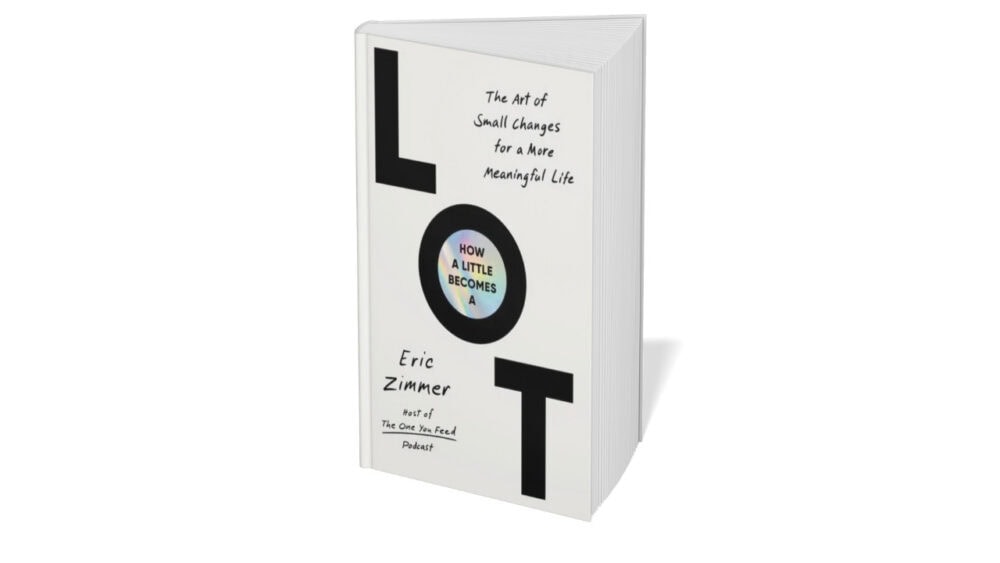
Exciting News!!!Coming in March, 2026, my new book, How a Little Becomes a Lot: The Art of Small Changes for a More Meaningful Life is now available for pre-orders!
Key Takeaways:
- Exploration of spirituality and its practical application in modern life.
- Discussion of resilience and the importance of community in spiritual growth.
- The significance of focusing on a few key social issues, such as education, women’s rights, and immigration.
- The parable of the two wolves and its relevance to parenting and personal development.
- The relationship between spirituality and religion, including the positive aspects of religious traditions.
- The role of creativity as a fundamental expression of spirituality.
- The concept of joy as a resilient state of mind grounded in positive psychology.
- The critique of traditional workplace wellness programs and the need for cultural integration of positive psychology.
- The importance of intentional practices, such as community building and “noticing,” in spiritual development.
- The impact of societal challenges, such as isolation and a crisis of meaning, on individual well-being and community connection.
Shabnam Mogharabi is an entertainment executive, producer, and New York Times bestselling author with 20 years of experience in mission-driven media. She is currently the founder of The Joy Brigade, a boutique film production company and media strategy consultancy. Prior to that, Shabnam was an EVP at film company Participant and also co-founded the uplifting content studio SoulPancake with actor Rainn Wilson, which she ran as CEO for nearly a decade, amassing 1B video views. She and Rainn are still collaborating today on Rainn’s Soul Boom platform, which seeks to unlock a modern spiritual revolution through playful, practical, and profound media. Their new book is Soul Boom Workbook: Spiritual Tools for Modern Living. In her spare time, Shabnam got a certification in positive psychology because she believes joy is transformational.
Connect with Shabnam Mogharabi: Shabnam’s Website | Instagram | Soulboom
If you enjoyed this conversation with Shabnam Mogharabi, check out these other episodes:
A Soul Boom Discussion on Mental Health, Spirituality, and Connection with Rainn Wilson
Spiritual Journeys with Rainn Wilson & Reza Aslan
Rainn Wilson (from 2016)
By purchasing products and/or services from our sponsors, you are helping to support The One You Feed and we greatly appreciate it. Thank you!
This episode is sponsored by:
Uncommon Goods has something for everyone – you’ll find thousands of new gift ideas that you won’t find anywhere else, and you’ll be supporting artists and small, independent businesses. To get 15% off your next gift, go to UNCOMMONGOODS.com/FEED
Persona Nutrition delivers science-backed, personalized vitamin packs that make daily wellness simple and convenient. In just minutes, you get a plan tailored to your health goals. No clutter, no guesswork. Just grab-and-go packs designed by experts. Go to PersonaNutrition.com/FEED today to take the free assessment and get your personalized daily vitamin packs for an exclusive offer — get 40% off your first order.
Grow Therapy – Whatever challenges you’re facing, Grow Therapy is here to help. Sessions average about $21 with insurance, and some pay as little as $0, depending on their plan. (Availability and coverage vary by state and insurance plans. Visit growtherapy.com/feed today!
Delivering the WOW; Check out Richard Fain’s new book, a behind-the-scenes look at how he transformed Royal Caribbean into a world-class company through culture, innovation, and intentional leadership. Available now on Amazon and wherever you get your books.
AGZ – Start taking your sleep seriously with AGZ. Head to drinkag1.com/feed to get a FREE Welcome Kit with the flavor of your choice that includes a 30 day supply of AGZ and a FREE frother.
Smalls – Smalls cat food is protein-packed recipes made with preservative-free ingredients you’d find in your fridge… and it’s delivered right to your door. For a limited time, get 60% off your first order, plus free shipping, when you head to Smalls.com/FEED! No more picking between random brands at the store. Smalls has the right food to satisfy any cat’s cravings.
LinkedIn: Post your job for free at linkedin.com/1youfeed. Terms and conditions apply.

If you enjoy our podcast and find value in our content, please consider supporting the show. By joining our Patreon Community, you’ll receive exclusive content only available on Patreon! Click here to learn more!!
Episode Transcript:
Shabnam Mogharabi 00:00:00 If we are curious and we are constantly exploring the world and asking questions, not always seeking answers, but really thinking about what are the biggest questions we have to grapple with. That’s actually what opens more doors to enlightenment. And so that’s why education is really important to me, because again, there’s spiritual roots for it from my perspective.
Chris Forbes 00:00:26 Welcome to the one you feed. Throughout time, great thinkers have recognized the importance of the thoughts. We have quotes like garbage in, garbage out or you are what you think ring true. And yet for many of us, our thoughts don’t strengthen or empower us. We tend toward negativity, self-pity, jealousy, or fear. We see what we don’t have instead of what we do. We think things that hold us back and dampen our spirit. But it’s not just about thinking our actions matter. It takes conscious, consistent, and creative effort to make a life worth living. This podcast is about how other people keep themselves moving in the right direction, how they feed their good wolf.
Eric Zimmer 00:01:11 We live in a world that isolates us, floods us with bad news, and erodes our sense of meaning. Shabnam Mogharabi is fighting back with joy. She’s the founder of the Joy Brigade, a storyteller and co-author of the Soul Boom Workbook with Rainn Wilson. In today’s episode, we unpack how. Joy isn’t an emotion, it’s a mindset. She shares how her faith, her family, and years of work in positive psychology have shaped her view of resilience, creativity, and what it really means to feed the good wolf. This one is rich, thoughtful, and grounded in real tools. I’m Eric Zimmer and this is the one you feed. Hi, Shannon. Welcome to the show.
Shabnam Mogharabi 00:01:56 Hi, Eric. It’s nice to be here.
Eric Zimmer 00:01:58 I’m excited to have you on. You recently co-wrote a book with Rainn Wilson, who’s been a guest on this show a few times, and it’s called The Soul Boom Workbook Spiritual Tools for Modern Living, and we’re going to get into a lot of that book here shortly.
Eric Zimmer 00:02:13 But we’ll start, like we always do, with the parable. And in the parable, there’s a grandparent who’s talking with their grandchild, and they say, in life there are two roles inside of us that are always at battle. One is a good wolf, which represents things like kindness and bravery and love, and the other is a bad wolf, which represents things like greed and hatred and fear. And the grandchild stops. They think about it for a second. They look up at their grandparent and they say, well, which one wins? And the grandparent says, the one you feed. So I’d like to start off by asking you what that parable means to you in your life and in the work that you do.
Shabnam Mogharabi 00:02:51 I love that parable. I’ve actually quoted that parable before, so it’s a powerful one. And I think in my current chapter of life, I have small children. I have a five year old and a two year old. And the first thing that I think of when you say that parable to me is my kids.
Shabnam Mogharabi 00:03:07 Because, you know, in parenting it’s very easy to be, we got to go put on your shoes, why are we late, you know, etc. but what you praise and what you encourage and what you notice in your kids is what grows. And so when you say the one you feed is the one that grows, I immediately think of parenting and how hard it is to focus on the good and praise the effort and praise the good qualities in your kids, and to really try to help those be the ones that grow.
Eric Zimmer 00:03:38 Yeah, I think that’s a beautiful example. And I think a lot of people, when they hear this parable, think of their kids. I know a lot of listeners over the years have said, like, I’ve taught this to my child, and it becomes a shorthand we can use with each other. And the other thing that strikes me about that is that in order to do that with your kids, you actually have to know what you’re trying to grow, what you’re trying to cultivate.
Eric Zimmer 00:04:02 Right? So there is a there’s a period or a process of understanding that and being conscious of it so that you actually do realize what you’re feeding.
Shabnam Mogharabi 00:04:11 Yes, that’s so true. And I do think that those, even those priorities change over your life. You know, I think sometimes you can. In my 20s, I probably prioritize success and career far more than I do now, where I far more prioritize community and kindness and strength and resilience. Right. So I think that also has made a difference in the chapter I’m in personally in my life and how I focus on certain things with my kids. It’s really interesting. The other thing that it makes me think of is it’s also it’s also kind of rewiring your kids brains in a lot of ways. You know, evolutionarily, we’re so wired to focus on negative and fight or flight or is this a risk. Right. And so I sometimes also think that half of parenting is trying to get my kids to, you know, assume good intentions and start from a place of kindness.
Shabnam Mogharabi 00:05:02 And, you know, don’t don’t assume that everyone’s out to get you. Don’t assume that they meant to be mean, that maybe there was something else going on, right? And so rewiring, even the way that your eyes are trained onto things, teaching your kids how to do that so hard. It’s so hard. But it’s also kind of what I think about when you’re thinking about what you feed.
Eric Zimmer 00:05:22 Yeah. My son is at the other end of the spectrum from your children. He is 27, so we’re at a very different place. But I often wish that I had had him in some ways later in life, because I think I had clearer ideas of what was important to me and what I thought was worth modeling and teaching to them than I did when I was 28 years old.
Shabnam Mogharabi 00:05:44 That’s so true. And I you know, I didn’t get married till I was 39. And so I do feel like being a late in life mom completely. I think I’m a very different mom in my 40s than than I would have been in my 20s.
Shabnam Mogharabi 00:05:55 Very different. Totally agree.
Eric Zimmer 00:05:57 So I want to get in the book in a minute, but I want to hit a couple of other ideas that I’ve heard you, you talk about, and the first one is one that will tie back into the book also. And I saw you do a couple of things. One is you recognize recently you said, I can’t tackle every issue that I care about. I need to focus my energy efforts in time. And so you narrowed your efforts down to education, women’s rights and immigration. And I think all of us are wrestling with this overwhelm of all the suffering that’s in the world now. I think that’s always been there. I think there’s been more suffering in the world than any of us could calculate always. Yeah, but I think we’re getting inundated with it more than ever. And so I love this idea of bringing it down to a few things, and I want to tie that back to a key part of the book, which is that we’re going to do this spiritual work inside of us so that we can then take that beauty and goodness that we’ve hopefully cultivated out into the world.
Eric Zimmer 00:07:01 And I just love you to start there.
Shabnam Mogharabi 00:07:04 Yeah, it’s interesting that conversation or that post came about because I was talking to a friend who was saying, I just my list is so long, my list is so long of the issues that I want to support, the donations that I want to give, the volunteer hours I want to give. And I’m just overwhelmed even looking at the list. And I said, and I remember telling her like, well, then cross the cross things off the list, you know, like cross things off the list until you get down to like the 3 to 5 that are the most important to you, that if you don’t spend time on anything but those 3 to 5, that’s what would matter. In the book, actually, we talk about a famous quote that says, listen to your heart break, what breaks your heart the most and kind of triggers your inner activist most passionately, and that that should be what you’re drawn to. So for me, it happened to be those three topics.
Shabnam Mogharabi 00:07:53 I’m a child of immigrants. You know, I’m a child of refugees. I’m a I’m a woman. I’m the oldest of four sisters. My mom is one of four sisters. So I’ve always kind of cared a lot about women’s rights, particularly given the background that they grew up with and the culture they escaped. And so I think there’s certain things that I just I’m drawn to and trigger me more passionately. And so that was really important for me. And we tried to do that in the book as well. Right. So one of the things that was really important to us in the book is that the book didn’t just stay internal, and it didn’t just stay as a source of self-reflection. Right? Because so many spirituality books and so many spiritual practices today are about let’s go internal, right? Let’s be mindful, let’s meditate, let’s look internally, let’s self-regulate. All of which is super important. But we wanted to take an extra step and say, okay, now that you did the spiritual work, now that you did the inner reflection, how do you then take that and actually, actually, practically, practically apply it in the world, right.
Shabnam Mogharabi 00:08:52 What does it look like to. Have spiritual values inform how I think about immigration? What does it mean to. Have spiritual principles. Inform the actions I take around education. Right. That was a really important kind of overarching framework for us. And it’s also frankly. You know, when I think about the things that it mattered to me, like, I believe that education is the source of all growth, right? If we are curious and we are constantly exploring the world and asking questions, not always seeking answers, but really thinking about what are the biggest questions we have to grapple with. That’s actually what opens more doors to enlightenment. And so that’s why education is really important to me, because again, there’s spiritual roots for it from my perspective. So I think all of this is interconnected. And that was really important for us in the book to not just stay internal.
Eric Zimmer 00:09:37 I think what’s interesting about that is in the book you do try to Reopen the idea of religion to people. So to not only see all the bad about it, but to be able to see if it could work.
Eric Zimmer 00:09:52 So you’re not saying it has to work for you, but if it could and open that up. And I think that’s one of the things that’s happened, is spiritual practices have decoupled from the tradition they came up in. A lot of what gets lost. Is that ethical element, right. Because a religion has practices, it has a community, but it has beliefs. It has beliefs, it has ethics embedded in it, it has morals in it. And so what we’ve done, and I think it’s largely to the good, although people debate this forever, is pull a lot of the practices out of the tradition they came up in. But then they’re unmoored to any of these ethical concerns. And I think what you’re doing is really trying to tie that back together, whether it’s through an organized religion or whether it’s being really clear for yourself about what matters in the world. What do you believe in?
Shabnam Mogharabi 00:10:49 Brain and I are always saying that we, through all the kind of spiritual wisdom out with the religious bathwater, right? So we all said for very good reason.
Shabnam Mogharabi 00:10:57 We all said religion kind of sucks and is bad and is responsible for a lot of bad things and a big swath, especially in America, more than, you know, 35% of people now call themselves spiritual, not religious. Right? I’m real good with spirituality and the idea that there’s something bigger out there, but I’m really not okay with the religious doctrine that comes with religion. And what we try to do is say, let’s say yes, truth. We accept religion has been responsible for a lot of bad things. That being said, let’s train our eyes onto what was good about religion, which is that it did offer a moral framework. It does offer community and belonging a support network for when you know things go badly in your life, you know so many people, someone passes away and the church comes together. There’s potlucks. People are at your door. Right, because that church community shows up for you. So there’s a lot of good things that come with religion. So our our message in the book is not go back to religion.
Shabnam Mogharabi 00:11:51 Our message is train your eyes to think about what’s good about religion and then figure out for yourself what does a moral framework look like for you? What does community look like for you? If you were going to invent a new religion with its own kind of practices and rituals, what would that look like? So to think about the good things of religion and how you to shape that and bring that into your own life? Because we really did say religion bad, and we threw out all of the good things that came with religion along with the bad.
Eric Zimmer 00:12:19 Yeah. And I think there’s plenty of, as you say, good reasons for that. And they are systems that endured for a long period of time because there was some degree of coherency in them. There’s also control, there’s power, there’s all sorts of stuff, but there’s also some degree of coherency. And an example I can give is I am a recovering addict alcoholic, and I was in 12 step programs for a long time, and then I sort of hit a period where that just didn’t feel like the right place for me, but I was worried because I was like, well, if I just walk away from that, like, what all am I losing? What all am I missing? And so I sort of reverse engineered, like, what am I getting? Oh, I’m getting community.
Eric Zimmer 00:13:02 I’m getting a program of transformation. I’m getting an opportunity to be of service. Right? I’m getting all these things. Can I piece those together? Yeah. But it’s harder, honestly, than just going to one place and getting it all right there. Right. So I’m an example of.
Shabnam Mogharabi 00:13:19 You don’t join a bowling league and then like, be.
Speaker 4 00:13:21 Like, check, check, check. I got all of these other things.
Eric Zimmer 00:13:23 Yeah, exactly. And the book is really good at walking through that. And the other thing I love about the book is it’s a workbook. And I think that in today’s day and age, we all have not everyone, but by and large, we have all the information we need. What we don’t know how to do is bridge that sort of knowledge to action or knowledge to embodiment gap. And that’s what this book is really focused on, is first figuring out what’s important to us and then how do we live that?
Shabnam Mogharabi 00:13:51 Yeah, both Raine and I are obsessed with and have done multiple times.
Shabnam Mogharabi 00:13:54 The Artist’s Way by Julia Cameron, which is a, you know, a seminal book for artists and creatives to really explore their creative voice. And so we wanted to create something that was the Artist’s Way for the soul, the Artist’s Way for spirituality. How do you create an experience, a set of activities and exploration of our spiritual lives in a way that gets people engaged with it? Because you’re right, all the information is out there. I can go to ChatGPT right now and say, give me all of the ancient spiritual wisdom about X topic, and it’ll spit out a diatribe for me, and I can tell it to write a 10,000 word paper and it will do it. But what it doesn’t do is bridge that divide. And the thing is, you know, oftentimes I think when we are told, oh, practice kindness. We get these, mantras of, oh, love your neighbor like you love yourself. Well, what does that mean? And how does that actually show up in our lives? Right.
Shabnam Mogharabi 00:14:48 What are the actions we can take or practices we can do or even explore that idea? Does that make us feel a certain way? Does that make us not want to do it? Does that make us say no, wait. You know, I want to prioritize my family versus my neighbors, right? So how do how do these these lessons, these ideas land with you? But then also, what does it actually mean to practice that in the world? And so we didn’t we didn’t want to stay in the theoretical. We really wanted to stay in the practical. This is very much so practical guide to spirituality.
Eric Zimmer 00:15:18 So the artist way is a great example. I love that An Artist’s Way for the soul and in the artist way, there are some core practices that she recommends. The two most famous ones are morning pages and the other are artist dates, which you in a LinkedIn post mentioned you were taking artist dates back up.
Shabnam Mogharabi 00:15:37 I know it had been a while and I was like, I need to do these artist dates a little bit more.
Eric Zimmer 00:15:41 Has it been going.
Shabnam Mogharabi 00:15:42 Hard with a two year old? yes. Of course. Yeah, yeah. I mean, they’re not as long as I would like them to be. It used to be that I could do, like, a two hour artist date and go to a museum or like a paper shop or whatever. And now it’s like, okay, if I get 30 minutes, that’s gonna be great.
Eric Zimmer 00:15:57 Yeah, yeah. So to tie this back, to make this analogy between The Artist’s Way and this workbook, what are a couple of the core things that would make up the Soul Boom workbook equivalent of an artist date or a morning pages?
Shabnam Mogharabi 00:16:13 That’s a really good question. One thing that we come back to over and over again in the book is that ideally, you’re not doing these activities on your own. Over and over again, we say that spiritual work is not meant to be sole singular work where it’s individual and isolated, right? Soul work. Spiritual work is not isolated work. It is communal work and it works better.
Shabnam Mogharabi 00:16:36 Your soul thrives better when it’s in community. So we encourage people to do the book alone, but to also do it with others. To start a spirituality book club or a soul boom work club where they can actually do these ideas with others. So one of the core practices is, you know, community building. Do this work together, explore these ideas together. The second thing that I think is a critical element, or at least what we come back to over and over again in the book, is one of the core ideas that we kind of go through. The book recognizing is the idea of noticing. We talk about it very specifically in the last section of the book. But all throughout the book, we basically ask everyone to have a practice of noticing, noticing their own internal emotions, noticing what things calm them down, noticing what elements of their life they’re grateful for. There’s a practice of noticing what’s going on externally, what’s going on internally. That doesn’t happen, right? We are so externally focused.
Shabnam Mogharabi 00:17:35 We’re bombarded with information and thousands of videos on YouTube and, you know, Netflix shows and TikTok videos. So we’re we’re so distracted. Our attention spans are declining. We’re not good at noticing anymore and we’re not good at paying attention. And so I think attention and noticing is a through line of the book that over and over again, we’re asking the reader to pause and notice. Notice what’s happening in their community. Notice what needs there are in the people around them and the neighborhoods around them. Notice how certain things make them feel. Notice how certain things improve or decrease their mode. Notice what adds you know, gratitude to their life and what does it right. So really being intentional about the attention that we’re paying and the noticing that is happening in our lives. So I would say those two things are consistently throughout the book as core practices.
Eric Zimmer 00:18:46 There is one other also that I liked, which was the you call it a spiritual workout plan, but a structured 30 to 45 minute daily routine divided into three phases.
Eric Zimmer 00:18:58 Can you talk us through that?
Shabnam Mogharabi 00:18:59 Yeah. One of the other practices that we have is called the spiritual workout regime. And essentially we say, well, we we have workout regimes for our bodies, right? Like, we all have our, our our warm up, you know, intense workout cooldown methodology, whether you’re a runner or you’re a weightlifter or, you know, you do crazy high intensity stuff, whatever it is. But we don’t really do that for our souls. And so what we did is we kind of created a framework where we said, okay, what would your warm up period for your soul look like? Would that be? You know, spending five minutes in nature listening to music, would that be saying a prayer? What would warm up your soul in the morning, and then what would the intense kind of work out of your soul look like? Would that be journaling? Would that be talking to someone? Would that be reading religious script? You know, what is the exercise that is the intense soul workout and then the cooldown period, right.
Shabnam Mogharabi 00:19:51 Is the cooldown period. You know, again, texting someone, is it connecting with someone? Is it saying a prayer? Is it music? Is it lights? Is it lighting a candle? What is the way that you cool down kind of that intense soul workout? And to really make that a 30 to 40 minute practice every single day? Right. If we work out our bodies every day, but we don’t work out our souls every day. And so what is the what is the 30 to 40 minute practice that we can get into a habit of doing? That really takes us through that arc of like, I’m going to slowly ease my soul into being awake today. I’m going to really intensely work it out, and then I’m going to cool down so that my soul is regulated. My soul has really gotten its reps in before, before the day starts.
Eric Zimmer 00:20:30 Speaking of practice is a very common spiritual practice. Is meditation from one angle? For another, it’s prayer. And you talk about there’s a contemporary American divide that’s not just political, but there’s one in which there are people who have a prayer practice and they believe in strongly, but they have no meditation practice, no contemplative part of that.
Eric Zimmer 00:20:55 And then you have people who have contemplative practices, meditation, but won’t go near a prayer. Talk to me about that divide and how each side could perhaps see some of the benefit of the other.
Shabnam Mogharabi 00:21:09 Yeah, I see this all the time. We have so many friends who are devout prayers. You know, I believe in God. I feel like I’m speaking to God and I’m I’m communing with the divine. And then they’re like, but meditation, I don’t know that stillness that that feels a little too, you know, Kumbaya for me. I don’t get it. I don’t I don’t understand. And then the other camp, which tends to be kind of younger, more spiritually curious, and not necessarily as religious people often tend to be like, I have such a strong meditation practice. I spend a lot of time in internal presence and focusing on my internal state of calm. But then prayer like, who am I talking? Who am I talking to? Like, who is this thing out there that I’m talking to? And people really have a hard time with the other camp.
Shabnam Mogharabi 00:21:51 If they have a really strong practice in one or the other, it’s like the other camp does not make sense to them. There’s a famous quote that says prayer is talking to God or talking to the universe, and meditation is listening. And you can’t have any conversation, right? You can’t talk to anyone where it’s just one of you talking and the other one listening, or one of you listening, the other. Right? Like a conversation, a true dialogue has moments where both of you are speaking and both of you are listening. And that’s what we’re trying to say in the book. Is that the best balanced practice is where you can speak to the universe, speak to the divine, but you can also listen to it and see what it’s trying to communicate to you. It doesn’t mean that it’s easy. You know, rain has a lot easier time meditating than praying, and I have a lot easier time praying than meditating. And it’s not that one is easier than the other. Sometimes you’re more drawn to one than the other, or one comes more naturally to you than the other.
Shabnam Mogharabi 00:22:48 But I do think the practice of both creates a dialogue.
Eric Zimmer 00:22:51 I think that personally, I’m not a believer in a being that is hearing what I’m saying and responding. And yet I also find that praying is a way of me saying what matters and a way of me setting an intention and a way of me recognizing that all the power that there is isn’t contained in here. There is power out there. I don’t quite know how to frame it. I don’t know what to call it, but just that recognition of that works for me. And again, everybody’s different. I know you like rain or from the Baha’i Faith, so you have a different belief structure than I do. But that’s how I’ve reconciled. Prayer for myself is, you know, the setting of intention and the the recognition that there’s power out there.
Shabnam Mogharabi 00:23:38 We talk about. I think it’s Anne Lamott who has kind of a framework for prayers and says that all prayers fall into three categories, right? There are the help, the thanks, and the wow, right.
Shabnam Mogharabi 00:23:47 These are the three categories of prayers that almost everyone you know gets drawn to it sometime. Whether you believe in a God or you just believe in, there’s energy out there that’s at some point you kind of look to the sky and say, oh my God, I need help with something, or oh my God, I’m so grateful for XYZ or wow, this is amazing. And I’m moved by the beauty of it, that those three impulses to kind of look external is a very human impulse. Whether or not we have language for the thing that we’re expressing it to too, and language is important. I think we do spend some time in the book asking people to like label things, right? Like, okay, if God is not, if God is not like, you know, Santa Claus on a cloud being like you’re naughty or nice, right? Like, then what is it? Right? And how do we put language around this thing and actually reign and I are developing and raising money right now.
Shabnam Mogharabi 00:24:38 Next year we’re we’re hoping to get this off the ground. Fingers crossed it’s moving forward. But we have a documentary that we’re doing that rain will be in and be the face of called The Notorious God. And it’s about God in the world and God in America because, you know, we it’s on our money. It’s in the Pledge of Allegiance, it’s in our schools and our governments. And yet what God are we talking about and what what is the language we’re using around this God in the modern world? Is it is it an AI singularity that we’re all just kind of plugged into the matrix? Is it science and just our brains wanting something bigger, or is there something grander out there? And it’s rain really going on? Kind of a somewhat comedic, but also a spiritual journey to figure out what is the language around this thing that is everywhere. And yet we don’t really know how to talk about it. Language is really important, right? Like you, you are drawn to something out there.
Shabnam Mogharabi 00:25:29 You just don’t know what to call it because God feels weird to you. And so we’re like, that’s okay. Like the idea that we humans are drawn to something bigger is the idea that we want people to think about and put language for themselves around.
Eric Zimmer 00:25:44 Before we dive back into the conversation, let me ask you something. What’s one thing that has been holding you back lately? You know that it’s there. You’ve tried to push past it, but somehow it keeps getting in the way. You’re not alone in this, and I’ve identified six major saboteurs of self-control. Things like autopilot behavior, self-doubt, emotional escapism that quietly derail our best intentions. But here’s the good news you can outsmart them. and I’ve put together a free guide to help you spot these hidden obstacles and give you simple, actionable strategies that you can use to regain control. Download the free guide. Now at one you feet net and take the first step towards getting back on track. The book does a really nice job also of not just giving you a writing prompt and leaving you alone, which is is valuable, but I think when asked like define spirituality, a lot of us are just going to not know what to say.
Eric Zimmer 00:26:48 And the book really has lots of examples of different types from different faiths. You get to choose like, oh, that one’s kind of close. I resonate with that. I don’t resonate with that. I think it makes it easier than just being given a writing prompt and being left alone with it.
Shabnam Mogharabi 00:27:05 It’s funny because I consider myself a writer. I like to write. I studied journalism like this is my background, I like to write, and I like to tell stories. And Rayne likes to write. Write. He’s written multiple books. Rayne likes to write. But when we started putting the book together, well, that the very early days, we realized a lot of the prompts were writing prompts and we had this kind of moment of, oh wait, not everyone likes to write. And people like choices people. People like BuzzFeed listicles, right? Where you can kind of look and say, like, I feel like this more or that more. Some people prefer to draw. Some people prefer to listen to music.
Shabnam Mogharabi 00:27:38 Right? Like, what are the ways that we can engage people’s preferred methods of expression and learning into the book? And so we actually went through and did a whole class where we cut half the writing prompts and tried to turn them into actual activities because of that reason, because sometimes you’re like, sometimes a blank page is daunting and you don’t know where to start, and you just need a little bit of more help or prompting or hand-holding to think about things. So I think we were we were trying to hit like all the nuances of the ways people learn and express. So I’m glad to hear that it worked and it resonated.
Eric Zimmer 00:28:12 It did. It definitely did. There’s a great story in the book that you tell about being in college, I believe, and visiting a mosque and how you reacted to it then and then sort of you reacting to it now. Would you share that story with us?
Shabnam Mogharabi 00:28:33 Sure. you know, I was I was 20, 21 and kind of a self-righteous college students I know best.
Shabnam Mogharabi 00:28:42 and I was part of the interfaith council at my school at USC, and I really enjoyed the Interfaith Council. It was like this great community of people talking about God in a place where most people don’t talk about God, which was nice. And one of the things that we did is we actually went to different houses of worship and visited them. And so, you know, we had gone to a Catholic church, we had gone to a Protestant church, we’d gone to a Buddhist temple, and then we went to a mosque. And when we went to the mosque. I remember we walked in and they separated the men and women. Right. The men were taken to the front, to this really beautiful room with a chandelier and lots of light and beautiful carpets. And the women were taken to this back room that was not as beautifully decorated, and we were told to cover our heads with wrappings that were very strongly perfumed, like smelled. They kind of reminded me of my grandmother’s, like, face cream.
Shabnam Mogharabi 00:29:30 Like it was like a really strong. And so I’m sitting in the back of this mosque and they start doing the prayers, and my brain could not focus on the prayers because all I kept thinking is like, how come we women are relegated back here like we’re in? You know, I joked that we were in the nosebleed section of the mosque and I’m wearing this like, you know, super perfumed wrap. And this feels kind of insulting that we’re here visiting and trying to learn, and I’m being put in the back. And I was the I was the president of the Interfaith Council. And I was like, you know, my righteous like, oh, well, this, this, this is so offensive.
Speaker 5 00:30:03 This is so offensive.
Shabnam Mogharabi 00:30:04 Well, anyways, like in a blink, the prayers ended, right? And I was like, oh well, I didn’t pay. I didn’t really pay attention to the prayers. And we go out into the courtyard, which is really beautiful. It’s got a fountain and stained glass windows and and everyone, everyone around me is like, that was amazing.
Shabnam Mogharabi 00:30:18 That was so beautiful. And I was about to, like, kind of like vent about air. What was that seat. Right. And and then I’m like, oh, wait, they.
Speaker 5 00:30:28 All seem to think that was really beautiful. Did I miss it? Did I miss what happened?
Shabnam Mogharabi 00:30:32 And yeah, I wasn’t paying attention. Right. This goes back to the idea of like noticing and paying attention. The thing my eyes were trained to focus on were were the kind of unhealthy comparative like, oh, I’m being this is insulting, right? So fast forward, actually, a few years ago, I was on another interfaith group and we did another kind of tour of buildings, and we go to this mosque. And the executive director of the interfaith group, you know, belonged to. And I brought my own scarf from my own scarf at that time. So there was not like strong perfumes. And even though, again, the men and women were separated, I really said, you know what? I’m just really just focused on the beauty of the prayers.
Shabnam Mogharabi 00:31:09 Like, this is your joining this community and their prayerful moment. And that was all I focused on was just the sound of the chance. And it was beautiful. And I was I was just it really was a beautiful experience. The reason I told that story is because I think sometimes we get so caught up in the boxes and the, oh, this is what it should be, this is what it shouldn’t be. And I got offended by that, right? Like, we get so caught up in those unimportant things that we miss the beauty that’s right in front of us. So that was kind of why I told the story, but also like to illustrate that our perspectives also changed right when I was 20 and an idiot. Right. Like that was that was my take on the mosque experience. And fast forward 15 years later and I could really, truly appreciate the beauty of it. And I and I also think that wisdom, unfortunately, is wasted on the older, more experienced people. And it’s unfortunate that we skip it in our 20s and it takes time to develop.
Eric Zimmer 00:32:24 I love that story too, because I think it is a very common thing, and I’ve done this to myself multiple times throughout my life where I want a spiritual community. So I find the one and I go to it, and all I really see is the ways it doesn’t align with me. It’s a little bit like, you know, as an addict, the first time I was at meetings, right? All I wanted to do was be like, I’m not like that. I’m not like that. I’m not like. Like, I just wanted to more or less disconnect myself right out the door. And I’ve noticed that in spiritual communities, too. Oh, and that that ability to try and in both focus on what is good and also to learn to have a certain fluency with translating ideas like, okay, they’re doing this thing and they’re saying that what? What does that mean to me? Yeah. Like, how can I find a way that that does mean something to me? How might I change it a little bit so it matters to me, or how might I reinterpret it? And that flexibility, I think if I had known how to do that better when I was younger, I think I would have had more spiritual community throughout my life.
Shabnam Mogharabi 00:33:34 Yeah, yeah, that’s a really good point because I it is it is about fluency. And again, it comes back to language. You know, we we put everything into the boxes that we understand and our brains like to use language around. But it doesn’t mean that that’s how everyone else speaks. And then trying to understand the way that ideas are being communicated from someone else takes a lot of time and effort. It’s really hard. It’s really hard. And so I did tell that story because I was like, I recognized that I was an idiot at 20 and wasn’t able to, like, speak that language in the way that I can now.
Eric Zimmer 00:34:08 Yeah, and at the same time, the fact that women are separated from men might be something for you that’s like, that doesn’t work for me. So this is not like you just have to accept every the way every tradition does things. I think we all have to find our own balance.
Shabnam Mogharabi 00:34:22 But I don’t have to train my eyes to it. I don’t have to train my eyes to only focus on that one thing that doesn’t resonate with me, right?
Eric Zimmer 00:34:30 And again, people are different.
Eric Zimmer 00:34:31 My bent is I need to work harder on finding what I do agree with. That’s just the way I am. I will talk myself out of nearly any group. So I loved that story because I think it shows the very real thing that happens to all of us.
Shabnam Mogharabi 00:34:47 Thank you. Thanks.
Eric Zimmer 00:34:48 There’s a section in the book that’s really about creativity. And you guys say that we believe creativity is a primal force on the planet every time you hear drums in a crashing wave, or you stop to admire the way vines curl around your fence like they know exactly what they’re doing. You’re engaging with something ancient and you say it’s soul boom. We believe that the universe never actually stopped making things. It just started using humans as the vehicle for creation. Talk to me about why creativity is so essential to the view that you have of spirituality.
Shabnam Mogharabi 00:35:24 Yeah, I really love that entire section of the book. It’s one of my favorites because it explores beauty and nature and art, music, painting, dancing, play.
Shabnam Mogharabi 00:35:36 It really explores a lot of what is human expression right at its core. You know, when you think about creation, whether you have a biblical view of it, that God created the universe or you have a more secular, scientific view of it, there was a big bang and something magical came out of that. There was there was some action. There was some moment there was something that sparked and things existed that didn’t exist before. Right. And that’s that’s creativity, right? That is, you know, developing and building something into fruition. And so if the whole world, if the whole universe, if the whole galaxies started with this act of creation, then how are we how are we able to move through the world without connecting into that creative force? And so it was really important to us to dig into that, because again, you know, while this is a book about spirituality and our souls and finding expressions for that, the vast majority of the ways that we express ourselves as human beings is not through spirituality.
Shabnam Mogharabi 00:36:35 The vast majority of ways we express ourselves is through poetry and art and music and dance and movement. And so we thought it would be really remiss of us to not talk about that aspect of human expression and how it does actually reflect kind of a primal, creative, spiritual force and An existence. So the book has a lot of like. That section in particular encourages you to get out into nature and feel the sense of beauty and awe and wonder that comes with that. It encourages kind of thinking about music and the role that music has played in your life. It encourages thinking about art and art that has profoundly moved you, and then it encourages you to also express, right, whether that’s through writing or drawing and personally expressing creative impulses. And I think that’s really important, because that playfulness is such an important part of what keeps our souls bright and light. And we oftentimes don’t consider it a spiritual practice. But I feel like if you’ve ever listened to a song and your entire being has come alive listening to that song, you know that music, right? Music has a spiritual, you know, impact, even if you’ve never called it that.
Shabnam Mogharabi 00:37:46 And so I think exploring that, it’s like one of my favorite parts of the book.
Eric Zimmer 00:37:50 Yeah, I completely agree. I did a talk, I don’t know, it’s been a couple of years ago about creativity in the spiritual life because to me they seem, you know, like you, I look around the world and I’m like, it just seems like that nature just makes things in abundance all the time. I mean, the number of different species and it’s just mind boggling. And you, you look at them and you’re like, who came up with that idea? Like, they look crazy. And as you were just talking, I was thinking about watching a nature channel, just the other day, and I was just on silent. I was just kind of watching it. And I remember looking at some of those and I think, like, if I produced something that looked like, say, my art was like a hippopotamus, right? You might look at it and be like, that’s a ridiculous looking thing.
Eric Zimmer 00:38:36 But they’re there. They work. Like you said, that spirit of play gets lost and we get caught up in the making something that is good, which is the biggest barrier. I think it’s partially why, you know, going back to The Artist’s Way, Julia Cameron is just encouraging you like, just right. Don’t stop, don’t pause, don’t think. Just let it flow out. Because when we’re trying to control too much, that pretty much blocks the creative, the creative energy at least it does for me.
Shabnam Mogharabi 00:39:08 No, I agree actually. IRA Glass has this beautiful thing that he said that people have turned into an amazing video where he says, you know, people who get into or pursue creative works oftentimes do it because they have a certain taste, right? They’ve got a certain taste level, and they’re like, I have a great taste when it comes to music, movies, writing, poetry, art, whatever it is, I’ve great taste. Then they start to make stuff and their stuff is here, but their taste is here and they’re like, why? Why isn’t what I’m making at the level that I know my taste is? And so they don’t actually put it out there.
Shabnam Mogharabi 00:39:40 And his whole, you know, premise is you’ve got to keep putting it out there because it’s only when you put it out and then get better and better and better, then you start to like align your taste level with the quality of the work you’re doing. Julia Cameron does the same thing in the In the Artist’s Way. And our whole point in the book is that just express, because it doesn’t matter if it’s good or not. It is the it is the divine. It is the spirit working through you when you play and create. It is a primal instinct as human beings to do that. And so you’re tapping into something that is really powerful. Good or not, doesn’t matter. It’s about tapping into this force that we think kind of runs through everything and especially nature.
Eric Zimmer 00:40:20 Yeah, I just heard this. Fascinating. I don’t know if you know, the podcast Song Exploder, it basically takes a song and it has the artist come on, and they talk about the making of that song and the challenges that were in it, and they dissect the different tracks.
Eric Zimmer 00:40:34 Well, I listened to one recently for the song Take on Me by You know, everybody knows that song. It’s sold a billion copies and they played the very first version of it and it was Sizable. I mean, you could sort of hear parts of the melody, just parts of it. hum. But then all these years later, you have this thing. And I also didn’t know this. They launched it twice in Britain and it flopped completely. So they just kept taking this thing because they were like, there’s something here. And they just kept working on it. And I just found it a really inspiring story. And to kind of the point you’re making about that taste gap.
Shabnam Mogharabi 00:41:16 Yeah, the taste gap and the that’s what that’s what he calls it. Actually IRA Glass calls it the gap. And I think it’s such a powerful thing to think about. You know, because I ran the company Soul Pancake that ran and I found it together where we created daily video content. And I had so many creators and creatives and young kids who would come and be like, well, how do I make stuff that is as good as this? You know, how do I.
Shabnam Mogharabi 00:41:34 And I’m like, well, just just start making, like just start making and then put it out there and make it better and put it out there and make it again and put it out. Right. Like just start because I think sometimes our own barriers, like, is it going to be good enough for people going to like it, You know, like, gets in our way of just doing it and. Yeah. I was constantly telling these young kids. Like, just start. Just start. Just put it out there. Just keep. Just get going. Yeah.
Eric Zimmer 00:41:58 I don’t know where I’ve come across this, but I’ve come across it multiple times where if a professor encourages quantity, like you need to take 300 pictures this quarter versus I want you to take three great pictures this quarter. The 300 group always outperforms the three. It just time and time again just the reps of doing it, the quantity of doing it. And I think some of that is you have to let go. Yeah I fully believe 103.
Shabnam Mogharabi 00:42:32 I don’t know what study that is, but I 100% believe.
Eric Zimmer 00:42:35 I’ve experienced it in, in, in the own people that you’ve managed.
Shabnam Mogharabi 00:42:38 Yeah.
Eric Zimmer 00:42:39 I’d like to pivot now a little bit to some of the work that you do outside of Soul Pancake. And you’ve got a consulting practice called the Joy Brigade. And I’d love to talk about what joy means to you. Why are you orienting around that as an important pillar of your work?
Shabnam Mogharabi 00:42:58 Yeah. So my company is called the Joy Brigade. And through it I do two things. One is consulting primarily around cultures in the workplace and storytelling. And the second is, frankly, to do production services through the company as well. And my mission in life is, I believe, my purpose. I’ve spent a lot of time thinking about what is my professional purpose in life, and I think it is to spread hope through storytelling. I think we we have more dystopian stories that we can deal with. We love zombie apocalypses, but I just that’s not what I’m drawn to, nor do I think that’s what the world needs more of.
Shabnam Mogharabi 00:43:32 I think we need more stories that give us hope. And so that’s what I try to do through the production work that I do, and then through the consulting work that I do, I really focus on cultures and storytelling within organizations and that I orient around joy. And when I talk about joy, I am specifically talking about the tools of positive psychology. So I got a certification from in Positive Psychology from the University of Pennsylvania. They have a whole framework around kind of positive psychological thinking. And, you know, most people, you know, when they think about psychology, it’s really about what’s wrong with us, right? Like what’s, you know, we go to therapy and we’re like, what’s wrong with me? But Martin Seligman, who’s considered the father of positive psychology and others in this space, you know, came about and said, hey, well, there’s actually a lot of people who respond very differently when they’re faced with challenges or suffering in their lives, and they respond very differently. And so this field really thinks about how do our brains work and what’s the psychological response.
Shabnam Mogharabi 00:44:26 And frankly, the practices that help us have a better psychological response to things. It really hits on a lot of factors, right? It’s, you know, how do you create a service mindset? It’s resiliency in developing the tools of resiliency, changing our inner our inner voices, Of reframing them around gratitude. Thinking about being in nature and building community and a sense of belonging. So there’s a lot of qualities that help us psychologically navigate the challenges of the world. And so when I apply those principles in the workplace, it’s about how do we change our cultures, how do we change kind of the practices in our cultures at work to orient around these pillars of positive psychology? If you look at kind of workplace wellbeing, I’m getting very kind of granular with you. But if you look at workplace wellbeing for the last 70 or 80 years, it’s changed a lot. It used to be like, it’s all about like, you know, in the 80s it was smoking prevention and and stress management. And, you know, how do we get our people to live longer and reduce the cost of insurance for us as companies? Right.
Shabnam Mogharabi 00:45:31 Then we moved into the 2000 and it was more, okay, let’s let’s think about, you know, holistic well-being and mental and emotional. And that was great. But I think today a lot of the benefits right in the workplace that we think about that, that we think improve culture is, you know, unlimited paid time off or hybrid work environments where remote workers can work or mental health days now that they give employees. And if you look at all the studies, Oxford has done studies on this, as has Stanford, and all the studies say doesn’t affect employee happiness or engagement at all. Like, there’s almost no effect on employee happiness and engagement with those kinds of benefits. So what I kind of propose and what I kind of go in saying, how can we restructure cultures is really thinking about how can you, how can you create something that is modeled from leadership because employees need permission from executives to do certain behaviors and habits. So how do you model something from leadership? How do you prioritize community and belonging? So how do you encourage people to share what’s going on in their personal lives and creating structure around that? Right.
Shabnam Mogharabi 00:46:35 Like every, every Monday meeting where you have your check in the first ten minutes is dedicated to. How is everyone’s weekend? What is that? What’s on everyone’s minds like really bringing kind of our whole selves to the workplace? How do you create meetings? That there’s movement, there’s natural breaks taken into it. Can you go outside and have those meetings? And what are the things that can bring in some of these principles of positive psychology into the ways the processes that we have in our workplace? Because because it’s so wild, how disconnected kind of workplace wellbeing has come from, from actually improving employee happiness and engagement, like we have the lowest levels of engagement in workplaces by employees in history. I think we’re losing $9 trillion globally in GDP to low levels of engagement in the workplace by employees. And one, just one point increase in employee happiness translates to an increase in almost $100 million in profits at large companies. There’s a direct correlation with employee happiness and engagement to profitability and revenue. And yet we don’t think about that when we’re building our cultures, we’re like, oh, unlimited PTO and hybrid work.
Shabnam Mogharabi 00:47:39 Like, isn’t that what people want? Great. They should be happy. But that’s not actually what brings us happiness. And so taking the tools of positive psychology and implementing them, weaving them into daily practices and, and and processes at the workplace is what I help kind of shape in that work. So that’s how I think about joy and the implications in the workplace.
Eric Zimmer 00:47:58 How is what you recommend now different than the holistic wellbeing practices that you described in the, you know, 2000 or 20 tens? What’s the shift in idea there?
Shabnam Mogharabi 00:48:11 Yeah, the shift is that it was very individually focused back in the early 2000. In the back in the early 2000, it was we’re going to give you access to wellness app or we’re going to give you access gym memberships, or we’re going to give you, you know, access to a mental wellness line or a therapy line that you can call. So you as an individual have access to all of this holistic health. And what I’m saying is, well, it can’t be about individuals in their own individual lives.
Shabnam Mogharabi 00:48:38 What you have to think about is in your processes and in your workplace. Do you integrate these principles into how your meetings take place, how you’re hiring, how your process is unfold? What are the decisions you’re making? And then is that being modeled from leadership all the way down? Right. It can’t it can’t just be like, okay, you employee, go invest in your wellbeing by going to your gym once a week and we’re going to give you that gym membership. Because if they don’t see that the the CEO is also like going to the gym or taking walks during meetings, you know, to invest in their physical well-being, it’s not giving permission to the employees to do that. And so it’s it’s a shift to AA. It can’t just be an individual focus on holistic well-being. It has to be at the company. This is a priority, and we’re integrating it into our processes, in our and our meetings of structures. And and it’s being modeled by leadership. There was a case study done at Wharton with a fortune 100 company where literally all they did was they implemented like walking meetings, five minute breaks so that people could run to the restroom or whatever, water cooler conversations being more encouraged, you know, in the workplace.
Shabnam Mogharabi 00:49:48 And the only requirement was that the C-suite did it first. And it literally every employee started implementing five minute breaks and taking walking meetings and doing water cooler breaks. The minute that they had permission from the C-suite, they all started doing it, and happiness increased and productivity increased. People felt less stressed at work and more willing to take on challenges.
Eric Zimmer 00:50:09 Walking meetings cannot be overestimated and how wonderful they are. Truly, if I could do these interviews walking, I would.
Shabnam Mogharabi 00:50:17 Seriously siren too many sirens around you for the audio quality.
Eric Zimmer 00:50:21 Yeah, but 100% it’s more enjoyable, I think. Better. I mean, there’s just I love the process of walking and talking to someone.
Shabnam Mogharabi 00:50:28 And so many people are afraid to do it. So many people are afraid to do wacky meetings because they think that it sends a message that they’re not at their desk, focused intensely on the other person, or that they’re somehow distracted. And so I have literally had people ask the question of like, well, how do I make it not seem like I’m distracted or not focused? It’s like, just put the disclaimer at the beginning, say, hey, I am 100% focused on this conversation.
Shabnam Mogharabi 00:50:51 I’m doing this meeting while walking because I think better and can focus better, you know, while we’re doing it. And if you just set that at that at the top, like almost everyone is okay with it.
Eric Zimmer 00:51:02 Yeah, almost all the coaching work that I do, particularly with business clients, some of it I want to be in front of the screen because there’s something there’s a particular thing to teach or there’s a graphic to show, but I do a lot of it walking for exactly that reason. I feel like I’m way more creative in problem solving and actually way more focused on the person somehow by walking, than I am sort of just sitting in place.
Shabnam Mogharabi 00:51:24 Yeah, because you don’t have 75 tabs open on your screen and alerts popping up on your phone. The only thing that you can think about is the voice that you’re talking to.
Eric Zimmer 00:51:35 I want to go back to Joy for a second, because listeners of the show will have heard me say this a few times. That joy is a word that is being used a lot these days.
Eric Zimmer 00:51:45 You talk about joy as a state of mind, not an emotion. And so when I hear joy, though, I hear this like really exalted state, like the like the way that joy to the world, the song feels like it’s way up. Joy. Yeah.
Shabnam Mogharabi 00:52:04 Yeah.
Eric Zimmer 00:52:05 I equate it as an extreme sense of, like, way happy, super happy. And so the word doesn’t work for me because that’s not where I spend most of my time. And I hear people talking about joy all the time. And I’m like, am I an emotional cripple? Like, I don’t feel that. Is everybody walking around feeling that? So talk to me about joy for the years in the group.
Shabnam Mogharabi 00:52:27 So I’m an er. I am a natural Eeyore, and I have spent 20 years, 20 years really working on myself to counteract that negative impulse and like that, that negative bias in our brains that is very natural and it is evolutionarily kept us safe. So I have accepted it as like, this is it’s okay.
Shabnam Mogharabi 00:52:49 But the type of joy I’m talking about is, you know, I do often say it’s not an emotion, right? Because emotion is fleeting, right? You can feel happy, you know, one second and then it goes away. You feel angry and then it goes away. Right. I’m always saying this to my kids, right? Like, oh, I know we feel angry right now, but we don’t have to do anything about it. Sometimes you just need to feel angry and then it goes, bye bye. Right. Like that’s a two year old explanation. but but emotions come and go. I think the type of joy I’m talking about is how do you create a sense of resiliency in your brain? How do you put habits in your life that allow you to have a positive psychological Response no matter what situation you’re faced with. So that’s the kind of joy I’m talking about. And the reason that I think it’s wildly powerful is because I think we’re facing some wildly massive, huge sociological and psychological challenges right now as a society.
Shabnam Mogharabi 00:53:44 I describe it as three things. I talk about this all the time because I very firmly believe this. You know, the first the first big thing we’re facing is that we nobody trusts each other anymore, and the entire world is actively working to isolate us, the entire world. So, you know, our trust levels. Pew research looks at trust levels like just an ordinary American, like our other people worthy of being trusted. And it’s dropped drastically from the 1970s, where it was almost 80% of people believed most people could be trusted. Now it’s like in the 30s. Like low 30s. Like nobody trusts each other. We don’t trust our media, our organizations, our institutions or each other. Everyone is insane and can’t be trusted and who knows what their intentions are. And then the whole world is also actively working to isolate us along with that so we don’t trust each other. But then every industry is isolating us. And it’s not just our phones, right? Yes. The phones have us like everyone looking down, but also like, I get in an Uber now and I can have a quiet ride.
Shabnam Mogharabi 00:54:36 Don’t talk to me or a self-driving car now, right? I can order DoorDash and say, put it on my door. Don’t. Don’t ring the doorbell. I don’t want to talk to you. I go to the grocery store and it’s self-checkout lines. I go to hotels and I don’t even have to talk to someone to check in. Now I just do it through the app. Right? So every single industry is actively isolating us, right? I don’t have to go into a bank anymore. I went to the bank the other day to notarize something, and it was empty because I don’t need to do anything online in a bank anymore. Right? So every industry is actively working to isolate us and we don’t trust each other. So like that’s a huge force that is completely changing the fabric of society. The second bucket that I talk about is just this rise of proliferation of doom, right? Like in my industry, every film is a dystopian film or series and, you know, the algorithms on social media platforms reward the fires and the death, right? And rage at rage.
Shabnam Mogharabi 00:55:28 Beat and anger. And so we have this proliferation of doom which is contributing to hopelessness amongst everyone, right? Nothing can change and nothing can get better. And then the third bucket is frankly, a crisis of meaning, which is so much of what Soul Boom is trying to help reinstate with people. You know, historically, we get our meaning from family and friends, work and career, religion and faith. Well, nobody belongs to religions anymore. We’re super disengaged at work and everyone’s quiet, quitting and then family live further from family and have fewer friends than ever in history. And so all our traditional sources of meaning are also in demise. So when I look at that context, right, like we don’t trust each other, we’re super isolated, everything is doom and gloom and we have no sources of meaning anymore. That’s when I say, like the type of joy I’m talking about, which is how do you invest in habits and tools and practices that create a positive psychological response in the face of all that? that’s really important and powerful.
Shabnam Mogharabi 00:56:23 It’s not an emotion. It is. How do you retrain the synapses in your brain to refire in a completely different way, and have a different set of reserves that you can pull from in the face of all of this crap? All this crap that is is shaping our society right now. So I’m not talking about like, oh, you know, chorus, chorus on high singing Joy to the world. I am talking about retraining our brains, retraining our brains and how we respond to this shit. Sorry for the language, but like, this shit world we’re finding ourselves in. Is that. Is that a good explanation? I don’t know, is that a good explanation of it?
Eric Zimmer 00:57:02 I think it is a good explanation. I think it speaks to, you know, when I first was introduced to Zen Buddhism in high school by a high school teacher of mine, I didn’t understand nearly any of. I mean, Zen’s inscrutable to me today, and I’ve been a student of it for 20 years. Then I mean, I probably got like 1% of it, but what I got has kept me on the hook all these years.
Eric Zimmer 00:57:28 And what I got was there’s a way to be okay and to do good and be positive in the world, regardless of all the external circumstances. And that, to me, is the promise that I have been sort of trying to live into ever since. And I think that’s what you’re talking about. Right? This resiliency, this ability to be okay, even better than okay in really difficult circumstances.
Shabnam Mogharabi 00:57:55 Victor Frankel’s book, Man’s Search for meaning is one of my hands down favorite books of all time, because it really does talk about how important you know, what is the meaning you ascribe to your suffering. Decency can survive even in the worst of circumstances. He was a Holocaust survivor, and he most of the book is talking about his experiences in the camps and how, you know, they’re decent men and they’re indecent men and decent men are still decent even when everything is taken from them, because the attitude, the choices they make reflect their decency and even in the worst of circumstances. And I and I think that that’s how I think about joy and resiliency.
Shabnam Mogharabi 00:58:33 Right? It’s even in the worst circumstances, even when your mom is dying of cancer, your kid is, you know, an addict, whatever. Even in the worst circumstances, what is the attitude and choice that you bring to that moment? And I think that’s the tools that I, I, I, I genuinely believe it because I feel like they’ve changed my own life. They’ve they’ve literally changed the way I move through the world. And I spent 20 years thinking about them, working on them, trying to counteract my own natural negative bias. Right. So I believe they work because I know that they’ve worked for me. And so I’m a big believer I’m a real I’m bought in, I’m bought in to the Joy train.
Eric Zimmer 00:59:12 Before we wrap up, I want you to think about this. Have you ever ended the day feeling like your choices didn’t quite match the person you wanted to be. Maybe it was autopilot mode or self-doubt that made it harder to stick to your goals. And that’s exactly why I created The Six Saboteurs of Self-control.
Eric Zimmer 00:59:31 It’s a free guide to help you recognize the hidden patterns that hold you back and give you simple, effective strategies to break through them. If you’re ready to take back control and start making lasting changes. Download your copy now at once. Let’s make those shifts happen starting today. When you feed Net Book. Well, that is a great place for us to wrap up. You and I are going to continue talking a little bit more in the post-show conversation, and what I’d like to focus on is a tool or two from this toolkit that people can use in the Joy toolkit. Yeah. Listeners, if you’d like to get access to this post-show conversation and get some of these great tools, as well as get ad free episodes and support a show that could definitely use your help. Go to one Eufy net and we’d love to have you be part of what we’re doing here. Shannon, thank you so much for coming on. This has been such a great conversation. It’s a great book. We’ll have links in the show notes to where people can get it.
Shabnam Mogharabi 01:00:36 Yeah. Thank you for having me, Eric. I really enjoyed the conversation.
Eric Zimmer 01:00:39 Thank you so much for listening to the show. If you found this conversation helpful, inspiring, or thought provoking, I’d love for you to share it with a friend. Share it from one person to another is the lifeblood of what we do. We don’t have a big budget, and I’m certainly not a celebrity, but we have something even better. And that’s you just hit the share button on your podcast app, or send a quick text with the episode link to someone who might enjoy it. Your support means the world, and together we can spread wisdom one episode at a time. Thank you for being part of the one You Feed community.
Leave a Reply