

In this episode, Ross Gay talks about embracing the messiness of life and finding joy in every day moments. He explores the complexities of joy, delight, and sorrow, emphasizing how attention and human connection shape a meaningful life. Ross also discusses the practice of noticing small moments, the interplay of joy and grief, and the importance of caring for others. The conversation also touches on societal challenges, the role of comedy, and the creative process, offering listeners thoughtful insights on living with compassion, devotion, and openness to everyday wonders.
Please take our quick 2-minute survey and help us improve your listening experience: oneyoufeed.net/survey
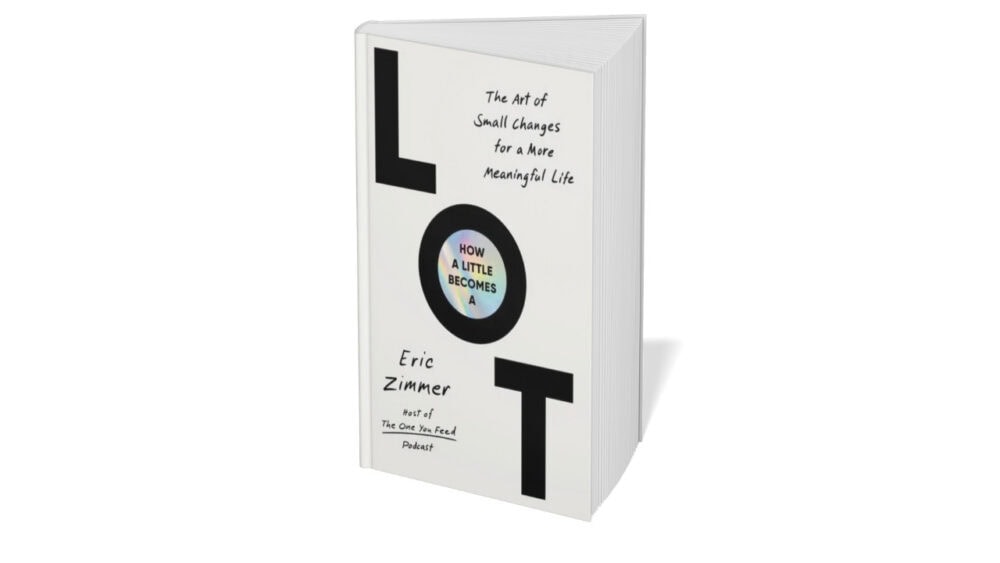
Exciting News!!! Coming in March, 2026, my new book, How a Little Becomes a Lot: The Art of Small Changes for a More Meaningful Life is now available for pre-orders!
Key Takeaways:
- Exploration of joy as a complex emotion intertwined with sorrow and human connection.
- Discussion of the importance of attention and devotion in cultivating joy and meaning in life.
- The relationship between joy and societal challenges, including systemic injustice and hardship.
- The concept of “feeding the good wolf” and focusing on what we love rather than negativity.
- The significance of small moments of beauty and connection in the face of suffering.
- The role of poetry and writing in enhancing attention and understanding of joy and delight.
- The idea of joy as a precursor to solidarity and collective care.
- Reflections on personal experiences of loss and the search for meaning in grief.
- The impact of societal machinery on human connection and daily acts of care.
- The process of writing as a means of self-discovery and understanding one’s relationships and emotions.
Ross Gay is the author of four books of poetry: Against Which; Bringing the Shovel Down; Be Holding, winner of the PEN American Literary Jean Stein Award; and Catalog of Unabashed Gratitude, winner of the 2015 National Book Critics Circle Award and the 2016 Kingsley Tufts Poetry Award. His first collection of essays, The Book of Delights, was released in 2019 and was a New York Times bestseller. His latest book is Inciting Joy: Essays
Connect with Ross Gay: Website | Mondays are Free Substack
If you enjoyed this conversation with Ross Gay, check out these other episodes:
How to Feel Lighter with Yung Pueblo
How to Turn Life’s Pain into a Path of Meaning and Joy with Danielle LaPorte
Finding Hope When Life Isn’t Okay and the Power of Micro Joys with Cyndie Spiegel
By purchasing products and/or services from our sponsors, you are helping to support The One You Feed, and we greatly appreciate it. Thank you!=
This episode is sponsored by:
David Protein Try David is offering our listeners a special deal: buy 4 cartons and get the 5th free when you go to davidprotein.com/FEED.
Hungry Root: For a limited time get 40% off your first box PLUS get a free item in every box for life. Go to www.hungryroot.com/feed and use promo code: FEED.
IQ Bar: Text FEED to 64000 to get 20% off all IQBAR products, including the ultimate sampler pack, plus FREE shipping. (Message and data rates may apply).

If you enjoy our podcast and find value in our content, please consider supporting the show. By joining our Patreon Community, you’ll receive exclusive content only available on Patreon! Click here to learn more!!
Episode Transcript:
Automatically Transcribed With Podsqueeze
Ross Gay 00:00:00 Joy. Is that thing that we enter when we practice our entanglement, when we actually submit to and practice being entangled with one another, which we are when we can fight it and when we fight it, that seems to lead to misery. But when we practice it, maybe that is joy.
Chris Forbes 00:00:26 Welcome to the one you feed. Throughout time, great thinkers have recognized the importance of the thoughts. We have quotes like garbage in, garbage out or you are what you think ring true. And yet for many of us, our thoughts don’t strengthen or empower us. We tend toward negativity, self-pity, jealousy, or fear. We see what we don’t have instead of what we do. We think things that hold us back and dampen our spirit. But it’s not just about thinking. Our actions matter. It takes conscious, consistent, and creative effort to make a life worth living. This podcast is about how other people keep themselves moving in the right direction, how they feed their good wolf.
Eric Zimmer 00:01:11 There are moments in life when things don’t get better.
Eric Zimmer 00:01:14 They just get more honest. Loss shows up, grief stays longer than we expect, and the old advice about thinking positive stops being very useful. I’ve noticed something about these hardest seasons of life. Big solutions usually don’t work, but small moments still do. My guest today, Ross, gay rights directly into that space. His work isn’t about bypassing pain or pretending joy is always available. It’s about learning to notice small moments of beauty, relief and connection that exist alongside everything that hurts. In this conversation, we talk about what it means to hold joy and sorrow at the same time. Why attention itself can be a practice of care, and how noticing what’s already here might be the most humane response to a hard world. I’m Erich Zimmer and this is the one you feed. Hi, Ross. Welcome to the show.
Ross Gay 00:02:12 Thank you. It’s good to be with you.
Eric Zimmer 00:02:14 I am excited to have you on. We’re going to be discussing your book, inciting Joy, which has the shortest subtitle of any book I’ve seen in a long time, which is Just essays.
Eric Zimmer 00:02:26 So, I mean, almost every book these days is like inciting joy, the miraculous practice for cultivating joy. And, you know, it goes on and on and on and on. And here’s this inciting joy essays. I love it so totally. Right. We’ll we’ll jump into that in a minute. But let’s start like we always do with the parable. in the parable, there’s a grandparent who’s talking with a grandchild, and they say, in life there are two wolves inside of us that are always at battle. One’s a good wolf, which represents things like kindness and bravery and love. And the other is a bad wolf, which represents things like greed and hatred and fear. And the grandchild stops and thinks about it for a second and looks up at their grandparents, says, well, which one wins? And the grandparent says, the one you feed. So I’d like to start off by asking you, what does that parable mean to you in your life and in the work that you do?
Ross Gay 00:03:13 Well, I mean many things.
Ross Gay 00:03:14 It’s such a beautiful parable, and one of the things that it makes me think about is I’ve been thinking about this a lot in various ways lately, is sort of what feels to me like an imperative that I often find myself recommending to students or people who ask, you know, talking about my work or whatever, which is that we study what we love because I teach writing and I go around talking about books and reading poems and essays and stuff, and I do have the occasion for people to say, well, what if you give any advice to like a young writer or a not young writer? I sort of think about, well, one of the things that we’re often not necessarily encouraged to do or, in my opinion, not encouraged to do enough is to devote our fullest, most abiding attention to that which we love. And by that I mean also probably that which loves us. I probably mean that too. And partly that feeding the wolf. The wolf that is, you know, angry or vicious or whatever, you know, versus feeding the wolf that maybe is compassionate and curious, but also the wolf that will love you.
Ross Gay 00:04:21 You know, something like that. I just feel like we’re so inclined and trained to some extent to attend to what we hate, actually. And I feel like there’s every reason to attend to what we need to duck to the extent that we need to duck it. But as far as mastering what we don’t want to be, that’s a bad idea I think.
Eric Zimmer 00:04:46 Yeah. I mean, there’s certainly that idea. You know, I’ve heard it in political talk before is, you know, not what are you against, but what are you for?
Ross Gay 00:04:54 Easy. Yeah.
Eric Zimmer 00:04:55 Right. You also used a word in there, which is devote. That’s a word that I love. You and I are later are going to record a little bit for our episode of Mary Oliver. And she famously said that attention is the beginning of devotion. Yeah. When I talk to poets, I’m always interested in attention, because I think one of the things poets do is they have a capacity for attention or a way of paying attention.
Eric Zimmer 00:05:18 That’s often different. It’s why I love to read poetry, because it makes me look at the world differently and focus my attention differently. And so the other thing I’ll say about devotion is I this is a little bit of a long story, but I’ll bring it back around, which is I had a really profound, mystical spiritual experience at one point. It was just a, you know, ecstatic unity experience. And it went on. It lasted for a while and it changed me profoundly. But like many things in life, it faded. And I was talking to a spiritual teacher by the name of Adi Ashanti wants about it, and what he said to me has landed on me and it was so powerful. He said, devote yourself to what remains of it. And I thought that was a beautiful thing, because even if the things that we love, as you said, or the things that love us in those moments, the feeling isn’t necessarily there. We can still devote ourselves to the feelings that have been there.
Ross Gay 00:06:12 Yeah, yeah. Beautiful. And as you were talking, I was thinking it’s also the there’s something that feels really compelling to me about also devoting ourselves to the feeling of love that has been bestowed upon us, but that we do not know who gave it to us, you know, but we know it was given to us. Like there are people who loved us long before we were born, you know? Yeah. And, you know, you might extend that to sort of like. I like to say that when the goldfinches are planting the sunflowers in my garden, that’s an act of love. Yeah. You know, that’s an act of love. Or when it rains and we need rain. That’s an act of love. Or, you know, the person who holds the door open for me when my hands are full. Or you can go on and on and on. You know, which is a kind of to me, it’s a kind of ever present and kind of threaded through our daily lives.
Ross Gay 00:07:01 You know, we’re walking around and it’s like, it is a miracle. Again and again and again and again and again, you know, and it feels really important to articulate the ways that we are capable of and in the midst of profound care. Yeah. You know, and I agree, I think I think that’s so beautiful, that thing of like, if you can sort of I forget exactly how you put it, but like cultivate or attend to what remains so beautiful, so beautiful.
Eric Zimmer 00:07:26 Yeah. So I want to ask you a question about delight and joy. Those are both of your books inciting Joy and the Book of Delights. Those are words. And as a mildly repressed, you know, Protestant white guy. Right. who also suffers from depression and low mood Words like joy and delight sometimes feel like an octave above my emotional range, but I don’t think that’s how you’re intending them. I think that you’re using those words differently, and maybe more subtly, than at least the typical idea of joy or delight.
Eric Zimmer 00:08:03 Can you just say a little bit about that?
Ross Gay 00:08:05 Yeah, and one thing to mention, Mary Oliver again, and that thing about attention, in a way I sort of feel like that delights project is really an attention project. Yeah. You know, what does it do if we give ourselves the task of witnessing, articulating and then like sort of possibly sharing what it is that delights us. Turns out for me, there’s an abundance of that. You know, it’s not the only thing that there is by any measure, but there’s an abundance of that. Sometimes it’s like sort of grand and like you said, sort of like a register above or something. Periodically it is. But mostly it’s like, you know, that there’s a kid wearing those shoes with the flashy lights, you know, like, whoa, we’re like, yeah. Or, you know, it’s the fact that the Cardinals are back again. You know, or it’s, you know, all of these things that we might say are sort of are profoundly daily, actually.
Ross Gay 00:08:54 And as far as the question about joy, I feel like the way that I think about joy is it’s a profound emotion. Like as profound an emotion as I can think of. But the way that I think about joy is that it’s absolutely tethered to like, sorrow, you know, not necessarily profound sorrow, but profound sorrow, too. But it’s connected to the very daily fact that we and what we love are disappearing, you know, in the midst of it. You know, we and what we love are probably in some kind of pain, you know? And if not, now will be. ET cetera. Etc.. Yeah. Part of what I think of as joy is the way that we attend to one another in the midst of that, or the way that even that knowing or maybe not even that knowing knowing, but the sort of deeper, subtle knowing of that might incline us to behave in certain ways, might incline us to sort of be in the process of reaching toward one another, Something like that.
Ross Gay 00:09:43 You know, it’s funny, I wrote this book and I did all this. I kind of thinking about joy. And then afterwards I was like, oh, actually, in that book, I say, joy is what emanates from us as we help each other carry our sorrows. And I think that’s true. But I also think maybe even more to the point, is that joy is that thing that we enter when we practice our entanglement, when we actually submit to and practice being entangled with one another, which we are when we can fight it and when we fight it, that seems to lead to misery. Yeah, but when we practice it, maybe that is joy. And it doesn’t just mean like happy. Happy. It might mean. No, I’m practicing helping you die. Like, it seems like you’re soon to die. And I’m going to try to be with you, you know? Yeah. That, to me, is, like, joyful.
Eric Zimmer 00:10:29 Actually, in your mind is joy an emotion? Is it a way of being? Is it an action? Is it all three of those things? I don’t want to get too definitional here, pinned down this thing that we all have a sense of.
Eric Zimmer 00:10:45 I’m just kind of curious because in just in hearing you describe it, you’ve hit all three of those things.
Ross Gay 00:10:49 Yeah, it kind of is. Sometimes I’ll think about that and I’ll be like, yeah, what is it? I’ll be writing something. Is it an emotion that I’m talking about? I think you’re right. There’s elements of all three. And then another way that I sort of think of it as like a kind of a noun almost for some reason, you know, I sort of I can’t remember if I talk about this in the book, but I sort of do think that the metaphor that I love is like the mycelium running underneath the a healthy forest like that, sort of that you sometimes know is there and you sometimes don’t, you know, but if you know that’s there, it’s a kind of thing that’s there that you can kind of enter into, or you can kind of join or you can kind of like celebrate or something like that. Yeah. That didn’t answer your question at all.
Ross Gay 00:11:30 But but it’s I agree. It’s a good question.
Eric Zimmer 00:11:33 Yeah. Well it’s interesting, there’s a phrase I use on this show, maybe more than any other that I learned early in my recovery journey, which was sometimes you can’t think your way into right action, but you could act your way into right thinking. Right? Yeah. And I’ve loved that because I’ve thought about that with things like gratitude, which which is a cousin of delight. Right. Which is that I can feel grateful and it just emerges spontaneously. Right. And that’s good. There are other times that I can decide to look for something to be grateful for. And by looking, by engaging in an action, a practice, then maybe some of the feeling then tends to come along. And so, so much of this stuff action, behavior, thought they’re bidirectional things to me. Right. Like it’s not one causes the other. It’s sometimes yes, one causes the other, but sometimes the other causes the one. And back and forth.
Ross Gay 00:12:24 Yeah, yeah, yeah. And I think back to the parable, I think to some extent they also those, those feed each other back and forth. Yeah. You know. Yeah I think that feels important to be aware of that practicing a thing can make the thing sort of grow in itself, and that then can sort of increase one’s desire to practice.
Eric Zimmer 00:12:42 Yeah, yeah. I was reading your work and thinking about Joy, and you said something. I don’t know if it was in the book or another conversation I heard you say, and I may not have this exactly right, but it was something about like, you feel joy when you see people care for each other. You know, and I thought about I’m a softie like watching a TV show or whatever. Like I’ll cry it nearly anything. Right. But I’ve thought about what makes me cry. And it’s not the, I mean the sad moment sometimes, but that’s not what it is. It’s a moment of tenderness between people. Yeah.
Eric Zimmer 00:13:13 And that what is coming out is tears is joy, actually. But I never named it that until I heard you say that. And I was like, that’s exactly what I’ve. I’ve heard the term moral elevation, and I’ve recognized that that’s what it is, moral elevation being you feel good when you see somebody act good. Right. There’s something to that. But I just was able to put a name on an experience. I have very often of what I would consider pretty profound joy. And it’s when I see tenderness between people, often in either a deep sense or an unexpected sense.
Ross Gay 00:13:47 Totally. Totally. Yeah. Me too. I was in the airport the other day and someone was, you could just tell, just sort of took it upon herself to help this other person who maybe didn’t speak English or whatever. There’s some something about reading the signs, and it was just like I could tell, like at the ticket thing, that they had kind of assigned themselves to this person. And then I saw them, you know, 20 minutes later in the airport, like just sort of walking and like walking them to their gate, you know, every day, like if we kind of open our eyes like that is available, that is happening.
Ross Gay 00:14:21 Or this time I remember and I write about this in the book where I was like, doing this zoom thing is like sort of more of the zoom times, a class, you know, a high school class. And this kid, like, read something very moving to him. And he just broke down and and he finished and it was beautiful. And after the class ended, at the time, I was sort of like, you know, I wanted to kind of reach through the screen and like, care for this kid. And at the time, no one was doing anything. And I was like, oh, no, we’re doomed, you know? And then after the class ended, like very slowly, like the kids kind of came and they kind of like checked on him. And then within like three minutes, every child in that class was formed into a big hug around this kid. They were all hugging and said, and of course, same thing. Like, I’m watching this zoom thing and like, crying.
Ross Gay 00:15:08 Yeah, that too is who we are, you know?
Eric Zimmer 00:15:11 Yeah. It’s interesting. I’m preparing to interview another poet who lives here in Columbus, Ohio with me, Maggie Smith. Okay, I know Maggie, and she’s got a new memoir coming out, but in it, she’s referencing her poem Good Bones. And I was reading it last night, and there’s points in it where it says, like, for every child that something good happens to, there’s a child that something bad happens to the world is at least half bad. And I read that and I thought, I don’t think so, actually. I mean, yes, there’s lots of awful like, you know, any moment, anywhere, anytime, right this second. There are countless awful things happen in this world. But there is so much love and beauty also all the time. And it’s not to say that we should ignore one or the other. And that’s clearly your message is not. But I do feel that the proportion of kindness and love to me, it feels like there’s more of it.
Ross Gay 00:16:02 Yeah, I know, I was just in a talk like an academic talk. And it was it was interesting. And there was I guess there’s a thing called, I can’t remember something like metaphysical pessimism or something I can’t remember, but it was some kind of philosophical term. But the premise is that they’re sort of like trying to figure out a way to articulate why it’s okay, like to, you know, to indulge in with this person what’s calling like sort of guilty pleasures, like, you know, like, like dumb TV or whatever. But the premise was that if life is purely miserable, it’s truly misery. Then the point is not to get to know life better, not to understand the true nature of being or something. The point is to avoid the true nature. That’s so funny to me because it’s like a real sort of. It’s a serious philosophical endeavor, I guess. And I was sort of like, well, it seems to me that you could enjoy, you know, dumb TV while also believing that life isn’t fundamentally awful, you know? Yeah.
Ross Gay 00:17:00 And it also seems to me that if your premise is that life is fundamentally awful, you must spend a lot of time avoiding attending to a lot of the stuff that’s not fundamentally awful. Right. Right. You know, I was sort of like, well, this seems like an attitude more than like any kind of relationship to. Yeah, to events or, you know, phenomena, like in phenomena. It’s like, oh, yeah, someone helps me unload the goat shit from my garden. That is not fundamentally horrible.
Eric Zimmer 00:17:31 Right? Right.
Ross Gay 00:17:33 You know, it doesn’t mean that there’s not also the fundamentally horrible mixed in. You know, it doesn’t diminish or negate anything but to suggest that it is. I was just like, okay.
Eric Zimmer 00:17:48 Yeah, I guess to give Maggie’s view of the world of, of 5050. A little credence. There’s the old Buddhist idea of the 10,000 joys and the 10,000 sorrows, which I’ve always loved, you know, because it just says like, yeah, every life has both.
Eric Zimmer 00:18:02 Yeah. And so one of the things that you’ve talked about is that you’ve been criticized before for focusing on delight or joy and also being a black man who is aware of systematic racism and injustice and inequality and all that and that, you know, this is not the time for trifling things.
Ross Gay 00:18:25 Like.
Eric Zimmer 00:18:26 Joy or delight.
Ross Gay 00:18:28 Right? Right. Yeah. Totally. And to me, it’s sort of like the, you know, I have a whole essay in that book that I sort of devoted to that question, but the what you might almost call like a command to focus on quote unquote serious stuff implies, first of all, that what makes us glad is not serious. And if it’s the case that what makes us glad is not serious. And I’m just saying glad, and I’m saying glad, actually, I’m using that as a word that’s like, sort of a light word. I mean it to be a light word. If what makes us glad is not serious. That’s an interesting life. That’s an interesting world.
Ross Gay 00:18:59 You know, for any number of reasons that we could probably talk about for a long time. But furthermore, when I’m talking about, like, joy and gratitude, I’m actually not talking about what makes us glad, though it might touch on those things periodically. I’m actually talking about how we survive, how we’ve been survived for. You know, I’m talking about, like, all of the love that we’ve been Given in our lives. You know, in the midst of a horrible shit, you know, that we’ve been cared for, we’ve been looked after, we’ve been imagined into being, you know, by people who didn’t know us at this moment, we’re still being imagined into being by people who don’t know us. Like people are loving us without knowing us. You know, somewhere someone is like saving seed for a plant that’s really not only delicious and beautiful and good for the birds and everything else, but it might actually grow at a time when some other things aren’t growing. You know, like at this moment, you know, it’s just going on on our behalf.
Ross Gay 00:20:01 Yeah. To me, that sounds like for those people who might, you know, sort of shit on the idea of like, joy or something, to me that sounds like rigorous and also serious as hell and also life and death.
Eric Zimmer 00:20:12 Yeah.
Ross Gay 00:20:13 You know, I’m talking about life and death.
Eric Zimmer 00:20:15 Actually, all this stuff gets to the question of what does it mean to live a good life, to be a good person. Right. And I often reflect on that. I do think that the suffering in the world is essentially infinite. And what I mean by that is there’s just more of it than I could ever imagine. Think about tackle. Do anything about right. To me, it’s essentially infinite. You know, if there’s a God out there, maybe it’s not infinite to that being, right. But to me, as a human, it doesn’t matter whether it’s a hundred units of suffering or infinite units of suffering. It’s way beyond my capacity to remedy. Yeah. So given that, what is my quote unquote, responsibility or my moral obligation to try and remedy that versus my moral obligation to have some degree of delight and joy and love the people that are around me.
Eric Zimmer 00:21:07 And, I mean, I just think these are there’s no answer to these questions. Right? We all want someone to tell us, you know, I know you lost your father, and my father passed up just actually a couple of weeks ago now. Oh, wow. After a long battle with Alzheimer’s. And my partner’s mom did also. And, you know, as we were going through those things, I just remember wanting someone to tell me like, what was enough?
Ross Gay 00:21:28 Yeah.
Eric Zimmer 00:21:28 Am I doing enough?
Speaker 4 00:21:30 Yeah, totally.
Eric Zimmer 00:21:31 And there’s no answer to that. Yeah, right. Because I’m my own person with my own set of values and my own relationship with my father and all kinds of circumstances. But I think it’s the same thing when we start looking at what is enough to give to the world versus to give to ourselves. But I love what you’re talking about with joy is that it’s not giving to ourselves. You actually say. You’re wondering what the feeling of joy makes us do or how it makes us be.
Eric Zimmer 00:21:56 And you say, my hunch is joy is an ember for or precursor to wild and unpredictable and transgressive and unbounded solidarity. And that solidarity might incite further joy, which might incite further solidarity.
Ross Gay 00:22:12 Yeah, totally. It’s funny, when you were sort of saying the list of things that taking care of the people you love, you know, like loving people, being delighted by stuff, you know? How am I supposed to respond to the suffering of the world? You know, it’s a little bit like that is responding to the suffering of the world, too. Yes. You know, a little bit and, in part because it’s like you’re adding to the love, I think. Yeah. But the other thing I’ve been thinking about lately, I was just sort of walking around trying to think about, like, what is the point of it? Like, what’s the point of being alive or something, you know? Like a meaningful point. And I was thinking, oh, it’s just to care and be cared for.
Ross Gay 00:22:50 Maybe that’s it. It’s to care and be cared for. There’s so much machinery to sort of prevent us from believing that or even to like, doing that in certain ways, you know. And yeah, I’ve been kind of going hard on like these fucking menus that you scanned with your phone. And I’m like, man, fuck that. Yeah, give me the paper. Put it in my hands. You know, I might ask you, like what’s good, what you like. You know, and you might lean over my shoulder and tell me what you like, you know. And I might look with my friend there. What they’re thinking about kidding. I’m saying that’s the positive. And the negative is that there’s all of this machinery that is trying to alienate each other from these daily and more than daily acts of care. Yeah. That are sort of positing themselves as acts of care. Like there’s the idea that like, oh, if you don’t have to touch something that I touched. I’m caring for you.
Ross Gay 00:23:38 Precisely the opposite or precisely the opposite. Like, if we don’t touch each other, you know, like, that is sort of the absence of care. You know, I’m just becoming acutely aware of how easily we can slide into that, thinking that that’s like a reasonable way to be. When in fact, it seems to me the meaningful way to be is to be like bumping into people, you know. And when I say also bumping into people, I also mean like, you know, bumping into the trees and bumping into flowers.
Eric Zimmer 00:24:34 You may have heard me mention my new book a few times, and I can assure you, you will certainly hear it a few more. But now we are offering some pre-order bonuses. One of them is the still Point method, which I believe is the only systematic way to interrupt negative thought patterns often enough for them to change. There’s a lot out there about what you should think and not think, but there’s very little that gives you a small and portable system to actually do it.
Eric Zimmer 00:25:02 You get the guide to the method, and three free months of a new app designed to help you implement it. There are other bonuses too. You can learn more and claim them at one use net. Look in your books. I noticed this several times. It’s one of your delights, which is you call it pleasant public physical interaction with strangers.
Speaker 4 00:25:25 Totally.
Eric Zimmer 00:25:26 You know, one is maybe. Tell us about your working in a coffee shop and a young girl comes up to you. Do you remember that one?
Ross Gay 00:25:33 Totally. Totally. Yeah. And she it’s I’m working. I’m like, getting ready to go to a reading, but I’m like, actually revising some of these delights. The first book of delights. I’m revising them. And, this kid comes up to me and I noticed I’m like, listen to my music. I’m like, in my alienation zone, actually. Like, I get the headphones on and this kid comes up to me, or I noticed this child, you know, she looks like a kid to me, like a high school kid or something, like standing to my side with her hand up.
Ross Gay 00:25:58 And I kind of look like, what are you doing here? And she screams to me like, you know, working on your homework. Good job. Come on, give me a high five. It was the cutest thing I ever saw, you know? And of course, I high fived this kid. But it just was like one of those moments where it’s like, oh, right. One of the pleasures of being alive for me. You know, not everyone. Like, not everyone has the same delights. But, like, you know, I love I used to go to this bakery in South Philly called sarcomas. It’s really great bakery. And, you know, I was probably brought up a certain kind of way, you know, I don’t know what it was, but like a little bit like, self-contained, like my mother’s from Minnesota and, you know, a little bit Midwestern. Yeah, yeah. And I’m in South Philly, I’m at this bakery and it’s like, it’s really not how it goes there.
Ross Gay 00:26:47 And I’m standing in line and there’s no line. It’s just like a bunch of these people like pushing to get their bread. And at some point this woman said, hey, baby, if you don’t shove a little bit, you’re not gonna get any bread. It was so sweet because she was a little bit tough on me, but she was also like, come on, honey, you gotta push you. This is what we do here. You know, we actually, like, bump into each other, you know? It was so lovely. And those to me, like constitute among many others. But that constitutes to me like the fabric of life.
Eric Zimmer 00:27:16 Yeah, yeah. You mentioned that, you know, Midwestern. I’m in Ohio, so I’ve got that whole, you know, Midwestern sort of buttoned up, you know. Yeah, yeah. You know, it’s so funny how ingrained that gets, you know, like how profoundly I would be like, get in line, folks. You know, it’s totally, you know, but it’s what I was sort of talking about earlier.
Eric Zimmer 00:27:35 I was sort of making a joke of being like a semi repressed Midwestern, you know, white guy is like, you know, it’s not that I choose like, I want to stay in this little thing. It’s that I’ve been squeezed into it for so long. Totally, totally. Anything outside of it can make me uncomfortable, and I have to really work on that, you know? Like, just let the world in a little bit.
Ross Gay 00:28:00 Yeah yeah yeah yeah, yeah. Like there is that the buttoned up is a great metaphor because buttoned up also sort of implies like nothing’s going to fly out. Yeah. You know, like, everything is contained. I’m not porous, when in fact, we’re totally porous. Yeah. You know, it’s buttoned up as we try to be. We’re actually like, we’re in the world. We’re of the world. But it is beautiful. Like, I’m totally the same way. So it’s sort of this exercise of being like, all right, when I’m in the laundromat, it’s just like talking to people.
Ross Gay 00:28:24 It makes the laundromat so much nicer. Yeah. You know, and it’s also the risk. It’s also the risk that someone’s going to want to keep talking to you. Yes. And you. And maybe they’re going to talk about stuff that you don’t actually want to hear.
Eric Zimmer 00:28:35 Yeah.
Ross Gay 00:28:36 Yeah. And I find that too, as like, a kind of reason to sort of restrain sometimes my desire to actually be interactive. And I have to be like, yo, it’s it’s okay. Sometimes people say stuff you don’t want to hear. It’s okay. You know, you can live on through it. You can live on it, you know?
Eric Zimmer 00:28:54 Yeah. No, I agree, I think there is risk to all of that. It’s funny, there’s a number of, you know, social psychology studies that are out there. They’re all various Forms on this particular sort of thing, which is let’s study a group of people who ride home on the train and just stay in there. I don’t know what you just called it, my.
Ross Gay 00:29:16 Buttoned up, something really.
Eric Zimmer 00:29:17 Buttoned up restriction zone. Whatever. Right. Yeah. Who do that versus people who make conversations with people they don’t know. And there’s two things that are interesting that come out of those studies. The first is if you ask people, which is going to make them happier. They all almost always think just staying to themselves will make them happier. So a prediction of what will make us happy is that. But then when they do it, most people report that it was more enjoyable, more meaningful when they actually did it, and it wasn’t as risky or scary. So. So I think it’s both that we don’t think we will like it. Yeah, right. Which restricts us. But then also that in reality we tend to if we give ourselves that freedom. And I think a lot of it comes down to how do we enter into those situations, and what do we think our responsibility is, or what do we think our need to be performative is? Right. Like, I’ve got a partner who’s an incredibly she’s one of the warmest, kindest people I’ve ever known.
Eric Zimmer 00:30:25 I just we just go out in public and she’s just making friends with everybody. Yeah, right. And I’m astounded by it. Yeah. I also know, though, for her, that sometimes she ends up feeling like she has to be performing, like she has to make everybody feel happy. So in those cases, it’s draining for her. But when it emerges naturally for her, it’s energizing.
Ross Gay 00:30:47 Yeah. Absolutely. Absolutely. All of that sounds very familiar to me. And and I also like what you were saying, that we often think that maybe it isn’t going to be pleasant, but partly because, yeah, we have the idea that it’s not going to be pleasant. But then we often have the interaction and it’s like, oh, that was that was sweet. That was really nice. Yeah. You know, part of the reason I love being in airports is that those things happen all the time. I just feel like, I mean, they’re dramatic places anyway, but they’re like sites for all of these sort of maybe slightly extra carry.
Ross Gay 00:31:19 You know, because because everyone’s in transit, we’re all a little bit, like, caught. Yeah. And so people are just like, I mean, many things, but I feel like I often am in airports and having these really dear little interactions, you know.
Eric Zimmer 00:31:33 Yeah. Yeah. I mean, I had one the other day on a plane. I was coming back from my father’s funeral, and I was sitting in an aisle seat, and across the aisle was a little boy. And I’m very sound sensitive, you know, just racket. It troubles me. Right? And so I’m just hearing this rustling over and over and over, and in my mind, I’m thinking, you know, would this kid stop it? Right. That’s my first reaction. Not proud of it, but there it is. Sure, sure. I’m coming from Orlando. Lots of kids, right? You know. So, yeah, I’ve had maybe enough of, you know. But I look over and what I noticed is he’s trying to open his little snack bag, so I just reach over.
Eric Zimmer 00:32:14 Yeah. And I take the snack bag, and I open it up for me. He looks at me, which was nice and sweet, but the best moment was his dad from across the way, just looked over at me and gave me a smile and a thumbs up. It was just this little moment, but it was so, so enjoyable and it was for me. Pivoting from being annoyed. Yeah, at a sound that I didn’t like. To trying to go, oh, what’s going on over there?
Ross Gay 00:32:37 Totally. Totally. Yeah. To reaching toward it. Right? Yeah. Like reaching toward rather than kind of holding up. Yeah. Yeah. Yeah. So, so beautiful. So beautiful. I feel like that’s one of the projects of my life, because I’m very inclined to sort of, you know, wall up. Yeah. It’s something that I’m more and more aware of in myself and more and more aware of is like, that’s a lonely way of being. Yeah. You know.
Eric Zimmer 00:32:56 Yeah. So I want to talk about laughter. You’ve laughed a ton during this interview, which is great, I love. You seem to be somebody who laughs easily. And you were describing in one of your books. You were you were talking about being on a porch with some friends. Yeah. And you’re talking about people dying. Your your own parents dying, and you guys get really laughing about it. And you say, you know, I can’t in good conscience even say what we were saying at this moment. Right. Because you would you would think awful of me. Right. And I was just reflecting on that because I also have a sense of humor, that I am the same way. I’m like, I’m not. I cannot bring that on air. Right. If that’s not, it’s not going to work. Yeah, but how should I say this differently? It seems like it’s off the rails and and you know, some people might say it’s offensive, right? But there’s a great joy in it.
Eric Zimmer 00:33:47 And you make a distinction that I think is really important. You make it in the book, which is between laughing together with people versus laughing at someone.
Ross Gay 00:33:56 Yeah, totally. Yeah. Remembering being on the porch with our friends. And they live right across the way. And everyone’s dad was dead, I think, and some of them sort of recently. And I also love that that little moment of sweetness you were talking about on the airplane comes on the way home from your dad’s funeral. So lovely. Yeah. And it’s just sort of like, you know, how sometimes you, like, go extra far and away, going extra far. I don’t even know what it is, but it seems like as a way to sort of understand or tolerate the intolerable. Yes. Or maybe sometimes as a way of sort of articulating just how absurd everything is, you know, look at this. And we’re still here together. We’re still having popcorn on the porch and. Yeah. Isn’t this, isn’t this something else, you know?
Eric Zimmer 00:34:40 Yeah.
Ross Gay 00:34:41 Yeah. It might incline us to actually, like, say, really ridiculous shit, you know? Yeah, yeah.
Eric Zimmer 00:34:47 My best friend Chris, who’s also the editor of this show, we call it up the street and around the corner because it’s just you just keep going. You just keep going and just building absurdity upon absurdity, you know? But I’m a firm believer that levity is a is a spiritual virtue. Right. Like, I mean, it’s just so important. And it is one of the fundamental ways that I cope with life. Yeah. And it’s difficulty.
Ross Gay 00:35:12 Totally I agree. Yeah, it’s the difficulty, of course. And like, very good thinking is done through comedy. Yeah. You know, and it needs to sometimes be transgressive. That’s the point of it. Like you think, well, by thinking too far, you know, you butt up against stuff. And it’s sort of like, what I love about comedy is that it provides us all these spaces to do all of this stuff.
Ross Gay 00:35:33 You know, all of this stuff. And ultimately there is this bottom line thing, which is that it’s sort of about reaching towards someone. Yeah. It’s about like sort of articulating something about our existence or about what we don’t understand, or about what we in common sort of are hurt by and like. And that is understandable. But then it’s also and I love this, that in that essay I kind of talk about is that when you laugh, your breathing changes. You become acutely aware that you have a body, you know? Yeah. Or at least your body becomes an acutely aware thing in the universe. And bodies die. Bodies die. You know, laughter and death. To me, it’s like they’re tied up. They’re really tied up.
Eric Zimmer 00:36:14 Yeah. You know, it sounds like you’re a comedy fan. Are there comedians that you sometimes experience as, like, all right, that was too far or that felt mean spirited? Or do you feel into that for yourself or you kind of like what whatever anybody says is fine.
Eric Zimmer 00:36:30 I’m just kind of curious because there’s a lot of debate about this. You know, I mean, there always has been, I think, you know, but it seems more acute right now about is that okay to joke about?
Ross Gay 00:36:41 Yeah. You know, to me, like the point of joking is actually to go fucking far, right? You know, I’m like a Richard Pryor. it really feels like one of my most important teachers. Yeah. You know, and Eddie Murphy, too. Like, I grew up, like on Eddie Murphy. I grew up. You know, George Carlin. You know George Carlin. And I’m interested in thinking that it’s possible by going to the edges. Yeah. You know, the thinking that is possible by going to the edges. And that is often difficult. My question is sort of like how I’ve been thinking about it. You know, one of the things and I think Carlin really teaches this beautifully. One of the things that comedy does beautifully, or I think of is it wonders about inside and out.
Ross Gay 00:37:25 The comedy that I’m interested in is often kind of fiddling around, trying to figure out in a way, who’s left out or something like that. It’s it’s one of the boundaries. But it’s also also wondering about power often. You know, that’s that’s the comedy that I’m often interested in. And in order to sort of articulate those questions or to get into those questions, obviously that’s messy as hell, because power is complicated and messy. But I’m also interested, you know, I was watching that Carlin documentary recently and then kind of got back into his work, his objective, and I think it’s the objective of a lot of comedians, is to actually trouble the idea that they’re trying to come for who thinks they own the world. Yeah. You know, like Carlin is trying to, like, come for power, not to have power, but to disrupt the idea of it. Yeah. Which is also to disrupt the idea that people would be not disempowered, but, like, abused or something. That to me is really interesting and it’s difficult work.
Ross Gay 00:38:17 And it’s also like it’s the reason I love comedy, you know, and I love comedy in the many ways that it tries to wonder about that. Yeah. Which is all kinds of ways, you know, all kinds of ways.
Speaker 5 00:38:29 Yeah.
Eric Zimmer 00:38:57 There’s another thing you and I have in common, which is? Your mother described you as possibly. I don’t have the exact line here, but in my mother’s opinion, the single worst paper boy in the history of the occupation. And what’s funny is you and I are similar in this. I was a good paper boy in that I always delivered what needed delivered on time. I actually took that responsibility very seriously. But what I didn’t do was what you didn’t do. Share that with us. Kind of where your paper boy problems came in.
Ross Gay 00:39:26 When you were talking about, like, not collecting. Is that what you mean? Yeah. I drove my parents crazy because they both actually had paper routes to maybe slightly after us. But my mother, it made her crazy because we would like if we would go visit our grandparents, for instance, for a couple of weeks in the summer, and she would take over the paper route, My whole thing would be just a mess.
Ross Gay 00:39:47 It would be, you know, little paper book. You remember you said a paper book that you punch out the thing and it would be such a mess. And she would get it all up to date, you know, because I would just do it by memory. I would just like, remember who had paid me and who hadn’t paid me. And so I would only collect basically when I needed to go to the movies, or I would only collect when I needed some, you know, candy or something. Oh, that made them crazy. That made them crazy because they were like, of course, well, you could be making $40 every two weeks, so what’s wrong?
Eric Zimmer 00:40:17 And you’re like, I’m making 18. That’s all I really need right now.
Ross Gay 00:40:21 It’s pretty good. You know, I might make 56 next week, you know?
Eric Zimmer 00:40:24 Yeah, I was struck by it because it made me think like, well, why was I like that? Because I was very faithful in the duty.
Eric Zimmer 00:40:33 Yeah. You know, it was very faithful in the duty. And I can’t remember now. I mean, part of me thinks I didn’t like asking people for money, even though they actually owed the money.
Ross Gay 00:40:43 Yeah.
Eric Zimmer 00:40:43 Yeah, yeah. You know, I think there’s a little of that, like, you know, it’s just put somebody out a little bit. Yeah, they made me uncomfortable, so I only did it when I had to do it. Maybe that was part of it, but I don’t know. It’s just a curious phenomenon to be like, well, I’m not lazy.
Ross Gay 00:40:56 Yeah.
Eric Zimmer 00:40:56 Because I’m out here doing the work, but there’s something about showing up and getting what’s mine there. Yeah, that. I just don’t take that seriously.
Ross Gay 00:41:05 I know, and the thing that I was also I realized, oh, two things about jokes too. I also about comedy. I was thinking there’s also like bad jokes. There’s jokes that just suck, you know, and they suck. They might suck because they’re like, oh, that was supposed to be trying to like, trouble something.
Ross Gay 00:41:21 It was mean and it was just stupid. Yeah. And I think that happens. And I also am like, yeah, okay. That’s part of your job. Actually, a comedian’s job to me, as much as anyone, maybe not as much as anyone, maybe all of us, maybe just human creatures. That’s what we do is to actually, like, try a lot of stuff. And sometimes that’s actually stupid, you know, it doesn’t work and it’s dumb. But that to me is like, that’s just part of the job. And if it’s perpetually dumb or persistently dumb, there’s another comedian. Yeah, you know, that I’m gonna actually listen to, you know, like, I don’t watch Stephen Colbert. Yeah, yeah. Because I don’t think it’s funny. I just think it’s, you know, I just don’t think, you know, and other people have other opinions, you know? That’s cool. Like, you know, I don’t have to, you know. Yeah. But anyway.
Ross Gay 00:42:04 But to the other thing, it’s like I used to, like little buddy and capitalist in me. I used to get a kick out of, like, someone owed me four bucks, and then two weeks later, they owed me 8 or 9 bucks, and then three weeks later. And so I’d be like, oh, yeah, I’m not collecting, but this time I might get 12 bucks for this.
Eric Zimmer 00:42:24 Were you charging a vig on your paper route, man? Yeah, I didn’t know it, but.
Ross Gay 00:42:30 Yeah, I know, I know. Yeah. But. So. Yeah. So there was an element of that too, like, oh, it’s okay if they don’t pay me this time because, hey, it’s going to be big next time. Eight bucks man. What can you do with eight bucks when you’re 12? You can do a lot.
Eric Zimmer 00:42:42 It’s funny. You just said, you know, you think maybe the job of us as creatures is to try. And the very short subtitle of your book, inciting Joy essays the word essay.
Eric Zimmer 00:42:52 Tell us where it comes from, what it means.
Ross Gay 00:42:55 Yeah, it means, I guess I think it’s a French word to mean to try to attempt. Yeah. There’s an essayist who I love and who’s really a model for those essays named. Well, I say Montaigne. I think it’s Montana. And his essays were really just sort of wanderings. He would just wonder about things, about friendship, about humor, about liars. Yeah. I don’t know if he said humor, but on liars, he has a great one on liars. And he sort of talks about he’s really funny, too. Sometimes the whole essay, as I recall, is, well, the part that most struck me was that he’s trying to explain why he’s not a liar, and the reason he’s not a liar is because his memory is so terrible that he couldn’t lie if he wanted to. So he’s like, When I’m lying, I’m actually I just forgot, you know, but it’s brilliant. And but there are all these, like, strange things, and they don’t have a thesis.
Ross Gay 00:43:41 They don’t have a kind of objective. They aren’t, like, mapped out clearly. They’re just sort of like wandering through some thinking. And they are, to me, just beautiful. So some of my favorite things to read.
Eric Zimmer 00:43:52 Do you know whether he edited? Did he go back and try and edit it, or was it just like stream of consciousness and he drops it on you?
Ross Gay 00:43:59 I suspect they’re so beautifully written. I mean, they have the element of like, it’s really like a beautiful mind at work. Yeah. So you do get to sort of follow the thinking happening, but they’re they’re so kind of clear. And because he wrote a million of them, I mean, he really might have written 500 of them.
Eric Zimmer 00:44:15 Yeah. He’s known for the form. Yeah.
Ross Gay 00:44:17 Yeah, totally. It would be interesting to see like the first ones that he wrote versus the last ones, and to see if the last ones are more crafted or how they’re different or something like that. I haven’t done that.
Eric Zimmer 00:44:28 So that makes me think about your process. Right. Because your essays, they have that following you as you think through something, and they have a very stream of consciousness element to them. Right. Yeah. I don’t think this is an offensive term, but like run on long sentences that kind of go on and jump all around and and so are you also editing because the language is beautiful. So I assume to some degree, yes a lot. Okay. But you know how to edit in such a way that you don’t tighten yourself up.
Ross Gay 00:44:58 Yeah, that’s part of the trick with my edits, is that I’m trying to make it seem like what you’re saying, like I’m trying to make it seem we’re not seem necessarily, but I’m trying to allow it to be meandering sort of streamy, while at the same time not being as sort of all over the place as like a sort of proper stream of consciousness, for instance, would be. And this I started doing kind of with the poems where I started thinking hard about how do I make this sound like a spoken like really like a speaker? Yeah.
Ross Gay 00:45:27 Yeah. And that takes quite a bit of work, you know, because one of the things that we have to learn, I’ve had to learn as a writer is actually to to have this voice thing to write like a person talks. Yeah. And that’s difficult because we often think of writing as like not how we talk, but it’s like this idea of good writing. Yeah. You know, we often try to write aspiration toward what quote unquote good writing is, which I don’t know what that is. There’s a million things that constitutes, to me good writing.
Eric Zimmer 00:45:55 Totally. You undoubtedly have a voice.
Speaker 6 00:45:57 Thank you.
Eric Zimmer 00:45:58 I think you’re writing. I think I could pick out of a pack for sure. You know, like. Okay, I think I know where that’s coming from.
Ross Gay 00:46:03 Yeah. Because he’s like, hey, friends.
Speaker 6 00:46:07 There’s Ross.
Eric Zimmer 00:46:10 Another of your delights that you talk about is you talk about the delight in blowing things off. You talk about, you know, I had to revise my position in regards to the occasional lack of discipline.
Eric Zimmer 00:46:22 You also tell a story about, you know, trying to get your dad to blow something off. Do you want to share that little story about your dad? And then I’ve got a follow on sort of question where I’d like to try and take this.
Ross Gay 00:46:33 In the essay, I’m sort of wandering around and I sort of talk about the pleasure of blowing stuff off periodically and how in a way, like coming back to this sort of like, you know, buttoned up thing. It’s like that’s like not, you know. And, you know, I played sports and I was like, I like, literally never missed a practice except this one time, and I messed up and I just overslept and it was terrible. But anyway, the essay arrived at, my father shortly before he died, actually, and he’s getting dressed on his way to work, and we had a tough. So it’s sort of embedded in the in the essay. I don’t know if anyone gets it, but it’s for me that we had sort of a difficult relationship.
Ross Gay 00:47:07 We loved the hell out of each other, but it was sort of challenging. And, late in his life, things got easier. So I was around or something, and he was going off to work. He worked at that point. That might have been his job at Applebee’s or something, some shitty scene. And I was like, oh man, just blow it off. I knew he wouldn’t and couldn’t blow it off, but I said it anyway, you know, in the event. And he was like, yeah, I wish I could. I really wish I could. And that’s from a dude who had been working jobs that I presume he kind of hated for, you know, the 30 years that I knew him. And so the essay is sort of about. Well, I mean, the essay is one thing about my father’s devotion to us, actually. Now, he didn’t blow stuff off because he had us. But the other thing is that how lucky it is when we have that opportunity to be like, you know what, I’m just going to sit in the sun today.
Eric Zimmer 00:47:57 Actually, what you just said was beautiful about, you know, my dad couldn’t blow it off because he had us. Yeah, I felt something there. My question was about knowing the right balance of those things. Right. Because you’re clearly a pretty prolific guy. You write books, you’re always doing talks. You’re teaching. I mean, you got a lot going on, so. So you’re not blowing a ton off. You know, I’m just curious about how you think about, you know, like, today I’m just going to give myself some grace and some slack. And you know what? Like, I’m just not. Nope. Not today. I’m going to sit in the sun. Yeah, I’m going to spend more time in the garden. You know, wherever. Yeah. Versus. Okay. You know what? I don’t feel like it. But, you know, I need to hang in there. Here. Right? Because. Because good things come out of hard work.
Ross Gay 00:48:39 Yeah.
Ross Gay 00:48:39 Totally. Totally. It’s a good question. I think of that, too, because I, you know, like, I’m like a busy writer. I like to give talks. I like to give readings. It’s funny. Recently I got a little bug and, you know, it was the kind of thing that I could tell that was like a day long or two day long thing, but I was like, oh, that’s your body saying, settle down for a minute. You know, you need to settle down. And it felt a little bit like the settling down was not only just that you don’t feel great, it was that you emotionally need to sort of slow down for a second. You know, you need to sort of like touch into some stuff that you might not be paying attention to. That’s one thing. But as far as the sort of balance, it’s a great question and I don’t feel like I know the answer to it. I do know one thing, and maybe some of those stopping like that.
Ross Gay 00:49:27 Like sort of just stop for a second or your body being like, you’re going to stop for a second, like you got the week off now. Yeah. One of the things that that can afford us is to be like, oh, wait a second, you’re spending a lot of time doing stuff you think you need to do, but you don’t really want to do, or you think you need to do because you think people are dependent on you, or you think you need to do because you think it’s going to be good for something. But just to be like, but is any of that true? And to the extent that it’s true, like, how do you want to respond, you know, just to at least raise the question. Yeah. Because I feel like a lot of us are sort of, you know, just kind of built that way of like, get it done, get it done, get it done more and more and more and more and more get it done. It feels like, in a way, the kind of, you know, kind of a capitalistic mode, actually, even if it’s not that we’re trying to make money out of it, even if it’s just like accomplishment, you know, for the sake of accomplishment or something, it does feel worthwhile to to settle down and be like, well, you know, all kinds of things, I guess.
Ross Gay 00:50:29 And one of those things is like, what are we avoiding to. I think being busy is such a good way to avoid all kinds of things, including sometimes connection. You know, I think about that sometimes, like I’ve been feeling so glad giving readings and stuff. And I want though also to be in rooms with people, asking beautiful questions and all that. I also want to be acutely aware of how that itself can be a kind of blowing off, like my relationships. You know how that could be a way of actually escaping a different kind of intimacy, which is actually, you know, more vulnerable than sort of risky to come back to risk. Yeah. You know, or can be.
Eric Zimmer 00:51:08 Yeah. I mean, I think you make a great point there, which is it’s kind of about asking the questions and being intentional.
Ross Gay 00:51:15 Yeah.
Eric Zimmer 00:51:15 Yeah. You know, that’s right. Just thinking a little bit about it versus just reacting out of our sort of habitual patterns. Yeah, I mean I certainly have the habitual pattern of, like, if it’s supposed to get done, I’m going to get it done.
Eric Zimmer 00:51:27 And that serves me generally well. Yeah. And it’s good to be intentional. I also think it’s really helpful to know your tendencies. Right. I’ve done a lot of, you know, coaching work with people in the past. And what I realized very early on was like, you can’t say something like, you should be easier on yourself as a general principle because for some people, absolutely right. But then there are other people. Yeah, yeah yeah, yeah. That’s not really the right approach, right? You know, and so I think knowing where we tend to fall, where do I tend to go to. Oh I tend to go to pushing myself too hard. All right then when in doubt I might think about dialing it down a little bit. Or I have a tendency to not push myself very hard and later feel regret about not getting enough done. Okay, maybe then I need to push my needle a little bit more in that direction. So I think, you know, like you said, asking the question about like, what am I doing? And life is just so complicated with competing priorities, right? Because for most of us.
Eric Zimmer 00:52:24 Like, there’s more that we would like to do, could do than there is time to do it.nAnd so you have to make difficult decisions.
Ross Gay 00:52:34 And again like, sort of discerning like, what are those things that we would like to do truly and that we would like to have done. I would like to say that.
Ross Gay 00:52:45 And that’s hard. And I feel like our conditioning is strong. Like, and I even think about, you know, growing up, how I grew up, like we were kind of broke. And so like, if you didn’t accept an invitation to make some money, it was just, like, crazy.
Ross Gay 00:53:00 You didn’t you didn’t turn that down, you know? And so that’s actually a thing that I am acutely aware of, that it is inside of me, even though my bills are very paid at this moment, you know, to not be enticed out of I need to pay my rent, you know.
Ross Gay 00:53:16 Right. Like, I got to take this. I got to take this as opposed to like, oh, I would like to do this thing. Actually, you know. Yeah, that kind of, you know, I guess it’s sort of like, you know, depravation or scarcity or whatever is trying to have like a relationship to what is in fact the, the, the conditions of one’s of one’s life or something.
Eric Zimmer 00:53:33 Before we wrap up, I want you to think about this. Have you ever ended the day feeling like your choices didn’t quite match the person you wanted to be? Maybe it was autopilot mode or self-doubt that made it harder to stick to your goals. And that’s exactly why I created The Six Saboteurs of Self-control. It’s a free guide to help you recognize the hidden patterns that hold you back and give you simple, effective strategies to break through them. If you’re ready to take back control and start making lasting changes. Download your copy now. At one you get. Let’s make those shifts happen starting today when you feed net book, I have another slightly deeper dive on on something you just said.
Eric Zimmer 00:54:21 You said the things that I would like to be doing versus the things I would have liked to have done. Yeah. When it comes to something like writing or editing your writing, for a lot of people, a lot of writers will describe that as difficult. Yeah. You know that they don’t always want to do that, that they may not feel like it. How do you frame that up in the context of what we just talked about, which is like, you know, I kind of want to have it done, but I don’t necessarily feel like doing it right now. And yet I know it’s something that’s important to me. And I love how do you think about that?
Ross Gay 00:54:52 And you’re talking about, like, writing and difficulty.
Eric Zimmer 00:54:55 Like, you know, if you were to just go off of, do I want to do it versus do I want to have it done? I’m certain there’s times you don’t want to write in that moment, right? Or you don’t feel like writing.
Eric Zimmer 00:55:05 So but you still do.
Ross Gay 00:55:07 Yeah, it’s a great question. I’ve been thinking, like, there are some days when before I, like, settle down to write, I’ll kind of like clean up, you know, or do that thing, you know? because I mostly think of, like, I’m just excited to get back to whatever I’m working on. I’m like, I’m almost very rarely unless it’s like an assignment or something. When I have assignments I have I often have a hard time. But when it’s my own work, I’m almost always pumped to get back to it. But sometimes I do find myself like I have a day of revising I gotta get to. I’ll find myself sort of like figuring out other stuff to do and kind of warming up. And that might, you know, procrastinating is one of the words for that. With that work, the writing work, one of the things that I just know and it’s a little bit when you were talking, I was like, oh, it’s a little bit like exercising or it’s a little bit like, you know, doing yoga or something, you know, where it’s like sometimes getting there is a little bit challenging.
Ross Gay 00:56:02 But the thing that I know about writing that is so exciting to me, about which why I love to do it like I love to do it, is that I will often approach something and get into something that I feel like I know a lot about and in the process of writing about it. And that thing I think I know a lot about is often me. And in the process of writing about it, which really means sort of thinking very hard with syntax and language and sounds. I will be like, oh, you don’t know anything about that. So I get to sort of pleasure of kind of unknowing myself or revisiting my experiences, my thinking, my relationships, etc. in such a way that when the rethinking has sort of commenced for the time being, I’m like, whoa, that’s an entirely new way to think about my relationship with my mother. You know, I can’t wait to tell my mom, you know, or whatever. So there is some kind of like, I don’t want to say reward.
Ross Gay 00:56:57 I am actually thinking the word reward, but there is some sort of like, depth of understanding. That’s the reason that I, that I write, really. It’s the kind of the often difficult depth of understanding that I get to. I get to better understand myself, you know, and also and this feels to come back sort of all the way back. What I’m sort of curious about, I get to more deeply understand what I love. That’s one of the things, and I think that’s really lucky.
Eric Zimmer 00:57:23 Well, that is a beautiful place for us to wrap up. Ros, thank you so much. I have so enjoyed this. You’ve been somebody I’ve wanted to have on for a while, so I’m glad we finally got to make it happen.
Ross Gay 00:57:33 Thank you very much. It’s good to talk to you.
Eric Zimmer 00:57:35 Thank you so much for listening to the show. If you found this conversation helpful, inspiring, or thought provoking, I’d love for you to share it with a friend. Share it from one person to another is the lifeblood of what we do.
Eric Zimmer 00:57:48 We don’t have a big budget, and I’m certainly not a celebrity, but we have something even better. And that’s you just hit the share button on your podcast app, or send a quick text with the episode link to someone who might enjoy it. Your support means the world, and together we can spread wisdom one episode at a time. Thank you for being part of the one You Feed community.
Leave a Reply